Under a banquet hall's warm lights, a party saree needs more than a broad wash of shine. Cutdana Work Gives Party Sarees a Sharper Kind of Sparkle because small faceted beads catch light in brief, directional flashes rather than producing one flat metallic surface. The result depends on bead shape, embroidery placement, fabric weight and the way the saree moves while you walk.
That distinction matters when you're comparing sequins, zari, sitara embroidery and crystal embellishment. A cutdana border can look crisp and architectural on organza, while cutdana scattered across georgette can create a softer constellation of light. Knowing how the surface is made helps you choose a saree that suits the venue, your blouse design and the amount of movement you expect during a party.
Why Cutdana Work Gives Party Sarees a Sharper Kind of Sparkle
Cutdana creates sharper sparkle because its faceted glass or crystal-like beads reflect light from angled surfaces. Each bead can produce a small point of brightness, so a dense border often looks more defined than a similarly sized field of flat sequins.
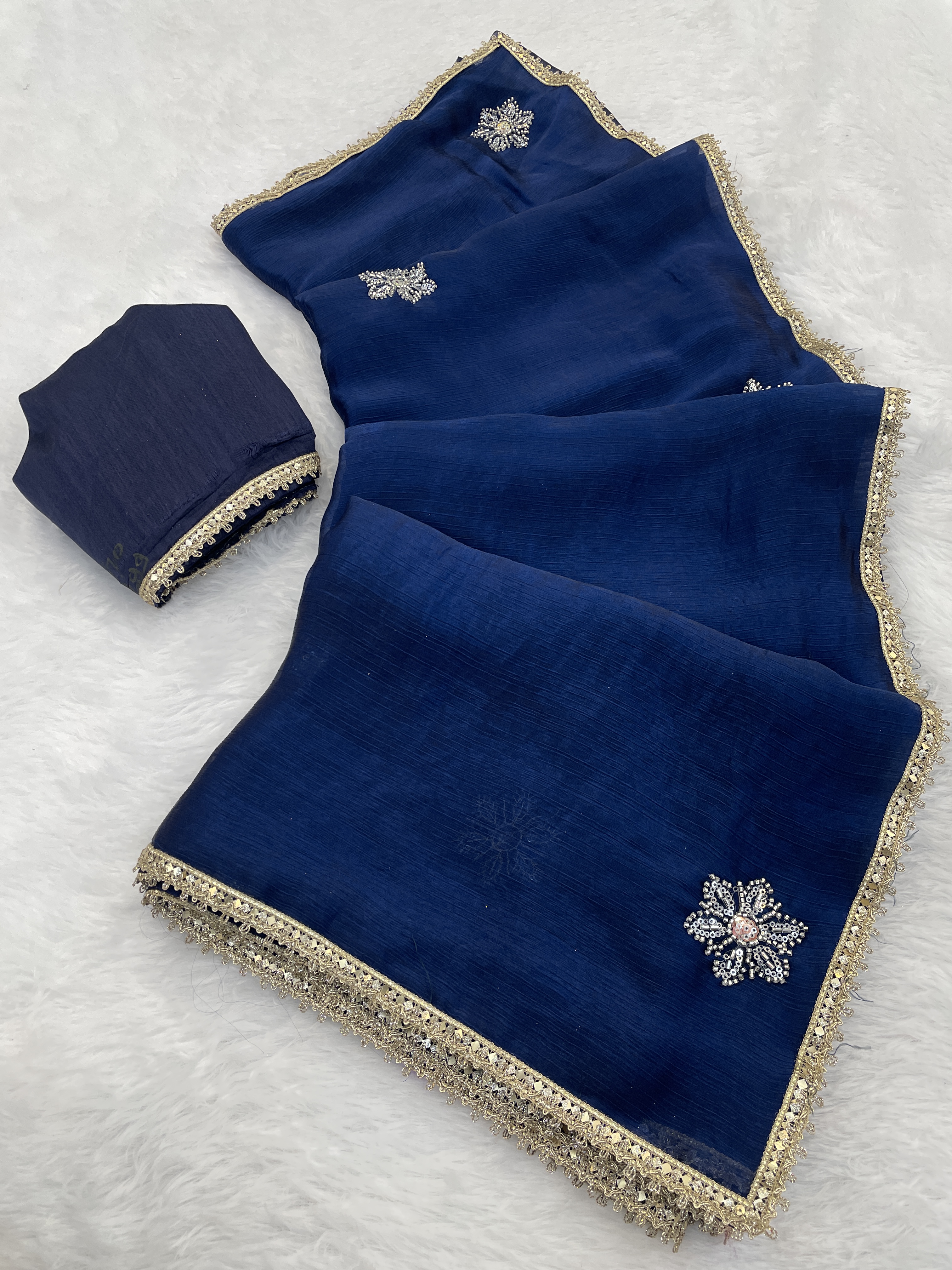
Traditional cutdana embroidery uses small, hard embellishments secured to fabric with thread. The beads may be transparent, coloured, silver-toned or gold-toned, and their effect changes according to the base fabric beneath them. On black or navy fabric, clear and silver cutdana gives high contrast; on peach or ivory, champagne and gold beads create a blended glow.
Cutdana also gives embroidery a more tactile surface. Zari forms a thread-based metallic line, while sequins usually provide broad, disc-like reflections. Sitara embroidery can be bolder and more mirror-like. Cutdana sits between jewellery-like brilliance and fine textile detail, making it useful for borders, floral sprays, geometric panels and blouse necklines.
How does cutdana compare with sequin work?
Cutdana gives smaller, more directional flashes, while sequins give broader and often softer reflections. A saree may use both techniques: cutdana for the outline of a motif and sequins for the filled centre.
The difference becomes visible when the wearer moves. Sequins tend to shimmer across a larger area as they tilt, whereas faceted cutdana beads can appear as individual pinpricks of light. Neither technique is automatically more luxurious; the quality depends on even spacing, secure stitching and a balanced design.
Where Cutdana Looks Most Effective on a Party Saree
Cutdana looks most effective when its placement creates a clear visual route around the saree. Borders, pallu edges, blouse panels and selected motifs usually give the eye enough structure to appreciate the sparkle.
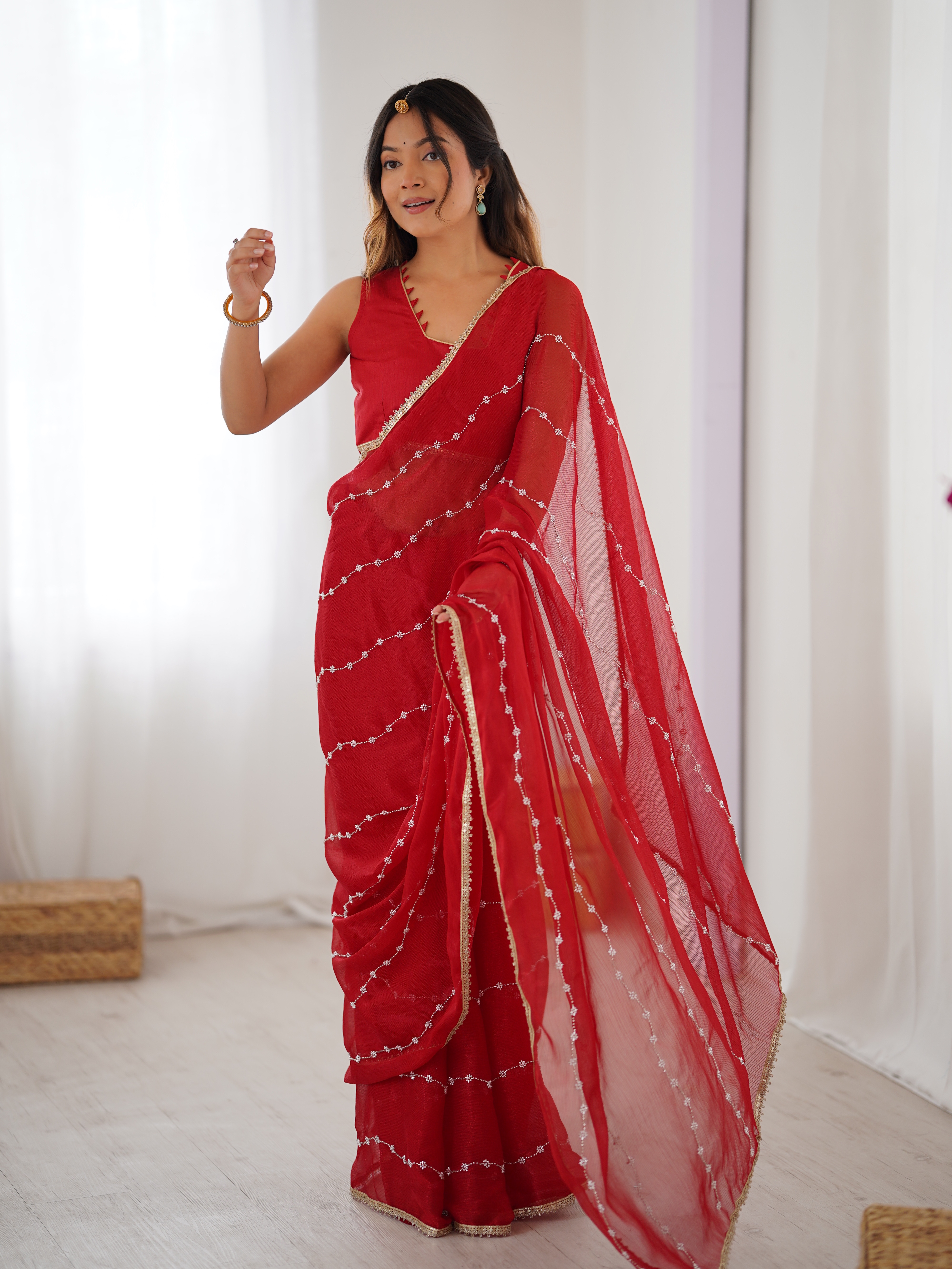
A cutdana border defines the lower edge of a saree and photographs well when the pleats are arranged evenly. A cutdana pallu creates movement near the shoulder, but a very heavy pallu can pull on lightweight fabric. Scattered cutdana butti work gives a quieter effect and can suit a cocktail party where a fully embellished drape would feel excessive.
Neckline and sleeve embroidery deserve equal attention because the blouse remains visible even when the pallu is pinned. A narrow cutdana outline around a square neckline can look polished with a plain saree, while a heavily beaded blouse may need a quieter border and fewer accessories.
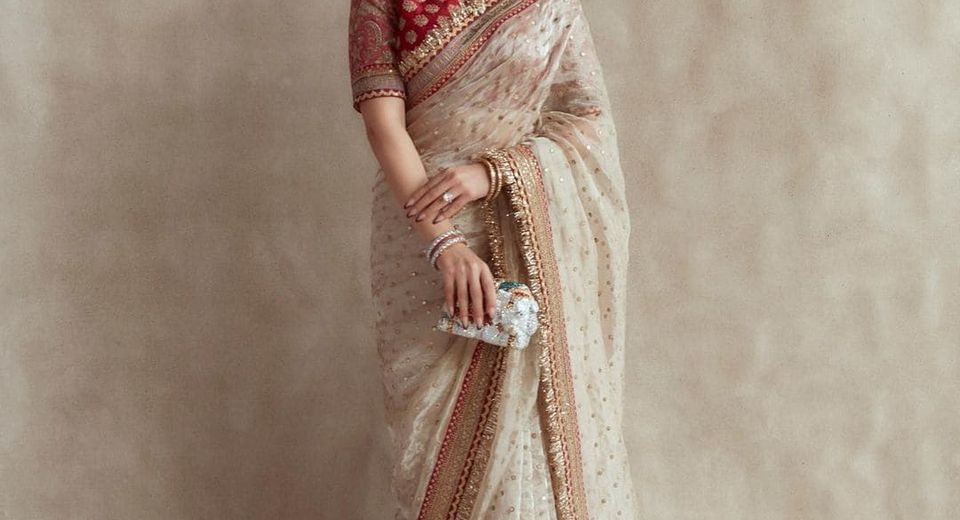
The Off White Organza Silk Embroidered Saree with Sequin Butti Work - Party Wear illustrates why surface placement matters. Although sequin butti work is different from cutdana, the small repeated motifs show how evenly spaced embellishment can preserve the lightness of an organza saree.
Which fabrics support cutdana embellishment?
Organza, georgette, crepe and satin blends can support cutdana, but each fabric produces a different drape. Organza holds a crisp silhouette, georgette falls close to the body, crepe has a smoother fluid movement, and satin blends reflect light across the base itself.
Very heavy cutdana embroidery needs a fabric with enough structural support. A delicate net saree can carry beadwork when the embellishment is distributed carefully, but concentrated weight may distort the edge or cause the pallu to sag. Checking the reverse side for lining, backing and neat threadwork is useful before purchase.
How to Choose the Right Amount of Sparkle
The right amount of sparkle depends on the venue lighting, the length of the event and the other reflective elements in your outfit. An evening reception with dim, warm lighting can handle a richer border, while a daytime house party usually benefits from lighter embellishment.
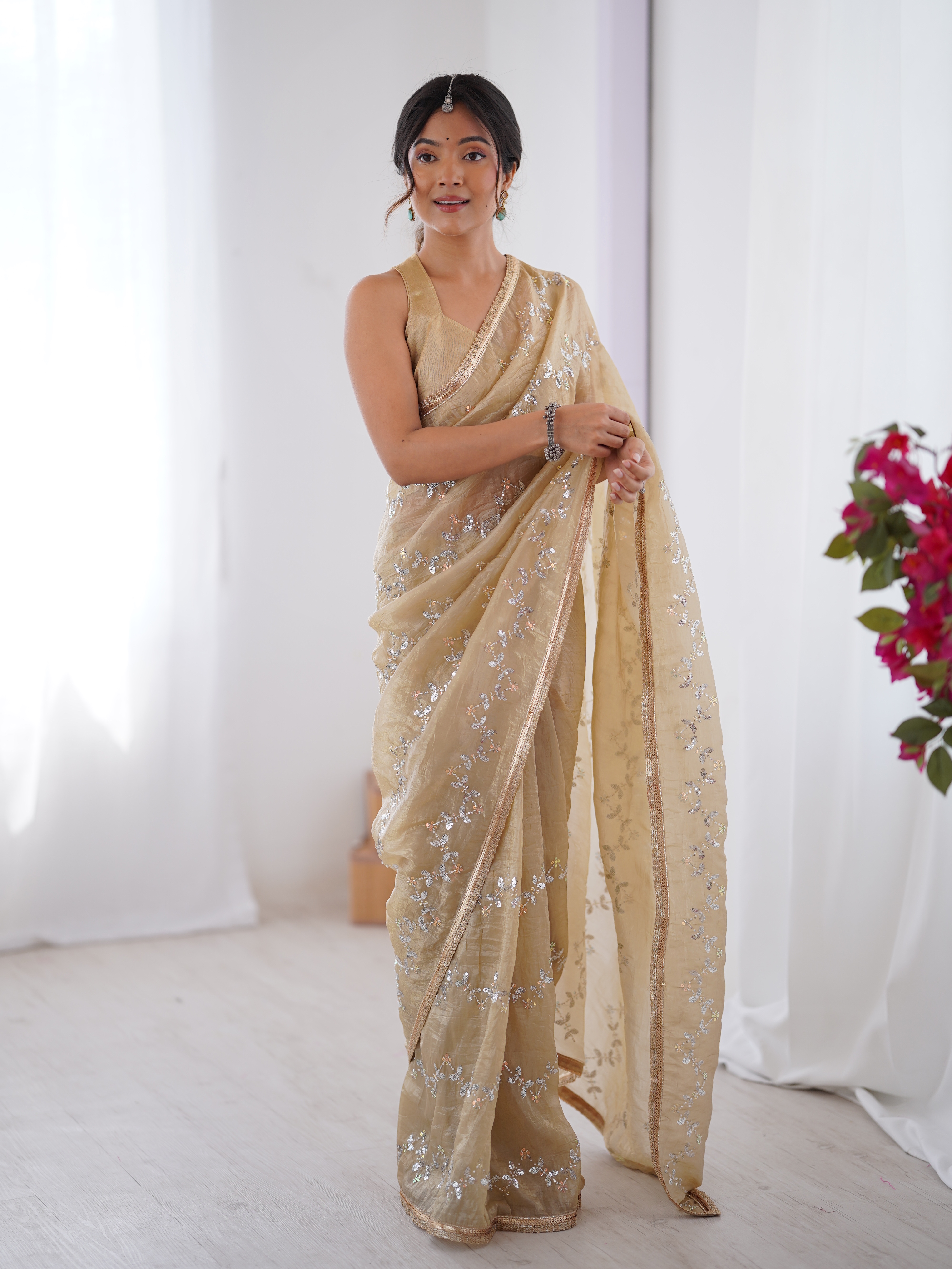
For a controlled shimmer, choose cutdana along the border with a relatively plain body. For a more dramatic party look, combine a beaded pallu with a lightly embellished blouse rather than adding shine equally everywhere. A saree with dense work across the body may require simpler earrings and a matte-finish clutch.
Colour also controls perceived intensity. Gold embellishment on red, emerald or purple looks time-honoured and high-contrast. Silver or clear cutdana on navy, charcoal and black looks cooler and more graphic. Champagne beads on blush, peach and beige create a low-contrast glow that can appear especially elegant in photographs.
The Golden Glow Gold Crush Embroidered Party Wear Saree for Women and the Premium Gold Crush Embroidered Party Wear Saree for Women demonstrate how gold-toned surface work can become the central styling feature. When a saree already has a strong gold presence, a blouse with excessive contrast embroidery can make the look visually crowded.
For a darker palette, the Premium Navy Blue Fancy Saree with Blouse offers an useful styling direction: pair a deep base with silver, clear or antique-gold details, then repeat one metal in the jewellery. Repeating the same metal keeps cutdana sparkle intentional rather than scattered.
Blouse, Jewellery and Draping Choices That Work
A cutdana saree usually looks best with a blouse that repeats one design element without copying every detail. A plain silk blouse can calm a highly embellished saree, while a lightly beaded blouse can connect a restrained border to the upper body.
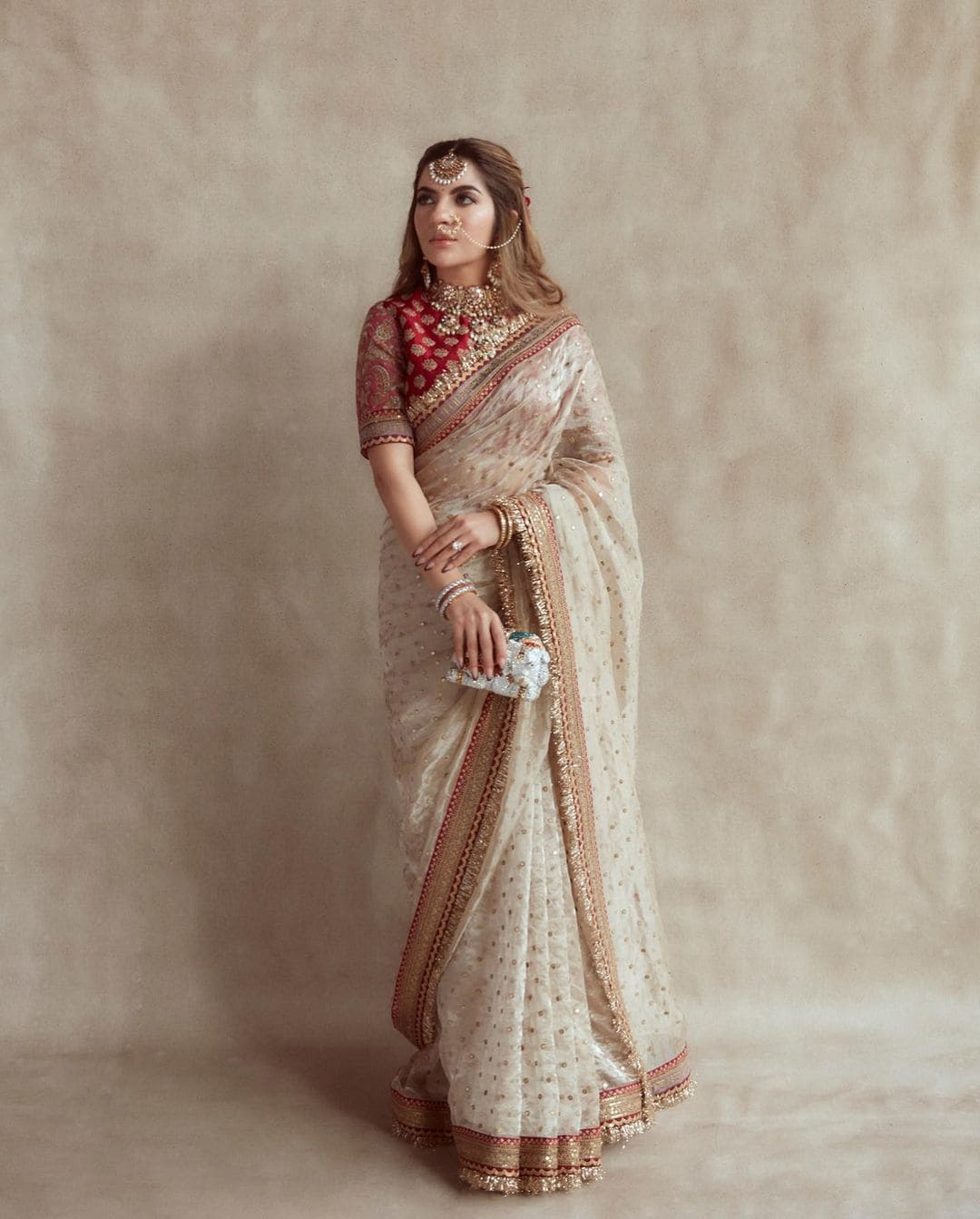
Neckline shape should respond to the saree's embroidery. A deep V-neckline exposes more skin and can balance a dense pallu, whereas a high boat neckline gives a more continuous surface for cutdana outlining. Elbow-length sleeves work well with ornate borders because the sleeve hem can echo the saree without competing with the waist.
Jewellery should be selected according to the cutdana's colour temperature. Kundan, polki and antique gold work naturally with warm gold embellishment. Silver, white gold and clear stones suit cool silver cutdana. Mixing metals can work when the saree itself contains both, but a single dominant metal generally photographs more cleanly.
A neatly pressed Nivi drape keeps the border visible and distributes the pallu's weight. Smaller pleats reveal more of a vertical border, while wider pleats create a calmer field for scattered motifs. Pin the pallu at the shoulder only after checking that the embellishment isn't rubbing against the blouse neckline.
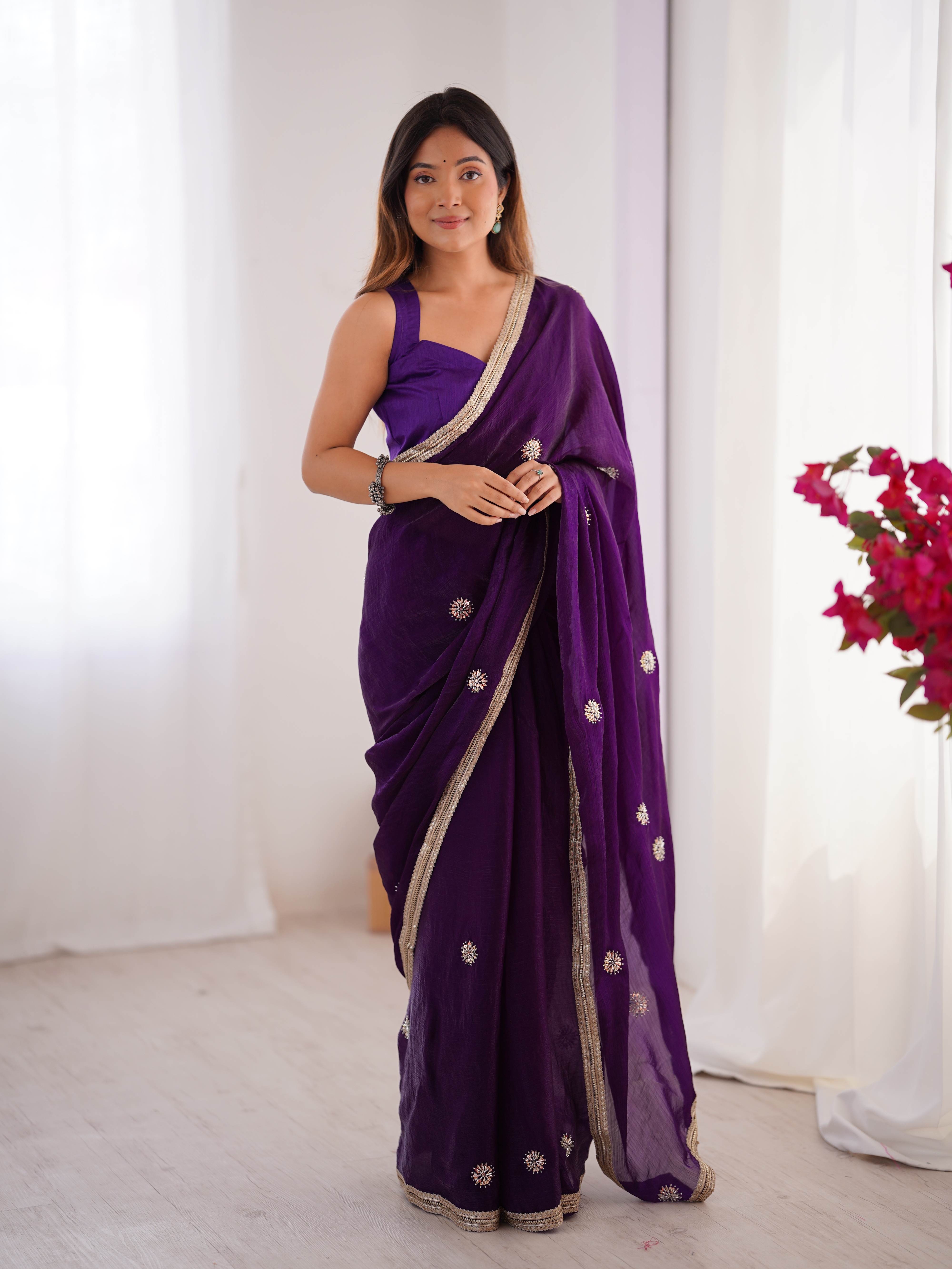
The Designer Emerald Georgette Saree with Sequin Lace shows how a fluid georgette base can carry linear shine without losing movement. The Purple Wedding Wear Embroidered Saree brings another useful colour cue: a saturated purple base can support gold or silver detailing, but accessories should stay within the saree's established palette.
How to Judge Quality Before Buying
Good cutdana workmanship has consistent spacing, secure attachment and a clean transition between embellished and unembellished areas. A product photograph can suggest sparkle, but close inspection of the embroidery and fabric reveals more about durability.
- Inspect the reverse: Threads should be secured rather than left in long loose loops. A lining or backing is helpful when dense beadwork may touch the skin.
- Check the edge: Border embellishment should follow the saree's edge without puckering, waviness or sudden gaps.
- Test the movement: Lift and gently fold a corner to see whether beads snag, clack heavily or pull the fabric out of shape.
- Read the material description: Organza silk, georgette, net and crush fabrics behave differently, even when the embroidery looks similar online.
- Consider the blouse: Confirm whether the blouse is included, whether it's attached or unstitched, and whether its embellishment matches the saree.
Price alone doesn't prove embroidery quality. A saree priced below ₹3,000 may use lighter embellishment, blended fabric or a smaller work area, while a higher-priced saree may reflect heavier materials, more hand finishing or a structured blouse. Collections such as Silk Sarees Under 3000 With Discount and Gray Color Sarees Under 1000 can be useful starting points for budget comparison, but fabric composition and construction still deserve priority.
Colour-specific browsing can also narrow the search. Pink Georgette Sarees suit soft daytime and early-evening palettes, while Red Banarasi Silk Sarees for Weddings Under 1100 point toward a more classic, high-contrast direction. A party saree doesn't need maximum embellishment if its colour, drape and border already create enough presence.
Care Rules for Cutdana and Other Embellished Sarees
Cutdana sarees should be dry-cleaned when the care label permits and stored away from pressure, moisture and rough surfaces. Home washing can loosen threads, dull metallic finishes and distort lightweight fabrics.
Before storing the saree, remove jewellery, safety pins and adhesive accessories from the folds. Place soft tissue paper between heavily embellished sections so beads don't press directly against the fabric during long storage. Fold the saree along different lines every few months if it remains packed for an extended period.
A breathable cotton or muslin cover is safer than a sealed plastic bag for routine storage. Keep the saree in a dry cupboard away from direct sunlight, damp walls and strong fragrances. Perfume should be applied to the skin and allowed to dry before the saree is draped because alcohol and oils can affect metallic and coloured surfaces.
When wearing the saree, check chair arms, handbag chains and rough bangles for snagging points. A cutdana border can catch on textured upholstery more easily than a plain woven edge. After the event, air the saree in shade for a short period before folding it; prolonged sun exposure can fade coloured georgette, net and silk.
The Heavy Sitara Fancy Saree for Wedding & Party Wear and the Peach Embroidered Net Party Wear Saree with Blouse show why embellishment density and fabric handling should be considered together. Sitara, beadwork and net each need careful storage, even though their surfaces create different kinds of shine.
Building a Practical Party Saree Wardrobe
An useful party saree wardrobe can cover several levels of formality instead of repeating the same heavily decorated style. One restrained saree for dinners, one richer design for weddings and one versatile neutral can handle more occasions than three nearly identical glittering pieces.
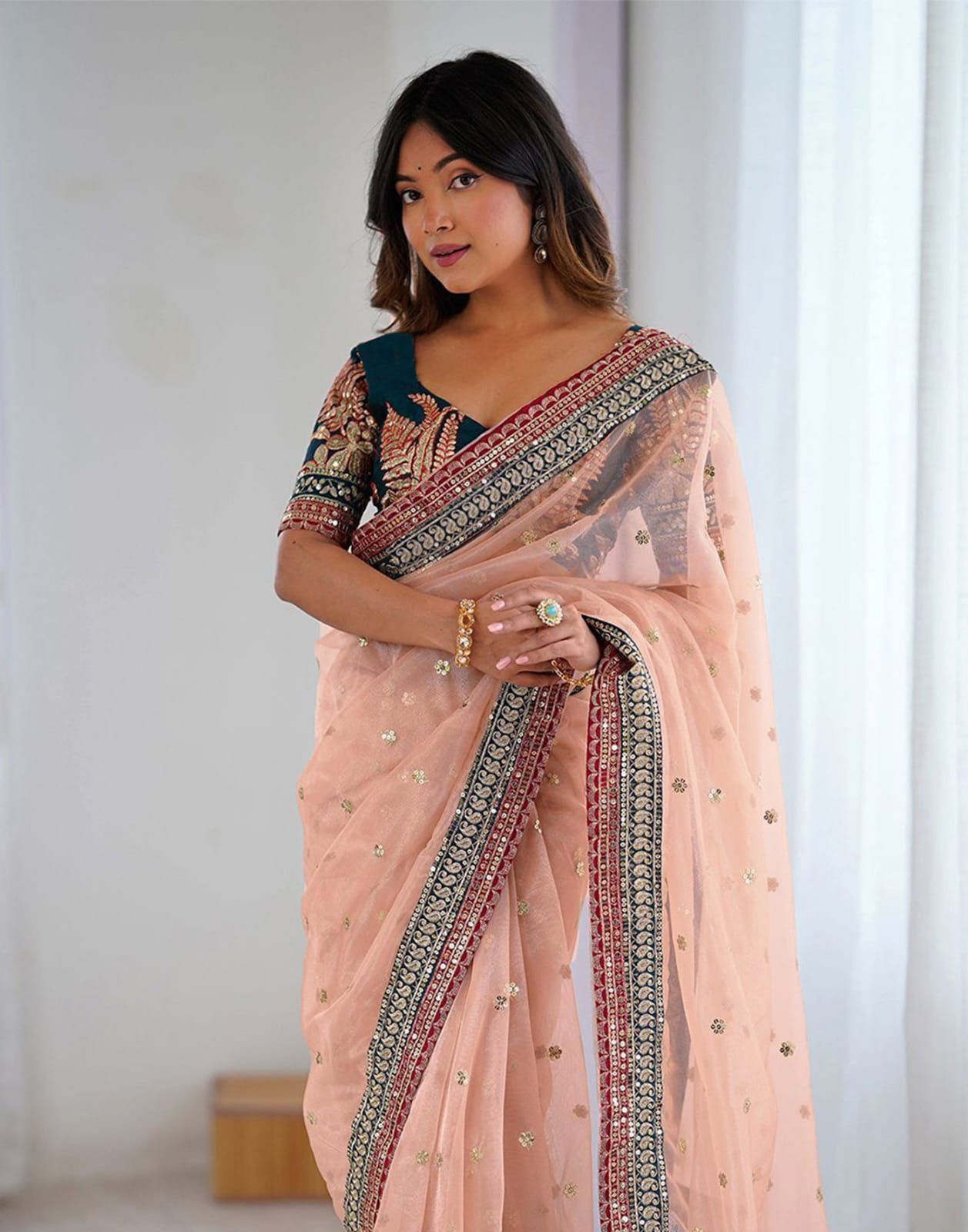
A saree from the Party Wear Sarees collection can serve as a broad reference point for comparing borders, blouse treatments and embellishment density. Choose one statement feature for each purchase: a cutdana pallu, an unusual fabric, a dramatic colour or a detailed blouse. Allowing only one feature to dominate makes repeated styling easier.
Neutral shades such as off-white, champagne, grey and navy can be restyled with different blouses and jewellery. Strong shades such as emerald, purple and red make an immediate impact but may need more careful accessory planning. A metallic clutch, plain sandals and a controlled hairstyle often let the saree's beadwork remain the focal point.
Cutdana Work Gives Party Sarees a Sharper Kind of Sparkle when the embellishment is chosen for proportion, not simply quantity. The best result comes from matching bead density to fabric strength, selecting jewellery that repeats the metal, and protecting the saree from friction after the celebration ends.
Common Questions About Cutdana Party Sarees
What is cutdana work on a saree?
Cutdana work is embroidery made with small faceted beads secured to fabric with thread. The angled surfaces reflect light in concentrated flashes, creating a sharper effect than many flat sequins.
Is cutdana work heavier than sequin work?
Cutdana work can be heavier than sequin work when beads are densely placed, but weight depends on bead size, spacing and the area covered. A narrow cutdana border may remain light, while a fully embellished pallu can pull on delicate net or organza.
Which blouse suits a cutdana party saree?
A plain or lightly embellished blouse usually suits a cutdana party saree best. Match the blouse to one detail from the saree, such as its neckline outline, embroidery colour or border, instead of repeating heavy work across every surface.
Can a cutdana saree be worn to a daytime party?
A cutdana saree can work for a daytime party when the fabric is light and the embellishment is controlled. Pastels, off-white, peach and soft pink with a narrow border usually look more appropriate in daylight than dense dark metallic work.
How should an embellished saree be stored after a party?
An embellished saree should be aired briefly in the shade, folded with soft tissue between heavy sections and stored in a breathable cotton or muslin cover. Keep the saree away from moisture, direct sunlight, perfume residue and rough accessories.
Does cutdana work photograph well at weddings and parties?
Cutdana work photographs well because faceted beads create small highlights under flash and warm venue lighting. Even spacing, a defined border and a contrasting base colour generally produce clearer photographs than overcrowded embellishment.