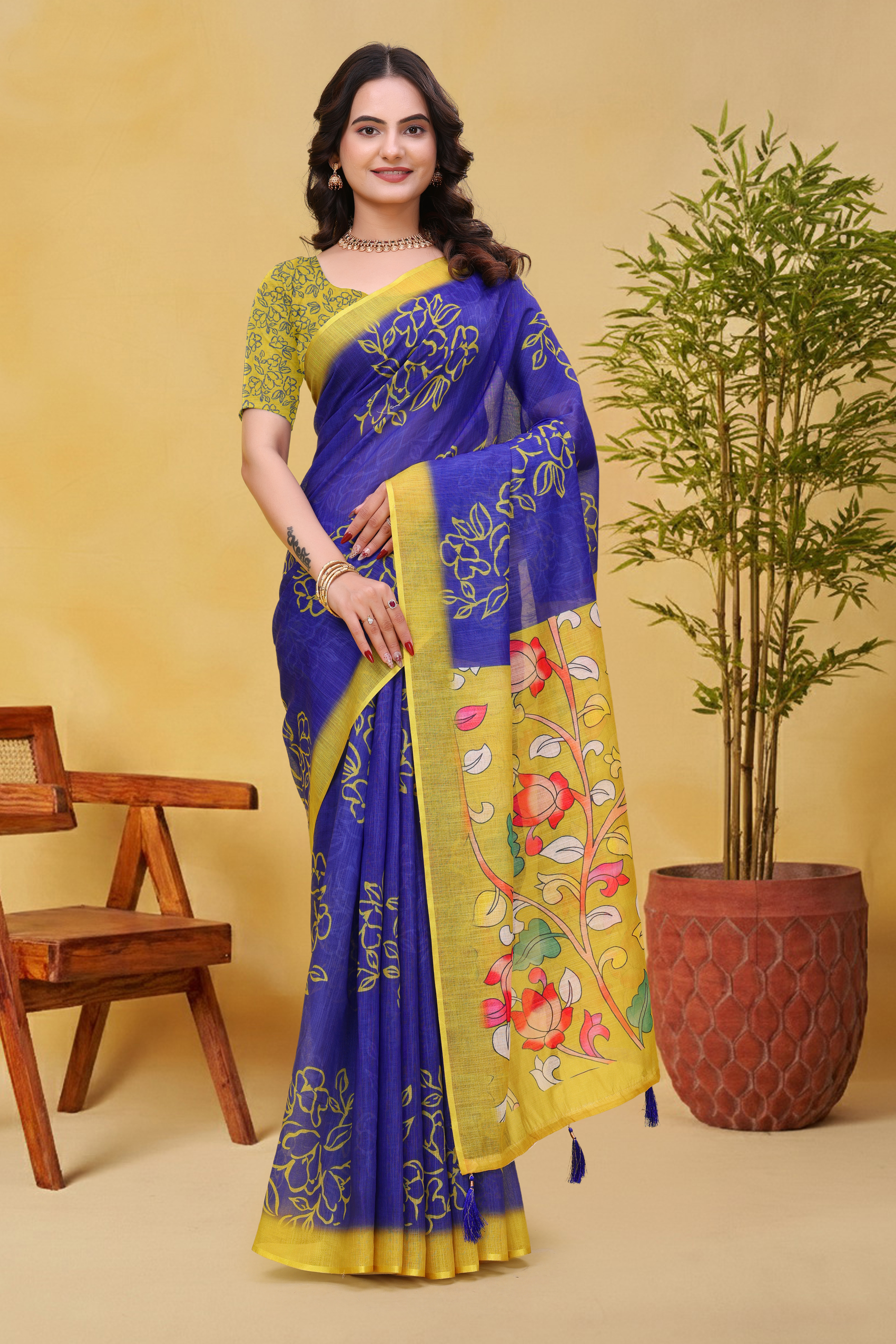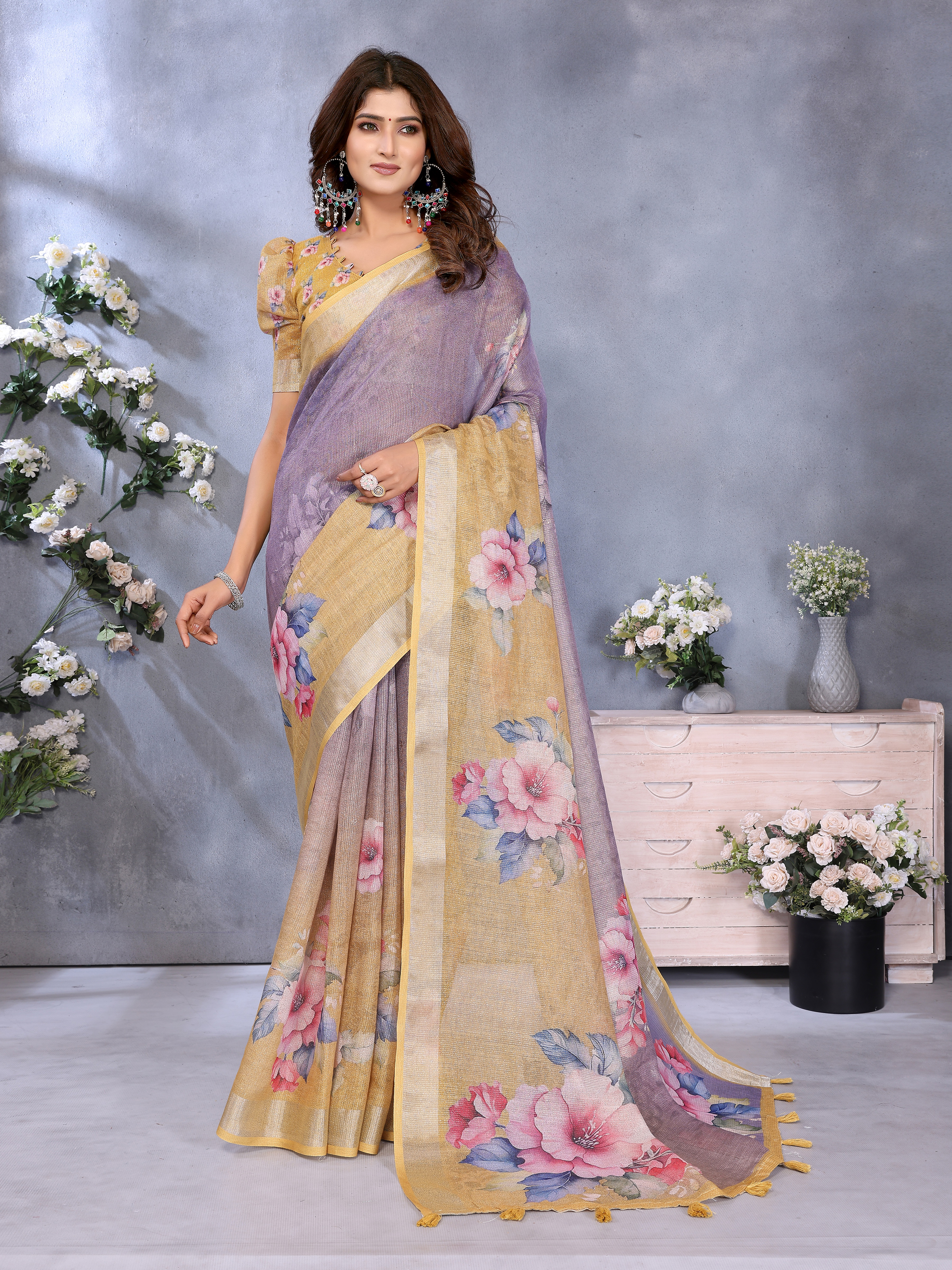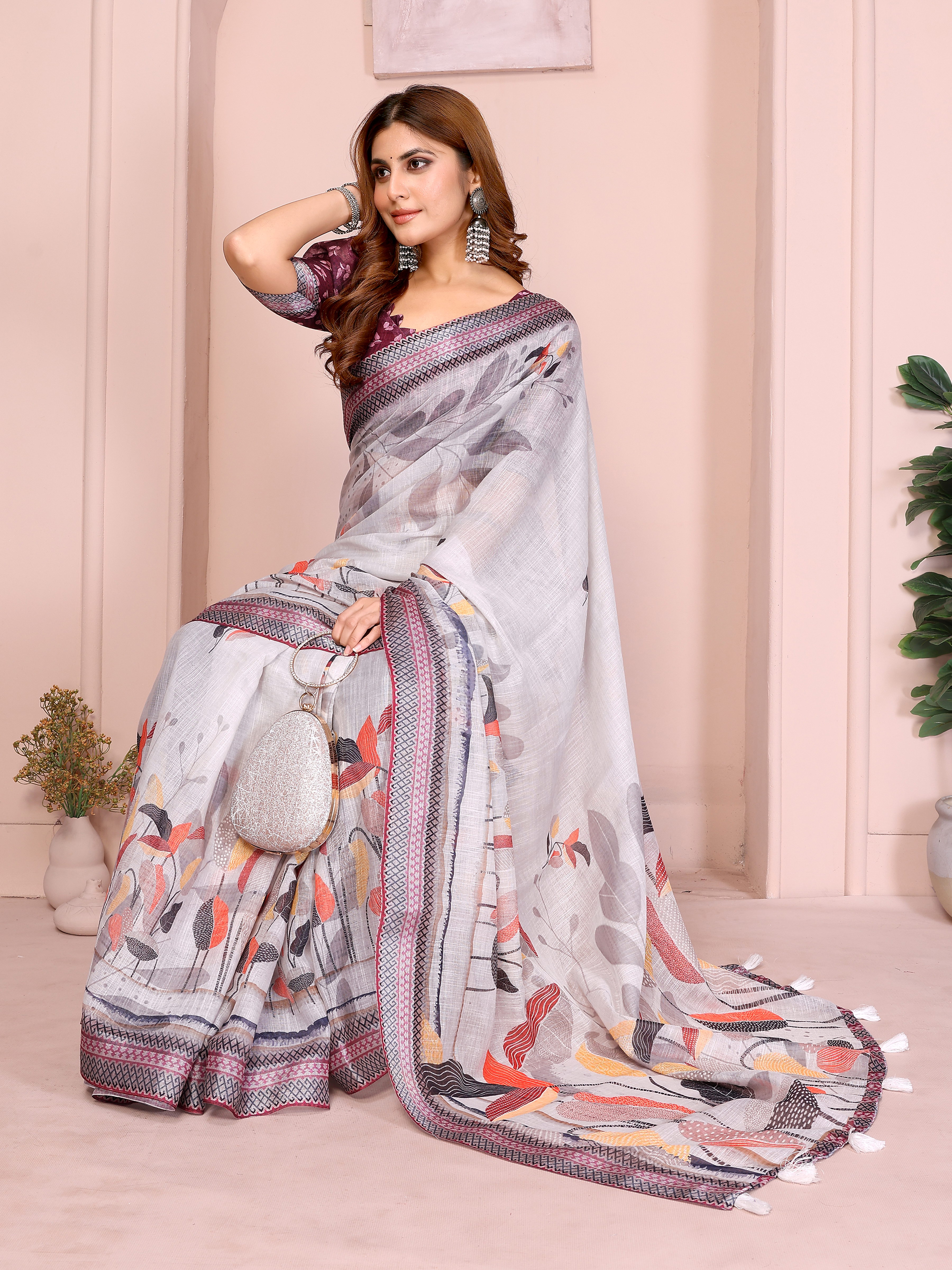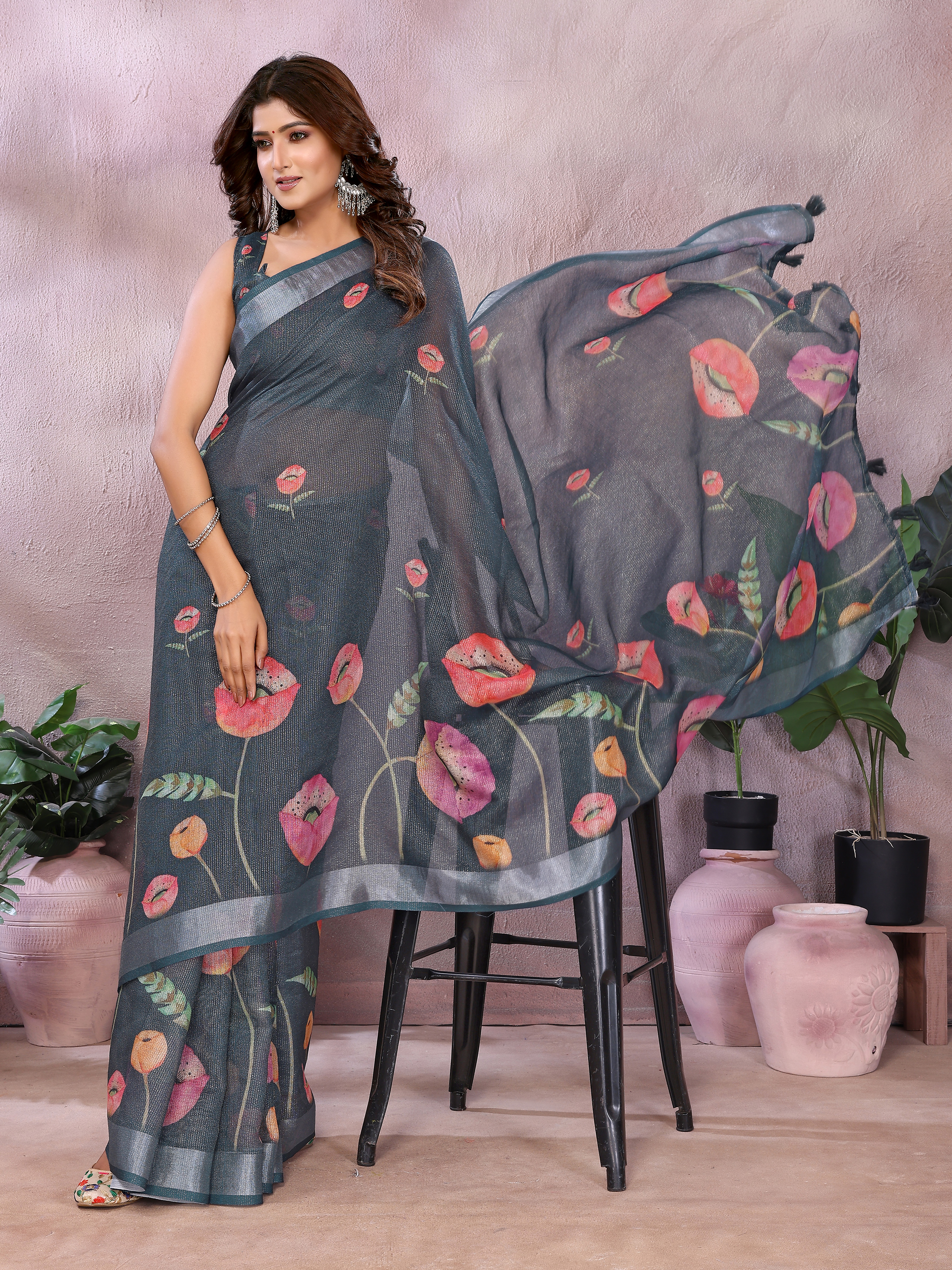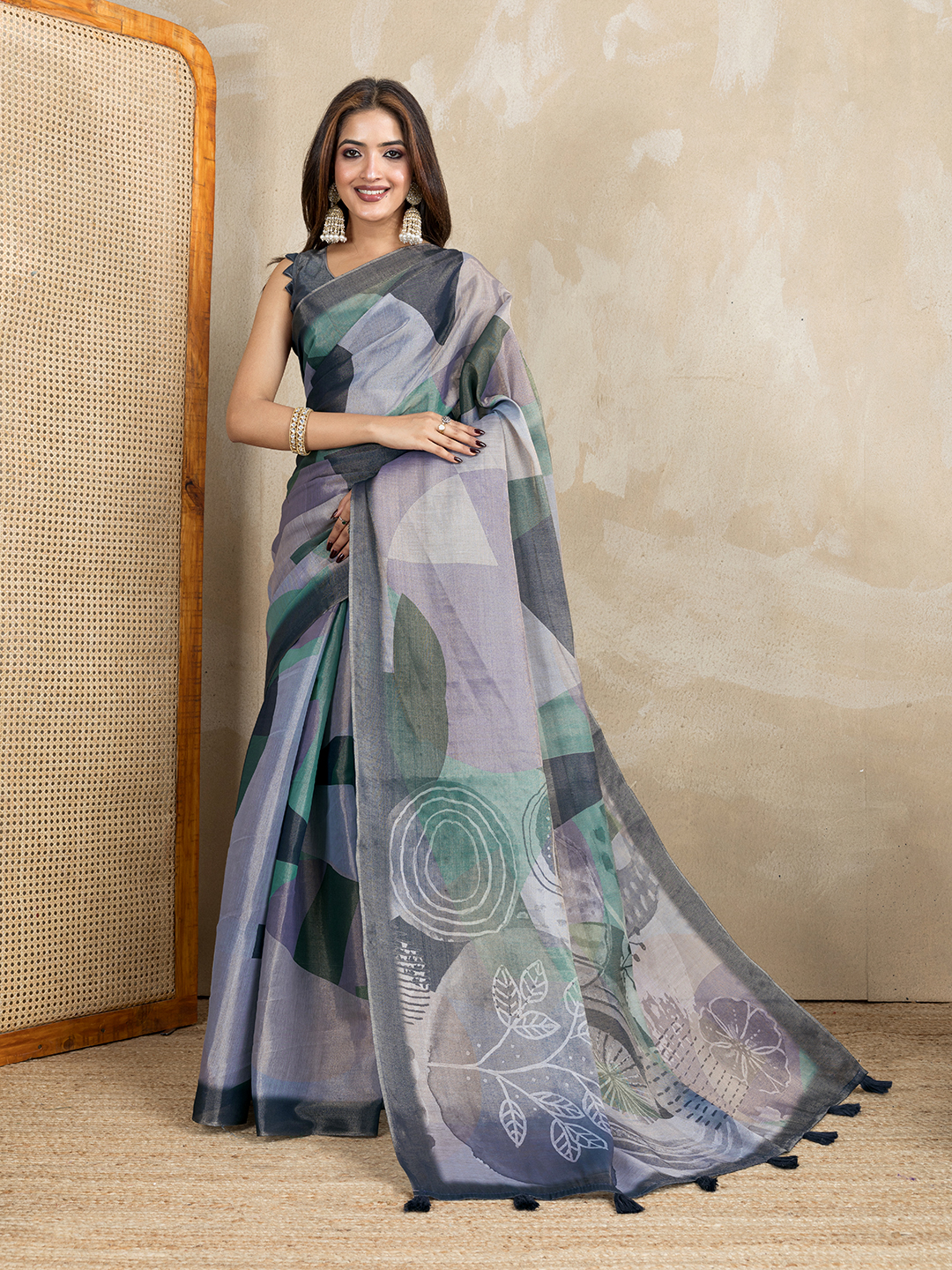
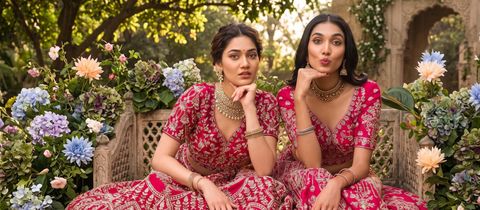

Cutdana Suit Sets Photograph Differently From Sequin Work because the two embellishments return light in different patterns. Cutdana embroidery uses narrow, faceted glass tubes that create sharp points and visible lines, while sequins use flat discs that create broader flashes. The difference affects colour, texture, pose, background and even the exposure chosen by a phone camera. Understanding that behaviour helps you judge a salwar suit accurately online and make more flattering photographs at weddings, festivals and family gatherings.
A photograph doesn't record every surface detail evenly. A camera compresses three-dimensional embroidery into highlights, shadows and colour patches. A cutdana neckline may look finely textured in person but appear like a crisp constellation of bright marks in a flash photograph. A sequin dupatta may look uniformly luminous in a catalogue image but show dark gaps when the fabric turns away from the light. Neither result automatically means that the garment looks better or worse in real life.
What makes cutdana and sequins reflect light differently?
Cutdana and sequins reflect light differently because cutdana is tubular and faceted, whereas sequins are flat and disc-shaped. Each cutdana piece can send light in a narrow direction, while a sequin usually reflects a wider, softer patch when its face points towards the light.
Cutdana, sometimes called cut-dana or glass bead embroidery, consists of small pieces of cut glass or crystal-like material threaded onto fabric. The angled surfaces create concentrated highlights. A slight movement of the wearer can make individual beads blink on and off, which gives photographs a dotted, jewel-like rhythm.
Sequins are thin decorative discs attached to a base fabric. Metallic, mirror-finish and coloured sequins can reflect light strongly, but the reflection usually spreads across the disc. A large sequin field therefore reads as a continuous shimmer rather than a chain of tiny high-contrast points.
Thread direction also matters. Cutdana embroidery often follows floral outlines, paisley borders or geometric motifs. The lines become legible when light arrives from the side. Sequin work can cover the centre of a motif more evenly, so the same camera distance may show sparkle before it shows construction.
The base fabric changes the result further. Chinon silk has a fluid, reflective surface that can add glow behind embroidery. Chanderi silk tends to show a lighter, more transparent-looking weave and can create a quieter contrast. Viscose blends may absorb or scatter light differently from silk, changing how strongly embellishment separates from the garment.
Cutdana Suit Sets Photograph Differently From Sequin Work in phone pictures
Cutdana Suit Sets Photograph Differently From Sequin Work in phone pictures because smartphone processing exaggerates bright points and smooths fine texture. Automatic HDR, face exposure and sharpening can make cutdana look more crystalline while turning dense sequin work into a single bright area.
Why does cutdana sometimes look brighter than the outfit?
Cutdana sometimes looks brighter than the outfit because faceted beads reach the phone sensor with intense, localised highlights. The camera then lowers overall exposure to protect those highlights, which can make the surrounding fabric appear deeper in colour.
That effect is noticeable on black, navy and jewel-toned salwar suits. A black base may remain rich and dramatic in person, but a direct flash can create white pinpricks over the cutdana and make the garment look more contrasty than it does under indoor lighting. A phone in night mode may reduce the pinpricks while introducing motion blur.
Why do sequins sometimes disappear in photographs?
Sequins can disappear in photographs when their flat faces turn away from the light source. The disc still exists on the garment, but the camera receives less reflected light and records the base fabric instead.
Sequins also lose definition when a photographer stands too far away. At a distance of three to four metres, small discs merge into a tonal patch. Cutdana lines may remain visible because their highlights are more concentrated. A closer portrait or a photograph taken with the main camera rather than a heavily cropped image preserves more sequin detail.
How should you light an embellished salwar suit?
Side lighting at a 30- to 60-degree angle usually reveals the most surface detail on cutdana and sequin embroidery. Front lighting gives the most even colour, while direct flash creates the strongest sparkle and the harshest risk of glare.
For cutdana embroidery, a large window placed to one side of the wearer is effective. Soft daylight skims across the angled beads and shows the direction of the motifs without creating dozens of blown-out white spots. A white wall opposite the window can gently fill the shadows on the other side of the face and dupatta.
For sequin work, front-side lighting often produces a more even shimmer. A light source directly behind the photographer can make the sequins face the camera, but it may flatten the fabric. Moving the light slightly to one side introduces enough contrast to show pleats, borders and the edge of each embellished panel.
Direct midday sunlight is difficult for both surfaces. Cutdana may produce hard points of glare, while sequins may become large white patches. Open shade, late-afternoon light or a covered balcony usually gives more usable results. Indoor warm bulbs can shift ivory, beige and gold towards yellow, so a neutral daylight bulb is preferable for outfit documentation.
A small ring light should not sit at maximum brightness inches from the wearer. The circular reflection can appear repeatedly on glossy cutdana and sequins. Positioning the ring light farther away, lowering its intensity and combining it with a window creates a more natural surface pattern.
Which colours and fabrics photograph best with each embellishment?
Cutdana photographs most clearly on saturated or dark bases, while sequin work often photographs most evenly on mid-tone and light-reflective fabrics. The best choice depends on whether the desired image should emphasise bead detail, overall glow or the silhouette of the suit.
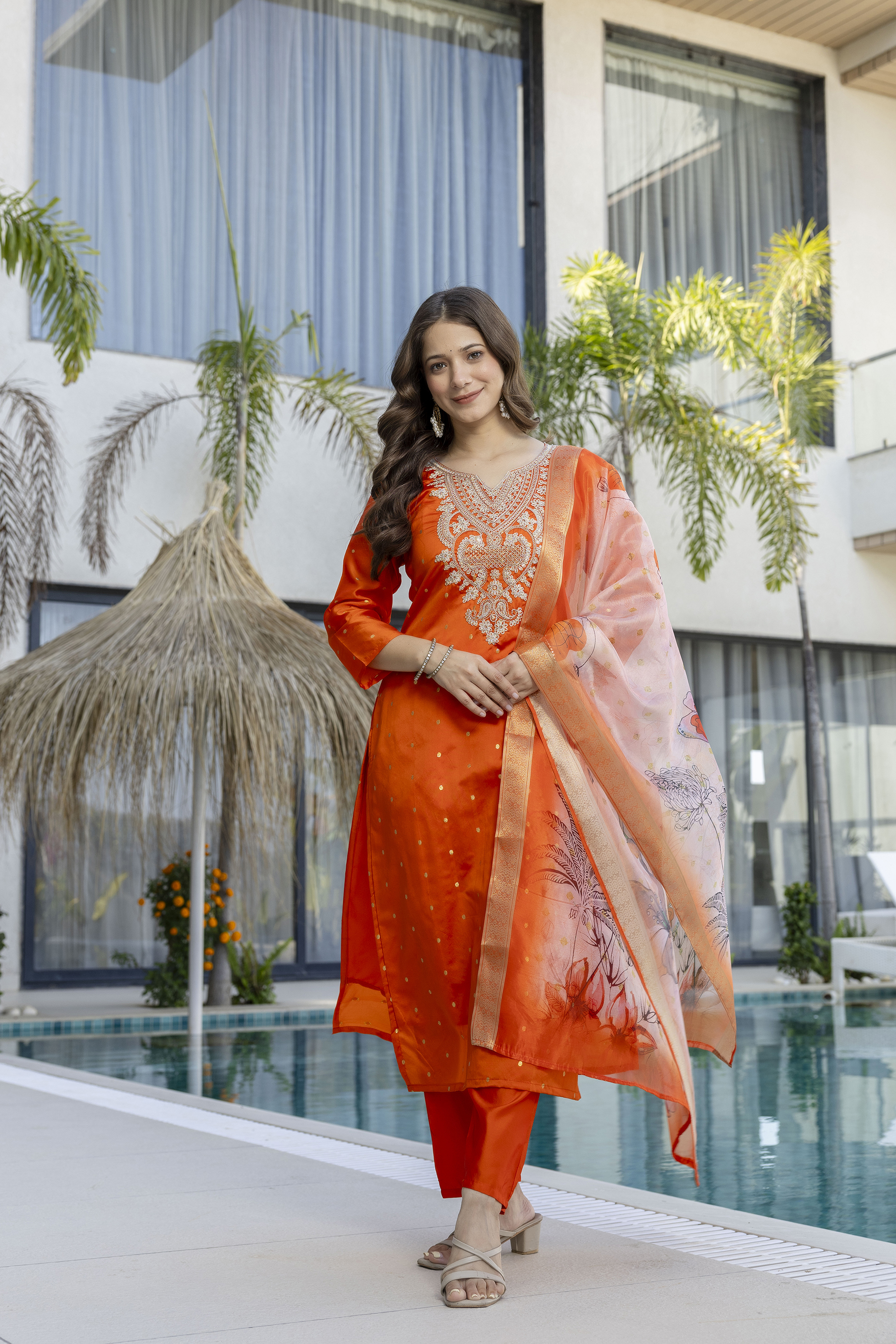
Black absorbs much of the surrounding light and gives cutdana a high-contrast background. The Black Anarkali Suit Set with Sequin Zari and Moti Lace Work demonstrates why black embellished clothing can look especially dimensional under side light: zari, sequins and moti lace create separate levels of reflection rather than one uniform surface.
Deep red, purple and maroon also support strong photographic contrast. The Black Red Fendy Silk 3 Piece Readymade Salwar Suit Set benefits from controlled exposure because bright trim against a dark base can cause a phone camera to underexpose the red sections. Tapping the screen on the mid-tone red area usually gives a more balanced result than tapping on the brightest decoration.
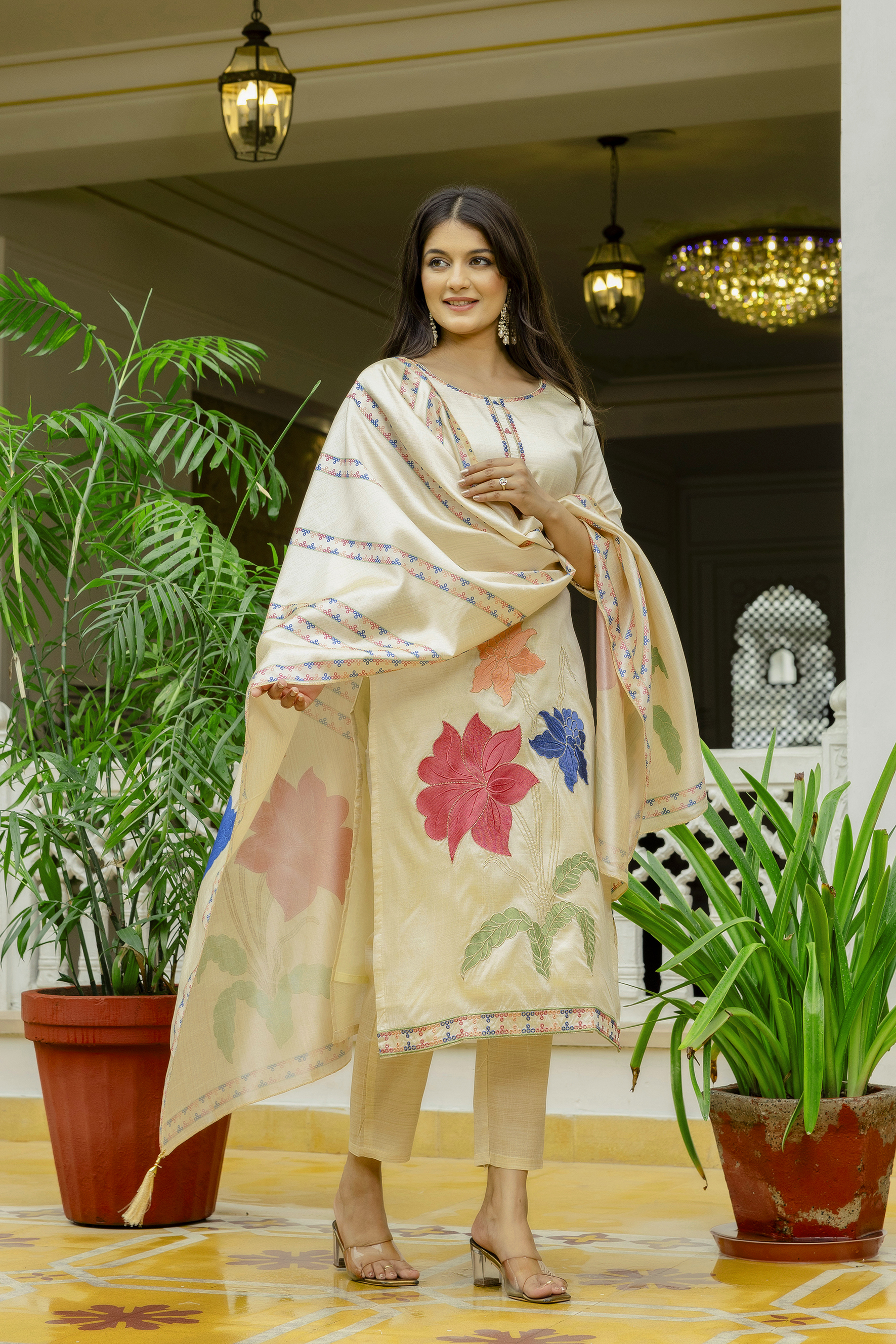
Light neutrals reflect more ambient light into the camera and create a softer image. The Elegant Beige Vichitra Silk Embroidered Kurta Set for Women can look warm under household bulbs and more neutral beside a window. Photographing beige or ivory garments against a white wall may reduce separation, so a pale grey, muted green or wooden background can help the silhouette remain visible.
Chanderi silk rewards gentle light because its airy surface and embroidery can be overwhelmed by flash. The Maroon Viscose Chanderi Silk Embroidered Kurta Set for Women should be photographed with enough distance to include the fall of the fabric. Tight cropping can show the embroidery but hide the distinctive movement of a kurta and dupatta.
White threadwork needs contrast more than extra brightness. The Elegant White Chanderi Threadwork Suit with Dupatta will usually show its pattern more clearly against a medium-tone background than against a white studio wall. A side angle can reveal raised thread and weave without turning the whole outfit grey.
How do pose and movement change the photograph?
Small changes in body angle change which cutdana beads and sequins face the light. A three-quarter turn usually shows more texture than a straight-on pose because the fabric develops visible highlights and shadows across its folds.
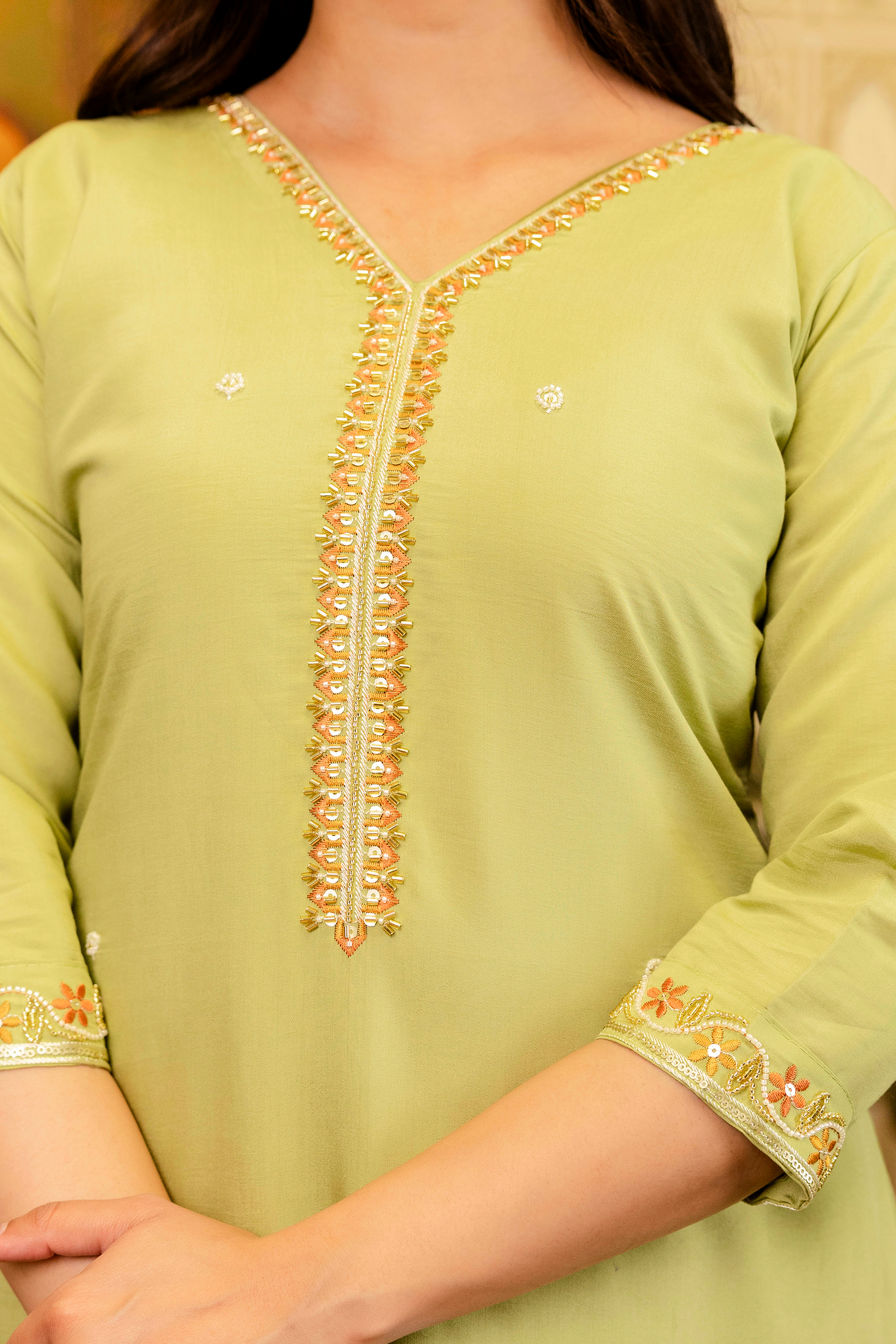
Hold the dupatta away from the torso for one frame and let it fall naturally for another. The first pose reveals the border and the density of the work; the second shows drape and proportion. A dupatta held completely flat can make sequins appear more regular than they look during movement.
Walking photographs suit cutdana because moving beads create intermittent highlights. Use a shutter speed of at least 1/250 second outdoors when the phone or camera offers manual control. In automatic phone photography, ask the wearer to take a short pause at the end of a step to reduce blur while preserving a sense of movement.
Sequin garments benefit from a controlled shoulder turn or a gentle dupatta adjustment. That movement lets the discs catch changing angles of light. Rapid spinning can turn the embroidery into a bright streak and may make the garment look less detailed than it appears in person.
Keep the neckline, sleeve edge and hem visible when comparing embellished suits. A close portrait can make a heavy neckline seem dominant, while a full-length image explains how the work is distributed across the kurta, salwar, palazzo or dupatta.
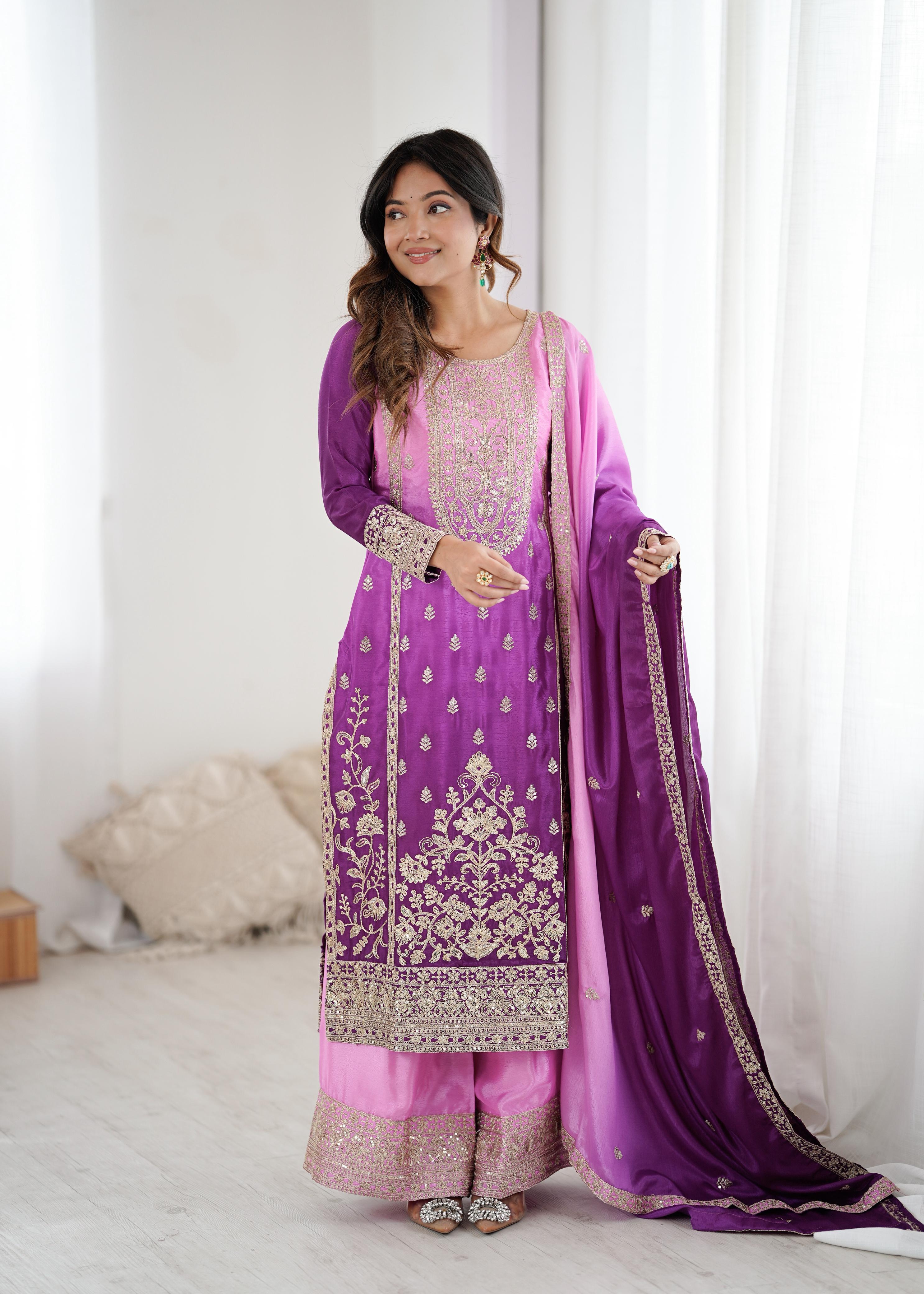
The Purple Pink Chinon Silk Embroidered Suit Set benefits from photographs that show both its colour relationship and its fluid fall. Photographing only the bodice may exaggerate the density of embroidery and hide how the two-tone palette works across the complete set.
How can you photograph embellished suits accurately for online shopping?
Accurate online photographs require neutral light, colour calibration, multiple distances and at least one image without flash. A single glamour photograph can't reliably show surface texture, true colour and garment fit at the same time.
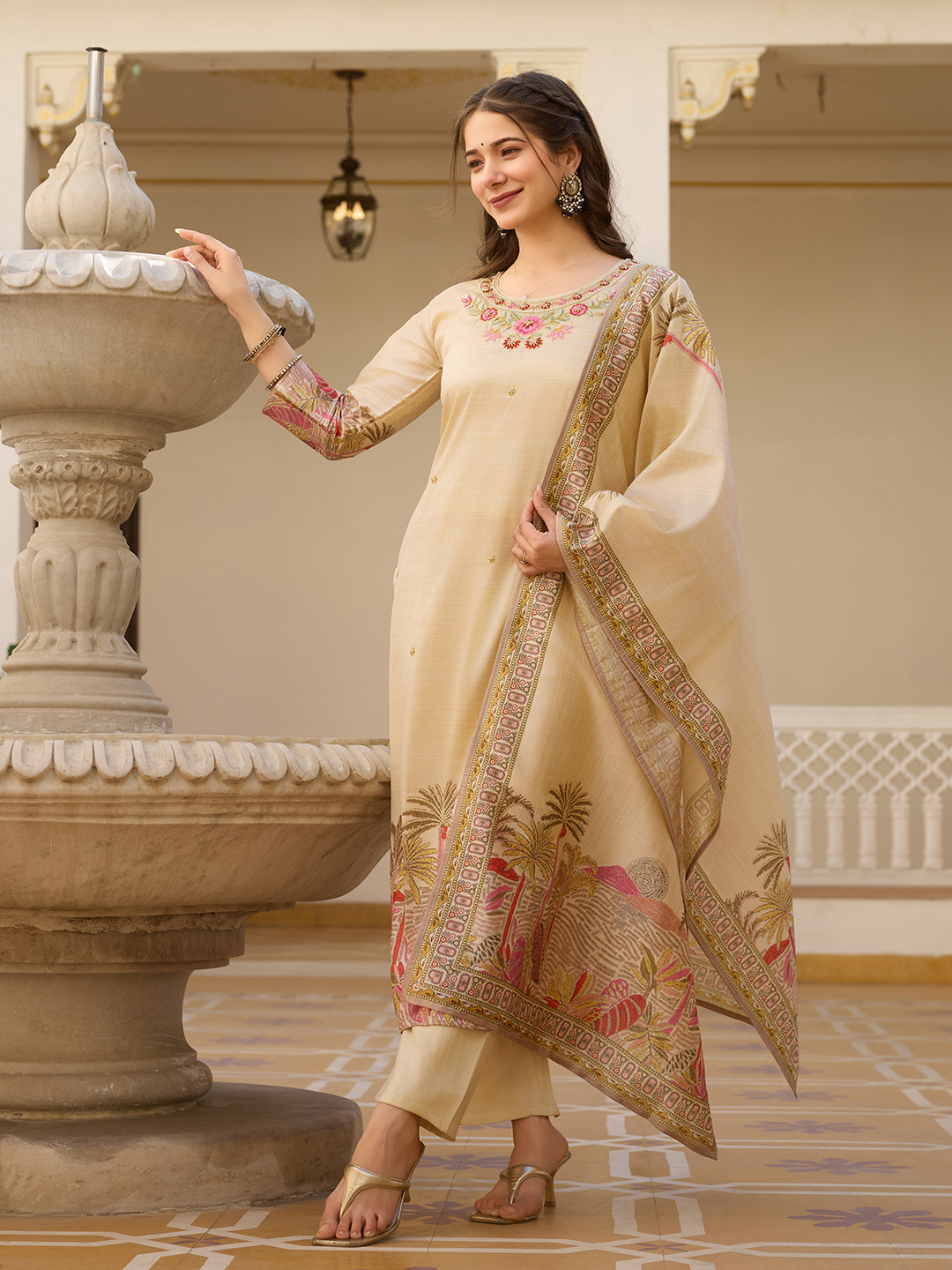
- Begin with a colour reference. Photograph the suit beside a neutral grey card or a plain white object under daylight, then remove the reference for the final frame. Avoid placing a bright red or strongly coloured wall beside the garment because reflected colour can alter the appearance of beige, white and pastel fabrics.
- Use the main camera. The rear camera generally provides more detail and less aggressive smoothing than a front-facing selfie camera. Keep the lens clean, especially when photographing zari, cutdana, mirror work or sequins.
- Take three distances. A full-length image shows silhouette, a waist-up image shows neckline and sleeve construction, and a close image shows embroidery scale. Include one close image taken without portrait blur because artificial background blur can erase the edge of a dupatta.
- Lock exposure and focus. Tap on a mid-tone section of fabric rather than the brightest bead. If the phone permits exposure adjustment, lower it slightly when highlights look white and featureless. Do not reduce exposure so far that black fabric loses its colour.
- Photograph front and reverse angles. A forward-facing photograph shows the motif layout, while a slight side angle reveals whether the work sits flat or catches above the fabric. A reverse view of a dupatta can also show how embroidery continues along the border.
- Include a scale clue. A close image beside a ruler or a clearly described motif helps viewers understand whether the cutdana pieces are tiny, medium-sized or statement embellishments. Camera distance can make every decoration appear larger than it's.
These steps are especially useful when comparing collections with different visual languages. Kalamkari Print Salwar Suits (Copy) may rely on printed detail rather than reflective embellishment, while Maharashtra Paithani Inspired Salwar Suits can include colour contrasts that need even exposure. Gujarat Bandhej Salwar Suits and Odisha Sambalpuri Salwar Suits also deserve daylight images because textile pattern and surface reflection should not compete for attention.
How should you choose between cutdana and sequin work for an event?
Choose cutdana when you want fine, directional sparkle and choose sequins when you want a broader, more immediately visible shimmer. Venue lighting, photography plans, garment colour and the distance from the audience should guide the decision.
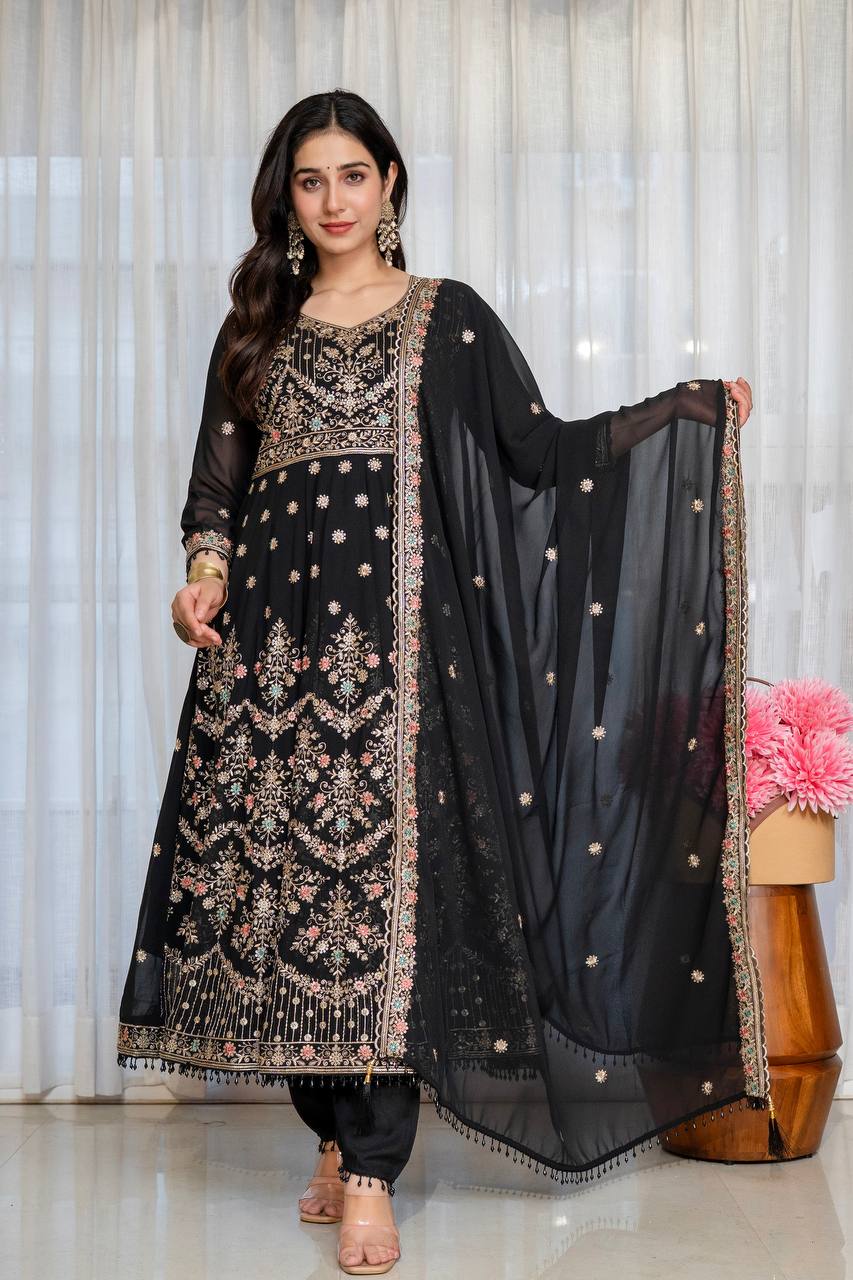
Cutdana works well for intimate dinners, indoor ceremonies and portraits where the camera is close enough to record individual beads. The detailed surface pairs naturally with restrained jewellery because the neckline or sleeve can provide its own focal point.
Sequins suit larger halls, evening receptions and dance floors where the outfit needs to register from several metres away. Sequin work can create a stronger overall flash under moving lights, although dense coverage may conceal the weave and drape of a lightweight base.
For a daytime Haldi ceremony, both embellishments need practical consideration. Yellow powder, turmeric paste and outdoor glare can reduce the visibility of pale embroidery and make metallic decoration appear harsher. A darker cutdana border may remain legible in photographs, but delicate embellishment should still be protected from direct contact with wet colour and abrasive particles.
Care should match the decoration. Store cutdana suits in a breathable garment bag with the embellished surface turned inward or separated by soft tissue, and avoid pressing a hot iron directly over beads. Sequined suits should also be folded with tissue between heavy surfaces because discs can snag neighbouring embroidery. Professional dry cleaning is safer for elaborate work than repeated machine washing, but the care label should always take priority.
A final comparison photograph should use the same person, background, lens, distance and light for both garments. Changing the room or camera between images makes one embellishment seem more luminous for reasons unrelated to its actual construction. A consistent test reveals whether you prefer pinpoint cutdana sparkle or the wider reflective field created by sequins.
Why does consistent photography improve salwar suit buying decisions?
Consistent photography improves buying decisions because it separates garment qualities from camera effects. Matching exposure and viewing angles helps you judge colour, motif density, fabric fall and embellishment scale before ordering a suit online.
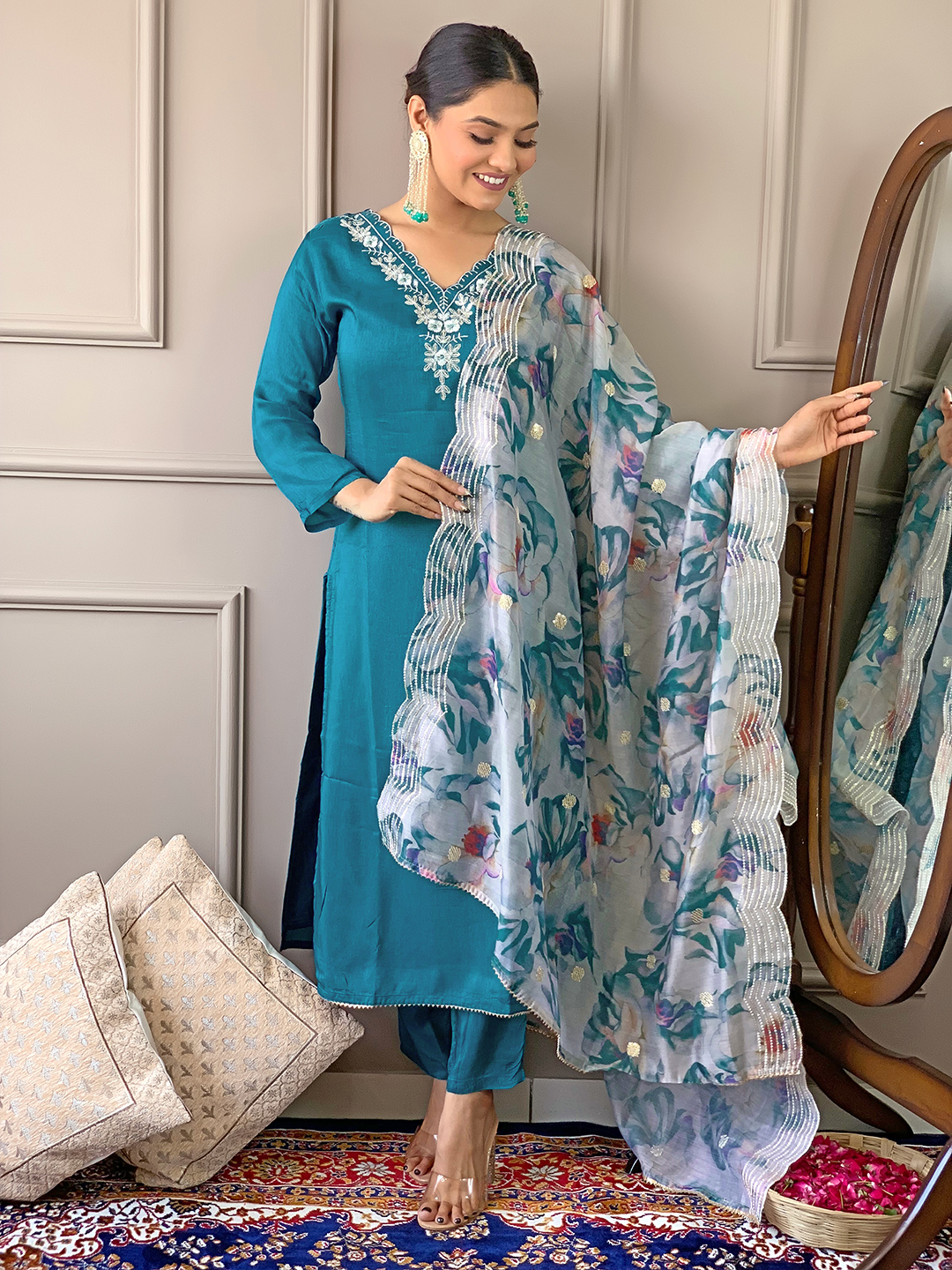
Look for photographs that include a full view, a close embroidery view, a side angle and a natural-light image. Product descriptions should also identify the base material, lining, included pieces and care method. Those details answer practical questions that sparkle alone can't answer.
When comparing a heavily embellished black suit with a pale embroidered kurta set, remember that the phone may assign very different exposure values to each image. Compare the shape of the motif, the width of the border and the placement of the work rather than judging brightness alone. The most realistic representation is usually the image where highlights retain visible edges and the fabric still shows its original colour.
Common Questions About Photographing Cutdana and Sequin Suit Sets
Why do cutdana suit sets sparkle more sharply than sequin suits in photos?
Cutdana pieces have faceted surfaces that return narrow, concentrated highlights to the camera. Flat sequins usually reflect broader patches of light, so their shimmer appears smoother and more continuous.
How should I photograph a cutdana salwar suit at home?
Place the wearer near a large window with the light coming from one side, then use the rear phone camera and tap exposure on a mid-tone fabric area. Take a full-length, waist-up and close embroidery photograph without direct flash.
Why does sequin work disappear when I change the angle?
Sequins reflect light most strongly when their flat faces point towards the light source and camera. When the fabric turns away, the discs reflect less light and the base fabric becomes more visible.
Which background shows white or beige embroidered suits clearly?
A medium-tone background such as muted grey, sage green or natural wood usually separates white and beige embroidery better than a white wall. Avoid strongly coloured backgrounds that can cast reflected colour onto the garment.
Can phone cameras make embellished salwar suits look different from real life?
Phone cameras can alter the appearance of embellished suits through HDR, automatic exposure, sharpening and portrait blur. A direct flash may exaggerate sparkle, while low light may suppress texture and shift fabric colour.
Is cutdana suitable for a daytime Haldi ceremony?
Cutdana can work for a daytime Haldi ceremony, especially when the embellishment is concentrated on a border or neckline and photographed in open shade. Protect the beads and fabric from wet turmeric, abrasive powder and direct contact with paste.