Crushed Tissue Lehengas Create Shine and Volume Without Dense Embroidery because the fabric's irregular surface catches light across every fold. The result is a festive silhouette that can look rich without relying on rows of sequins, thick threadwork or a heavily weighted hem. For shoppers comparing ready-made, designer, bridal and wedding-guest lehengas, understanding the relationship between tissue texture, flare, lining and blouse structure makes the choice far easier.
Crushed Tissue Lehengas Create Shine and Volume Without Dense Embroidery: Why the Surface Matters
Crushed tissue creates shine through surface texture, while volume comes from the fabric's ability to hold folds and spread away from the body. "Crushed" refers to a deliberately rippled or crinkled finish rather than a smooth, mirror-like surface. Each ridge reflects light at a slightly different angle, so the skirt glows softly as the wearer moves.
Smooth satin reflects light in broader patches, whereas crushed tissue produces a more broken, dimensional sheen. That distinction matters in photographs: a smooth metallic surface can look flat when the light changes, but a textured tissue skirt continues to show highlights around the waist, pleats and hem. The effect is decorative even when the embellishment is limited to a border, small motifs or a few sequins.
Volume depends on more than fabric width. A six-metre skirt with controlled gathers can create a graceful sweep, while a stiff underskirt can produce a larger bridal-style dome. A crushed tissue lehenga usually looks most elegant when the flare is supported by a clean lining and carefully distributed gathers rather than excessive layers that make walking difficult.
The Moonlight Charm Foil Sequin Organza Lehenga demonstrates a related styling principle: when a sheer, reflective surface already supplies visual interest, restrained embellishment can look more intentional than dense decoration. The same approach helps a crushed tissue lehenga retain movement instead of becoming visually crowded.
Crushed Tissue Lehengas Create Shine and Volume Without Dense Embroidery: How to Choose One
The right crushed tissue lehenga should be selected by checking the fabric finish, lining, waistband, flare, blouse construction and intended occasion together. A gleaming skirt may look appealing online, but comfort and proportion determine whether the garment works for several hours of standing, sitting and dancing.
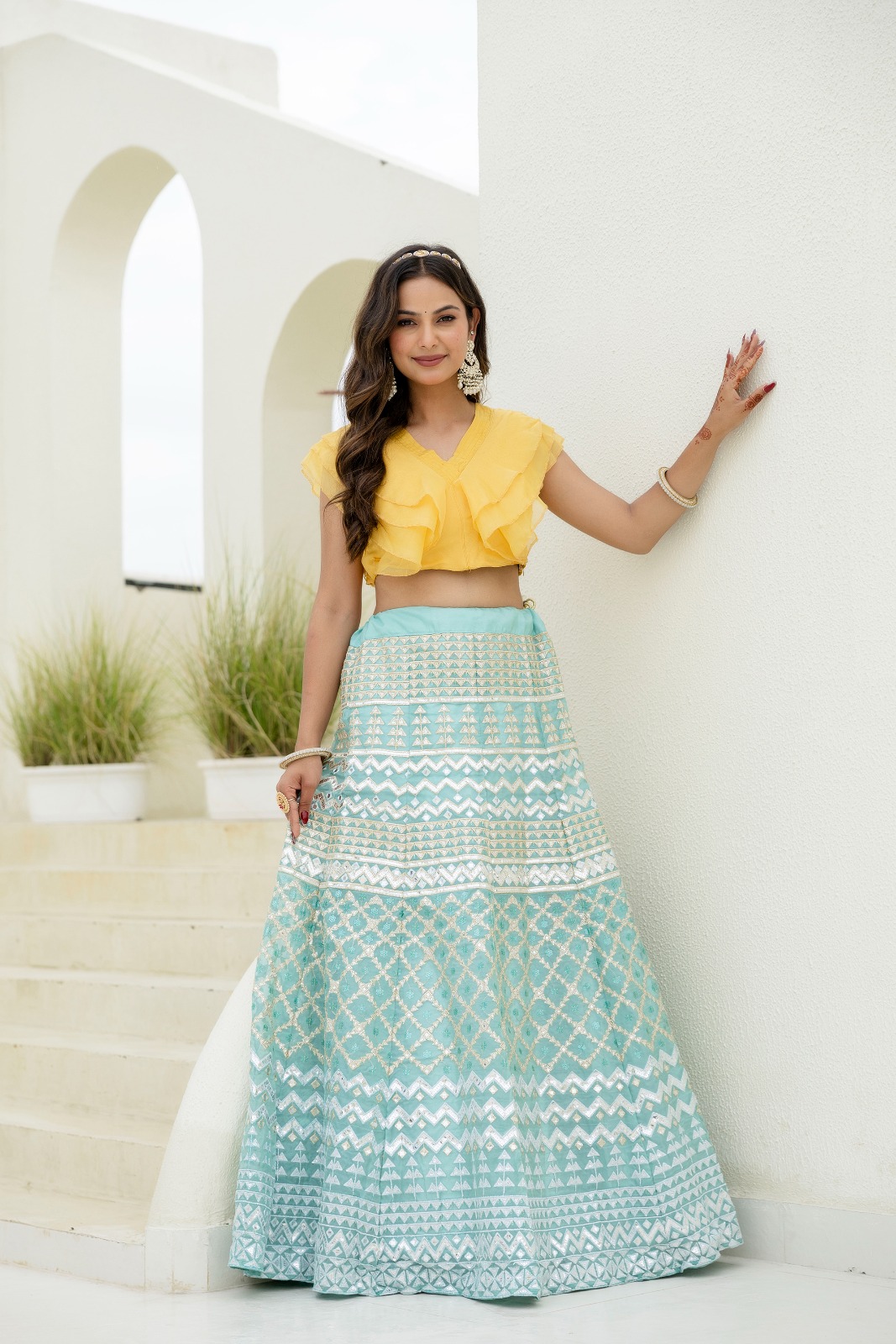
Check the fabric and lining
A good lining prevents tissue from clinging directly to the legs and reduces the chance of the outer layer catching on jewellery or footwear. Look for a lining that reaches close to the hem, feels smooth against the skin and doesn't visibly pull when the skirt is spread. A soft cotton-blend lining can feel comfortable for daytime functions, while a lightweight satin lining often supports a more fluid evening drape.
Hold the skirt near a window or bright indoor light when possible. Excessive transparency around the lower legs, uneven crushing and harsh plastic-like shine are warning signs. A consistent texture doesn't mean every ripple must be identical, but the fabric should not contain random bald patches or flattened sections caused by poor storage.
Assess flare and movement
A practical lehenga should open smoothly when you take a full step, sit on a chair and turn once without the waistband twisting. A moderate flare suits a mehendi, engagement or reception where walking between guests is common. A very wide flare creates a dramatic bridal effect but needs more room, stronger stitching and a petticoat or can-can that remains comfortable for extended wear.
Product descriptions may use terms such as "heavy flare," but shoppers should distinguish between fabric volume and added net layers. The Pink Bridal Sequins Lehenga Set with Heavy Flare belongs to a grander bridal or reception setting, while a lighter crushed tissue design can be more versatile for a wedding guest wardrobe.
Inspect the waistband and seams
A firm waistband keeps a full skirt stable; a decorative cord alone should not carry the entire weight of the lehenga. Check whether the closure uses a zip, hooks, dori or a combination, and allow enough ease for sitting after a meal. Even gathers across the waist prevent the skirt from collapsing to one side.
Seams should lie flat, particularly at the side panels and around the hem. Tissue can show needle marks if repeatedly unpicked, so alterations should be planned before extensive fitting. A professional tailor can adjust the waistband or length, but changing a heavily gathered skirt is more complicated than altering a simple A-line panel.
Crushed Tissue Lehengas Create Shine and Volume Without Dense Embroidery: What Makes Them Occasion-Ready
A light lehenga looks occasion-ready when its shine, blouse detail, dupatta placement and accessories create one balanced focal point. Dense embroidery is only one route to formality; proportion, surface reflection and colour can carry equal visual weight.
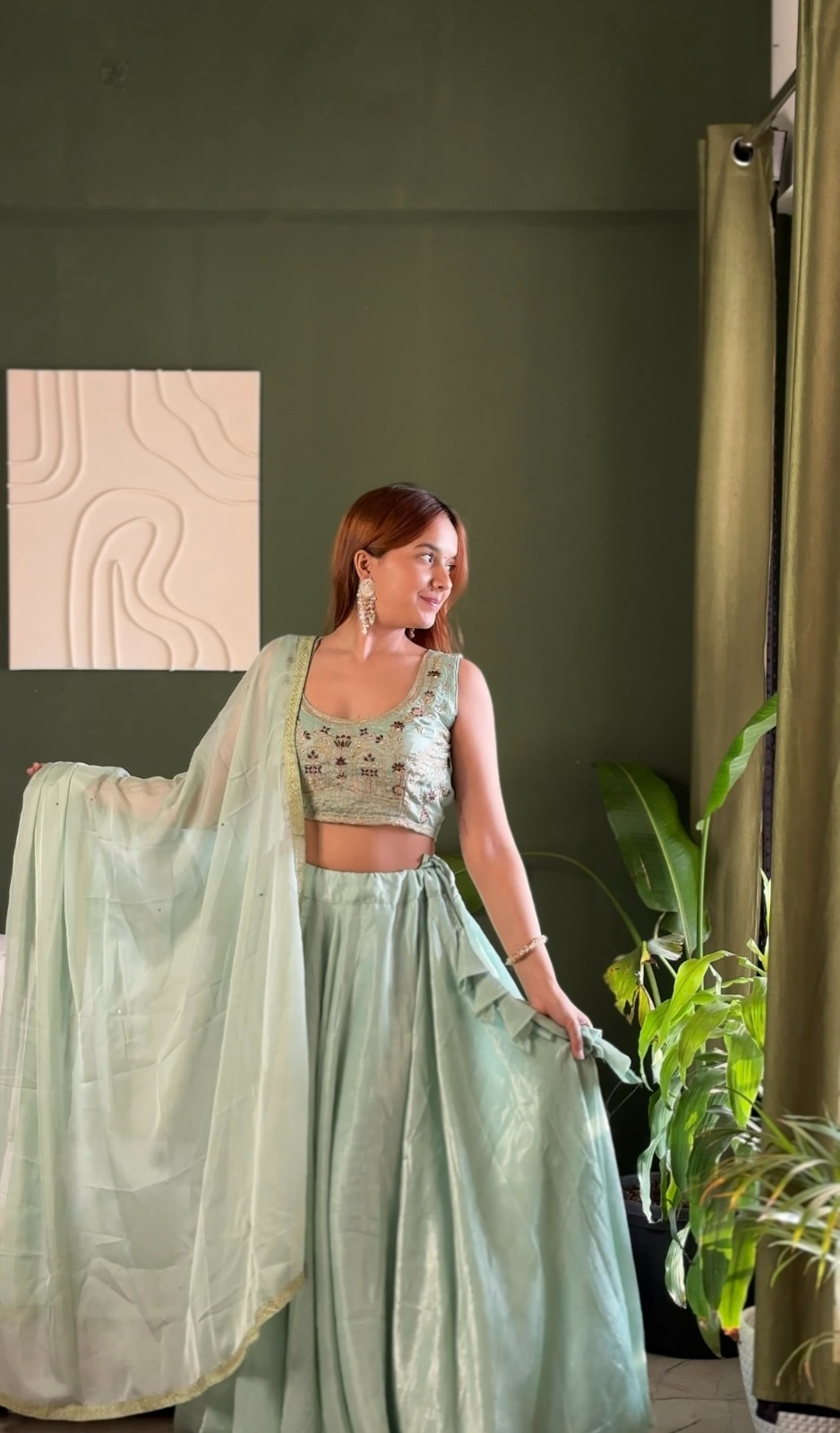
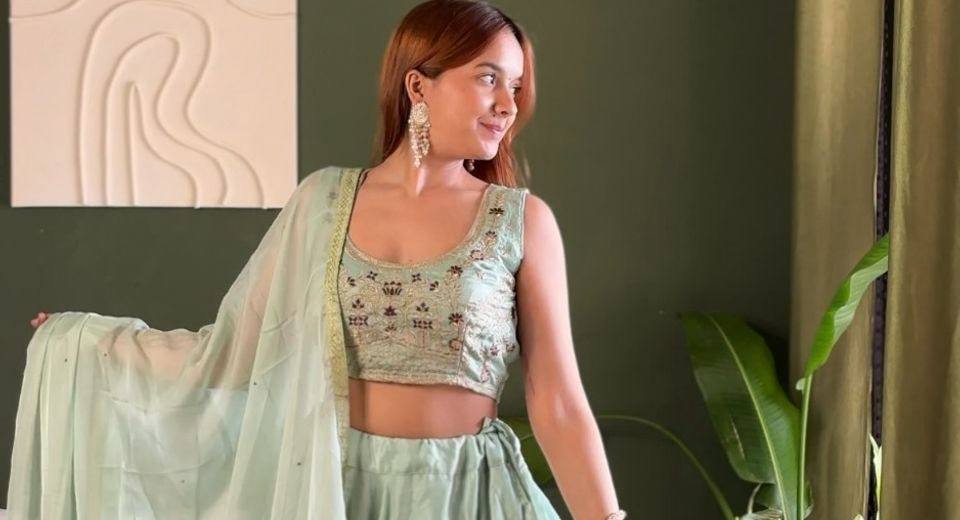
For a daytime Haldi ceremony, yellow, pistachio, mint or soft green can look festive without absorbing heat. The Mint Embroidered Lehenga Set with Net Dupatta for Women offers an useful reference for balancing a lighter skirt with a decorated blouse and airy dupatta. The Green Chinon Silk Sequins Embroidered Lehenga Set shows how a saturated colour and selective sparkle can supply occasion definition without requiring every panel to be embellished.
For evening events, silvered ivory, blush, mauve, champagne and charcoal-grey tissue catch artificial light particularly well. The Pastel Grey Embroidered Butterfly Net Lehenga Set illustrates why a muted base can still feel celebratory when the net layer, embroidery placement and silhouette provide contrast. A pale colour isn't automatically casual; the finish and styling decide how formal it appears.
Bridal wear can use crushed tissue as the luminous foundation beneath more concentrated detail on the choli, border or dupatta. A bride who wants a lighter second outfit for the reception, sangeet or post-wedding celebration may prefer this balance over a fully embellished skirt. The Pink Sequins Embroidered Butterfly Net Lehenga Set is an example of how a sheer overlay and selective sparkle can create bridal presence while preserving movement.
Crushed Tissue Lehengas Create Shine and Volume Without Dense Embroidery: How to Style the Shine
Shine looks polished when the accessories repeat one or two colours from the outfit instead of competing with every reflective surface. A crushed tissue skirt already provides movement, so the styling should give the eye a place to rest.
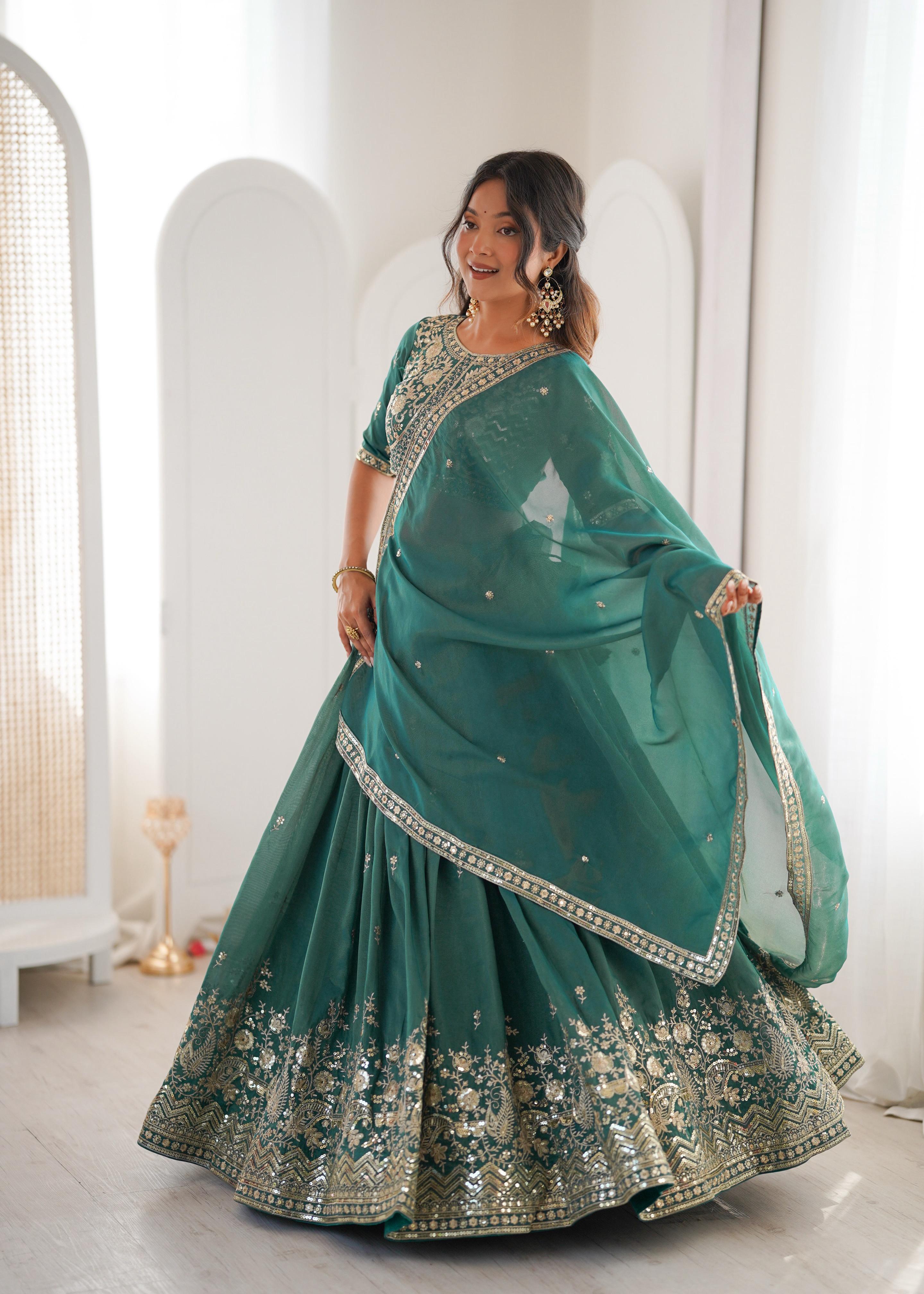
Build the blouse around the skirt
A plain blouse can make a strongly luminous skirt look modern, while a lightly embroidered blouse can make the outfit feel more traditional. If the blouse contains sequins, choose a smaller motif scale than the skirt's texture. A structured sweetheart, square or high neckline can counterbalance a soft, gathered skirt; a fluid blouse works better when the skirt has a sharp, architectural flare.
Fully stitched choli shopping is useful for buyers who need predictable proportions and a faster wardrobe decision. Check the garment's bust, under-bust, armhole and sleeve measurements rather than relying only on a small, medium or large label. A choli that fits at the bust but cuts into the armhole will remain uncomfortable even if the skirt is perfectly sized.
Use the dupatta strategically
A net dupatta worn over one shoulder keeps the blouse visible and preserves the skirt's shine. A dupatta draped across both shoulders gives more coverage and creates a vertical line, which can visually lengthen the torso. For a high-volume skirt, avoid excessive pleats at the waist because they add bulk exactly where the lehenga is already gathered.
The Cream Peacock Embroidered Net Lehenga Set for Women brings an important colour lesson: a cream or ivory base allows peacock, green, blue or gold accents to become the styling bridge between blouse, dupatta and jewellery. Choose one dominant metal, such as antique gold or silver, and repeat it in the earrings, bangles and footwear.
Choose jewellery and footwear by weight
Medium-weight earrings, a slim choker or one statement necklace usually complement a reflective skirt better than several competing necklaces. Jhumkas, chandbalis and pearl drops work especially well when the blouse neckline is open. A maang tikka can supply bridal emphasis without adding more decoration to the skirt.
Footwear should provide enough height to keep the hem clear of the floor without making the wearer unstable. Measure the lehenga length while wearing the shoes intended for the event. A concealed wedge or two- to three-inch block heel is often more practical than a narrow stiletto for outdoor venues and uneven flooring.
Crushed Tissue Lehengas Create Shine and Volume Without Dense Embroidery: Colour Choices for Events
Colour should follow the event's light, timing and dress code rather than trend alone. Warm greens, yellows and pinks suit daytime celebrations, while pale metallics, wine, navy and deeper jewel tones gain depth under evening lighting.
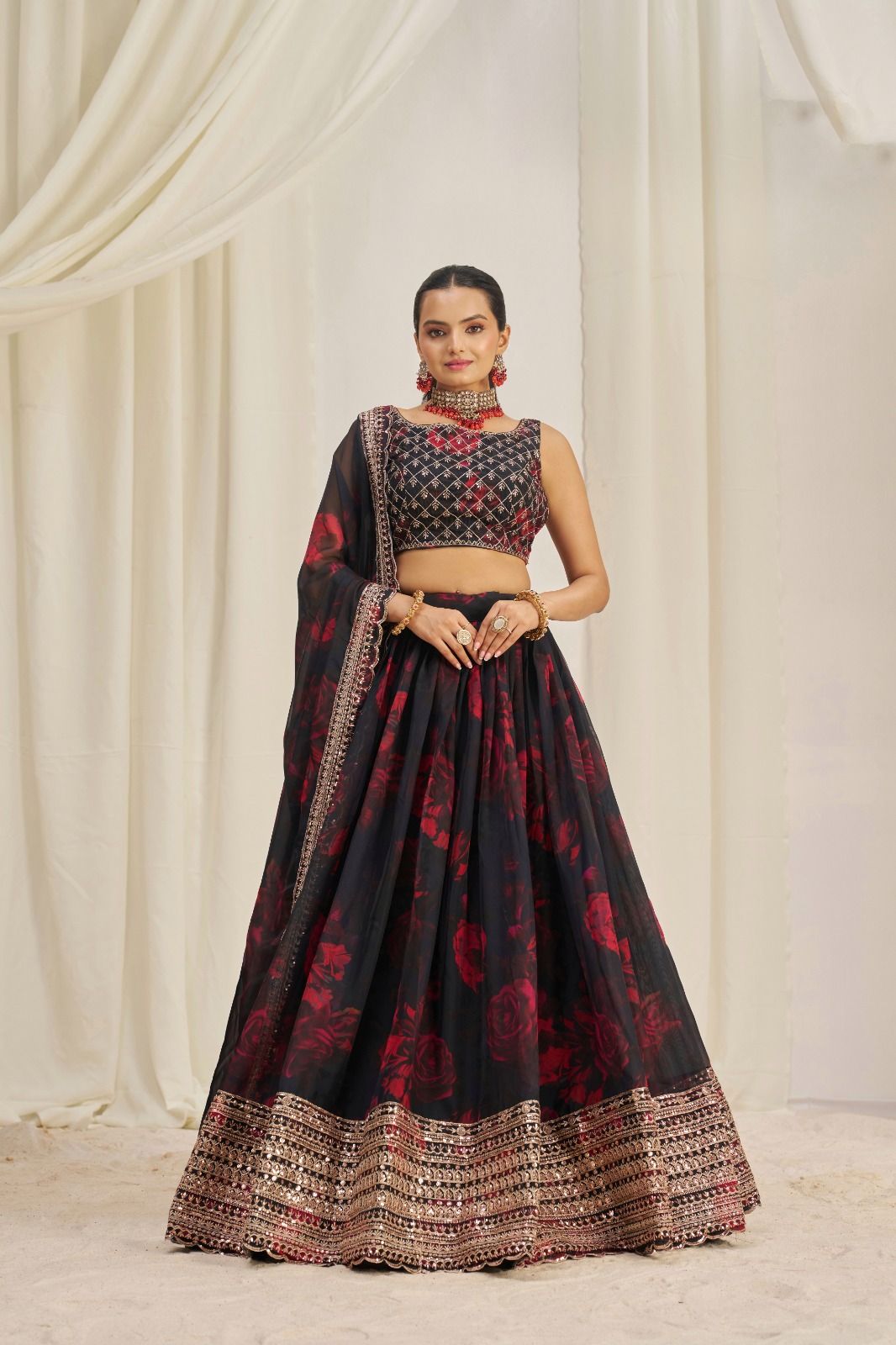
Mehendi Lehengas and Yellow Lehengas are natural starting points for daytime pre-wedding functions because yellow and green harmonise with marigold décor, fresh foliage and turmeric ceremony styling. Green Lehengas can shift from playful to formal depending on whether the shade is pistachio, emerald, sage or bottle green. Pair a bright skirt with a quieter blouse if the venue already contains saturated décor.
A rose or dusty-pink tissue lehenga suits engagement parties and wedding receptions because pink reflects warm lighting without appearing as severe as a metallic silver. The Dusty Pink Satin Embroidered Lehenga Set Online shows how a soft colour can gain structure from satin sheen and embroidery placement. A blush blouse, pearl jewellery and champagne-toned footwear will keep the palette gentle; antique gold accessories will make the same outfit feel warmer and more classic.
Cream, ivory and silver are flexible for receptions but require attention to the invitation's dress code. Guests should avoid a near-white bridal look when the family has requested time-honoured bridal colours. A coloured blouse, contrasting dupatta or darker border can clearly separate a guest outfit from bridal styling.
Crushed Tissue Lehengas Create Shine and Volume Without Dense Embroidery: Ready-Made Buying and Care
Ready-made shopping works best when the buyer compares garment measurements, alteration scope and return timing before placing an order. The Ready Made Lehenga category suits shoppers with an approaching event, while a Semi Stitched Lehengas Collection brings more flexibility for customising the waist, blouse and length.
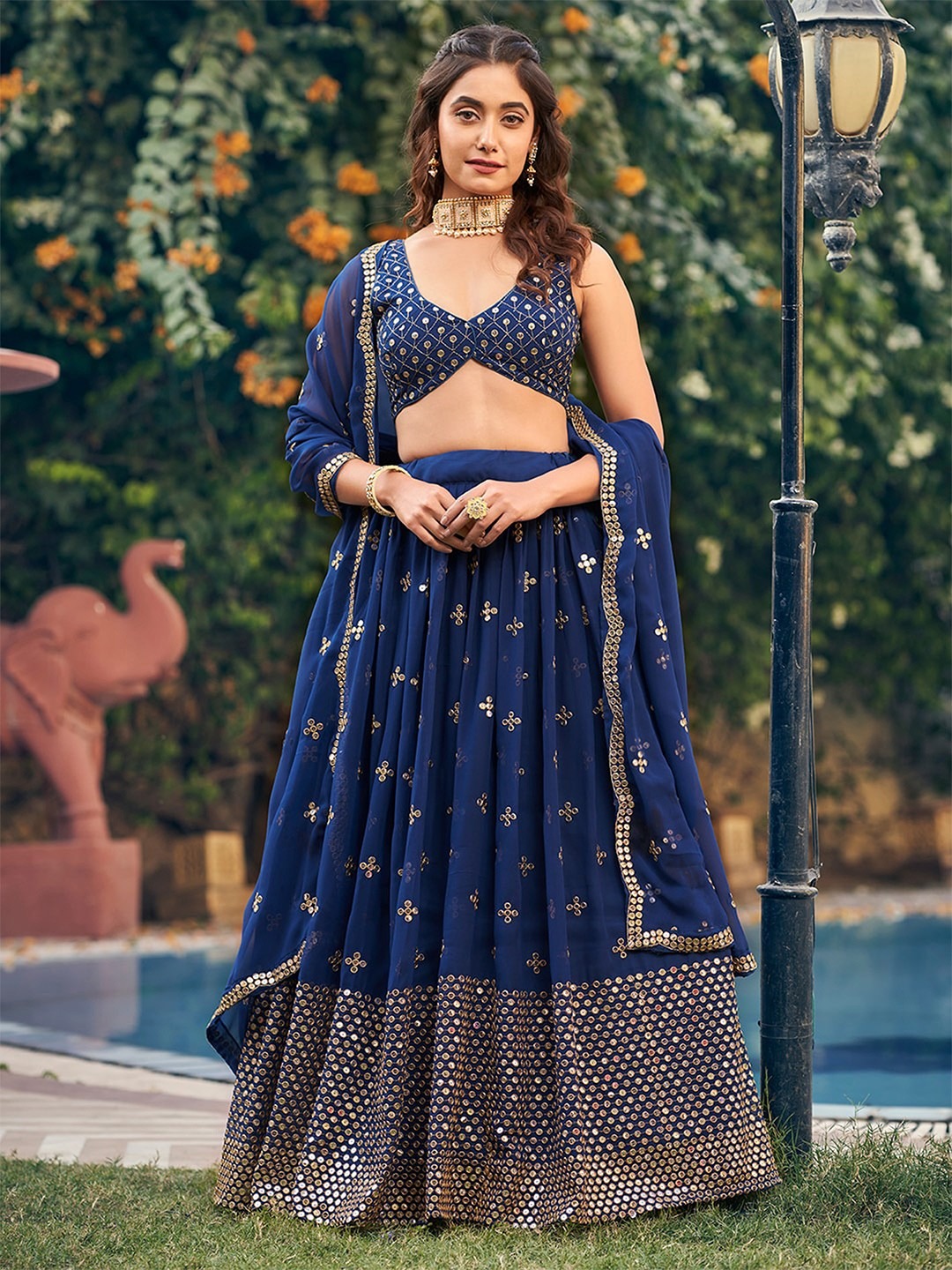
Measure the natural waist, fullest hip, bust and shoulder width with the tape held level and without pulling it tight. Compare those numbers with the product chart, then allow room for sitting and for the blouse lining. Order at least two to three weeks before the event when possible, because a tailor may need several days for a hem, sleeve or waistband adjustment.
Girls' lehengas need additional attention to comfort and growth room. A secure waist, soft lining, manageable dupatta and hem that doesn't trail on the floor matter more than maximum flare. Avoid sharp hooks, rough sequins at the armhole and excessively long drawstrings for younger wearers.
Store crushed tissue on a broad hanger or fold it loosely along existing texture lines. Do not press the fabric flat with a hot iron because heat can reduce the crinkle effect, flatten the surface or create unwanted shine. Place a clean cotton cloth between folded layers and keep the garment away from direct sunlight, damp cupboards and rough embellishments that may snag the tissue.
Dry cleaning is generally safer for embellished tissue garments than home washing, but the care label should take priority. Tell the cleaner about sequins, foil, zari or glued decorations before treatment. After wearing the lehenga, air it in a shaded room for several hours before storing it; perfume, perspiration and moisture are more likely to leave marks when the garment is packed immediately.
One well-proportioned crushed tissue lehenga can serve several celebrations when the blouse, dupatta and jewellery are changed. A plain blouse can make the skirt suitable for a festive dinner, while a more ornate choli and bridal jewellery can take it towards a wedding reception. Thoughtful care protects the fabric's texture, which is the feature providing both shine and volume in the first place.
Crushed Tissue Lehengas Create Shine and Volume Without Dense Embroidery: Questions Shoppers Ask
Crushed tissue lehengas are suitable for weddings, receptions, engagements, sangeet evenings and selected festive gatherings. The correct level of formality depends on the blouse, border, dupatta and accessories rather than the skirt fabric alone.
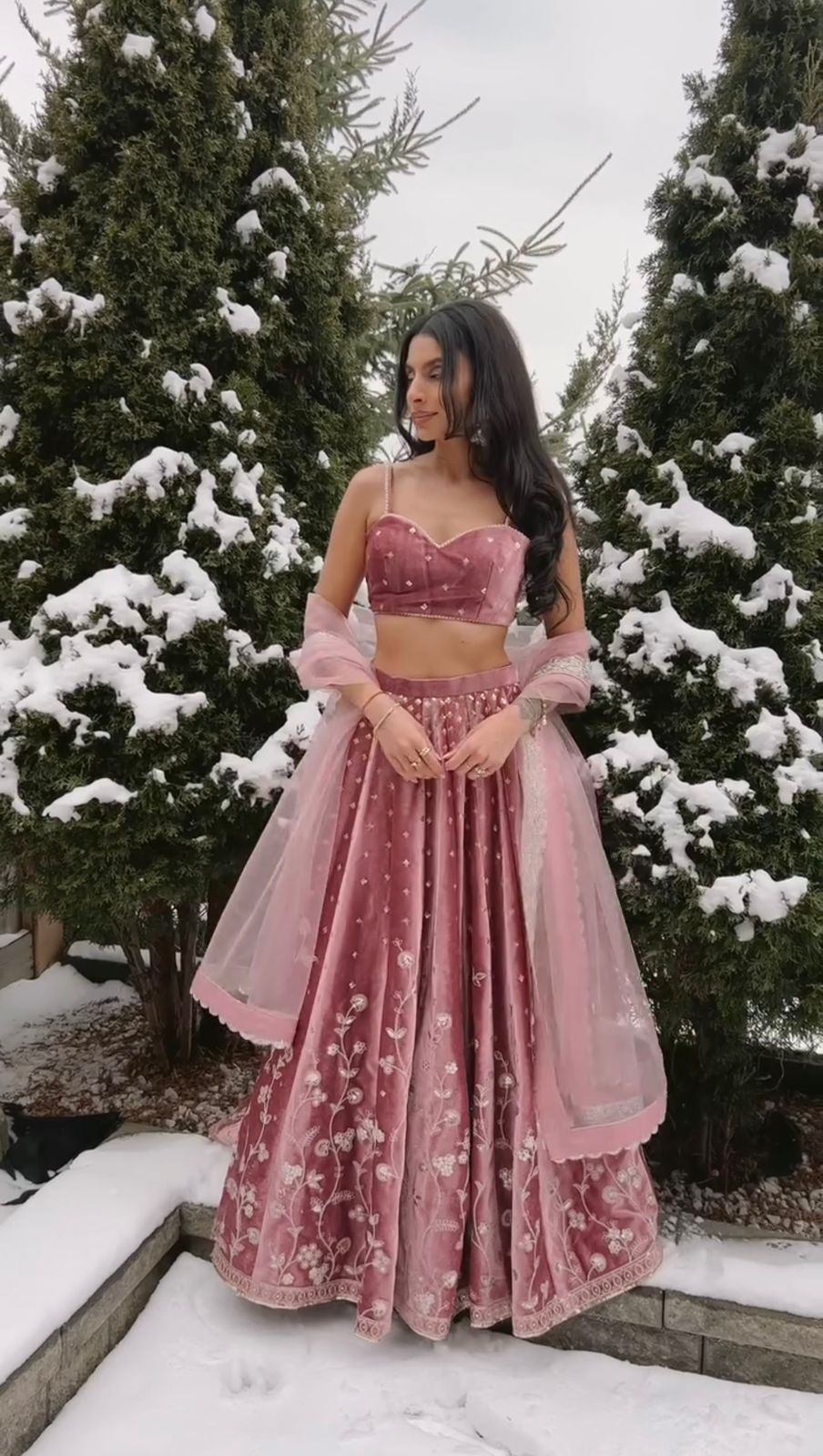
Use a supportive lining and controlled flare to improve comfort in a crushed tissue lehenga. A waistband that sits securely, a hem at the correct shoe height and enough ease at the waist make a greater practical difference than adding another underskirt.
Questions About Choosing and Styling Crushed Tissue Lehengas
Are crushed tissue lehengas comfortable for a full wedding event?
Crushed tissue lehengas can be comfortable for several hours when they have a smooth lining, secure waistband and moderate flare. Very wide skirts with multiple stiff layers may feel heavy, so check the garment's weight and sit-and-walk movement before buying.
Can I wear a crushed tissue lehenga to a Haldi ceremony?
Yes, a crushed tissue lehenga works for a Haldi ceremony when the colour and embellishment suit daytime wear. Yellow, mint, pistachio and green are practical choices, while a lighter blouse and breathable lining help in warm outdoor settings.
How do I style a tissue lehenga without looking overdressed?
Pair the reflective skirt with a quieter blouse, one dominant jewellery metal and a simply draped dupatta. Medium-weight earrings and block heels usually create a more balanced look than several heavily embellished accessories.
Is a ready-made crushed tissue lehenga better than a semi-stitched one?
A ready-made lehenga is faster and more predictable when the size chart closely matches your measurements. A semi-stitched lehenga is preferable when you need significant waist, blouse or length adjustments before a wedding.
Can crushed tissue fabric be ironed at home?
Crushed tissue should not be pressed flat with a high-temperature iron because heat can damage or reduce the textured finish. Follow the care label, use professional cleaning for embellished garments and store the lehenga along its existing crease lines.
What footwear works best with a high-volume tissue lehenga?
A stable two- to three-inch block heel or concealed wedge usually works best with a high-volume tissue lehenga. Measure the hem while wearing the chosen shoes so the skirt clears the floor without creating a tripping hazard.