

Humidity, sudden rain and air-conditioned rooms can make one outfit feel suitable for three different climates in a single day. Cotton Salwar Suits for Comfortable Drape Across Different Weather solve that problem when the fabric weight, silhouette and dupatta are chosen with care. A lightweight cotton kurta may feel ideal in May, while a denser weave with a full-length sleeve can feel more practical during a cool December morning.
Comfort depends on more than the word cotton on a label. Yarn density, weave, lining, seam placement, trouser volume and the weight of the dupatta all change how a salwar suit sits on the body. The choices below help with office hours, travel, festive gatherings and daily errands without treating every season the same way.
Cotton Salwar Suits for Comfortable Drape Across Different Weather and climate changes
Cotton works across different weather conditions because it absorbs moisture, allows air movement and can be woven in weights ranging from very light to moderately substantial. Cotton fibres feel comfortable against the skin in warm conditions, while a closer weave provides more coverage when temperatures drop.
In humid weather, absorbency helps manage perspiration, but a very thick cotton fabric can hold moisture and feel heavy. Open weaves, fine lightweight cottons and unlined or lightly lined kurtas usually dry faster and allow greater airflow. In dry heat, a slightly structured cotton can protect the skin from direct sun without clinging to the body.
Monsoon dressing requires a different balance. A cotton suit with a shorter, less voluminous dupatta is easier to manage around wet roads and crowded transport. Darker prints or mid-tone colours can be practical for frequent wear, although colourfastness still depends on dye quality and washing method. For cooler weather, cotton suits pair well with a fine inner layer, a woven shawl or a longer dupatta.
Cotton Salwar Suits for Comfortable Drape Across Different Weather through fabric weight
Fabric weight and weave determine whether a cotton salwar suit falls close to the body, holds an A-line shape or creates a softer, fluid line. A fabric between approximately 80 and 140 GSM generally feels light for warm-weather clothing, while cotton above roughly 140 GSM often offers more structure and coverage; GSM varies by weave and should be treated as a guide rather than an absolute rule.
Light cotton for hot and humid days
Light cotton is suitable for high temperatures when the garment has enough ease at the bust, waist and upper arm. A straight kurta with side slits permits air circulation, while a cotton A-line silhouette keeps fabric away from the knees and lower legs. Very thin fabric may need a breathable cotton lining, because transparency and cling can undermine comfort.
Cream Printed Cotton Kurta Pant Dupatta Set for Women demonstrates why a coordinated three-piece set can be useful in warm weather: the pant gives predictable movement, while the dupatta can be folded narrower or worn over one shoulder. A pale base also reflects more sunlight than a very dark, dense surface, although actual comfort still depends on weave and lining.
Medium-weight cotton for variable temperatures
Medium-weight cotton is more adaptable when mornings and evenings are cool but afternoons remain warm. A denser weave holds a clean outline, resists excessive cling and works well under a light cardigan.
Designer Cotton A-Line Kurti Pant Set with Mirror Work adds surface detail without requiring a heavy, layered garment, making an A-line shape useful for semi-dressy daytime dressing. Red Cotton A-Line Kurti Set with Mirror Work Design also shows why the placement of decoration matters as much as colour when evaluating movement. Concentrated embellishment around the yoke or hem can pull the fabric, while evenly distributed detail usually preserves balance.
Cotton Salwar Suits for Comfortable Drape Across Different Weather and silhouette choice
Straight, A-line and gently flared silhouettes usually give cotton the most comfortable fall because each shape allows movement without relying on stretch. The best choice depends on where volume is needed and how much structure the cotton has.
A straight kurta is efficient for commuting and office wear because the side seams remain visually neat and the hem doesn't create excess volume. A relaxed straight cut should still allow approximately 5 to 8 centimetres of ease around the body, depending on personal preference and the fabric's stiffness. Vertical Cotton Straight Kurta Set with Dupatta uses vertical direction to create a longer visual line while retaining the practical shape of a straight kurta.
An A-line kurta widens gradually from the upper body and is helpful when you want space around the hips and thighs. A-line cotton salwar suits are especially comfortable for walking, sitting cross-legged or travelling because the lower portion doesn't grip the legs. A very wide flare, however, can feel warm in humid weather and may need extra fabric to maintain its shape.
A pant or narrow trouser gives cotton suits a contemporary, easy-to-manage profile, while a salwar with more gathers creates softer traditional volume. Palazzo trousers provide airflow but can become cumbersome in rain if the hem is too long. Trouser length should sit approximately 2 to 3 centimetres above the ground with the footwear you plan to wear most often.
Cotton Salwar Suits for Comfortable Drape Across Different Weather with the right dupatta
The dupatta should be selected according to weather because its weight and width can change the comfort of the complete suit. A light cotton or cotton-blend dupatta is usually easier in summer, while a denser cotton dupatta brings useful coverage during cooler evenings.
A pure salwar suit dupatta made from breathable cotton can work well for everyday use, but the phrase pure cotton doesn't automatically indicate a particular thickness. Check whether the dupatta is sheer, closely woven, printed, embroidered or lined. A pure suits dupatta with substantial embroidery may look festive but can feel warm when wrapped closely around the neck.
For humid days, drape the dupatta over one shoulder with the opposite end kept shorter, or fold it lengthwise to reduce bulk. During light rain, a compact shoulder drape is easier to protect than a wide, floor-skimming arrangement. In winter or strongly air-conditioned spaces, wear the dupatta across both shoulders so it functions as an additional light layer.
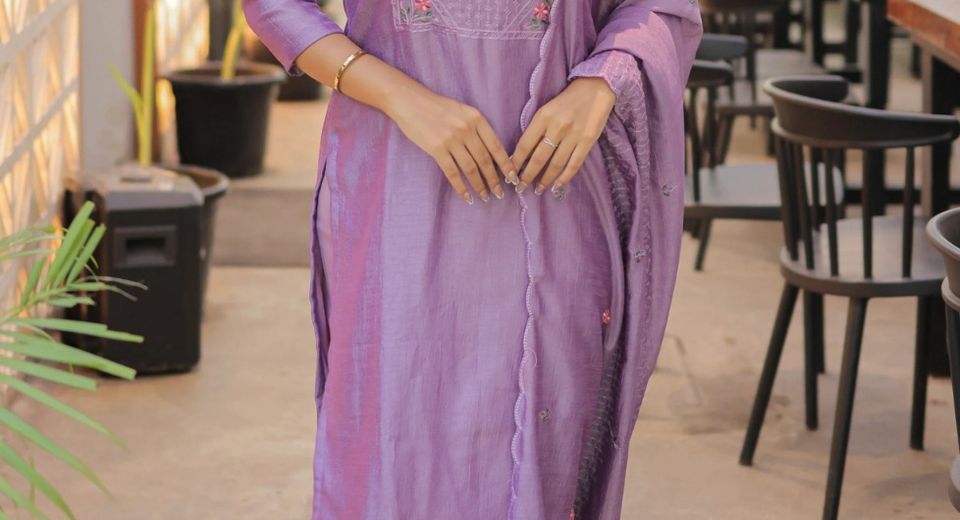
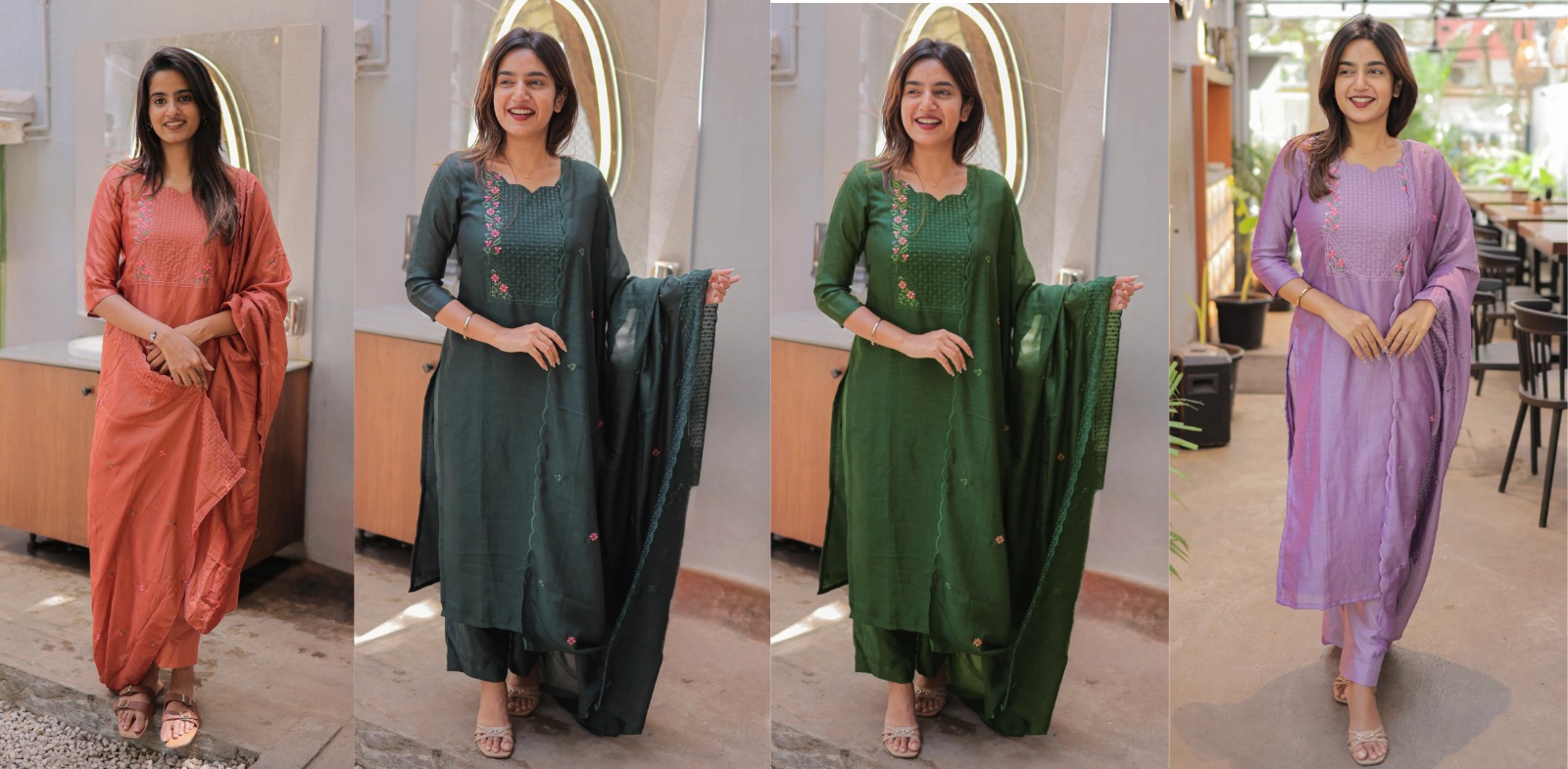
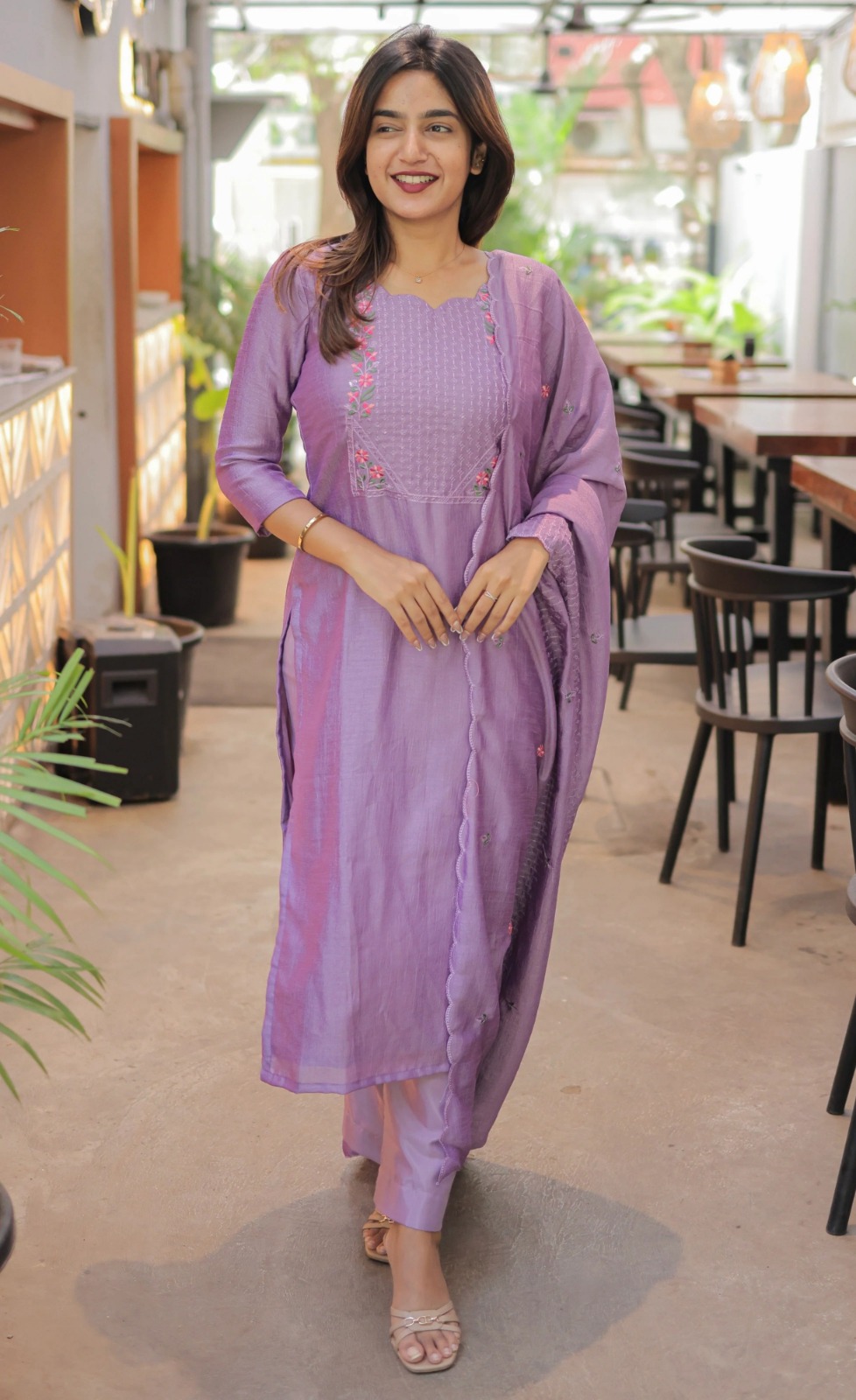
Lavender Cotton Kurta Set with Embroidery Dupatta Set suits a transition between daytime and a modest festive setting because embroidery gives visual interest without demanding a separate heavy layer. Brown Embroidered Cotton Kurta Pant Dupatta Set Women gives a deeper colour direction that can feel practical for travel and repeated wear, especially when paired with a lightweight neutral stole.
Cotton Salwar Suits for Comfortable Drape Across Different Weather by season
Seasonal styling should add or remove layers rather than replace cotton's breathable base. The same salwar suit can therefore move from a hot afternoon to a cool indoor venue with carefully chosen accessories.
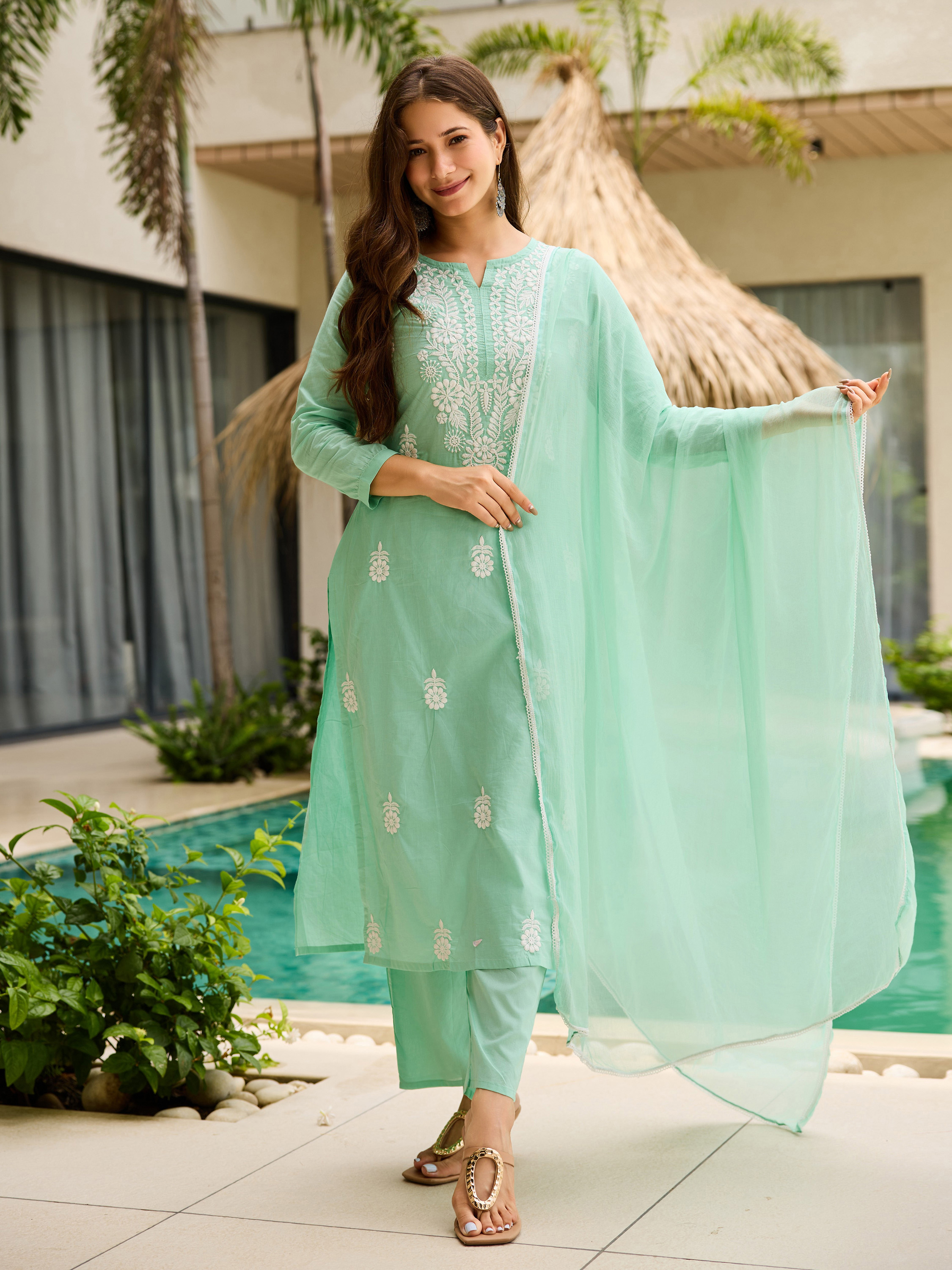
Summer and humid monsoon dressing
Summer cotton salwar suits are most comfortable with three-quarter or elbow-length sleeves, breathable lining and enough room at the underarm. Choose cotton pants that don't taper tightly at the calf, because extra ease improves airflow while sitting. Flat sandals, a washable tote and a narrow dupatta keep the outfit practical for commuting.
Monsoon outfits benefit from shorter hems, darker or medium-tone prints and dupattas that can be folded into a smaller loop. Avoid dragging a long palazzo hem through wet streets. Black Maroon Cotton Printed Kurta Set with Dupatta gives a print-led direction for days when minor splashes and repeated use are part of the routine, although every cotton garment still needs prompt drying after exposure to rain.
Autumn, winter and air-conditioned spaces
Cooler weather doesn't require abandoning cotton; it requires adding breathable layers. Wear a cotton camisole or short-sleeved inner layer beneath a medium-weight kurta, then add a cardigan, quilted vest or wool-blend shawl when needed. Keep the base layer close but not tight, because trapped perspiration can make a cool day feel uncomfortable.
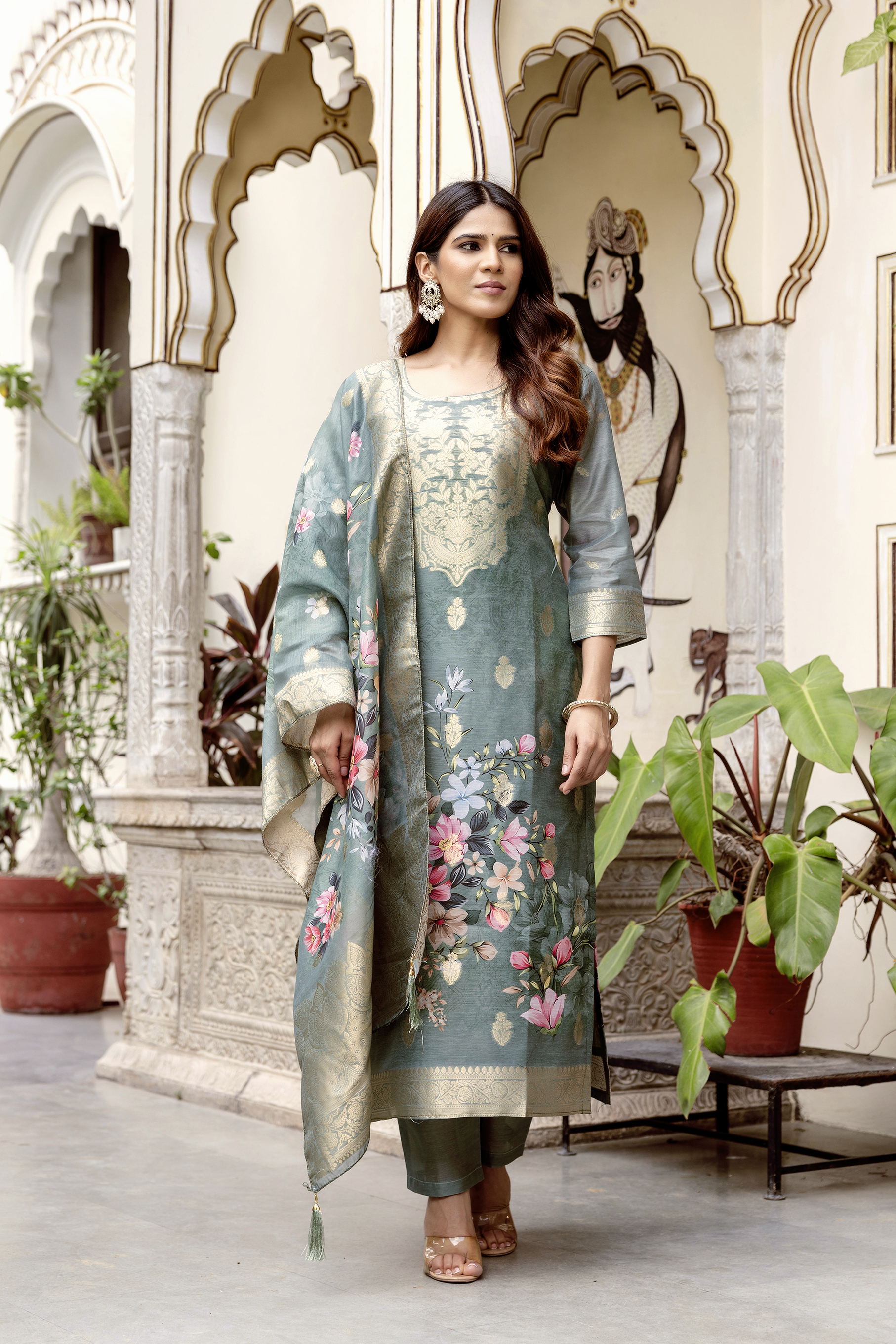
For festive daytime gatherings, a woven dupatta or a light silk-cotton layer can add warmth without the weight of a fully woollen wrap. Cream Floral Cotton Kurta Set with Pant and Dupatta can be styled with a muted shawl in winter and worn with only the printed dupatta during warmer months. Floral cotton doesn't have to look informal when jewellery, footwear and a cleanly pressed dupatta create a sharper finish.
Cotton Salwar Suits for Comfortable Drape Across Different Weather when buying and caring
Buying decisions should prioritise measurements, opacity, seam quality and care requirements rather than colour alone. A well-fitting cotton suit remains comfortable longer because it doesn't need constant tugging, pinning or adjustment.
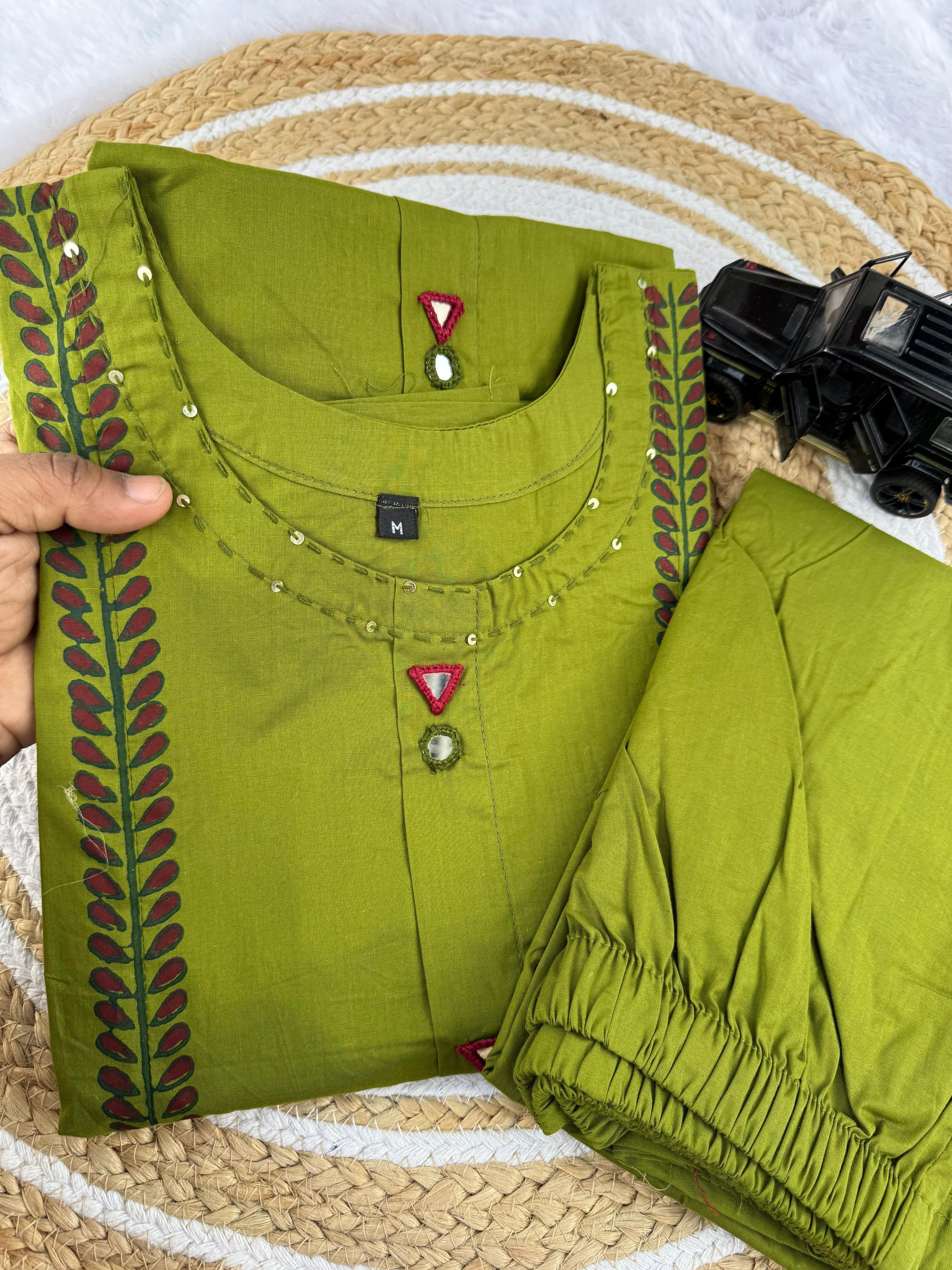
A cotton suit under 2000 rupees can be a sensible everyday purchase when the stitching, measurements and fabric care requirements are clear. Compare total value rather than only price: a set with a coordinated pant and dupatta may require fewer additional purchases than a kurta sold alone. Check the size chart, garment length, sleeve measurement, trouser rise and dupatta dimensions before ordering.
Kolkata Cotton Salwar Suits and Bengali Cotton Salwar Suits can be useful search directions for shoppers interested in regional cotton aesthetics, but names of collections don't by themselves confirm fibre content or fabric weight. Read the product specifications and look for details about lining, embroidery and washing before making a decision.
Cotton Salwar Suits Under 2000 Rupees is another practical budget category for daily dressing, particularly when you need several outfits for work or college. Kalamkari Print Salwar Suits (Copy) may appeal to shoppers who want a strong printed surface, while Maharashtra Paithani Inspired Salwar Suits can offer a more heritage visual mood. Printed or inspired designs still require the same checks for construction, colourfastness and comfort.
Care instructions that protect shape and drape
Wash cotton salwar suits in cool or lukewarm water, preferably with similar colours, and avoid soaking printed or embroidered garments for long periods. Excessive hot water can encourage shrinkage, while strong detergent can fade surface colour and weaken embroidery threads.
Dry cotton garments in shade or soft indirect sunlight when possible. Direct, intense sunlight can fade dark prints over repeated washes. Reshape the kurta and trouser seams while damp, and avoid wringing heavily embellished dupattas. Iron cotton on the reverse side at a medium-to-high setting according to the care label, using a pressing cloth over mirror work or embroidery.
Store completely dry cotton garments in a breathable cupboard rather than sealed plastic for long periods. Fold embroidered dupattas with tissue or a soft cotton layer between heavy surfaces, and refold stored suits occasionally to reduce sharp permanent creases. These small steps help preserve both comfort and drape.
Cotton Salwar Suits for Comfortable Drape Across Different Weather: a practical final checklist
The most comfortable cotton salwar suit matches fabric weight, silhouette and dupatta to the weather you'll actually face. No single cotton weave performs identically in humid heat, heavy rain and cool indoor air.
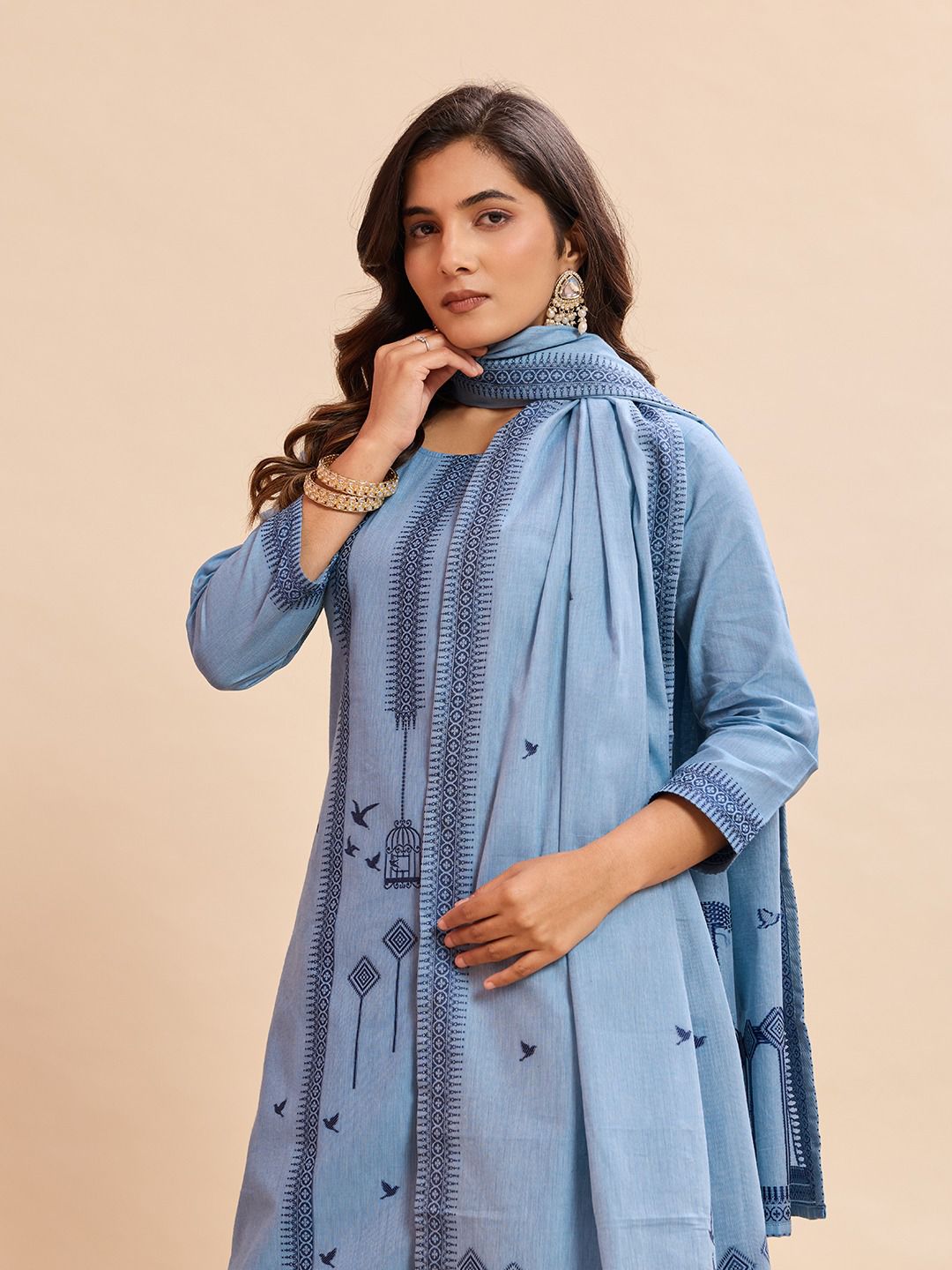
Choose light, breathable cotton with underarm ease for hot and humid days.
Choose a medium-weight weave or add a fine layer when temperatures vary between morning and evening.
Choose shorter hems and a compact dupatta for monsoon travel.
Choose straight or A-line cuts when walking, commuting or sitting for long periods.
Check opacity, lining, garment measurements and embellishment placement before buying.
Wash gently, dry thoughtfully and store cotton only after it's completely dry.
These checks make cotton salwar suits more versatile than a purely seasonal wardrobe staple. They also explain why a comfortable drape comes from the relationship between fibre, construction, climate and styling rather than from the fabric name alone.
Common Questions About Cotton Salwar Suits for Comfortable Drape Across Different Weather
Which cotton is best for a salwar suit?
A lightweight to medium-weight cotton with good airflow is usually the most comfortable choice for a salwar suit. Choose a lighter weave for humid heat and a denser weave for cooler weather, while checking opacity, shrinkage and lining before purchase.
Are cotton salwar suits formal attire?
Cotton salwar suits can be formal attire when the cut is neat, the fabric is opaque and the decoration is restrained. A straight kurta with tailored pants, a pressed dupatta and modest embroidery generally works better for formal settings than a very casual, thin printed set.
Which salwar suit is trending now in India?
Straight cotton kurta sets, A-line kurta-pant sets and coordinated three-piece suits remain practical contemporary choices in India. Vertical prints, moderate mirror work, floral motifs and comfortable pants are popular because they combine movement with a polished appearance.
Are pure cotton salwar suits suitable for monsoon weather?
Pure cotton salwar suits can suit the monsoon when the weave is not excessively heavy and the garment can dry quickly. Choose moderate lengths, avoid dragging wide hems through rain and dry the suit promptly to prevent musty odour or colour transfer.
How can a cotton salwar suit be worn in winter?
Wear a cotton salwar suit in winter with a breathable inner layer, cardigan, quilted vest or wool-blend shawl. A medium-weight cotton kurta and a full-width dupatta provide more coverage than a very thin summer weave.
How do I choose cotton salwar suits under 2000 rupees?
Choose cotton salwar suits under 2000 rupees by comparing measurements, fabric details, stitching, lining and whether the price includes the pant and dupatta. A lower price is useful only when the garment has a reliable fit and care instructions that suit your routine.


