

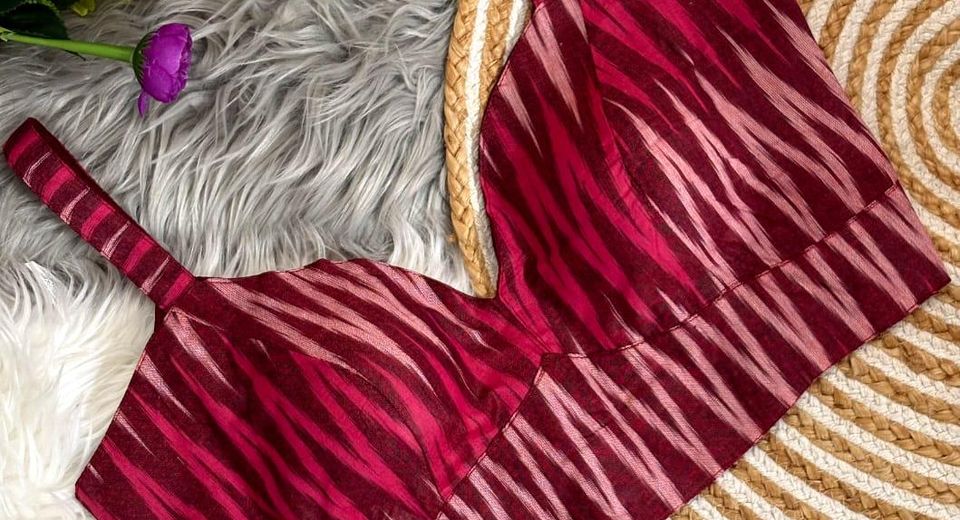
Comparing Comfort and Fit in Stretch Blouse vs Non-Stretch Blouse becomes much easier when you separate three things: fabric movement, garment measurements and the way the blouse is constructed. A stretch blouse can accommodate small changes in the bust and upper waist, while a non-stretch blouse can provide a sharper, more structured outline when the measurements are accurate. Neither option is automatically more comfortable. The better choice depends on the saree fabric, wearing time, neckline, padding, sleeve design and how closely the blouse matches your body.
That distinction matters when choosing a readymade blouse. A blouse that feels comfortable for a two-hour dinner may become restrictive after six hours at a wedding. A firm silk or cotton blouse may look beautifully tailored but need precise shoulder and bust measurements. A flexible blouse may be forgiving around the body but still pull at the armhole if the cut is too narrow. Knowing where comfort comes from helps you choose with more confidence than relying on size labels alone.
What creates comfort in a saree blouse?
Comfort comes from adequate ease, a correctly placed armhole, breathable fabric, smooth seams and enough support at the bust. Stretch alone can't correct a blouse that's too short, badly shaped or tight across the shoulders.
Ease is the small amount of extra room added beyond your body measurement. A fitted blouse usually needs less ease than a loose top, but zero ease can make sitting, lifting an arm or taking a deep breath uncomfortable. For a close-fitting blouse, a small amount of ease around the bust and upper waist is usually more wearable than an exact skin-tight measurement. The exact amount depends on the fabric's recovery and the pattern's construction.
Armhole depth has a major effect on comfort. An armhole cut too high can dig into the underarm, while an armhole cut too low can expose the side of the bust and pull the blouse outward. Shoulder width also matters because a narrow shoulder causes diagonal wrinkles from the neckline towards the sleeve or armhole.
Seam finishing affects long-wear comfort. Soft lining, covered seams and a smooth hook or zip area prevent rubbing against the skin. Padded blouses can reduce the need for a separate bra, but the pad shape and placement must suit the wearer. Padding that ends too high or sits away from the bust can create pressure rather than support.
Comparing Comfort and Fit in Stretch Blouse vs Non-Stretch Blouse
A stretch blouse generally offers more movement and measurement tolerance, while a non-stretch blouse generally gives stronger structure, cleaner shaping and more predictable drape when fitted correctly.
Where a stretch blouse performs well
Stretch fabric is useful when the blouse must accommodate movement, modest measurement variation or extended wear. A small amount of elastane, knitted construction or flexible blended fabric can make it easier to raise the arms, sit comfortably and manage a saree during a busy function. Stretch can also make a readymade blouse more forgiving when your bust measurement falls between two standard sizes.
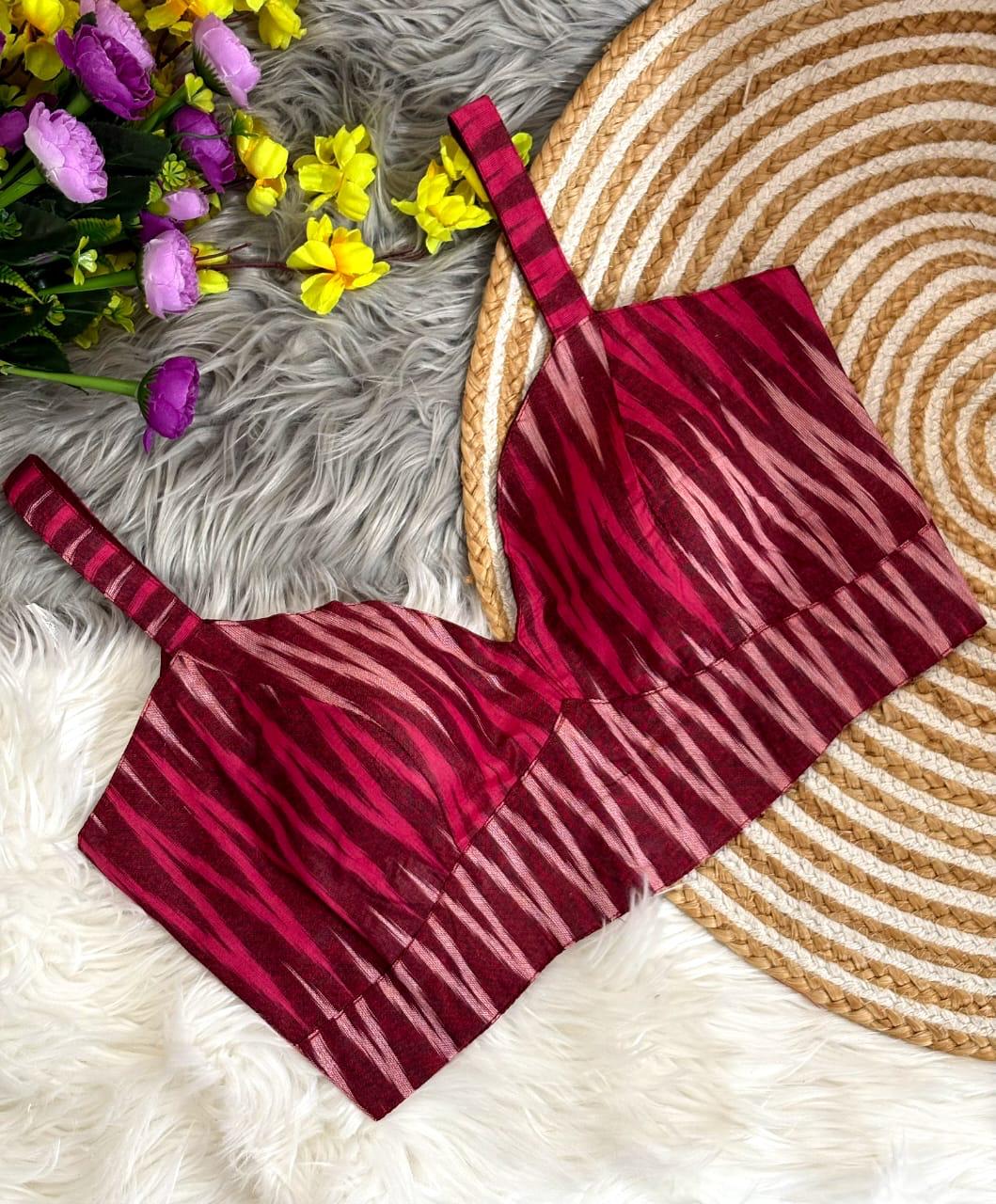
Stretch is especially useful for sleeveless styles, close necklines and blouses with minimal openings. A sleeveless cut such as the Ikkat Cotton Padded Blouse for Women Sleeveless can feel easy to move in when the armhole is properly shaped. The useful feature isn't simply flexibility; the blouse still needs enough room at the bust and a stable shoulder line.
Stretch fabric has limits. Repeated pulling can reduce recovery, meaning the material doesn't return fully to its original shape. A blouse that feels comfortable on the first wear can gradually gape at the neckline or loosen around the underbust if it's consistently worn beyond its intended size. Stretch also gives less structural support than a firm woven fabric unless the lining, padding and closures compensate for it.
Where a non-stretch blouse performs well
Non-stretch fabric is usually the stronger choice for a crisp silhouette, firm support and decorative details that need a stable base. Banarasi silk, cotton weaves and zari work often look more defined when the blouse fabric doesn't yield under the weight of embroidery or metallic thread. A correctly fitted non-stretch blouse can keep the neckline, sleeve edge and princess seams in place for many hours.
Non-stretch doesn't mean uncomfortable. Cotton can remain breathable in warm weather, while a smooth lining can prevent friction from a textured outer weave. The requirement is accurate measurement. A non-stretch blouse that's 2 centimetres too narrow across the bust can't rely on fabric recovery to create comfort. A non-stretch blouse that's too large may wrinkle, shift and require constant adjustment.
The Banarasi Silk Golden Jari Padded Blouse for Women demonstrates why fabric stability matters for festive dressing. A structured silk blouse can balance a heavier saree and keep zari details visually sharp. The same construction needs careful sizing because silk doesn't provide the give that a stretch knit brings.
How should you measure for a readymade blouse?
Measure your bust, underbust, shoulder, armhole and blouse length while wearing the bra or shapewear you plan to use with the saree. Compare those measurements with the garment's size chart rather than choosing a size from your usual top or kurta.
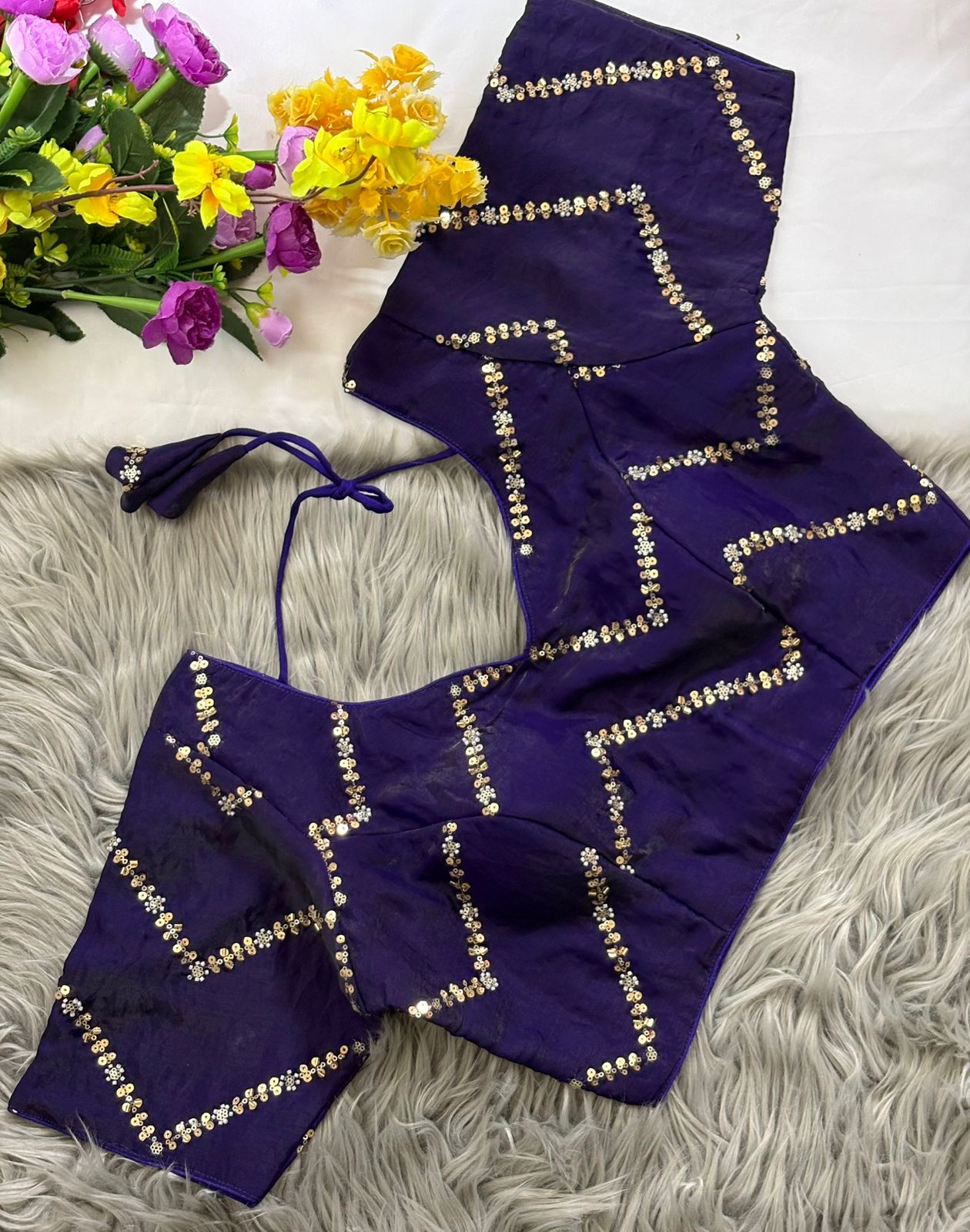
Measure the full bust around the fullest part of the bust with the tape level across the back. Keep the tape close to the body without pulling it tight. Measure the underbust directly below the bust because padded and fitted blouses often depend on this measurement for stability. Measure the shoulder from one shoulder point to the other, following the natural line across the back.
Measure the armhole around the fullest part of the shoulder and underarm without compressing the arm. Measure the blouse length from the shoulder point down to where you want the hem to finish. A saree blouse ending near the natural waist may need a different length from a cropped designer blouse worn with a high-waisted petticoat or shapewear.
Take measurements if your body measurements change slightly between morning and evening. A blouse intended for a wedding reception should not be judged only during a quick morning trial. Sit, reach forward, raise both arms and rotate your shoulders. Pulling across the bust, an opening neckline, a raised hem or armhole pressure indicates a fit problem even if the blouse looks attractive in a mirror.
How do fabric and construction change the fit?
Fabric weight, weave, lining, padding and closure placement change how a blouse sits on the body. A light cotton blouse may need more body in its lining, while a heavy silk blouse may need stronger support at the shoulder and underbust.
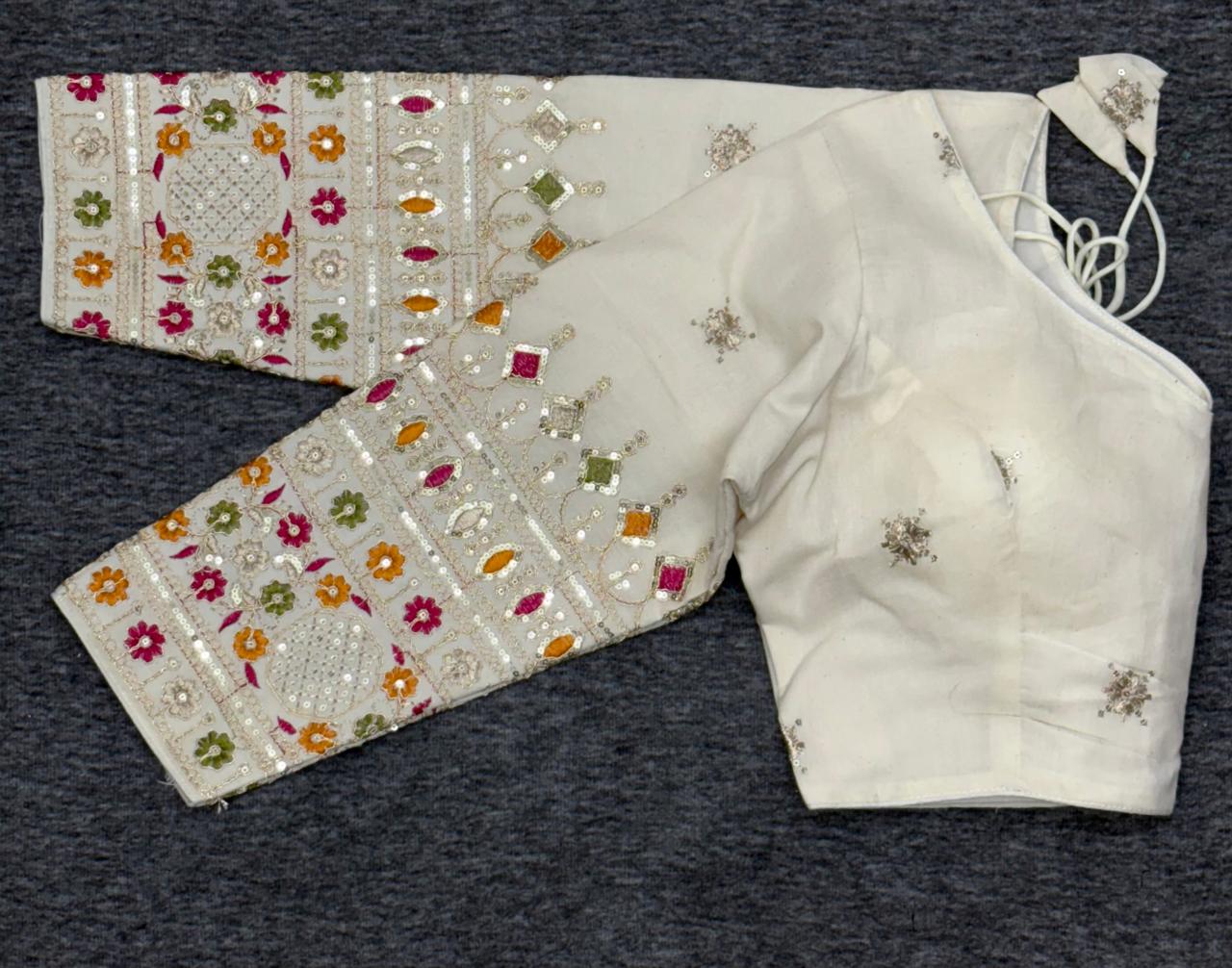
Cotton is usually breathable and suitable for day events, summer weddings and regular saree wear. Woven cotton has limited give, so shoulder and bust measurements are important. The Kalamkari Cotton V Neck Collar Blouse for Women illustrates how a collar and V-neck can add visual structure; the neckline should lie flat without cutting into the base of the neck.
Printed or woven cotton can also vary slightly in thickness. The Pure Kalamkari Cotton Padded Blouse for Women may need a different bra choice from an unpadded cotton blouse because padding changes the bust projection and the way the saree pallu rests over the chest. Try the blouse with the intended undergarment before deciding whether the size is correct.
Silk has a polished appearance and often supports festive styling, but silk woven into a firm structure won't behave like a flexible jersey. A silk blouse should not be bought small in the hope that it will loosen with wear. The Classic Festive Wear Blouse for Stylish Saree Look is better assessed by checking shoulder placement, neckline stability and closure comfort rather than by judging only its decorative finish.
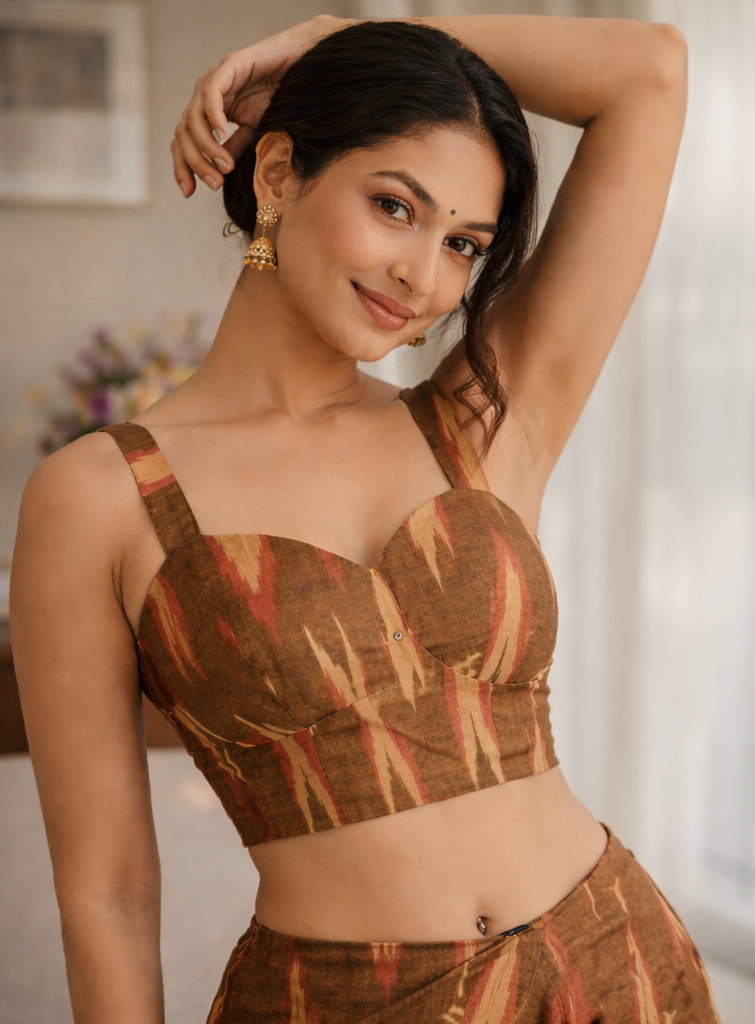
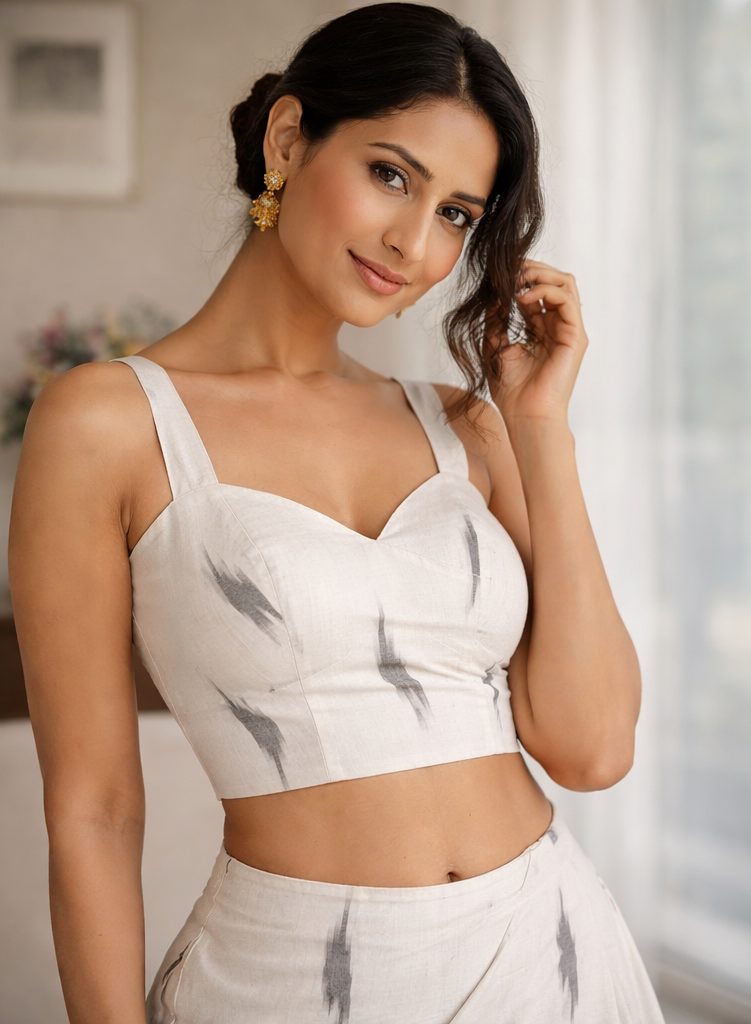
Ikat cotton adds texture and visual interest, but the woven surface doesn't necessarily mean that the blouse will stretch. The Brown Ikat Cotton Padded Blouse Sleeveless Stylish and Cream Ikat Cotton Padded Blouse Sleeveless Trendy should be assessed for armhole comfort, underbust stability and the way the padded cups sit under the saree. A sleeveless blouse needs a clean armhole because there's no sleeve seam to distribute pressure.
Zari and metallic details can add weight to a blouse. A blouse carrying zari should have stable seams and a secure closure so that the embellishment doesn't pull the neckline out of shape. The Blue Zari Work Cotton Saree for Wedding can be paired with a structured blouse, but the overall outfit should remain balanced: a heavy saree and heavy blouse may require a wider shoulder line and a comfortable underbust fit.
Which blouse works for different wearing situations?
A stretch blouse is often more practical for long, active functions, while a non-stretch blouse is often preferable for formal styling that depends on a precise silhouette.
- For a Haldi ceremony: choose breathable cotton, a comfortable armhole and a closure that can be handled quickly. A flexible or lightly structured blouse is useful when sitting on the floor, reaching for ceremony items or moving between indoor and outdoor spaces.
- For a wedding reception: choose a firm, well-supported blouse if the saree is silk, heavily woven or embellished. A padded non-stretch blouse can provide a clean outline, provided the bust and underbust measurements are accurate.
- For office or daytime wear: cotton and moderate necklines usually offer better breathability. A simple readymade blouse should allow comfortable arm movement and should not depend on tightness to stay in place.
- For travel: a stretch or lightly structured blouse is easier to wear for long periods and may tolerate small changes caused by sitting, heat or layering. Avoid rigid closures that press into the back during extended travel.
- For a designer saree: match the blouse structure to the saree's visual weight. A sculpted blouse can support a formal silk drape, while a softer cotton blouse may suit a printed or handwoven saree better.
How can you improve the fit of a ready-made blouse?
Small alterations can improve a ready-made blouse, but alterations can't always correct a major mismatch in shoulder width, bust shape or armhole depth. Choose the closest size through the largest measurement and alter the smaller areas where possible.
A tailor can often adjust side seams, shorten the blouse, move a hook position or make a modest neckline correction. Letting out a seam is possible only when sufficient seam allowance exists. A blouse with very narrow seam allowance may not accommodate a substantial bust adjustment. Shoulder alterations are more complicated because they can change the armhole, sleeve balance and neckline position at the same time.
Closure design deserves attention during fitting. Back hooks are convenient for some wearers, while a side zip or front opening may be easier for someone who dresses without assistance. The closure should lie flat and should not create a ridge under a thin saree. A blouse that requires constant force to close is too small, even if the hooks eventually meet.
Try the blouse with the actual saree, petticoat and bra. A saree drape changes the visual position of the neckline, and the pallu can add pressure over the shoulder. A combination such as the Ikkat Cotton Padded Blouse for Women Sleeveless with a cotton saree may feel very different from the same blouse worn under a heavy silk drape.
Comparing Comfort and Fit in Stretch Blouse vs Non-Stretch Blouse before buying
Choose stretch when movement, flexibility and a forgiving fit are priorities; choose non-stretch when structure, support and a crisp silhouette matter more. Check fabric composition, lining, padding, closure, garment measurements and returnable fit before placing an order.
A practical decision can follow five checks. First, identify the wearing time and activity level. Second, note the saree weight and whether the blouse must support zari, embroidery or a wide pallu. Third, measure the body and compare the measurements with the product chart. Fourth, check whether padding changes the effective bust fit. Fifth, test movement in the blouse before removing tags or altering it.
Remember that "designer readymade" describes styling and construction, not a guarantee of universal fit. A designer readymade blouse still needs compatible measurements. A carefully chosen cotton blouse can be more comfortable than a poorly sized stretch blouse, and a well-fitted silk blouse can remain comfortable for an entire evening. Good fit comes from matching the fabric's behaviour to the wearer's body and the saree's demands.
Questions readers ask about blouse comfort and fit
Clear sizing decisions prevent most comfort problems, especially when a readymade blouse includes padding or uses a firm woven fabric.
Is a stretch blouse better than a non-stretch blouse?
A stretch blouse is better when you need movement and tolerance for small measurement differences. A non-stretch blouse is better when you want a structured outline and stronger support. The best choice depends on fabric, construction, wearing time and accurate measurements.
Can a non-stretch blouse be comfortable for a full-day wedding?
Yes, a non-stretch blouse can remain comfortable for a full-day wedding when the bust, shoulder, armhole and underbust measurements are correct. Breathable cotton, a smooth lining and well-placed padding also reduce irritation during long wear.
How much ease should a fitted saree blouse have?
A fitted saree blouse needs enough ease to permit breathing, arm movement and sitting without pulling across the bust. The precise allowance varies by fabric and pattern, so the garment's finished measurements are more useful than applying one universal number.
Do padded blouses fit differently from unpadded blouses?
Yes, padded blouses can require more room over the bust and may alter the neckline position. Measure while wearing the intended bra or compare the blouse with the undergarment that will be worn beneath it.
Is cotton or silk more comfortable for a saree blouse?
Cotton is usually more breathable for daytime and warm-weather wear, while silk can provide a polished, supportive structure for formal events. Comfort depends on lining, weave, fit and wearing duration rather than fibre name alone.
Can a readymade blouse be altered after purchase?
A readymade blouse can often be altered at the side seams, hem or closure when sufficient seam allowance is available. Major shoulder, armhole or bust-shape changes may be difficult, so select the size that fits the largest measurement first.
Common Questions About Choosing a Comfortable Saree Blouse
Is a stretch blouse better than a non-stretch blouse?
A stretch blouse is better when movement and tolerance for small measurement differences matter most. A non-stretch blouse is better when you want a structured outline and stronger support, provided the measurements are accurate.
Can a non-stretch blouse be comfortable for a full-day wedding?
Yes. Correct bust, shoulder, armhole and underbust measurements, along with a smooth lining and suitable padding, can make a non-stretch blouse comfortable for long wear.
How much ease should a fitted saree blouse have?
A fitted blouse needs enough room for breathing, arm movement and sitting without pulling across the bust. The right amount depends on the fabric, pattern and finished garment measurements.
Do padded blouses fit differently from unpadded blouses?
Yes. Padding changes bust projection and can affect neckline position, so compare the blouse with the bra or undergarment you intend to wear.
Is cotton or silk more comfortable for a saree blouse?
Cotton is generally more breathable for daytime wear, while silk can offer a polished and supportive structure for formal events. Lining, weave and fit are just as important as fibre.
Can a readymade blouse be altered after purchase?
Minor side-seam, hem and closure adjustments are often possible when seam allowance is available. Major shoulder, armhole or bust-shape changes may be difficult, so choose the size that fits the largest measurement.


