

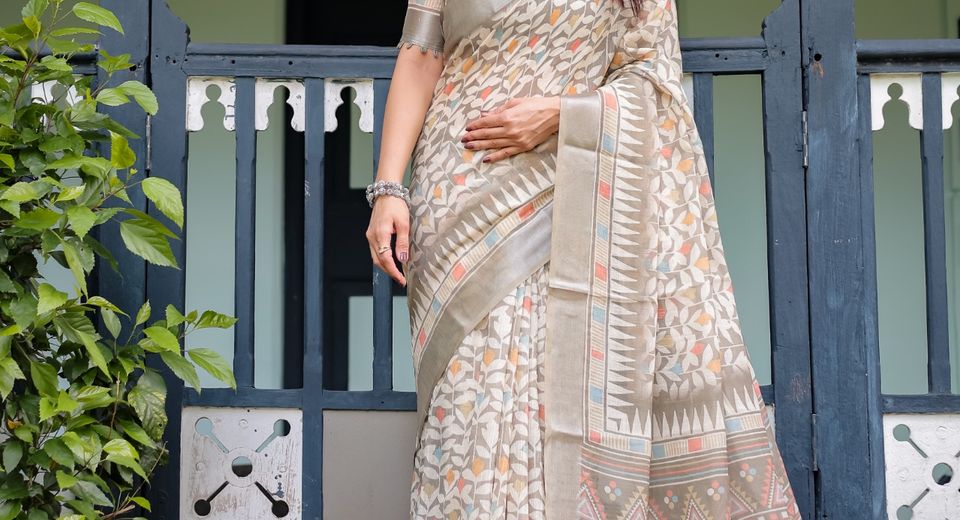
A nine-hour workday tests a saree in ways a short event doesn't. The fabric must handle commuting, seated meetings, air-conditioning, movement between rooms and sometimes a rushed evening plan without becoming heavy or difficult to manage. Comfortable Fabrics for Sarees for Long Office Days usually combine breathability, moderate structure and a drape that stays secure after several hours.
Linen cotton is particularly practical because it allows airflow while retaining more body than very soft, fluid fabrics. Cotton, lightweight linen, selected chiffon and carefully chosen silk can also work, but each behaves differently. The best office choice depends on your commute, climate, dress code, ironing routine and tolerance for creasing.
What makes a saree fabric comfortable for a full workday?
A comfortable office saree fabric feels breathable, remains manageable while sitting and doesn't require constant adjustment. Fibre content matters, but weave density, weight, finish and drape matter just as much.
Breathability helps in warm Indian cities and during crowded public transport journeys. A saree with a medium-light weight reduces shoulder strain, while a stable weave helps pleats remain aligned. A very slippery fabric may feel light at first but demand repeated pinning; a very crisp fabric may look formal but feel restrictive after hours at a desk.
Creasing isn't automatically a sign of poor quality. Linen and cotton naturally develop character through wear, whereas a highly formal workplace may require a smoother appearance. The useful question is whether the fabric forms broad, graceful creases or collapses into untidy folds around the waist and knees.
For most office wardrobes, look for a saree that can be folded into five to seven pleats, tucked securely without bulky layers and paired with a blouse that permits comfortable arm movement. A narrow or medium-width border is often easier for daily wear than a very heavy embellished edge.
Why linen cotton works among Comfortable Fabrics for Sarees for Long Office Days
Linen cotton is one of the strongest choices for long office days because the blend balances linen's airflow with cotton's familiar softness and practical durability.
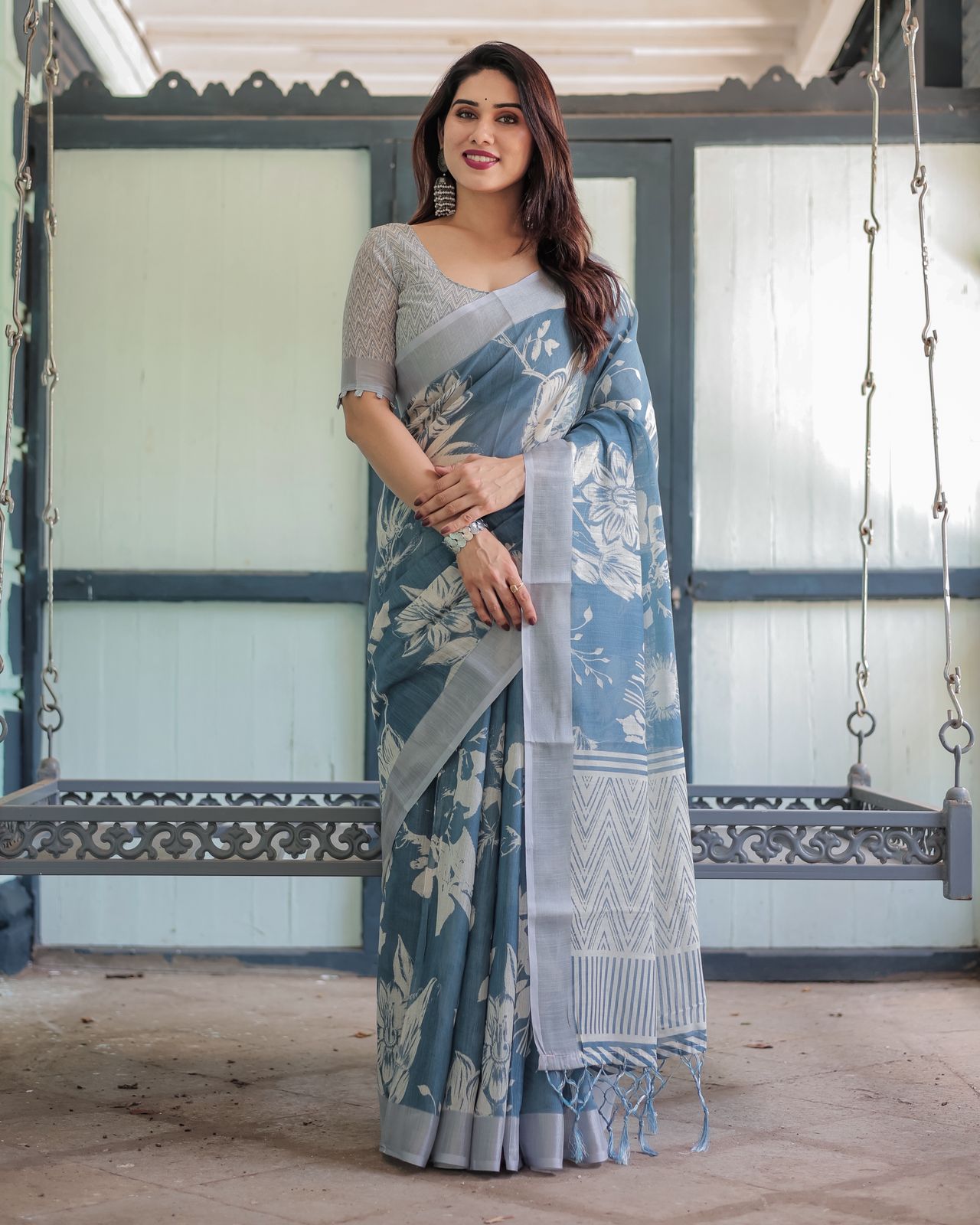
Linen fibres help release heat, while cotton gives the saree a more forgiving hand and a less pronounced tendency to feel stiff. The resulting drape usually has enough structure for an organised office silhouette without the dense weight associated with some festive weaves. Linen cotton can crease during travel, so a careful fold, a secure tuck and a light steam before dressing are worthwhile.
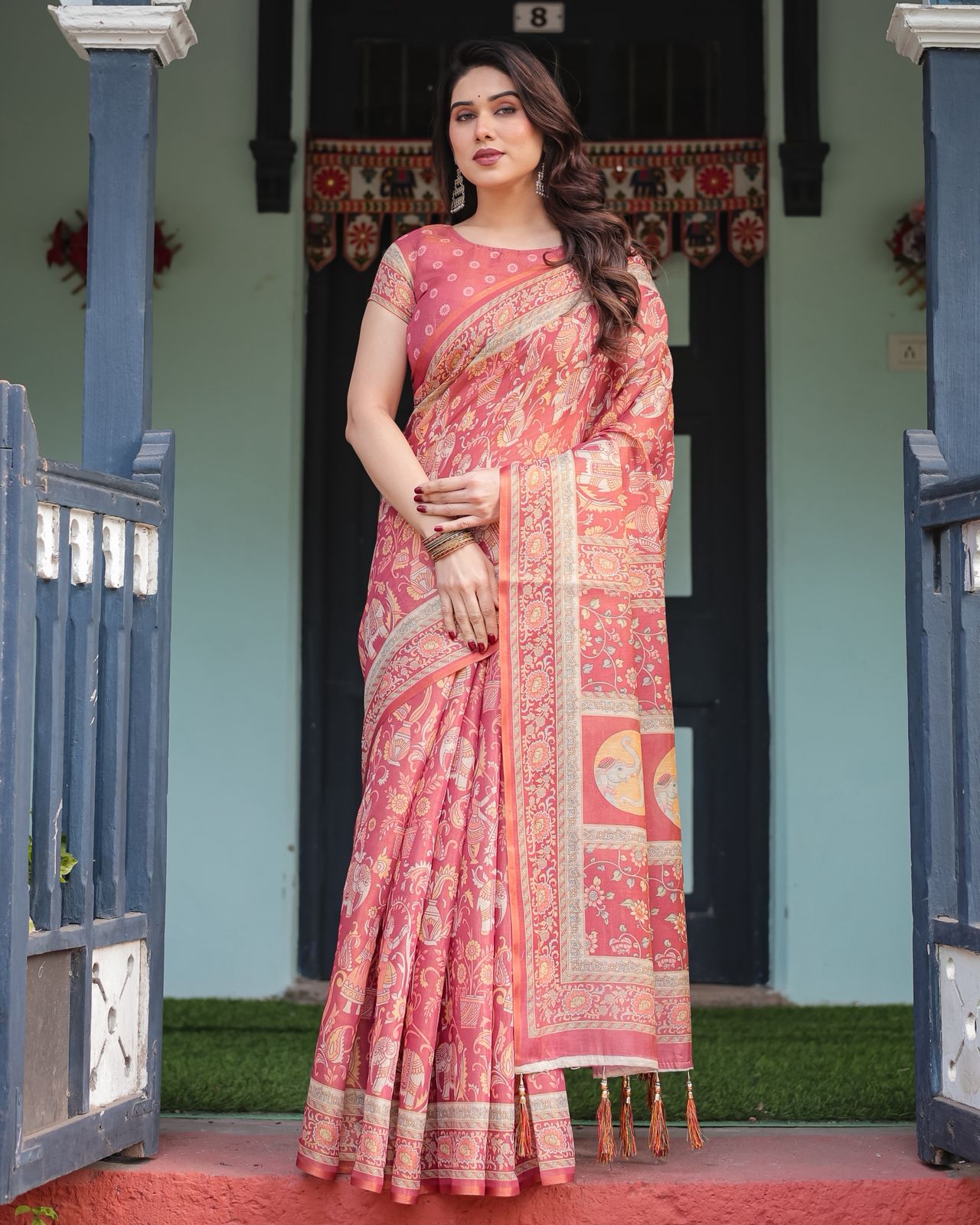
The Off White Linen Cotton Printed Saree with Zari demonstrates how a restrained print and a small zari detail can create interest without making the entire saree feel ceremonial. The Coral Floral Linen Cotton Saree with Designer Border offers a warmer colour direction for casual office wear, especially when the blouse and accessories remain quiet.
For a cooler, softer palette, the Soft Lavender Linen Saree with Elegant Stripe Pattern can suit workplaces that permit gentle colour. The Olive Green Linen Cotton Printed Saree with Dark Border gives stronger visual definition and can be styled with an ivory, beige or muted olive blouse.
Linen cotton suits professionals who prefer a handloom office wear appearance with visible texture. The fabric looks more intentional when the pleats are pressed clearly, the pallu is secured at the shoulder and the blouse has a clean neckline rather than excessive surface decoration.
How do cotton and linen compare for professional office wear?
Cotton is generally the easier choice for repeated daily wear, while linen usually brings a crisper, more textured appearance and stronger airflow.
Lightweight cotton is comfortable in humid conditions and tends to be straightforward to wash and iron. Cotton sarees can be especially useful for casual office wear, teaching, administration and workplaces where a relaxed handloom look is accepted. Dense cotton, however, may feel warm if the weave is tight or if the saree has multiple borders and layers.
Linen feels airy and polished but usually shows creases sooner. A linen saree is a good match for desk-based work, formal presentations and warm climates when the wearer accepts a naturally rumpled finish. A linen-cotton blend is often the practical middle ground for someone who wants linen's texture with cotton's easier handling.
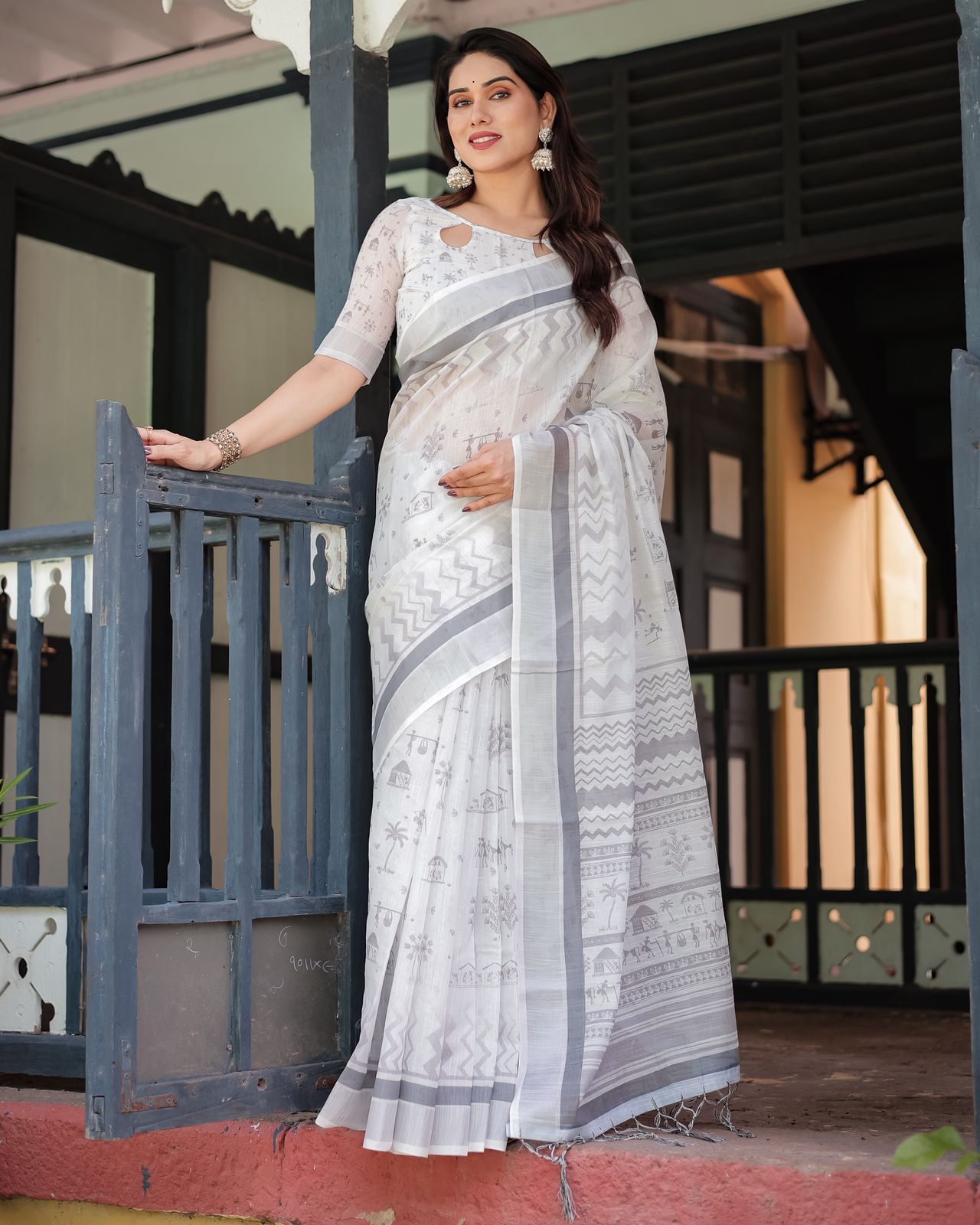
The Soft White Linen Saree with Grey Tribal Design shows how a neutral ground and a contained graphic pattern can look professional without becoming plain. The Pastel Linen Cotton Floral Print Saree with Designer Blouse may be useful when a coordinated blouse saves morning styling time, provided the print scale suits the office dress code.
Neutral doesn't have to mean black, white or beige. Soft white, grey, olive, dusty lavender, muted coral and pastel green can look formal when the print is controlled and the accessories are edited. A saree becomes more office-appropriate through proportion and finish, not colour alone.
Are chiffon and silk suitable for long office hours?
Chiffon can be comfortable because it's light, but silk is suitable for long office hours mainly when the weave is breathable, the weight is moderate and the workplace accepts a more polished finish.
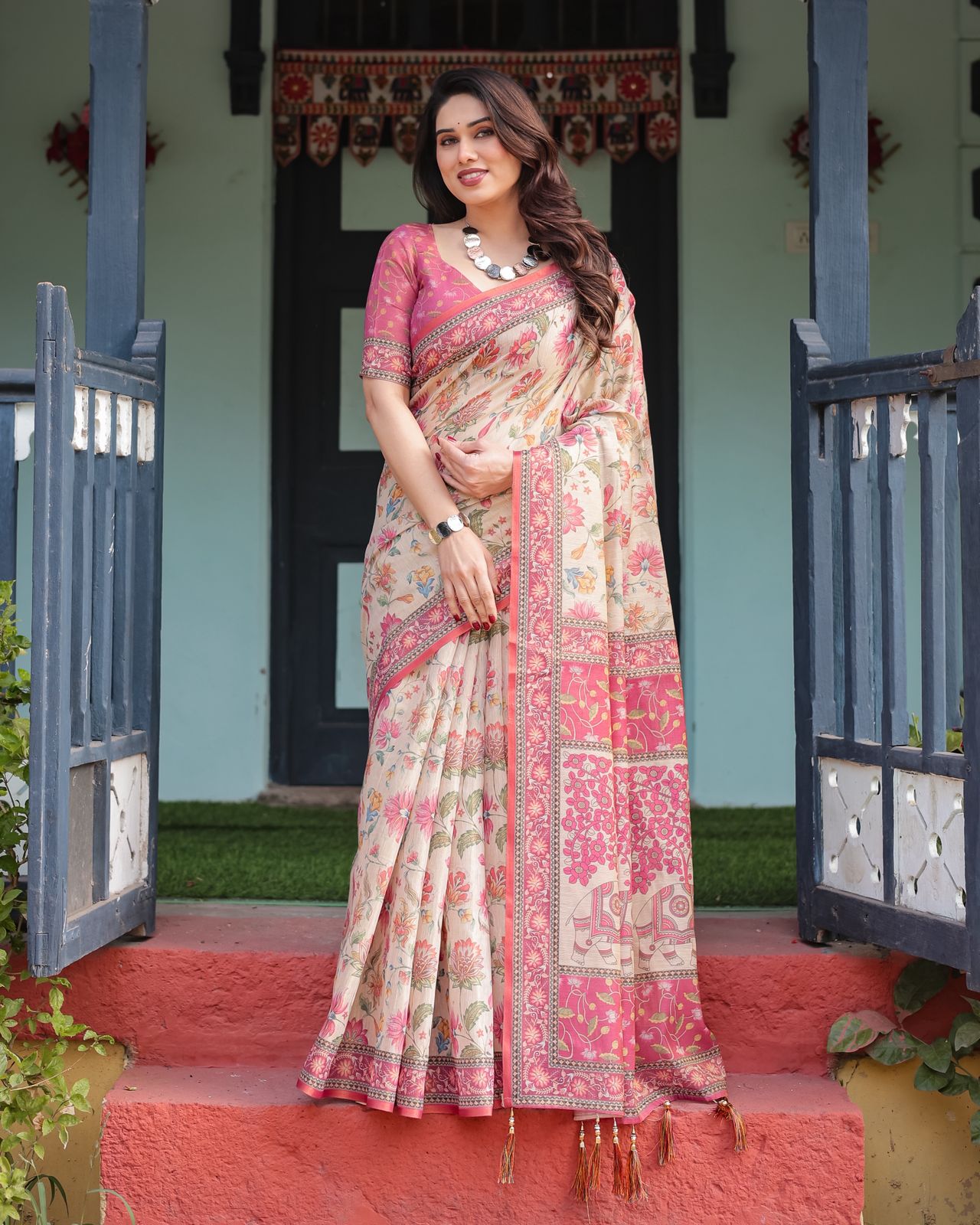
Chiffon has a fluid fall and low apparent weight, which can help during a long day. The same fluidity can make pleats shift, especially when the saree is worn without adequate pins or with a slippery blouse. Chiffon office wear works best with a well-fitted blouse, a firmly secured shoulder pleat and modest styling rather than elaborate draping.
Silk varies widely. Lightweight silk blends may be easier for daily work than heavy brocade, while Banarasi silk and Kanjeevaram are generally more associated with weddings, ceremonies and formal celebrations. Silk office wear can suit a senior meeting or a formal institutional setting when the zari is restrained and the colour isn't excessively bright.
A saree from Silk Sarees Under 3000 With Discount may be considered for occasional formal work events, but a price label doesn't reveal weight, weave or comfort. Check the fabric description, lining, border construction and care instructions before choosing silk for an eight-hour day.
Festive silk collections such as Red Banarasi Silk Sarees for Weddings Under 1100 are better reserved for celebrations unless the workplace has a highly traditional dress code. Similarly, Party Wear Sarees can inspire colour and draping ideas, but sequins, dense embellishment and heavy borders may be tiring for routine office use.
Which saree fabric suits different office climates and schedules?
Linen cotton and lightweight cotton are usually the safest all-day choices for warm or humid climates, while lighter chiffon and moderate-weight silk can work in air-conditioned offices.
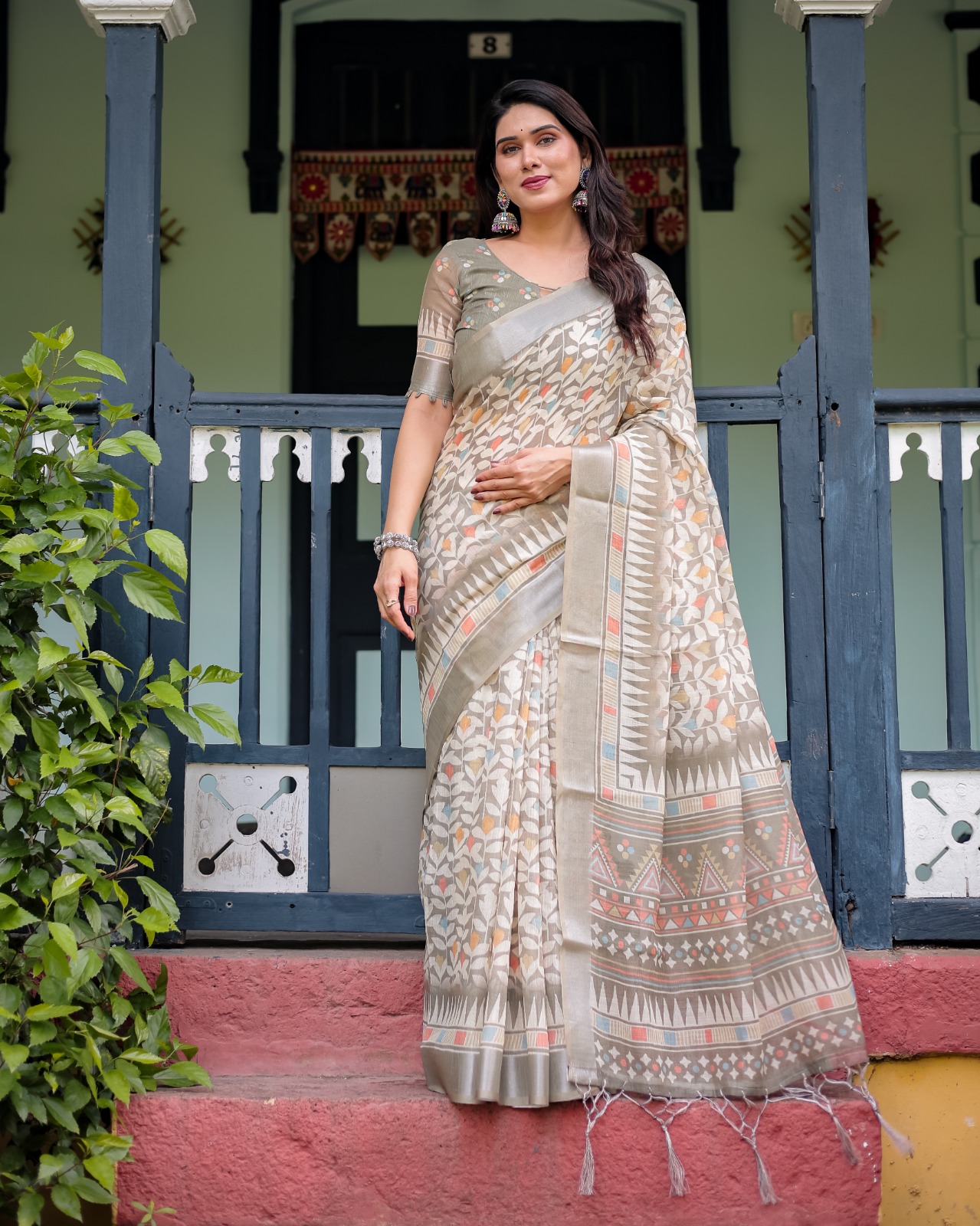
Hot and humid commutes
Light cotton, linen and linen cotton are the most practical fabrics for hot and humid commutes because they allow air movement and don't cling as closely as some synthetic finishes. Choose a blouse with breathable lining and avoid excessive padding, which can trap heat. A darker border can visually anchor a pale saree while keeping the overall look light.
Air-conditioned offices
Air-conditioned offices permit slightly denser cotton, silk blends or a fine weave that would feel warm outdoors. Carrying a light stole or jacket is often more useful than selecting a heavy saree, because the commute and office temperature may differ sharply. The Elegant Pastel Green & Beige Linen Saree with Tribal Design can bridge indoor formality and outdoor warmth through its muted palette and textured surface.
Long commutes and late finishes
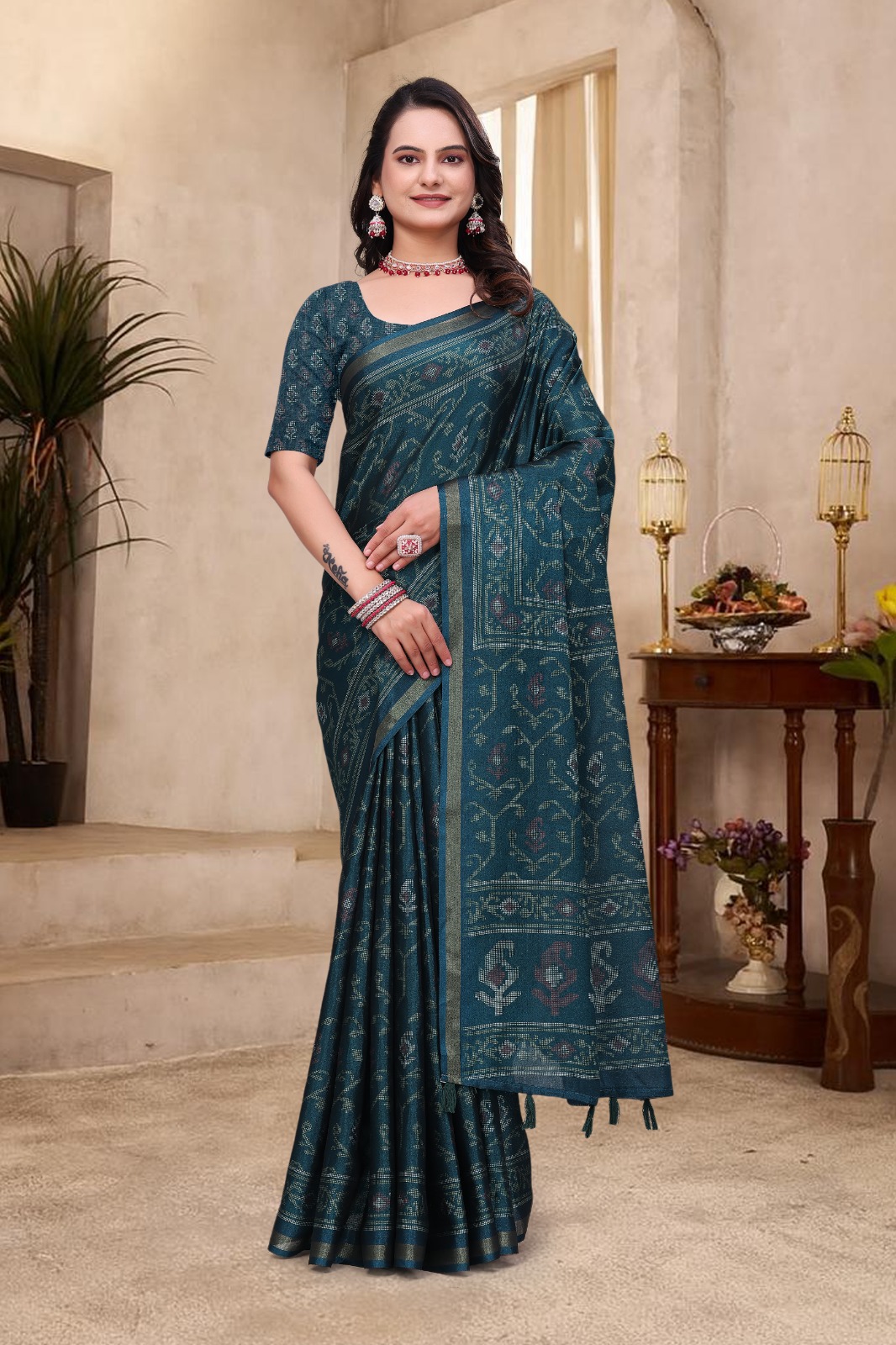
Long commutes favour fabrics that remain stable when repeatedly seated, standing and walking. Cotton and linen cotton are easier to re-tuck than very slippery chiffon, while a firm petticoat or a well-fitted underskirt reduces dragging at the waist. The Teal Green Cotton Saree for Women Online India represents the kind of breathable cotton option that can suit a full work schedule when paired with a practical blouse and secure pleats.
How should you style a saree for a professional office?
A professional office saree needs a secure drape, a movement-friendly blouse and accessories that support the outfit rather than compete with it.
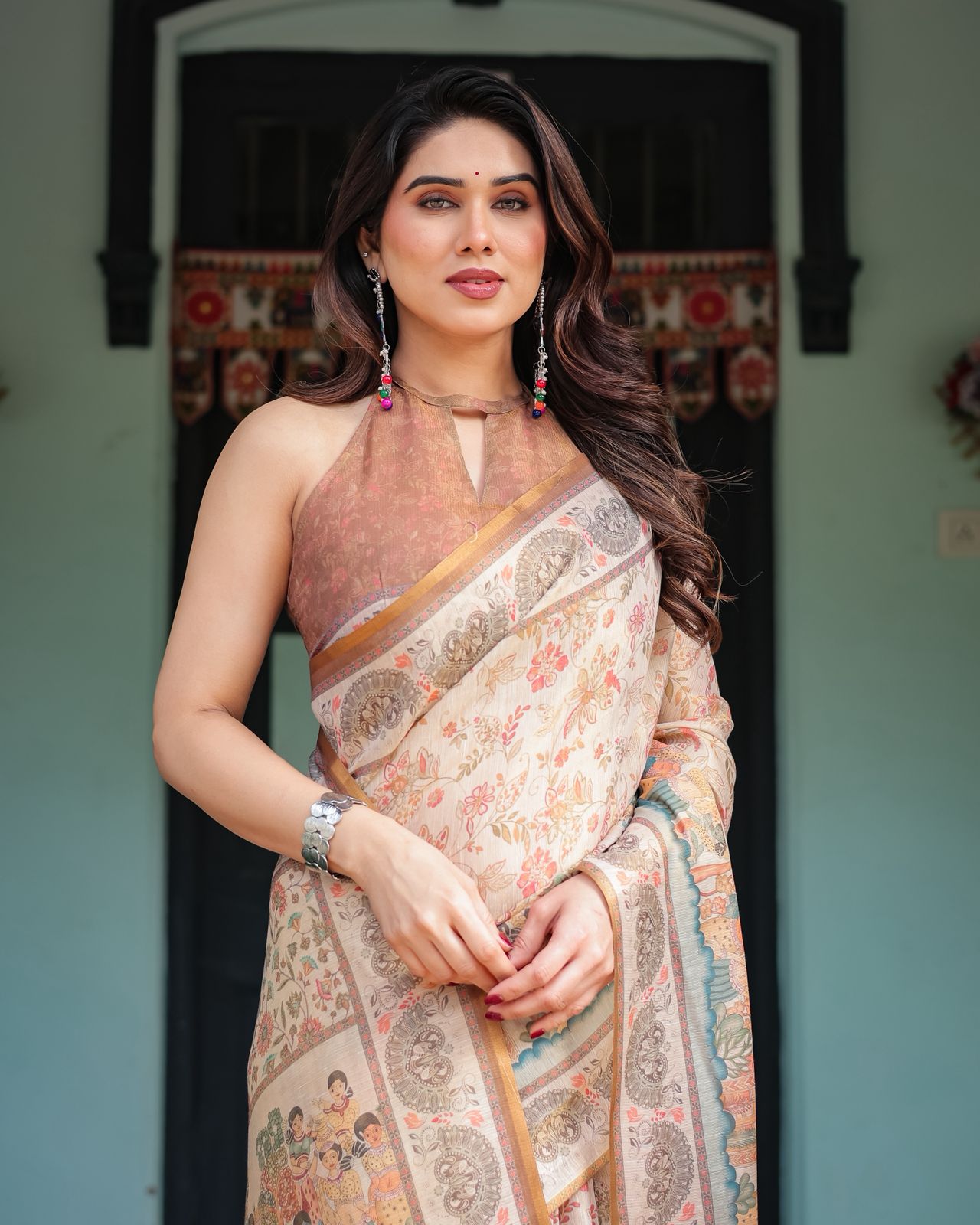
Start with a blouse that ends at the natural waist, has comfortable armholes and doesn't pull across the upper back. Sleeves between the elbow and upper arm are often practical for conservative offices, but a clean short sleeve can also work where the dress code is relaxed. Cotton, linen cotton or a breathable lining can make the blouse more comfortable than a stiff synthetic construction.
Use five to seven even pleats and pin the shoulder pleats discreetly from the inside where possible. A medium-height petticoat or fitted underskirt keeps the saree from sliding and prevents excessive fabric from gathering at the ankles. Flat shoes, low block heels or supportive loafers are safer for commuting than footwear that changes the saree's fall dramatically.
Keep jewellery proportionate to the setting. Small earrings, a watch and one restrained bracelet can create a finished look for formal IAS officers, corporate meetings or client-facing roles without producing noise or catching on the saree. A structured tote or document bag is more useful than a small party clutch for a working day.
Prints are compatible with professional dressing when the pattern has breathing space. A busy floral, oversized contrast border and large statement jewellery can overwhelm one outfit, so reduce at least one element. The Gray Color Sarees Under 1000 collection can be an useful reference point for building a subdued workwear palette, although exact fabric and finish should always be checked before purchase.
How can you reduce creasing and care for office sarees?
Creasing can be reduced by correct washing, thorough drying, careful folding and steaming immediately before wear.
Read the garment label first because linen, cotton, chiffon and silk require different treatment. Wash cotton and linen cotton in cool or lukewarm water with a mild detergent, avoid aggressive wringing and dry them in shade when the colour may fade. Direct, harsh sunlight can weaken some dyes and make repeated washing look uneven.
For linen and cotton, iron while the saree is slightly damp or use a garment steamer. Work from the reverse side when the saree includes zari, metallic print or a delicate surface treatment. Zari should not be scrubbed, soaked unnecessarily or exposed directly to a very hot iron.
Chiffon should be handled gently because snagging can occur around jewellery, rough bags and sharp cupboard edges. Silk should generally be aired after wear and cleaned according to its label rather than placed in a routine washing cycle. Never store a completely damp saree, and refold stored sarees every few months to reduce permanent fold lines.
A five-minute pre-work routine is effective: steam the pleat area, press the pallu edge, check the blouse hooks, attach two discreet pins and inspect the hem for floor contact. These small steps often improve comfort more than choosing a more expensive fabric.
How do you choose the right office saree when shopping online?
Choose an online office saree by checking fabric, weight clues, measurements, transparency, border construction and care instructions before judging the photograph.
Search descriptions for specific terms such as linen cotton, lightweight cotton, handloom, zari, printed, lined blouse and washable, but treat "lightweight" as a claim to verify rather than a guarantee. Product photographs can make borders appear narrower or colours brighter than they look indoors. Look for close images of the weave, pallu and reverse side whenever available.
Consider how the saree will be used. A daily commuter may prefer a washable linen-cotton print, while someone attending occasional boardroom meetings may accept a silk blend that needs more careful care. A new saree should also be tested at home for ten minutes while sitting, walking, reaching for a shelf and carrying a bag.
Keep two categories in the wardrobe: dependable daily sarees and elevated formal sarees. Daily options should be breathable, reasonably easy to wash and forgiving of minor creases. Formal options can include richer texture or limited zari, but they should still permit movement if the workday includes travel and long meetings.
Comfortable Fabrics for Sarees for Long Office Days are not limited to one fibre or one colour family. Linen cotton is a dependable starting point, lightweight cotton is highly practical, chiffon can work with secure styling, and selected silk suits more formal environments. Matching fabric behaviour to climate, schedule and care habits produces a saree that looks professional because it remains comfortable enough to wear well.
Questions to Ask Before Choosing an Office Saree Fabric
Which saree is best for office wear?
Lightweight cotton and linen-cotton sarees are usually the best choices for regular office wear because they are breathable, stable and relatively easy to maintain. Choose muted prints, moderate borders and a blouse that allows free arm movement for a more professional finish.
Are linen sarees comfortable for long working hours?
Linen sarees are comfortable for long working hours because they allow airflow and feel light in warm weather. Linen does crease more readily than many cotton blends, so pressing the pleats and accepting a natural textured finish are part of wearing linen well.
Can chiffon sarees be worn as office wear?
Chiffon sarees can be worn as office wear when the drape is secured with discreet pins and the print or embellishment is restrained. Chiffon may require more adjustment than cotton or linen cotton because its fluid surface can make pleats shift.
Is silk suitable for professional office dressing?
Moderate-weight silk or a simple silk blend can suit professional office dressing, particularly for formal meetings or traditional workplaces. Heavy Banarasi silk, dense zari and highly embellished party sarees are usually more practical for weddings and celebrations than routine workdays.
How can I stop my office saree from creasing during a commute?
Use a fitted underskirt, make firm pleats, pin the shoulder securely and sit with the pleats aligned rather than twisted. A linen or cotton saree should be steamed before leaving, while a smooth saree should be protected from rough bags and sharp jewellery that can cause pulls.
Where can I buy a saree suitable for an IAS officer or formal workplace?
Look for breathable cotton, linen cotton or understated silk sarees with controlled prints, modest borders and comfortable blouses. A saree suitable for an IAS officer or another formal role should prioritise neat draping, movement and restrained styling over heavy embellishment.


