

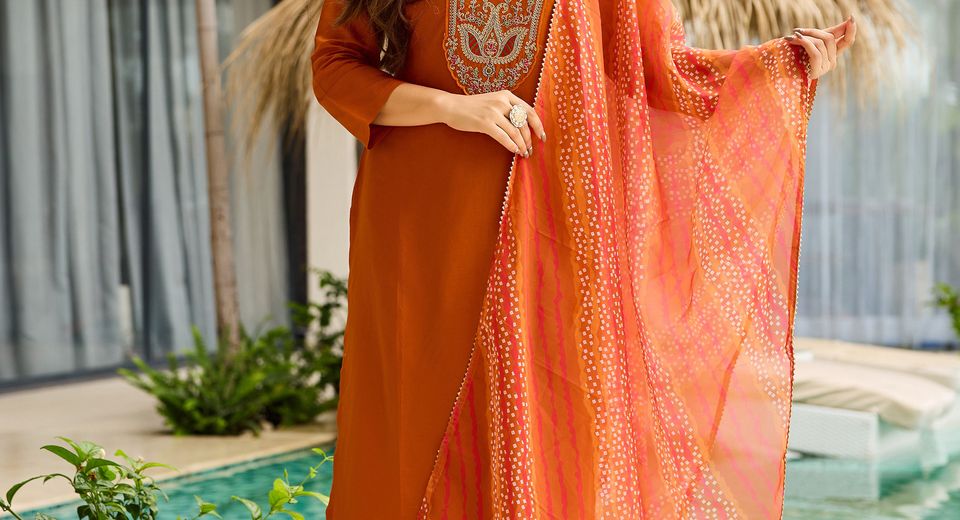
Long meetings, cool interiors and crowded commutes make fabric choice a practical workwear decision. Comfortable Fabrics and Fits for Kurtis for Air-Conditioned Offices should balance airflow, warmth, movement and a neat appearance without relying on heavy embellishment. Cotton, khadi cotton and Kanchi cotton can all work well, but their weight, texture and finishing create different experiences at a desk.
A reliable office outfit usually has three parts: a kurta that doesn't pull across the shoulders, trousers that allow sitting and walking, and an optional dupatta that adds warmth without constant adjustment. The right proportion matters as much as the fibre. A breathable A-line kurta may feel easier during a commute, while a straight kurta can look sharper for presentations.
Comfortable Fabrics and Fits for Kurtis for Air-Conditioned Offices: what makes a kurti work?
A comfortable office kurti uses a breathable or absorbent fabric, allows movement at the armhole and hip, and provides enough coverage for sitting under bright indoor lighting. A medium-weight cotton or cotton blend with a smooth inner finish and a silhouette that doesn't require repeated readjustment is an useful starting point.
Air conditioning changes the clothing equation. A garment that feels pleasant outdoors may become chilly after two hours near a vent, while a thick synthetic fabric can feel clammy during the journey to work. Cotton, khadi cotton or a structured Kanchi cotton weave can provide a better compromise between a warm commute and a cool workstation.
Seams and openings affect comfort as much as fibre content. A sleeve ending just below the elbow usually offers coverage without catching on a keyboard or desk edge. Side slits should open enough for sitting but not so high that the kurta rides up. A neckline should lie flat against the skin, especially when the wearer spends the day using an ID lanyard or headset.
Comfortable Fabrics and Fits for Kurtis for Air-Conditioned Offices also depend on care. A cotton kurta that shrinks after the first wash can become tight at the upper arm and short at the hip. Follow the care label, wash a new cotton garment according to its instructions, and allow for normal shrinkage before judging the final fit.
Comfortable Fabrics and Fits for Kurtis for Air-Conditioned Offices: which fabrics suit workwear?
Medium-weight cotton, khadi cotton and Kanchi cotton are strong choices for formal salwar suits for office wear because they provide breathability, structure or both. Fabric selection should reflect office temperature, commute length, laundering routine and the level of formality expected at work.
Cotton for daily movement
Cotton works well for regular office use because the fibre absorbs moisture and usually feels comfortable against the skin. Printed cotton creates a relaxed but polished impression when the print is controlled in scale and the rest of the outfit is simple. The Cream Printed Cotton Kurta Pant Dupatta Set for Women shows how a coordinated print, pant and dupatta can reduce styling decisions on busy mornings.
Light cotton is useful in warm commutes, but very thin cotton can crease quickly and may feel cold under strong air conditioning. Medium-weight cotton gives a better compromise for an eight-hour workday. The Mustard Yellow Cotton Kurti Pant Set for Women brings colour into a work wardrobe while retaining the practical appeal of a coordinated cotton set.
Khadi cotton for texture and moderate warmth
Khadi cotton is a good option when an office feels cool because its textured weave gives a little more visual and physical substance than fine, lightweight cotton. Khadi can crease attractively, but it needs careful pressing if the workplace expects a highly formal appearance. The Cream Khadi Cotton Straight Kurta Set with Dupatta suits understated styling because the neutral colour and straight shape keep the textured fabric from looking busy.
Kanchi cotton for a structured finish
Kanchi cotton can suit formal office wear when you want a firmer drape and a little more presence than everyday cotton. A woven dupatta or zari detail can elevate a simple kurta, but restrained styling is important for a conservative workplace. The Navy Kanchi Cotton Kurti Set with Woven Dupatta brings a deeper colour and structured coordination that can work for presentations or client-facing days.
Decorative fabrics should be assessed by surface weight as well as appearance. The Mustard Kanchi Cotton Kurti Set with Zari Dupatta may be appropriate for a festive office gathering or a cultural event at work, while a plainer cotton set is usually easier for ordinary desk days. Zari is attractive, but metallic decoration can snag on chair arms and may require gentler care.
Comfortable Fabrics and Fits for Kurtis for Air-Conditioned Offices: which silhouettes allow movement?
A straight or gently A-line silhouette with adequate ease usually gives the best balance of professional shape and all-day movement. The ideal fit follows the shoulders without pulling, leaves room at the bust and upper arm, and falls smoothly over the stomach and hip when seated.
Straight kurtas for a formal outline
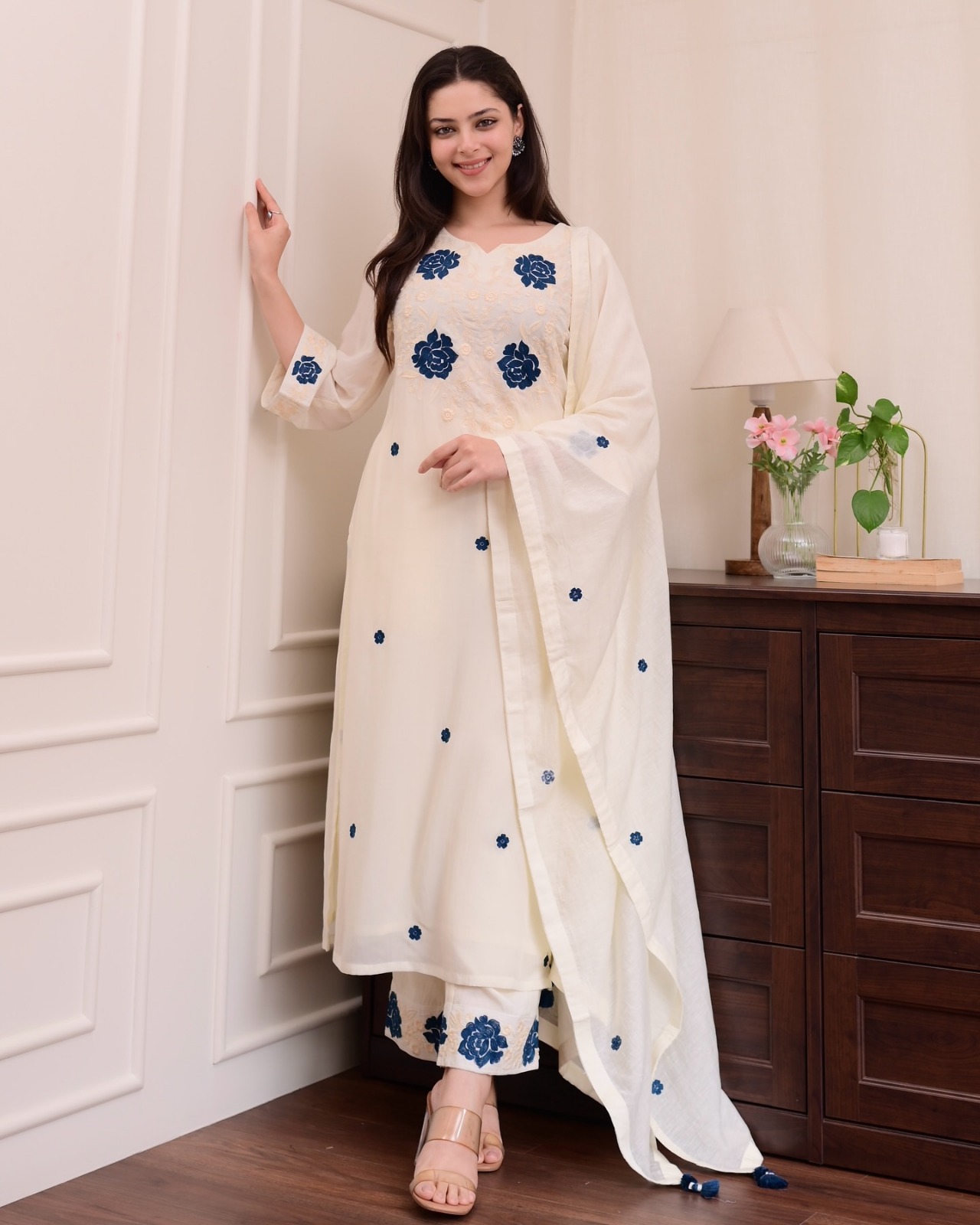
A straight kurta creates a clean vertical line and pairs naturally with cigarette pants, tapered trousers or matching pants. The hem should not bunch across the lap when seated. A straight style works particularly well for formal salwar suit ladies who prefer a defined, minimal outline for meetings and presentations.
The Designer Cream Straight Kurti Set with Dupatta demonstrates why neutral straight sets are useful in a work wardrobe. Cream can be paired with tan, brown or muted metallic accessories, while a dupatta gives an extra layer inside a cold conference room. A straight kurta should not be skin-tight; approximately 8 to 12 centimetres of ease around the bust is a practical starting point, although body shape and fabric thickness will change the measurement.
A-line kurtas for sitting and commuting
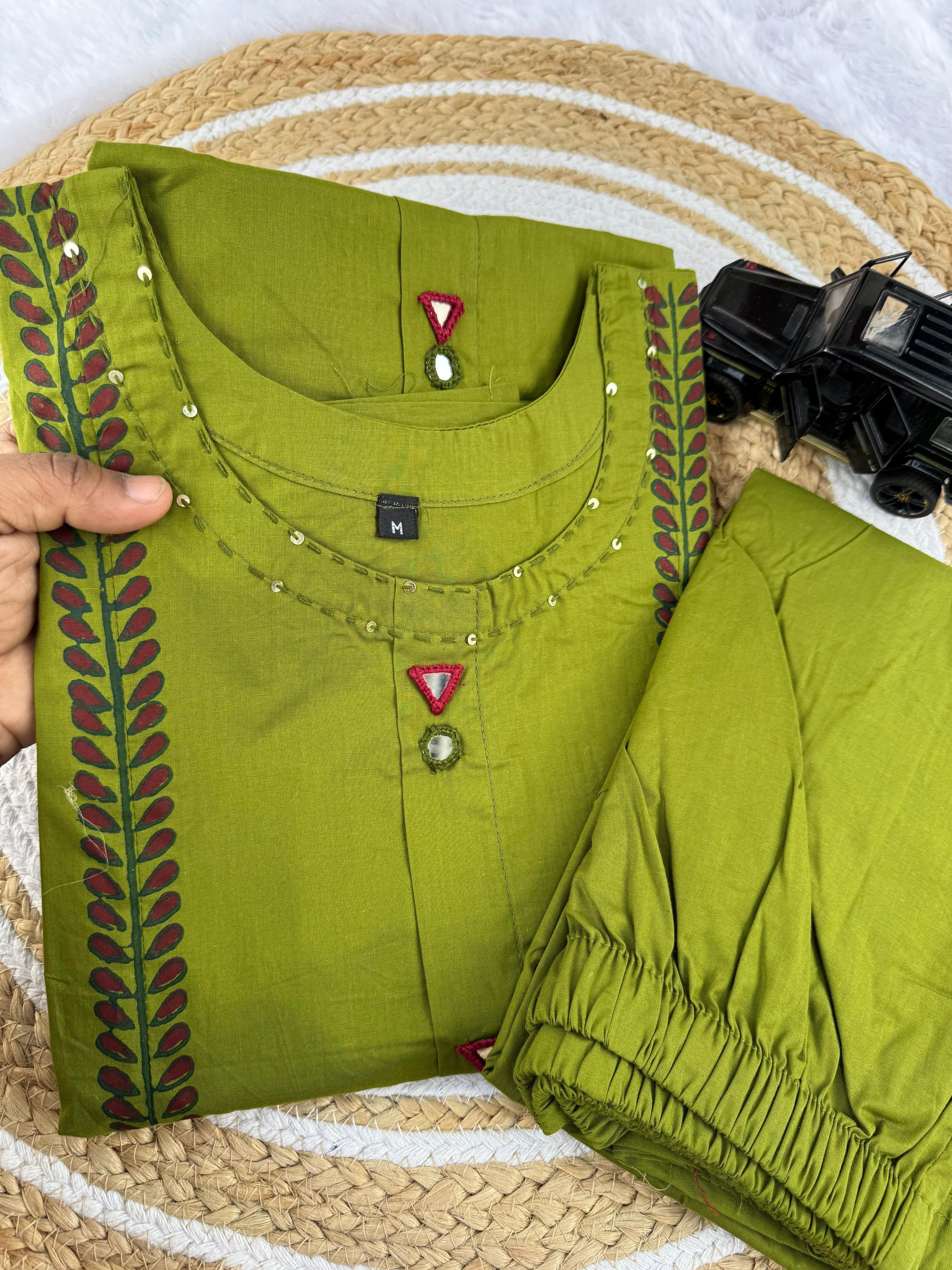
An A-line kurta widens gradually from the bust or waist and usually feels forgiving around the hips and thighs. The shape is useful for walking between departments, climbing stairs and sitting for long periods. The Designer Cotton A-Line Kurti Pant Set with Mirror Work adds surface interest, but mirror work is best reserved for workplaces where small embellishments are acceptable.
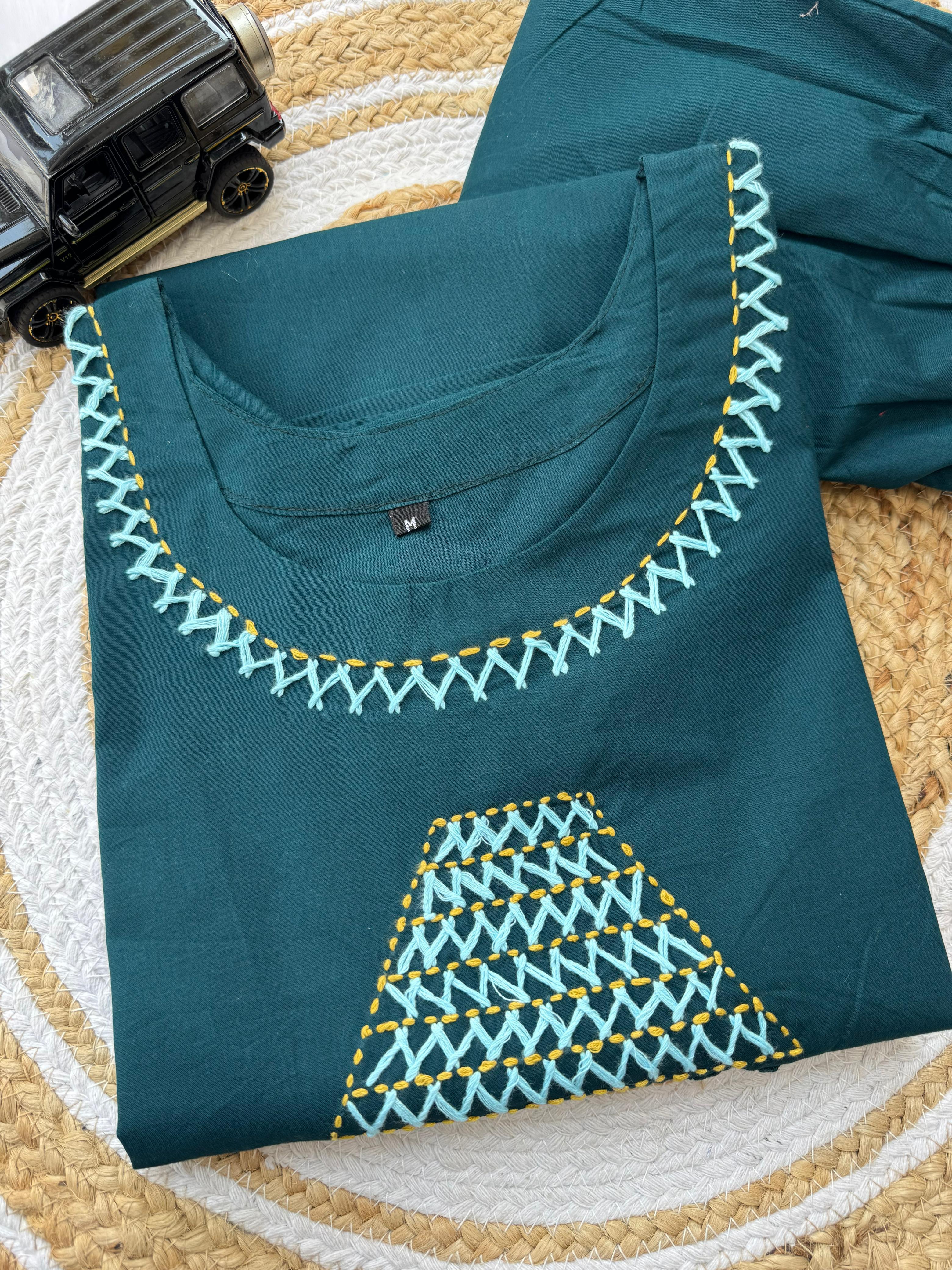
The Teal Cotton A-Line Kurti Pant Set with Handwork brings another example of a shaped cotton set. Handwork can add character without requiring a separate styling piece, but check whether raised embroidery catches on office chairs or laptop bags. A smaller motif placed near the neckline or hem is generally more practical than dense decoration across the sleeves.
How much ease is enough?
Enough ease allows a full seated posture, two-finger movement at the upper arm and comfortable fastening without fabric strain. Try sitting, reaching forward, lifting both arms and walking several steps before deciding that a kurti fits properly. A garment that looks correct while standing may pull at the back or expose the waist when the wearer sits.
Length should also match the bottom. A kurta ending around the knee or mid-calf can look balanced with straight pants, while a shorter top may work better with wider palazzos. Excess fabric at the side seam can look untidy under a blazer, so comfort should come from a suitable cut rather than simply sizing up by several sizes.
Comfortable Fabrics and Fits for Kurtis for Air-Conditioned Offices: how should a dupatta work?
A workwear dupatta should provide optional warmth, stay in place during movement and avoid obstructing keyboards, door handles or ID cards. A medium-width cotton or woven dupatta is generally more useful than a very slippery or heavily embellished piece.
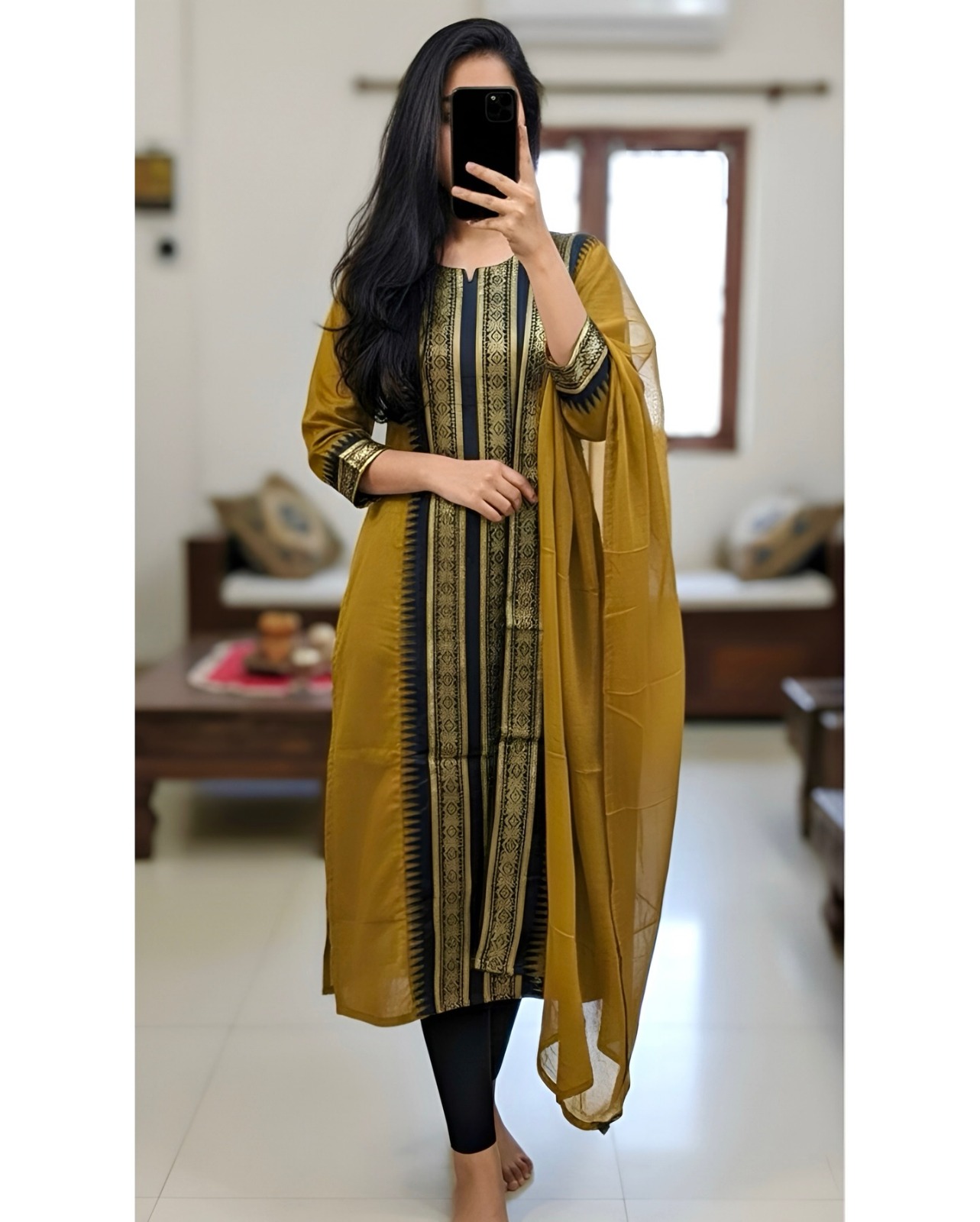
For a formal salwar suits office wear dupatta look, place the dupatta over both shoulders for an even front line when presenting, or fold it lengthwise and drape it over one shoulder when using a laptop. Pinning near the shoulder can help during a commute, but avoid tight pins that distort the kurta neckline. A lightweight stole can be easier to manage than a large, highly decorated dupatta in a small workstation.
Colour affects perceived formality. Navy, cream, muted teal, beige and soft mustard can coordinate with office basics without looking dull. A strong print is easier to balance with a plain kurta, while a woven dupatta or zari border can be paired with an otherwise simple outfit for a festive workday.
The Kalamkari Print Salwar Suits (Copy) collection can provide ideas for controlled print placement and coordinated colour. The Maharashtra Paithani Inspired Salwar Suits collection and the Karnataka Silk Salwar Suits collection are more suitable for offices that welcome traditional accents, cultural celebrations or festive dress codes. Rich borders and silk-inspired details should be kept proportionate to the workplace rather than treated like wedding attire.
Comfortable Fabrics and Fits for Kurtis for Air-Conditioned Offices: how should colour and detail be chosen?
Professional colour combinations usually rely on one dominant shade, one supporting neutral and limited decorative contrast. Navy with cream, teal with beige, mustard with ivory and soft green with charcoal are examples of combinations that look intentional without demanding attention throughout the day.
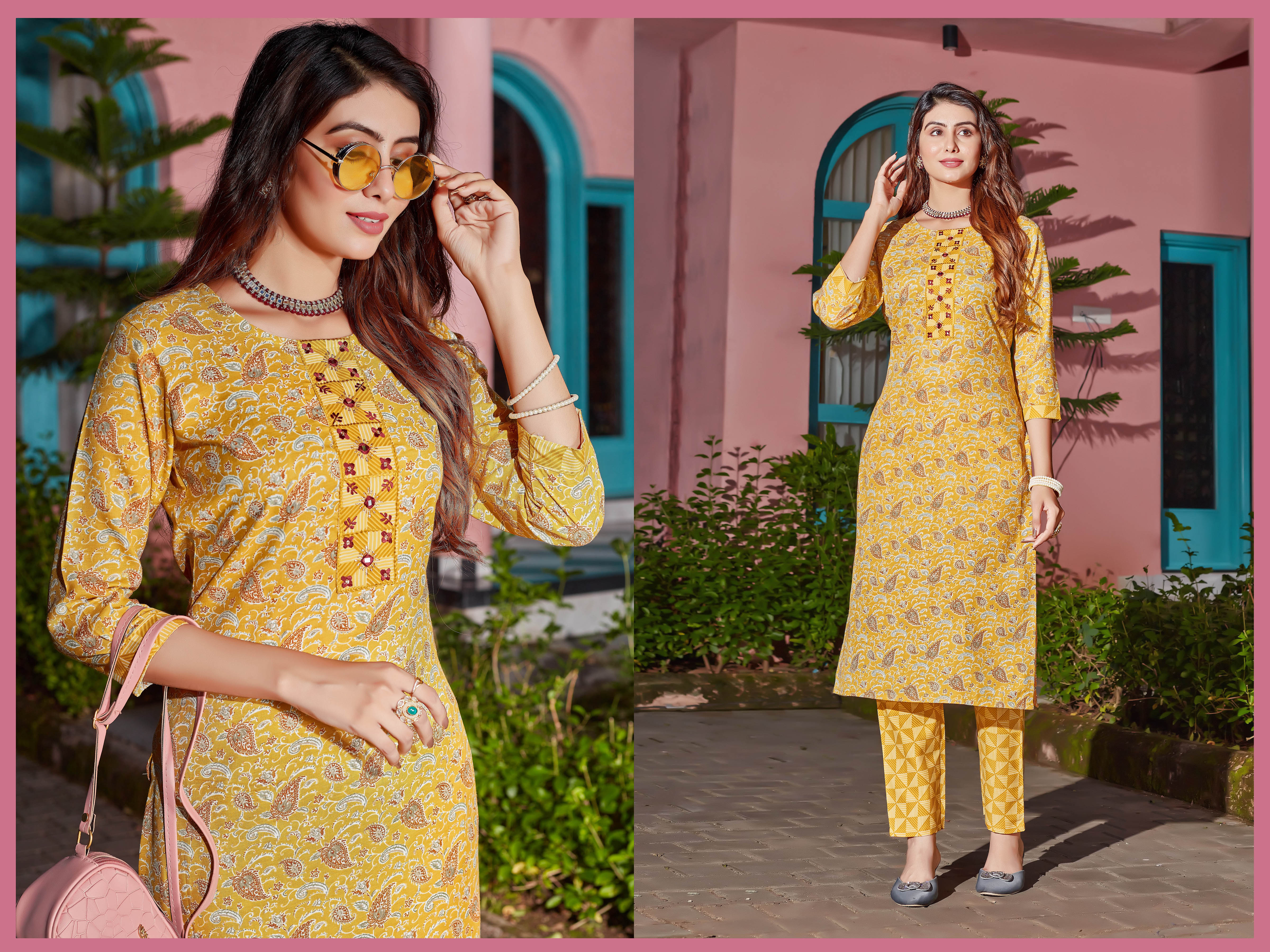
Print scale matters more than whether a print is time-honoured or contemporary. Small botanical, geometric or block-print-inspired motifs tend to blend easily into a weekday wardrobe. Large contrast motifs can still work, but pair a statement kurta with a plain dupatta and simple footwear. A coordinated three-piece suit can look polished without adding a necklace, bangles and elaborate earrings at the same time.
Mirror work, handwork and zari are not automatically unsuitable for office wear, but their placement and density matter. Small mirror work near a neckline may suit a creative workplace, whereas dense reflective decoration can be distracting in a formal meeting. Handwork on a sleeve or border creates interest while keeping the main surface easy to sit against.
Colour choice should also account for maintenance. Cream and pale shades show marks from public transport more quickly than navy or teal. If a garment will be worn during a long commute, choose a darker bottom or carry a washable scarf for the journey. Neutral dupattas can extend the number of combinations available from a small workwear wardrobe.
The Punjab Phulkari Embroidered Salwar Suits collection and the Kashmir Embroidered Salwar Suits collection offer examples of richly rooted decorative language. Such styles can be adapted for a work wardrobe on ethnic days by choosing restrained embroidery, simple footwear and minimal jewellery. A cultural reference doesn't require a full festive look every time.
Comfortable Fabrics and Fits for Kurtis for Air-Conditioned Offices: how can a wardrobe stay practical?
A practical office wardrobe needs repeatable combinations, easy care and enough variation for different levels of formality. Three cotton sets, one textured khadi set and one structured Kanchi cotton set can cover ordinary desk days, presentations and festive office events more effectively than a large collection of rarely worn outfits.
Use a simple five-point check before buying any salwar suit for work:
- Fabric: confirm whether the weight feels suitable for both the commute and the air-conditioned room.
- Shoulders: check that the seam sits near the shoulder edge without pulling when the arms move forward.
- Seated fit: sit down and ensure the kurta doesn't ride up, strain across the hips or expose the waist.
- Bottoms: confirm that pants or trousers allow comfortable steps, stair climbing and extended sitting.
- Care: check washing, ironing and drying requirements against the time available in your weekly routine.
Formal Salwar Suits Office Wear under a particular budget should be judged by repeat use rather than decoration alone. A cotton set that works twice a week may provide more value than a heavily embellished suit that's reserved for one annual event. A three-piece suit women can wear with or without the dupatta also gives more flexibility when office temperatures change.
For women salwar suits office wear, footwear should support the same practical logic. Low block heels, loafers, closed flats or cushioned sandals can work depending on the dress code and commute. Avoid pairing a comfortable kurta with footwear that makes walking or standing painful; professional clothing must function through the whole workday.
Storage affects longevity. Fold cotton and khadi garments along existing seam lines, keep zari and handwork away from rough surfaces, and avoid overcrowding woven dupattas. Press cotton on the recommended heat setting and test a small hidden area before ironing a printed or embellished surface.
Comfortable Fabrics and Fits for Kurtis for Air-Conditioned Offices come down to a considered match between fibre, cut, layer and routine. Cotton supports everyday movement, khadi cotton adds texture and moderate warmth, and Kanchi cotton brings structure for more formal days. When shoulders, armholes, hems and dupattas are chosen for real movement, ethnic office wear can remain polished from the morning commute through the final meeting.
Common Questions About Choosing Kurtis for Cool Offices
What is the best salwar suit for office wear?
A medium-weight cotton, khadi cotton or structured Kanchi cotton salwar suit with a straight or gently A-line kurta is usually a strong office choice. Select a fit that allows comfortable sitting and arm movement, then keep embellishment and accessories proportionate to the workplace.
Are cotton salwar suits suitable for air-conditioned offices?
Yes, medium-weight cotton salwar suits are suitable because cotton is breathable and comfortable for long workdays. Add a manageable dupatta or light layer when the office is cold, and avoid very thin cotton if the garment becomes uncomfortable under strong air conditioning.
Should I choose a straight kurta or an A-line kurta for work?
Choose a straight kurta for a sharper, more formal outline and an A-line kurta for additional ease around the hips and thighs. Both silhouettes can work for office wear when the shoulders fit correctly and the garment does not pull while sitting.
How can I style a dupatta for office wear?
Drape a medium-width dupatta over both shoulders for a neat presentation-ready line, or fold it lengthwise over one shoulder for easier laptop use. Secure it lightly if needed, but avoid bulky pins and slippery arrangements that require repeated adjustment.
Where can I buy a salwar suit online for work?
Choose an online seller that provides clear garment names, fabric information, size measurements and care guidance. Compare the stated measurements with a kurta that already fits you, and inspect the silhouette, fabric weight and dupatta details before ordering.
How can I keep an office kurti looking formal without heavy embroidery?
Use a clean straight or A-line cut, coordinated pants, restrained colour contrast and well-pressed fabric. A woven dupatta, small handwork detail or carefully placed zari border can add interest without making the outfit look like wedding or party wear.


