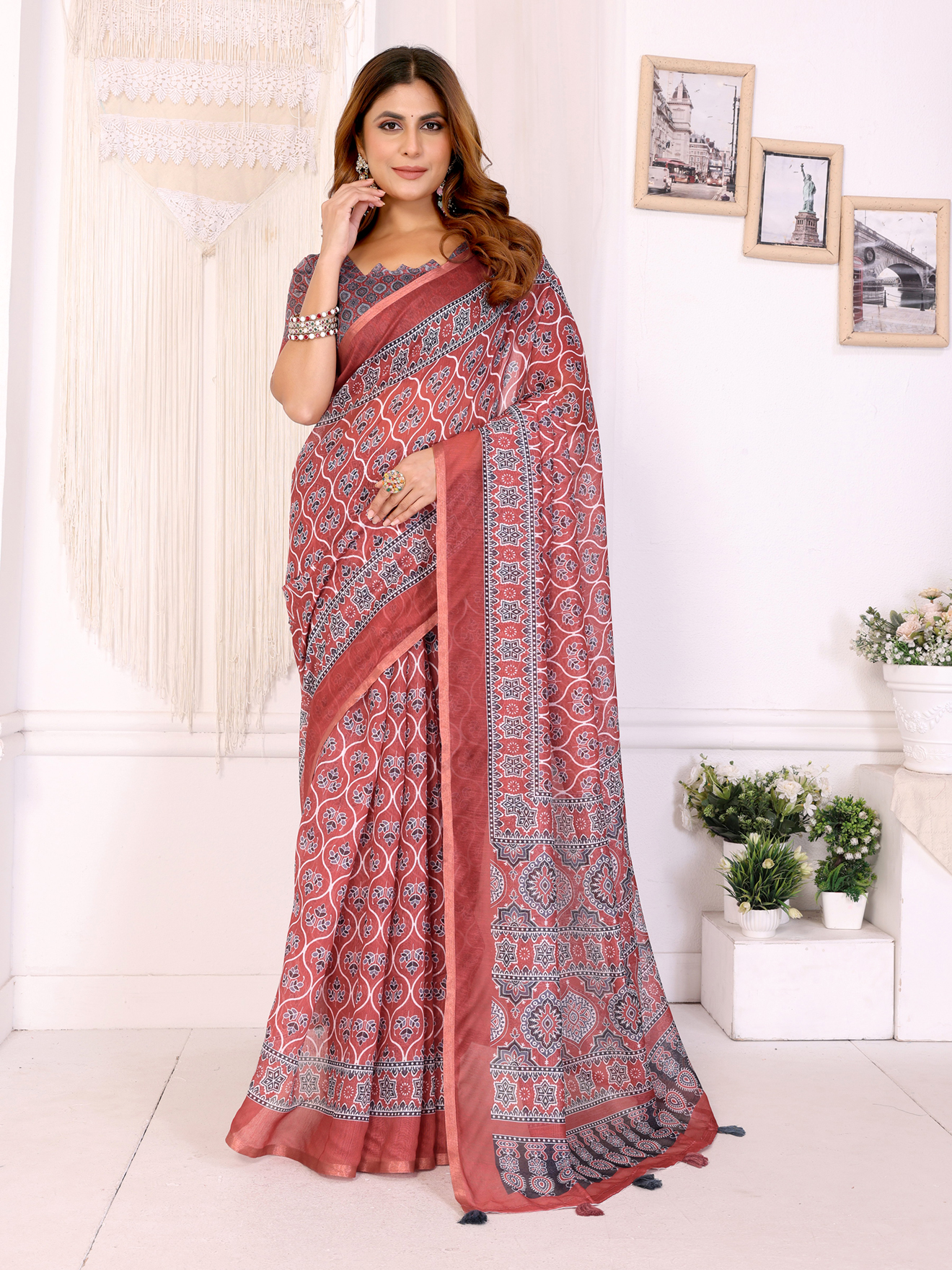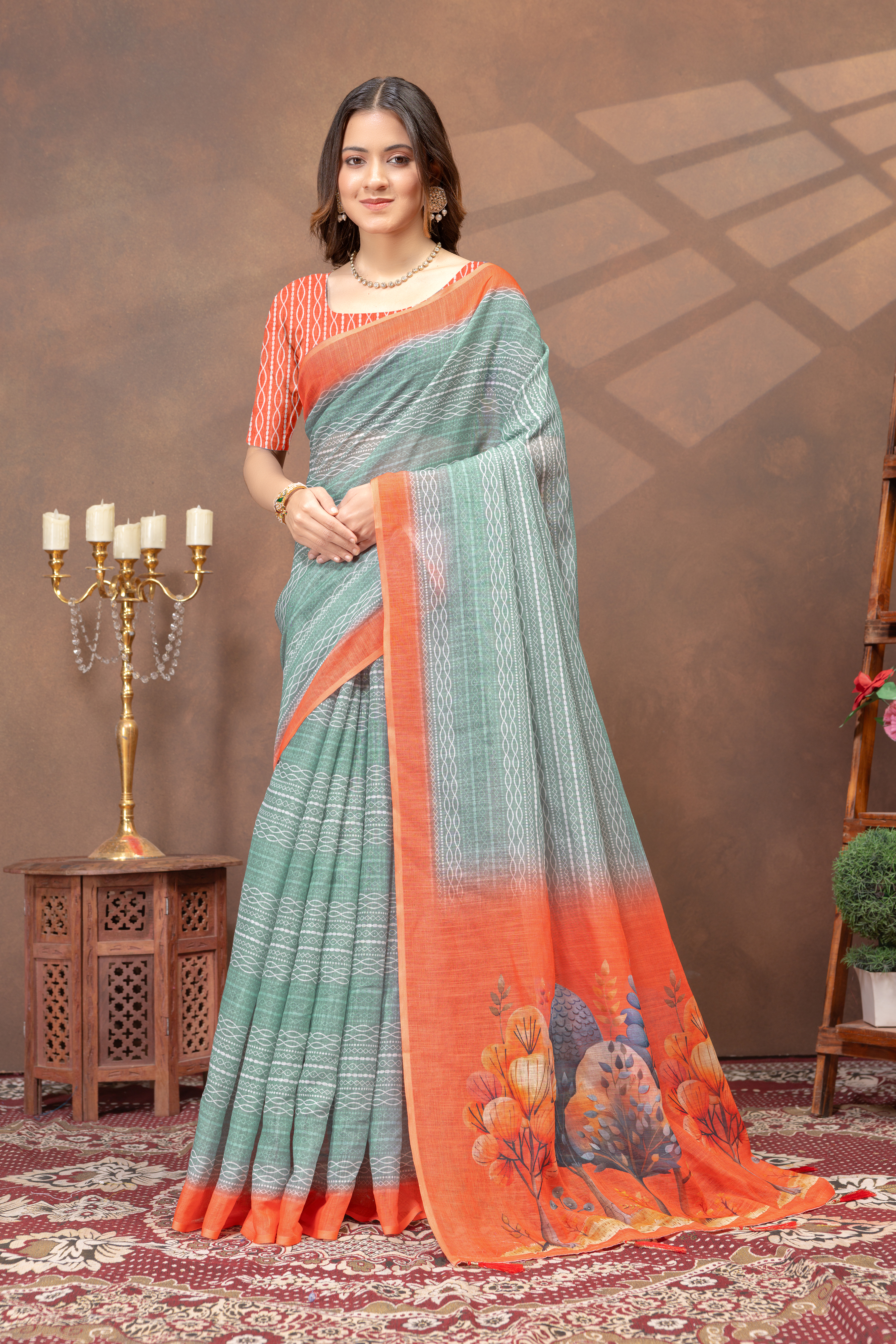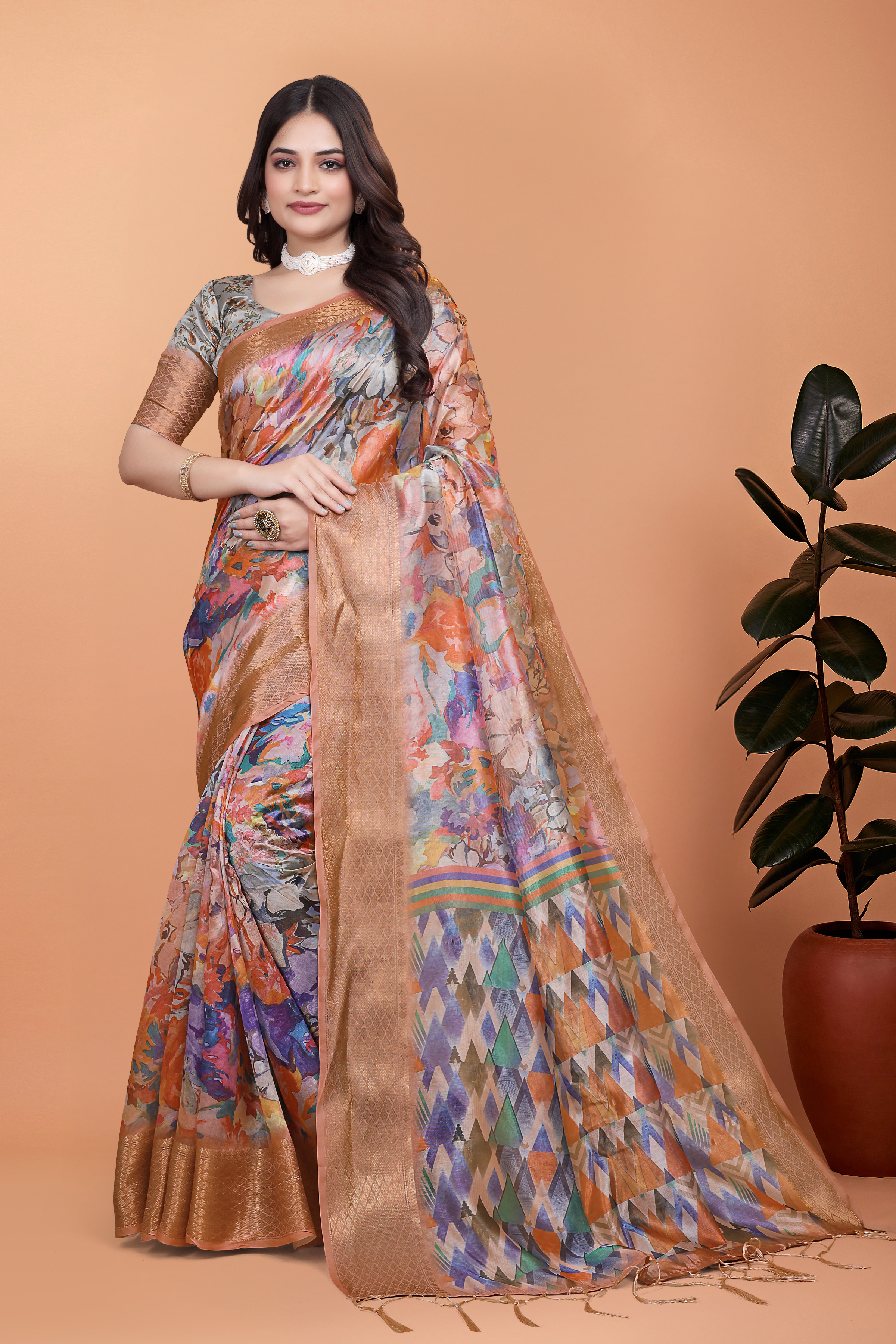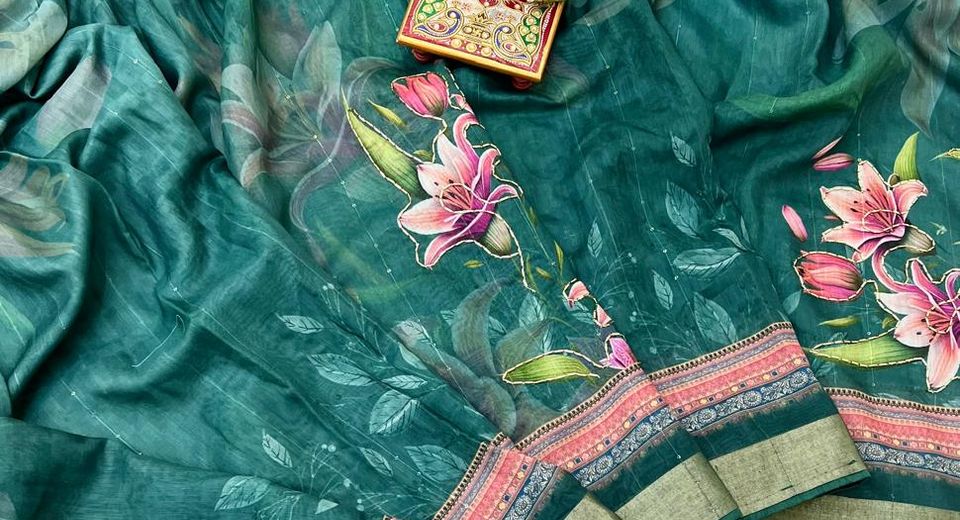
A new saree can leave colour on a blouse, petticoat, handbag or upholstery before it ever reaches a washing tub. Colour Transfer From a Saree Can Start Before the First Wash when loose surface dye, moisture and friction meet during wearing, folding or storage. The risk is usually highest along a dark border, printed panel or richly coloured pallu touching a pale fabric.
Early colour rubbing doesn't automatically mean that a saree is defective. Different fibres, dyes, finishes and print methods respond differently to friction. The useful question is whether the transfer is slight and manageable or strong enough to mark another garment during normal use. A few simple checks before wearing can help you make that decision without damaging the saree.
Why Colour Transfer From a Saree Can Start Before the First Wash
Colour transfer before washing happens when dye or pigment moves from one surface to another through friction, moisture, pressure or loose particles on the fabric. A saree doesn't need to be submerged in water for rubbing to occur.
Dry rubbing can happen where a saree border repeatedly meets a blouse sleeve, petticoat or chair. Perspiration increases the risk because salt and moisture from the skin create a damp contact point. Monsoon humidity can have a similar effect, especially when a folded saree remains pressed against a light-coloured garment for several hours.
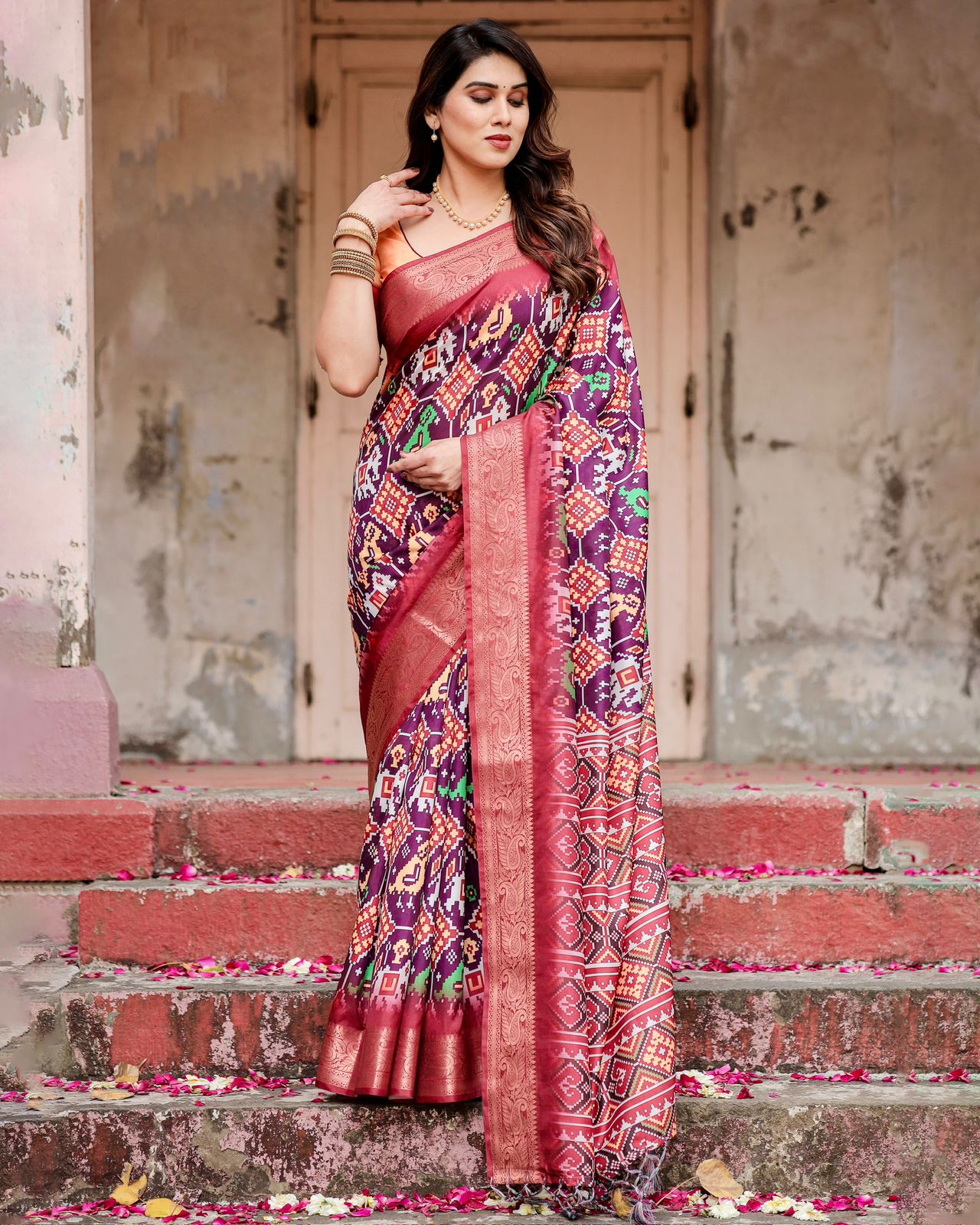
Dark red, maroon, magenta, navy, purple, bottle green and black shades often deserve extra checking because saturated colours can leave more visible marks during dyeing or printing. A multicoloured saree can also transfer from one panel to another when a humid fold stays closed, although the degree depends on the fibre and colour process.
Printed designs bring another variable. A surface print may shed a small amount of unfixed colour when rubbed, while a yarn-dyed weave has colour integrated into the yarn before weaving. The distinction isn't absolute, so a print should be tested rather than judged only by appearance.
Where Colour Transfer From a Saree Can Start Before the First Wash
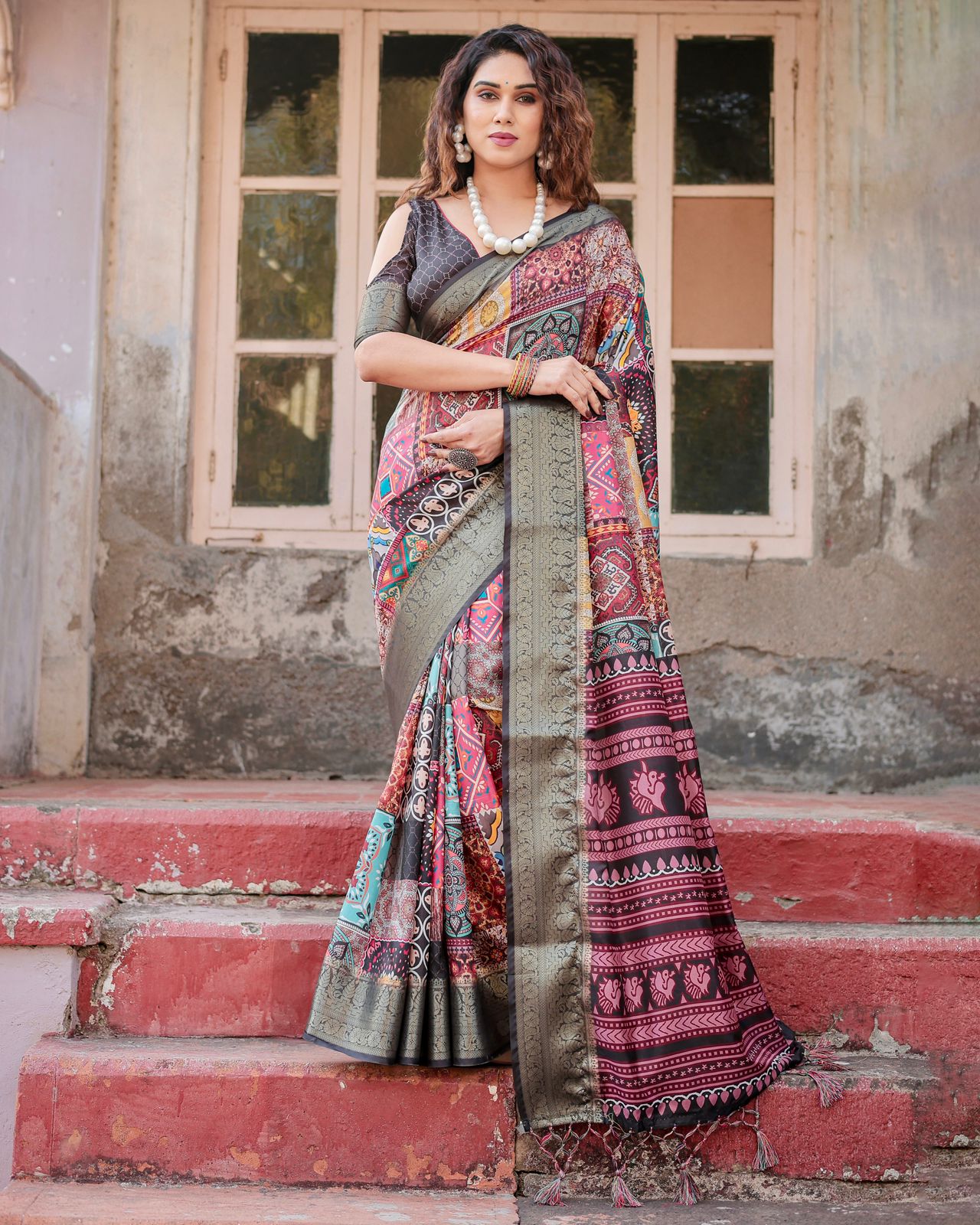
The pallu, border, pleats and areas pressed against the waist or underarm are the most likely parts to transfer colour during first wear. These sections experience repeated contact, folding and movement.
Which saree borders need extra checking?
Contrasting borders need extra checking because a saturated border can touch a pale blouse or petticoat continuously. A purple border on a light body, such as the detail seen in Multicolor Grid Print Linen Cotton Saree with Purple Border, should be checked separately from the main body rather than treated as one uniform fabric.
Run a clean white cloth over the border, the underside of the border and the first few pleats. Use separate areas of the cloth for each test so that you can identify the exact source of any mark.
Why do pallu and folded pleats matter?
The pallu receives repeated rubbing against the shoulder, arm and handbag, while tightly folded pleats create pressure between adjacent layers. A deep shade next to an ivory, beige or pastel section needs more careful handling than two similarly dark colours.
Multicolor Linen Cotton Floral Saree with Blouse Online and Multicolour Floral Linen Cotton Saree with Blue Border Look illustrate why a saree should be checked by colour zone. A floral body, contrasting border and blouse may not behave identically because each area can use a different printing, weaving or finishing process.
How to Test Whether Colour Transfer From a Saree Can Start Before the First Wash
You can perform a low-risk colourfastness check with a white cotton cloth, cool water and an inconspicuous section of the saree. The test should measure transfer gently, not try to force colour out of the fabric.

- Choose a hidden area. Select the reverse side of a border, an inner seam allowance or a section that will remain under a fold. Avoid cutting threads or testing directly on a prominent motif.
- Start with a dry test. Place a clean white cotton cloth over the selected area and rub lightly for about 10 seconds. Repeat on the darkest border, pallu and print separately. A pale grey or faint tint indicates some surface transfer; a strong, clearly visible mark calls for extra caution.
- Carry out a damp test. Moisten a fresh part of the white cloth with cool water and squeeze out excess moisture. Press and lightly rub the same types of areas for five to ten seconds. Do not soak the saree or leave the damp cloth pressed in place.
- Inspect both materials. Check the cloth for colour and the saree for a lighter patch, smudged print or disturbed surface. Strong transfer on the damp cloth is a reason to avoid pairing the saree with pale clothing until professional advice is obtained.
- Allow the test area to dry naturally. Keep the fabric flat and away from direct harsh sunlight. Heat, vigorous rubbing and household stain removers can create a result that doesn't represent normal wearing conditions.
A home test can't certify a garment as colourfast under every condition. The test only reveals how the saree responds to limited dry and damp friction. If a saree is valuable, heavily embellished or already showing noticeable transfer, ask a reputable dry cleaner for a fabric-specific assessment before attempting treatment.
How Moisture Increases Colour Transfer From a Saree Before the First Wash
Moisture makes colour transfer more likely because damp fibres and surfaces allow colour particles or dye molecules to move more easily during contact. Sweat, rain, steam from ironing and a humid cupboard can all create conditions for rubbing.
A saree worn at a summer wedding may contact perspiration around the waist, shoulder and underarm. A saree carried home in a compressed parcel may retain warmth and humidity for a short period after unpacking. Neither situation is the same as washing, but both can encourage colour movement when fabric layers remain pressed together.
Never seal a saree in plastic while it's damp from rain, steaming or recent spot cleaning. Spread the saree in shade until it's fully dry, then fold it loosely with clean, unbleached cotton or acid-free tissue between strongly contrasting sections. Avoid newspaper because printing ink and acidic paper can mark textiles.
Sea Green Tissue Handloom Cotton Saree With Floral Patterns needs a slightly different approach from a dense silk saree because tissue-like surfaces and handloom cotton can respond differently to friction and pressing. The safe practice is the same: keep the saree dry, reduce rubbing and follow the care instruction supplied with the garment.
How Styling Can Reduce Colour Transfer From a Saree Before the First Wash
Pair a new saree with a compatible blouse and petticoat colour, then reduce direct contact between the darkest sections and pale accessories. Styling choices can prevent a manageable amount of rubbing from becoming a visible stain.
- Use a similar or medium-tone petticoat. A maroon saree is safer with maroon, rust or a neutral medium shade than with bright white if the dry test shows transfer.
- Choose blouse fabric thoughtfully. A smooth synthetic lining may experience less visible lint pickup than a pale brushed cotton, but it won't eliminate dye transfer. A washable blouse in a related shade remains the most practical first-wear choice.
- Keep pale handbags away from the pallu. Shoulder straps create concentrated, repeated friction. Use a darker bag or carry the pallu over the opposite shoulder.
- Be cautious with light upholstery. Test the saree before sitting on cream sofas, car seats or pale dining chairs, particularly during humid weather.
- Reduce repeated pinning and unpinning. Excessive friction around brooches and safety pins can disturb printed surfaces and create small patches of visible colour.
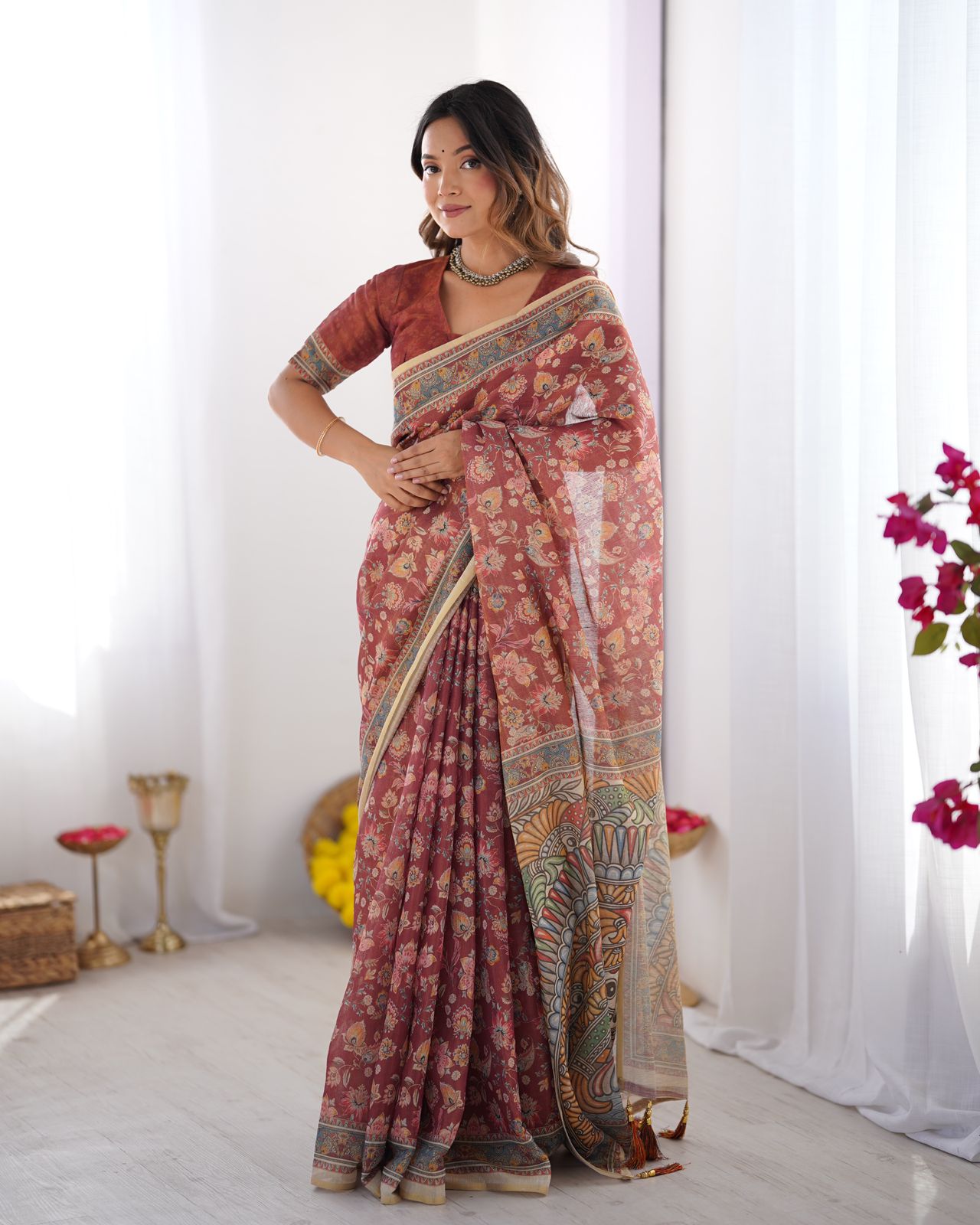
Rust Maroon Handloom Cotton Saree with Floral Print and Traditional demonstrates why shade coordination matters in everyday styling. A rust, tan or muted gold blouse may conceal minor rubbing more effectively than a stark white blouse, while still allowing the floral print to remain the focus.
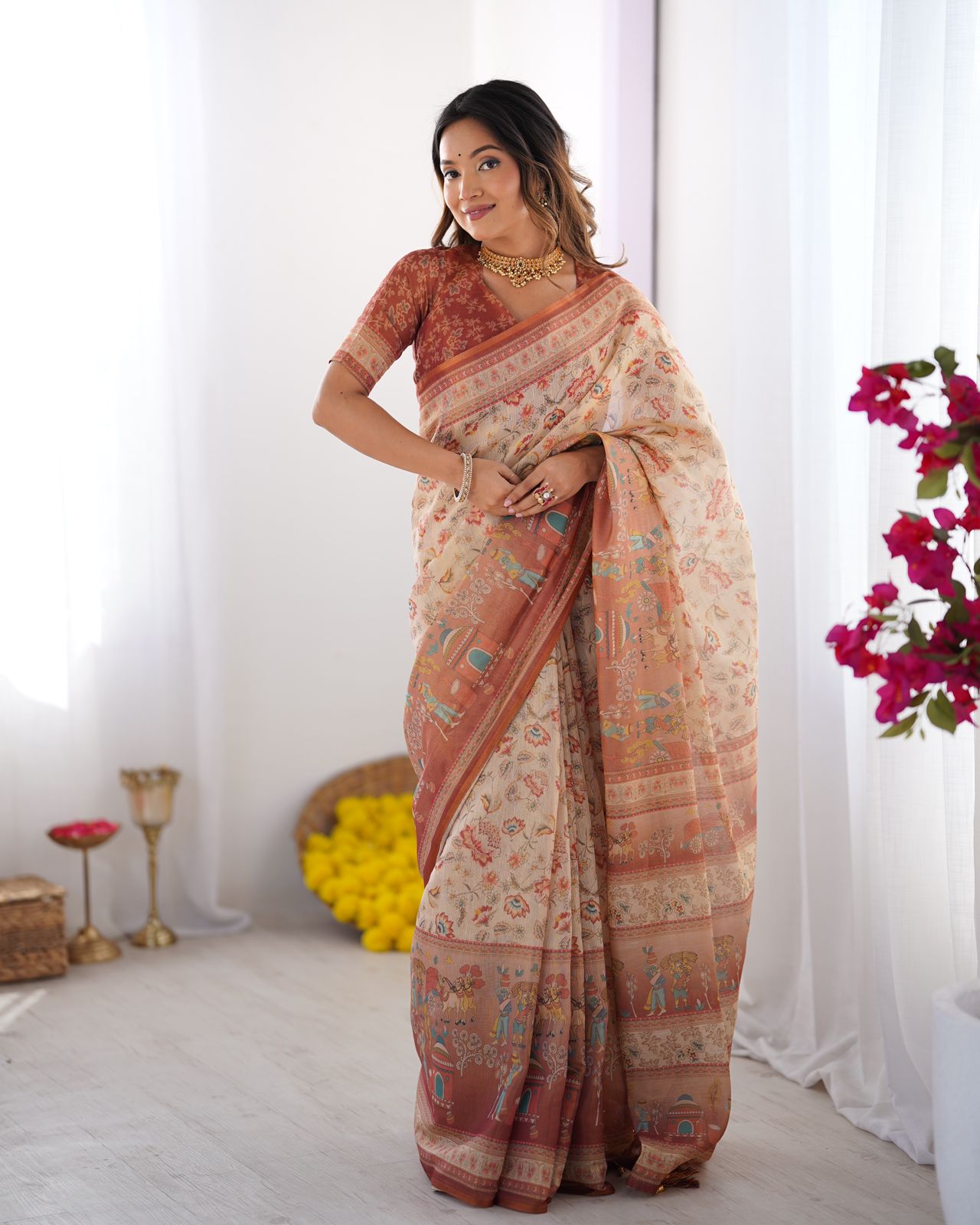
Heritage Beige Multicolor Printed Saree may appear easier to style with pale accessories, but a beige ground can show a dark transferred mark clearly. Test the deepest floral or geometric colour rather than testing only the light background.
What to Do When Colour Transfer From a Saree Starts Before the First Wash
Stop the source of friction, separate the affected garments and avoid applying heat until the transferred colour has been assessed. Rubbing, ironing or drying a mark at high temperature can set colour deeper into a pale fabric.
Remove the saree carefully without dragging the stained section across another garment. Place the saree on a clean, dry surface and keep it away from the blouse, petticoat and accessories that received colour. Photographing the transfer before cleaning can help if you need to discuss the issue with a seller or a professional cleaner.
don't immediately pour bleach, concentrated detergent, lemon juice or vinegar onto a saree. Household remedies can strip a print, dull zari, alter the texture of cotton or create a lighter patch around the stain. A professional cleaner should know the fibre, colour structure and embellishment before choosing a process.
Follow the pale garment's own care label rather than the saree's instructions. A washable cotton blouse may tolerate a cool rinse with mild detergent, while a silk blouse, lined garment or dry-clean-only petticoat should be handled professionally. Treating both textiles identically can damage one of them.
How Fabric Type Changes Colour Transfer From a Saree Before the First Wash
Fibre content, construction, dye depth and surface design all affect how a saree behaves before its first wash. A product name or visual richness can't by itself predict colourfastness.
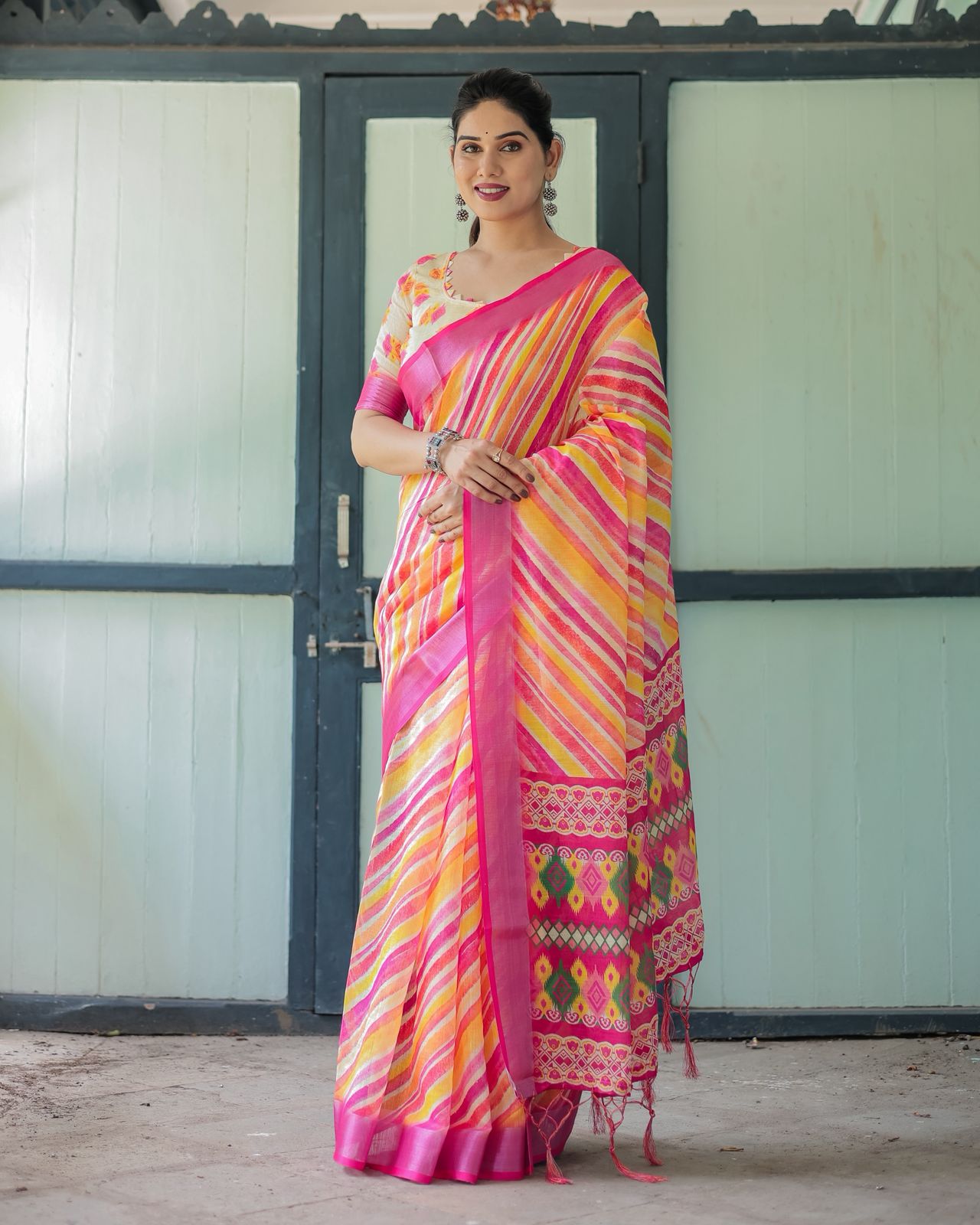
Banarasi silk, for example, may carry woven zari and contrasting coloured yarns that need careful handling around friction and moisture. Multi Color Banarasi Silk Saree with Artistic Prints should therefore be tested at the print, border and pallu instead of being treated like a plain single-colour textile.
Designer Emerald Green Floral Cotton Digital Print Saree represents another testing consideration because a digital print may place several colours close together on one cotton ground. Test the darkest green, the floral edges and any pale background independently. Digital printing doesn't automatically mean that colour will or won't transfer.
Sea Green Tissue Handloom Cotton Saree With Floral Patterns also shows why handloom construction deserves gentle handling. Handloom cotton can have a textured surface that creates more mechanical friction than a very smooth fabric. Folding with clean cotton separators and avoiding damp storage reduces unnecessary contact.
Price and discount status can't reliably predict colourfastness. Sarees from Rs 1000 to Rs 1500, Sarees Under 20% Off, Sarees Under 10% Off, Sarees Flat 60% Off and Sarees Flat 50% Off can all include fabrics and colour combinations that need a pre-wear check. A careful test is more useful than assuming that a higher or lower price guarantees a particular dye performance.
The same principle applies to printed, handloom and silk sarees. Check the care label, test hidden areas, avoid prolonged moisture and keep strongly contrasting colours separated during storage. These steps are inexpensive and protect both the saree and the garments worn with it.
Common Questions About Colour Transfer From a Saree Before Washing
Can a saree bleed colour without being washed?
Yes, a saree can transfer colour without washing when friction, sweat, rain, humidity or pressure moves loose dye onto another surface. Dark borders, printed panels and saturated pallu sections deserve the closest inspection before first wear.
How can I test a new saree for colour transfer at home?
Rub a clean white cotton cloth gently over a hidden dry section, then repeat with a separate cloth that is slightly damp. Test the border, pallu and darkest print separately, and stop if the cloth receives a strong visible mark or the saree surface appears disturbed.
Does colour transfer mean that my saree is damaged?
Not necessarily, because a faint mark from dry surface rubbing can occur with some dyes, prints and finishes. Strong transfer during gentle dry or damp testing indicates that the saree needs cautious styling, professional advice or a discussion with the seller before normal use.
Which saree colours are most likely to rub?
Deep red, maroon, magenta, purple, navy, black and bottle green shades often show more visible transfer because they contain strong concentrations of colour. The actual risk depends on the fibre, dye or print process, so a colourfastness test remains more reliable than shade alone.
How should I store a saree that transfers colour before washing?
Dry the saree completely, fold it loosely and place clean unbleached cotton or acid-free tissue between strongly contrasting sections. Keep the saree away from direct sunlight, damp plastic packaging, newspaper and pale garments during storage.
Should I wash a saree immediately if it rubs colour during first wear?
Do not wash the saree immediately without checking its care label or consulting a professional, particularly if it contains silk, zari, digital prints or embellishment. Separate the affected garments, avoid heat and document the transfer before choosing a cleaning method.