

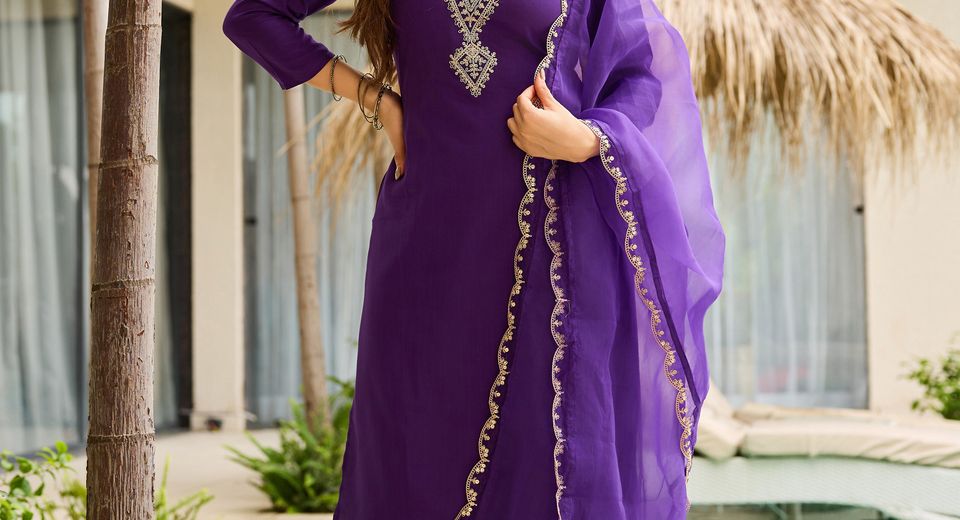
A plain salwar suit gives a contrast dupatta room to lead, but the pairing needs a visible reason to work. Colour Combinations That Feel Intentional for Contrast Dupatta With a Plain Suit come from shared undertones, controlled contrast, repeated accents and a sensible balance between fabric weights. A bright dupatta can look elegant with a simple suit when the colour relationship is planned rather than accidental.
The useful question isn't simply whether two colours look attractive side by side. The better questions are whether the colours share warmth or coolness, whether one shade clearly leads, and whether the dupatta suits the setting. Those three checks turn a plain kurta-and-bottom set into a composed outfit.
Colour Combinations That Feel Intentional for Contrast Dupatta With a Plain Suit: What Makes Them Work?
A contrast dupatta looks intentional when at least one detail connects its colour to the rest of the outfit. That connection can come from a matching border, embroidery thread, jewellery, footwear, makeup or a small printed motif.
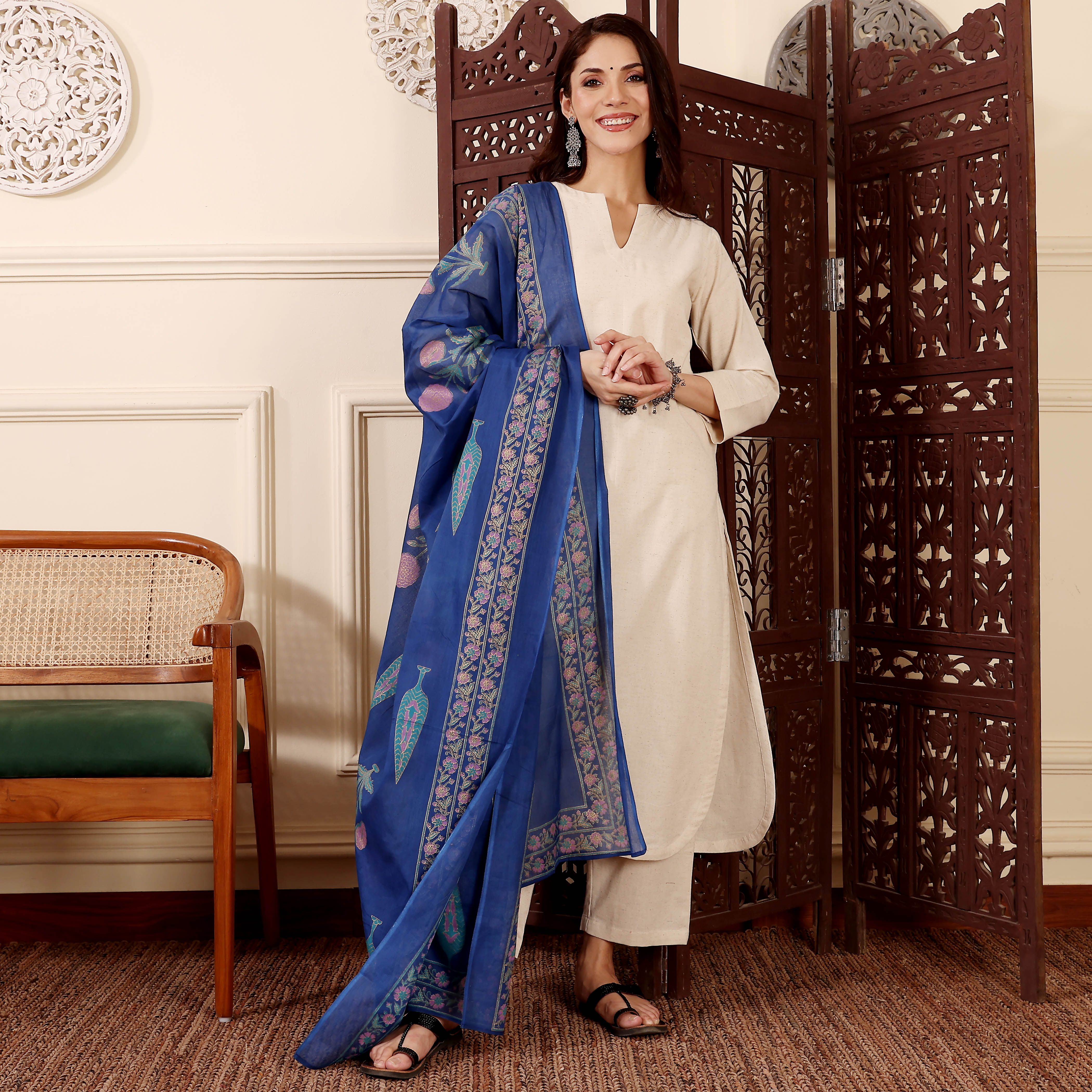
Ivory and green already have a high-contrast relationship, but a green dupatta looks more integrated when green appears again in earrings, bangles or embroidered thread. The repeated colour doesn't need to be identical; deep leaf green, bottle green and muted sage can belong to the same visual family.
Colour dominance also matters. A plain ivory suit with a saturated emerald dupatta has a clear 70:30 balance: the neutral occupies most of the outfit and the green supplies the statement. A pale green suit with a neon pink dupatta has a less controlled relationship because both colours compete for attention.
A third clue is finish. A matte cotton suit paired with a heavily reflective tissue dupatta may look disconnected unless the event is festive and the accessories deliberately bridge the difference. A lightweight Chanderi kurta set and a crisp woven dupatta usually create a more naturally coordinated daytime outfit.
Colour Combinations That Feel Intentional for Contrast Dupatta With a Plain Suit: How Do Undertones Help?
Choose a warm dupatta for a warm-toned suit and a cool dupatta for a cool-toned suit unless the contrast is intentionally dramatic. Undertones are the subtle yellow, red, blue or grey qualities beneath a colour's surface.
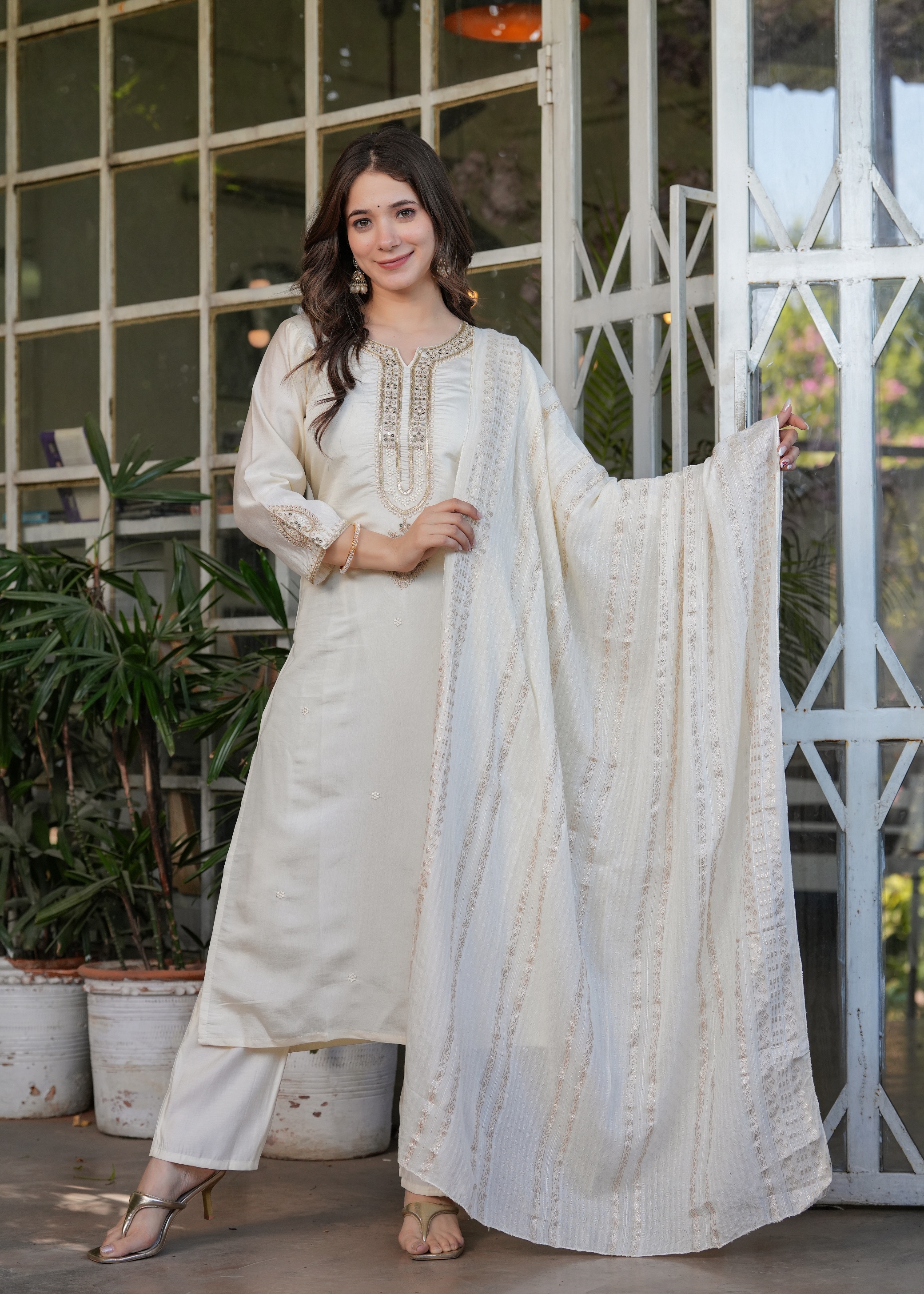
Warm neutrals include cream, ivory, beige, camel and some soft peach shades. Warm accent colours include marigold, rust, coral, tomato red, orange and turmeric yellow. Cool neutrals include optic white, dove grey and blue-grey, while cool accents include cobalt, emerald, fuchsia, plum and icy blue.
White isn't always neutral in practice. White with a blue cast works especially well with cobalt, teal, raspberry and violet. Cream or off white works more comfortably with mustard, rust, olive, coral and warm pink.
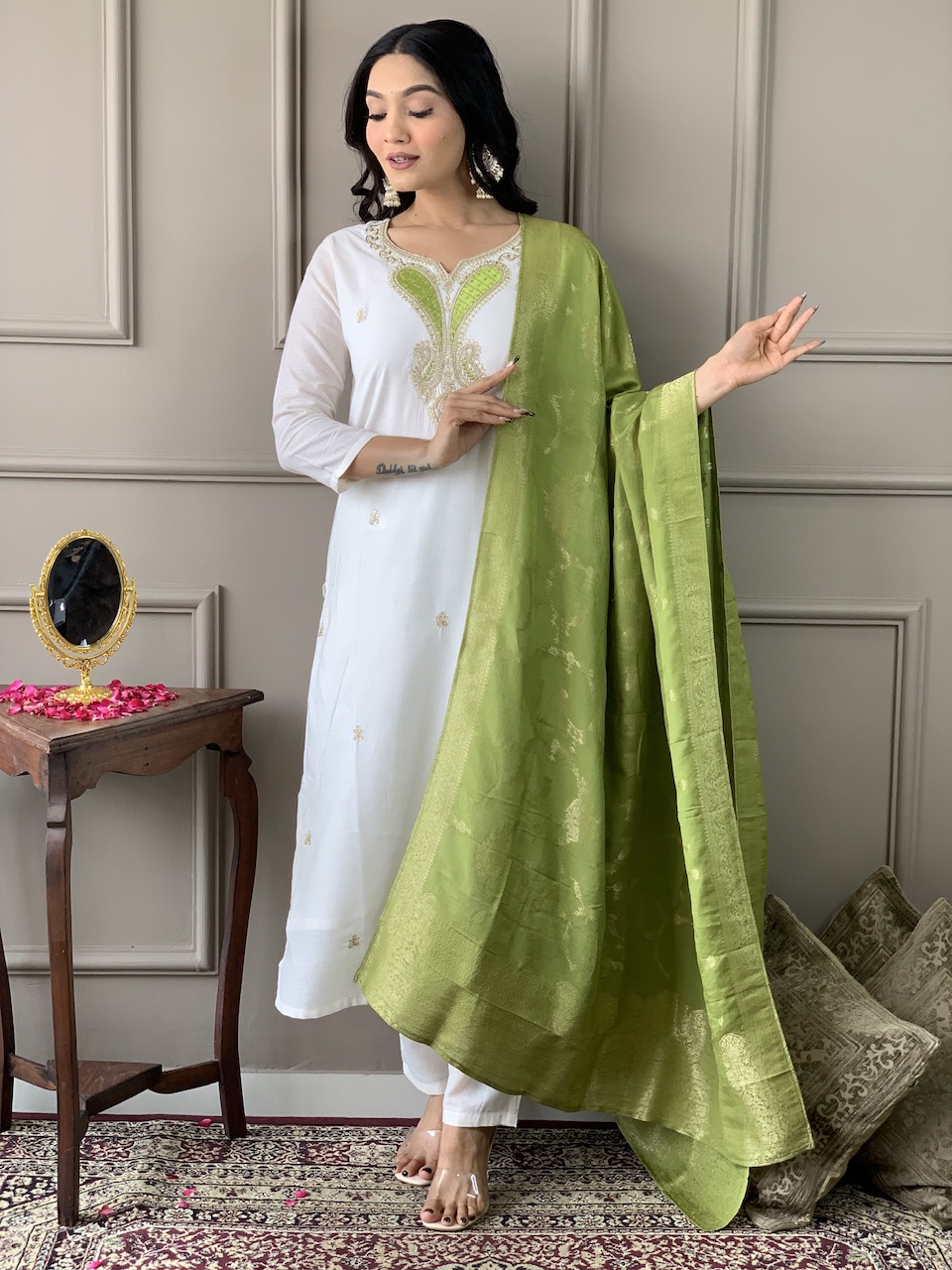
Off White Threadwork Salwar Suit with Green Jacquard Dupatta demonstrates a dependable warm-neutral and green pairing. The off white base quietens the green, while the jacquard texture gives the contrast enough depth for a festive lunch or family gathering.
Black White Floral Embroidered Readymade Salwar Suit offers a different route. Black and white create a strong graphic base, so a colourful accessory or dupatta should be chosen with care. A red, fuchsia or cobalt layer can work, but keeping jewellery simple prevents the floral embroidery and contrast colour from competing.
Colour Combinations That Feel Intentional for Contrast Dupatta With a Plain Suit: Which Pairings Work?
The most reliable combinations use one dominant base, one supporting contrast and no more than one additional accent colour. Each pairing below has a clear visual logic and can be adjusted for fabric, season and occasion.
Ivory or white with green
Ivory or white with green works because a calm neutral gives green enough space to look rich rather than loud. Emerald and bottle green suit evening gatherings, while pistachio, sage and muted leaf green feel lighter for daytime.
Gold earrings and tan or orange footwear can repeat the warmth without adding another major colour. A green border, green embroidery detail or green glass bangles can create the small repetition that makes the outfit feel planned.
Yellow with green, orange or magenta
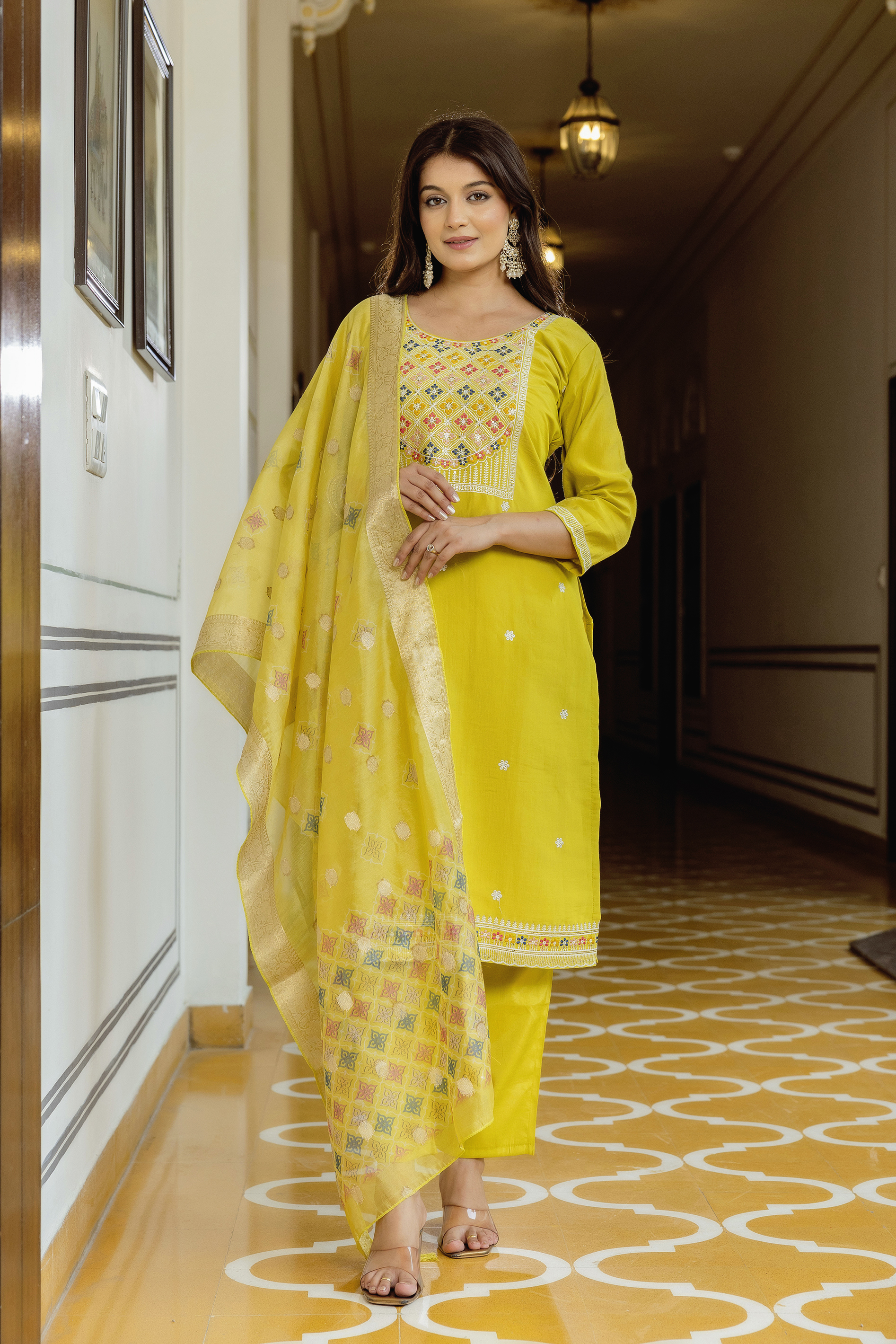
Yellow pairs successfully with green, orange or magenta when the saturation levels are considered. Mustard yellow supports bottle green or rust, while lemon yellow feels fresher with teal, lavender or hot pink.
Designer Yellow Salwar Suit with Dupatta can be styled with antique gold jewellery when the yellow is warm and deep. Avoid adding bright red shoes, a green bag and multicoloured bangles at the same time; three strong accents can make a simple suit appear visually crowded.
Gujarat Bandhej Salwar Suits offer useful examples of how a lively accent colour can be controlled through repeated dots, borders and tie-dye rhythm. When a dupatta has a busy Bandhej-inspired surface, a plain yellow or cream suit can provide enough visual rest.
Orange with pink, cream or blue
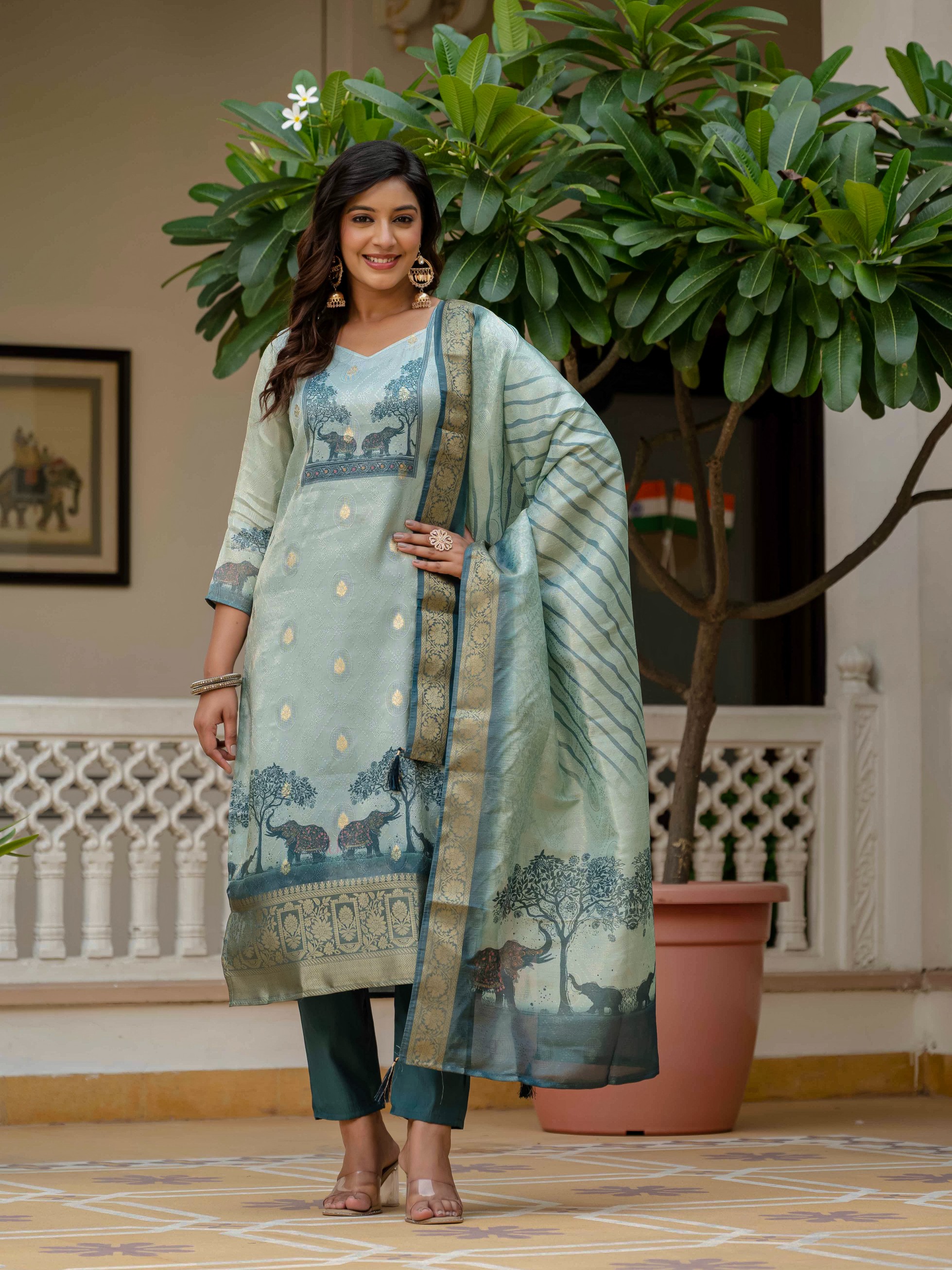
Orange looks deliberate with pink, cream or blue when the intensity of the two colours is balanced. Burnt orange with dusty rose is refined, orange with cream is warm and traditional, and orange with ink blue creates a sharper festive contrast.
Orange Radiance Salwar Suit already carries strong colour presence, so a contrasting dupatta should ideally have a restrained print, a clean border or a related warm tone. Gold accessories support orange; silver can work when the pairing moves toward cobalt, icy blue or blue-grey.
White Embroidered Salwar Suit with Orange Silk-Blend Dupatta shows how embroidery can act as the connecting element when the dupatta supplies the main contrast. White provides clarity, orange adds warmth and the silk-blend surface makes the pairing suitable for celebratory dressing.
Pastel blue with coral, marigold or rose
Pastel blue benefits from a warm contrast because coral, marigold and rose prevent the outfit from appearing washed out. The contrast should remain slightly softened for daytime events, especially when the suit is made from a lightweight fabric.
Pastel Blue Embroidered Chanderi Kurta Set with Dupatta is a useful base for this approach. Chanderi has a delicate, lightly luminous appearance. A coral, peach or muted pink dupatta can add warmth without overwhelming the embroidery. Pearl jewellery, silver accents or a blush-toned lip will preserve the airy quality.
Black and white with one saturated accent
Black and white need only one saturated accent to become a complete outfit. Cobalt, crimson, fuchsia, emerald and purple each create a different mood, but the remaining accessories should stay within black, white, metallic or skin-toned families.
This rule is particularly useful for formal dinners and evening celebrations. A jewel-toned dupatta can supply colour, while the plain black-and-white base keeps the result polished rather than costume-like.
Colour Combinations That Feel Intentional for Contrast Dupatta With a Plain Suit: How Does Fabric Change the Result?
Fabric weight and surface texture should be reasonably compatible with the contrast between the colours. A heavy or shiny dupatta makes a colour appear more prominent, while a matte or sheer dupatta makes the same shade look softer.
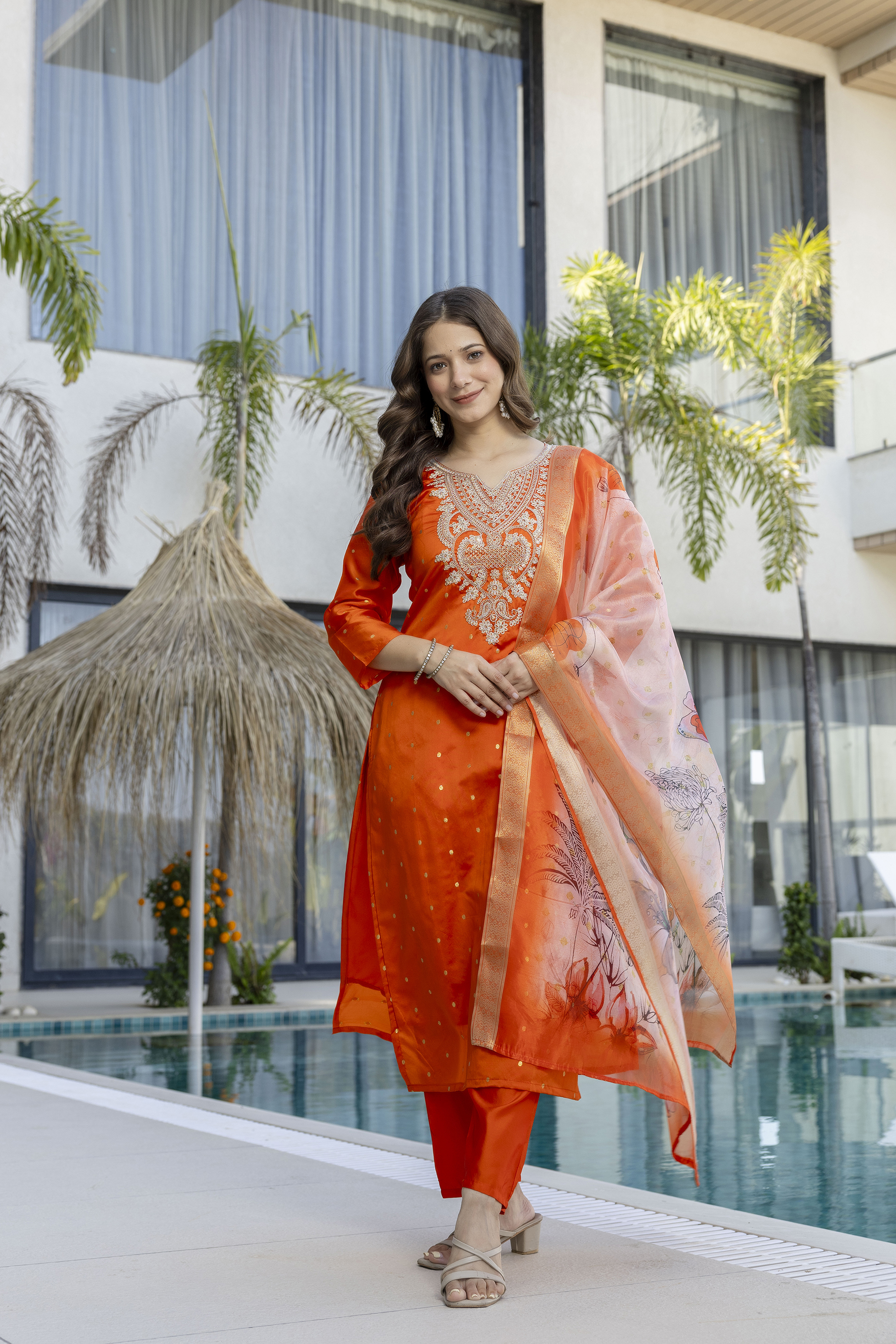
Silk-blend, jacquard and zari details reflect light and intensify deep colours such as emerald, wine, royal blue and orange. Cotton, voile and soft printed fabrics diffuse colour and are easier to wear for daytime. Chanderi sits between the two: it's light but has a subtle sheen, making pastels and jewel tones look especially graceful.
Maharashtra Paithani Inspired Salwar Suits are relevant when a plain suit needs a traditional-looking contrast layer. Paithani-inspired colour stories often use strong borders and jewel-like combinations, so the kurta should remain quiet and accessories should echo only one colour from the dupatta.
Kalamkari Print Salwar Suits bring another lesson in colour control. A printed dupatta may contain several shades. But the plain suit should usually pick one background or secondary colour from the print rather than introduce a completely unrelated shade. Matching the suit to a minor colour in the print creates a more considered result than matching only the most vivid motif.
Odisha Sambalpuri Salwar Suits and Punjab Patiala Salwar Suits can also inspire contrast styling through borders, checks, motifs and strong colour blocks. When a dupatta carries a visibly regional design language, keep the kurta, jewellery and footwear uncomplicated so the textile story remains legible.
Colour Combinations That Feel Intentional for Contrast Dupatta With a Plain Suit: How Should You Dress Them for an Occasion?
The same colour pairing should become lighter, simpler or more embellished according to the time, venue and formality of the event. Colour alone doesn't determine whether a salwar suit looks appropriate.
For daytime gatherings
Daytime styling works best with two clear colours, breathable fabrics and restrained shine. Pastel blue with coral, ivory with sage green, or cream with muted yellow are practical choices for a brunch, puja or daytime family event.
Choose small earrings, a compact handbag and footwear in tan, nude, cream or a colour already present in the dupatta. Heavy glitter, very dark lipstick and multiple metallic finishes can make a light daytime combination feel unnecessarily formal.
For festive evenings
Festive evening dressing can support deeper saturation, metallic thread and a stronger contrast. Emerald with ivory, orange with royal blue, marigold with magenta and black with fuchsia work well when the dupatta has a visible border or woven detail.
Keep the jewellery finish consistent. Gold usually complements mustard, orange, rust, coral and warm green, while silver or oxidised metal can balance cobalt, cool pink, purple and blue-grey. A single statement earring or necklace is generally enough when the dupatta already contains zari or dense embroidery.
For office and semi-formal wear
Office styling benefits from softened contrast, moderate saturation and minimal sparkle. Powder blue with muted rose, beige with olive, white with indigo and grey with plum can look distinctive without appearing heavily festive.
Use a neatly folded or lightly draped dupatta, structured footwear and one restrained accessory. A plain suit with a contrast dupatta works especially well for work events when the dupatta supplies colour but the silhouette remains simple.
Colour Combinations That Feel Intentional for Contrast Dupatta With a Plain Suit: What Should You Repeat?
Repeat one colour from the dupatta in a small accessory or garment detail, but don't copy every colour across the outfit. Repetition creates cohesion; excessive matching removes contrast.
A coral dupatta can be echoed through coral-toned earrings or lipstick. A green dupatta can connect to green bangles, a narrow border or embroidered thread. A multicoloured dupatta can be paired with a suit that matches its quietest shade, allowing the brightest motif to remain the focal point.
RoseGlow Designer Salwar Suit can be styled using the same principle when the outfit includes a romantic pink or rose-led palette. Pair a rose-toned dupatta with ivory, soft grey or muted green, then repeat only one supporting shade in the footwear or jewellery.
Multicolor Embroidered Crepe Maxi Suit Set for Festive Wear needs especially careful accessory editing because embroidery already supplies several points of colour. Select one thread shade for earrings or footwear and keep the handbag neutral. A plain dupatta or a dupatta with a restrained border will prevent the maxi silhouette from becoming visually overloaded.
Colour Combinations That Feel Intentional for Contrast Dupatta With a Plain Suit: What Is the Final Styling Check?
The final styling check is to view the outfit from a distance and identify one clear focal point. If the eye moves equally between the kurta, dupatta, jewellery and footwear, remove one competing accent.
Check the outfit in natural daylight before an event because indoor lighting can change how yellow, green, white and blue appear. Confirm that the dupatta isn't only a different colour but also suitable in weight, length and opacity for the suit. A practical three-part test is simple: one dominant base colour, one obvious contrast colour and one repeated detail.
Colour Combinations That Feel Intentional for Contrast Dupatta With a Plain Suit become easier to build when colour, texture and occasion are considered together. Start with the undertone of the plain suit, select a dupatta with a deliberate level of contrast, and repeat one small colour detail instead of matching every accessory. That method creates an outfit that feels expressive while remaining visually balanced.
Common Questions About Contrast Dupattas With Plain Salwar Suits
Which colour dupatta looks best with a plain white salwar suit?
Green, orange, cobalt, pink and purple can all work with a plain white salwar suit. Choose warm orange or coral for a lively daytime look, emerald for festive dressing, or cobalt and fuchsia for a sharper evening contrast. Match the jewellery to the dupatta's undertone rather than adding another unrelated colour.
How do I choose a contrast dupatta for a plain suit?
Choose a dupatta by checking the suit's undertone, the relative saturation of both colours and the formality of the event. Warm suits pair comfortably with mustard, rust, orange and coral, while cool suits work well with cobalt, teal, fuchsia and plum. Repeat one dupatta colour in a small accessory for a cohesive finish.
Can a printed dupatta be worn with a plain salwar suit?
A printed dupatta is often easier to style with a plain salwar suit because the plain base gives the motifs room to show. Select the suit from a background or secondary colour in the print instead of matching only the brightest motif. Keep jewellery and footwear simple when the print contains several colours.
Which jewellery suits a contrast dupatta outfit?
Gold jewellery usually suits warm combinations such as ivory with green, yellow with orange and cream with rust. Silver or oxidised jewellery works well with pastel blue, cobalt, purple and cool pink. When the dupatta has zari or dense embroidery, one statement jewellery piece is usually sufficient.
Can I wear a bright dupatta with a pastel salwar suit?
A bright dupatta can be worn with a pastel salwar suit when the contrast is balanced by a repeated colour or a related undertone. Pastel blue with coral, blush pink with emerald and mint with deep rose are workable combinations. Keep the remaining accessories neutral so the dupatta remains the focal point.
How many colours should a salwar suit outfit contain?
Two main colours and one small accent usually create the most balanced salwar suit outfit. A multicoloured dupatta may contain more shades, but the plain suit should pick one calm colour from the print and accessories should repeat only one additional detail. This keeps the contrast visible without making the outfit look crowded.


