

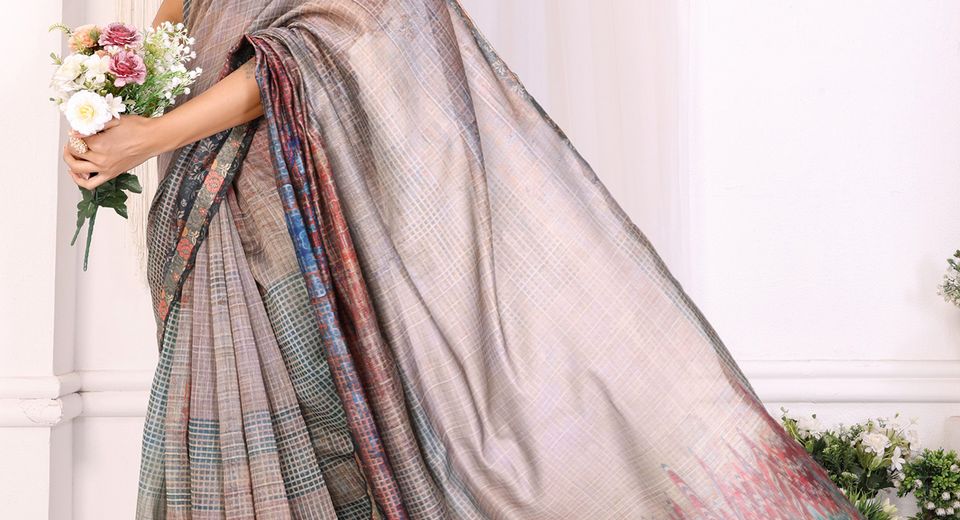
Clues You Can See Before Ordering for Ethnic Wear Fabric Quality Online can help you make a better decision before a saree, dupatta or suit arrives at your door. A product photograph can't reveal every tactile detail, but it can show the weave, surface texture, fall, transparency, border construction and print alignment when you know where to look. Product descriptions also provide useful evidence through fibre names, measurements, lining details and care instructions. The most reliable approach combines visual inspection with careful reading rather than relying on colour or price alone.
Clues You Can See Before Ordering for Ethnic Wear Fabric Quality Online
Fabric quality can often be estimated online by examining weave regularity, fabric movement, surface finish, transparency, edge construction and the precision of prints or zari.
A convincing ethnic-wear listing should give you more than a single front-facing image. Look for full-length photographs, close-ups of the body and border, a pallu view, blouse-piece information and a description of the material. A saree photographed in natural or evenly diffused light is easier to assess than a saree covered by heavy filters, strong shadows or excessive colour saturation.
Quality doesn't always mean a heavy or expensive fabric. A well-made Chanderi cotton saree may be valued for its lightness, crisp hand and subtle sheen, while a linen cotton saree may be chosen for breathability and a relaxed fall. The appropriate standard depends on the intended use, climate and comfort preference.
How the Weave Reveals Fabric Strength and Finish
A consistent weave with even spacing is one of the clearest online signs of dependable fabric construction.
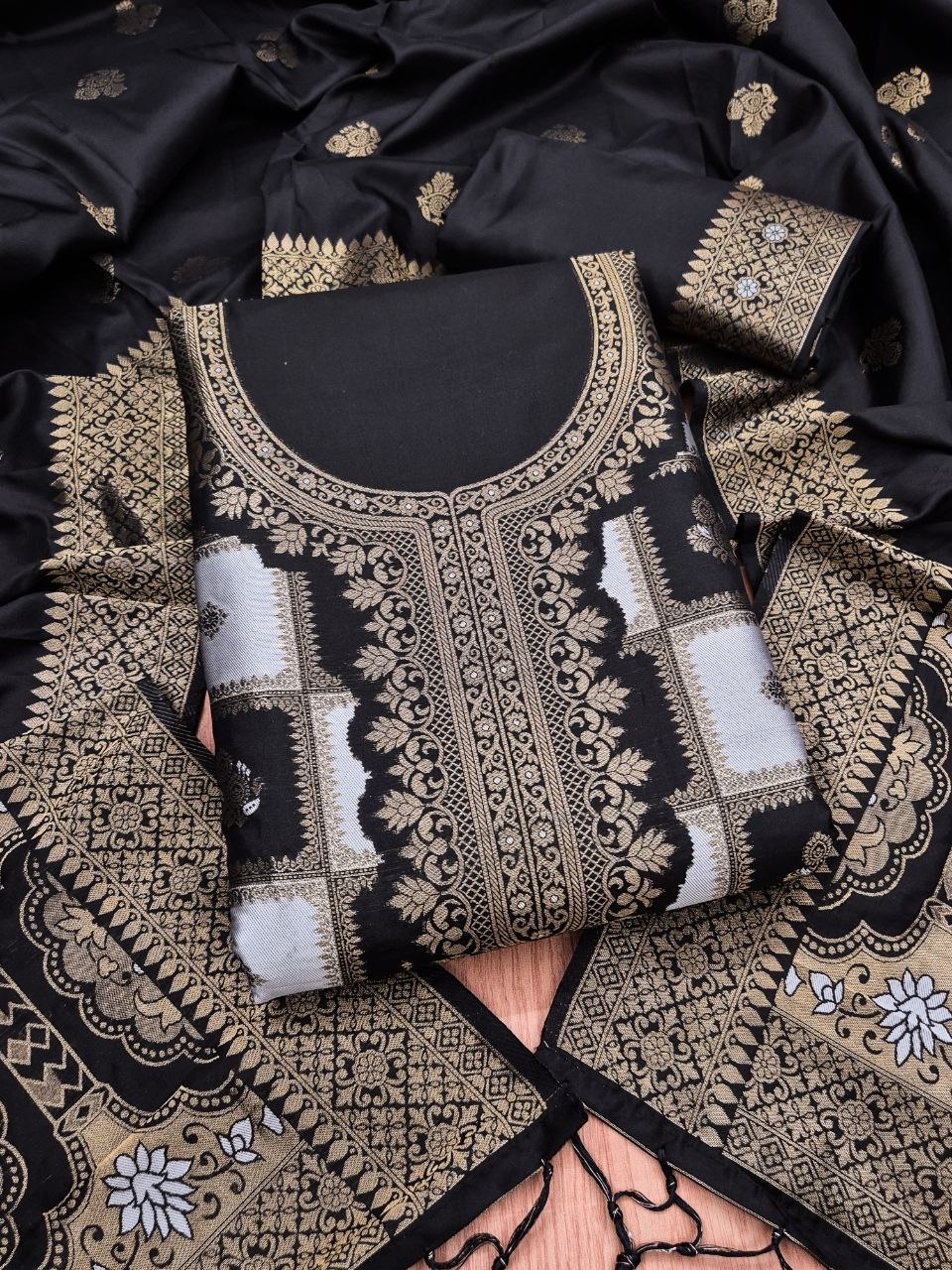
Zoom into the sharpest available image and inspect the area between motifs. Threads should appear reasonably regular rather than crowded in one section and widely separated in another. Minor handmade irregularities can be normal, especially in handloom textiles, but large skipped areas, pulled threads and visibly distorted selvedges deserve caution.
Chanderi fabric commonly has a light, airy structure and a lightly luminous surface. Chanderi cotton combines cotton comfort with the characteristic delicacy associated with Chanderi weaving. A listing for Black Chanderi Cotton Saree with Contemporary Checked Weave can therefore be assessed by checking whether the checked pattern remains aligned across the body and whether the fabric retains a clean, lightly glossy appearance in close-up images.
Motif definition also provides information. Woven motifs are formed within the structure of the fabric, so the reverse side may show a related thread pattern or a restrained float. Printed motifs generally sit on the surface and may look sharper on the front than on the back. Neither method is automatically superior, but the product description should identify whether a design is woven, printed, embroidered or jacquard.
Inspect the selvedge whenever a side edge is visible. A straight selvedge with controlled finishing suggests careful weaving and cutting. A heavily rippled or unfinished edge doesn't necessarily make a saree unusable, but it may indicate that the textile needs fall, pico or additional tailoring before regular wear.
What Drape and Movement Tell You in Product Images
The way fabric folds and hangs in photographs gives useful evidence about weight, stiffness and fluidity.
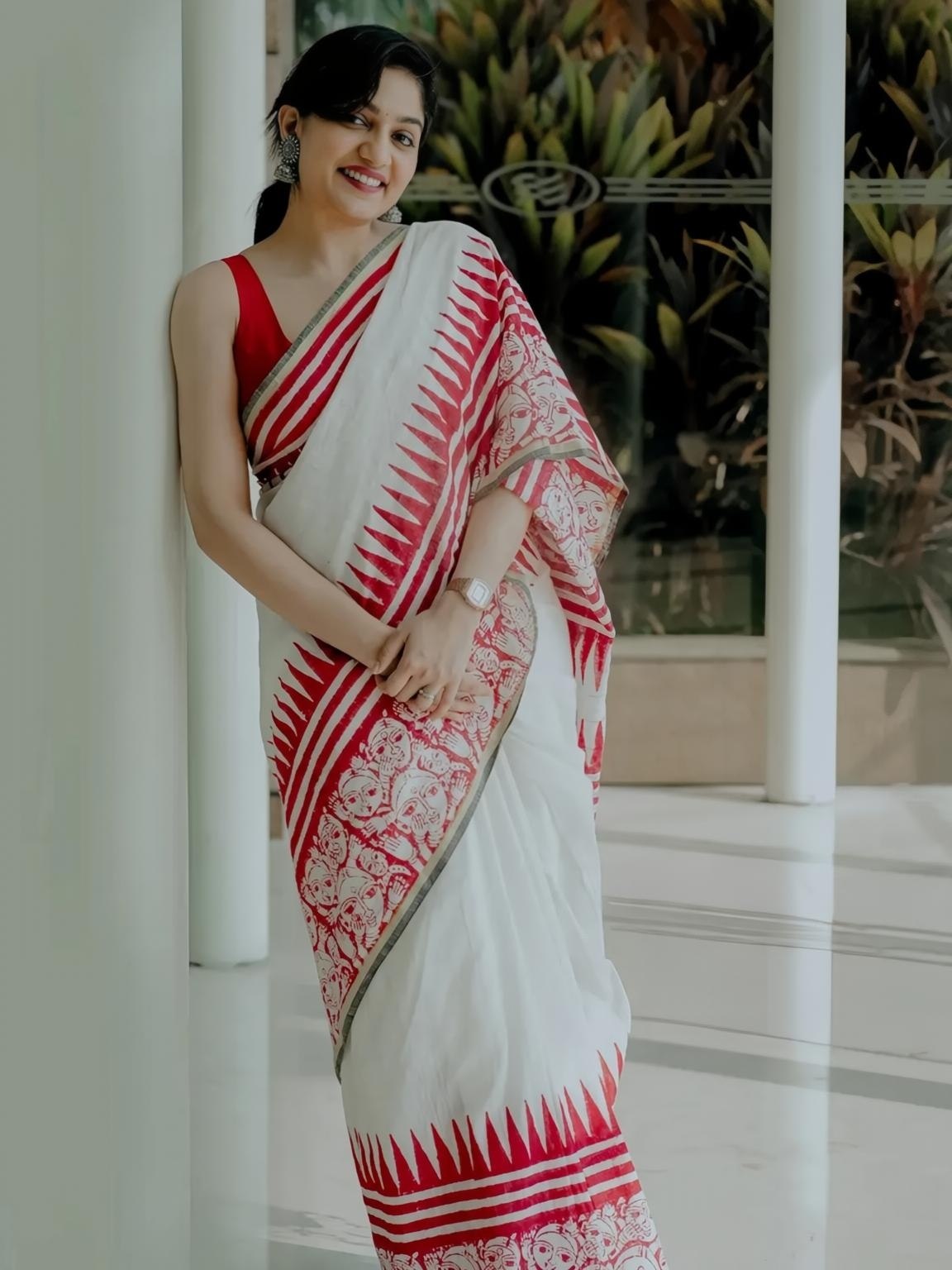
Study pleats, the pallu and any section where the saree hangs away from the model's body. A lightweight saree usually forms minor, softer folds and may show a slight translucent overlap. A stiffer cotton may hold broader pleats and create sharper edges. Linen cotton often shows a relaxed, slightly textured fall rather than the smooth liquid movement of silk.
don't judge drape from a single posed photograph. A model may pin a saree tightly, arrange the pallu over a support or use hidden clips. Compare the pleated front with the loose pallu and the end near the floor. When all three areas show similar behaviour, the images provide a more reliable impression of the fabric.
The Multicolor Linen Cotton Floral Saree with Blouse Online offers an useful example of why fibre composition matters. Linen cotton can look breathable and softly structured, but it may also develop natural creases more quickly than polyester blends. A shopper seeking a perfectly crease-resistant saree should not interpret the relaxed drape of linen cotton as a defect.
Photographs can also reveal whether a saree is excessively limp. A fabric that collapses without forming a stable fold may need careful pinning and may not create the silhouette shown in the listing. Conversely, a very rigid fabric may feel less comfortable for long ceremonies. Match the visible movement to the way you plan to wear the garment.
Transparency, Surface Texture and the Importance of Lighting
Transparency should be judged from layered fabric, border areas and the lighting conditions rather than from colour alone.
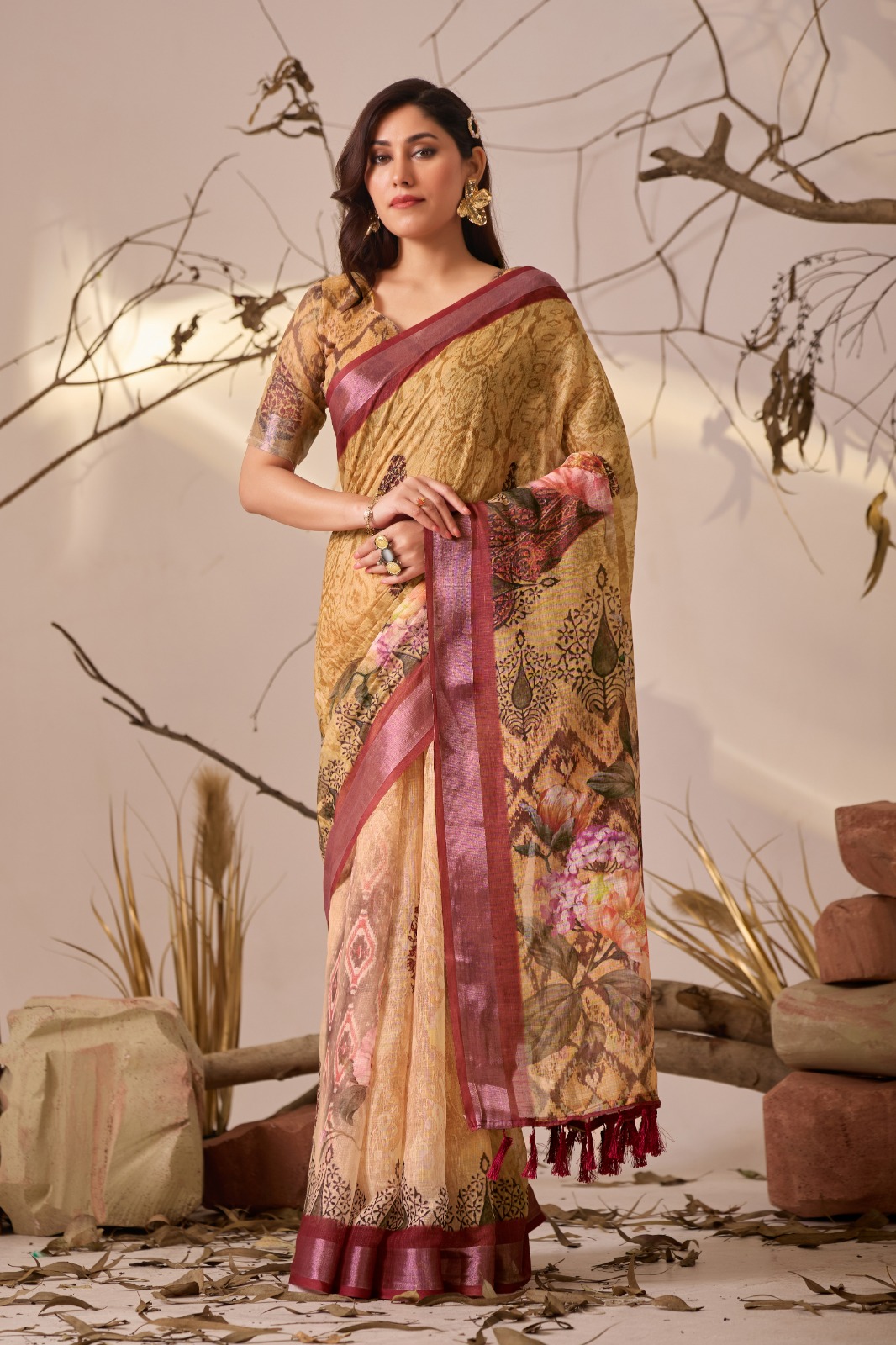
Hold attention on the pallu or an unlined section where the model's blouse, hand or background is visible through the cloth. A pale Chanderi cotton saree may appear more transparent than a black one because lighter colours reflect and transmit light differently. A dark saree can still be sheer under strong backlighting.
Look for photographs showing the saree folded over itself. Two layers reveal more than a single hanging layer and can help you estimate opacity. A listing that shows the fabric against a contrasting background is especially useful. If every image uses a dark background for a dark saree, transparency becomes difficult to assess.
Surface texture should appear in the weave and not only in a digital filter. Fine slubs, small variations in yarn and a subdued grain may be natural in cotton or linen textiles. Artificial sharpening can make a fabric look more textured than it really is. Compare the border, body and blouse piece: a genuine surface character usually appears consistently across all three.
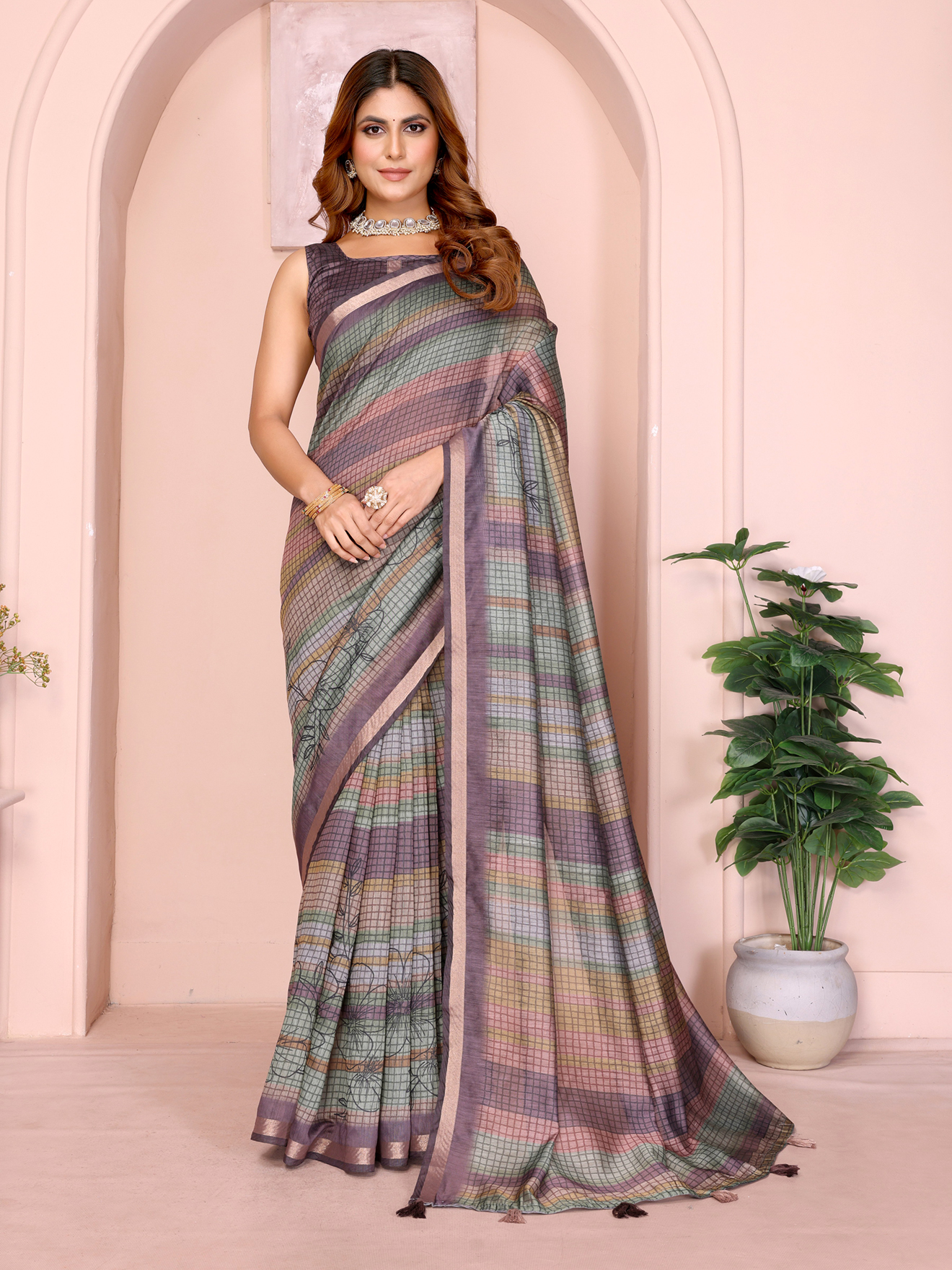
Elegant Grey Chanderi Saree for Contemporary Ethnic Styling illustrates why neutral colours need careful photography. Grey can shift towards silver, blue or beige depending on lighting and screen settings. Read the colour description, inspect more than one image and remember that monitor calibration can produce modest differences between the displayed shade and the delivered saree.
How to Read Borders, Pallu Details and Zari Online
Border construction and zari details can reveal whether a design is woven, printed, embroidered or applied separately.
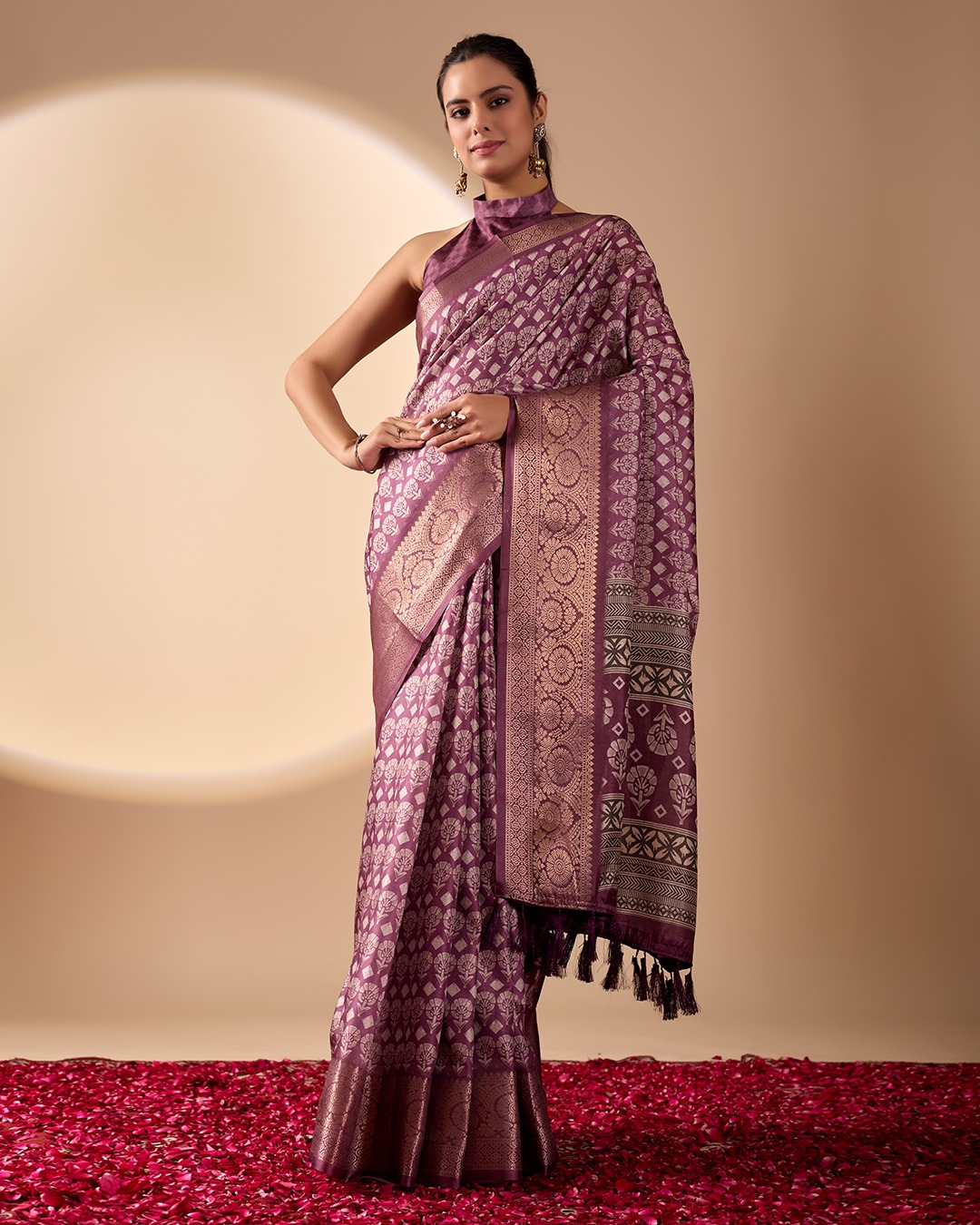
Examine the border at a corner or near the pallu end. A woven border normally joins the saree body as part of the textile structure, while a printed border may show a flatter surface pattern. Embroidered zari can have raised threadwork and occasional thread ends. Imitation zari may use metallic polyester yarn, whereas traditional zari may contain metallic wrapping over a textile core; a listing should not imply precious-metal content without explicit information.
Small motifs should retain clean edges when the image is enlarged. Slight variation in a handloom design can be authentic, but repeated motifs that drift, blur or change scale may indicate printing or image distortion. Ask whether the motif is printed or woven if the description is unclear, because the two techniques age differently.
The Mustard Brown Chanderi Cotton Saree with Polka Print Border demonstrates a practical distinction: a polka print border should be assessed for dot spacing, edge sharpness and consistency along the visible length. A printed design can be attractive and durable when properly made, but printed motifs should not be mistaken for woven zari or threadwork.
Inspect the pallu for density. Many sarees use a more elaborate pallu than the body, so a sparse body doesn't automatically mean poor quality. However, a pallu that appears dramatically different from the description, or a border that stops abruptly before the edge, warrants a closer reading of the specifications.
Product Descriptions That Help You Compare Fabrics
The most useful product description states the fibre composition, measurements, blouse-piece details, transparency, finishing and care requirements.
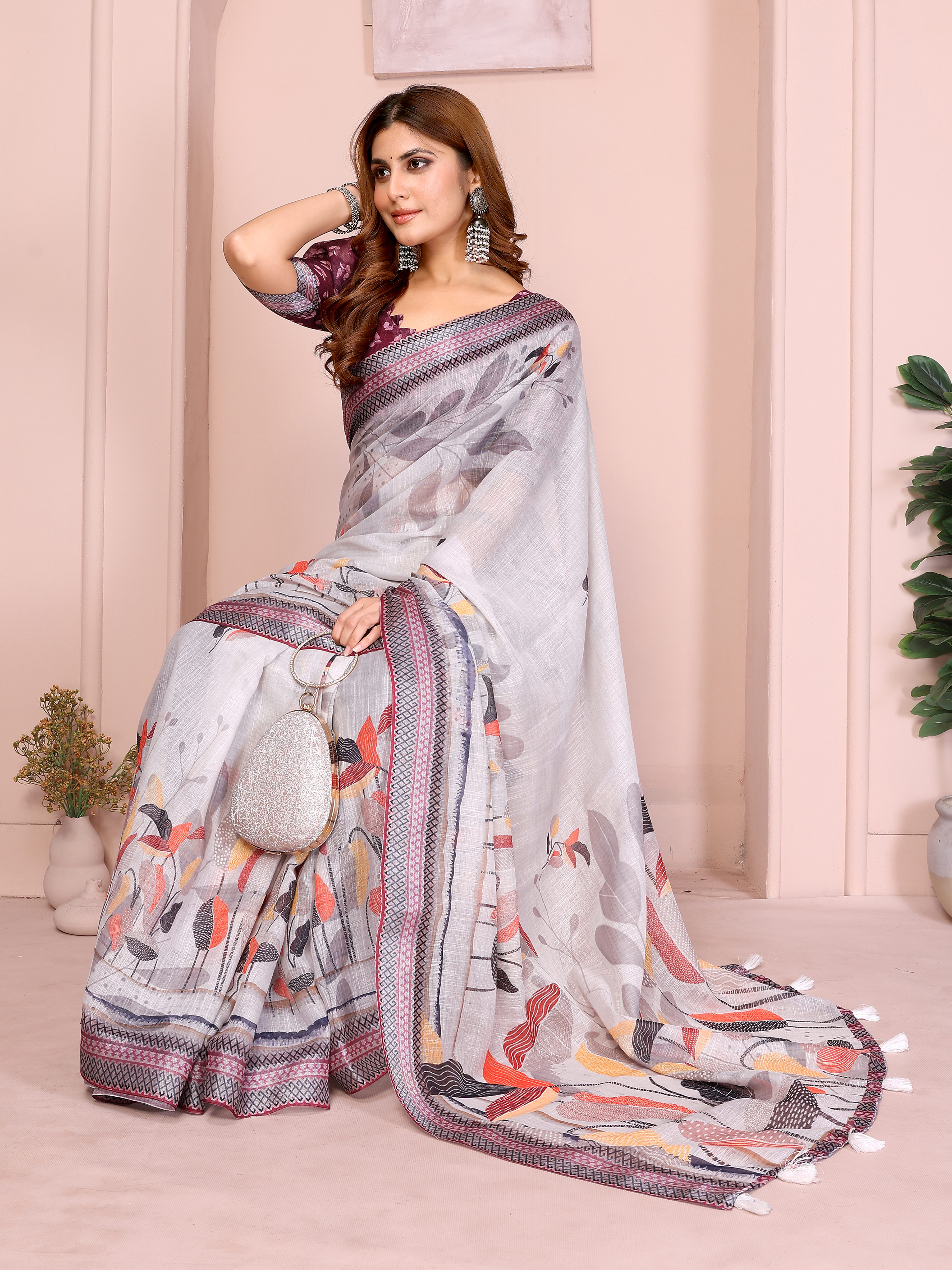
- Fibre composition: Look for specific wording such as cotton, Chanderi cotton, linen cotton, silk, viscose or a stated blend. "Soft fabric" isn't a fibre specification.
- Length and width: A standard saree is often approximately 5.3 to 5.5 metres long, with an additional blouse piece commonly around 0.8 metres, but exact measurements vary. Check the listing rather than assuming.
- Blouse piece: Confirm whether the blouse piece is attached, separate, contrast-coloured, printed or absent. The blouse piece may not match the saree body exactly when a contrast design is intentional.
- Finish: Terms such as fall, pico, tassels, selvedge and unstitched blouse piece tell you what preparation is included and what tailoring remains.
- Care: Hand wash, dry clean, mild detergent, shade drying and low-heat ironing each indicate how the fabric should be treated. A fabric requiring delicate care isn't necessarily poor quality.
- Origin and technique: Handloom, powerloom, block print, screen print, hand embroidery and machine embroidery describe different production methods. A clear listing should avoid using these terms interchangeably.
Searchable names can also offer an initial design clue, but the product name should never replace the technical description. Buy Mauve Chanderi Cotton Woven Motif Saree For Her Styles! signals a woven motif and a mauve colour family, while the description should confirm the fibre, dimensions, motif technique and care method.
How Prints, Colours and Motifs Affect Perceived Quality
Print quality can be assessed through registration, colour coverage, repeat alignment and the relationship between the motif and the border.
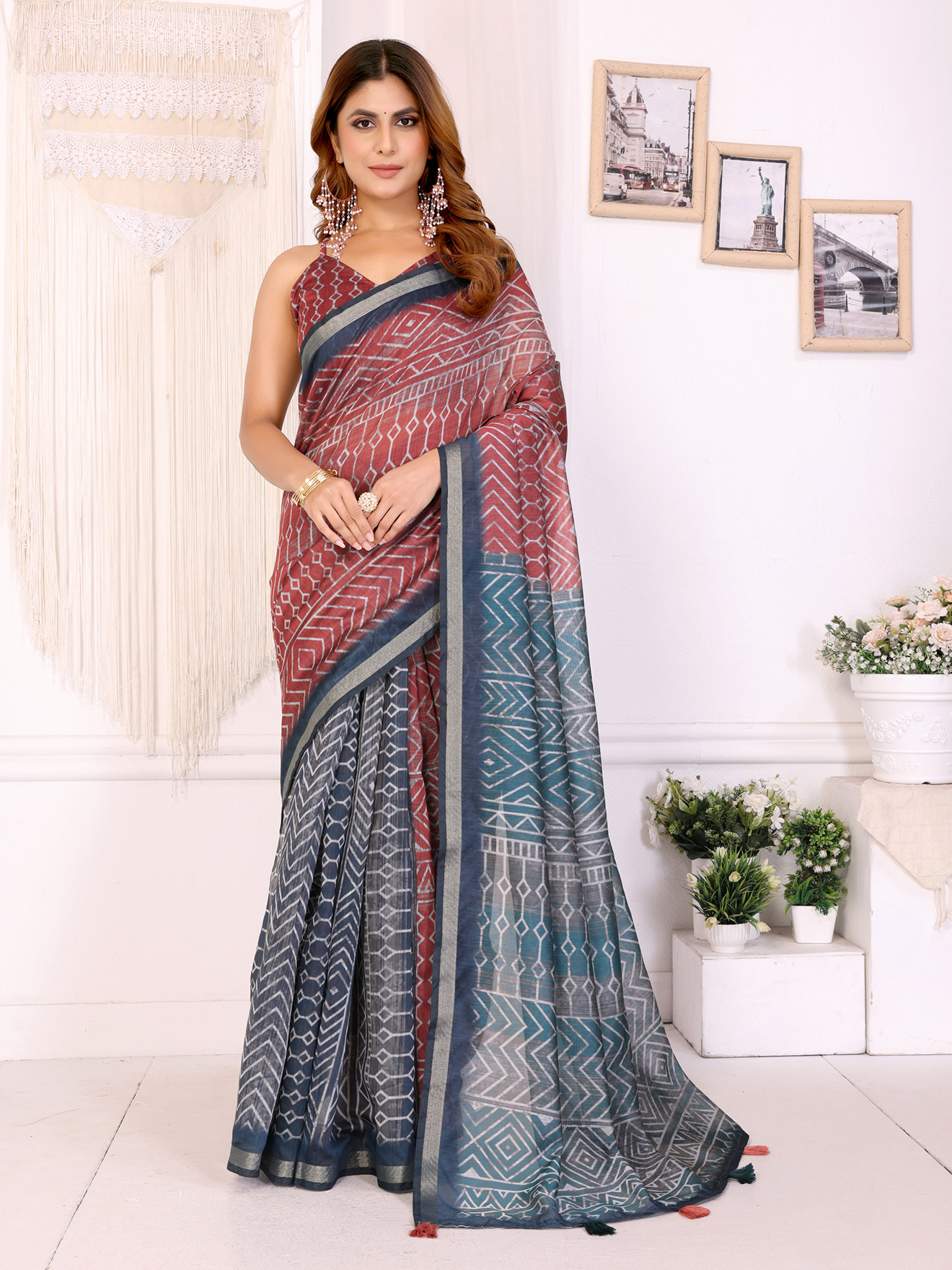
Registration means that separate colours in a design meet in the intended position. In a multicolour floral or geometric print, small shifts may be visible at motif edges. Minor variation can occur in artisanal printing, but large halos, noticeably doubled outlines or abrupt gaps may indicate poor alignment or an edited image.
Check whether a print continues naturally across pleats and the pallu. Designers may intentionally change the arrangement at the border, so a difference isn't automatically a fault. A geometric pattern should normally maintain a recognisable rhythm, while a hand-blocked floral pattern may show small variations in spacing.
Multicolor Chanderi Cotton Saree with Artistic Leaf Pattern can be evaluated by looking at leaf edges, colour overlap and motif distribution. Black Chanderi Cotton Saree with Multicolor Geometric Print can be evaluated by checking whether lines remain visually balanced near the border and whether the black base appears consistent across the body and pallu.
A separate product photograph under bright light may make colours appear more saturated than they're. Read customer reviews for comments about colour accuracy, but give greater weight to reviews that mention daylight, fabric composition and the comparison between the listing photograph and the delivered item.
Price, Reviews and Return Information Need Context
Price alone can't prove fabric quality, so price should be considered alongside fibre, technique, finishing and seller information.

A low price may reflect a powerloom construction, a synthetic blend, a simple print, minimal finishing or a seasonal reduction. A high price may reflect handloom labour, silk content, detailed zari, embroidery or brand positioning. Ask what measurable feature explains the price difference.
Reviews become more useful when they answer specific questions. Look for comments about opacity, shrinkage, colour bleeding, width, blouse-piece length, comfort in warm weather and whether the fabric matched the photographs. A review saying "beautiful saree" gives less technical evidence than a review stating that the saree measured 5.5 metres, remained colourfast after dry cleaning and had a lightly sheer pallu.
Read the return conditions before ordering fabrics that may vary naturally. Confirm whether an item becomes non-returnable after fall and pico, blouse stitching or other customisation. Keep the packaging, invoice and tags until the fabric has been checked in daylight and measured against the listing.
Elegant Black Chanderi Cotton Saree with Multicolor Prints. and similar dark printed sarees should be checked for colour transfer before use. Press a clean white cotton cloth lightly over a hidden area only if the care and return conditions permit testing. Do not wash a saree before deciding whether to retain it, because washing may affect return eligibility.
A Five-Minute Pre-Order Checklist
A five-minute inspection can identify most avoidable uncertainties before you place an ethnic-wear order.
- Read the fibre composition and confirm whether the fabric is cotton, Chanderi cotton, linen cotton, silk or a blend.
- Zoom into the body, border, pallu and blouse piece to inspect weave regularity, motif edges and surface texture.
- Compare the fabric's folds in the pleats, loose pallu and hanging edge to estimate weight and drape.
- Check layered or backlit photographs to assess transparency, especially for pale Chanderi, organza or lightweight cotton.
- Confirm length, width, blouse-piece measurement, fall and pico status before comparing prices.
- Read care instructions and decide whether the required washing or dry-cleaning routine suits your wardrobe.
- Review return rules, customer photographs and comments about colour, shrinkage, bleeding and fabric feel.
Black Chanderi Cotton Saree with Contemporary Checked Weave and Elegant Grey Chanderi Saree for Contemporary Ethnic Styling are examples of listings where colour, weave and drape should be considered together rather than judged from the title alone. A visually appealing saree becomes a sound online purchase when the visible evidence agrees with the written specifications.
Final Judgement Before Clicking Buy
The safest online fabric decision comes from matching the textile's visible behaviour to your actual wearing needs.

Choose a light Chanderi cotton saree when you value airy comfort, a crisp but gentle structure and a refined daytime appearance. Choose linen cotton when breathability and a relaxed texture matter more than a just right smooth finish. Choose a denser textile or lined ethnic garment when opacity, winter warmth or a formal structured silhouette is the priority.
Clues You Can See Before Ordering for Ethnic Wear Fabric Quality Online don't replace touching fabric in person, but the clues substantially reduce uncertainty. Careful shoppers inspect the weave, drape, transparency, border, print, measurements and care information as one connected set of evidence. That method is more dependable than choosing by colour, discount or a single highly styled photograph.
Questions to Ask Before Buying Ethnic-Wear Fabric Online
How can I check saree fabric quality online?
Check the fibre composition, weave regularity, drape, transparency, selvedge, border construction and product measurements. Close-up photographs and detailed care instructions provide more reliable evidence than colour or price alone.
Is Chanderi cotton saree fabric transparent?
Chanderi cotton can have a light, airy structure and may show some transparency, particularly in pale colours or strong backlighting. Review layered photographs and inspect the pallu before ordering if opacity is important.
How can I tell whether saree motifs are woven or printed?
A woven motif forms part of the fabric structure and may show related threads or floats on the reverse, while a printed motif sits on the surface. The product description should identify the technique, so ask the seller when the wording is unclear.
What does linen cotton feel and look like in an online listing?
Linen cotton usually appears breathable, lightly textured and more relaxed in its drape than a smooth synthetic blend. Natural creasing is common, so a linen cotton saree may not remain perfectly flat after sitting or packing.
What saree measurements should I confirm before ordering?
Confirm the saree length, saree width, blouse-piece length, blouse-piece attachment and whether fall and pico are included. A saree is often about 5.3 to 5.5 metres long, but exact dimensions vary by product.
Can online photos accurately show saree colour and transparency?
Online photos can provide useful clues but cannot guarantee exact colour or opacity because lighting, camera processing and screen settings vary. Compare several images, look for layered or backlit views and read reviews mentioning daylight colour accuracy.


