

The sweep of a lehenga affects comfort, movement, photographs and overall presence more than many shoppers expect. Circular, Panelled and A-Line Shapes Compared for Lehenga Flare Explained is a useful starting point when a product photograph doesn't show how the skirt behaves while walking, sitting or dancing. A circular lehenga spreads widely, a panelled lehenga builds shape through sections, and an A-line lehenga offers a controlled triangular fall.
These labels describe construction and silhouette rather than the amount of embroidery alone. Understanding the difference makes shopping for bridal, designer, festive and ready-made lehengas more precise, particularly when a garment must work for several hours of wedding celebrations.
Circular, Panelled and A-Line Shapes Compared for Lehenga Flare Explained: What do the three shapes mean?
A circular lehenga has the broadest continuous sweep, a panelled lehenga gains structure from separate vertical sections, and an A-line lehenga narrows the flare into a cleaner triangle.
A circular cut is formed by arranging fabric around the waist, often with multiple gores joined from the waistband to the hem. The resulting skirt opens dramatically when the wearer turns. Circular silhouettes are popular for bridal entries, sangeet performances and photographs because the hem creates visible movement. The final volume still depends on fabric width, lining, can-can and the number of layers.
A panelled lehenga contains separate fabric sections stitched vertically. Panels may be narrow or broad, symmetrical or arranged to frame embroidery. Panel construction gives a designer control over where the skirt expands, and panel seams can guide the eye from waist to hem. A panelled skirt may have moderate flare or nearly as much volume as a circular skirt, so the word panelled doesn't automatically mean slim.
An A-line lehenga slopes outward from the waist without the full sweep of a circular skirt. The shape usually uses less fabric and takes up less space around the legs. A-line silhouettes suit receptions, family functions and travel because they provide graceful movement without requiring the wearer to manage a very wide hem.
- Circular: broadest twirl, expansive hem and a dramatic visual effect.
- Panelled: structured fall, adaptable volume and useful vertical design lines.
- A-line: controlled flare, easier walking and a streamlined profile.
Circular, Panelled and A-Line Shapes Compared for Lehenga Flare Explained: How does flare affect movement?
Lehenga flare affects comfort through hem circumference, fabric weight, lining, waistband fit and the number of layers worn underneath.
A wide circular hem needs more floor clearance than an A-line skirt, especially when the wearer turns quickly. A simple fitting test is to take several steps, sit on a chair, climb two stairs and rotate once while wearing the intended footwear. A skirt that catches under the feet or pulls sharply at the waist needs adjustment before the event.
Fabric weight changes the experience as much as the cut. Georgette and net can create visual volume without the same heaviness as dense velvet or several stiff layers. Satin may fall close to the body until a firm lining or can-can is added. Chinon silk can offer a fluid fall, while sequins and embroidery increase total garment weight even when the base fabric feels light.
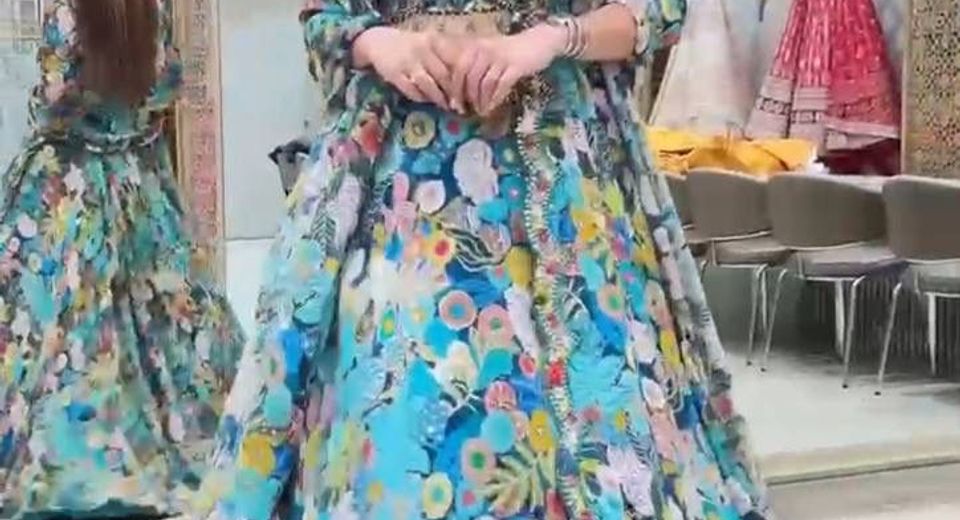
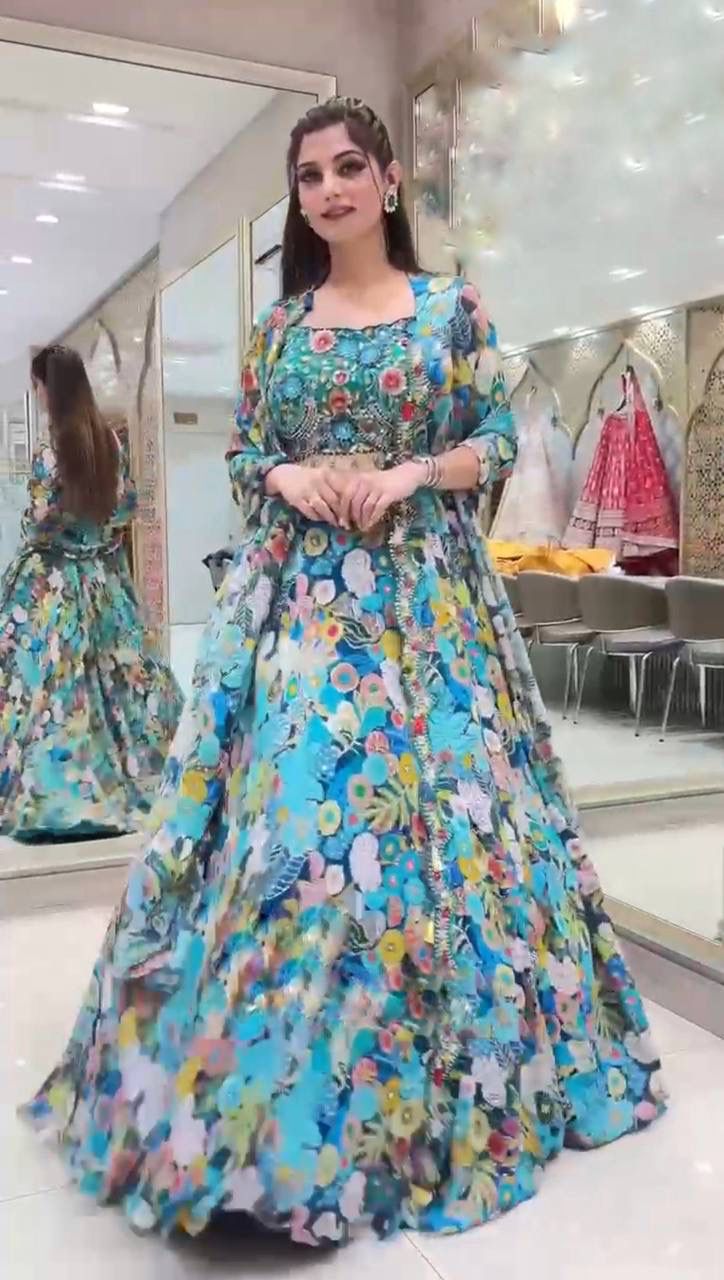
Blue Floral Georgette Lehenga Set with Heavy Flare shows why shoppers should assess fabric and construction together. Georgette can move softly, while the heavy-flare description signals a broader sweep that needs room. Pink Bridal Sequins Lehenga Set with Heavy Flare may feel more substantial because sequins add weight and friction between layers.
Height and footwear also influence the result. A very wide hem can visually shorten a petite frame if the blouse ends at an awkward point, whereas a high-waisted A-line skirt can create a longer vertical line. A taller wearer may carry more flare comfortably, but waistband placement and finished length remain more important than height alone.
Circular, Panelled and A-Line Shapes Compared for Lehenga Flare Explained: Which shape suits bridal and wedding dressing?
Circular lehengas generally suit grand bridal and sangeet styling, while panelled and A-line lehengas offer more controlled movement for ceremonies, receptions and repeat wear.
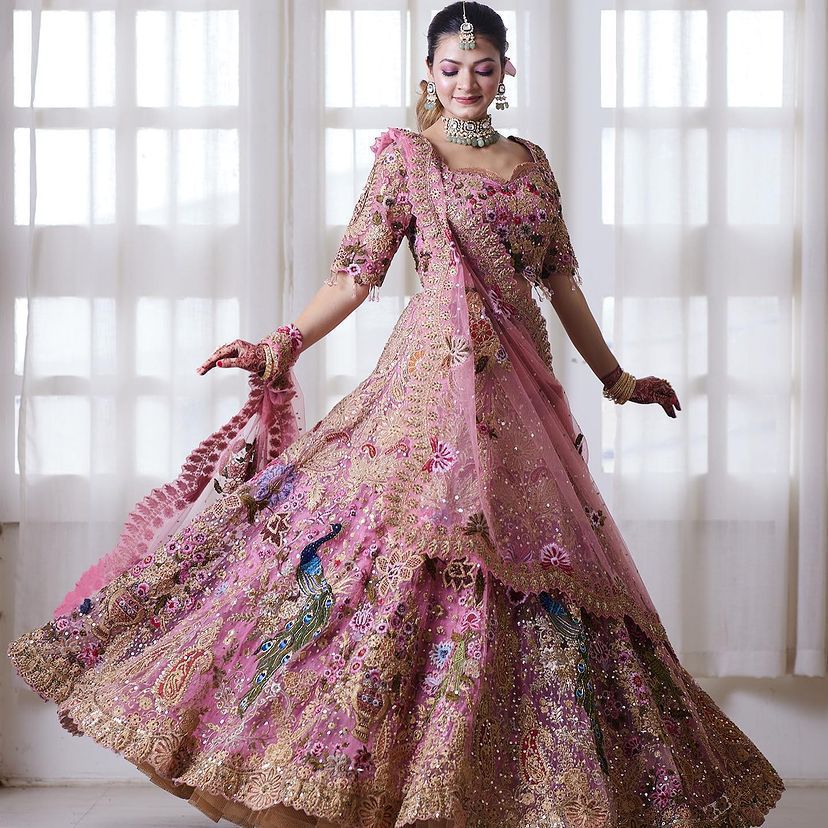
Bridal dressing often benefits from a broad circular silhouette because the skirt creates visible movement in entry photographs and displays large motifs across the hem. A circular skirt also works with a dupatta draped over one shoulder, provided the blouse and waist remain secure. A very full skirt can become tiring during a long ceremony, so the finished weight matters more than flare alone.
Panelled skirts are useful when embroidery needs clear placement. Cream Peacock Embroidered Net Lehenga Set for Women demonstrates how a decorative motif can be organised across sections instead of being scattered randomly. Vertical panels can also create a lengthening effect when seam lines or embroidery borders run continuously from waist to hem.
A-line silhouettes suit wedding guests who want polish without a dramatic bridal footprint. Magenta Satin Embroidered Lehenga Set Online can work when a smoother, more directed fall is preferable to a wide twirl. Satin reflects light strongly, so restrained flare can keep the outfit balanced when the surface already carries embroidery.
Colour collections can narrow the search by function. Mehendi Lehengas and Green Lehengas are useful starting points for daytime pre-wedding dressing, while Yellow Lehengas often suit a Haldi ceremony. The correct silhouette still depends on seating, weather, dance plans and the weight of embellishment.
Circular, Panelled and A-Line Shapes Compared for Lehenga Flare Explained: How should fabric and embellishment guide the choice?
Light, fluid fabrics can support larger flare, while dense embroidery, sequins and stiff layers usually benefit from carefully controlled volume.
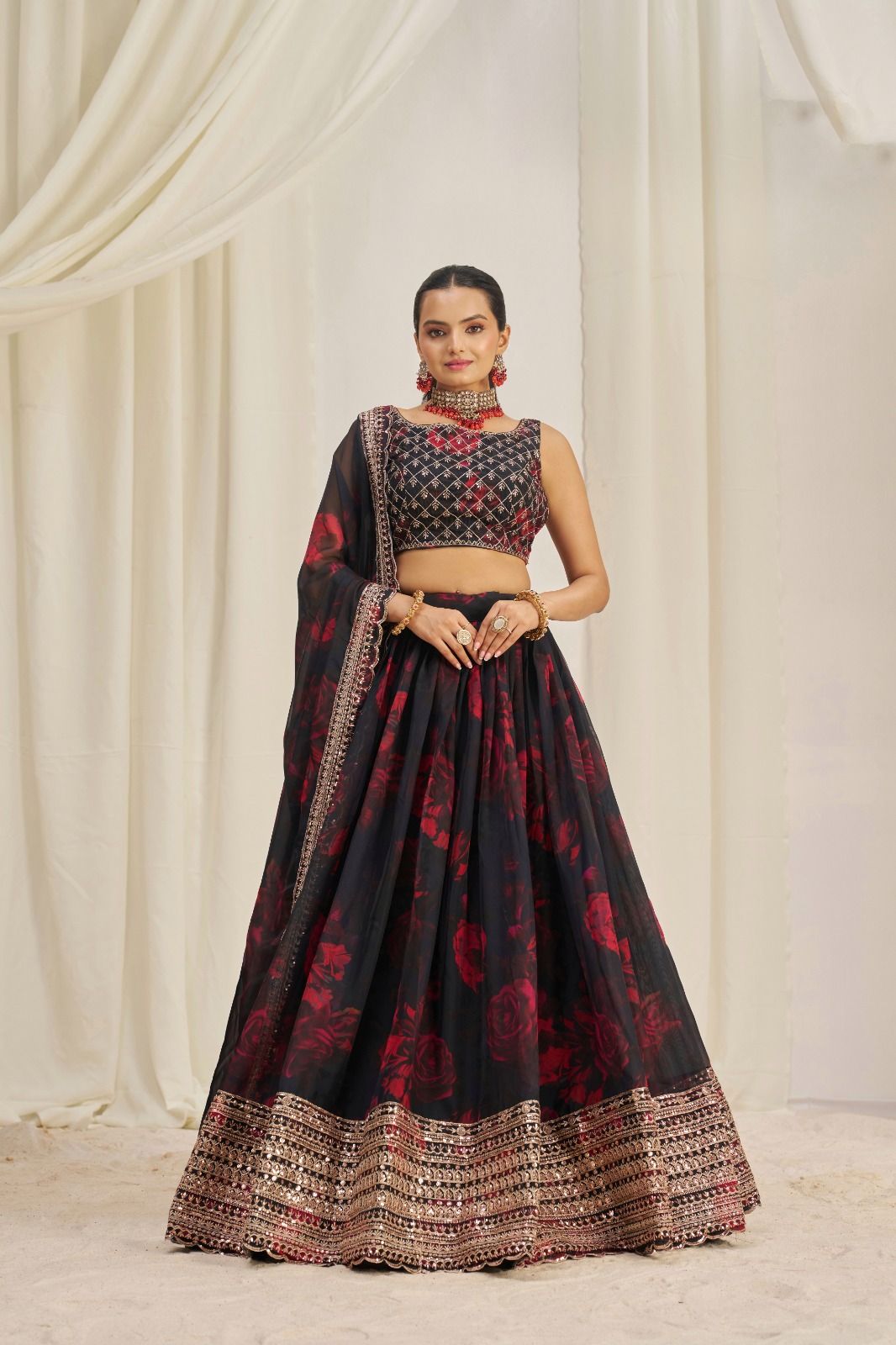
Net produces a light-looking skirt but can feel structured when layered over lining or can-can. Lime Floral Embroidered Butterfly Net Lehenga Set and Pink Sequins Embroidered Butterfly Net Lehenga Set show why net isn't a complete description of movement. Floral embroidery, sequin coverage and underlayers determine whether the skirt floats, holds its shape or feels substantial.
Chinon silk generally falls with more fluidity than formal net, but sequins can alter the drape and add friction between layers. Green Chinon Silk Sequins Embroidered Lehenga Set should therefore be assessed by checking lining, waistband and hem balance rather than assuming that silk automatically means lightness.
Satin catches light across a smooth surface. Heavy flare can make satin appear theatrical, while an A-line or moderately panelled cut can give embroidery enough space without creating excessive shine around the legs. Embroidered borders at the hem add visual weight, so a broad border usually works best with a cleaner upper skirt.
Five practical questions help compare garments: How many layers are present? Is the lining attached throughout the skirt? Does the flare come from the cut or an added can-can? Are sequins concentrated at the hem or spread across the skirt? Can the waistband be altered without disturbing the embroidery? Answers to these questions predict wearability more accurately than the word designer.
Circular, Panelled and A-Line Shapes Compared for Lehenga Flare Explained: How can shoppers choose online?
Online shoppers should compare measurements, construction details and intended use instead of choosing a lehenga from a product photograph alone.
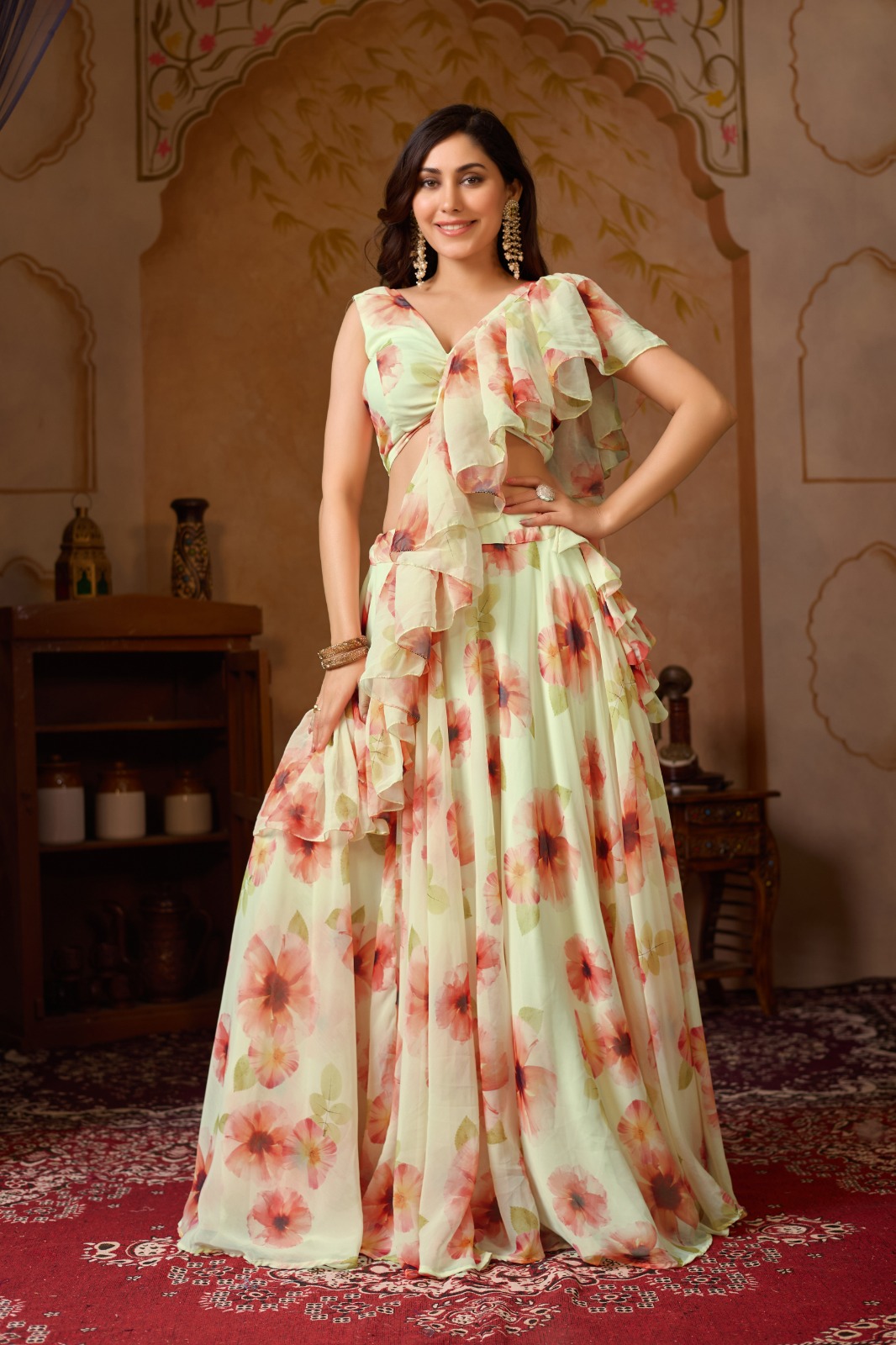
Begin with the waist measurement taken over the clothing that will be worn underneath. Measure from the natural waist to the preferred shoe position for skirt length. Then check whether the listing gives a finished waist range, a fixed waistband or an adjustable fastening. A ready-made lehenga is convenient when the waist and blouse measurements closely match the listed size.
Fully stitched choli shopping requires careful attention to the blouse because a fixed choli changes the balance of the complete outfit. Check bust, under-bust, shoulder and armhole measurements rather than relying only on a nominal size. A broad circular skirt paired with a tight armhole can restrict movement even when the lehenga waist fits correctly.
For readymade shopping, look for terms such as heavy flare, can-can, lining, panel, stitched and semi-stitched, then confirm what each term means in the measurement chart. Ready Made Lehenga options are useful when the waist and blouse measurements closely match the listed size. Semi Stitched Lehengas Collection can be more suitable when a tailor needs to adjust the waist, blouse or skirt length.
Photographs can reveal construction clues. Repeated vertical breaks in embroidery may indicate panels. A skirt forming a triangular outline from waist to hem is likely A-line. A hem opening broadly even when the model stands still usually signals substantial circular or layered flare. A written flare measurement or movement video remains more reliable than visual clues alone.
Green Chinon Silk Sequins Embroidered Lehenga Set, Pastel Grey Embroidered Butterfly Net Lehenga Set and Pink Sequins Embroidered Butterfly Net Lehenga Set should each be compared using the same checklist: waist, length, lining, fastening, blouse measurements and estimated garment weight. Consistent comparison prevents colour or surface sparkle from deciding a fit question.
Circular, Panelled and A-Line Shapes Compared for Lehenga Flare Explained: How should each silhouette be styled?
A circular lehenga needs a fitted upper half and secure dupatta placement, a panelled lehenga benefits from vertical styling details, and an A-line lehenga can carry either a statement blouse or a more elaborate dupatta.
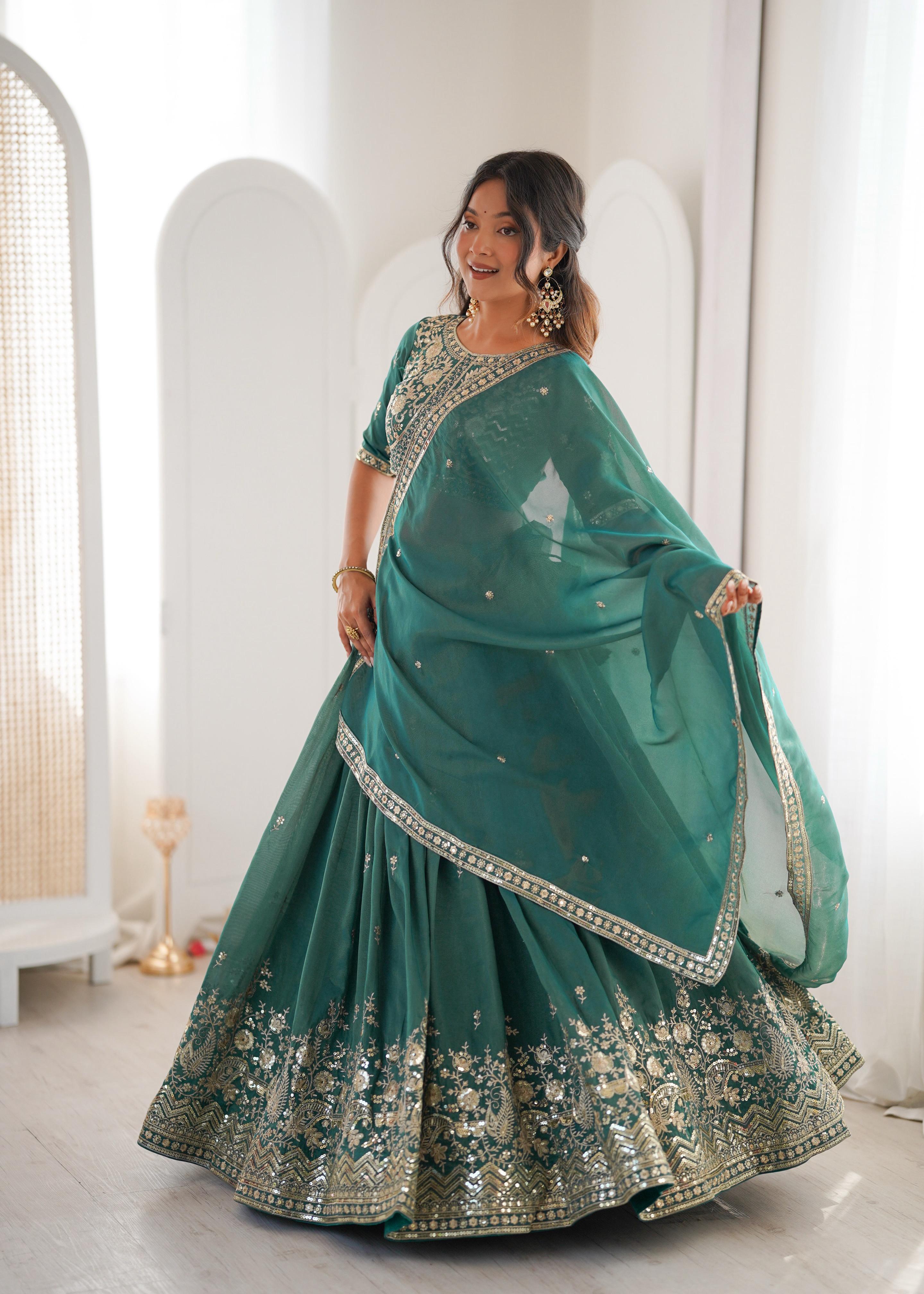
A circular skirt already supplies visual volume, so a blouse with a defined waistline helps preserve proportion. A tucked or pinned dupatta prevents the broad hem from competing with loose fabric across the torso. For a sangeet, secure shoulder pins and a smooth underskirt make turning easier without reducing the visible flare.
A panelled skirt pairs naturally with long earrings, a vertical embroidered blouse border or a dupatta worn in a narrow front fall. These details echo the panel lines and create continuity. If the panels contain heavy motifs, keep the jewellery focused near the face rather than adding equal weight at every level.
An A-line silhouette permits more experimentation at the blouse. A short embroidered choli, peplum-style blouse or longer jacket can work because the skirt remains visually controlled. A dramatic dupatta border can add occasion-appropriate richness without requiring a circular hem.
Magenta Satin Embroidered Lehenga Set Online can support evening styling with restrained jewellery and a defined blouse, while Pastel Grey Embroidered Butterfly Net Lehenga Set can take brighter accessories for a reception or engagement. Styling should respond to the base fabric, embroidery density and movement requirements rather than treating every lehenga as a bridal garment.
Girls and younger wearers may benefit from moderate flare or a lighter panelled construction for school functions, family celebrations and shorter events. Heavy circular skirts can be difficult to manage when the waistband, length and lining are not adjusted accurately. Comfort remains part of good styling at every age.
Circular, Panelled and A-Line Shapes Compared for Lehenga Flare Explained: Which shape should you finally choose?
Choose a circular lehenga for maximum twirl and bridal drama, a panelled lehenga for design control and adaptable volume, or an A-line lehenga for easier movement and a cleaner everyday-to-occasion transition.
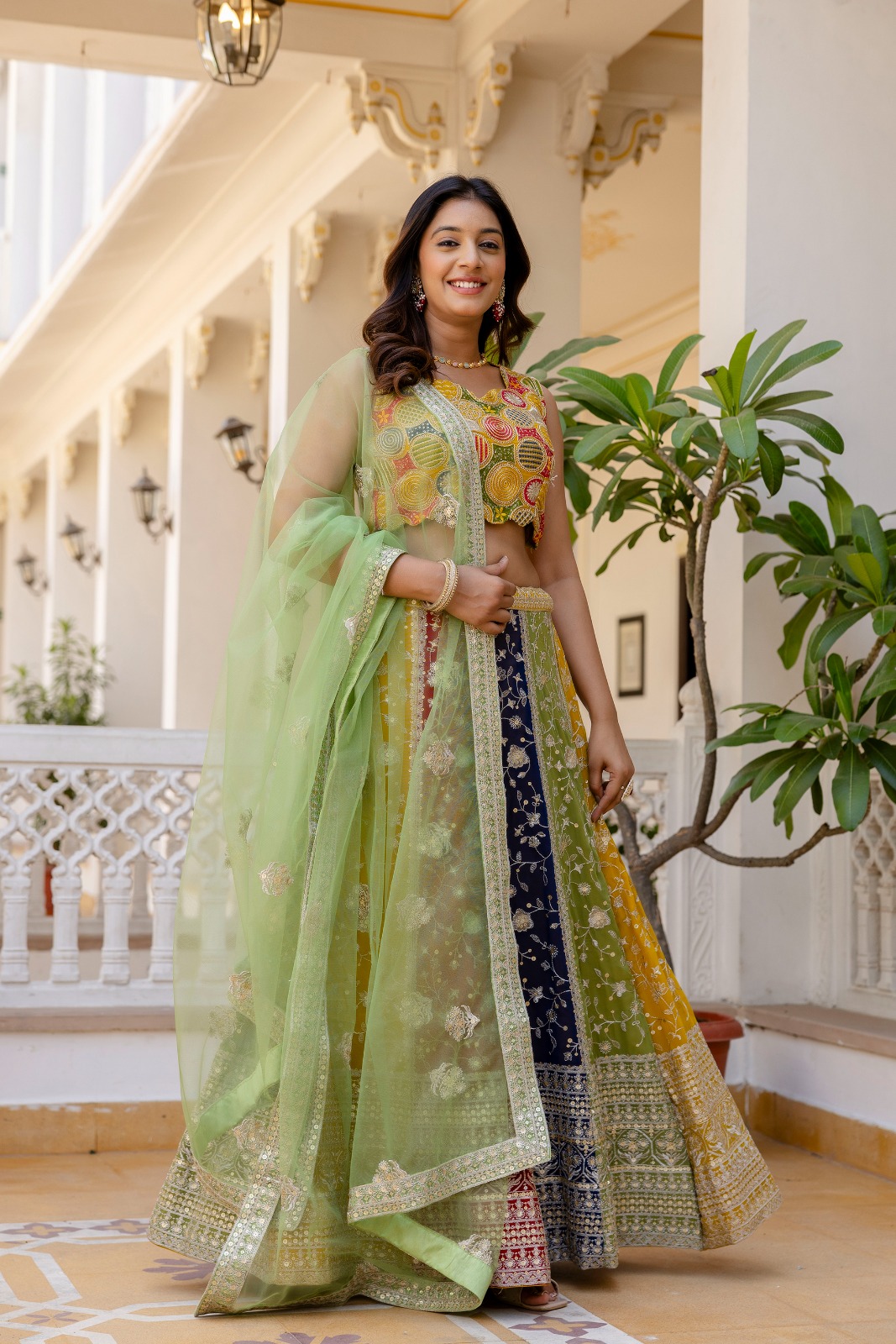
A circular silhouette is the strongest option for a grand wedding entrance, dance photographs or a bride who wants the hem to become a major part of the visual story. A panelled silhouette is a balanced choice when embroidery placement, proportion and tailoring flexibility matter most. An A-line silhouette is often the most practical option for guests, travel, repeated wear and long ceremonies with substantial sitting.
When two designs look similar online, compare the finished measurements rather than relying on the model's pose. Check the hem, lining, can-can, waist fastening, blouse construction and alteration allowance. A shape that suits the occasion but can't be worn comfortably for four or five hours isn't the right purchase.
The best lehenga flare is the amount that supports the wearer's movement, body proportions and event plans. Construction explains the silhouette, fabric controls its behaviour, and accurate measurements determine whether the finished outfit feels elegant or cumbersome.
Questions About Circular, Panelled and A-Line Lehenga Flare
Which lehenga has the most flare: circular, panelled or A-line?
A circular lehenga usually has the most continuous flare and the broadest twirl. A panelled lehenga can also be very full, but its volume depends on the number and width of the panels, while an A-line lehenga normally has the most controlled flare.
Is a circular lehenga comfortable for a long wedding ceremony?
A circular lehenga can be comfortable when the waistband fits securely, the length is correct and the lining is not excessively heavy. A wide hem may require more space when walking or sitting, so an A-line or moderately panelled design can be easier for a ceremony lasting several hours.
What is the difference between a panelled lehenga and an A-line lehenga?
A panelled lehenga is constructed from separate vertical sections, while an A-line lehenga describes a silhouette that narrows from the waist into a controlled triangular shape. A panelled lehenga may be A-line, moderately flared or very full depending on its pattern.
Is an A-line lehenga suitable for a bridal or wedding look?
An A-line lehenga can suit a bridal or wedding look when the blouse, embroidery and dupatta provide sufficient occasion-level detail. The shape is particularly practical for receptions, intimate weddings and brides who prefer controlled volume over a dramatic circular sweep.
What should I check when buying a ready-made lehenga online?
Check the waist, skirt length, blouse bust, shoulder, armhole, lining, fastening and alteration allowance before ordering. Confirm whether heavy flare comes from the cut, added can-can or multiple layers, because those details affect both movement and garment weight.
Which lehenga flare is easiest to manage for dancing?
A moderately circular or panelled lehenga usually gives good movement for dancing without the full bulk of a heavily layered skirt. Secure waist construction, a hem that clears the footwear and a pinned dupatta are more important than flare alone.


