

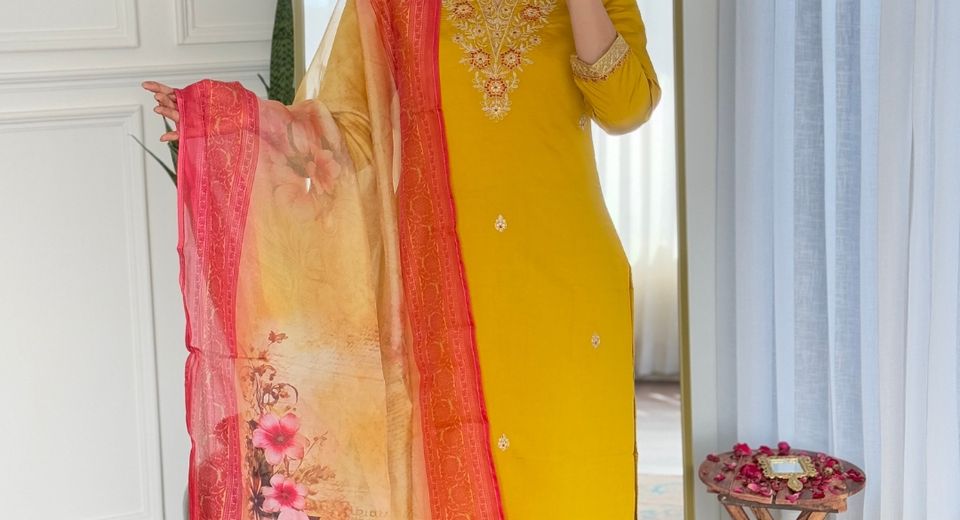
Choosing Straight-Cut Salwar Suits by Fit Fabric and Occasion becomes much easier when you evaluate three separate things: how the kurta sits on your body, how the textile behaves in your climate, and how formal the event will be. A straight-cut salwar suit usually falls in a relatively even line from the shoulder or armhole to the hem, giving it a cleaner silhouette than an Anarkali. The right choice can work for office hours, travel, festive lunches and family ceremonies without looking either too casual or overdressed.
The most useful buying decision isn't simply choosing a colour or print. Check shoulder width, bust ease, sleeve comfort, kurta length, trouser volume and dupatta weight before considering decorative details. A well-balanced suit looks polished because the proportions are right, not because the fabric carries the largest motif or the heaviest embroidery.
Choosing Straight-Cut Salwar Suits by Fit Fabric and Occasion: What Makes the Fit Work?
A straight-cut salwar suit fits well when the shoulder seam sits at the natural shoulder edge, the bust has comfortable ease, and the side seams fall vertically without pulling or collapsing. The garment should allow you to raise both arms, sit down and cross one arm over the other without strain.
Start with the shoulder because an incorrect shoulder can't be corrected easily by styling. If the seam drops several centimetres beyond the shoulder, the kurta may look oversized even when the bust measurement is correct. If the seam sits inward, the sleeve can twist and restrict movement.
How much ease should a straight kurta have?
A straight kurta commonly needs around 8 to 12 centimetres of total ease over the body measurement for comfortable everyday wear, although the correct amount depends on the fabric and silhouette. Crisp cotton may need more room than fluid rayon because cotton doesn't skim the body as readily. A fitted festive suit can use less ease, but it should never pull horizontally across the bust or stomach when you sit.
Measure the fullest part of the bust, the natural waist and the fullest hip area rather than relying only on your usual size label. Compare those measurements with the garment chart. A straight kurta that ends near the hip or upper thigh needs enough hip room to hang cleanly; otherwise, the hem will ride up at the sides.
Which length and sleeve details matter?
A straight kurta length should suit the bottom style and the wearer's proportions. A kurta ending around the knee generally balances slim pants, while a longer kurta often works better with a narrow salwar or straight trouser. Three-quarter sleeves are practical for daily wear, whereas elbow-length or embellished sleeves can look more intentional for festive dressing.
Check the armhole and upper-arm measurement separately if the suit has sleeves. A loose bust doesn't guarantee a comfortable armhole. Sleeve openings that are too narrow can make a cotton suit feel restrictive even when the rest of the garment fits correctly.
Choosing Straight-Cut Salwar Suits by Fit Fabric and Occasion: Which Fabrics Work?
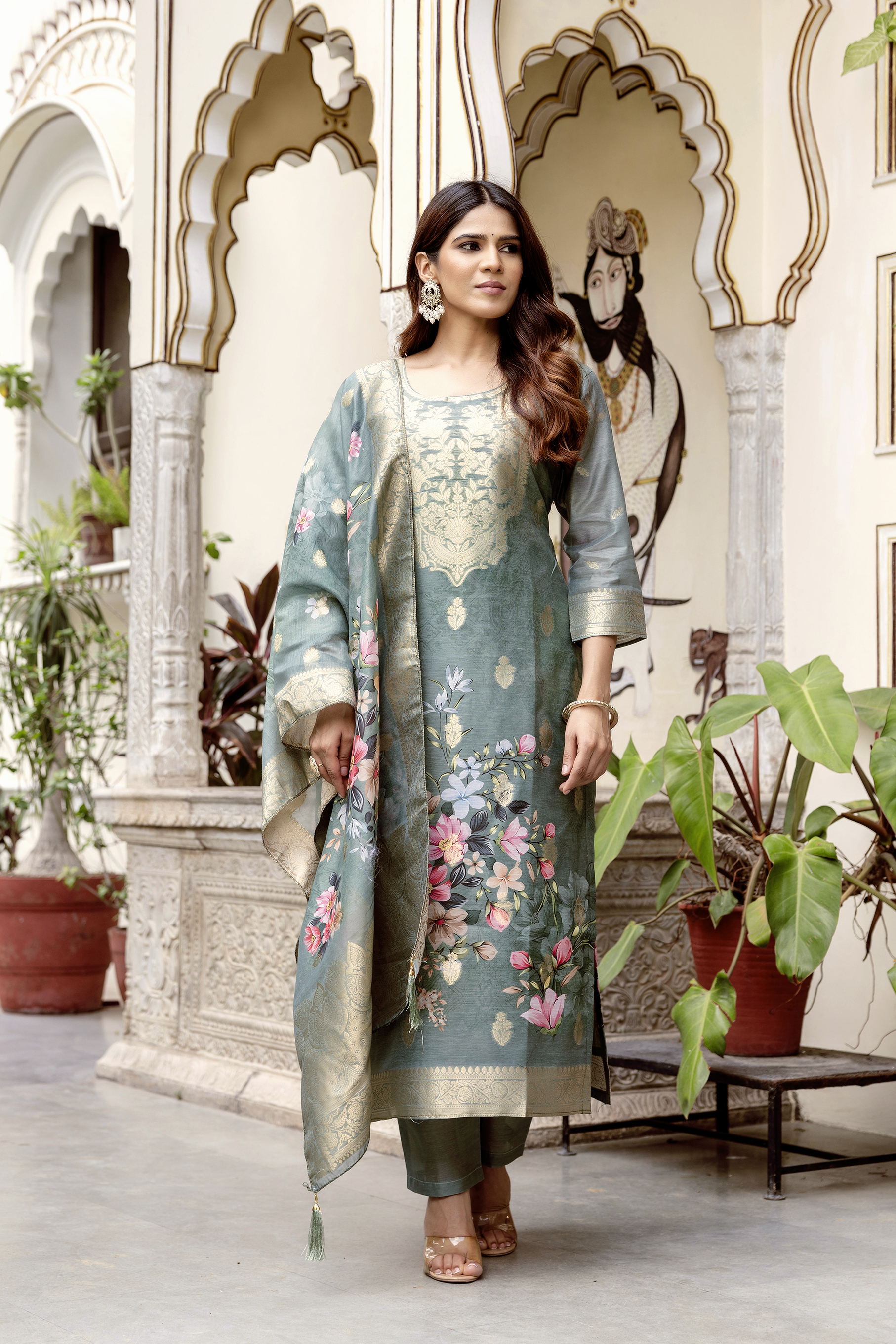
Cotton, rayon, khadi cotton, Chanderi cotton and silk each create a different straight-cut silhouette, so the best fabric depends on climate, movement and formality. Breathable cotton suits daily Indian weather, rayon provides fluid drape, khadi cotton gives texture, Chanderi cotton adds light festive structure, and silk creates a more ceremonial finish.
Why choose cotton or khadi cotton for regular wear?
Cotton is a strong choice for commuting, teaching, errands and daytime gatherings because the fibre absorbs moisture and feels breathable against the skin. Cotton may crease more visibly than rayon, so a freshly pressed kurta and a structured dupatta help preserve a neat appearance. Vertical Cotton Straight Kurta Set with Dupatta illustrates how a simple linear direction can make a comfortable cotton outfit look more elongated.
Khadi cotton has a visibly textured surface and usually feels slightly firmer than smooth cotton. Cream Khadi Cotton Straight Kurta Set with Dupatta can suit a muted daytime wardrobe because a neutral base allows the weave and silhouette to provide visual interest. Khadi cotton benefits from gentle washing and should not be aggressively wrung, since rough handling can distort the surface.
When is rayon a practical choice?
Rayon works well when you want a softer drape, fluid movement and less visual stiffness in a straight kurta. Rayon can feel comfortable in warm weather, but it may crease or lose shape if stored damp or hung from a very thin hanger. Cream Pink Printed Rayon Readymade Salwar Suit demonstrates why a printed rayon outfit can look relaxed while retaining the coordinated appearance of a three-piece set.
Choose rayon carefully for very humid travel or long events if you dislike fabric that clings slightly to the body. A lining, darker print or more generous fit can improve comfort. Striped Rayon Straight Kurta Palazzo Set for Women uses directional stripes and a wider bottom, making it a useful example of how print and cut influence perceived proportions.
What makes Chanderi cotton and silk different?
Chanderi cotton is useful for daytime festive events because it combines a relatively light hand with a dressier surface than basic cotton. Woven Chanderi Cotton Readymade Salwar Suit can work for a puja, intimate engagement function or cultural lunch where a heavy bridal outfit would be excessive. Chanderi cotton should be folded with clean tissue or soft cotton between embellished areas if the weave is delicate.
Silk offers a richer surface and stronger occasion presence, but silk clothing can feel warmer and requires more careful storage than cotton or rayon. Chic Red Floral Silk Kurta Pant Dupatta Set for Women is better suited to an evening celebration, reception or festive dinner than to a long, humid commute. Silk should generally be aired after wearing and sent for professional dry cleaning when the care label requires it.
Choosing Straight-Cut Salwar Suits by Fit Fabric and Occasion: What Works for Each Event?
The occasion determines the appropriate combination of fabric, print scale, embellishment, colour contrast and dupatta styling. A useful rule is to keep everyday suits breathable and easy to wash, reserve richer textures for celebrations, and match the amount of shine to the time and formality of the event.
Which straight-cut suit suits office, college and errands?
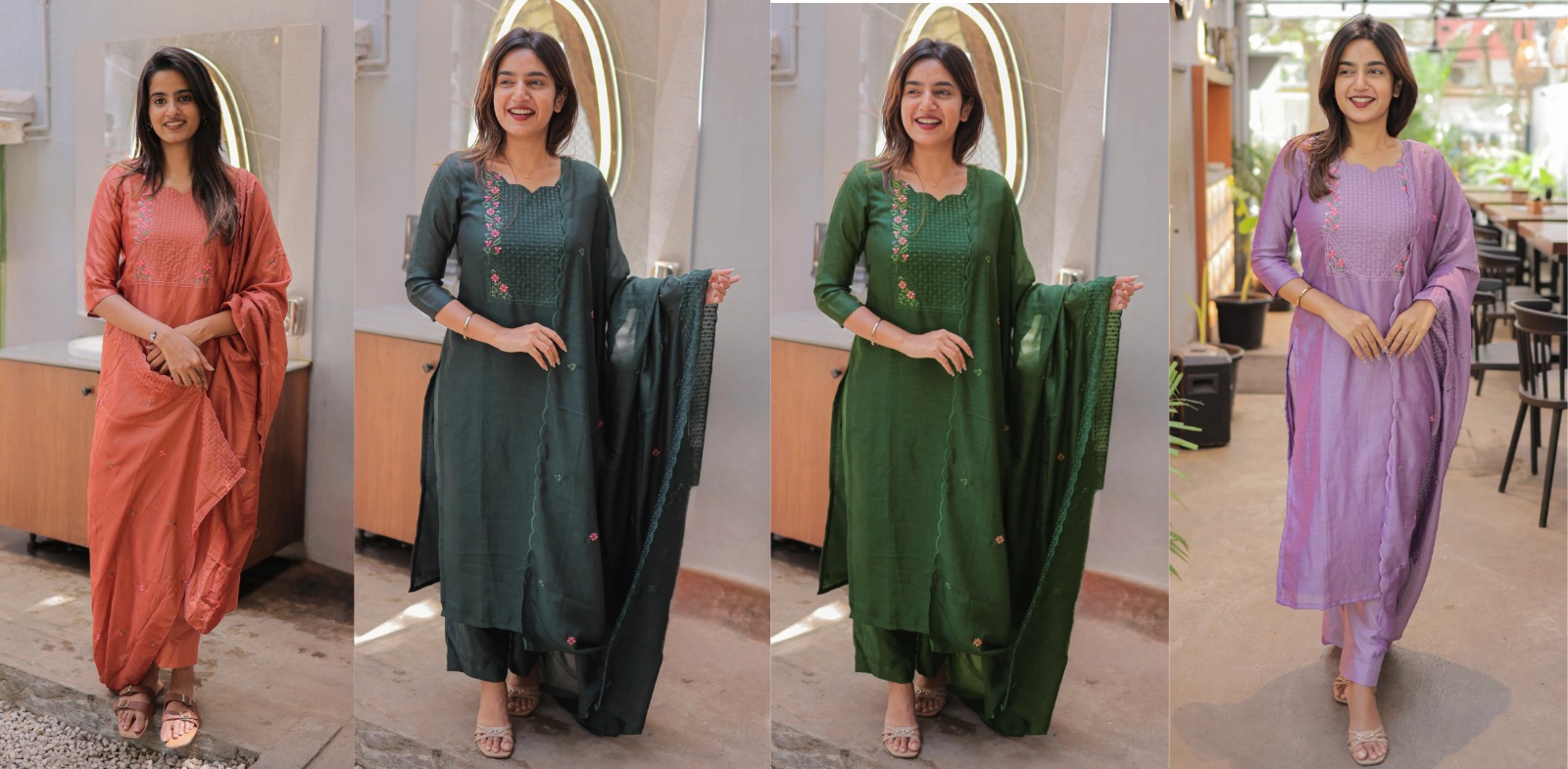
Office and college outfits work best with breathable fabric, moderate prints, secure sleeves and a dupatta that stays in place. Cotton, khadi cotton and restrained rayon are practical choices because they can be worn for several hours without the weight associated with heavily embellished fabrics. Cream Printed Straight Kurta Set with Dupatta can suit a daytime wardrobe when paired with simple flats, a structured tote and minimal jewellery.
For regular use, examine laundering instructions before buying. A suit that needs specialist care after every wear may not be practical as a work staple. Mid-tone prints, small motifs and darker bottoms can also be easier to maintain than very pale, heavily embellished garments.
What should you wear to a Haldi ceremony or puja?
A Haldi ceremony or daytime family event suits breathable fabrics with cheerful colour, movement and manageable embellishment. Cotton, Chanderi cotton and lighter rayon can handle warm weather better than heavy silk, especially when guests will sit, stand and move outdoors. A bright dupatta can add ceremony without requiring dense embroidery across the entire kurta.
Regional textile-led choices can make a daytime outfit feel distinctive. Kalamkari Print Salwar Suits offer a print-focused direction, while Maharashtra Paithani Inspired Salwar Suits can bring a more festive, heritage-oriented colour story. Gujarat Bandhej Salwar Suits are another natural reference for celebratory dressing where lively pattern and colour are part of the visual language.
What should wedding guests wear?
Wedding guests can choose silk, woven Chanderi cotton or a polished rayon suit with a richer dupatta, depending on the venue and season. Chic Red Floral Silk Kurta Pant Dupatta Set for Women has stronger evening presence than an unembellished daily cotton set because silk reflects light and a coordinated pant creates a cleaner finish.
A wedding guest outfit should remain distinct from bridal clothing unless the invitation specifies otherwise. Select one main statement element, such as a bold dupatta, prominent earrings or a textured weave, instead of combining dense embroidery, large jewellery and a heavily patterned bottom. A straight-cut silhouette benefits from restraint because excessive surface detail can hide the clean vertical line.
How can regional collections guide festive dressing?
Festivals are an opportunity to use regional references, distinctive weaves and stronger colour contrast while keeping the fit comfortable. Odisha Sambalpuri Salwar Suits can inspire a patterned, textile-conscious direction, while Punjab Patiala Salwar Suits point toward a more voluminous and energetic bottom silhouette. The best choice still depends on whether you'll be travelling, sitting on the floor or attending a long ceremony.
Choosing Straight-Cut Salwar Suits by Fit Fabric and Occasion: How Do Prints Change Proportion?
Print direction, colour placement and bottom volume can change how a straight-cut salwar suit appears on the body. Vertical stripes and narrow borders usually reinforce length, while broad horizontal bands can add visual width. Large motifs attract attention to the area where they're placed, so motif scale should be considered alongside the kurta length and dupatta border.
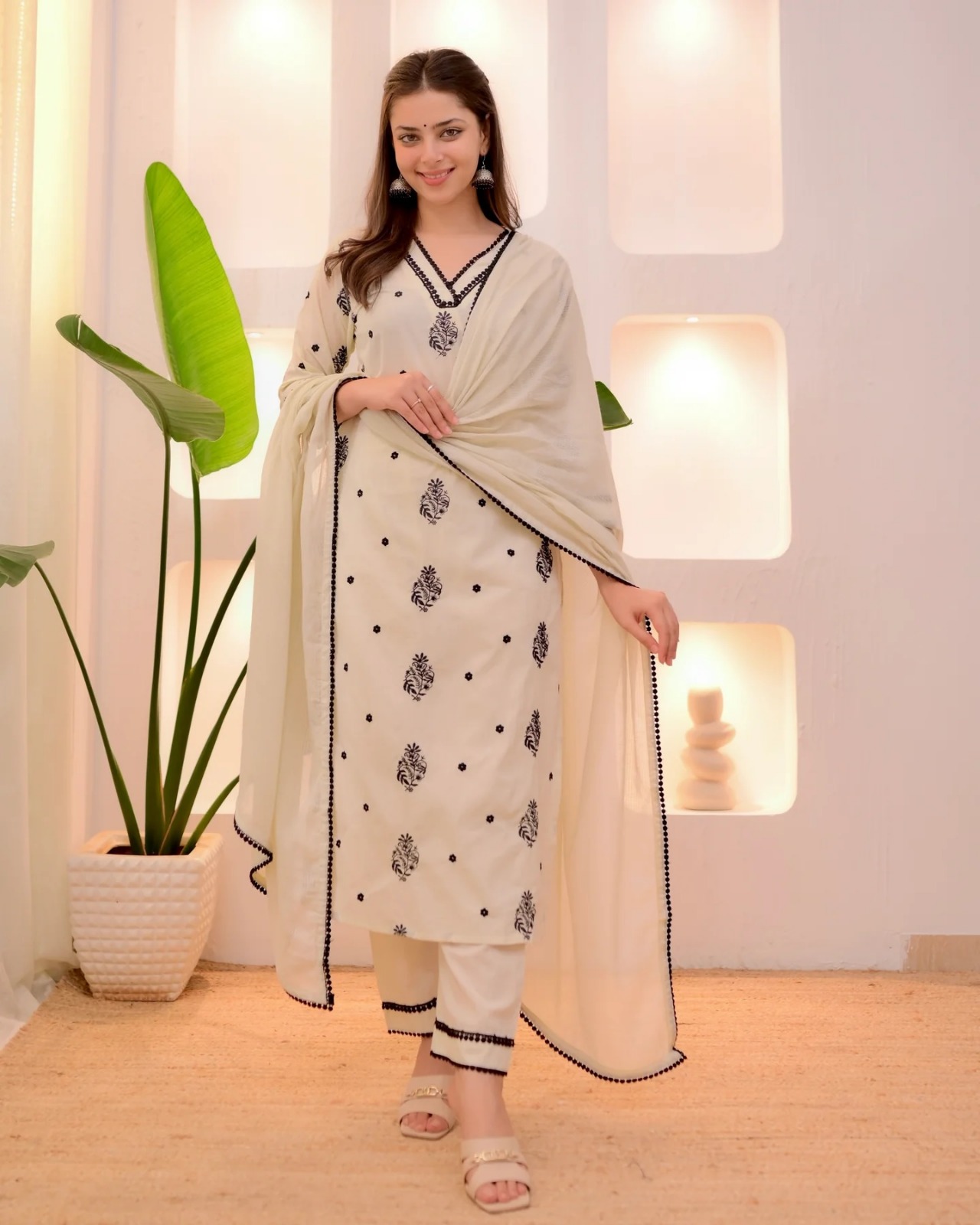
A printed straight kurta doesn't automatically make an outfit casual. The result depends on the print density, fabric finish, colour contrast and accessories. A small all-over print in cotton may look appropriate for work, while a bold floral print in silk can become an evening outfit with only a change of jewellery and footwear.
Bottom shape also matters. Straight pants create a streamlined line below the kurta, palazzos add movement and width, and Patiala-style salwars bring volume through gathers and pleats. A longer straight kurta can balance a fuller bottom, whereas a shorter kurta may make a wide palazzo appear visually dominant.
Choosing Straight-Cut Salwar Suits by Fit Fabric and Occasion: What Should You Check Before Buying?
A pre-purchase checklist should cover measurements, fabric behaviour, finishing, care instructions and the practical demands of the event. These checks take only a few minutes but prevent common problems such as tight armholes, transparent pale fabric, an unstable dupatta or a bottom that doesn't match the kurta's length.
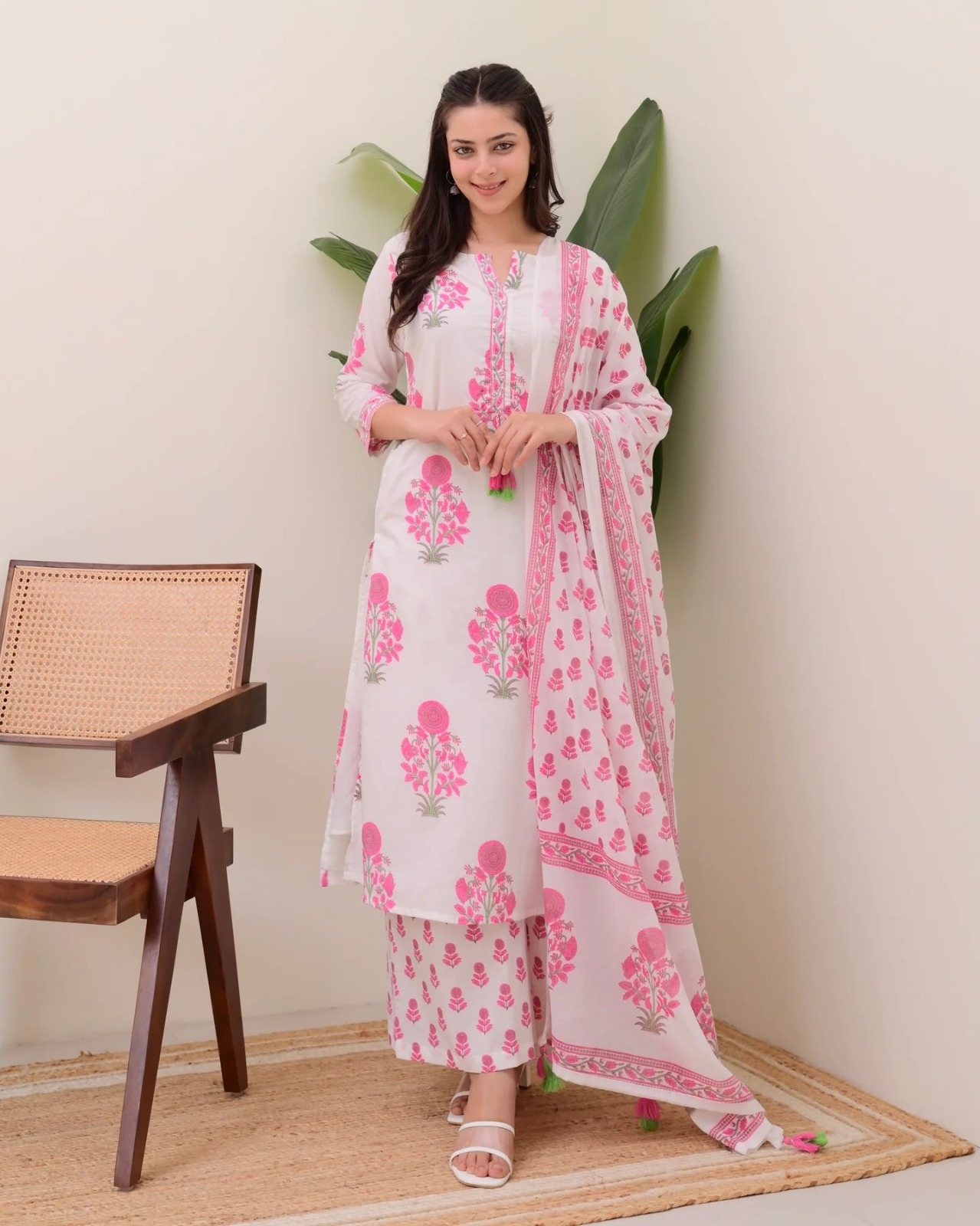
- Compare body and garment measurements: check bust, waist, hip, shoulder, sleeve and kurta length instead of selecting a size from habit.
- Inspect the fabric description: identify cotton, rayon, khadi cotton, Chanderi cotton or silk, and consider breathability, drape and crease behaviour.
- Check lining and opacity: pale fabrics may need lining, especially around the bust and upper back.
- Assess the bottom: confirm whether the set includes a salwar, straight pant, palazzo or another shape, and check the waistband measurement.
- Consider dupatta practicality: a very slippery or heavy dupatta may be unsuitable for commuting, outdoor ceremonies or long hours of wear.
- Read care instructions: washing, ironing and dry-cleaning requirements affect the true cost and convenience of the outfit.
Embroidery deserves a separate comfort check. Dense zari, sequins or raised threadwork can feel abrasive under the arm or against the neck, especially during warm-weather events. Run your hand gently over the inside of the garment and inspect whether decorative work has been backed or lined.
Colour choice should account for lighting as well as occasion. Daylight reveals warm and cool undertones clearly, while evening lighting can make deep red, navy, emerald and jewel-toned fabrics appear richer. A neutral suit can become festive through a contrasting dupatta, zari earrings or metallic footwear, making it more versatile than a single-use statement outfit.
Choosing Straight-Cut Salwar Suits by Fit Fabric and Occasion: How Do You Care for Them?
Proper care extends the life of a straight-cut salwar suit by protecting colour, shape, weave and embellishment. Wash cotton and rayon according to the care label, use a mild detergent, avoid prolonged soaking unless permitted, and dry garments away from harsh direct sunlight when colour fading is a concern.
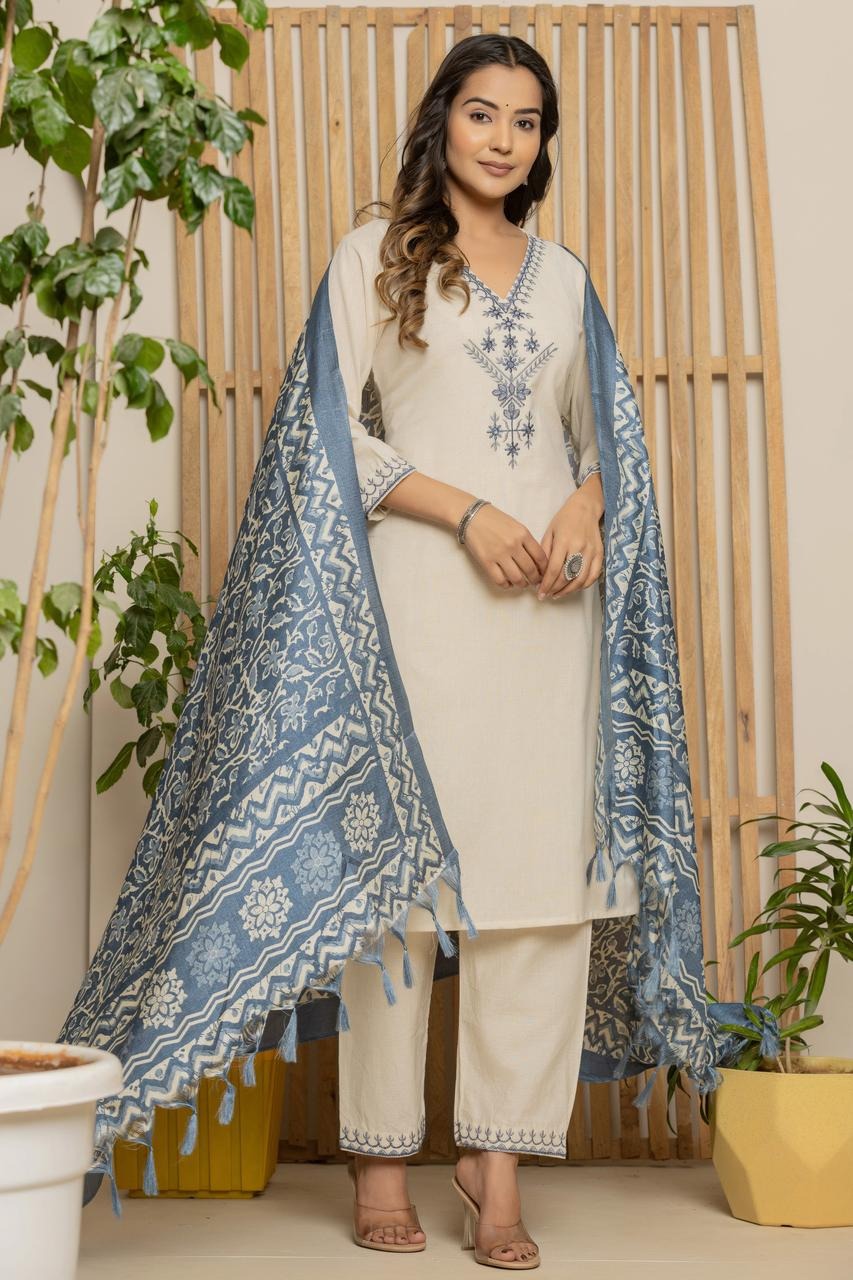
Fold heavy dupattas rather than hanging them from a narrow hanger, because concentrated weight can stretch the fabric. Use broad hangers for silk and structured kurtas, and leave enough space between garments to prevent crushing. Store completely dry clothing in a breathable cotton cover instead of sealed plastic for long periods.
Iron cotton on the recommended heat setting while the fabric is slightly damp if the care label permits. Rayon often benefits from ironing on the reverse side at low to medium heat. Chanderi cotton and silk should be handled more cautiously, with a pressing cloth and the lowest suitable temperature.
Choosing Straight-Cut Salwar Suits by Fit Fabric and Occasion ultimately means matching the garment to real life rather than buying for a single attractive photograph. Accurate measurements establish comfort, fabric determines movement and maintenance, and the event sets the appropriate level of colour, shine and volume. When all three decisions agree, a straight-cut suit becomes a dependable part of an Indian ethnic wardrobe.
Common Questions About Choosing Straight-Cut Salwar Suits by Fit Fabric and Occasion
How should a straight-cut salwar suit fit?
A straight-cut salwar suit should sit neatly at the shoulders, provide about 8 to 12 centimetres of total bust ease for comfortable everyday wear, and fall vertically without pulling at the hips. The armhole and sleeve should allow you to raise your arms and sit comfortably.
Which fabric is best for a straight-cut salwar suit in summer?
Cotton is usually the most breathable choice for summer, while khadi cotton offers a textured alternative and lighter rayon provides softer drape. Choose according to the care instructions and avoid very heavy silk for long outdoor events in hot weather.
Are straight-cut salwar suits suitable for weddings?
Straight-cut salwar suits are suitable for weddings when the fabric, colour and finish match the invitation and venue. Silk, Chanderi cotton, zari details or a richer dupatta can make the silhouette appropriate for an evening celebration without making the outfit bridal.
What should I wear to a Haldi ceremony?
A breathable cotton, Chanderi cotton or light rayon straight-cut suit works well for a Haldi ceremony. Choose cheerful colour, comfortable sleeves and a dupatta that can be secured easily, since Haldi events often involve movement and outdoor heat.
Is rayon better than cotton for a printed straight suit?
Rayon usually gives a printed straight suit a softer, more fluid drape, while cotton feels more breathable and structured. Rayon suits may need more careful storage and pressing, whereas cotton is often easier to maintain for frequent daytime wear.
How do I choose the right bottom with a straight kurta?
Choose straight pants for a streamlined appearance, palazzos for movement and added width, and a fuller Patiala-style salwar for a more voluminous traditional silhouette. Balance a wider bottom with enough kurta length and check the waistband measurement before buying.


