

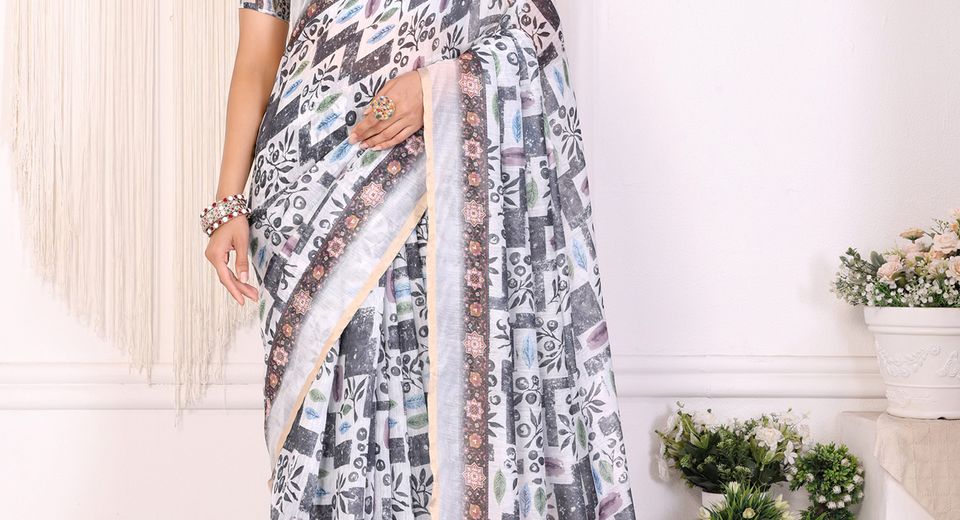
Choosing Small Prints vs Large Prints on Sarees for Your Frame can change the visual balance of an entire outfit. Motif size affects how broad, tall, compact or elongated a saree appears when wrapped around the body. The right choice depends on more than a general body-shape label: consider your height, shoulder and hip width, the saree's contrast level, the pallu placement, the fabric's fall and the blouse design.
A small floral print on cotton creates a very different effect from a large geometric print on Chanderi cotton, even when both sarees use similar colours. The practical aim isn't to hide your shape. The aim is to control visual rhythm so that the print, border and drape work with your natural proportions.
What does print scale do to a saree silhouette?
Small motifs usually create a finer, quieter visual rhythm, while large motifs create stronger focal points and make the saree look more graphic. Repeated small elements allow the eye to travel smoothly across the fabric. Large flowers, medallions, checks or geometric shapes interrupt that movement and draw attention to particular sections of the drape.
Print scale also changes with distance. A motif measuring 3 to 5 centimetres can look delicate in a full-length saree but appear medium-sized in a close-up photograph. A large print measuring 15 to 25 centimetres may look dramatic on unfolded fabric and become partly concealed after pleating. Always judge the print on the sections that will remain visible: the front pleats, pallu, shoulder and lower edge.
- Small prints: Tiny florals, dots, narrow stripes and closely repeated motifs tend to look subtle and blended.
- Medium prints: Motifs around 6 to 12 centimetres offer definition without dominating the drape.
- Large prints: Oversized florals, bold abstracts and broad geometric forms create a deliberate statement.
- Mixed-scale prints: A small all-over body with a large pallu or border gives structure without making every section equally busy.
Contrast matters as much as measurement. A large ivory floral on beige may appear softer than a small black motif on white. View a saree from approximately three metres away before deciding. If the individual motifs disappear, the print is functioning as texture. If the motif shapes remain obvious, the print is functioning as a major design element.
Choosing Small Prints vs Large Prints on Sarees for Your Frame
Which prints suit a petite or shorter frame?
Small to medium prints, narrow borders and vertically distributed motifs generally suit a petite frame because they preserve a sense of proportion. An extremely large repeat can occupy most of the visible body area and make the fabric appear heavier than the wearer.
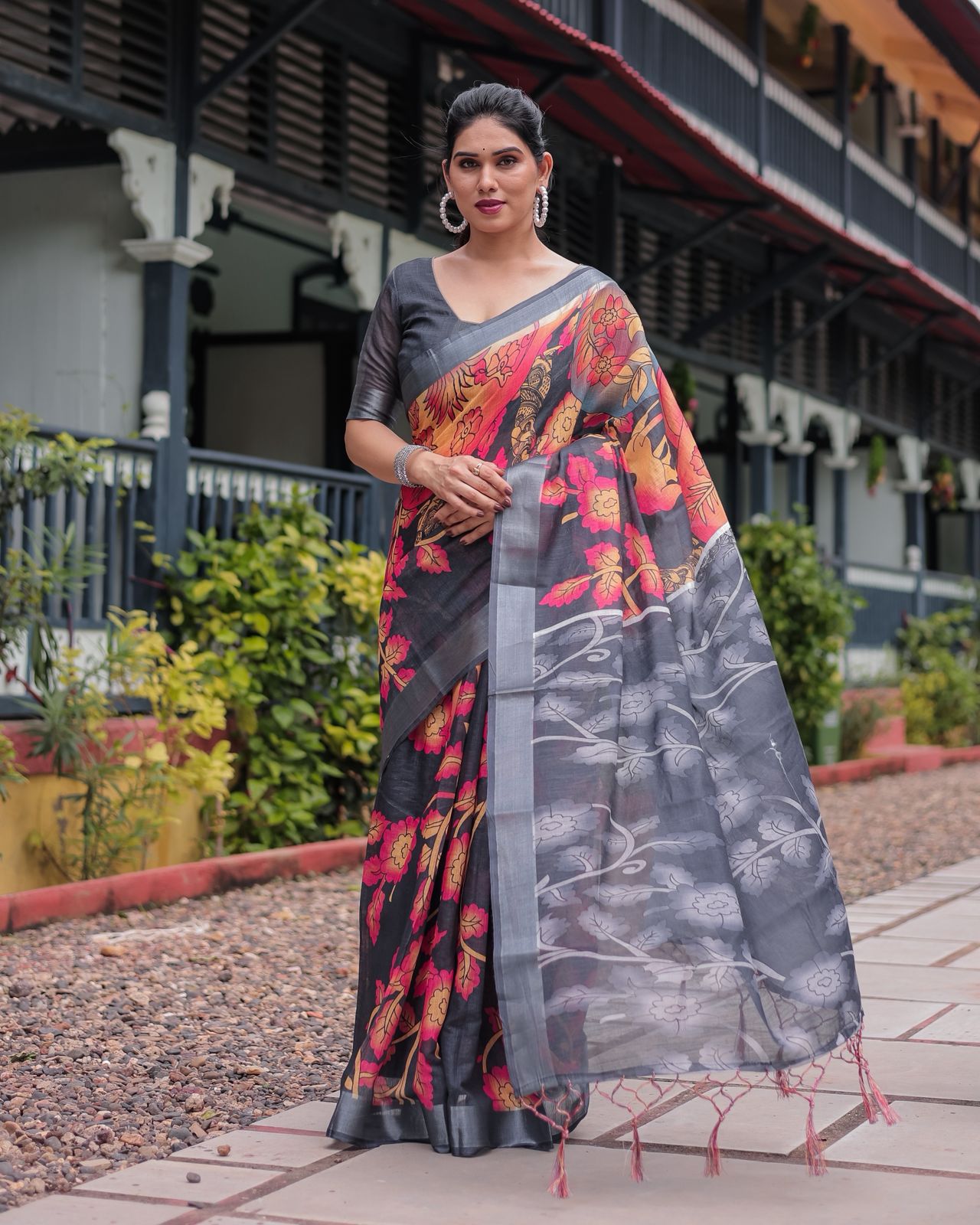
Petite wearers don't need to avoid every large print. A large motif can work when it appears mainly on the pallu, when the base colour is low contrast, or when the saree has a slim border. A long, uninterrupted line through the pleats or a pallu worn over one shoulder can also prevent a bold print from visually cutting the body into short sections.
Pastel Linen Cotton Floral Print Saree with Designer Blouse demonstrates how a light base and floral distribution can keep a printed saree airy. Peach Linen Cotton Floral Print Saree with Blouse for Women offers a similar direction for someone who prefers floral detail without a very dense, high-contrast surface.
Which prints suit a tall or longer frame?
Medium and large prints often complement a tall frame because a larger area of fabric can carry bold motifs without appearing crowded. Broad borders, oversized florals, large checks and strong pallu designs can add visual width and make the saree feel proportionate to the wearer.
A tall wearer can still choose small prints, particularly when the saree has a wide border, a contrasting blouse or a detailed pallu. Small motifs become more noticeable when grouped into bands or combined with horizontal stripes. The styling question is whether the complete outfit has enough visual presence, not whether the print is technically large.
Coral Pink & Royal Blue Printed Saree with Designer Border shows how colour contrast and a defined border can give a saree presence on a longer frame. A strong border also creates a horizontal line near the hem, balancing vertical height.
What works on a fuller or curvier frame?
Medium-scale prints with moderate contrast usually provide the easiest balance on a fuller or curvier frame. Medium motifs remain visible without creating many competing focal points, and a flowing fabric can follow the body without making the design look fragmented.
Large prints can look striking on a fuller frame when the motifs are spaced apart and the background isn't sharply contrasted. Dense clusters of very large motifs may add visual weight, especially around the midsection. Small prints can also work well, but highly tiny, high-contrast patterns may create a busy texture rather than a smooth line.
Placement is more important than a strict rule about size. Positioning a prominent motif on the pallu, near the lower border or along the outer edge of the pleats can direct attention deliberately. A solid-colour blouse can give the eye a resting point when the saree itself is highly patterned.
What works on a narrow or straighter frame?
Large motifs, layered patterning and contrasting borders can add visual dimension to a narrow or straighter frame. A saree with generous floral forms or geometric blocks can make the outfit look more substantial, particularly when paired with a textured blouse or a structured pallu.
Small prints remain useful when the wearer wants a refined, minimal appearance. Adding volume through blouse sleeves, a wider belt or a softly pleated pallu can prevent a tiny print from making the outfit appear too delicate. The finished balance comes from print, fabric and styling together.
How does fabric change the effect of a printed saree?
Fabric changes print scale because fabric controls light, stiffness, transparency and movement. A print that looks bold on firm cotton may appear softer on fluid satin, while the same motif can lose clarity when placed across heavily compressed pleats.
Cotton and linen cotton
Cotton and linen cotton usually hold printed shapes clearly and give small motifs a crisp, everyday appearance. Their natural structure can make large geometric designs look graphic and intentional. Classic Beige & Coffee Brown Printed Cotton Saree illustrates how earthy contrast can keep a print grounded rather than overly dramatic.
Linen cotton often has a slightly textured surface that softens sharp edges. Floral prints therefore appear relaxed and suitable for daytime wear. Indigo Blue Geometric Print Saree with Contrast Pallu uses contrast as a clear visual anchor; the pallu can create definition even when the body print is repeated.
Chanderi and light woven fabrics
Chanderi can make prints feel lighter because its delicate surface and subtle sheen reflect light differently across the folds. Small motifs on Chanderi create an elegant, detailed finish, while large motifs can look artistic when they have enough open background around them.
Black Chanderi Cotton Saree with Multicolor Geometric Print demonstrates how a dark base can support multicolour geometry. The background gives separate motifs a clear boundary, so the saree reads as structured rather than indistinct.
Mal cotton and fluid fabrics
Mal cotton gives a soft, breathable fall that suits repeated prints and detailed pallus. A small motif can look relaxed rather than overly formal, while a large motif remains wearable when the base colour and border are restrained.
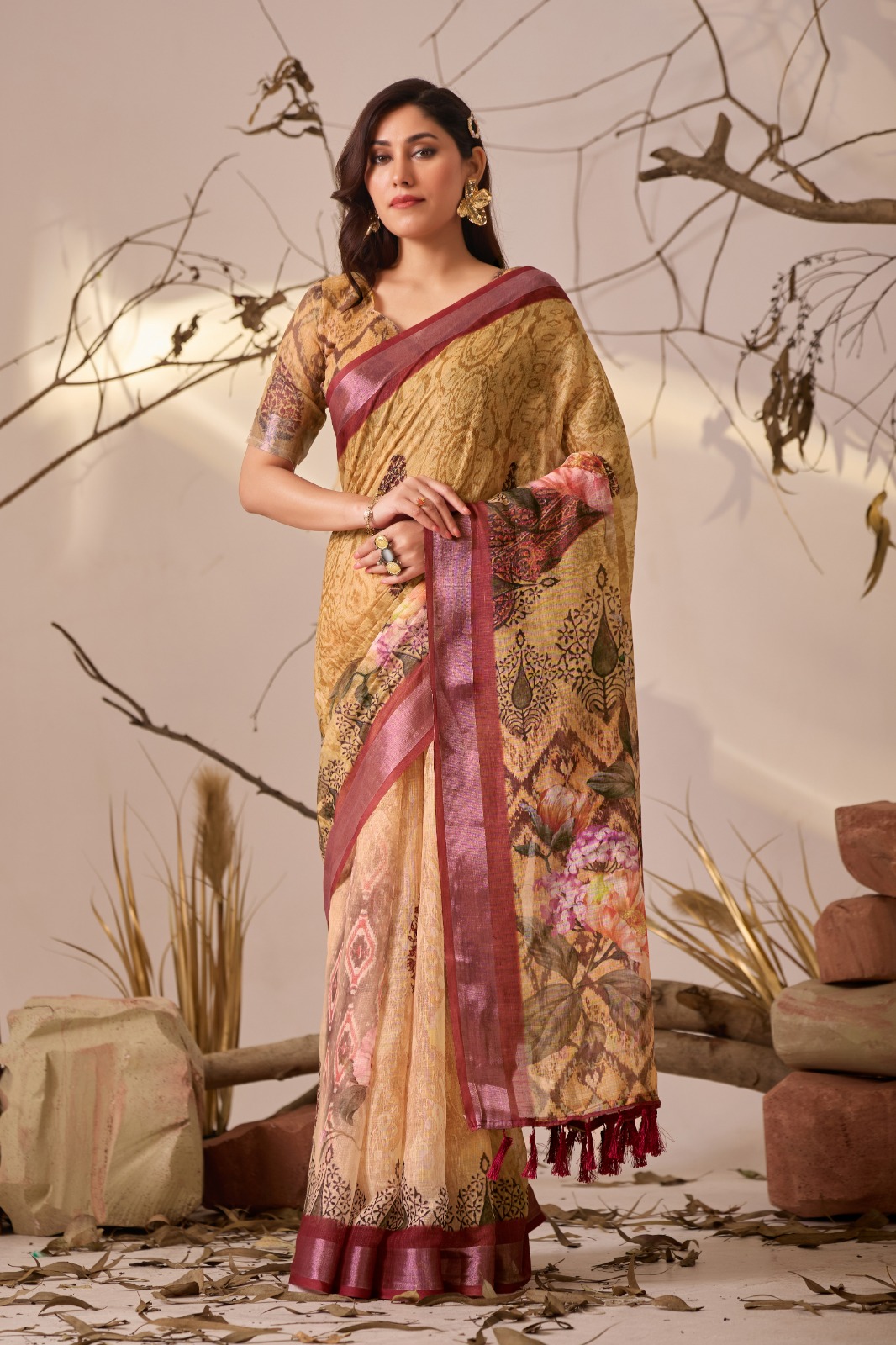
Printed Mal Cotton Saree With Designer Pallu by VARNAVI is an useful example of how a decorative pallu can provide visual focus without requiring oversized motifs across the entire body. A pallu-led design is particularly practical when the front pleats are expected to remain neat and relatively simple.
How do borders, pallus and pleats change print proportions?
Border width, pallu design and pleat depth can change the apparent scale of a saree print more dramatically than the motif measurement itself. A broad contrasting border creates a strong horizontal line. A large pallu motif creates a focal point near the shoulder. Deep pleats compress repeated motifs and can make them appear smaller.

A narrow border usually keeps attention on the body print and can support petite proportions. A border measuring approximately 8 to 12 centimetres creates a noticeable hemline without overwhelming most frames. Borders above 15 centimetres become a major styling feature and may be especially effective when the body print is small or understated.
The pallu deserves separate attention because it's often the most visible printed section. If the body has small motifs but the pallu has one large floral panel, the overall saree can still read as bold. An open pallu displays the full motif. A neatly pleated pallu reduces the visible area and produces a more orderly effect.
- Check whether the main motif falls across the centre of the front pleats or disappears into the folds.
- Measure the border against your preferred drape rather than against the unfolded saree.
- Compare the pallu length with your shoulder width and usual draping style.
- Notice whether the blouse repeats the print, matches one colour or creates a solid break.
How should colour and contrast influence print choice?
Colour contrast determines how strongly a print reads on the body. Low-contrast motifs blend with the base and are easier to wear across different proportions. High-contrast motifs create sharper edges and make the saree more visually prominent.
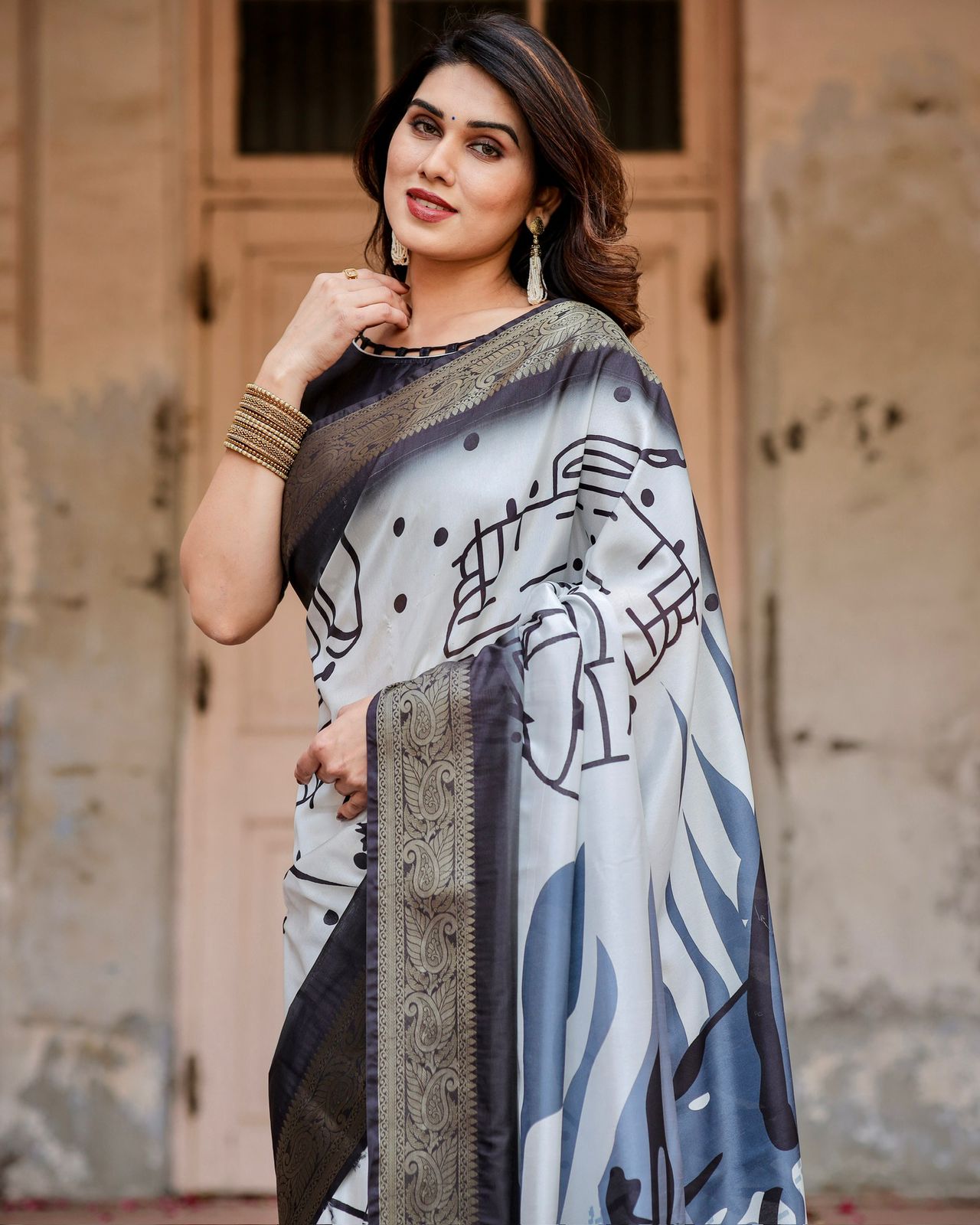
A monochromatic small print can look calmer than a multicoloured small print because nearby motifs merge from a distance. Conversely, a large print in related shades may appear more graceful than a small print in sharply opposing colours. Look at both motif size and colour distance when comparing sarees.
Black, navy and deep brown bases create strong foundations for bright geometric or floral motifs. Beige, ivory, peach and pastel bases soften the same motif shapes. Coral Pink & Royal Blue Printed Saree with Designer Border is more visually energetic because the pink-blue relationship and border create several points of contrast.
When a saree has a high-contrast print, keep the blouse relatively controlled. A blouse matching the base colour creates continuity, while a blouse matching one accent colour highlights the print without adding another pattern. A heavily printed blouse is most successful when the saree body has generous open space.
How can you test a saree print before buying?
You can test a saree print by assessing the fabric unfolded, viewing it from a distance, and imagining the sections that will appear after draping. Online product photographs are helpful, but a flat image doesn't show how motifs will align across pleats or where the pallu will sit on your shoulder.

- Check the repeat: Identify whether the motif repeats in a regular grid, scattered arrangement, border band or large panel.
- Estimate visible coverage: Imagine approximately 5 to 7 front pleats and determine how much of each motif will remain visible.
- Assess contrast: Compare the motif colour with the base, not only the overall colour of the saree.
- Inspect the border: Note whether the border is narrow, medium or wide in relation to your height and preferred drape.
- Plan the blouse: Select a solid blouse when the print is busy, or use a subtle print repeat when the saree has open background space.
- Consider use: Small, low-contrast prints often transition easily between work and casual settings, while large prints can make a stronger festive or evening statement.
Price range can also guide the decision without replacing design judgement. Collections such as Sarees from Rs 1000 to Rs 1500 may be useful for comparing different print scales at a practical budget. Discount-focused groups such as Sarees Under 20% Off and Sarees Flat 50% Off can make experimentation easier, but inspect fabric composition, measurements and return conditions before buying.
How should you style small and large printed sarees?
Small printed sarees pair well with clean silhouettes, textured accessories and blouses that introduce one controlled colour. A sleeveless blouse, a simple elbow-length sleeve or a lightly embellished neckline can preserve the delicate rhythm of tiny motifs.

Large printed sarees benefit from intentional spacing. Keep the blouse solid or use a border detail rather than adding a second large pattern. A low jewellery stack, a defined waistline and an open pallu can help a bold motif remain the visual centre of the outfit.
For a Haldi ceremony, cheerful floral or geometric prints can feel festive without the weight of heavy embellishment. For office wear, small or medium prints in cotton, linen cotton or Mal cotton are easier to keep polished. For an evening gathering, a dark base, a fluid fall and a large pallu motif can create drama without requiring a heavily decorated body.
Collections such as Sarees Under 10% Off and Sarees Flat 60% Off can be browsed when you already know the print scale, fabric and border proportions you want. A clear checklist prevents a discount from becoming the reason for choosing a saree that doesn't suit your preferred drape.
What is the simplest rule for choosing saree print size?
The simplest rule is to match motif scale to the amount of visual space you want the saree to occupy. Choose small prints for a quiet, continuous effect; medium prints for versatility; and large prints when you want a defined focal point or stronger graphic presence.
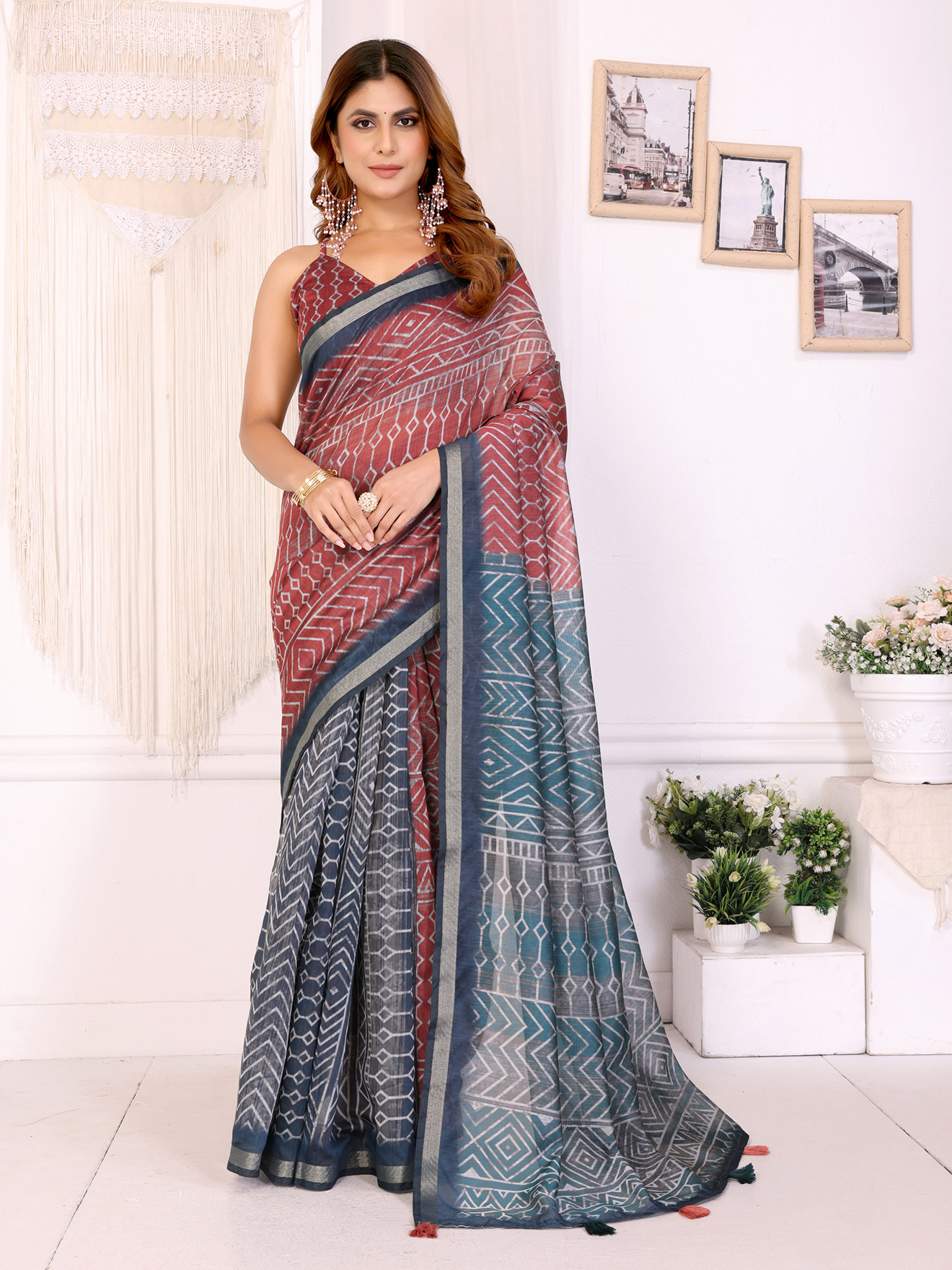
Personal preference remains decisive. A petite wearer can carry a large print with a restrained border, and a tall wearer can look polished in a tiny print with a detailed pallu. The most reliable choice is the saree whose motif, contrast, fabric fall and drape look balanced together rather than a design selected from a rigid body-shape rule.
Common Questions About Choosing Saree Print Sizes
Are small prints better for short women?
Small to medium prints often create a balanced effect on a shorter frame because they do not overwhelm the visible saree area. A large print can also work when it is concentrated on the pallu, paired with a narrow border or printed in low contrast.
Do large prints make a person look wider?
Large prints can add visual emphasis, but they do not automatically make a person look wider. Spacing, contrast, fabric fall and motif placement matter; widely spaced motifs on a low-contrast base usually appear less heavy than dense, high-contrast motifs.
Which saree print is best for a curvy body?
Medium-scale prints with moderate contrast are usually easy to balance on a curvy body. Small prints and large prints can both work when the blouse, border and pallu provide enough visual spacing.
Can petite women wear sarees with big floral prints?
Yes, petite women can wear big floral prints successfully. Choose a saree where the large flowers are mainly on the pallu or border, and use a simple blouse and a clean drape to prevent visual crowding.
Which fabric makes printed sarees look more elegant?
Chanderi, linen cotton, cotton and Mal cotton can all look elegant because each creates a different surface and fall. Chanderi gives a delicate woven effect, while cotton and linen cotton make prints appear crisp and Mal cotton gives a softer, relaxed drape.
Should the blouse match a printed saree?
A solid blouse matching the base colour or one accent colour is the safest choice for a busy printed saree. A printed blouse can work when the saree has open background space and the blouse repeats only a small, controlled motif.


