

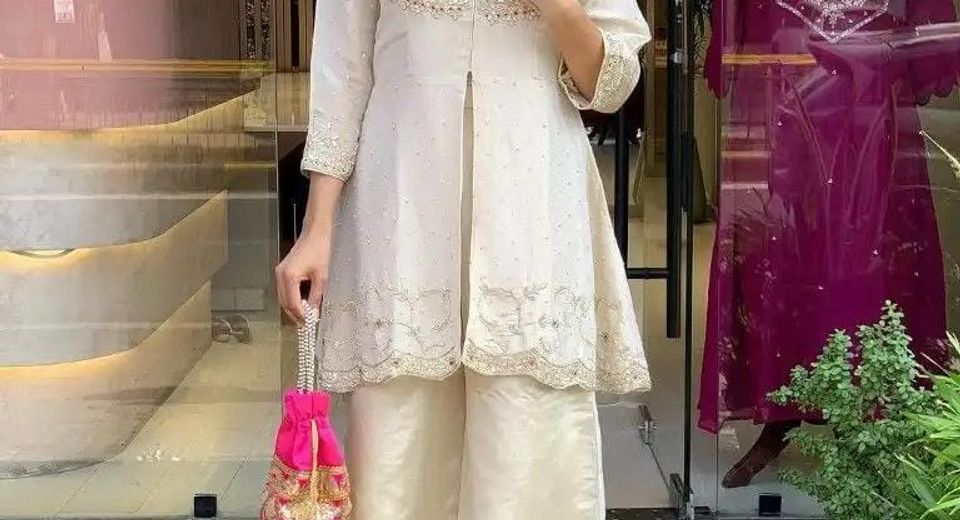
Choosing Palazzo Salwar Suits by Fit Fabric and Occasion becomes much easier when you assess more than colour and embroidery. The palazzo width, kurta length, fabric weight, waistband construction and dupatta styling all influence comfort and proportion. A flowing rayon set may be ideal for daily wear, while a silk or zari-embellished palazzo suit can better suit a wedding reception.
A practical choice begins with three questions: how much movement do you need, how warm or formal is the setting, and how much maintenance can you realistically manage? The answers help you select an outfit that looks appropriate in photographs and remains comfortable after several hours of sitting, walking, greeting guests or dancing.
Choosing Palazzo Salwar Suits by Fit Fabric and Occasion: What the Silhouette Means
A palazzo salwar suit combines a kurta or kurti with wide-legged trousers, usually with a coordinating dupatta. Palazzo trousers generally widen from the waist or upper hip in a continuous line, creating a fluid silhouette that allows easier movement than a narrow trouser.
Palazzo trousers differ from shararas and ghararas. A palazzo usually has a consistent wide-leg shape, whereas a sharara often has a more dramatic flare and a skirt-like sweep. A gharara commonly includes a fitted upper section followed by a gathered or flared lower section. Understanding the distinction helps you predict how much volume the outfit will create around the lower body.
A straight kurta can make a wide palazzo look neat and contemporary. A shorter kurti places more emphasis on the waist and legs. A longer kurta provides greater coverage and can balance a moderate palazzo flare. The most flattering combination is usually the one that creates visual proportion rather than maximum volume in both the kurta and trousers.
Wide-legged trousers are useful for Indian events because they allow comfortable sitting, climbing stairs and moving between indoor and outdoor spaces. The same width can look cumbersome if the hem is too long, the fabric is stiff or the kurta also has excessive flare. Shape, fabric and length need to work together.
Choosing Palazzo Salwar Suits by Fit Fabric and Occasion: How to Measure
A well-fitting palazzo suit should sit securely at the waist, provide comfortable hip ease and end at a practical length for the footwear you plan to wear. Measurements are more reliable than choosing only by a familiar size because waistbands, rises and fabrics vary between garments.
Check the waist and hip first
Measure the natural waist and the fullest part of the hip with the tape parallel to the floor. Compare both measurements with the garment's size chart. The waistband should remain secure while standing but should not dig into the stomach when you sit.
Hip ease is especially important in palazzo trousers. A tight upper hip can pull the side seams and distort the fall of the fabric, even when the lower leg is wide. Approximately 2.5 to 5 centimetres of wearing ease can be comfortable for many fitted-waist designs, although the correct amount depends on the fabric and construction.
An elasticated waist offers flexibility, but elastic should lie flat rather than twist or roll. A drawstring can provide adjustability, but a bulky knot may show beneath a short kurti. If the waistband includes gathers, inspect whether the gathers begin evenly across the front and back.
Evaluate the rise and trouser length
The rise should allow the waistband to stay in place when you sit, bend or raise your arms. A low or unstable rise can pull the trouser fabric at the crotch and change the intended relationship between kurta and palazzo.
For flat sandals, a trouser hem that finishes approximately 1 to 2 centimetres above the floor is practical. A longer hem can work with heels, but only when you expect to wear the suit with a similar heel height each time. Excess fabric at the floor collects dust, catches on stairs and can weaken through repeated friction.
Match volume to your proportions
A tall frame can often carry a broad palazzo with a longer kurta, while a petite frame may look balanced in a moderate flare and a shorter or gently curved kurta. These guidelines are not restrictions; they simply explain how garment volume changes visual proportion.
A detailed neckline, embroidered border or colourful dupatta can draw attention upwards when the palazzo is particularly wide. A plain kurta paired with a printed palazzo can look deliberate when one colour is repeated in the dupatta. A heavily embellished kurta generally works more easily with a solid or lightly textured trouser.
Choosing Palazzo Salwar Suits by Fit Fabric and Occasion: Which Fabrics Work
The most suitable fabric depends on climate, movement, desired structure and care requirements. Rayon and soft printed fabrics usually work for repeated daytime wear, while Chanderi, silk, chiffon and zari embroidery can create a more formal finish when handled appropriately.
Rayon for fluid everyday dressing
Rayon has a soft drape and moves easily around the legs, making it useful for office-friendly ethnic wear, travel and casual lunches. Striped Rayon Straight Kurta Palazzo Set for Women demonstrates how a straight kurta can control the visual volume of a fluid trouser.
Rayon can crease after long periods of sitting and may need careful washing. Turn rayon garments inside out before washing, avoid harsh wringing and dry deep colours away from strong direct sunlight. A steam iron or low-temperature iron can restore the fall without flattening the fabric excessively.
Chanderi for light structure
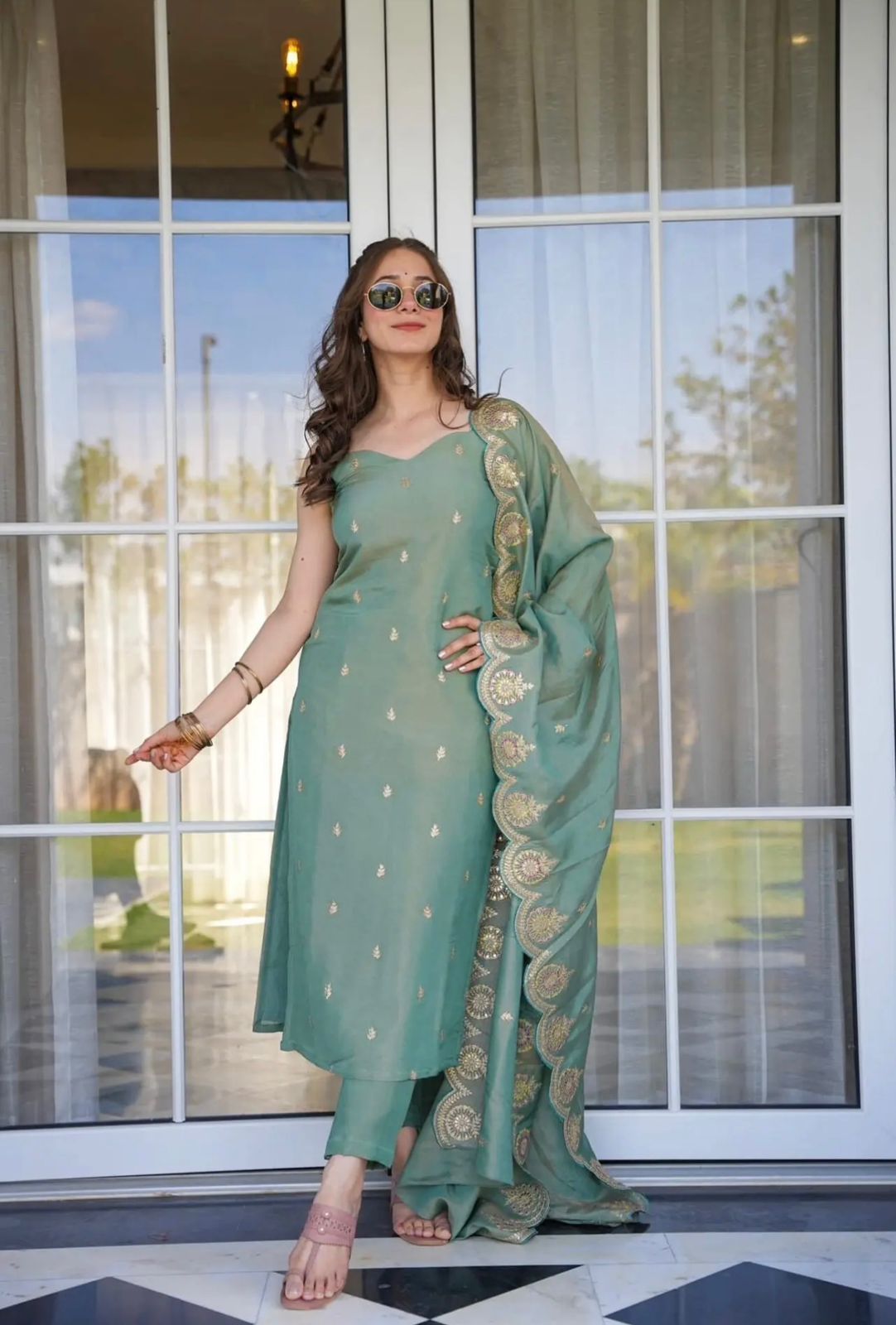
Chanderi brings a lighter, slightly crisp hand compared with rayon, so it can hold the shape of a kurta while remaining comfortable for warm-weather celebrations. Lavender Chanderi Kurta with Olive Embroidered Palazzo Suit shows how a soft base colour and contrasting embroidery can create occasion appeal without dense all-over decoration.
Chanderi can catch on sharp jewellery, rough walls and coarse storage surfaces. Fold Chanderi garments with clean muslin or soft cotton layers. Avoid placing a heavy embroidered dupatta on a narrow hanger because concentrated weight can distort the shoulder area.
Silk for festive depth
Silk generally gives colours greater depth and reads as more formal than rayon or lightweight cotton. Mustard Silk Embroidered Kurti Palazzo Dupatta Set and Purple Silk Embroidered Kurti Palazzo Dupatta Set are suitable references for festive dinners, receptions and family celebrations that call for a richer surface.
Silk requires protection from friction, perspiration and moisture. Air a silk suit after wearing, keep it away from damp storage and follow the care label, especially when zari or dense embroidery is present. Professional dry cleaning may be appropriate for embellished silk.
Chiffon and zari embellishment
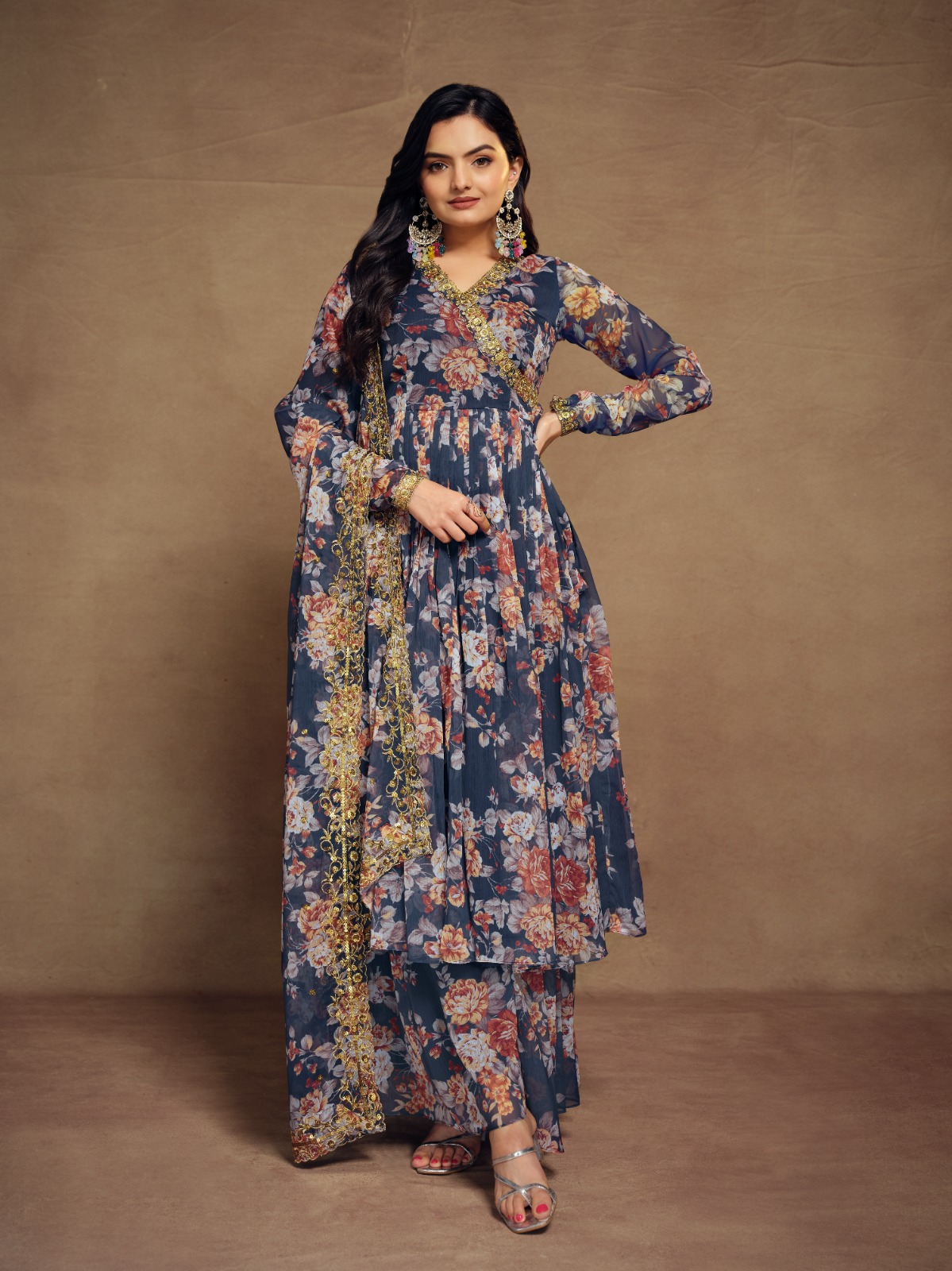
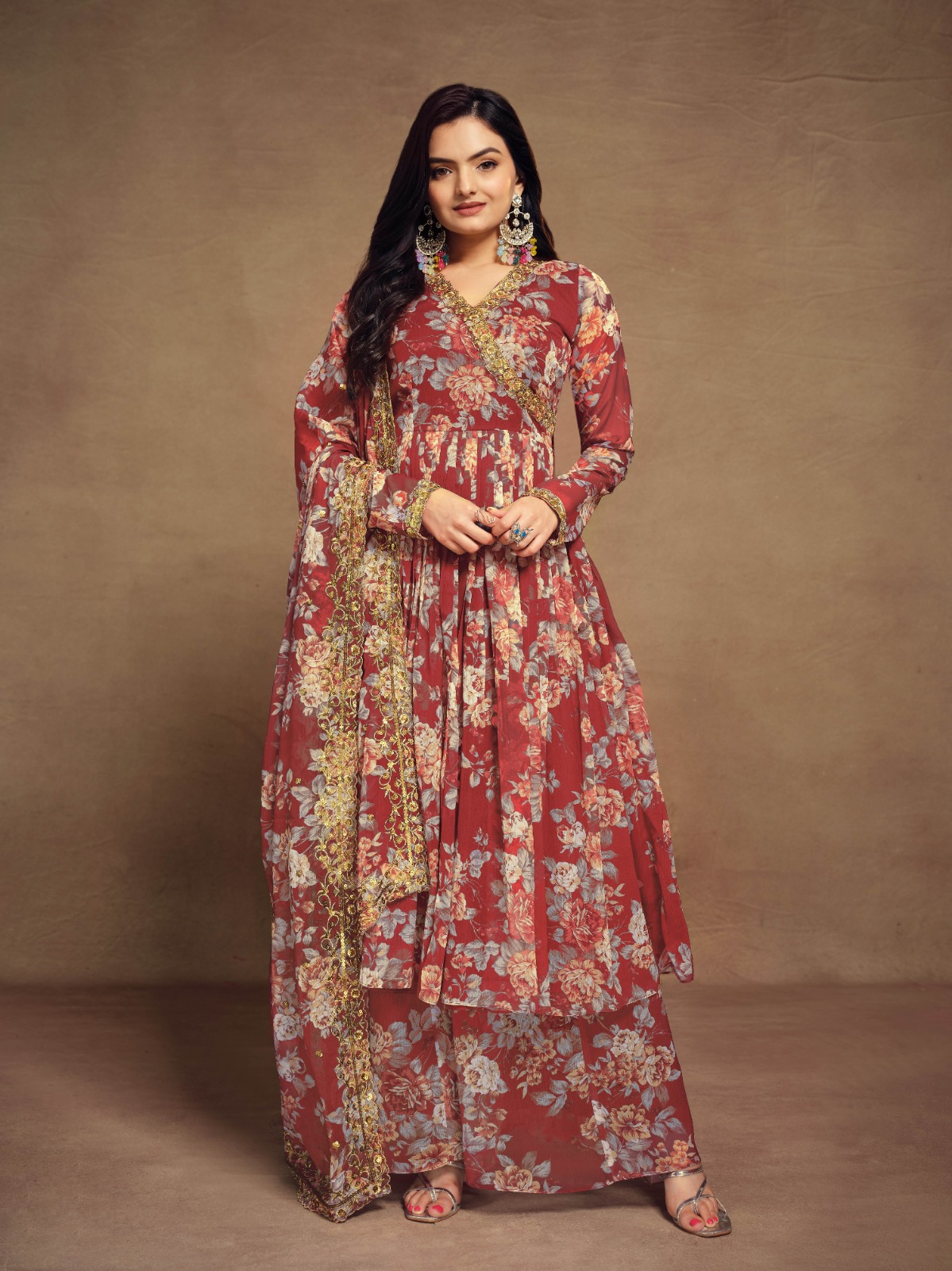
Chiffon creates a light, floating dupatta and suits outfits that need softness rather than rigid structure. Shop Floral Digital Printed Chiffon Kurti Palazzo Set with zari embroidery and Floral Digital Printed Chiffon Kurti Palazzo Set with Zari Embroidery combine printed colour with metallic detail, allowing the rest of the styling to remain restrained.
Zari embroidery should be kept away from rough bags, abrasive furniture and unprotected metal jewellery. Fold embellished sections inward, place tissue or soft cotton between heavily worked areas and avoid spraying perfume directly onto metallic thread.
Choosing Palazzo Salwar Suits by Fit Fabric and Occasion: What to Wear by Day
Daytime palazzo suits should prioritise breathability, manageable embellishment and easy movement. Lighter fabrics, fresh colours and moderate flare are generally more comfortable for outdoor gatherings, errands and warm-weather celebrations.
Work, college and everyday errands
Choose a straight or moderately flared palazzo, a breathable fabric and a dupatta that doesn't require constant adjustment. Rayon, cotton and uncomplicated prints usually tolerate repeated wear better than delicate embellished silk.
A solid kurta can balance a printed palazzo, while a printed kurta can be paired with a trouser in one of its quieter colours. Flat sandals, small earrings and a structured tote keep the outfit practical. Avoid excessive trailing fabric if the day includes commuting or public transport.
Lunches, puja and family gatherings
Light embroidery, Chanderi texture, floral prints and regional motifs suit daytime family events. Pista Royale Salwar Suit brings an useful direction for this setting because a fresh colour palette can look festive without the visual weight of dense dark embellishment.
A cotton, Chanderi or light chiffon dupatta is practical when the event involves outdoor movement. Small jhumkas, embroidered flats and a low bun or braid add polish without making the ensemble difficult to manage in warm weather.
Regional collections can add cultural character without requiring a heavily embellished silhouette. Kalamkari Print Salwar Suits (Copy) can inspire a print-led daytime look, while Maharashtra Paithani Inspired Salwar Suits can guide colour and border choices for a more traditional family gathering.
Haldi ceremony and pre-wedding functions
A Haldi ceremony calls for secure styling, comfortable movement and fabrics that can be protected from turmeric paste, water and flower petals. Mustard, pista, marigold, pink and green are naturally suited to a celebratory palette, but delicate zari should be treated carefully around wet or heavily coloured activities.
Pin the dupatta at the shoulder and use a shorter, secure drape if the ceremony involves dancing or moving between seating areas. Wear stable footwear and avoid very long hems on uneven outdoor ground. A washable or easier-care fabric is more sensible than an outfit that requires immediate specialist cleaning.
Choosing Palazzo Salwar Suits by Fit Fabric and Occasion: What to Wear at Weddings
Wedding palazzo suits can support richer fabrics, stronger colour contrast, zari, embroidery and more formal dupatta borders. Maroon Wedding Wear Embroidered Palazzo Suit Set illustrates the visual weight that suits an evening celebration, where deep colour and ornate surfaces remain visible under artificial lighting.
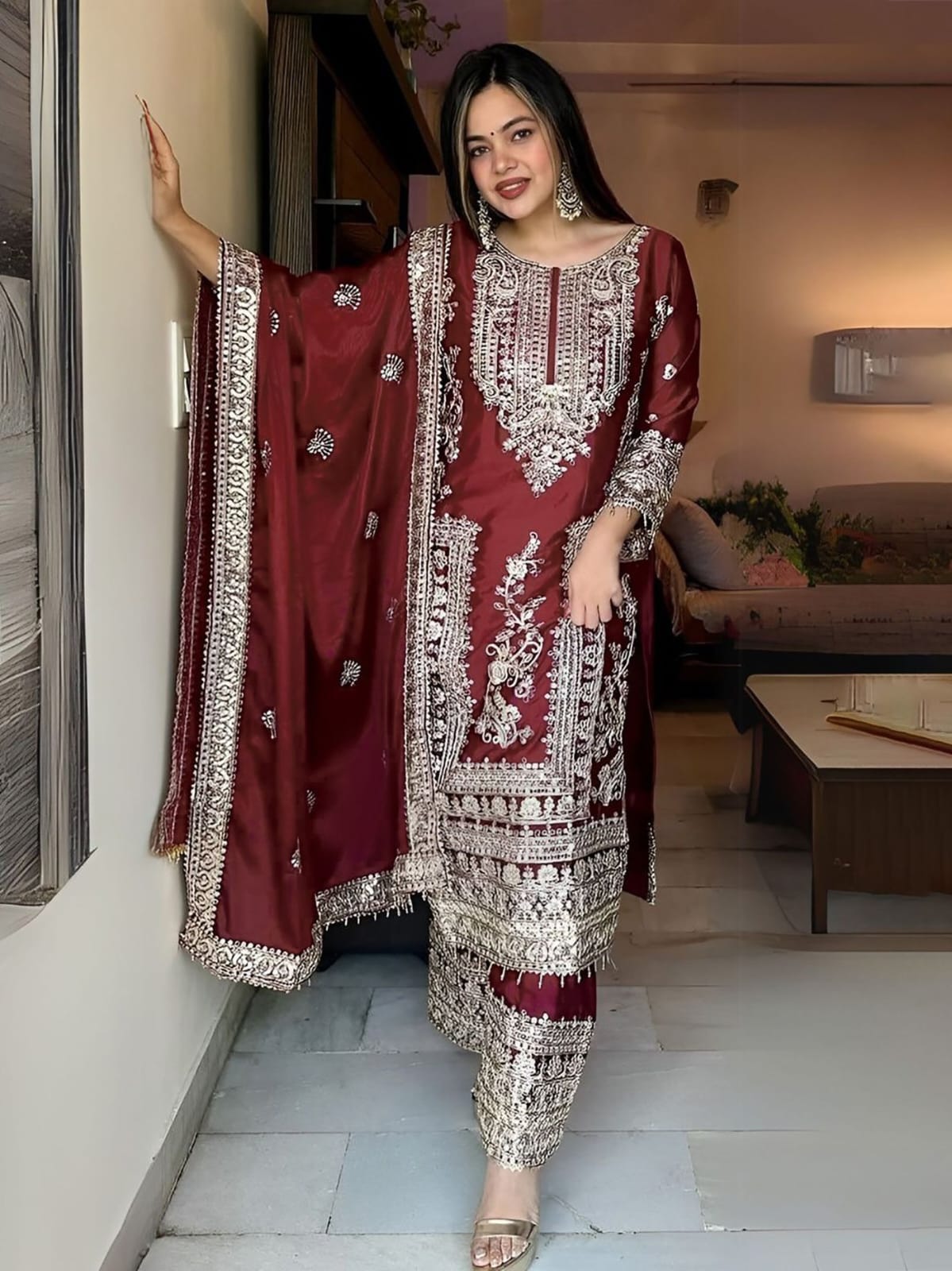
Match jewellery scale to the embroidery. A heavily worked neckline often needs only statement earrings, while a simpler kurta can carry a necklace, bangles and a more prominent maang tikka. Too many competing focal points can make even an expensive-looking outfit appear visually crowded.
For a daytime wedding, choose lighter silk, Chanderi or chiffon details and avoid excessive layering. For an evening reception, silk and zari can provide depth, but check whether the fabric has a lining and whether the trousers remain comfortable after several hours.
Punjabi and regional influences can also shape the styling. Punjab Patiala Salwar Suits provide a reference for more gathered, lively volume, whereas a palazzo suit has a cleaner wide-leg line. Gujarat Bandhej Salwar Suits and Odisha Sambalpuri Salwar Suits can inspire colour stories, textile motifs and dupatta combinations even when the final silhouette remains a palazzo set.
When choosing accessories, consider the garment's movement. A long necklace can catch on a chiffon dupatta, and a wide bracelet can snag zari. Test the complete outfit at home for ten minutes, including walking, sitting and lifting both arms, before wearing it to a wedding.
Choosing Palazzo Salwar Suits by Fit Fabric and Occasion: Care and Final Checks
Correct storage and a short pre-purchase checklist protect the appearance and usefulness of a palazzo suit. Inspect the seams, waistband, lining, embroidery attachment and dupatta edges before removing tags or discarding packaging.
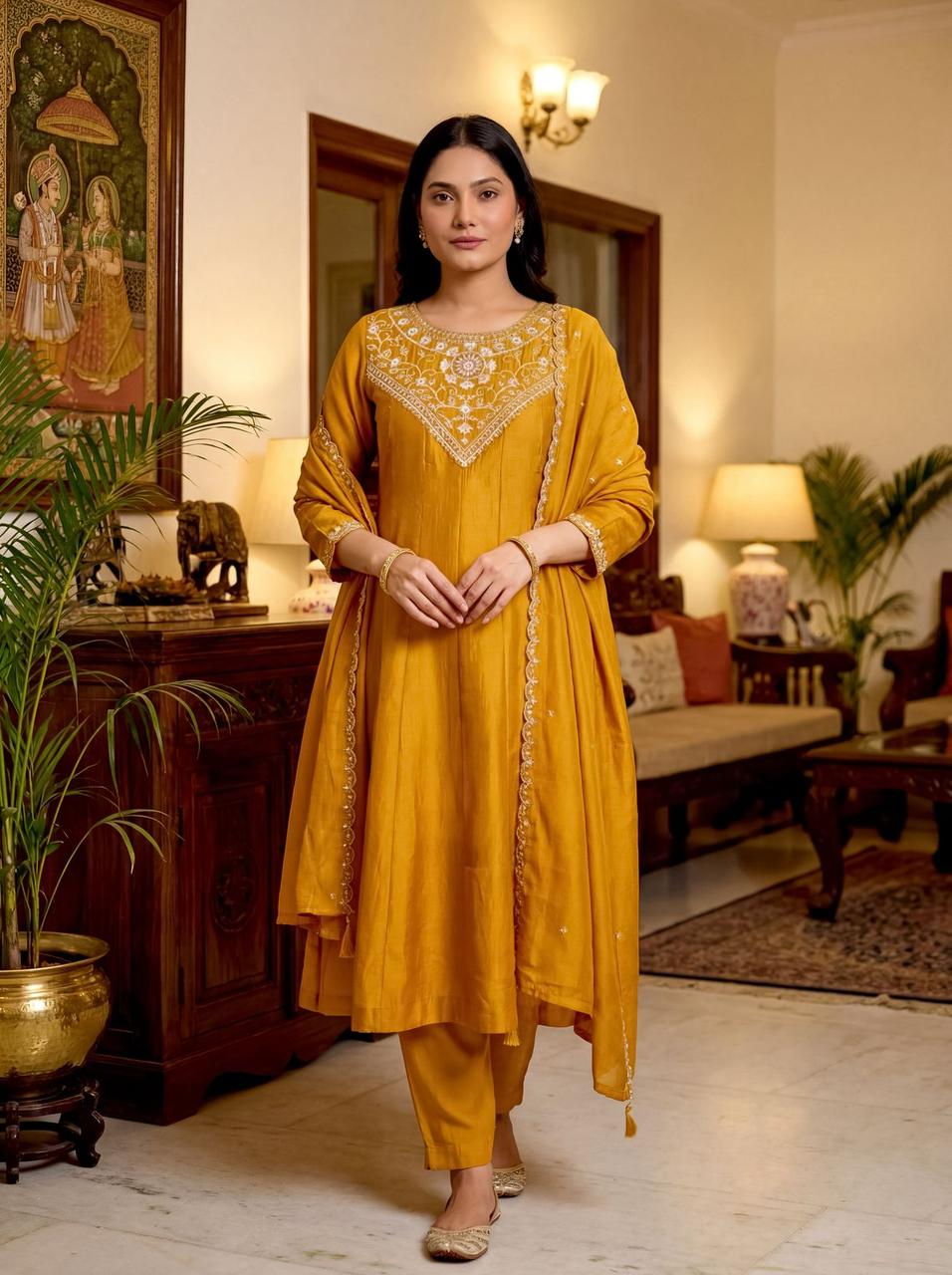
Check whether the fabric is transparent in daylight, especially around the trouser and upper-arm areas. A lining can improve comfort and opacity, but a heavy lining may make a flowing fabric warm. Examine the hem for even finishing and check that the kurta side slits don't pull when you walk.
After wearing the suit, air it in a shaded, ventilated place before folding. Keep perfumes, deodorants and hair products away from silk, Chanderi and zari. Store embellished garments flat or folded with tissue rather than compressed beneath heavy clothing.
Wash only according to the care label. Rayon may tolerate gentle home washing, while silk, dense embroidery and metallic zari may need professional care. Do not assume that a removable-looking dupatta is safe to wash separately; colour bleeding from the kurta or embroidery can still affect the complete set.
The strongest choice is the one that matches your real schedule rather than an imagined wardrobe. Select moderate flare and easy-care fabric for frequent wear, breathable Chanderi or chiffon for daytime celebrations, and silk or zari for evenings when formal presence matters. When fit, fabric and occasion agree, a palazzo salwar suit becomes comfortable enough to repeat and distinctive enough to remember.
Common Questions About Choosing Palazzo Salwar Suits by Fit Fabric and Occasion
How should a palazzo salwar suit fit?
A palazzo salwar suit should sit securely at the waist, provide comfortable ease at the hip and allow the wearer to sit and walk without pulling at the crotch or side seams. The trouser hem should remain close to the foot without dragging on the floor.
Which fabric is best for a palazzo suit in summer?
Rayon, cotton and lightweight Chanderi are practical summer choices because they allow movement and generally feel lighter than heavily lined silk. A chiffon dupatta can add softness, but the kurta and trousers should still provide suitable coverage.
Can palazzo salwar suits be worn to weddings?
Palazzo salwar suits can work well for weddings when they use silk, zari, embroidery, a rich colour or a formal dupatta border. Choose the level of embellishment according to the event's time, venue and dress code.
Are palazzo suits suitable for a Haldi ceremony?
Palazzo suits are suitable for a Haldi ceremony when the dupatta is pinned securely, the hem is practical and the fabric can be protected from turmeric and water. Breathable, easier-care fabrics are generally more sensible than delicate heavily embellished silk.
How do I stop a palazzo trouser from looking too wide?
Pair a very wide palazzo with a relatively clean straight kurta and keep the footwear visible enough to preserve a vertical line. Repeating one trouser colour in the dupatta can also make the outfit look coordinated rather than bulky.
How should silk and zari palazzo suits be stored?
Air silk and zari garments after wearing, then fold them with clean tissue or soft cotton between embellished sections. Keep the garments away from moisture, direct sunlight, rough surfaces and heavy items that can flatten or distort embroidery.


