

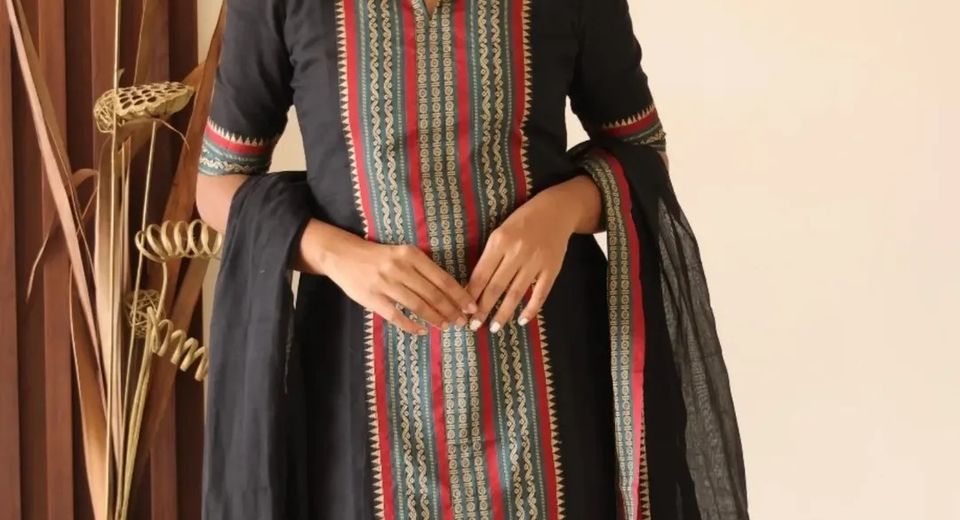
Choosing Kurtis for Women With Broad Shoulders by Cut Length and Neckline becomes easier when the outfit is judged as a set of proportions rather than by colour alone. The neckline, shoulder seam, sleeve volume, kurta length, trouser width and dupatta placement all change how the upper body appears. A well-cut salwar suit doesn't need to hide broad shoulders; it should create balance while allowing comfortable movement.
The most useful starting point is practical: select a neckline that adds length or softness, choose a hem that extends the vertical line of the body, and place detail below the shoulder whenever possible. The same principles work for everyday cotton kurtis, festive silk-blend kurta sets and occasion-ready Anarkali silhouettes.
Choosing Kurtis for Women With Broad Shoulders by Cut Length and Neckline: where should you begin?
Women with broad shoulders should usually begin with a moderately open vertical or curved neckline, a clean shoulder area and a kurta hem that reaches at least the hip or mid-thigh. The best choice also depends on height, bust fit, personal comfort and the volume of the salwar, palazzo or pants worn below.
Broad shoulders can come from bone structure, muscle, a wider bust line or a narrow waist that makes the shoulder line appear more pronounced. Clothing size alone can't identify body proportions. Measure the shoulder line from one shoulder point to the other, then compare that measurement with the bust and hip measurements. A kurta that fits the shoulders but pulls across the bust needs a larger size or a tailoring adjustment, not a tighter neckline.
Look for shoulder seams that sit at the natural shoulder edge. Dropped seams can soften the outline, but an excessively low seam may add width through loose fabric. Raglan sleeves, soft dolman sleeves and carefully shaped sleeves can work well when the armhole doesn't create extra bulk. Avoid choosing a garment only because the chest measurement is generous; shoulder placement and armhole depth determine whether the kurta hangs neatly.
Choosing Kurtis for Women With Broad Shoulders by Cut Length and Neckline: which necklines create balance?
V-necks, narrow U-necks, split necks and modest keyhole necklines generally create a lengthening effect for broad shoulders. These shapes draw the eye towards the centre of the torso and interrupt a strong horizontal shoulder line.
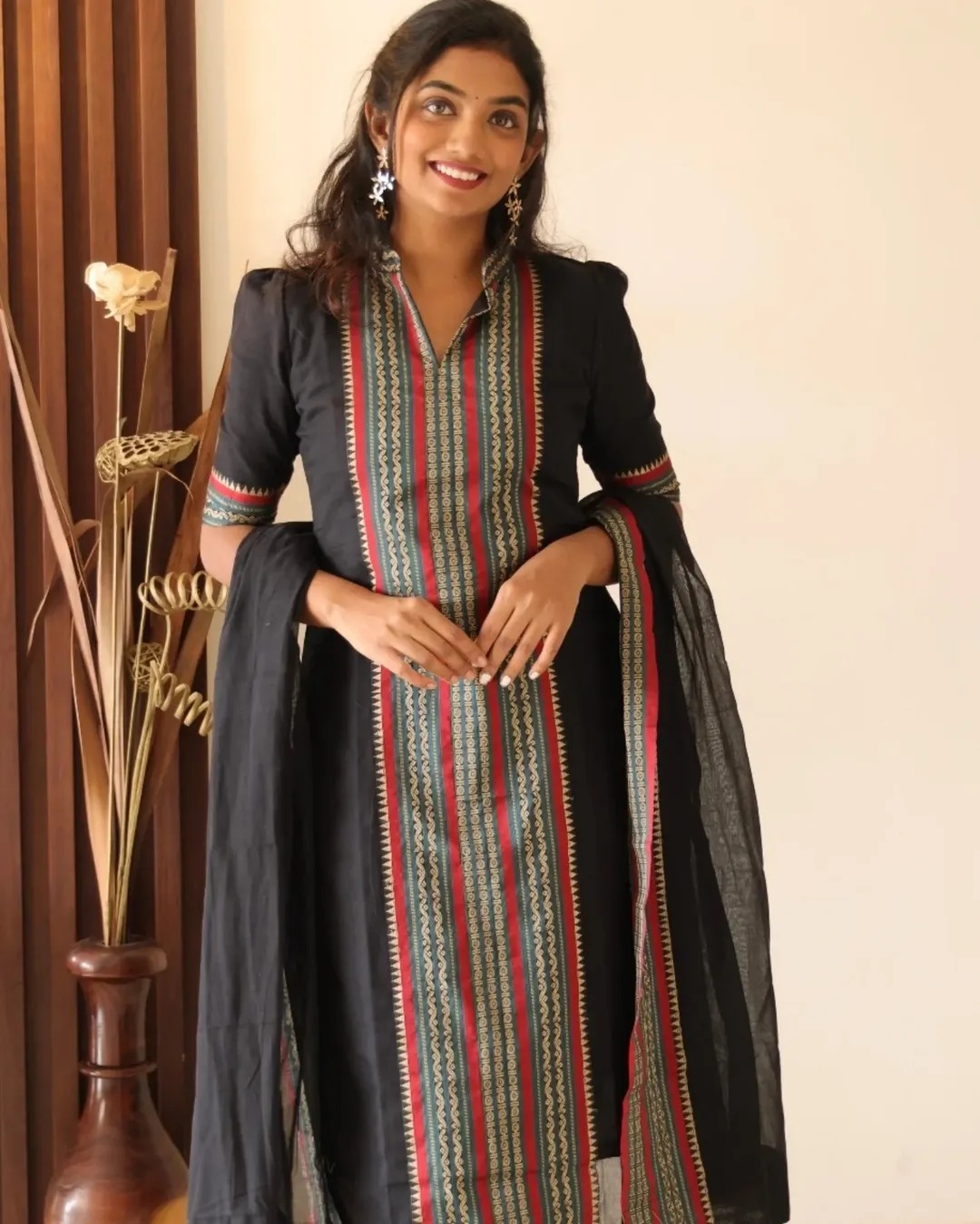
V-neck and split-neck kurtis
A shallow or medium V-neck is one of the most reliable choices for a broad shoulder line. A V that ends around the upper chest gives vertical direction without excessive exposure. A split neckline offers a similar effect and can look especially natural on cotton straight kurtas. For office wear, an opening of approximately 8 to 12 centimetres works well, depending on garment size and personal comfort.
A very deep V-neck isn't automatically more flattering. Excessive depth can shift attention to the bust and may require constant adjustment. A stitched modesty panel, a small inner camisole or a dupatta placed in a relaxed vertical fall can make a deeper neckline more practical.
U-neck, scoop and sweetheart shapes
A medium U-neck or scoop neck softens the shoulder line without creating a sharp central point. Rounded necklines suit women who prefer more coverage and work well with Chanderi, cotton and silk-blend kurta sets. A gently curved sweetheart neckline can add softness to festive outfits, provided the neckline isn't heavily bordered from shoulder to shoulder.
A wide boat neck usually emphasises the horizontal line across the collarbone. Women who enjoy boat necks can still wear them by choosing a narrower boat shape, a deeper centre or a design with vertical embroidery below the neckline. Broad, stiff neck borders and heavy shoulder-to-shoulder yokes are more likely to add visual width.
Collars, high necks and decorative necklines
A narrow mandarin collar can work for broad shoulders when the front opening continues vertically below the collar. A completely closed high neck may make the upper body look more compact, especially when the kurta has structured fabric and short sleeves. A collar with a V-shaped placket is usually more balancing than a thick round collar.
Neckline decoration should be assessed by direction as well as weight. A vertical embroidered panel, narrow zari border or pendant-like motif guides the eye downwards. Dense horizontal embroidery, large shoulder motifs and wide contrast piping can make the shoulder area appear broader.
Choosing Kurtis for Women With Broad Shoulders by Cut Length and Neckline: how does kurti length affect proportion?
Kurti length affects broad-shoulder proportions by controlling the vertical line from the upper body to the legs. Mid-thigh, knee-length and calf-length cuts can all work, but the hem should relate to the bottom silhouette and the wearer's height.
A mid-thigh kurti is useful with palazzo pants, cigarette pants or a softly gathered salwar because the shorter hem allows the lower garment to contribute volume. Women's Mustard Silk Blend Kurta Set with Dupatta illustrates why fabric movement matters: a fluid silk blend can keep a shorter or medium-length top from looking boxy, especially when the dupatta falls below the waist.
A knee-length straight kurta creates a dependable vertical column for everyday dressing. Black Kanchi Cotton Kurti Dupatta Set for Women can be styled with slim pants for a clean line or with a moderately wide trouser for more lower-body balance. Keep the hem free from very wide horizontal borders if the aim is maximum length.
A calf-length kurta works particularly well with narrow pants, churidar-style bottoms or straight trousers. A long straight silhouette should not be so tight that the fabric catches at the hips; a few centimetres of ease allow the garment to fall rather than cling. For shorter women, a calf-length kurta with a high side slit can preserve movement and prevent the outfit from looking visually heavy.
Check the hem position in relation to the widest part of the calf. A hem ending exactly at the widest point can shorten the leg line. Moving the hem slightly above or below that point often creates a cleaner proportion. Petite women may prefer a hem around the knee or just below the knee, while taller women can carry longer straight or Anarkali cuts with ease.
Choosing Kurtis for Women With Broad Shoulders by Cut Length and Neckline: which cuts work best?
Straight cuts, gentle A-line cuts, panelled Anarkalis and controlled asymmetrical hems are usually the most versatile kurta shapes for broad shoulders. Each cut balances the upper body differently and must be paired with an appropriate bottom width.
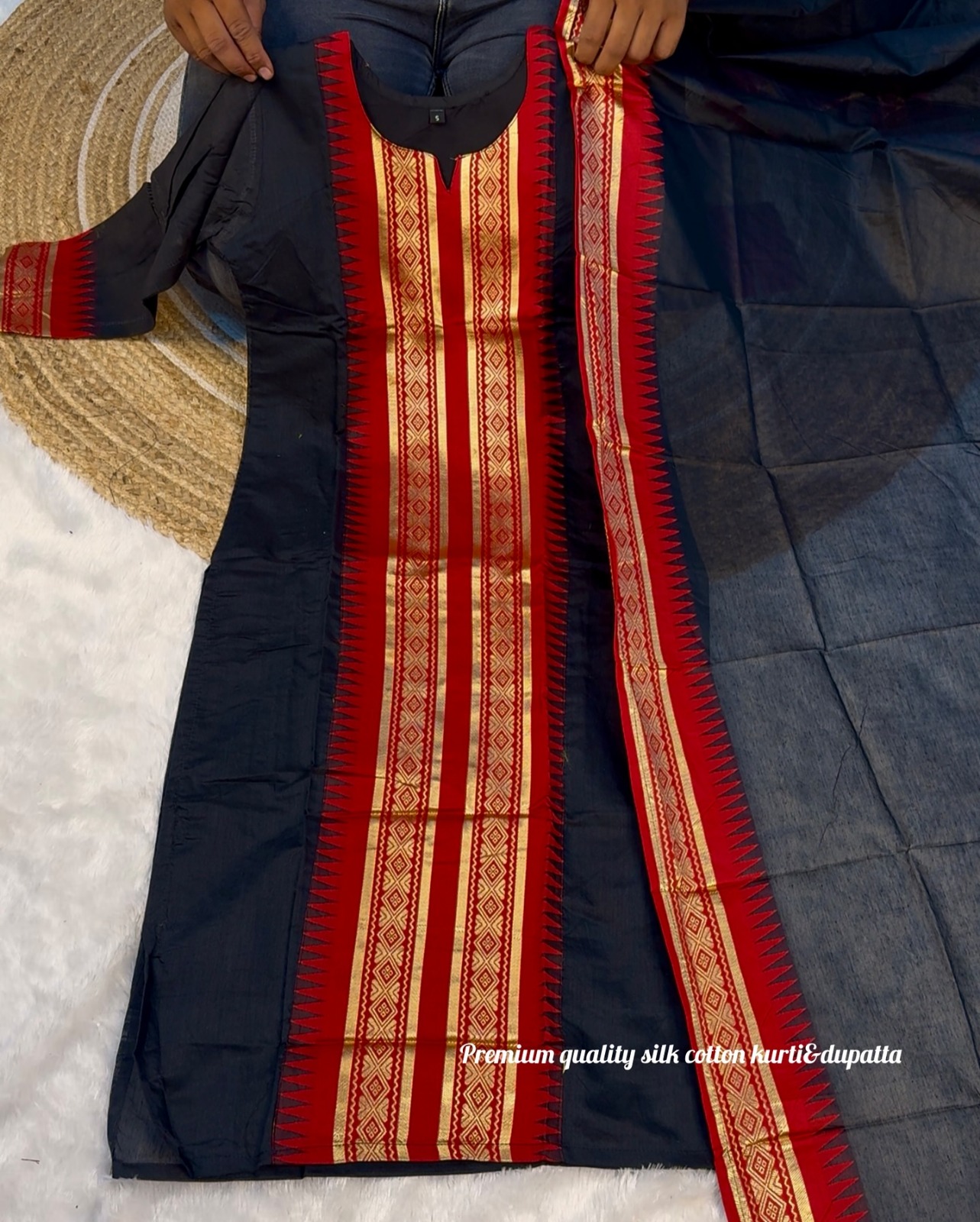
Straight kurtas
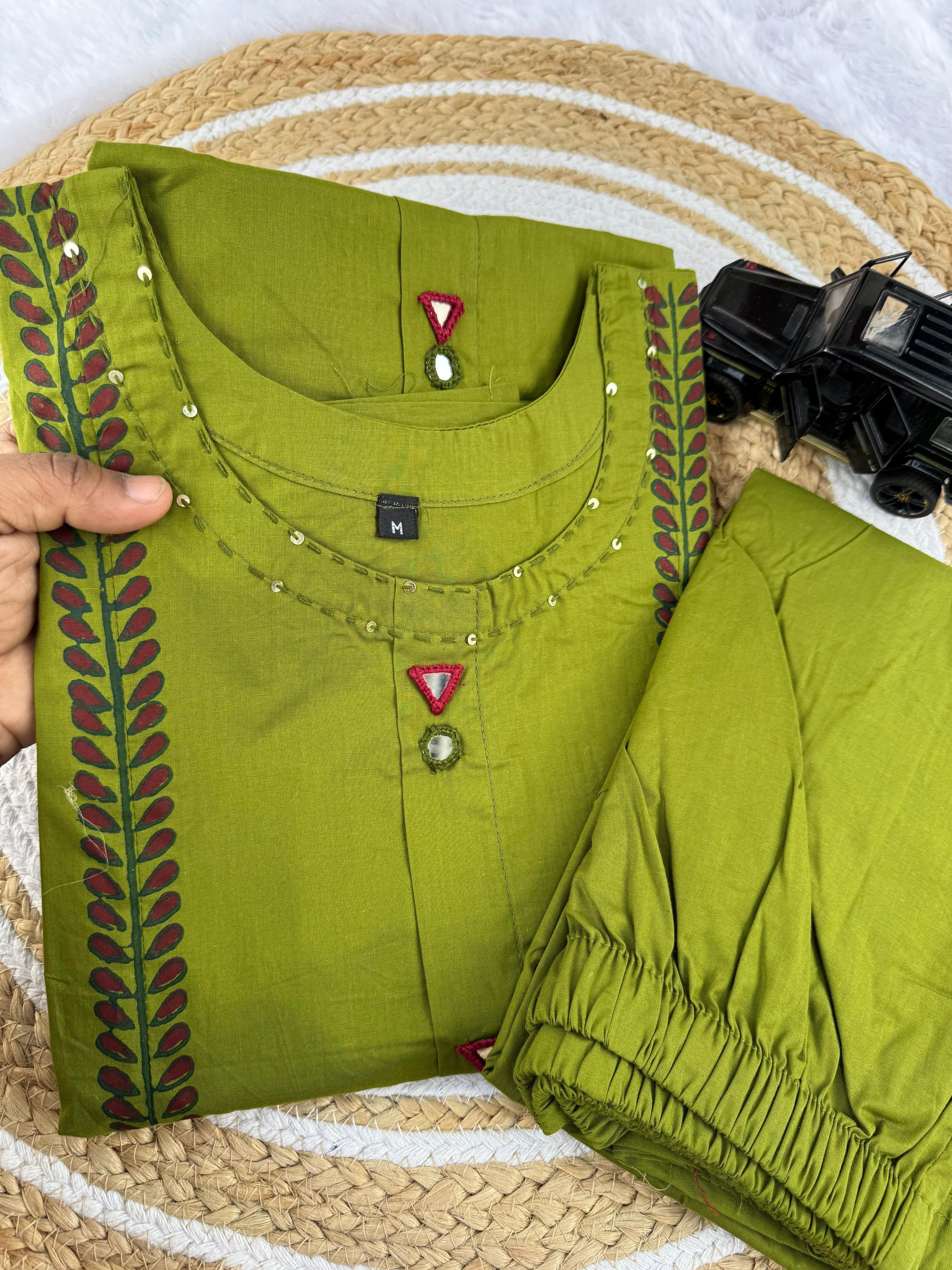
A straight kurta creates a long uninterrupted line from shoulder to hem. The shape works best when the shoulder area is clean, the neckline has some vertical opening and the side seams don't flare sharply at the bust. Rust Embroidered Cotton Straight Kurta Set with Dupatta shows how a straight cut can carry surface detail without needing extra volume around the shoulders.
Choose embroidery that begins below the collarbone or runs down the centre front. Side slits can improve walking comfort and stop a long kurta from looking restrictive. Straight kurtas pair well with cigarette pants, narrow palazzos and straight salwars when the goal is a streamlined silhouette.
A-line and panelled cuts
An A-line kurta adds measured volume from the bust or waist towards the hem, shifting visual weight downwards. A gentle flare is more adaptable than a dramatic flare for broad shoulders because the lower body gains balance without making the outfit look costume-like.
Panelled Anarkalis can be particularly effective when the seams run vertically. The number of panels is less important than the direction of the seams and the placement of gathers. Gathers that begin directly under the bust can add volume to the torso, while gathers beginning at the natural waist tend to give a clearer shape.
Asymmetrical and high-low hems
An asymmetrical hem can break a strong horizontal line and create movement below the shoulders. Choose a restrained diagonal or curved hem for everyday wear, especially when the kurta has embroidery. A highly contrasting high-low hem may draw attention to the lower garment, which can be useful when the pants have an attractive weave or border.
Choosing Kurtis for Women With Broad Shoulders by Cut Length and Neckline: how should sleeves be selected?
Sleeves should follow the arm without adding unnecessary width at the shoulder cap. Three-quarter sleeves, narrow full sleeves and softly tapered elbow-length sleeves usually provide balanced coverage, while puff sleeves and stiff cap sleeves can enlarge the upper outline.
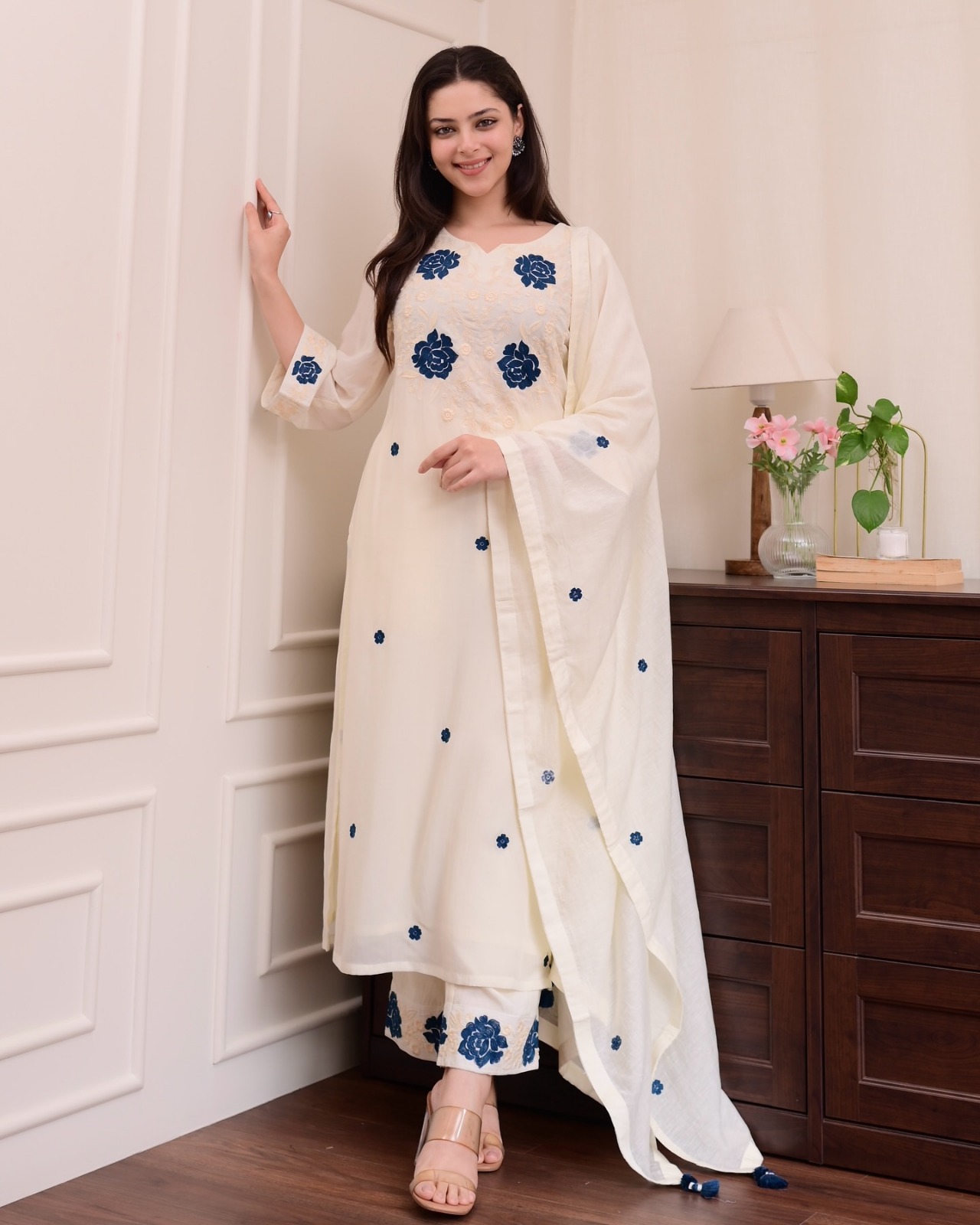
A sleeve ending at the widest part of the upper arm can attract attention to that point. Moving the sleeve hem a little above or below the widest area often produces a more deliberate finish. Three-quarter sleeves are practical with salwar suits because the visible forearm adds a small vertical break between the sleeve and the hand.
Shoulder embellishment needs careful proportion. Avoid heavy epaulettes, large horizontal appliqué, wide contrast bands and bulky ruffles if the aim is to reduce visual width. Vertical sleeve embroidery, narrow cuff borders and small motifs distributed below the shoulder are more balancing options.
Fabric weight also affects sleeve appearance. Kanjeevaram-inspired textiles, zari-woven cotton and heavier silk blends hold their shape, so a broad sleeve can appear more substantial. Lightweight cotton and Chanderi allow softer drape, but transparent or very fluid fabric may need lining at the armhole for a neat fit.
Choosing Kurtis for Women With Broad Shoulders by Cut Length and Neckline: how should dupattas and bottoms balance the kurta?
A dupatta balances broad shoulders most effectively when it creates a long, relaxed line rather than a thick horizontal band across the chest. A single-side drape, a narrow front fall or a loose vertical drape from one shoulder usually works better than wrapping the dupatta tightly around both shoulders.
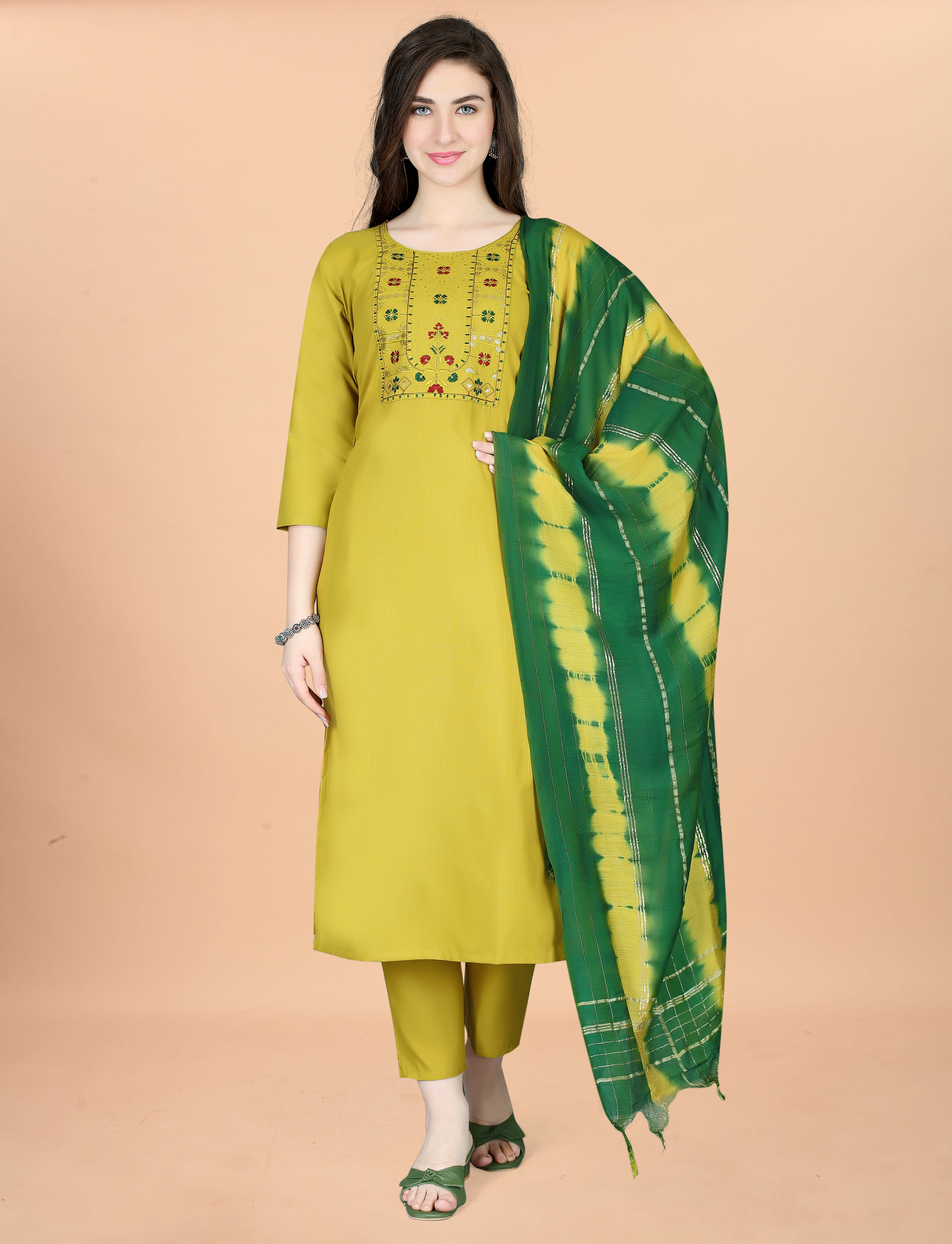
Place one end near the shoulder and let the longer section fall beside the torso. Avoid bunching fabric directly at the collarbone. A narrow pleat at the shoulder can keep the dupatta secure without creating a bulky stack. A Chanderi dupatta, for example, can provide length and sheen without the dense weight of multiple layers.
Bottom volume should respond to kurta length. Slim pants work well with long straight kurtas, while palazzos and fuller salwars can balance a shorter or fitted kurta. If both the kurta and trousers are very loose, the outfit may lose definition. If both are narrow, broad shoulders may become the dominant visual feature.
Traditional surface details can be balanced through placement. Kalamkari Print Salwar Suits (Copy) may use a strong all-over print, so a simple neckline and uncluttered shoulder help prevent visual overload. Maharashtra Paithani Inspired Salwar Suits can include rich borders or woven motifs; placing a dupatta vertically rather than horizontally keeps the border from forming a broad band across the chest. Gujarat Bandhej Salwar Suits can be balanced with a solid kurta panel or a neckline that gives the eye a clear centre.
Choosing Kurtis for Women With Broad Shoulders by Cut Length and Neckline: what should you check before buying?
Before buying, check shoulder fit, armhole comfort, neckline width, bust ease, hem position and the relationship between the kurta and bottom measurements. A flattering design can't compensate for fabric that pulls, rides up or restricts arm movement.
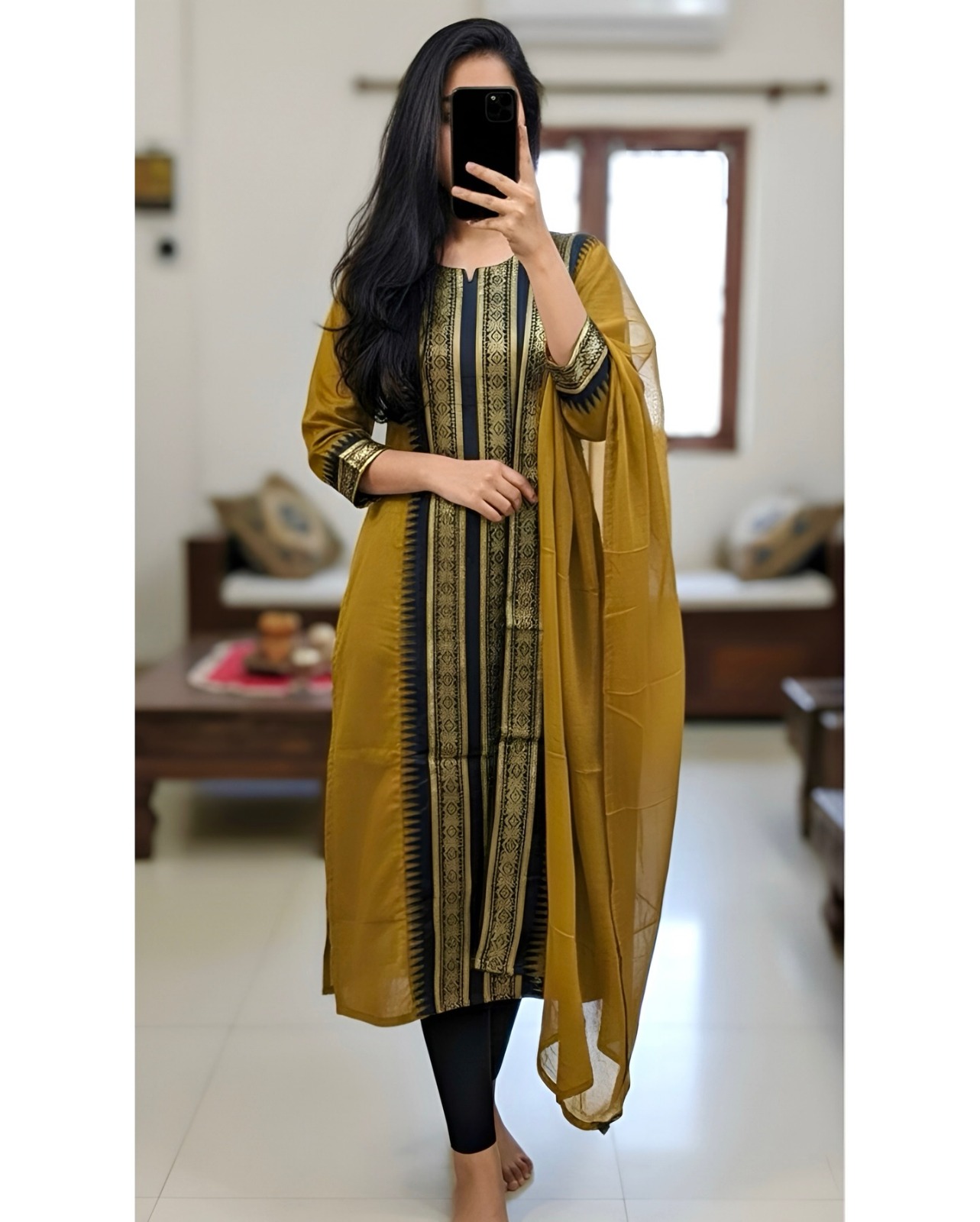
- Check the shoulder seam: The seam should sit near the natural shoulder edge unless the design intentionally uses a dropped or raglan construction.
- Raise both arms: The armhole should allow movement without lifting the entire kurta excessively or cutting into the underarm.
- Measure the neckline: A neckline that's too wide can expose bra straps or create a horizontal emphasis; a neckline that's too tight can make the upper body look compressed.
- Inspect the front length: The kurta should cover the bust and fall smoothly without a diagonal pull from the side seam.
- Assess the fabric: Cotton brings structure and breathability, Chanderi gives a lighter drape, and silk blend may add fluid movement with a dressier finish.
- Plan the complete set: Confirm whether the pants, salwar and dupatta repeat the same width or introduce enough variation to create balance.
Care instructions also affect long-term fit. Wash cotton kurtis according to the care label and avoid high heat, which can shrink natural fibres. Chanderi and silk-blend garments usually benefit from gentle handling, low-agitation washing or professional cleaning when the label requires it. Store zari away from moisture and direct sunlight, and fold embellished dupattas with soft tissue between heavy decorative areas.
Print traditions can guide styling without dictating body shape. Odisha Sambalpuri Salwar Suits may carry strong woven or patterned character, while Punjab Patiala Salwar Suits typically invite more lower-body volume through the Patiala silhouette. The useful question isn't whether a broad-shouldered woman can wear a particular tradition; the useful question is where the fabric, print and volume are placed within the complete outfit.
The most dependable formula is a moderate vertical or curved neckline, a shoulder area without unnecessary bulk, a hem suited to the wearer's height and a lower garment that supplies measured balance. Once those four decisions are right, colour, print, zari, embroidery and regional craft become styling choices rather than fit problems.
Common Questions About Kurti Lengths and Necklines for Broad Shoulders
Which neckline is best for women with broad shoulders?
A medium V-neck, split neck, narrow U-neck or modest keyhole neckline usually creates balance by directing the eye towards the centre of the torso. Avoid very wide boat necks and heavy horizontal borders if you do not want to emphasise shoulder width.
Is a straight kurta suitable for broad shoulders?
Yes, a straight kurta is suitable when the shoulder area is clean, the neckline has some vertical opening and the garment falls smoothly from the bust. Pair a long straight kurta with narrow or straight pants, or pair a shorter straight kurta with a moderately fuller bottom.
What kurti length is most flattering for broad shoulders?
Knee-length and calf-length kurtis are versatile because they extend the vertical line of the body. Mid-thigh kurtis can also work well with palazzos or fuller salwars, while the most flattering hem position depends on height, leg line and the volume of the bottom.
Should women with broad shoulders avoid puff sleeves?
Women with broad shoulders do not have to avoid every puff sleeve, but stiff or oversized puff sleeves can add width at the shoulder cap. Soft sleeves, three-quarter sleeves, tapered sleeves and raglan constructions usually create a cleaner outline.
How should a dupatta be draped over broad shoulders?
A single-side or relaxed vertical drape usually works best because it lengthens the torso without creating a thick band across the chest. Avoid tightly wrapping several layers around both shoulders, and place bulky embroidery away from the collarbone when possible.
Can women with broad shoulders wear Anarkali salwar suits?
Yes, panelled Anarkalis can balance broad shoulders when the seams run vertically and the flare begins at the waist or lower. Choose a moderate flare and avoid excessive gathers directly beneath the bust if you prefer a less voluminous torso.


