

Choosing Kurtis for Pear-Shaped Bodies by Cut Length and Neckline starts with one useful observation: a pear-shaped body usually has a narrower shoulder line, a defined waist and fuller hips or thighs. The aim isn't to hide the lower body; the aim is to distribute visual interest so the kurti, bottom and dupatta feel proportionate together. Hem placement, neckline width, sleeve detail and fabric weight can change how a salwar suit sits more than a fashionable print can.
A well-chosen kurti should also allow movement, sit smoothly over the fullest hip point and keep the eye moving vertically. Read the measurements of the garment rather than relying only on a size label, because two medium kurtis can have very different hip ease and hem shapes.
Why do cut length and neckline matter for a pear-shaped body?
Cut length and neckline matter because they control where attention gathers and where the body appears to widen. A neckline with moderate width can add presence near the shoulders, while a carefully placed hem can skim the hips instead of stopping at their broadest point.
For many pear-shaped women, the most reliable proportion is a kurti that finishes either a few centimetres above the widest part of the hip or below it, around mid-thigh or knee level. A hem that ends exactly across the fullest hip area can create a horizontal line there, especially when the fabric is stiff or the print is high contrast.
Necklines work in a similar way. A broad boat neck, open square neck, shallow V-neck or wide scoop neck can visually extend the upper body. A very small round neck doesn't create the same shoulder presence, although it can still work when the kurti has statement sleeves, embroidery at the yoke or a contrasting dupatta worn over one shoulder.
Balance doesn't require exaggerated volume on top. A moderately shaped kurti with one clear upper-body detail usually looks more polished than a heavily embellished neckline combined with a bulky sleeve, large dupatta and wide bottom.
Choosing Kurtis for Pear-Shaped Bodies by Cut Length and Neckline
Which kurti length works best?
A kurti ending below the widest hip point, usually at mid-thigh or near the knee, is the most versatile length for a pear-shaped body. A 76-86 centimetre kurti often works for many average-height adults, but the correct number depends on height, torso length and the rise of the trousers or palazzos.
A short kurti can work when the hem finishes above the fullest part of the hips and the bottom has a clean, non-clingy fall. A 60-68 centimetre kurti paired with straight pants can look crisp, particularly when the side slits begin high enough to prevent pulling. Avoid choosing a short length that ends directly at the widest point simply because the garment looks short and contemporary on a model.
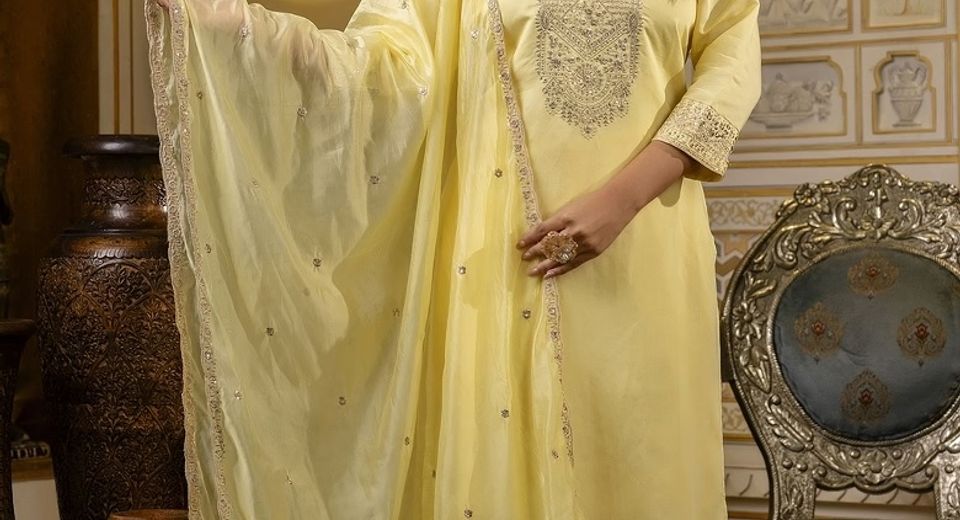
A knee-length kurti creates a long central line and generally gives more hip coverage. Straight kurtas, lightly flared A-line kurtis and side-slit styles are useful here. The Elegant Yellow Cotton Kurti Pant Dupatta Set demonstrates how a coordinated three-piece outfit can keep the body line continuous when the kurti and pants share a related colour family.
High-low hems can also be flattering because the front hem creates a vertical opening while the longer back offers coverage. The high point should not be so dramatic that the eyes stop at the hips. A gentle curve or small asymmetry is easier to style for daytime salwar suits.
Which necklines create better balance?
Open square, boat, shallow V and broad scoop necklines generally create the most visual balance for a pear-shaped body. These shapes expose a little more of the collarbone and make the upper frame appear more open without requiring deep cleavage.
A shallow V-neck is particularly useful with a long straight kurta because the neckline and centre seam form two vertical directions. A square neck works well with cotton and hand-printed fabrics, while a boat neck suits fabrics that hold their shape, such as a firm cotton blend or structured silk.
Mandarin collars and narrow round necks are not forbidden, but they need support from another upper-body feature. Look for contrast piping, a yoke print, shoulder pleats, three-quarter sleeves with a neat cuff or embroidery placed above the bust line. A crowded neckline and a wide collar can make the upper body look shorter rather than broader.
When buying online, check the actual neckline width and depth in the measurement chart. A photograph can make a 17-centimetre round neck appear generous because of camera angle, jewellery and dupatta placement.
Which kurti silhouettes and hems sit smoothly over fuller hips?
A lightly flared A-line, straight kurta with sufficient hip ease and gentle panelled silhouette usually sits most smoothly over fuller hips. The garment should skim rather than cling, with enough additional room to prevent diagonal drag lines from the side seams.
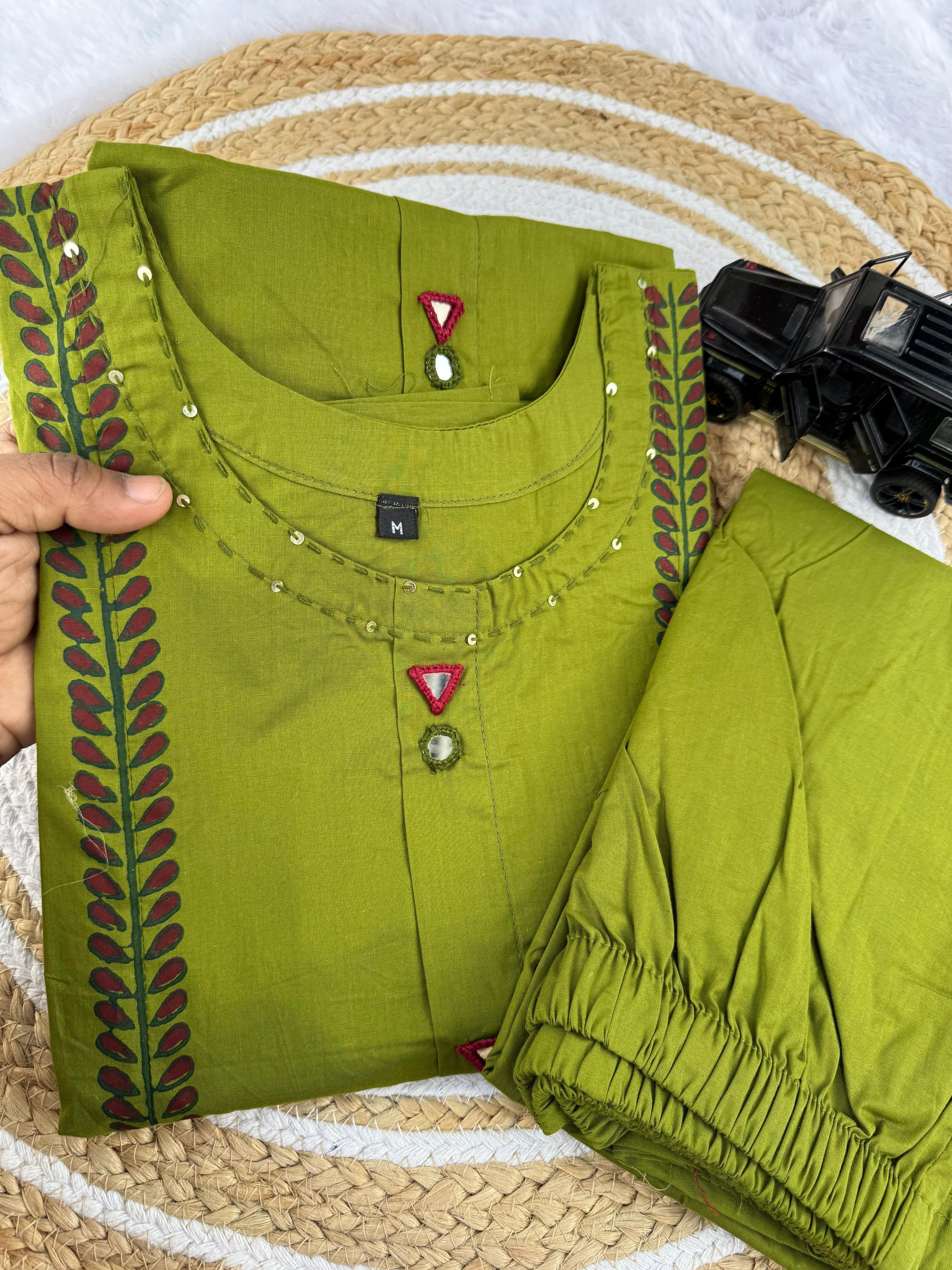
An A-line cut widens gradually from the bust or waist, so the fabric doesn't become tight at the hip before falling away. The Designer Cotton A-Line Kurti Pant Set with Mirror Work is a useful example of how a controlled flare can add shape without the volume of a full Anarkali.
A straight kurta can be equally effective when its finished hip measurement gives at least 8-12 centimetres of ease for comfortable sitting and walking. More ease may be preferable in non-stretch cotton. Side slits should open at a practical point, generally above the fullest hip curve, rather than beginning so low that the seam pulls when you walk.
Panelled kurtis distribute flare through vertical seams and can create a lengthening effect. Panels should lie flat; excess gathers beginning at the hip can add unnecessary bulk. A gently flared silhouette is different from a heavily gathered Anarkali, which may suit festive styling but can increase volume around the lower half.
Peplum hems, thick horizontal borders at hip level and stiff pockets positioned on the outer hip deserve more careful consideration. These details are not automatically unflattering, but they make the hip area a focal point. If you like them, balance the look with a wider neckline, brighter dupatta border or upper-body embroidery.
How should fabric, print and embroidery support the silhouette?
Medium-weight cotton, soft rayon and fluid silk blends usually support a pear-shaped silhouette because they fall close to the body without creating a rigid outline. Very thin fabric can cling at the hip, while very stiff fabric can stand away from the body and add width.
Cotton is practical for daily wear because it breathes and can hold a clean A-line or straight shape. The Peach Printed Cotton Kurti Pant Set for Women Casual suits a relaxed wardrobe where a small or medium print keeps the outfit visually active without depending on heavy embellishment.
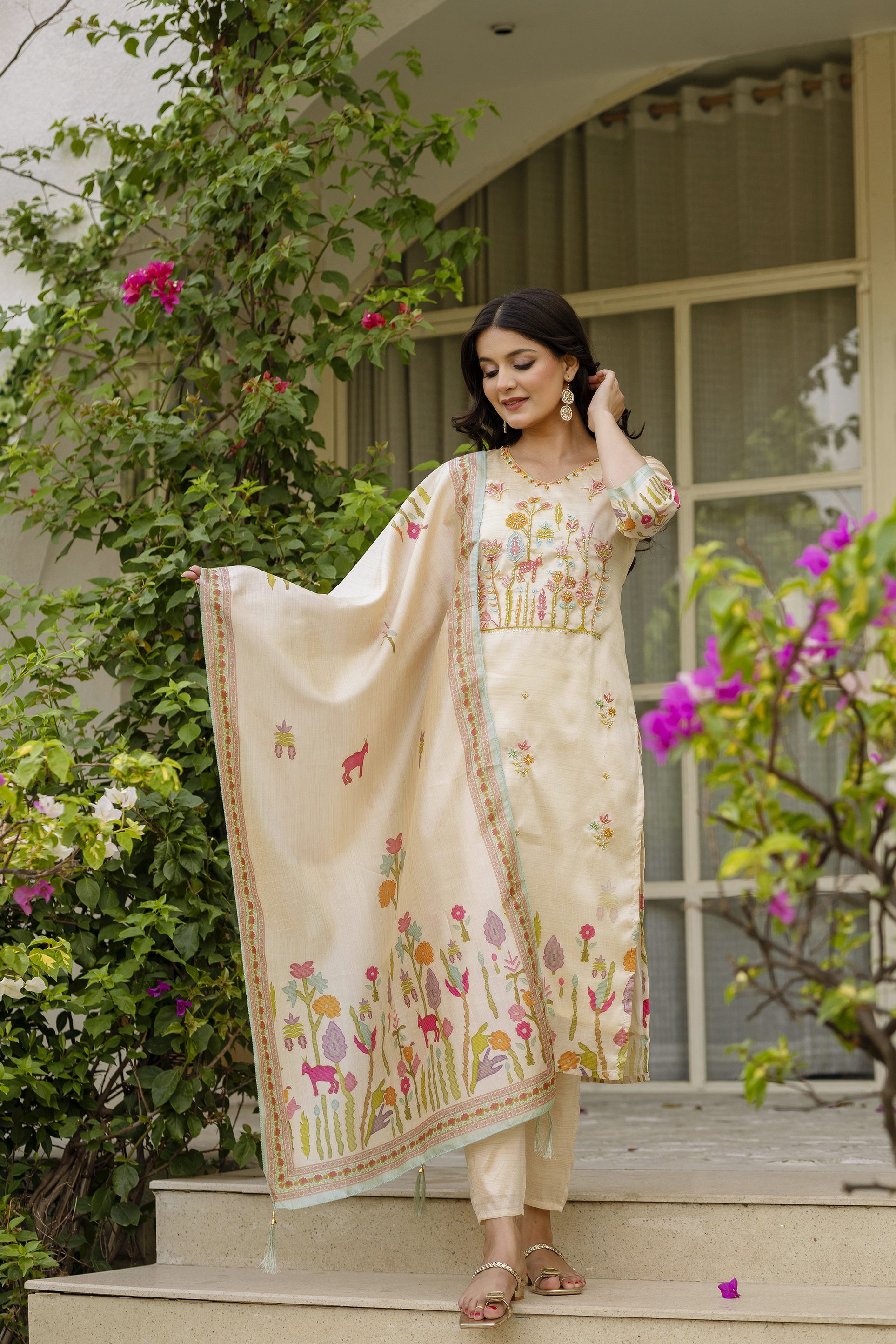
Rayon has a fluid drape, so it can be useful for straight kurtas when the garment isn't cut too close to the hips. The Navy Blue Embroidered Rayon Kurta Set with Chinon Dupatta and Beige Embroidered Rayon Kurta Set with Chinon Dupatta show how embroidery near the upper half and a flowing dupatta can draw attention upward while preserving a long line.
Vertical stripes, small scattered motifs and prints that become slightly larger toward the neckline can help direct the eye up and down. Large, high-contrast motifs concentrated across the hips create stronger horizontal emphasis. A darker bottom with a brighter kurti or dupatta can also create balance, but colour contrast is optional rather than a rule.
Embroidery placement often matters more than embroidery quantity. Neckline, shoulder, sleeve and yoke embroidery add interest above the waist. A heavy border exactly at the hip can broaden that line, whereas a border near the lower hem can frame the outfit without interrupting the hip area.
How should you choose pants, palazzos and dupattas with the kurti?
Straight pants, narrow palazzos with controlled volume and well-fitted cigarette pants usually pair most easily with a pear-shaped body. The bottom should skim the leg and fall cleanly from the hip without excessive fabric bunching at the upper thigh.
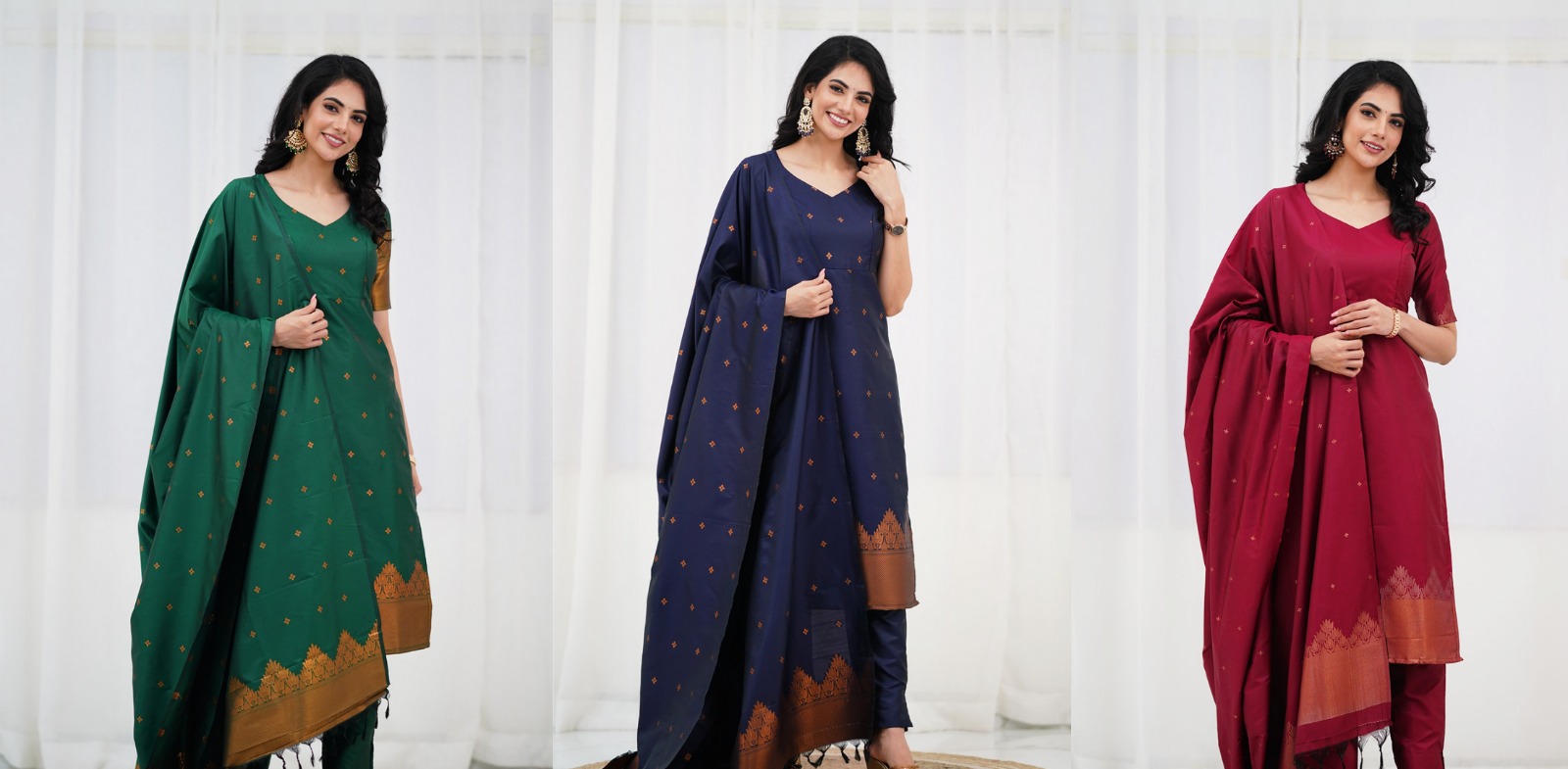
A palazzo can work beautifully when the kurti is relatively clean and the palazzo begins at the natural waist or sits smoothly over the hips. The Mustard Silk Embroidered Kurti Palazzo Dupatta Set uses the coordinated three-piece format to make a wide-leg bottom feel intentional rather than disconnected from the kurti.
Very clingy leggings can emphasise the difference between the hip and ankle, particularly under a short kurti. If leggings are your preference, choose a longer kurti, a substantial fabric and a dupatta that falls in a long vertical line instead of stopping at the hip.
A dupatta creates useful upper-body volume when worn over one shoulder, around the neck with both ends falling vertically or in a soft V across the chest. Avoid wrapping a thick dupatta tightly around the hips, because multiple folds can add bulk at the widest point. A lightweight Chinon dupatta or breathable cotton dupatta is easier to arrange without stiffness.
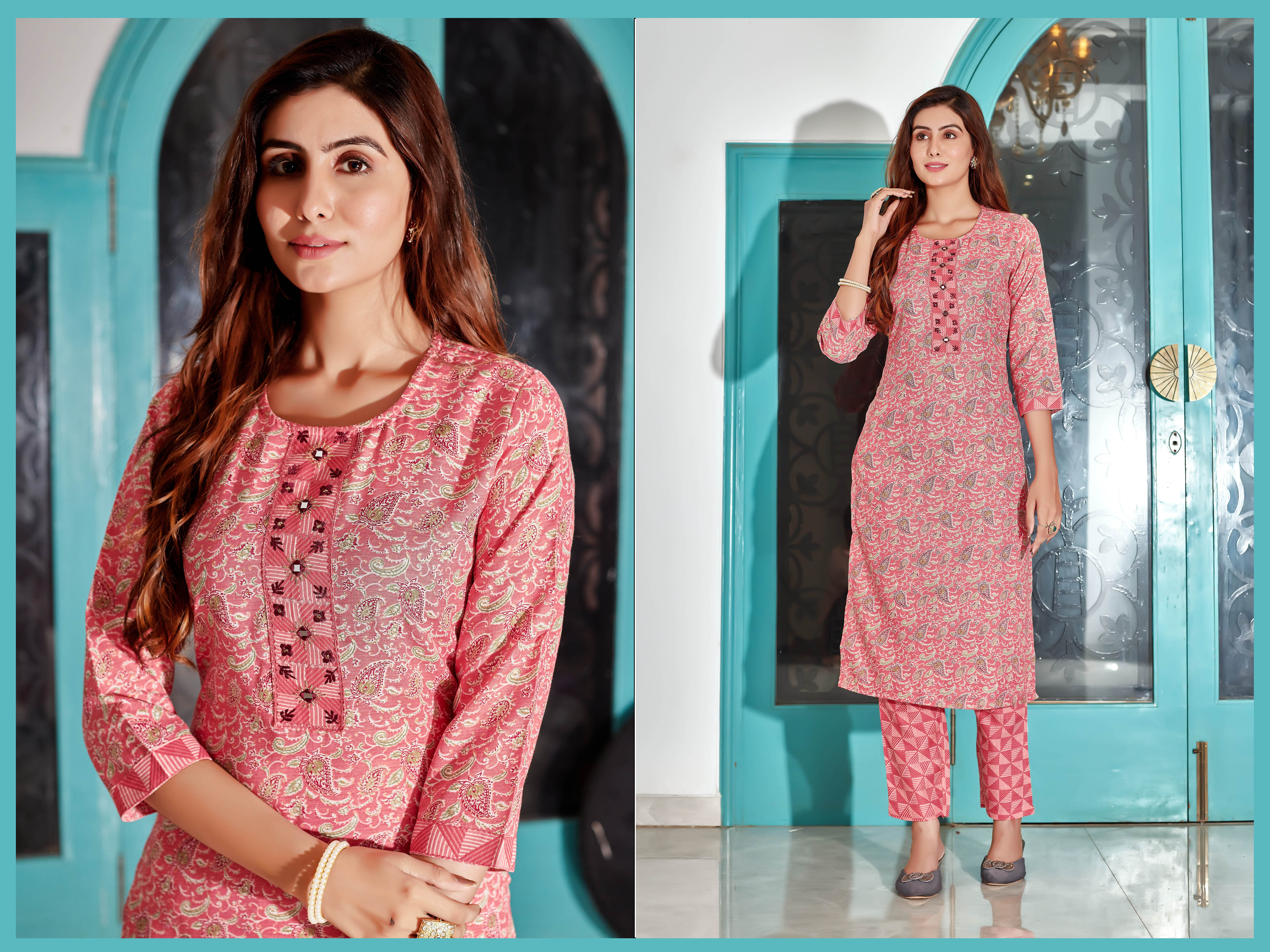
The Rust Embroidered Cotton Straight Kurta Set with Dupatta and Onion Pink Printed Kurti Pant Dupatta Set illustrate two practical styling directions: a straight cotton shape with a defined dupatta. A printed kurti-pant combination where the third piece can be positioned to lengthen the front.
How can regional prints and festive details be styled without adding bulk?
Regional prints and festive details look balanced when the kurti carries the strongest pattern or embellishment while the bottom remains comparatively quiet. A coordinated palette makes a three-piece salwar suit appear longer, even when the kurti has a decorative yoke or border.
Kalamkari Print Salwar Suits often provide a strong all-over print, so pair a busy Kalamkari kurti with a plain or subtly textured bottom when possible. Keep jewellery near the face-such as earrings or a short necklace-if you want the upper half to receive more attention.
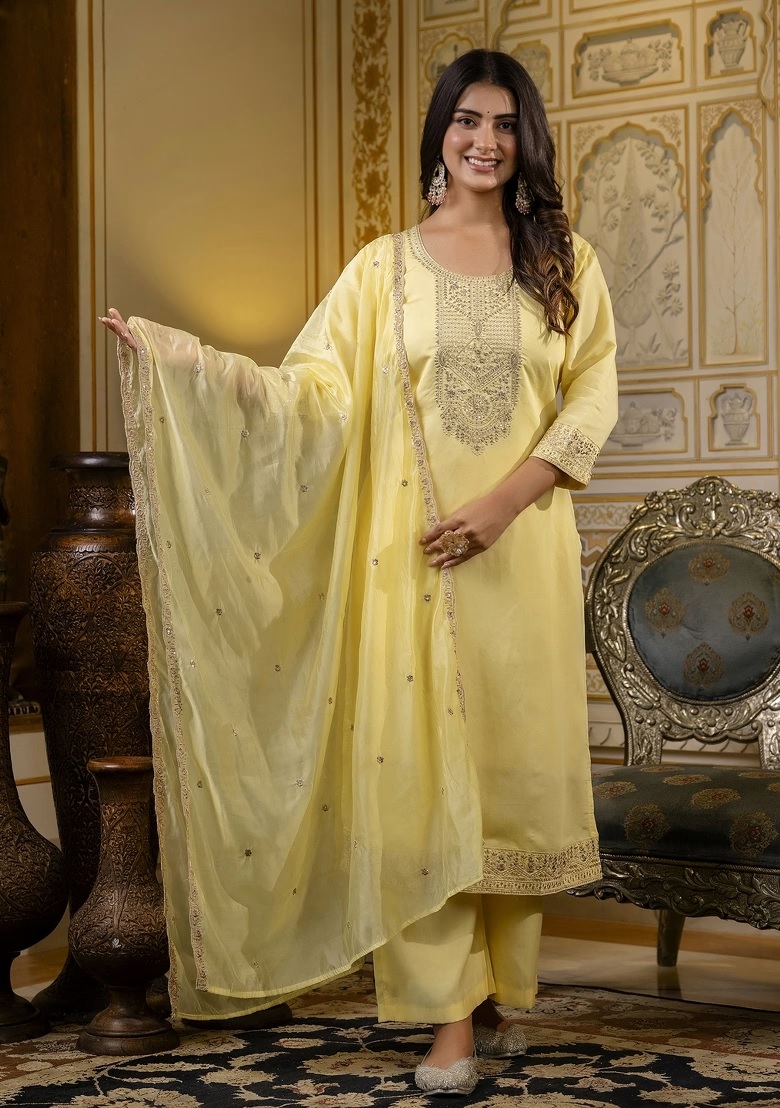
Maharashtra Paithani Inspired Salwar Suits can include rich colour contrasts and woven-looking motifs. Use the border strategically: a vertical or lower-hem placement generally keeps the eye moving, while a broad horizontal band across the hip creates a stronger stopping point.
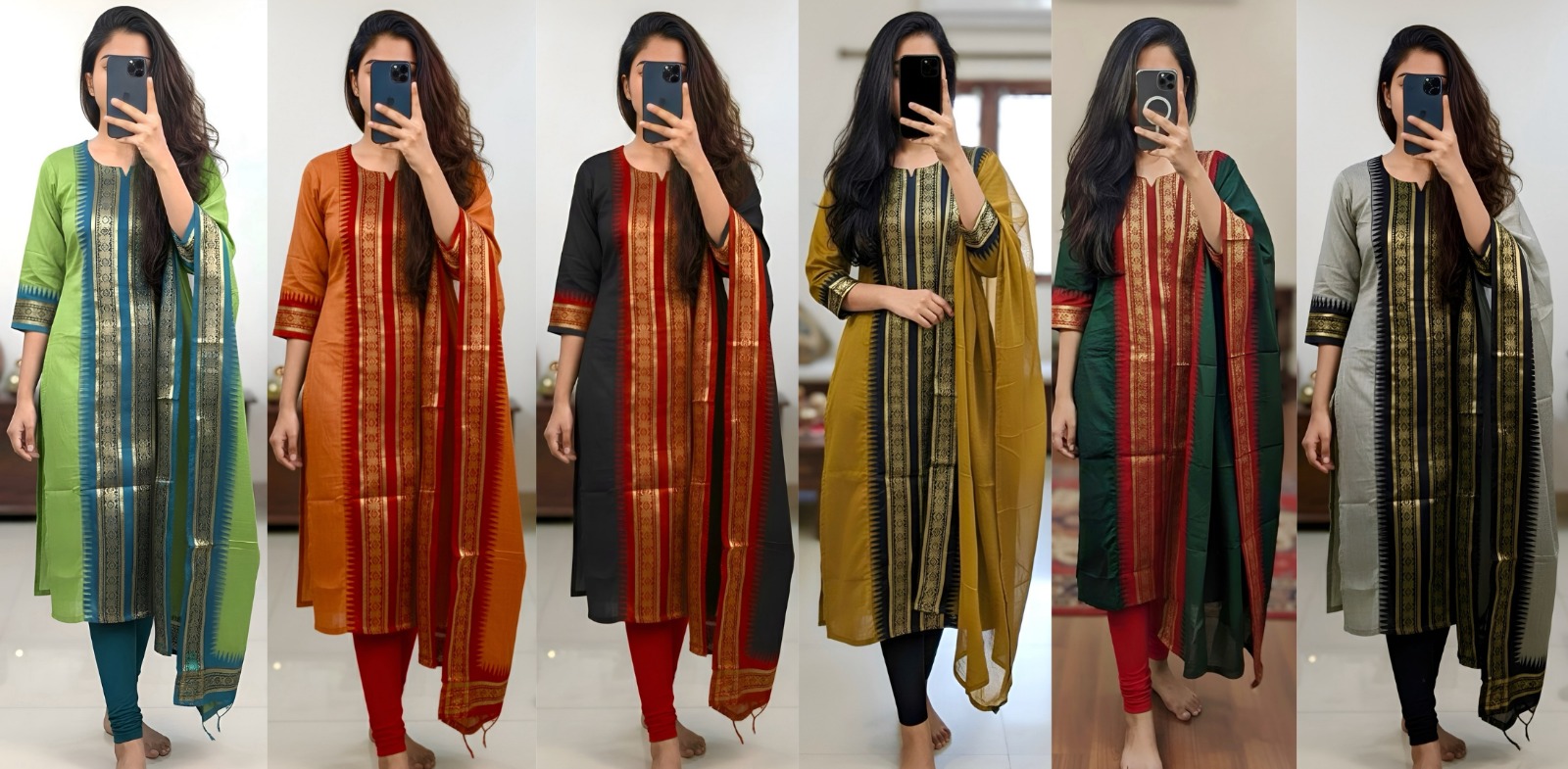
Gujarat Bandhej Salwar Suits and Odisha Sambalpuri Salwar Suits bring distinctive pattern languages to ethnic wear. Bandhej dots can remain lively without adding physical volume, while Sambalpuri-inspired borders may need thoughtful placement. Select a neckline that's comparatively open when the fabric or dupatta has a dense pattern.
Punjab Patiala Salwar Suits traditionally use a fuller lower garment, so balance depends on the upper kurti length and the distribution of gathers. A longer, straighter kurti with a defined neckline can make Patiala volume look deliberate, while a very short kurti and heavily gathered Patiala may widen the lower half visually.
What should you check before ordering a kurti online?
Check bust, waist, hip, kurti length, shoulder width and sleeve length before ordering a kurti online. Hip measurement is especially important for a pear-shaped body because a garment that fits the bust can still pull at the side seams.
- Measure over the clothing you normally wear. Keep the tape level around the fullest hip and record the number without pulling it tight.
- Compare finished garment measurements. A size chart may show body measurements, garment measurements or both; identify which one you're reading.
- Allow movement ease. Cotton and non-stretch rayon need practical room for sitting, climbing stairs and raising the arms.
- Locate the hem on your body. Use the listed kurti length and your shoulder-to-knee measurement to predict whether the hem will stop at the hip, mid-thigh or knee.
- Inspect neckline construction. Look for lining, facing, hooks or a functional opening if you prefer a wider neckline that still sits securely.
- Consider shrinkage and care. Pre-washed cotton is more predictable, but washing instructions still matter; avoid hot water and harsh drying unless the label permits them.
Fit changes with posture, so a useful online check is to read customer photographs for pulling across the hip, gaping at the neckline and sleeve tightness. A straight kurta that looks relaxed in a front photograph may be narrow at the back hip, especially when the fabric has no stretch.
Simple outfit formulas for everyday and festive wear
A knee-length A-line cotton kurti with straight pants, a moderately open neckline and a dupatta worn over one shoulder is a dependable daytime formula. Add flat juttis or sandals and keep the lower half free from extra horizontal borders.
For office-friendly ethnic wear, choose a straight rayon kurta with a shallow V-neck, slim straight pants and a lightweight dupatta. Keep embroidery concentrated at the neckline or sleeve cuff, and select medium-scale prints that remain clear from a conversational distance.
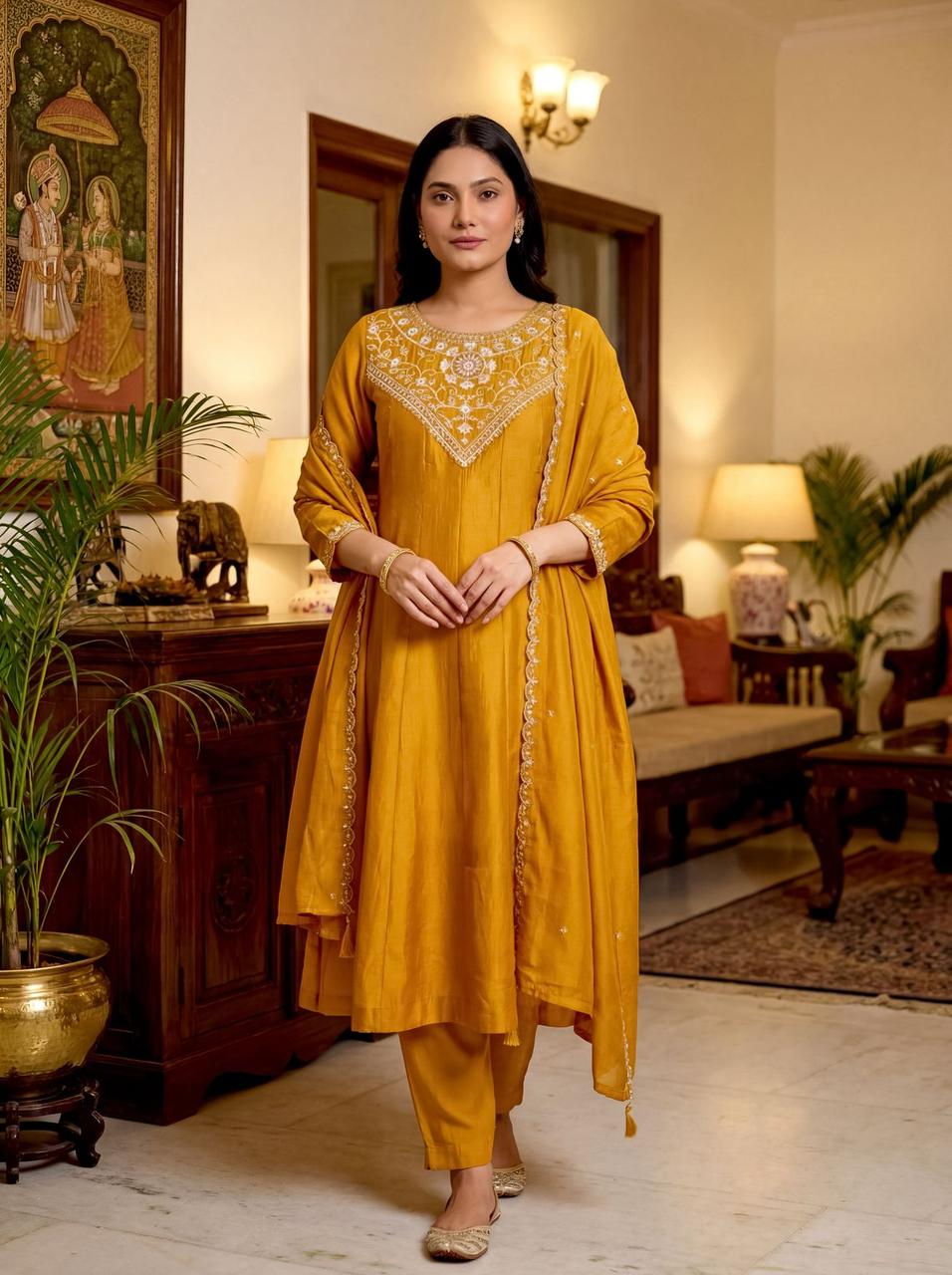
For a festive gathering, a silk or silk-blend kurti with a square or boat neckline can support zari, mirror work or embroidered detailing near the yoke. Pair a fuller palazzo with a kurti that ends below the fullest hip point, and let the dupatta fall in one long panel rather than bunching it at the waist.
Choosing Kurtis for Pear-Shaped Bodies by Cut Length and Neckline is ultimately a measurement and proportion exercise. Begin with the hem position, verify hip ease, choose a neckline that opens the upper frame and then add print, embroidery and regional character according to personal taste.
Common Questions About Choosing Kurtis for Pear-Shaped Bodies
What is the best kurti length for a pear-shaped body?
A kurti that finishes at mid-thigh or near the knee usually works best because it skims past the widest hip point. A shorter kurti can also work when the hem ends clearly above that point and the fabric does not cling.
Which neckline is most flattering for a pear-shaped body?
Boat, shallow V, square and broad scoop necklines generally create balance by opening the upper frame. Narrow round or mandarin necklines can work when embroidery, sleeves or a contrasting yoke adds interest near the shoulders.
Are A-line kurtis suitable for pear-shaped women?
A-line kurtis are suitable because the gradual flare gives the hips room without adding gathers directly across them. Choose a controlled flare with flat seams rather than a heavily gathered style if you prefer a streamlined look.
Can pear-shaped women wear palazzo pants with kurtis?
Pear-shaped women can wear palazzo pants when the palazzo falls smoothly from the waist and the kurti provides enough hip coverage. A relatively clean kurti and a vertically draped dupatta prevent wide-leg volume from overwhelming the outfit.
Should a pear-shaped body wear dark colours on the bottom?
Dark bottoms can create a quieter visual base, but they are not required for a flattering salwar suit. Matching or low-contrast colours, vertical prints and upper-body embroidery can create balance without relying on a dark colour rule.
How much hip ease should a straight kurta have?
A straight kurta commonly needs around 8-12 centimetres of additional hip ease for comfortable movement, with more room useful in non-stretch cotton. Always compare the garment chart with your own hip measurement and consider whether you will sit and move in the outfit for long periods.


