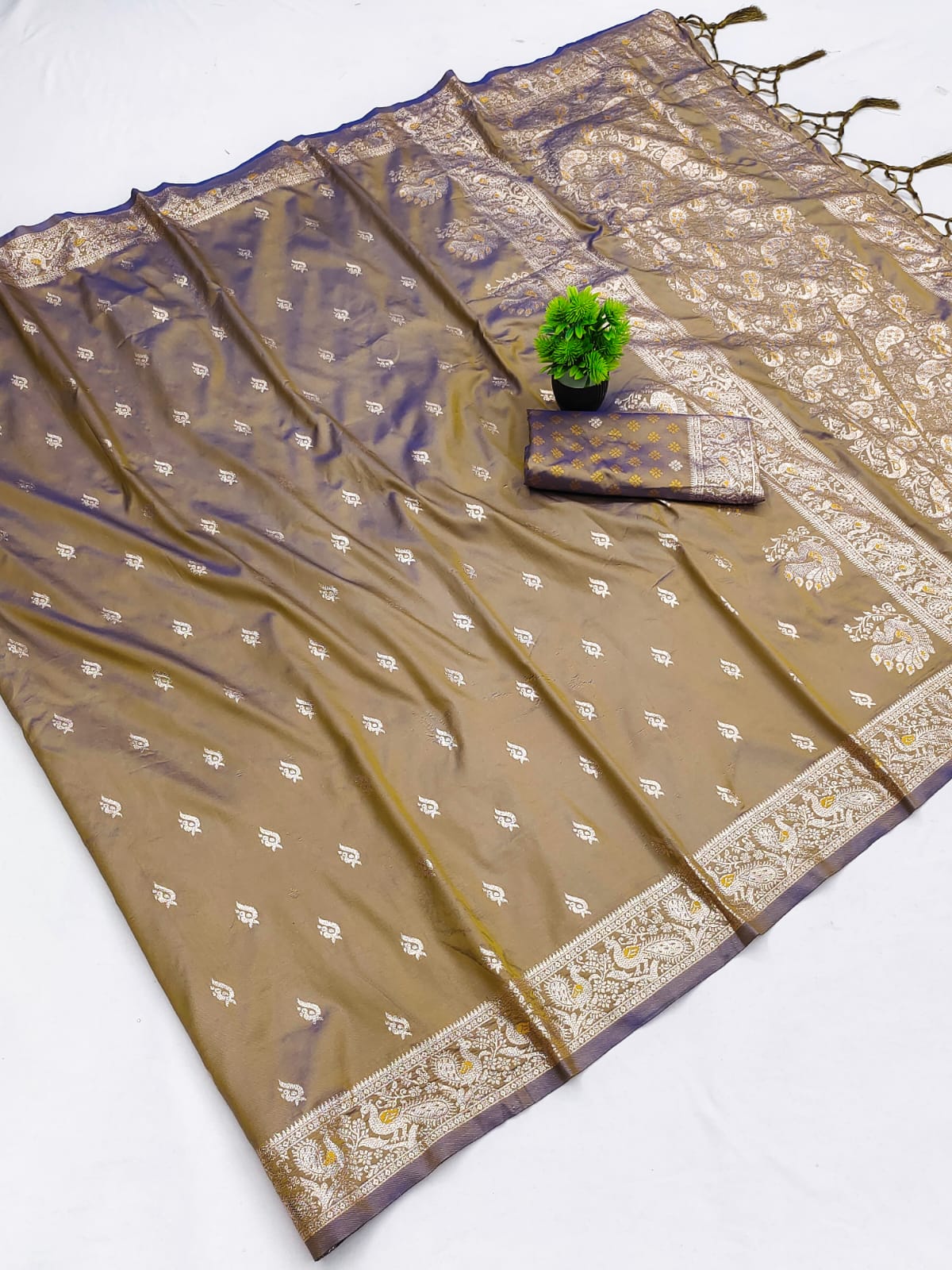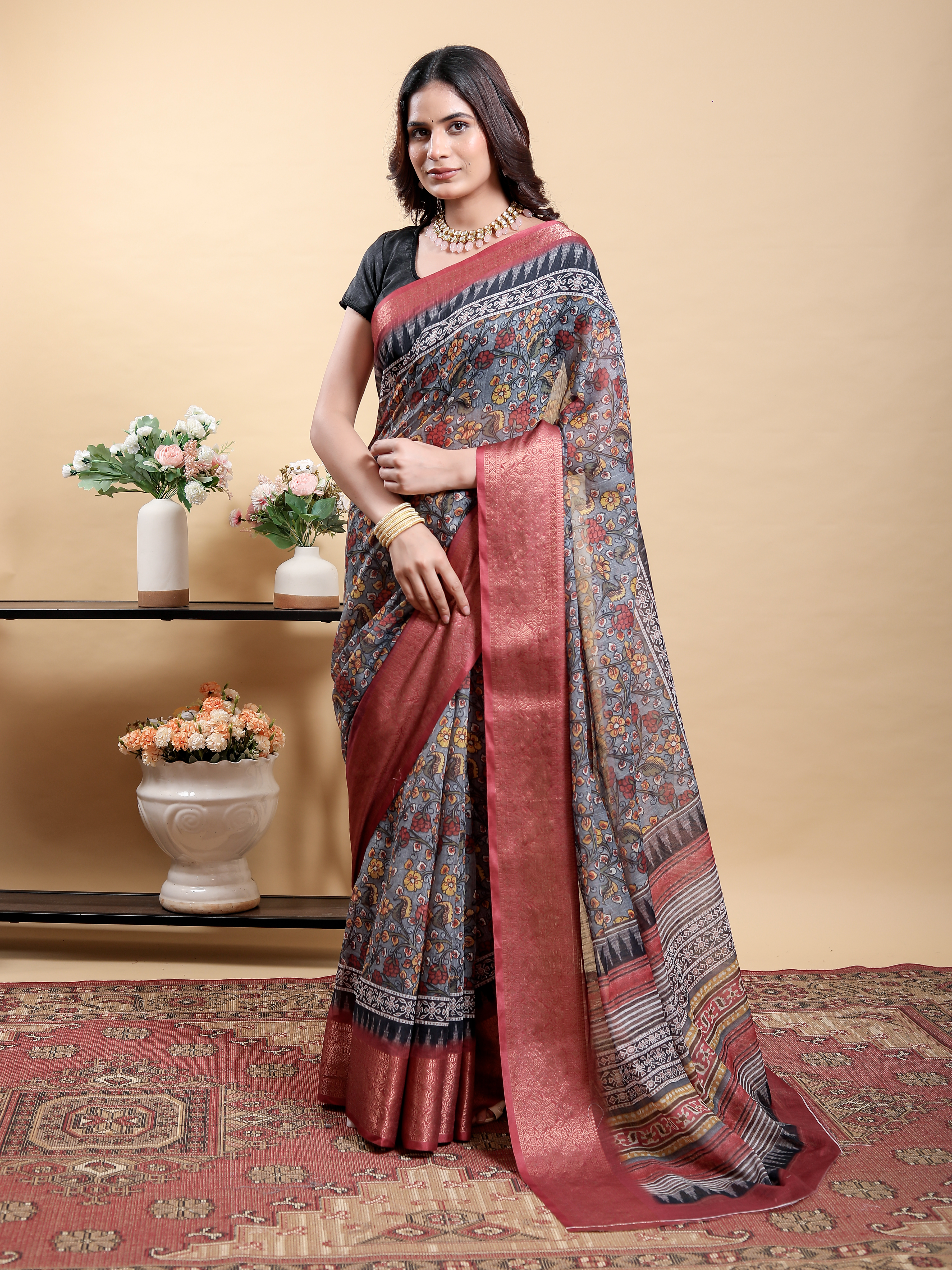
A saree with peacock pallu work, dense zari, floral jaals or a geometric border already carries a strong visual rhythm. Choosing Jewellery for a Bridal Saree With Strong Motifs therefore depends less on adding the maximum number of ornaments and more on controlling scale, colour and placement. The right jewellery should frame the bride's face, echo the saree's craft and leave enough breathing room for the motifs to remain visible.
An useful starting rule is to identify the saree's dominant feature before selecting a necklace set. A broad gold border, an elaborate pallu, a contrasting floral field and an ornate blouse each demand a slightly different jewellery strategy. Once the visual priority is clear, the rest of the styling becomes more precise.
Why Strong Saree Motifs Change Bridal Jewellery Choices
Strong motifs change bridal jewellery choices because the saree already supplies pattern, contrast and visual weight. Jewellery that repeats every visible detail can make the outfit appear crowded, while jewellery with no connection to the saree can look disconnected in photographs.
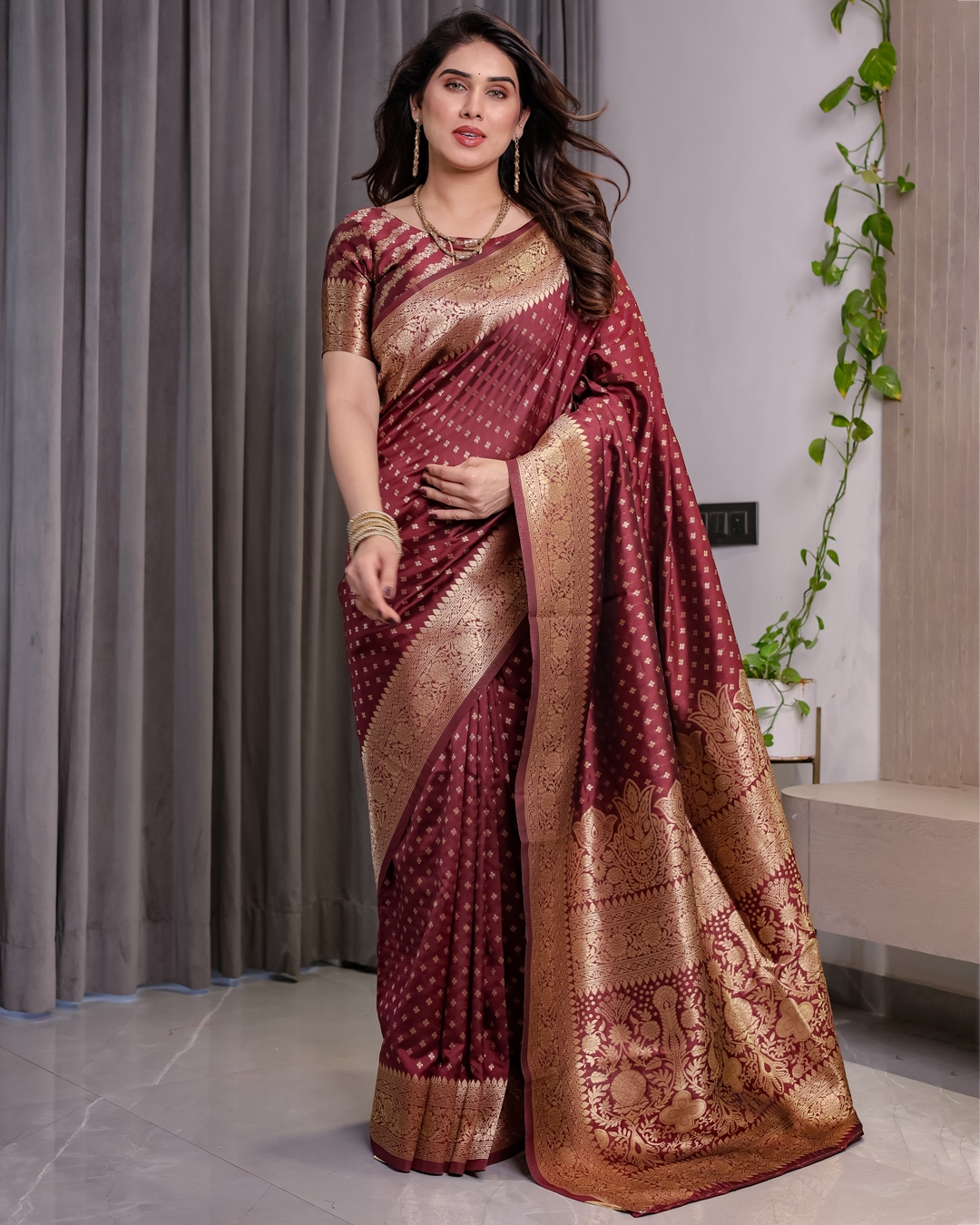
Banarasi silk provides an useful example. Gold zari butis, jaal patterns or a decorative pallu create small points of shine across the drape. A heavy necklace with a large number of closely packed stones may compete with those points, especially around the chest and shoulder. A simpler broad haar, a structured choker or one long necklace can create definition without hiding the weave.
Motif direction matters as well. Vertical floral vines usually benefit from elongated earrings or a long pendant because the jewellery follows the saree's movement. Circular butis and compact geometric motifs can work with rounded kundan, polki or temple-style pieces that repeat the saree's sense of proportion. A large figurative pallu, such as birds, animals or architectural elements, generally deserves visual space rather than a second statement element near the waist.
Consider the viewing distance before finalising the set. Fine pearls and tiny stonework may disappear in a dim wedding hall, while extremely oversized pieces can dominate close-up portraits. Bridal jewellery should be legible from approximately two to three metres but still sit comfortably during several hours of wearing.
Choosing Jewellery for a Bridal Saree With Strong Motifs by Saree Colour
The saree's base colour should guide the jewellery's metal temperature and stone contrast. Warm reds, maroons, mustards and deep greens usually support yellow gold, antique gold and warm kundan, while cooler turquoise, navy and silver-accented sarees can accommodate white gold, silver-toned settings or restrained yellow-gold contrast.
Maroon, red and mustard sarees
Yellow gold is the most forgiving choice for maroon and red bridal sarees because gold zari and warm silk undertones form a continuous colour story. A Maroon Banarasi Soft Silk Saree with Golden Zari Border can take a traditional gold choker with a modest pendant rather than a necklace covered in multicoloured stones. The same principle applies to the Maroon Banarasi Soft Silk Saree With Golden Zari Border; check the exact border width and pallu density before choosing a second necklace.
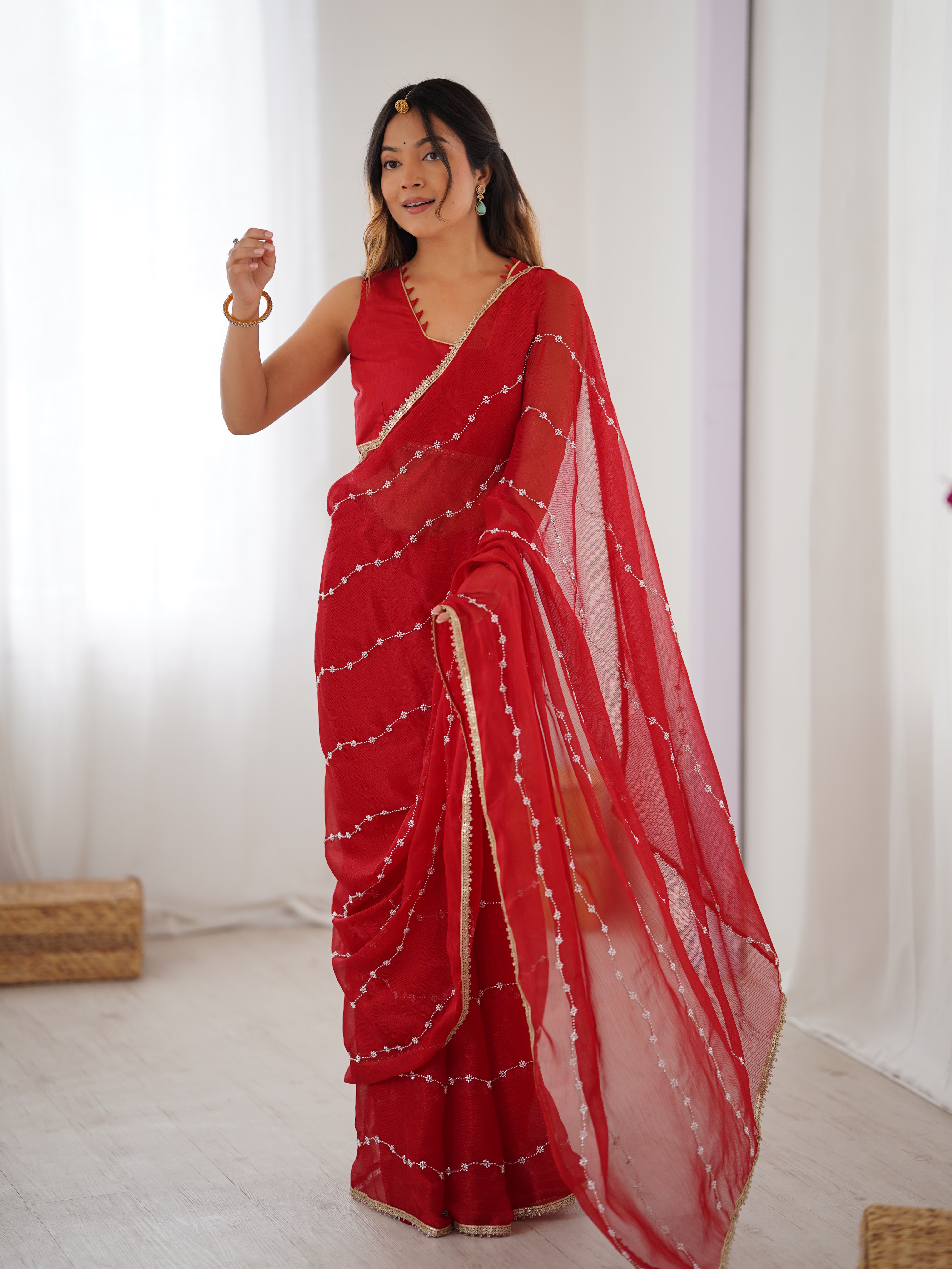
Royal red works well with uncut diamonds, kundan, ruby accents and temple-inspired gold. Royal Red Silk Saree with Golden Zari Heritage Weave, for example, has enough heritage character to support a broad waist belt or jhumkas, but adding a very ornate necklace, layered rani haar and elaborate blouse embroidery may remove the contrast that makes the weave visible.
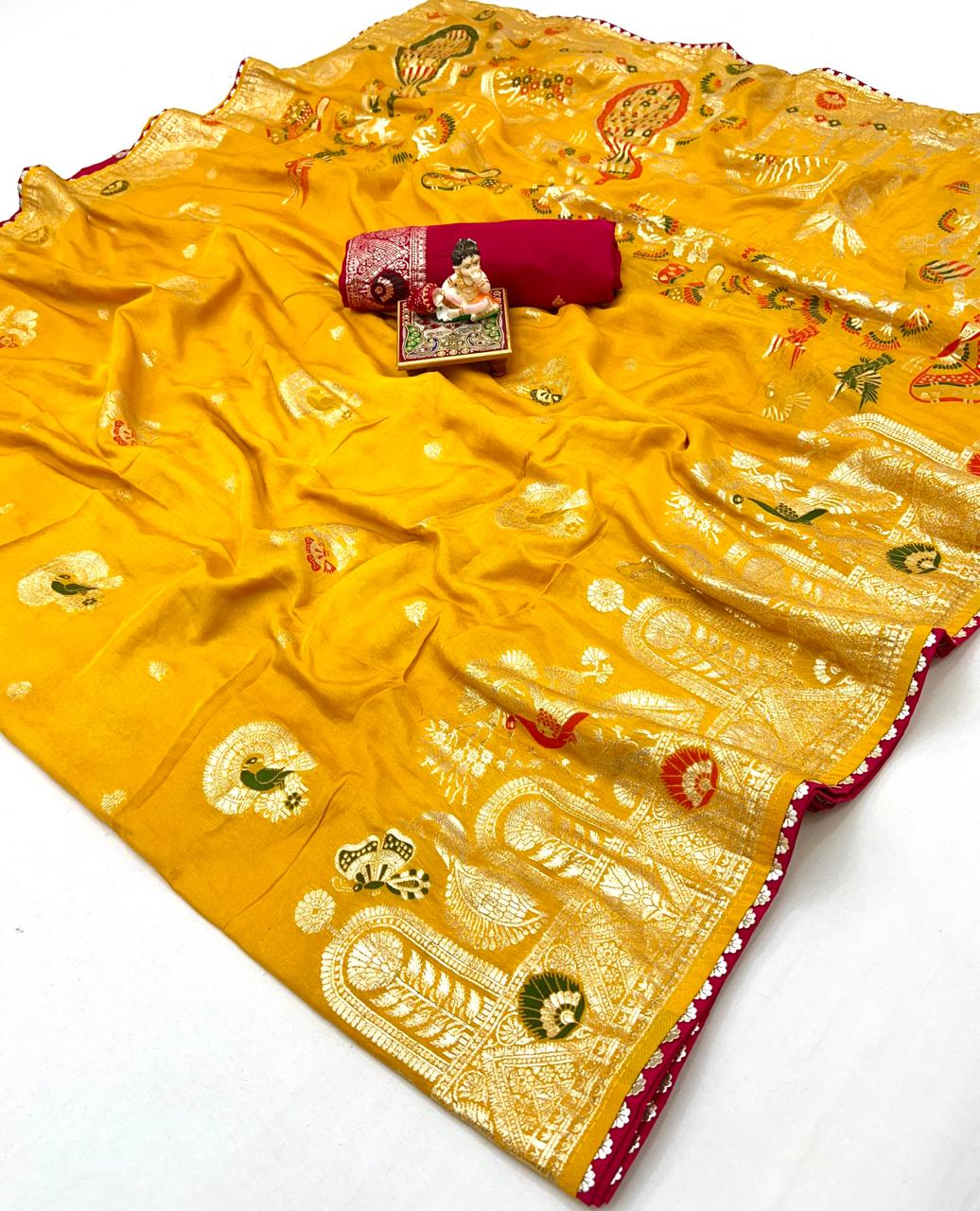
Mustard yellow can be styled with antique gold, emerald accents or uncut stones. Heritage Mustard Jacquard Silk Saree already has a textured surface, so a necklace with a clear outline is more effective than a highly delicate chain that vanishes against the jacquard pattern.
Green, blue and turquoise sarees
Emerald green sarees pair naturally with gold, ruby, pearl and uncut stone jewellery. Emerald Green Banarasi Silk Saree with Peacock Deer Pallu deserves particular attention at the pallu: peacock and deer imagery creates a focal point, so the necklace should remain ordered and the earrings can provide the stronger vertical accent.
Navy blue benefits from contrast because dark silk absorbs some light in evening photographs. Navy Blue Banarasi Silk Saree With Gold Jacquard Work can be matched with yellow gold and antique gold, while ivory pearls or green stones can soften the contrast. Keep the necklace outline visible against the blouse; a dark blouse and dark necklace stones together may flatten the upper half of the outfit.
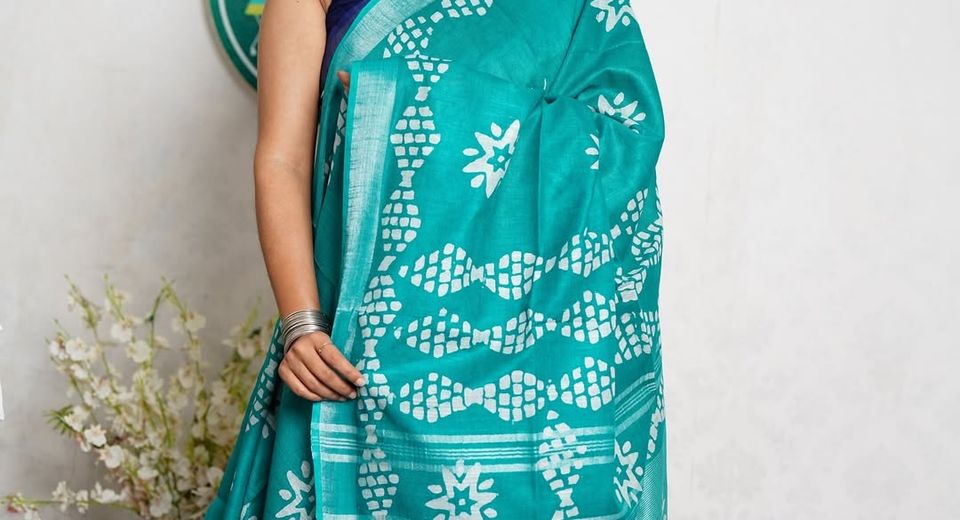
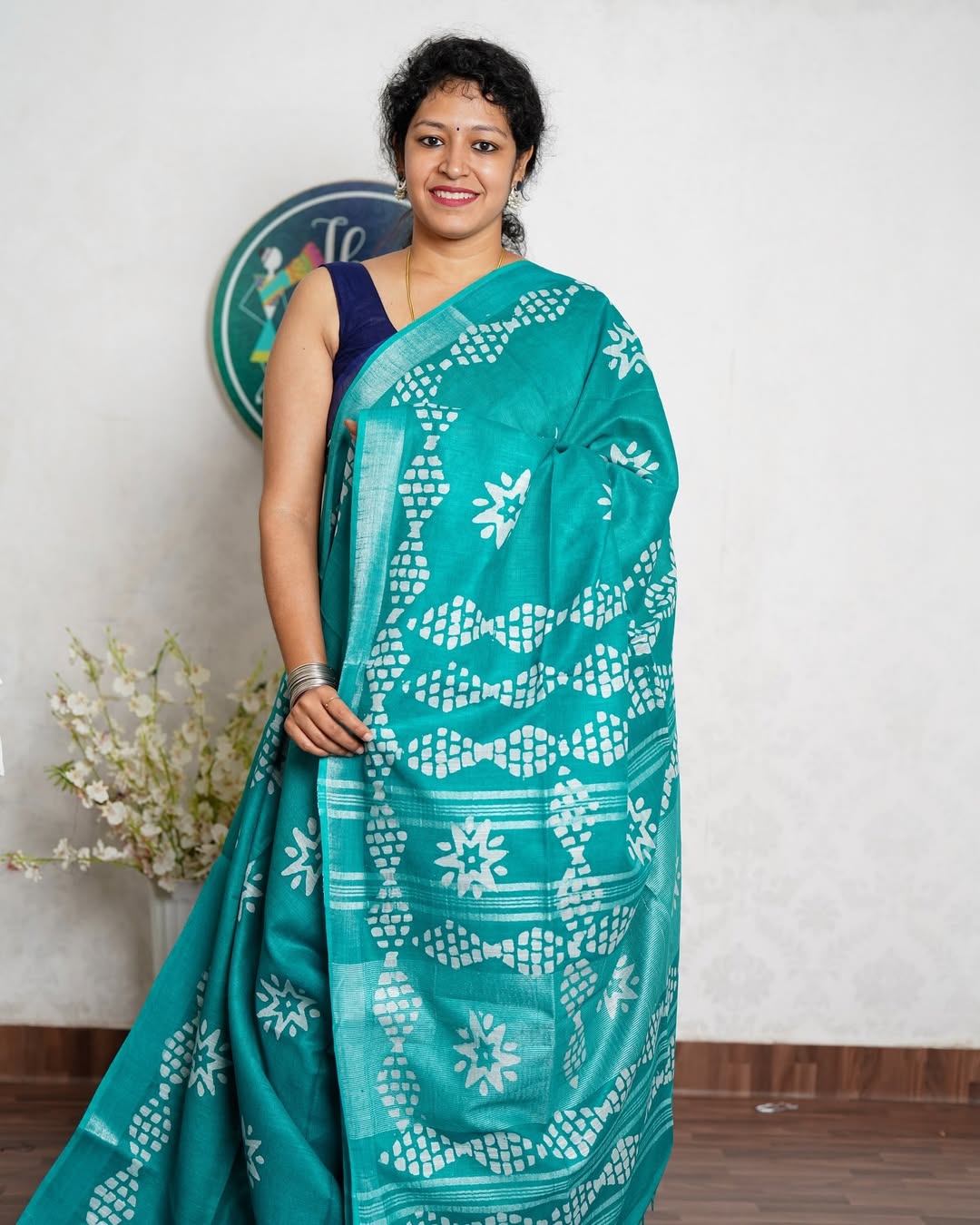
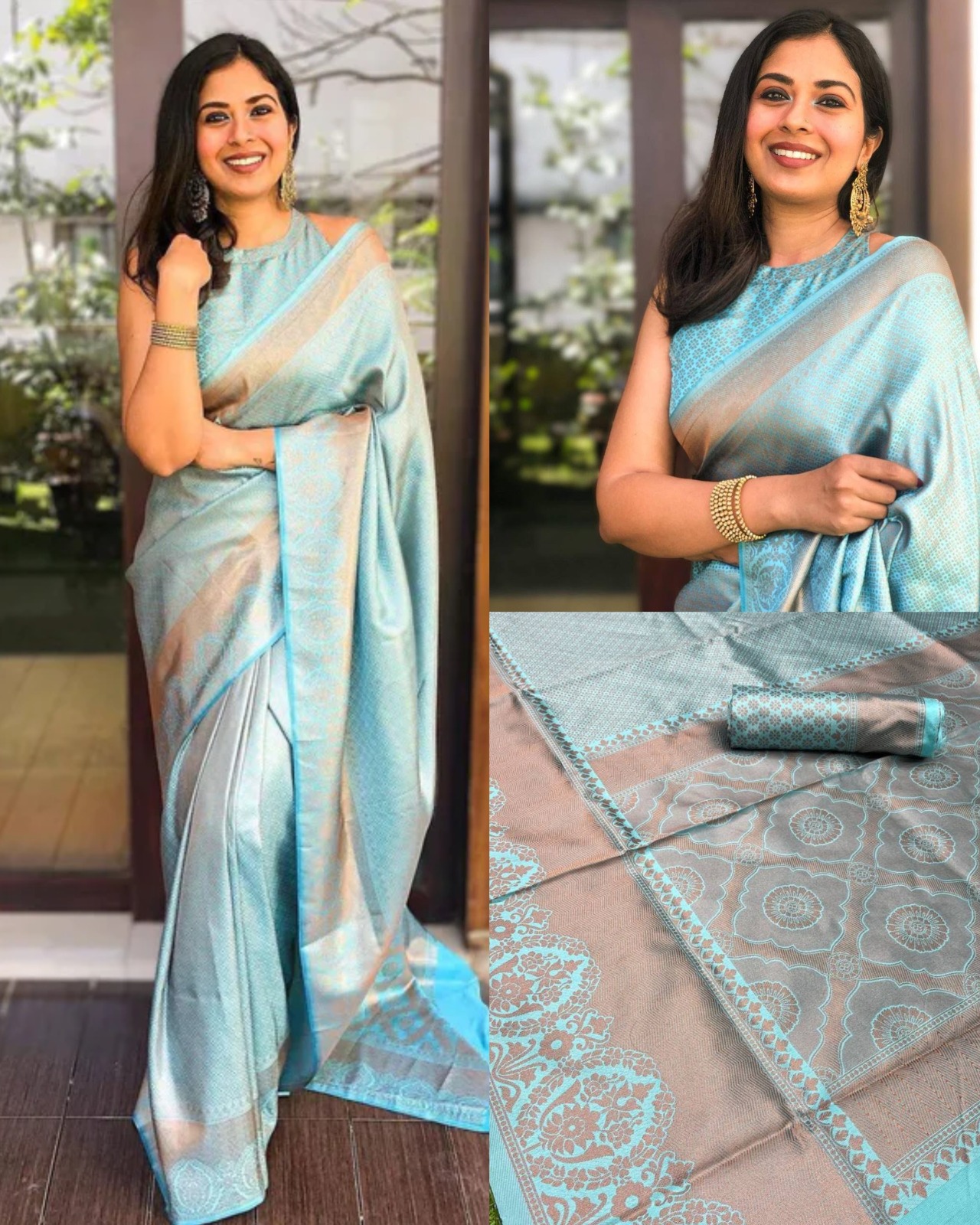
Turquoise is already bright and reflective, so jewellery doesn't need to introduce another vivid colour. Turquoise Saree with White Floral Motifs and Geometric Border can work with pearls, white stones, silver-toned metal or limited gold. The geometric border brings enough structure for a clean choker, while the white floral motifs can be echoed by pearl drops rather than a necklace crowded with coloured gems.
How Jewellery Scale Should Relate to Saree Motifs
Jewellery scale should be proportional to the largest visible motif, the border width and the bride's frame. A practical test is to photograph the saree draped on the body from both a close distance and three metres away; jewellery that disappears in the wider image is too fine, while jewellery that obscures the border at close range is too large.

Use one dominant piece in each visual zone. The neck can carry the main statement necklace, the ears can carry substantial jhumkas or chandbalis, and the wrists can carry bangles or kadas. Two dominant pieces can work together, such as a choker and earrings, but three oversized elements often compete with a motif-heavy saree.
- Dense small motifs: Choose a clean choker, medium earrings and fewer layered necklaces so the surface doesn't become visually noisy.
- Large floral or animal motifs: Use jewellery with a defined silhouette and leave part of the pallu unobstructed.
- Wide zari borders: Match the jewellery's visual weight to the border rather than automatically selecting the heaviest bridal set.
- Plain body with an elaborate pallu: Let the earrings or necklace create balance, but avoid placing a large waist belt directly over the main pallu design.
Body proportions also influence scale. A petite bride may find that an extra-long rani haar covers the saree's pallu and blouse, while a taller bride may need a longer pendant or larger earrings to prevent the face and torso from appearing visually separated. The goal is proportion, not a fixed rule about what every bride should wear.
Matching the Necklace to the Blouse and Draping Style
The blouse neckline determines how much of the necklace remains visible. A sweetheart or moderately deep round neckline supports a choker with a pendant, while a high neckline often looks cleaner with a long haar or statement earrings instead of a tight necklace pressing against the collar.

Boat neck blouses can make a wide choker appear compressed, especially when the saree pallu is pinned high across the chest. A long necklace creates a vertical opening in that composition. A square neckline can frame a structured necklace well, but the pendant should not end exactly at the neckline edge because that creates an awkward visual stop.
Backless and deep-back bridal blouses shift attention to the shoulders and back in photographs. In that case, a heavy front necklace may be unnecessary if the blouse has substantial embroidery. Consider a strong earring, a maang tikka and a shorter necklace that follows the front neckline without covering the blouse workmanship.
Draping style is equally important. A seedha pallu places more patterned fabric across the front, so a necklace with a clear, compact shape usually performs better. A Gujarati or open pallu may leave more of the blouse visible, allowing a longer necklace to create balance. Secure necklaces and earrings with discreet supports because frequent movement can pull jewellery out of position.
Building a Bridal Jewellery Set in Layers
A complete bridal set should be built in layers, beginning with the piece that has the greatest effect on the face. For many brides, that means earrings or a choker; for others, the maang tikka becomes the primary focal point. Select the main piece first, then add only the layers that solve a visible styling need.
- Choose the metal family. Decide whether yellow gold, antique gold, silver-toned metal or a mixed-metal design supports the saree's zari and base colour.
- Select the face-framing piece. Pick jhumkas, chandbalis or drop earrings according to the saree's motif direction and the blouse neckline.
- Add the necklace. Use a choker for an open neckline or a longer haar when the blouse and drape leave sufficient vertical space.
- Place the forehead jewellery. Match the maang tikka's scale to the earrings rather than choosing a separate oversized design.
- Balance the wrists. Combine bangles and one or two kadas, leaving enough room to move the hands comfortably during rituals.
- Finish with optional pieces. Add a nath, kamarbandh or armlet only if the saree, blouse and ceremony justify another focal point.
Mixed metals can work when the saree itself contains mixed details, but the combination needs repetition. For example, silver accents in jewellery should appear in at least two visible areas, such as earrings and bangles. Maroon Soft Lichi Silk Saree with Silver Zari & Jacquard Border can therefore support silver-toned earrings with restrained gold elsewhere, provided the silver border remains part of the overall styling story.
Comfort, Security and Ceremony Timing Matter
Comfort should influence bridal jewellery selection because a wedding ceremony can involve four to eight hours of sitting, standing, greeting and movement. Heavy earrings can cause soreness before the reception, and a rigid choker can become uncomfortable during pheras or extended family photographs.
Test the full set with the actual blouse and saree at least one week before the wedding. Wear the necklace and earrings for 60 to 90 minutes, walk, sit cross-legged if required, bend slightly and turn the head. Replace pieces that pinch, slide or pull the earlobe. Use silicone earring backs, necklace extenders and hidden thread supports where necessary.
Different ceremonies also call for different levels of layering. A Haldi ceremony usually benefits from lighter jewellery that can be cleaned or removed easily, while the wedding ceremony can carry the principal gold or kundan set. A reception may allow diamond-look stones, pearls or a more contemporary silhouette if the saree is less time-honoured.
Plan jewellery storage between events. Keep each necklace in a separate soft pouch, place earrings in pairs and avoid storing damp pieces immediately after wear. Wipe perspiration from gold-plated or stone-set jewellery with a soft dry cloth, and keep perfume, hairspray and body lotion away from the pieces until the skin has dried.
Budgeting Without Losing Visual Impact
Budgeting works best when money is assigned to the pieces that appear closest to the face and camera. A well-finished pair of earrings and a proportionate necklace often create more impact than a large number of inexpensive accessories worn together.
For brides comparing silk sarees across price ranges, collections such as Sarees from Rs 1000 to Rs 1500, Sarees Under 20% Off and Sarees Under 10% Off can help separate the saree budget from the jewellery budget. Discount collections including Sarees Flat 60% Off and Sarees Flat 50% Off may also be useful for comparing colour and weave options, but the final jewellery decision should follow the selected saree's actual zari, motif density and blouse neckline.
Costume jewellery can be a sensible choice for a single ceremony when the design has secure clasps, balanced weight and a finish that doesn't rub against the skin. Ask about stone setting, plating, return conditions and care before purchase. For heirloom gold or precious jewellery, measure the necklace length and earring weight in advance rather than relying only on photographs.
A Final Fitting Checklist for a Motif-Heavy Bridal Saree
A final fitting should confirm that the jewellery frames the bride without hiding the saree's signature design. The complete outfit should be checked in daylight, warm indoor light and a phone camera because zari and coloured stones reflect differently in each setting.
- Check that the necklace doesn't cover the saree's most important border or pallu motif.
- Confirm that the metal complements the zari rather than creating an accidental colour clash.
- Photograph the outfit from the front, three-quarter angle and side profile.
- Check whether the maang tikka, earrings and necklace share a believable scale.
- Wear the full set for at least one hour before the wedding day.
- Pack spare earring backs, safety pins, necklace thread and a small cleaning cloth.
- Ask one trusted person to check the back of the necklace, hair accessories and blouse hooks.
Choosing Jewellery for a Bridal Saree With Strong Motifs becomes much easier when the saree receives a clear visual priority. Match the metal to the zari, repeat one or two meaningful colours, balance jewellery scale against motif size and test comfort before the ceremony. A coordinated set will make the weave more visible, the photographs more readable and the bride more comfortable throughout the day.
Questions Brides Ask About Jewellery for Motif-Heavy Sarees
How do I choose jewellery for a bridal saree with heavy motifs?
Choose jewellery according to the saree's largest motif, zari colour and border width. Use one dominant necklace or earring style, then keep the remaining pieces more controlled so the motifs stay visible.
Which jewellery suits a Banarasi saree best for a wedding?
Yellow-gold, antique-gold, kundan, temple jewellery and selected pearl designs suit most Banarasi sarees. Match the jewellery's scale to the zari density and avoid covering an elaborate Banarasi pallu with too many long layers.
Can I wear a heavy necklace with a heavily embroidered bridal blouse?
You can wear a heavy necklace with an embroidered blouse if the neckline leaves enough space and the necklace has a clear outline. When the blouse, saree pallu and necklace are all dense, choose strong earrings with a shorter or simpler necklace instead.
What jewellery colour goes with a turquoise bridal saree?
Pearls, white stones, silver-toned metal and restrained yellow gold all work with a turquoise saree. White floral motifs can be echoed with pearl drops, while excessive multicoloured stones may compete with the turquoise base.
How many bridal jewellery pieces should I wear with a motif-heavy saree?
There is no fixed number, but a balanced set commonly includes earrings, one or two necklaces, a maang tikka and coordinated bangles. Add a nath, kamarbandh or armlet only when the saree and blouse have enough visual space for another statement.
How can I make heavy bridal jewellery more comfortable?
Test the complete jewellery set for 60 to 90 minutes before the wedding and replace pieces that pinch or pull. Silicone earring backs, necklace extenders, hidden thread supports and lighter layered pieces can reduce pressure during a long ceremony.