

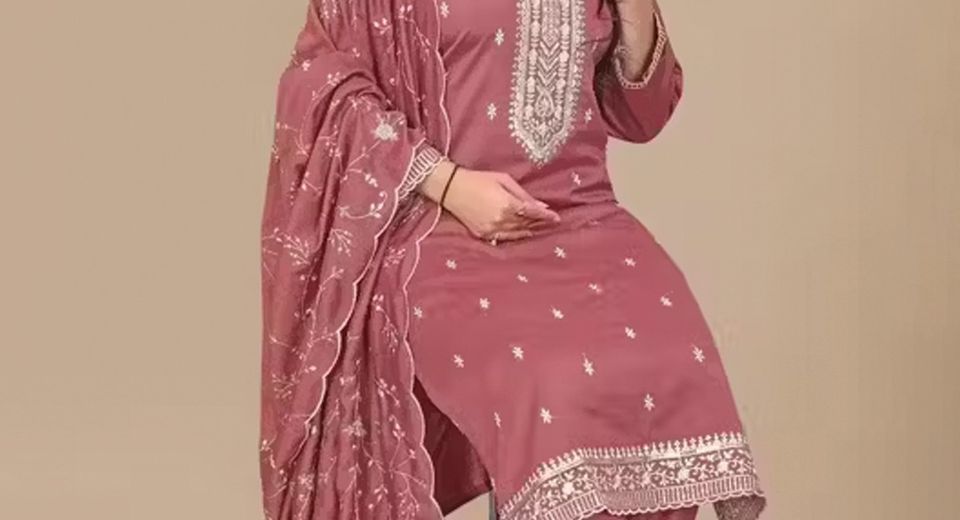
Choosing Jacket Salwar Suits by Fit Fabric and Occasion requires more than selecting an attractive colour. A jacket changes the visible balance of a salwar suit by adding a second layer, unnecessary seam lines and sometimes substantial embroidery. The right choice depends on shoulder width, jacket length, trouser volume, textile weight and the amount of movement your event requires. An functional buying decision starts with measurements and fabric behaviour, then ends with styling details such as footwear, dupatta placement and jewellery.
Why does a jacket change the fit of a salwar suit?
A jacket salwar suit creates a layered silhouette, so the jacket must fit the upper body without pulling across the bust or restricting the arms. A well-fitted jacket should lie smoothly over the shoulders, close without strain at the bust and leave enough room for the kurta worn underneath.
Jackets also change perceived proportions. A cropped jacket ending near the natural waist draws attention upwards and works well with a high-waisted palazzo. A jacket ending at the hip creates a longer vertical line and can feel balanced with straight trousers or a narrow salwar. A longline jacket reaching mid-thigh provides greater coverage, but the jacket needs enough flare or side opening for comfortable walking.
Readymade sizing can vary considerably, so compare garment measurements instead of relying only on small, medium or large labels. Measure the fullest bust point, natural waist, shoulder width and upper-arm circumference. A layered set usually needs approximately 2 to 4 inches of ease at the bust, depending on whether the jacket is structured, open-front or heavily embroidered. A fitted jacket with dense zari or sequin work generally needs more ease than a soft, unlined layer.
Which jacket length suits different body proportions?
A jacket ending at the waist or high hip suits anyone who wants to emphasise the waist and lengthen the legs visually. A hip-length jacket offers a more forgiving line around the midsection, while a knee-length jacket creates graceful vertical coverage for formal dressing. Petite wearers can prevent overwhelming proportions by choosing a shorter jacket, a low-contrast jacket and trousers with a clean fall.
Longer jackets don't automatically make a wearer look shorter. A narrow front opening, similar colours between the jacket and trousers, and vertical embroidery can preserve height. A very wide hem, large contrasting motifs and a thick border can add visual width, so those details should be balanced with a simpler inner kurta.
How does occasion affect the choice of a jacket salwar suit?
Choosing Jacket Salwar Suits by Fit Fabric and Occasion works best when each element answers a practical need: the fit should support movement, the fabric should suit the weather and the occasion should determine the level of surface detail.
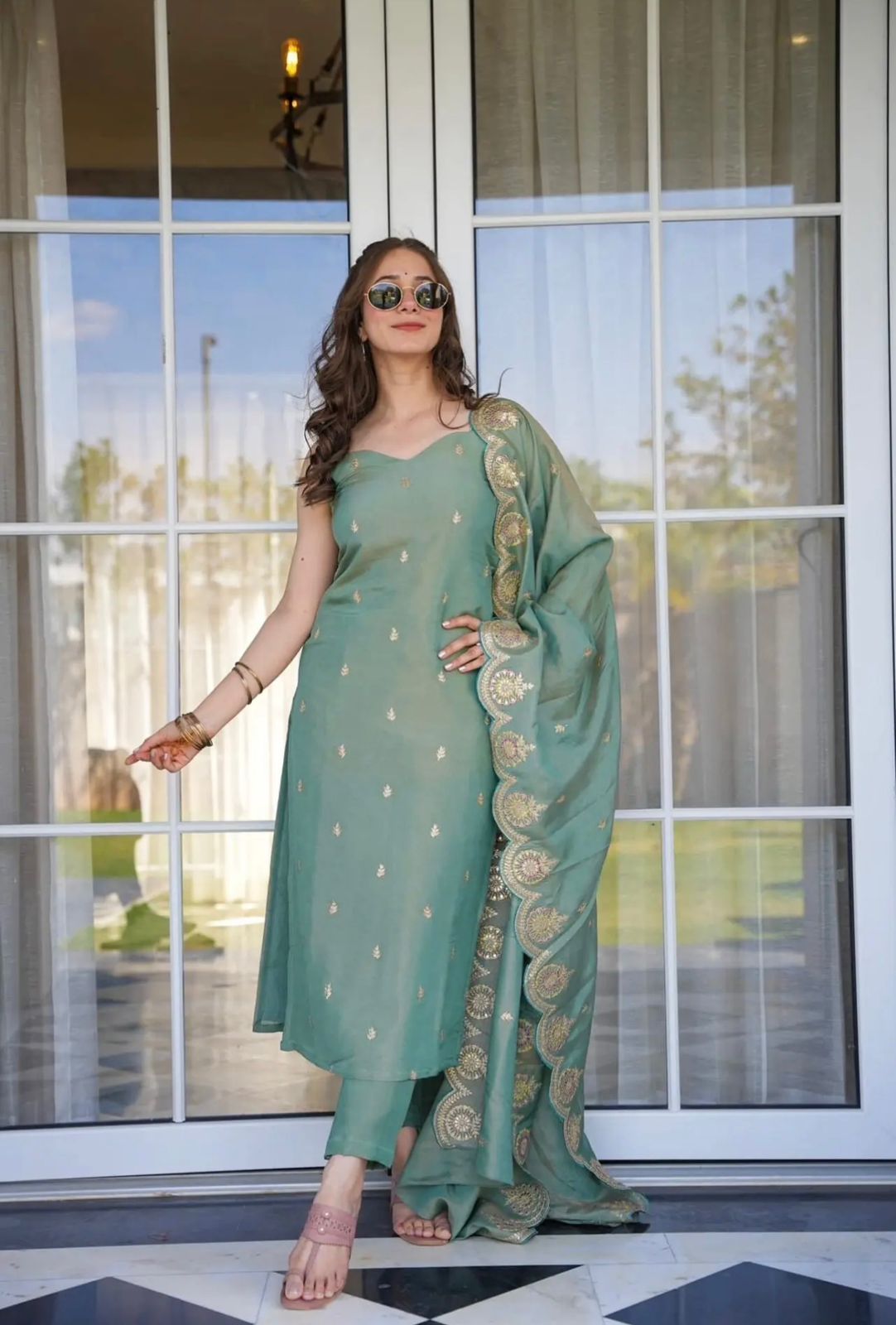
For a wedding, consider a jacket with embroidery, jacquard texture, zari or a richer drape, but check the total weight before buying. For a Haldi ceremony, breathable cotton blends, printed textiles and lighter embellishment are usually more comfortable than multiple dense layers. For a reception or evening celebration, a structured jacket in jacquard, silk-blend or organza-accented styling can look polished under warm indoor lighting.
Workwear and daytime gatherings call for controlled volume and restrained shine. A straight kurta, ankle-length pant and an unlined or lightly lined jacket are easier to sit in for several hours. Family pujas and festive lunches allow more colour and texture, although a washable or low-maintenance fabric may be preferable if the outfit will be worn repeatedly.
Ask four questions before selecting a set: Will the event involve standing or dancing? Is the venue indoors or outdoors? Will the outfit need to remain comfortable in hot weather? Can the jacket be worn with another kurta or trouser later? These questions distinguish a versatile purchase from an outfit likely to be used only once.
Which fabrics work best for jacket salwar suits?
The best fabric for a jacket salwar suit depends on the required structure, climate, comfort level and finish. Fabric weight affects how the jacket hangs, while surface texture affects how formal the complete outfit appears.
Are cotton and printed fabrics suitable for jacket salwar suits?
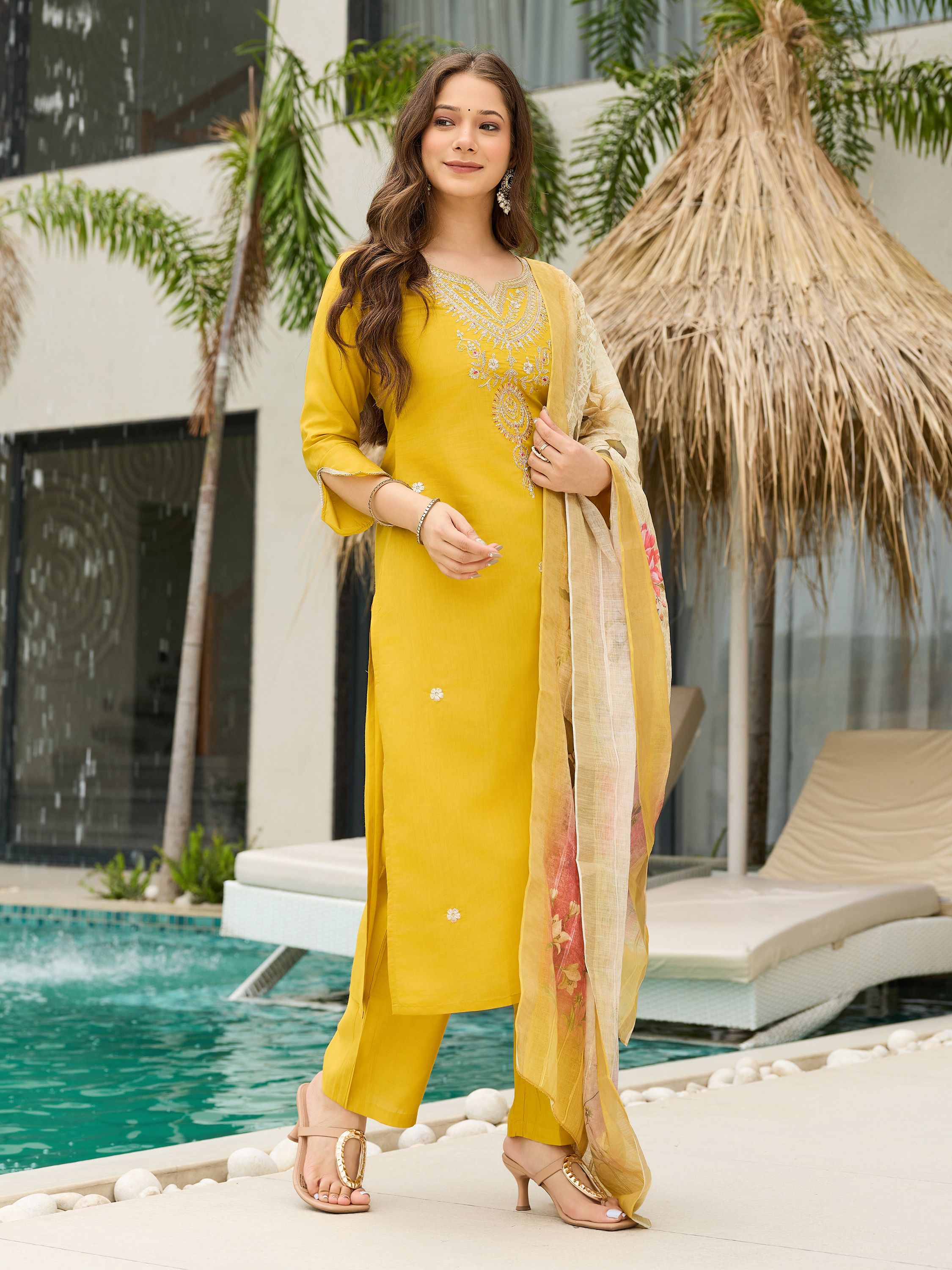
Cotton and cotton blends offer breathability and a comfortable hand feel for daytime wear, summer celebrations and long family gatherings. Kalamkari Print Salwar Suits show how a printed surface can provide visual interest without relying on heavy embellishment. Cotton may crease more readily than synthetic blends, so steaming or careful pressing before wear is useful.
Printed fabrics are especially effective when the jacket is relatively simple. A dense print under a heavily embroidered jacket can look crowded, whereas a printed kurta with a solid jacket creates clearer separation. A lightweight cotton jacket also layers more comfortably over a full-sleeve kurta than a stiff brocade layer.
When should you choose jacquard, silk or zari?
Jacquard fabric gives a jacket salwar suit body, pattern and a naturally dressed-up appearance. Orange Jacquard Embroidered Kurta Set with Organza Dupatta demonstrates how woven texture can work alongside embroidery and a sheer dupatta without requiring excessive jewellery.
Silk and silk-blend textiles reflect light and are useful for festive evenings, wedding functions and formal family portraits. Banarasi silk and zari can feel visually rich, but a buyer should inspect lining, seam finishing and garment weight because a heavy textile may become uncomfortable after several hours. Silk Festive Kurta Pant Set with Zari Jacquard Dupatta gives an useful example of combining a smooth base with a patterned, metallic-accented layer.
What should you know about organza and velvet?
Organza adds crispness, translucency and volume to a dupatta or jacket, making it effective for dressier styling. An organza layer can hold a defined shoulder or sleeve shape, but organza may feel less forgiving around the upper arm and can snag against rough jewellery. Smooth bangles and careful handling help protect the fabric and embroidery.
Velvet brings warmth and a dense, formal appearance, making velvet jackets appropriate for cool-weather evening functions. Velvet can add bulk, so a slim straight pant or controlled palazzo usually balances the outfit better than another voluminous layer. Store velvet with air circulation because compression can flatten the pile and leave permanent marks.
How should the jacket and bottom shapes be balanced?
The most balanced jacket salwar suit pairs the jacket's volume with a bottom that gives a contrasting line. A cropped or fitted jacket generally works with a wide palazzo, while a long or flared jacket often looks cleaner with a straight pant.
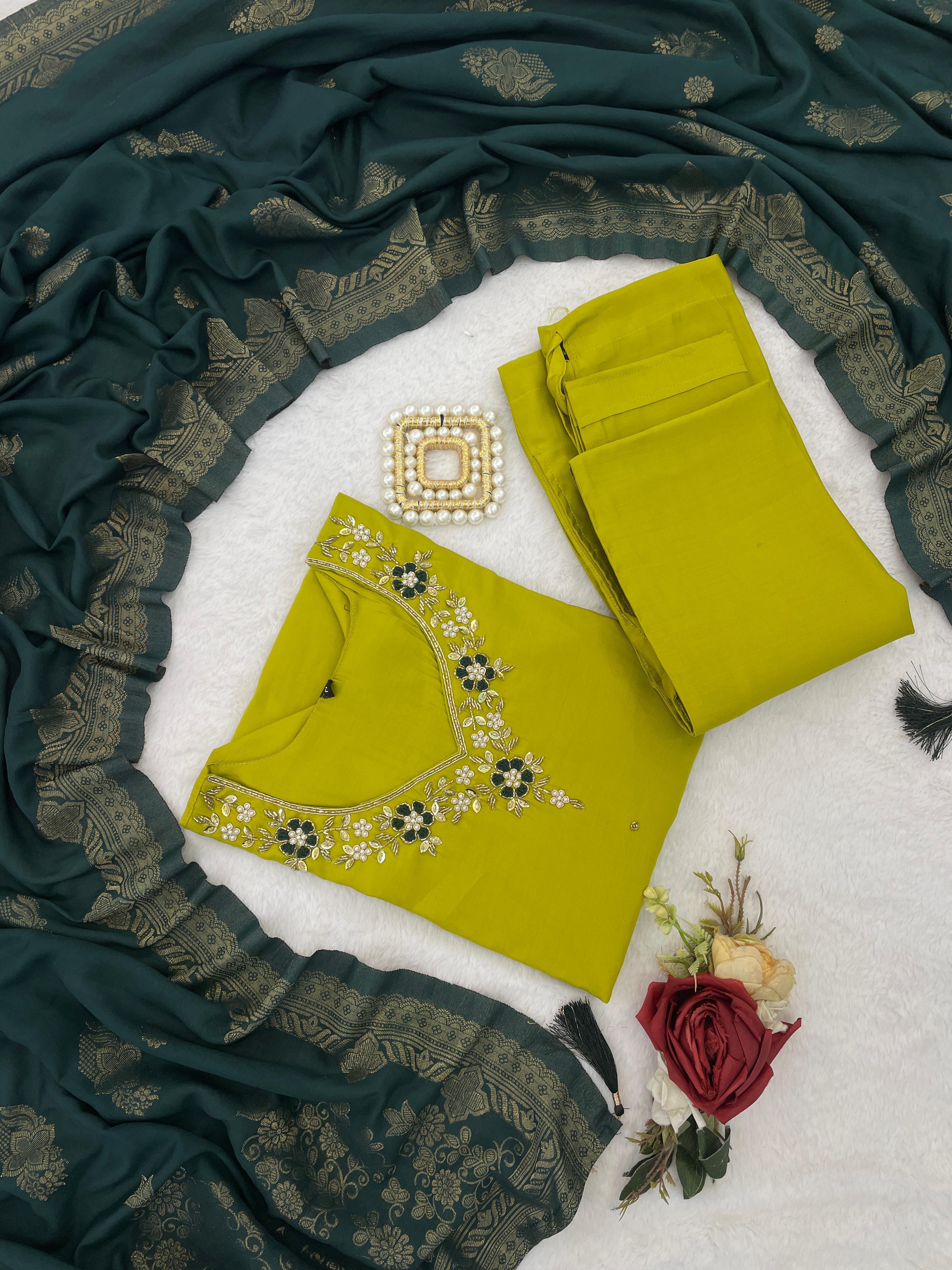
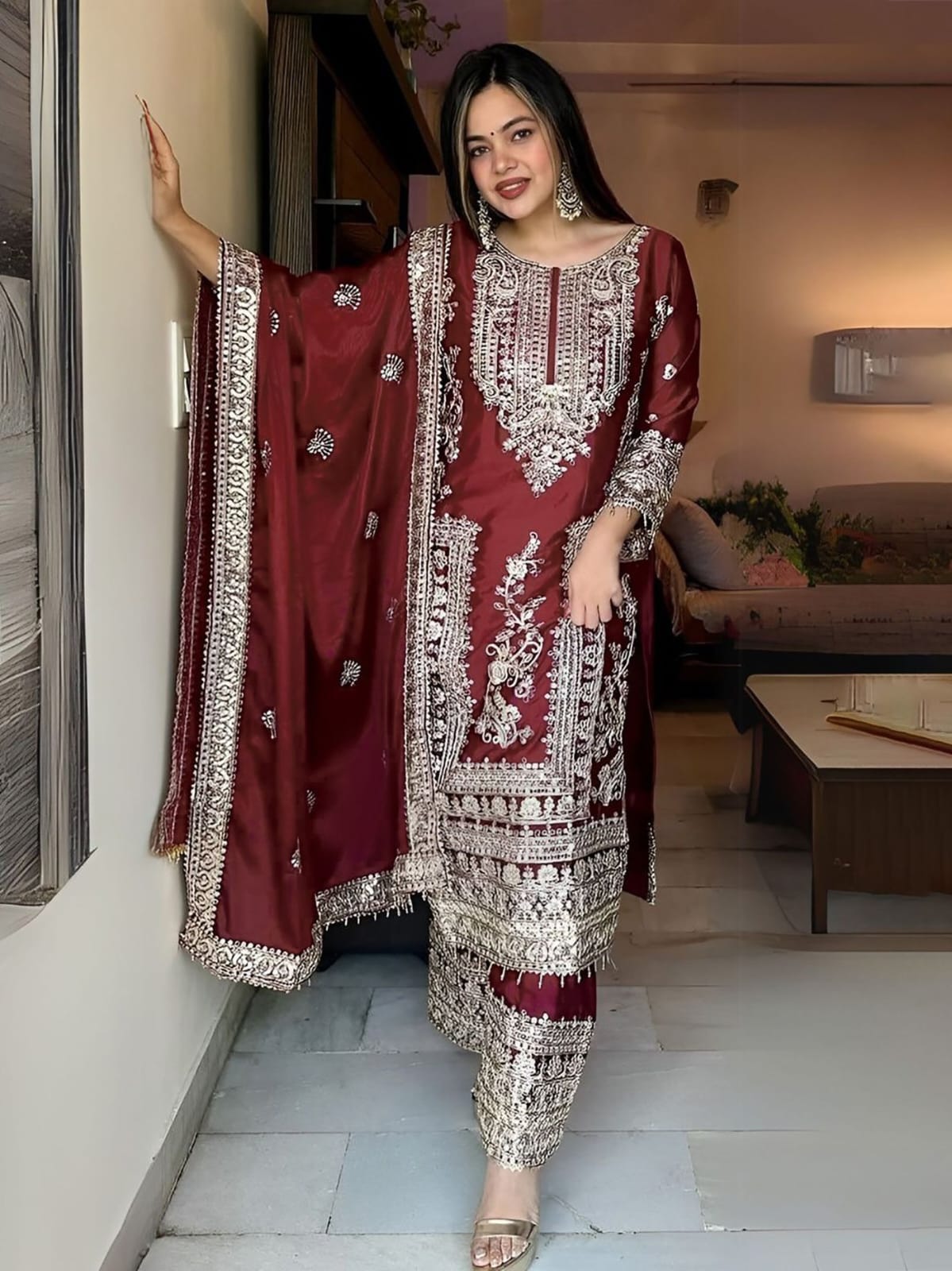
Palazzo trousers create movement and suit festive dressing, especially when the jacket ends above the widest point of the trouser. Maroon Wedding Wear Embroidered Palazzo Suit Set uses the formal palazzo proportion as a starting point for wedding styling: keep the upper layer neat, then let the lower layer provide movement.
Wide trousers need the correct length. The hem should usually sit close to the top of the foot without dragging, especially when worn with embellished sandals. A trouser that's too long can catch under the heel, while a trouser that's too short can interrupt the intended fluid line.
Straight pants create a streamlined foundation and are practical for commuting, seated events and repeated wear. A narrow salwar or cigarette pant also allows the jacket to carry more detail without making the full outfit appear bulky. If the jacket has a flared hem, avoid pairing it with a very wide, heavily pleated bottom unless the outfit is intentionally dramatic.
Patiala trousers introduce volume through pleats and gathers. Punjab Patiala Salwar Suits show how a generous lower silhouette can become the main design feature. A shorter kurta or fitted jacket helps prevent excessive fabric around both the torso and legs.
How can regional design references guide your selection?
Regional textiles and motifs can guide colour, pattern and styling while still allowing a modern layered silhouette. Maharashtra Paithani Inspired Salwar Suits may suggest jewel-toned combinations and border-focused detailing, while Gujarat Bandhej Salwar Suits point towards tie-dye dots, energetic contrast and festive colour.
Odisha Sambalpuri Salwar Suits can inspire geometric motifs and a more graphic approach to the dupatta or jacket. Regional influence doesn't require matching every traditional element in one outfit. A patterned jacket can be paired with a solid kurta, or a traditional-looking dupatta can be worn with a plain pant and minimal jewellery.
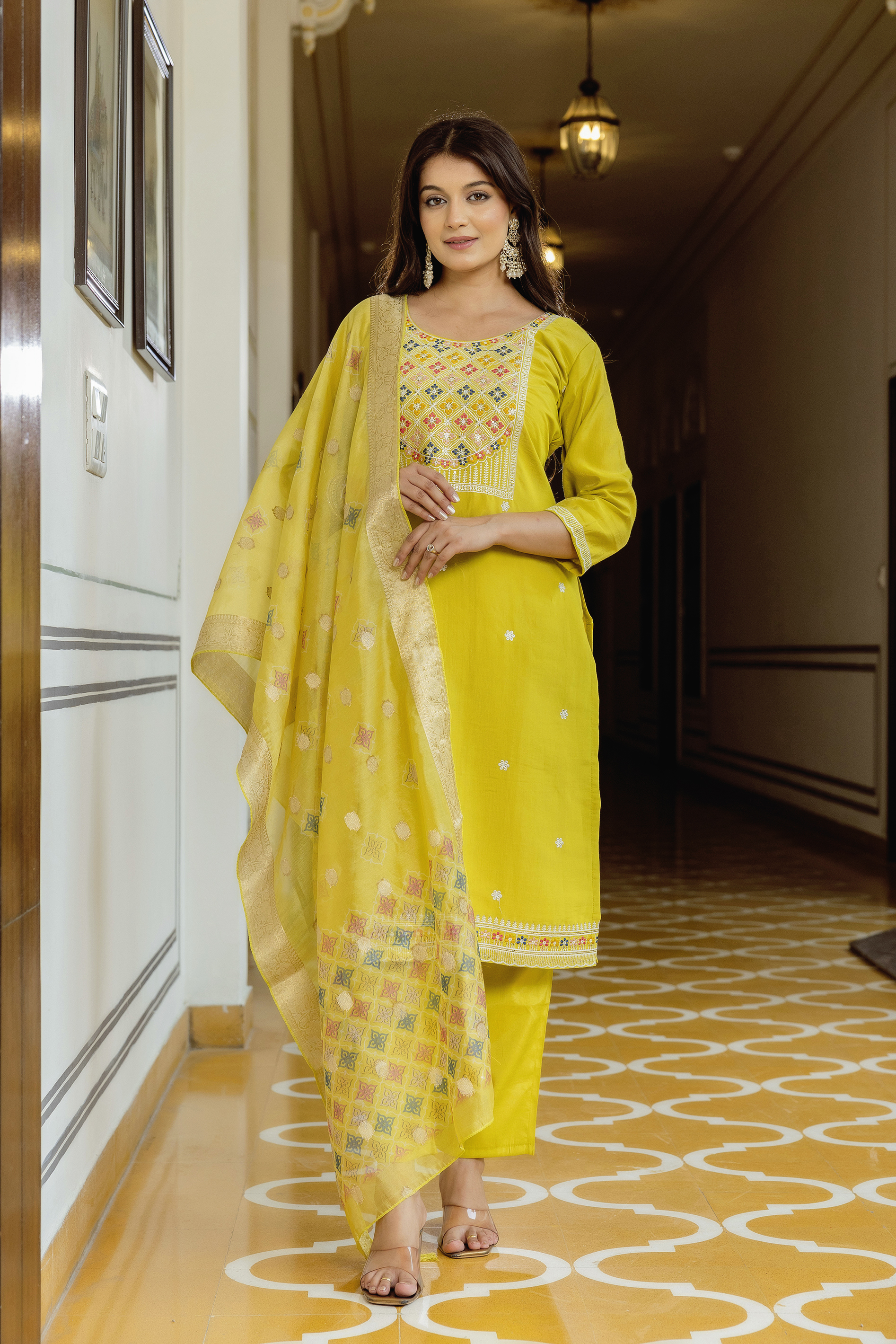
Colour placement matters as much as colour choice. A darker jacket over a lighter kurta creates definition around the upper body. A monochromatic jacket and kurta lengthen the torso visually, while a contrasting dupatta adds a clear focal point. Pista Royale Salwar Suit gives an useful example of how a softer green colour family can be styled with gold, pearl or neutral accessories instead of competing bright colours.
How should you style a jacket salwar suit for different events?
A wedding jacket salwar suit benefits from one strong focal detail, such as embroidered shoulders, a zari border or a richly woven dupatta. Maroon Embroidered Jalpari Kurta Pant Dupatta Set can be styled with muted gold earrings and a low bun when the clothing already supplies substantial colour and decoration.
A darker outfit can look especially refined when the accessories introduce controlled contrast. Midnight Black Blossom Salwar Suit works with silver-toned earrings, antique gold, metallic footwear or a jewel-coloured potli. Keep the dupatta placement secure if the event includes dancing or extended standing; a shoulder pin hidden beneath embroidery can prevent repeated adjustments.
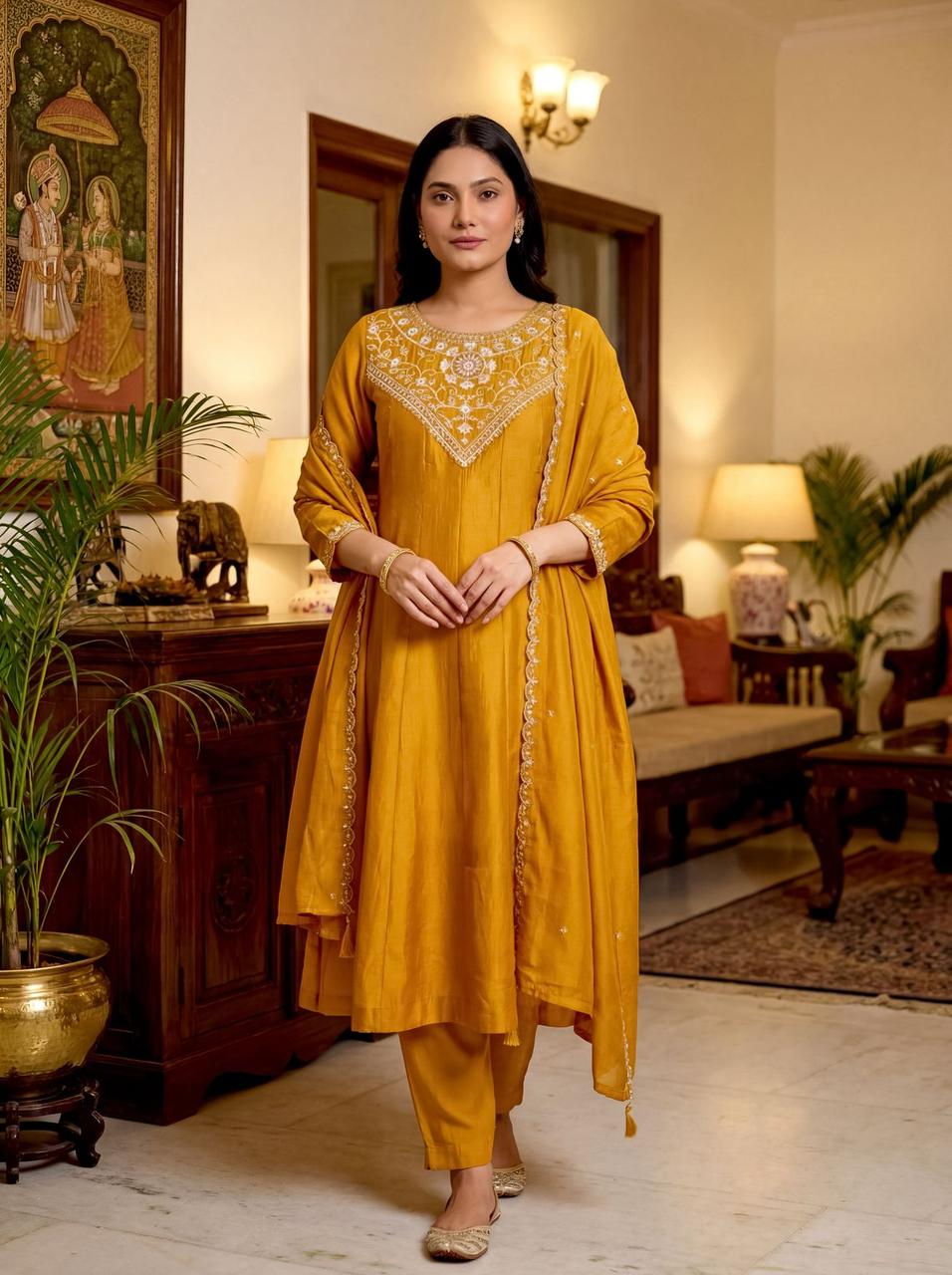
A lighter festive outfit usually benefits from warm accessories and a defined lip colour rather than several competing statement pieces. Pista shades, coral, maroon and orange pair effectively with gold, while black, navy and deep wine can support silver, crystal or antique-finish jewellery.
For a current evening look, Women's Embroidered Crop Top & Jacket Palazzo Set can be balanced with clean hair, pointed footwear and limited jewellery. The crop-top proportion needs confidence in the fit: the waistband should remain comfortable while sitting, and the jacket should cover the areas you want covered when you move.
An embroidered set can also be made more adaptable by changing the accessories. Embroidered Salwar Suit Set for Women may work for a family celebration with jhumkas and sandals, then look more restrained at a dinner with small earrings, a structured clutch and low heels. The styling should follow the density and scale of the embroidery rather than adding decoration automatically.
What should you check before buying and caring for the set?
Before buying, check the garment measurements, lining, closure placement, sleeve circumference, trouser waistband and care label. A jacket with a front hook, tie or open construction may fit differently from a jacket with a concealed zip. Inspect whether embroidery ends cleanly at the seams and whether the dupatta border feels securely attached.
Comfort depends on small construction details. A scratchy seam near the neck can become irritating after two hours, while a tight armhole can restrict movement even when the bust measurement seems correct. Try sitting, lifting both arms and taking several steps whenever a fitting room is available.
Care instructions should match the textile. Dry cleaning is generally safer for silk, zari, organza and heavily embroidered pieces, while some cotton and blended garments may tolerate gentle hand washing. Do not wring embellished garments. Dry garments away from harsh direct sunlight, store them folded with acid-free tissue where possible, and keep metal embroidery from rubbing continuously against delicate fabric.
Use a padded hanger for a structured jacket only if the shoulder seams can support the weight. Heavy embroidered garments are often safer folded flat because prolonged hanging can stretch the shoulders. Air the outfit after wearing it and avoid storing it immediately in a sealed plastic cover.
The most reliable purchase is one that suits your measurements, climate and real calendar rather than an imagined event. When jacket length, fabric weight, trouser volume and embellishment are considered together, a salwar suit becomes easier to wear, style and repeat across several occasions.
Common Questions About Choosing a Jacket Salwar Suit
How should a jacket salwar suit fit?
A jacket salwar suit should lie smoothly across the shoulders and bust without pulling, while leaving enough room for the inner kurta and arm movement. Check the sleeve opening, bust ease and jacket closure rather than relying only on the labelled size.
Which fabric is best for a jacket salwar suit in summer?
Cotton, cotton blends and lightweight breathable textiles are usually the most comfortable choices for summer. Printed cotton works well for daytime events, while a lightweight jacquard or lightly lined layer can suit a more formal gathering if the venue has air conditioning.
Can a jacket salwar suit be worn to a wedding?
A jacket salwar suit is suitable for a wedding when the fabric, embroidery and accessories match the formality of the function. Jacquard, silk-blend, zari and detailed embroidery work well for evening celebrations, while a lighter embellished set is more practical for daytime ceremonies.
Which bottom looks best with a long jacket?
A straight pant or narrow salwar usually balances a long jacket because the lower silhouette remains controlled. A palazzo can also work, but the jacket should have a neat fall or a defined opening so the combined layers do not look excessively wide.
How can I make an embroidered jacket salwar suit more versatile?
Wear the jacket with a plain kurta or trouser from another set, or change the jewellery and dupatta for a different level of formality. Neutral footwear, a simple clutch and restrained earrings can make an ornate set suitable for a smaller family gathering.
How should a silk or zari jacket salwar suit be stored?
Silk and zari garments should be kept clean and dry, folded with soft tissue where possible and protected from prolonged friction. Avoid wringing, harsh sunlight and tightly sealed plastic storage; professional dry cleaning is safer for heavily embroidered or metallic-accented pieces.


