

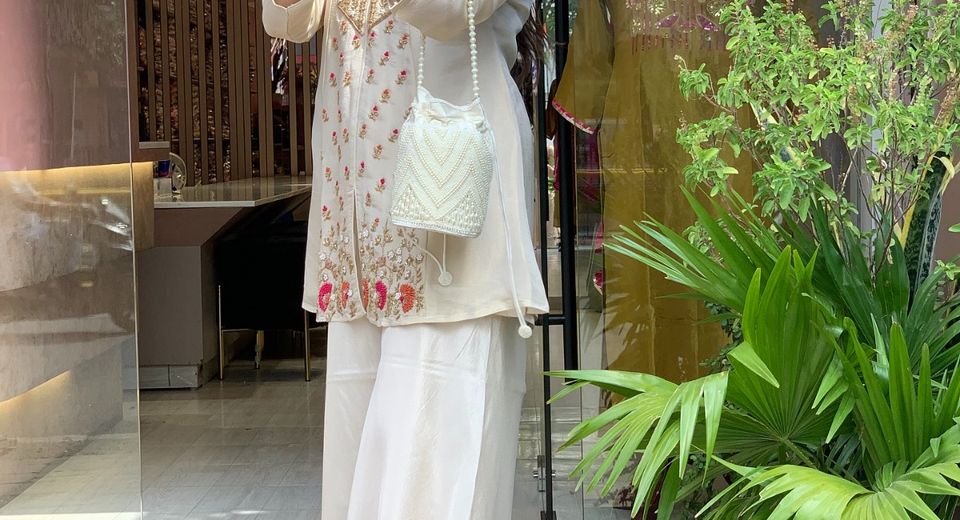
Choosing Floor-Length Salwar Suits by Fit Fabric and Occasion requires more than selecting a dramatic hemline. A long salwar suit must balance shoulder width, bust ease, waist placement, skirt volume, fabric weight and the amount of movement required at the event. A floor-length anarkali for a wedding can have a very different construction from a practical kurta-and-palazzo set for a family lunch.
The correct length should allow you to walk, sit and climb steps without lifting the garment repeatedly. The correct fabric should suit the weather and duration of wear. The correct embellishment should look appropriate in daylight or evening lighting. Comparing these details before purchase makes a floor-length outfit more useful than choosing solely by colour or trend.
Choosing Floor-Length Salwar Suits by Fit Fabric and Occasion Starts with Silhouette
The most useful first step is to identify the silhouette that gives your body enough ease while placing visual volume where you want it. Floor-length salwar suits generally fall into four practical categories: straight kurtas, flared anarkalis, sharara sets and long kurta sets worn with palazzos or pants.
How does a straight silhouette work at floor length?
A straight silhouette creates a long vertical line and works well for daytime celebrations, office festivities and smaller family gatherings. A narrow side slit, straight trouser or cigarette pant prevents the lower half from looking bulky. Vertical embroidery, pinstripes and a dupatta worn close to the body reinforce the lengthening effect.
The Vertical Cotton Straight Kurta Set with Dupatta shows why a controlled straight shape benefits from breathable fabric. Cotton keeps a long silhouette from appearing overly theatrical, particularly when the neckline, sleeve and hem use restrained detailing. A straight kurta is also easier to sit in than a heavily gathered skirt.
When should you choose a flared anarkali?
A flared anarkali is a strong choice for ceremonial dressing because stitched panels or gathers create movement below the bodice. The flare point determines the visual result. A flare beginning below the bust adds volume throughout the length, while a flare beginning at the natural waist gives the torso more definition.
Panel count also affects fall. Six to eight panels usually create a manageable flare for a readymade garment, while numerous narrow panels can produce a fuller, more dramatic hem. A wearer who needs to move through crowded spaces may prefer moderate flare with a smooth lining rather than a very wide skirt.
How do shararas and palazzos change proportion?
Sharara and palazzo sets create width below the kurta instead of relying on one continuous skirt. The Brown Chinon Silk Sharara Suit Set for Women illustrates a dressier lower-half proportion that suits evening celebrations. A shorter or waist-length kurta balances a voluminous sharara, while a long straight kurta needs controlled width to prevent excess fabric around the ankles.
Choosing Floor-Length Salwar Suits by Fit Fabric and Occasion Requires Accurate Measurements
Accurate garment measurements matter more than a size label when a salwar suit reaches the floor. Measure the shoulder, bust, waist, hip, armhole, sleeve length, kurta length and inseam while wearing the undergarments and footwear intended for the outfit.
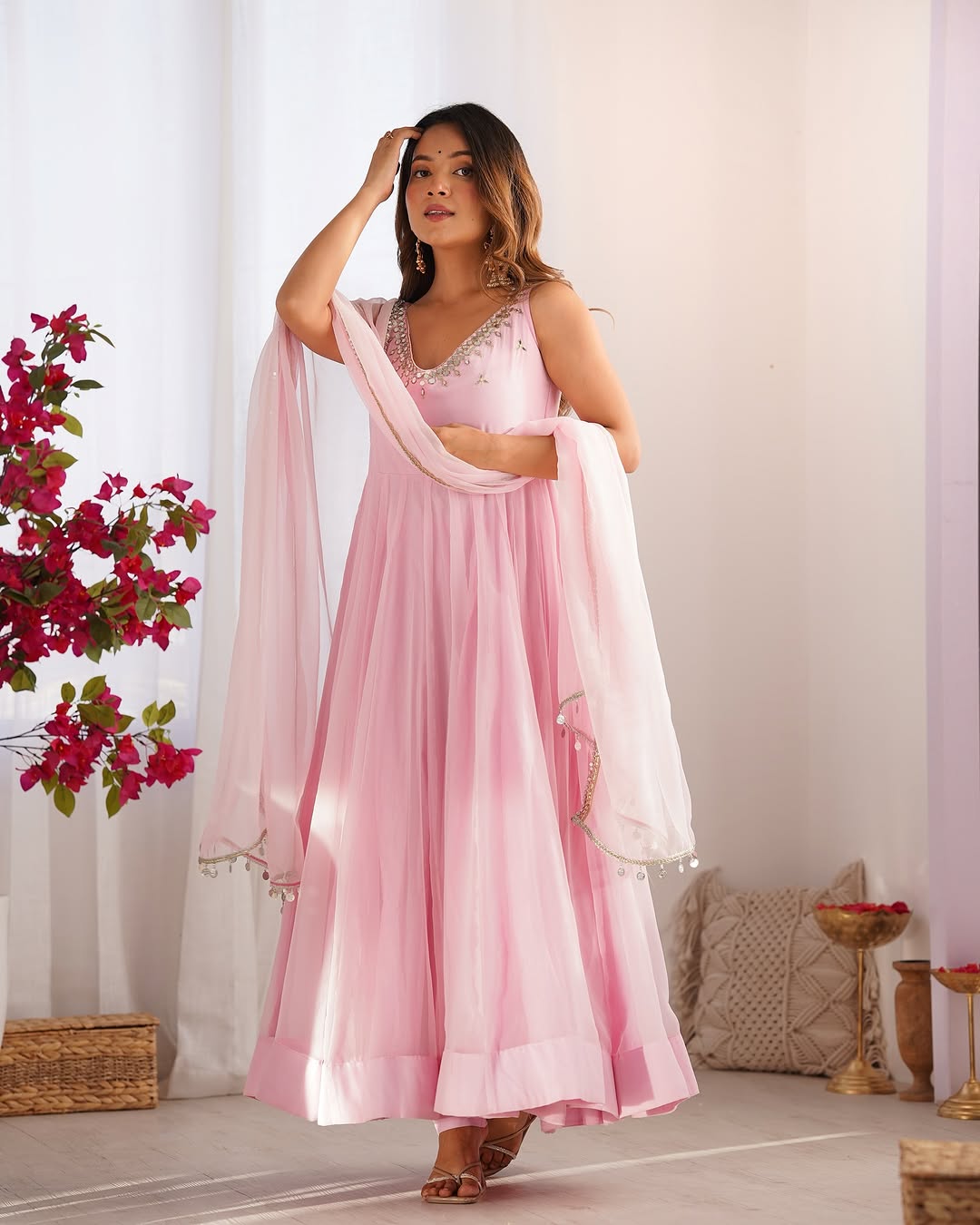
Measure kurta length from the highest shoulder point to the desired hem, rather than from the neckline. A 58-inch finished length may fall at the ankle on one wearer and brush the floor on another because torso and leg proportions differ. The hem should normally sit about 1 to 2 centimetres above the floor when worn with the planned shoes.
Allowing ease is essential for sitting and walking. A readymade kurta generally needs approximately 5 to 8 centimetres of bust ease for comfortable movement, although the amount depends on the fabric, lining and preferred fit. A garment with embroidery or non-stretch lining may require more ease than a soft rayon style.
Shorter wearers often benefit from a single-colour base, a moderate flare and a hem that nearly covers the shoe without dragging. Deep necklines, narrow embroidered panels and a dupatta draped vertically can add direction. Very wide contrasting borders at the ankle can make the figure appear shorter.
Taller wearers can carry wider panels, tiered hems and stronger horizontal borders with ease. A contrasting dupatta, defined waist seam or broad sleeve cuff can prevent a long garment from appearing like one uninterrupted column. Taller proportions also allow a fuller flare without overwhelming the frame.
A fuller bust needs sufficient front length, bust ease and thoughtful embroidery placement. A yoke that finishes above the fullest part of the bust can look cleaner than dense work placed directly across it. A narrow shoulder line may benefit from a boat neckline, structured shoulder seam or dupatta worn over one shoulder.
Curved body shapes need comfort at the waist and hip rather than simply sizing up the entire garment. Extra width at the shoulders can create a loose neckline, while insufficient hip ease can pull the front hem upward. Compare the garment measurements with a well-fitting kurta before ordering.
Choosing Floor-Length Salwar Suits by Fit Fabric and Occasion Means Understanding Textile Behaviour
Fabric weight determines how a long salwar suit falls, how warm it feels and how much structure the flare retains. Rayon, cotton, Chinon silk, organza and silk have different drape, crease and care characteristics, so fabric selection should follow the event and climate.
Which fabrics suit daytime floor-length salwar suits?
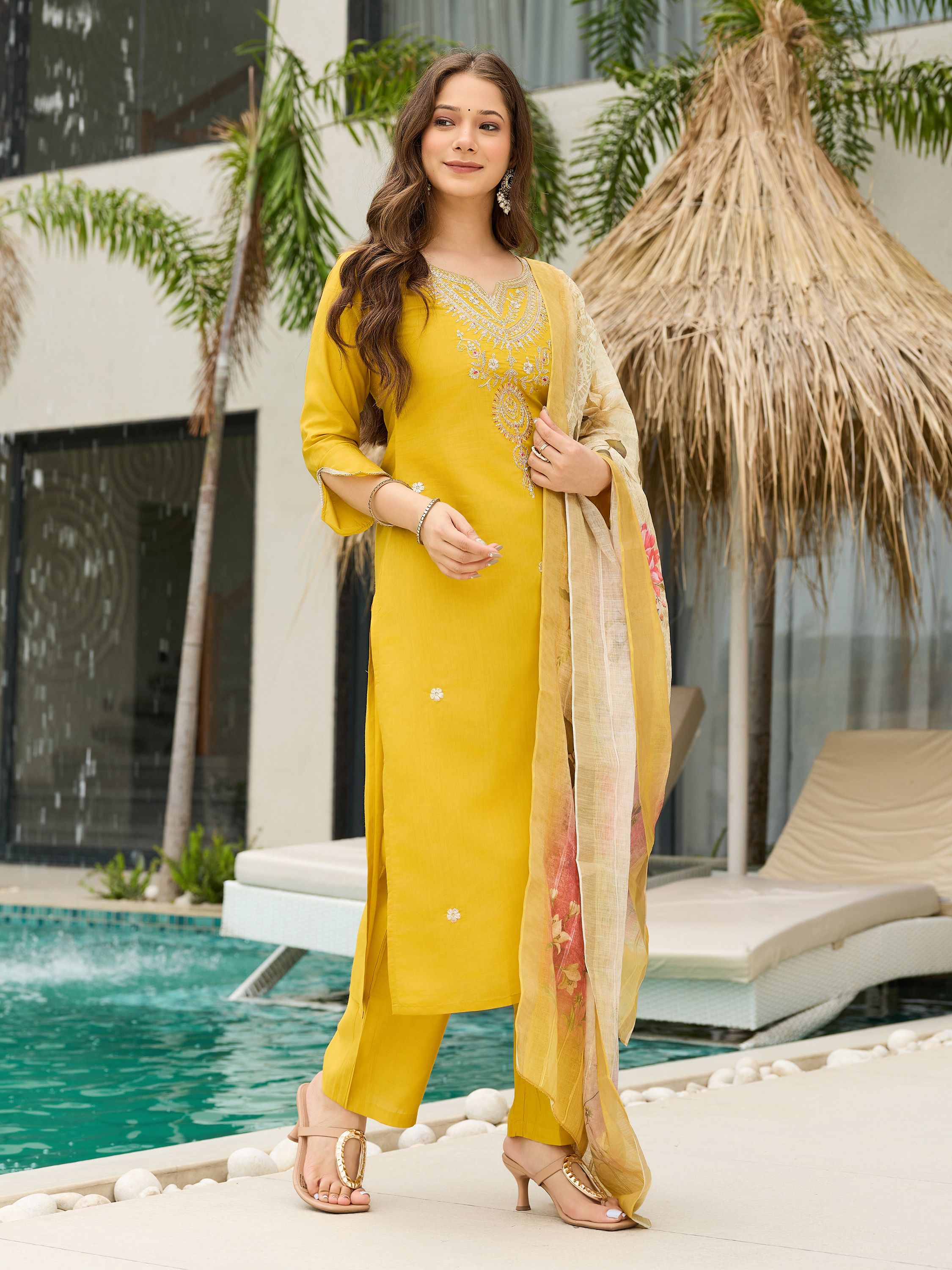
Cotton suits are practical for daytime functions because cotton permits airflow and handles warm weather comfortably. Cotton can crease around the waist and lap, so a floor-length cotton suit should have enough width to prevent pulling while seated. The Vertical Cotton Straight Kurta Set with Dupatta is better suited to a relaxed daytime proportion than to a heavily embellished evening function.
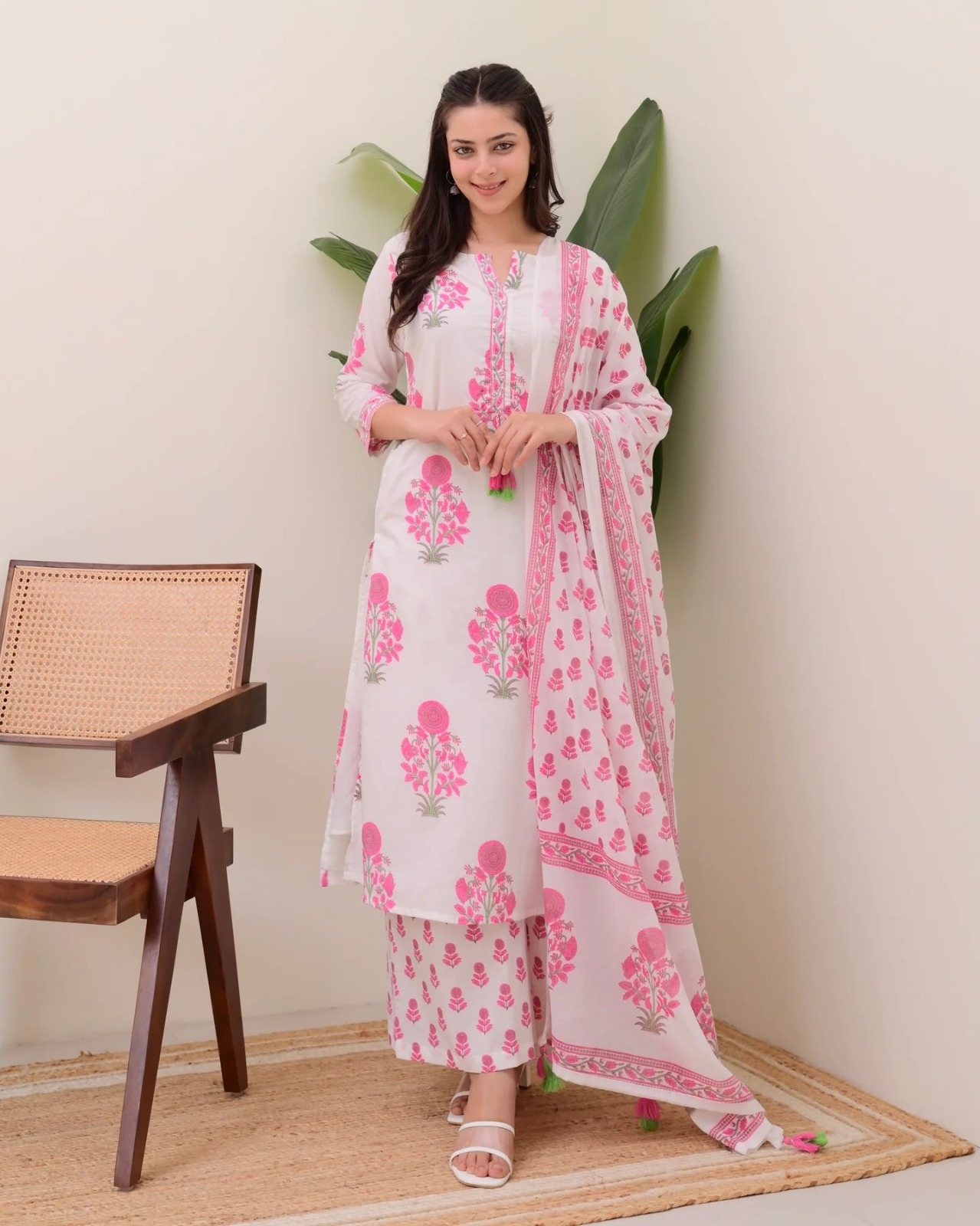
Rayon has a soft drape and generally falls closer to the body than crisp cotton. The Cream Pink Printed Rayon Readymade Salwar Suit can work for a lunch, casual festive visit or light family gathering. Rayon should be washed according to its care label because excessive heat may affect the garment's shape and surface finish.
Which fabrics create a formal evening effect?
Silk and silk-blend fabrics create a richer visual presence because they reflect light and can hold a structured flare. Banarasi silk commonly has a woven sheen, while Kanjeevaram is associated with a denser silk hand and traditional zari work. Banarasi silk and Kanjeevaram are not interchangeable textiles, so descriptions and care instructions should be checked rather than assuming that every glossy fabric is the same.
Chinon silk has a fluid, dressy fall and suits evening shararas or layered garments. The Brown Chinon Silk Sharara Suit Set for Women demonstrates how a soft textile can provide festive movement without requiring a stiff skirt. Silk and silk-blend outfits should be stored folded with clean muslin or hung on a broad padded hanger when embroidery makes the garment heavy.
Why is organza useful for a dupatta?
Organza is a crisp, lightweight textile that holds shape and adds an airy finish to a dupatta. The Threadwork Salwar Suit with Pure Organza Dupatta uses the contrast between a worked suit and a structured sheer layer to create ceremony without adding much weight to the body of the outfit.
Organza can catch on jewellery, rough walls and handbag hardware. Secure bangles and brooches before draping an organza dupatta. Low-heat pressing, careful folding and storage away from compression help preserve the edge and translucency.
Choosing Floor-Length Salwar Suits by Fit Fabric and Occasion Should Follow Event Formality
Event suitability depends on the density, scale and placement of embellishment as much as on the garment length. A long suit with restrained embroidery can be more appropriate for a daytime ceremony than a shorter suit covered in reflective sequins.
What works for a Haldi ceremony?
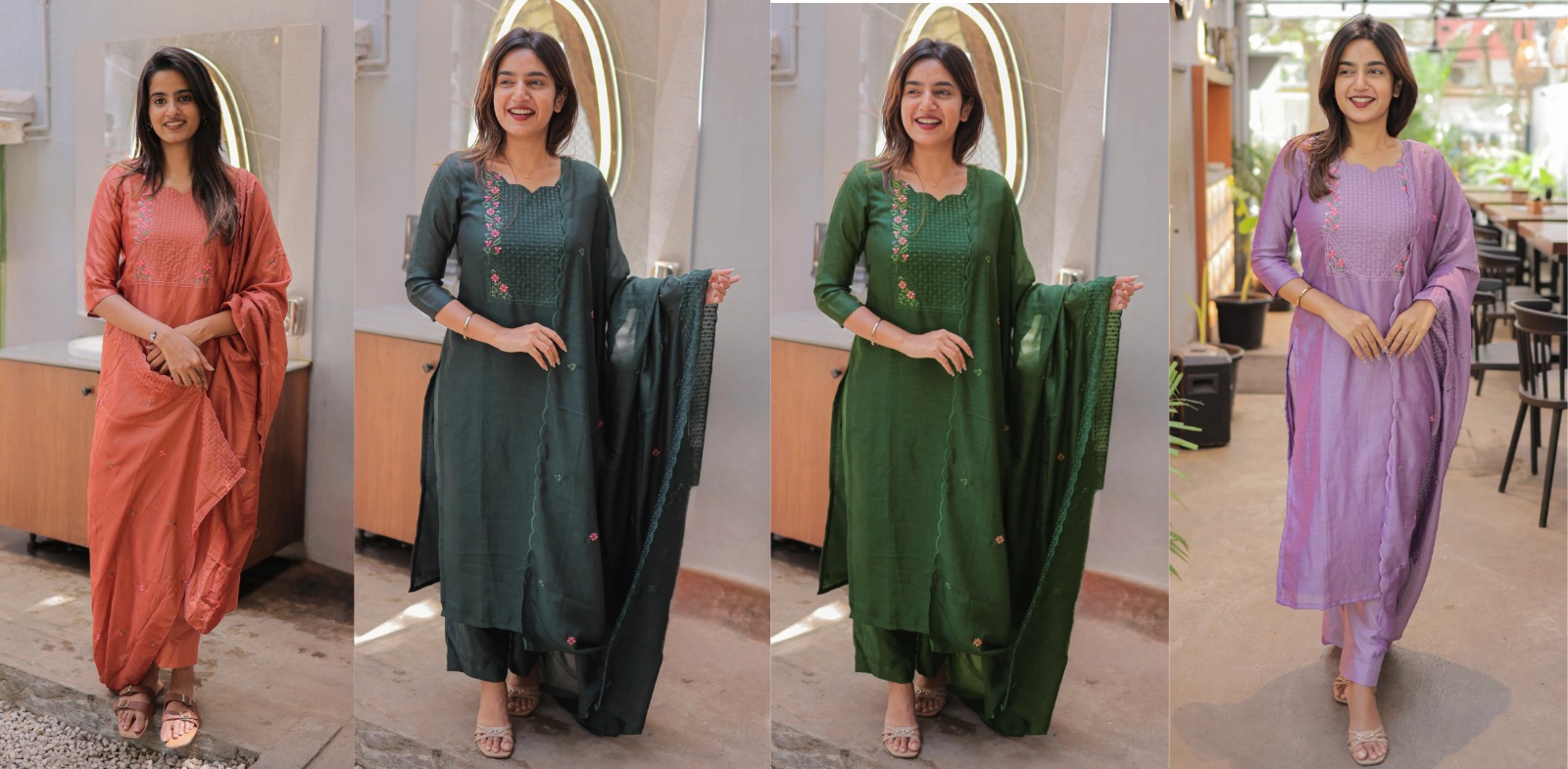
A Haldi ceremony calls for comfortable movement, manageable fabrics and colours suited to an active environment. Pista, cream, yellow, coral and pink can complement the celebratory setting, while a simple kurta with a comfortable bottom allows easier movement. The Pista Royale Salwar Suit offers an useful direction for a light festive palette.
Fabric-covered footwear is generally more practical than delicate metallic heels when outdoor activity is expected. A compact potli or small crossbody bag can keep both hands free. Avoid a trailing dupatta if turmeric paste, grass or crowded seating could catch the fabric.
Kalamkari Print Salwar Suits provide another useful direction for daytime dressing because narrative prints add visual interest without requiring heavy jewellery. A printed floor-length suit can be finished with small jhumkas, flat sandals and a simple braid or low bun.
What is suitable for a wedding reception?
A wedding reception can support more lustre, layered drape and detailed surface work, but comfort remains important during several hours of standing, dining and photographs. The Embroidered Salwar Suit Set for Women can suit a reception or evening family function when paired with earrings that echo the embroidery rather than competing with it.
The Black White Floral Embroidered Readymade Salwar Suit demonstrates how a restrained two-colour palette can make floral embroidery look formal without relying on heavy metallic work. Choose one accent colour in the footwear or clutch so the black-and-white base remains visually clear.
Maharashtra Paithani Inspired Salwar Suits can bring heritage colour relationships and zari-inspired richness into wedding dressing. The name references a regional textile tradition, but a salwar suit inspired by Paithani motifs should not automatically be treated as an authentic Paithani sari. Checking the product description prevents confusion between inspiration and textile origin.
How should you dress for a formal dinner?
A formal dinner favours clean tailoring, controlled shine and a dupatta that stays in position. The Cream Embroidered Silk Kurta Pant Set for Women can suit an indoor dinner or milestone event where a polished kurta-and-pant proportion is more practical than a wide sweeping flare.
Gujarat Bandhej Salwar Suits can introduce a patterned, regional craft reference to festive dinner dressing. Odisha Sambalpuri Salwar Suits offer another textile-inspired direction, particularly when the rest of the styling remains simple. Gujarat Bandhej and Odisha Sambalpuri references should be considered alongside the actual fabric and construction listed for the garment.
Choosing Floor-Length Salwar Suits by Fit Fabric and Occasion Includes Regional Design References
Regional design references influence colour, motif and styling, but the reference doesn't always identify the garment's actual fibre or weaving method. A careful buyer should distinguish a print, an inspired motif and a handwoven textile before making assumptions about price, durability or care.
Maharashtra Paithani Inspired Salwar Suits may suggest jewel tones, peacock motifs and zari-like borders. Gujarat Bandhej Salwar Suits may suggest dotted tie-dye patterns and vibrant colour contrasts. Odisha Sambalpuri Salwar Suits may suggest geometric or nature-inspired motifs associated with Sambalpuri design language.
Punjab Patiala Salwar Suits are useful when you want a more relaxed, pleated lower half and greater leg movement. A Patiala-inspired proportion usually needs enough fabric in the salwar to form comfortable pleats, so a close-fitting kurta can create balance. A floor-length version should be checked carefully at the ankle because excess lower fabric can gather against the hem.
Kalamkari Print Salwar Suits can work for daytime events when a printed surface is more appropriate than metallic embroidery. Repeating floral, mythological or natural motifs can also guide accessory choices. Keep jewellery quieter when the print contains several strong colours.
Choosing Floor-Length Salwar Suits by Fit Fabric and Occasion Includes Shoes, Dupattas and Care
Footwear should be selected before the final hem is fixed because even a small change in heel height affects a floor-length garment. Flat sandals, juttis and low block heels suit daytime wear, while a stable block heel can add height without creating the balance problems of a narrow stiletto.
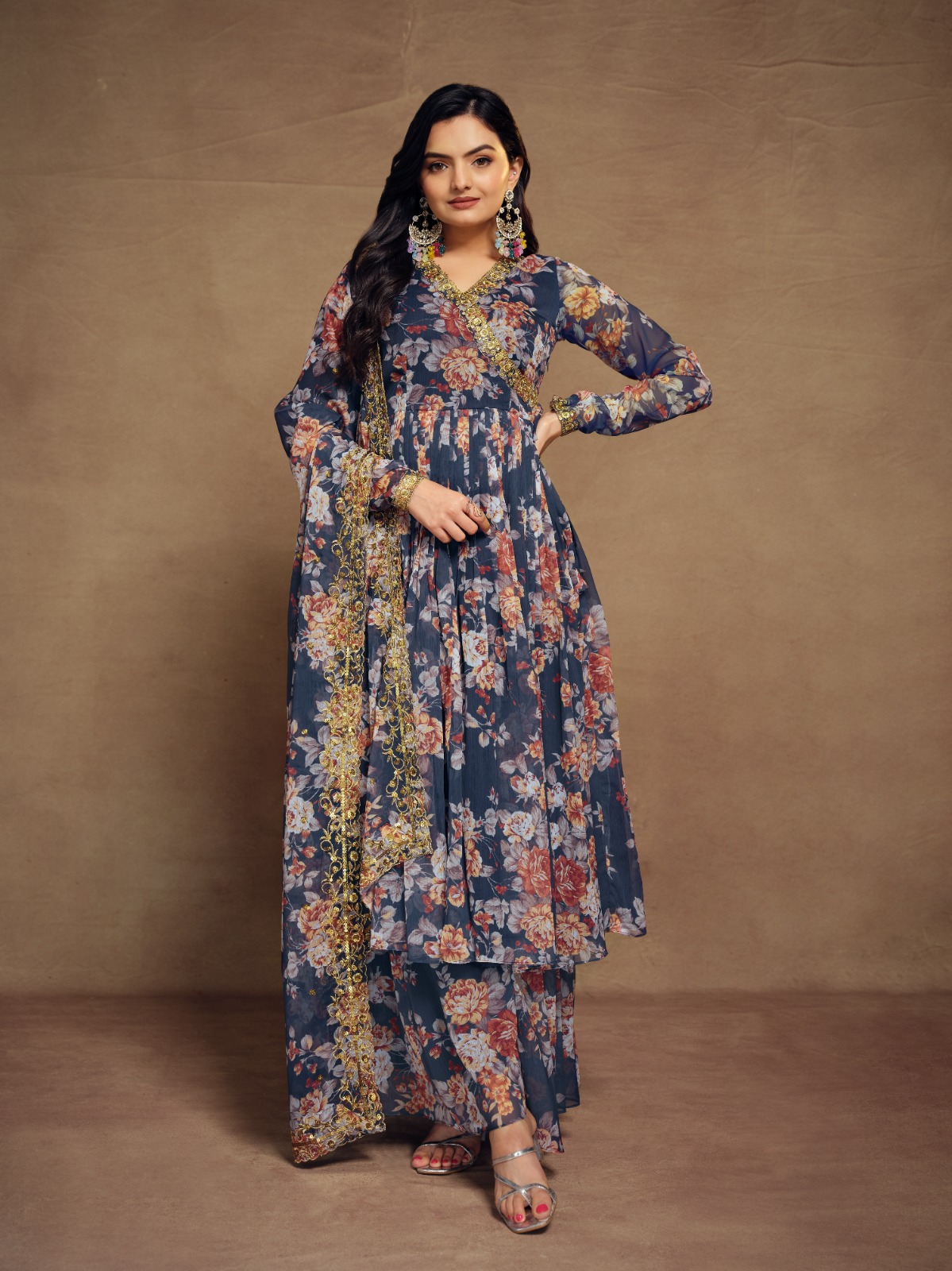
A dupatta changes both proportion and practicality. A sheer organza dupatta adds structure, a soft chiffon-like layer creates movement, and a heavier embroidered dupatta adds formality but may pull at the shoulder. Pin the dupatta at the shoulder and, if necessary, near the waist for dancing, commuting or moving through a crowded venue.
Inspect the hem before leaving home. Loose threads, unsecured hooks and a lining that extends below the outer layer can catch on footwear. Test walking up three or four steps and sitting on a standard chair while wearing the complete outfit.
Read the care label before washing. Cotton may tolerate a gentle wash but can shrink or bleed depending on dye and finish. Rayon often benefits from cool water and careful drying. Silk, Chinon silk, organza and heavily embroidered garments commonly require specialist or dry cleaning, although the garment label should take priority.
Store embellished suits without pressing heavy jewellery or folded accessories against the embroidery. Clean garments before long-term storage, use breathable fabric covers and avoid direct sunlight, which can gradually alter bright dyes. These small habits preserve both the fabric and the shape of a floor-length salwar suit.
Choosing Floor-Length Salwar Suits by Fit Fabric and Occasion Becomes a Simple Buying Checklist
A reliable purchase decision can be made by checking five details in order: measurement, movement, fabric, formality and care. First, compare the listed garment measurements with a garment that already fits. Second, confirm that the hem works with the intended footwear. Third, decide whether the textile suits the climate and hours of wear.
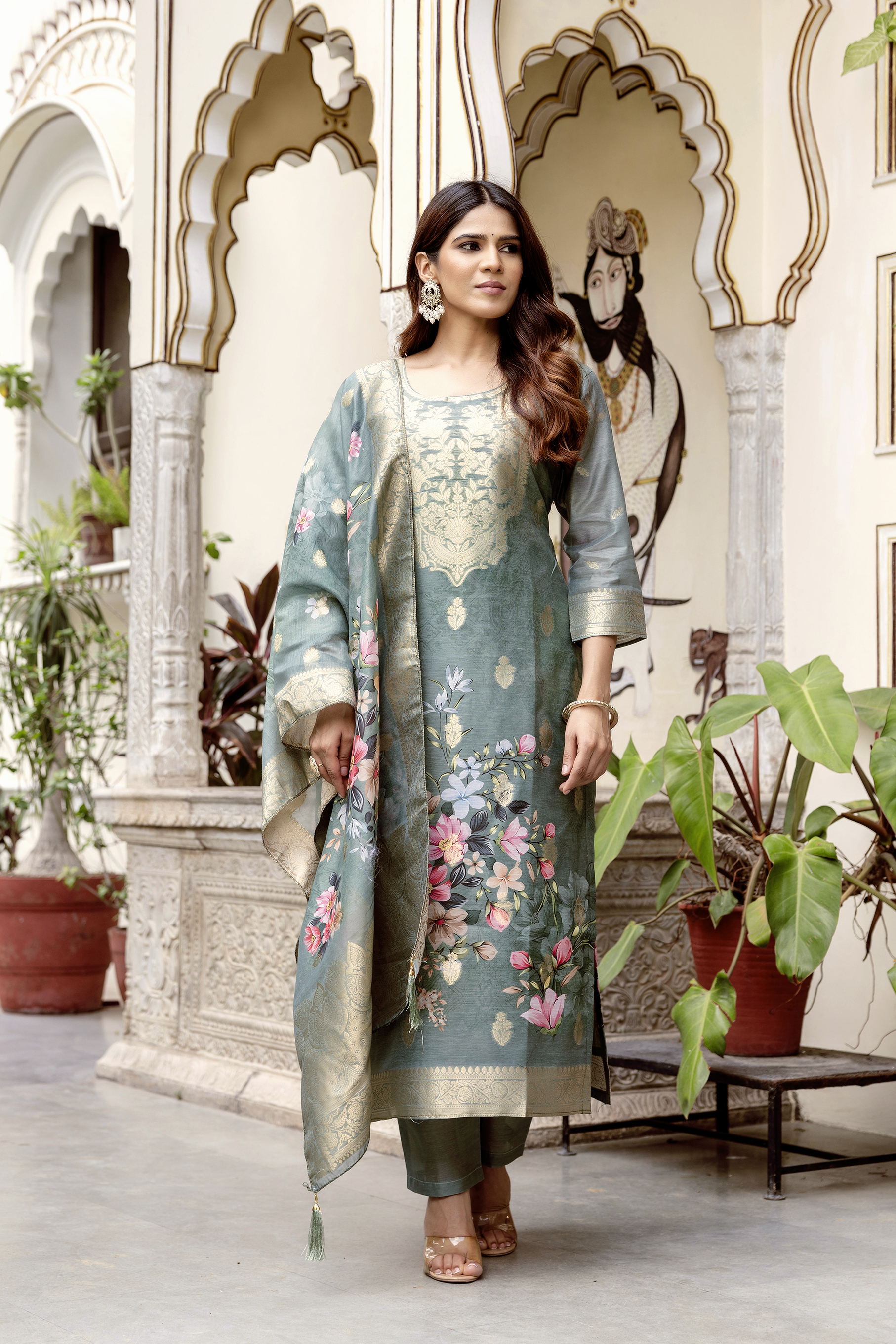
Fourth, match embroidery and colour contrast to the event rather than selecting the most decorated option automatically. Fifth, confirm washing, lining and storage requirements before ordering. A floor-length suit that survives sitting, walking and repeated careful cleaning will provide more value than an impressive design that can't be worn comfortably.
The strongest choice is usually the one that solves a specific dressing need. A cotton straight kurta can serve daytime gatherings, a rayon printed suit can handle lighter festive visits, a Chinon silk sharara can suit an evening celebration and a silk kurta-and-pant set can provide formal polish without excessive volume.
Common Questions About Choosing Floor-Length Salwar Suits by Fit, Fabric and Occasion
How long should a floor-length salwar suit be?
A floor-length salwar suit should normally finish about 1 to 2 centimetres above the floor when worn with the intended footwear. Measure from the highest shoulder point to the hem, because necklines and torso proportions can make a length measurement inaccurate.
Which fabric is best for a floor-length salwar suit in summer?
Cotton is usually the most practical summer choice because it allows airflow, while rayon offers a softer drape. Choose a lining carefully because a heavy synthetic lining can make even a lightweight outer fabric feel warm.
Can shorter women wear floor-length salwar suits?
Shorter women can wear floor-length salwar suits successfully by choosing a moderate flare, a near-monochrome colour scheme and a hem that does not drag. Narrow vertical details and footwear with a stable low heel can help maintain a long visual line.
Are floor-length anarkali suits suitable for weddings?
Floor-length anarkali suits are suitable for weddings when the flare, lining and embellishment match the ceremony or reception. Silk blends, Chinon silk, embroidery and an organised dupatta can create a formal effect, while sufficient ease keeps the garment wearable for several hours.
What should I wear to a Haldi ceremony instead of a heavily embellished suit?
A breathable cotton or rayon suit in pista, yellow, cream, pink or coral is usually more practical for a Haldi ceremony than a heavily embellished garment. Choose secure footwear and a dupatta that can be pinned because movement and accidental contact with turmeric are likely.
How should a floor-length salwar suit be stored?
Store a clean floor-length salwar suit in a breathable garment cover away from direct sunlight. Fold heavy embroidered pieces with clean muslin or use a broad padded hanger, and follow the care label for silk, organza, rayon and embellished fabrics.


