

Choosing Fabric and Colour for Day Wedding Lehenga vs Night Wedding Lehenga affects comfort, photography, formality and how richly an outfit appears under changing light. A powder-blue silk lehenga can look luminous at noon, while the same shade may appear muted in a dim banquet hall. Fabric surface, colour depth, embroidery density and the wedding venue matter as much as personal taste.
Day weddings usually reward breathable fabrics, softened colours and controlled shine. Night weddings can support deeper jewel tones, reflective surfaces and heavier embroidery because artificial lighting absorbs some colour and makes metallic details sparkle. The most reliable choice comes from considering the ceremony time, season, venue, dress code and how long the outfit must remain comfortable.
Choosing Fabric and Colour for Day Wedding Lehenga vs Night Wedding Lehenga in Different Light
Daylight reveals colour undertones, fabric texture and embroidery detail more clearly than evening lighting. Direct sun can make white, yellow and neon shades appear more intense, while open-shade daylight shows whether a fabric looks matte, glossy, sheer or heavily textured.
Outdoor daylight is broad and relatively neutral, so pale shades such as blush pink, sage green, powder blue, ivory and peach continue their identity. Bright sunlight also reflects strongly from sequins, mirror work and metallic zari. A heavily embellished choli can therefore look more dramatic in photographs than it seemed in a bedroom mirror.
Midday heat creates a second consideration. Dense velvet, multiple lining layers and tightly woven synthetic fabrics can become uncomfortable during pheras or an outdoor wedding lunch. A lighter skirt with a breathable lining allows air movement and reduces the need to keep adjusting the waistband or dupatta.
Open shade is usually more flattering than direct sunlight for outfit photography. When a wedding takes place under a mandap, choose a colour that works in both conditions because the outfit may move between harsh sun, tent shade and indoor rooms. A multicoloured design can be practical because several shades remain visible across changing backgrounds.
Choosing Fabric and Colour for Day Wedding Lehenga vs Night Wedding Lehenga by Fabric
Silk blends, butter silk, muslin cotton, light georgette and airy net work well for daytime weddings when the lining is comfortable and the embellishment isn't excessively dense. These materials provide movement, visible texture and enough structure for a polished silhouette without making the outfit feel overly heavy.
Silk and butter silk for daytime
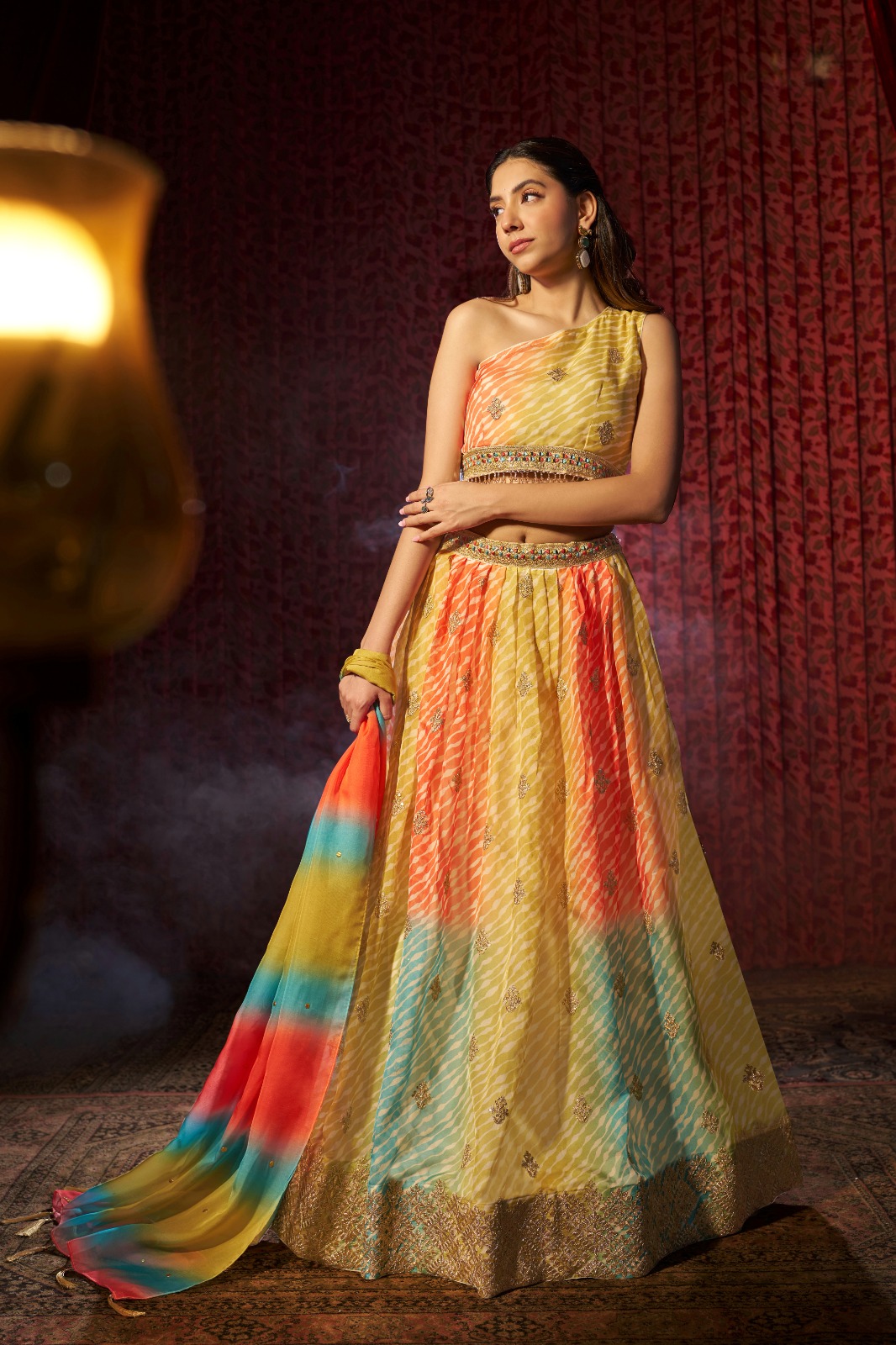
Butter silk has a smooth, soft hand feel and a gentle lustre that photographs well without the hard flash of mirror-heavy fabric. Stylish Multicolor Butter Silk Lehenga Choli Set and Multicolor Printed Butter Silk Lehenga Choli Set show why multicolour butter silk suits a daytime mehendi, wedding lunch or daytime reception: the base remains fluid while printed or woven colour adds interest.
Silk lehengas provide more structure and formality than butter silk. Designer Threadwork Silk Lehenga Choli Set with Dupatta can suit a daytime ceremony when threadwork, rather than dense metallic embroidery, creates the main decoration. Silk Lehengas Under 3000 is an useful starting point for comparing lighter silk-look options, but check the fibre composition and lining before assuming that every silk-labelled garment has the same breathability.
Muslin cotton and lighter net
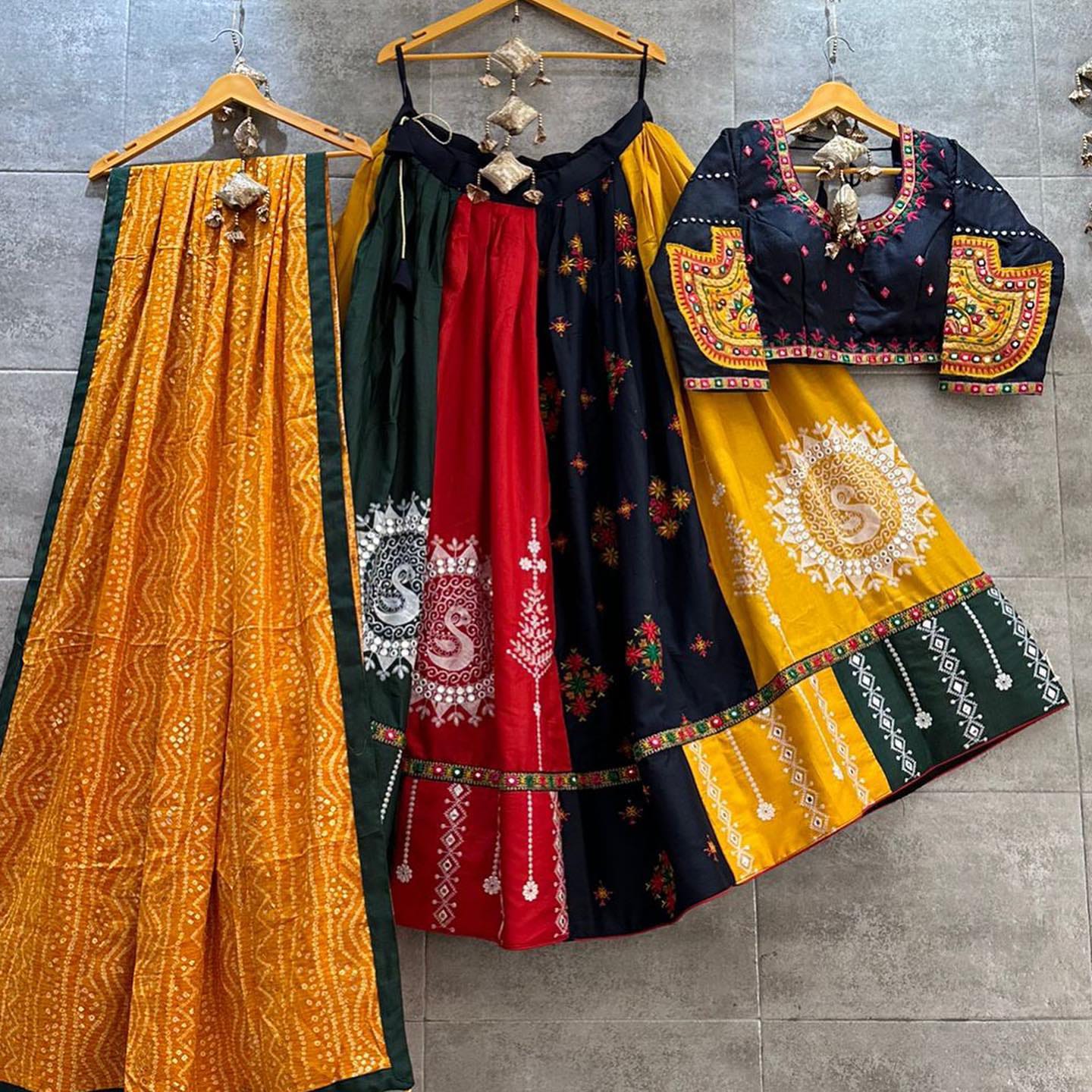
Muslin cotton feels more breathable than heavily coated synthetic fabric and is useful for warm-weather functions. Multicolor Mirror Work Muslin Cotton Lehenga Choli Set brings texture and festive reflectivity while keeping the base visually lighter than a fully sequinned skirt. Mirror work still catches direct sun, so a balanced blouse and a less reflective dupatta can prevent the outfit from becoming visually busy.
Net creates volume with relatively little fabric weight, although net itself may not feel cool if layered over a dense lining. Net Lehengas Under 4500 with 51% Discount can help compare silhouettes and surface decoration, but inspect whether the skirt uses cotton, satin or polyester lining. A breathable inner layer matters more than the net overlay during an outdoor ceremony.
Choosing Fabric and Colour for Day Wedding Lehenga vs Night Wedding Lehenga Colours
Soft pastels, fresh mid-tones and clear festive colours usually suit daytime weddings because daylight keeps them luminous without requiring heavy embellishment. Blush, peach, coral, mint, pistachio, powder blue, lilac, lemon yellow and warm ivory are dependable choices for wedding guests.
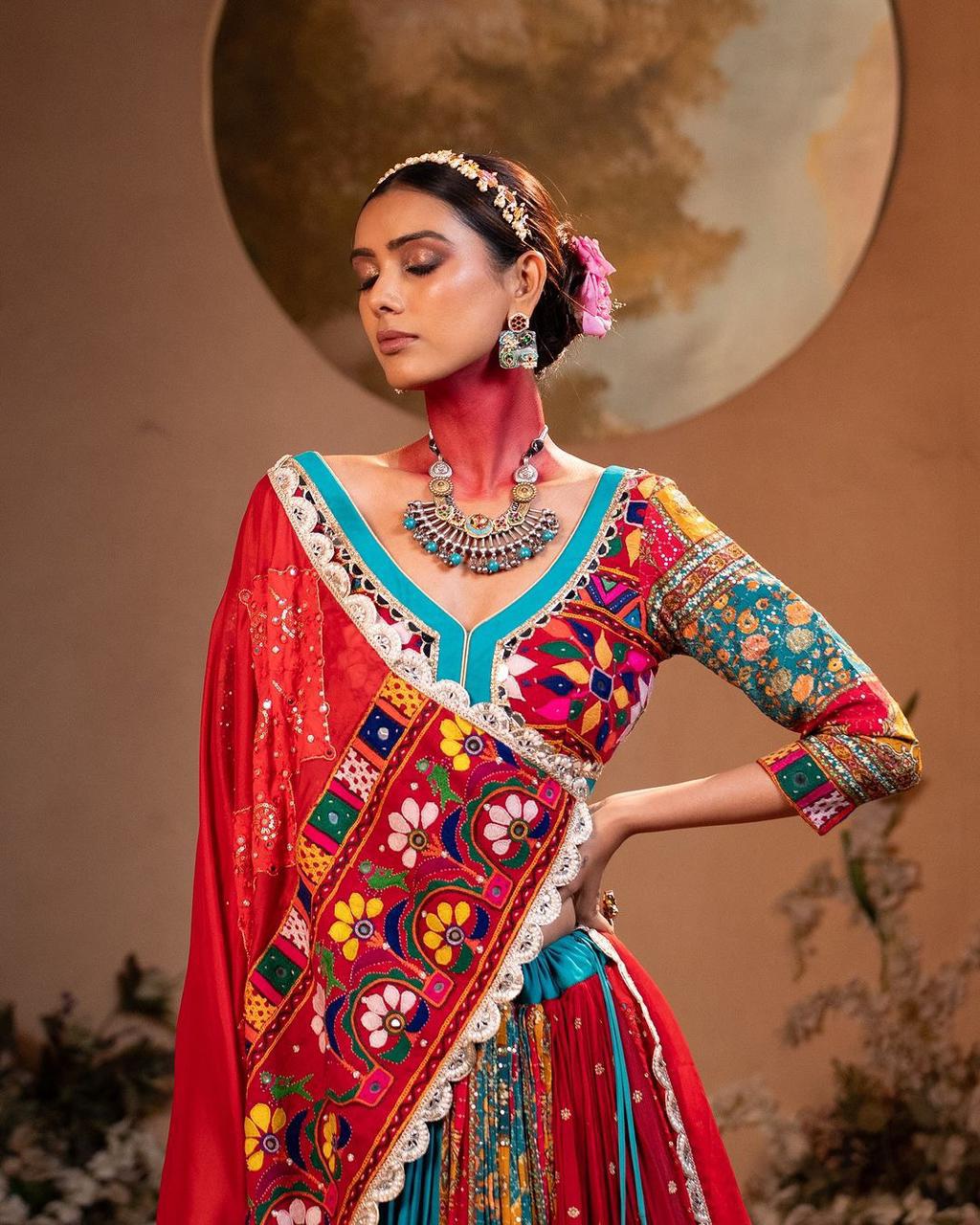
Colour temperature should support the ceremony setting. Peach, marigold and coral complement floral mandaps and garden venues, while mint, sage and powder blue feel calmer beside white décor. Pink remains versatile: dusty rose works for an elegant daytime reception, whereas brighter fuchsia brings more festive energy to a mehendi or sangeet.
White needs context. Festive White Lehenga Choli with Mirror Work Design may work for a reception with a clearly stated colour theme, a sangeet or a resort wedding, but guests should avoid wearing bridal white where the bride is expected to wear ivory or white. Pairing white with colourful jewellery or a contrasting dupatta can make the outfit feel celebratory rather than bridal, but the host's dress code takes priority.
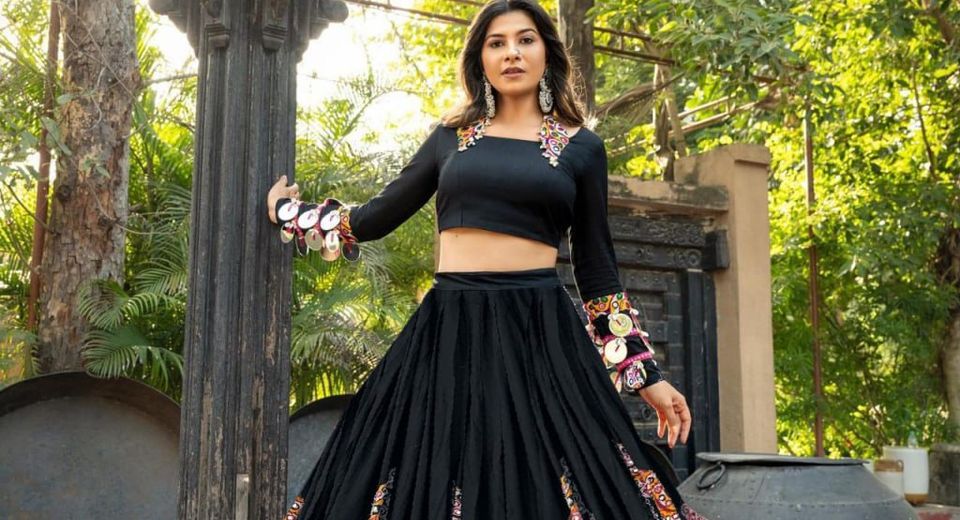
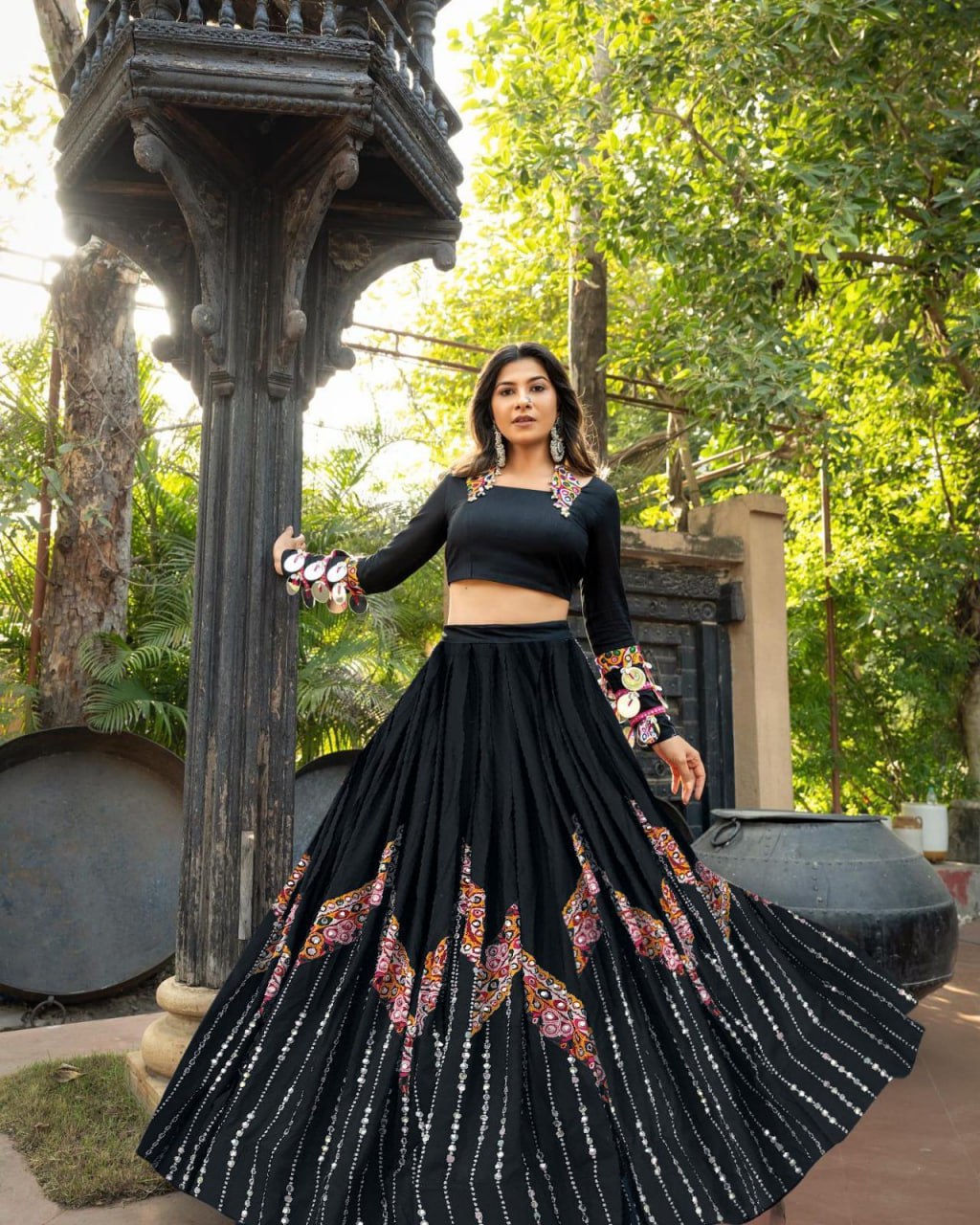
Very dark colours are not forbidden in daylight, although they absorb heat and can look severe against bright outdoor backgrounds. Black Wedding & Festive Wear Designer Lehenga can work for an evening-oriented celebration, a cocktail sangeet or a formal indoor venue. For a daytime wedding, soften black with a colourful dupatta, floral jewellery or bright footwear if the invitation doesn't suggest a traditional pastel palette.
Choosing Fabric and Colour for Day Wedding Lehenga vs Night Wedding Lehenga at Evening Events
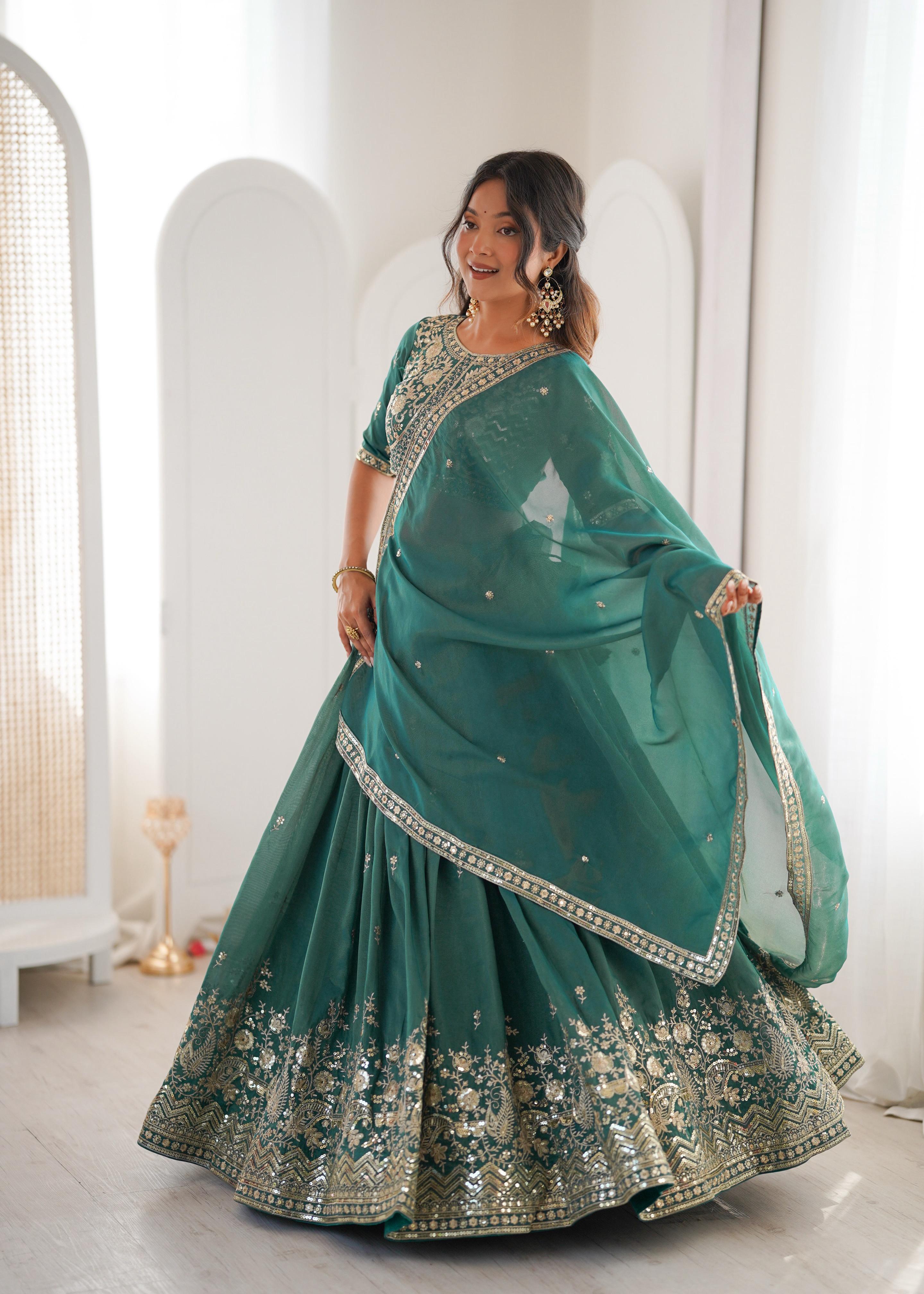
Night weddings support richer colours, lustrous fabrics and concentrated embellishment because warm artificial light gives depth to dark shades and activates reflective surfaces. Deep wine, emerald, sapphire, plum, magenta, midnight blue, charcoal and black are strong choices for evening receptions and late sangeet events.
Satin creates a smooth reflective surface that catches spotlights and movement. Magenta Satin Embroidered Lehenga Set Online illustrates how a saturated colour and glossy surface can look especially vivid under reception lighting. Satin can also reveal creasing, so steam the skirt before dressing and sit carefully to preserve a clean fall.
Sequinned net and embellished net are effective when the evening dress code calls for glamour. Red Butterfly Net Sequins Lehenga Set Wedding Wear uses a high-contrast colour and reflective decoration that can hold its own in low light. Red ranges from orange vermilion to blue-based crimson; choose a blue-based red for a jewel-toned evening palette and an orange-based red for warmer décor.
Velvet, brocade and heavier silk are practical for cool-weather night weddings because their weight adds warmth and their surfaces absorb and reflect light in different ways. Banarasi silk and zari can look particularly rich under warm lighting, but a heavily woven skirt may need a lighter blouse or a simpler dupatta to prevent the full outfit from feeling cumbersome.
Choosing Fabric and Colour for Day Wedding Lehenga vs Night Wedding Lehenga should not lead to a rigid rule that pale colours belong only to daytime and dark colours belong only to night. A pale silver lehenga with crystal work can look excellent at an evening reception, while a deep emerald butter silk lehenga can work at a daytime winter wedding. Surface shine, venue lighting, season and total embellishment determine the result.
Choosing Fabric and Colour for Day Wedding Lehenga vs Night Wedding Lehenga Embellishment
Daytime lehengas usually benefit from dispersed embroidery, threadwork, small sequins or restrained mirror work, while night-time lehengas can carry larger motifs, denser zari, crystals and concentrated sequin panels. The difference is visual balance rather than a strict limit on sparkle.
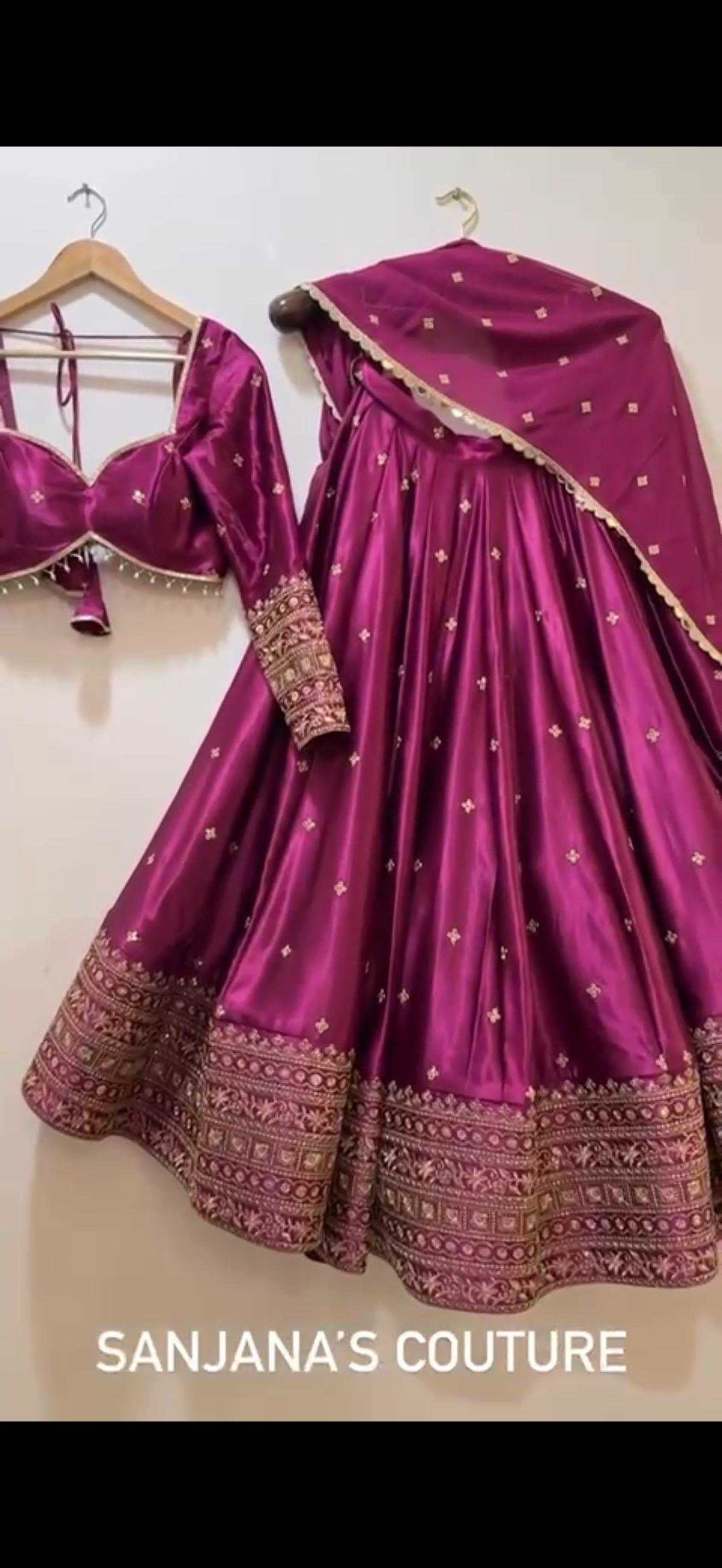
Sunlight exposes every reflective element, so a skirt covered from hem to waistband with large mirrors may appear brighter than expected in outdoor photographs. If the lehenga already has high shine, choose matte makeup, a simple clutch and jewellery with one dominant material. Mirror work pairs neatly with oxidised silver or limited kundan instead of several competing metallic finishes.
Evening light can flatten matte fabrics and make small embroidery disappear at a distance. Sequins, crystals, zari and satin help define the outfit under chandeliers and stage lighting. A dark skirt with tone-on-tone embroidery can look refined in person but may lose its pattern in photographs unless the motifs include reflective or contrasting detail.
Dupatta placement controls how much embellishment reaches the face. A heavily bordered dupatta draped over one shoulder frames the upper body for evening photographs. A lighter, narrower border is often easier for daytime movement, particularly when greeting guests, walking across grass or sitting through a long ceremony.
Choosing Fabric and Colour for Day Wedding Lehenga vs Night Wedding Lehenga by Venue and Season
The venue and season can override a simple day-versus-night colour rule. A summer garden wedding requires more airflow than a winter ballroom reception, and a beachside ceremony reflects more light than a covered hotel mandap.
Outdoor summer weddings
Choose butter silk, muslin cotton, light georgette or a lightly lined net lehenga for an outdoor summer wedding. Colours such as peach, pistachio, coral, lilac and powder blue stay fresh in bright conditions. Avoid very heavy velvet, thick polyester lining and dense full-skirt embroidery when temperatures may remain above 30°C.
Winter daytime weddings
Winter daylight allows richer fabrics and stronger colours without the same heat penalty. A wine, emerald or royal-blue silk lehenga can look understated at a late-morning ceremony, especially when paired with a lighter dupatta and closed-toe footwear. The shorter daylight window also means the outfit may be photographed in both cool outdoor light and warm indoor lighting.
Hotel ballrooms and banquet halls
Ballroom lighting often includes warm spotlights, chandeliers and camera flash, so medium-to-deep colours with controlled shine are dependable. A formal option such as Bridesmaid Lehengas Under 5500 can be assessed according to the wedding party's palette, particularly when the bride has requested coordinated shades.
Mehendi and haldi venues
Yellow, orange, green, pink and printed multicolour designs suit the energetic setting of a Haldi ceremony or mehendi. Haldi Lehengas Under 5500 is relevant for comparing cheerful silhouettes, but avoid fragile surface work if turmeric paste, flower petals or outdoor dust will be part of the celebration. A washable or carefully spot-cleanable lining is useful for functions involving colour rituals.
Choosing Fabric and Colour for Day Wedding Lehenga vs Night Wedding Lehenga Before Buying
A short pre-purchase checklist prevents most fabric and colour mistakes. Confirm the ceremony time, ask whether the venue is indoor or outdoor, check the fibre and lining, and view the colour in both natural and artificial light before committing.
- Read the invitation first. A stated colour palette, religious custom or dress code takes priority over general styling advice.
- Check the event length. For six or more hours of wear, prioritise a comfortable lining, secure hooks and a manageable dupatta over maximum surface embellishment.
- Test the fabric movement. Walk, sit and climb two steps in the lehenga if possible. A skirt that catches at the ankles or a choli that restricts the shoulders will remain uncomfortable throughout the wedding.
- Inspect the reverse side. Rough sequins, exposed thread ends and stiff seams can irritate skin, especially around the waist and under the arms.
- Compare light conditions. Hold the garment near a window, under warm indoor bulbs and beside a phone flash. Colour and shine can change substantially between these settings.
- Allow alteration time. Schedule fitting at least 7 to 10 days before the wedding when possible. Tailoring can change the waist, hem, blouse neckline and sleeve comfort without changing the garment's main design.
The most useful final test is a full-look photograph taken from several metres away. A lehenga should retain a clear colour identity, visible motif placement and comfortable proportions when photographed from a distance, not only when viewed close up.
Common Questions About Choosing a Day or Night Wedding Lehenga
Which colour lehenga is best for a daytime wedding?
Pastels and fresh mid-tones such as peach, blush, mint, pistachio, powder blue, coral and lilac usually work best for daytime weddings. Daylight keeps these colours bright and makes their embroidery visible without requiring excessive sparkle.
Which colour lehenga is best for a night wedding?
Jewel tones such as emerald, wine, sapphire, plum, magenta and midnight blue suit many night weddings. Black, charcoal and deep red can also work well when the venue is formal and the outfit includes enough texture or reflective detail for photographs.
Which fabric is comfortable for a summer wedding lehenga?
Muslin cotton, butter silk, light georgette and a lightly lined net lehenga are generally more comfortable for summer weddings than velvet or heavily layered polyester. The lining matters as much as the outer fabric, so check whether it allows movement and airflow.
Can I wear a dark lehenga to a daytime wedding?
Yes, a dark lehenga can suit a daytime wedding when the fabric is lightweight and the styling introduces brightness. Balance black, wine or navy with a colourful dupatta, floral jewellery, lighter makeup or bright footwear, while following any dress code set by the hosts.
Is mirror work suitable for an evening wedding?
Mirror work is suitable for an evening wedding because artificial light makes reflective details sparkle. Medium or large mirrors usually show more clearly than tiny motifs in a dim venue, although the total effect should be balanced with simpler jewellery or a less ornate dupatta.
How can I check whether a lehenga colour will photograph well?
Photograph the lehenga near a window, under warm indoor light and with phone flash before the event. A suitable colour should retain a recognisable tone in all three conditions, while embroidery should remain visible without producing distracting glare.


