

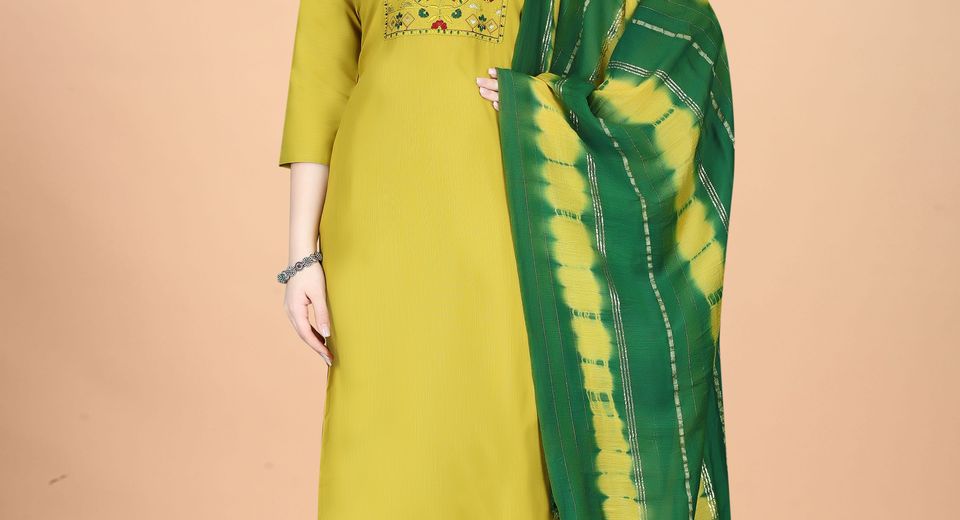
Choosing Dupatta Length for Different Salwar Suit Kurta Shapes can change the balance of an entire outfit. A dupatta that works beautifully with a straight cotton kurta may look too short beside a wide Anarkali, while an extra-long drape can overwhelm a petite frame. The useful starting point is the kurta hemline, the amount of flare, the fabric weight and the way you plan to wear the dupatta.
Most ready-to-wear salwar suit dupattas measure between 2.25 and 2.5 metres in length and approximately 0.9 to 1.15 metres in width. Those measurements suit many average-height adults, but they're not universal rules. A person who is 155 cm tall, a person who is 175 cm tall and a person styling a floor-length Anarkali may need different proportions. The guide below shows how to choose with a tape measure rather than guesswork.
Choosing Dupatta Length for Different Salwar Suit Kurta Shapes: Why Proportion Matters
Dupatta proportion matters because the fabric creates a second vertical and horizontal line around the kurta. A well-proportioned dupatta frames the neckline, reaches an intentional point on the body and leaves enough fabric for the chosen drape without hiding the kurta design. A poorly proportioned dupatta can bunch at the waist, drag near the floor or make a flared silhouette appear wider.
Kurta shape determines how much visual space the dupatta must cover. A straight kurta has a narrow, uninterrupted fall, so a dupatta can be worn over one shoulder with both ends at similar lengths. An Anarkali has more lower-body volume, so a longer dupatta helps create continuity from shoulder to hem. A short kurta paired with palazzo trousers often benefits from a dupatta that ends below the hip, because a very short drape can make the upper half look crowded.
- Kurta length: A longer kurta generally needs a dupatta with sufficient drop to maintain proportion.
- Kurta volume: Flared and layered kurtas need more length and width than narrow straight silhouettes.
- Body height: Taller wearers can carry longer drapes, while petite wearers may need controlled pleats or a shorter finished drop.
- Fabric weight: Banarasi silk, dense zari and heavily embroidered fabrics need more structure than lightweight cotton or Chanderi.
- Drape method: A one-shoulder fall uses less length than a front-covering or head-covering drape.
Choosing Dupatta Length for Different Salwar Suit Kurta Shapes: Straight Kurtas
A 2.25 to 2.5 metre dupatta usually works best with a straight kurta, with each side falling between the knee and mid-calf when worn over one shoulder. A straight kurta has a clean column shape, so the dupatta should add movement without completely covering the front panel or side slits.
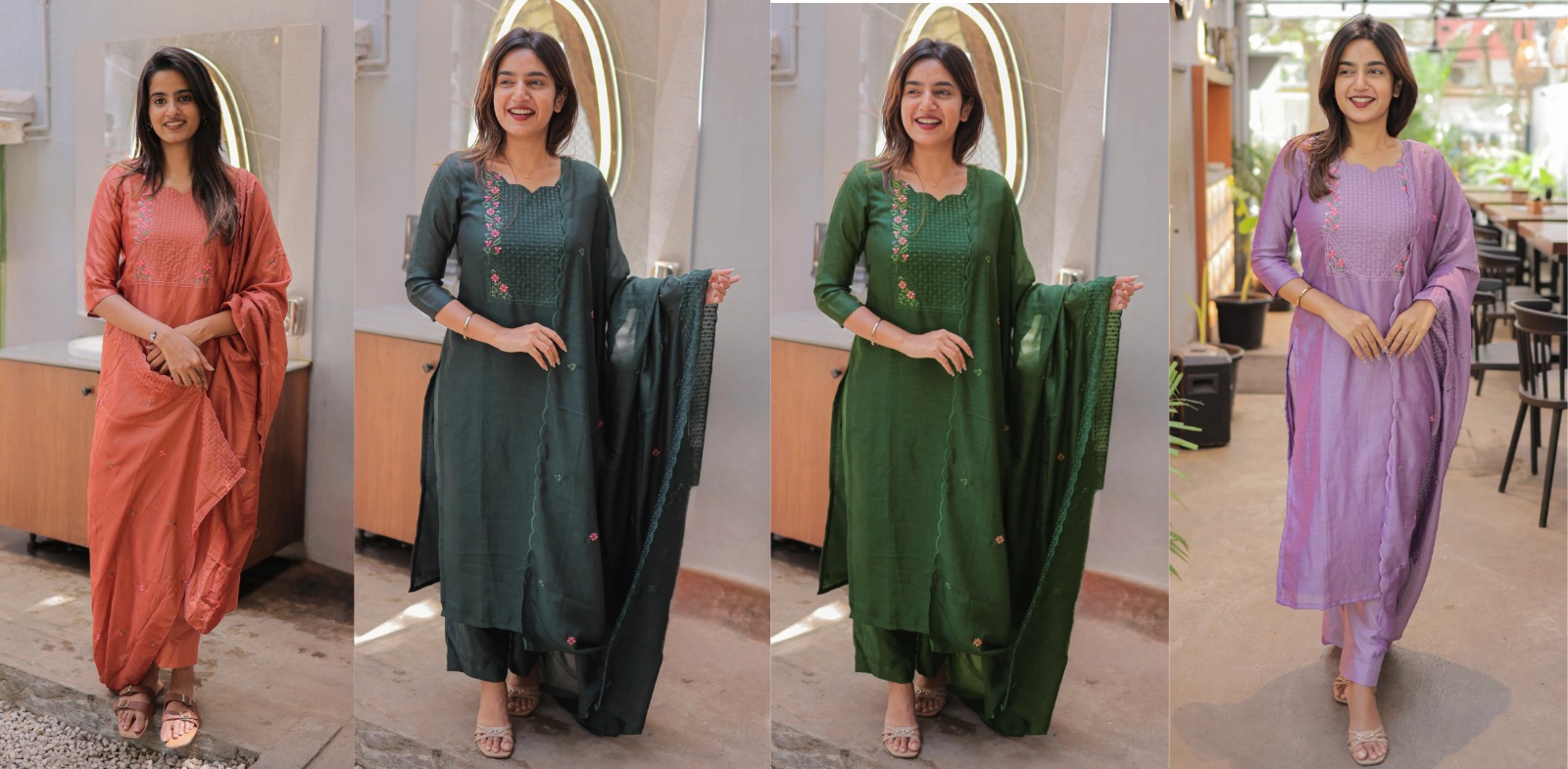
The Vertical Cotton Straight Kurta Set with Dupatta demonstrates why a moderate-length cotton dupatta is practical for daily wear. Cotton holds neat pleats, remains comfortable in warm weather and doesn't require a dramatic trailing fall. For a kurta that ends around the knee, allow approximately 75 to 95 cm of visible length on the front side after placing the centre of the dupatta near the neck or shoulder.
A straight suit with embroidery needs slightly more visual breathing room. The Embroidered Salwar Suit Set for Women can be styled with one narrow pleated shoulder side and one longer open side, allowing the embroidered kurta front to remain visible. If the dupatta has a heavy border, keep the border at the outer edge rather than folding it repeatedly across the chest.
For a polished office or daytime drape, fold the dupatta lengthwise once, place one end over the left shoulder and let the other end fall behind. For a more traditional salwar kameez arrangement, make five to seven pleats at the shoulder and keep the front end around mid-thigh. These choices use the same 2.25 metre length but create noticeably different proportions.
Choosing Dupatta Length for Different Salwar Suit Kurta Shapes: Anarkali Kurtas
An Anarkali generally needs a 2.5 to 2.75 metre dupatta because the flared hem and layered panels require a longer vertical line. A dupatta of only 2 metres can finish abruptly around the hip or waist, especially when the Anarkali reaches the ankle.
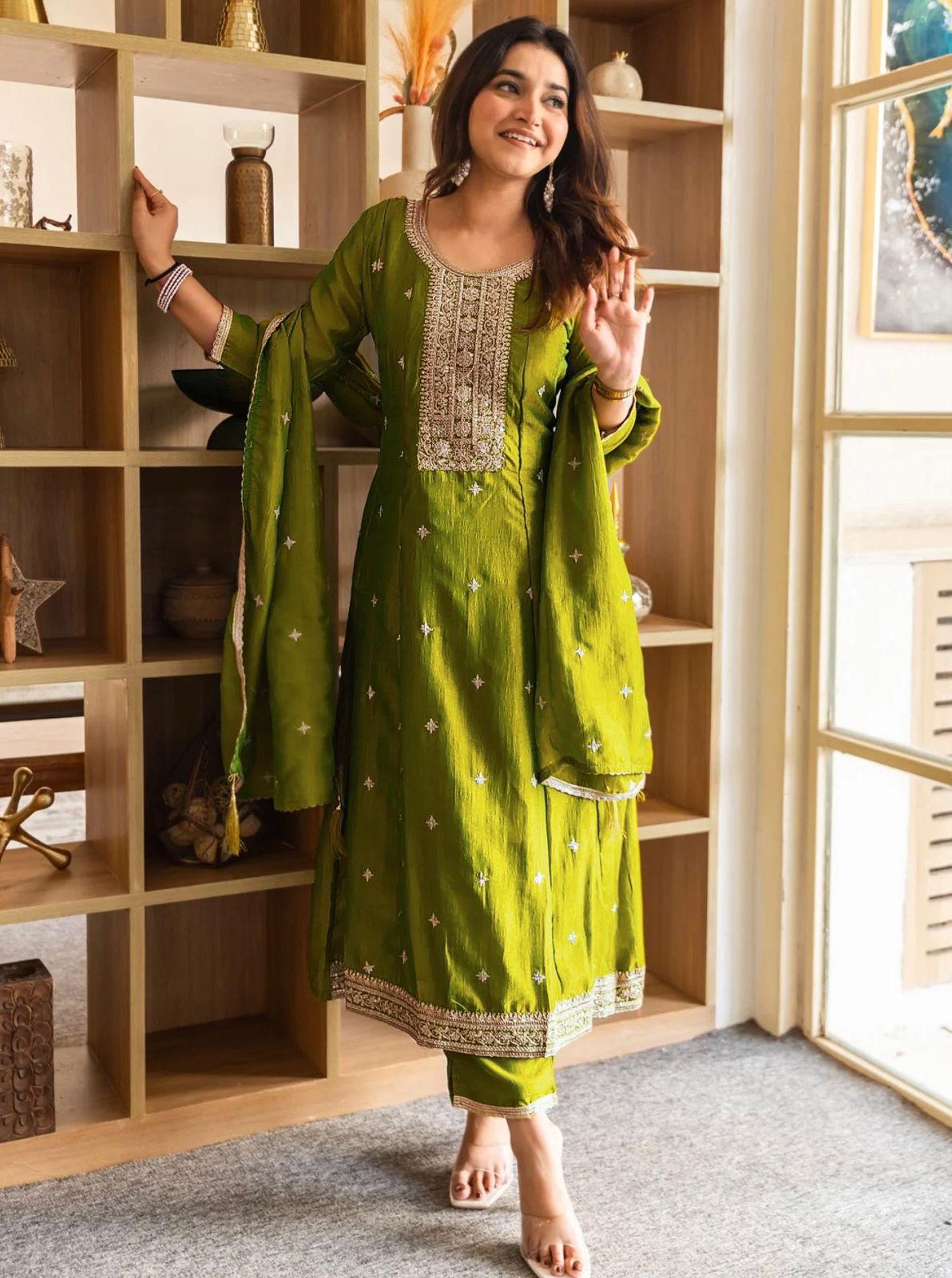
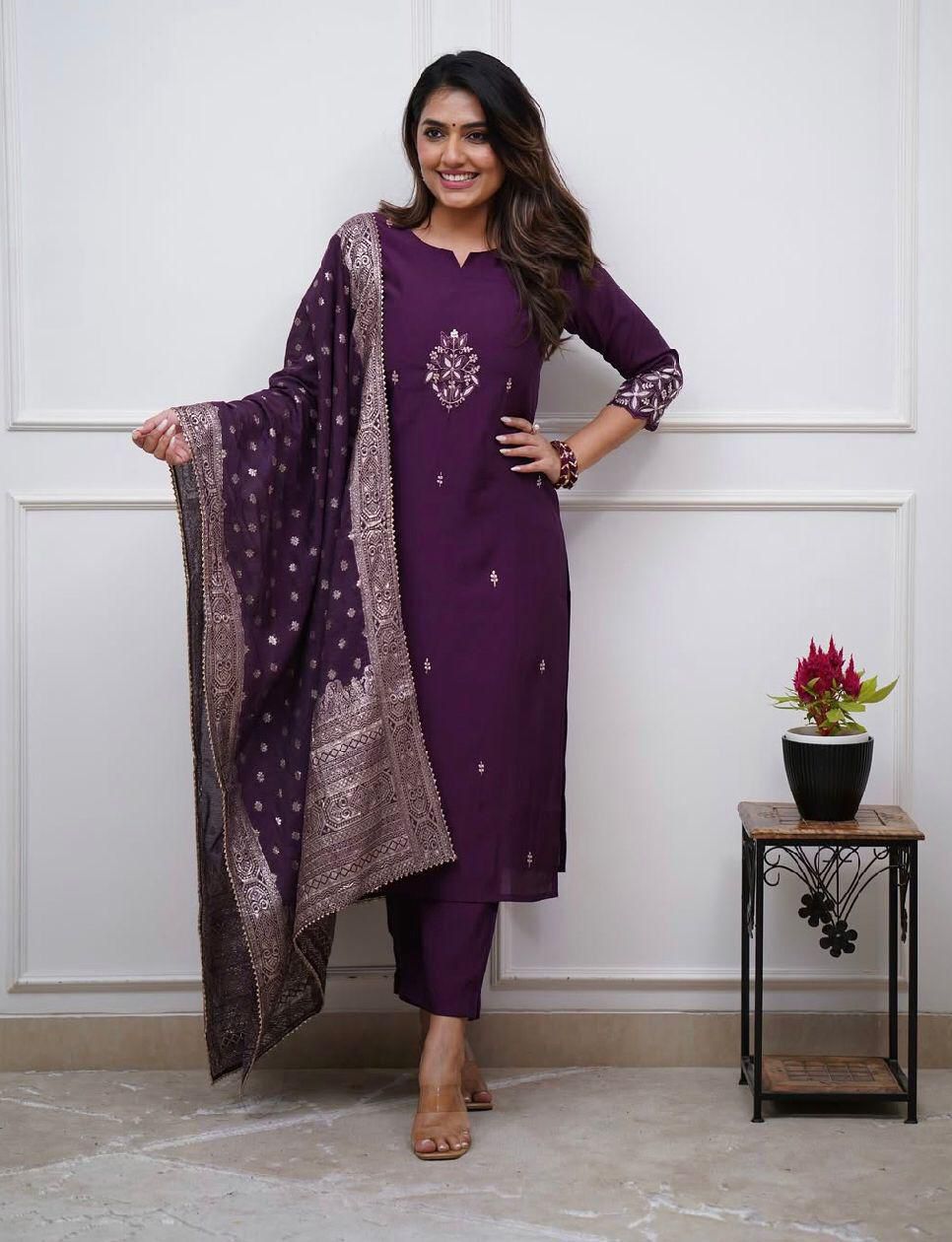
The Purple Embroidered Kurta Pant Dupatta Set Online offers a useful example of a coordinated kurta, pant and dupatta arrangement where the drape should support, not compete with, embroidery. A longer open fall from one shoulder works when the front panels are relatively simple. If the neckline, yoke and chest carry dense embroidery, pleat the dupatta narrowly so the decorative work remains visible.
An ankle-length Anarkali can take a dupatta that reaches the lower calf or nearly the hem when worn over one shoulder. The end should not repeatedly brush the floor during walking. A practical test is to wear the footwear intended for the event, stand upright and check that the lowest point remains at least 5 to 8 cm above the floor.
Wide Anarkali silhouettes also require attention to dupatta width. A width of 1 metre or more gives enough coverage for a front drape, but it can add bulk when made from heavy Banarasi silk or dense zari fabric. Lightweight Chanderi, cotton voile or soft georgette can use the same width with less visual weight. A narrow fold is usually more flattering when the Anarkali already has multiple gathers.
Choosing Dupatta Length for Different Salwar Suit Kurta Shapes: Short and A-Line Styles
A short or A-line kurta usually pairs well with a 2.25 to 2.5 metre dupatta that falls below the hip and above the knee when worn over one shoulder. The longer drop balances the shorter kurta and creates a continuous line with cigarette pants, palazzos or churidar trousers.
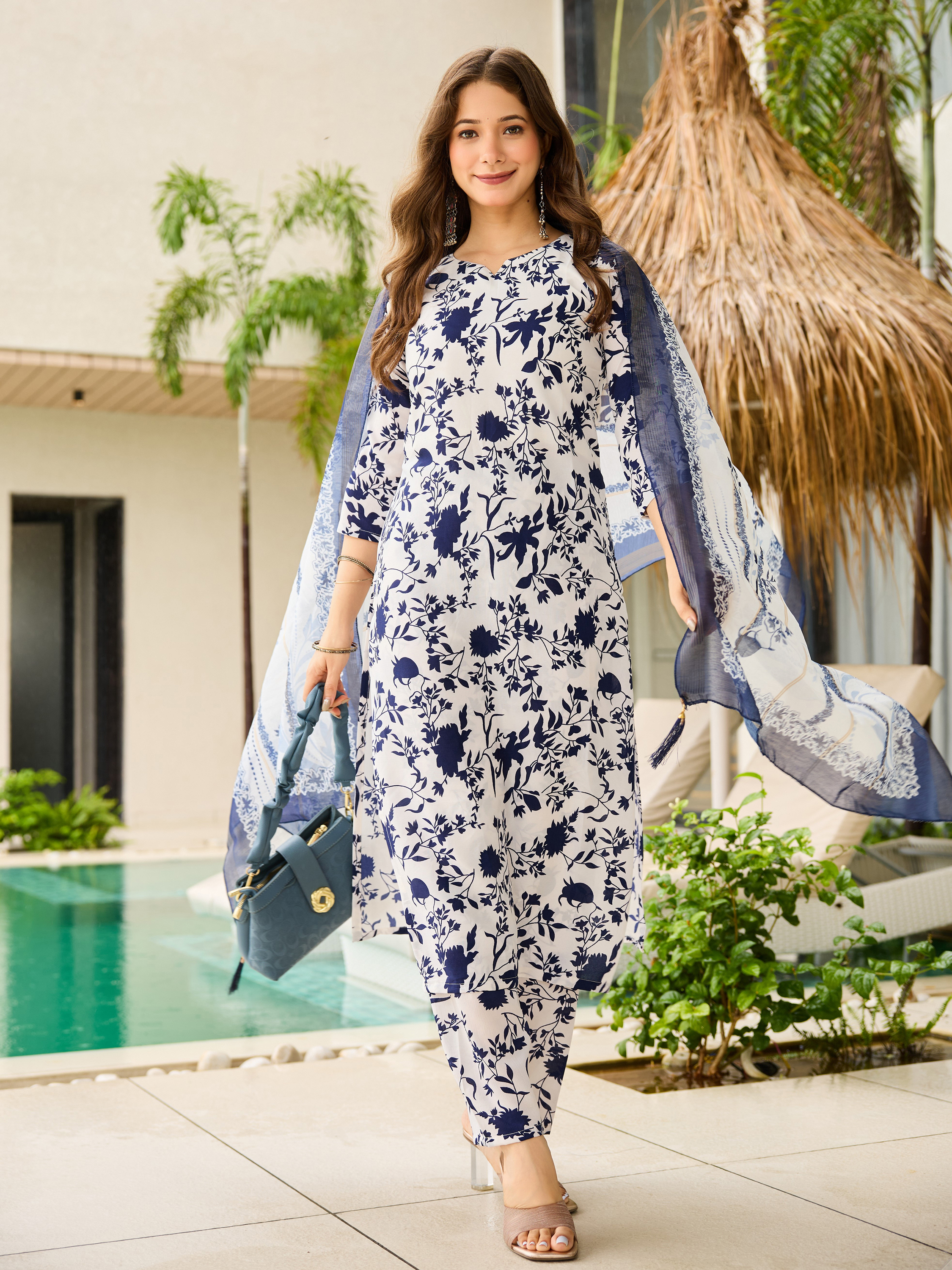
The Off White Floral Embroidered Straight Suit Set is an example of a light-coloured straight silhouette where an open, longer fall can add length without making the outfit look heavy. Keep the front end around mid-thigh if the trousers are narrow. A shorter front end around the waist can work with high-waisted palazzos, but the shorter finish should be deliberate rather than the result of an undersized dupatta.
A-line kurtas widen gradually from the bust to the hem. The dupatta should usually begin with a narrow shoulder fold and open below the waist, rather than spreading across the widest part of the kurta. This method preserves the A-line outline and prevents the sides from appearing broader than they're.
Short kurtas worn with Patiala trousers can carry a more generous dupatta because the lower garment already has volume. Punjab Patiala Salwar Suits reflect the visual logic of that silhouette: a longer, softly gathered dupatta can connect the fitted upper section with the pleated lower half. Avoid a stiff, very short scarf that ends at the bust, since the sharp stopping point can make the outfit look top-heavy.
Choosing Dupatta Length for Different Salwar Suit Kurta Shapes: Fabric and Border Weight
Fabric changes the ideal dupatta length because heavy textiles occupy more visual and physical space than light textiles. A lightweight dupatta can be longer without becoming cumbersome, while a dense embroidered or zari dupatta may need a shorter controlled fall.
Banarasi silk and zari borders are suitable for formal salwar suits, but their weight can pull a shoulder drape downward. A 2.25 metre Banarasi silk dupatta may feel longer than a 2.5 metre cotton dupatta because the heavier fabric forms a deeper, less buoyant fall. Secure the shoulder with a concealed pin placed horizontally through the inner fold, not through the visible border.
Cotton works well for everyday straight suits because cotton dupattas hold pleats and tolerate regular washing when cared for correctly. The Kanchi Cotton Woven Kurta Pant Dupatta Set shows how a woven cotton set can retain a structured drape without requiring excessive length. A 2.25 metre cotton dupatta is often easier to manage for commuting than a trailing 2.75 metre piece.
Chanderi has a light, crisp hand and can look elegant in a longer open fall, but the fabric may crease along the shoulder. Iron Chanderi on a low to medium setting from the reverse side and store it folded loosely. Embroidery, sequins and zari borders should be protected from direct high heat.
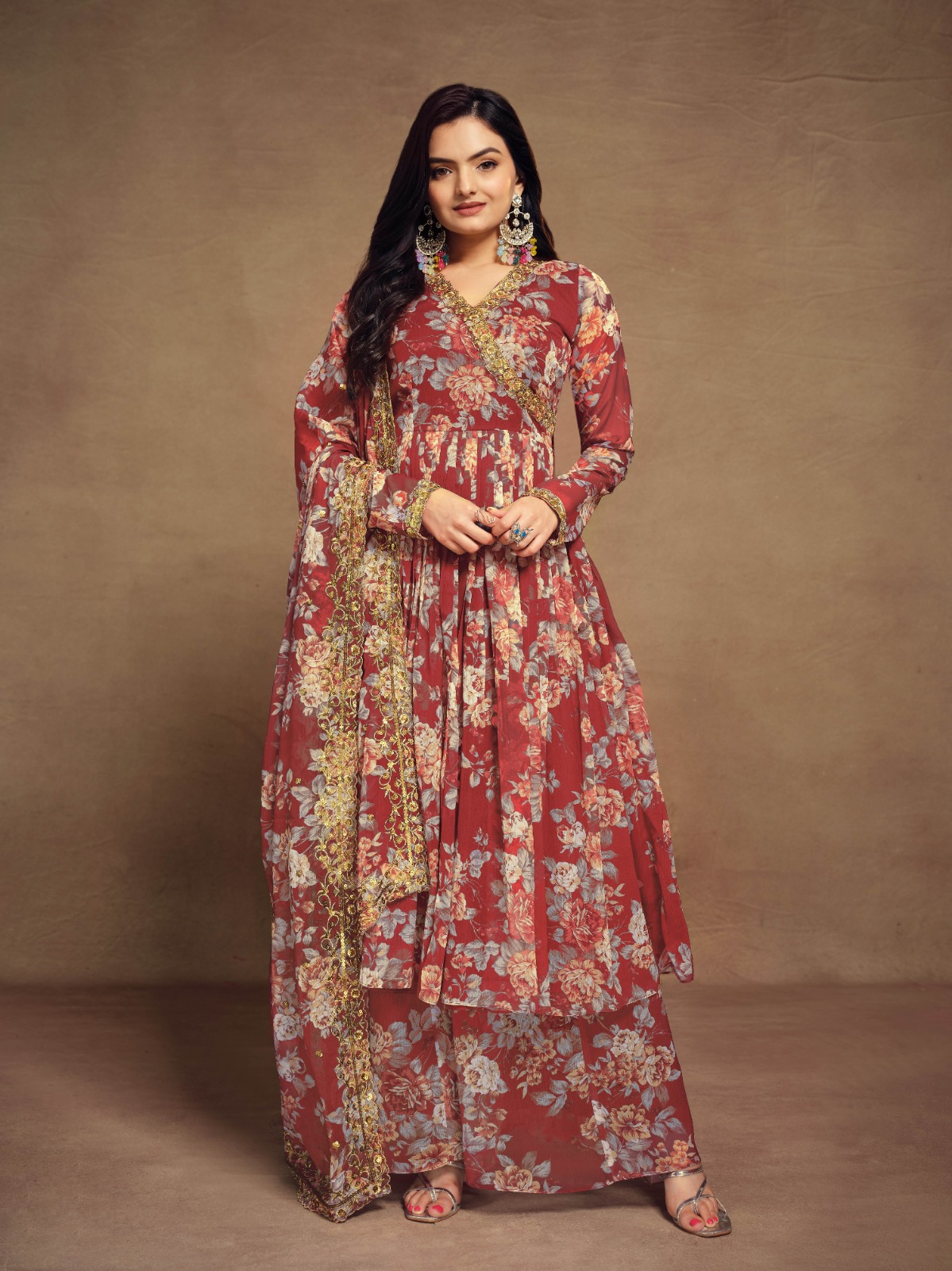
Regional textiles also influence the best styling approach. Maharashtra Paithani Inspired Salwar Suits and Gujarat Bandhej Salwar Suits often gain character from showing the border, weave or tie-dye detail rather than hiding the fabric in thick pleats. Odisha Sambalpuri Salwar Suits can be worn with a flatter shoulder fold so that the distinctive textile pattern remains readable from a distance.
Choosing Dupatta Length for Different Salwar Suit Kurta Shapes: Height and Drape
Height should affect the finished drop of a dupatta, while the total fabric length should also account for the chosen drape. A useful starting point is 2.25 metres for wearers below approximately 160 cm, 2.5 metres for heights around 160 to 170 cm and 2.5 to 2.75 metres for taller wearers or full-length Anarkalis.
These ranges are starting points rather than strict size rules. Measure the actual garment and the intended drape before buying or altering a dupatta. Place one end at the shoulder point, allow the dupatta to fall naturally and mark the position where you want the visible end to finish. Add 25 to 35 cm for shoulder pleats, folding and movement.
Which drape uses the most length?
A head-covering or front-covering drape uses the most length because the fabric travels from one shoulder across the torso and over the head or opposite shoulder. A single open-shoulder drape uses less length and creates the longest visible fall from the shoulder.
For a head-covering drape, choose at least 2.5 metres for most adults and closer to 2.75 metres if the kurta is long, the fabric is narrow or the dupatta must cover the chest. For a simple one-shoulder drape, 2.25 metres can be sufficient with a straight kurta.
How can a petite wearer handle a long dupatta?
A petite wearer can handle a long dupatta by using narrow pleats, a single shoulder fold and a controlled front end. Avoid allowing both ends to fall freely if the fabric reaches below the ankle, because two long vertical lines can visually shorten the frame.
Pinning the inner shoulder fold at the collarbone keeps the fabric from sliding and lets the wearer adjust the visible length without cutting the dupatta. A slimmer width of approximately 85 to 95 cm can also reduce bulk around a short or narrow kurta.
Choosing Dupatta Length for Different Salwar Suit Kurta Shapes: A Practical Fitting Test
A practical fitting test can confirm the right dupatta length before an event. Wear the complete kurta, bottom, footwear and intended underlayers, then style the dupatta exactly as planned. Walk ten steps, sit on a chair, raise one arm and turn sideways before deciding whether the length is usable.
- Check the shoulder: The dupatta should stay in place without constant adjustment or a tight pin.
- Check the front drop: The front end should finish at a deliberate point such as the hip, mid-thigh, knee or lower calf.
- Check the hemline: The dupatta should not drag on the ground or repeatedly catch under the heel.
- Check the kurta details: Neckline embroidery, pintucks, yokes and front motifs should remain visible when visibility is part of the outfit design.
- Check movement: The drape should allow comfortable walking, sitting and lifting the arm without pulling the neckline.
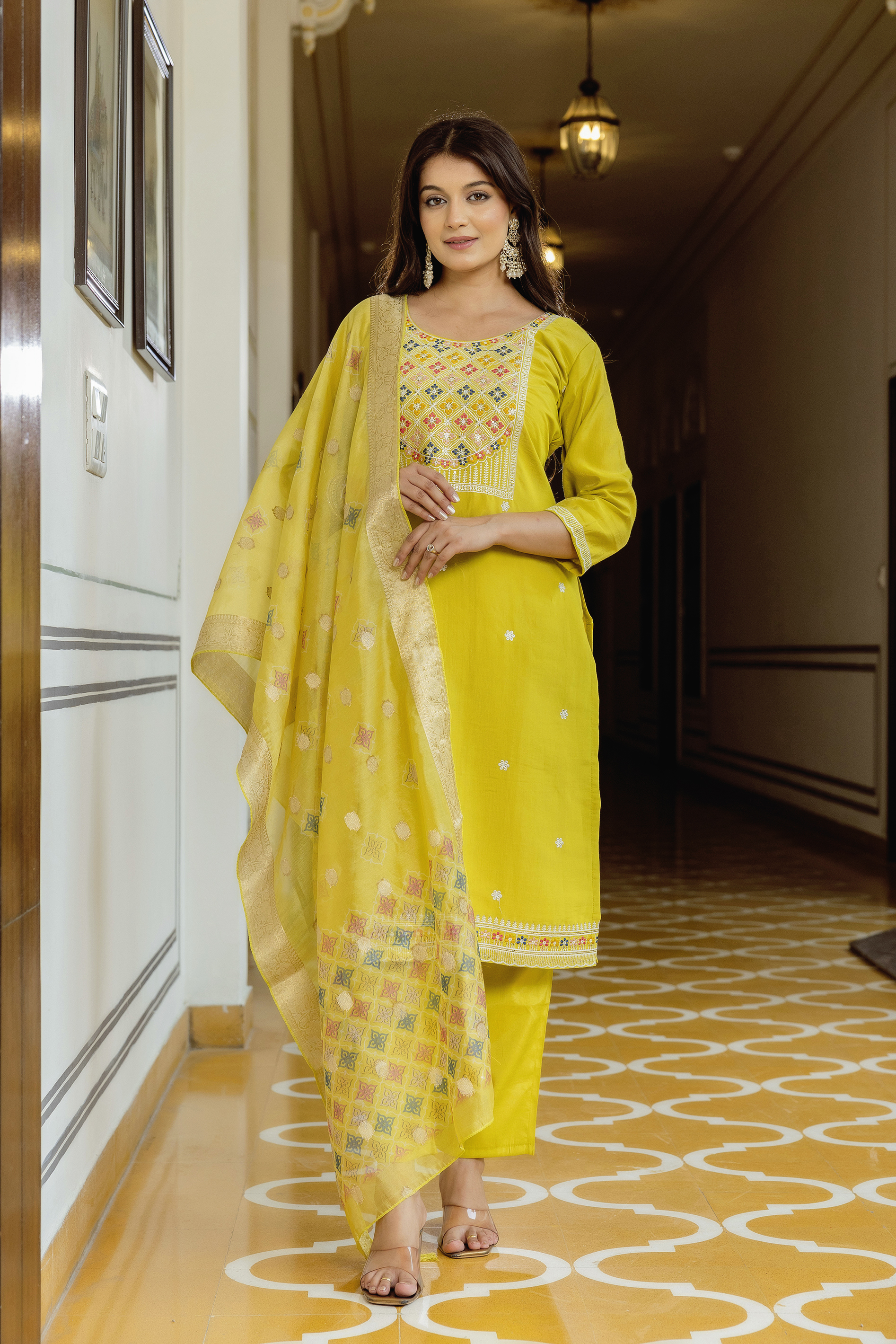
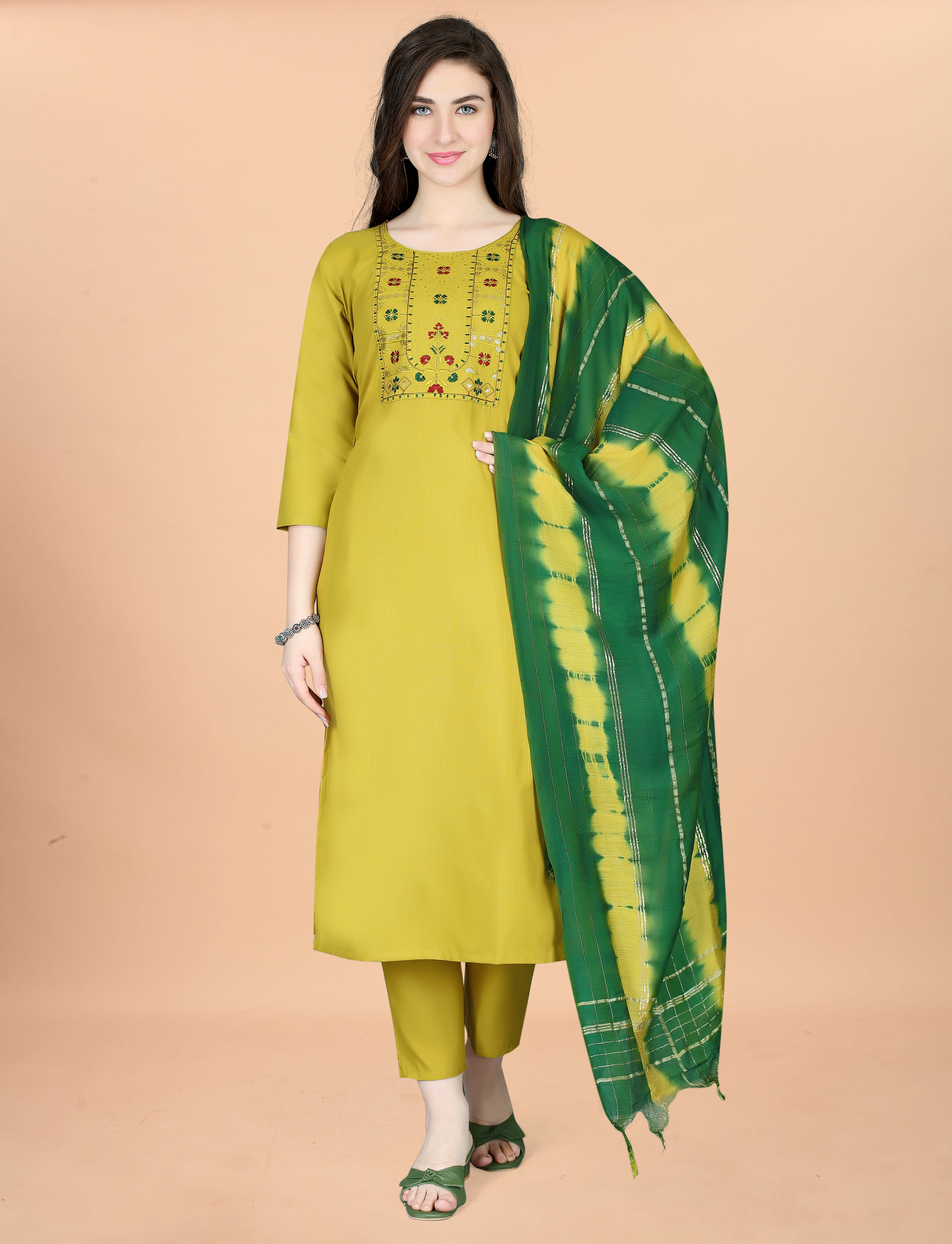
For formal styling, the Designer Yellow Salwar Suit with Dupatta can take a longer open fall when the colour and border are intended to make a statement. For a more restrained arrangement, the Elegant Green Kurta Pant Dupatta Set for Women can be pleated across one shoulder so the coordinated kurta and trouser proportions remain clear.
The Mustard Embroidered Kurta Pant Dupatta Set for Women can be adjusted according to the event: a narrow shoulder pleat suits daytime movement, while a broad open fall displays a decorative border at a festive gathering. Matching the finished drop to the kurta shape will usually look more polished than simply choosing the longest available dupatta.
Choosing Dupatta Length for Different Salwar Suit Kurta Shapes: Final Measurement Rules
The most reliable rule is to match the dupatta length to the kurta's visual volume and the finished point where the fabric should end. Choose approximately 2.25 metres for many straight everyday kurtas, 2.5 metres for most standard suit sets and 2.5 to 2.75 metres for long Anarkalis, taller wearers or front-covering drapes.
Short kurtas need a drop below the hip, straight kurtas need a clean balanced fall, A-line kurtas benefit from a narrow shoulder fold and Anarkalis usually need additional length to connect the upper and lower portions. Cotton, Chanderi and lightweight woven fabrics can be styled with easier movement, while Banarasi silk, zari and heavily embroidered dupattas need more care with weight, pinning and border placement.
Taking one measurement before purchasing or tailoring prevents most proportion problems. Measure from the shoulder to the desired end point, add the length needed for pleats and movement, and test the final arrangement with the actual footwear. That small preparation makes a salwar suit more comfortable, functional and visually balanced.
Common Questions About Choosing Dupatta Length for Salwar Suit Kurta Shapes
What is the standard dupatta length for a salwar suit?
The standard dupatta length for many salwar suits is between 2.25 and 2.5 metres, with a width of approximately 0.9 to 1.15 metres. A 2.5 to 2.75 metre dupatta is more suitable for a long Anarkali, a taller wearer or a head-covering drape.
What dupatta length is best for a straight kurta?
A 2.25 to 2.5 metre dupatta usually suits a straight kurta. The front end can finish around mid-thigh or knee level, depending on the kurta hemline, the wearer's height and whether the dupatta is pleated or left open.
How long should a dupatta be for an Anarkali suit?
An Anarkali generally works best with a 2.5 to 2.75 metre dupatta. The additional length creates a continuous line beside the flare and prevents the drape from ending abruptly around the waist or hip.
Can a petite woman wear a long dupatta?
A petite woman can wear a long dupatta by using narrow pleats, one controlled shoulder drape and a front end that does not reach the floor. Pinning the inner fold at the collarbone can prevent sliding and reduce excess visual bulk.
Does dupatta width matter as much as length?
Dupatta width matters because a wide fabric provides more coverage but can add bulk around a heavily flared or embroidered kurta. A width of approximately 85 to 95 cm is easier to control, while a width of 1 metre or more suits front-covering and head-covering drapes.
How do I stop a heavy dupatta from slipping?
A heavy dupatta can be secured with a concealed horizontal pin through the inner shoulder fold. Place the pin away from visible zari, embroidery and delicate borders, and use a second small pin near the neckline if the fabric continues to shift.


