A saree can look graceful in photographs and still become tiring after several hours of standing, climbing stairs or crossing a large venue. Choosing a Saree When You Know You Will Be Walking All Day requires attention to fabric weight, pleat width, petticoat fit, footwear and the way the pallu is secured. A breathable cotton or linen-cotton saree, correctly hemmed to your shoes, usually offers a more practical starting point than a heavy, highly embellished drape.
Walking changes the demands placed on a saree. Every step makes the lower pleats move around the ankles, while a loose pallu can catch on chairs, bags and door handles. A good all-day choice should stay comfortable during movement, resist constant readjustment and allow enough room for sitting without pulling at the waist. The following method helps you assess a saree before buying or wearing it for a long day.
Choosing a Saree When You Know You Will Be Walking All Day: what makes a saree comfortable?
A comfortable walking saree is lightweight, breathable, securely draped and short enough to clear the ground without exposing the feet excessively. Comfort also depends on the petticoat, blouse, footwear and pleat placement rather than fabric alone.
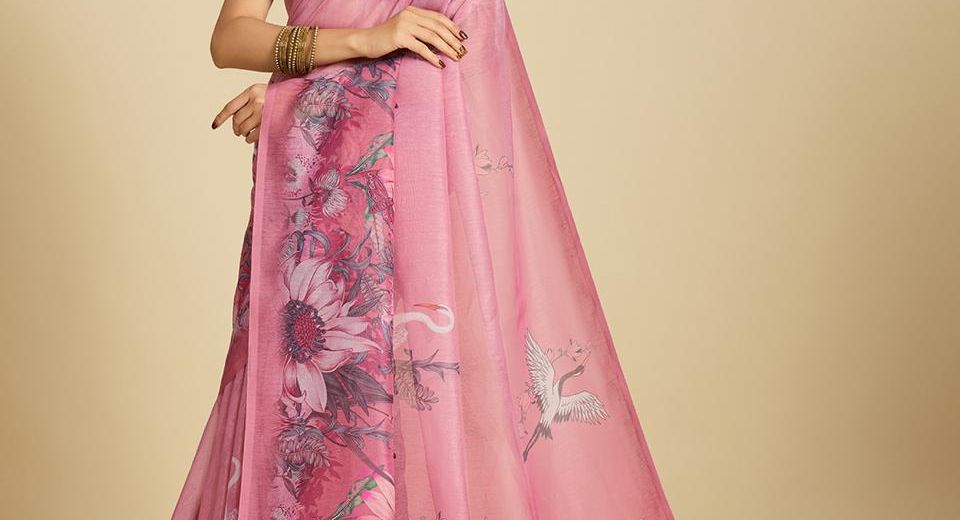
Fabric weight is the first practical filter. Cotton and linen-cotton sarees generally feel easier to manage over extended periods because they do not add the same bulk as heavily woven silk, dense velvet or sarees covered in substantial embellishment. The Elegant Pink Floral Cotton Designer Saree with Blouse is a useful example of a lighter, printed direction for a day involving errands, meetings or repeated movement.
Breathability matters when walking outdoors or attending a crowded function. Cotton absorbs moisture, while linen-cotton blends can feel comparatively airy, although the exact comfort depends on the weave and finish. A saree that feels light in a cool room may feel different in direct sun, so consider the season, venue ventilation and distance you expect to cover.
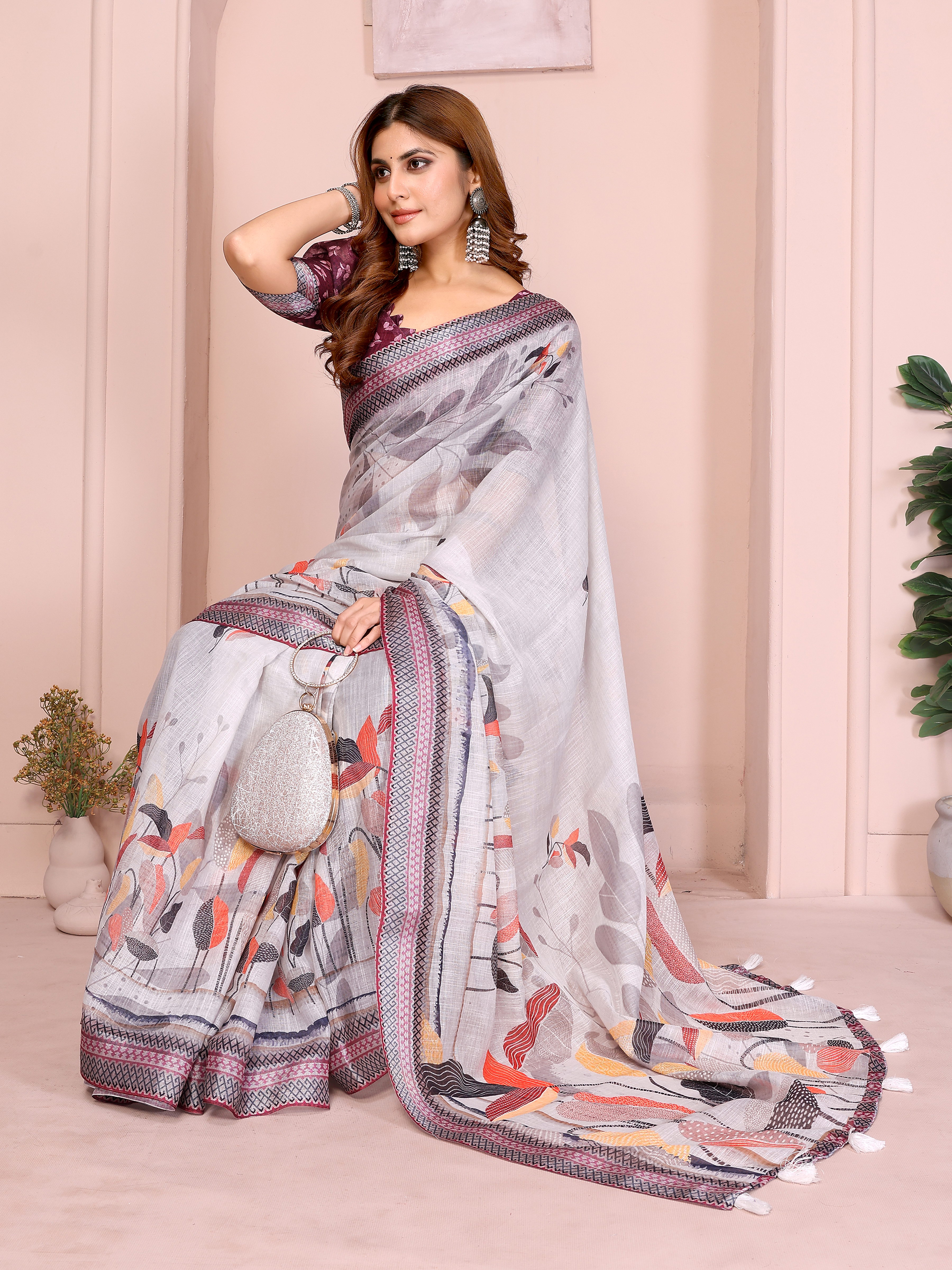
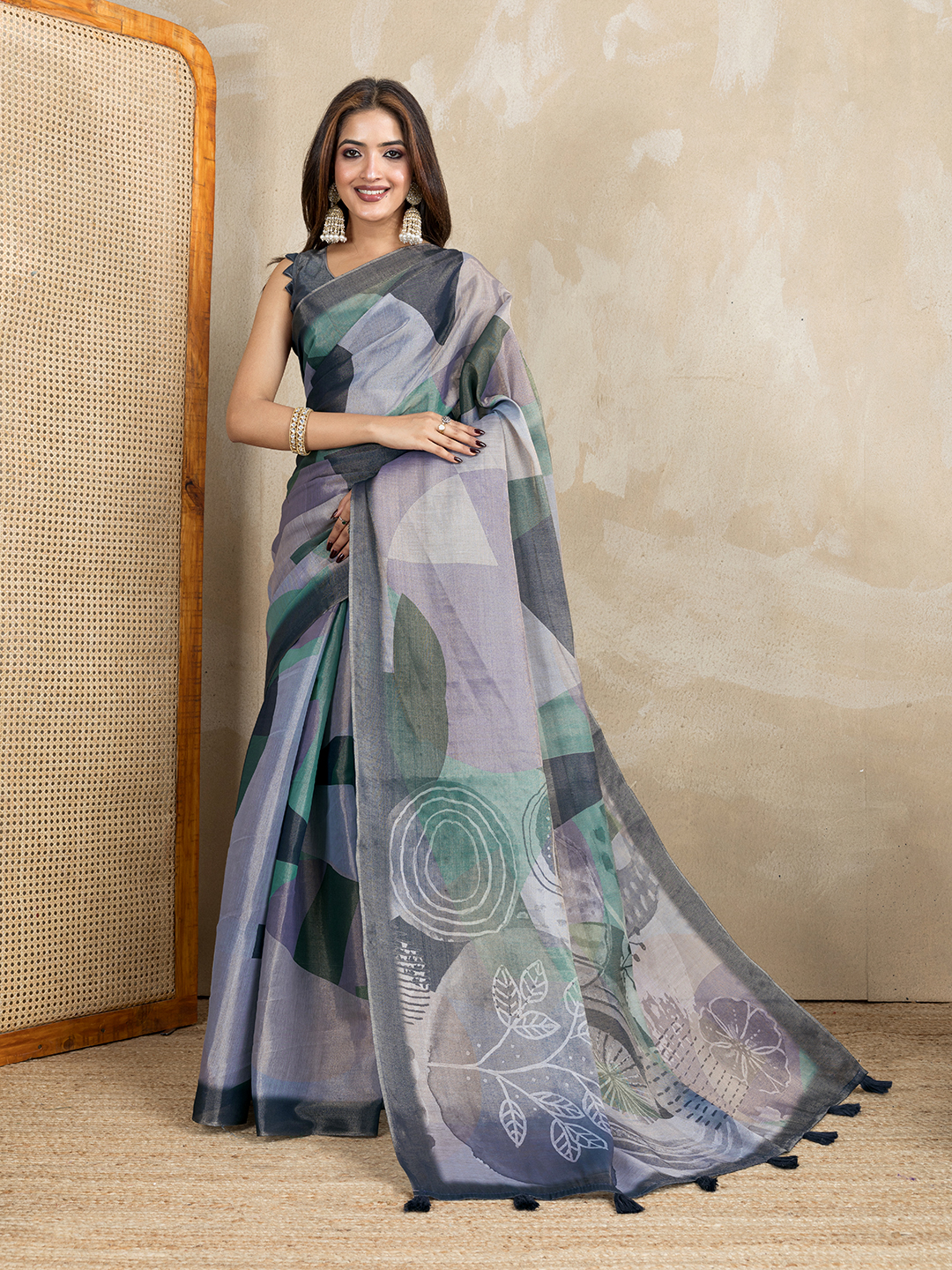
Surface decoration affects movement as well as weight. Flat prints and woven borders usually create fewer snags than raised sequins, dense beadwork or long tassels. A narrow or medium border can also be easier to pleat than a stiff, heavily ornamented edge. The Multicolor Linen Cotton Saree with Artistic Stripe Design shows how a graphic print can provide visual interest without relying on bulky surface work.
Choosing a Saree When You Know You Will Be Walking All Day: which fabrics work best?
Cotton and linen-cotton are usually the most practical saree fabrics for long walking days, while silk and heavily embellished fabrics require more careful planning because they can be heavier or less forgiving.
Cotton for flexible daytime dressing
Cotton is a dependable choice for travel, shopping, exhibitions, temple visits and daytime family events because it is breathable and comparatively easy to re-drape. Cotton can crease, but creasing is often less inconvenient than repeatedly managing a slippery fabric. A structured cotton saree with a stable pallu can remain presentable even after several hours of movement.
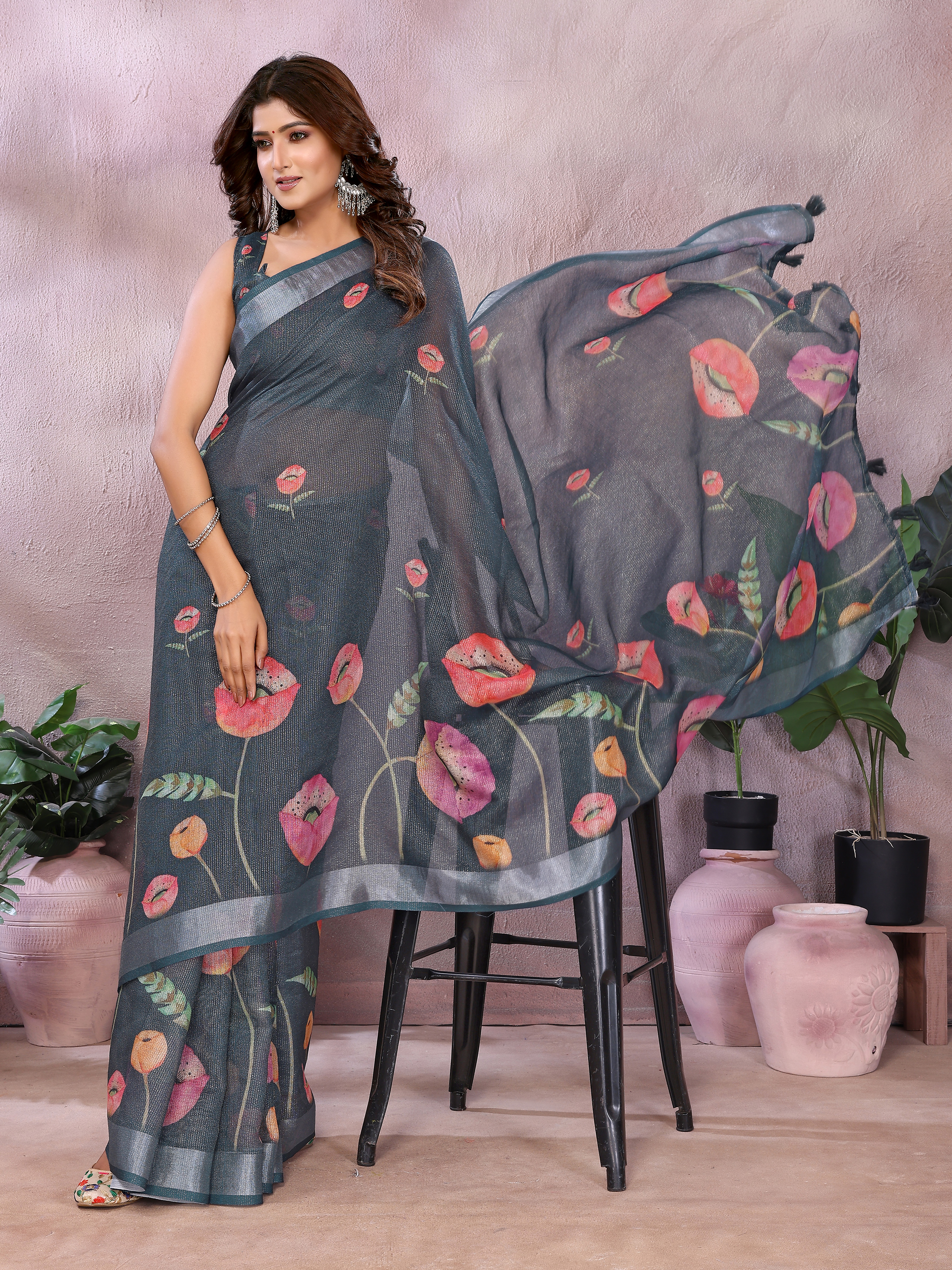
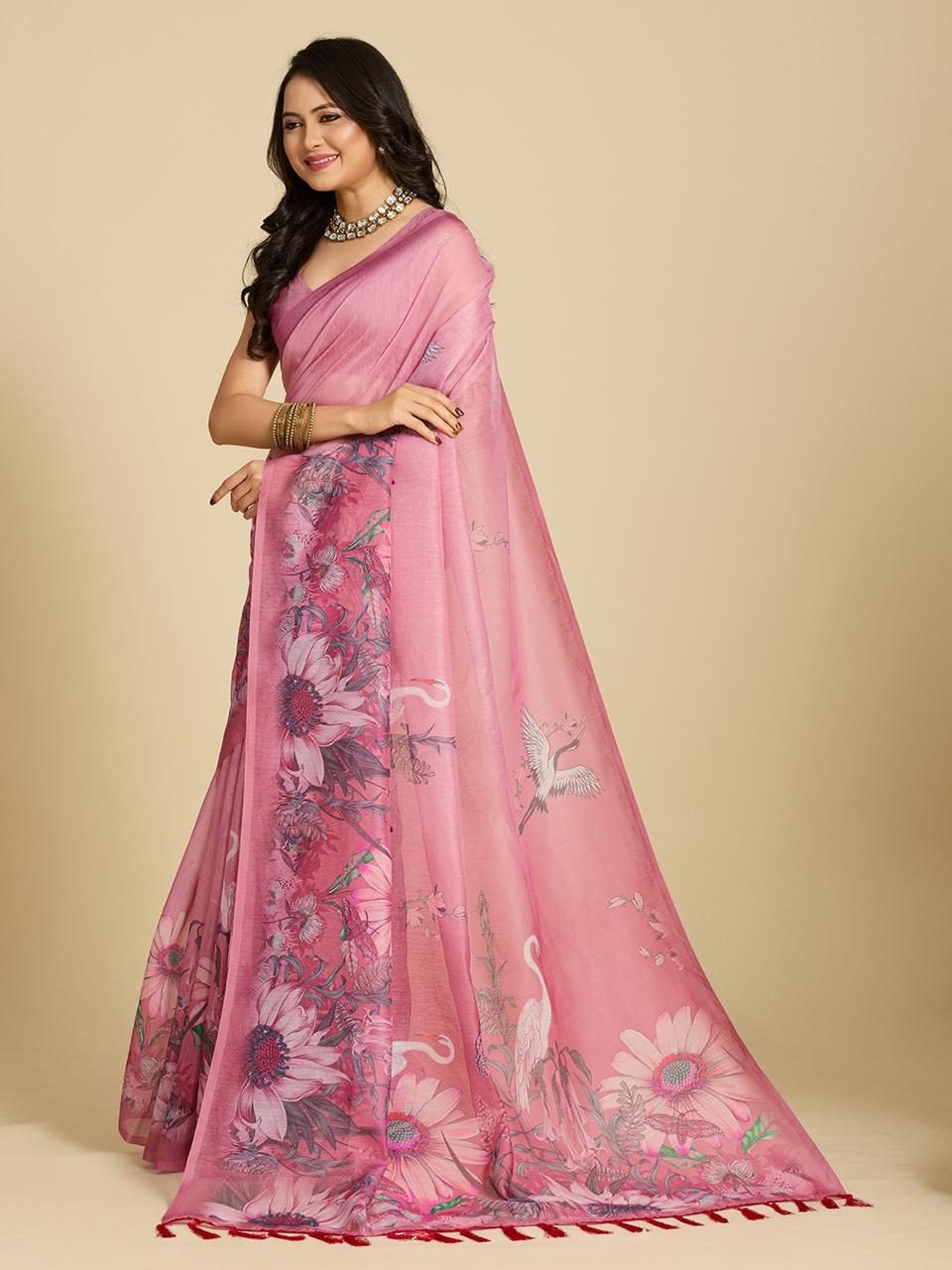
The Pink Floral Print Designer Cotton Saree with Blouse suits a printed daytime wardrobe where ease matters more than a formal, high-shine finish. The Teal Green Cotton Saree for Women Online India offers another colour-led direction for someone who wants a strong visual statement without choosing a visibly heavy fabric. For very long days, check whether the cotton feels soft and flexible after pressing; crisp cotton can need more breaking in before it becomes comfortable.
Linen-cotton for lightness with structure
Linen-cotton can be a useful middle ground when you want an airy saree that still holds a defined silhouette. The blend may crease naturally, but its texture can help the pleats retain shape instead of collapsing immediately. Linen-cotton is especially suitable for daytime celebrations, work events and city travel when a polished print or border is desirable.
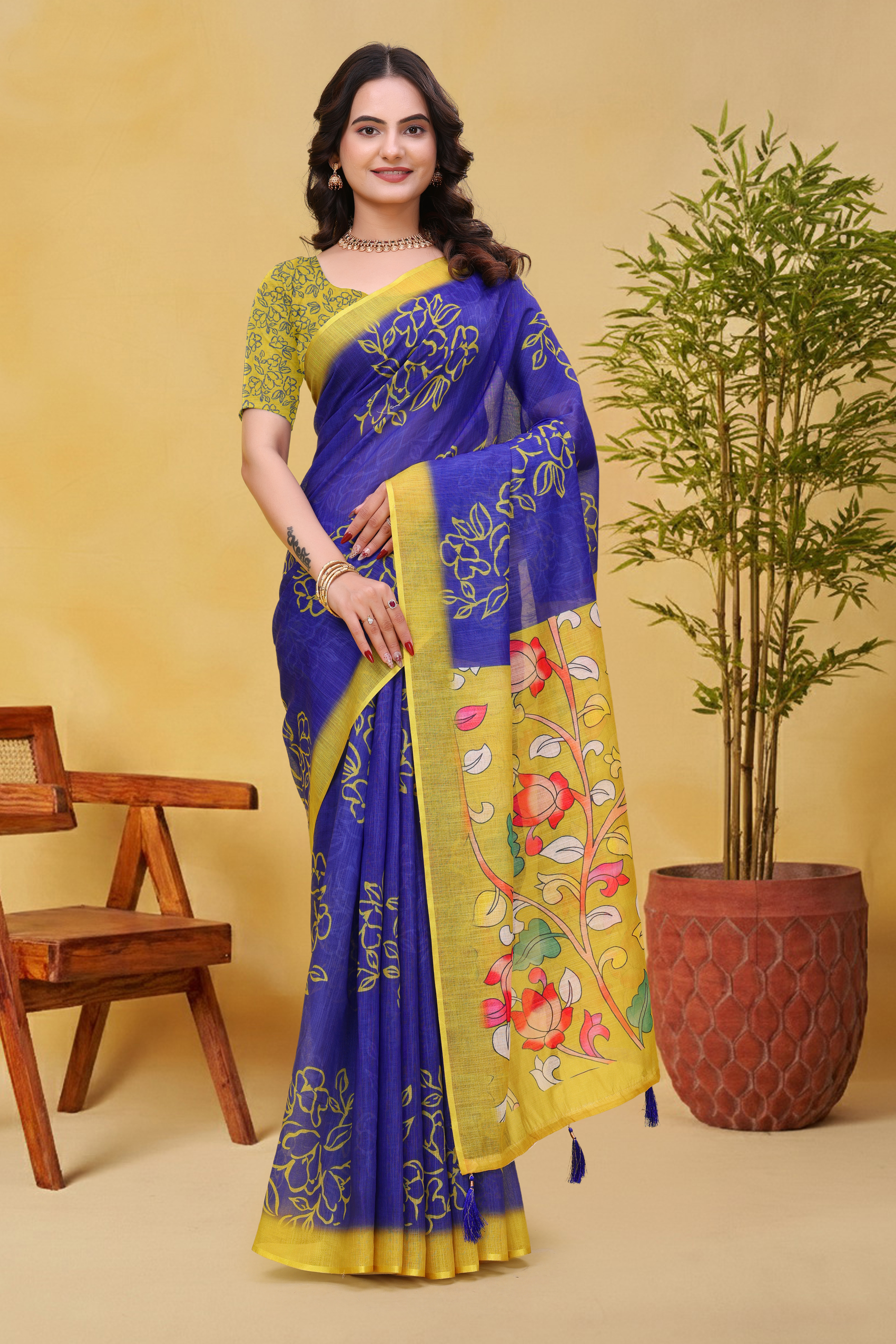
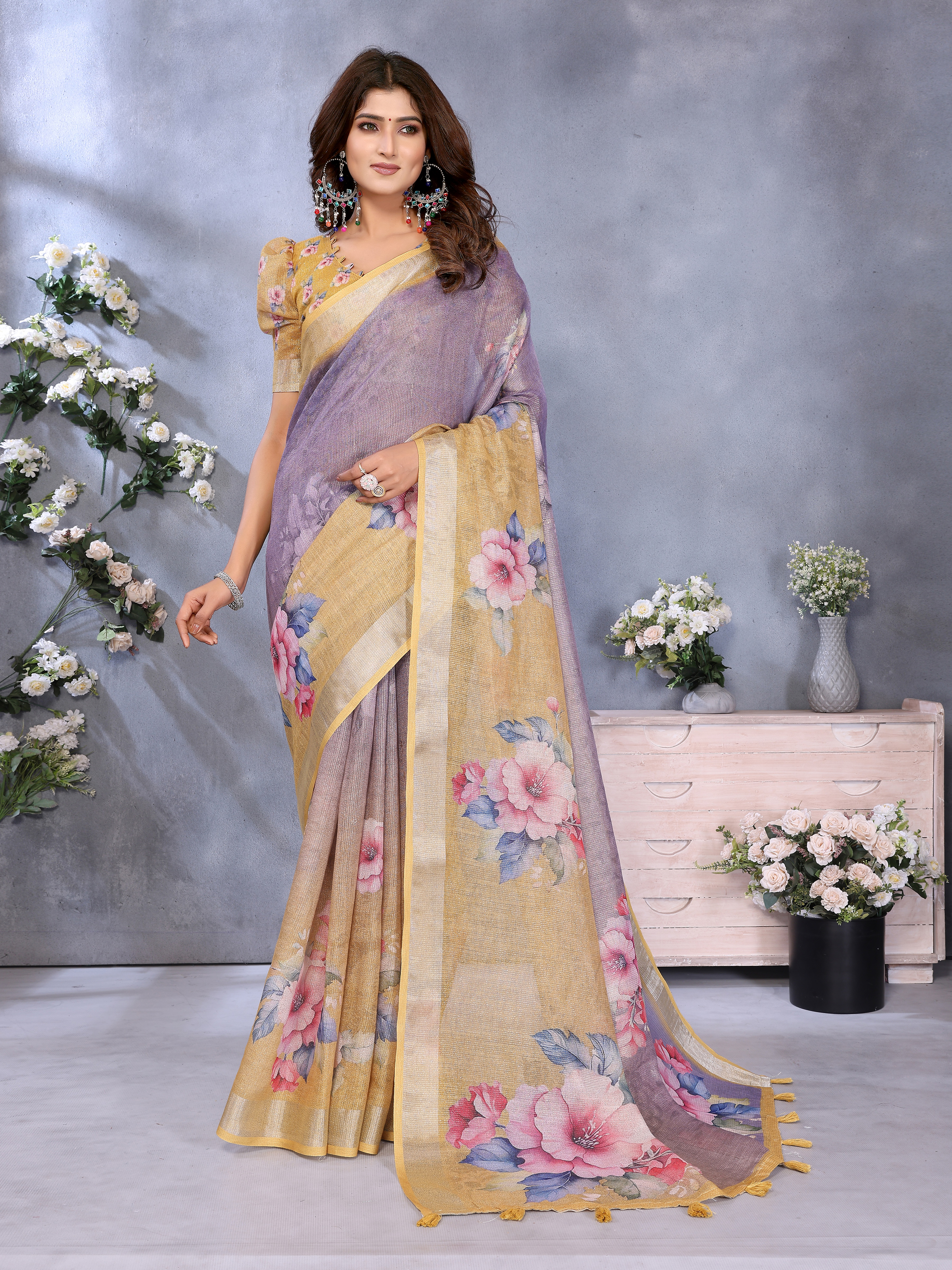
The Yellow Floral Linen Cotton Saree with Designer Border and Coral Floral Linen Cotton Saree with Designer Border show how a border can frame the outfit while keeping the main surface visually light. The Soft Pink Floral Linen Cotton Saree with Zari Border adds a more festive note through zari. Zari can make a saree feel slightly more formal, so inspect the border's stiffness and weight before selecting it for a day that includes substantial walking.
When heavier fabrics become difficult
Banarasi silk, Kanjeevaram silk and densely embellished sarees can be beautiful choices, but they may become tiring when the wearer is walking, standing and carrying a bag for many hours. A heavier saree increases the load at the waist and can make the pallu harder to control. These fabrics are more suitable when the itinerary includes shorter distances, seated ceremonies or assistance with carrying personal belongings.
Fabric name alone does not determine comfort. A lightweight silk may be easier than a stiff cotton, and a soft handloom saree may move better than a heavily starched one. Hold the saree by one corner before buying when possible: compare how much force is needed to lift it, whether the border hangs stiffly and whether the fabric folds without resisting.
Choosing a Saree When You Know You Will Be Walking All Day: how should you check pleats and length?
Check the saree length, shoe height and pleat width together before leaving home, because a hem that is too long or pleats that spread at the ankles can create a tripping hazard.

Wear the exact footwear planned for the day while draping or getting the saree altered. The lower edge should sit close to the floor without sweeping underneath the heel. A saree that is too short can expose the ankles when you walk, while an extra-long saree can catch under sandals or on stairs. A tailor can adjust the fall and hem, but the correct measurement must be taken with the intended shoes.
Make fewer, moderately broad pleats rather than many narrow pleats if the fabric allows it. Very narrow pleats can loosen and fan out during movement, while broad pleats distribute the fabric more evenly. Press the pleats, align the lower edges and secure the upper section with a safety pin hidden beneath the blouse or waistband.
Test the finished drape with several movements: walk ten steps, turn quickly, sit on a chair, climb one flight of stairs and step into a car. If the pleats pull sideways, loosen the tuck slightly. If the fabric opens around the knees, add a discreet pin at the waist or use a well-fitting petticoat that gives the pleats a stable base.
A practical walking test should last at least fifteen minutes. Short indoor testing can reveal whether the saree slips, but a longer test exposes pressure at the waist, rubbing at the ankle and repeated pallu movement. Photograph the drape from the side during the test because a front view may hide a low or dragging hem.
Choosing a Saree When You Know You Will Be Walking All Day: what petticoat and blouse help?
A well-fitting petticoat with a secure waistband and a blouse that permits arm movement can reduce saree-related fatigue more effectively than adding extra pins.
The petticoat should sit firmly without digging into the waist. A loose waistband allows the entire saree to descend as you walk, while an overly tight waistband creates pressure after meals or prolonged standing. A cotton petticoat can feel more breathable in warm weather, and a shaped or flared cut can support the saree without creating excessive volume around the ankles.
Choose the petticoat colour carefully when the saree is lightweight or pale. A matching or close-toned petticoat reduces the chance that a contrasting layer will show through. A drawstring must be tied securely but not in a bulky knot that presses against the stomach. A smooth waistband also helps prevent the saree from twisting during repeated walking.
Blouse comfort affects the whole posture. Tight armholes can restrict natural arm swing, and a very fitted bust can make the saree feel increasingly restrictive after lunch. Select sleeves and necklines that allow you to raise your arms, carry a small bag and sit without pulling across the shoulders.
The Peach Linen Cotton Printed Saree for Women Online demonstrates a softer, casual styling direction that pairs naturally with a movement-friendly blouse. A blouse made from breathable cotton or a comfortable blended fabric can be easier for long wear than a heavily structured design with stiff interfacing.
Use safety pins strategically rather than pinning every visible layer. One pin can secure the inner pallu near the shoulder, another can stabilise the pleats at the waist and a third can prevent a slippery border from opening. Pins should face inward and be tested for sharp edges before wearing them for an extended period.
Choosing a Saree When You Know You Will Be Walking All Day: how do footwear and the pallu matter?
Low, stable footwear and a short, secured pallu make walking in a saree safer and less tiring than high, unstable heels and a freely trailing drape.
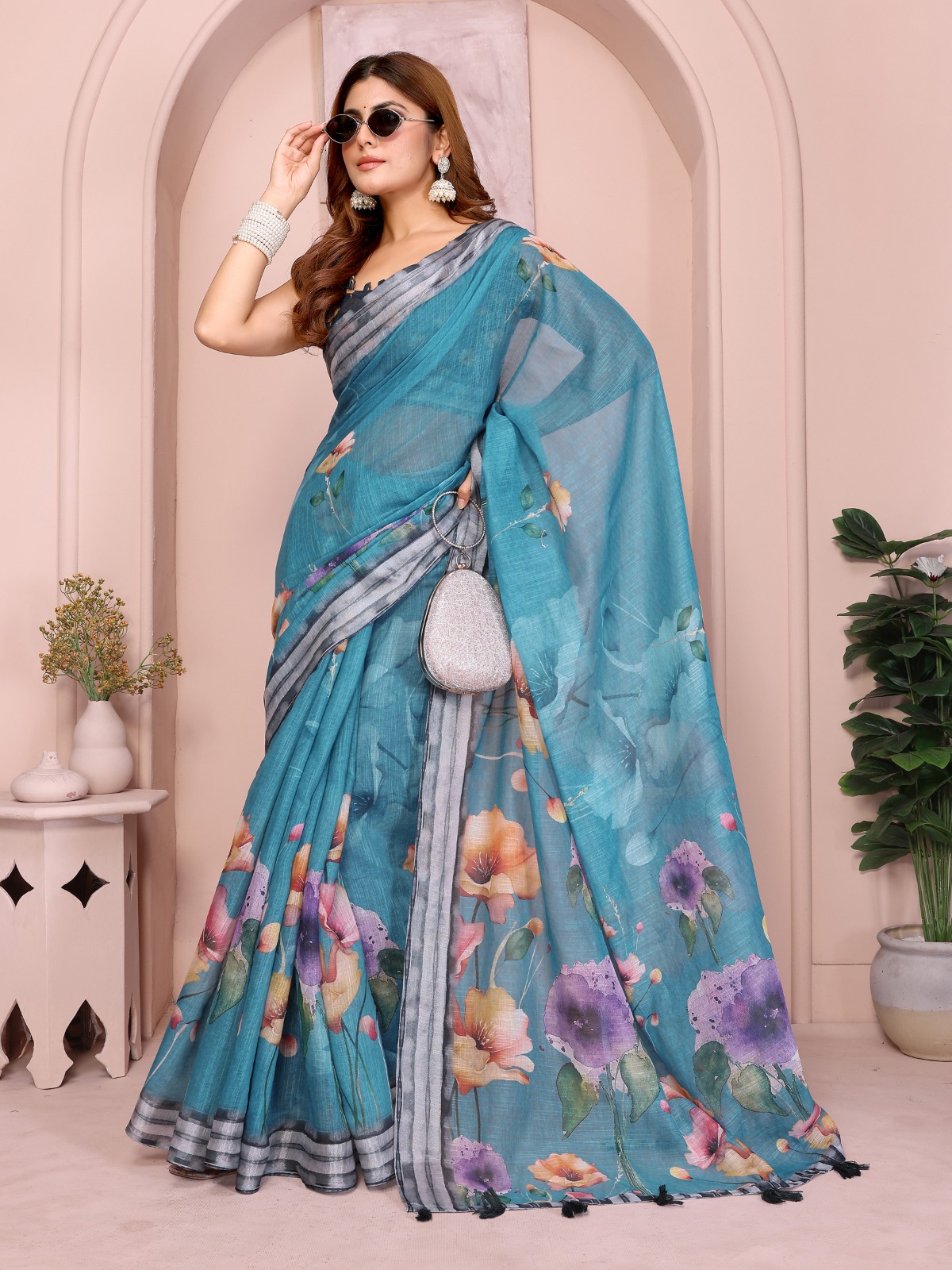
Choose footwear with a broad sole, secure straps and enough cushioning for the distance involved. Block heels of approximately 2 to 4 centimetres can add height without the instability of narrow stilettos, while flat sandals may be best for uneven ground or long outdoor routes. Wear the shoes for a short trial first because new straps can cause blisters that a saree cannot conceal or solve.
Avoid changing heel height after the saree has been hemmed. A lower shoe can cause the lower edge to drag, and a higher shoe can make the saree appear too short. If you need two pairs of shoes, hem the saree to the lower pair and carry the higher pair only for photographs or seated portions of the event.
A secured pallu keeps both hands available for railings, doors and luggage. Drape the pallu over the shoulder with moderate length, then use a hidden pin near the shoulder seam. For very active days, fold the pallu into a clean narrower fall rather than leaving a broad section trailing behind you.
A crossbody bag is generally easier to manage than a large shoulder bag because it leaves both hands free. Keep the bag light; a heavy strap can pull at the pallu and shift the blouse. If a handbag is necessary, choose one with a short, secure handle and avoid placing it on the pleats while seated.
Choosing a Saree When You Know You Will Be Walking All Day: how can you shop within a budget?
A practical walking saree does not need to be expensive; compare fabric, construction and wearability first, then use sale collections to stay within budget.
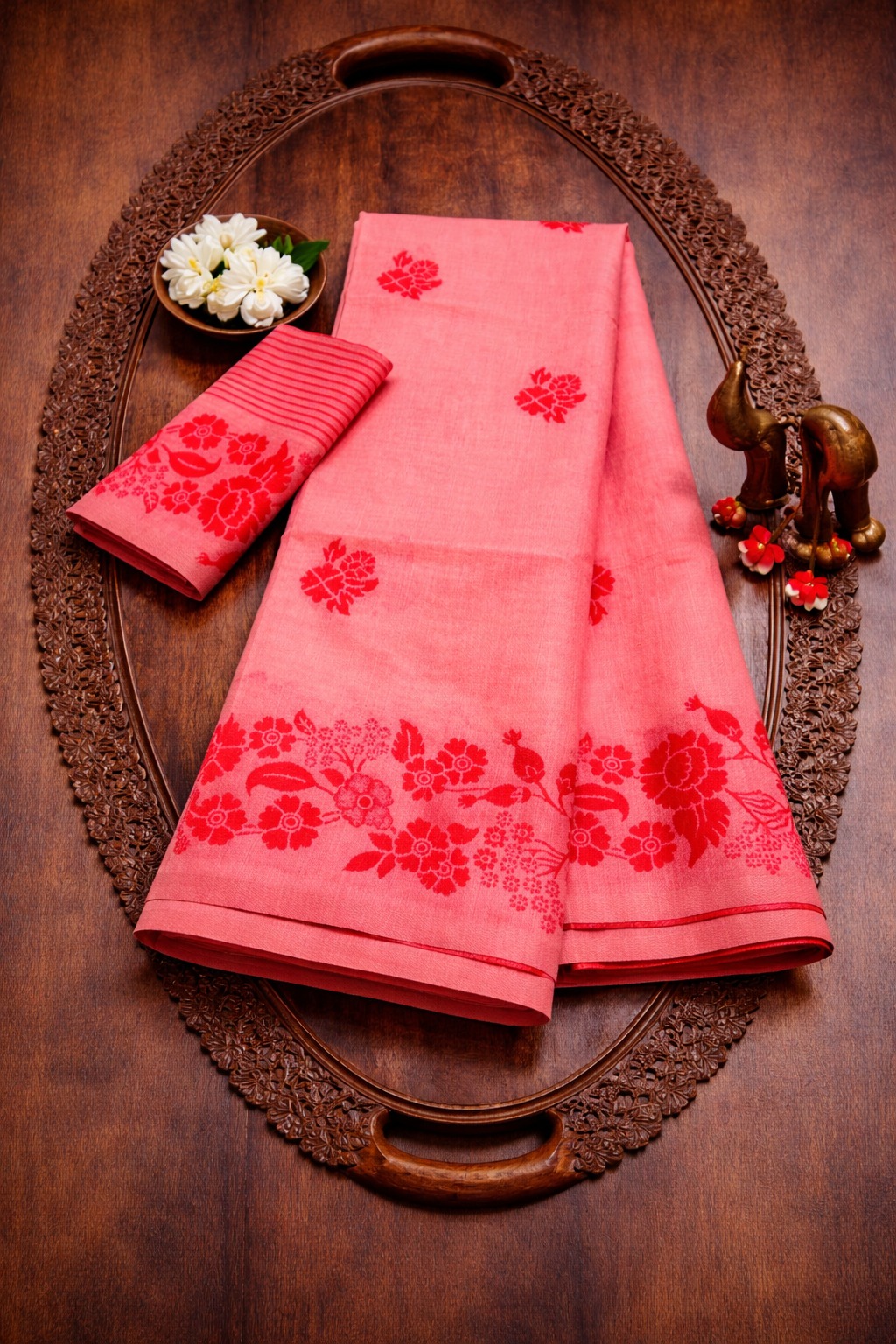
Price can help narrow choices, but low cost does not automatically mean low comfort. Check the fabric description, border construction, blouse inclusion, length and care instructions before comparing prices. A saree that requires extensive alteration or a separate blouse may cost more to make wearable than a slightly higher-priced option with a suitable fall and blouse piece.
The Sarees from Rs 1000 to Rs 1500 collection can be a useful starting point for building a comfortable daytime wardrobe without committing to formal silk. The Sarees Under 20% Off and Sarees Under 10% Off collections may help when you already know which fabric and colour you prefer. Deeper reductions in the Sarees Flat 60% Off and Sarees Flat 50% Off collections can be worthwhile, but confirm measurements and return conditions before buying a discounted saree for a fixed event.
Read product images for clues about movement. A close view can reveal whether the border is woven, printed or embellished, while a full-length image shows how much fabric gathers around the ankles. Look for a pallu that appears manageable rather than excessively long or densely decorated when the schedule includes walking.
Care affects long-term comfort. Wash cotton and linen-cotton according to the care label, dry them away from harsh direct sunlight when colour protection matters and iron the pleats before wearing. Store a fully dry saree folded along the border or rolled around a smooth tube if the fabric creases easily. A clean, pressed saree is easier to drape securely than one taken directly from crowded storage.
Before finalising the outfit, make a simple checklist: breathable fabric, suitable shoe height, hem above the floor, stable pleats, comfortable waistband, secured pallu, free arm movement and a bag that does not pull the drape. That eight-point check can prevent most avoidable problems on a day spent moving between venues.
Common Questions About Choosing a Saree for Long Walking Days
Which saree fabric is best when I will be walking all day?
Cotton and linen-cotton are usually the most practical choices because they are breathable, comparatively light and easier to manage during repeated movement. A soft lightweight silk can also work, but dense silk, heavy zari and extensive embellishment may become tiring.
How do I stop saree pleats from opening while walking?
Press the pleats, align their lower edges and secure the upper section with a discreet safety pin at the waist. A well-fitting petticoat and moderately broad pleats also help prevent the pleats from fanning out around the knees.
How long should a saree be for walking comfortably?
The saree should reach close to the floor while wearing the exact shoes planned for the day, without dragging beneath the heel. Hemming should be done after choosing the footwear because changing heel height can make the saree too long or too short.
Are high heels suitable for walking all day in a saree?
High, narrow heels are usually less suitable for a full day of walking because they increase instability and foot fatigue. Flat sandals or stable block heels around 2 to 4 centimetres are generally easier, especially on uneven outdoor surfaces.
How can I keep the saree pallu from getting in the way?
Secure the pallu near the shoulder with a hidden pin and keep its length moderate rather than allowing it to trail behind you. A narrower folded pallu and a lightweight crossbody bag can leave both hands free for stairs, doors and railings.
Can a linen-cotton saree work for a wedding or festive event?
A linen-cotton saree can work well for a daytime wedding function or festive gathering when paired with a polished blouse, jewellery and secure draping. A zari border or designer border adds formality, but check the border weight if the event involves several hours of walking.