Choosing a Saree for Rainy Season Family Photographs calls for more than matching a colour to the family's outfits. Monsoon humidity changes how fabric falls, outdoor light softens colours, wet paths affect footwear, and sudden showers can leave a delicate border difficult to manage. A successful choice should look composed in photographs, remain comfortable for several hours and dry without developing a musty smell.
The most reliable approach is to assess four things together: fabric weight, colour contrast, border scale and the location of the photographs. Chanderi cotton, linen cotton and light handloom cotton generally offer useful structure without the heaviness of heavily layered silk. Banarasi soft silk can work for an indoor family portrait, but it needs more careful planning around humidity, seating and transport.
Choosing a Saree for Rainy Season Family Photographs: What fabric works best?
Linen cotton, Chanderi cotton and handloom cotton are practical choices for humid weather because they provide breathability, moderate structure and easier movement than many heavy silk sarees.
For an outdoor photograph near a garden, heritage building or covered veranda, choose a saree with moderate body and a manageable pallu. A damp saree becomes heavier, so a fabric that starts light is more comfortable than one with multiple dense layers. Lightweight cotton also reduces the discomfort of sitting or walking on damp ground.
Small prints and medium-width borders are usually more camera-friendly than very tiny motifs or extremely broad contrast borders. A camera compresses detail at a distance, so a recognisable leaf, floral or polka design often reads better than a densely scattered micro-print.
- Best for a changeable outdoor location: linen cotton or light cotton with a secure border.
- Best for a covered daytime portrait: Chanderi cotton, tissue handloom cotton or a softly structured printed saree.
- Best for an indoor evening portrait: Banarasi soft silk with controlled lighting and careful storage.
- Best to avoid during active rain: very long, heavily embellished pallus and fabrics that become substantially heavier when wet.
Choosing a Saree for Rainy Season Family Photographs with linen cotton
Linen cotton has a naturally crisp surface that can give photographs a clean silhouette. A linen-cotton saree may develop gentle creases during travel, but those creases often look relaxed rather than untidy in a family portrait. The fabric works particularly well with a pre-pleated drape, a shorter pallu and flat sandals.
Sky Blue Umbrella Print Linen Cotton Saree with Unstitched Blouse is a useful example for a bright, informal family shoot. Sky blue can pick up the cool cast of cloudy daylight, while the umbrella motif adds a monsoon reference without requiring novelty accessories. A lining in the blouse and a well-fitted shoulder seam can prevent the unstitched blouse fabric from becoming uncomfortable in sticky weather.
Choosing a Saree for Rainy Season Family Photographs with Chanderi cotton
Chanderi cotton is suitable for photographs when you want a saree with a light, slightly translucent visual quality and defined pleats. Chanderi cotton should be kept away from prolonged heavy rain because its delicate surface and finish need gentler handling than sturdy everyday cotton.
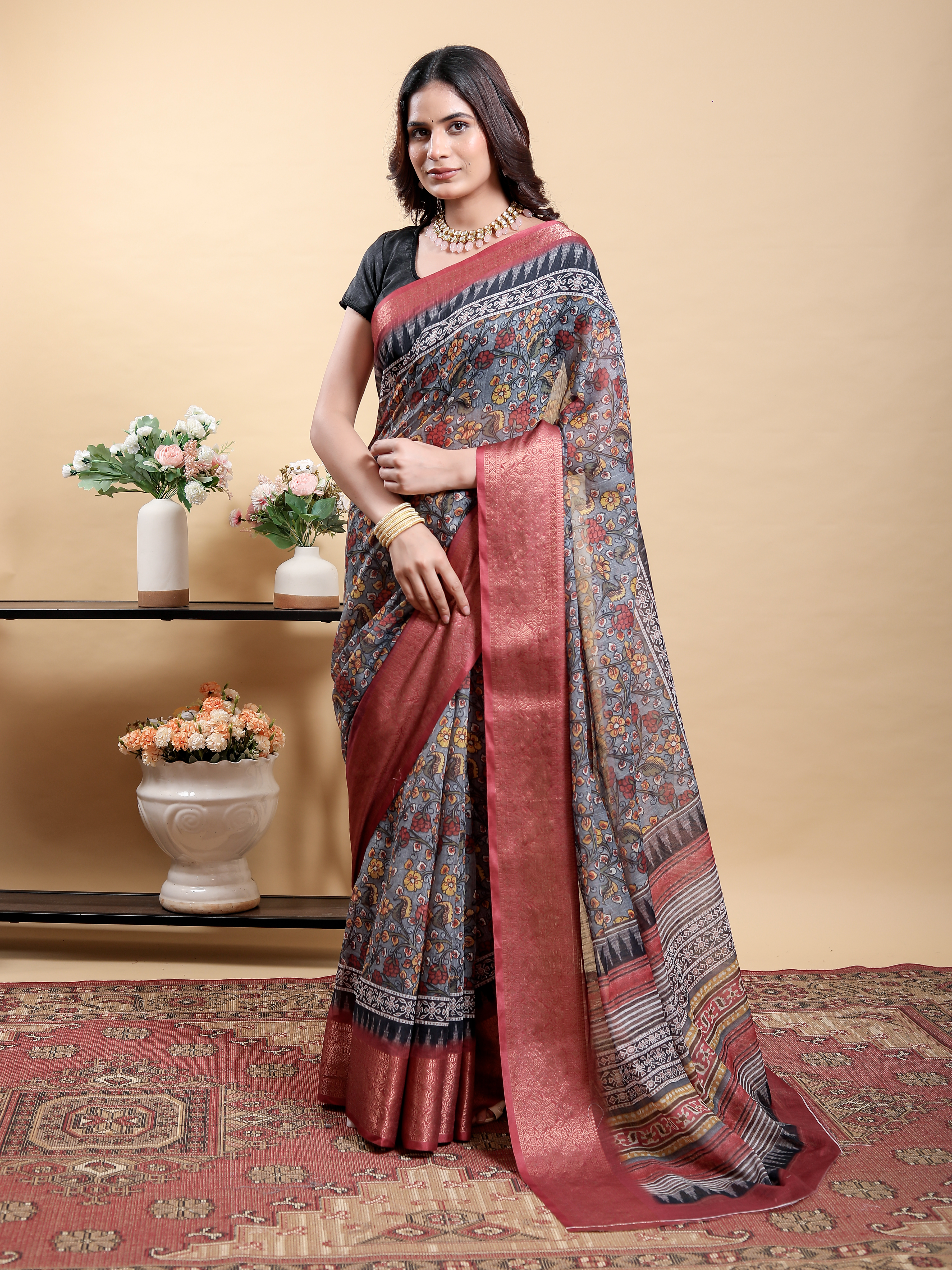
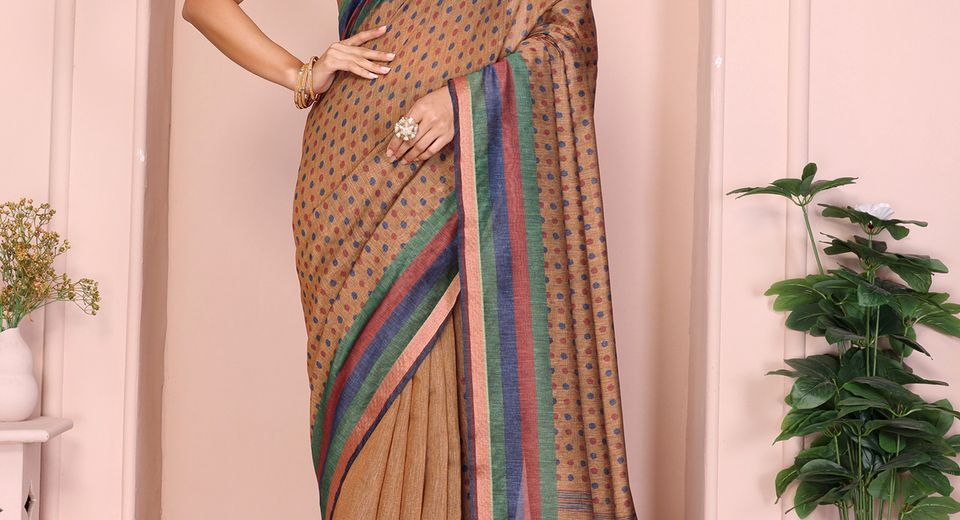
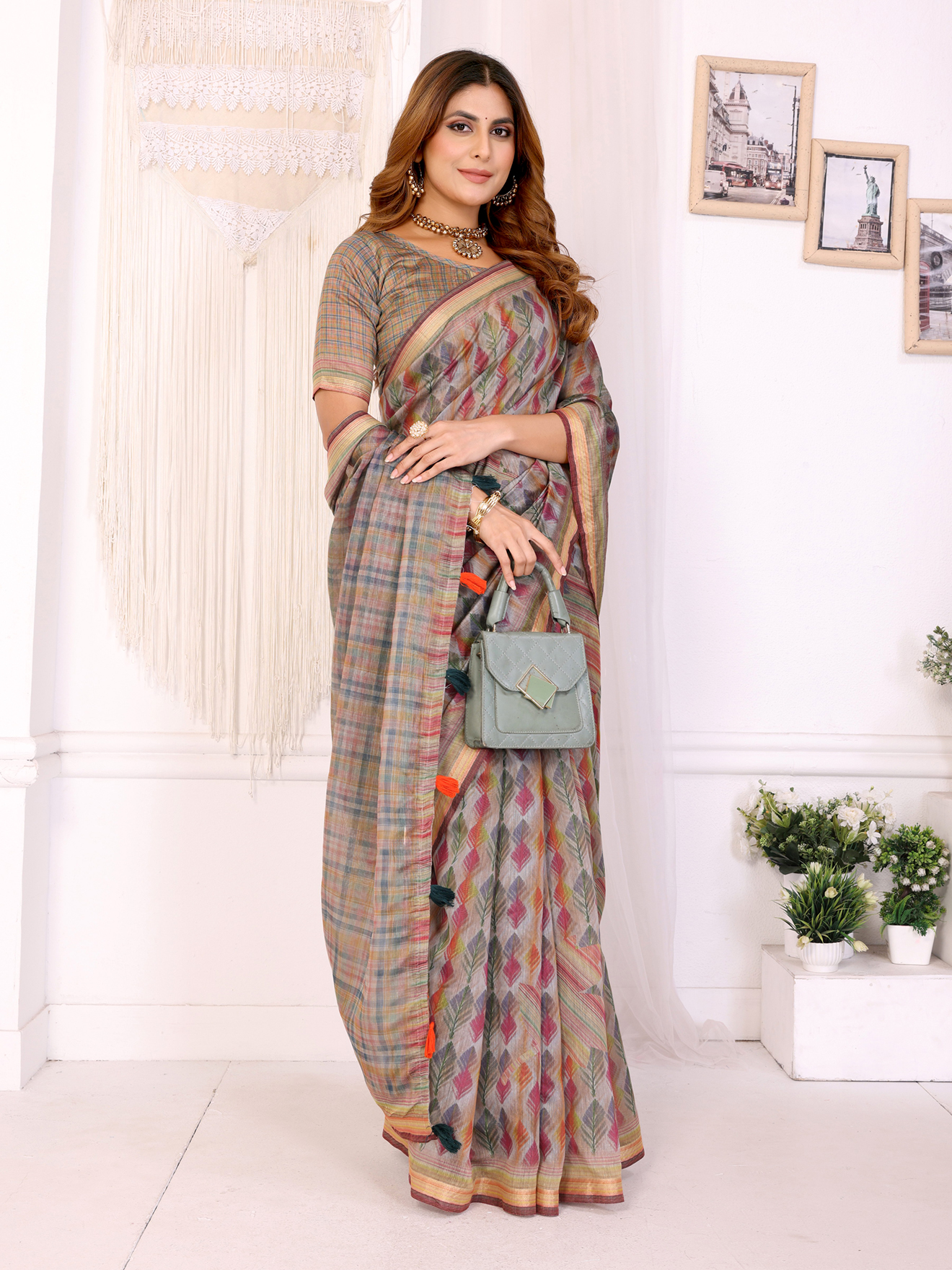
Multicolor Chanderi Cotton Saree with Artistic Leaf Pattern can coordinate a family without making every person wear the same shade. Select one colour from the leaf pattern for the blouse, then let other family members wear neutrals or a deeper version of that colour. Mustard Brown Chanderi Cotton Saree with Polka Print Border offers a warmer alternative that can stand out against wet green foliage and grey stone backgrounds.
Choosing a Saree for Rainy Season Family Photographs in cloudy outdoor light
Choose medium-depth colours or clear pastels that contrast with the background, because overcast light reduces harsh shadows but can make pale clothing appear flat.

Cloud cover often produces bluish or nude light rather than the warm glow associated with late-afternoon sun. Very mild pale grey, misty beige and white may merge with a cloudy sky or pale building. Strong black can also look severe when the surrounding scene is black and wet. Colours such as sky blue, wine, mustard, berry, teal and thin pink normally retain their identity in photographs.
Background colour should guide the final choice. Green gardens favour wine, rust, mustard, cream or soft blue. Grey architecture supports red, purple, yellow and jewel tones. A colourful family group needs one visual anchor rather than several competing prints, so one person can wear a patterned saree while others use solid shirts, kurtas or dresses.
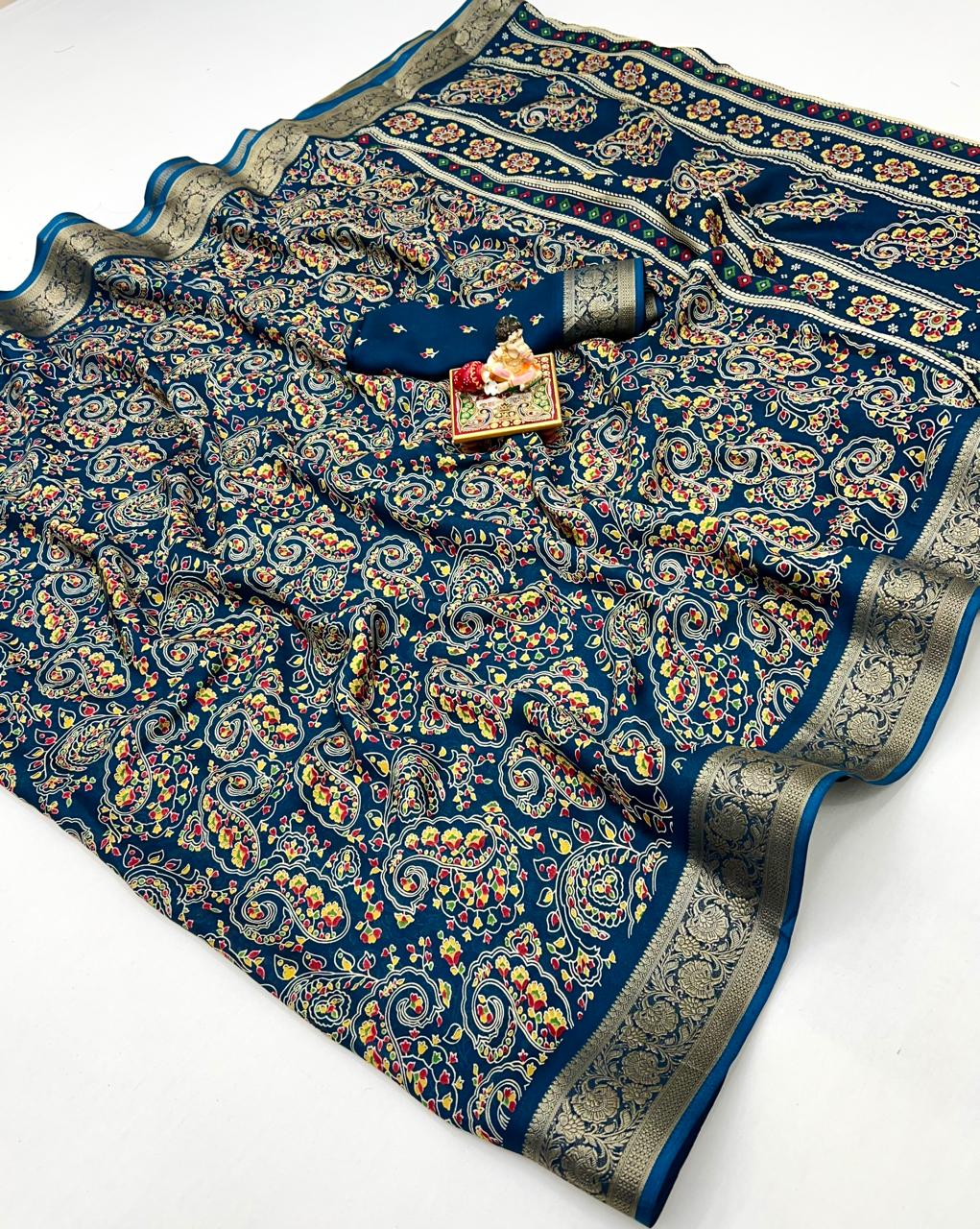
Wine Linen Cotton Floral Print Saree with Art Border gives colour depth without the reflective weight of a metallic saree. A wine saree can be paired with ivory, dusty pink or muted gold elsewhere in the group. For a more formal indoor photograph, Purple Banarasi Soft Silk Saree with Elegant Zari & Jacquard provides a richer surface, although the reflective zari should be tested under the actual room lighting.
Choosing a Saree for Rainy Season Family Photographs against common backgrounds
Green foliage absorbs some colour from photographs, so a saree with a clear warm or cool value creates separation from the background. Wet stone and concrete are visually muted, which allows red, purple, mustard and blue to become the frame's focal colours.
Photograph the saree beside a window or outdoors under the expected weather before the family session. A phone camera can reveal whether a pastel blouse disappears into the sky or whether zari produces distracting bright patches. A ten-minute test is more reliable than choosing a shade under warm indoor bulbs.
Choosing a Saree for Rainy Season Family Photographs with family colour coordination
Coordinate one shared colour family or one repeated accent instead of dressing every family member in identical colours.
A family photograph looks organised when colours relate at different intensities. For example, a mustard saree can connect with an ivory kurta and a muted olive dress, while a purple saree can be echoed through a child's hair ribbon or a man's pocket square. Repeating the same full print on several people usually makes the frame look busy.
Use the saree's border as a planning tool. If the border contains red and gold, family members can wear warm neutrals and one small red accent. If the saree has a multicolour leaf print, select one leaf colour for supporting outfits and keep the remaining clothing mostly solid.
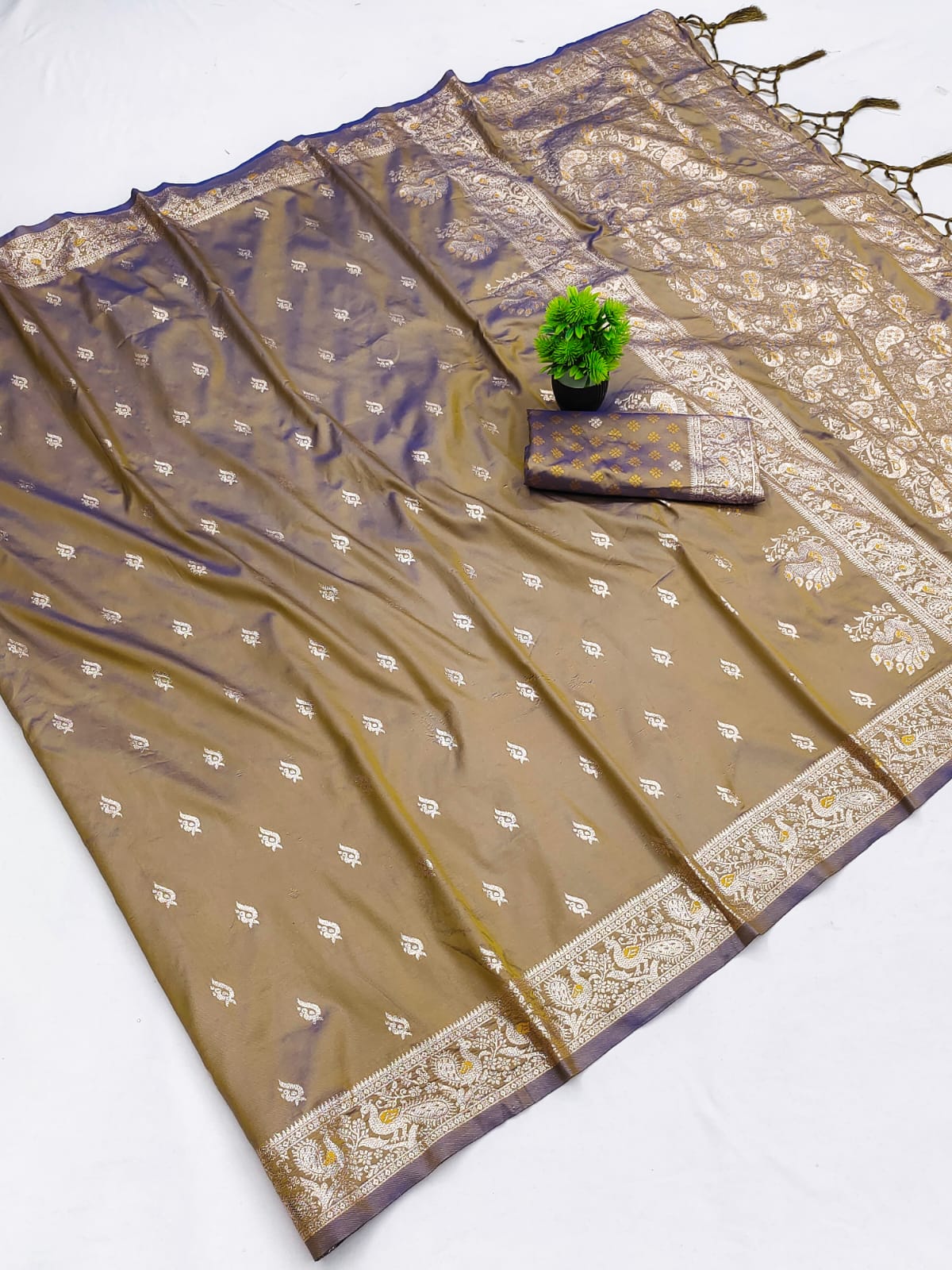
Classic Calcutta Moss Designer Saree can serve as a grounded centrepiece for a family photograph with wooden, green or heritage backgrounds. Keep neighbouring outfits lighter or less patterned so the saree's moss-toned character remains visible without creating a dark block in the group.
- Choose one dominant family colour, such as wine, mustard, purple or sky blue.
- Add two supporting neutrals, such as ivory, beige, charcoal or soft brown.
- Limit the group to one or two prominent prints.
- Place the brightest colour near the centre if the photograph needs a visual focal point.
Choosing a Saree for Rainy Season Family Photographs on a practical budget
A coordinated family portrait doesn't require every garment to be expensive. Sarees from Rs 1000 to Rs 1500 can provide a practical starting range for a printed cotton or linen-cotton look, while Sarees Under 20% Off and Sarees Under 10% Off may help when more than one family member needs new clothing.
Discount depth should not be the only selection criterion. Check the fabric, blouse status, border finish and delivery timing before ordering. Sarees Flat 60% Off and Sarees Flat 50% Off can be useful for budget planning, but a rain-sensitive photo session still requires a fabric suitable for humidity and a delivery date that leaves time for fitting.
Choosing a Saree for Rainy Season Family Photographs with a secure drape
A compact pleat set, secured pallu and rain-safe blouse design hold up better than a loose, heavily layered drape.

Make six to eight front pleats of even width and secure them temporarily with a hidden safety pin before leaving home. Pin the pallu at the shoulder and, if the photograph involves walking, add a second discreet pin near the waist. Pins should be placed through the stronger border or seam area rather than through a delicate zari motif.
A blouse with sleeves reaching the elbow can feel more comfortable in humid weather and can protect the upper arm from damp wind. A modestly high back, breathable lining and a secure hook or zip are more practical than an elaborate backless design for an outdoor family session. Avoid excessive padding if the saree fabric is light, because the blouse may become the most visually prominent part of the outfit.
Wear a petticoat with a firm but comfortable drawstring or a well-fitted waist closure. A petticoat that slips when damp can distort the pleats and make walking unsafe. Keep the saree hem around 1 to 2 centimetres above the ground when footwear and location conditions make puddles likely.
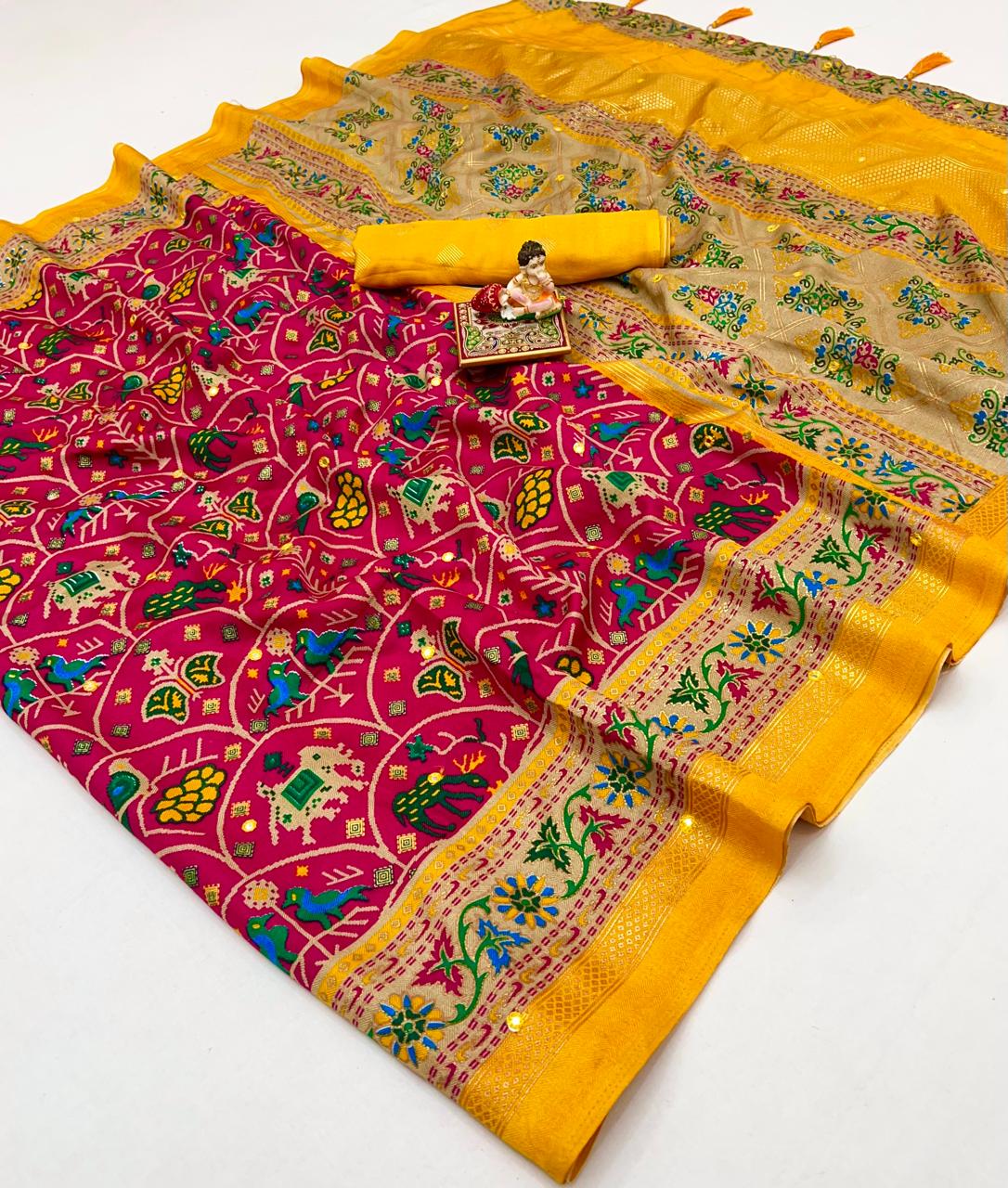
Red Banarasi Soft Silk Saree with Jacquard Zari Border is better suited to a covered venue where a secure classic drape can be preserved. Banarasi soft silk photographs beautifully under controlled indoor light, but rainwater, muddy steps and prolonged exposure to humidity are avoidable risks for zari and jacquard surfaces.
Choosing a Saree for Rainy Season Family Photographs with rain-safe accessories
Carry a waterproof garment cover, two absorbent cotton towels, spare pins, a wide scarf or shawl, and a large breathable bag for any damp saree.
A plastic bag is useful only for a short transfer because sealing damp fabric in plastic encourages odour and mildew. If the saree becomes wet, wrap it temporarily in a clean cotton towel, then place it in a breathable cloth bag until it can be aired properly. Do not rub zari, jacquard or printed surfaces to remove water.
A folding umbrella should be large enough to protect the wearer's shoulders and pallu, not merely the head. Place a clean mat or waterproof sheet in the car so the saree doesn't touch a damp seat. Carrying a second pair of footwear is worthwhile because wet sandals can make a long pallu dangerous on polished floors.
Choose accessories that don't compete with the saree's print. Small oxidised earrings, pearl studs or a single bangle stack are easier to manage than elaborate layers that may catch on a wet pallu. Avoid suede bags and untreated fabric footwear because both absorb water quickly.
Choosing a Saree for Rainy Season Family Photographs after the shoot
Air-dry a damp saree in shade as soon as possible, then store it only after the fabric is completely dry. Direct, strong sunlight can fade prints and may weaken or discolour some decorative surfaces.
don't wring a saree, twist zari or iron a damp garment. Spread the saree over a clean, dry line or broad hanger with enough airflow between folds. Once dry, fold Banarasi silk and zari sarees with soft cotton or muslin between layers to reduce friction. Linen cotton and cotton sarees should also be stored away from compressed plastic packaging.
Rainy-season photographs often involve more movement than a studio portrait, so inspect the hem, pleats and blouse hooks before returning home. Early attention to muddy marks is safer than aggressive scrubbing after stains have set. Follow the care label or use professional cleaning for Banarasi silk, jacquard and zari.
Choosing a Saree for Rainy Season Family Photographs: a simple final checklist
The best final choice balances visual contrast, fabric comfort, location safety and enough preparation time for alterations.
- Confirm whether the photographs are outdoors, under cover or indoors.
- Choose linen cotton, Chanderi cotton or light handloom cotton for active humid-weather movement.
- Reserve Banarasi soft silk for a controlled setting unless the weather forecast is stable.
- Check that the saree contrasts with the background and doesn't merge with cloudy light.
- Coordinate one colour with the family instead of repeating multiple prints.
- Secure six to eight pleats, pin the pallu and check the hem before leaving.
- Pack a breathable bag, towel, umbrella, spare pins and replacement footwear.
- Air the saree completely after the session before folding and storing it.
A monsoon family photograph succeeds when the saree supports the people in the frame rather than demanding constant adjustment. A breathable fabric, a defined colour and a restrained drape will usually photograph more naturally than a heavier design that becomes difficult after one unexpected shower.
Common Questions About Choosing a Saree for Rainy Season Family Photographs
Which saree fabric is best for rainy season family photographs?
Linen cotton, Chanderi cotton and light handloom cotton are practical choices because they are breathable, relatively manageable in humid weather and easy to style for movement. Choose a covered location for delicate Chanderi cotton and zari-rich sarees if rain is likely.
Are Banarasi silk sarees suitable for monsoon family photos?
Banarasi silk sarees are suitable for indoor or fully covered family photographs with controlled lighting. Avoid exposing Banarasi silk, jacquard and zari to prolonged rain, muddy surfaces or tightly sealed damp storage.
Which saree colours photograph well on cloudy days?
Medium-depth shades such as wine, mustard, purple, red, teal and sky blue usually retain their identity in soft overcast light. Very pale grey, beige and white may blend into a cloudy or concrete background, so test the colour before the shoot.
How do I stop a saree from dragging on wet ground?
Keep the saree hem around 1 to 2 centimetres above the ground when puddles are possible, and wear stable footwear with a secure sole. Pin the pallu and carry a breathable garment bag so the saree can be protected between photographs.
How should I store a saree that became damp during a photo session?
Wrap the damp saree loosely in a clean cotton towel and place it in a breathable cloth bag for transport. Air-dry the saree completely in shade before folding, and never seal damp fabric in plastic or rub zari and jacquard surfaces.
How can a family coordinate outfits without looking overly matched?
Choose one dominant colour from the saree and repeat it in small details or solid garments worn by other family members. Keep prominent prints to one or two outfits, and use ivory, beige, charcoal or soft brown as supporting neutrals.