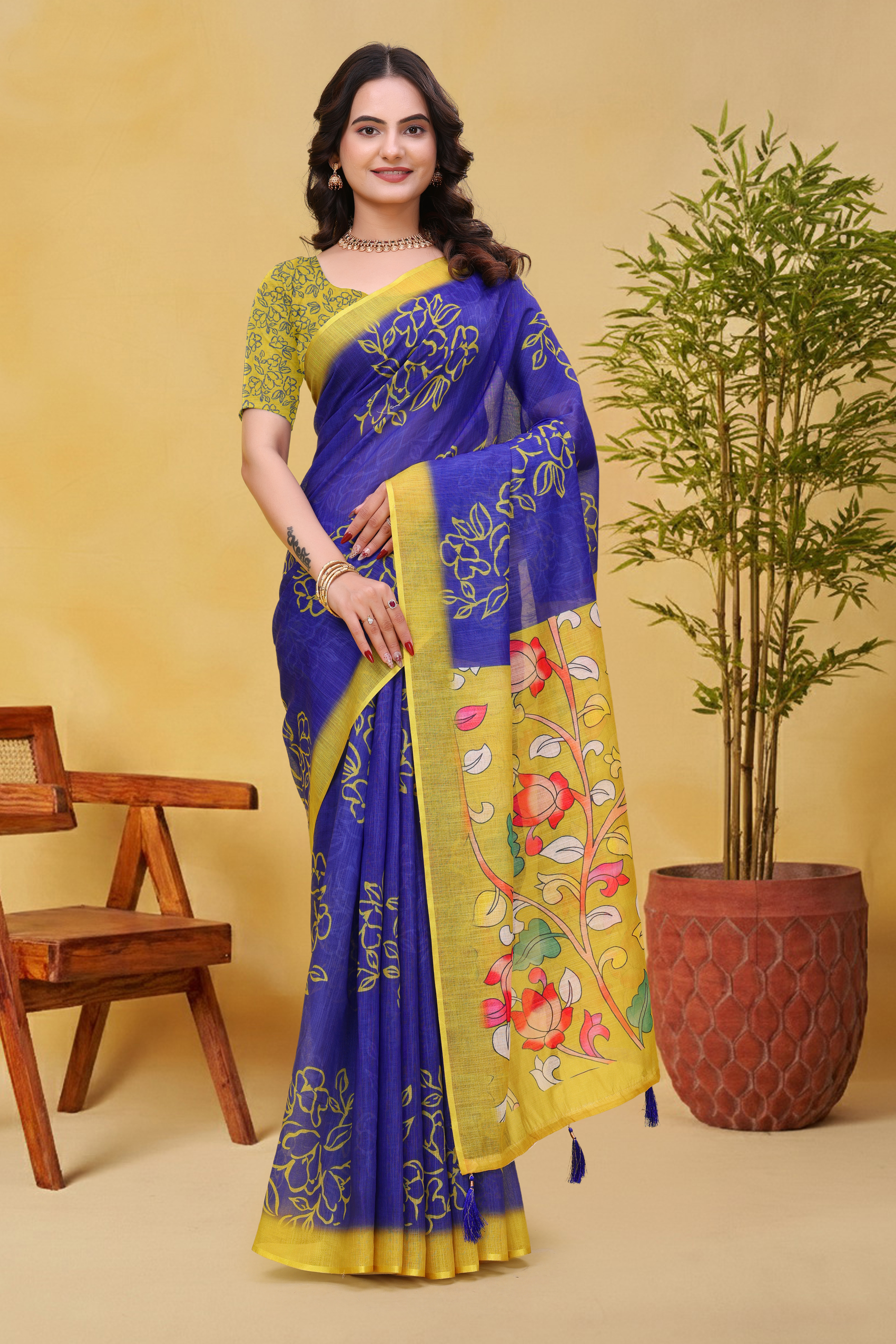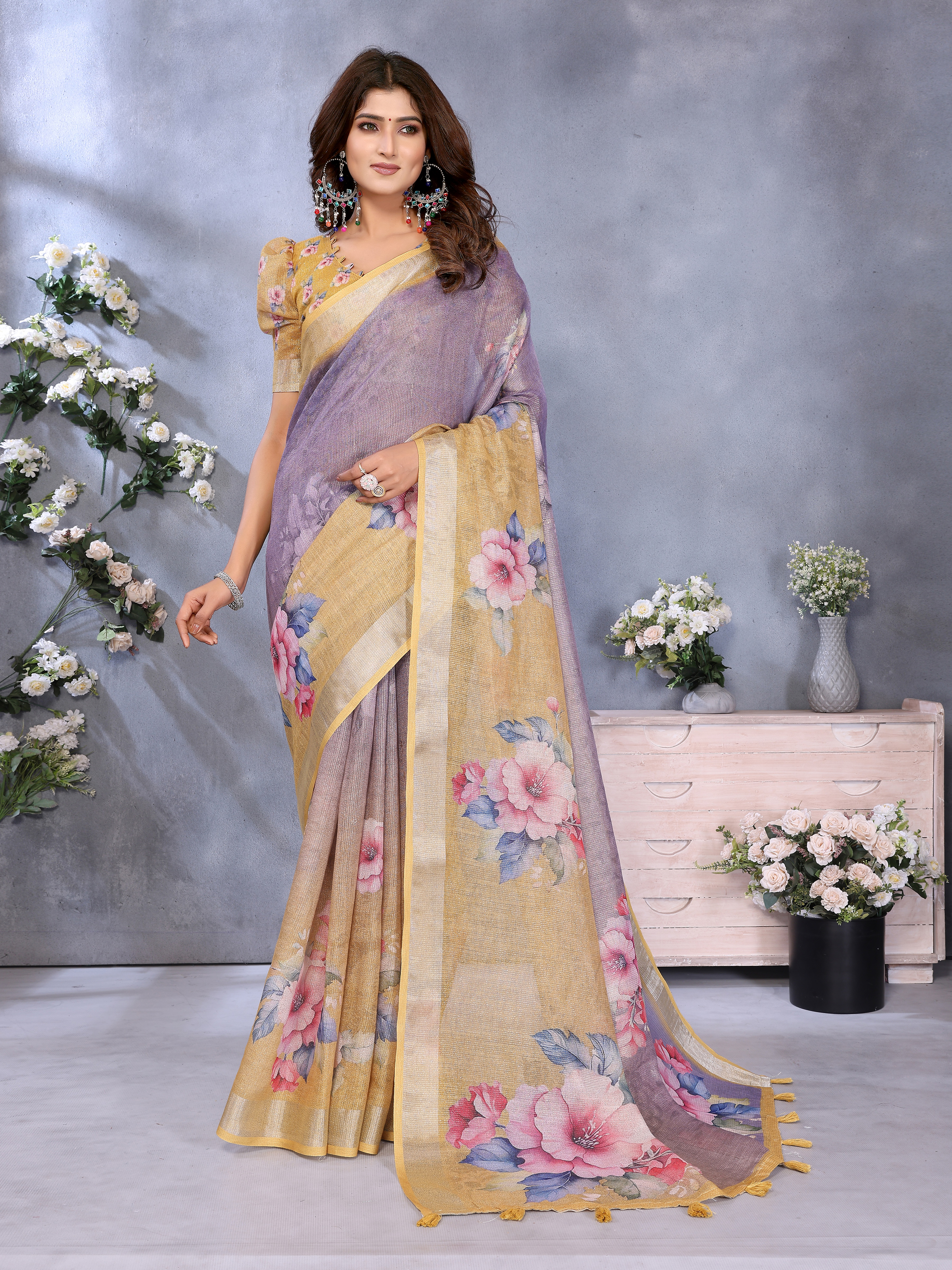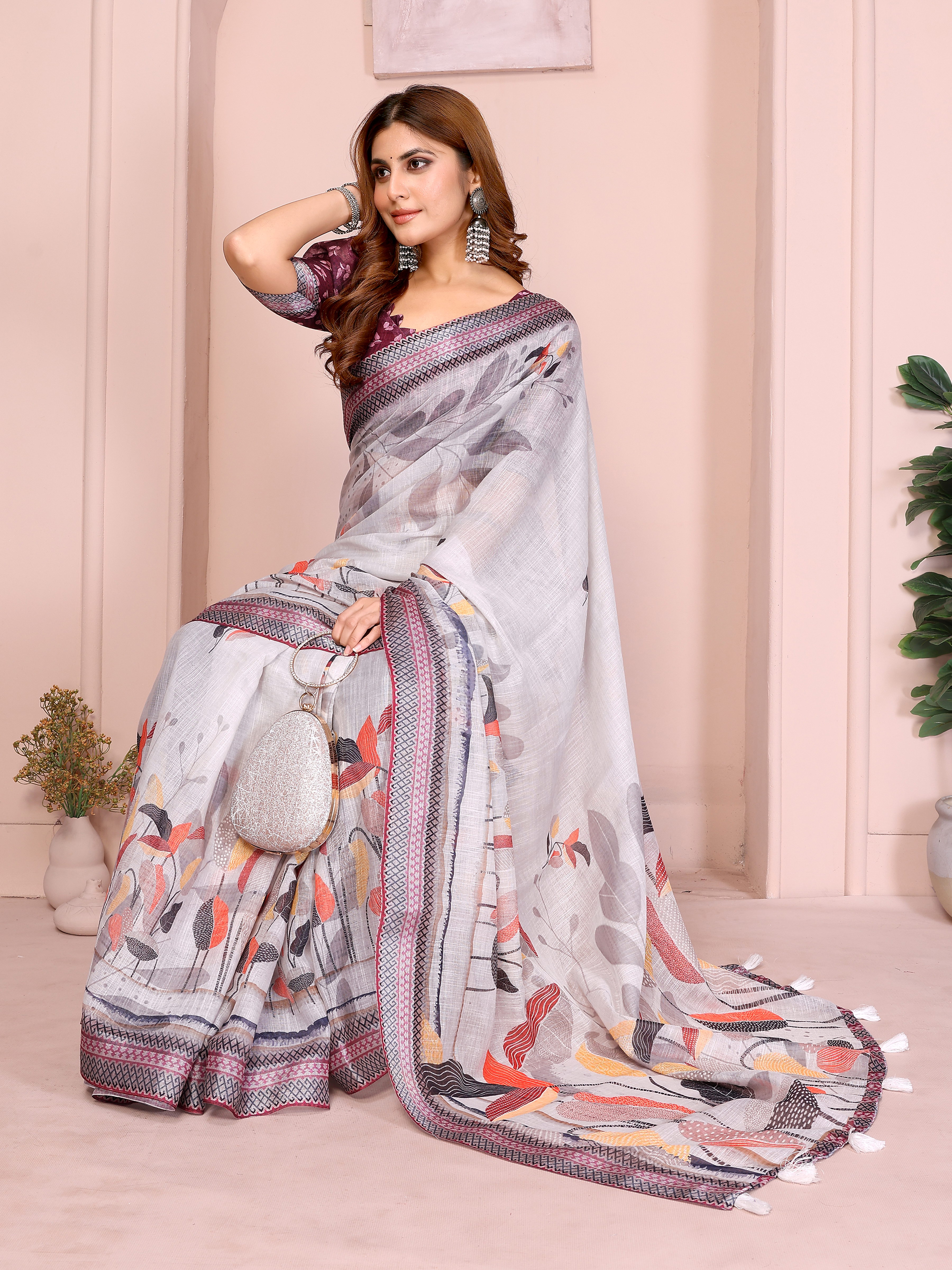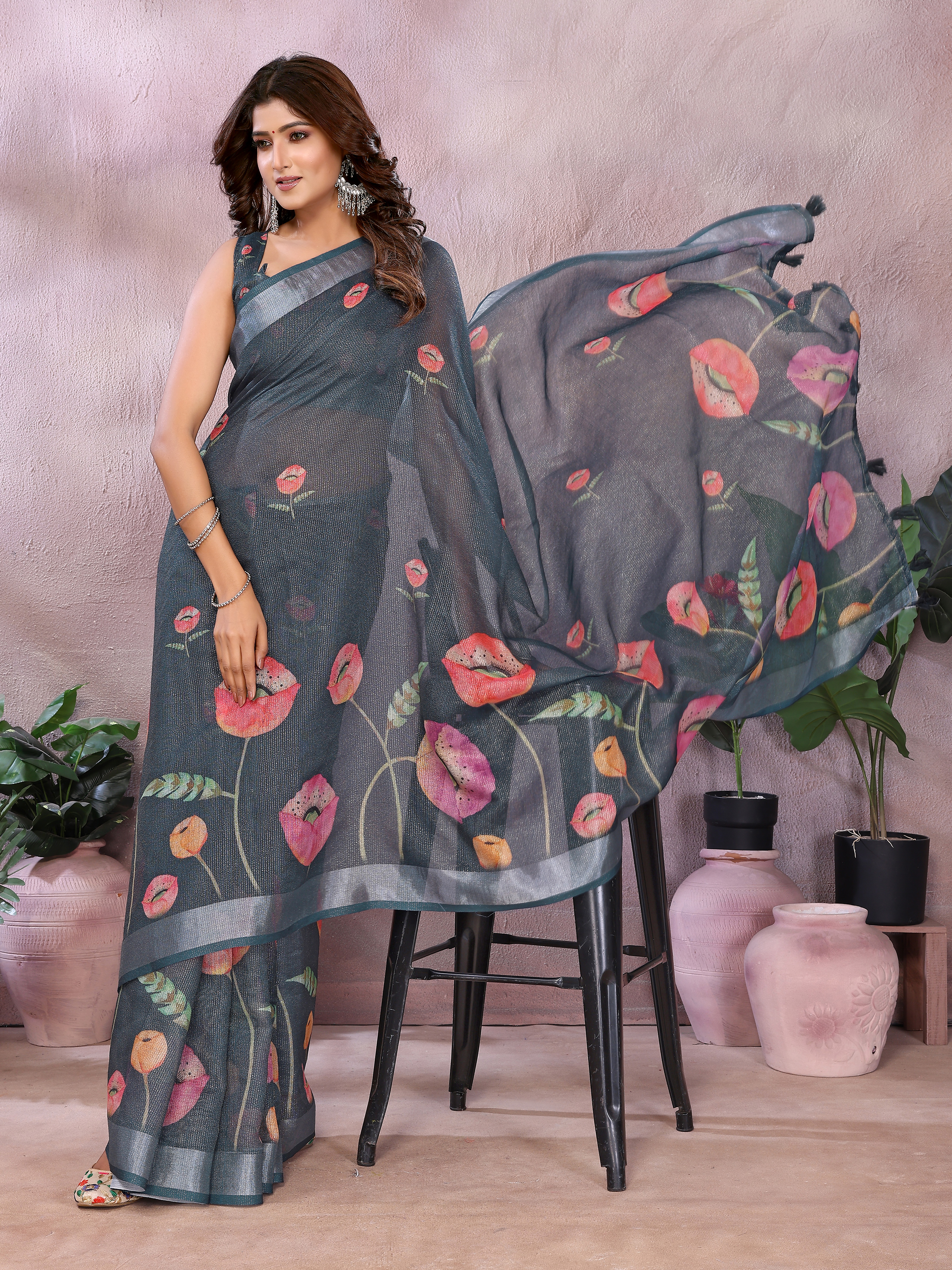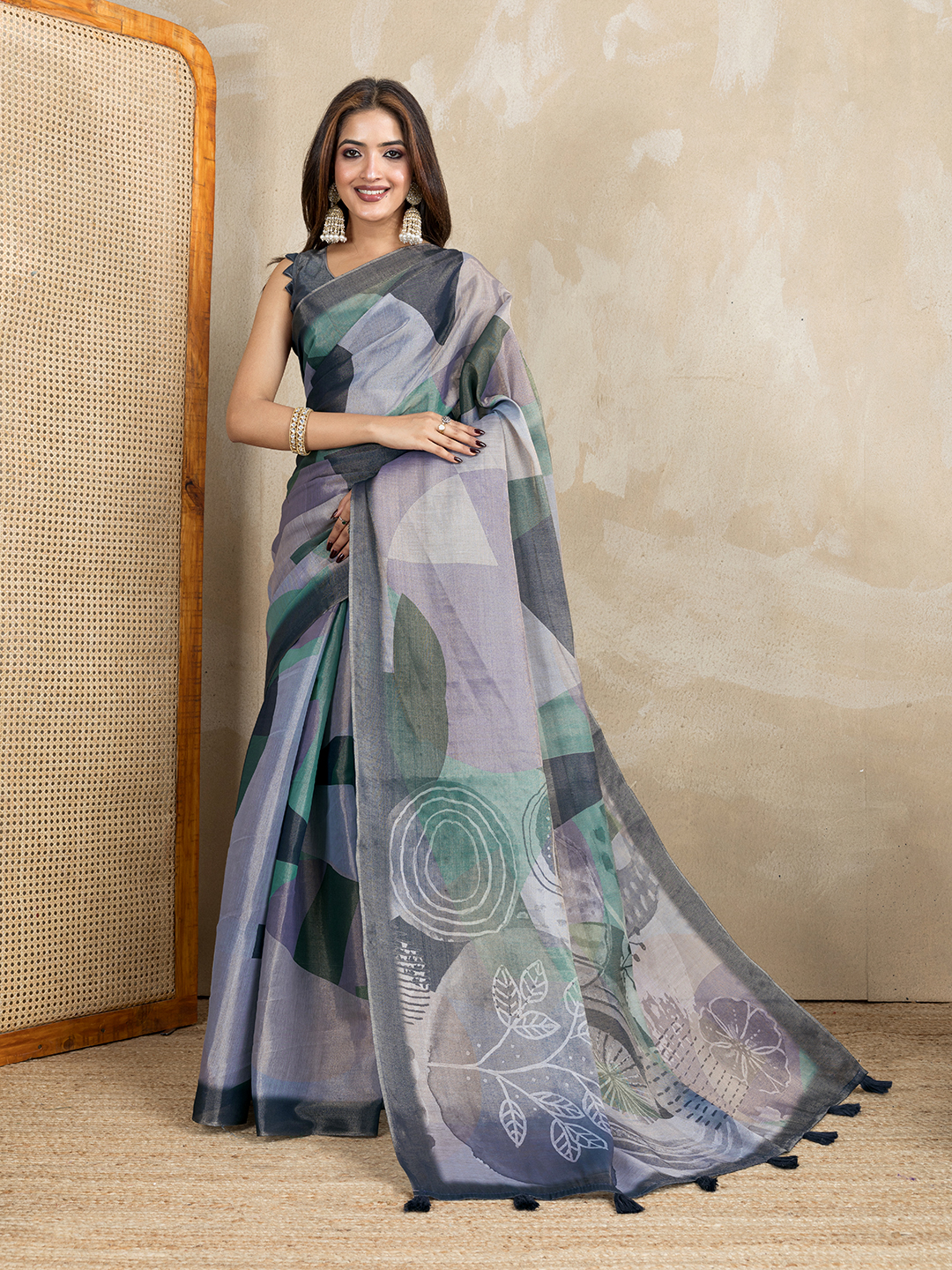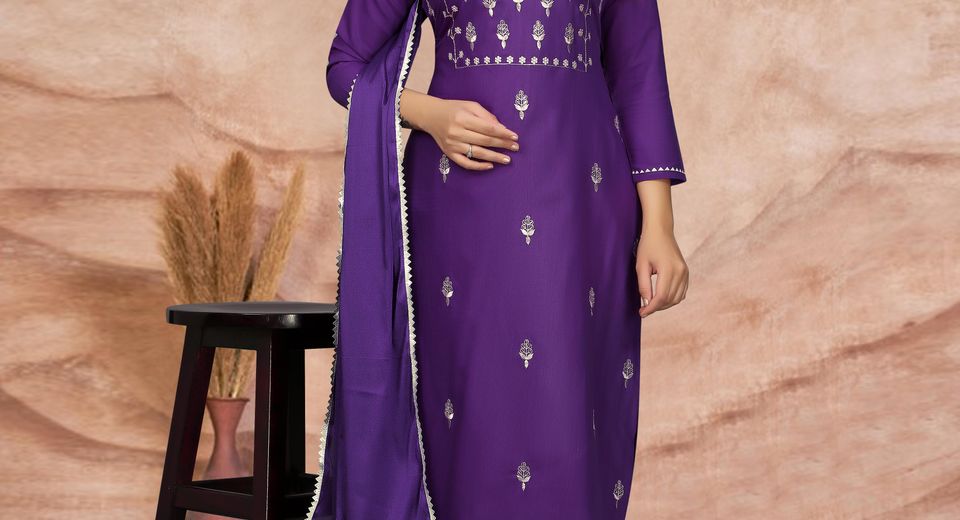
Choosing a Dupatta That Does Not Overpower a Printed Suit starts with one useful rule: decide which part of the outfit should attract attention first. A printed kurta already carries colour, pattern and movement, so the dupatta should usually support that visual story instead of introducing an equally loud one. The right pairing may repeat one shade, soften the print with a solid fabric or echo a small motif without copying the entire design.
A practical way to judge the balance is to look at the outfit from a distance of about two metres. If the eye notices only the dupatta, the drape is competing with the kurta. If the whole outfit looks flat, the dupatta may be too similar in colour, texture and pattern. The best combination gives the printed suit a clear focal point while adding enough contrast to make the three-piece look intentional.
Choosing a Dupatta That Does Not Overpower a Printed Suit: Why visual weight matters
A printed suit looks visually heavy when the kurta and dupatta repeat strong colour, dense motifs, wide borders or shiny surfaces at the same time. A small floral print can handle more detail than a large all-over geometric print, while a dark base usually needs a different balance from a pale base.
Visual weight comes from more than brightness. A deep navy, black or emerald fabric appears stronger than a soft ivory or powder pink even when both carry the same number of motifs. Zari, sequins, dense embroidery, contrast piping and broad woven borders also increase visual weight because they catch light and create defined edges.
Silhouette changes the calculation. An Anarkali with a wide flare already creates movement below the waist, so a heavily bordered dupatta can make the outfit appear crowded. A straight kurta with narrow pants has fewer competing lines and can often carry a more decorative dupatta. A palazzo suit also benefits from controlled drape because wide trousers and a spreading dupatta can visually widen the full outfit.
Consider the three areas that are most visible when the dupatta is worn: the shoulder, the front panel and the lower edge near the knees or ankles. A bold border crossing all three zones can dominate a printed kurta. A lighter dupatta, a narrow border or a neatly folded shoulder drape keeps the print readable.
Choosing a Dupatta That Does Not Overpower a Printed Suit through colour
Match the dupatta to one deliberate colour from the printed suit, rather than trying to repeat every colour in the print. A solid dupatta in the background shade creates calm, while a dupatta in a smaller accent shade creates controlled contrast.
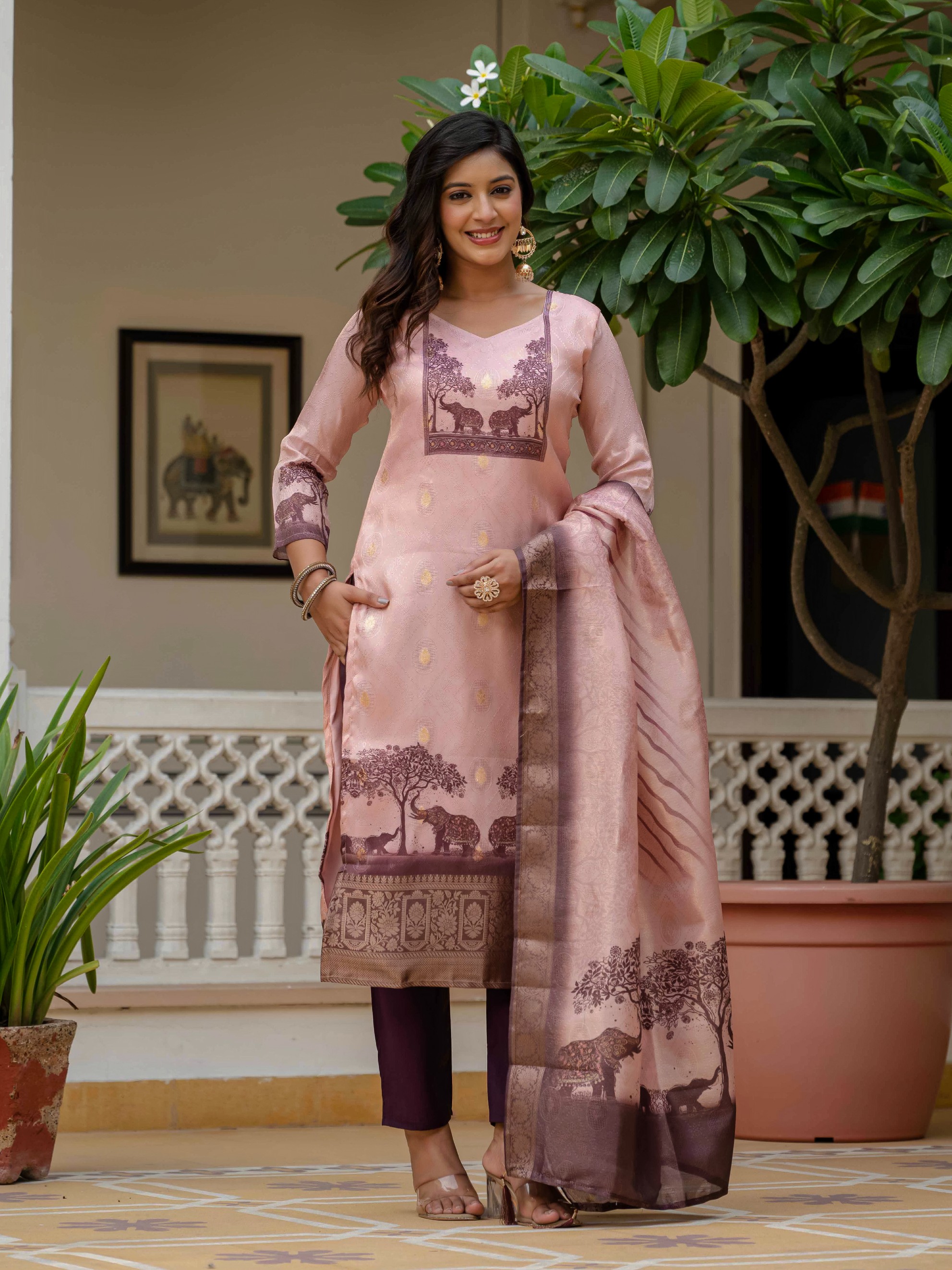
When should you use the background colour?
A background-colour dupatta is useful when the kurta has several bright motifs. A pale yellow printed kurta can be paired with a muted yellow or warm beige dupatta so the flowers remain the main feature. Yellow Flower Printed Salwar Suit demonstrates why a restrained accompanying layer can keep a cheerful print from becoming visually noisy.
A dark printed suit can also benefit from a dupatta that repeats its base without adding another pattern. Midnight Black Blossom Salwar Suit will usually look more balanced with a plain black, charcoal or muted jewel-toned layer than with a second large floral design. The exact shade need not be identical; a difference of one or two tones can add depth without breaking continuity.
When does an accent colour work best?
An accent-colour dupatta works when the selected shade appears in small but noticeable details of the kurta. If a floral print contains pink petals and green leaves on a pale ground, a rose or sage dupatta can connect with the design while remaining distinct. Pink Flower Printed Salwar Suit can be approached this way: select one supporting shade and keep the dupatta surface relatively quiet.
Contrast should be measured by both colour and saturation. A saturated orange dupatta beside a saturated magenta print may look louder than expected, even when both colours technically appear in the kurta. Pairing one intense shade with a softened version of the other usually produces a more wearable result.
When does a contrast dupatta become too much?
A contrast dupatta becomes too much when it introduces a new dominant colour, a new large motif and a new reflective texture simultaneously. A bright red floral dupatta over a blue geometric kurta creates three separate focal points: colour contrast, print contrast and motif contrast. Keep at least two of those elements quiet.
Choosing a Dupatta That Does Not Overpower a Printed Suit by print scale
The safest print-scale rule is to pair a large or dense kurta print with a plain or small-scale dupatta, and to reserve a larger dupatta motif for a quieter kurta. Similar-sized bold patterns placed next to each other often compete because neither design provides visual rest.
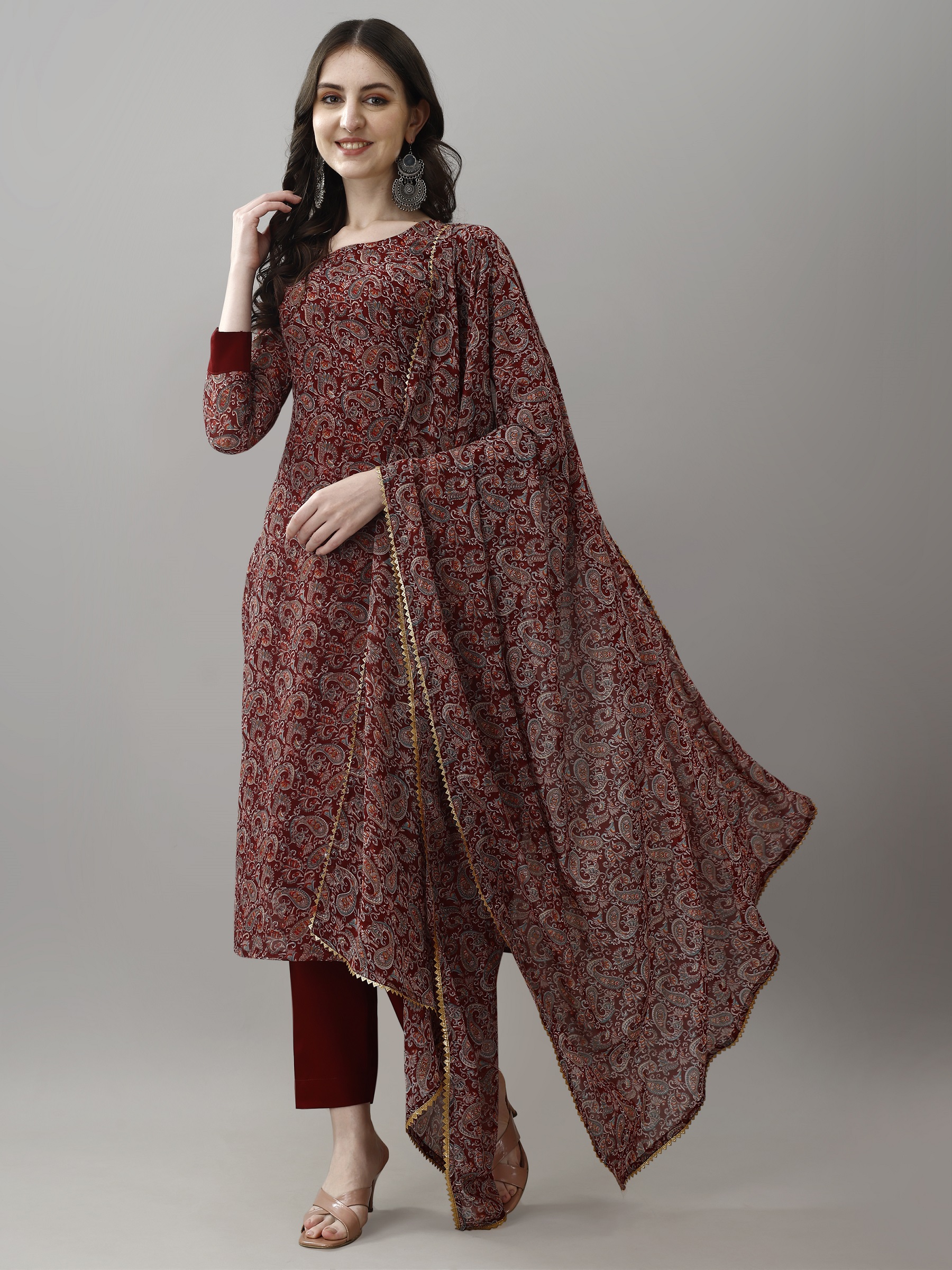
Large motifs include oversized flowers, broad paisley forms, thick stripes and widely spaced geometric blocks. Small motifs include tiny butis, narrow dots, miniature leaves and fine repeated lines. A kurta with large flowers can take a dupatta with small butis because the patterns differ in scale. A small printed kurta can take a larger border or a restrained statement motif because the overall surface remains balanced.
Pattern direction matters as well. Vertical stripes or long printed vines can make the body look more elongated, while a broad horizontal border draws attention across the frame. If the kurta already has strong vertical movement, a dupatta with a wide horizontal edge can create useful structure, but the border should not be so broad that it conceals the central print.
Regional prints need especially thoughtful pairing. Kalamkari Print Salwar Suits (Copy) often contain layered botanical, figurative or traditional elements, so a plain dupatta in a colour lifted from the print can preserve the character of the design. Gujarat Bandhej Salwar Suits already have a recognisable dotted pattern; adding another dense all-over print may blur the distinctive Bandhej effect.
Odisha Sambalpuri Salwar Suits can contain strong traditional motifs and contrasting borders, making a restrained solid dupatta a practical choice for everyday styling. Maharashtra Paithani Inspired Salwar Suits may already suggest a rich woven aesthetic, so a dupatta with limited zari or a controlled border can provide occasion-appropriate polish without creating excessive shine.
Choosing a Dupatta That Does Not Overpower a Printed Suit by fabric weight
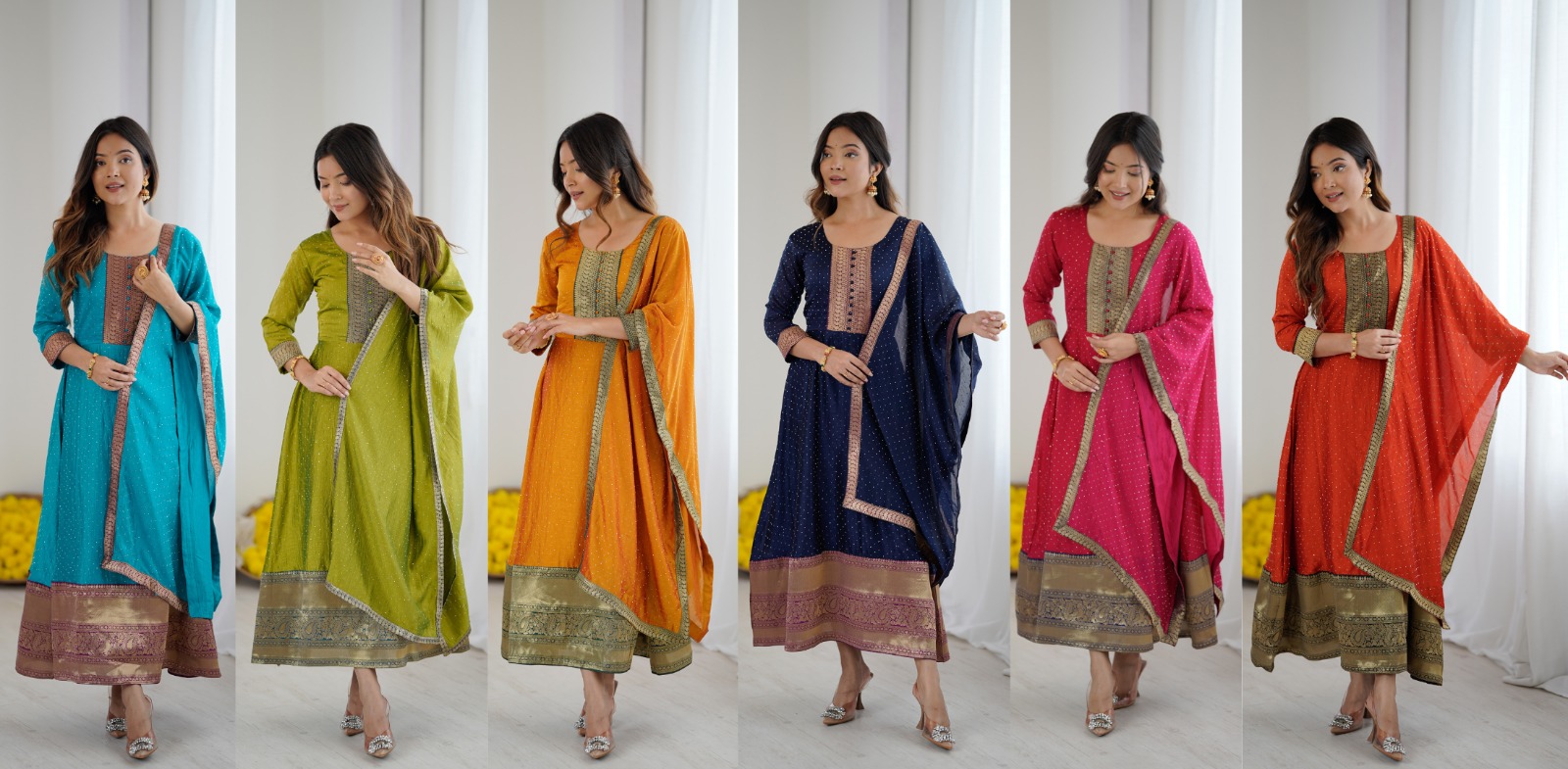
A dupatta fabric should balance the structure, shine and density of the printed kurta; lightweight fabrics soften a busy print, while structured fabrics give a simple printed suit more presence. Fabric weight is often more important than whether the dupatta technically matches the outfit.
Which fabrics suit dense printed kurtas?
Chiffon, georgette and lightweight blends fall close to the body and create fewer bulky folds. These fabrics suit printed kurtas with many motifs because the dupatta adds movement without adding a large block of surface detail. A soft drape also works well for a straight suit when the wearer wants the printed front panel to remain visible.
Silk blend dupattas have more body and a gentle sheen, so they can elevate a relatively simple print. Women's Mustard Silk Blend Kurta Set with Dupatta shows how a richer surface can be grounded with a quiet tonal layer. Elegant Black Printed Silk Blend Salwar Suit can carry polish without needing an additional heavily embroidered contrast.
When can a heavier dupatta work?
Banarasi silk, brocade, densely woven jacquard and heavily embroidered net work best when the kurta print has open space, a limited colour palette or a small motif. A heavy dupatta may also be appropriate for a wedding or reception, but the border and embellishment should still be checked against the printed surface.
A dupatta with zari should be evaluated under the lighting where it will be worn. Daylight reveals the actual colour relationship, while warm indoor lighting makes gold zari and warm prints appear stronger. If the suit already includes metallic thread, matching the zari tone rather than adding a contrasting metallic finish usually creates a more coherent result.
Embroidered Salwar Suit Set for Women may need less additional ornament than a plain kurta because embroidery and print already create surface interest. Stylish Navy Floral Silk Kurta Pant Dupatta Set offers another useful comparison: a silk floral composition can look finished with a controlled drape, rather than with extra jewellery and a second ornate scarf.
Choosing a Dupatta That Does Not Overpower a Printed Suit with borders
Border width and embellishment placement determine whether a dupatta frames a printed suit or covers it with a competing outline. A narrow border of about 1 to 2 inches is generally easier to balance with an active print than a broad 4 to 6 inch border.
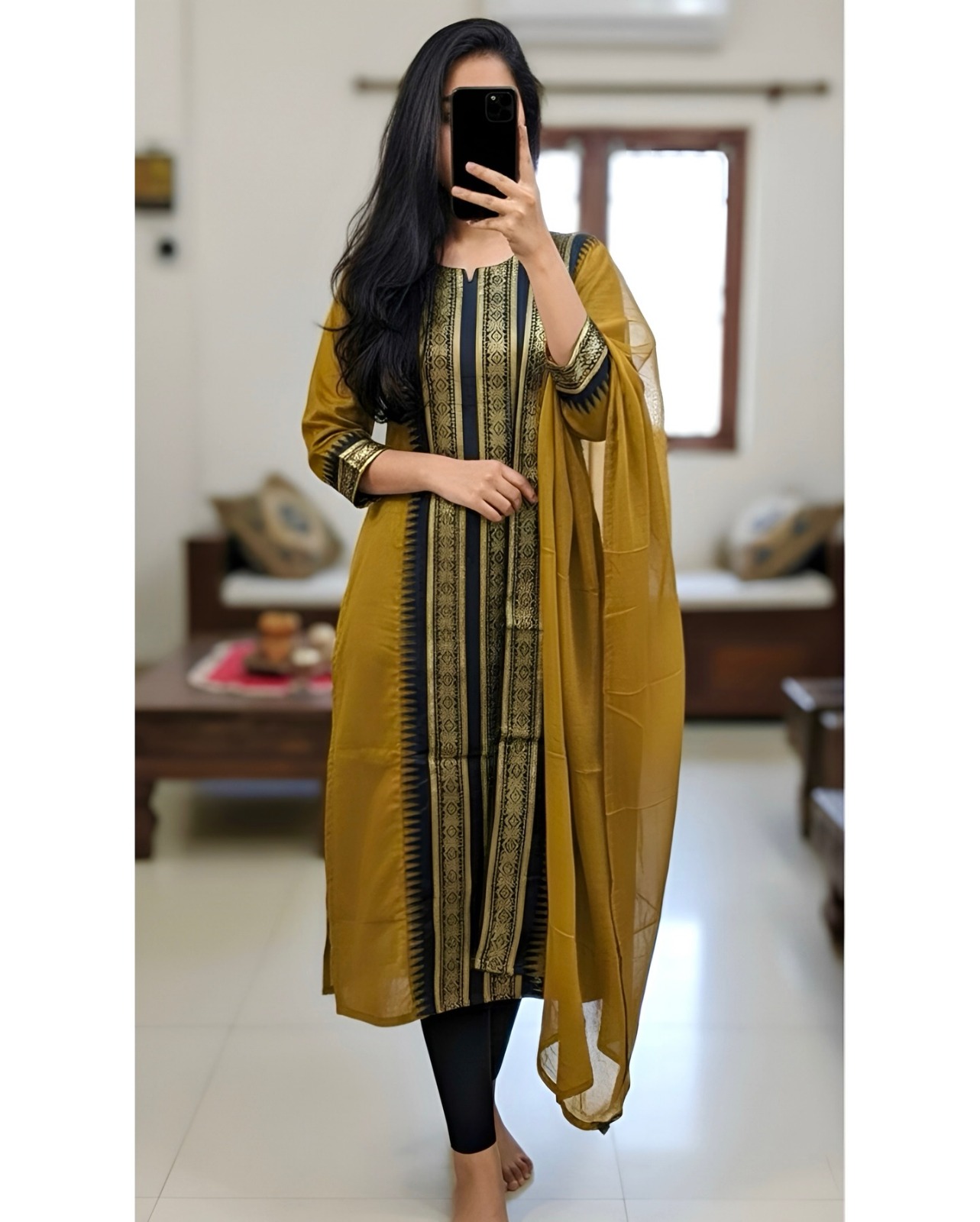
Look at the border's path when the dupatta is worn. A border along the open edge becomes highly visible when the dupatta is draped over one shoulder, while a border on all four sides creates more visual definition when the fabric is worn across both shoulders. A printed kurta with a decorative hem may need a simpler dupatta edge so the lower half does not contain two competing horizontal lines.
Embroidery should have a clear relationship with the print. Small scattered embroidery can echo tiny motifs, while concentrated work at the corners can add interest without covering the kurta. A large central embroidered panel is more demanding because it becomes a second focal point whenever the dupatta falls over the torso.
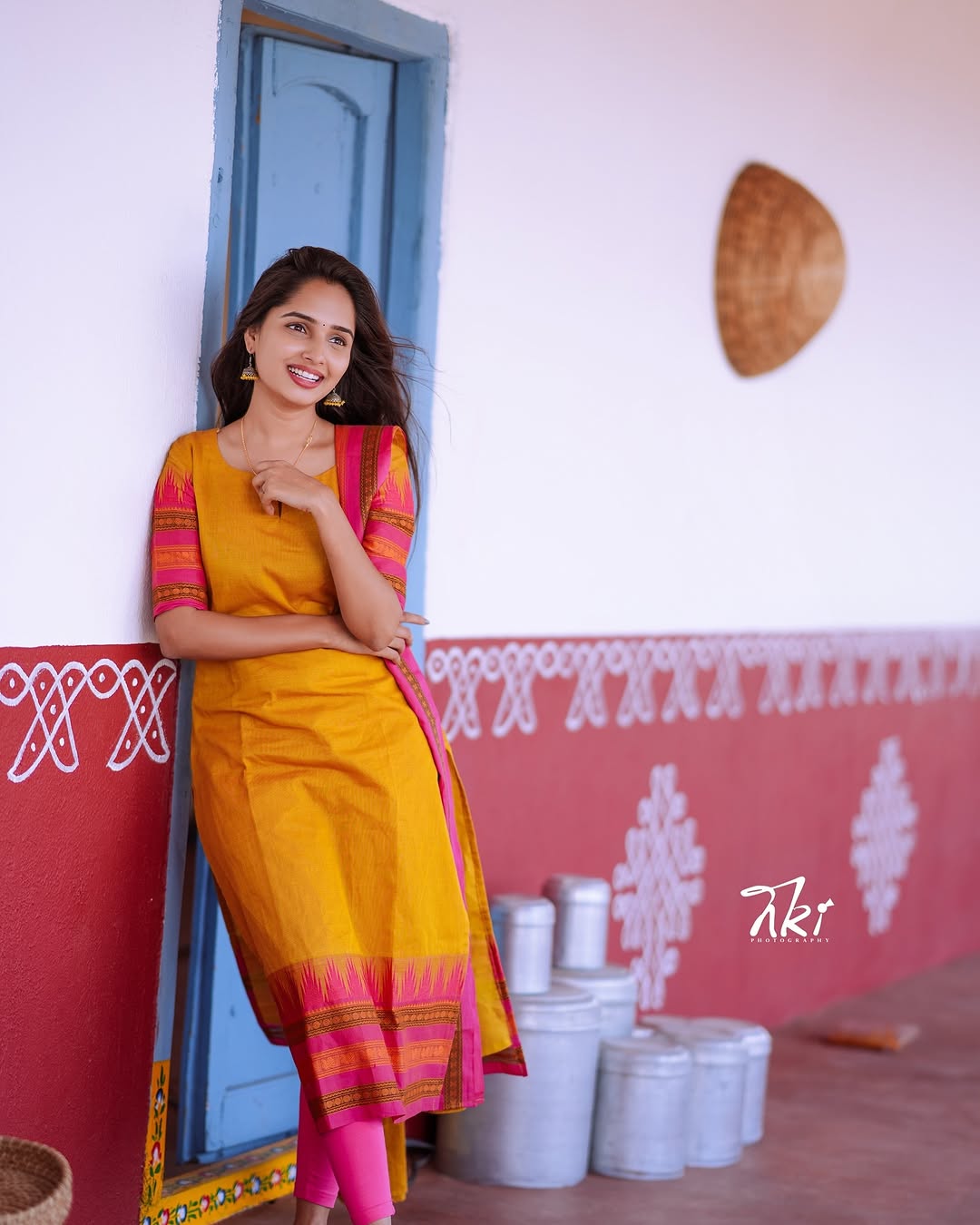
Designer Yellow Salwar Suit with Dupatta may suit a festive styling approach, but a bright yellow outfit does not automatically require maximum embellishment. If the set includes a strong border, keep jewellery and the drape clean. If the dupatta is plain, one defined accessory such as jhumkas or a structured potli can supply the celebratory finish.
Choosing a Dupatta That Does Not Overpower a Printed Suit for regional prints
Coordinate a regional printed suit by repeating one characteristic colour or texture while allowing the dupatta to remain visually simpler. Regional identity comes from the print language, weave, motif and colour placement, so copying every element can make the ensemble look assembled rather than styled.
Punjab Patiala Salwar Suits often have a relaxed, voluminous silhouette, and a dupatta with a clean fall can prevent the outfit from appearing wider than intended. A narrow shoulder fold or a single-side drape preserves ease of movement while keeping the printed kurta visible.
Gujarat Bandhej Salwar Suits benefit from a dupatta that respects the dotted rhythm. A solid dupatta in red, maroon, yellow or green can draw out a Bandhej shade without adding another repetitive surface. A lightly printed dupatta may work when its motifs are substantially larger or smaller than the Bandhej dots.
Odisha Sambalpuri Salwar Suits can be styled with a dupatta that repeats a border colour rather than the complete motif. Kalamkari Print Salwar Suits (Copy) can take an earthy solid layer in rust, indigo, cream or muted green, depending on the dominant colours present in the kurta. Maharashtra Paithani Inspired Salwar Suits can be balanced with a simpler silk blend layer when the woven-inspired border already provides enough richness.
Choosing a Dupatta That Does Not Overpower a Printed Suit through draping
The most balanced drape is the one that leaves the printed kurta's main motif visible while keeping the dupatta's heaviest edge away from the centre of the body. Drape position can change the apparent intensity of the same fabric.
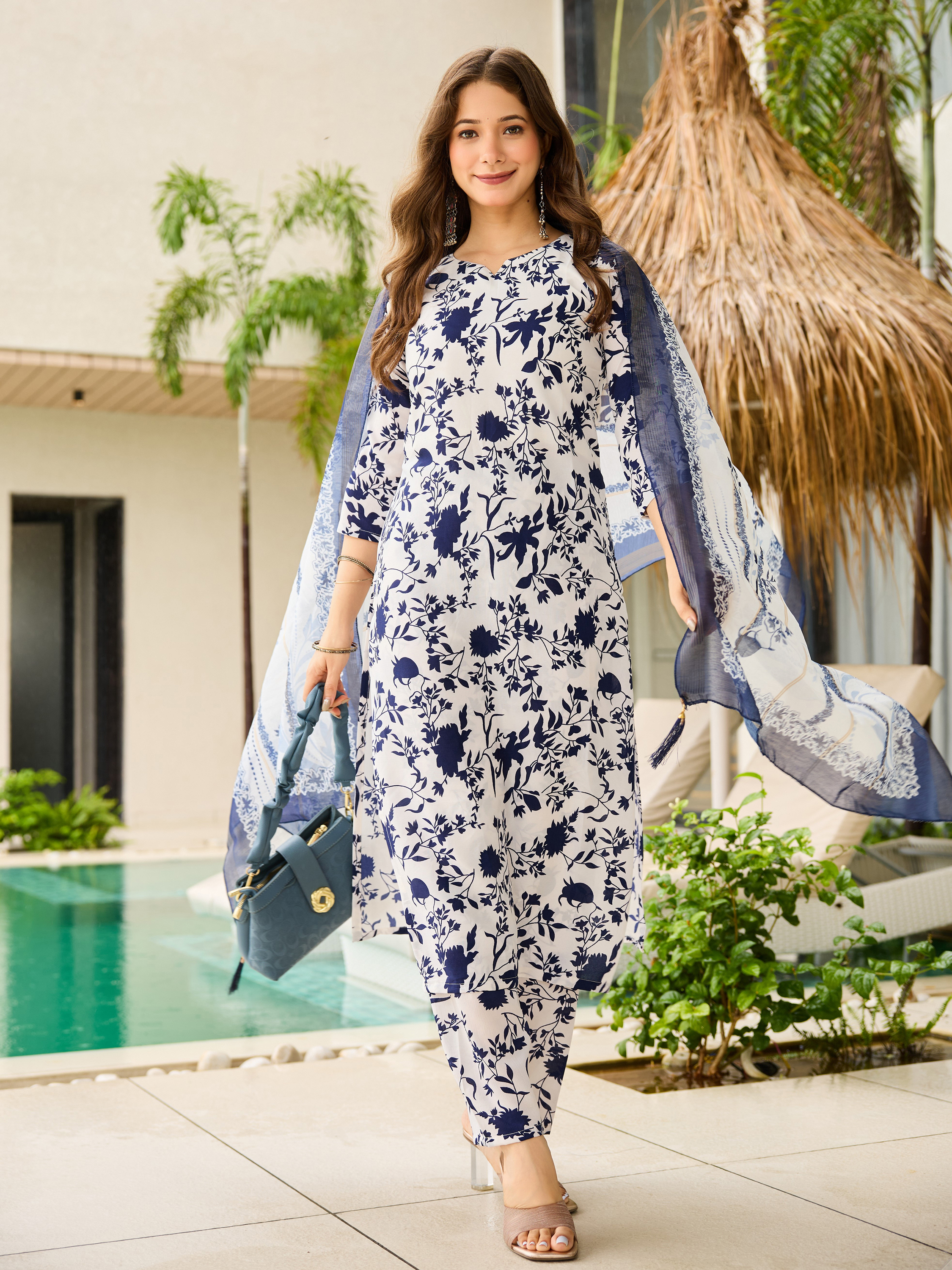
A single-shoulder drape is effective when the dupatta has a decorative border on one edge and the kurta has a strong front print. Let the embellished edge fall along the side rather than directly over the central panel. A two-shoulder drape creates symmetry and works well with a relatively plain dupatta, especially for office events, family lunches and daytime ceremonies.
A front-open drape can make a busy print easier to read because the fabric frames the kurta instead of covering it. For a wide dupatta, pleat approximately 4 to 6 inches at the shoulder and secure it discreetly if movement is likely. Excess fabric gathered near the neck can create bulk and hide the neckline, so a lower shoulder placement is often more flattering with high-neck or embroidered kurtas.
For a Haldi ceremony, lightweight yellow, green or pink layers are usually easier to manage than heavy brocade because turmeric, outdoor heat and frequent movement require practical clothing. For a wedding reception, a silk blend or zari-edged dupatta can work, provided the kurta print remains the first visual anchor.
Choosing a Dupatta That Does Not Overpower a Printed Suit with a final fitting check
A final fitting check should compare colour, scale, texture and drape in the actual lighting and shoes that will be worn. Checking only the folded garments on a bed can hide problems that appear once the dupatta is on the body.
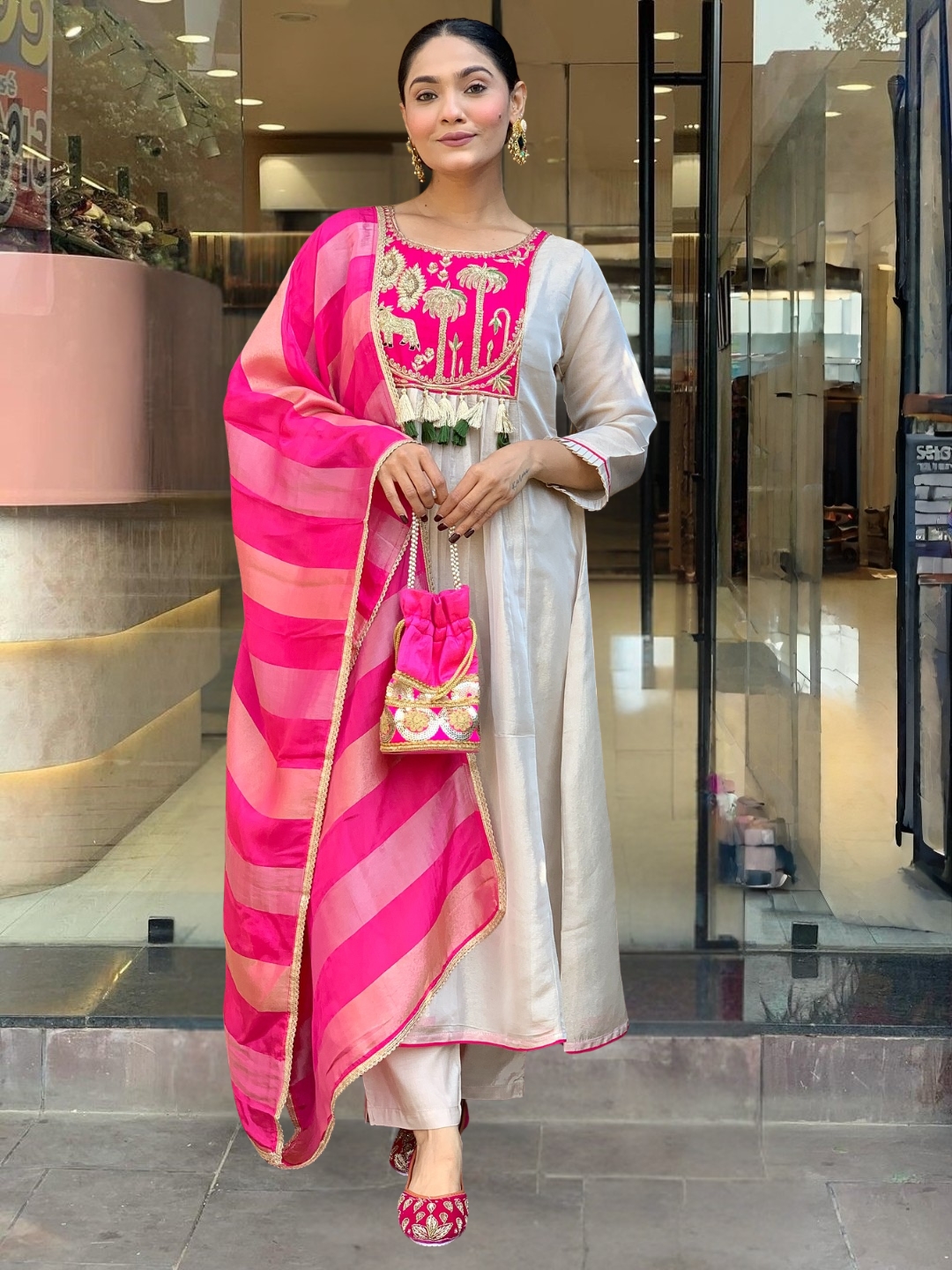
- Check the focal point. Stand two metres away and identify what the eye notices first. The printed kurta should remain visible unless the dupatta is intentionally the statement piece.
- Check the centre panel. Move the dupatta across the torso and confirm that the main floral, paisley or geometric motif is not concealed by a thick border.
- Check colour intensity. Compare the outfit near a window and under indoor lights. Gold zari, black silk blend and saturated jewel tones can become stronger in warm lighting.
- Check movement. Walk, sit and raise one arm. A very heavy or slippery dupatta may shift constantly, changing the intended balance.
- Check accessories. If the dupatta has embroidery or shine, choose one main accessory category, such as earrings or bangles, instead of adding competing detail everywhere.
The most reliable pairing is rarely the one with the most matching elements. A printed salwar suit usually looks polished when one feature leads, a second feature supports it and the remaining details provide breathing space. Colour repetition, contrasting scale and a controlled drape are enough to make a three-piece outfit feel complete.
Common Questions About Balancing Dupattas With Printed Suits
Should a dupatta be plain with a printed salwar suit?
A plain dupatta is often the safest choice when the salwar suit has a dense or large-scale print. A solid layer in the background shade or a small accent colour keeps the kurta as the focal point while still adding contrast.
Can I wear a printed dupatta with a printed suit?
A printed dupatta can work when the two prints differ clearly in scale, density or motif type. Pairing large floral motifs with small butis is generally easier to balance than placing two equally bold all-over prints together.
Which dupatta colour goes with a yellow printed suit?
Beige, muted yellow, ivory, green or a carefully selected pink can work with a yellow printed suit, depending on the colours already present in the kurta. Choose one supporting shade rather than repeating every colour in the print.
How wide should the dupatta border be for a printed kurta?
A border about 1 to 2 inches wide is usually easier to balance with an active printed kurta. A 4 to 6 inch border can work for a quieter print, but the broad edge should not cover the kurta's main motif or compete with its hem.
Is a silk dupatta suitable for a printed salwar suit?
A silk or silk blend dupatta suits a printed salwar suit when the print has moderate density or when a festive finish is needed. If the kurta already has dense embroidery, zari or a shiny surface, choose a simpler silk dupatta with limited border detail.
How should I drape a dupatta over a heavily printed suit?
A single-shoulder or front-open drape usually works best because it leaves the central print visible. Keep the heaviest border toward the side and avoid gathering too much fabric around the neckline.