

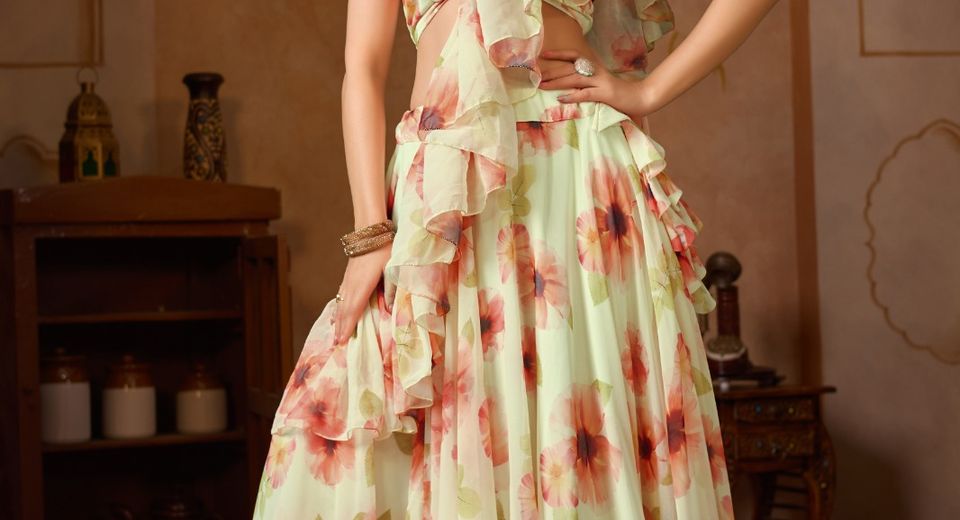
Chanderi Lehengas for Comfort Drape and Seasonal Wear deserve attention from anyone who loves a full skirt but dislikes heavy layers. Chanderi fabric, traditionally woven in Madhya Pradesh, combines a light hand with a graceful surface that can look festive without feeling cumbersome. The finished comfort of a Chanderi lehenga depends on more than the fabric label: lining, waistband, flare, blouse construction and the weather all matter.
A well-planned Chanderi lehenga can suit a daytime wedding, a Haldi ceremony, a family puja or an evening celebration. The same outfit may feel airy in April and need a warmer dupatta in December. Understanding how Chanderi behaves helps you choose a silhouette that moves easily, photographs well and remains wearable after the event.
What Makes Chanderi Lehengas Comfortable to Wear?
Chanderi lehengas feel comfortable because the fabric is lightweight, breathable in many blends and naturally capable of holding a soft, elegant shape. Chanderi may be woven from silk, cotton or a silk-cotton combination, so the exact fibre content should be checked before purchase.
Silk Chanderi usually has a subtle sheen and a fluid fall, while cotton Chanderi generally feels drier and more breathable against the skin. Silk-cotton Chanderi can balance polish and practicality, making it useful for daytime functions where a heavy brocade or multiple net layers would feel excessive. The weave can also create a slightly sheer effect, which is why an appropriate lining is essential.
Comfort also comes from controlled volume. A skirt with a moderate number of panels can create movement without the weight of several stiff can-can layers. A soft waistband, a secure side zip and enough room at the waist allow the lehenga to sit comfortably during sitting, walking and dancing. A skirt that's too tight at the waist may feel restrictive even when the fabric itself is light.
Chanderi fabric often carries zari, woven motifs, butis or printed details. Zari increases visual richness without necessarily adding the bulk associated with dense embroidery. However, heavy embellishment concentrated around the hem can make the skirt pull downward. A balanced placement of motifs usually produces a more comfortable drape.
Chanderi Lehengas for Comfort Drape and Seasonal Wear
Chanderi Lehengas for Comfort Drape and Seasonal Wear work best when the outfit is matched to temperature, venue and time of day. A lightweight Chanderi skirt with a breathable lining is especially practical for warm-weather ceremonies, while layered styling can make the same fabric suitable for cooler months.
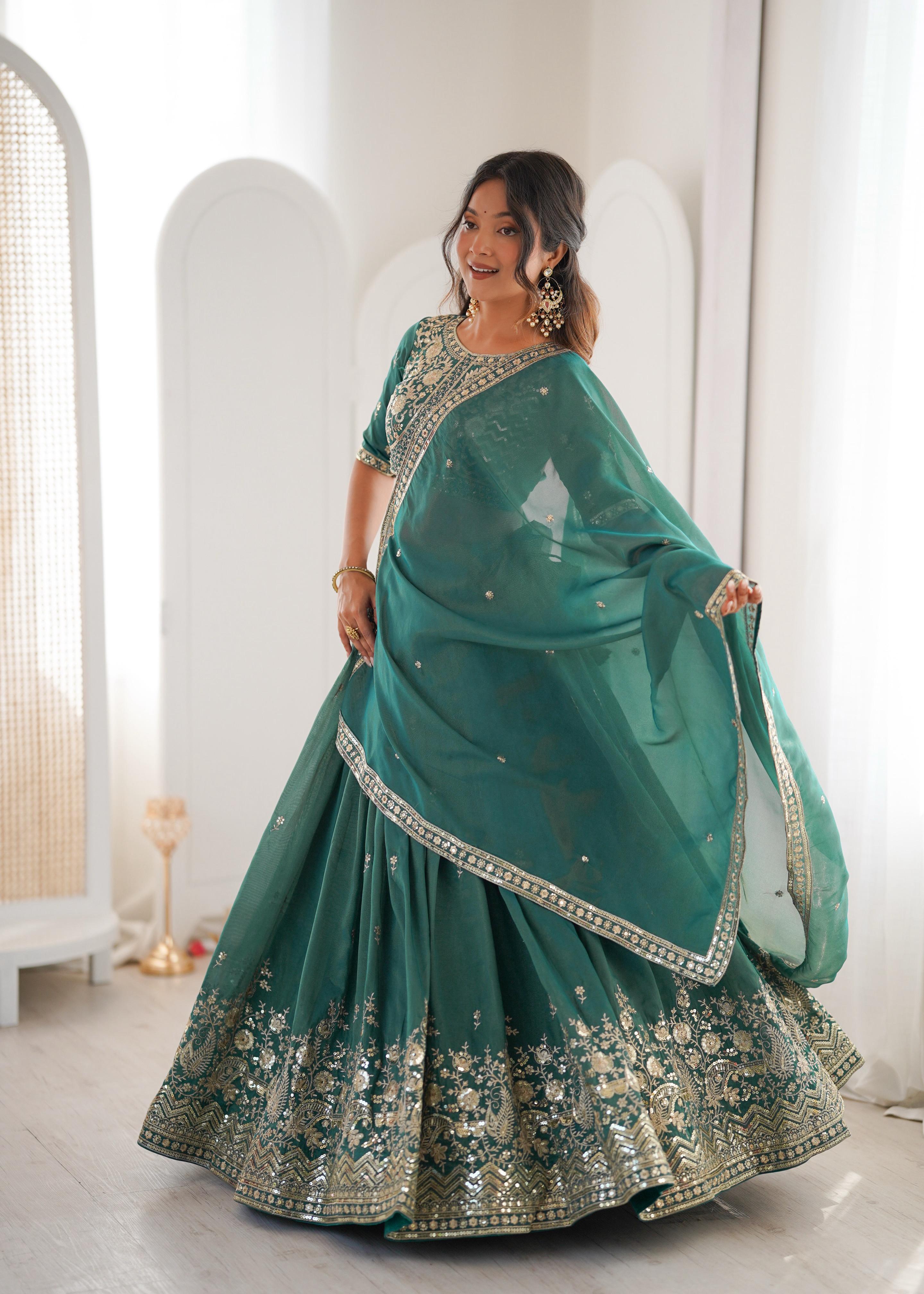
Summer and humid-weather dressing
For summer wear, choose cotton Chanderi or a light silk-cotton blend with a cotton, voile or breathable satin lining. A shorter blouse lining, open neckline and dupatta worn over one shoulder can reduce heat around the torso. Pale pink, ivory, powder blue, pista, peach and soft yellow reflect daylight and make a daytime outfit feel visually cool.
Humidity makes cling a bigger problem than heat alone. A smooth but breathable petticoat or lining can prevent the skirt from catching against the legs. Avoid excessive stiff net underneath the lehenga when the event is outdoors. A light dupatta with a narrow border is easier to manage than a heavily embellished, multi-layered drape.
Monsoon and transitional weather
During the monsoon, synthetic lining can help the skirt dry faster, but a lining that traps heat may become uncomfortable indoors. Choose a moderate flare, secure embroidery and colours that don't show minor splashes easily. Carrying a fabric pouch for jewellery and keeping the dupatta away from damp floors protects delicate zari and surface work.
Monsoon storage requires special care because humidity can encourage mildew. Air the lehenga in shade after wearing it, make sure it's completely dry and store it in a breathable cotton garment bag. Do not seal damp Chanderi inside plastic for long periods.
Winter and evening dressing
For winter weddings and evening events, Chanderi can be paired with a silk blouse, a fuller dupatta or a light shawl. Deep maroon, emerald, navy, plum and antique gold create a richer winter appearance without requiring a heavier skirt. A lined blouse with three-quarter sleeves adds warmth while keeping the outfit formal.
A velvet blouse can provide warmth, but velvet changes the visual balance of a delicate Chanderi skirt. Use velvet for the blouse or border rather than adding it everywhere. A silk stole, embroidered shawl or structured dupatta can add insulation without compromising the graceful movement of the lehenga.
How Does Chanderi Drape Compared with Heavier Lehenga Fabrics?
Chanderi drapes with more softness and less structural stiffness than brocade, raw silk or heavily layered net. The skirt generally moves with the wearer rather than standing away from the body, which makes Chanderi useful for sitting comfortably and navigating crowded venues.
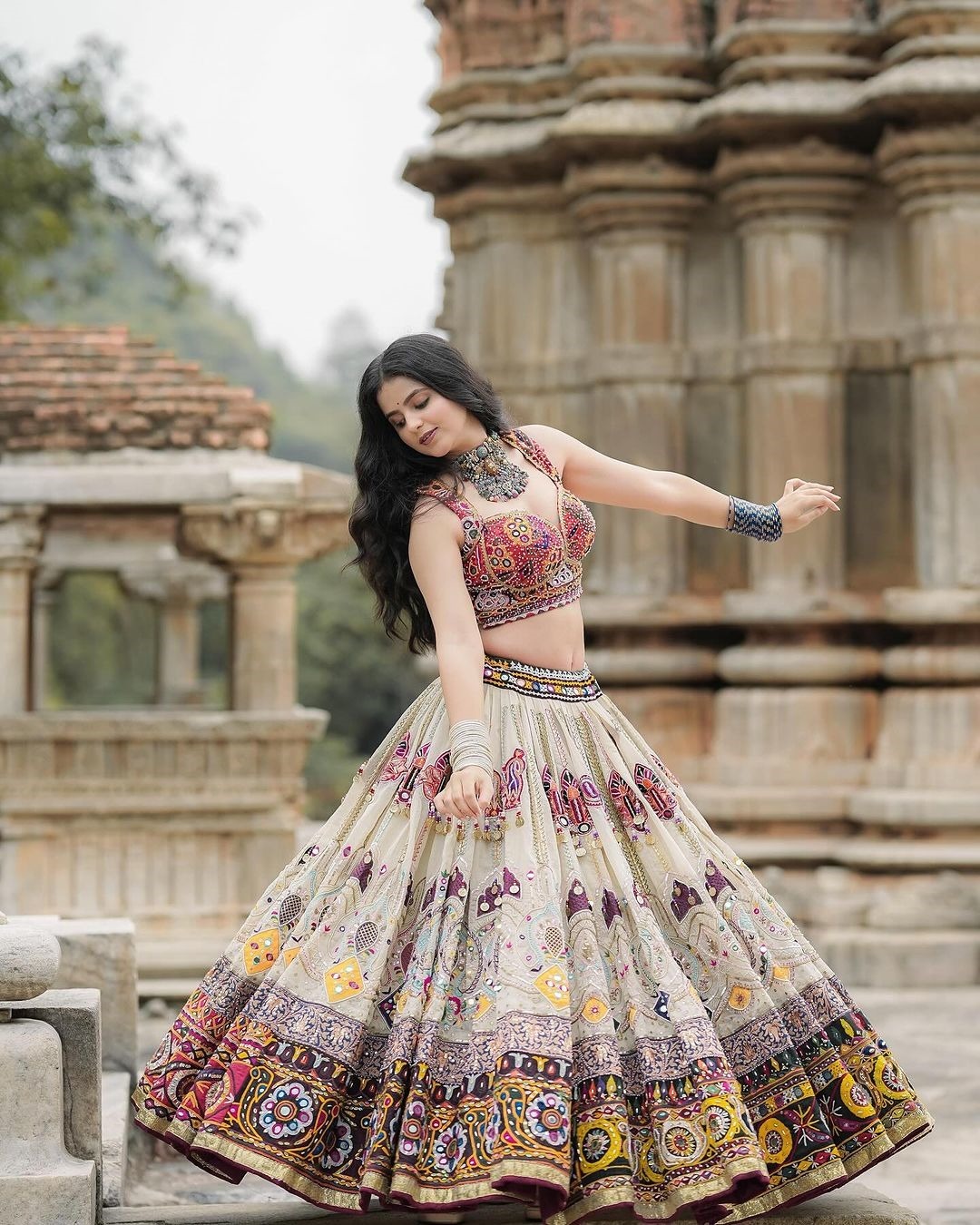
Compared with georgette, Chanderi can look more luminous and hold a slightly more architectural shape. Georgette usually falls closer to the body and may feel more fluid, as seen in a style such as Pastel Floral Georgette Lehenga Set with Ruffle Blouse. The comparison is useful when deciding whether you want a softly sculpted skirt or a more liquid silhouette.
Compared with a dense silk or brocade lehenga, Chanderi usually feels less weighty around the waist and hips. A design such as Designer Threadwork Silk Lehenga Choli Set with Dupatta may offer a richer, more structured appearance, while a Chanderi equivalent is often better suited to long daytime wear. Neither fabric is universally superior; the right choice depends on climate, movement and the amount of surface work.
Chanderi doesn't automatically mean transparent, wrinkle-proof or featherlight in every garment. A thick lining, large borders, layered can-can and dense embroidery can change the final experience significantly. Ask for the fabric composition, lining material, approximate skirt weight and closure details instead of judging comfort from the word "Chanderi" alone.
How Should You Choose the Fit and Construction?
The most comfortable Chanderi lehenga has a stable waistband, enough ease for sitting and a blouse that supports movement without pulling at the shoulders. Measurements should include the natural waist, high hip, full hip, blouse bust, underbust and shoulder width rather than relying only on a standard size label.
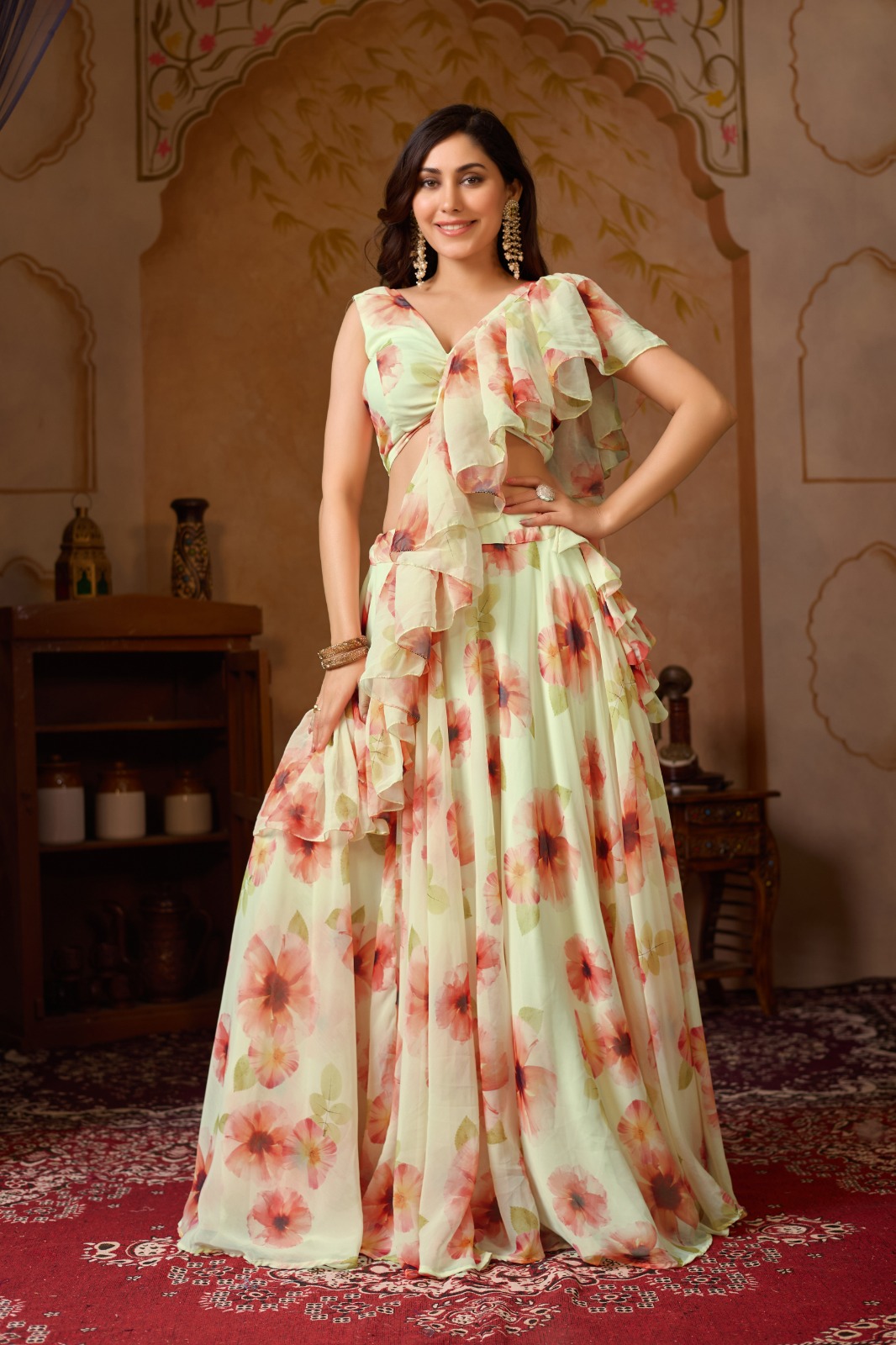
For a long event, leave practical ease at the waist instead of choosing a skin-tight fit. A drawstring can offer adjustability, but a well-finished hook-and-eye closure with a side zip often gives a cleaner fit. A broad waistband can distribute pressure more comfortably than a narrow cord, especially when the skirt carries a border or zari detailing.
The blouse deserves equal attention. A sleeveless or short-sleeved blouse may suit a hot Haldi ceremony, whereas elbow-length sleeves can provide more coverage for a formal family function. A modest amount of stretch in the back panel can improve movement, but stretch fabric should not be used as a substitute for correct measurements.
Check the hem before the event. The skirt should clear the floor by a small margin when worn with the intended footwear. A lehenga hem that drags can collect moisture, catch on steps and place stress on delicate embroidery. Try the full outfit with the actual sandals or heels at least once before the function.
Colours and Styling Choices for Different Seasons
Seasonal colour selection changes how light or heavy a Chanderi lehenga appears, even when the fabric weight remains the same. Daylight favours gentle tonal combinations, while evening lighting supports deeper colours and metallic accents.
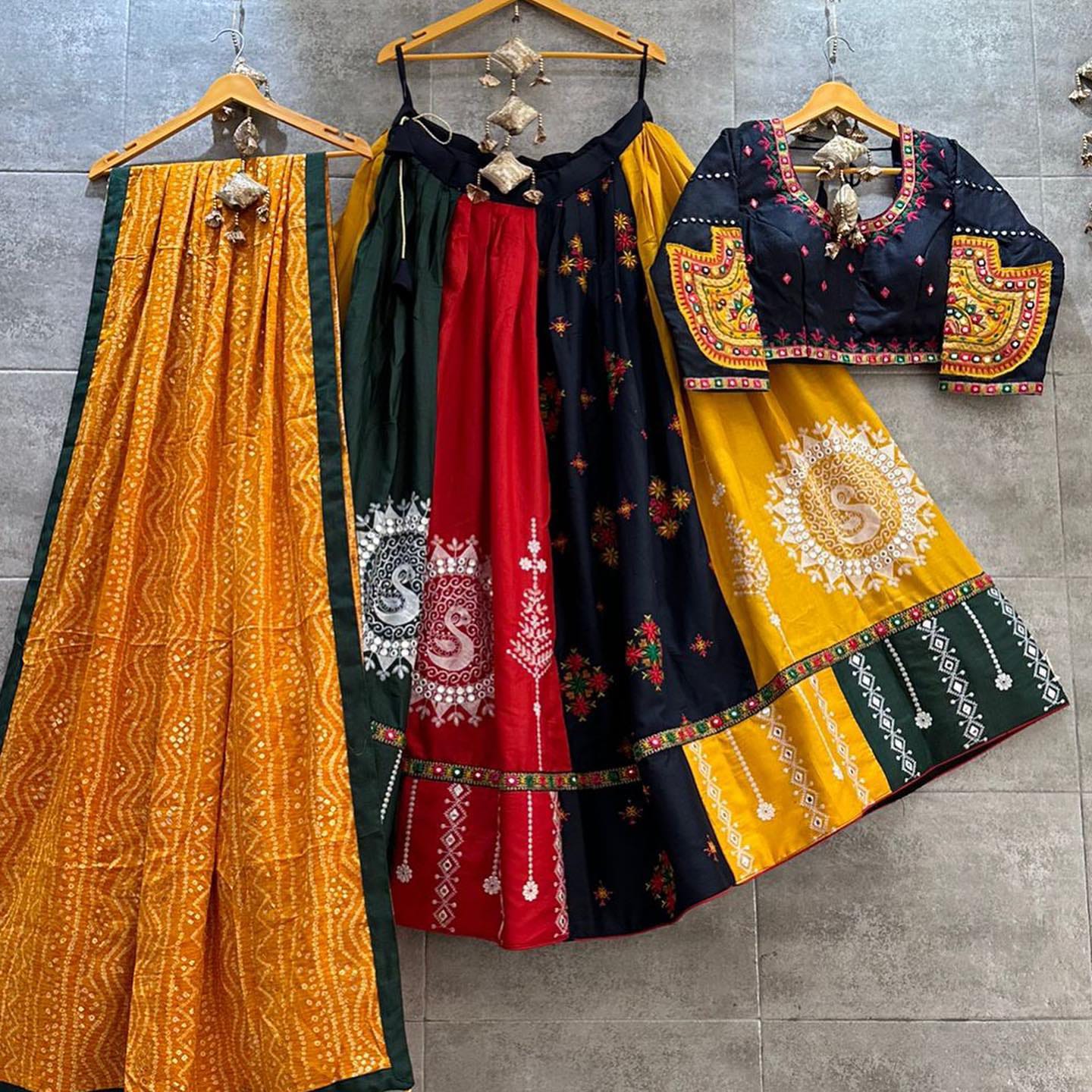
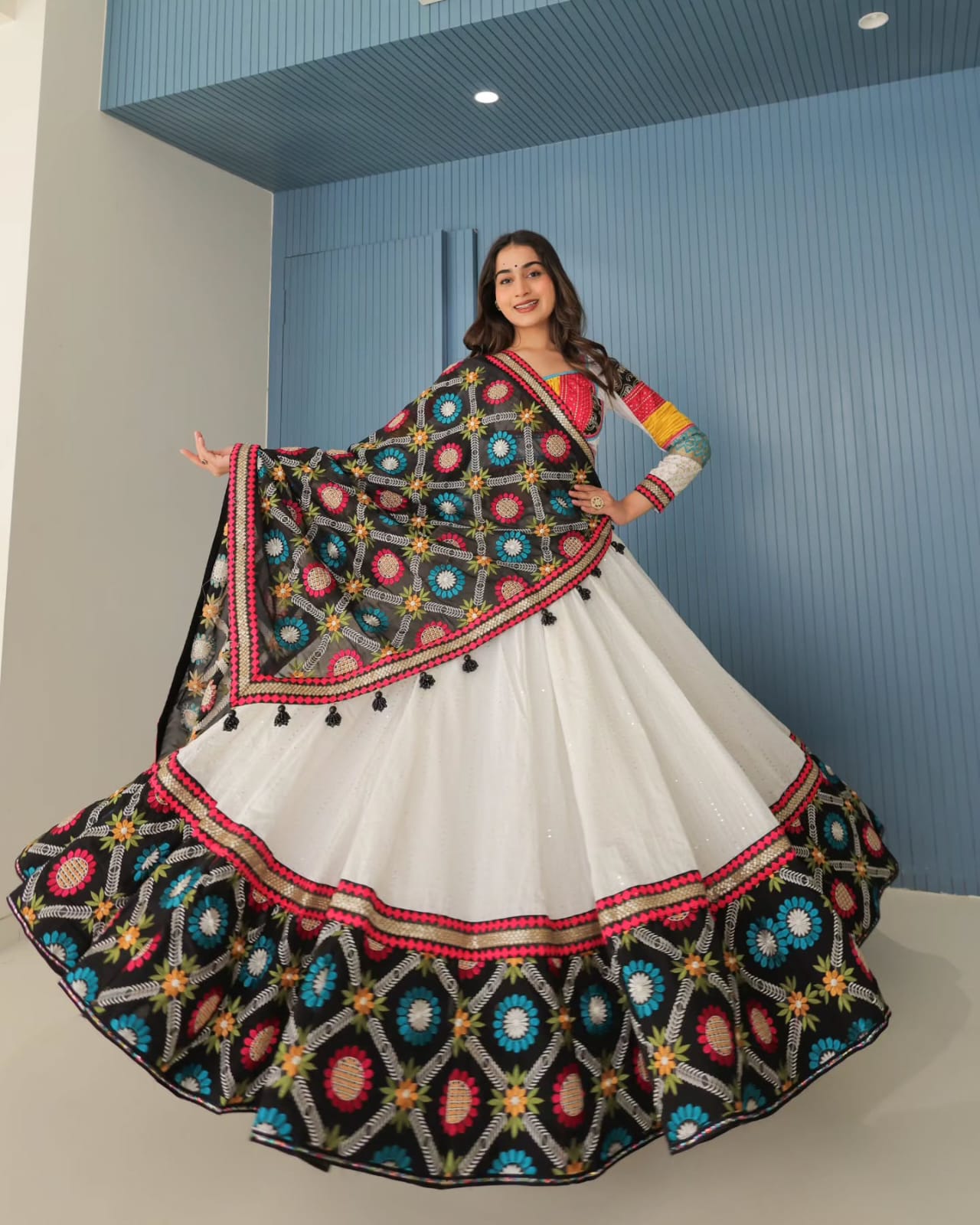
Spring and summer outfits benefit from blush pink, mint, lavender, ivory, butter yellow and sky blue. White Mirror Work Lehenga for Festive Wear demonstrates how a pale base can look celebratory when reflective details supply contrast. Use silver, pearl or fresh-flower accessories when the outfit is intended for daytime.
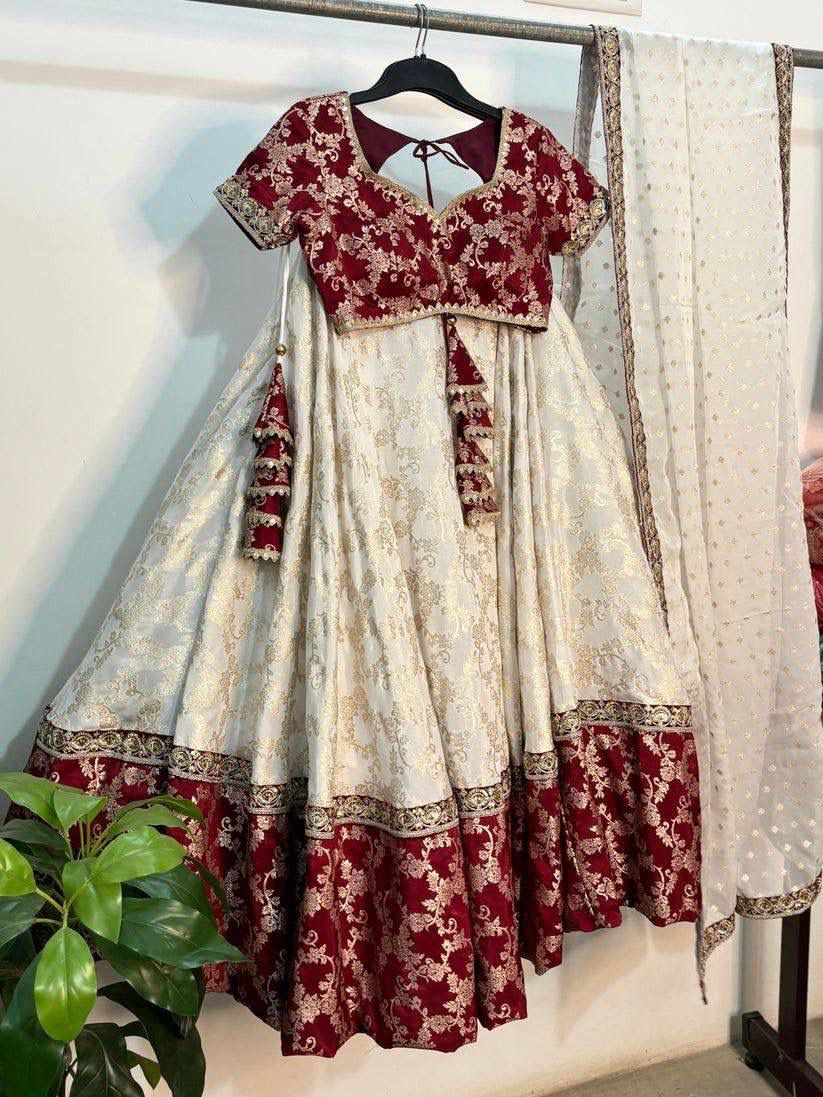
Autumn and winter styling can move toward rust, wine, forest green, cobalt and deep rose. Cream & Maroon Jacquard Lehenga Choli with Dupatta Set illustrates how a warm neutral and a darker accent create visual depth. For a Chanderi lehenga, the same effect can be achieved with a maroon dupatta, antique-gold zari or a contrasting blouse.
Navratri and other energetic celebrations call for colour and movement, but comfort remains important when dancing or standing for several hours. Vibrant Multicolor Navratri Lehenga Choli Set offers an useful styling reference for combining several hues without adding a heavy silhouette. Keep the jewellery secure, choose footwear with a cushioned sole and avoid a dupatta drape that needs constant adjustment.
A Haldi ceremony usually involves turmeric, water and frequent movement, so a washable or easily maintained blouse and a manageable dupatta are sensible choices. The collection Haldi Lehengas Under 5500 can help frame a practical budget search, while the shade and care label should still guide the final decision. A cream or yellow Chanderi skirt can look beautiful, but it deserves extra protection from spills.
How Can You Style One Chanderi Lehenga for More Than One Event?
One Chanderi lehenga can serve different events when the blouse, dupatta, jewellery and footwear are changed. Repeating the skirt with a new upper layer is more effective than buying several heavily embellished sets for closely spaced celebrations.
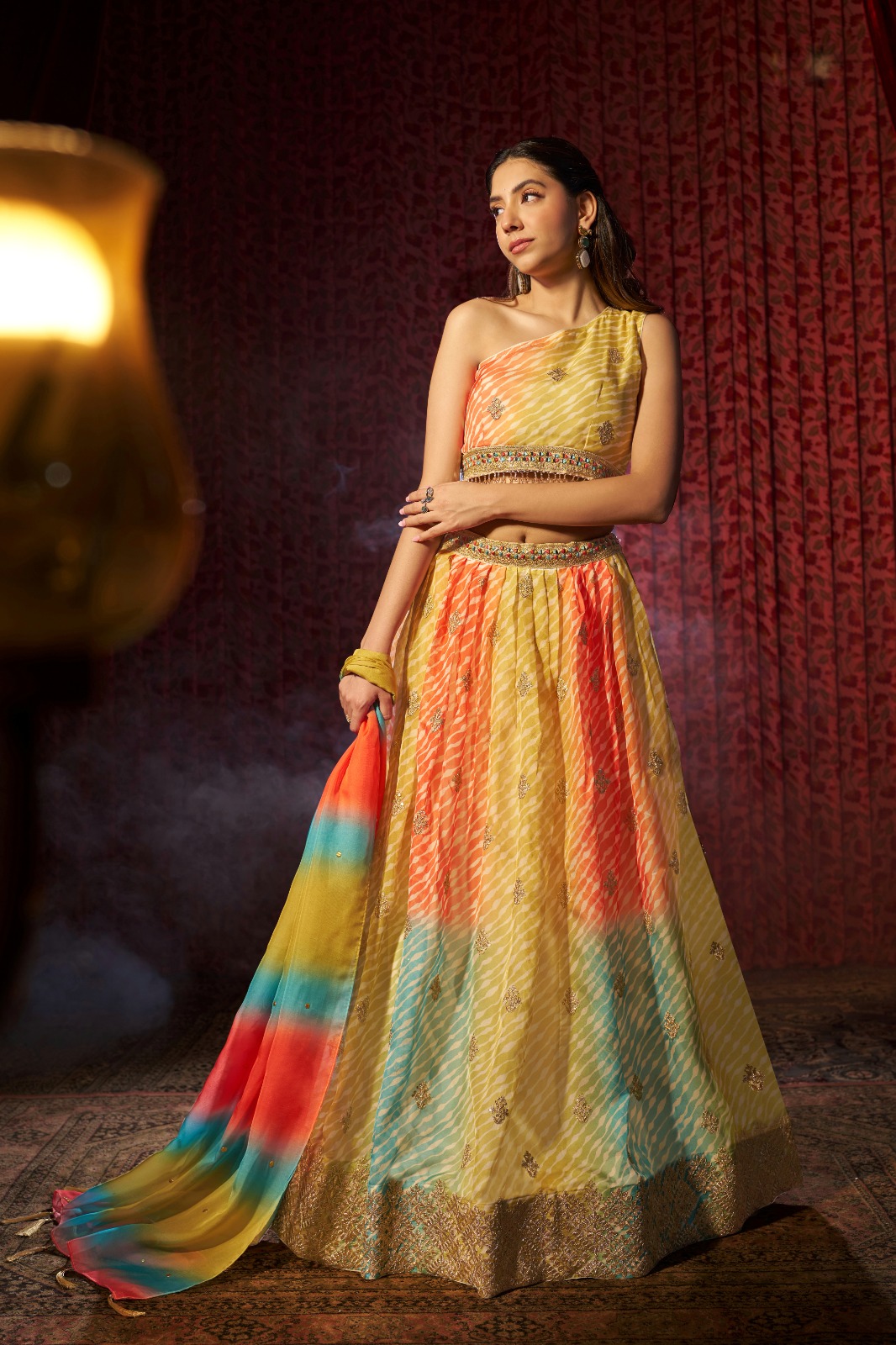
For a daytime puja, pair a soft-coloured skirt with a simple blouse, small jhumkas and flat embroidered sandals. For a wedding guest look, add a contrast dupatta with a defined border, a structured potli and medium-sized earrings. For an evening reception, a metallic blouse and a more sculptural drape can increase formality without changing the skirt.
A cream skirt is particularly adaptable. Cream Ethnic Lehenga Choli with Mirror Work Design shows how mirror work can provide festive sparkle, but a Chanderi cream skirt can be restyled with a printed blouse for a lighter daytime appearance. A white or ivory skirt with delicate detailing can also work for a spring engagement, provided the dress code doesn't reserve white for the bride.
Prints create another route to repeat wear. White Digital Print Festive Lehenga Choli Set demonstrates how a printed surface can look celebratory without the density of all-over embroidery. With Chanderi, floral prints, small butis and hand-painted-style motifs pair well with a plain blouse, making the outfit less tied to one specific festival.
When comparing budgets, collection labels can provide a starting point rather than a quality guarantee. Silk Lehengas Under 3000, Pink Lehengas Under 4000 with 50% Discount and Bridesmaid Lehengas Under 5500 represent different search directions, but buyers should compare fibre content, lining, closure, alteration options and return terms before deciding.
What Care Does a Chanderi Lehenga Need?
Chanderi lehengas should usually be dry-cleaned or cleaned according to the garment's care label, then stored away from direct sunlight and trapped moisture. Home washing can cause shrinkage, colour bleeding, zari damage or distortion when the garment contains silk, lining or glued embellishment.
After wearing the lehenga, remove jewellery and accessories carefully so hooks don't snag the weave. Hang the skirt and dupatta in shade for several hours before storage. Do not iron zari, sequins or mirror work directly; place a pressing cloth over the reverse side and use low heat only when the care instructions permit it.
Fold heavy embellishment inward with soft butter paper or clean muslin between layers. Refold the garment every few months to prevent permanent crease lines, and inspect it for insects or dampness during humid seasons. A breathable cotton cover is safer for long-term storage than a sealed plastic bag.
Small stains should be addressed by a professional cleaner, especially on pastel Chanderi or silk Chanderi. Rubbing a stain can spread dye and roughen the surface. Perfume should be sprayed before dressing rather than directly onto zari, silk or delicate metallic thread.
A Practical Buying Checklist for Chanderi Lehengas
A good purchase decision comes from checking construction details before focusing on colour or discount. Use the following checklist for online or in-store shopping:
- Confirm the fibre content: Check whether the garment uses cotton Chanderi, silk Chanderi, a silk-cotton blend or a different fabric with a Chanderi-inspired finish.
- Inspect the lining: Look for breathable construction, clean seams and enough opacity for the skirt's surface.
- Ask about flare and weight: A moderate flare is easier to walk in, while dense can-can or a heavy border may increase weight considerably.
- Measure the blouse: Check bust, underbust, shoulder, armhole and sleeve measurements, especially when alterations are limited.
- Check the closure: A smooth zip, secure hooks and a stable waistband reduce wardrobe mishaps during long functions.
- Review care instructions: Note whether dry cleaning is required and whether mirror work, zari or printed details need special handling.
- Match footwear before hemming: The final length should suit the sandals or heels intended for the event.
Stylish Multicolor Butter Silk Lehenga Choli Set is a reminder that "silk" can describe a different hand and fall from Chanderi, while Net Lehengas Under 4500 with 51% Discount points toward a separate construction choice altogether. Comparing fabric names accurately prevents disappointment caused by expecting one textile to behave like another.
Chanderi Lehengas for Comfort Drape and Seasonal Wear become especially versatile when the buyer considers the complete outfit rather than the skirt alone. Fabric composition, lining, waist construction, climate, footwear and care routine determine whether a striking lehenga remains comfortable from the first ceremony to the last photograph.
Common Questions About Comfortable Chanderi Lehenga Styling
Are Chanderi lehengas suitable for summer weddings?
Yes, Chanderi lehengas are suitable for summer weddings when they use a lightweight cotton or silk-cotton weave and a breathable lining. Pale colours, moderate flare and a light dupatta can reduce heat during daytime functions.
Is Chanderi fabric transparent in a lehenga?
Chanderi can have a slightly sheer quality, but transparency depends on the weave, colour and lining. A well-constructed lehenga should include an opaque or appropriately layered lining, so check the garment details before buying.
Which lining is best for a Chanderi lehenga?
Cotton, voile or a breathable silk lining is generally comfortable for warm weather, while smooth satin can help the skirt move easily over clothing. The best lining depends on the Chanderi fibre, climate and desired opacity.
Can a Chanderi lehenga be worn in winter?
Yes, a Chanderi lehenga can work in winter when styled with a silk or velvet blouse, a fuller dupatta or a light shawl. Deep colours and antique-gold details also give the outfit a seasonally richer appearance.
How should a Chanderi lehenga be washed?
A Chanderi lehenga should normally be dry-cleaned or cleaned exactly as directed on its care label. Home washing may cause shrinkage, colour bleeding or damage to zari, lining and embellishments.
How can I make a Chanderi lehenga look more formal?
A contrasting bordered dupatta, refined zari jewellery, a structured blouse and elevated footwear can make a Chanderi lehenga more formal. Evening colours such as wine, emerald, navy or deep rose also create a dressier impression without adding excessive layers.


