Can a Passa Work With a Saree Instead of a Sharara? Yes, a passa can look elegant with a saree when the jewellery, blouse, drape and hairstyle share a clear visual balance. A passa is traditionally associated with shararas, ghararas and other flowing festive outfits. But its crescent shape also complements the vertical fall of a saree. The key is to treat the passa as a directional accent near the temple rather than adding it as one more heavy ornament.
The most successful combinations pair one statement detail with quieter supporting elements. A Banarasi silk saree with a finely worked passa needs different styling from a lightweight Chanderi saree with pearl jewellery. Fabric weight, border width, pallu placement and the side on which the passa sits all affect the final appearance.
Can a Passa Work With a Saree Instead of a Sharara for a Formal Look?
A passa works with a saree instead of a sharara when the saree styling leaves enough visual space around the face and the accessory doesn't compete with the pallu. The passa should connect visually with at least one element of the outfit, such as zari, sequins, pearls, kundan or coloured stones.
A passa is a side head ornament traditionally worn around the temple, usually secured near the hairline with a chain or hook. The accessory has Mughal and South Asian styling associations and may be made from gold-toned metal, silver-toned metal, kundan, polki, enamel, pearls or imitation stones. A sharara gives the passa a naturally festive setting because the wide-leg silhouette and dupatta create movement. A saree offers a more linear silhouette, so the passa needs deliberate placement to keep the face from looking visually crowded.
For a wedding guest saree, a medium-sized passa with a clean outline is usually easier to wear than a broad, heavily layered design. For a bridal or reception look, a larger polki or kundan passa can work if the necklace and earrings are reduced. The objective isn't to reproduce a sharara outfit with a saree. The objective is to translate the same regal mood into a saree silhouette.
An useful styling rule is to match the passa to the saree's strongest detail, then keep the remaining jewellery one level quieter.
Can a Passa Work With a Saree Instead of a Sharara in Different Fabrics?
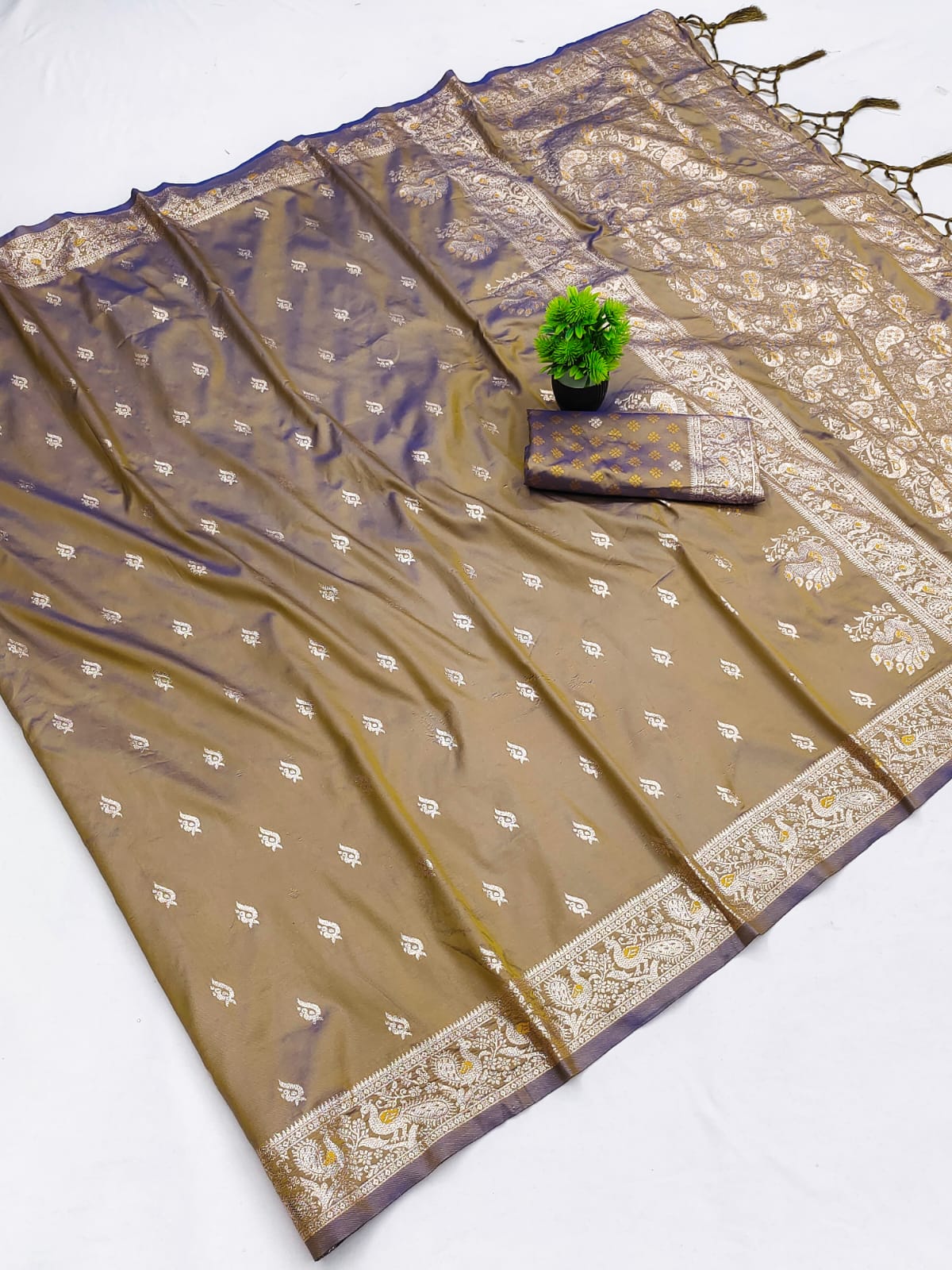
Silk, brocade, satin, velvet-bordered and richly embellished sarees suit a passa most naturally because their surface texture can support a ceremonial head ornament. Lightweight sarees can also work, but they require a smaller passa and more restrained jewellery.
Can a Passa Work With a Saree Instead of a Sharara in silk?
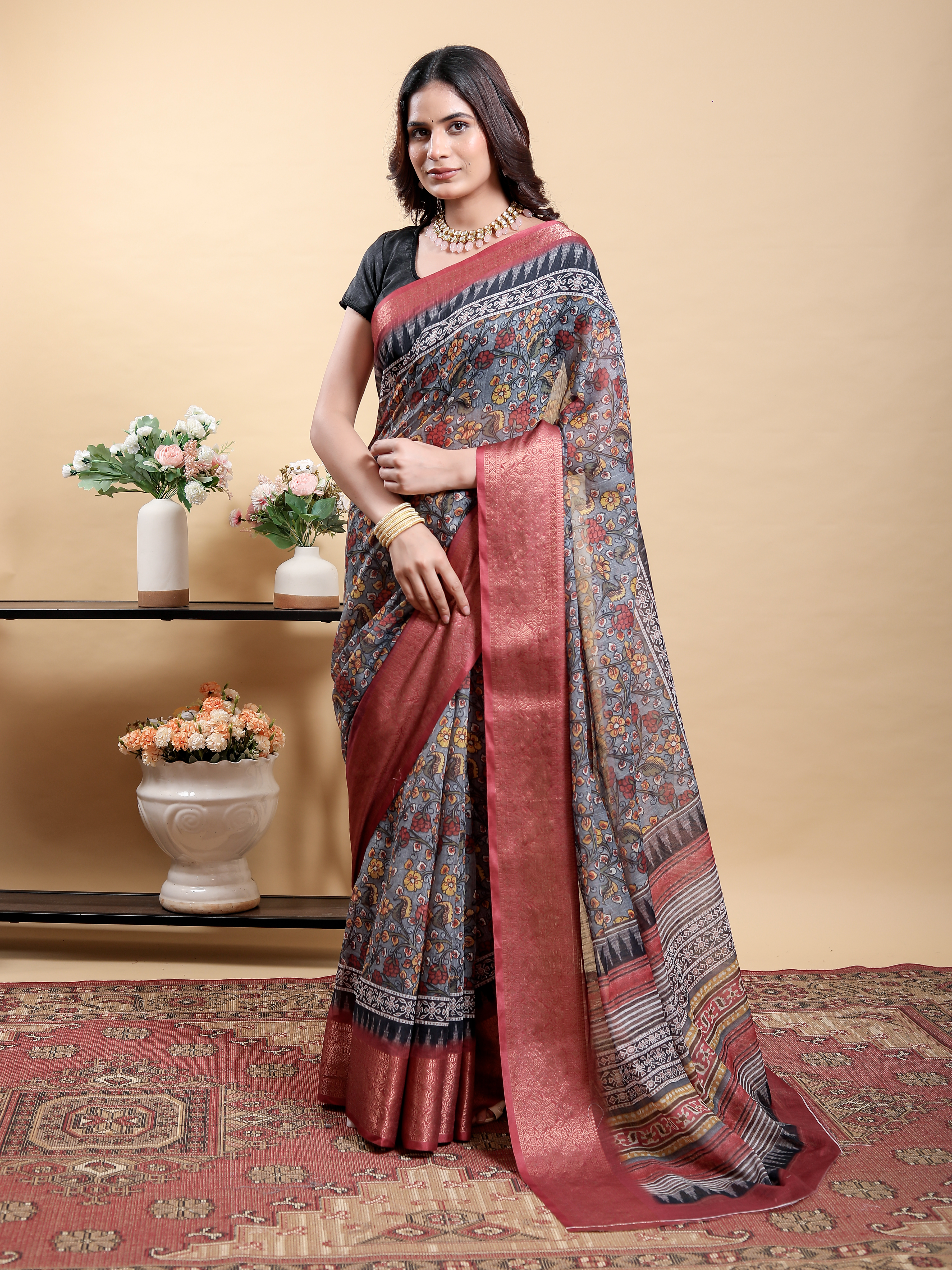
A passa works especially well with Banarasi silk, Kanjeevaram silk, tissue silk and brocade sarees because these fabrics have enough visual weight for gold-toned jewellery. A broad zari border can echo the metalwork in the headpiece, while a plain or lightly patterned blouse prevents the upper half of the outfit from becoming overloaded. Deep shades such as wine, emerald, navy and purple give a traditional passa strong contrast.
A heavily embellished saree should not automatically be paired with equally elaborate head jewellery. A saree with dense zari across the pallu suits a passa with a defined central motif rather than many dangling tiers. A mostly plain saree with a dramatic border can carry a more detailed passa because the headpiece supplies the primary ornament.
Can a Passa Work With a Saree Instead of a Sharara in lightweight fabrics?
A passa works with Chanderi, organza, kota silk, linen silk and lightweight georgette when the headpiece is delicate and proportionate. Pearl drops, enamel details or a slim kundan outline can add festivity without making a daytime outfit look costume-like. Soft shades such as ivory, powder blue, mint, lavender and blush suit silver-toned or pearl-finished accessories.
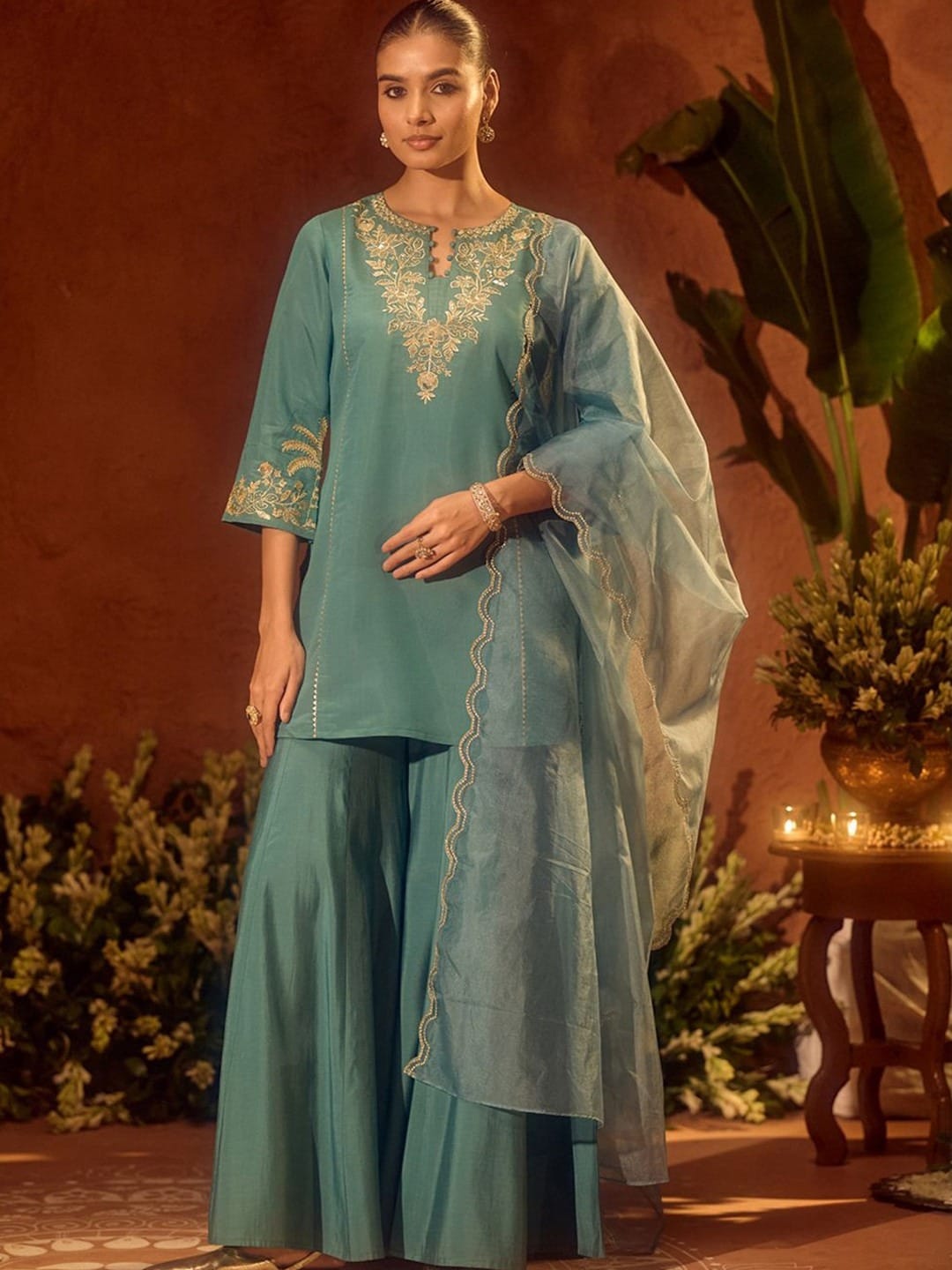
The Pastel Blue Chanderi Silk Embroidered Sarara Set for Women demonstrates why fabric weight matters, even though the garment is a sarara rather than a saree. Its airy, embroidered character calls for a light, finely proportioned head ornament if the styling idea is adapted to a saree. A heavy polki passa would visually outweigh the fabric, while a small pearl or pastel-stone design would preserve the softness.
Can a Passa Work With a Saree Instead of a Sharara With Any Blouse?
A passa works best with a saree blouse that creates a calm frame around the face and doesn't compete with the side head ornament. A high-contrast neckline, excessive shoulder embellishment and a crowded pallu near the head can make the passa look disconnected.
A blouse with a sweetheart, square, boat or modest V-neck works well because these necklines provide structure without drawing all attention upward. Sleeves between the elbow and wrist can add a formal finish, especially with silk sarees. If the blouse has heavy zari embroidery, choose a simpler passa or skip a large necklace.
The pallu should generally be pinned over the opposite shoulder from the passa, particularly when the pallu is heavily embroidered. Wearing the pallu on the opposite side leaves the passa-side temple visible and creates asymmetry with purpose. Slim, neatly folded pleats are better than a bulky shoulder fan when the outfit already includes a large head ornament.
Some saree drapes support this styling better than others. A classic Nivi drape creates a clear shoulder line and lets the pallu fall vertically. A seedha pallu can look striking for a festive event. But the broad fabric panel may compete with the side headpiece if the border is very ornate. A pre-pleated saree can work for convenience, provided the waist and shoulder fit securely enough to prevent constant adjustment.
Colour coordination also matters. A gold passa can echo gold zari, warm embroidery or a blouse in champagne, mustard or maroon. A silver passa is easier to balance with silver zari, cool-toned sequins, pearls, icy pastels and blue-based jewel shades. Exact colour matching isn't necessary, but the metallic temperature should usually feel consistent.
Can a Passa Work With a Saree Instead of a Sharara With Other Jewellery?
The best jewellery pairing is one statement passa, controlled earrings and either a modest necklace or no necklace. A passa already occupies the upper side of the face, so adding oversized jhumkas, a choker and a maang tikka can create too many competing focal points.
- With a large passa: choose medium jhumkas, small chandbalis or slim drop earrings, and avoid a second dramatic head ornament.
- With a delicate passa: pearl studs, short drops or moderate chandbalis can add definition without overwhelming the accessory.
- With a choker: keep the passa compact and choose earrings that finish close to the jawline.
- With a long necklace: use a minimal collar or omit the choker so the neckline and face don't appear crowded.
- With a maang tikka: select a small, fine design and make sure the passa and tikka don't overlap visually.
A passa can match the motif of the earrings without being part of an identical set. A pearl passa can be worn with gold jhumkas that contain small pearl drops. Kundan earrings can accompany a gold passa if both pieces share a similar stone colour. Mismatched jewellery becomes intentional when one feature, such as metal finish or stone shape, links the pieces.
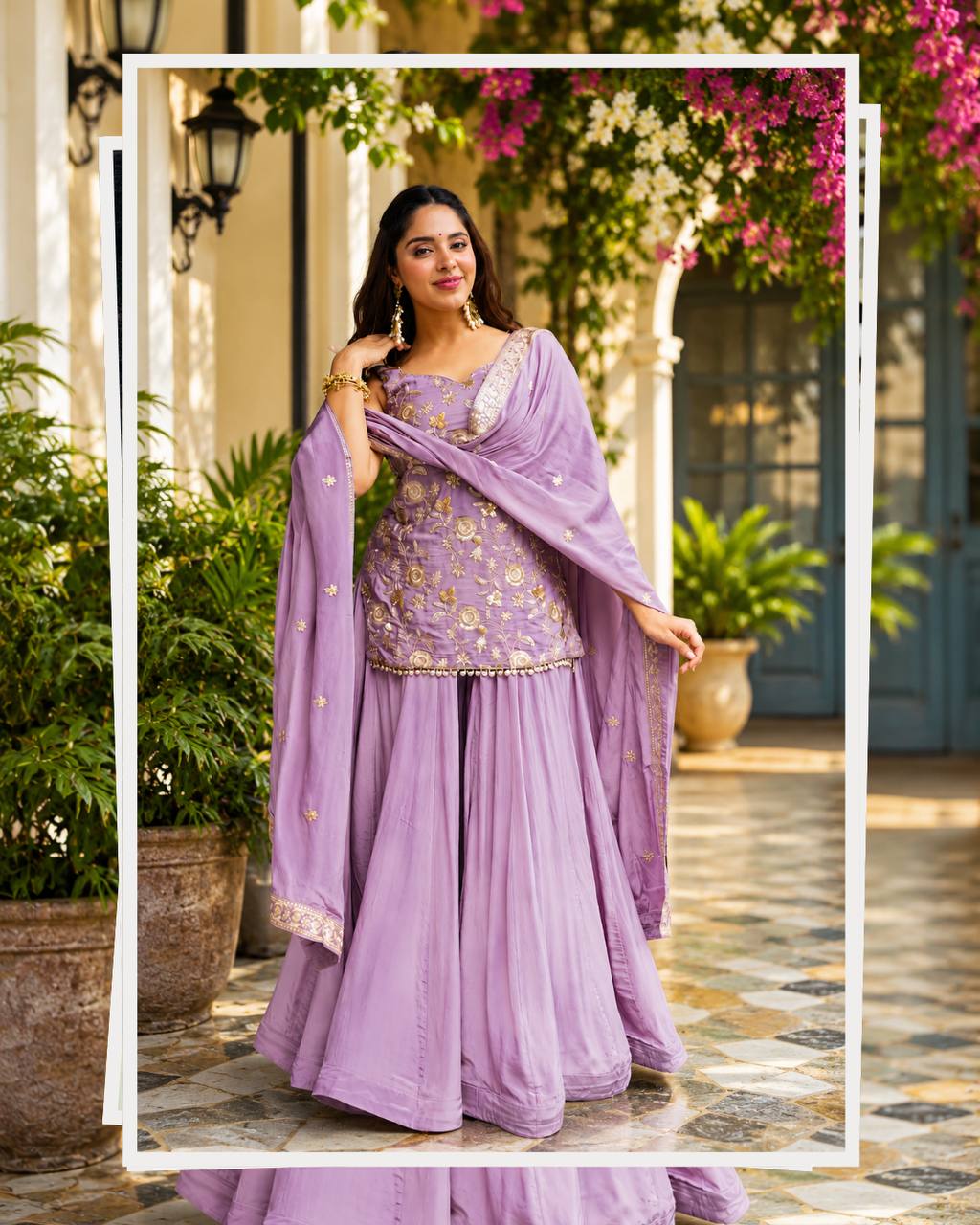
The Lavender Zari Sequins Sarara 3 Piece Suit Set | Varnavi illustrates a high-shine styling direction through its zari and sequin surface. A saree styled with a similarly luminous finish can carry a passa, but the necklace should be lighter than the headpiece. Repeating every sparkle in earrings, necklace, bangles and hair accessories would flatten the look instead of making it richer.
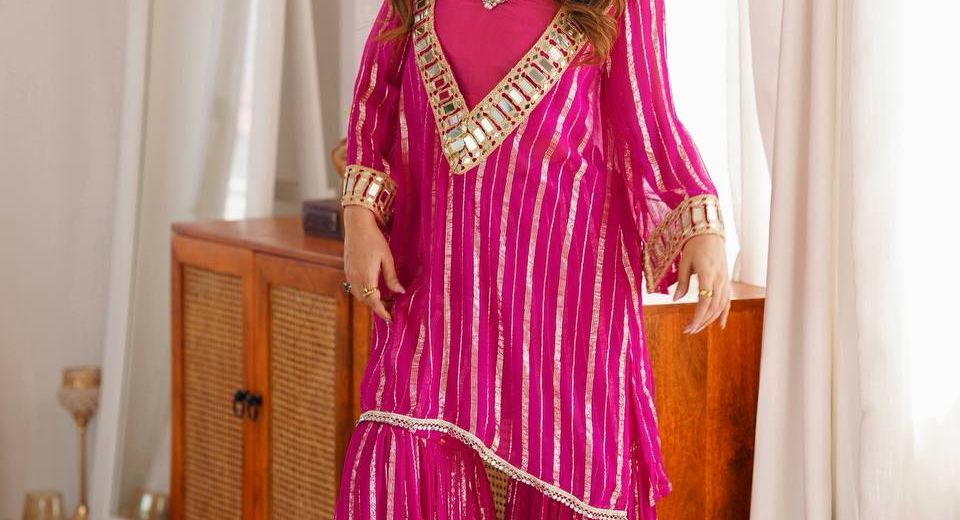
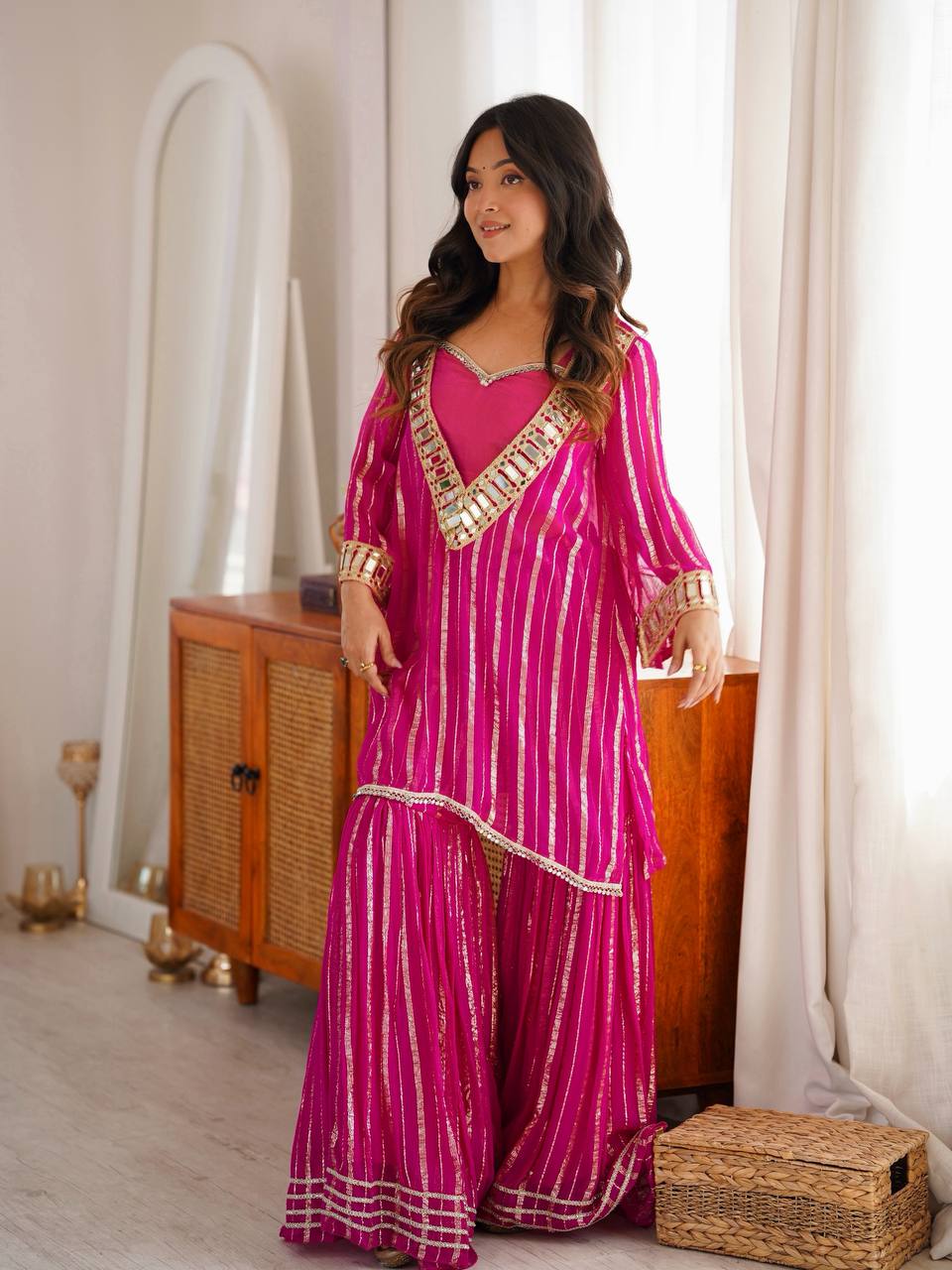
The Pink Mirror Work Zari Sharara Suit Set Online - Varnavi brings another useful styling comparison. Mirror work and zari already create movement near the face and shoulders, so a saree with comparable embellishment needs a passa with a clear silhouette rather than a piece covered in multiple dangling layers.
Can a Passa Work With a Saree Instead of a Sharara With Any Hairstyle?
A side-parted bun, low braided bun or controlled side braid provides the most secure base for a passa with a saree. The hairstyle should expose the temple and keep the securing chain close to the scalp.
Begin with a firm side part on the chosen passa side and smooth the front section with a small amount of lightweight styling cream. A low bun gives the chain a stable anchor, while a braid can support a lighter passa through discreet pins. Very loose waves may look romantic. But waves alone can allow the chain to slide during dancing, greeting guests or moving through a long ceremony.
Hair volume should be distributed toward the back rather than directly beneath the passa. Excessive volume at the temple can push the ornament outward and make it sit at an awkward angle. U-pins, hair-coloured bobby pins and a small transparent elastic can help secure the chain without becoming visible.
For a Haldi ceremony, a lightweight floral passa or a small metallic design is more practical than a heavy stone-studded ornament. Turmeric, flower petals, outdoor heat and frequent movement can affect comfort and security. For a formal reception, a polished bun or braid brings a cleaner background for pearls, polki or kundan.
Can a Passa Work With a Saree Instead of a Sharara for Day and Evening Events?
A passa can work for both daytime and evening sarees when its size, finish and colour are matched to the formality of the event. Daytime styling usually benefits from lighter materials and fewer layers, while evening styling can support richer metalwork and stronger contrast.
For a daytime engagement, puja or festive lunch, select a small or medium passa with pearls, enamel, delicate kundan or a polished silver finish. Pair the accessory with Chanderi, organza, kota silk or a softly printed saree. Keep the makeup fresh and avoid combining a large passa with a heavy choker, oversized earrings and a dramatic hair accessory.
For an evening wedding, sangeet or reception, a larger gold, polki or kundan passa can complement Banarasi silk, satin, velvet-bordered or sequinned sarees. A controlled bun, defined eyeliner and a carefully pinned pallu help the accessory look deliberate. Evening lighting also makes reflective surfaces such as zari, crystals and mirror work more noticeable, so the remaining jewellery should still be edited.
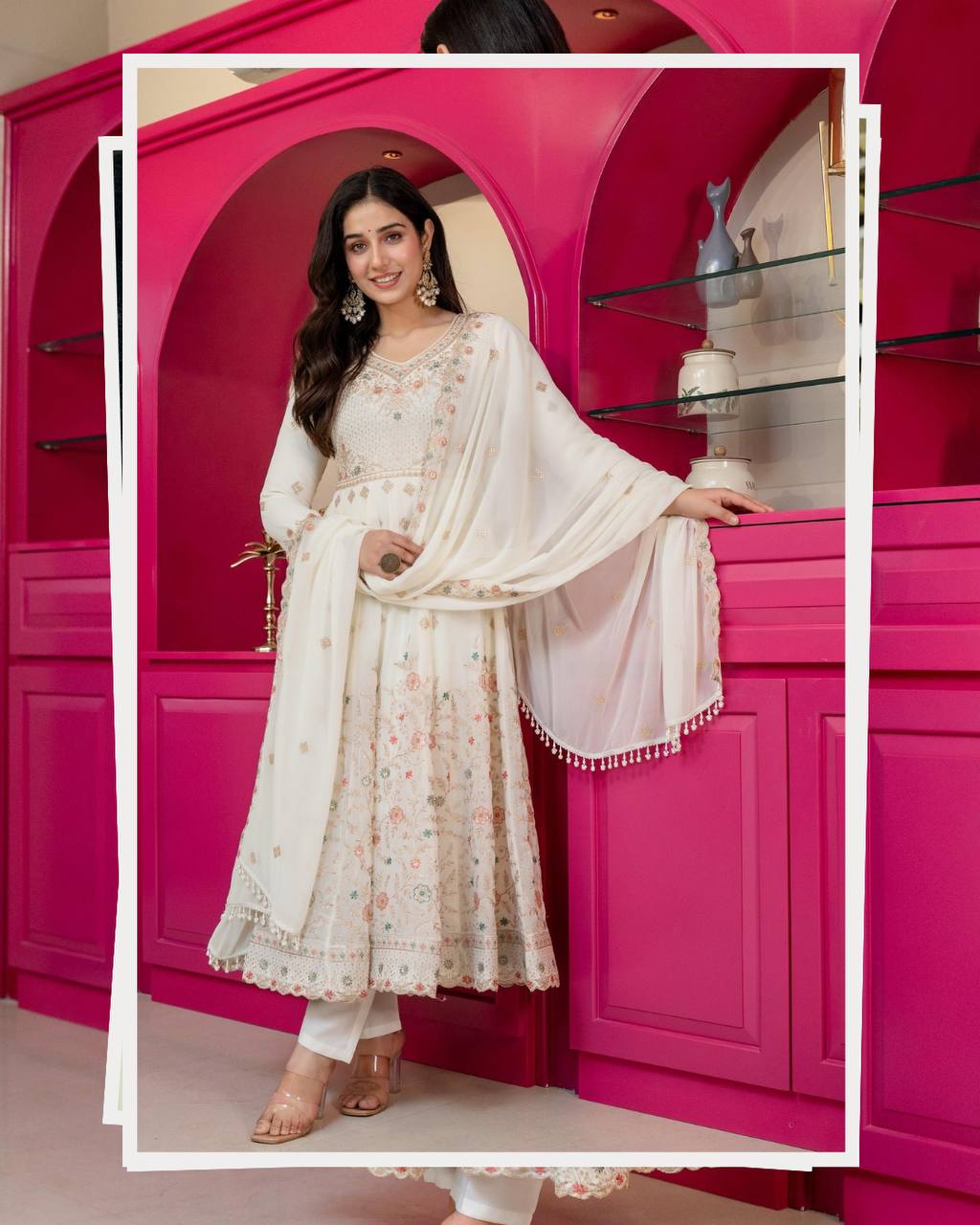
The Ivory Anarkali Suit With Sequin Zari Embroidery And Dupatta demonstrates how sequin zari can create a formal, light-catching effect. A saree with similar sequin or zari work can take a passa, but the ornament should repeat the metallic tone rather than introduce an unrelated finish.
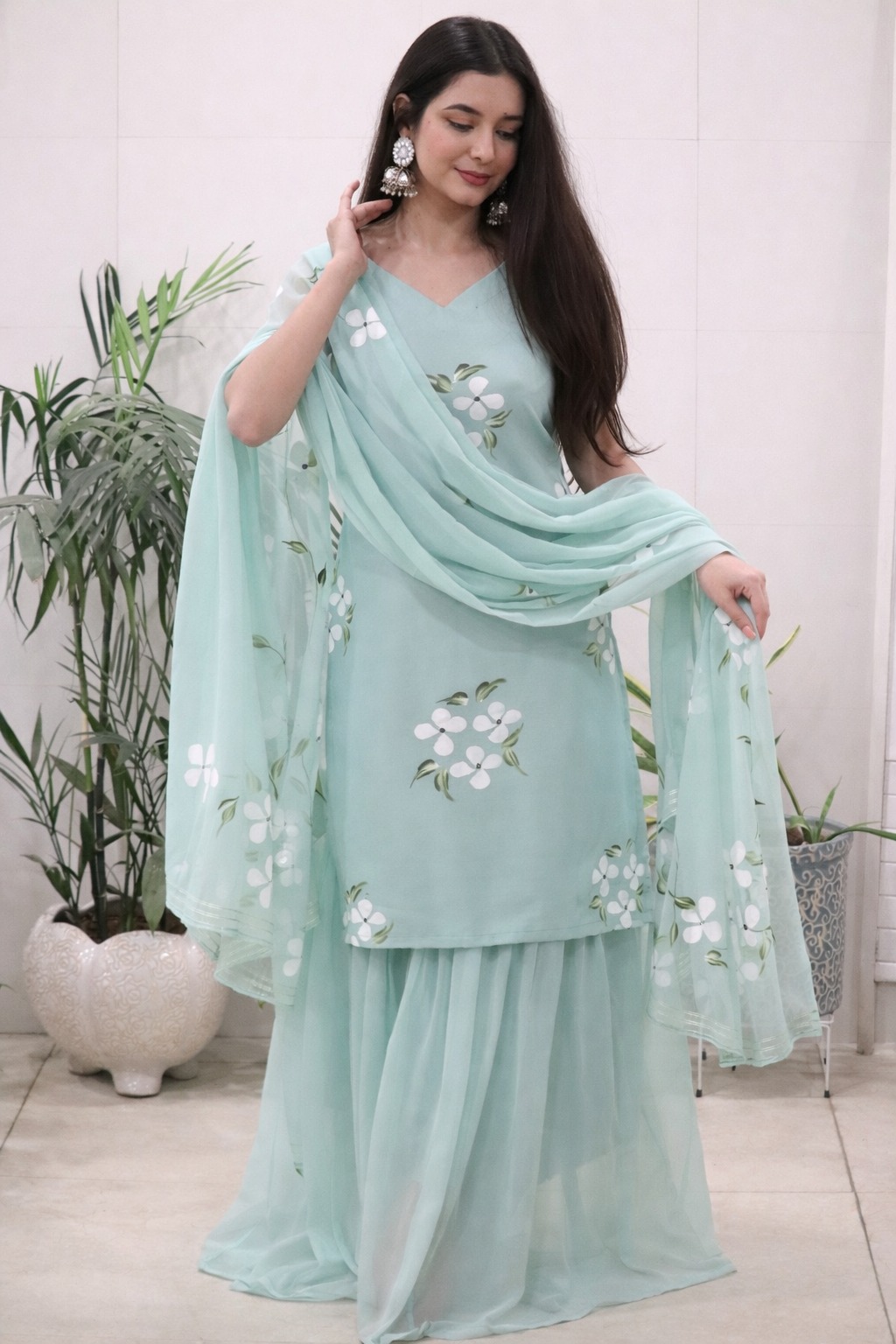
The Elegant Mint Green Handpainted Sharara Set with Dupatta shows a softer, more artistic direction. A saree in mint, pistachio or another pastel shade can be styled with a passa when the headpiece is fine enough to preserve the delicacy of hand-painted or softly coloured textile details.
Can a Passa Work With a Saree Instead of a Sharara Without Looking Overdone?
A passa won't look overdone when the outfit has one dominant focal point, two supporting details and enough negative space around the face. The easiest way to achieve that balance is to choose the saree first, identify its strongest feature, and then select the passa to complement rather than duplicate that feature.
Use a simple three-part check before leaving home. First, look at the face and identify whether the passa, earrings or necklace is the clearest focal point. Second, check whether the pallu covers or tangles with the passa-side hair and temple. Third, sit, walk and turn your head to confirm that the ornament stays secure and the saree remains comfortable.
Comfort is especially important for events lasting four hours or more. A heavy passa can cause pressure near the temple, while a loose chain can catch on hair or fabric. Test the complete hairstyle and jewellery combination for at least 20 minutes before the event, and carry two spare bobby pins in a small pouch.
Care also protects the accessory. Wipe metal and imitation stones with a soft, dry cloth after wearing the passa, keep it away from perfume and hairspray, and store it flat in a fabric-lined box. Do not store a damp passa against silk, Banarasi silk or zari because moisture and residue can transfer to the textile.
When the saree, blouse, hairstyle and jewellery are planned as one composition, the passa becomes a sophisticated alternative to the more familiar sharara pairing. The accessory doesn't need a sharara to look festive; it needs proportion, secure placement and a saree drape that gives it room to be seen.
Common Questions About Wearing a Passa With a Saree
Can a passa be worn with a saree instead of a sharara?
Yes, a passa can be worn with a saree instead of a sharara. Choose a size and finish that relate to the saree's border, zari or embroidery, and keep the pallu away from the passa-side temple.
Which saree is best for wearing with a passa?
Banarasi silk, Kanjeevaram, brocade and richly bordered sarees suit larger gold, polki or kundan passes. Chanderi, organza and other lightweight sarees work better with small pearl, enamel or fine-metal designs.
Which side should a passa be worn on with a saree?
A passa can be worn on either side, but it should sit on the side with a clean hairline and enough space around the temple. Pinning the pallu over the opposite shoulder usually keeps the ornament visible.
Can a passa be worn with a maang tikka and saree?
Yes, but the maang tikka should be small and visually lighter than the passa. Avoid designs whose chains or pendants overlap, because the two head ornaments can otherwise compete around the centre of the forehead.
What hairstyle is best for a passa with a saree?
A side-parted low bun, braided bun or controlled side braid provides the most secure base. Smooth the hair near the temple and use discreet bobby pins so the chain stays close to the scalp.
Can a passa work with a lightweight saree for a daytime event?
Yes, a lightweight saree can be paired with a passa for daytime dressing when the accessory is delicate. Pearl, enamel and slim silver-toned designs are usually more suitable than a large bridal-style polki ornament.