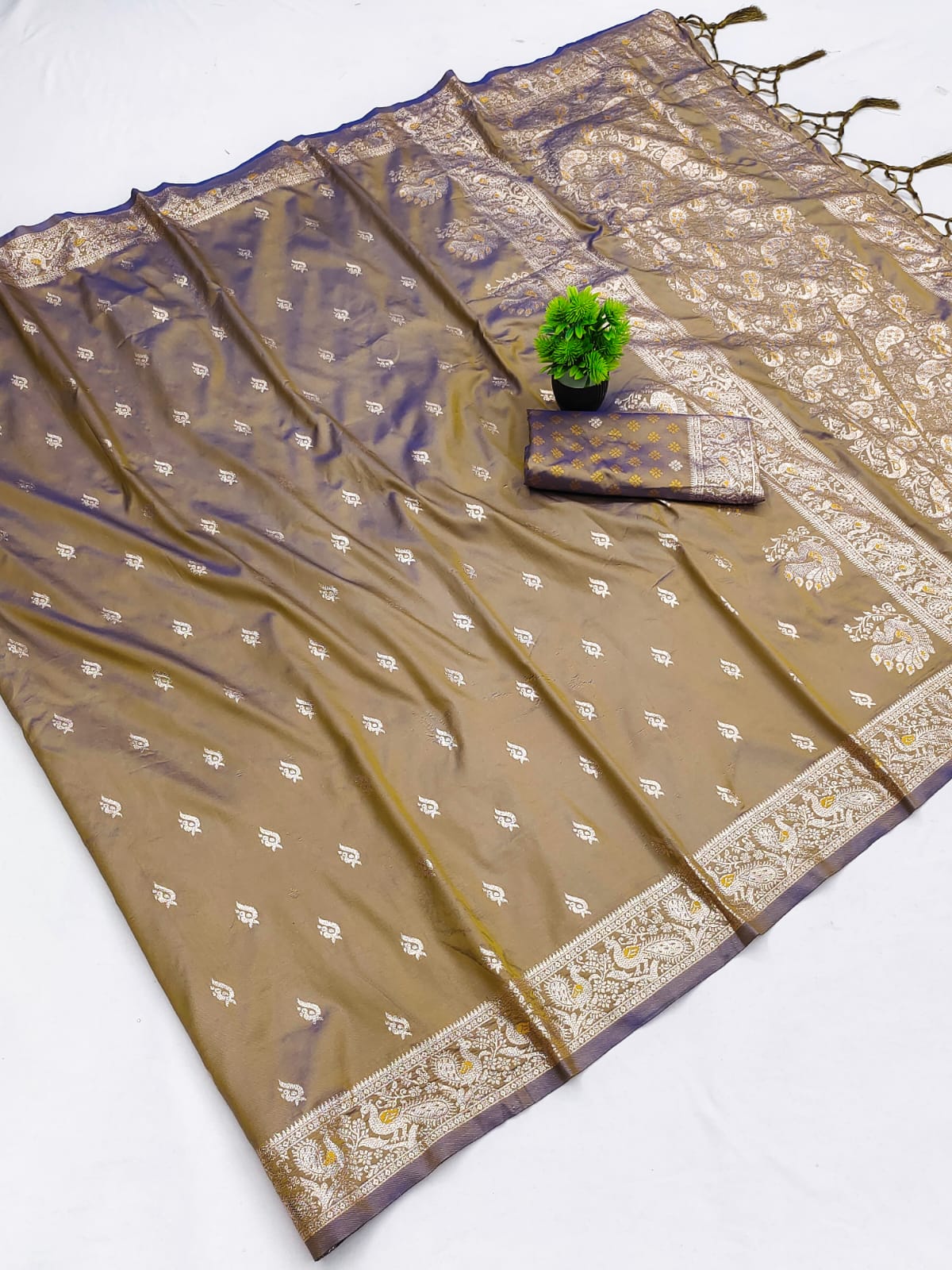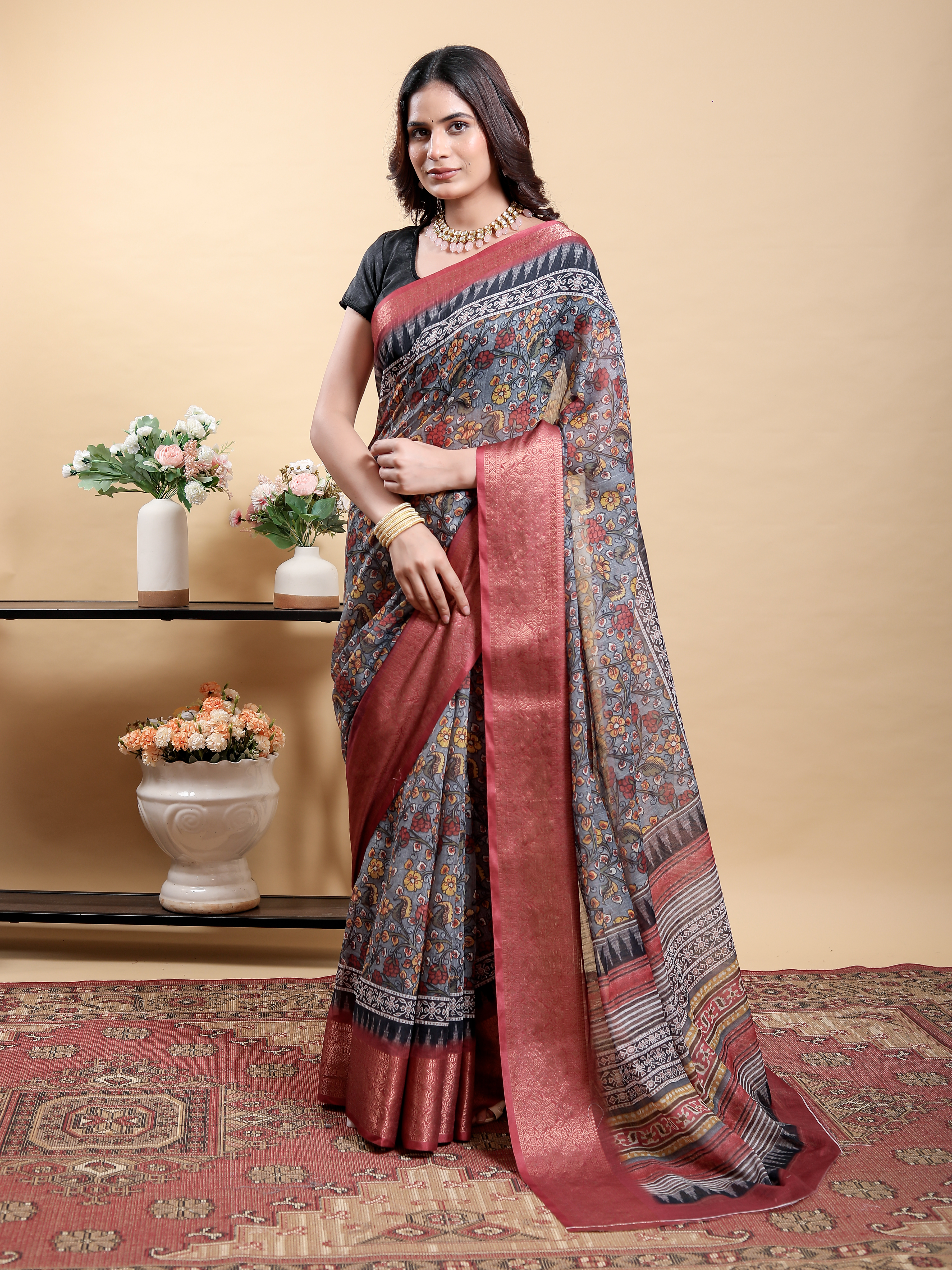
Buying an Anarkali Online When the Photos Hide the Hem requires more than judging the colour, embroidery or model styling. The lower edge determines whether the suit looks graceful at a wedding, practical on stairs or awkwardly short with your preferred footwear. A cropped product image removes the most useful visual clue, so the safest method is to reconstruct the garment from written measurements, fabric behaviour, lining details and the way the model is standing.
An Anarkali is a fitted garment through the upper body that opens into panels below the waist or hip. Two suits with the same stated length can look entirely different because one has a narrow A-line fall and another has multiple gathered panels. The checklist below helps you ask better questions before paying, especially when the product page shows only the bodice and dupatta.
Why the Hem Matters More Than a Beautiful Product Photo
The hem matters because Anarkali length changes the garment's proportions, movement and suitability for a particular event. A hem ending 44 inches from the shoulder may sit near the ankle on one person and several inches above it on another, depending on height, torso length and where the waist seam falls.
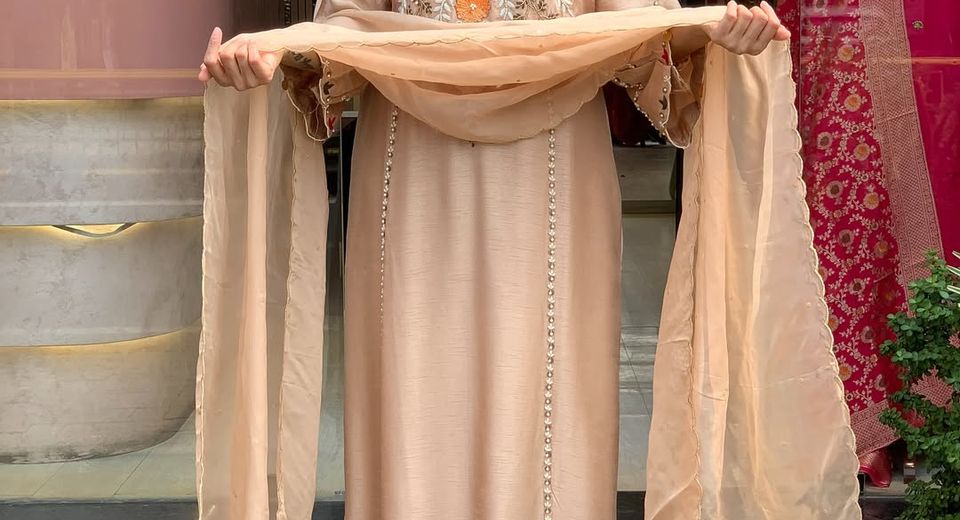
Photographs can conceal the hem for ordinary reasons: the model may be seated, the frame may end below the knees, or the dupatta may cover the skirt. A front-facing pose can also hide whether the garment has a smooth A-line shape or a fuller circular flare. Embroidery near the lower edge may be missing from the visible frame, even though that border affects the perceived length.
Check four written details before treating a hidden hem as a minor issue: garment length, flare or ghera, lining and fabric composition. A listing that provides only bust and waist measurements leaves out the information most relevant to an Anarkali's silhouette.
- Garment length: Confirm whether the number is measured from the shoulder, neckline or waist seam.
- Hem circumference: Look for ghera, flare or full circumference in inches.
- Fabric: Silk, viscose, georgette and net behave differently at the lower edge.
- Construction: Ask whether the skirt is lined, layered, gathered or panelled.
Buying an Anarkali Online When the Photos Hide the Hem: Start With Measurements
Start with a well-fitting full-length kurta or dress at home and measure it from the highest shoulder point to its bottom edge. That measurement gives you a more reliable target than choosing "floor length" or "ankle length" from a model photograph.
Stand barefoot on a hard, level floor and ask someone to measure from the top of your shoulder, close to the neck, down to the point where you want the hem to finish. Repeat the measurement while wearing the footwear planned for the event. Record both numbers because a two-inch heel changes practical clearance without changing your body measurement.
For a reception or wedding, many wearers prefer an Anarkali that finishes around the ankle bone or slightly above the floor. A daily or travel-friendly suit usually works better when the hem sits 2 to 4 inches above the floor. A floor-skimming edge can look elegant in photographs but may catch on stairs, wet ground and uneven pavements.
Read the length number correctly
An Anarkali length is useful only when the measurement point is clear. A stated length of 50 inches from the shoulder isn't equivalent to a 50-inch skirt measured from the waist seam.
Ask the seller these specific questions if the product page is unclear: "Is the length measured from the shoulder or waist?", "Does the measurement include the border?", and "Is the displayed number the finished garment length or an approximate size measurement?" A border that adds 3 inches at the bottom can make a meaningful difference to petite wearers.
Use a size chart without guessing
A size chart should be compared with your body measurements and not with your usual label. Measure bust at the fullest point, waist at the narrowest comfortable point and hips at the fullest point, then compare each number with the garment chart.
Anarkali suits need enough room at the bust and upper waist for sitting, lifting the arms and wearing a modest inner layer. Do not select a larger size merely to gain length unless the seller confirms that the garment is graded proportionally; a larger bust may also create excess width at the shoulders and armholes.
How to Estimate Flare When the Lower Half Is Cropped
You can estimate an Anarkali's flare by checking the stated ghera, the number of panels and the fabric weight. A ghera of 60 to 80 inches gives a relatively controlled fall, while 100 inches or more creates visibly greater movement, provided the fabric has enough body to hold the shape.
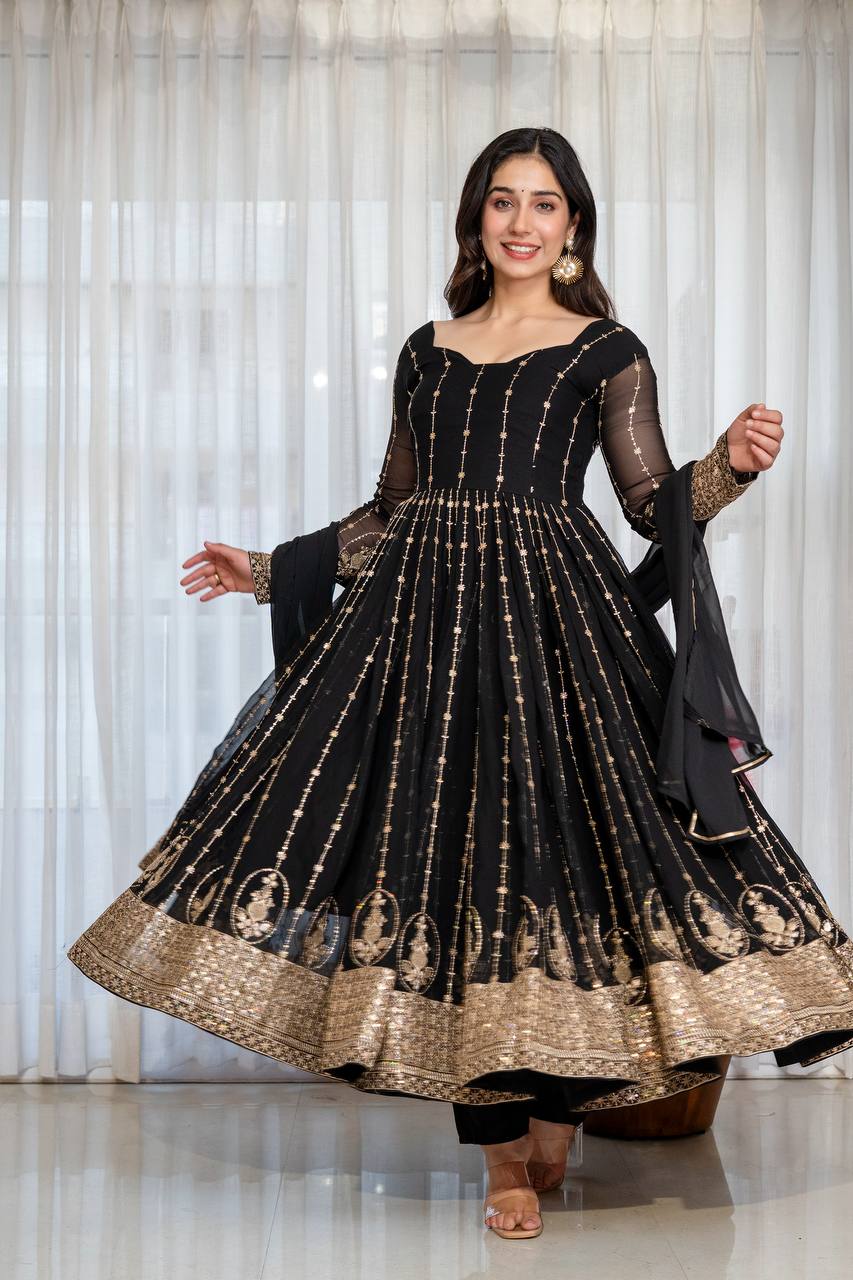
Flare affects comfort as much as appearance. A narrow A-line Anarkali is easier to walk in and occupies less space when seated. A heavily gathered or circular Anarkali produces a more dramatic silhouette but may need a slip, more careful folding and extra room around chairs.
Panel construction gives another clue. Six to eight panels generally create a moderate spread, while many narrow panels or dense gathers can create substantial volume. Product descriptions may use words such as "flared," "kalidar," "layered" or "floor-length," but those words don't replace a ghera measurement.
Fabric changes the effect of the same ghera. Banarasi silk or a firm silk blend can hold a sculpted flare, while soft georgette tends to fall closer to the body. Chanderi can create a lighter, crisp movement, whereas a heavily embellished fabric may hang more vertically because zari, sequins and lining add weight.
Look for visual evidence above the crop as well. Diagonal folds radiating from the waist suggest gathers or panels, while a smooth vertical fall often indicates a narrower cut. A model standing with one foot forward can make a modest flare look much fuller than it's, so the written measurement remains decisive.
Fabric, Lining and Embellishment Reveal the Finished Fall
Fabric and lining determine how an Anarkali hangs, how warm it feels and whether the concealed hem remains manageable during movement. The same silhouette can appear fluid in a lightweight material and structured in a lined silk construction.
Purple Embroidered Silk Anarkali Suit Set for Weddings illustrates why fabric and decoration need to be considered together. Silk can support a richer fall, while embroidery may add weight around the bodice and skirt. A buyer should check whether the garment includes a separate lining, attached lining or an unlined lower section.
A lining should generally end at, or close to, the outer hem when the outer fabric is sheer or heavily flared. A shorter lining can be intentional, but it may change the appearance of the skirt in bright light. Ask whether the lining is cotton, polyester or another material because lining affects breathability and static.
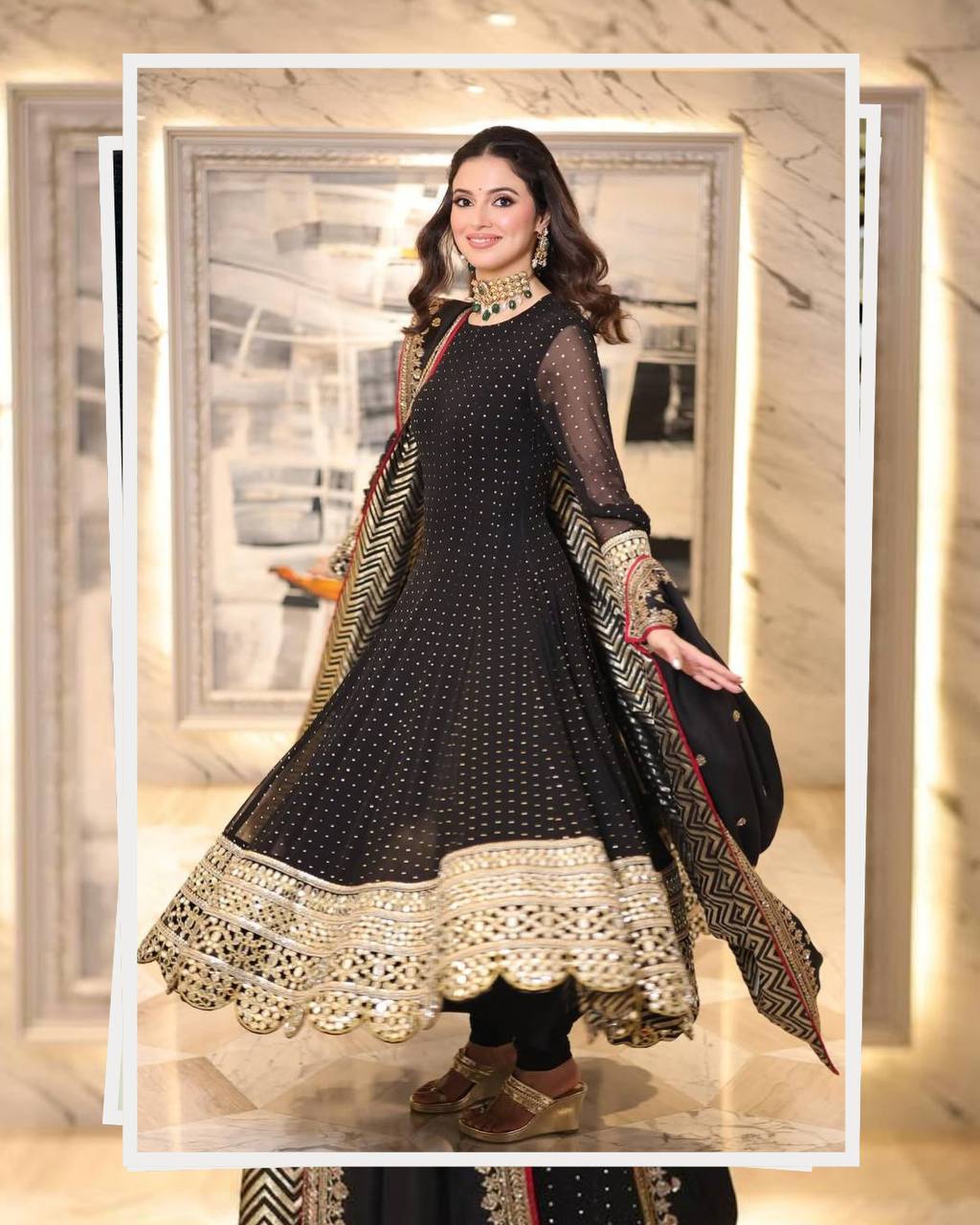
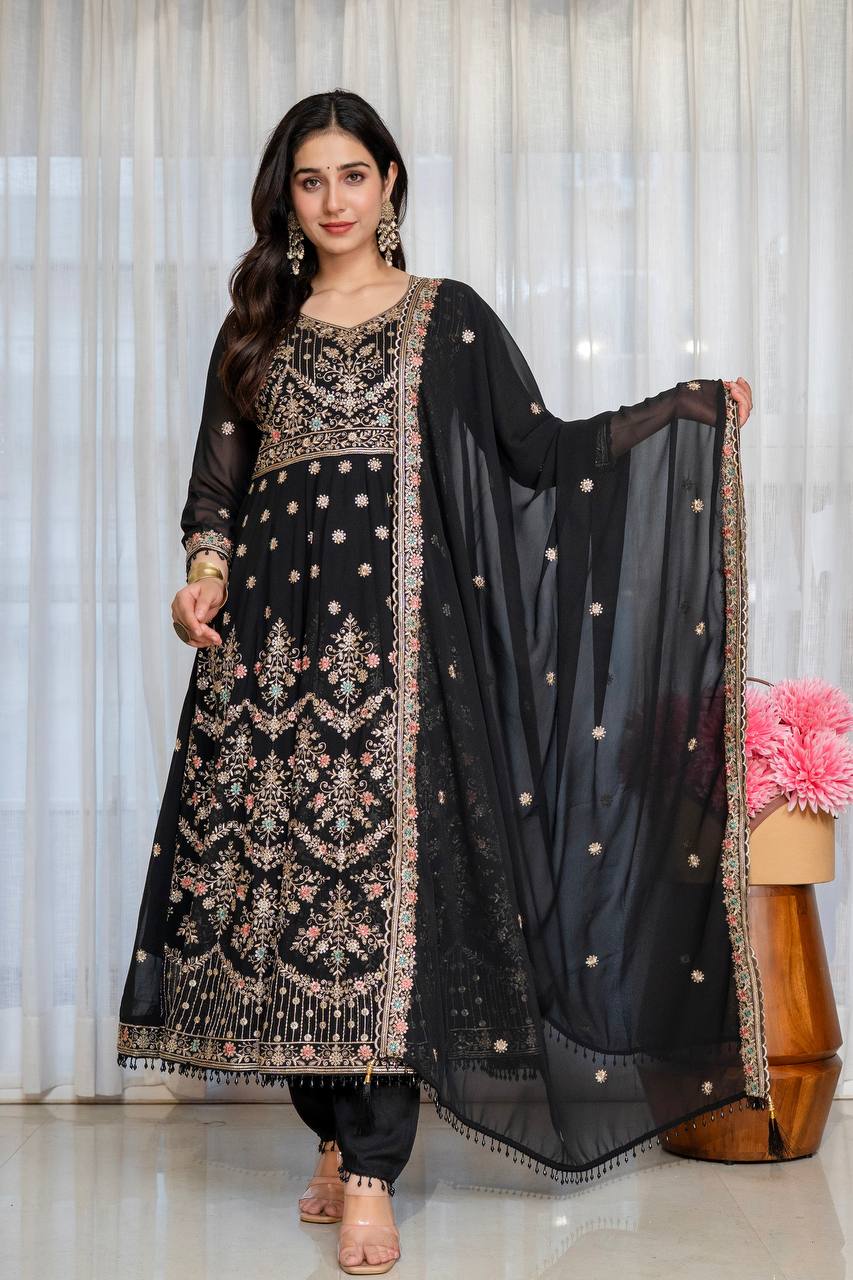
Border placement also changes the apparent length. A wide zari border at the hem can make a dress look shorter because the eye reads the border as a strong endpoint. A narrow border may create a softer visual finish. Black Embroidered Anarkali Suit Set with Zari Work and Black Anarkali Suit with Zari, Sequins & Moti Lace Work both show why lower-edge decoration deserves a direct question when the image doesn't show the bottom.
don't assume a heavier embellished Anarkali will have a larger flare. Zari, sequins and moti lace work can add considerable weight, which may pull gathers downward and reduce the lift seen in a studio photograph. A seller's close-up of the hem, lining and inside seams is more informative than a wider glamour image.
A Practical Photo Audit for Cropped Product Images
A useful photo audit combines every available image with the written description and doesn't treat a model's pose as a measurement. Zoom into the waist seam, side seam, lower embroidery and any visible folds before deciding that the silhouette matches your expectation.
- Locate the waist seam: Identify whether the flare begins at the natural waist, empire line or below the hip.
- Count visible panel lines: Vertical seams can indicate how the lower volume is distributed.
- Inspect the border: Check whether a hem border is visible in a back, side or detail photograph.
- Compare model proportions cautiously: Use the listed model height only as a rough reference, not as a guarantee of fit.
- Search all image views: A video, customer photograph or back view may reveal the actual length.
- Read exclusions: Note whether the photograph includes a can-can, inner skirt, belt or separately purchased accessory.
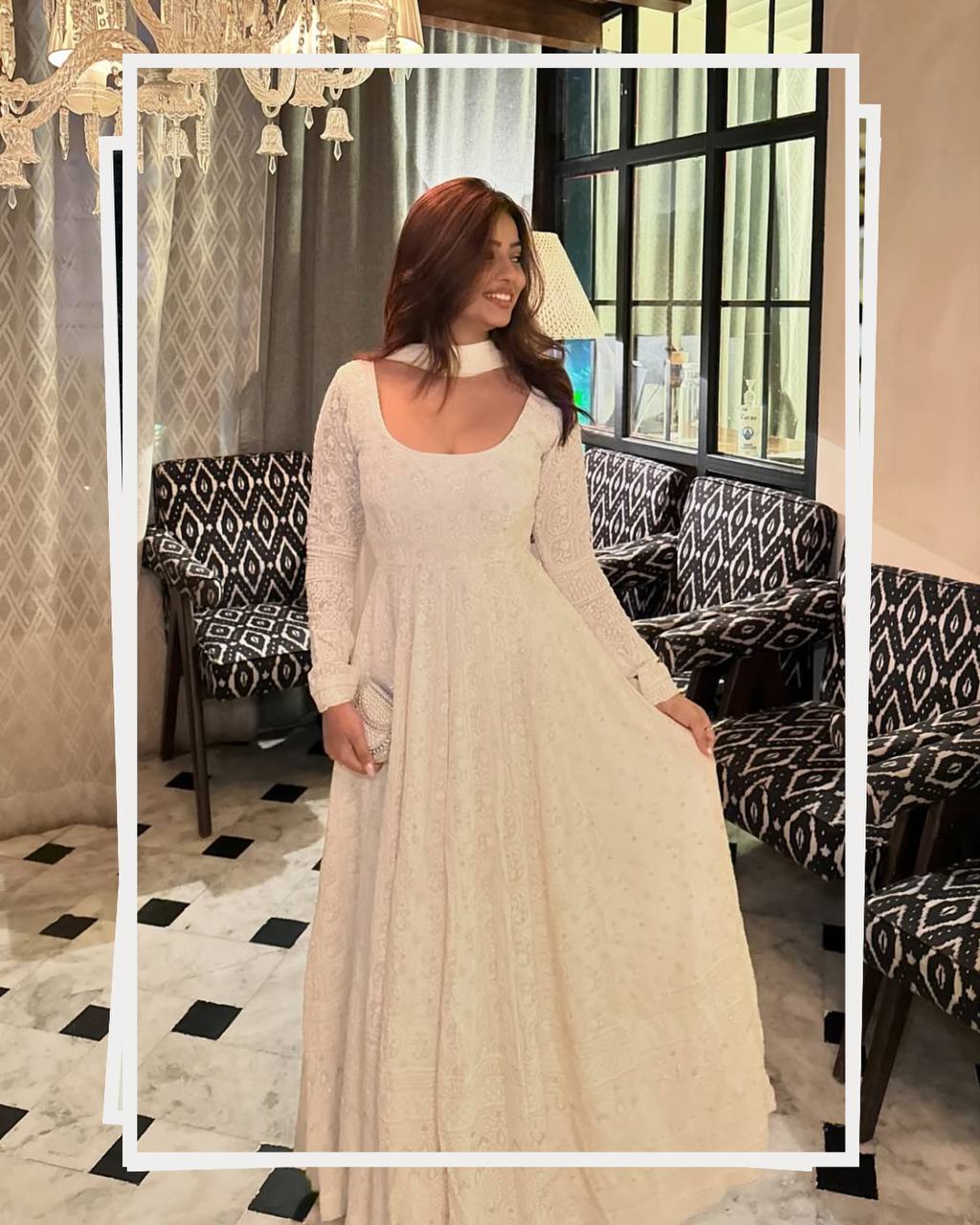
White Embroidered Anarkali Suit Set with Gota Patti Dupatta and White Floral Vichitra Silk Anarkali Suit Set | Varnavi demonstrate why colour and surface work can distract from the cut. White embroidery, gota patti and floral motifs attract attention to the upper half when the hem is absent from the frame. Ask for a full-length image in a neutral standing pose if the lower construction remains uncertain.
Collection context can also help you judge styling, but it can't substitute for garment measurements. Kalamkari Print Salwar Suits may suggest a more relaxed printed direction, while Maharashtra Paithani Inspired Salwar Suits and Gujarat Bandhej Salwar Suits point towards regional colour and border references rather than a guaranteed Anarkali cut. Odisha Sambalpuri Salwar Suits and Punjab Patiala Salwar Suits are useful comparisons for understanding how different salwar silhouettes distribute volume, but buyers should still confirm the exact product construction.
A screenshot of the product page can help if the listing changes, but a screenshot can't resolve an unclear measurement. Save the size chart, fabric details and seller's written answer so you can compare them with the delivered garment.
Match the Anarkali to the Event and the Way You Move
The right Anarkali length depends on the venue, footwear and amount of walking rather than on a universal rule. A formal indoor wedding allows more length and volume than a daytime Haldi ceremony held on grass or an outdoor courtyard.
For a Haldi ceremony, a hem with practical floor clearance reduces contact with turmeric, damp ground and crowded seating. For a sangeet, moderate flare allows easier movement during dance without requiring constant lifting. For a formal reception, a longer silk Anarkali with zari or sequins can create a dressier appearance, provided the hem doesn't drag.
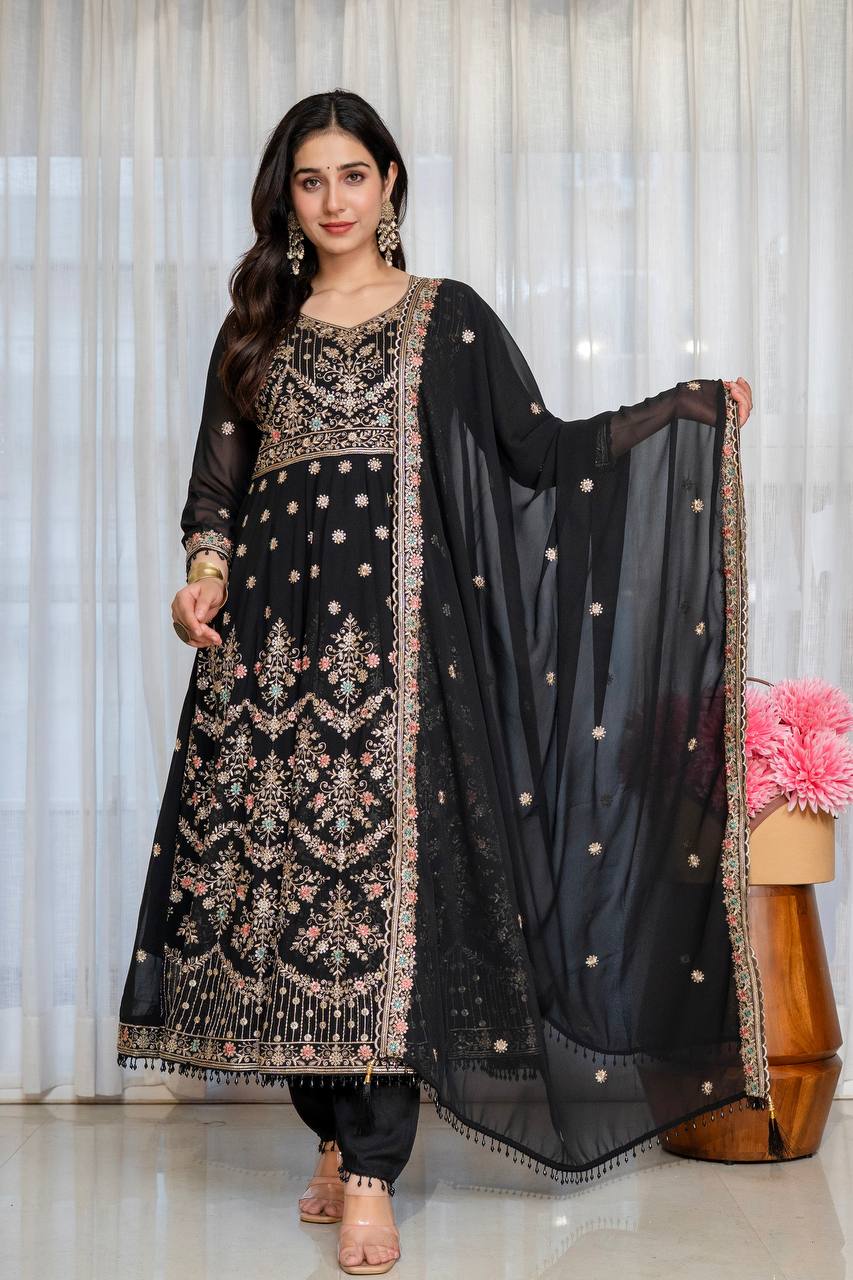
Black Zari Sequins Embroidered Anarkali Suit Set | Varnavi and Black Anarkali Suit Set with Sequin Zari and Moti Lace Work are useful examples of why embellishment should be weighed against movement. Sequins and zari may catch on rough seating or another garment, while lace at the lower edge can need careful storage. Ask whether the hem has a finished facing and whether embellishment continues around the back.
Footwear should be part of the decision before ordering. A hem selected for flat juttis may appear short with heels, while a floor-length measurement chosen for heels may drag when worn barefoot indoors. If the product can't be altered, choose the safer clearance and reserve a tailor's adjustment for a hem that's slightly too long.
Questions to Send Before Placing the Order
A short, specific message usually produces more useful information than asking whether the Anarkali is "long" or "very flared." Request measurements in inches and ask for a photograph that shows the garment hanging naturally.
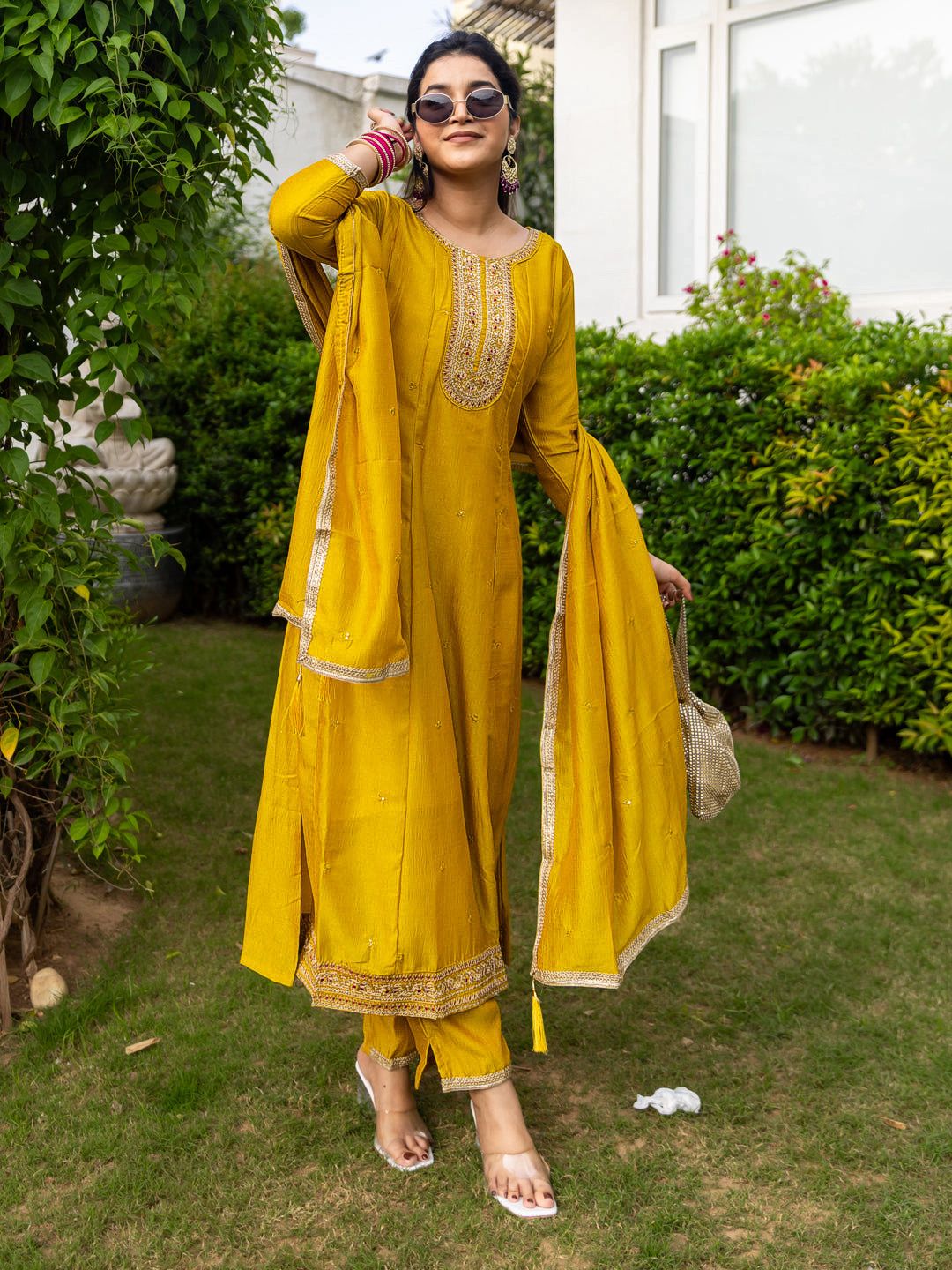
- What is the finished length from the shoulder to the hem?
- What is the complete ghera or hem circumference?
- Where does the flare begin: waist, empire line or hip?
- Is the lower section lined, and what is the lining fabric?
- Does the stated length include the zari, gota or lace border?
- Is the dupatta shown included in the set?
- Can you share a full-length front and back photograph without the dupatta covering the skirt?
Ivory Zari Sequins Embroidered Anarkali Suit Set is another example where the ivory base, zari and sequins may make the garment appear visually heavier than its actual cut. A written reply about the ghera and lining lets you distinguish surface decoration from genuine volume.
Buying an Anarkali Online When the Photos Hide the Hem becomes much less uncertain when you compare the product's measurements with a garment you already own. Length, ghera, lining, fabric and footwear together tell you far more than a cropped photograph. A careful buyer doesn't need a perfect image; a careful buyer needs enough specific information to predict where the hem will fall and how the skirt will move.
Common Questions About Choosing an Anarkali With a Hidden Hem
How do I choose Anarkali length when shopping online?
Measure from the highest point of your shoulder to the place where you want the hem to finish, first barefoot and then in your event footwear. Compare that number with the seller's finished garment length and confirm whether the measurement includes the hem border.
What does ghera mean in an Anarkali suit?
Ghera means the circumference or spread around the lower hem of the Anarkali. A ghera of about 60 to 80 inches gives controlled movement, while 100 inches or more generally creates a fuller, more dramatic flare.
How can I tell whether an Anarkali is well lined?
Ask whether the lining continues close to the outer hem and request the lining fabric name. A separate or attached lining should be long enough to prevent transparency and should not twist or end awkwardly above a sheer outer layer.
Is a floor-length Anarkali practical for a Haldi ceremony?
A floor-length Anarkali can be inconvenient for a Haldi ceremony if the venue has grass, damp ground or crowded seating. An ankle-length or slightly raised hem usually offers better clearance while retaining a formal appearance.
Does a larger size make an Anarkali longer?
A larger size may have a longer graded length, but sizing systems differ and the increase is not always enough to solve a hem problem. Choose the size that fits your bust, waist and shoulders, then confirm the exact length with the seller.
What should I ask when product photos hide the Anarkali hem?
Ask for the finished shoulder-to-hem length, full ghera, lining details and a front or back photograph without the dupatta covering the skirt. Also confirm whether the hem measurement includes zari, gota, sequins or lace work.