

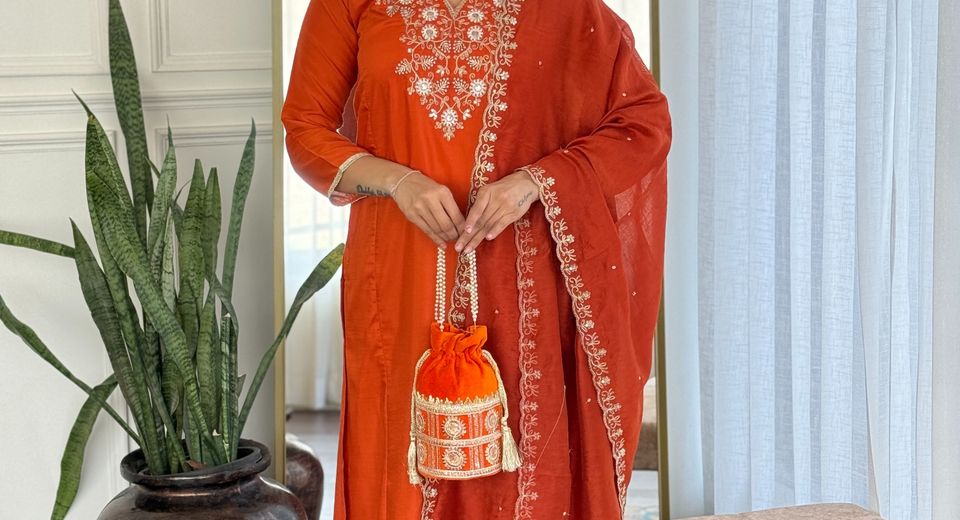
A measuring tape can prevent the most common disappointment in online ethnic-wear shopping: a kurti that looks right in photographs but fits incorrectly at the bust, waist, hips, or hem. Bust Waist Hip and Length Measurements for Buying Kurtis Online require a little more care than choosing a familiar clothing size because Indian brands may list body measurements, garment measurements, or both. The reliable method is to measure your body, understand the garment's ease, and compare both numbers with the product size chart.
A well-chosen measurement helps you judge whether a straight kurti, an Anarkali, a rayon kurti set, or a palazzo suit will sit comfortably without pulling or looking oversized. The same process also helps when a design includes zari embroidery, a woven cotton body, a fitted yoke, or a flowing Chinon dupatta.
Why Bust Waist Hip and Length Measurements for Buying Kurtis Online Matter
Bust, waist, hip, and length measurements matter because a kurti's fit is determined by more than the size label. A medium in one brand can have a different finished bust or hip measurement from a medium in another brand, while a relaxed cotton kurta and a fitted rayon kurti may require different amounts of ease.
Size labels are only starting points. A garment labelled M may be designed for a 38-inch body bust but have a 40-inch finished bust, or it may list 40 inches as the actual garment measurement. Confusing those two figures can lead to a kurti that's either restrictive or unnecessarily loose.
Online salwar suits also contain separate pieces with different fit priorities. The kurti needs enough room at the bust and hips, trousers need comfort at the waist and seat, and a dupatta usually doesn't depend on body measurements. A three-piece set can therefore fit well in the upper body while still needing attention to trouser length or waistband construction.
How to Take Your Four Core Body Measurements
The most accurate home measurements come from a flexible tape placed over light clothing, with the tape level and firm but not tight. Stand naturally, keep your feet together, and ask another person to check that the tape remains horizontal around your body.
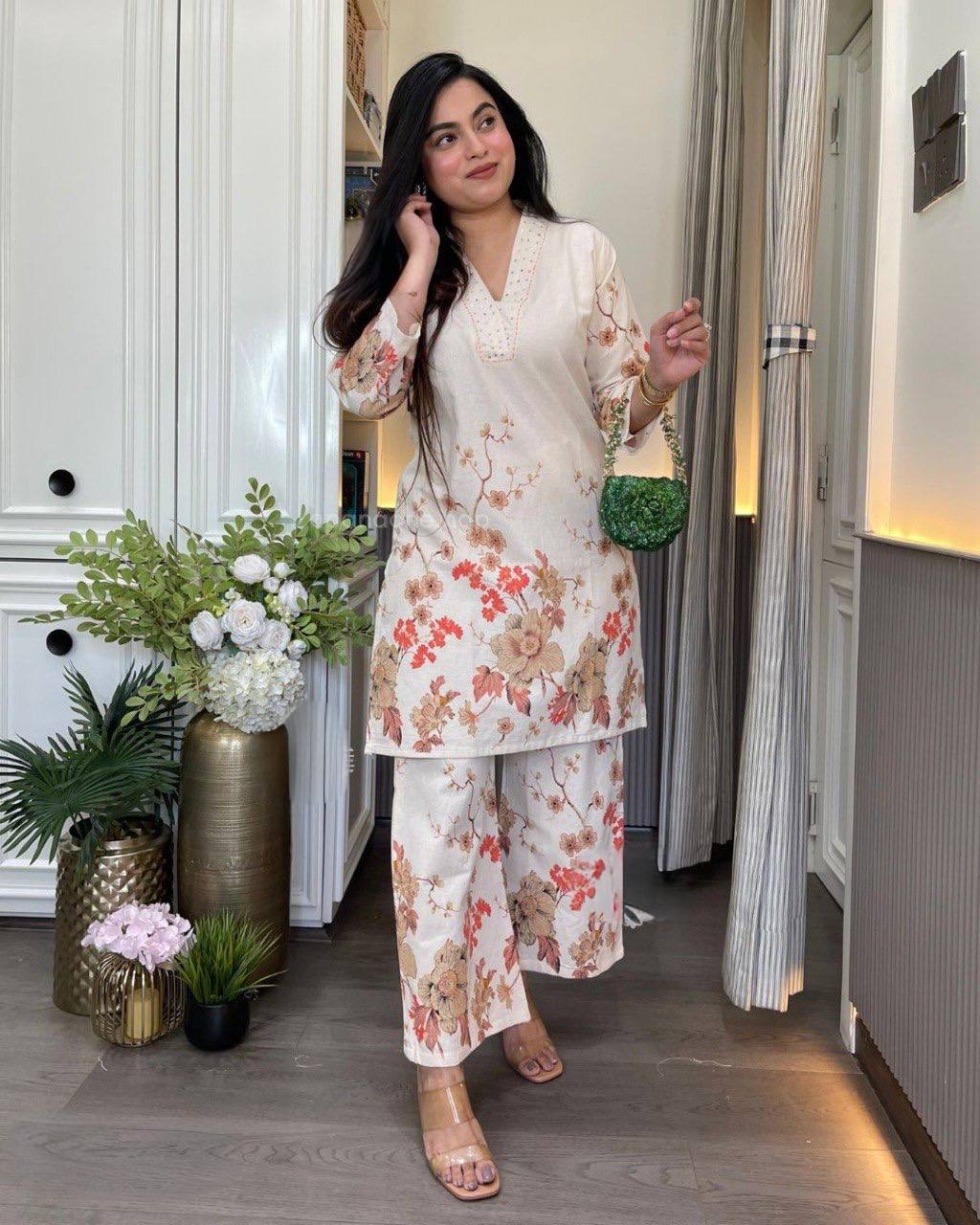
Bust measurement
Your bust measurement is the circumference around the fullest part of your bust. Keep the tape across the fullest point at the front, pass it under the arms, and bring it across the shoulder blades at the back. Do not pull the tape inward, hold your breath, or flatten the bust while measuring.
Wear the bra you normally intend to wear with the kurti. A heavily padded bra can change the result, so use a supportive everyday bra for a practical measurement. Record the number in inches and centimetres if possible; 1 inch equals 2.54 centimetres.
Waist measurement
Your natural waist measurement is the circumference of the narrowest part of your torso, usually above the navel and below the rib cage. Bend sideways once to locate the natural crease, stand upright again, and place the tape around that line without sucking in your stomach.
A straight kurti may not sit at the natural waist, but the measurement remains useful for judging a semi-fitted design, a shaped Anarkali, or a kurta with waist panels. A loose silhouette can tolerate more variation at the waist than a garment with darts or a defined seam.
Hip measurement
Your hip measurement is the circumference around the fullest part of your hips and seat. Keep both feet together and pass the tape around the widest point, which may be several inches below the waist. Check that the tape doesn't dip at the back or ride upward at the front.
Hip measurement is especially important for straight kurtis, long kurtas, and sets with narrow side slits. A bust measurement can match the chart while the kurti still feels tight across the seat. For a peplum or flared Anarkali, the hip may be less restrictive, but it remains useful when comparing finished measurements.
Kurti length measurement
Kurti length is measured vertically from the highest point of the shoulder, close to the neck, down to the intended hem. Measure over the front of your body while standing straight, then compare the result with the garment length listed online.
Decide where you want the hem to fall before ordering. A 42-inch kurti may reach near the knee on one person and the mid-calf on another because torso length, height, and proportions differ. If you already own a kurti with the desired fall, lay it flat and measure from the shoulder seam to the hem; that finished length can be more useful than a general height estimate.
Body Measurements and Garment Measurements Are Not the Same
Body measurements describe your body, while garment measurements describe the finished clothing. Product pages should be read carefully because a chart may show either one, and some pages show both in separate columns.
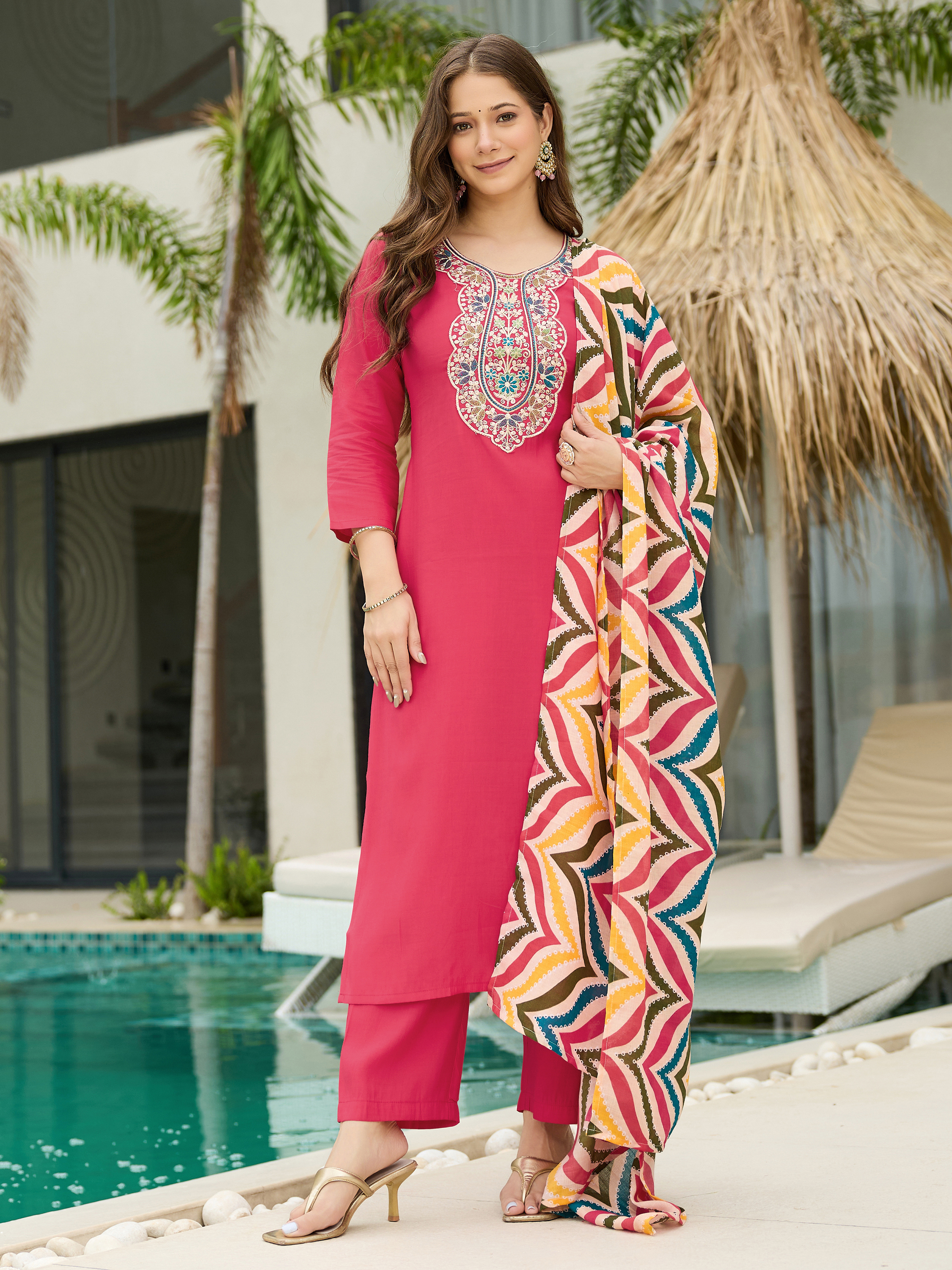
Suppose your bust measures 38 inches and a product page lists a 40-inch bust under "garment measurement." The two-inch difference is wearing ease. If the same page lists 38 inches under "body measurement," the garment may have been made with additional ease that's not shown in that column.
Compare like with like. Measure a comfortable kurti across the chest from underarm to underarm, multiply the flat measurement by two, and compare that finished bust with the product's garment bust. Repeat the method at the hip if the kurti is straight or narrow.
- Close fit: a small amount of ease creates a neater outline but requires accurate measurements and compatible fabric.
- Regular fit: moderate ease allows sitting, reaching, and layering without making the silhouette shapeless.
- Relaxed fit: extra room suits breathable cotton, casual rayon, and oversized styling, but too much volume can overwhelm a petite frame.
Fabric also changes the decision. Rayon generally drapes close to the body and benefits from comfortable bust and hip ease. Chiffon is often used in a separate dupatta and should not be treated as evidence that the kurti itself stretches. Kanchi cotton and jacquard fabrics usually have little or no stretch, so the listed finished measurements deserve close attention.
How to Read a Kurti and Salwar Suit Size Chart
The correct size is the one that accommodates your largest relevant measurement while preserving the intended silhouette. Start with the bust for a fitted upper body, then check the hip for a straight kurti and the trouser waist and hip for a complete salwar suit.
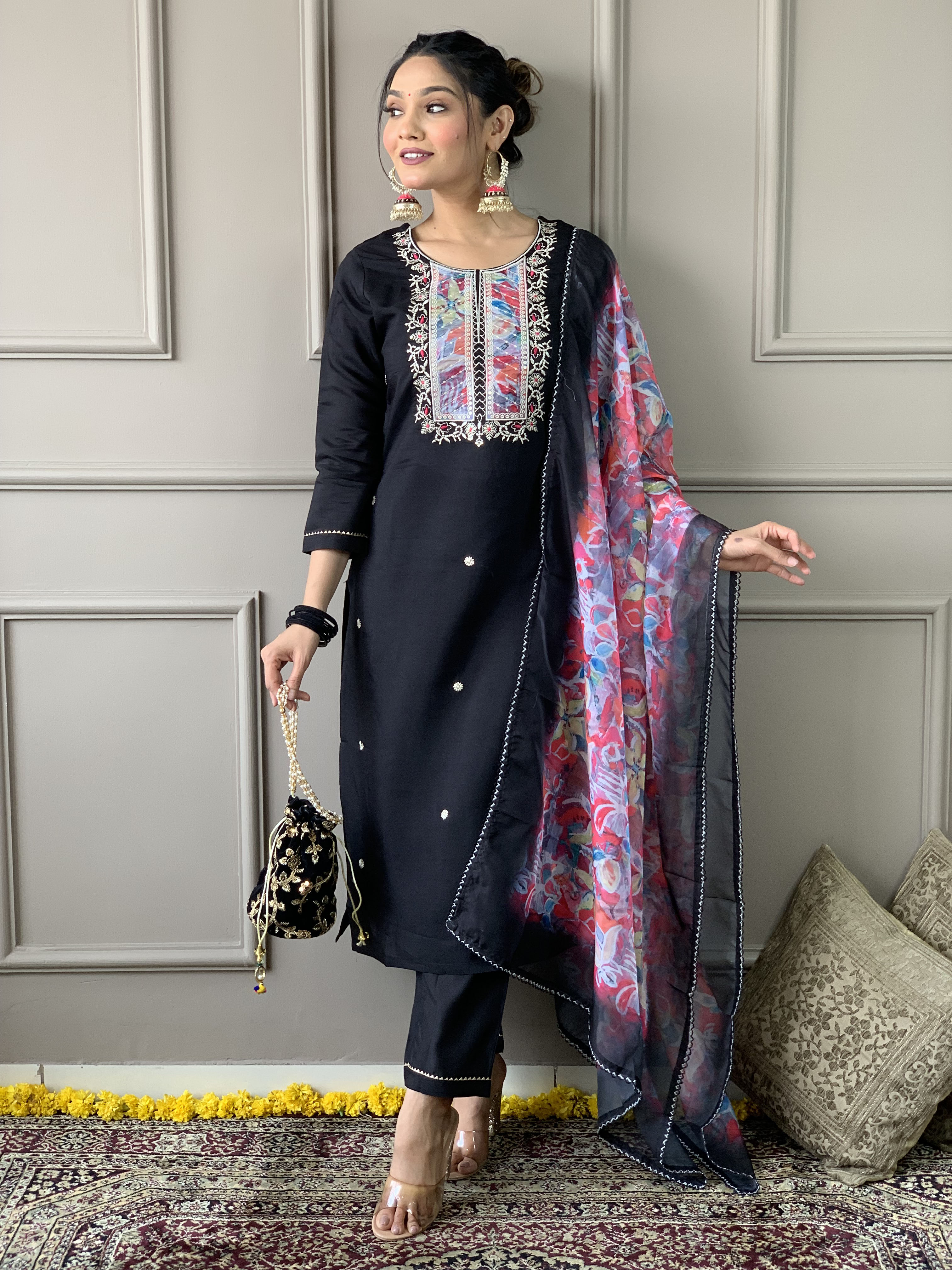
- Locate the chart attached to the exact product, not a general chart from another collection.
- Identify whether each number refers to body size or finished garment size.
- Compare your bust, waist, and hip measurements with the same unit used in the chart.
- Check the kurti length, sleeve length, trouser length, and dupatta dimensions separately.
- If your measurements fall between sizes, consider the fabric, silhouette, and alteration possibilities.
For example, a 38-inch bust and 40-inch hip may work in a straight kurti with a finished hip of 42 inches, but the same numbers may need a larger size in a narrow, non-stretch Kanchi cotton style. A flowing Anarkali can accommodate the hip through its flare, while a fitted waist seam may still require attention to the waist measurement.
don't choose a larger size only because the kurti is long. Length is a separate dimension. A garment can have the correct length but excessive width, or a comfortable width but a hem that falls higher than expected. If the product page supplies a length range or model height, use that information as a proportion guide rather than as a guarantee.
What Silhouette and Fabric Change About the Fit
Silhouette determines where extra room is needed. A straight kurti needs balanced room across the bust, waist, and hip; an Anarkali needs accurate bust and upper-waist measurements before the skirt begins to flare; and a short kurti paired with palazzos may allow a more relaxed torso fit.
Straight and side-slit kurtis
Straight kurtis should have enough hip room for walking and sitting without the side slits pulling open. Designs such as the Black Kanchi Cotton Kurti Dupatta Set for Women and the Kanchi Cotton Woven Kurta Pant Dupatta Set illustrate why hip and length checks matter when the fabric has a structured woven character.
Embroidered and rayon sets
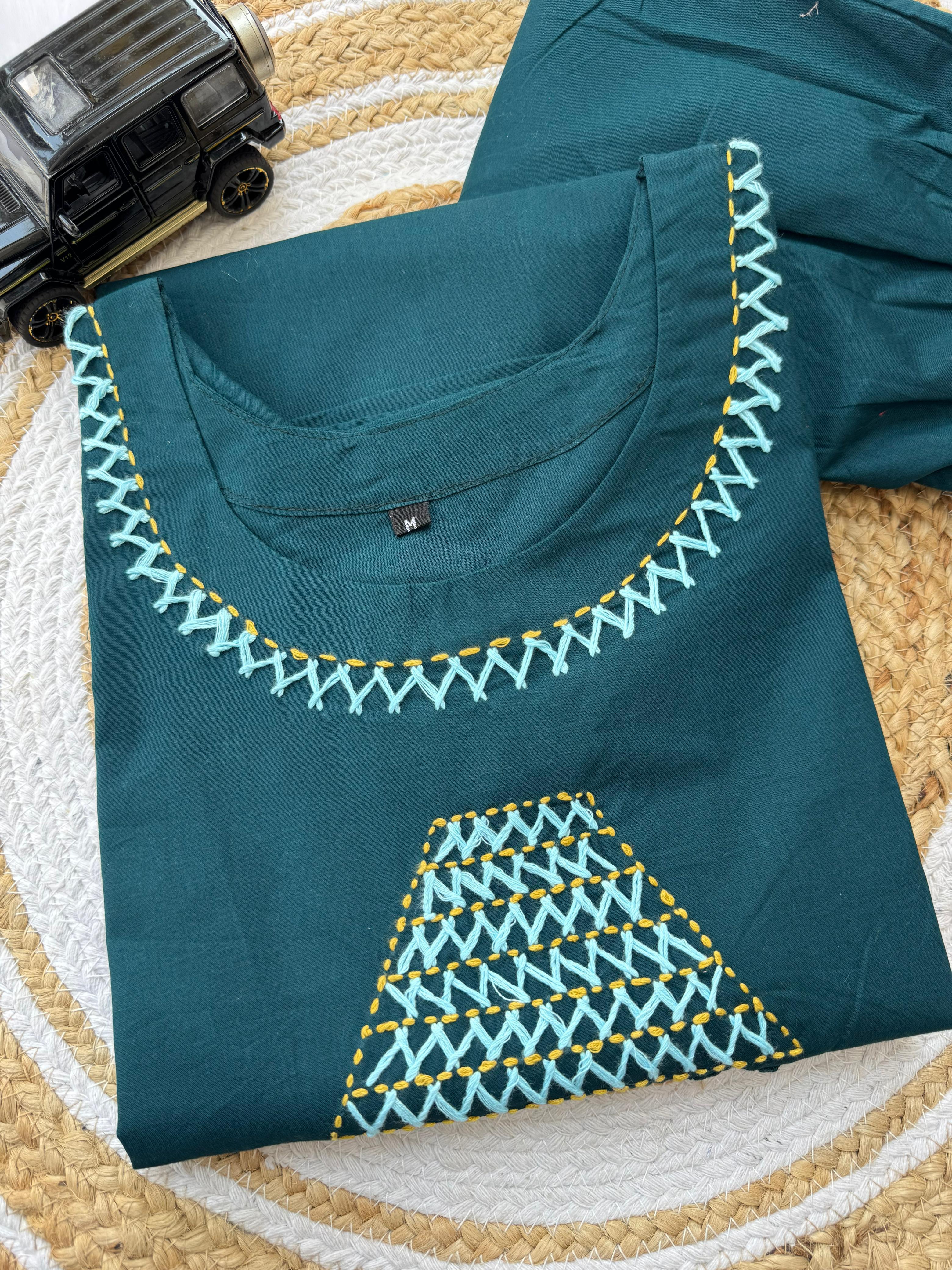
Rayon kurti sets usually fall softly, but a close fit can still show pulling around embroidery or seam lines. The Teal Embroidered Rayon Kurti Set and Purple Embroidered Rayon Kurti Set are useful examples of why bust ease should be checked before focusing on colour or embellishment.
Palazzo and three-piece sets
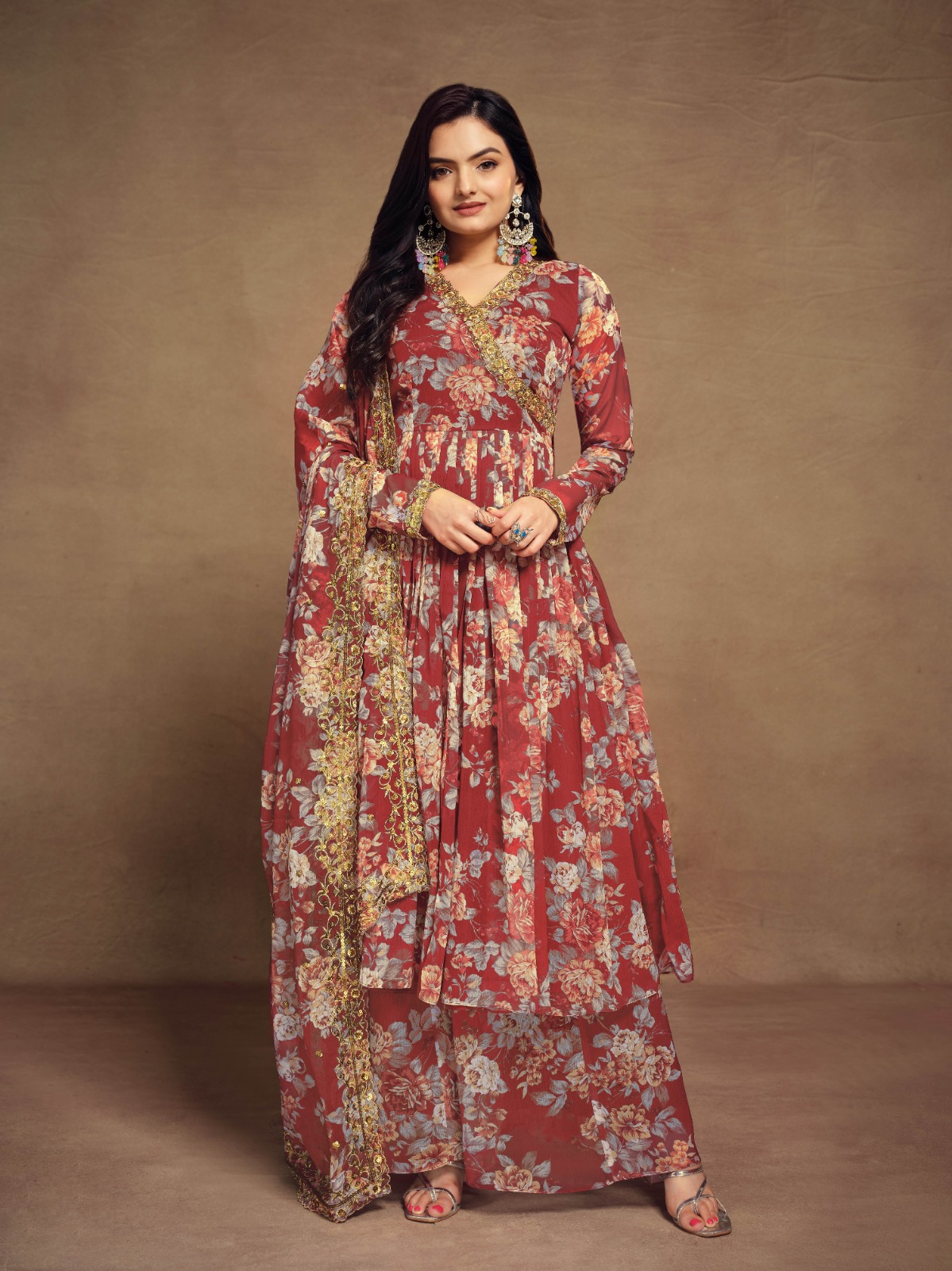
Palazzo trousers need waist, hip, rise, and length comfort, even when the kurti fits correctly. A set such as Shop Floral Digital Printed Chiffon Kurti Palazzo Set with zari embroidery should be assessed as coordinated separates: check the kurti's bust and length, then confirm the trouser measurements and waistband details.
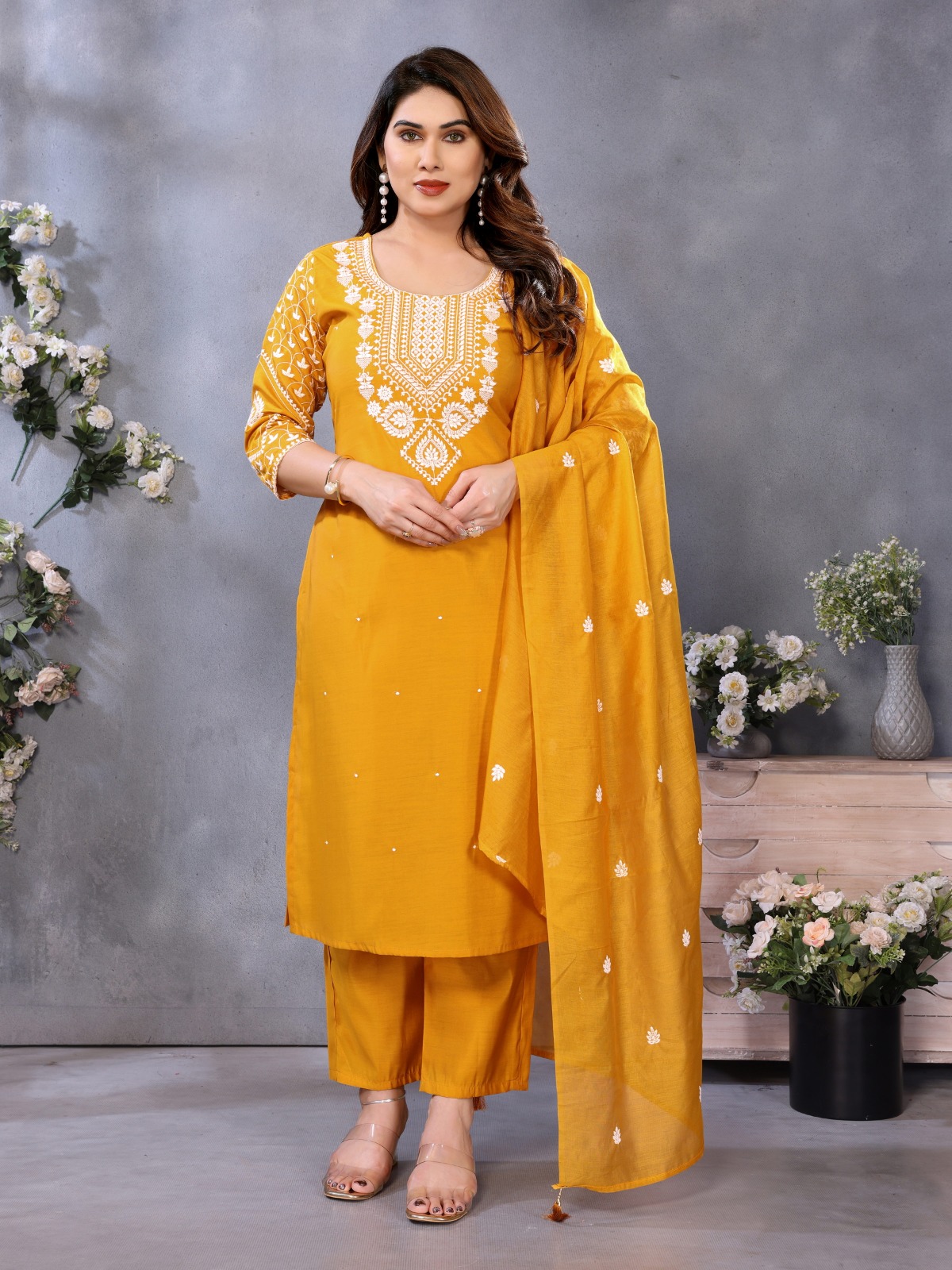
Embroidery and woven texture can affect how a garment feels without changing the printed size. Zari embroidery may add surface weight, while jacquard or dense cotton may have less give than a fluid fabric. A set such as Mustard Kanchi Cotton Kurti Set with Zari Dupatta therefore deserves a closer look at finished measurements than a shopper might give to a loose, unstructured garment.
Using Measurements to Choose for Different Occasions
Occasion should influence the amount of ease, length, and movement you choose. Daily wear usually benefits from breathable room and easy sitting, while festive wear may justify a neater fit if the fabric and construction permit comfortable movement.
For office or everyday use, a modestly relaxed straight kurti works well with practical movement through the shoulders and hips. The Kanchi Cotton Jacquard Kurti Dupatta Set Online can be evaluated by checking whether the listed length suits your usual leggings, trousers, or palazzos and whether the woven fabric has enough room at the bust.
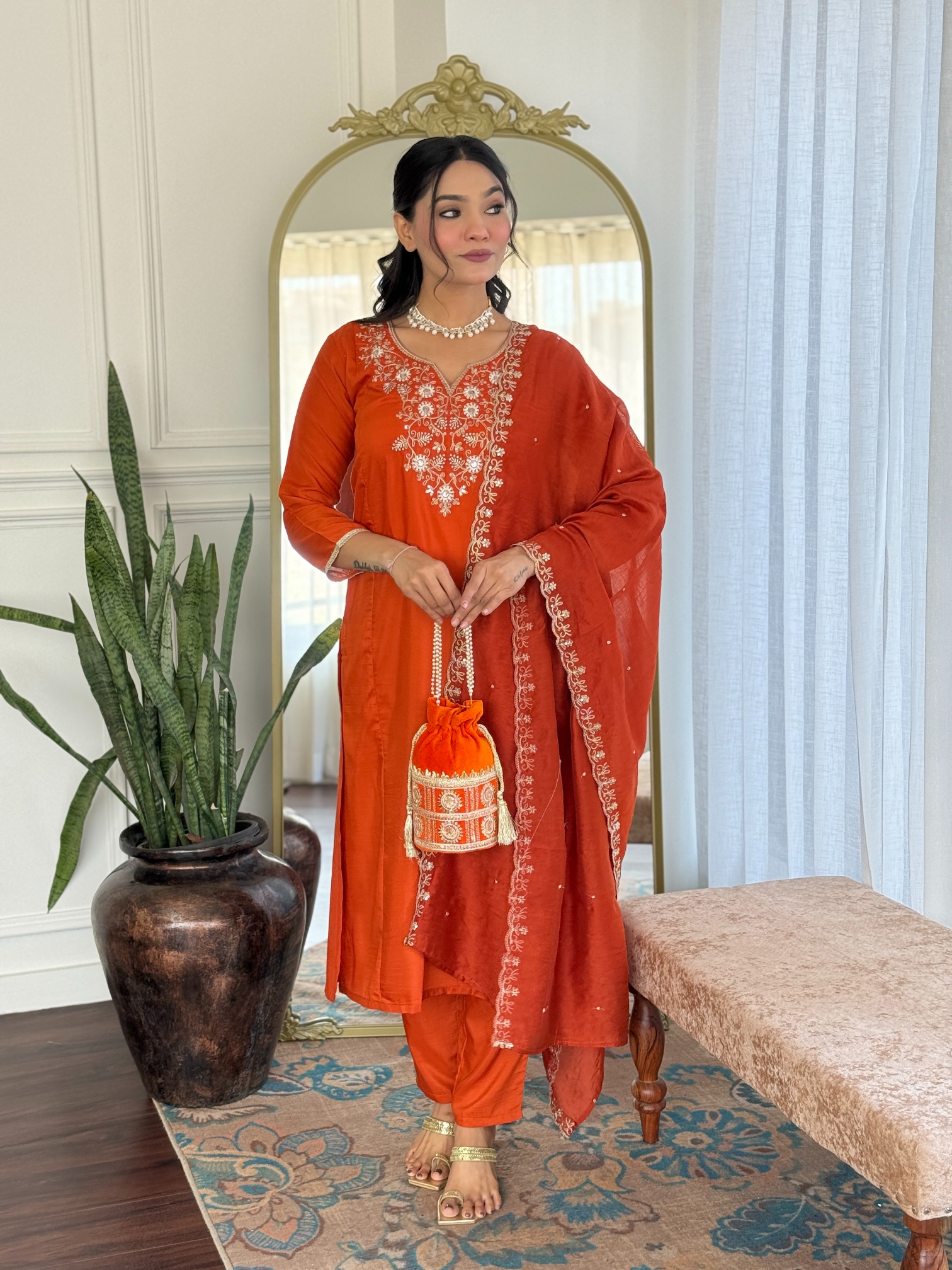
For a Haldi ceremony, bright colour and movement matter, but measurement accuracy remains essential because dancing, sitting on the floor, and reaching forward require ease. Shop Orange Threadwork Suit Set with Chinon Dupatta may suit a festive wardrobe, yet the kurti and trouser measurements should still be checked independently rather than selected from the dupatta's flowing appearance.
Regional-inspired styles can also have distinct visual proportions. Kalamkari Print Salwar Suits, Maharashtra Paithani Inspired Salwar Suits, Gujarat Bandhej Salwar Suits, and Odisha Sambalpuri Salwar Suits may vary in colour, motif, and styling, but no print or tradition replaces a check of bust, hip, waist, and finished length.
A Pre-Checkout Measurement Checklist
A two-minute pre-check catches most avoidable sizing errors before payment. Keep the product page open while comparing your notes so that the exact garment chart, not memory, guides the decision.
- Measure bust, natural waist, and fullest hip while standing normally.
- Record each measurement twice and use the consistent result.
- Measure a well-fitting kurti from shoulder to hem for a useful length reference.
- Confirm whether the chart lists body measurements or finished garment measurements.
- Check whether the fabric is likely to stretch; assume woven cotton and jacquard have limited stretch.
- Review kurti, trouser, sleeve, and dupatta dimensions separately in a set.
- Look for side slits, elastic waistbands, drawstrings, lining, and alteration allowances.
- Choose based on the largest relevant measurement rather than automatically selecting your usual letter size.
Photographs can help you understand the intended silhouette, but photographs can't confirm fit. Model height, pinned styling, camera angle, and fabric drape can all make a garment appear longer or looser than it's. Written measurements remain the most dependable evidence available before ordering.
When to Size Up, Size Down, or Consider Alterations
Size up when your largest measurement exceeds the chart, the fabric has little give, or the garment has a narrow hip and armhole. A slightly roomy kurti can often be altered at the side seams, whereas a kurti that's too small at the bust or hip may have insufficient seam allowance for a comfortable alteration.
Size down only when the garment's finished measurements provide adequate ease and the smaller size better matches the intended silhouette. Do not size down simply to achieve a slimmer appearance; horizontal pulling at the bust, pockets, embroidery, or side slits usually makes the garment look less polished.
Alteration is most practical for length, sleeve length, and small side-seam adjustments. Reducing a very long kurti is generally simpler than adding several inches to a short one. Altering a heavily embroidered neckline, zari border, or shaped waist can be difficult, so those areas deserve extra attention before purchase.
Accurate Bust Waist Hip and Length Measurements for Buying Kurtis Online turn an uncertain size choice into a reasoned comparison. Once your measurements are written down, you can reuse them across salwar suits, kurta-pant sets, palazzo sets, and festive three-piece outfits without relying on inconsistent labels.
Questions Shoppers Ask About Measuring for Online Kurtis
How do I measure my bust for buying a kurti online?
Measure around the fullest part of your bust with the tape level across your back and under your arms. Keep the tape firm but not tight, and wear the bra you normally plan to wear with the kurti.
Should I compare my body measurements or my kurti measurements with the size chart?
Compare body measurements with a body-measurement chart and finished kurti measurements with a garment-measurement chart. If the chart is unclear, measure a comfortable kurti from underarm to underarm, double that figure, and compare the finished bust measurement.
How much ease should a kurti have at the bust and hips?
A regular-fit kurti generally needs enough extra room for breathing, sitting, and arm movement, while the exact amount depends on the fabric and silhouette. Non-stretch Kanchi cotton, jacquard, and fitted straight styles need more careful allowance than a relaxed, flowing design.
How can I choose the correct kurti length online?
Measure from the highest point of your shoulder to the place where you want the hem to finish. Comparing that number with a well-fitting kurti you already own is usually more reliable than choosing length from height alone.
What should I measure when buying a three-piece salwar suit?
Check the kurti bust, waist, hip, and length, then review the trouser waist, hip, rise, and inseam or outseam separately. The dupatta normally does not require body measurements, but its listed length and width help you judge drape and coverage.
Should I size up if my bust and hip fall into different sizes?
Choose the size that accommodates the larger relevant measurement, especially when the fabric has little stretch or the kurti is straight cut. A slightly larger garment may be easier to alter at the side seams than a garment that is tight at the bust or hips.


