

Bottoms Footwear and Lengths That Work With Jacket-style Kurtis can determine whether a salwar suit looks balanced, bulky or unexpectedly modern. The jacket adds a second vertical layer, so trouser width, visible hemline and shoe profile matter more than they do with a simple straight kurta. An useful starting rule is to pair a long or flared jacket with a relatively clean bottom, then choose footwear that keeps the hem clear of the ground.
Jacket-style kurtis come in several proportions: a short waist-length overlay, a hip-length open jacket, a knee-length layer and a floor-skimming coat worn over a kurta or crop top. Each silhouette needs a different relationship between volume and length. The right combination can make cotton look polished for daytime, while silk, zari and embroidery can become suitable for festive gatherings without making the outfit feel overworked.
How jacket length changes the right bottom
The length of the outer jacket should guide the volume and finishing point of the bottom. A short jacket can accommodate wide palazzos, while a long jacket usually looks sharper with narrow trousers or a gently tapered pant.
Waist-length and cropped jackets
A waist-length jacket works well with high-waisted palazzos, shararas, cigarette pants and ankle-length trousers. The shorter layer exposes more of the kurta or top, so a wide bottom creates a deliberate contemporary silhouette instead of hiding the outfit under too much fabric. The Women's Embroidered Crop Top & Jacket Palazzo Set | Varnavi demonstrates this proportion through the relationship between a cropped upper layer and a flowing palazzo.
Choose a high-rise bottom when the jacket ends above the natural hip. A high-rise waistband prevents a gap from appearing between the crop top and the trouser, while a mid-rise waistband is more forgiving for a longer inner kurta. Heels, embellished Kolhapuris or slim sandals can all work with this length, provided the palazzo hem doesn't drag.
Hip-length and knee-length jackets
Hip-length and knee-length jackets pair most reliably with straight pants, cigarette trousers, churidars and narrow ankle pants. A slim lower line prevents the middle of the outfit from becoming visually wide at both the jacket and hem. Designer Roman Silk Kurti Set with Jacquard Dupatta is an useful reference for a dressier layered look where the dupatta, jacket detail and trouser line should each remain visible.
A knee-length jacket can also work with a palazzo, but the palazzo should have controlled volume rather than an extremely wide, floor-pooling leg. Look for a hem that falls close to the ankle or just above the instep. A narrow vertical opening in the jacket, such as a front slit, helps the leg line remain visible while walking.
Longline and floor-length jackets
A longline jacket generally looks most balanced with cigarette pants, slim straight trousers or a fitted churidar. A long jacket already supplies movement and length, so a voluminous bottom can make the outfit appear heavy from waist to floor. A longline layer can still be worn with palazzos for a fashion-forward effect, but the inner top should be relatively simple and the palazzo should fall in one uninterrupted line.
Measure the jacket from shoulder to hem before selecting the bottom. If the hem finishes around mid-calf, an ankle-length trouser creates a clear break; if the jacket reaches near the ankle, a full-length narrow trouser and a low-profile shoe create a cleaner column. The exact hem position matters more than a general label such as "long jacket."
Which bottoms work with jacket-style kurtis?
The most dependable bottoms for jacket-style kurtis are straight pants, cigarette trousers, palazzos, shararas, salwars and churidars, selected according to the jacket's volume and the formality of the outfit. Matching the bottom to the jacket's visual weight is more useful than matching every piece by colour.
Straight pants and cigarette trousers
Straight pants create the cleanest base for an embroidered, printed or heavily textured jacket. Straight pants fall away from the hip without clinging tightly, while cigarette trousers taper gently towards the ankle. Both shapes suit knee-length and longline jackets, especially when the outfit includes a dupatta or statement earrings.
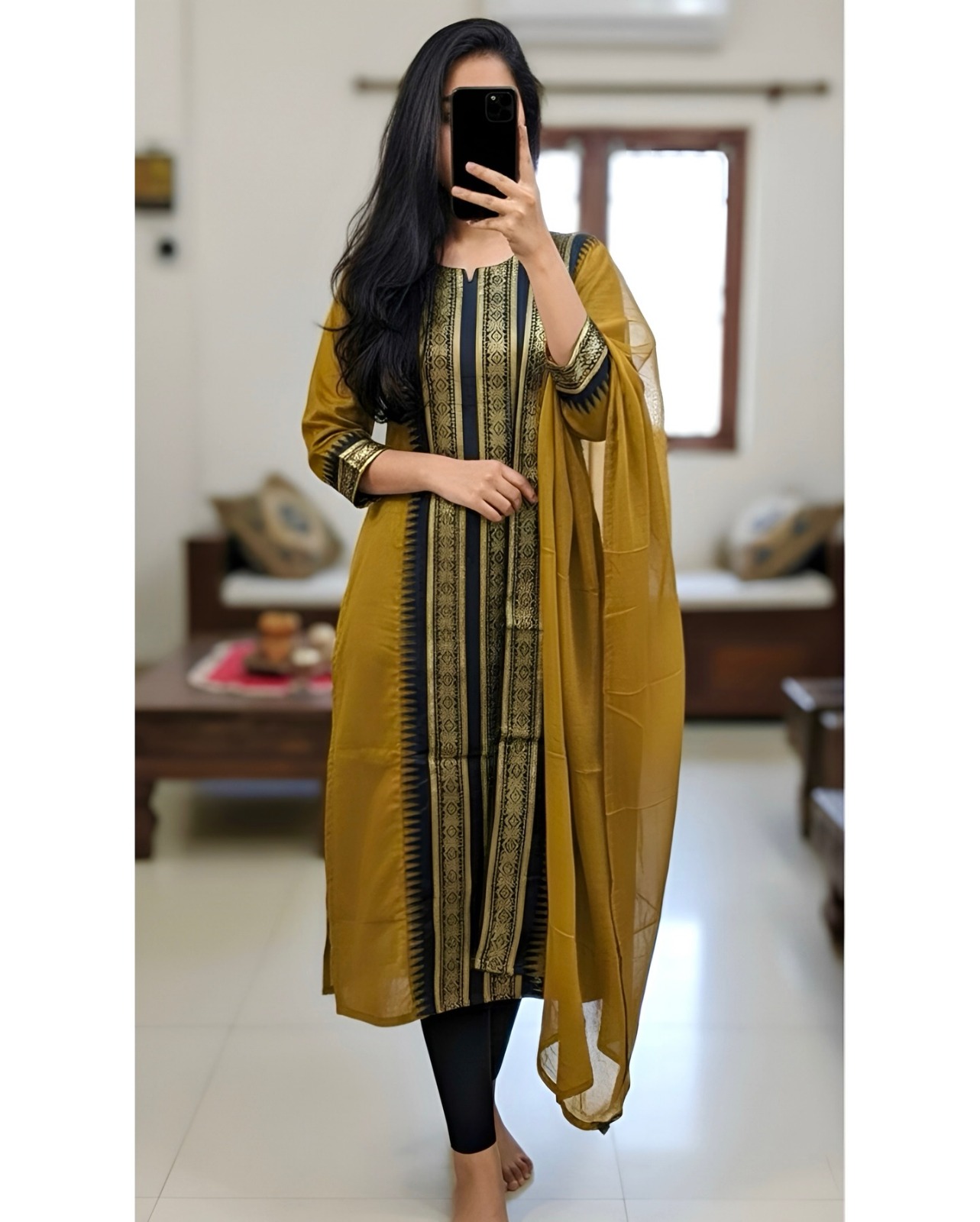
For a practical cotton outfit, Vertical Cotton Straight Kurta Set with Dupatta offers the kind of uncluttered vertical line that works under a structured jacket. A straight pant should typically finish at the ankle bone or slightly above it. A trouser that bunches over the foot interrupts the line and can make a jacket look shorter.
Palazzos
Palazzos suit cropped, waist-length and open-front jackets because their wide hem balances a shorter upper layer. Soft rayon, cotton and silk-blend palazzos create different effects: fluid rayon moves easily, cotton holds a more casual shape, and silk-blend fabric looks more formal. The waistband should sit flat, especially when a short jacket exposes it.
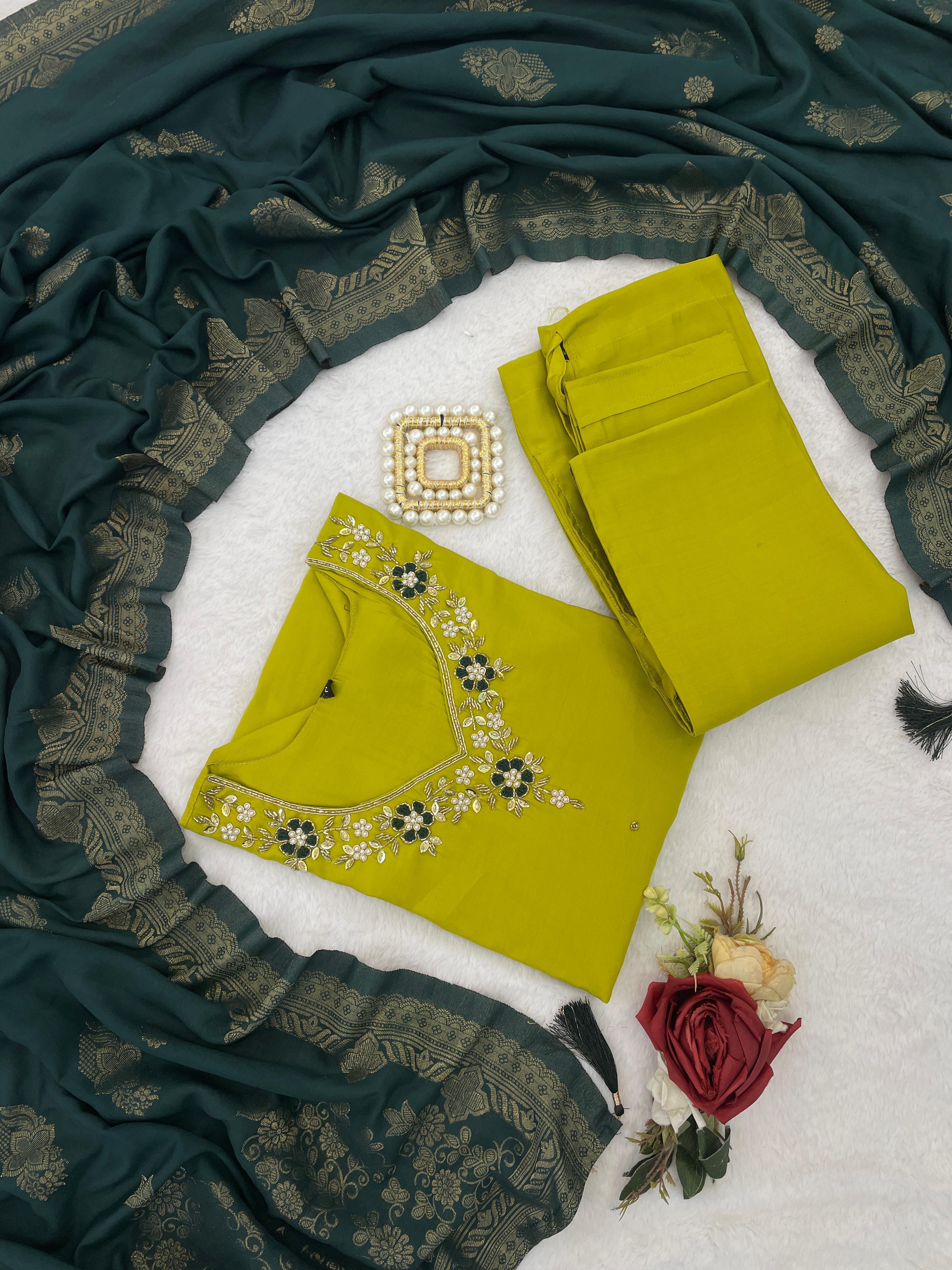
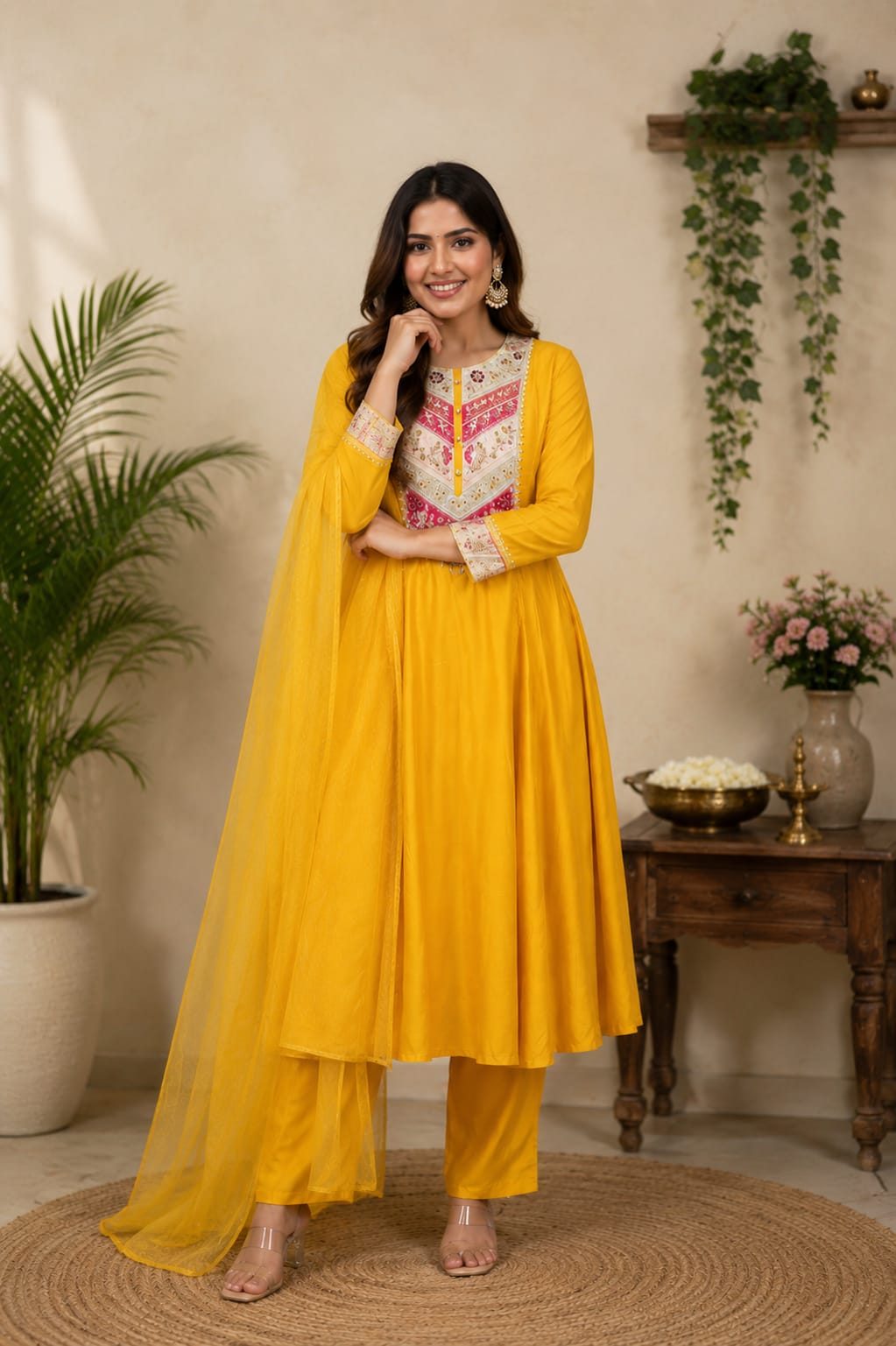
Keep the jacket and palazzo from competing for attention. If the jacket has dense embroidery or a woven pattern, choose a plain palazzo in a related tone. If the jacket is minimal, a printed or textured palazzo can supply the focal point. Mustard Embroidered Kurti Pant Dupatta Set Women shows how a coordinated pant can support surface detail without adding a separate competing print.
Sharara, salwar and churidar bottoms
Sharara bottoms create a festive silhouette with cropped or hip-length jackets, while salwars and churidars add traditional softness beneath shorter kurtis. A sharara needs enough space at the jacket hem to show the flare; a jacket ending exactly at the widest part of the sharara can make the hip area look broader.
Churidars work especially well with long jackets because the gathered ankle and fitted lower leg preserve a long vertical line. Salwars provide more volume around the upper leg and are better with shorter jackets or a kurta that has a strong side slit. Punjab Patiala Salwar Suits illustrates the fuller salwar proportion, which is most successful when the jacket doesn't add another large volume at the hip.
Bottoms Footwear and Lengths That Work With Jacket-style Kurtis for different heights
Height doesn't impose a fixed rule for jacket-style kurtis; proportion, hem placement and uninterrupted colour can create a balanced appearance for every body frame. The aim is to avoid accidental horizontal breaks at the widest part of the outfit.
For petite frames
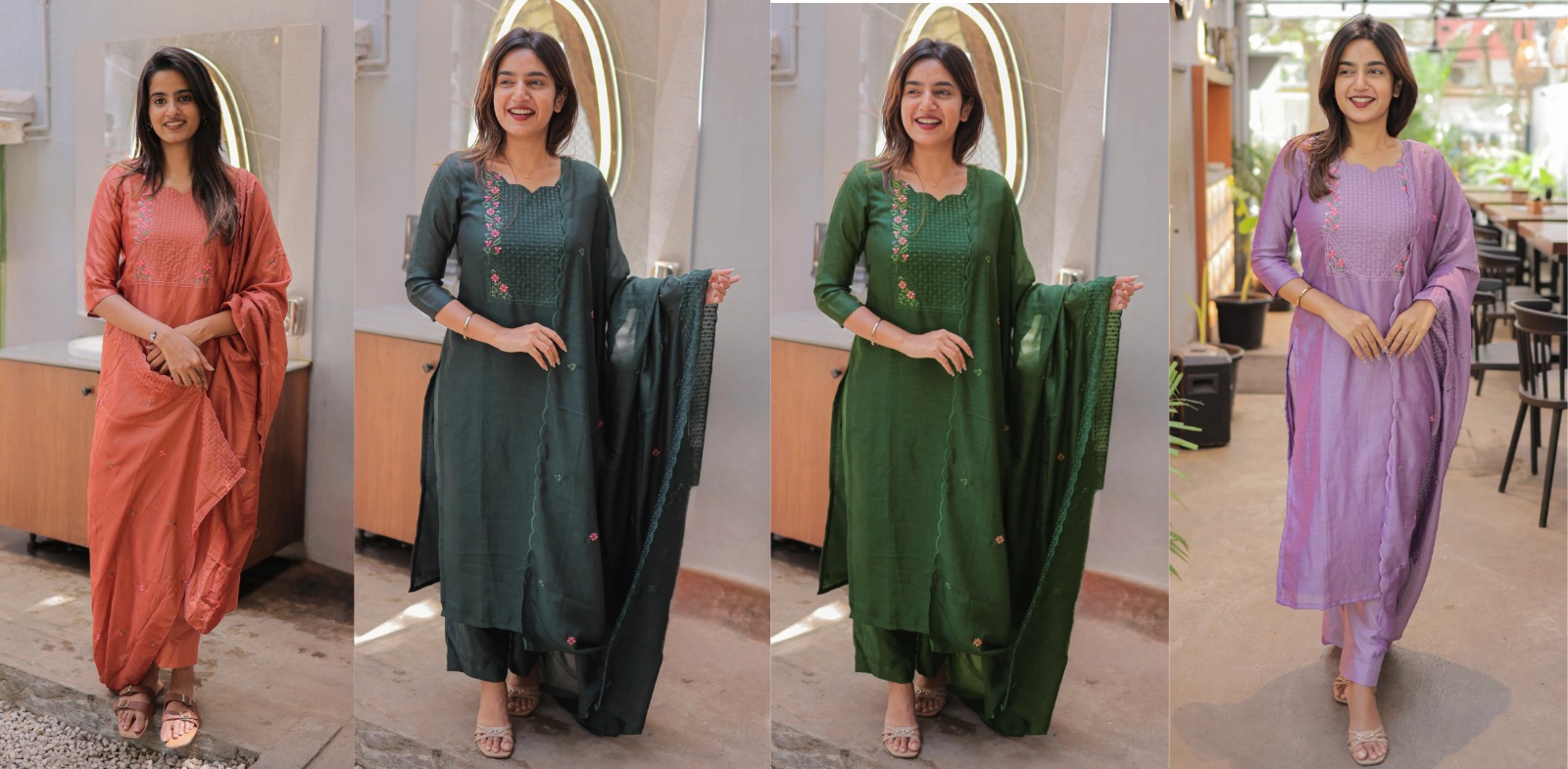
Petite wearers often benefit from a jacket that ends above the knee, a high-rise bottom and footwear that shows some of the foot. A monochrome kurta and trouser combination creates a longer uninterrupted column, while a cropped jacket adds structure without swallowing the frame. Avoid trousers that pool at the ankle or a jacket hem that ends at the broadest part of the calf.
A pointed flat, low wedge or sandal with a slim front strap can extend the visible foot line. A small heel of 2 to 3 inches is useful for festive dressing, but comfort matters more than height if the event involves standing. Maharashtra Paithani Inspired Salwar Suits can be styled with a narrow bottom when traditional-inspired colour and textile details already provide visual richness.
For taller frames
Taller wearers can carry longer jackets, wider palazzos and stronger hem contrasts with ease, but the outfit still needs an intentional break. A calf-length jacket over cigarette pants creates a refined vertical silhouette, while a cropped jacket over a floor-length palazzo gives a more dramatic proportion.
Flat juttis, embroidered mojaris and broad-strapped sandals work particularly well when a long frame doesn't need added height. A visible ankle or a contrasting shoe can make a long outfit feel grounded. Navy Kanchi Cotton Kurti Set with Woven Dupatta shows how a woven dupatta and a structured cotton base can be kept crisp with a simple straight bottom and flat footwear.
How to choose footwear with a jacket-style kurti
The best footwear matches the outfit's hem clearance, formality and bottom width. Shoes should support the length of the trouser rather than disappear under it or create an unrelated visual break.
- Juttis and mojaris: Juttis and mojaris suit straight pants, cigarette trousers and salwar suits for daytime gatherings, festive lunches and family functions. A pointed or almond-shaped toe looks sharper with a narrow trouser.
- Kolhapuri sandals: Flat leather or embellished Kolhapuris complement cotton kurtis, palazzos and handloom-inspired outfits. Kolhapuris pair naturally with Gujarat Bandhej Salwar Suits when the styling needs a relaxed regional character.
- Block heels: A 2- to 3-inch block heel supports palazzos and shararas by lifting the hem without making walking difficult. The shoe should be worn while measuring the trouser length.
- Wedges: Wedges work with longer palazzos and festive sets because they provide stable height. Avoid a wedge so tall that the trouser hem hovers conspicuously above the foot.
- Strappy sandals: Slim sandals keep a cropped or ankle-length bottom light. Metallic gold, silver or tan can bridge a printed jacket and a plain bottom without introducing another strong colour.
- Low-profile sneakers: Clean white or neutral sneakers can work with a short jacket, straight pant and cotton kurta for casual urban dressing. Bulky athletic shoes are harder to balance with a flowing ethnic jacket.
Check the shoe and hem together in a mirror. The trouser should either skim the top of the foot, finish neatly at the ankle or fall close to the floor with a heel; a mid-length hem that catches on the shoe often looks accidental and becomes inconvenient while walking.
Proportion formulas for work, daytime and festive dressing
For office dressing, combine a hip-length or knee-length jacket with straight pants, a low-contrast inner kurta and closed juttis or low block heels. Vertical Cotton Straight Kurta Set with Dupatta can inform this approach because a clean straight base leaves room for a lightly structured jacket without overwhelming a professional wardrobe.
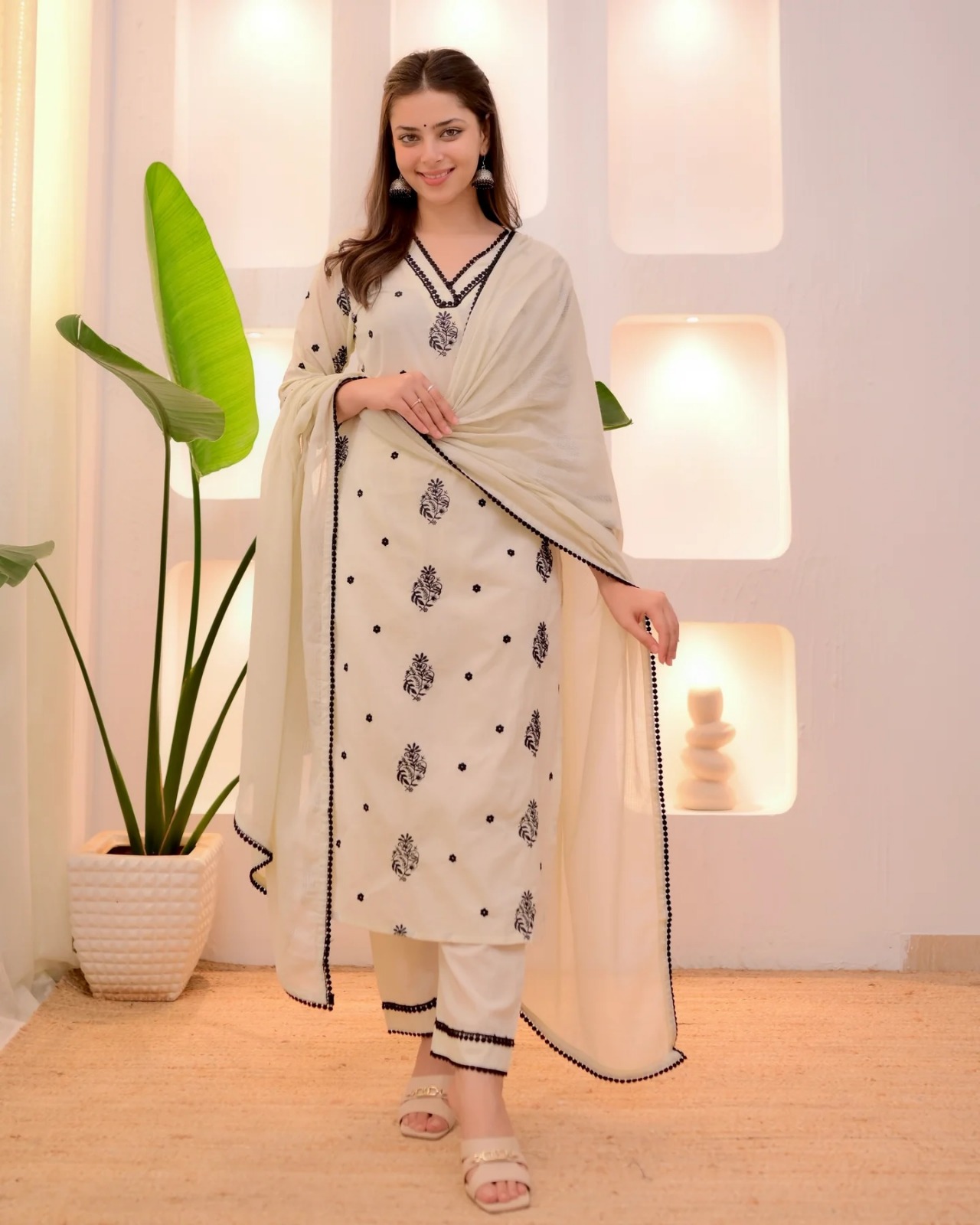
For a daytime family gathering, pair a short cotton jacket with a palazzo or ankle-length straight pant and flat Kolhapuri sandals. Kanchi Cotton Woven Kurta Pant Dupatta Set supports a breathable, woven-texture direction, while a small shoulder bag and restrained jewellery keep the outfit practical for movement.
For a festive evening, use a knee-length jacket with cigarette pants, a 2- to 3-inch block heel and one prominent accessory. Zari, jacquard and embroidery already reflect light, so a plain trouser and a controlled dupatta drape usually look more elegant than several competing embellishments.
For a wedding or reception, a cropped jacket with a sharara can create the most dramatic proportion. Mustard Kanchi Cotton Kurti Set with Zari Dupatta brings an useful colour-and-texture direction for festive styling. But the footwear should still be selected according to the hem: a stable heel is safer than a very high stiletto when the garment is full and mobile.
For a regional textile-inspired look, combine a simple bottom with the strongest textile element in the outfit. Kalamkari Print Salwar Suits, Odisha Sambalpuri Salwar Suits and Gujarat Bandhej Salwar Suits each suggest a print-led approach in which the jacket or dupatta remains the focal point and the footwear stays relatively quiet.
Fitting and alteration checks before wearing the outfit
A jacket-style kurti outfit needs three fitting checks: shoulder placement, jacket overlap and trouser clearance. A jacket that pulls across the bust or opens unexpectedly changes the intended vertical line, while a trouser that's too long can create folds beneath the outer layer.
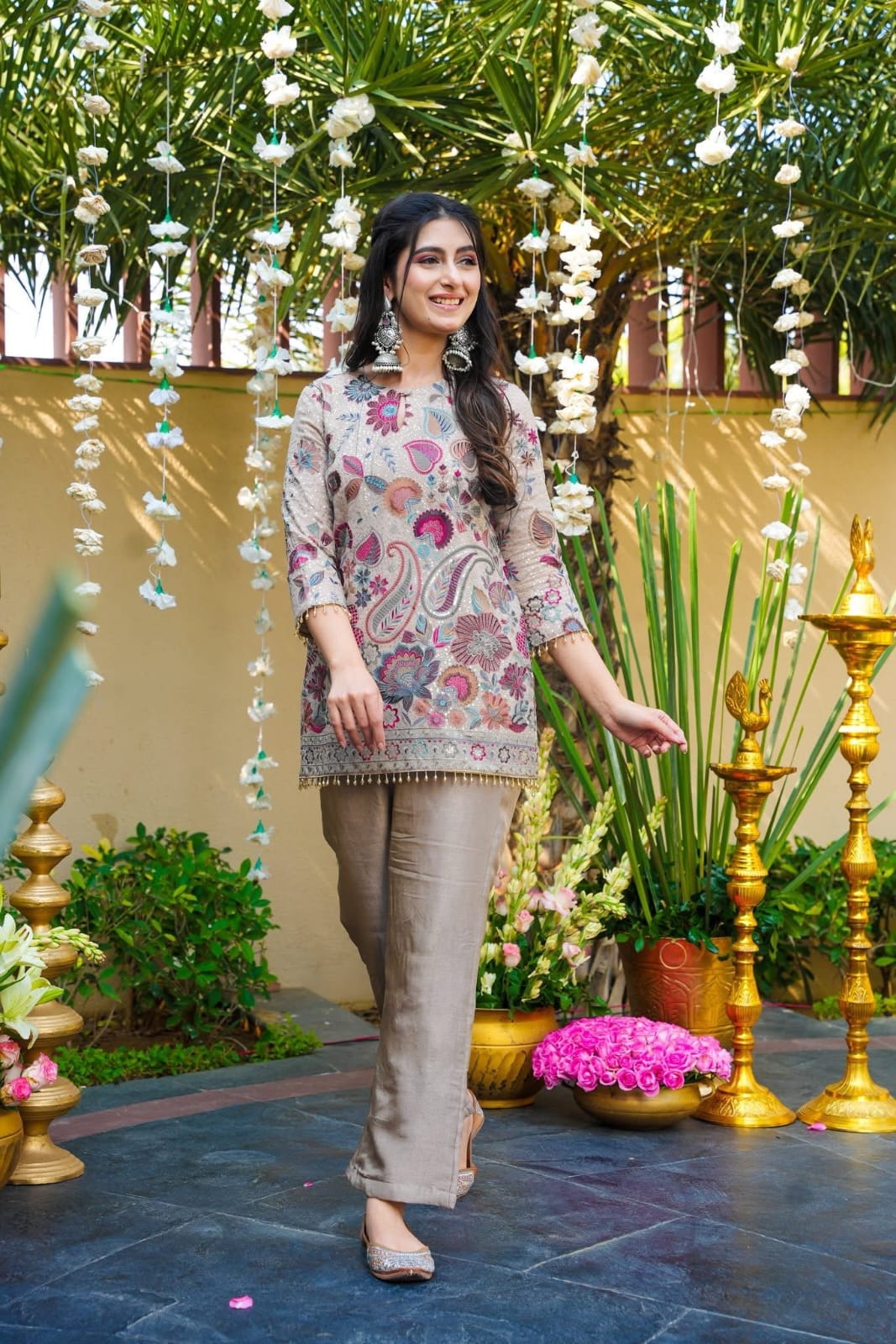
Stand naturally in the footwear you expect to wear and measure from the waistband to the desired hem. For ankle pants, allow the hem to finish around the ankle bone; for full-length palazzos, allow the hem to skim the top of the foot without touching the floor. A tailor can usually correct trouser length, but changing a jacket hem can alter its embroidery, border placement or overall proportion.
Check the outfit while sitting, climbing stairs and raising both arms. A long jacket should not catch beneath the heel, and a wide palazzo should not sweep across the floor. If a dupatta is included, pin it temporarily before judging the silhouette because the added diagonal line can change how wide or long the outfit appears.
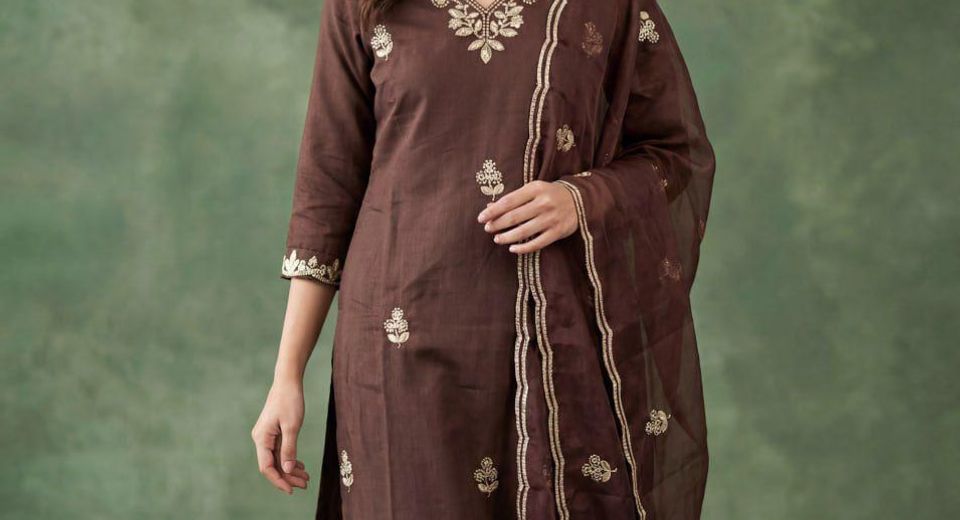
Brown Embroidered Cotton Kurta Pant Dupatta Set Women demonstrates why texture and surface detail should be considered alongside fit. Embroidery adds visual weight even when the fabric is breathable, so a narrow pant and uncomplicated footwear can prevent the complete look from becoming dense.
A simple decision rule for choosing the final combination
Choose the bottom first by asking where the jacket ends, then choose footwear by asking where the bottom ends. A short jacket can support a wider palazzo or sharara; a long jacket usually needs a narrow or straight bottom. A full-length bottom requires shoes that provide enough lift to keep the hem clean, while an ankle-length bottom works with flats when the finishing point is deliberate.
- Measure the jacket: Note whether the layer finishes at the waist, hip, knee, calf or ankle.
- Match the volume: Balance a voluminous jacket with a narrow bottom, or balance a short fitted jacket with a palazzo or sharara.
- Mark the hem: Decide whether the trouser will finish at the ankle, skim the instep or fall near the floor.
- Put on the footwear: Measure and pin the bottom while wearing the actual juttis, sandals, wedges or heels.
- Check movement: Walk, sit and turn before finalising the combination.
These five checks make jacket-style salwar suits easier to style across cotton, Roman silk, jacquard, zari and printed fabrics. The most polished outfit is rarely the one with the most pieces; it's the one where jacket length, bottom volume and footwear height appear to have been chosen together.
Common Questions About Jacket-style Kurti Proportions
Which bottom should I wear with a long jacket kurti?
A long jacket kurti usually works best with cigarette pants, slim straight trousers or a fitted churidar. A narrow bottom preserves the jacket's vertical line and prevents excess volume around the hips and ankles.
Can I wear a palazzo with a jacket-style kurti?
Yes, palazzos work particularly well with cropped, waist-length and open-front jackets. Choose a controlled, ankle-length or full-length palazzo and keep either the jacket or the bottom relatively simple so both pieces do not compete.
What footwear looks best with a jacket kurti and palazzo?
Block heels, wedges, slim sandals and embellished juttis are reliable choices with a jacket kurti and palazzo. Wear the footwear while checking the hem so the palazzo skims the foot without dragging or sitting visibly too high.
What kurti length suits a petite woman?
A jacket that ends above the knee or around the hip often suits a petite frame better than a floor-length layer. A high-rise bottom, visible ankle and low wedge or pointed flat can create a longer uninterrupted line.
Can I wear flat footwear with a long jacket-style kurti?
Flat juttis, mojaris and sandals work with a long jacket-style kurti when the bottom is ankle-length or has enough clearance above the floor. Floor-length palazzos and shararas may need a low block heel or wedge to prevent dragging.
How do I choose a bottom for an embroidered jacket kurti?
Pair an embroidered jacket with a plain straight pant, cigarette trouser or softly shaped palazzo in a related colour. A simple bottom allows the embroidery, zari or woven detail to remain the main visual focus.


