

Angrakha kurtis bring movement to an outfit through their diagonal overlap, side tie or wrap-style front. The right styling depends less on adding decoration and more on controlling proportion from shoulder to shoe. Bottoms Footwear and Lengths That Work With Angrakha Kurtis can help you decide whether a flowing palazzo, tapered pant, churidar or salwar will support the shape without competing with it. A few measurable rules, such as keeping a long kurti above the ankle and matching shoe volume to hem volume, make the choice easier.
Why Angrakha proportions need a deliberate bottom
An Angrakha kurti usually has visual emphasis at the front overlap and waist, so the bottom should either create a clean vertical line or add controlled volume below the hip. The diagonal neckline and tie naturally draw the eye across the torso. A highly gathered or heavily printed bottom can interrupt that direction, especially when the kurti already includes embroidery, tassels or a contrasting border.
A simple proportion check is useful before dressing. If the kurti ends near the knee, the outfit can carry either a narrow bottom or a moderate-width palazzo. If the kurti reaches mid-calf, a slim pant, churidar or straight trouser usually prevents the lower half from looking crowded. If the kurti is ankle length, visible footwear becomes more important because only a small section of the shoe will show.
Fabric weight also changes the visual result. Cotton Angrakha kurtis hold a clearer outline and work well with cotton pants, cigarette trousers and narrow salwars. Chanderi, Roman silk and georgette create more movement, so a fluid palazzo or softly draped salwar can echo the fabric without making the outfit look stiff.
Bottoms Footwear and Lengths That Work With Angrakha Kurtis
The most reliable combination is a kurti length and bottom width that create one uninterrupted shape from the waist to the ankle. Knee-length Angrakha kurtis suit cigarette pants, straight pants, churidars and medium-width palazzos. Calf-length Angrakha kurtis are easiest to balance with narrow trousers or a fitted churidar. Long Angrakha kurtis generally need a slim bottom unless the garment is deliberately cut as a full Anarkali-style set.
Knee-length Angrakha kurtis
Knee-length Angrakha kurtis pair well with cigarette pants, ankle-length trousers and lightly tapered salwars. A trouser ending 2 to 5 centimetres above the ankle bone gives space for juttis, kolhapuris or low block heels. A narrow bottom also keeps the side tie and diagonal wrap visible rather than allowing a wide hem to compete with them.
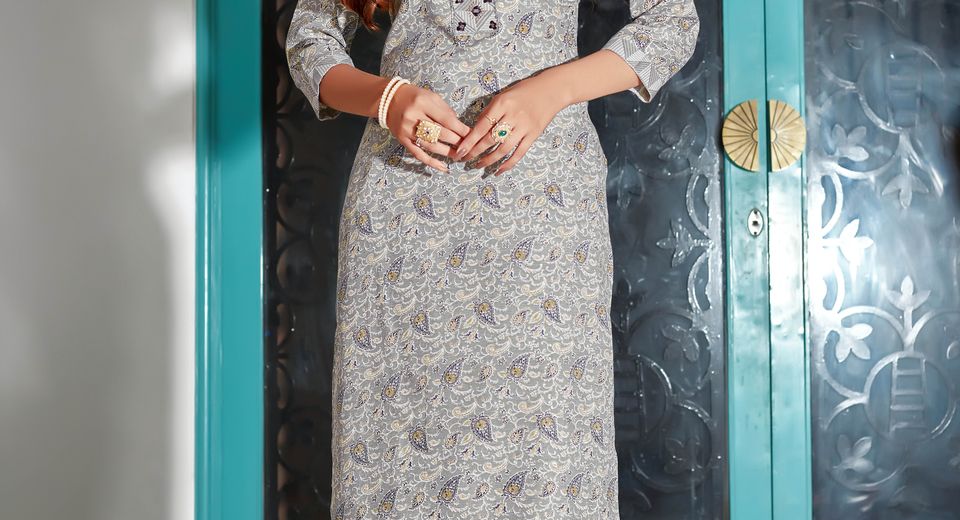
The Grey Printed Cotton Kurti Pant Set for Women Daily Wear demonstrates why a coordinated pant works for practical dressing: a structured cotton bottom supports movement while keeping the outfit visually neat. A similar proportion suits a printed Angrakha kurti, especially when the print is medium-sized rather than oversized.
Mid-calf Angrakha kurtis
Mid-calf Angrakha kurtis look most balanced with slim churidars, cigarette pants or straight trousers that finish close to the ankle. A gap of roughly 3 to 7 centimetres between trouser hem and footwear is usually enough to prevent the legs from appearing shortened. Flat juttis and pointed-toe mojaris extend the visual line, while a broad ankle strap can divide it.
The Vertical Cotton Straight Kurta Set with Dupatta offers an useful reference for everyday proportion because a straight, vertical silhouette benefits from a clean lower edge. When adapting that idea to an Angrakha kurti, choose a bottom with limited pleating and let the wrap detail remain the main point of movement.
Ankle-length and Anarkali-style kurtis
Ankle-length Angrakha kurtis need either a narrow bottom that disappears beneath the hem or a deliberately full skirt-like lower shape. A slim churidar works when the kurti has a side slit or enough movement to reveal the ankle. A wide palazzo under a long, flared Angrakha can look heavy unless both pieces are made from light fabric and the kurti has substantial flare.
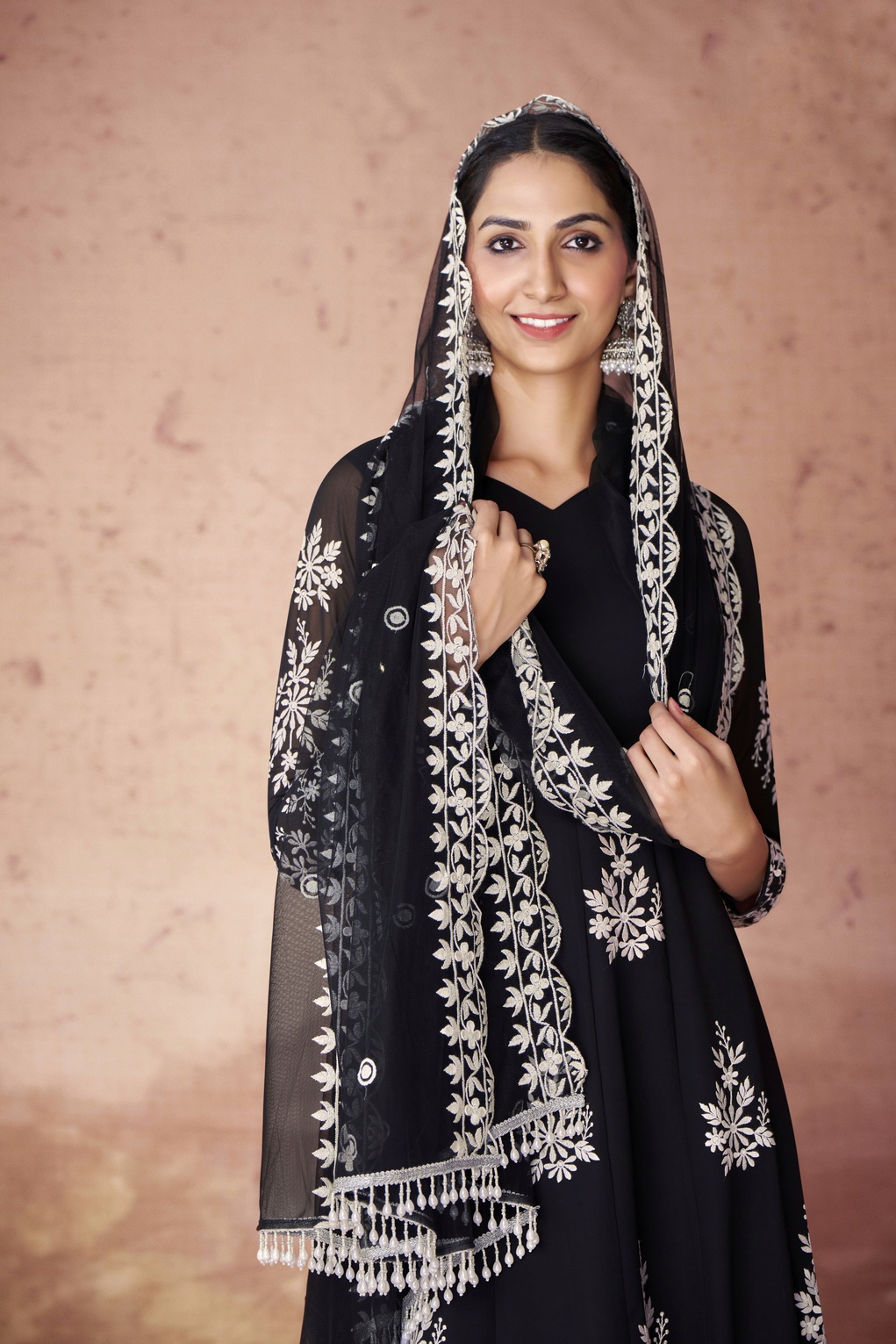
The Black Anarkali Kurta Set With Georgette Pants shows how a long, festive silhouette can be grounded by a fluid but controlled pant. Georgette pants move with the flare without creating the rigid break that a thick, wide trouser might produce. A similar approach suits a long Angrakha with georgette, chiffon or lightweight silk elements.
Choosing between salwar, pants, palazzos and churidars
Choose the bottom according to the Angrakha kurti's flare, fabric and occasion: salwars add traditional volume, pants provide a sharper line, palazzos create relaxed movement, and churidars keep long silhouettes visually narrow. No single bottom works equally well with every wrap-style kurti.
Salwars for a classic silhouette
Salwars suit short or medium-length Angrakha kurtis when the outfit benefits from softness around the hips and knees. The gathered fabric should not begin too high, or it can make the torso appear shorter. A salwar with moderate pleats is more versatile than an extremely full Patiala under a heavily embellished kurti.
Punjab Patiala Salwar Suits provide the clearest heritage example of a voluminous bottom. Patiala volume works best when the upper garment is comparatively short, the waist is well defined and the footwear remains simple. A low embroidered jutti or plain leather mojari prevents the lower half from becoming visually overloaded.
Pants for polished everyday dressing
Straight pants and cigarette pants are the safest choices for office-friendly or easy everyday Angrakha styling. Pants create a vertical line, accommodate walking and sitting, and work with both flats and small heels. A cotton kurti can take a structured cotton pant, while a silk-blend or Chanderi kurti usually looks better with a softer trouser finish.
The Brown Embroidered Cotton Kurta Pant Dupatta Set Women illustrates the practical strength of a coordinated pant: embroidery can remain the focal point while the lower half stays calm. Pairing an Angrakha kurti with a solid pant in a colour taken from the print is generally more effective than adding a second competing pattern.
Palazzos for movement and summer comfort
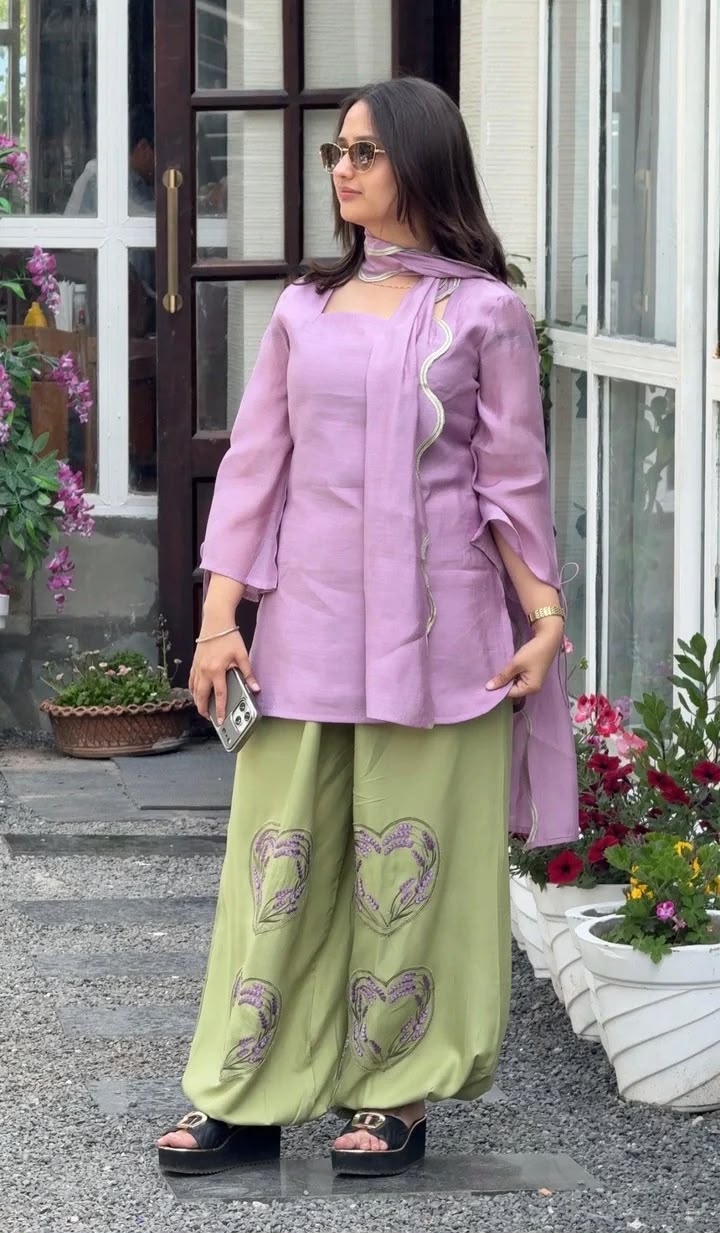
Palazzos work with Angrakha kurtis when the kurti is short to mid-length, the fabric is lightweight and the palazzo waistband sits smoothly under the wrap detail. A 25 to 35 centimetre difference between the kurti hem and the floor usually leaves enough room for the wide leg to be seen. Flat sandals or low wedges complement the relaxed line.
Palazzos need careful handling with very long kurtis. A long, wide kurti over a wide palazzo can erase the waist and make both pieces look like one large block. If both garments are fluid, choose a stronger colour contrast or add a narrow belt only when the kurti's construction allows it without distorting the tie.
Churidars for long and festive kurtis
Churidars are especially effective beneath long Angrakha kurtis because the gathered ankle creates a narrow finish. The extra fabric should form small, comfortable folds rather than tight rings that restrict movement. Churidars made from stretch cotton or a flexible blend are easier to wear for several hours than rigid fabric versions.
Festive pieces such as the Designer Roman Silk Kurti Set with Jacquard Dupatta benefit from a refined, narrow bottom when the dupatta and kurti already bring sheen and surface detail. A plain churidar or sleek cigarette pant allows Roman silk and jacquard texture to remain legible.
Footwear that completes the silhouette
Footwear should echo the outfit's level of formality and preserve the vertical line created by the kurti and bottom. Juttis and mojaris suit time-honoured salwars, kolhapuris work with cotton and relaxed palazzos, sandals keep summer outfits light, and block heels support long festive silhouettes without the instability of very thin heels.
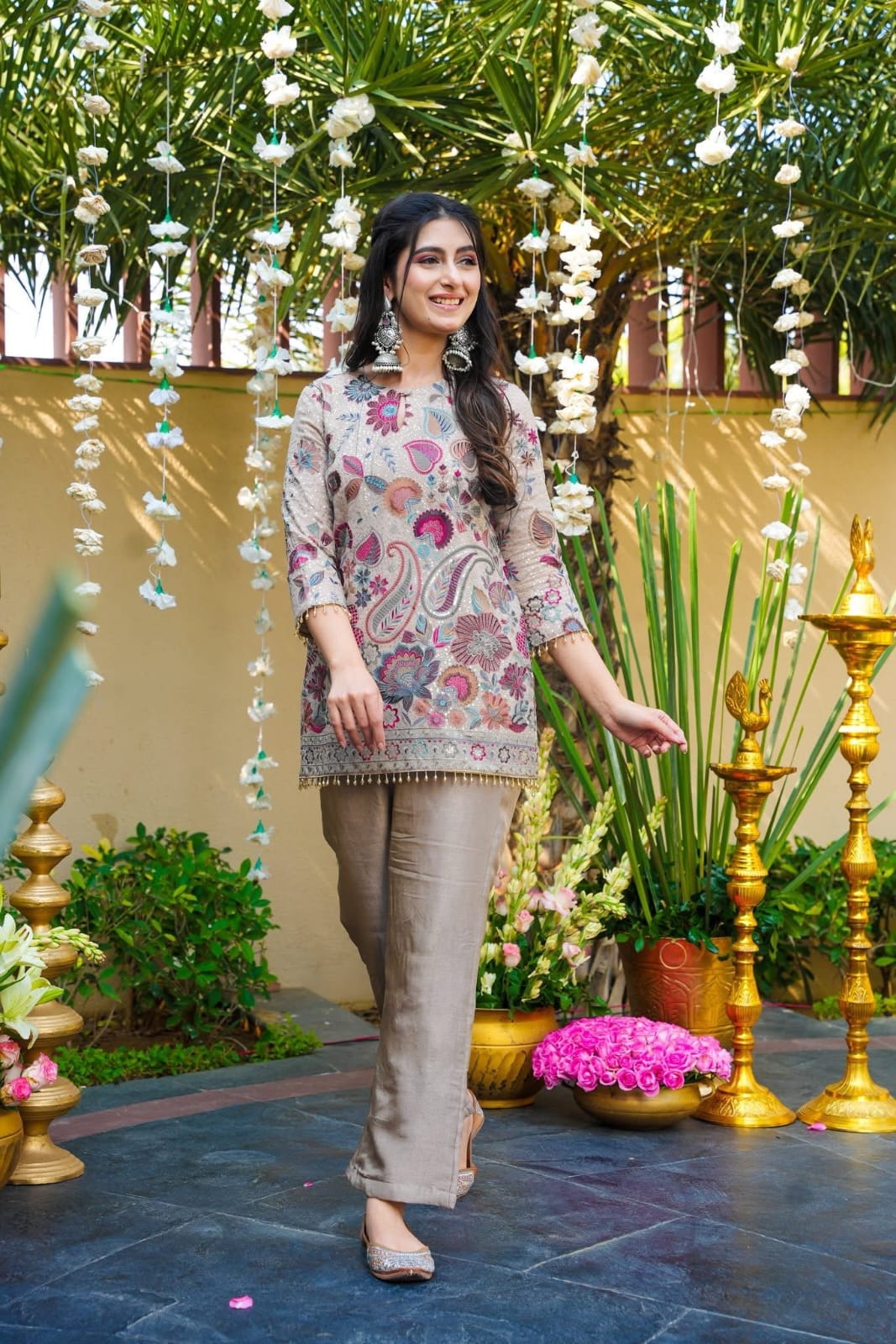
Flat juttis are a strong choice for printed cotton, Kalamkari-inspired patterns and moderate-length kurtis. A pointed or slightly elongated toe makes the leg appear longer than a very rounded toe. Embroidered juttis work best when the kurti has restrained surface detail; otherwise, plain leather or textile flats create better balance.
Kolhapuri sandals pair naturally with cotton and handloom-inspired outfits because their open construction keeps the lower half visually light. Kalamkari Print Salwar Suits and Odisha Sambalpuri Salwar Suits can both take tan, brown or muted metallic kolhapuris, depending on the base colours in the textile. Avoid pairing a very ornate metallic sandal with an already dense print unless the event calls for deliberate maximalism.
Low block heels are useful with mid-calf and ankle-length kurtis because they add height without creating a severe contrast between a heritage outfit and a formal shoe. A 3 to 5 centimetre heel is usually sufficient for comfort at a family gathering. Block heels also support wide palazzos more securely than narrow stilettos.
Metallic sandals suit silk, zari and evening embroidery, but the metal tone should connect with the garment. Gold footwear complements warm mustard, rust and maroon; silver or pewter works with cool blue, grey and black. The Pastel Blue Embroidered Chanderi Kurta Set with Dupatta can take silver-toned flats or a pale gold sandal, depending on the embroidery colour.
Matching kurti length to height and body proportion
Kurti length should be chosen by the point where the hem lands, not only by a standard size label. A hem at the widest part of the calf can visually broaden that area, while a hem just below the knee or closer to the ankle often creates a cleaner line. Trying the kurti with the intended shoes is more accurate than judging the length barefoot.
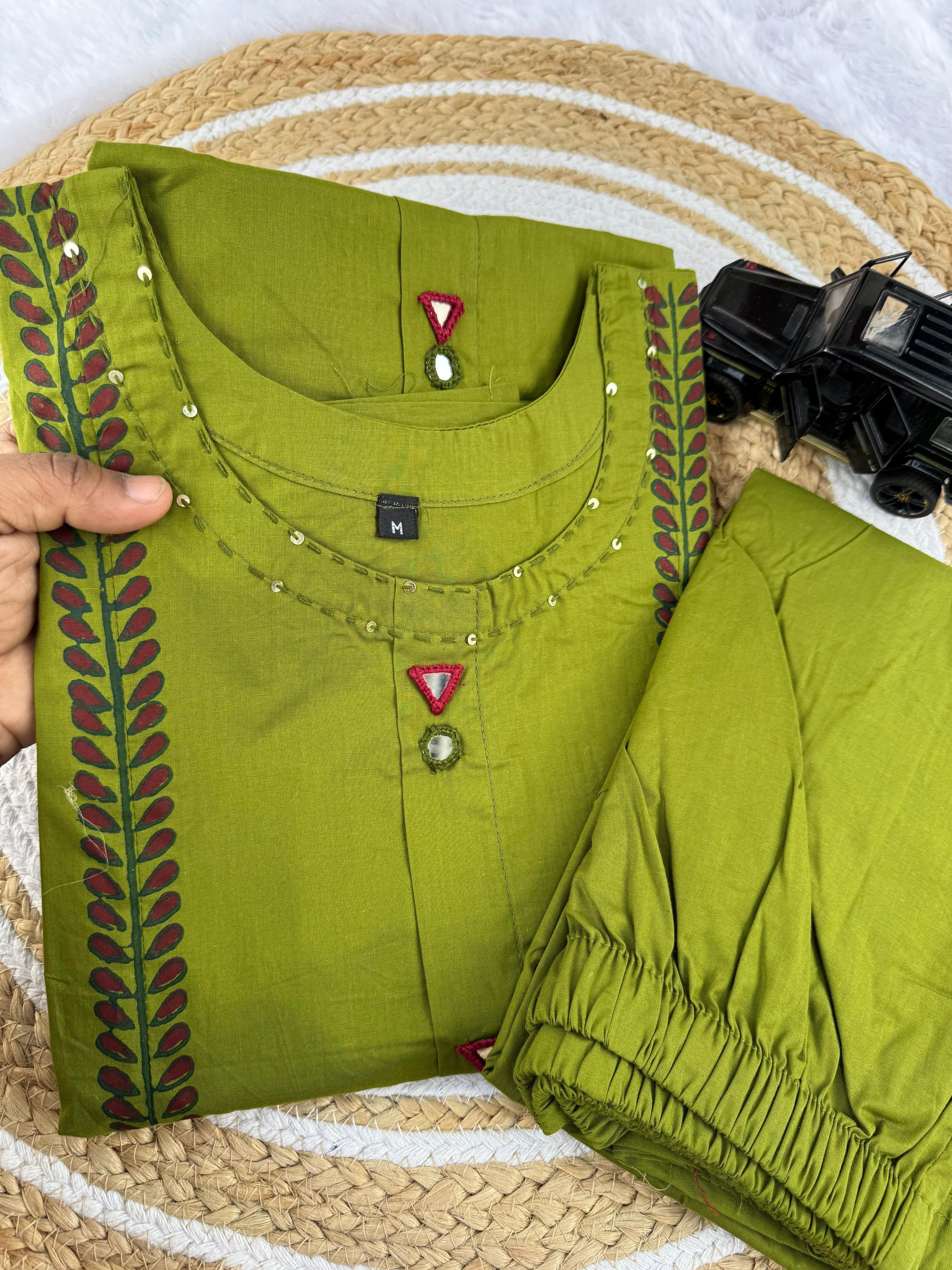
Petite wearers often benefit from knee-length or slightly longer kurtis with narrow bottoms and low-profile footwear. A monochrome or low-contrast bottom prevents the outfit from being divided into too many horizontal sections. A pointed jutti, small wedge or footwear close to the trouser colour can add visual continuity without requiring a high heel.
Taller wearers can carry mid-calf and ankle-length Angrakha kurtis, broader palazzos and more substantial footwear. A contrast-colour pant can be used intentionally when the kurti has a clean hem and the shoe shares a colour with either the pant or the dupatta. Very long, loose layers still need waist definition through the wrap, side tie or a carefully placed dupatta.
For fuller hips, a gently draped salwar or straight pant can feel more comfortable than a very tight cigarette trouser. The important detail is the position of the waistband: the waistband should sit flat beneath the Angrakha overlap without pulling across the tie. For a straighter body line, moderate pleats or a softly flared palazzo can add movement below the waist.
Using colour, print and fabric to keep the outfit balanced
Colour continuity creates a longer silhouette, while contrast draws attention to the bottom and footwear. A solid bottom in a shade taken from the Angrakha print is the safest option for busy motifs. A contrasting bottom works when the kurti has a simple surface and the footwear repeats one of the two main colours.
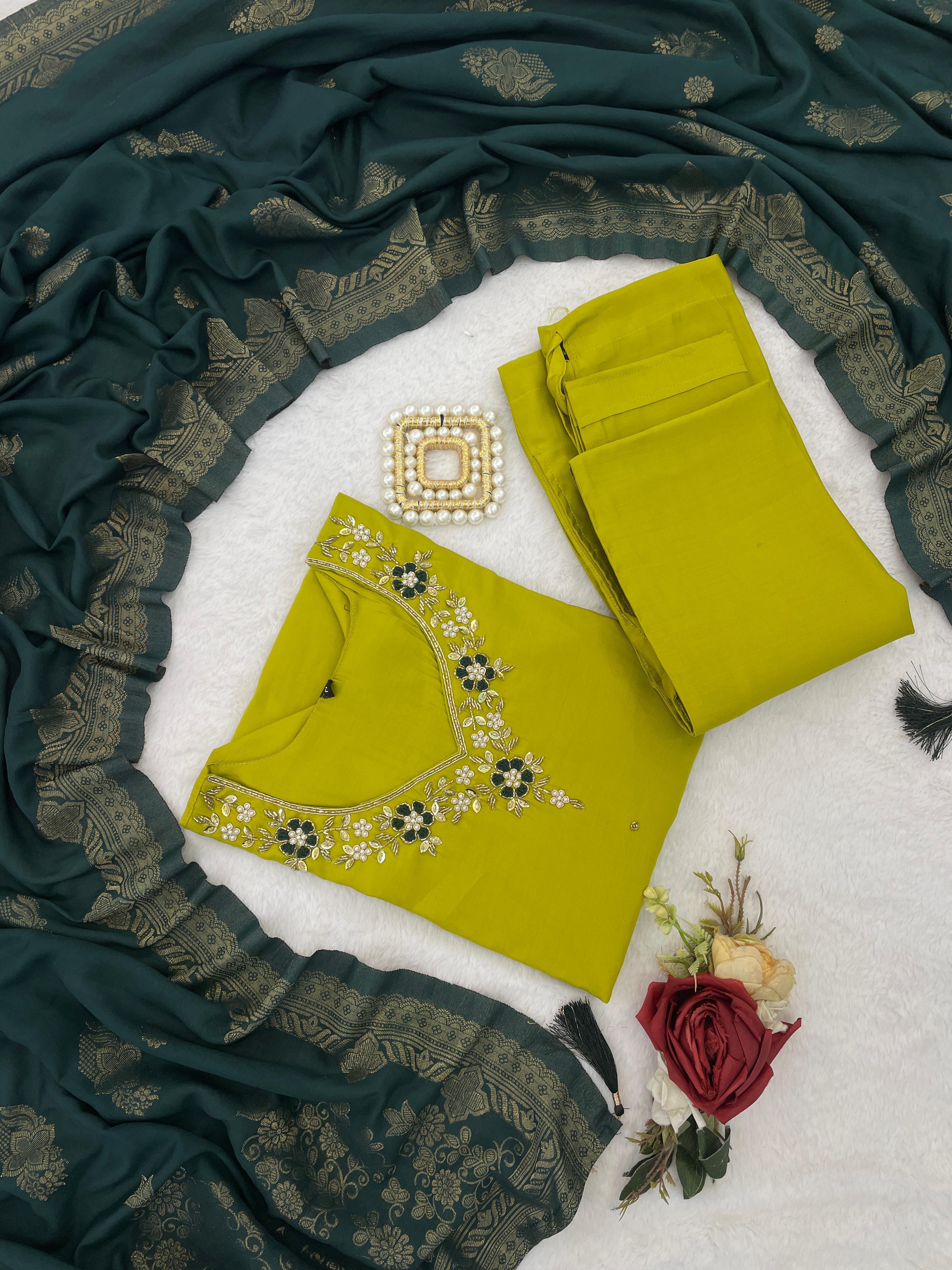
Chanderi and silk blends often benefit from matte bottoms because the difference in texture gives the outfit depth. A shiny kurti, zari border and metallic shoe can become excessive when the bottom also has a reflective finish. The Black Zari Sequins Embroidered Anarkali Suit Set | Varnavi! Demonstrates why evening embellishment is usually best paired with a quieter lower half and a shoe with controlled sparkle.
Regional design references can guide rather than dictate styling. Maharashtra Paithani Inspired Salwar Suits often suggest jewel-toned footwear and a more formal bottom, while Gujarat Bandhej Salwar Suits can take earthy kolhaporis, embroidered juttis or simple sandals. A regional print doesn't require a costume-like pairing; proportion and comfort remain the deciding factors.
Dupatta placement also affects the bottom choice. A dupatta worn over one shoulder leaves the Angrakha overlap visible and supports a cleaner pant or churidar. A dupatta wrapped around the torso adds volume near the waist, so a very gathered salwar or wide palazzo may make the entire outfit appear broader. Keep one area visually generous and the other relatively controlled.
A practical fitting and styling checklist
Check the shoulder, wrap and hem before deciding that an Angrakha outfit is complete. The shoulder seam should sit near the shoulder edge, the inner tie should hold the overlap securely, and the outer tie should not pull the fabric into diagonal wrinkles. The bottom waistband should lie flat when sitting and walking.
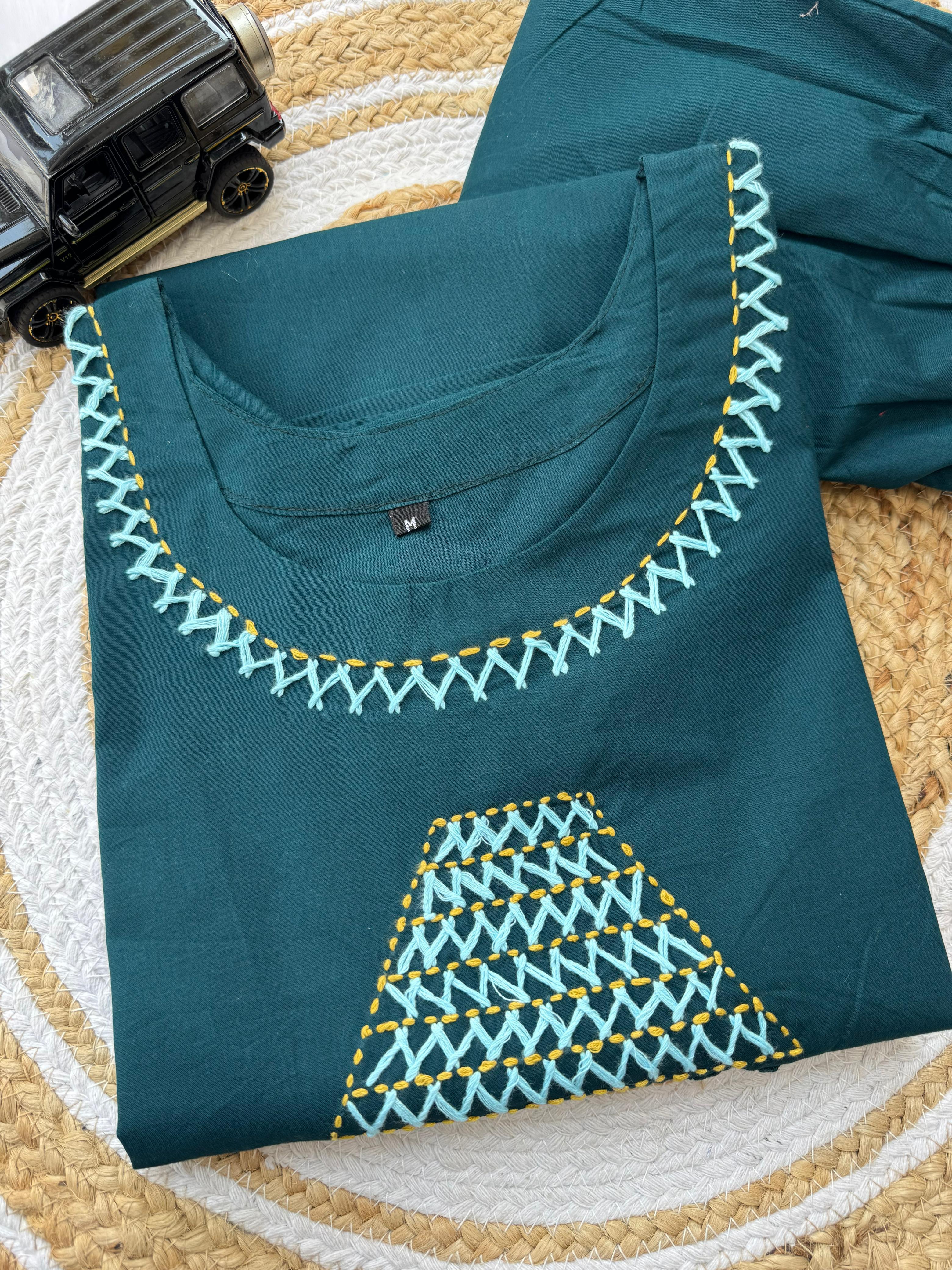
Measure the kurti hem from the floor while wearing the intended footwear.
Check whether the bottom leaves approximately 3 to 7 centimetres of ankle visibility when the kurti is mid-calf.
Choose a narrow bottom for a long or highly flared kurti unless the full-volume silhouette is intentional.
Match shoe volume to the garment: delicate sandals for light fabrics and stronger juttis or block heels for dense festive fabrics.
Walk, sit and raise both arms before wearing the outfit outside, because a side tie can loosen during movement.
Use a breathable cotton lining or a smooth inner layer when a textured bottom rubs against the legs.
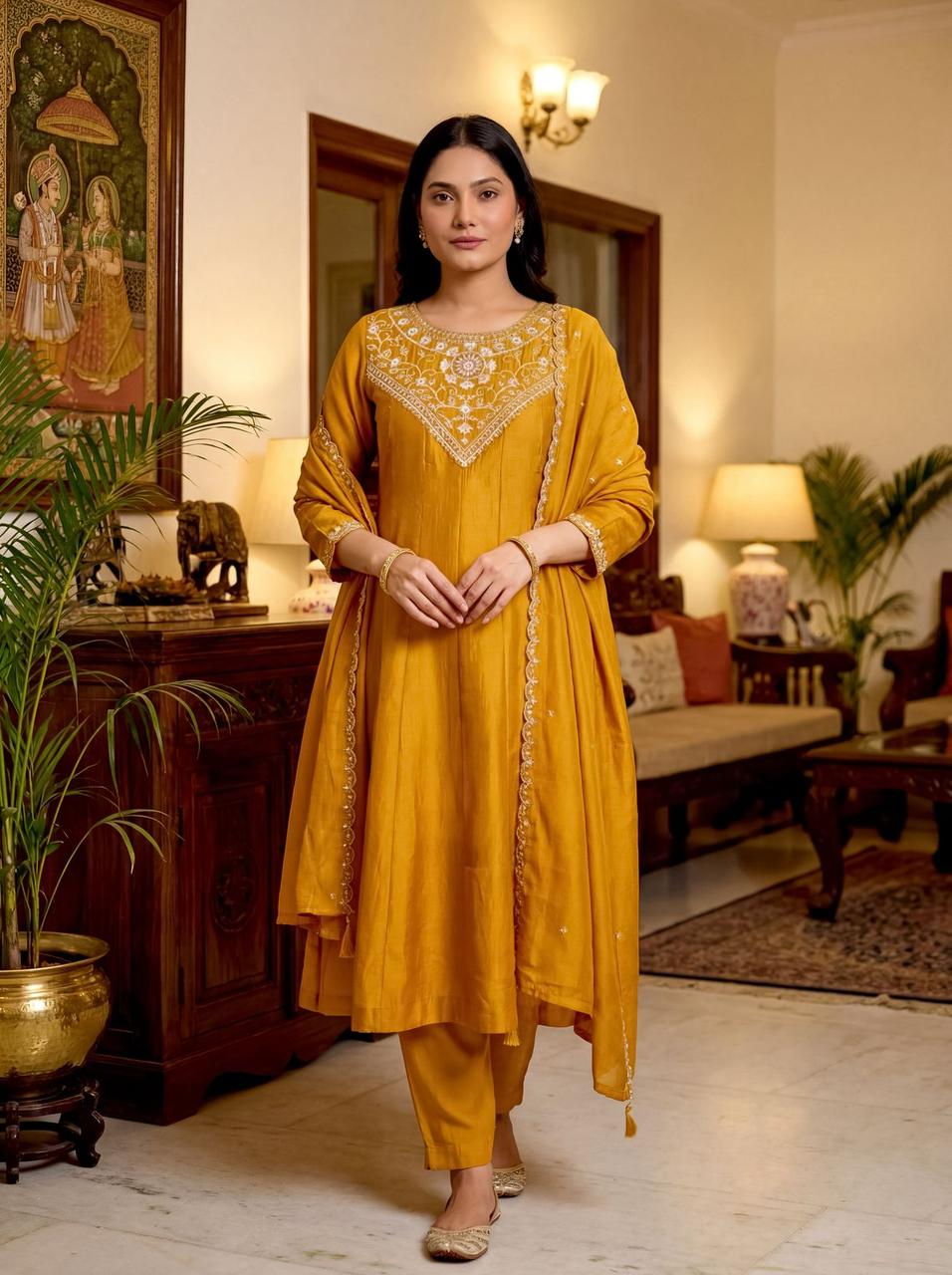
These checks are especially useful when comparing ready-made sets with separate pieces. A set such as the Mustard Embroidered Chanderi Kurta Set for Women - Varnavi. Already establishes a coordinated relationship between kurta, bottom and dupatta, while a separately purchased Angrakha kurti gives more freedom but requires closer attention to hem, colour and fabric weight.
Putting the combinations together for real occasions
For daily errands, choose a cotton Angrakha kurti with straight pants, a flat kolhapuri and a compact crossbody bag. For work, use a knee-length kurti with cigarette pants, closed juttis and restrained jewellery. For a family lunch, a mid-calf Chanderi Angrakha with a narrow salwar or soft palazzo and a low block heel gives movement without excessive formality.
For a Haldi ceremony, breathable cotton, a moderate-width palazzo and comfortable embroidered flats are practical because the event often involves standing and movement. For an evening reception, Roman silk, zari or sequins can be paired with a slim pant, a 3 to 5 centimetre block heel and a dupatta kept away from the feet. For a festive gathering inspired by Odisha Sambalpuri or Gujarat Bandhej dressing, let the textile provide the statement and keep the footwear shape uncomplicated.
The strongest Angrakha outfits usually have one clear focal point. The wrap can lead, the dupatta can lead, or the embroidery can lead, but the bottom and footwear should support that decision. When the hem, trouser width and shoe height work together, even a simple salwar suit looks considered, comfortable and proportionate.
Common Questions About Angrakha Kurti Lengths, Bottoms and Shoes
Which bottom looks best with an Angrakha kurti?
Cigarette pants, straight pants and churidars are the most versatile bottoms because they keep the diagonal wrap visible and create a clean vertical line. Moderate-width salwars and palazzos also work with short to mid-length Angrakha kurtis when the fabric is lightweight.
Can I wear a palazzo with a long Angrakha kurti?
A palazzo can work with a long Angrakha kurti only when both pieces are lightweight and the kurti has enough flare or contrast to prevent a heavy block-like shape. A slim trouser or churidar is usually easier to balance with an ankle-length Angrakha.
What footwear goes with an Angrakha kurti and salwar?
Juttis, mojaris and low block heels pair well with an Angrakha kurti and salwar. Kolhapuri sandals suit cotton and relaxed daytime outfits, while metallic flats or block heels are better for silk, zari and evening embroidery.
What kurti length is most flattering with cigarette pants?
A knee-length or mid-calf Angrakha kurti usually works best with cigarette pants. The trouser hem should finish near the ankle, with roughly 3 to 7 centimetres of visible space before the kurti or footwear creates the next visual line.
How should petite women style a long Angrakha kurti?
Petite women can style a long Angrakha kurti with a narrow churidar or slim trouser and low-profile footwear in a related colour. Avoid excessive contrast between kurti, bottom and shoes because several horizontal divisions can make the silhouette appear shorter.
Can Angrakha kurtis be worn for office dressing?
Angrakha kurtis can suit office dressing when the wrap is secure, the print is moderate and the bottom is a straight pant or cigarette trouser. Choose cotton, Chanderi or another comfortable structured fabric, and pair the outfit with simple juttis, flats or a low block heel.


