

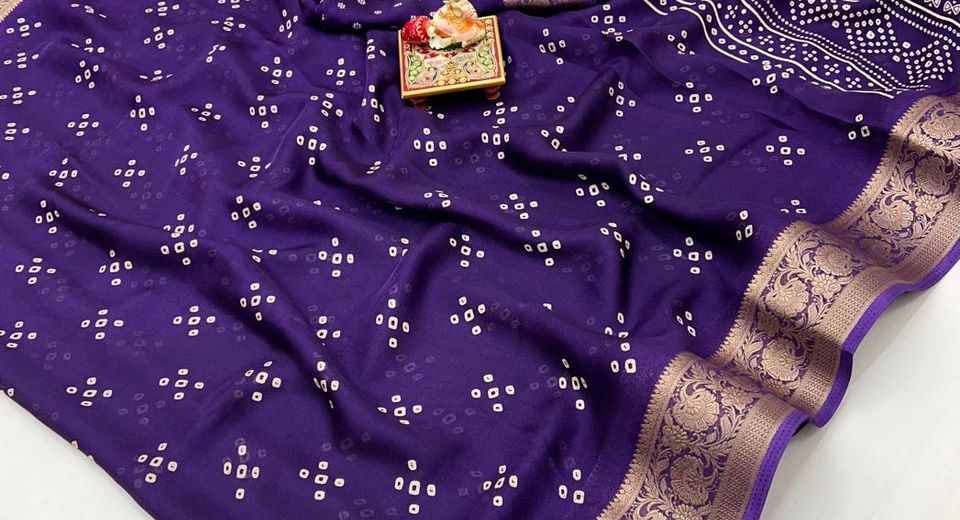
Border Width Print Scale and Drape Tips for Saree for Petite Women can make the difference between a balanced silhouette and a look that feels visually heavy. Height alone doesn't determine how a saree will appear; the border, motif size, pleat width, blouse proportions and pallu placement all direct the eye. A petite wearer can choose prints, zari, floral patterns and wider borders successfully by controlling where visual weight sits.
The most useful rule is simple: keep the strongest horizontal element deliberate and keep the vertical flow uninterrupted. A saree should not hide the body under excessive fabric, but it should also not be pulled so tightly that the pleats lose their shape. The following guide explains how to assess a saree before buying it and how to adjust the drape after it arrives.
Border Width Print Scale and Drape Tips for Saree for Petite Women: choosing the right border
A narrow or medium border usually creates a longer-looking vertical line on a petite frame, while a very wide border draws attention across the body and can visually shorten the lower half. Border width matters most at the hem because the eye naturally follows the saree from the waist down to the feet.
A border between approximately 1 and 3 inches is generally easy to style for everyday wear and small gatherings. A border around 4 to 6 inches can also work, especially when the saree is worn with a higher heel, a neat front pleat and a blouse that doesn't add competing horizontal detail. Borders wider than 6 inches require more careful proportioning because the lower edge becomes the dominant feature.
Border width should be considered alongside contrast. A 3-inch border in a closely related shade may look quieter than a 2-inch border in a sharply contrasting colour. A dark border against a pale saree, a bright zari strip against a deep base, or a strongly patterned edge will appear wider than its measured size.
Which border size is easiest to balance?
Medium-width borders with a clean edge are easiest to balance because they provide definition without cutting the body into too many visual sections. The Coral Pink & Royal Blue Printed Saree with Designer Border demonstrates how colour contrast can become the main focal point, so the blouse and jewellery should remain relatively controlled.
The Graceful Beige Linen Saree with Traditional Designer Border offers a different styling lesson: a traditional border can remain elegant when the blouse repeats one colour from the saree rather than introducing an unrelated contrast. A border doesn't need to be narrow to be flattering; it needs to be proportionate to the print, blouse and drape.
When a saree has a prominent border, avoid placing the pallu over the front shoulder in a way that creates another thick horizontal band across the chest. A clean pleated pallu or a lightly open pallu can preserve the length of the outfit while still showing the border.
Border Width Print Scale and Drape Tips for Saree for Petite Women: selecting print scale
Small and medium prints usually create a more continuous surface on a petite frame, while very large motifs can become the first thing people notice. Print scale isn't a strict height rule; contrast, spacing and the direction of the motif are equally important.
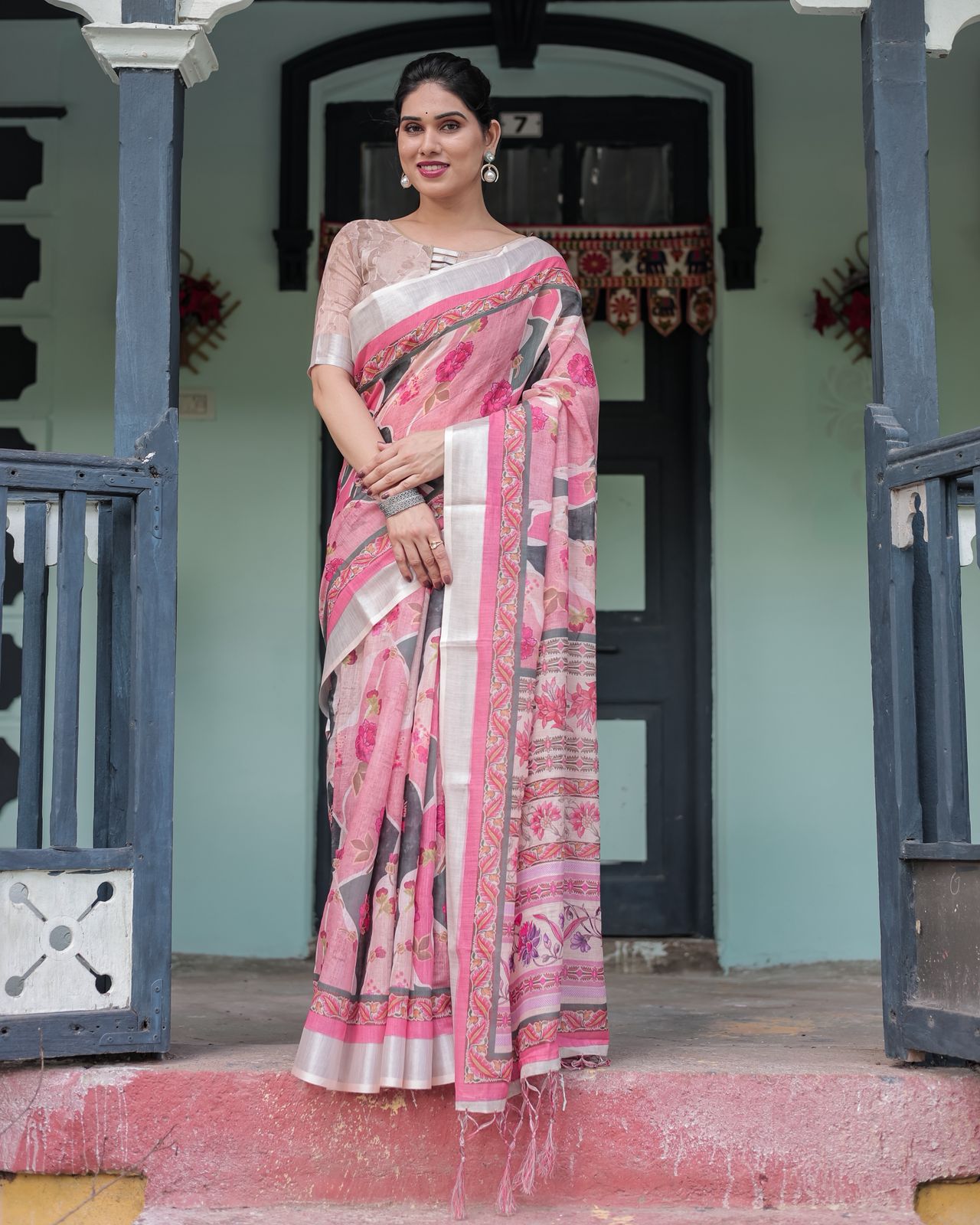
Small florals, closely spaced dots and fine geometric patterns tend to blend into a longer visual line. Medium motifs can be very flattering when they're distributed evenly across the saree. Oversized flowers or widely separated motifs can work when they're concentrated on the pallu rather than repeated heavily across the lower body.
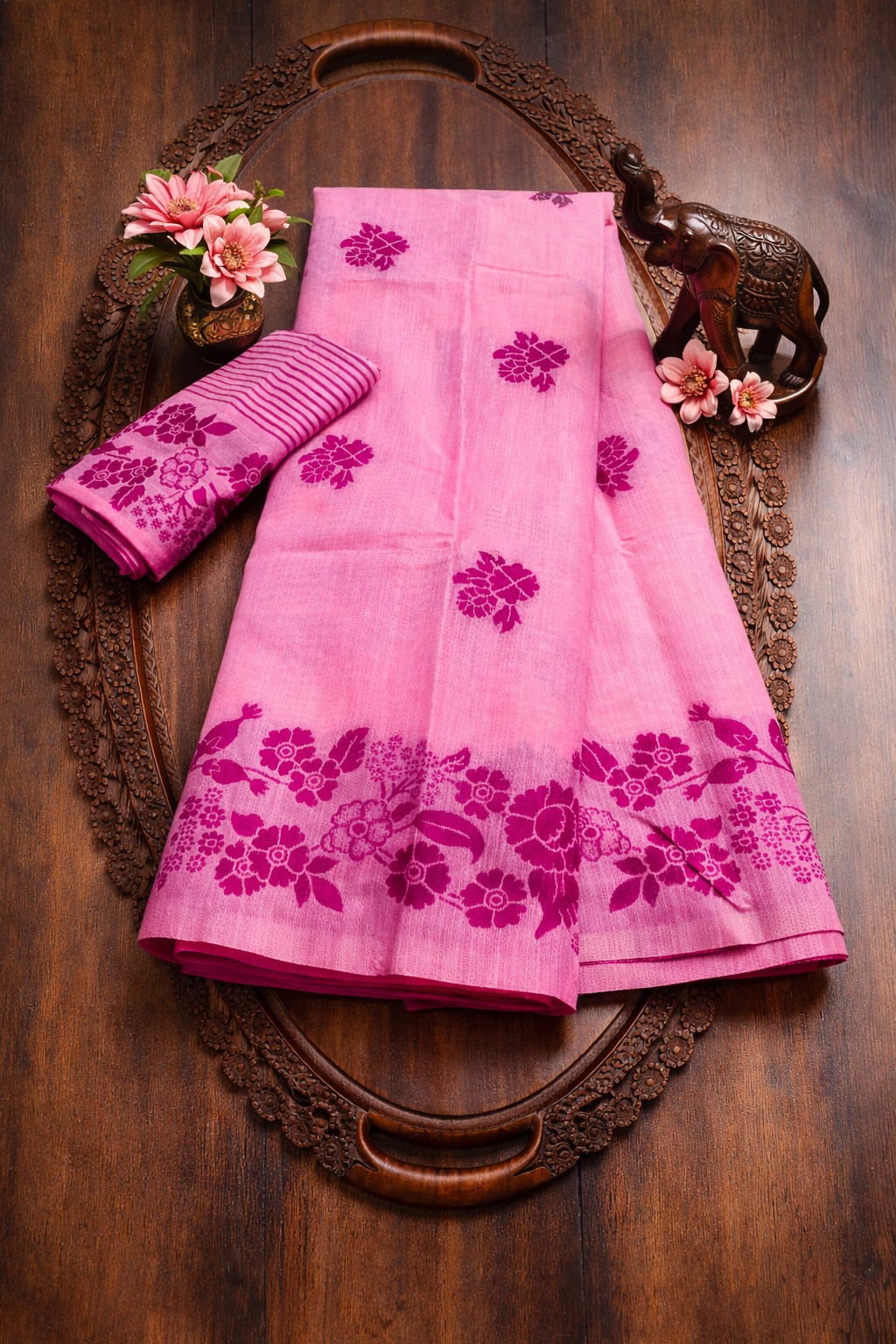
The Pink Floral Linen Cotton Saree with Designer Border is useful for understanding floral placement. A floral print can look light and graceful when the base remains visible between motifs and the border doesn't compete with every flower. The Pastel Linen Cotton Floral Print Saree with Designer Blouse also shows why a low-contrast print can be easier to wear than a high-contrast oversized pattern.
Should petite women avoid large prints?
Petite women don't need to avoid large prints; they should control the number of competing large elements. One large floral pallu, a defined border and a plain blouse can look more balanced than a small print combined with a heavy border, elaborate blouse and layered jewellery.
For a printed saree with large motifs, choose a blouse in one of the quieter colours from the print. Avoid a blouse with a second large print unless the saree has a very restrained border. A plain blouse gives the eye a resting point and allows the saree pattern to remain intentional rather than crowded.
Vertical stripes, elongated vines and motifs that travel diagonally can encourage the eye to move up and down. Horizontal stripes, repeated bands and large motifs arranged in a strict row create stronger width. These effects are subtle, but they become noticeable when combined with a broad border or a short blouse.
Border Width Print Scale and Drape Tips for Saree for Petite Women: getting blouse proportions right
A blouse that ends at the natural waist or slightly above it usually supports a longer-looking saree line because it leaves less visual interruption between the blouse and the pleats. The best blouse length still depends on comfort, torso proportions and the saree construction.

Blouse necklines can be selected according to the amount of skin and fabric visible above the saree. A moderate V-neck, a square neck or a clean scoop neck can create definition without adding a heavy horizontal line. High necklines can also work, but richly embellished high necklines should be balanced with a simpler saree body.
Sleeve length changes the visual weight of the upper body. Sleeves ending around the elbow can look polished with a wide-border saree, while very short sleeves may leave heavy jewellery or a broad border looking more dominant. Three-quarter sleeves can be refined with a plain saree, but they should not be paired with multiple thick horizontal bands unless the rest of the styling is very restrained.
A blouse matching the saree base creates continuity, while a strongly contrasting blouse creates a clear break at the waist. Petite wearers can use either approach: matching shades lengthen the impression, and contrast can define the waist. When using contrast, repeat the blouse colour subtly in the border, print or jewellery so the outfit looks connected.
Border Width Print Scale and Drape Tips for Saree for Petite Women: mastering the pleats and pallu
A neat, moderately narrow pleat set and a securely placed pallu create the most reliable petite-friendly drape. The goal isn't to reduce every fold, but to prevent excess fabric from spreading across the waist, knees or ankles.
- Choose the footwear first. Wear the heels, wedges or raised sandals planned for the outfit before marking the saree length. The hem should sit close to the top of the foot without dragging on the floor.
- Set the petticoat firmly. A drawstring or fitted underskirt should sit at the natural waist and remain secure when you walk. A loose petticoat makes the saree drop lower and can create unnecessary bulk around the waist.
- Keep the first tuck level. Tuck the saree around the waist at a consistent height rather than allowing the front to dip. An uneven starting point disrupts the vertical line and makes the hem difficult to control.
- Make five to seven front pleats. Medium pleats are often easier to manage than many tiny pleats. Align the pleats carefully and secure them with a discreet pin inside the waistband.
- Place the pleats slightly to one side. Centre-front pleats can look classic, but moving them a little toward the side can reduce the appearance of a broad central block, particularly when the border is strong.
- Keep the pallu long enough to fall cleanly. A pallu ending around the hip or upper thigh can make the torso look shorter. A pallu that falls around the knee or slightly above it often creates a smoother vertical drop, provided the fabric isn't dragging.
The number of pleats can change with fabric thickness and saree width, so five to seven pleats is a starting point rather than a fixed rule. The final test is movement: walk, sit and raise one arm before leaving home. If the border twists or the pleats open, adjust the pins instead of tightening the entire saree.
Can a petite woman wear an open pallu?
A petite woman can wear an open pallu when the pallu falls in a controlled vertical line and doesn't spread too widely across the torso. Pinning the shoulder fold and allowing the remaining fabric to fall close to the body gives the openness of the style without excessive width.
An open pallu works especially well when the saree has a narrow border, a low-contrast print or a lighter visual design. A heavily decorated pallu may need soft pleats so the embroidery, zari or printed panel doesn't expand across the upper body.
Border Width Print Scale and Drape Tips for Saree for Petite Women: matching fabric to structure
Fabric structure affects how much volume a saree creates, how sharply it holds pleats and how easily the pallu falls. Linen cotton, printed textiles and silk sarees can all suit petite women, but each requires a slightly different draping decision.
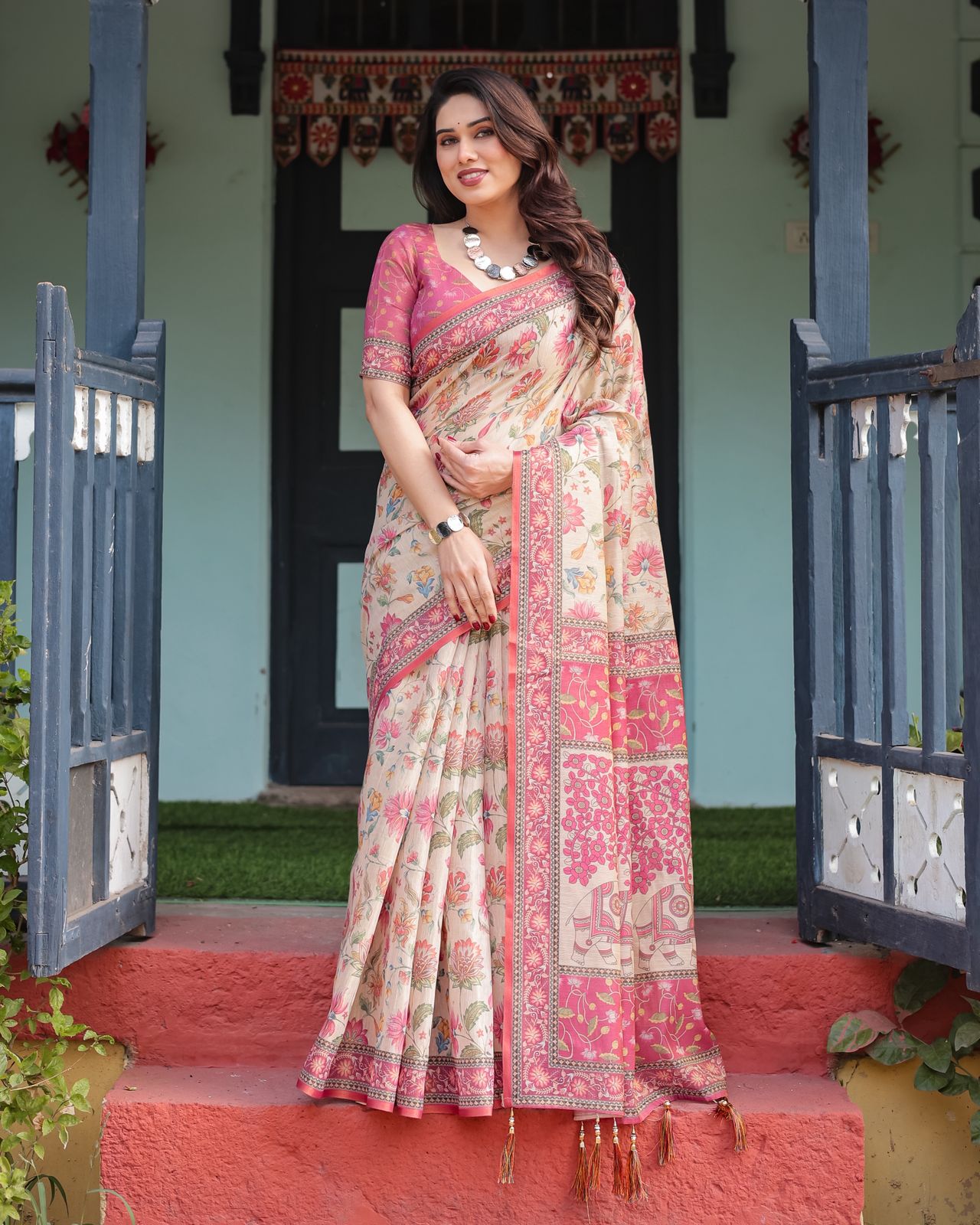
Linen cotton sarees can look crisp and fresh, so a petite wearer should avoid over-folding the pallu into a thick stack. The Peach Linen Cotton Floral Print Saree with Blouse for Women illustrates a practical approach: let the floral surface provide interest while keeping the pleats and blouse line clean.
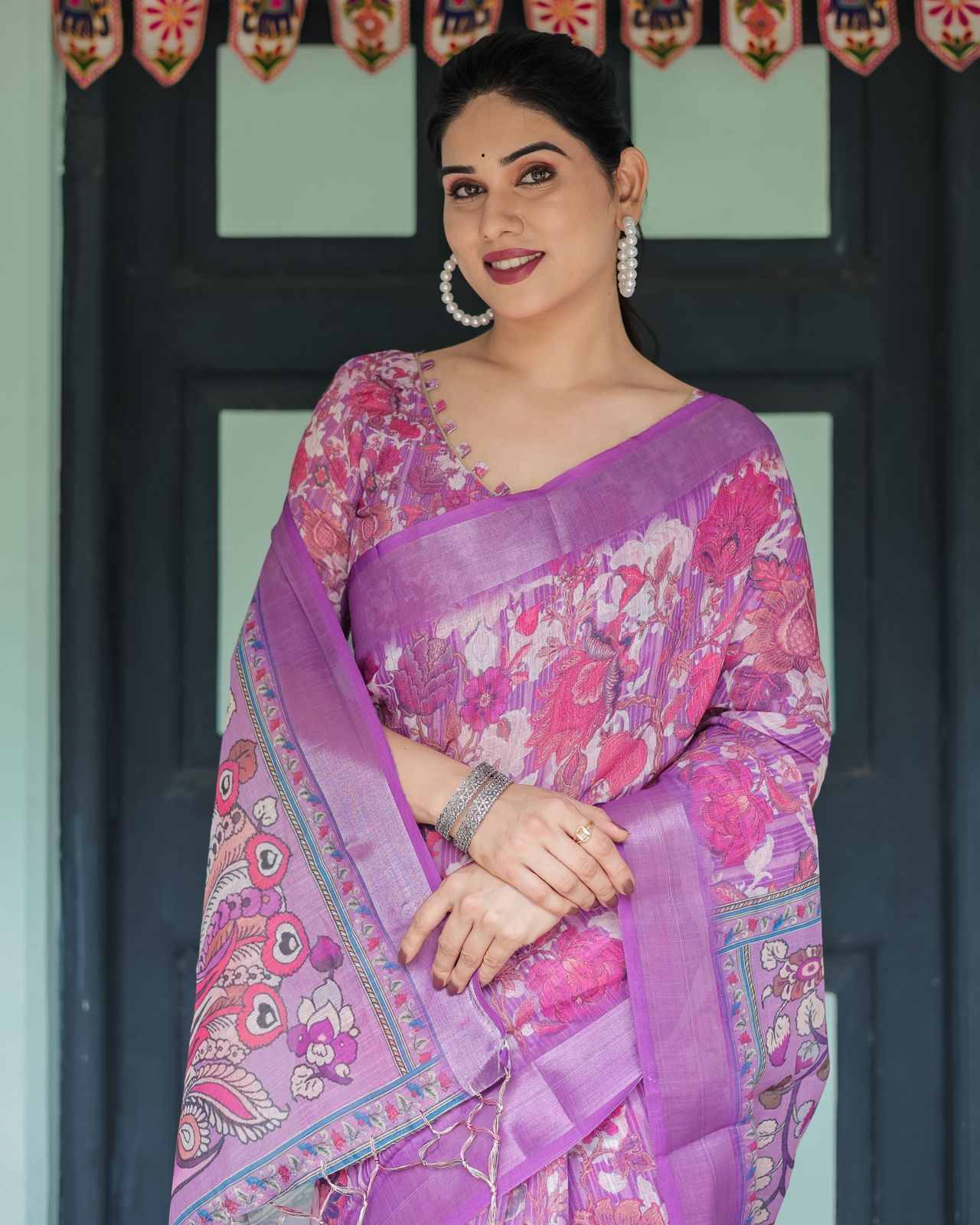
Silk sarees often hold their structure and may have a more noticeable border or zari element. The Designer Green Pink Wedding Wear Silk Saree and Designer Purple Printed Saree With Zari Woven Border both call for deliberate styling because colour contrast and woven detail can carry substantial visual weight. A simple blouse, compact jewellery and an uncluttered pallu allow the silk, zari and border to remain visible without overwhelming a smaller frame.
Shopping by price can be useful when building a practical wardrobe, but price should not replace proportion checks. Collections such as Sarees from Rs 1000 to Rs 1500 can offer accessible printed and linen cotton options for testing a preferred border width. Sarees Under 20% Off and Sarees Under 10% Off may also be useful when comparing similar silhouettes in different colours.
For festive dressing, a petite wearer can look for visual focus rather than maximum embellishment. Sarees Flat 60% Off and Sarees Flat 50% Off may include statement styles, but inspect the border width, motif density and pallu before choosing. A lower price doesn't make a very broad border easier to style, and a premium fabric doesn't automatically require a complicated drape.
Border Width Print Scale and Drape Tips for Saree for Petite Women: final fitting checklist
A saree is ready to wear when the hem, pleats, pallu and blouse work together during movement, not merely when the outfit looks correct in a still photograph. A five-minute fitting check can prevent most proportion problems.
- Check the hem with footwear. The saree should clear the floor and should not expose too much ankle when you walk.
- Measure the visual border. Stand several steps away from a mirror and observe whether the border dominates the entire lower half. If it does, reduce competing jewellery or use a matching blouse.
- Inspect the pleat width. Uneven or very broad pleats can create a block at the centre. Re-folding the pleats is usually more effective than pulling the saree tighter.
- Test the pallu from the side. The pallu should fall downward rather than projecting sharply backward or widening across the shoulder.
- Check sitting comfort. A saree that looks graceful while standing but pulls at the knees won't remain neat throughout a ceremony or workday.
- Limit competing accessories. A wide border, large earrings, a statement necklace and a heavily embroidered blouse may each be attractive, but using all four can obscure the saree's proportions.
The Coral Pink & Royal Blue Printed Saree with Designer Border can be styled with a restrained blouse and earrings because the border and colour contrast already provide definition. The Designer Purple Printed Saree With Zari Woven Border can take a slightly more traditional approach, but a compact bun, controlled pallu and limited layered jewellery will keep the silhouette clear.
The most flattering saree choice for a petite woman isn't necessarily the smallest print or narrowest border. The strongest result comes from coordinating border width, print scale, blouse length, pleat size, pallu fall and footwear. Once those elements are considered together, floral linen cotton sarees, printed sarees, zari borders and wedding silk sarees can all be adapted to a petite frame.
Common Questions About Border Width, Print Scale and Petite Saree Draping
What border width is best for a petite woman wearing a saree?
A border between 1 and 3 inches is usually the easiest to balance on a petite frame. Borders measuring 4 to 6 inches can also work when the blouse, pleats and jewellery remain simple and the border colour does not create an overly sharp horizontal break.
Can petite women wear sarees with large floral prints?
Yes, petite women can wear large floral prints when one area, such as the pallu, carries the biggest motifs. Pairing a large floral print with a plain blouse and a restrained border prevents several strong elements from competing for attention.
How many pleats should a petite woman make in a saree?
Five to seven medium front pleats are a useful starting point for many petite wearers. The correct number depends on fabric thickness and saree width, so the pleats should be neat, secure and comfortable when walking or sitting.
Does an open pallu suit a petite body type?
An open pallu suits a petite body type when it falls vertically and stays close to the torso. Pin the shoulder fold and avoid spreading the pallu too widely, particularly when the saree already has a broad border or a high-contrast print.
Which saree prints make a petite woman look taller?
Small to medium prints, elongated vines, vertical stripes and diagonal motifs can support a longer visual line. Low-contrast patterns with visible base space are generally easier to balance than widely spaced oversized motifs covering the entire saree.
Should a petite woman wear heels with a saree?
Heels are optional, but footwear should be selected before setting the saree hem. Low wedges or raised sandals can provide stability and a little height without the walking difficulty of very high heels, especially for long ceremonies.


