

Border Pallu and Print Proportion for Saree for Tall Women can determine whether a saree looks visually balanced or slightly undersized on a longer frame. Height gives you room to carry dramatic borders, generous pallus and larger motifs, but scale alone doesn't guarantee a polished result. The width of the border, the direction of the print, the length of the pallu and the position of the waist all work together.
An useful starting point is to treat the saree as three visible zones: the lower border near the feet, the main drape across the body and the pallu over the shoulder. Tall women can wear strong contrast and larger patterns confidently, yet the best choice depends on whether the aim is to add horizontal balance, highlight the shoulder line or create uninterrupted vertical movement.
Why Border Pallu and Print Proportion for Saree for Tall Women Matters
Border Pallu and Print Proportion for Saree for Tall Women matters because a taller body gives more visual space for fabric details to spread out. A narrow border may disappear against a long skirt area, while an oversized pallu can dominate the upper body if the blouse and pleats are too plain.
Proportion doesn't mean matching every measurement to height. Proportion means allowing the saree's strongest design feature to occupy enough visual space to look intentional. A 2-inch border usually reads as a quiet finish. A 4- to 6-inch border becomes a visible styling element. A border wider than 7 inches creates a strong horizontal break and needs thoughtful blouse and petticoat choices.
Print scale also changes the apparent rhythm of a saree. Small repeated dots or tiny florals create a steady surface, medium geometric motifs give structure, and large florals or bold checks make the fabric look more graphic. Tall women can generally handle medium and large motifs well, particularly when the saree has enough fabric length for the pattern to remain visible across the pleats.
How wide should a saree border be for a tall woman?
A border between 4 and 6 inches usually provides the most versatile balance for a tall woman, while borders of 7 inches or more suit a deliberately dramatic look.
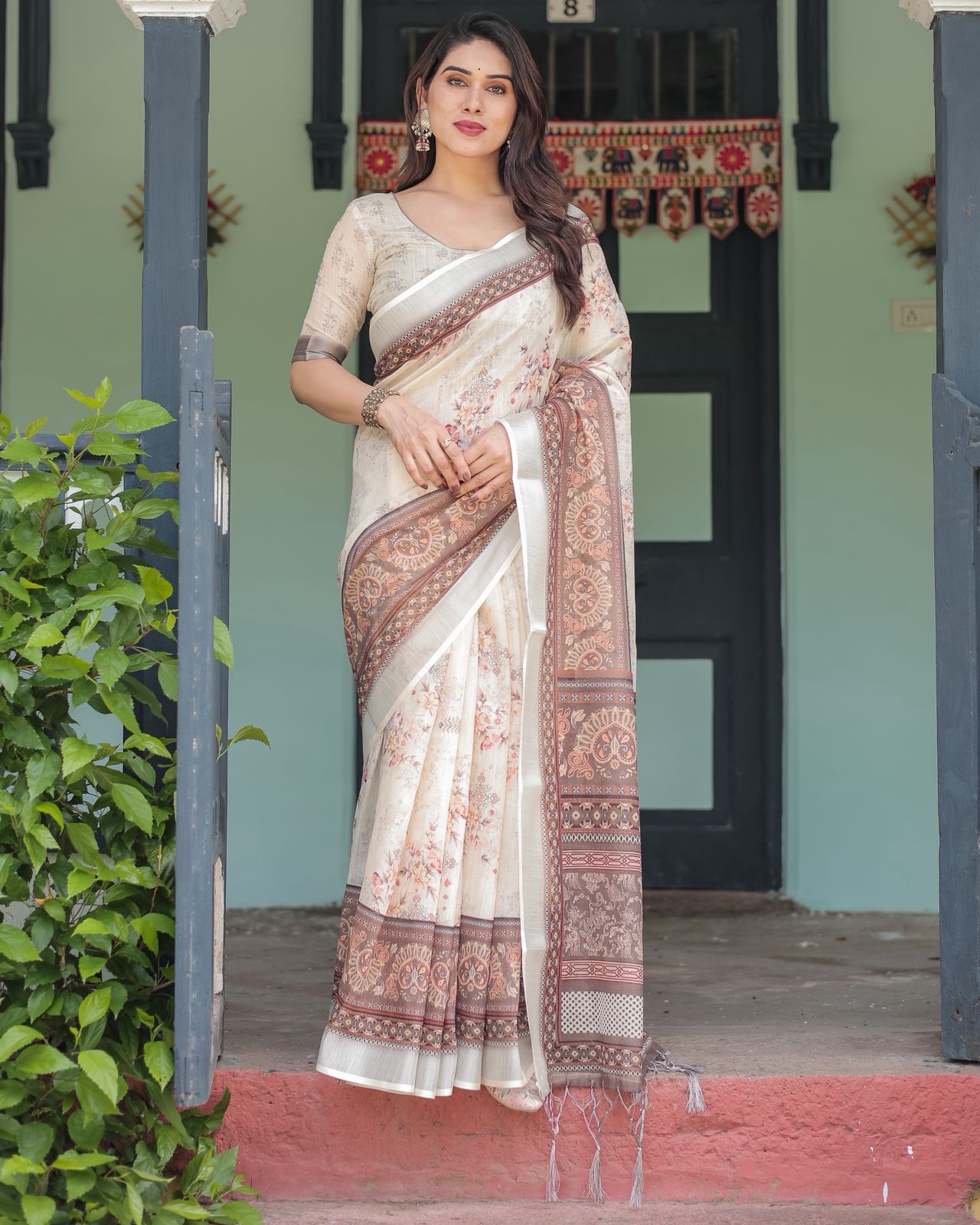
The right width depends on the entire outfit rather than height alone. A tall woman with a long torso may appreciate a broad lower border because the horizontal line visually grounds the saree. A tall woman with a shorter torso can choose a medium border and reserve the strongest contrast for the pallu, preventing the upper body from looking crowded.
- 2 to 3 inches: Choose this width for understated office sarees, delicate prints and outfits where the blouse is meant to attract attention.
- 4 to 6 inches: Choose this width for everyday elegance, festive cotton sarees and designs that need a clearly visible hemline.
- 7 to 9 inches: Choose this width for ceremonial styling, strong contrast and sarees where the border is the main design statement.
A contrasting border creates a clearer horizontal line than a tonal border. For example, a royal blue border against coral fabric feels more defining than a slightly darker coral border. The Coral Pink & Royal Blue Printed Saree with Designer Border demonstrates how two distinct colours can frame a tall silhouette without requiring heavy embellishment.
Very narrow borders are not wrong for tall women. A narrow border works well when the saree has a large all-over pattern, a statement pallu or a blouse with an architectural neckline. The important point is to avoid combining a barely visible border with a very small print and a short-looking pallu, because all three details may lose impact at once.
How should tall women choose the saree pallu?
Tall women should choose a pallu with enough length and visual weight to cover the shoulder and fall below the hip without ending abruptly.
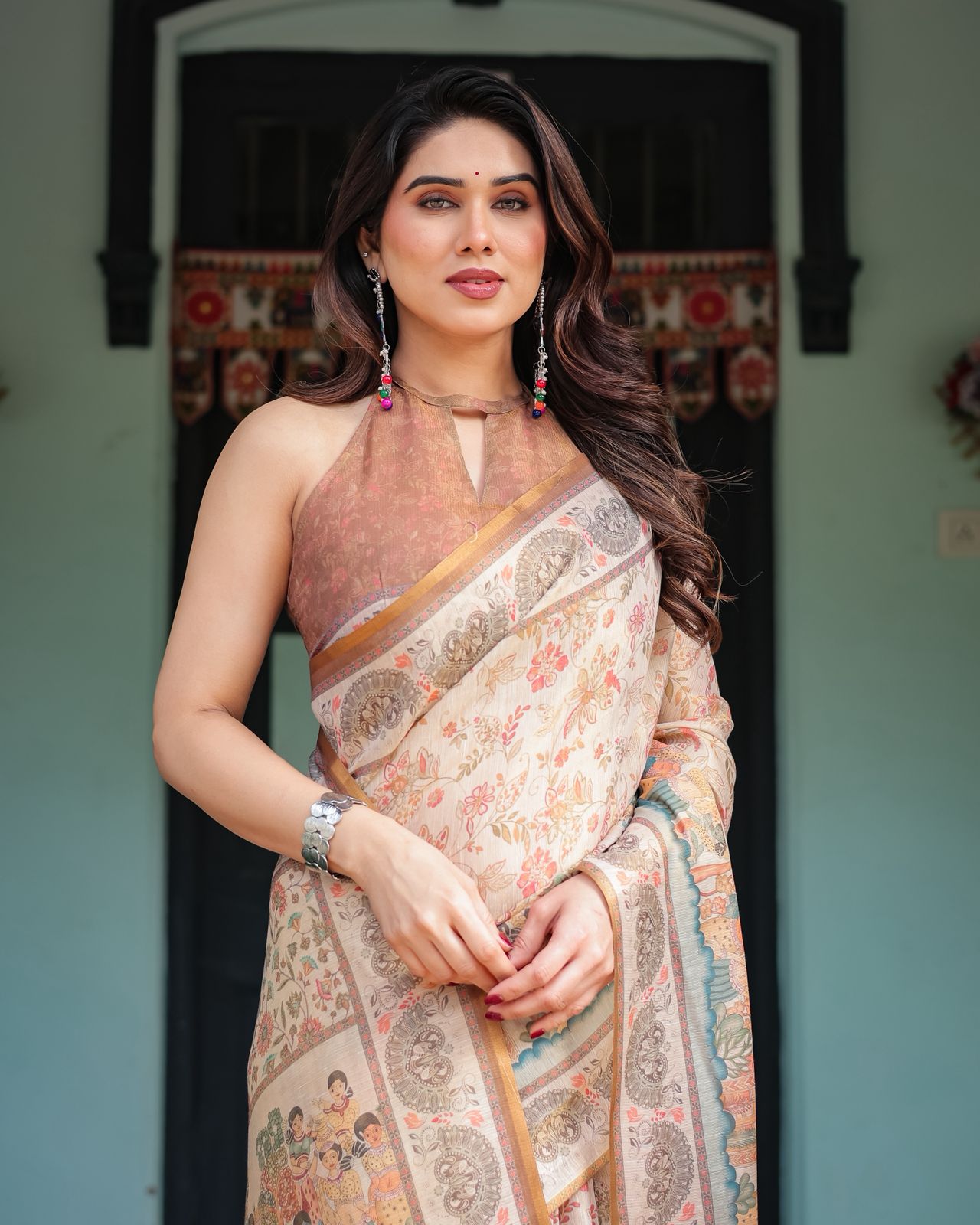
A pallu ending around the upper hip can make a long torso appear even longer, especially when the body of the saree is plain. Letting the pallu fall to the mid-thigh creates a more generous vertical panel. A neatly pleated pallu gives structure, while an open pallu displays a print or woven motif more completely.
A designer pallu is particularly useful when the body carries a restrained print. The Printed Mal Cotton Saree With Designer Pallu by VARNAVI offers an example of using the pallu as a focal panel rather than relying on decoration across every section. A tall wearer can show the pallu border clearly by keeping the shoulder pleats moderately broad and avoiding excessive bunching.
The pallu should not always match the border in width. A 5-inch lower border paired with a 7-inch pallu edge creates a deliberate progression towards the shoulder. A pallu that's much narrower than the lower border may look visually unfinished unless the body print is especially strong.
Open pallu or pleated pallu?
An open pallu shows more of a large-scale print, while a pleated pallu creates a cleaner and more controlled shoulder line.
Open pallus suit linen cotton, Chanderi cotton and other fabrics that hold a soft spread without becoming bulky. Pleated pallus suit occasions where a tidy silhouette matters, such as a formal lunch, a cultural programme or a family celebration. Tall women can also pin the pallu at the shoulder and leave the lower portion open, preserving the pattern while keeping the drape secure.
The Teal Purple Floral Printed Linen Cotton Saree with Border can be styled with an open pallu when the goal is to display the floral field. A pleated version of the same styling would create more vertical stripes and a slightly sharper appearance.
Which print scale looks balanced on a tall body?
Medium and large prints usually look balanced on a tall body because they remain visible across the longer drape and don't get lost in the pleats.

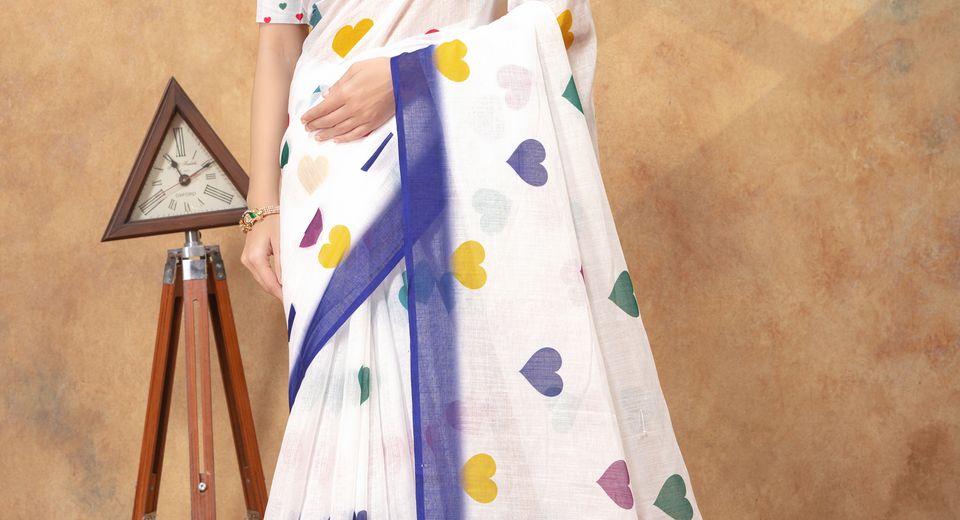
Small prints are useful when the wearer prefers a quiet, refined look. A small print also works with a wide border because the border supplies the required visual weight. The White Heart Print Saree with Blue Geometric Border pairs a lighthearted small motif with a more defined geometric edge, giving the eye two different scales to read.
Medium prints are the safest choice for a saree that needs to move between daywear and social occasions. Ikat-inspired diamonds, repeated florals and abstract motifs create interest without making the saree feel oversized. The Purple Pink Ikat Print Saree with Decorative Border uses repeated geometric movement to prevent a tall silhouette from appearing visually empty.
Large prints work best when the motif has breathing room. Large florals placed across a crowded pleat section can become difficult to recognise, whereas large motifs on the pallu or outer drape remain legible. A print with a clear direction, such as vertical vines or elongated geometrics, can reinforce height; a strong horizontal stripe can add width and balance.
- Small motifs: Pair them with a contrasting border, textured blouse or statement pallu.
- Medium motifs: Use them for the most adaptable proportion, particularly in cotton and linen cotton sarees.
- Large motifs: Keep the blouse relatively calm and allow the pallu to remain visible.
- Directional motifs: Use vertical movement to lengthen or horizontal placement to visually ground the frame.
How do fabric and drape change saree proportion?
Fabric changes proportion by controlling how much the saree spreads, clings, folds and reflects light.

Chanderi cotton has a comparatively crisp, airy character that helps borders remain legible. The Coral Black Chanderi Cotton Paisley Print Saree with Border shows how a defined edge and a noticeable paisley pattern can create structure without the weight of heavy ornamentation. The Black Chanderi Cotton Saree with Multicolor Geometric Print brings another approach: multicolour geometry can supply visual interest even when the border isn't the sole focal point.
Linen cotton tends to create a relaxed fall with visible texture. Linen-cotton blends work well for tall women who want an elongated drape that doesn't cling tightly to the legs. Cotton sarees with firmer weaves hold pleats clearly, which makes a wide border look more graphic at the hem.
Silk fabrics such as Banarasi silk or Kanjeevaram traditionally carry substantial zari and woven borders, so their scale must be considered alongside shine. A wide zari border can visually increase the apparent width of the lower body. A tall wearer can balance that effect with a longer pallu, a blouse in a related colour and pleats that fall in an uninterrupted line.
Light-reflective details attract attention. Zari, metallic thread and high-contrast printing make a border appear larger than a matte border of the same measured width. Check a saree in daylight before deciding whether a 6-inch metallic border will feel elegant or overpowering.
How should the blouse support a tall saree silhouette?
The blouse should support the saree's dominant proportion by either repeating its strongest line or providing a controlled contrast.
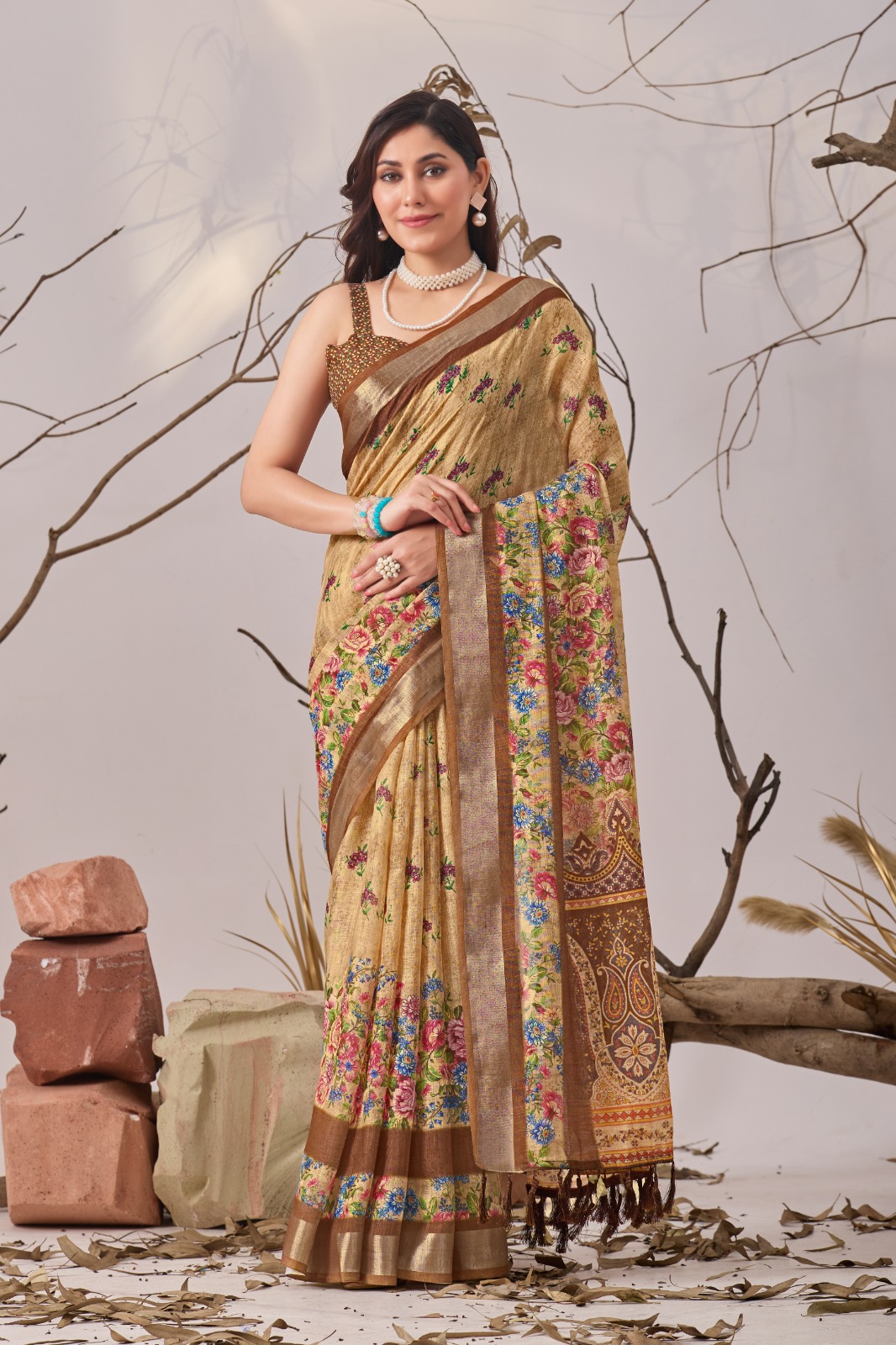
A broad saree border usually benefits from a blouse with a moderately substantial sleeve, neckline or piping detail. A tiny cap sleeve with a very wide border can make the upper body seem visually underweighted. A high-neck blouse, elbow-length sleeve or structured shoulder can balance a graphic border without competing with it.
A saree with a large pallu print often looks best with a solid blouse picked from one of the pallu's secondary colours. For the Elegant Cream Saree with Pink Geometric Print Pallu, a muted pink, cream or soft berry blouse would keep the geometric pallu visible while connecting the shoulder to the rest of the outfit.
Blouse length also affects the apparent waist position. A standard blouse ending near the natural waist keeps the classic saree proportion. A longer blouse can create a contemporary tunic effect, but the pallu should then be placed carefully so the waist doesn't become hidden under multiple layers.
Neckline direction matters too. A V-neck and long necklace create vertical movement. A boat neck, broad square neck or horizontal sleeve line adds width. Tall women can use either direction, but the choice should respond to the saree rather than repeat every detail independently.
Practical saree combinations for tall women
Practical styling becomes easier when one visual feature leads and the remaining features support it.

For a relaxed daytime look, pair a medium-print cotton or linen-cotton saree with a solid blouse and a clean 4-inch border. The Teal Purple Floral Printed Linen Cotton Saree with Border can take a deep teal blouse, simple earrings and an open pallu, allowing the floral pattern to remain the centre of attention.
For an expressive print-led outfit, choose the Purple Pink Ikat Print Saree with Decorative Border with a blouse in the quieter purple or pink family. Keep jewellery geometric rather than heavily ornate so the ikat rhythm remains clear.
For a monochrome graphic appearance, style the Black Chanderi Cotton Saree with Multicolor Geometric Print with a black blouse and one accent colour from the print. A neatly pleated pallu will sharpen the lines, while a loose pallu will soften them.
For a romantic but structured look, use the White Heart Print Saree with Blue Geometric Border with a blue blouse that repeats the border. A medium-sized bangle stack can echo the print without adding another competing pattern.
For a traditional handloom-inspired mood, a saree with a visible border can be paired with a blouse that has a plain body and a narrow sleeve edge. Collections such as Sarees from Rs 1000 to Rs 1500 can be useful for comparing print scale and border width across accessible everyday options. Discount collections including Sarees Under 20% Off, Sarees Under 10% Off and Sarees Flat 50% Off can also help shoppers compare construction details rather than choosing only by colour.
A fitting and draping checklist before buying
A tall woman should check the saree's usable length, border placement and pallu design before deciding whether the proportions will work.

- Check the total length: A saree around 5.5 metres is common, but the usable length may reduce after accounting for the blouse piece, fall and finishing. Taller wearers should confirm measurements instead of assuming every saree will provide the same pallu coverage.
- Measure the border visually: Compare the border width with the hand or forearm in a product image. A border that looks prominent on screen may appear modest after pleating.
- Inspect the pallu: Look for a separate pallu design, contrast panel or extended border. A strong pallu is valuable when the body print is subtle.
- Plan the pleats: Seven to nine front pleats usually create a clean fall, but very wide borders may need fewer, broader pleats so the edge doesn't become excessively layered.
- Consider footwear: Measure the final saree length with the heels or flats that will actually be worn. A border dragging on the floor loses definition and collects dirt quickly.
- Photograph the full outfit: A full-length photograph reveals proportion more accurately than a mirror view cropped at the waist.
don't judge a saree only by the product thumbnail. A tall wearer needs to see how much of the border remains visible after the saree is wrapped, how the pallu reaches the hip and whether the print stays recognisable through the pleats.
A strong option may also appear in a sale-led collection such as Sarees Flat 60% Off, but a reduced price doesn't replace checking fabric composition, measurements and return terms. Border Pallu and Print Proportion for Saree for Tall Women works best when design scale is evaluated alongside comfort and construction.
Care practices that preserve borders and printed motifs
Gentle washing, shade drying and low-heat ironing help preserve saree borders and printed motifs.
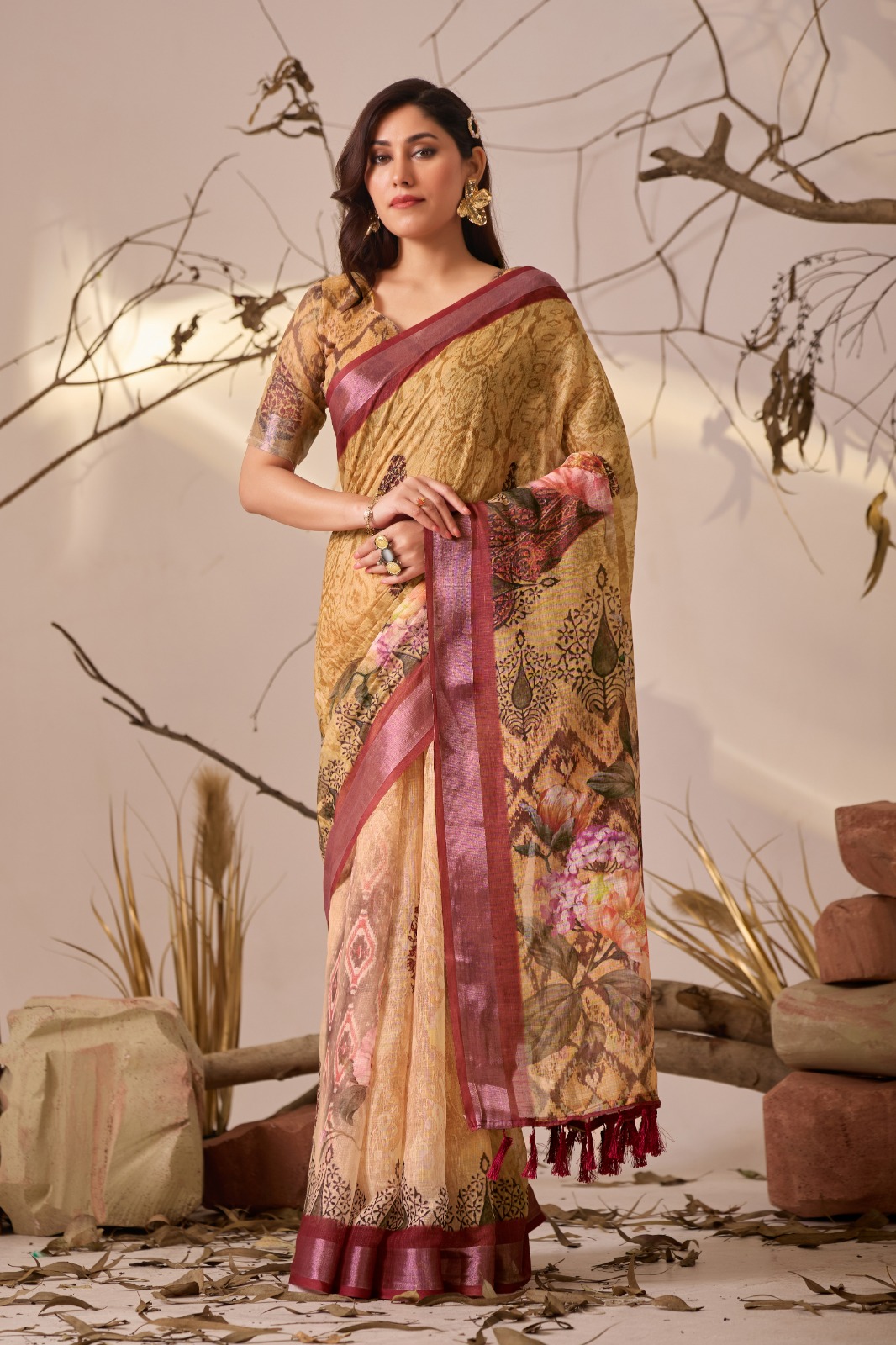
Read the care label before washing a printed cotton, Chanderi cotton or linen-cotton saree. Use a mild detergent, cold or cool water and a short soak rather than aggressive scrubbing. Direct sunlight can fade dark prints and weaken contrast along a coloured border, so dry the saree inside out in shade.
Iron printed areas from the reverse side on a low or medium setting. Place a thin cotton cloth between the iron and zari or metallic detailing. Fold the saree with the border aligned, but refold it along a different line every few weeks to reduce permanent creasing.
Storage also affects proportion over time. Hanging a heavy saree by a narrow hanger can stretch the fabric near the shoulder, while tightly compressing a broad border can produce hard creases. Fold clean, completely dry sarees in breathable cotton covers and keep them away from damp walls.
The most flattering saree for a tall woman isn't automatically the widest-bordered or largest-printed option. The strongest choice is the one where the border anchors the lower line, the pallu fills the shoulder space and the print remains legible across the drape. Once those three elements are balanced, colour, blouse design and jewellery become enjoyable finishing decisions rather than attempts to correct the silhouette.
Common Questions About Saree Proportion for Tall Women
What saree border width suits tall women best?
A 4- to 6-inch border suits most tall women because it remains visible without overwhelming the drape. Borders above 7 inches work for a more dramatic look and should be balanced with a substantial pallu or blouse detail.
Can tall women wear small-print sarees?
Yes, tall women can wear small-print sarees, especially when the saree has a contrasting border or distinctive pallu. A textured blouse or stronger jewellery detail can prevent a small print from looking visually lost.
Are large floral prints suitable for tall women?
Large floral prints are suitable for tall women when the motifs have enough space to remain recognisable. Keep the blouse relatively plain and avoid hiding the largest motifs inside tightly packed pleats.
Should a tall woman wear an open pallu or pleated pallu?
An open pallu displays large prints and decorative panels more clearly, while a pleated pallu gives a sharper, more controlled silhouette. Choose the open style for showcasing design and the pleated style for formal neatness.
How long should a saree pallu be for a tall woman?
The pallu should cover the shoulder and fall comfortably to around the mid-thigh or lower hip, depending on the preferred drape. A pallu ending too high can make a long torso look visually extended, particularly with a plain saree body.
Which fabrics create good saree proportion for tall women?
Chanderi cotton, cotton and linen cotton can create clear borders and an easy vertical fall without excessive bulk. Banarasi silk and Kanjeevaram also suit tall women, but their zari and heavier borders require careful balancing with the pallu and blouse.


