

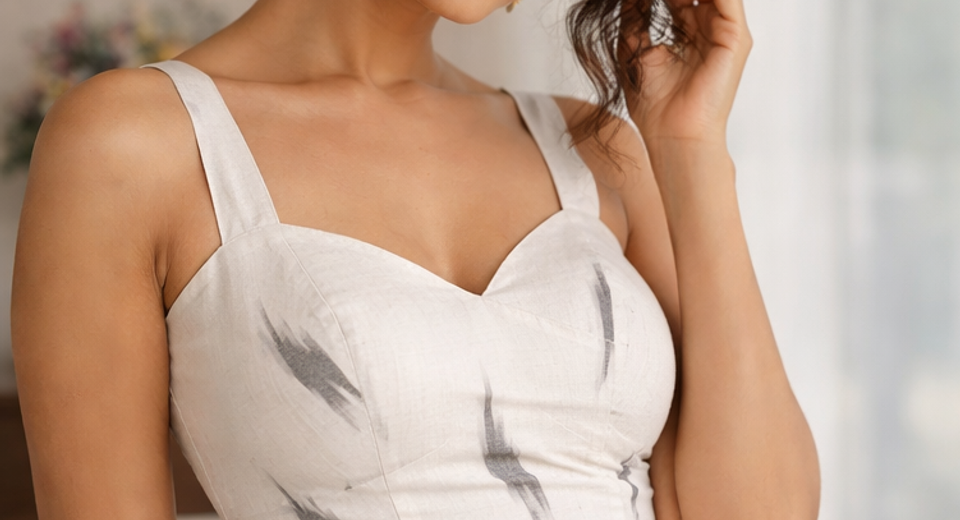
Blouse Sleeves Twisting? What It Says About Shoulder Fit is a useful question because sleeve rotation often exposes a construction problem that a mirror shows only vaguely. When a sleeve seam drifts towards the front or back of the arm, the cause may be an incorrect shoulder width, sloping shoulder, tight armhole, uneven bust fit or a sleeve cap that doesn't match the wearer's natural arm position. A sleeve that looks straight on a hanger can twist once a fitted readymade blouse is worn.
The quickest diagnosis is to stand naturally with both arms relaxed and check where the sleeve seam rests. A well-balanced sleeve generally follows the centre or slightly forward position of the upper arm without pulling across the biceps. A small amount of movement is normal, but persistent twisting, diagonal wrinkles and an underarm seam that migrates indicate that the blouse is compensating for an imperfect fit.
Blouse Sleeves Twisting? What It Says About Shoulder Fit and Seam Placement
A twisting blouse sleeve usually reveals that the shoulder line, armhole or sleeve cap doesn't align with the wearer's natural arm position. Shoulder fit determines where the armhole begins, and the armhole determines how the sleeve hangs. If the shoulder seam sits too far outward, too far inward or at the wrong angle, the sleeve rotates to find a more comfortable position.
The shoulder seam should finish close to the point where the shoulder changes into the upper arm. A seam extending beyond that point can make the sleeve pull outward and make folds below the arm. A seam ending well inside the shoulder can restrict movement and drag the sleeve towards the back. These problems become more visible in strappy and short-sleeved designs because the armhole is exposed.
Shoulder slope also matters. A wearer with sloping shoulders may see excess fabric near the neckline and diagonal folds running towards the armhole when wearing a standard straight-shoulder pattern. A wearer with square shoulders may experience tension at the sleeve head and upper chest. Neither body shape is wrong; the blouse pattern simply needs a different shoulder angle.
How can you tell whether the shoulder width is wrong?
The shoulder width is probably wrong when the shoulder seam doesn't sit on the shoulder bone, the neckline shifts during movement and both sleeves rotate in the same direction. If only one sleeve twists, unequal shoulder height or posture is more likely than an overall size problem.
Measure from the base of the neck to the shoulder point on both sides rather than relying only on a small, medium or large label. A difference of even 1 centimetre between the left and right shoulder measurements can affect a closely fitted blouse. A tailor can correct the imbalance by adjusting the shoulder seam and rebuilding the sleeve attachment instead of simply taking in the side seams.
Blouse Sleeves Twisting? What It Says About Shoulder Fit and the Armhole
Yes, an armhole that's too tight, too low or incorrectly shaped can force a sleeve to rotate. The armhole controls how the bodice follows the armpit and upper arm, so changing its depth without changing the sleeve often creates diagonal drag lines.

A tight armhole commonly produces horizontal or diagonal tension under the armpit, limited reach and a sleeve that turns towards the front. A very low armhole may feel loose while still twisting because the sleeve cap has to travel farther around the arm. Lowering an armhole is therefore not automatically a comfort solution.
Raise one arm gently as a diagnostic test. If the entire blouse rides upward, the armhole may be too tight or the bodice may lack sufficient ease. If the sleeve rotates while the bodice stays in place, the sleeve cap or sleeve pitch may be incorrect. Sleeve pitch describes the angle at which a sleeve is attached to accommodate the natural position of the arm, which usually rests slightly forward rather than hanging perfectly vertically.
Cotton behaves differently from silk during this test. A structured cotton blouse such as Cream Ikat Cotton Padded Blouse Sleeveless doesn't offer sleeve rotation as a visual clue, but its armhole placement still affects movement and shoulder comfort. In a short-sleeved cotton design, pressing the armhole seam and checking the upper-arm ease can reveal whether the bodice is too restrictive.
Blouse Sleeves Twisting? What It Says About Shoulder Fit Versus Bust Fit
A shoulder problem changes the position of the shoulder seam and sleeve, while a bust problem usually creates strain, gaping or horizontal drag across the front bodice. The two problems can appear together, particularly in a padded or close-fitting readymade blouse.
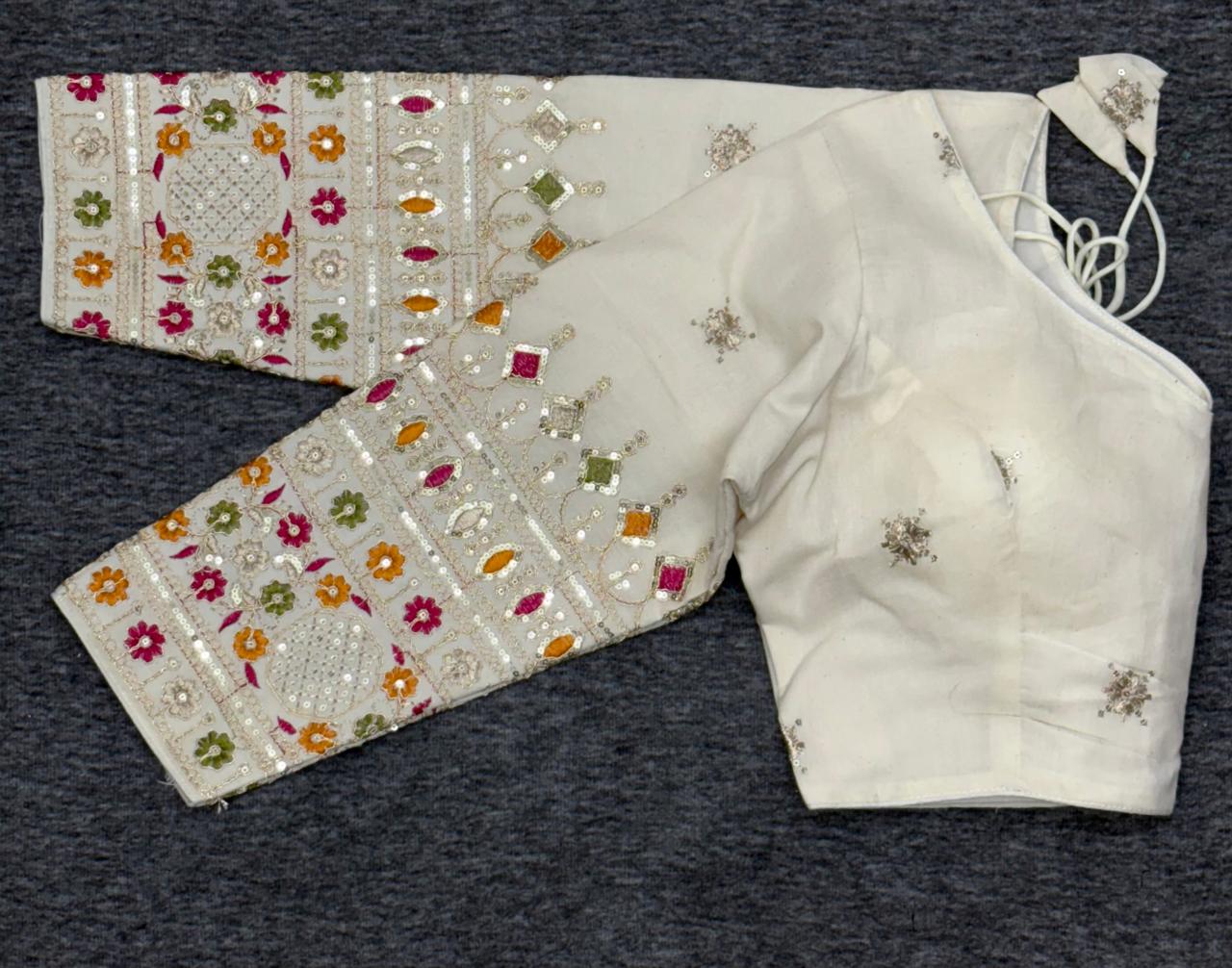
- Shoulder mismatch: The sleeve twists on one or both sides, the shoulder seam slips and the neckline may move away from the base of the neck.
- Insufficient bust ease: The front closure pulls, horizontal wrinkles radiate from the bust and the blouse may ride upward at the front.
- Excess bust volume: Fabric pools above or below the bust, while the side seam may swing away from the body.
- Incorrect bust-point placement: Padding or darts sit too high or low, causing local pressure even when the shoulder seam looks correct.
Try the blouse with the bra or saree underlayers that will actually be worn. A padded blouse can fit differently over a lightly lined bra than over a heavily moulded one. Compare the front and back lengths, then close the blouse without forcing the hooks or tie strings. A blouse that needs continuous pulling into position isn't correctly balanced, even if the bust measurement seems adequate.
Banarasi Silk Golden Jari Padded Blouse for Women demonstrates why material and construction should be assessed together. Banarasi silk and zari have limited stretch, while padding can reduce usable room across the bust. Accurate shoulder placement becomes especially important because the fabric can't easily absorb movement or recover from tension.
Blouse Sleeves Twisting? What It Says About Shoulder Fit in a Readymade Blouse
Inspect a readymade blouse over the intended undergarment and move your arms before deciding that the labelled size fits. A readymade blouse can match the bust circumference yet fail at the shoulder, armhole or sleeve length.
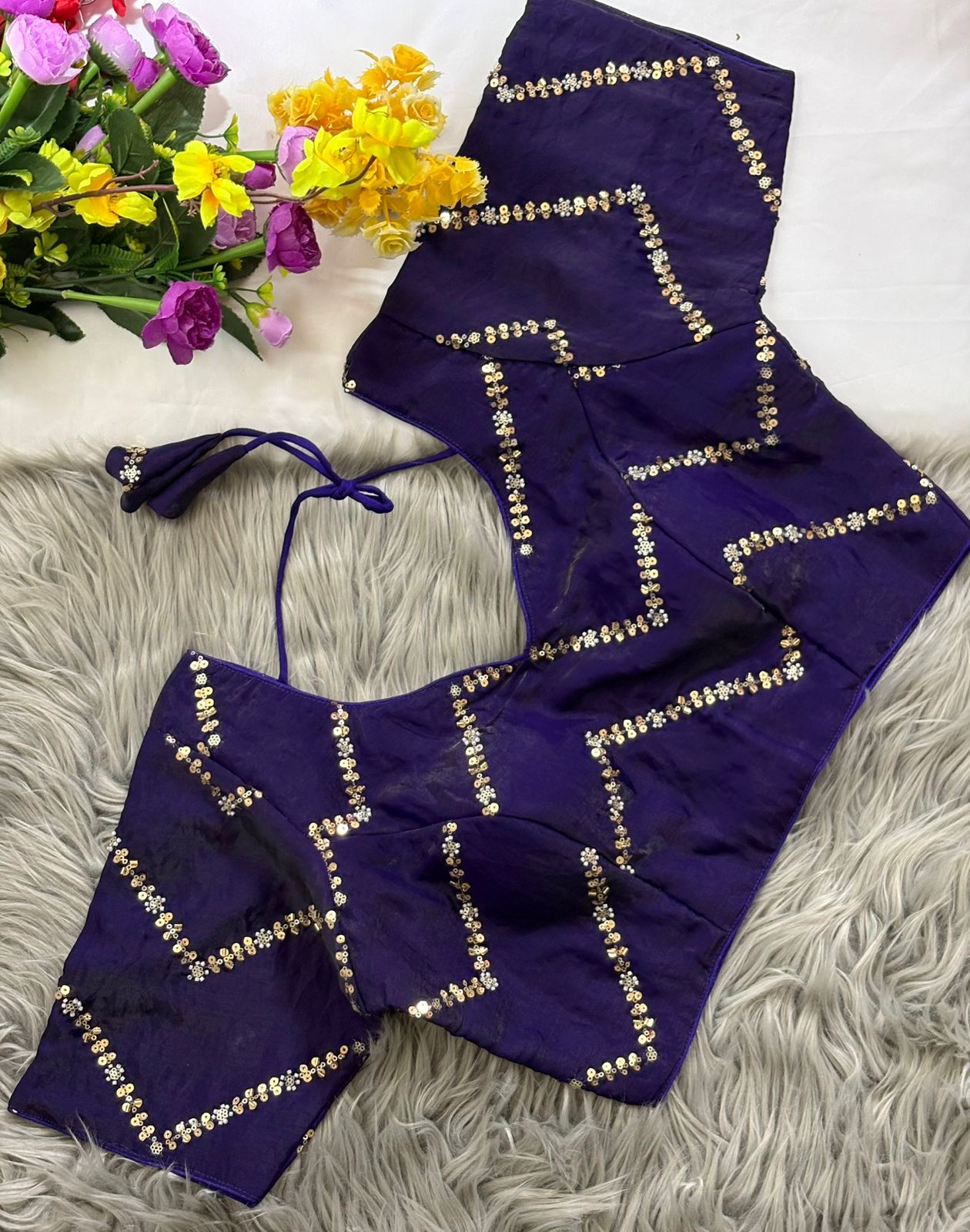
- Check the shoulder seams: Stand naturally and confirm that each seam ends at the shoulder point rather than dropping down the upper arm.
- Check the neckline: The neckline should lie flat without pulling backwards or gaping at the collarbone.
- Check the armholes: Raise both arms, reach forward and cross the arms lightly. Pinching, cutting or strong diagonal folds indicate a balance issue.
- Check the sleeve seam: Mark its original position with a removable safety pin, move for two minutes and see whether the seam repeatedly rotates.
- Check the closure: Hooks, zips or buttons should close without creating a ladder of horizontal stress lines.
- Check the hem: The lower edge should remain reasonably level instead of rising sharply at the front or back.
Readymade sizing is most reliable when measurements are compared rather than guessed. Record bust, underbust, shoulder width, armhole circumference, sleeve length and blouse length in centimetres. A difference of 2 to 3 centimetres in shoulder width can matter more than choosing one size up, because sizing up may add unwanted fullness across the bust and waist.
Classic Festive Wear Blouse for Stylish Saree Look may suit a wearer who wants a conventional festive silhouette, but the same inspection applies to a designer readymade style. "Designer" describes a visual treatment or pattern concept; it doesn't guarantee that the shoulder slope, sleeve pitch or armhole will match every body.
Blouse Sleeves Twisting? What It Says About Shoulder Fit Across Cotton and Silk
Fabric changes the visibility and severity of sleeve twisting, while sleeve design changes where the strain appears. Cotton often shows crisp diagonal folds, silk reveals rotation through shine and seam movement, and embellished fabrics can conceal early warning signs until discomfort becomes obvious.
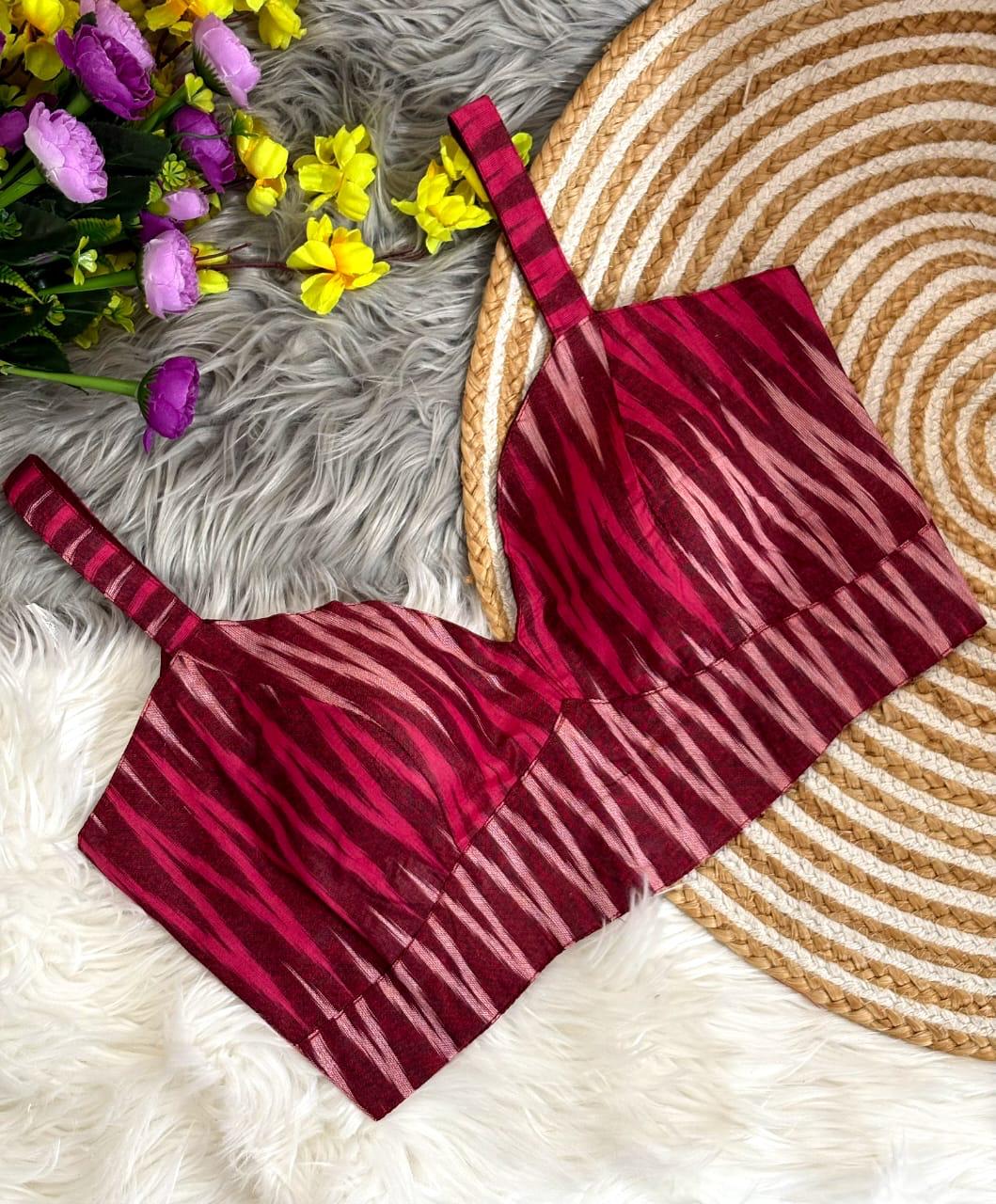
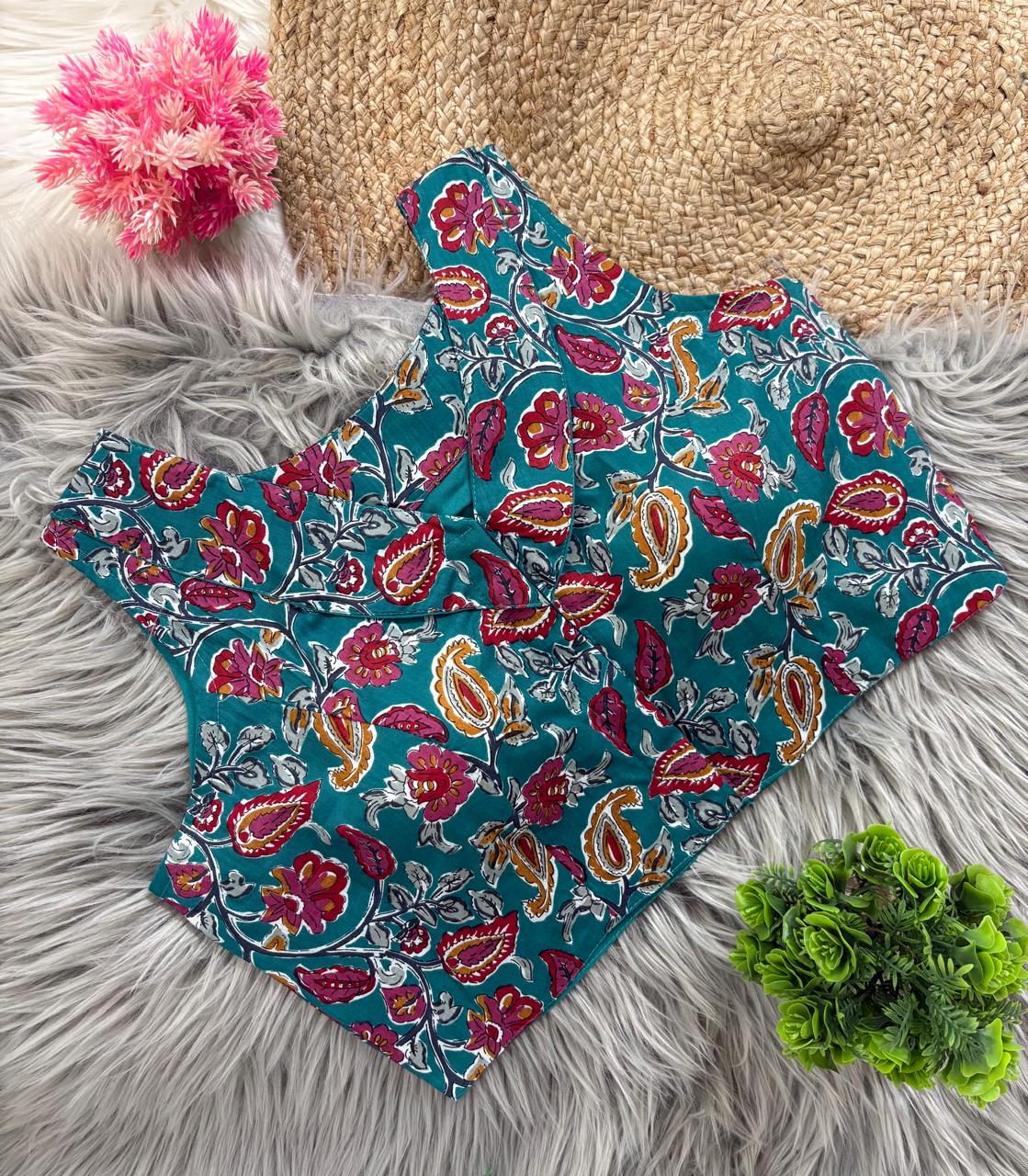
Ikat cotton and Kalamkari cotton usually have a stable hand that makes pattern distortion easy to notice. Ikkat Cotton Padded Blouse for Women Sleeveless and Brown Ikat Cotton Padded Blouse Sleeveless Stylish avoid sleeve twisting because they're sleeveless, but both styles still require accurate shoulder and armhole fit. A sleeveless armhole that stands away from the armpit may indicate excess width; an armhole that cuts into the underarm may be too small.
A fitted silk sleeve may rotate because the sleeve cap is too narrow or because the fabric has been cut off-grain. Silk doesn't need to be tight to look polished. Fendy Silk Zigzag Moti Work Readymade Blouse has a decorative surface where a misaligned sleeve seam can be harder to spot, so inspect the seam from the side and back as well as from the front.
Short sleeves, puff sleeves and sleeves with heavy embellishment each distribute weight differently. A heavily worked sleeve can pull downward and encourage rotation if the shoulder seam lacks support. A narrow sleeve can expose a small armhole error quickly, while a looser sleeve may hide the same imbalance through extra fabric.
Neckline shape also influences perception. A V-neck such as Kalamkari Cotton V Neck Collar Blouse for Women draws the eye towards the centre front, making a shoulder seam that sits too far forward easier to notice by comparison. A broad neckline may appear balanced while still leaving the sleeve attachment incorrectly placed.
Blouse Sleeves Twisting? What It Says About Shoulder Fit and Alterations
The correct alteration depends on where the strain begins; simply tightening the side seam rarely solves a rotating sleeve. A tailor should first identify whether the problem starts at the shoulder, armhole, sleeve cap, bust or back width.

A shoulder seam that sits too far outward can often be corrected by taking in the shoulder and reshaping the armhole. The sleeve must usually be detached and reattached because moving the bodice seam without adjusting the sleeve cap can create new puckering. This alteration is more practical when the garment has a seam allowance and a simple sleeve head.
A sloping shoulder may need a wedge removed from the shoulder line, with the neckline and armhole blended afterwards. A square shoulder may need extra height or width at the shoulder point. These adjustments should be made symmetrically only when both shoulders have the same shape; one-sided correction is appropriate when posture or shoulder height differs.
A tight armhole may require additional room at the underarm rather than a lower cut. A tailor can add a small gusset in some constructions, release an available seam allowance or reshape the sleeve cap. Heavy embroidery, lining and padding can limit the amount of alteration possible, so the first fitting should be accurate.
Pure Kalamkari Cotton Padded Blouse for Women is a useful example of why fabric structure matters during alteration. Cotton can generally tolerate careful pressing and reshaping, but repeated aggressive ironing can flatten padded areas and alter the garment's appearance. Alterations should be tested on the lining and outer fabric together.
Blouse Sleeves Twisting? What It Says About Shoulder Fit Before a Saree Event
Test the blouse at least 7 to 10 days before a wedding, reception or Haldi ceremony so that fitting changes can be completed without damaging the saree look. A garment should be worn for 15 to 20 minutes with the intended saree, bra, petticoat or shapewear before the final decision.
Walk, sit, lift both arms to shoulder height and reach forward as though adjusting the saree pallu. Watch whether the sleeve seam rotates, whether the blouse hem rides up and whether the neckline shifts. Take front, side and back photographs in natural light because a camera often makes diagonal drag lines easier to identify than a quick mirror check.
Storage and washing can also affect fit. Pre-wash cotton blouse fabric before tailoring when shrinkage is possible, and follow the care label for finished garments. Banarasi silk, zari and embellished surfaces generally need gentler handling than everyday cotton. Do not judge the post-wash fit of a cotton blouse until the garment has dried flat and been pressed according to its care requirements.
Good shoulder fit allows the blouse to stay in place while the wearer moves naturally. Sleeve rotation isn't merely a cosmetic inconvenience; it's evidence that the garment's pattern, construction or measurements may be working against the body. Identifying the exact source makes it easier to choose a suitable readymade blouse, request a targeted alteration or select a different sleeve design.
Common Questions About Twisting Blouse Sleeves and Shoulder Fit
Why do my blouse sleeves twist towards the front?
Sleeves commonly twist towards the front when the armhole is tight, the sleeve pitch does not match the natural forward position of the arm or the shoulder seam sits too far back. Bust tightness and forward-rounded posture can add to the pull. Check the shoulder seam and armhole before changing the sleeve length.
Can a blouse sleeve twist even if the bust size is correct?
Yes, a blouse can match the bust measurement and still twist because shoulder width, shoulder slope, armhole depth or sleeve-cap shape is incorrect. Bust circumference measures the body around the fullest area, while shoulder fit controls the sleeve attachment. Both measurements need to be assessed separately.
How should a readymade blouse shoulder seam fit?
A readymade blouse shoulder seam should finish close to the shoulder point where the shoulder turns into the upper arm. The seam should not fall down the arm or end noticeably before the shoulder bone. The neckline should remain flat while the wearer raises both arms and reaches forward.
Is a tight armhole the reason my saree blouse sleeve twists?
A tight armhole is one common reason, especially when the underarm feels pinched and the blouse rides upward during movement. A low armhole, incorrect sleeve pitch or narrow sleeve cap can cause similar symptoms. A tailor should identify the starting point of the drag instead of automatically lowering the armhole.
Does silk show blouse sleeve twisting more than cotton?
Silk can make sleeve rotation more visible because light reflects off the fabric and reveals changes in the grain and seam direction. Cotton often shows the problem through sharper diagonal creases. Embellished silk may hide early twisting, so inspect the sleeve from the front, side and back.
Can a tailor fix sleeves that keep twisting?
A tailor can often correct twisting by adjusting the shoulder seam, reshaping the armhole, changing the sleeve pitch or rebuilding the sleeve cap. The alteration may be limited when the blouse has little seam allowance, heavy zari, fixed padding or a closed lining. A fitting test before stitching helps prevent an expensive correction later.


