Blouse Sleeve Openings Can Be Tight Even When the Armhole Fits, and the discomfort usually appears when you bend your elbow, raise your hand or wear bangles. The armhole controls movement around the shoulder and underarm, while the sleeve opening controls the lower edge of the sleeve near the upper arm, elbow, forearm or wrist. These are separate measurements, so a blouse can sit correctly across the bust and shoulder while the sleeve still pinches.
A comfortable readymade blouse needs more than the correct bust size. Sleeve length, opening circumference, seam allowance, fabric recovery, lining thickness and ease around the arm all affect the final fit. Checking those details before buying helps prevent a blouse that looks polished in a photograph but becomes uncomfortable during a long wedding, reception or Haldi ceremony.
Blouse Sleeve Openings Can Be Tight Even When the Armhole Fits: Why does this happen?
A blouse sleeve opening can be tight when the cuff circumference is too small, even if the armhole has the correct shoulder and underarm dimensions.
The armhole is the curved opening that joins the bodice to the sleeve. The sleeve opening is the lower edge of the sleeve, usually finishing at the upper arm, elbow, forearm or wrist. A pattern maker can grade the bodice accurately across sizes but keep the sleeve opening relatively narrow to create a sharper silhouette. That proportion may work for one body and feel restrictive on another body with the same bust measurement.
Different arm positions reveal different fit problems. A tight armhole pulls the blouse upward, creates horizontal drag lines at the underarm and restricts lifting. A tight sleeve opening leaves pressure marks at the sleeve edge, makes the fabric wrinkle above the cuff and may cause tingling when the elbow is bent. A blouse can therefore pass an armhole fit check and fail a sleeve comfort check.
Readymade blouses also rely on standard proportions. Two people with a 36-inch bust may have different upper-arm, elbow and wrist measurements. The difference becomes more noticeable in fitted sleeves, padded blouses and designs made from woven silk or cotton with little stretch.
Blouse Sleeve Openings Can Be Tight Even When the Armhole Fits: Which measurements matter?
The most useful measurements are the upper-arm circumference, sleeve-opening circumference, sleeve length and the distance from the shoulder seam to the opening.
Blouse Sleeve Openings Can Be Tight Even When the Armhole Fits: Measuring the arm
Measure the upper arm at its fullest point while keeping the tape level and loose enough to slide one finger underneath. Measure the sleeve opening at the place where the finished sleeve will end. A short sleeve ending above the elbow needs an upper-arm measurement; a three-quarter sleeve needs a forearm measurement; a full sleeve ending at the wrist needs a wrist measurement plus enough room for the hand to pass through.
The finished opening should not equal the body measurement exactly. Woven cotton and Banarasi silk generally need positive ease, meaning the garment measurement is larger than the body measurement. A practical starting point is 1 to 2 inches of ease for a close but wearable short sleeve. A sleeve ending near the elbow or passing over the hand may need more room. The correct amount depends on sleeve shape, fabric thickness and whether a slit or fastening is provided.
Blouse Sleeve Openings Can Be Tight Even When the Armhole Fits: Measuring sleeve length
Sleeve length changes where pressure is felt. A sleeve ending at the widest part of the upper arm needs more circumference than a sleeve ending several centimetres above or below that point. A tapered sleeve can feel tighter at the same measurement because the elbow and forearm need additional space when the arm bends.
Measure both arms if one arm is visibly fuller. Tailors commonly cut to the larger measurement and balance the smaller side with a modest adjustment. A difference of even 1 inch in circumference can matter when the sleeve opening has narrow finishing, a thick lining or heavy embellishment.
Blouse Sleeve Openings Can Be Tight Even When the Armhole Fits: How should you check a readymade blouse?
Check the garment's actual sleeve opening, not only the size label or bust measurement.
- Measure a comfortable blouse. Lay a blouse flat without stretching it. Measure straight across the sleeve opening and multiply by two. Record whether the opening has a facing, piping, elastic, hook, zip or slit.
- Compare similar designs. Compare a short-sleeve blouse with another short-sleeve blouse and note whether the fabrics have similar thickness and stretch. A sleeveless blouse can't provide a sleeve-opening reference.
- Check the seam allowance. A sleeve with generous internal allowance may be altered more easily than a sleeve with a narrow cut edge. The visible opening doesn't reveal how much extra fabric is hidden inside.
- Inspect the construction. A slit with a button or hook can allow the hand to pass through without making the entire cuff wide. A closed, tapered cuff needs enough circumference for both the wrist and the hand.
- Perform a movement test. Raise both arms, cross them in front of the body, bend the elbows and rotate the wrists. Comfort should remain consistent without digging at the opening or pulling the shoulder seam.
The Classic Festive Wear Blouse for Stylish Saree Look is a useful example of why the whole pattern matters. A festive blouse may look relaxed at the bodice but still need checking at the sleeve edge, especially when worn for several hours at a wedding.
Blouse Sleeve Openings Can Be Tight Even When the Armhole Fits: How do cotton and silk behave?
Cotton, silk and padded blouse constructions behave differently because their stretch, thickness and internal layers change the usable space inside the sleeve.

Blouse Sleeve Openings Can Be Tight Even When the Armhole Fits: Cotton considerations
Woven cotton normally has limited stretch unless it's blended or knitted. A woven cotton sleeve therefore needs sufficient ease at the opening from the beginning. Cotton may soften slightly after washing, but washing should not be treated as a reliable way to enlarge a tight sleeve. Shrinkage can make the problem worse if the garment is washed in hot water or dried in strong heat.
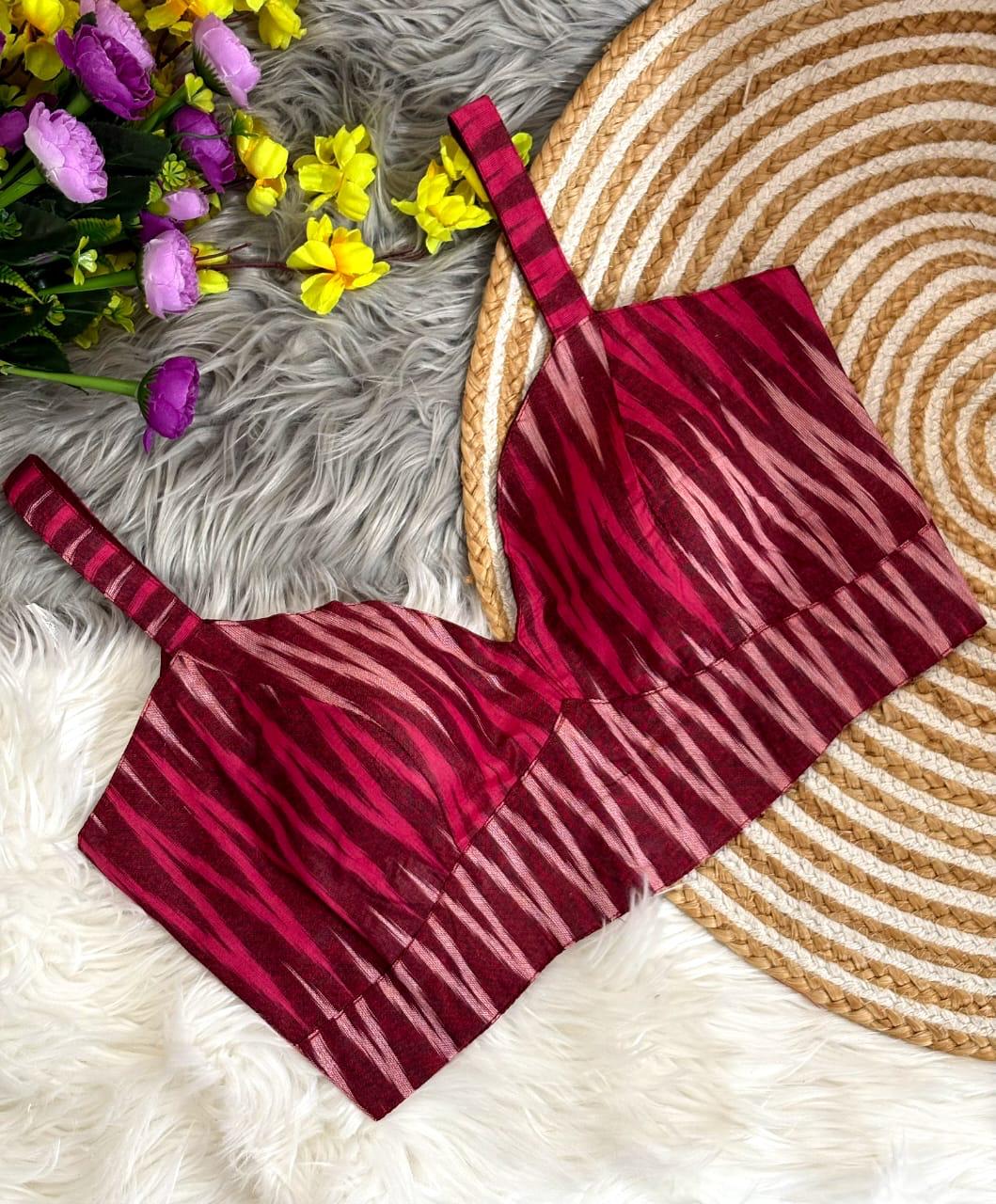
The Ikkat Cotton Padded Blouse for Women Sleeveless, Cream Ikat Cotton Padded Blouse Sleeveless Trendy and Brown Ikat Cotton Padded Blouse Sleeveless Stylish demonstrate a related fit point: sleeveless construction removes the sleeve-opening issue but doesn't remove the need to check the armhole. A sleeveless armhole that cuts into the underarm can remain uncomfortable even when the bust fits correctly.
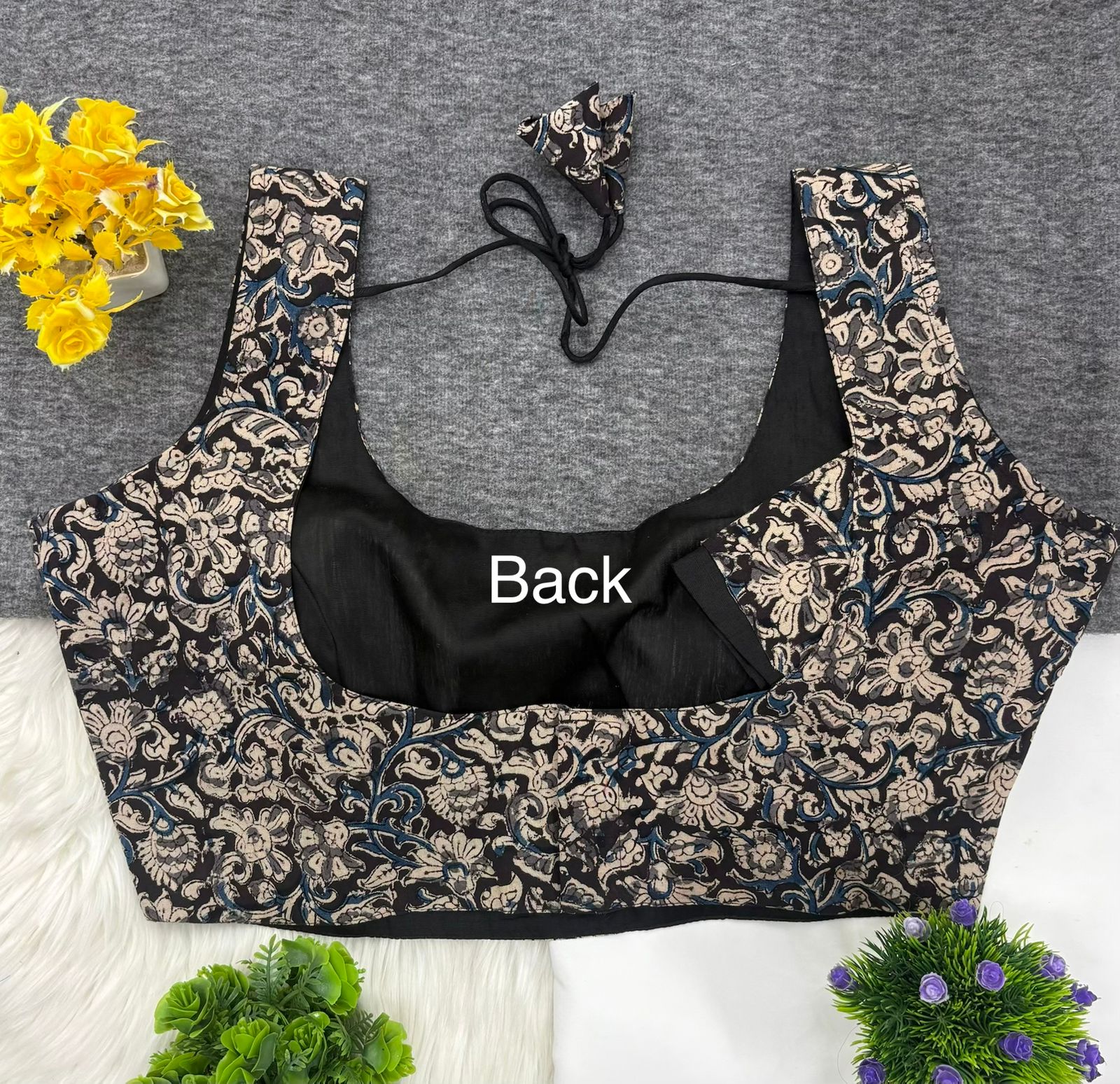
The Pure Kalamkari Cotton Padded Blouse for Women and Kalamkari Cotton V Neck Collar Blouse for Women require attention to both fabric body and lining. Padded cotton blouses contain additional layers around the bust, and dense lining can reduce the ease that appears available from the outer fabric. The lower armhole should sit flat without cutting into the underarm when the wearer lifts both arms.
Blouse Sleeve Openings Can Be Tight Even When the Armhole Fits: Silk and embellishment
Banarasi silk and many other woven silk fabrics have little natural give. A narrow sleeve opening in Banarasi silk can feel more restrictive than the same opening in a stretch blend. Zari, embroidery and dense surface work can also add weight or stiffness near a cuff.
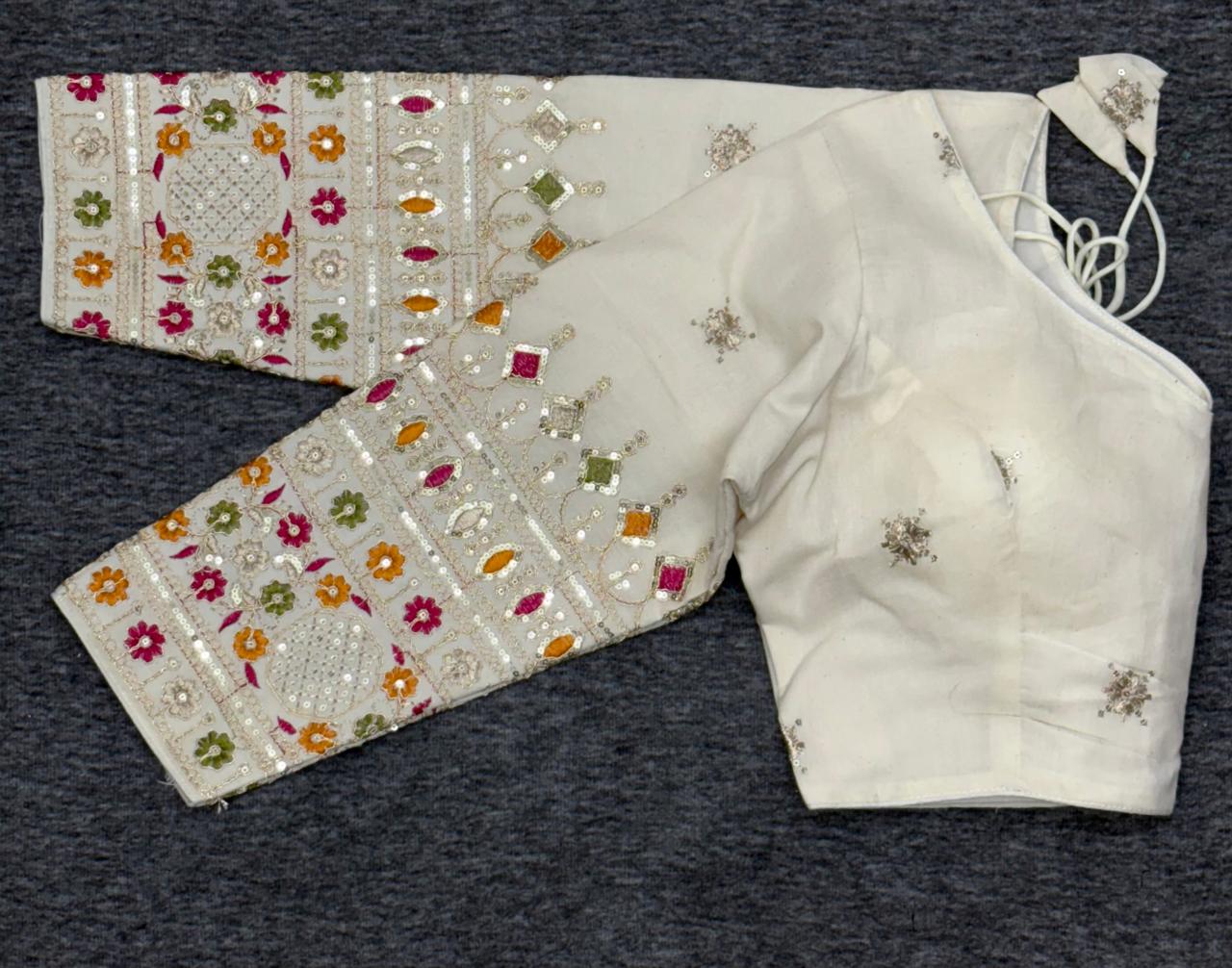
The Banarasi Silk Golden Jari Padded Blouse for Women illustrates why sleeve measurements should be considered alongside embellishment. A padded bodice and golden zari surface may require careful handling during alteration because cutting through decorative areas can disturb the finish. A tailor should inspect the seam before deciding whether to widen the opening.
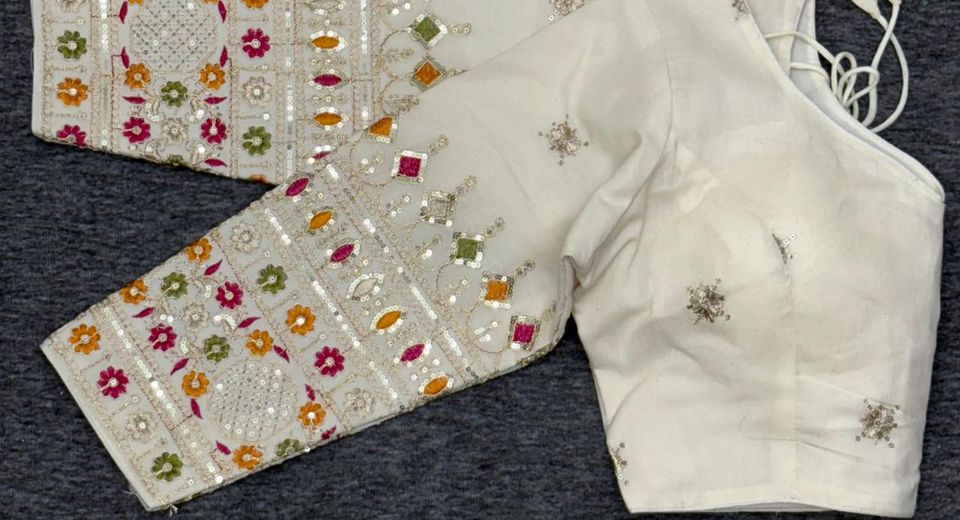
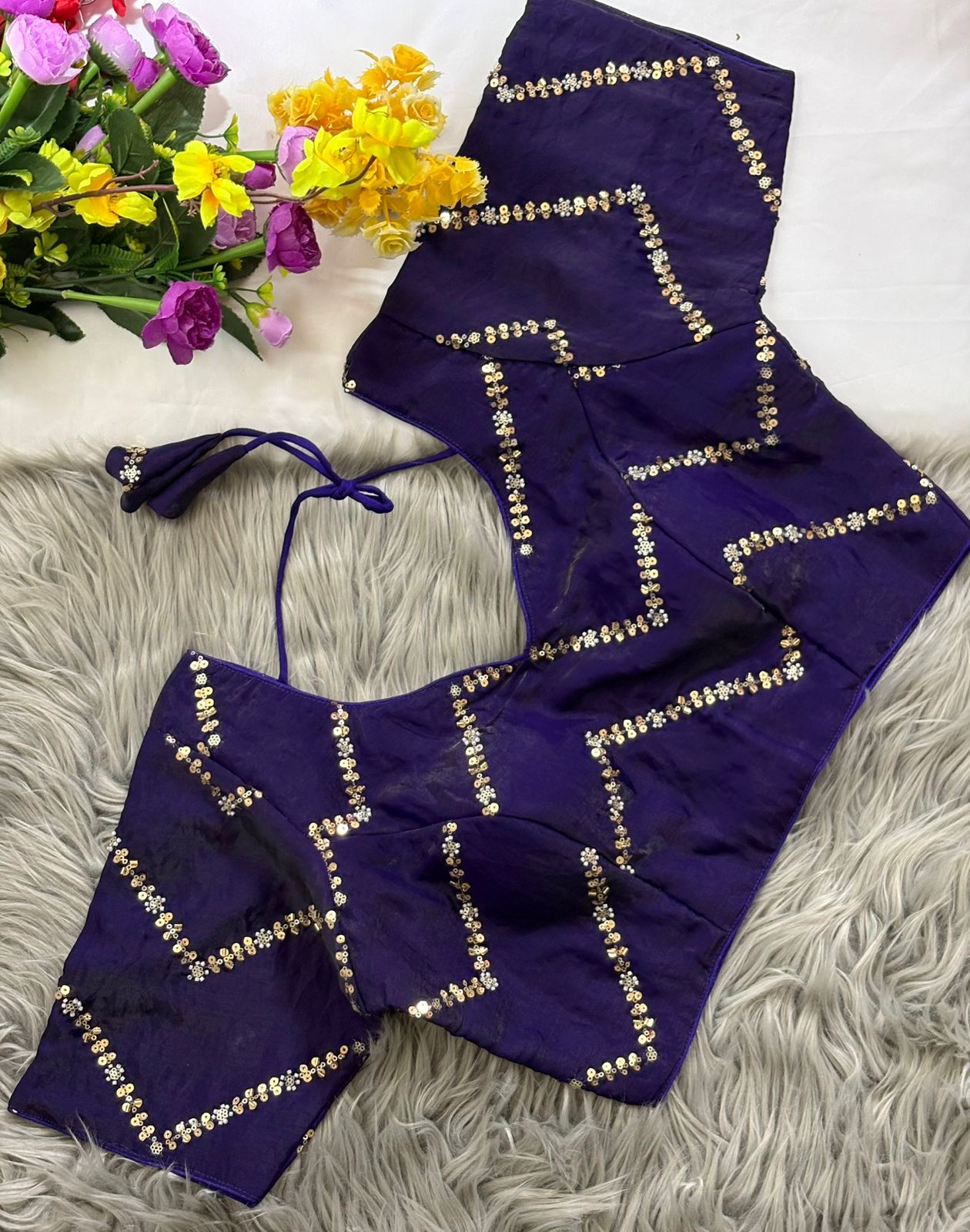
The Fendy Silk Zigzag Moti Work Readymade Blouse has another relevant consideration: moti work and structured finishing can make a sleeve edge less flexible. A sleeve may have an adequate flat measurement but still feel firm when the arm bends because ornamentation doesn't yield like plain fabric.
Blouse Sleeve Openings Can Be Tight Even When the Armhole Fits: How can you identify the problem?
A tight cuff leaves pressure at the lower sleeve edge, while a tight armhole restricts movement at the shoulder and underarm.
Stand in front of a mirror and observe the blouse while lifting one arm. If the whole bodice rises toward the armpit, the armhole or sleeve crown may be too small. If the shoulder remains stable but the sleeve edge presses into the arm, the opening is the more likely problem. If diagonal wrinkles run from the underarm toward the bust, the sleeve may be pulling the bodice even when the cuff itself feels acceptable.
A seated test can identify a cuff issue. Bend the elbow to approximately 90 degrees and keep the forearm horizontal for one minute. A sleeve opening that leaves deep marks, causes tingling or makes the hand feel cold is too restrictive for extended wear. Test the blouse with the bangles or watch you expect to wear because jewellery can intensify pressure around the wrist or forearm.
Fit also changes after draping a saree. Shoulder pleats, a firmly wrapped pallu or repeated arm movements can add tension to the blouse. A sleeve that feels barely acceptable with casual clothing may feel noticeably tighter during a Haldi ceremony, reception or long family function.
Blouse Sleeve Openings Can Be Tight Even When the Armhole Fits: Can a tailor loosen them?
A tailor can loosen a tight sleeve opening when enough seam allowance, fabric or a suitable design solution is available.

The first alteration option is releasing the sleeve seam. This works when extra fabric is folded inside the seam and the opening can be widened without distorting the sleeve shape. A tailor should calculate the required increase rather than opening the seam as far as possible, because an uneven cuff can twist around the arm.
The second option is adding a small gusset or fabric insert. A matching insert can increase movement and may suit a casual cotton blouse, although the insert should be placed symmetrically if both sleeves need adjustment. A contrasting insert can become a deliberate design detail in a less formal blouse, but it may be less suitable near zari or dense embroidery.
The third option is changing a closed cuff to a cuff with a slit and fastening. A hook, button or concealed opening can make hand passage easier without enlarging the entire sleeve. This solution is useful for a full sleeve ending near the wrist, provided the fastening doesn't rub against bangles.
Alteration may not be practical when the sleeve has no seam allowance, the opening is cut directly through heavy zari, the lining is smaller than the outer sleeve or the design has a fixed decorative border. A blouse with a severely undersized opening may need a replacement sleeve rather than a small adjustment. Ask for the finished opening measurement after alteration and try the blouse again with the intended saree and jewellery.
Blouse Sleeve Openings Can Be Tight Even When the Armhole Fits: What should you check before buying?
Choose a blouse by comparing bust, shoulder, armhole, upper-arm and sleeve-opening measurements instead of relying on one size number.
For a readymade blouse, record five details before ordering: the bust range, shoulder width, armhole depth, sleeve length and finished sleeve opening. Ask whether the stated measurements describe the garment or the body. Garment measurements are more useful for fit comparison because they include the ease built into the pattern.
For a designer readymade blouse, inspect the construction as carefully as the neckline and surface work. A dramatic V-neck, boat neck or padded bodice may attract attention, but comfort depends on seams, lining, fastening placement and movement space. A designer saree blouse should remain wearable while sitting, greeting guests, lifting a child or adjusting a saree pleat.
Fabric choice also affects the decision. Cotton is breathable and practical for daytime functions but usually offers limited stretch. Silk creates a structured finish but may need more precise measurements. Stretch fabric can accommodate small variations, yet stretch should not be used to excuse pressure, numbness or restricted movement.
Care after purchase protects the original fit. Follow the garment's washing instructions, avoid hot water for cotton unless shrinkage is expected, and store padded blouses flat or supported so the lining doesn't crease. Do not iron directly over zari, moti work or padded sections. A sleeve opening that fits correctly on the first wear can become tighter after unsuitable washing or heat exposure.
The best blouse is one that allows natural movement without constant adjustment. A correct armhole matters, but the sleeve opening deserves its own measurement, movement test and alteration plan. That small check can make the difference between wearing a saree blouse comfortably for an hour and enjoying it throughout an entire celebration.
Practical Questions About Tight Blouse Sleeve Openings
Why is my blouse tight at the sleeve opening but loose around the armhole?
The sleeve opening and armhole are separate pattern measurements, so a blouse can have a suitable shoulder and underarm fit but a narrow cuff. Compare the opening with your upper-arm, forearm or wrist measurement, depending on where the sleeve ends.
How much ease should a readymade blouse sleeve opening have?
A close woven sleeve commonly needs about 1 to 2 inches of ease beyond the body measurement, although the exact amount depends on sleeve length, fabric thickness and construction. A tapered sleeve, padded lining or heavy embellishment may need additional room for comfortable movement.
Can a tailor widen a tight silk blouse sleeve?
A tailor can widen a silk blouse sleeve when the seam contains enough allowance or when a suitable gusset or slit can be added. Alteration is more difficult when zari, embroidery or moti work crosses the seam, so the internal construction should be inspected first.
Does a cotton blouse sleeve loosen after washing?
Cotton may soften after washing, but a tight woven cotton sleeve should not be expected to stretch reliably. Hot water and high heat can shrink cotton and make the sleeve opening tighter, so care instructions should be followed before judging any change in fit.
How can I tell whether the armhole or sleeve opening is causing discomfort?
A tight armhole usually pulls the bodice upward and restricts shoulder movement, while a tight sleeve opening creates pressure marks at the lower sleeve edge. Raise your arms, bend your elbows and hold the position for one minute to identify where the restriction occurs.
What should I measure when buying a designer readymade blouse?
Measure the bust, shoulder, armhole, upper arm, sleeve length and finished sleeve opening. Compare those garment measurements with a blouse that already fits comfortably instead of choosing only by the printed size label.