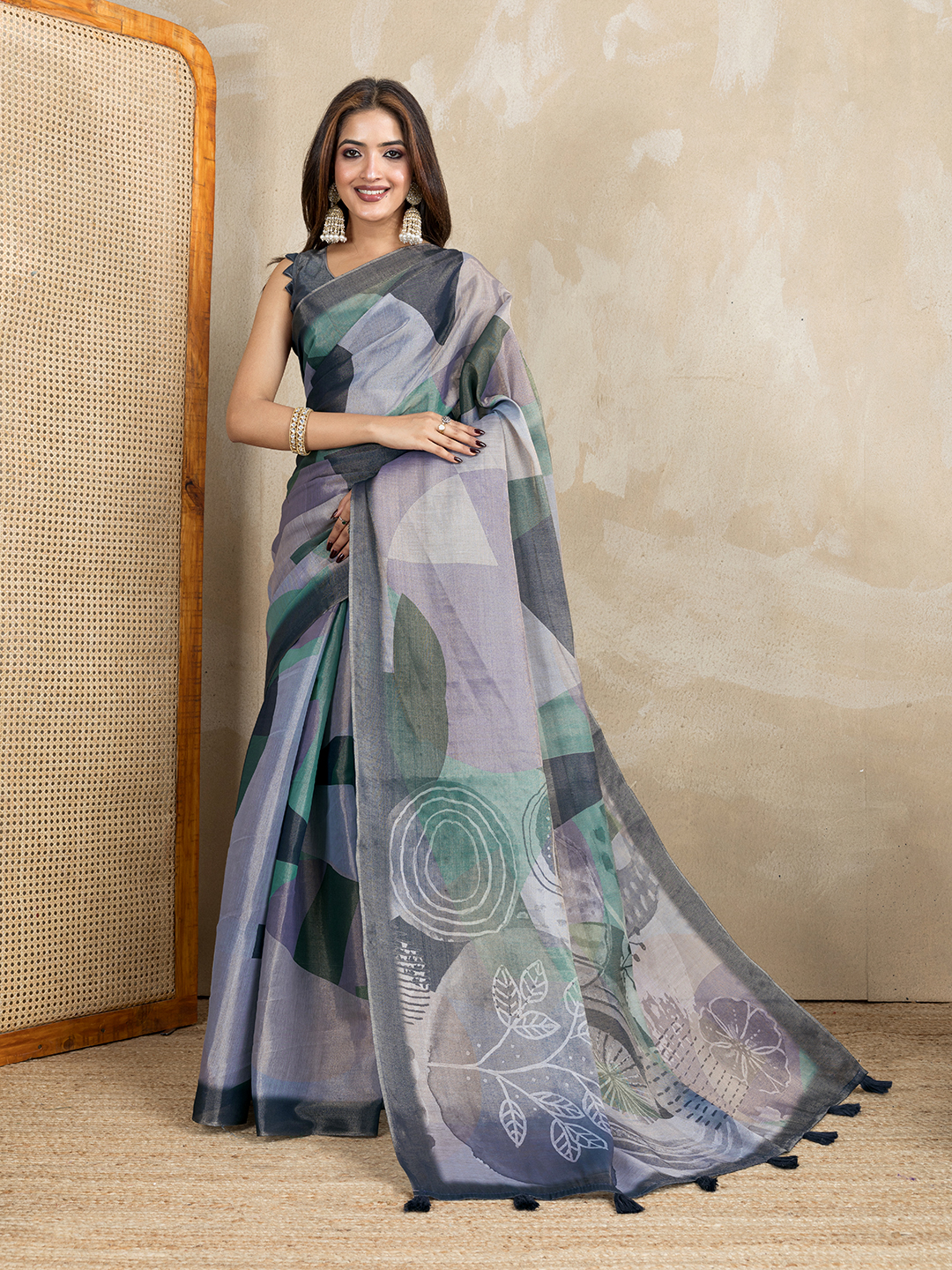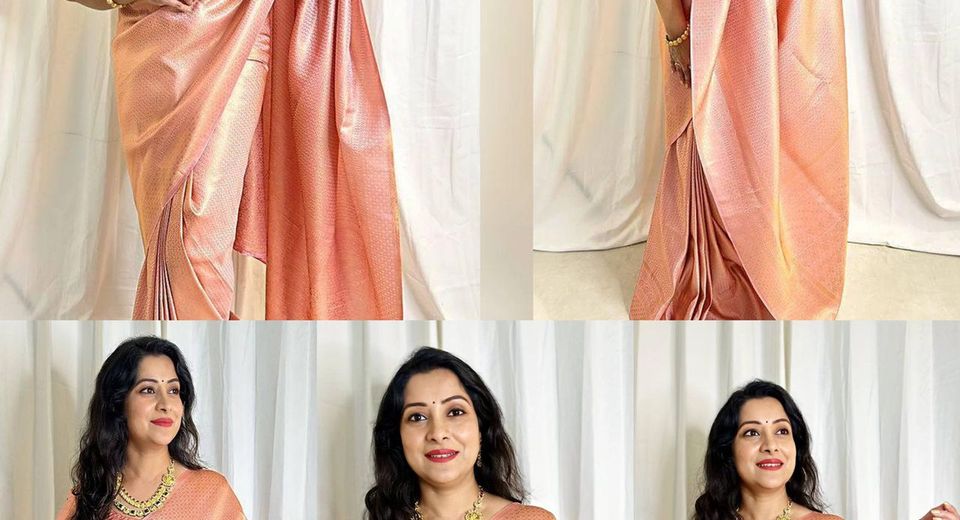
Blouse Hooks That Sit Under the Saree Pallu Need a Smoother Finish because even a small ridge can catch silk, snag zari, or show through a closely draped pallu. A comfortable blouse depends on more than the hook itself: the fastening needs the right size, a stable strip of fabric behind it, covered edges, and enough ease for breathing and movement. These details matter especially with Banarasi silk, Kanjeevaram, Chanderi, tissue cotton, and embellished sarees whose surfaces can reveal or catch rough tailoring.
The best result is a closure that lies flat when the arm moves, doesn't scratch the skin, and remains hidden beneath the saree pallu. Good finishing also protects the saree. A pallu resting over a badly secured hook may develop pulled threads, small loops, or repeated friction marks during a wedding, reception, or Haldi ceremony.
Blouse Hooks That Sit Under the Saree Pallu Need a Smoother Finish for a Reason
Blouse hooks under a saree pallu need a smooth finish because the pallu repeatedly slides across the fastening as the wearer walks, sits, adjusts the pleats, and raises her arms. A hook with an exposed metal tip or loose thread creates a snag point at exactly the part of the saree that receives the most handling.
The pallu can conceal the blouse opening, but concealment doesn't remove pressure. When the pallu is pinned close to the shoulder, the fabric may press directly against the hook tape. A raised hook can then leave a visible line on lightweight Chanderi or tissue cotton. A sharp hook can catch zari, mirror work, jacquard threads, or printed fibres.
Hook comfort also affects posture. If a metal edge scratches the upper back, the wearer may pull the pallu forward or loosen the blouse throughout the event. That adjustment changes the fall of the saree and can expose the blouse opening. A properly finished closure supports a stable drape without requiring constant correction.
What problems does a rough hook create?
A rough hook can cause four common problems: snagging, scratching, bulging, and opening under strain. Snagging is most likely when a hook eye is exposed or when thread ends are left near the fastening. Scratching occurs when the metal touches the skin because the lining is too narrow or the hook tape has shifted.
Bulging usually comes from a thick seam allowance, oversized hooks, or several layers of stiff fabric stacked at the centre-back. Opening under strain generally indicates insufficient hook spacing, a loose bar, or a blouse that's too tight across the bust and upper back. Changing to smaller hooks won't solve a blouse that lacks wearing ease.
Blouse Hooks That Sit Under the Saree Pallu Need a Smoother Finish Through Better Placement
A tailor should position hooks on a straight, supported centre-back edge and keep the fastening inside the area covered by the pallu without placing it directly on a bulky seam. The opening should follow the wearer's back rather than forcing the pallu to hide an uneven or tilted closure.
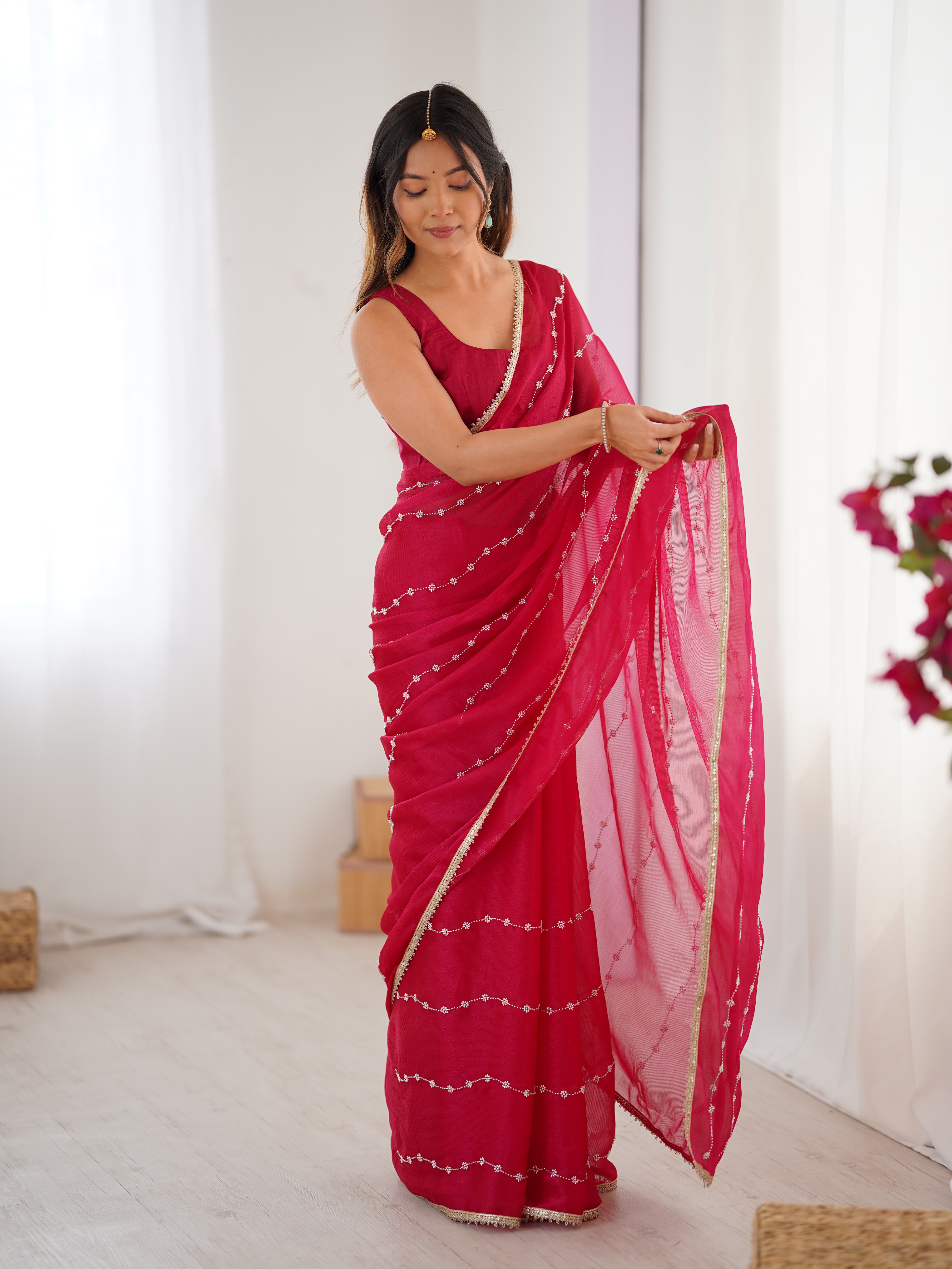
Hook placement begins with the actual drape. The wearer should bring the pallu over the shoulder in the intended style before the final hook position is marked. A narrow Gujarati pallu arrangement, a classic Nivi drape, and a front-pallu style expose different sections of the blouse. The visible portion should remain clean, while the fastening should still be reachable without pulling the saree out of place.
Hooks should be evenly spaced from the neckline or upper back down to the waist. Uneven gaps make the centre-back edge ripple. Very large gaps allow the blouse to gape between fasteners, while excessively close spacing adds bulk and makes dressing slow. The exact number depends on the blouse length, fabric weight, and amount of body movement required, but every fastening point should sit on a firm, aligned edge.
The top hook deserves special attention because it often sits closest to the shoulder blade and receives tension when the wearer moves her arms. A thread bar should be firmly anchored, and the hook should not be placed so near the neckline that the seam folds over it. The bottom fastening should also remain clear of the waist seam, where multiple layers can create a hard ridge.
How does the intended saree drape change hook placement?
The intended saree drape changes hook placement because different pallu angles cover different parts of the blouse. A pallu pinned tightly over the shoulder applies more friction to the upper back, while a looser drape may expose the neckline or side-back edge.
Mark the hook line while wearing the blouse with the actual saree, blouse neckline, and planned pallu pins. A tailor can then avoid placing a fastening where a pin, border, or decorative lace will repeatedly rub against it. This fitting step is more reliable than estimating coverage from a blouse worn without a saree.
Blouse Hooks That Sit Under the Saree Pallu Need a Smoother Finish with the Right Materials
A narrow hook-and-eye tape, stable lining, fine matching thread, and a thin seam finish create a flatter blouse closure than loose hooks stitched directly onto delicate fashion fabric. Material selection should match both the blouse fabric and the saree that will cover it.
Choose hook size according to fabric weight
Small hooks suit lightweight cotton, Chanderi, chiffon, and tissue blends when the blouse edge has adequate support. Medium hooks are more suitable for silk blouses or a closure carrying moderate tension. Oversized hooks can create visible bumps beneath a smooth pallu, especially when the blouse is made from thin satin or tissue.
Banarasi silk and zari-rich fabrics require careful backing because the woven surface can be damaged by repeated needle movement. A tailor can reinforce the centre-back with a narrow strip of matching lining or lightweight interfacing before attaching the hooks. The reinforcement should stop short of creating a rigid plank down the back.
Use lining as a protective barrier
A lining protects the skin and the saree by covering the reverse side of the hooks and absorbing friction. Cotton voile, soft cotton, or a smooth blouse lining can work well when cut neatly and secured inside the seam. The lining should not extend beyond the edge, because a protruding layer can catch the pallu or become visible when the blouse stretches.
A folded fabric guard behind the hook line is useful when the metal tends to touch the skin. The guard must remain flat and flexible. Thick folded satin, bulky embroidery backing, or multiple layers of canvas may feel secure during a fitting but become uncomfortable after several hours of sitting and movement.
Blouse Hooks That Sit Under the Saree Pallu Need a Smoother Finish Before a Trial Drape
You can test a saree blouse hook finish by wearing the blouse with the actual saree for at least 20 minutes and checking the closure during sitting, walking, arm movement, and pallu adjustment. A standing mirror alone can't reveal pressure points or snagging caused by movement.
Fasten every hook and drape the pallu exactly as planned. Run a clean piece of lightweight fabric over the covered closure with gentle pressure. If the fabric catches, inspect the hook eye, thread ends, seam allowance, and lining edge. Do not perform this test with a rough towel, because a towel can catch on a perfectly acceptable fastening and give a misleading result.
Raise both arms, turn the upper body, sit on a chair, and reach forward. These movements reveal whether the blouse pulls at the centre-back. A hook that opens during movement indicates tension, not simply a faulty hook. The blouse may need more ease, a stronger bar, an additional fastening, or adjustment at the bust and shoulder.
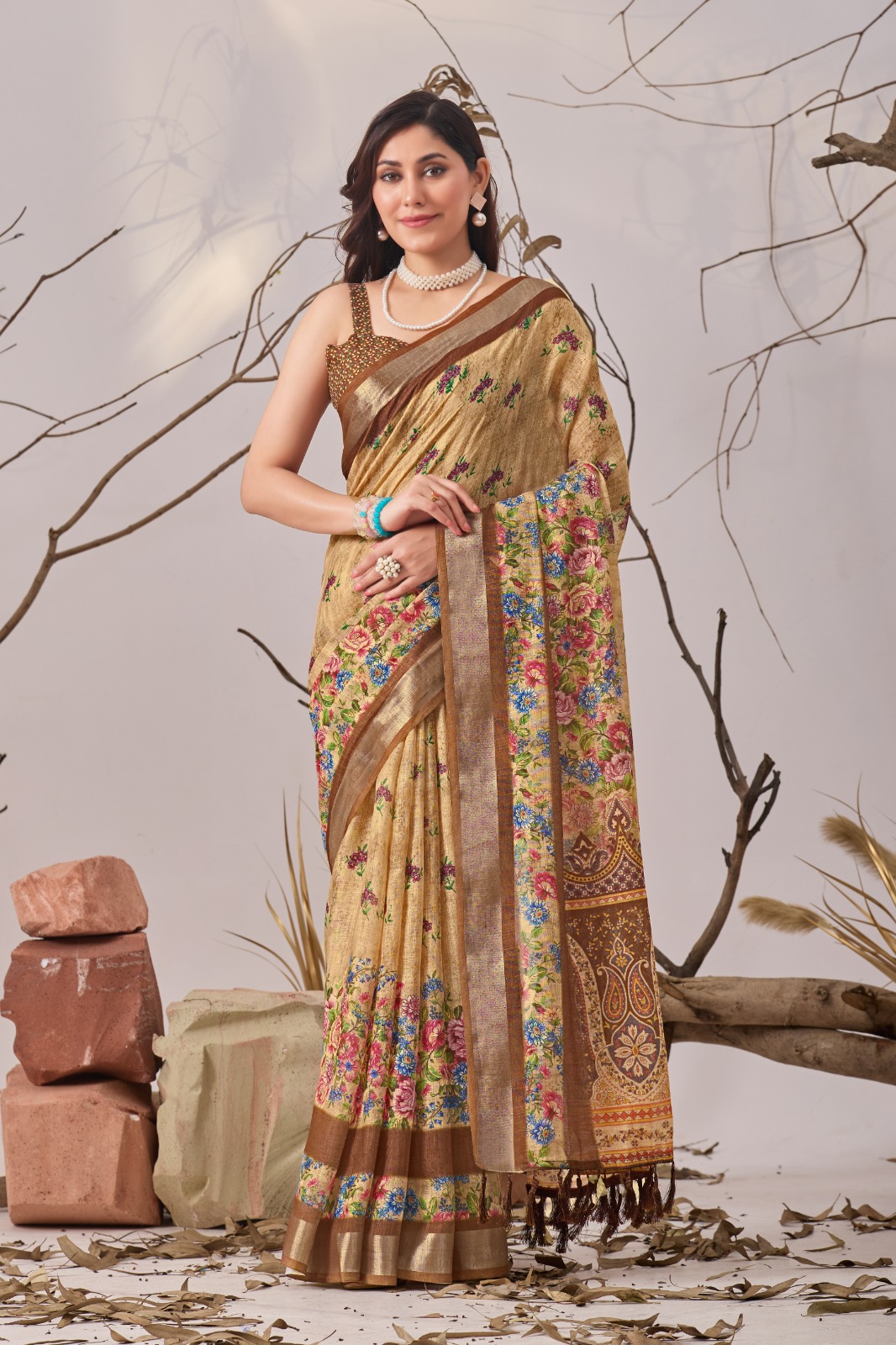
Check the pallu after the trial. Look for small loops, displaced zari, pressure lines, or a ridge following the hook line. This inspection is particularly important with a Pink Soft Pashmina Silk Printed Saree With Patola Border, a Pink Patola Print Pashmina Silk Saree With Mirror Work, or any saree with raised embellishment near the pallu.
Which signs mean the blouse needs alteration?
A blouse needs alteration when the centre-back edge ripples, the hooks pull sideways, the pallu catches during a gentle fabric test, or the uppermost hook opens when the arms rise. These signs indicate a construction or fit issue rather than a styling preference.
Ask the tailor to inspect the full fit before replacing the hooks. Tightness across the bust, shoulder, or armhole can transfer force to the centre-back. A stronger hook may temporarily hide the symptom while increasing pressure on the fabric and skin.
Blouse Hooks That Sit Under the Saree Pallu Need a Smoother Finish for Delicate Sarees
Lightweight tissue cotton, Chanderi, fine silk, satin-like surfaces, and closely woven jacquard fabrics reveal hook bumps more easily than heavier textured fabrics. A smooth pallu magnifies unevenness because light travels across the surface without being broken by a deep weave or dense texture.
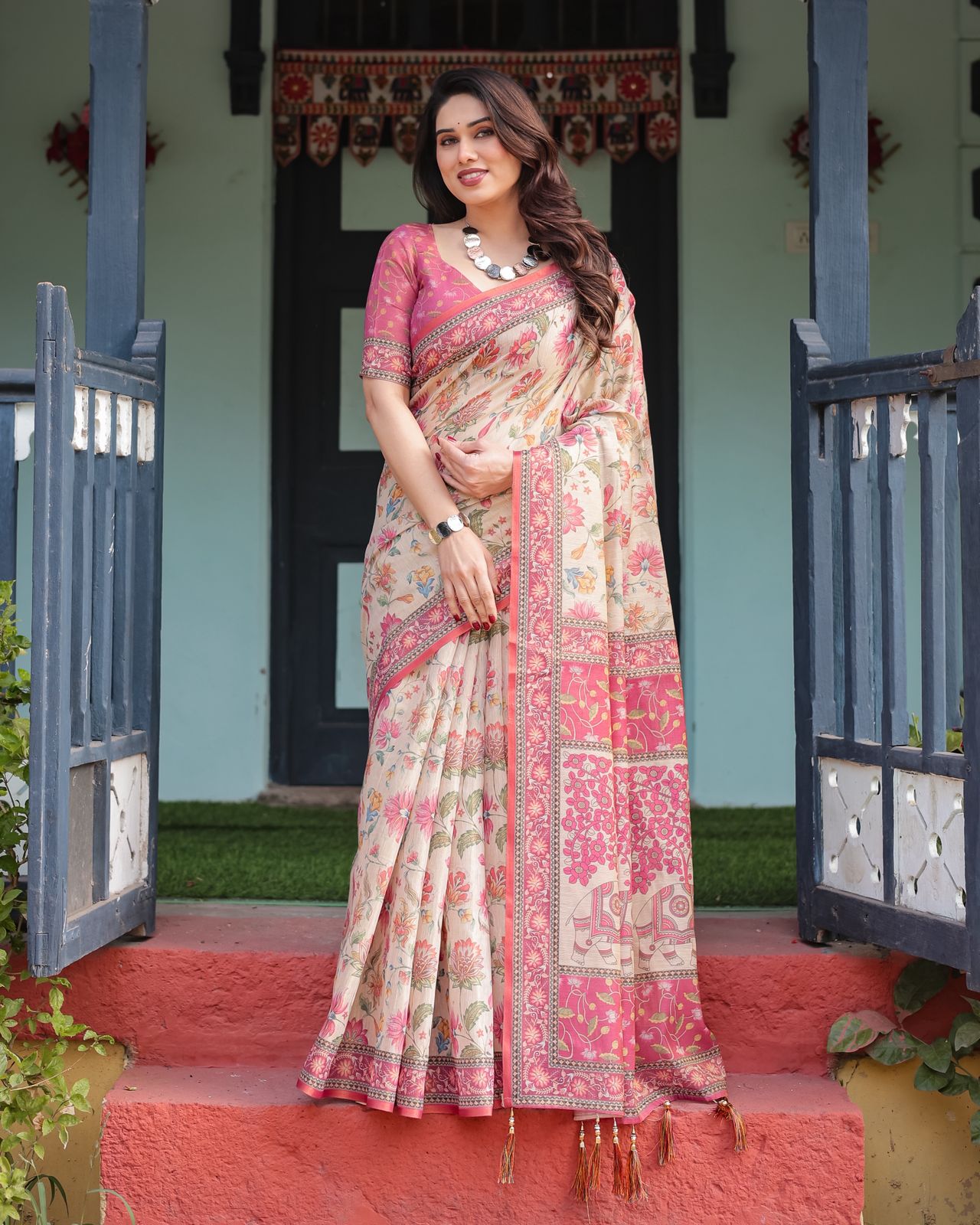
A Peach Tissue Cotton Saree With Floral Print | Varnavi illustrates why surface care matters: a crisp, light pallu can show a raised fastening when it's pinned close to the blouse. The blouse closure should therefore be checked for both height and friction rather than judged only by whether the hooks close.
A Pastel Aqua Lichi Silk Saree with Rich Jacquard Border and a Peach Lichi Silk Saree with Rich Pallu & Jacquard Work have more structured woven detail around the border and pallu. Structured fabric may hide a minor bump better than tissue, but jacquard threads can still catch on an exposed hook. A covered fastening remains the safer choice.
A Premium Handloom Silk Saree with Handkatha may have a more substantial handloom body, yet the pallu can still pass over the blouse closure many times during wear. Handloom silk, zari, and decorative surface work should not be treated as snag-proof. The reverse of the blouse deserves the same care as the visible front.
How should printed, lace and embellished sarees be checked?
Printed, lace, and embellished sarees should be checked with a fabric trial that follows the direction of the pallu. A Floral Chinnon Ready to Wear Saree with Mirror Lace requires particular attention around the mirror lace, because loose hook threads can catch against decorative edges when the pallu is arranged.
Ready-to-wear constructions may place the closure differently from a conventional stitched blouse. Check where the attached pleats and pre-set pallu fall before making alterations. Moving a hook line without understanding the garment construction can disturb the intended drape or put stress on the lace.
Blouse Hooks That Sit Under the Saree Pallu Need a Smoother Finish for Different Drape Styles
You coordinate hook finishing with a saree style by matching the blouse opening, pallu weight, and level of movement required for the event. A simple daytime drape may tolerate a softer closure, while a formal drape with a tightly pinned pallu needs a flatter and more secure fastening.
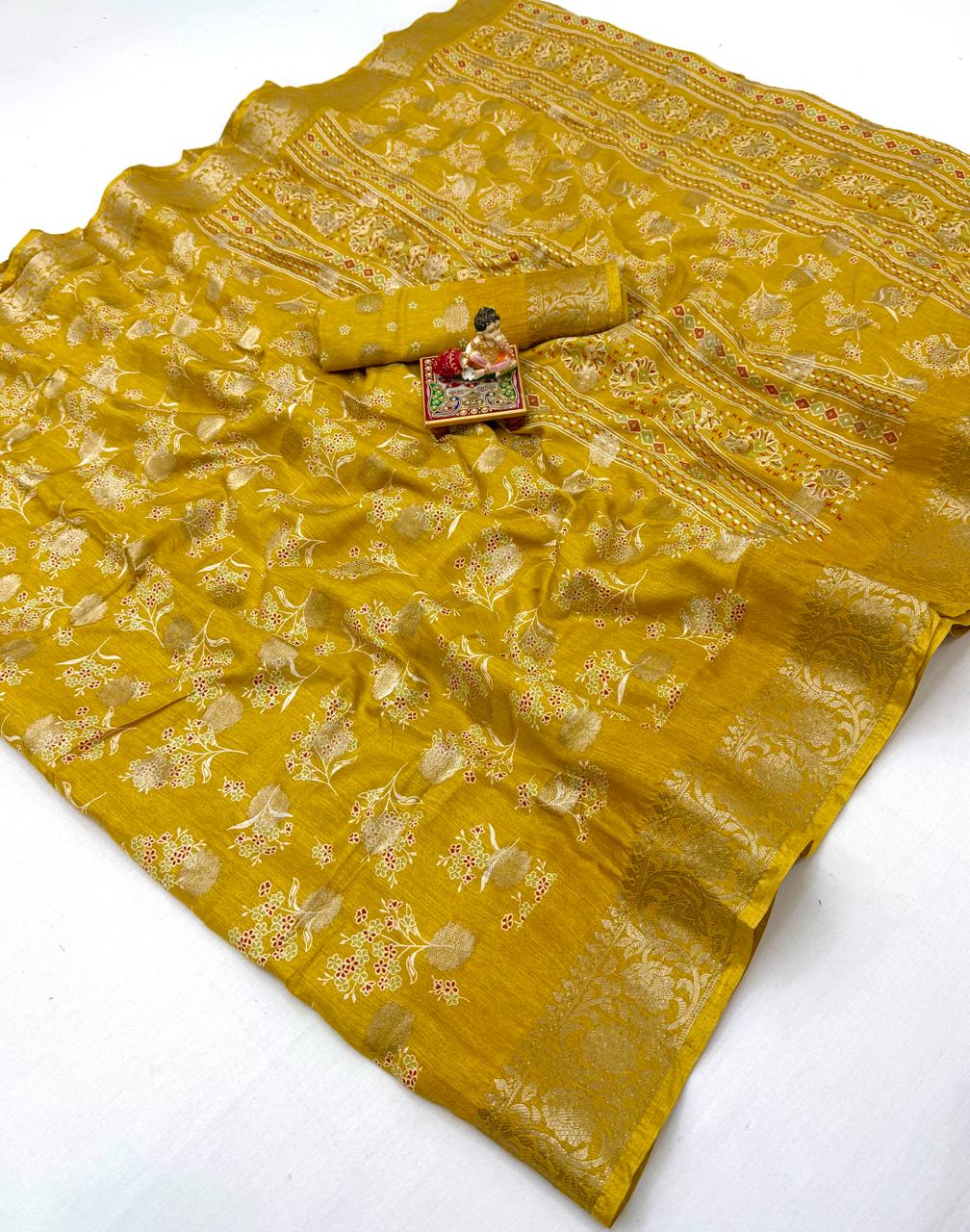
For lightweight printed sarees, use small covered hooks, a narrow lining guard, and minimal seam bulk. The closure should not overpower a floral print or create a dark line beneath pale fabric. For silk and embellished sarees, use secure reinforcement without building a stiff, bulky centre-back.
A Kanjeevaram saree with zari, a Banarasi silk saree with brocade, or a pashmina silk saree with mirror work should be paired with a closure whose reverse side is fully covered. A polished visible blouse can't compensate for a rough fastening that damages the saree during several hours of movement.
For a formal reception, test the blouse with the jewellery, shoulder pins, and pallu arrangement planned for the event. Heavy necklaces and pinned pallus can alter posture and increase tension around the upper back. A Haldi ceremony may require more arm movement, so comfort and secure hook anchoring matter more than a neatly rigid silhouette.
Blouse Hooks That Sit Under the Saree Pallu Need a Smoother Finish During Buying and Alterations
You can reduce hook-related problems by checking the blouse construction before buying or requesting alterations. Examine whether the hook line is straight, whether the edge is covered, whether the lining reaches the fastening, and whether the blouse closes without pulling.
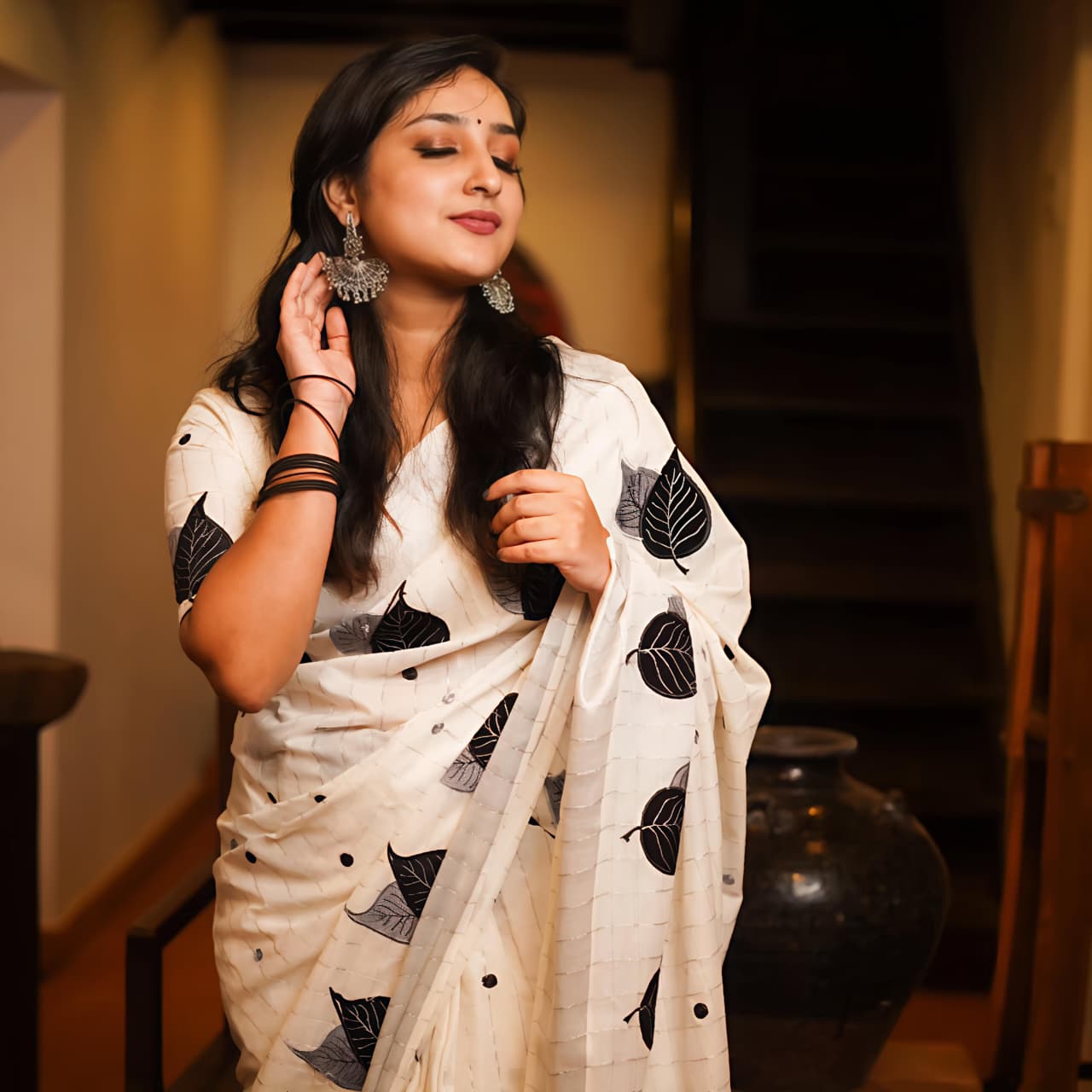
When comparing sarees, remember that pallu weight and surface texture influence the risk of snagging. A buyer browsing Sarees from Rs 1000 to Rs 1500 may be choosing a lightweight printed or cotton saree that needs a particularly flat blouse closure. Price doesn't determine whether a hook is safe; construction and finishing do.
Collections such as Sarees Under 20% Off, Sarees Under 10% Off, and Sarees Flat 50% Off can include fabrics with very different pallu surfaces. Read the fabric description, inspect embellishment near the pallu, and plan a blouse fastening appropriate to the saree rather than selecting hooks by appearance alone.
An useful final checklist has five points: every hook closes without force, the centre-back remains flat, the reverse side can't scratch, a lightweight fabric passes over the closure without catching, and the blouse remains comfortable after 20 minutes of movement. Sarees Flat 60% Off may offer additional choices, but the same fitting checks should apply to every purchase and every occasion.
Small tailoring details protect both the wearer and the saree. A smooth hook finish keeps the pallu moving freely, prevents avoidable thread damage, and helps the blouse maintain its shape from the first photograph through the final dance.
Common Questions About Smoother Saree Blouse Hook Finishes
Why do blouse hooks catch on the saree pallu?
Blouse hooks catch on the saree pallu when a metal tip, hook eye, loose thread, or exposed seam edge rubs against the fabric. Lightweight tissue cotton, Chanderi, silk, zari and mirror work are especially vulnerable to snagging.
How can I hide blouse hooks under a saree pallu?
Use evenly spaced hooks on a straight centre-back edge and cover the fastening with a flat lining guard. Test the blouse with the actual pallu and pins so the hook line sits inside the covered area without creating a visible ridge.
Should saree blouse hooks be small or large?
Small hooks are usually suitable for lightweight blouse fabrics when the edge is reinforced, while medium hooks can suit heavier silk blouses under greater tension. Oversized hooks often create bumps beneath a smooth pallu and are not automatically stronger in a poorly fitting blouse.
How do I stop a saree blouse hook from scratching my back?
Cover the reverse side of the hooks with a neatly secured cotton or smooth lining guard. The blouse also needs enough ease across the bust, shoulder and upper back so movement does not shift the metal against the skin.
How can I test whether a blouse will snag my saree?
Wear the blouse with the actual saree for at least 20 minutes and move, sit, raise both arms and adjust the pallu. Gently pass a clean lightweight fabric over the covered hook line and inspect the pallu for pulled threads, loops or pressure marks.
Do embellished sarees need special blouse hook finishing?
Embellished sarees need a fully covered and securely reinforced fastening because zari, mirror work, jacquard threads and lace can catch on exposed metal or loose thread. A flat closure is particularly important when the pallu is pinned tightly over the blouse.