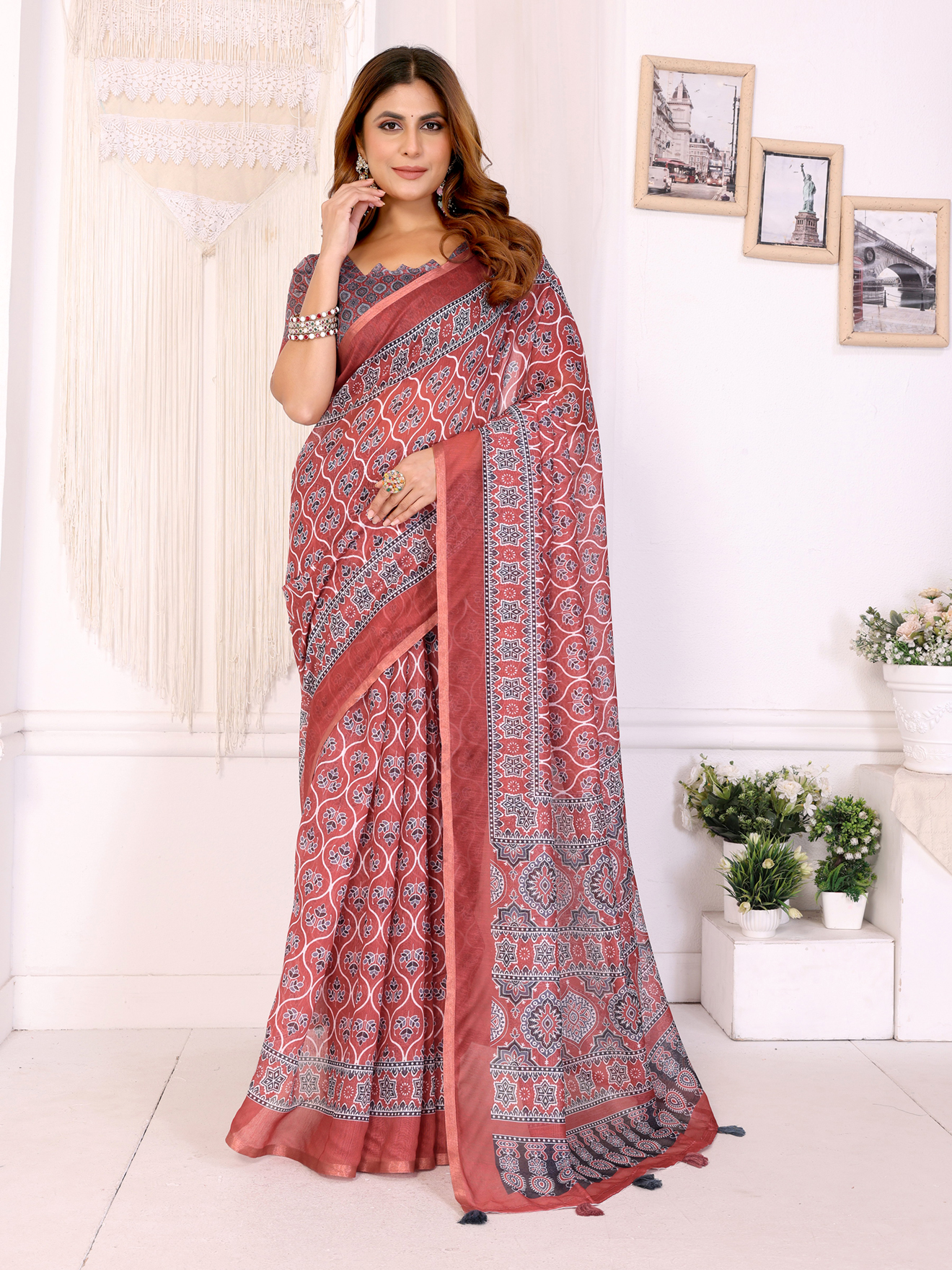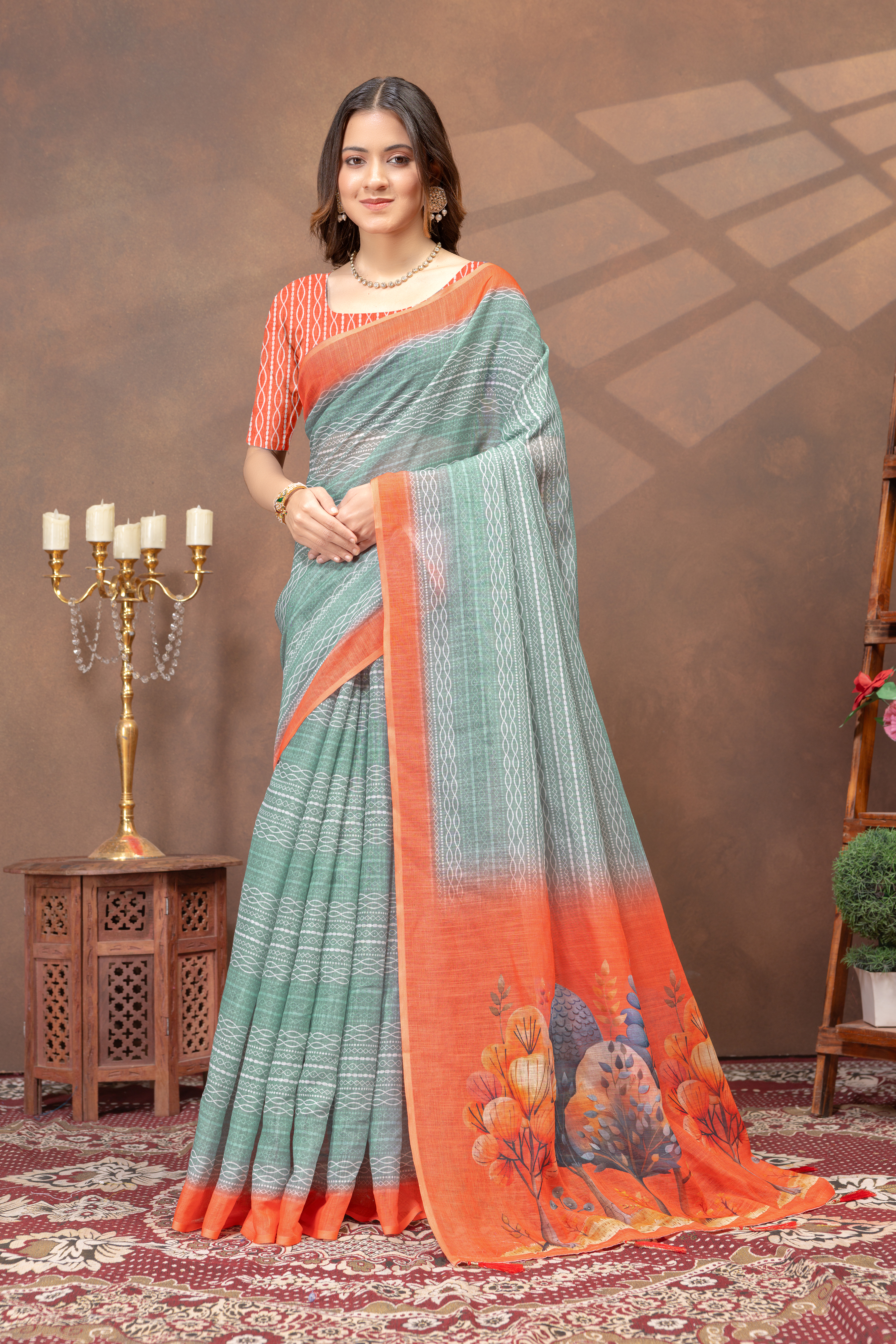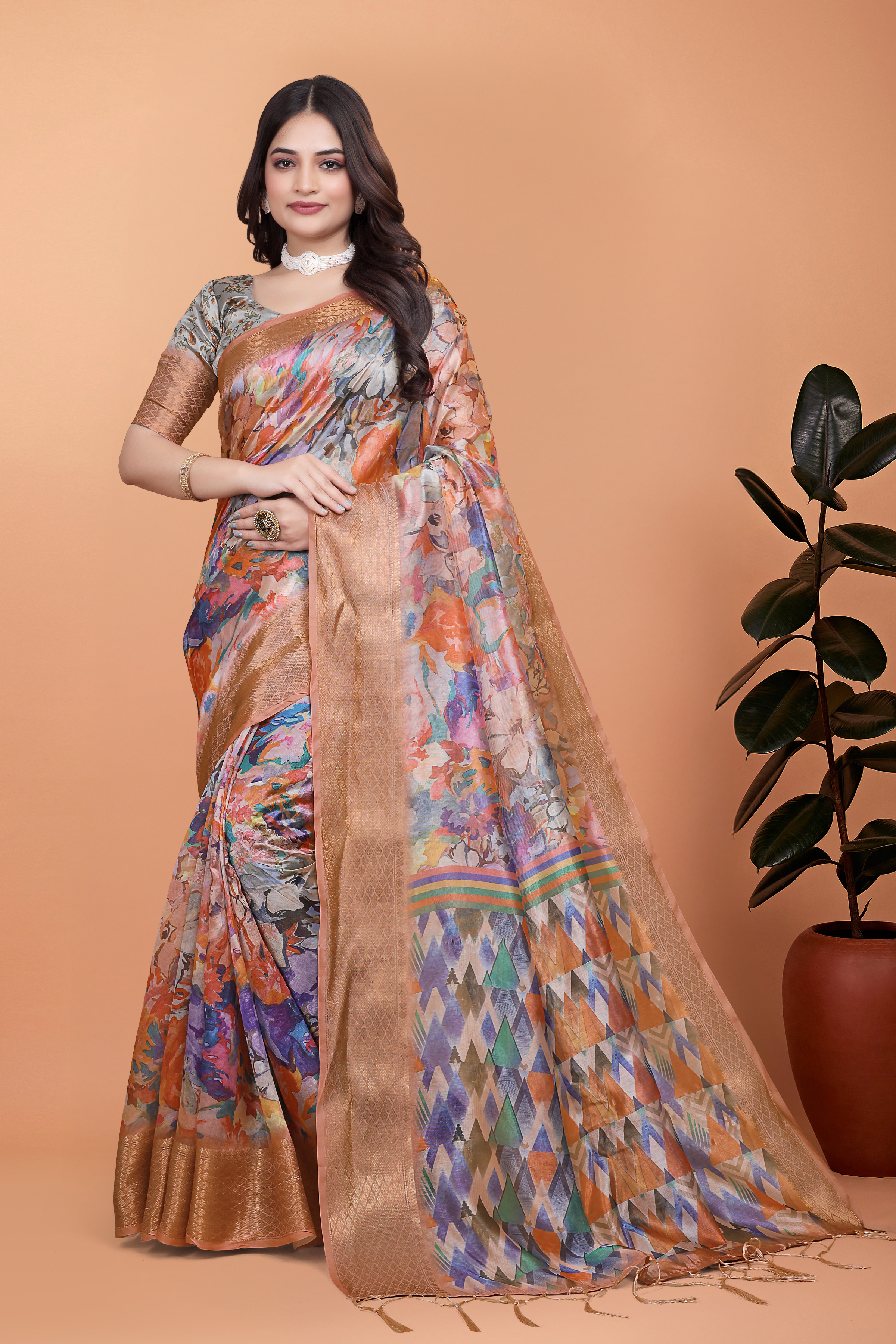
Bhujodi Weaves Stand Out Because Texture Does Most of the Talking. A close look at a Bhujodi textile reveals raised yarns, small irregularities, compact geometric motifs and a surface that changes with the light. Those details come from the materials and the loom rather than from layers of sequins or dense printed decoration. For anyone buying a handloom saree, understanding that surface is useful because texture can indicate the yarn choice, the weave structure, the likely drape and the care the garment will need.
Bhujodi is associated with the village of Bhujodi near Bhuj in Kachchh, Gujarat, where weaving has developed alongside pastoral and craft communities. Traditional Bhujodi textiles commonly use wool, cotton or a combination of fibres, with dark grounds and contrasting lines, checks, stripes or stylised forms. Contemporary versions may be lighter, brighter and more fluid, but the central appeal remains the same: the weave itself creates visual and tactile interest.
Bhujodi Weaves Stand Out Because Texture Does Most of the Talking: what creates the surface?
Bhujodi weaves gain their distinctive texture from character-rich yarns, firm plain-weave structures, supplementary patterns and deliberate variations in density. The finished surface may feel slightly nubby, dry, crisp or warm instead of perfectly smooth.
Yarn diameter is one important factor. A completely uniform mill-spun yarn produces an even cloth, while a handspun or less mechanically regular yarn introduces tiny changes in thickness. Those changes catch light differently across the surface. A Bhujodi textile doesn't need heavy zari or elaborate embroidery to look dimensional because the yarns already provide shadows and highlights.
The second factor is tension. Weavers control the relationship between warp threads, which run lengthwise, and weft threads, which pass across the width. A firm beat packs the weft tightly and gives the cloth body. A more open structure creates airiness and a visibly grainy surface. The exact balance affects whether a saree holds a sculptural pleat, falls softly or feels better suited to a stole than a full drape.
Traditional motifs often reinforce the texture. Narrow stripes, borders, checks and stepped geometric forms repeat across the cloth, but handwoven alignment isn't always as mechanically exact as a printed design. Small variations are not automatically defects. Minor changes can show that the yarn, loom and human hand have worked together.
Bhujodi Weaves Stand Out Because Texture Does Most of the Talking: how can buyers identify the cloth?
An authentic-looking Bhujodi textile usually shows a woven, reversible or near-reversible pattern, a clearly tactile surface, minor human variation and a practical balance between structure and softness. A label alone can't establish provenance, so examining the cloth remains important.
Inspect both sides of the fabric
Turn the saree or stole over and compare the front with the reverse. In a woven design, colour and pattern generally continue through the cloth, although the reverse may appear slightly less defined. A surface print usually sits mainly on one side and may look unusually flat at the edges of motifs. A heavily embroidered fabric shows thread floats or knots rather than a pattern integrated into the cloth.
Look at the selvedge and yarn behaviour
The selvedge should look structurally connected to the body of the textile rather than glued, fused or sharply separated. Hold the fabric near a window and observe whether the warp and weft form a consistent grid. Handloom cloth can contain small variations, but major slubs, broken threads or unstable gaps deserve questions before purchase.
Texture should also suit the stated fibre. Wool-rich Bhujodi cloth generally feels warmer and more resilient than fine cotton. Cotton Bhujodi can feel dry, breathable and slightly crisp. A silk-blend version may have more lustre and a smoother fall, but excessive shine may indicate a synthetic component, so the fibre composition should be checked on the product description or care label.
Bhujodi Weaves Stand Out Because Texture Does Most of the Talking: which fibres affect drape?
Fibre content changes drape, weight, warmth, lustre and crease behaviour, so two Bhujodi sarees with similar motifs may wear very differently.

- Cotton: Cotton Bhujodi is breathable and practical for warm weather. Cotton usually holds pleats neatly, although a firm weave may need careful pressing after washing.
- Wool: Wool adds warmth, loft and a slightly springy hand. Wool-rich pieces suit cooler months, travel or shawl-like draping, but wool should not be scrubbed or soaked casually.
- Silk blends: Silk can add softness, fluidity and restrained sheen. A silk-blend saree usually falls closer to the body than a dense wool-cotton weave and may suit evening styling.
- Viscose and regenerated fibres: These fibres can create a fluid, affordable drape, but they may respond differently to heat and moisture. Care instructions should be followed rather than inferred from appearance.
Finishing also matters. A washed finish can soften the hand and reduce a rigid new-cloth feel. Starching can improve body but may make a saree seem harsher until the finish relaxes. A zari border or metallic yarn introduces extra weight at the pallu and hem, which can influence how the saree hangs from the shoulder.
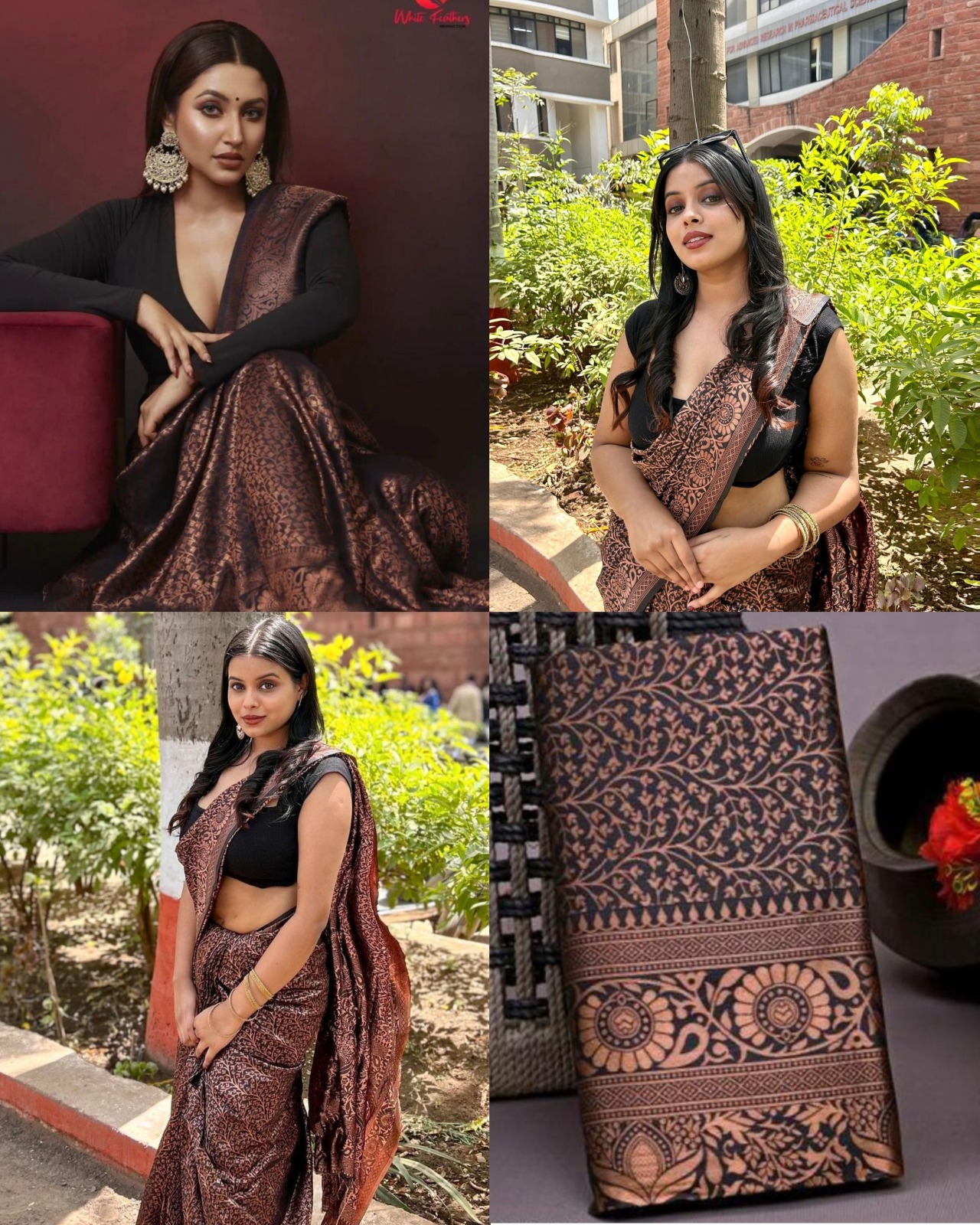
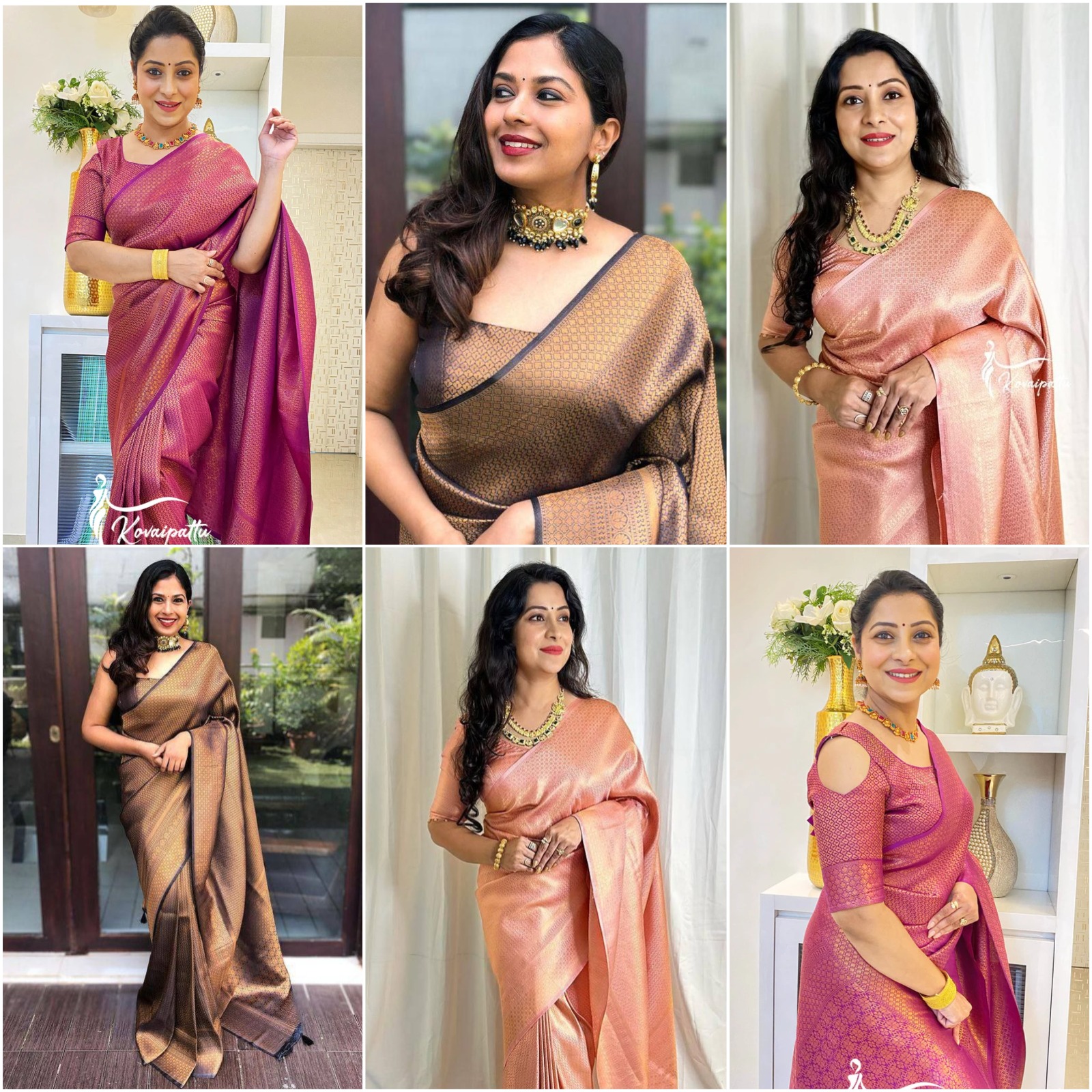
The Brown Lichi Silk Saree with Rich Zari Weaving Pallu illustrates how a lustrous silk base and concentrated zari can create a ceremonial fall. The Traditional Purple Silk Saree with Jacquard Pattern produces depth through woven pattern and silk sheen. Those sarees are not substitutes for Bhujodi, but they show why a buyer should assess surface, fibre and weight together rather than choosing by colour alone.
The Purple Zari Woven Lichi Silk Saree Online - Varnavi offers another useful comparison between tactile structure and reflective surface. Silk and zari create a different kind of dimension from the irregular yarn relief associated with Bhujodi.
Bhujodi Weaves Stand Out Because Texture Does Most of the Talking: how should you style them?
A textured Bhujodi saree works best when the drape is secure, the blouse is relatively calm and accessories repeat one or two colours from the weave.
For daytime and work
Choose a breathable cotton or light cotton-blend Bhujodi saree with a fitted blouse and a clean, medium-width pleat. A three-quarter-sleeve blouse can balance the informal handloom character, while a small leather or fabric handbag keeps the outfit practical. Flat sandals, low block heels or simple kolhapuris suit the grounded texture better than highly reflective stilettos.
For a festive gathering
Use a silk-blend or zari-accented Bhujodi drape with a jewel-toned blouse, a defined waist and antique-finish earrings. A low bun or braid keeps the pallu visible and prevents hair from hiding the border. If additional shine is needed, choose one deliberate element such as a zari blouse edge, a metallic belt or a pair of gold earrings instead of adding sparkle everywhere.
For a contemporary layered look
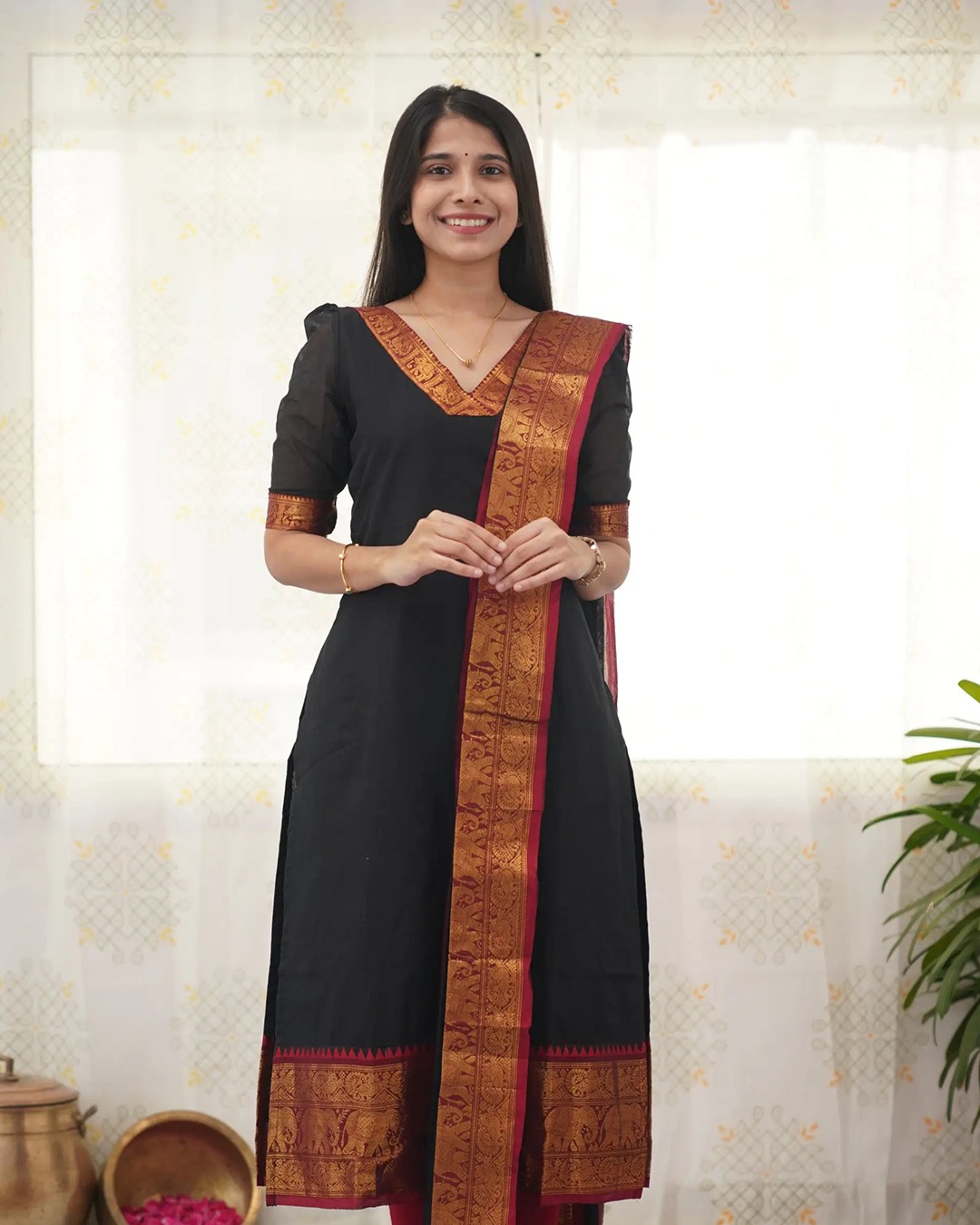
Wear a shorter Bhujodi drape over a solid dress, or style a Bhujodi stole with a plain kurta and wide-leg trousers. The Black Heritage Weave Kurti Dupatta Set demonstrates how a woven surface can carry a coordinated outfit without requiring ornate embellishment. Streamlined footwear and a simple bag keep layered clothing from becoming visually heavy.
Colour matching doesn't require an identical shade. A charcoal Bhujodi base can take rust, saffron or cream accessories. Indigo can be paired with marigold or off-white. Deep purple works with blush, antique gold or muted green.
The Pastel Floral Tissue Handloom Cotton Saree with Zari Weaves uses zari and floral placement to create a more luminous effect, while a Bhujodi saree relies more strongly on yarn relief and geometric rhythm. The Purple Peach Tissue Handloom Cotton Saree with Zari Work gives another useful contrast because metallic accents reflect light, whereas a Bhujodi surface often rewards inspection in softer, more directional light.
Bhujodi Weaves Stand Out Because Texture Does Most of the Talking: what accessories create balance?
Accessories create balance when they contrast with or quietly echo the textile surface instead of competing with every woven detail.
Polished metal, smooth leather and glass beads create clear contrast against a nubby weave. Wood, oxidised silver and matte ceramic echo the grounded quality of wool or cotton. A broad necklace may compete with a strong border, while stacked bangles can complement the repeated horizontal lines of a Bhujodi pallu.
Jewellery scale should follow the density of the weave. A saree with a wide geometric border can support medium-sized earrings and a single bangle stack. A quieter Bhujodi field can accommodate a larger pendant or a more prominent nose pin. Matching every accessory to the border colour can make the outfit look overly coordinated, so one contrasting accent usually creates a more natural finish.
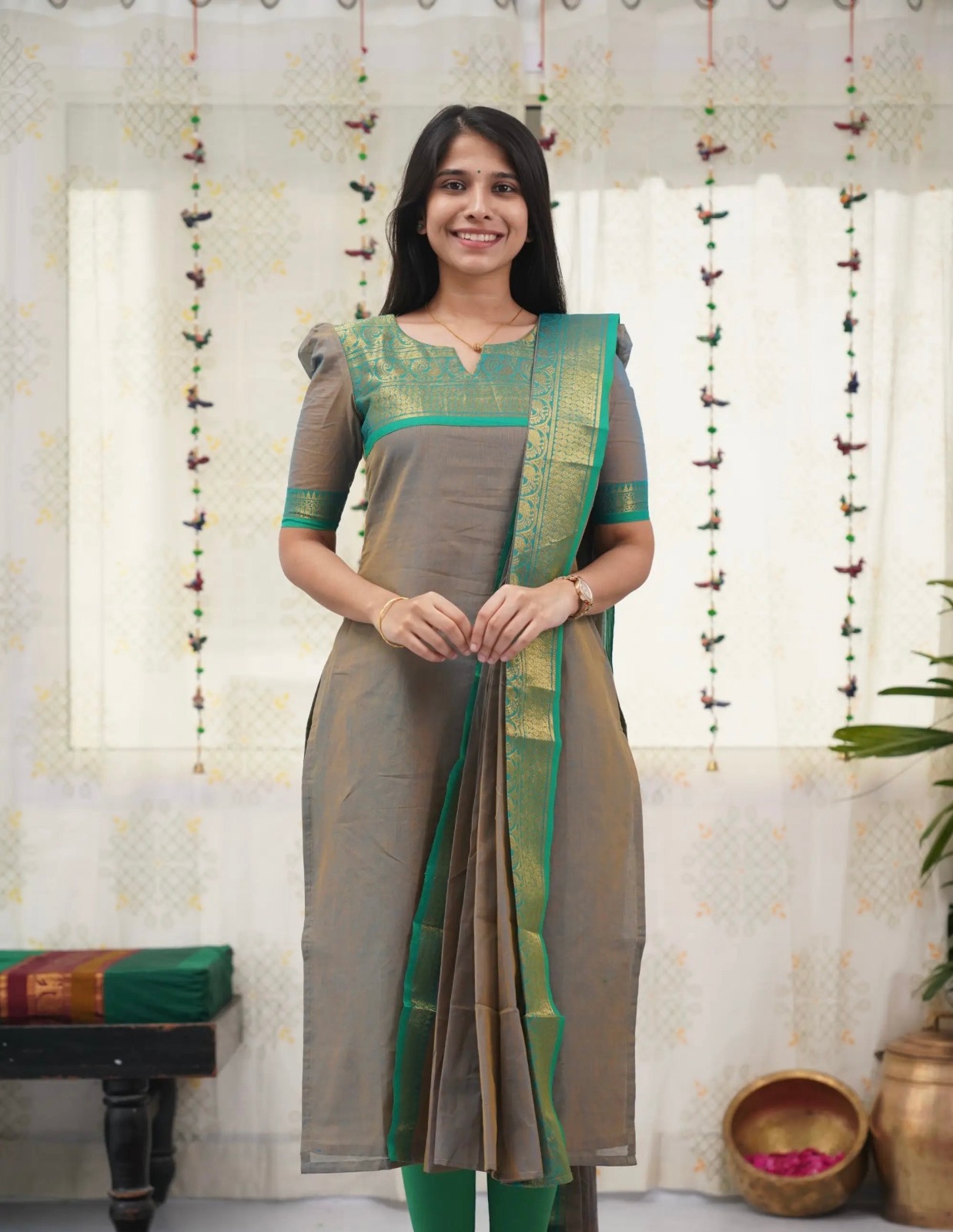
The Grey Tissue Handloom Saree With Floral Design - Varnavi shows how grey can act as a quiet ground for a more decorative motif. That colour logic also works with Bhujodi: neutral grounds make rust, saffron, indigo and berry accessories especially effective.
Bhujodi Weaves Stand Out Because Texture Does Most of the Talking: how should they be washed and stored?
Bhujodi textiles should be cleaned according to fibre content, with gentle handling, limited friction and protection from prolonged direct sunlight.

- Read the care label first. Fibre composition matters, especially when the saree contains wool, silk, zari or strongly contrasting yarns.
- Choose professional care for delicate blends. Wool-rich and silk-rich pieces should generally be dry-cleaned or washed only by the method recommended by the maker.
- Use cool water for washable cotton. A mild detergent and a short soak of no more than five minutes are safer than hot water and prolonged soaking.
- Avoid friction. Do not wring, twist, scrub or brush a textured weave. Press water out between clean towels instead.
- Dry in shade. Direct sunlight can fade dark grounds and weaken some fibres. Support the full garment while drying to prevent stretching.
- Iron with protection. Use low or medium heat according to the fibre, place a thin cotton cloth between the iron and saree, and avoid pressing directly over zari.
- Store with airflow. Fold the saree along different lines every few months, keep it in breathable cotton fabric and avoid heavy items pressing down on the folds.
Storing a handloom saree in sealed plastic for long periods can trap moisture and encourage a stale smell or mildew. Neem leaves, cedar blocks or acid-free tissue can help deter insects, but fragrant products should not touch the textile directly. Refolding every eight to twelve weeks reduces permanent crease stress in frequently stored pieces.
Texture can change with use. Cotton may soften, wool may settle and a washed finish may become more supple over time. Those changes are part of the material's life, but sudden fuzzing, colour transfer or loose selvedges indicate that the garment needs gentler handling or professional assessment.
Bhujodi Weaves Stand Out Because Texture Does Most of the Talking: what should a thoughtful buyer check?
A thoughtful buyer should check fibre content, dimensions, weight, reversibility, finishing, care instructions and the consistency between the product description and the actual textile.
Ask whether the cloth is handwoven, handspun, powerloom-produced or a blend of processes. Handloom and handspun are not interchangeable terms: a handloom can use mill-spun yarn, while handspun yarn can appear in textiles made with different production methods. Clear product information should state what is known rather than using "handloom" as a vague synonym for every textured fabric.
Check the saree length and width before purchase. A six-yard saree with a firm, heavy weave can feel very different from a six-yard fluid silk blend during pleating. Pallu weight also matters because a dense border may pull on the shoulder. A blouse piece, if included, should be inspected for colour and texture compatibility.
Price should be considered alongside fibre, labour, finishing and provenance. A low price doesn't automatically mean poor quality, and a high price doesn't automatically prove handloom origin. Product descriptions, close-up images, care information and transparent fibre details provide more useful evidence than decorative claims alone.
Other handloom surfaces can help sharpen comparison. The Tissue Handloom Cotton Saree with Zari Weave & Floral Print combines a woven cotton base with zari and printed floral detail. The difference helps clarify what makes Bhujodi distinctive: the strongest visual information comes from the structure of the yarn and weave, not simply from an added motif.
Choosing Bhujodi therefore becomes an exercise in looking closely. A slightly irregular yarn, a firm selvedge, a reversible geometric pattern and a comfortable relationship between weight and drape can tell you more than a glossy photograph. Texture doesn't merely decorate a Bhujodi textile; texture records how the fibre, loom and maker have shaped the cloth.
Common Questions About Choosing and Caring for Bhujodi Weaves
What are Bhujodi weaves made from?
Bhujodi textiles are commonly made from cotton, wool or blends that may include silk or regenerated fibres. Fibre content varies by product, so the label should be checked before purchase and before selecting a washing method.
How can I tell whether a Bhujodi pattern is woven or printed?
A woven Bhujodi pattern generally continues through to the reverse side, while a print sits mainly on the front and looks flatter at motif edges. Small variations in alignment, yarn thickness and surface density can also indicate a handwoven construction.
Are Bhujodi sarees suitable for summer?
Light cotton Bhujodi sarees can be suitable for summer because cotton is breathable and comfortable in warm weather. Wool-rich or densely woven versions are better for cooler conditions, while heavier borders can make any fibre feel warmer during prolonged wear.
What blouse works best with a textured Bhujodi saree?
A relatively plain cotton, silk or linen blouse usually works best because it gives the textured saree visual space. Blouse colours such as black, ivory, rust, indigo, charcoal and muted green can repeat or thoughtfully contrast with the woven palette.
Can Bhujodi textiles be machine washed?
Machine washing is not a safe default for Bhujodi textiles because wool, silk, zari and irregular yarns can react poorly to agitation. Washable cotton pieces should follow the care label and generally need cool water, mild detergent, minimal soaking and shade drying.
Why do handwoven Bhujodi textiles have small irregularities?
Small variations can result from handspun yarn, changing yarn thickness, loom tension and manual pattern alignment. Minor irregularities are often part of handloom character, but broken threads, large gaps or unstable selvedges should be treated as quality concerns.