

Between Sizes in Ethnic Wear? What to Check Before Choosing One can save you from a tight armhole, a dragging hem or a blouse that looks strained across the bust. Indian garments vary more than their size labels suggest because a saree, kurta, lehenga and stitched blouse use different construction methods. The right decision depends on your body measurements, the garment's finished measurements, the fabric's behaviour and the amount of ease built into the design.
A useful rule is to choose the larger size when the smaller option would restrict the bust, waist, hips, upper arms or shoulders. A tailor can usually reduce excess width, while adding width is possible only when seam allowance or extra fabric exists. That rule becomes more nuanced for fluid sarees, unstitched blouses, elasticated waistbands and structured festive outfits.
Between Sizes in Ethnic Wear? What to Check Before Choosing One: Start with the Measurements
Compare your current body measurements with the garment's finished measurements, not with a familiar size label alone. A size medium from one seller may have a 38-inch garment bust, while another medium may measure 40 inches.
Take measurements while wearing the undergarments you expect to wear with the outfit. Measure the fullest part of the bust, the narrowest comfortable waist, the fullest hip, the shoulder width and the upper-arm circumference. Keep the tape level and relaxed; pulling the tape tightly produces a smaller number that won't represent how the garment needs to fit.
- Bust: Measure around the fullest point, keeping the tape parallel to the floor.
- Waist: Measure where the garment waistband will sit, rather than automatically using the narrowest part of the torso.
- Hips: Measure around the fullest seat and hip line, especially for straight kurtas, palazzos and fitted skirts.
- Shoulders: Measure from one shoulder bone to the other for kurtas, jackets and blouses.
- Upper arm: Add this measurement when a sleeve is narrow or made from a non-stretch fabric.
- Length: Check shoulder-to-hem, waist-to-hem or inseam length according to the garment type.
Finished garment measurements should exceed body measurements by a deliberate amount called ease. A woven cotton kurta may need roughly 2 to 4 inches of bust ease for comfortable everyday movement, while a close-fitting blouse may use less. The correct allowance depends on the cut, lining, fabric weight and intended styling.
Between Sizes in Ethnic Wear? What to Check Before Choosing One for Kurtas and Blouses
Choose the larger size when the smaller option would create tension at a major movement point or when the garment has little room for alteration. Bust, shoulders and upper arms deserve priority because tightness in those areas changes the garment's drape and can damage seams.
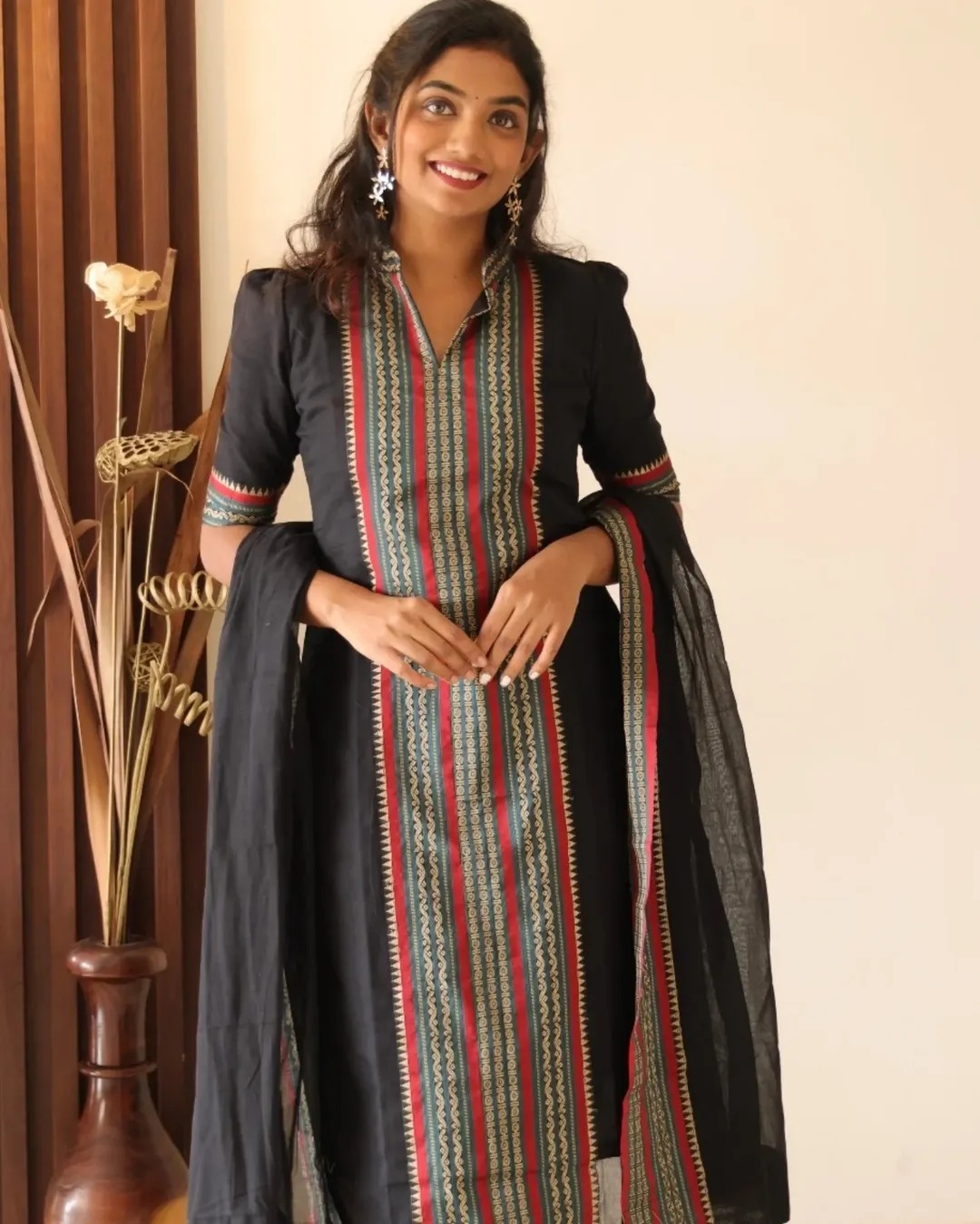
A straight kurta needs enough room for sitting, reaching and walking. A garment such as Vertical Cotton Straight Kurta Set with Dupatta should be assessed at the bust, hip and upper arm rather than by length alone. If the bust fits but the hips are significantly fuller, choose according to the larger measurement and ask a tailor to adjust the side seams above the hip if the construction permits it.
A stitched blouse requires even more caution. The bust and underbust must fit without horizontal drag lines, while the armhole must allow the arm to move forward. A blouse that's slightly loose at the side seam can often be taken in by 1 to 2 inches. A blouse that's too tight may not have enough fabric for a safe alteration, particularly near princess seams or shaped cups.
Sizing up is also sensible when the garment has a rigid lining, dense embroidery, metallic zari, fitted sleeves or a concealed zip. Embellishment and lining reduce the practical flexibility of the outer fabric. A larger size can preserve movement, but excess fabric should not be so great that the shoulder seam falls visibly beyond the shoulder bone.
Between Sizes in Ethnic Wear? What to Check Before Choosing One for Different Fabrics
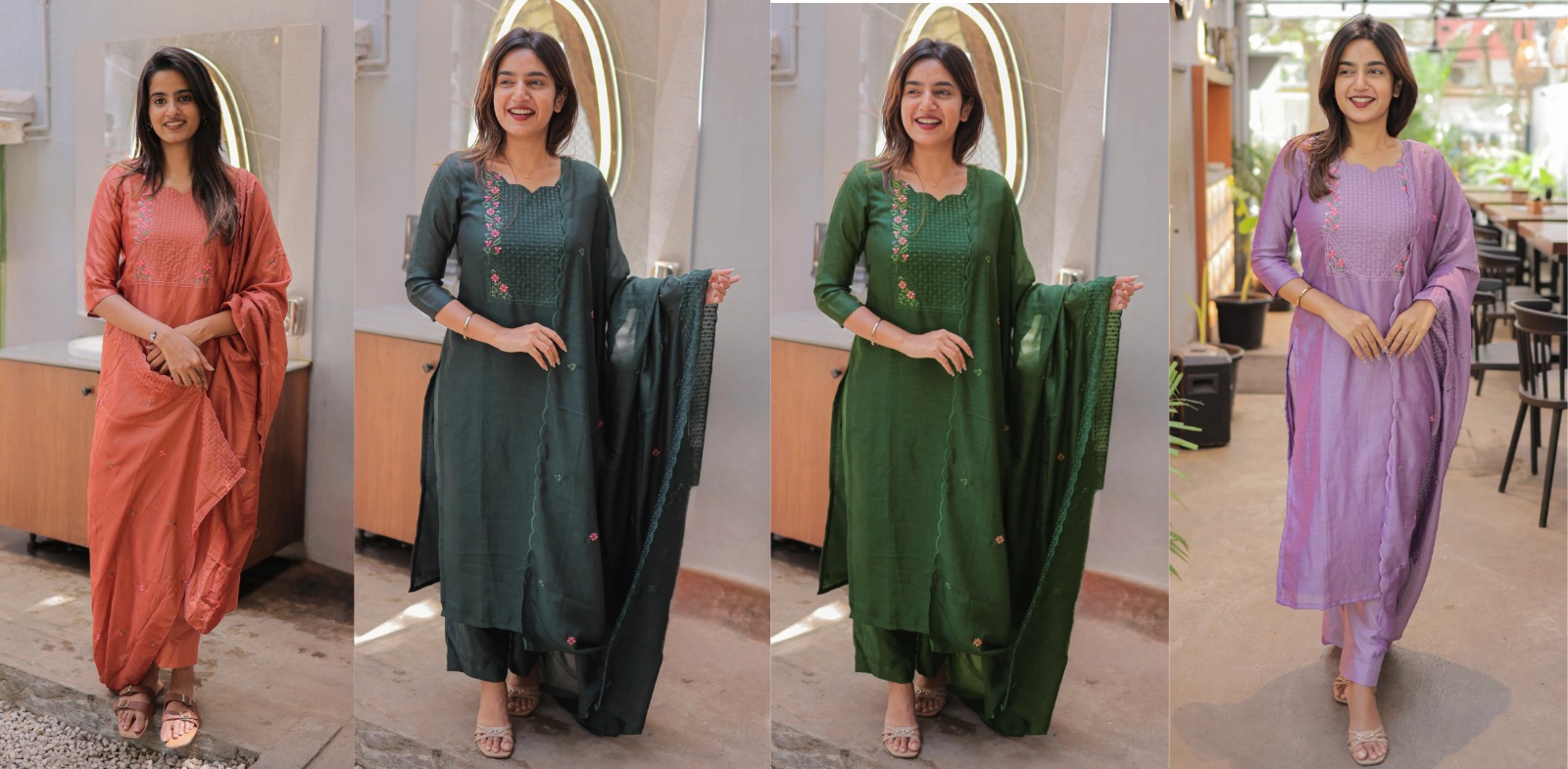
Fabric behaviour determines whether a smaller or larger size will remain comfortable after sitting, wearing layers and moving through a full event. Woven cotton, linen, Chanderi and heavily embellished fabrics generally offer little stretch, while jersey, stretch crepe and elasticated sections may accommodate a closer fit.
Chanderi, cotton and linen
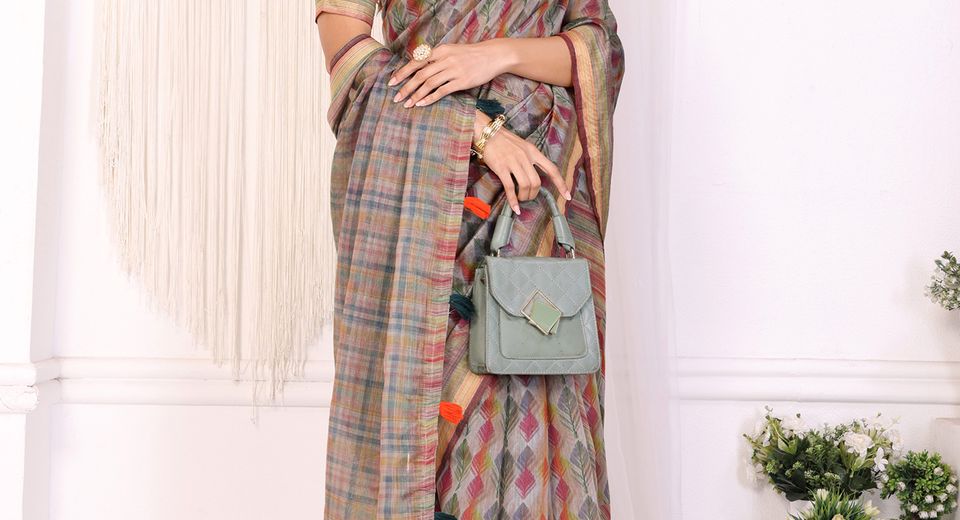
Cotton and Chanderi usually need enough ease because their woven structure doesn't recover after being pulled. Chanderi can feel light and airy, but lightness doesn't mean stretch. A saree such as Multicolor Chanderi Cotton Saree with Artistic Leaf Pattern may drape comfortably across several body shapes because the saree isn't pre-shaped around the torso, but a matching stitched blouse still needs accurate bust and shoulder measurements.
Chanderi cotton can react with wear and washing without becoming meaningfully elastic. Pastel Checkered Chanderi Cotton Saree with Soft Border and Elegant Black Chanderi Cotton Saree with Multicolor Prints. Illustrate why the saree body and the blouse should be judged separately. The saree can be pleated, pinned and adjusted; a tight blouse can't be fixed through draping.
Linen cotton tends to relax slightly with use, but linen cotton doesn't behave like stretch knitwear. Peach Multicolor Linen Cotton Saree with Paisley Pallu can be selected according to drape preference and blouse fit, while a blouse made in linen cotton may need additional room at the armhole because the fabric can crease where movement is restricted.
Crepe, silk and embellished textiles
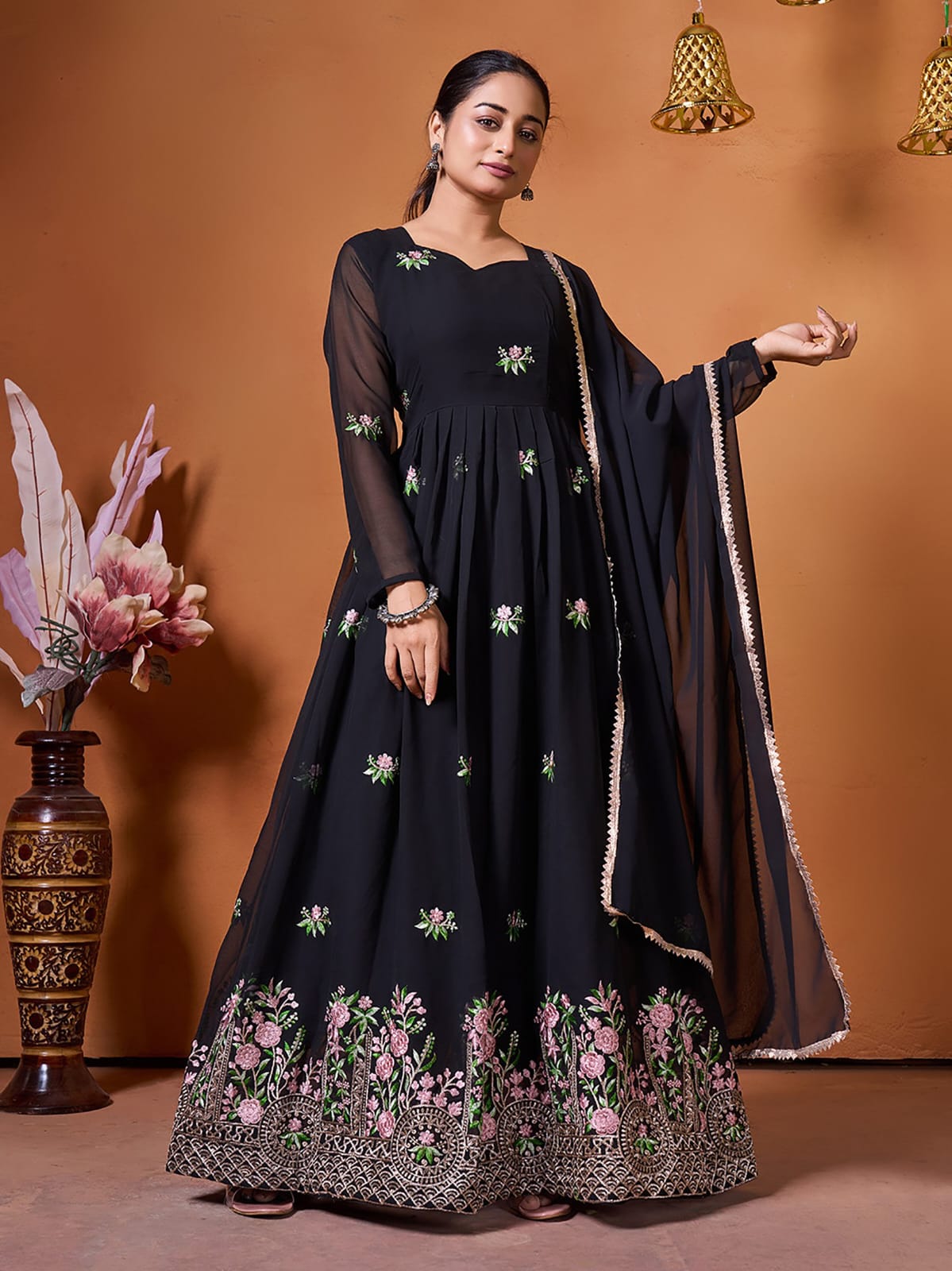
Crepe may fall close to the body, but stretch varies considerably between crepe constructions. A stretch crepe maxi suit may tolerate a closer fit at the torso, whereas non-stretch crepe requires woven-fabric ease. Multicolor Embroidered Crepe Maxi Suit Set for Festive Wear should be checked at the bust, waist, hip and sleeve opening because embroidery and lining can make the garment less forgiving than the word "crepe" suggests.
Banarasi silk and Kanjeevaram silk are generally structured, non-stretch woven fabrics. Saree width and length can be adjusted through draping, but a fitted blouse made from Banarasi silk or Kanjeevaram requires accurate measurements and adequate seam allowance. Zari can add weight, so a tight shoulder or armhole may become more uncomfortable after several hours.
Between Sizes in Ethnic Wear? What to Check Before Choosing One on a Size Chart
Read the size chart as a set of garment dimensions and construction notes, not as a universal conversion between small, medium and large. A useful chart should identify whether each number refers to a body measurement or a finished garment measurement.
Look for separate details on bust, waist, hip, shoulder, sleeve length, kurta length, bottom length and blouse length. Check whether the waist measurement is taken with an elastic relaxed, fully stretched or tied at the garment's natural waist. For palazzo trousers and shararas, compare both waist and hip measurements because a comfortable waistband doesn't guarantee that the garment will pass over the hips.
Some charts list a maximum body measurement and others list the garment measurement. If a chart lists a 40-inch bust as the garment measurement, a 40-inch body bust won't leave room to move. If the chart says "fits up to 40 inches," the seller may already have included ease, but the amount should be confirmed before ordering.
Measure a well-fitting garment at home when online information is incomplete. Lay the garment flat, measure from armpit to armpit and double the number for the bust, then repeat at the waist and hip. Compare like with like: a loose kurta should be compared with another loose kurta, not with a fitted blouse.
Product descriptions can reveal important sizing clues. Phrases such as "relaxed fit," "straight cut," "slim fit," "elasticated waist," "side zip," "lining included" and "adjustable dori" describe how much tolerance the design may offer. Black Chanderi Cotton Saree with Contemporary Checked Weave is primarily a drape decision, while its stitched blouse, if included, remains a structured sizing decision.
Between Sizes in Ethnic Wear? What to Check Before Choosing One by Garment Type
The priority measurement changes with the garment because each silhouette puts pressure on a different part of the body. Matching the measurement to the construction prevents unnecessary sizing up or down.
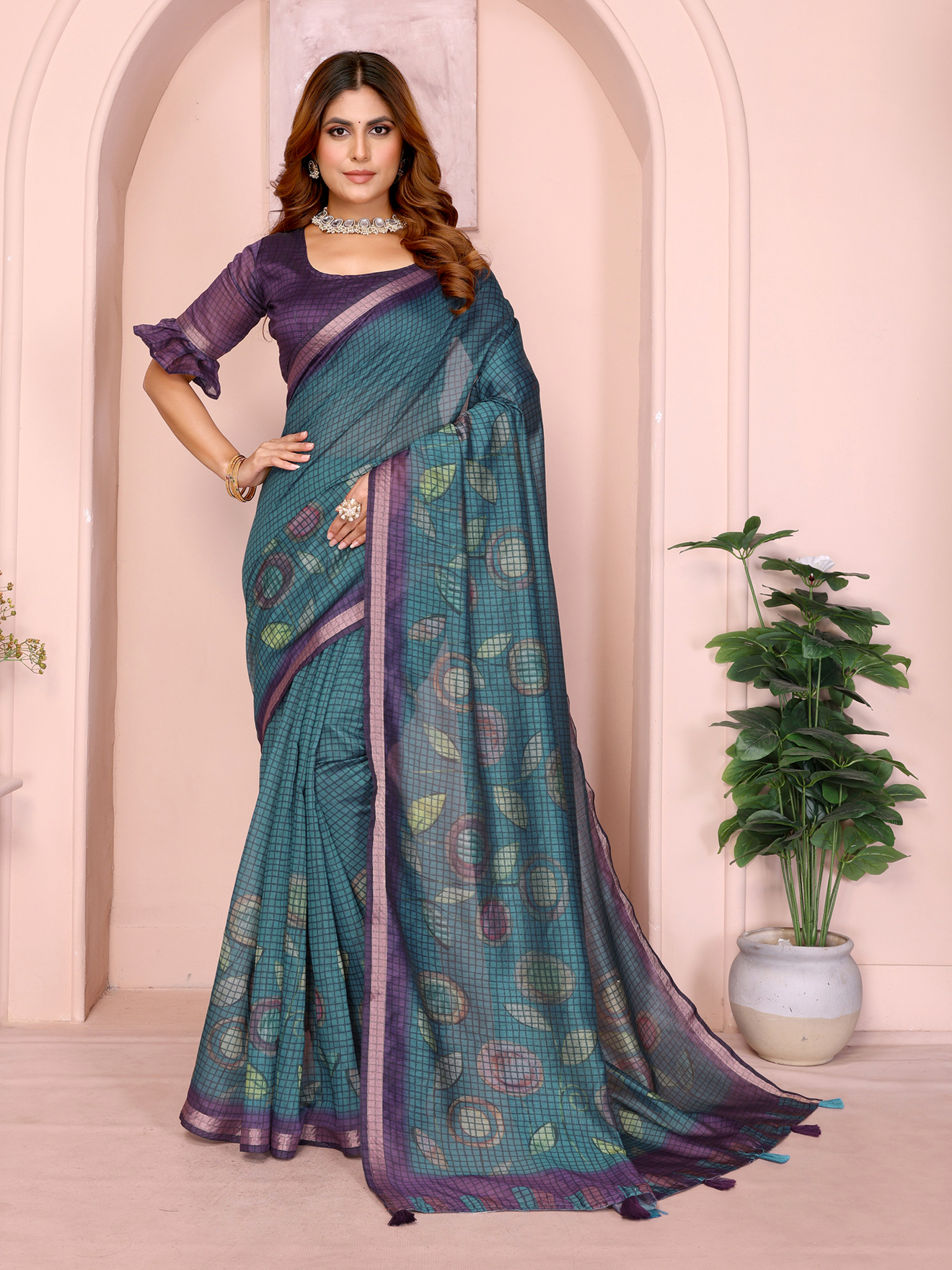
- Saree: Check saree length, saree width and blouse-piece length. A standard saree commonly measures about 5.3 to 6.3 metres, but height, petticoat style and preferred pleat count affect the ideal length.
- Stitched blouse: Prioritise bust, underbust, shoulder, armhole and sleeve opening. The neckline and back depth also affect comfort and support.
- Straight kurta: Prioritise bust, hip and upper arm, then check the slit position and total length. A high side slit can reduce hip restriction, but it can't compensate for an undersized bust.
- Anarkali: Check bust, waist, shoulder and flare volume. The upper bodice must fit correctly because the skirt portion can't correct a tight chest.
- Salwar or palazzo suit: Compare waist, hip, rise and inseam. Elastic can make the waist adaptable, but the hip and rise still require enough room.
- Lehenga: Check the waistband, hip, length and closure position. A dori can offer adjustment, while a fixed zip provides less tolerance.
- Sharara: Check the waistband, hip and thigh before focusing on the dramatic flare. A narrow upper thigh can make a wide-leg silhouette uncomfortable.
Black Chanderi Cotton Saree with Multicolor Geometric Print demonstrates why print and weave should not distract from construction details. A saree can suit a wide range of body proportions, but the blouse, petticoat and any attached belt still require separate checks.
Between Sizes in Ethnic Wear? What to Check Before Choosing One Before Altering It
Choose the size that preserves room at the largest body measurement, then use alterations to refine areas that are too loose. Alteration is safest when the garment has visible seam allowance, a simple side seam and enough fabric around the closure.
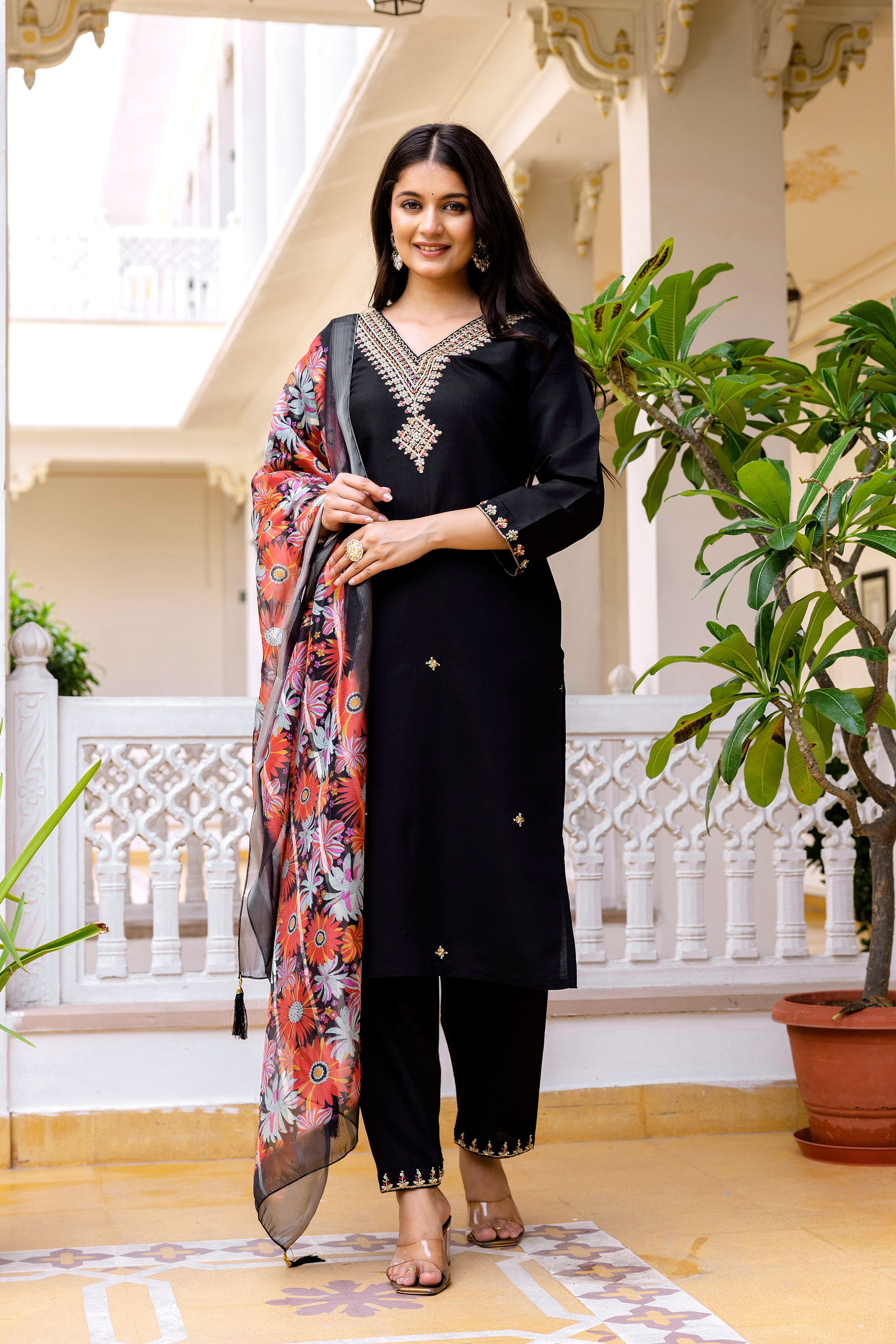
Taking in a kurta or blouse by 1 to 2 inches is commonly more straightforward than adding width. A tailor may adjust side seams, the centre back or darts, but changing a shoulder seam can alter the armhole and sleeve position. Reducing length is usually possible, while increasing length depends on a hem allowance, border placement or matching fabric.
don't assume that an adjustable dori solves every fit issue. A dori can alter waistband circumference, but it can't add hip room, lower a tight rise or correct a narrow armhole. Similarly, elastic can improve waist flexibility without making a fitted bodice more comfortable.
For a wedding, reception or Haldi ceremony, try the outfit with the footwear, inner layers, jewellery and shapewear intended for the event. Wear the garment for at least 10 minutes, sit down, lift both arms and walk several steps. A size that looks correct while standing may become restrictive when the body moves.
Keep the larger size when the smaller size produces pulling at the bust, diagonal wrinkles from the armhole, a zip that waves or a waistband that digs into the body. Keep the smaller size only when the larger option creates excess fabric at several key points and the textile or design can't be tailored neatly.
A practical final test is to write down three numbers before ordering: your body measurement at the largest relevant point, the garment measurement and the expected ease. For example, a 38-inch bust, a 40-inch garment bust and 2 inches of ease may be suitable for a woven everyday kurta. A 40-inch body bust in that same garment would need a larger size or a more relaxed design.
Common Questions About Choosing Between Ethnic-Wear Sizes
Should I size up if I am between two ethnic-wear sizes?
Choose the larger size when the smaller size is tight at the bust, shoulders, hips, upper arms or armhole. Excess width can often be taken in, while adding width may be impossible without extra fabric or seam allowance.
How much ease should a kurta have?
A woven everyday kurta commonly needs about 2 to 4 inches of bust ease, depending on the silhouette and fabric. A relaxed straight kurta may need more room than a close-fitting style, while stretch fabric may need less.
Should I choose a saree blouse by bust measurement or clothing size?
Choose a saree blouse by bust, underbust, shoulder and armhole measurements rather than by clothing size alone. A blouse should allow arm movement without horizontal pulling, especially when made from Banarasi silk, Kanjeevaram silk, Chanderi or another non-stretch textile.
Can a tailor fix ethnic wear that is one size too large?
A tailor can often reduce width through side seams, darts or the centre back when the construction allows it. Altering shoulders, armholes, embroidery placement and closures is more complicated, so the larger size should not be excessively oversized.
Does an elastic waist mean I can choose any size?
An elastic waist provides flexibility only around the waist. The garment still needs enough room at the hips, rise, thighs, lining and upper body, particularly in palazzos, shararas and lehenga skirts.
How can I check an ethnic-wear size when the size chart is unclear?
Measure a well-fitting garment flat and compare its bust, waist, hip and length with the listed measurements. Confirm whether the seller gives body measurements or finished garment measurements before treating a number as a direct size match.


