A Better Way to Compare Saree Prices Across Fabric Types begins with separating the fibre from the decoration. A ₹1,200 cotton saree and a ₹4,500 silk saree are not directly comparable because their yarn, weaving time, weight, finish, durability and intended use differ. A reliable comparison checks at least six details: base fibre, construction, surface work, blouse inclusion, finishing and aftercare.
Online saree prices can look confusing because a low price may reflect a printed design, while a higher price may reflect silk yarn, handloom weaving or real zari. A clear method helps you decide whether a saree suits daily wear, office dressing, festive use or a once-a-year celebration without judging value from the fabric name alone.
Why fabric alone doesn't explain a saree's price
Fabric establishes the starting cost, but weaving, ornamentation and finishing often create the larger price difference. Two sarees labelled "cotton" can differ substantially because one may be powerloom-printed cotton and another may use a handloom weave with a woven border.
Fibre refers to the material used to make the yarn, such as cotton, silk or a blend. Weave describes how the yarns cross to form the cloth. A printed motif is added after weaving, whereas a woven motif becomes part of the cloth structure and usually requires more production time.
- Fibre: Cotton generally costs less than silk, while linen cotton combines linen's texture with cotton's practical comfort.
- Weave: Handloom weaving, jacquard work and detailed borders can increase labour and production time.
- Surface design: Screen prints and digital prints are usually more affordable than woven motifs, embroidery or metallic thread work.
- Metallic work: Zari may be imitation, tested zari or a more expensive metal-coated thread; the product description should clarify the claim.
- Finishing: Fall, edging, blouse-piece finishing and a polished surface can add convenience and cost.
A useful price comparison therefore asks what the price is paying for. "Silk saree" identifies a fibre category, but "Banarasi silk" also suggests a recognised weaving tradition, often involving brocade-style motifs and zari work. "Chanderi" can refer to a fabric associated with a light, sheer feel and distinctive weaving traditions, but the exact blend and construction still need checking.
A Better Way to Compare Saree Prices Across Fabric Types
The most dependable method is to compare sarees in the same use category and score their material, construction, design and service details separately. Comparing a printed daily-wear saree with a heavily ornamented wedding saree only by rupee amount produces a misleading result.
Step 1: Identify the fibre and blend
Check whether the saree is pure cotton, linen cotton, silk, silk cotton, Chanderi cotton or another blend before looking at the price. A blend isn't automatically inferior; linen cotton, for example, can offer a crisp texture and easier everyday wear at a lower price than pure linen or silk.
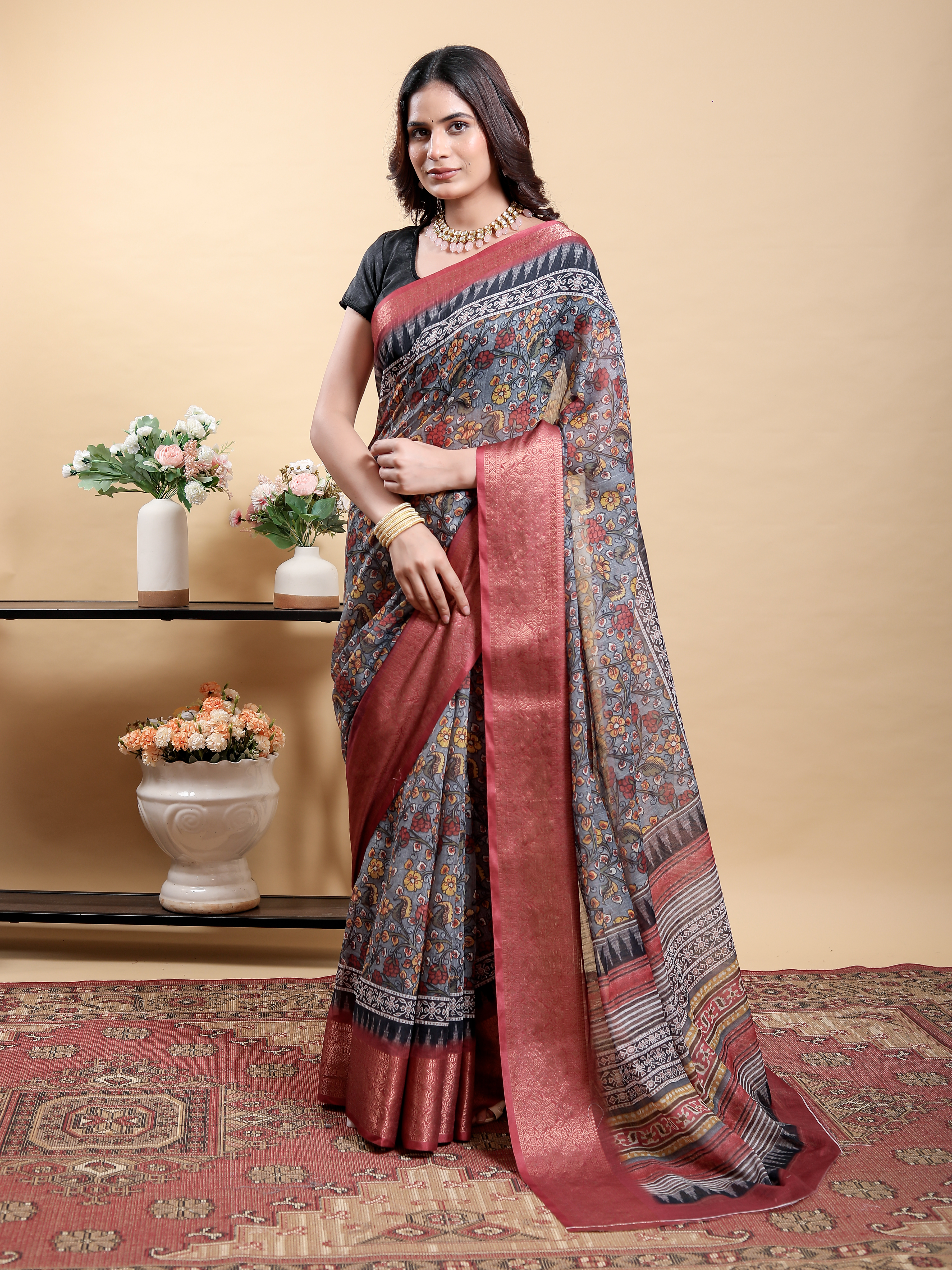
Product names can provide a useful first clue, but the detailed fabric information matters more. Pastel Linen Cotton Floral Print Saree with Designer Blouse and Buy Dusty Rose Floral Linen Cotton Saree with Woven Border both signal linen cotton, yet the woven border on the second style may represent a different design and production input than a printed floral surface.
Step 2: Separate print, weave and embroidery
A printed motif is normally the most economical way to create a large visual pattern, while a woven motif requires design integration during fabric production. Embroidery and hand-applied embellishment can add labour after the cloth is made.
Pastel Floral Tissue Handloom Cotton Saree with Zari Weaves illustrates why the words "handloom" and "zari weaves" deserve separate attention. Handloom construction can affect texture and irregularity, while woven zari adds a metallic design element; neither detail should be reduced to the single word "cotton."
Step 3: Check what comes with the saree
A saree with a usable blouse piece can offer better practical value than a saree requiring a separate blouse purchase. Confirm whether the blouse fabric is included, whether the blouse design is merely shown for styling, and whether the blouse is stitched or unstitched.
Pastel Linen Cotton Floral Print Saree with Designer Blouse should therefore be compared with another saree that includes a similar blouse provision, not with a saree sold without blouse fabric. Blouse length, fabric quantity and matching quality can alter tailoring cost by several hundred rupees.
Step 4: Read the care requirement
Care cost is part of the ownership cost, especially for silk, metallic work and delicate handloom textures. A saree requiring dry cleaning after every occasional wear may cost more over time than a cotton saree that can be gently hand-washed according to its care label.
Care instructions must come from the product information rather than assumptions based on colour or appearance. Avoid treating Banarasi silk, zari work and tissue textures like ordinary machine-wash cotton, because friction, heat and harsh detergent can damage yarns and metallic surfaces.
How cotton, linen cotton and Chanderi prices differ
Cotton-based sarees usually offer the widest price range because cotton can be printed, woven, blended, handloom-made or decorated with zari. A basic printed cotton saree may be inexpensive, while a handloom cotton saree with a complex border can cost considerably more.
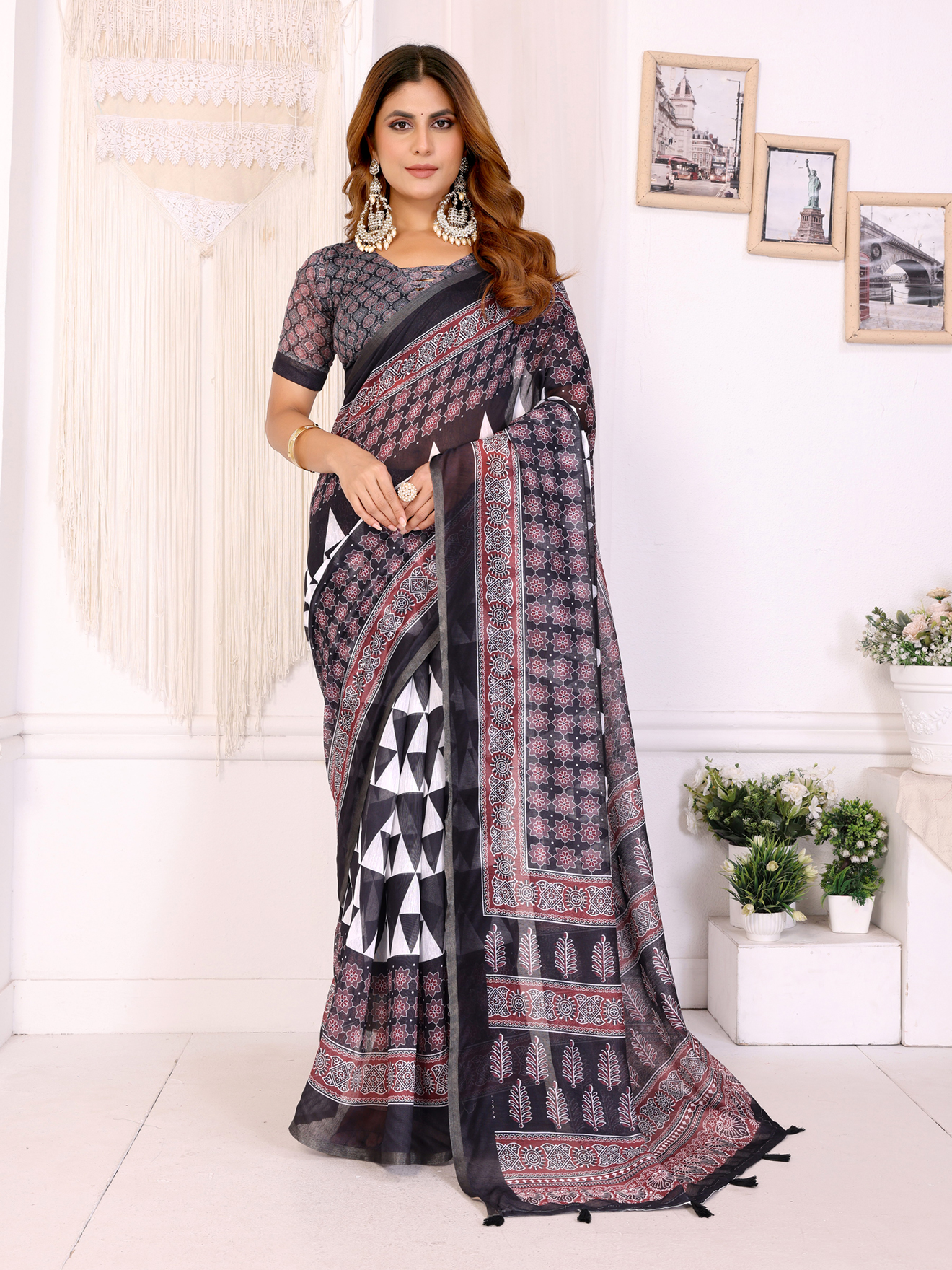
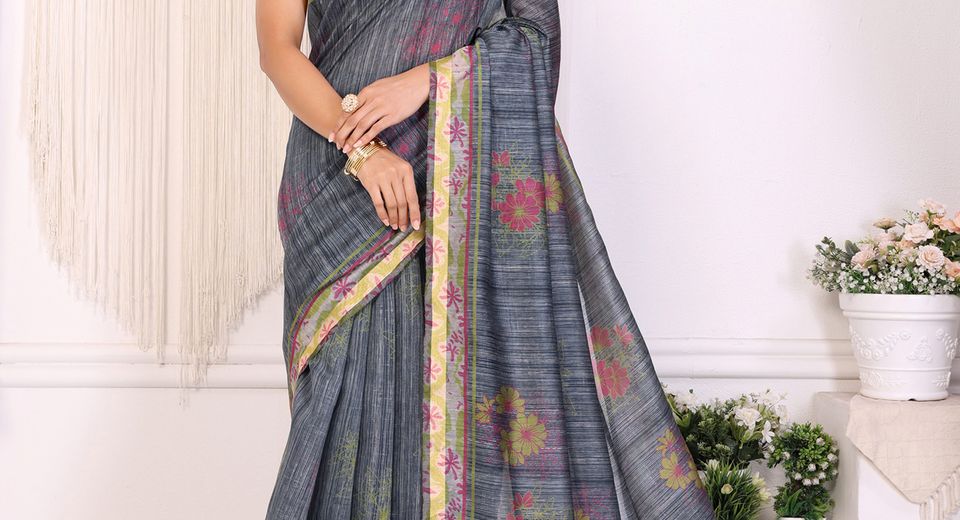
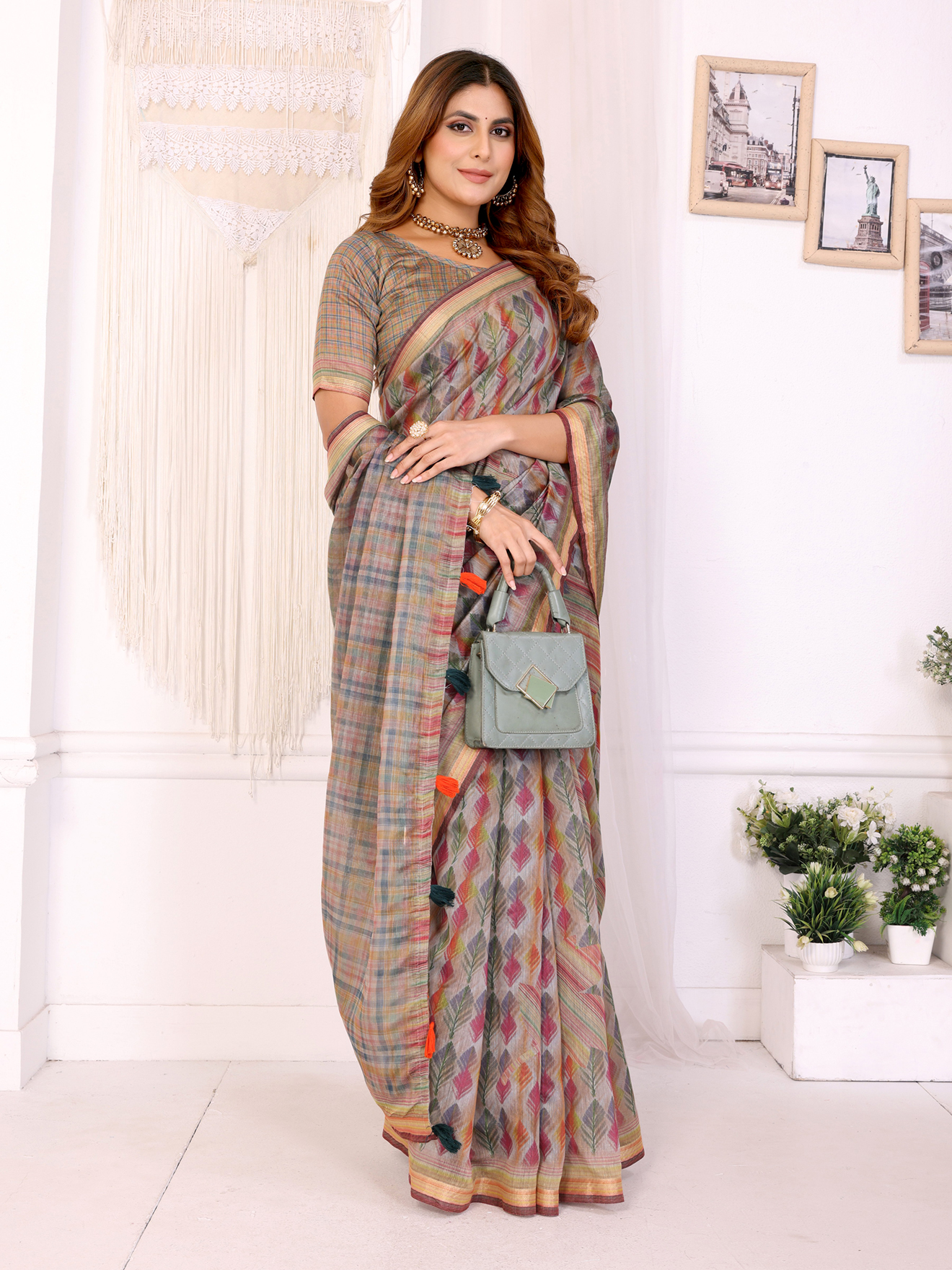
Multicolor Chanderi Cotton Saree with Artistic Leaf Pattern demonstrates why a named fabric category needs a closer reading. Chanderi cotton is valued for a lightweight, elegant handle and can have a more translucent appearance than many everyday cottons. The artistic leaf pattern may be printed or woven, so the design method should be confirmed before comparing its price with another Chanderi saree.
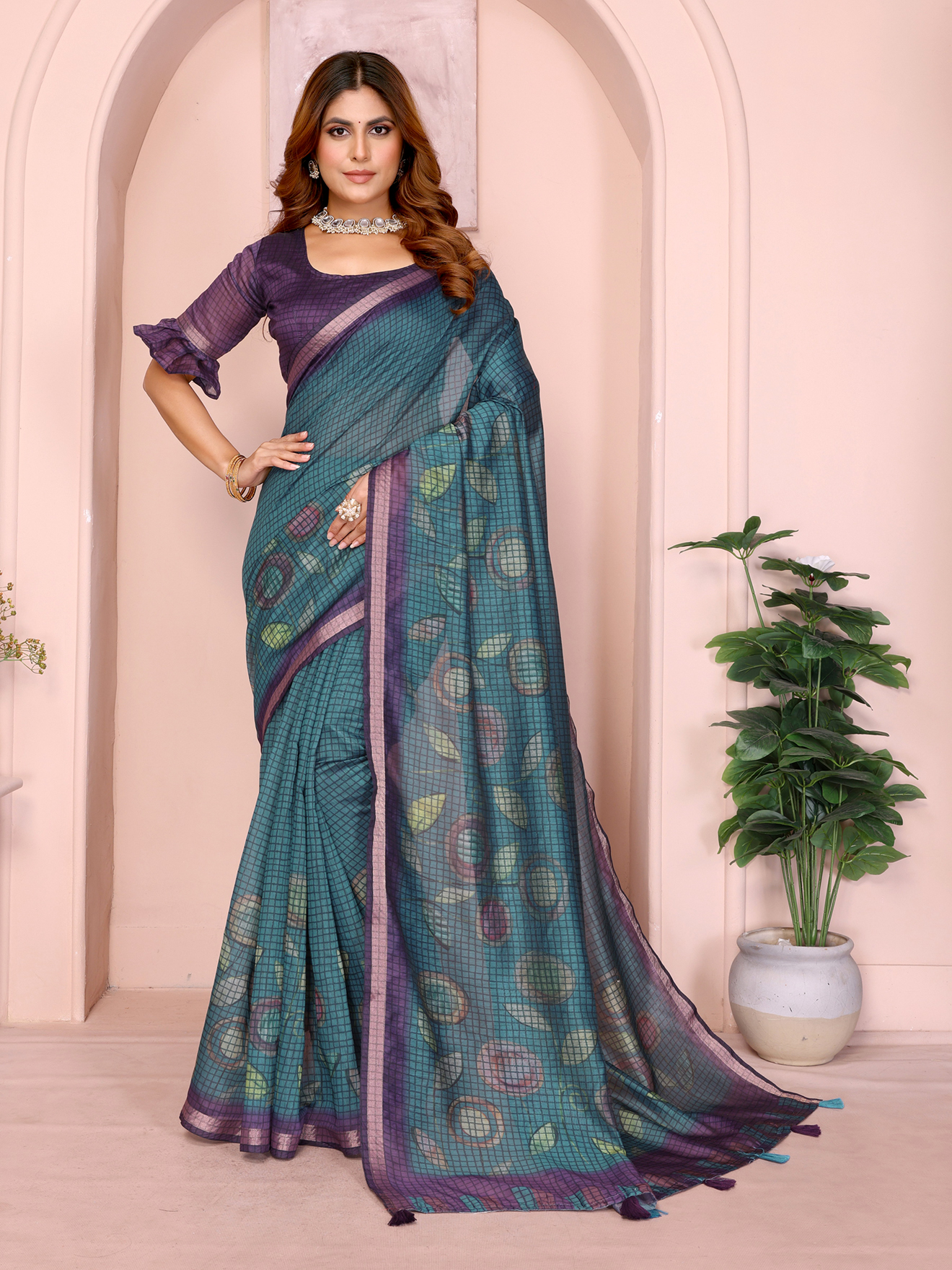
Black Chanderi Cotton Saree with Contemporary Checked Weave adds another comparison point: a checked weave is structurally different from a printed check. Woven checks may involve more precise yarn planning and can create a different reverse side, drape and texture. A buyer should compare weave construction, not only colour and pattern.
Linen cotton generally feels crisp, breathable and lightly textured, although the exact feel changes with the blend ratio and finishing. A woven border, handloom construction or included designer blouse may justify a higher price than a simple printed linen cotton design.
For a realistic budget benchmark, the Sarees from Rs 1000 to Rs 1500 collection can help identify the entry-to-mid range for accessible styles. The collection should be used as a starting range rather than proof that every cotton, Chanderi or linen cotton saree should cost the same.
How silk, Banarasi and zari change the value calculation
Silk sarees generally cost more because silk yarn, skilled weaving, lustre, weight and decorative work can raise production costs. The final price still depends on whether the saree uses pure silk, a silk blend, printed silk, woven motifs or extensive zari.
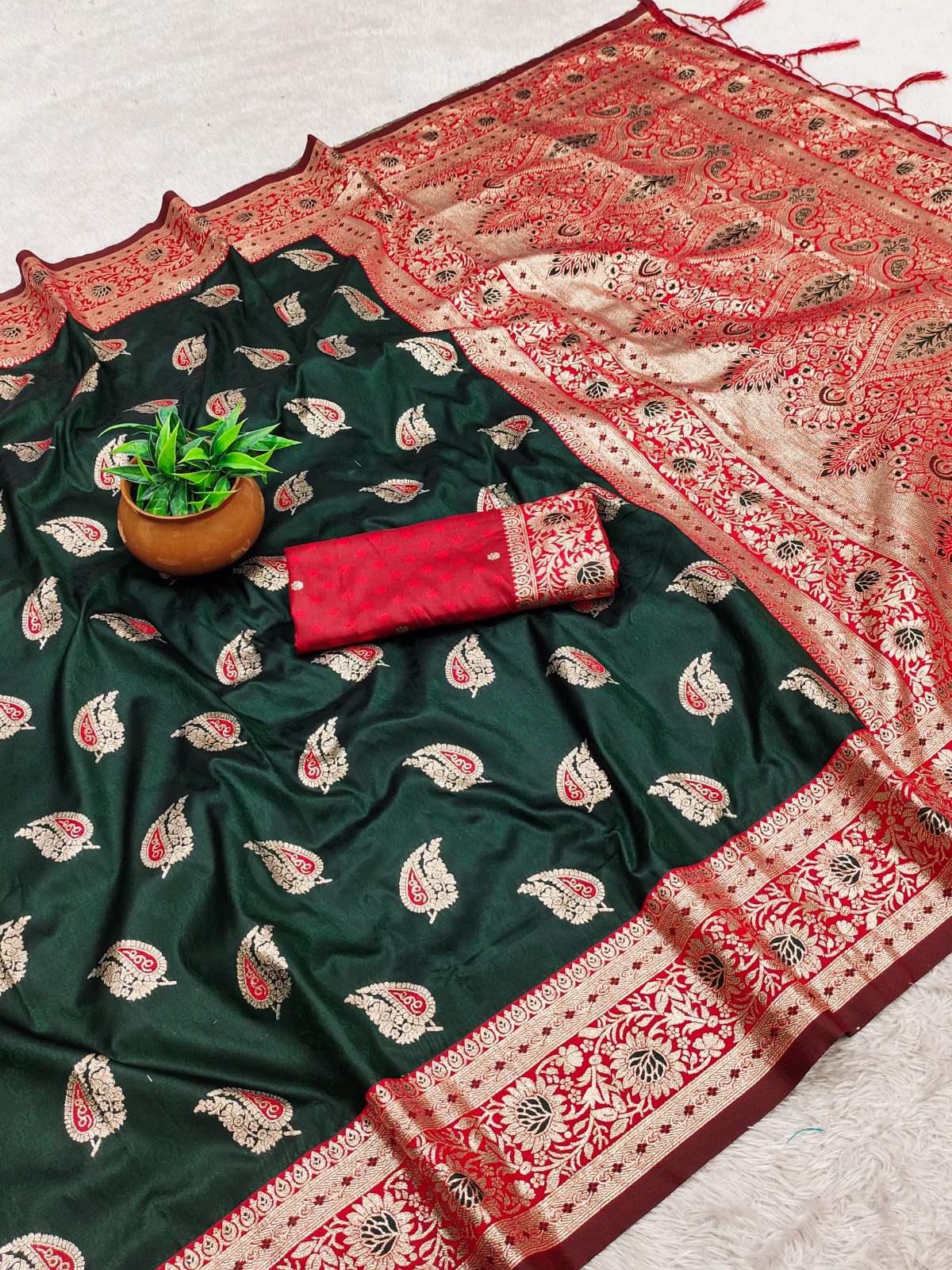
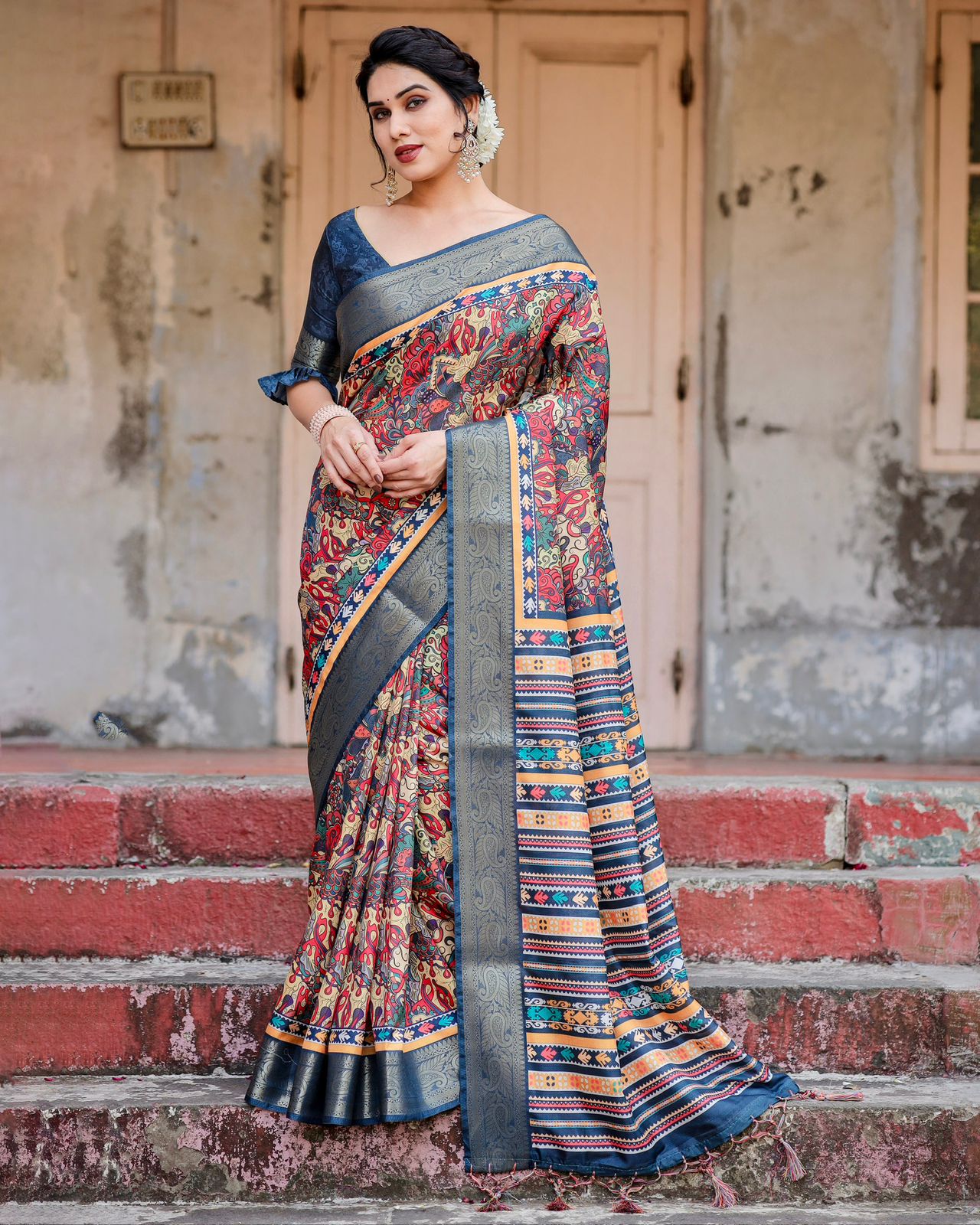
Navy Blue Floral Silk Saree with Peach Zari Border is a useful example of a price comparison involving both fibre and border work. The silk base contributes to the material value, while the peach zari border adds a contrasting metallic design element. The border width, zari type and finishing deserve attention because a narrow decorative edge and an elaborate brocade border don't represent the same production input.
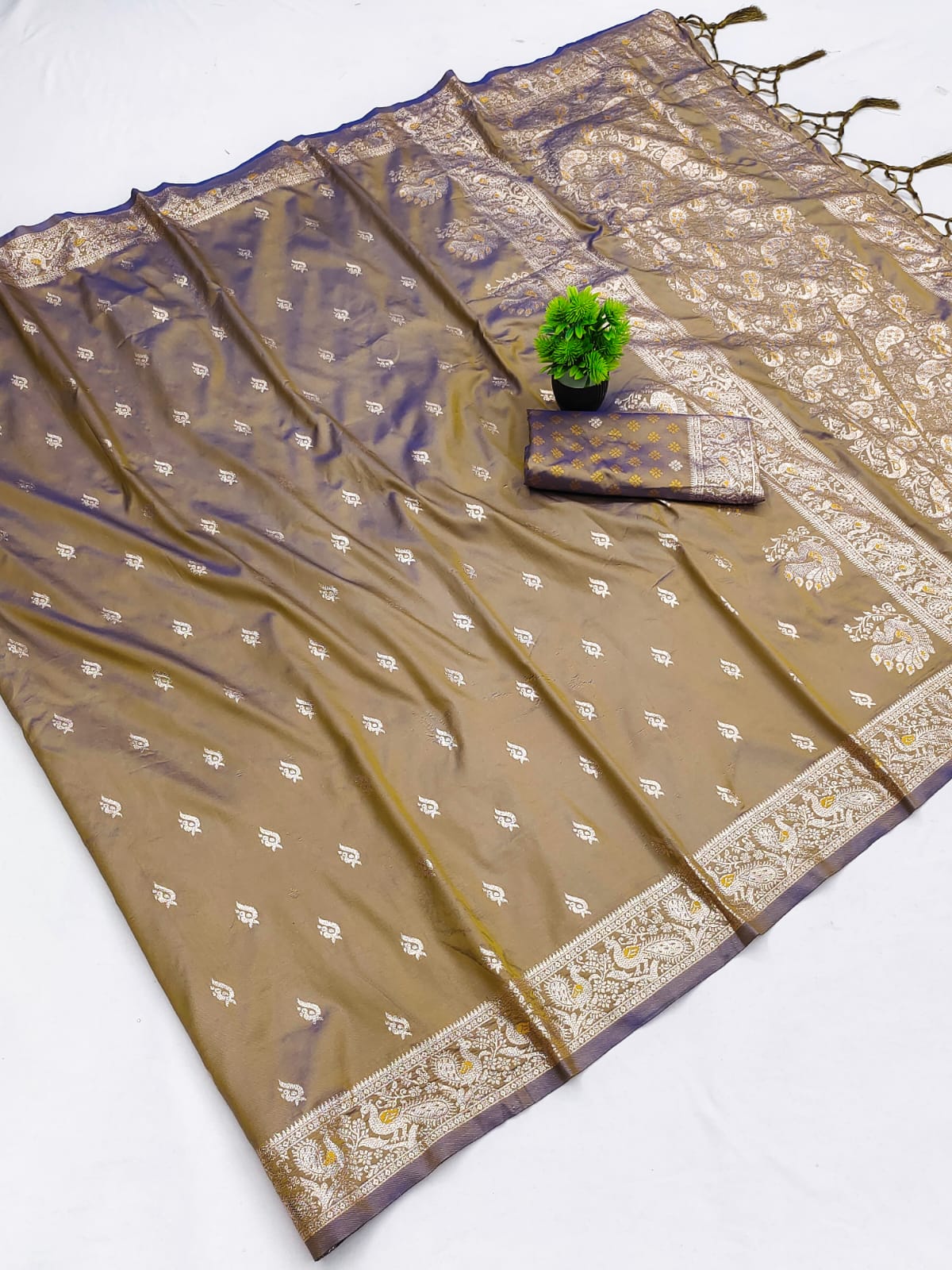
Multi Color Banarasi Silk Saree with Artistic Prints requires a slightly different reading. Banarasi silk identifies a silk-and-weave tradition, while artistic prints describe the surface treatment named in the product title. A printed Banarasi-style surface should not automatically be valued like a saree with extensive woven brocade or dense zari.
Zari should be assessed by asking three questions: Is the zari woven or embroidered? Is the thread imitation or a specified metallic composition? How much of the saree carries the zari? A small zari border can make a saree festive without making it equivalent in price to a heavily brocaded wedding silk.
Discounts also require context. Sarees Under 20% Off and Sarees Under 10% Off may help compare modest reductions, but the original price, fabric details and final payable amount still matter more than the percentage badge. A 10% discount on a well-specified fabric can be better value than a large discount on a product with unclear material information.
Which price signals matter when buying online?
The strongest online price signals are a clear fabric description, close-up images, border details, blouse information, measurements, care instructions and a transparent final price. A low price without these details is difficult to evaluate because the buyer can't tell whether the saving comes from a simpler construction or missing information.
- Compare width: Saree width affects drape, pleat volume and usable length, so check measurements rather than assuming standard sizing.
- Check length: A blouse piece, extra border allowance or different length can change tailoring and styling options.
- Inspect the reverse: A close-up reverse image can help distinguish a print from a woven design, although photographs are not a substitute for a fibre declaration.
- Calculate tailoring: Add blouse stitching, fall, edging and alterations to the purchase price.
- Check delivery timing: A cheaper saree isn't useful for a wedding if tailoring and delivery can't be completed in time.
Collections such as Sarees Flat 60% Off and Sarees Flat 50% Off can be useful for finding a lower final price, but large reductions need careful checking. Compare the discounted amount, fabric, measurements and included components against similar full-price products rather than treating the discount percentage as a quality rating.
How to calculate the real cost of a saree
The real cost of a saree equals the purchase price plus tailoring, finishing, maintenance and likely replacement costs. This calculation gives a more practical comparison than the ticket price alone.

For example, consider a ₹1,400 cotton saree that needs ₹250 for fall and edging and ₹700 for a separately purchased blouse. The usable outfit cost becomes ₹2,350 before maintenance. A ₹2,000 linen cotton saree with an included blouse piece and simple finishing may therefore be closer in total value than the initial prices suggest.
For a silk saree, include blouse stitching, careful storage and occasional professional cleaning. Storage should protect silk and zari from dampness, direct sunlight and rough contact with jewellery. Folding with soft cotton or muslin layers and refolding periodically can reduce permanent creases, although the care label remains the primary instruction.
Wear frequency also changes value. A ₹1,500 cotton saree worn twice a month for two years may deliver more cost-per-wear value than a ₹6,000 silk saree worn once, even if the silk has a higher material and occasion value. Cost-per-wear isn't a quality measure, but it's a useful decision tool for personal wardrobes.
A practical scorecard for choosing between similar sarees
A five-part scorecard makes online comparison faster: material clarity, construction, design work, outfit completeness and care burden. Rate each area from one to five, then compare sarees intended for the same purpose.
- Material clarity: Give five points when fibre or blend information is specific and consistent with the product description.
- Construction: Give five points for clearly described handloom, woven borders or substantial structural detail when those features matter to you.
- Design work: Assess whether the motif is printed, woven, embroidered or finished with zari, and decide which treatment you prefer.
- Outfit completeness: Add points for an included blouse piece, suitable length and useful finishing.
- Care burden: Give more points to a saree whose maintenance fits your actual routine, not an imagined wardrobe.
The scorecard isn't meant to turn clothing into a laboratory calculation. The scorecard prevents one attractive photograph, one discount label or one familiar fabric name from controlling the entire purchase decision.
A Better Way to Compare Saree Prices Across Fabric Types is finally a habit of asking what each rupee contributes. Cotton, linen cotton, Chanderi, Banarasi silk and zari can all offer full value when the construction suits the wearer, the occasion and the care routine. The most informed purchase is the saree whose material, workmanship and full ownership cost are clear before checkout.
Questions to Ask Before Comparing Saree Prices
Why do two cotton sarees have different prices?
Two cotton sarees can differ because of yarn quality, weave, handloom production, print method, border work, zari, finishing and blouse inclusion. A printed cotton saree and a handloom cotton saree with a woven border should not be compared as identical products.
Is a more expensive silk saree always better value?
A higher price does not automatically mean better value because silk type, blend, zari, motif density and finishing all affect cost. A silk saree offers better value when its construction suits the intended occasion, expected wear frequency and care budget.
How can I tell whether a saree design is printed or woven?
Look for explicit wording such as "print," "woven pattern," "woven border" or "zari weaves," and inspect close-up and reverse-side photographs when available. Product descriptions are more reliable than photographs alone, especially when metallic or textured work is involved.
What should I check before buying a Chanderi cotton saree online?
Check the fibre description, weave or print method, transparency, measurements, blouse-piece details and care instructions. Chanderi cotton can vary in texture and construction, so the word "Chanderi" alone does not establish the complete price or quality.
Does a saree discount percentage show that the saree is a good deal?
A discount percentage shows only the reduction from the listed price, not the saree's construction or total value. Compare the final price, fibre, weave, included blouse, measurements and care requirements with similar sarees before deciding.
How should I compare the total cost of a saree?
Add the purchase price to fall and edging, blouse stitching or purchase, alterations, delivery charges and likely maintenance. Total-cost comparison is especially useful when one saree includes a blouse piece or finishing and another requires several extra services.