

Choosing the Best Fabrics Cuts and Colours for Salwar Suits for Sangeet Night requires more than matching an outfit to the invitation. A Sangeet normally involves standing, dancing, sitting on the floor, posing for photographs and moving between indoor and outdoor spaces. The right salwar suit therefore needs a fabric that recovers after movement, a cut that doesn't restrict the knees or shoulders. A colour that holds its presence under warm venue lighting.
Fabric weight, lining, sleeve construction and hem volume all change how a salwar suit behaves after several hours. A heavily embellished outfit may look impressive on a hanger but become uncomfortable during a family dance performance. A lighter suit with deliberate colour contrast can appear equally festive while giving the wearer more freedom. The decisions below help match visual impact with real Sangeet conditions.
How do you choose the fabric in the Best Fabrics Cuts and Colours for Salwar Suits for Sangeet Night?
The best Sangeet fabric balances movement, breathability, surface finish and resistance to creasing. Silk blends, viscose Chanderi silk, georgette, rayon cotton and selected cotton-silk fabrics each suit a different type of celebration and personal comfort requirement.
Silk blends for polish and structure
Vichitra silk and similar silk blends provide a smooth surface, moderate structure and a dressier appearance than everyday cotton. Vichitra silk usually works well for straight kurta sets and co-ord silhouettes because the fabric hangs cleanly without looking stiff. Silk blends also catch warm light attractively, although dense embroidery can increase the overall weight.
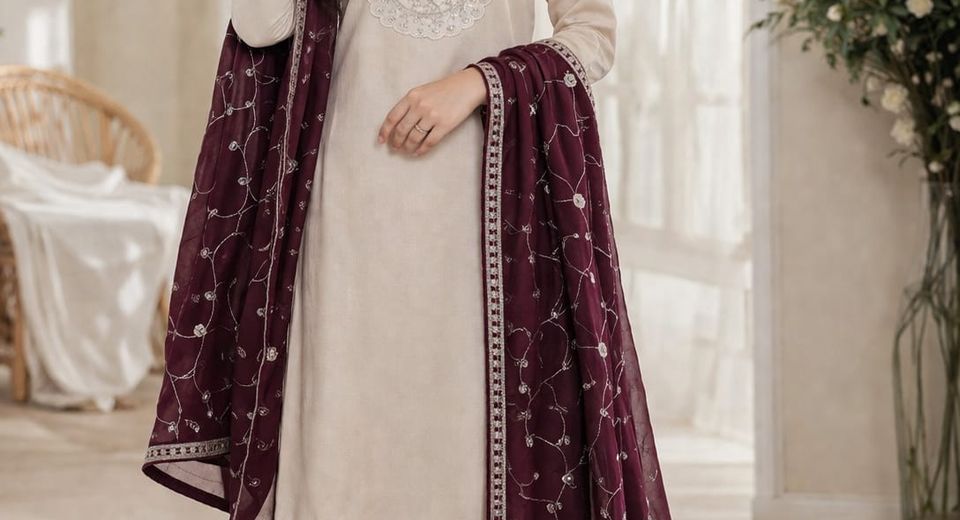
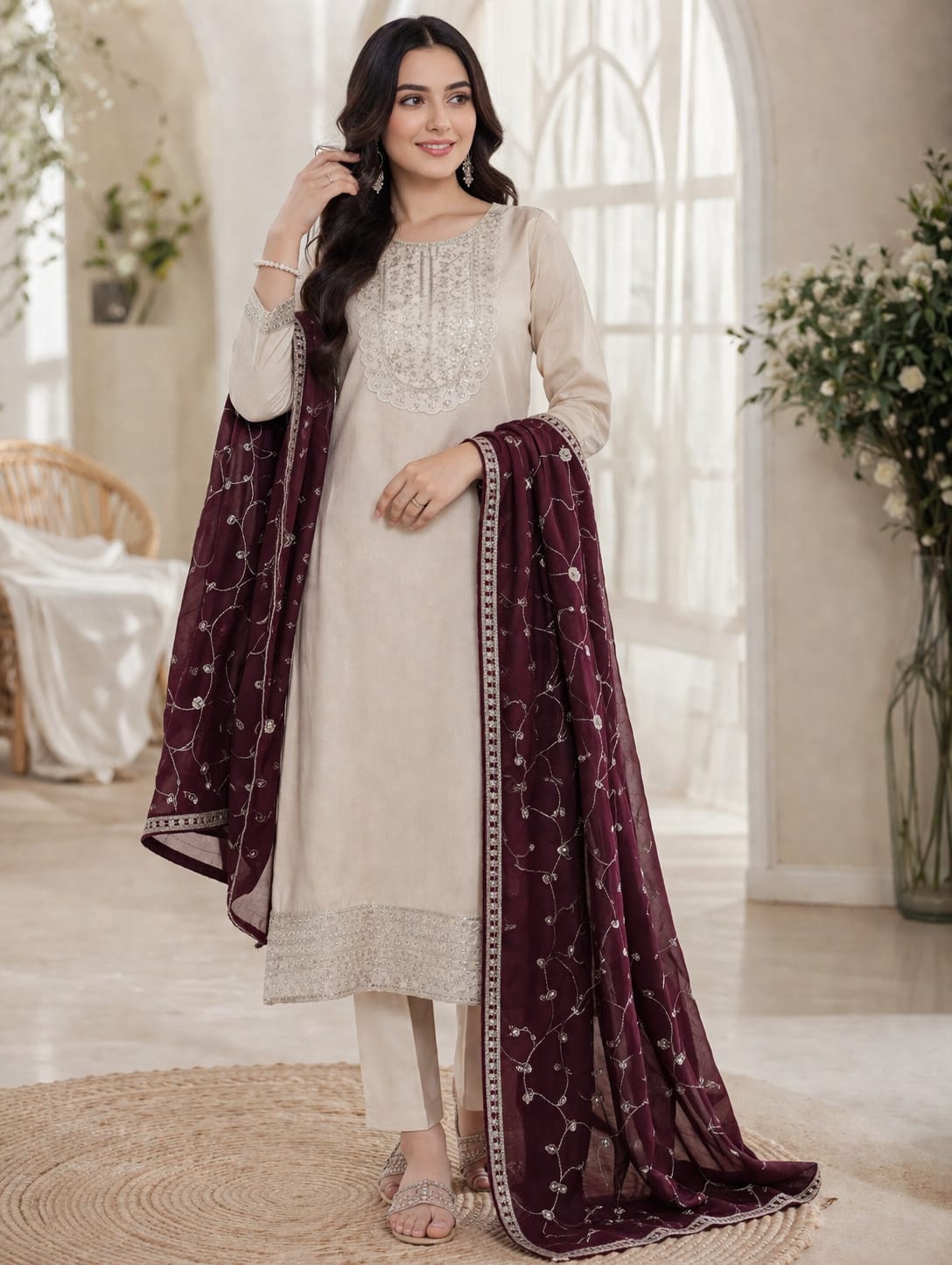
Elegant Beige Vichitra Silk Embroidered Kurta Set for Women illustrates how a neutral silk-based surface can support embroidery without needing a very bright base colour. Beige, champagne and muted gold work particularly well at evening venues with amber lighting. A silk blend is a sensible choice when the Sangeet includes formal introductions, stage photographs or a dinner reception after the dancing.
Chanderi silk for lightness with a festive finish
Chanderi silk is a strong option when you want a luminous fabric that feels lighter than many heavily woven silk outfits. Chanderi may be made from silk, cotton or a blend, so checking the garment composition remains important. The fabric often has a slightly sheer, airy character, making a lining or inner slip useful for opaque coverage and a smooth drape.
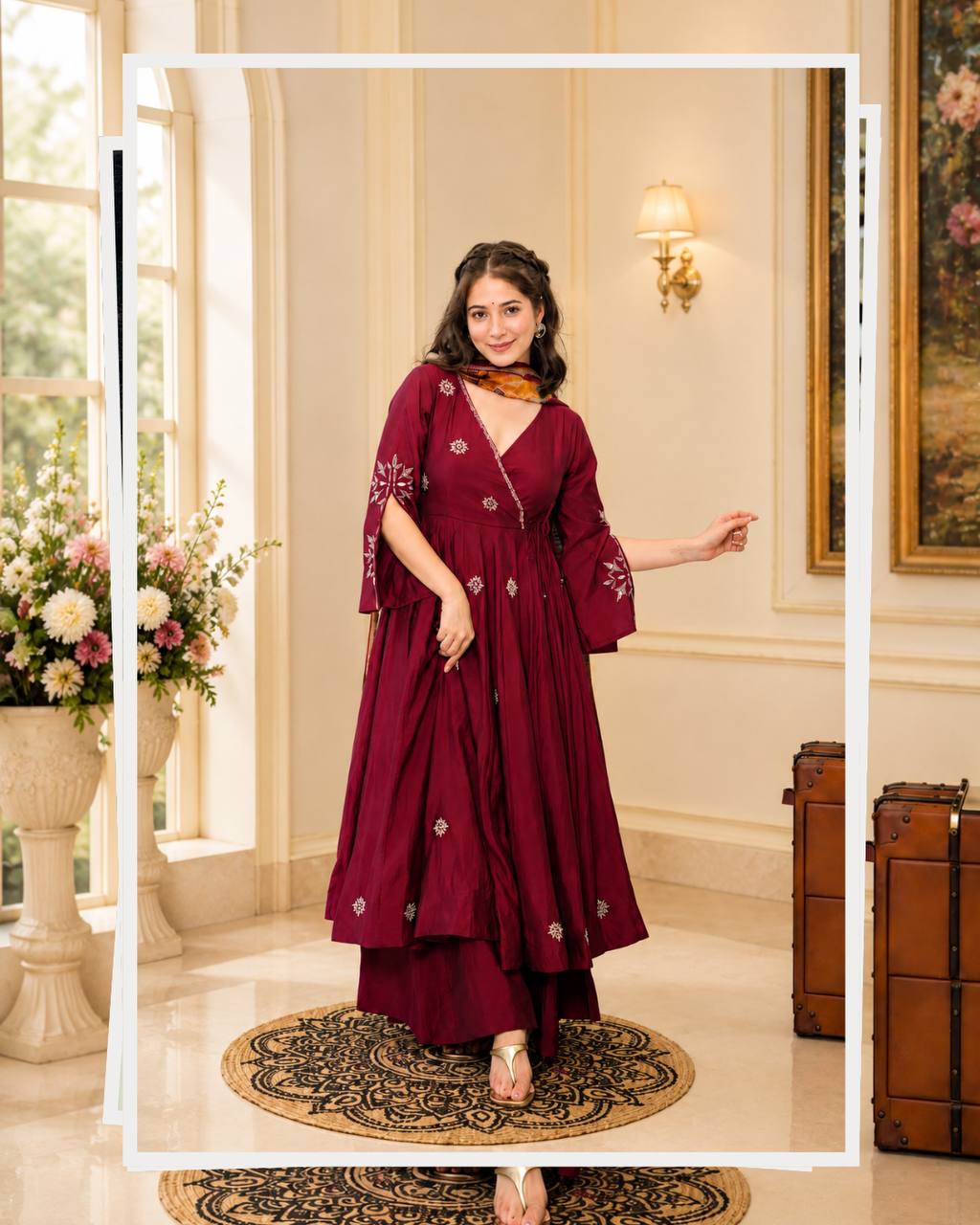
Maroon Viscose Chanderi Silk Embroidered Kurta Set for Women demonstrates why a deep colour and a light-reflective surface can work together. Viscose Chanderi silk tends to feel fluid, while maroon gives the outfit enough depth for evening photography. Choose a lined version if the kurta has a translucent yoke, sleeves or lower panel.
Georgette, rayon cotton and cotton blends for dancing
Georgette is lightweight, fluid and forgiving around the body, which makes it suitable for flared kurtas, layered dupattas and movement-heavy dance routines. Crepe georgette has a slightly grainier surface than smooth satin and usually disguises small creases better. A georgette suit can still feel warm when covered in sequins, so breathable lining and a manageable embroidery load matter.
Rayon cotton combines rayon's soft drape with some of cotton's absorbency and everyday comfort. Rayon cotton is useful for a long Sangeet held in a warm hall or an open-air venue. Maroon Embroidered Rayon Cotton Anarkali Suit Set | Varnavi shows how an Anarkali can retain festive volume without depending entirely on a heavy silk base. Rayon can crease or lose shape with rough washing, so careful laundering is essential.
Pure cotton is breathable and comfortable. But very crisp cotton can look more daytime-oriented unless the design adds zari, mirror work, rich printing or substantial embroidery. Cotton-silk blends often provide a more evening-appropriate sheen while preserving some breathability. Avoid thick polyester satin for long dance events if heat retention and visible perspiration are concerns.
Which silhouette fits the Best Fabrics Cuts and Colours for Salwar Suits for Sangeet Night?
A-line kurtas, moderate-flare Anarkalis, straight kurta sets with side slits and relaxed sharara-inspired bottoms usually provide the most reliable movement for a Sangeet. The ideal cut leaves room at the underarm, hip and knee without creating so much excess fabric that the hem catches underfoot.
A-line and straight silhouettes
An A-line kurta widens gradually from the bust or waist, allowing the wearer to walk and turn without the volume of a full circular flare. The silhouette suits pear, rectangle and hourglass proportions because the gradual shape gives room at the hips while maintaining a clean upper line. Side slits should begin at a practical height rather than extending so high that sitting becomes awkward.
A straight kurta paired with cigarette pants or wide palazzos creates a balanced outfit for a Sangeet that includes rituals as well as dancing. A straight cut also works well under a short embroidered jacket. Check whether the trouser waistband sits securely when you raise your arms, because loose elastic or an overly rigid waistband can become distracting during choreography.
Anarkali volume without floor-level risk
A moderate-flare Anarkali gives a graceful spin while keeping the hem easier to control than a floor-length, multi-layered design. Knee-length or ankle-skimming hems are generally safer than a train-like hem for crowded dance floors. A panelled Anarkali distributes flare more evenly than a stiff gathered skirt and often photographs with a cleaner shape.
Measure the finished length with the footwear you plan to wear. A hem that clears the floor by approximately 2 to 3 centimetres reduces the chance of stepping on it while preserving a formal appearance. Heavy borders should sit above the floor rather than dragging across it, because metallic embroidery can snag and collect dust.
Palazzos, shararas and coordinated separates
Palazzos offer generous leg movement and pair naturally with short kurtas, long tunics and peplum tops. Sharara trousers create a more traditional festive effect through their flared lower panels. But the flare should begin below the knee when easy walking is a priority. A narrow inner trouser beneath a wide sharara panel adds modesty and reduces the chance of fabric catching on footwear.
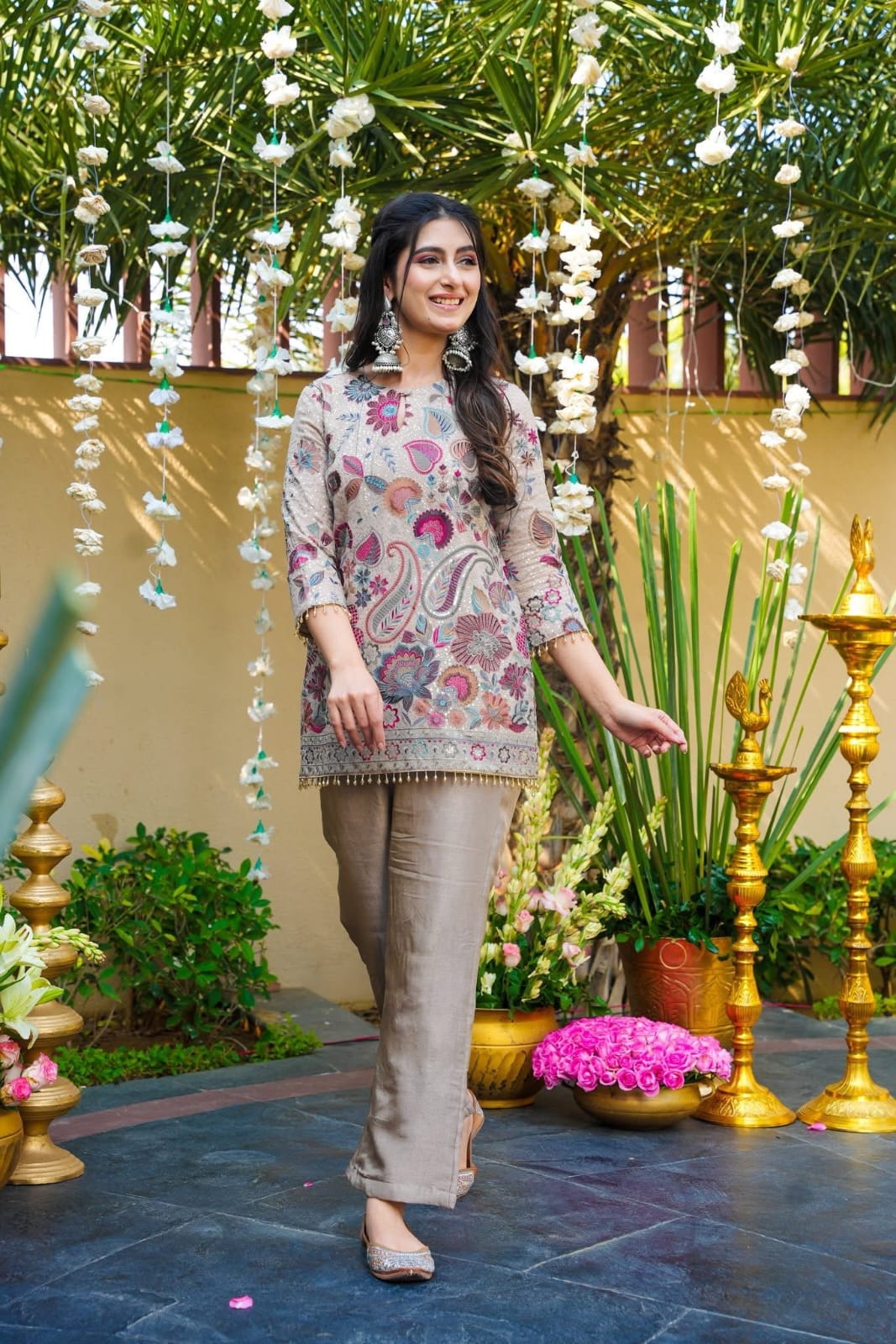
Modern Taupe Vichitra Silk Embroidered Co-Ord Set for Women represents an useful direction for guests who want coordinated dressing without the complexity of a large dupatta or skirt-like flare. Taupe has a contemporary appearance, while a co-ordinated cut can make accessories and footwear carry more of the festive contrast. Separates also simplify alterations because the kurta and bottom can be adjusted independently.
Which colours suit the Best Fabrics Cuts and Colours for Salwar Suits for Sangeet Night?
Jewel tones, deep warm shades, luminous neutrals and carefully placed metallic accents generally photograph well at a Sangeet. Colour choice should account for venue lighting, skin undertone, embroidery colour and the likely background behind group photographs.
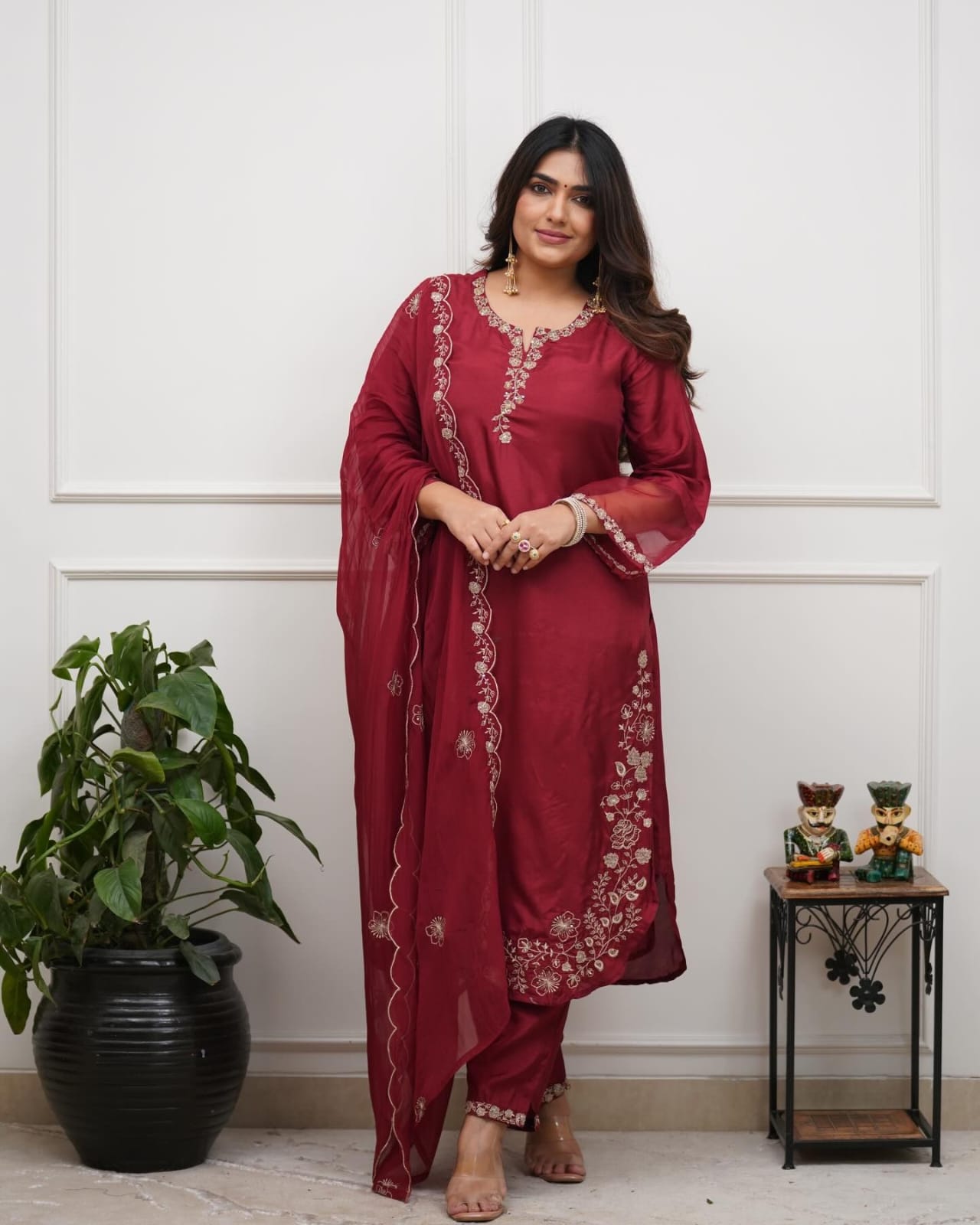
Emerald, cobalt, sapphire, wine, maroon, plum and deep teal absorb enough visual depth to remain elegant under flash photography. Maroon and wine are especially effective when paired with antique gold zari, copper thread or muted mirror work. Cobalt and emerald create stronger contrast with gold jewellery, while plum and deep teal offer a softer alternative to red.
Bright fuchsia, electric blue, coral and saffron bring energy to a dance-focused celebration. Saturated colours can appear more intense under LED stage lights, so balance a vivid kurta with a quieter dupatta or neutral trousers. Colour blocking works best when one shade leads and one or two supporting shades repeat in the embroidery, border or accessories.
Beige, taupe, ivory, champagne and dusty rose can look sophisticated at night when the fabric has sheen or the outfit carries reflective embroidery. Pale colours need more attention to lining, makeup transfer and seating conditions than darker shades. A beige suit with gold zari may photograph as warm champagne under yellow light, while the same suit can look cooler and flatter under white LEDs.
How do regional references strengthen the Best Fabrics Cuts and Colours for Salwar Suits for Sangeet Night?
Regional textile references give a salwar suit visual character, but the reference should be balanced with the event's movement and dress code. Mirror work, Phulkari, Kalamkari, Paithani-inspired motifs and South Indian silk surfaces each communicate festivity in a different way.
Mirror Work Salwar Suits for Sangeet suit dance-led celebrations because small reflective elements catch movement and stage light. Mirror placement matters: concentrated work around the neckline and cuffs can provide impact without making the whole garment heavy. Check the reverse side of mirrors and sequins for soft finishing so repeated arm movement doesn't irritate the skin.
Punjab Phulkari Embroidered Salwar Suits bring bright threadwork and a recognisable Punjabi festive vocabulary to a Sangeet. Phulkari-inspired embroidery often looks strongest against saturated pink, orange, green, blue or red grounds. Keep jewellery streamlined when the dupatta already carries dense multicolour threadwork.
Kalamkari Print Salwar Suits (Copy) offer narrative floral and figurative patterning rather than the all-over sparkle associated with sequins. Kalamkari prints can be an useful choice for a daytime-to-evening Sangeet or for guests who prefer textile detail over reflective embellishment. Pair a printed kurta with a plain bottom and let one colour from the print guide the dupatta.
Maharashtra Paithani Inspired Salwar Suits use jewel-toned borders and peacock or floral references associated with Paithani weaving. These details work especially well when the base fabric is relatively quiet, because the border becomes the visual anchor. Karnataka Silk Salwar Suits offer another structured, lustrous direction for guests who prefer the richness of silk and heritage colour contrast.
How should you match embroidery and accessories with the Best Fabrics Cuts and Colours for Salwar Suits for Sangeet Night?
Accessories should repeat one significant colour or material from the salwar suit instead of competing with every decorative detail. A practical rule is to choose one focal area-neckline, earrings, dupatta, border or footwear-and keep the remaining elements controlled.
Gold zari and antique-gold embroidery pair naturally with maroon, emerald, mustard, beige and rust. Silver sequins and mirror work suit cobalt, lavender, icy pink, teal and charcoal. Rose-gold details bridge warm and cool palettes, making them useful when the garment combines pink threadwork with gold or silver highlights.
Large jhumkas or chandbalis can replace a necklace when the neckline already carries embroidery. A short necklace works better with a relatively open neckline and a plain dupatta. Bangles should not snag on delicate georgette or net sleeves. A secure pair of flat or block-heeled shoes is usually more practical than stilettos for a dance-heavy programme.
A dupatta can change the apparent weight of a salwar suit. A heavy Banarasi silk dupatta adds formality but may become tiring when pinned over one shoulder for several hours. A lightweight organza or chiffon dupatta creates a festive frame with less bulk, although chiffon requires secure pins because it slips more readily.
What fitting and care checks complete the Best Fabrics Cuts and Colours for Salwar Suits for Sangeet Night?
A Sangeet-ready fit should allow a full arm raise, a comfortable seated position, a normal walking stride and at least one layer of breathable clothing underneath. Try the complete outfit with the intended footwear at least one week before the event rather than checking only the kurta on a hanger.
Raise both arms above the head to test the armhole and sleeve seam. Sit on a chair and on the floor to check the kurta hem, waistband and dupatta placement. Walk up a few steps to confirm that palazzos, shararas or an Anarkali hem don't catch under the feet. These simple tests reveal practical problems that a mirror fitting can hide.
Check embroidery for rough sequins, exposed knots and metallic edges near the underarm or neckline. Cotton lining can improve comfort in warm weather, while slippery synthetic lining may cause a fitted kurta to ride upward. If alterations are needed, preserve the original border placement and allow enough ease for the garment to retain its shape while dancing.
Follow the care label because Vichitra silk, Chanderi silk, rayon cotton and georgette respond differently to washing. Dry cleaning is generally safer for heavily embroidered silk blends and garments with zari. Hand wash washable rayon cotton in cool water with mild detergent, avoid wringing, reshape it while damp and dry it away from direct sunlight. Fold embroidered pieces with soft muslin or plain cotton between layers, and never store damp fabric in a sealed plastic bag.
Pack the outfit in a breathable garment bag and carry spare safety pins, fashion tape, a small stain-removal cloth and comfortable backup footwear. Treat oil or makeup marks promptly by blotting rather than rubbing. These small preparations protect the fabric and allow the wearer to enjoy the Sangeet instead of managing avoidable wardrobe problems.
Common Questions About Choosing a Sangeet Salwar Suit
Which fabric is most comfortable for a salwar suit at a Sangeet?
Rayon cotton, lightweight georgette, viscose Chanderi silk and cotton-silk blends are comfortable options for a long Sangeet. Choose breathable lining and avoid excessive layers of heavy sequins if dancing and warm venue conditions are expected.
Which salwar suit colour is best for a night Sangeet?
Maroon, emerald, cobalt, deep teal, wine, plum and sapphire usually photograph strongly at night. Beige, taupe and champagne also work when the fabric has sheen or the embroidery adds gold, silver or mirror highlights.
Is an Anarkali suitable for dancing at a Sangeet?
A moderate-flare Anarkali is suitable for dancing when the hem is ankle-skimming rather than floor-length and the flare does not create a tripping risk. Test the outfit with the planned footwear and practise a few turns before the event.
Are mirror-work salwar suits too heavy for a Sangeet?
Mirror-work salwar suits are not necessarily too heavy, but weight depends on the number, size and placement of the mirrors. Concentrated mirror work on the neckline, sleeves or dupatta gives festive impact with less strain than dense embellishment across every panel.
What should I wear with a heavily embroidered salwar suit?
Wear jewellery that repeats one colour or metal from the embroidery and keep the remaining accessories restrained. Large earrings can replace a necklace when the neckline is already detailed, while secure block heels or embellished flats are practical for dancing.
How can I stop a salwar suit from creasing or losing shape before the Sangeet?
Store the salwar suit on a padded hanger or folded with muslin between embroidered layers, and follow the care label before pressing. Rayon cotton should be washed gently and reshaped while damp, while heavily embroidered silk blends are usually safer with professional dry cleaning.


