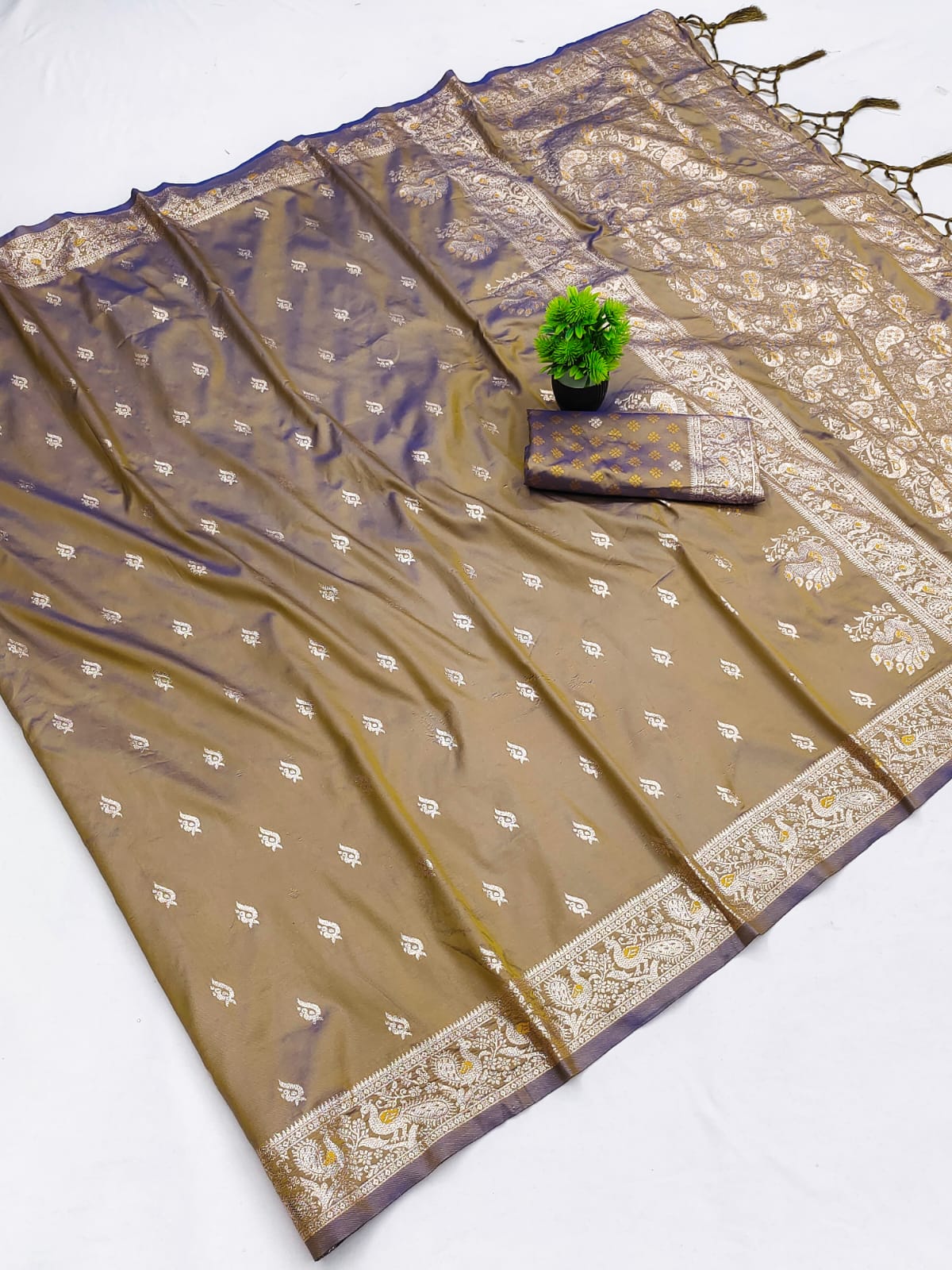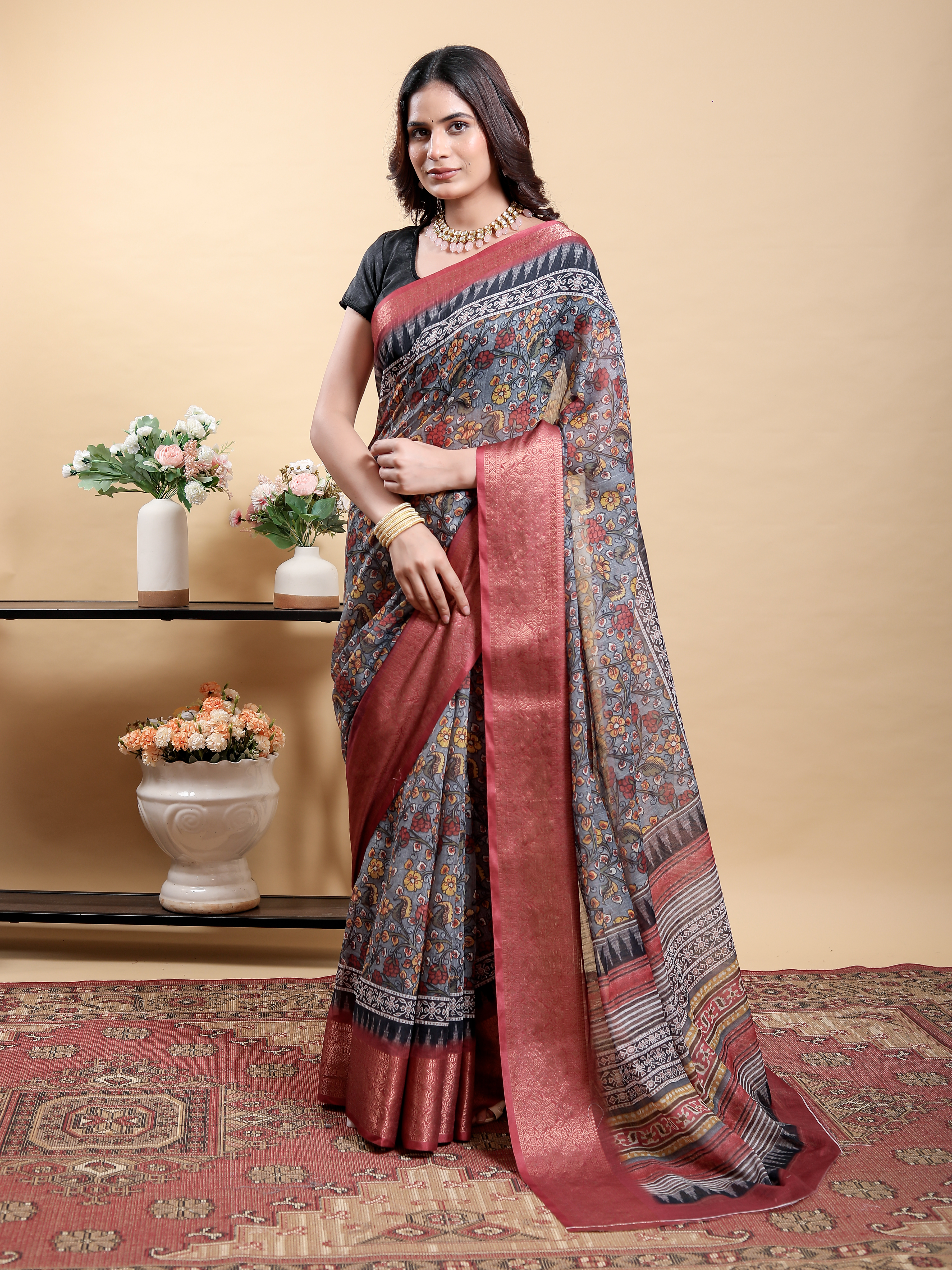
A Banarasi Dupatta Styling Idea Beyond Plain White Suits can give a familiar salwar suit wardrobe far more range. Banarasi silk brings structure, sheen and woven zari detail, so it works with black, indigo, jewel tones, florals and soft pastels as confidently as it works with white. The key is to balance the dupatta's visual weight with the colour, surface and cut of the suit underneath.
A Banarasi dupatta commonly features zari, silk yarns and motifs such as butis, paisleys, floral vines or jaal patterns. Those details make the accessory noticeable from a distance. Styling therefore depends less on adding more jewellery and more on choosing a base outfit that gives the dupatta room to speak.
Why a Banarasi dupatta works beyond a white suit
A Banarasi dupatta works beyond a white suit because its woven colour and zari can connect contrasting garments without making the outfit look mismatched. White is an easy base because it reflects every colour, but black, navy, bottle green, wine, cobalt and dusty rose can create stronger depth.
Banarasi silk also occupies a useful middle ground between a casual cotton dupatta and a heavily embellished net or velvet layer. The fabric has enough body to create a clean shoulder line, while the woven motifs provide occasion-appropriate richness. A Banarasi dupatta can dress up a simple kurta pant set for a dinner, puja or family celebration without requiring a fully embroidered suit.
Colour repetition is the simplest way to make a non-white pairing feel intentional. If a Banarasi dupatta contains red and gold, repeat red in the kurta, trousers, bangles or bindi. If the dupatta combines blue and antique gold, choose a blue kurta or gold-toned accessories instead of introducing a fourth dominant colour.
Banarasi Dupatta Styling Idea Beyond Plain White Suits: five colour pairings
Black with antique gold or jewel-toned Banarasi silk
Black creates the sharpest contrast with a bright Banarasi dupatta and is especially effective for evening wear. A Banarasi silk layer with antique gold, rani pink, emerald or deep red motifs looks polished over a black kurta and straight trousers.
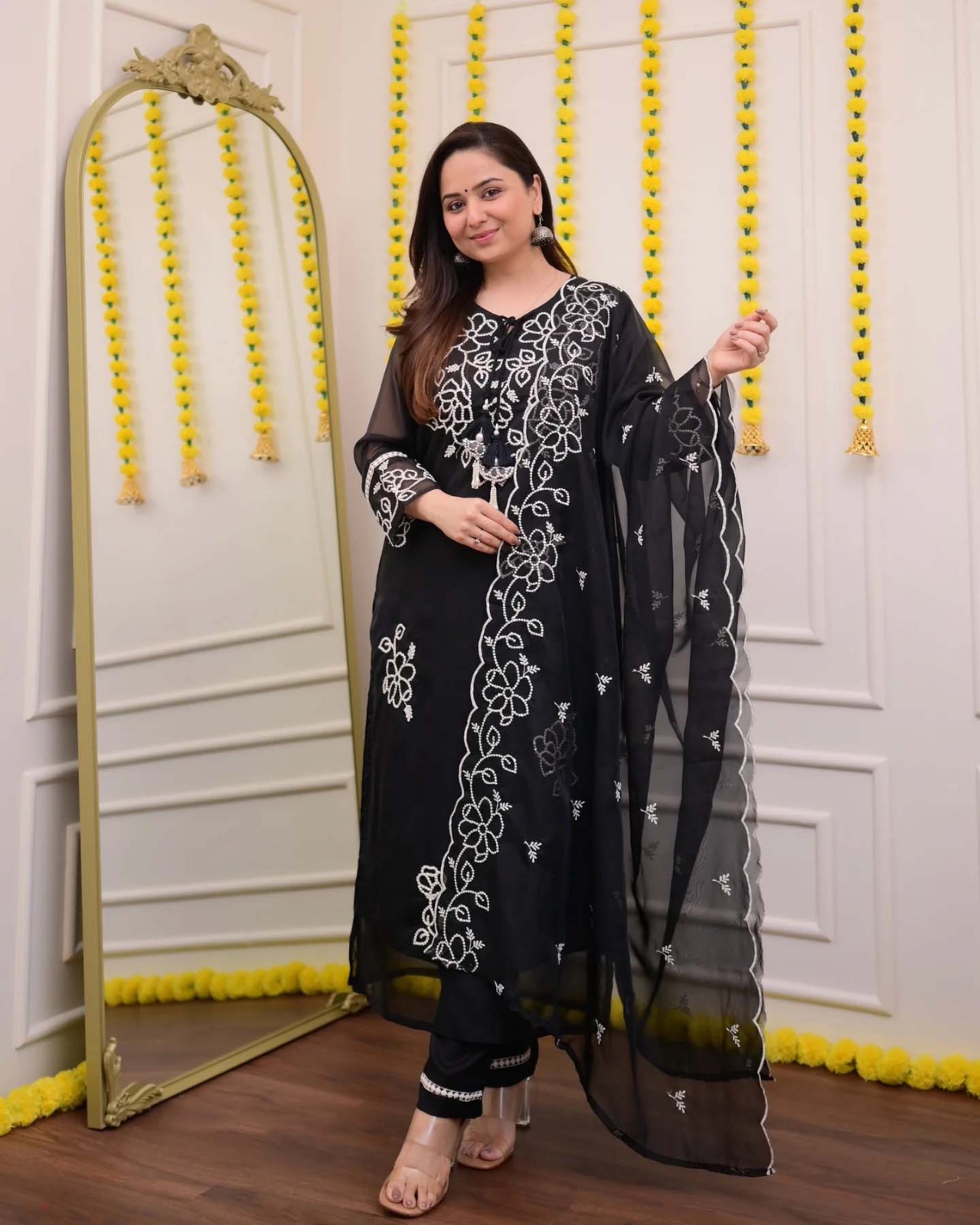
The Stylish Black Kurta Pant Dupatta Set with White Embroidery already has a strong black-and-white foundation. Add a coloured Banarasi dupatta in ruby, magenta or peacock blue, then keep the footwear and handbag in black or metallic gold. Avoid a highly contrasting printed shoe because the embroidered kurta and woven dupatta already supply sufficient visual detail.
Indigo or blue with pink, purple or gold
Blue provides a cooler base for Banarasi silk and pairs well with pink, lavender, fuchsia, rust and gold. Indigo looks particularly attractive with a warm zari border because dark blue allows metallic threads to stand out without the severity of black.
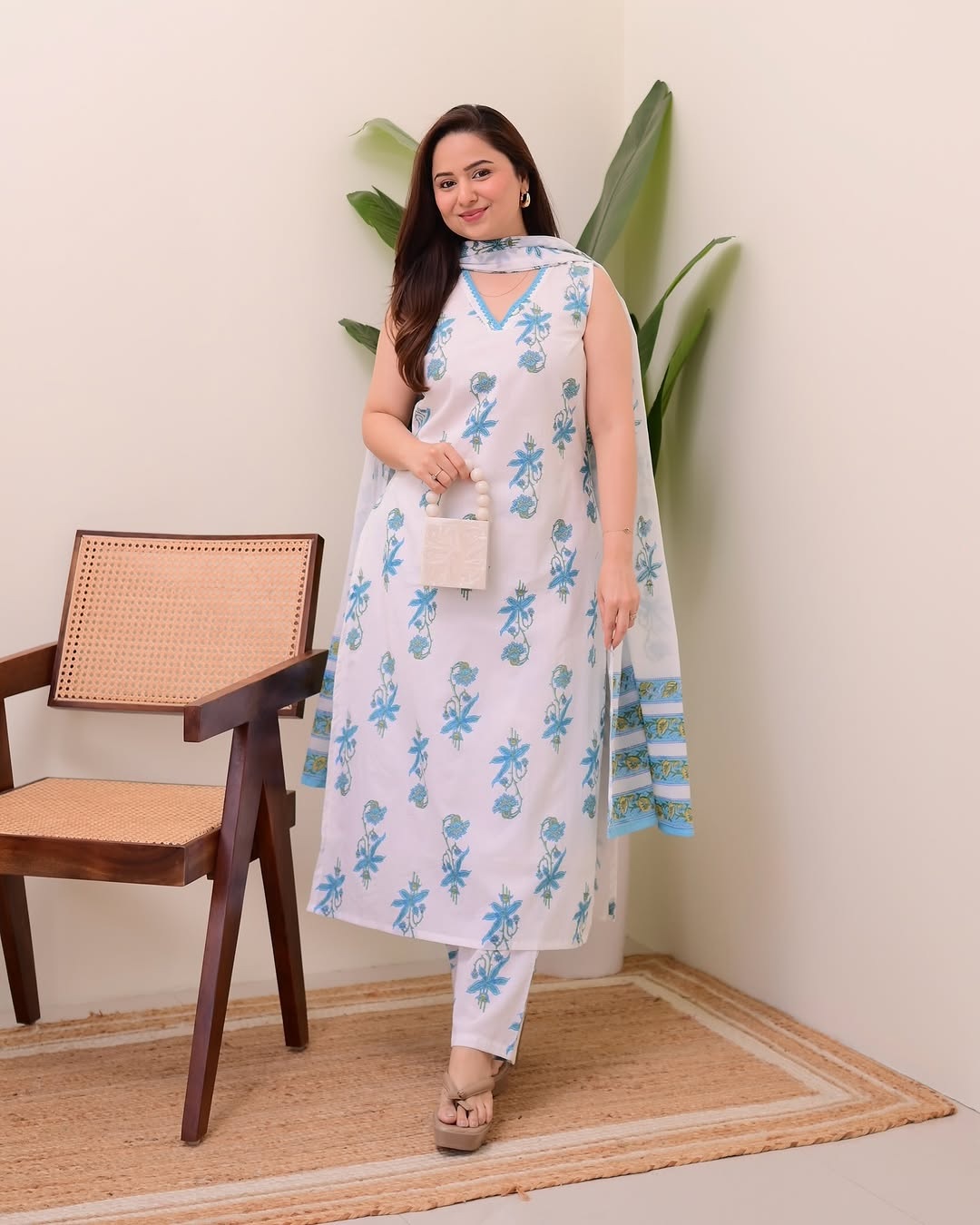
The White Blue Printed Cotton Kurta Pant Dupatta Set demonstrates how blue can anchor a lighter outfit. Replace the original dupatta for a festive gathering with a Banarasi option that repeats the printed blue, or choose a contrasting pink-and-gold weave for a more celebratory result. Cotton and silk have different textures, so keep the drape relaxed rather than forcing multiple stiff pleats.
Pastels with a deeper Banarasi border
Pastel suits look more grounded when a Banarasi dupatta introduces one deeper colour. Blush pink with wine, powder blue with navy, pistachio with emerald and lilac with plum are reliable combinations.
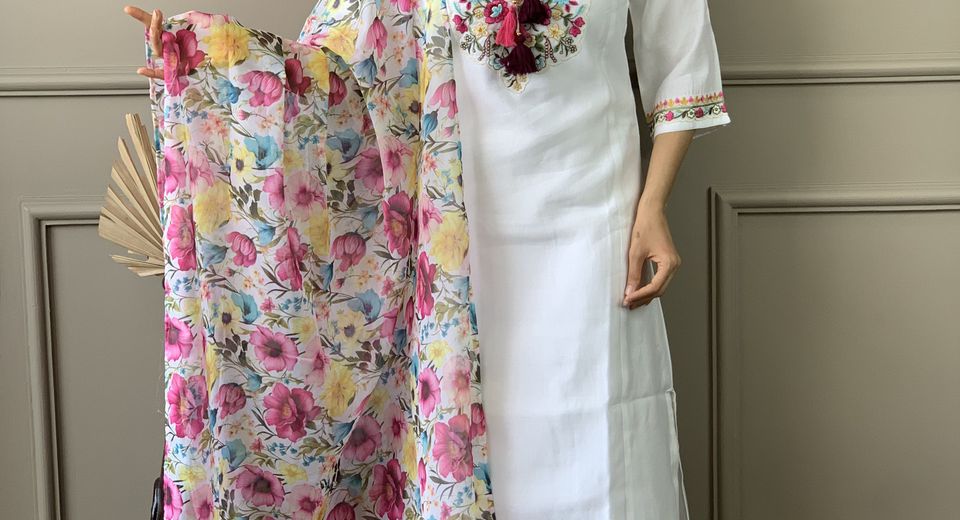
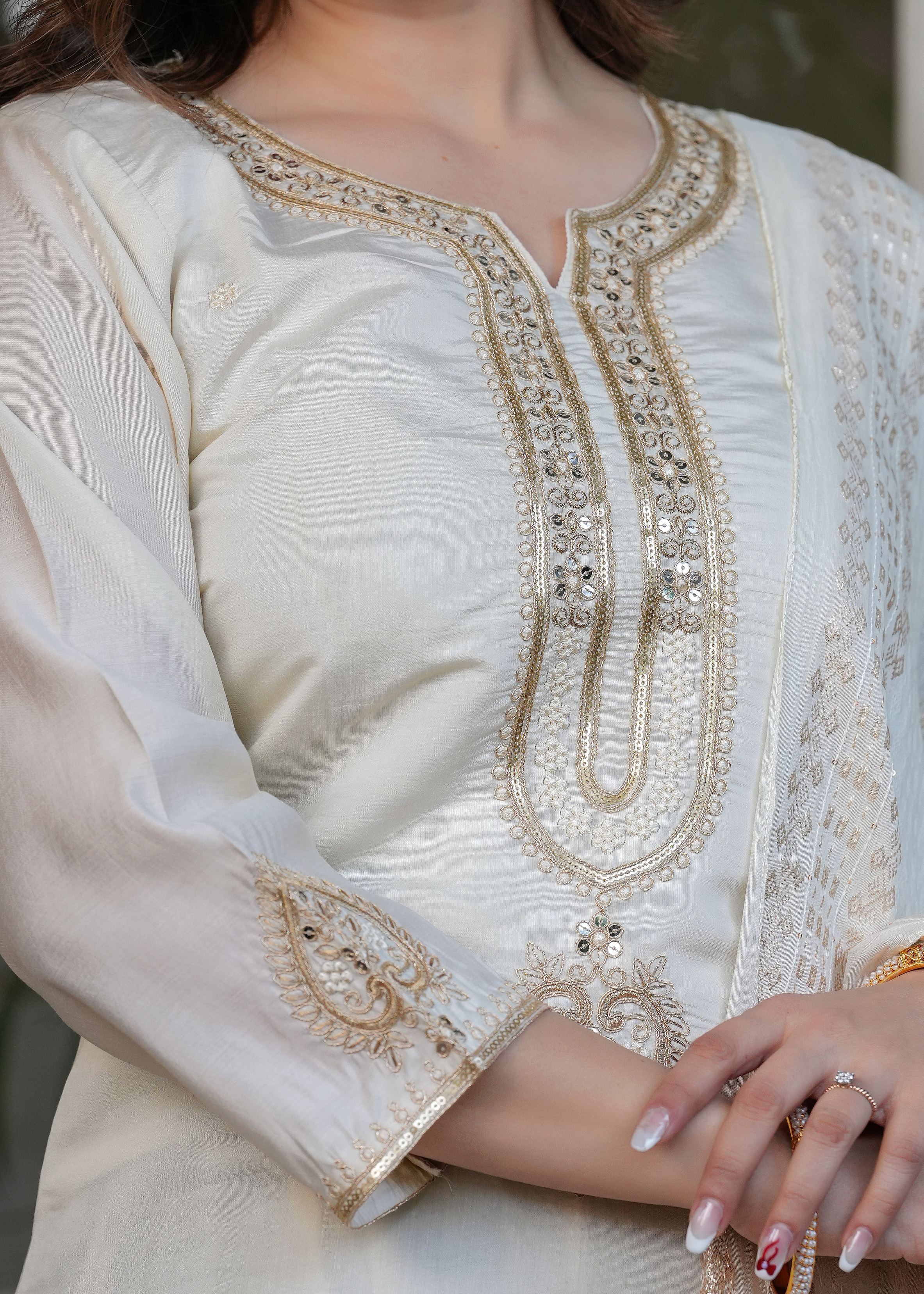
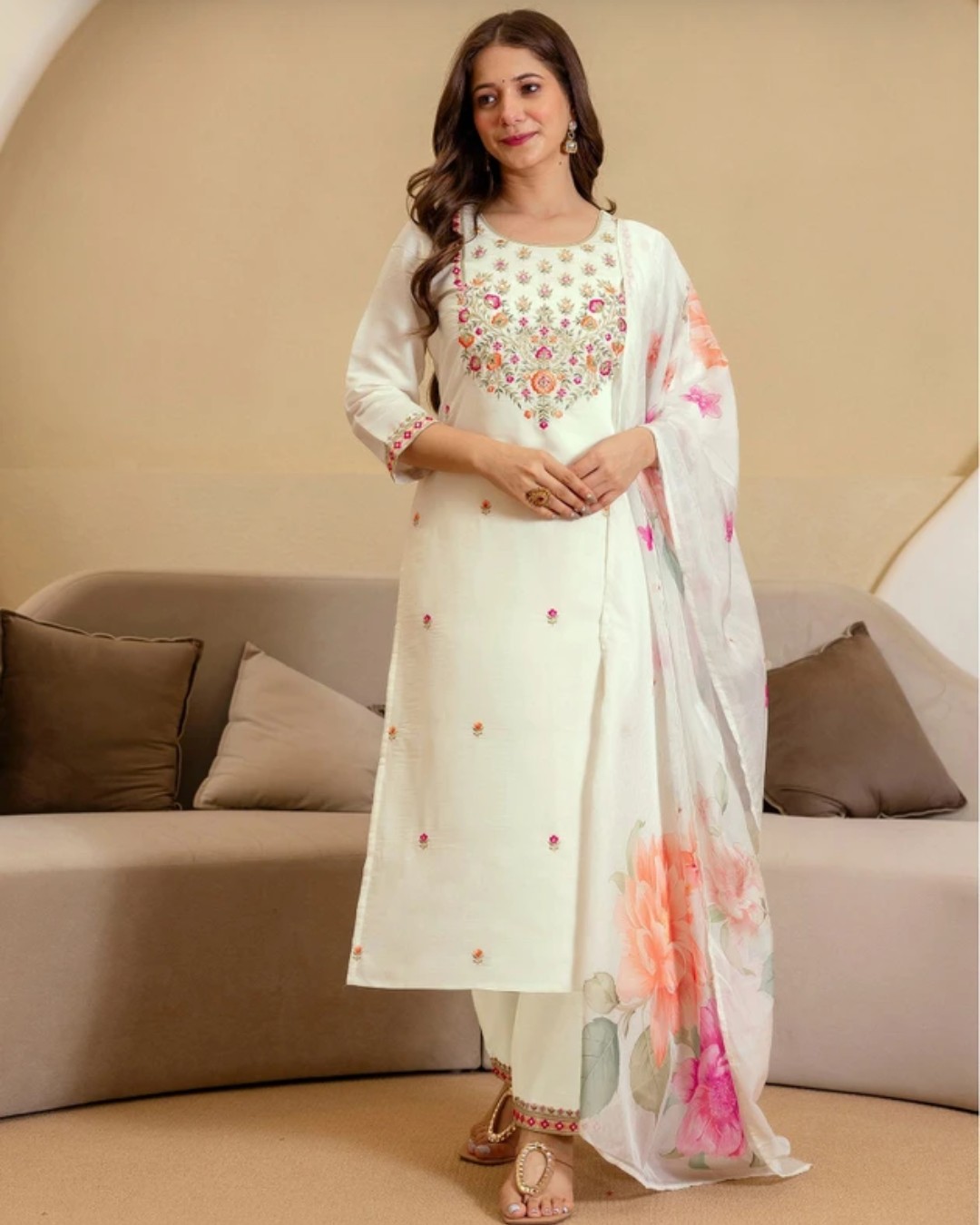
A soft Chanderi or organza suit can support a Banarasi silk dupatta when the border isn't excessively broad. White Chanderi Embroidered Kurta Set with Organza Dupatta offers a useful example of a light, textured base. For a new styling direction, wear the embroidered kurta with a rose-gold or muted teal Banarasi dupatta and repeat the deeper shade in small earrings or embroidered juttis.
Printed suits with a controlled woven contrast
A printed suit needs a Banarasi dupatta with either a restrained motif or one colour taken directly from the print. Pairing a dense floral print with an equally dense multicoloured brocade can make both surfaces compete.
Choose a Banarasi dupatta with a plain field and an ornate border when the kurta has large florals. Choose a small-buti Banarasi dupatta when the suit has a fine geometric or block print. This approach works well with White Chanderi Kurta Set with Floral Embroidery and Dupatta, particularly when the replacement dupatta echoes one floral colour rather than matching every shade in the embroidery.
Monochrome neutrals with a vivid Banarasi accent
Ivory, beige, grey and charcoal allow a vivid Banarasi dupatta to become the main colour statement. A crimson Banarasi dupatta over charcoal trousers looks formal, while a turquoise or parrot-green dupatta over beige creates a lighter daytime outfit.
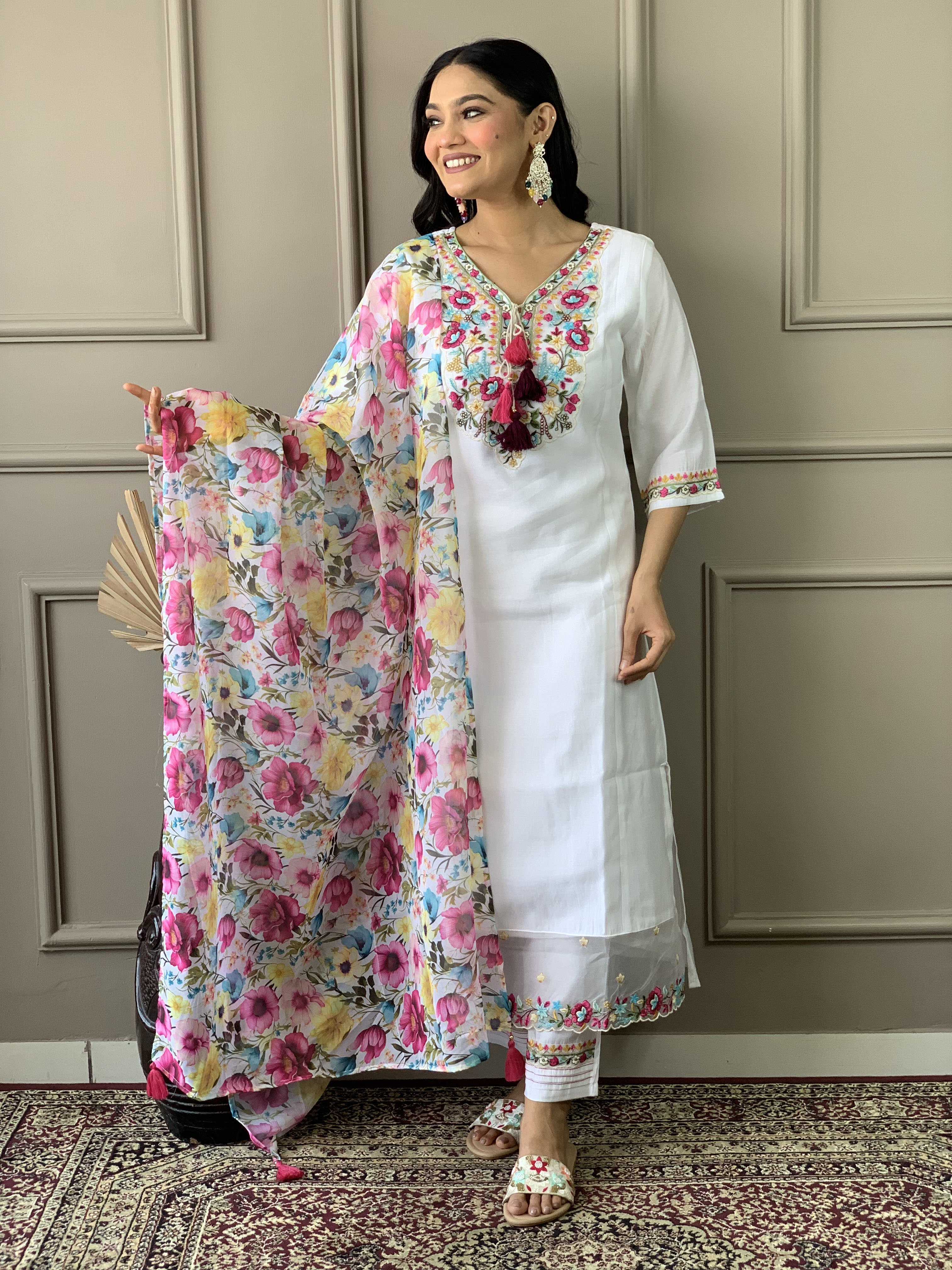
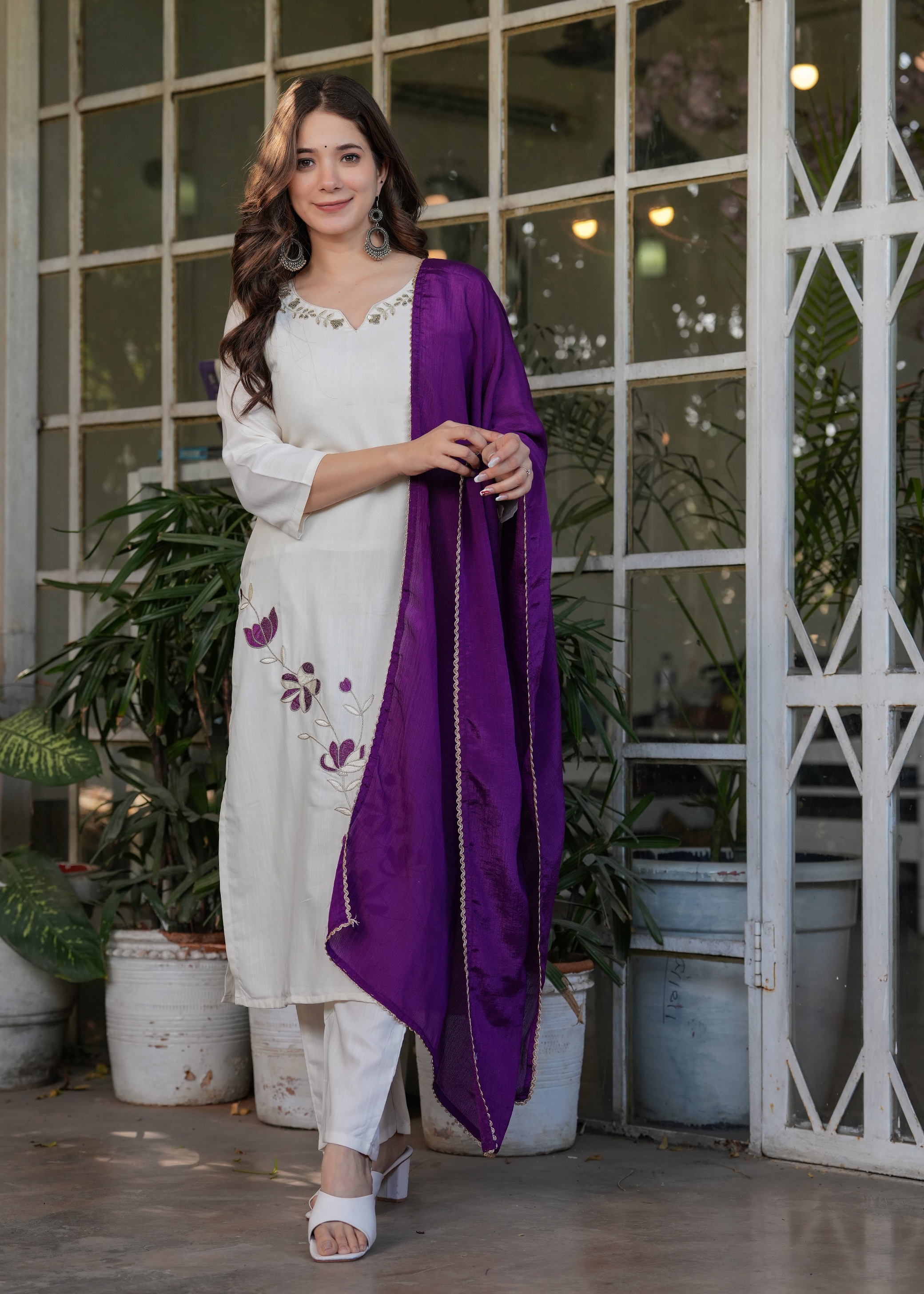
Elegant White Chanderi Kurta Pant Dupatta Set Women can be styled with a Banarasi silk dupatta in copper, rani pink or deep purple when a plain white pairing feels predictable. Keep the kurta's accessories simple and let the woven border frame the neckline or fall along one side of the body.
How should Banarasi silk be balanced with different suit fabrics?
Banarasi silk is easiest to style when the base fabric has a clearly different or deliberately complementary texture. A smooth silk dupatta can add richness to cotton, Chanderi, rayon or lightly embroidered fabrics, but a heavily stiff suit may need a lighter Banarasi weave.
Cotton and linen-blend suits
Cotton suits benefit from the contrast of a structured silk dupatta, especially for daytime festive events. Let the cotton kurta remain uncomplicated and use a narrow front pleat or a loose shoulder drape so the outfit retains its breathable character.
A Banarasi dupatta with a small zari buti is usually more comfortable with cotton than a very dense brocade. The difference in texture becomes an intentional styling feature rather than a clash between casual and formal materials. Regional references such as Kalamkari Print Salwar Suits (Copy) can also inspire colour choices, especially when a Banarasi border repeats a rust, indigo or mustard shade from a print.
Chanderi and organza
Chanderi and organza already have light transparency and a crisp finish, so a Banarasi silk dupatta should provide weight without completely flattening the outfit. A medium-width border, medium-density motifs and a single shoulder drape create proportion.
don't stack an organza dupatta and a Banarasi dupatta together unless the event is highly festive and the layers have different functions. Two slippery or crisp dupattas can bunch at the neckline and make the upper body appear crowded.
Chinon and embroidered fabrics
Chinon has a fluid fall, while Banarasi silk has more body, making the combination useful when the suit needs a defined shoulder line. White Designer Threadwork Suit with Chinon Dupatta can be restyled with a Banarasi dupatta in a colour pulled from the threadwork.
When the kurta has dense thread embroidery, choose a dupatta with a clear border and less all-over ornamentation. When the kurta is mostly plain, a richer Banarasi jaal or repeated buti pattern can supply the missing surface interest.
Which drapes show a Banarasi border properly?
The most effective Banarasi dupatta drape depends on the border, the neckline and the amount of embroidery on the kurta. A good drape keeps at least part of the woven border visible rather than hiding the most valuable detail in a bundle of folds.
- Single-shoulder front fall: Place one end on the opposite shoulder and allow the longer end to fall near the hip. This drape suits a straight kurta and shows both the border and the pallu-like end.
- Neat front pleats: Make five to seven broad pleats and place them over one shoulder. Pin the shoulder only after aligning the border. This style is practical for work celebrations, family lunches and movement-heavy events.
- One-side open drape: Let the dupatta rest over one shoulder and fall open along the side seam. This method displays a large woven field and works well with slim trousers or a palazzo.
- Waist-defined wrap: Tuck a small section near the side waist and bring the dupatta across the torso before placing the end over the shoulder. This creates shape for a long kurta but should be secured with a discreet pin to prevent pulling on the silk.
Use a concealed safety pin with a fabric guard or a small brooch only at a reinforced border area. Repeated pinning through the central silk field can leave visible puncture marks, especially in fine Banarasi weaves.
How should jewellery and footwear change with the dupatta?
Jewellery should repeat one detail from the Banarasi dupatta instead of competing with every motif. Gold-toned jhumkas, a single kundan pendant or glass bangles suit zari, while oxidised silver can sharpen a deep blue, black or purple combination.
A broad zari border already creates a horizontal line near the shoulder and chest. In that case, choose a shorter necklace or skip the necklace in favour of earrings. A narrow-border Banarasi dupatta can support a longer pendant because the neckline remains visually open.
Footwear should match the formality and colour temperature of the outfit. Gold or bronze juttis work with warm zari, black sandals support a high-contrast black base, and tan leather or beige embroidered footwear softens a daytime pastel pairing. A bag in one repeated colour is usually more coordinated than a bag that copies the entire dupatta pattern.
Black White Floral Embroidered Readymade Salwar Suit can move from daytime to evening when paired with a Banarasi dupatta in emerald, wine or antique gold. Keep the floral embroidery as the focal detail during the day, then add a metallic clutch and bolder earrings for a night event.
Which regional styles can guide a Banarasi dupatta combination?
Regional textile traditions can guide colour and motif choices without requiring a head-to-toe traditional costume. Maharashtra Paithani Inspired Salwar Suits suggest jewel tones, peacock motifs and rich borders, while Punjab Phulkari Embroidered Salwar Suits offer a useful reference for bright pink, orange, green and yellow combinations.
Karnataka Silk Salwar Suits can inspire restrained gold borders and deeper silk colours. Kashmir Embroidered Salwar Suits can guide floral placement, soft pastels and paisley-based accessories. These references help build an outfit with a coherent visual story rather than a random mix of patterns.
A Banarasi dupatta can also sit comfortably beside handloom-inspired details. Pair a small-buti Banarasi silk dupatta with a plain kurta, handcrafted earrings and embroidered juttis. The result acknowledges Indian textile vocabulary without making every garment equally ornate.
How should a Banarasi dupatta be cared for?
A Banarasi dupatta should be dry-cleaned when the silk, zari or dye is delicate, and it should be stored folded in clean cotton away from direct sunlight. Avoid machine washing, prolonged soaking, wringing and contact with perfume or deodorant.
Refold the dupatta along a different line every few months to reduce permanent creases. Keep zari away from rough jewellery, exposed hooks and Velcro because metallic threads can snag. For short-term storage, wrap the folded silk in unbleached muslin rather than sealed plastic, which can trap moisture.
Air the dupatta in shade after wearing it, especially after a Haldi ceremony or a crowded indoor event. If a small stain appears, blot it gently with a dry, clean cloth and send the garment to a professional cleaner instead of rubbing the affected area at home. Proper care preserves the colour, hand feel and zari finish that make Banarasi silk valuable.
Common Questions About Styling Banarasi Dupattas With Salwar Suits
Can a Banarasi dupatta be worn with a black salwar suit?
Yes, a Banarasi dupatta works especially well with a black salwar suit because the dark base makes zari and jewel-toned motifs stand out. Choose ruby, emerald, peacock blue, antique gold or magenta, and keep the remaining accessories restrained.
Which colours pair best with a Banarasi silk dupatta?
Black, indigo, navy, bottle green, wine, blush pink, beige and charcoal pair well with Banarasi silk. Repeat one colour from the dupatta in the kurta, jewellery, footwear or handbag to make the combination look deliberate.
Can Banarasi silk be worn with a cotton salwar suit?
Yes, Banarasi silk adds festive structure to a cotton salwar suit. A small-buti weave or a defined border is usually more balanced than a dense brocade when the cotton kurta has a casual print.
How should a Banarasi dupatta be draped for a wedding guest outfit?
A single-shoulder front fall or neatly pleated shoulder drape works well for a wedding guest outfit because both the border and woven field remain visible. Secure the dupatta at a reinforced border area and coordinate jewellery with the zari tone.
Can a Banarasi dupatta be paired with an embroidered kurta?
Yes, but the embroidery and Banarasi motifs should not compete equally across the entire outfit. Pair dense kurta embroidery with a dupatta that has a clear border and a simpler field, or pair a plain kurta with a richer Banarasi jaal.
How should a Banarasi dupatta be stored at home?
Store the dupatta clean and completely dry, folded in breathable cotton and kept away from sunlight, moisture and rough accessories. Dry cleaning is safer than home washing when the fabric contains zari, deep dyes or delicate silk yarns.