

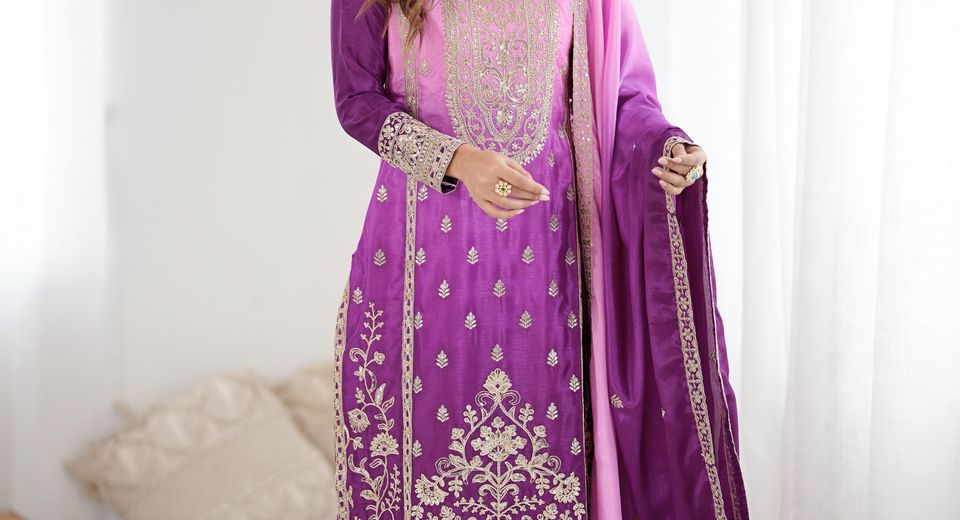
Balanced Salwar Suit Silhouettes and Dupatta Styles for Petite Women depend on proportion more than height. A well-cut kurta, a controlled amount of trouser volume and a dupatta placed with intention can make a petite frame look elongated without hiding its shape. The useful goal isn't to make every outfit narrow or excessively fitted; the goal is to create a clear vertical line from shoulder to hem.
Small adjustments have a visible effect. A kurta that ends at the widest part of the calf can shorten the leg line, while a hem just above or below that point usually looks cleaner. A very broad dupatta border can dominate a smaller frame, whereas a fine zari edge or lightly printed fabric adds detail without visual weight. The following guide explains how to make those decisions for everyday dressing, festive gatherings and wedding events.
Balanced Salwar Suit Silhouettes and Dupatta Styles for Petite Women
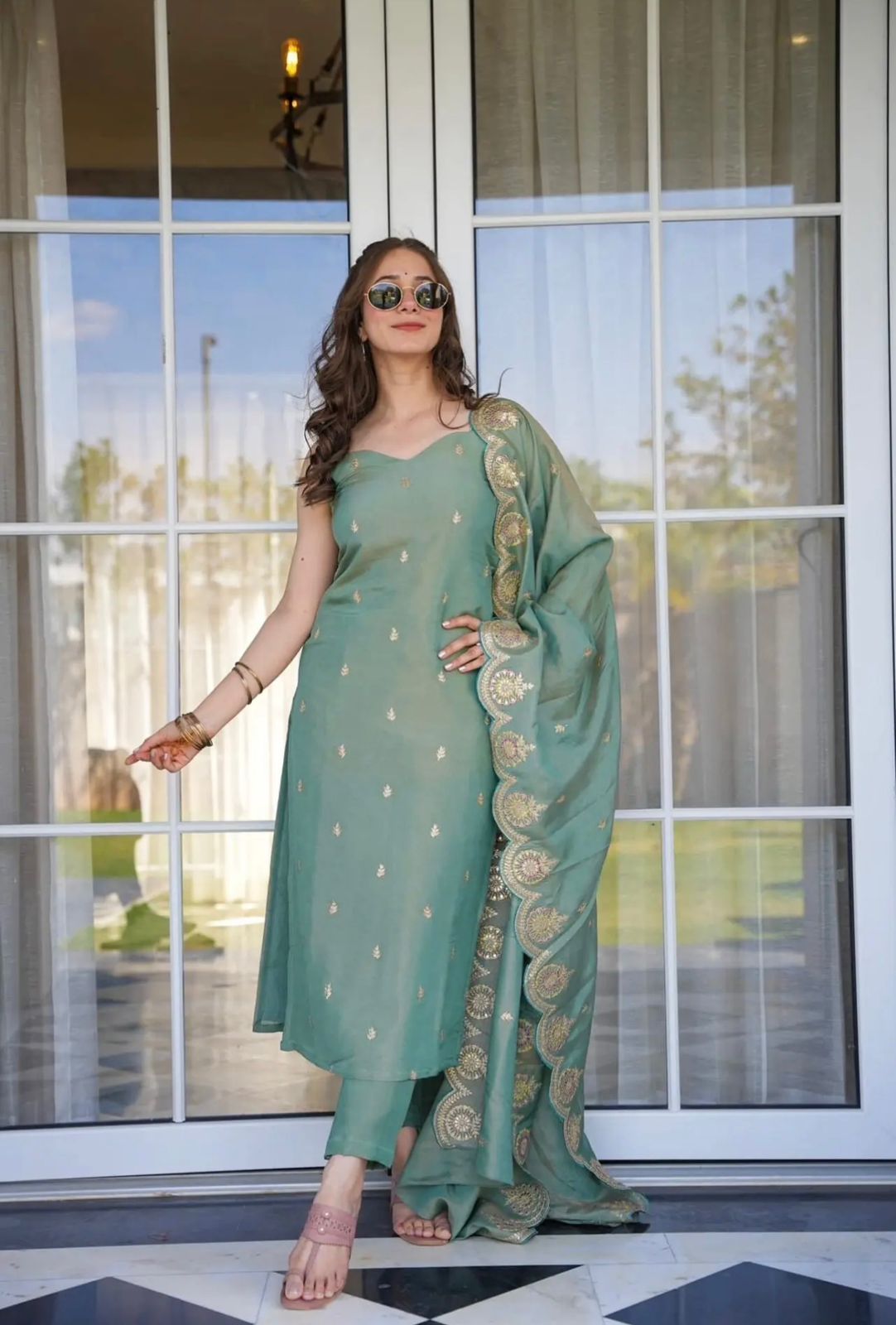
Balanced Salwar Suit Silhouettes and Dupatta Styles for Petite Women work best when the outfit creates one uninterrupted vertical direction. A straight kurta with a moderate hem volume and a dupatta falling close to one side of the body is the most reliable starting point.
A straight kurta is often effective because the side seams lead the eye downward. A narrow cigarette pant or slim salwar keeps the lower half visually tidy. Anarkali suits can also flatter petite women when the flare begins slightly above the natural waist and the hem doesn't pool around the ankles. Excessive gathers from shoulder to floor may conceal a petite wearer's proportions.
Fitted doesn't mean tight. A kurta should generally allow around 2 to 4 inches of ease around the bust, depending on the fabric and desired fit. A side slit beginning several inches above the knee can add movement and prevent a long straight kurta from appearing stiff. A visible ankle, pointed jutti or low-profile sandal can further extend the lower-body line.
Which kurta lengths suit a petite frame?
A kurta ending around the knee, mid-calf or just above the ankle usually gives a petite woman the most balanced proportion. The right length depends on the bottom, but the hem should not stop at the widest part of the calf unless the outfit has a deliberate high-low or layered design.
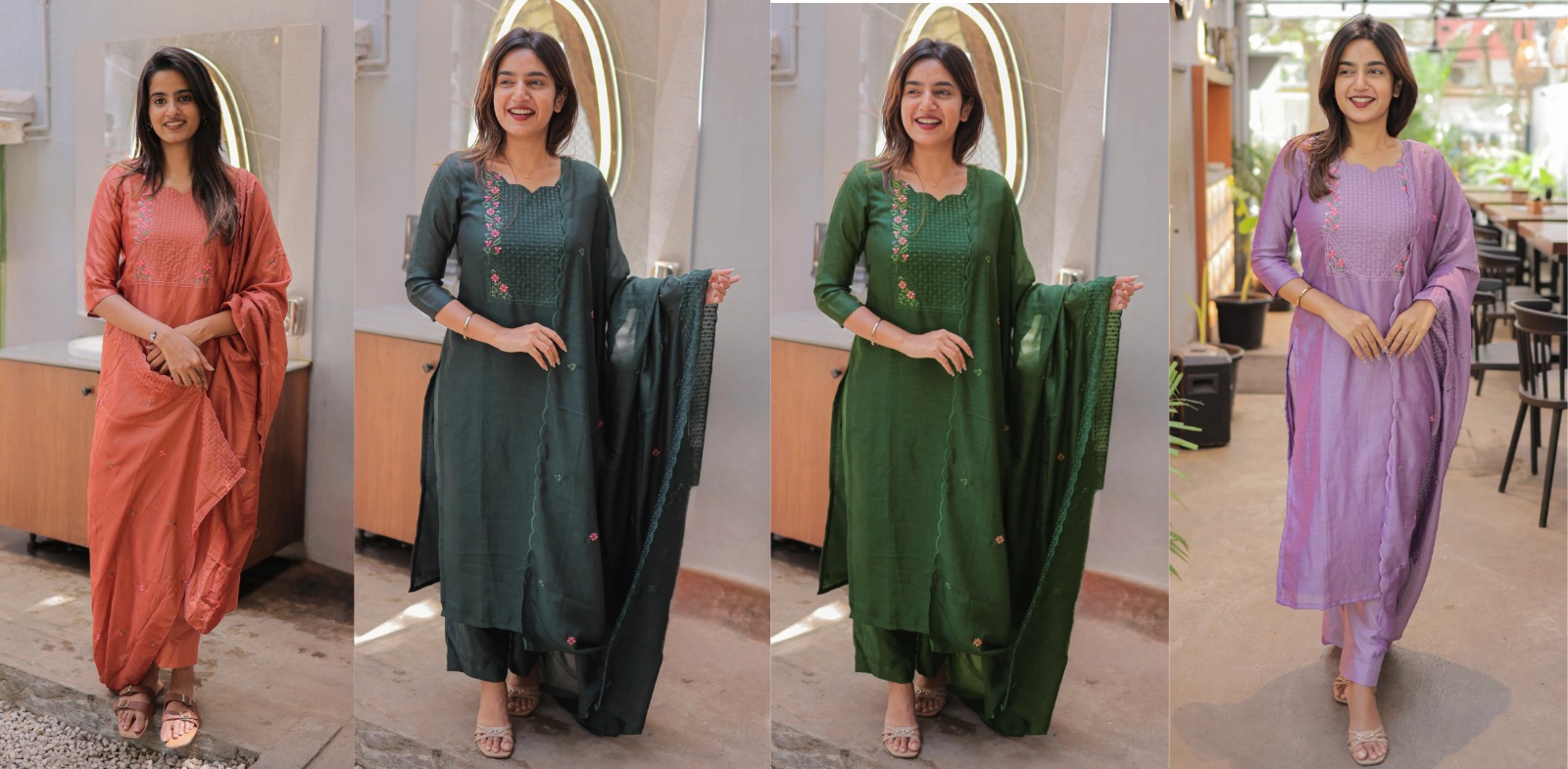
For a straight suit with cigarette pants, a hem between the knee and mid-calf creates a practical vertical shape. For a palazzo suit, a slightly shorter kurta keeps the wide trouser leg visible and prevents the outfit from becoming one broad block of fabric. For an Anarkali, a full length can work when the flare is smooth, the waist is defined and the hem sits close to the ankle rather than dragging on the floor.
- Short kurta: A hem near the upper thigh works with Patiala salwars, narrow pants or a proportionate sharara, but a very short kurta can make a voluminous bottom look heavier.
- Medium kurta: A knee-to-mid-calf length is adaptable for straight pants, churidars and slim salwars.
- Long kurta: An ankle-skimming hem suits an Anarkali or softly flared design when the flare isn't excessively layered.
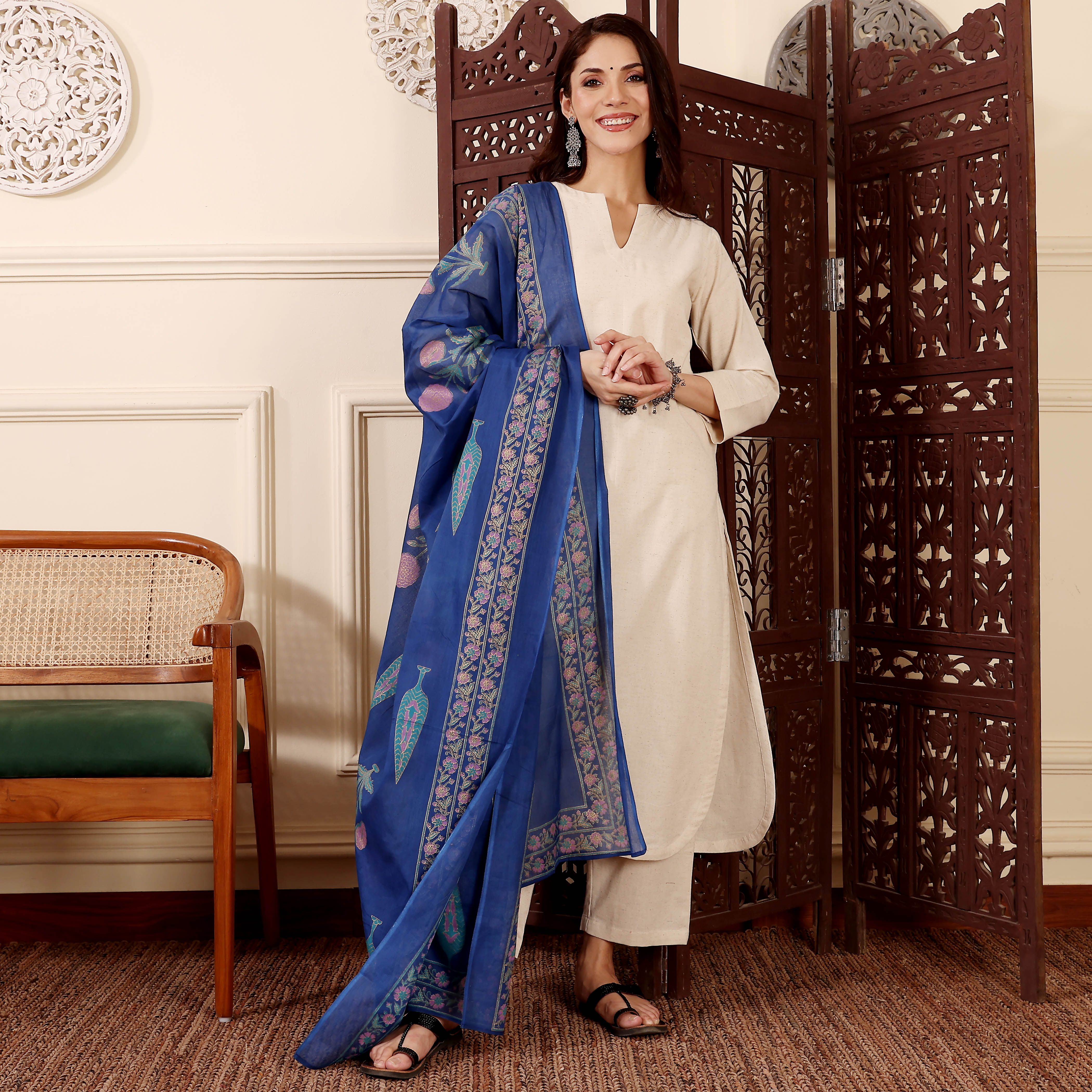
Beige Kurta Set with Blue Chanderi Dupatta for Women illustrates how a clean kurta line can be paired with a lighter contrasting dupatta. The colour contrast gives the outfit definition without requiring a heavy hem or oversized embellishment.
How should petite women choose salwar, pant and sharara volume?
Petite women should match the width of the bottom to the length and structure of the kurta. A slim bottom balances a longer or more detailed kurta, while a wider palazzo or sharara needs a shorter, simpler or waist-defining top.
Churidar pants and cigarette pants are dependable choices because their narrow shape leaves more visible vertical space. A straight pant with a pressed front crease creates a similar effect. Patiala salwars bring substantial fabric volume through pleats, so Patiala silhouettes usually look more balanced with a shorter kurta, a defined shoulder line and a dupatta that doesn't add another wide layer.
Palazzos are not automatically unsuitable for petite women. A high-waisted palazzo with a flat waistband and a kurta reaching the upper thigh can look elegant, especially when the fabric falls rather than stands away from the body. Combining a very long loose kurta, a broad palazzo and a heavily bordered dupatta can make a petite outfit appear visually dense.
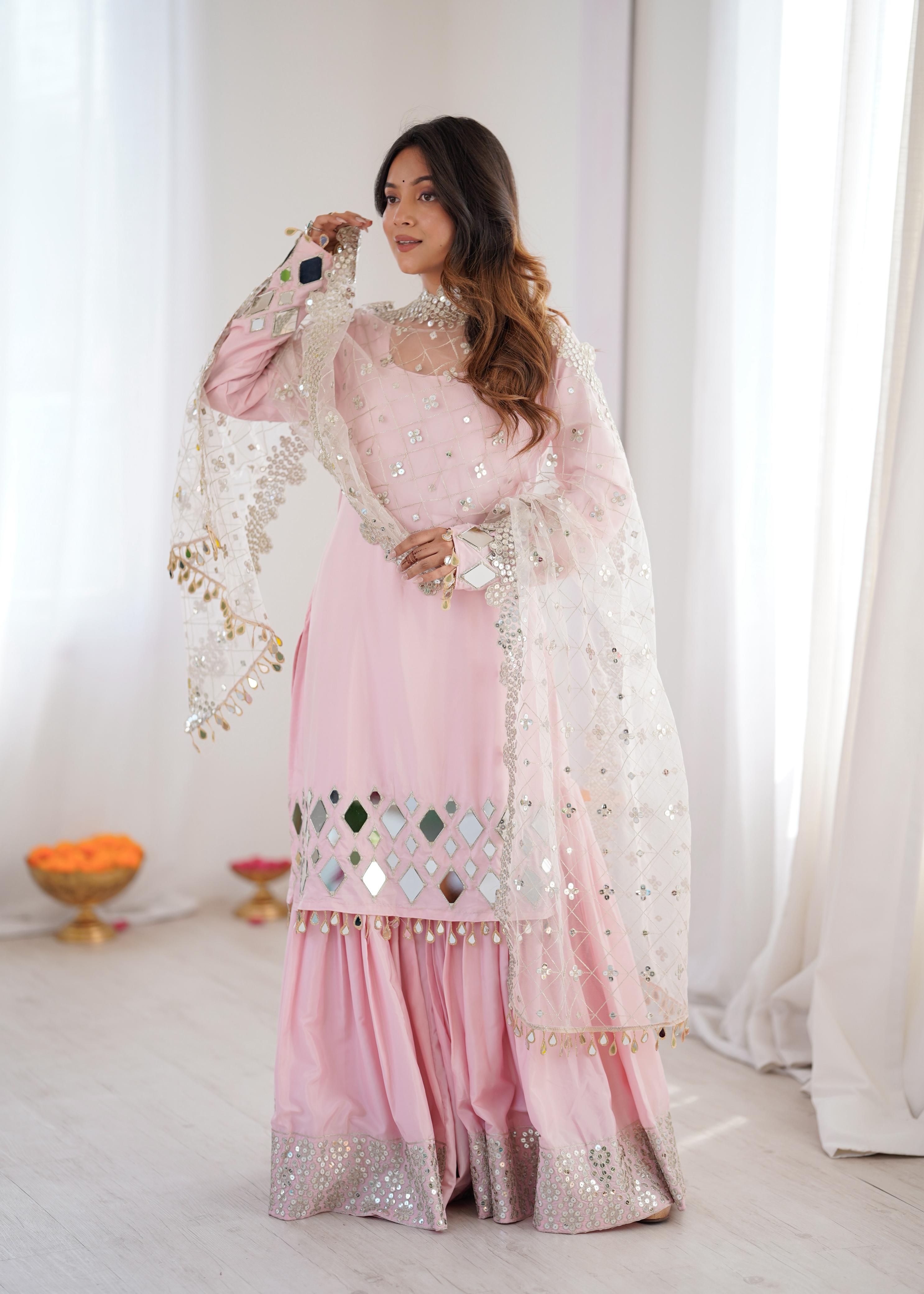
Sharara trousers need careful styling because the flare begins below the knee and can visually divide the leg. A shorter kurta, higher waist and fitted upper sleeve help preserve proportion. Pink Sharara Suit Set with Mirror Work Dupatta demonstrates how festive lower-body volume can be balanced by a defined upper half. Brown Chinon Silk Sharara Suit Set for Women offers another useful reference because fluid Chinon silk allows a flared bottom to fall softly instead of appearing stiff.
Which necklines, sleeves and details create length?
V-shaped, narrow U-shaped and gently elongated square necklines create a clear lengthening effect on a petite frame. These necklines expose vertical space at the chest and keep embroidery from forming a heavy horizontal band.
A shallow round neck can also work, particularly with a long necklace or slim embroidered neckline. Very broad boat necks and high necks become more challenging when paired with a wide yoke, large earrings and a heavily embellished dupatta because several horizontal elements compete for attention.
Three-quarter sleeves are reliable for petite women because they end below the elbow without adding bulk at the wrist. Full sleeves can work in lightweight fabric, but thick cuffs, wide borders and layered sleeve ruffles may make the upper body appear shorter. Sleeveless or short sleeves can look polished when the shoulder seam fits correctly and the neckline provides enough structure.
Vertical embroidery, narrow front panels and evenly spaced motifs support an elongated impression. Large floral motifs placed only across the chest can broaden the torso, while a wide embroidered hem can visually shorten the legs. Embroidered Salwar Suit Set for Women can be styled with minimal additional jewellery when the kurta already carries surface detail.
How can prints and fabrics support better proportions?
Small to medium-scale prints, narrow borders and fabrics with a fluid fall generally support petite proportions better than oversized motifs and rigid bulk. Print scale should relate to the wearer's frame, not simply to the garment size.
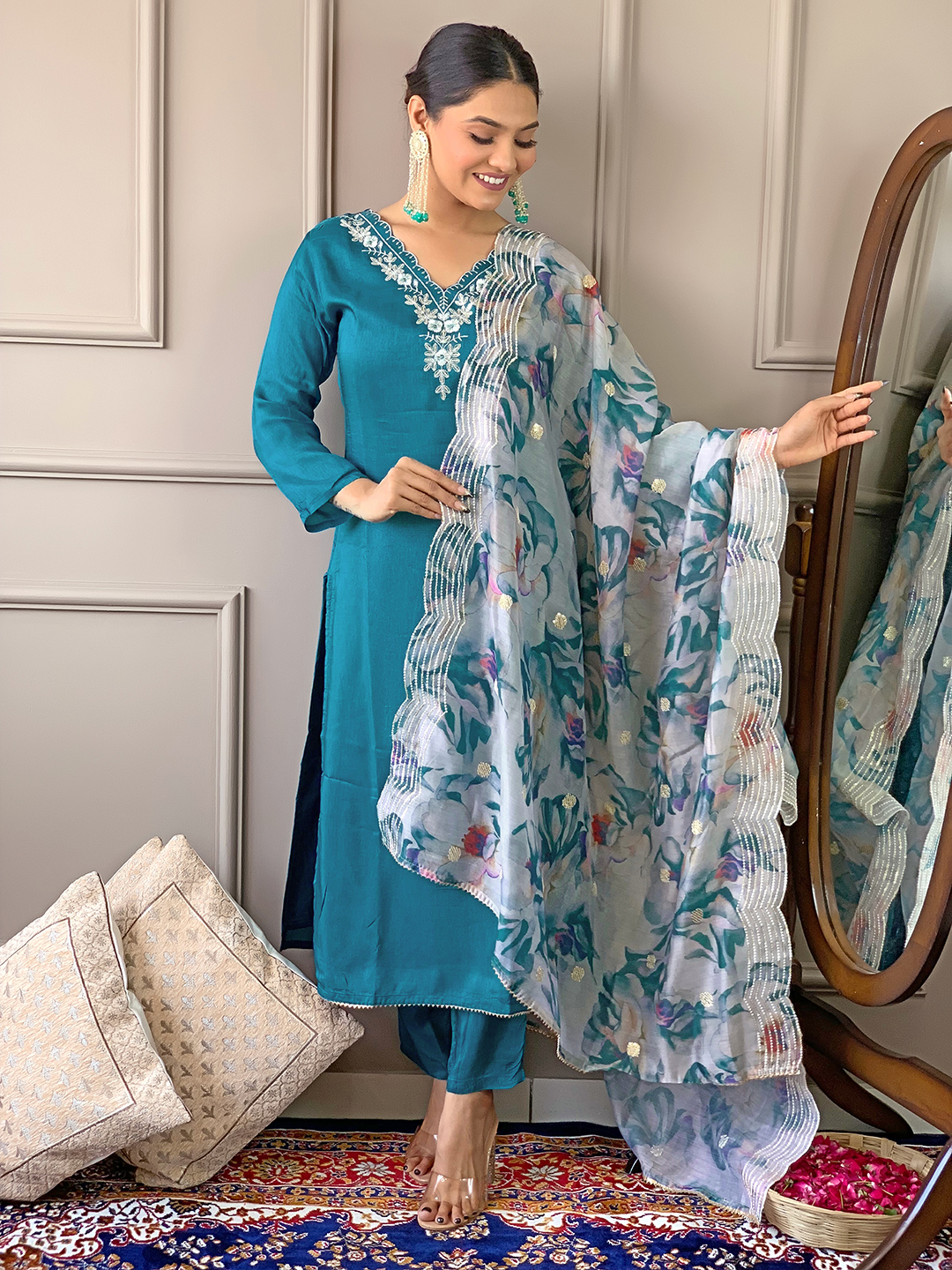
Small florals, butis and fine geometric repeats create detail without overwhelming a shorter silhouette. A vertically spaced print can guide the eye down the body. Large motifs can still be worn when concentrated on one panel or balanced by a plain lower half. Pink Flower Printed Salwar Suit shows how a floral surface can remain lively while uncomplicated styling keeps the outfit clear.
Rayon usually gives a soft, easy fall and suits everyday straight suits, although clingy rayon may need a well-fitted lining. Chanderi contributes lightness and subtle sheen, making Chanderi effective for a dupatta that adds contrast without excessive weight. Chinon silk drapes fluidly and works well for occasion wear, while zari, mirror work and dense embroidery should be placed strategically rather than repeated across every component.
Cream Pink Printed Rayon Readymade Salwar Suit shows why a gentle colour combination and fluid everyday fabric can make a printed suit appear approachable rather than visually dense. Chic Red Floral Silk Kurta Pant Dupatta Set for Women uses a stronger colour story, so a sleek pant and controlled dupatta arrangement help keep the look balanced.
Regional collections can also provide useful styling references. Kalamkari Print Salwar Suits often demonstrate how repeated motifs can be controlled through placement. Maharashtra Paithani Inspired Salwar Suits and Gujarat Bandhej Salwar Suits can inspire the use of a distinct border or accent without requiring heavy decoration across the entire outfit. Odisha Sambalpuri Salwar Suits offer another example of how patterned textiles can remain structured when the silhouette is kept clean.
Which dupatta drapes flatter petite women?
A narrow shoulder drape, controlled one-side fall and short pleated front drape are generally the most flattering dupatta styles for petite women. Each option preserves part of the kurta's vertical line instead of covering the torso with a wide horizontal layer.
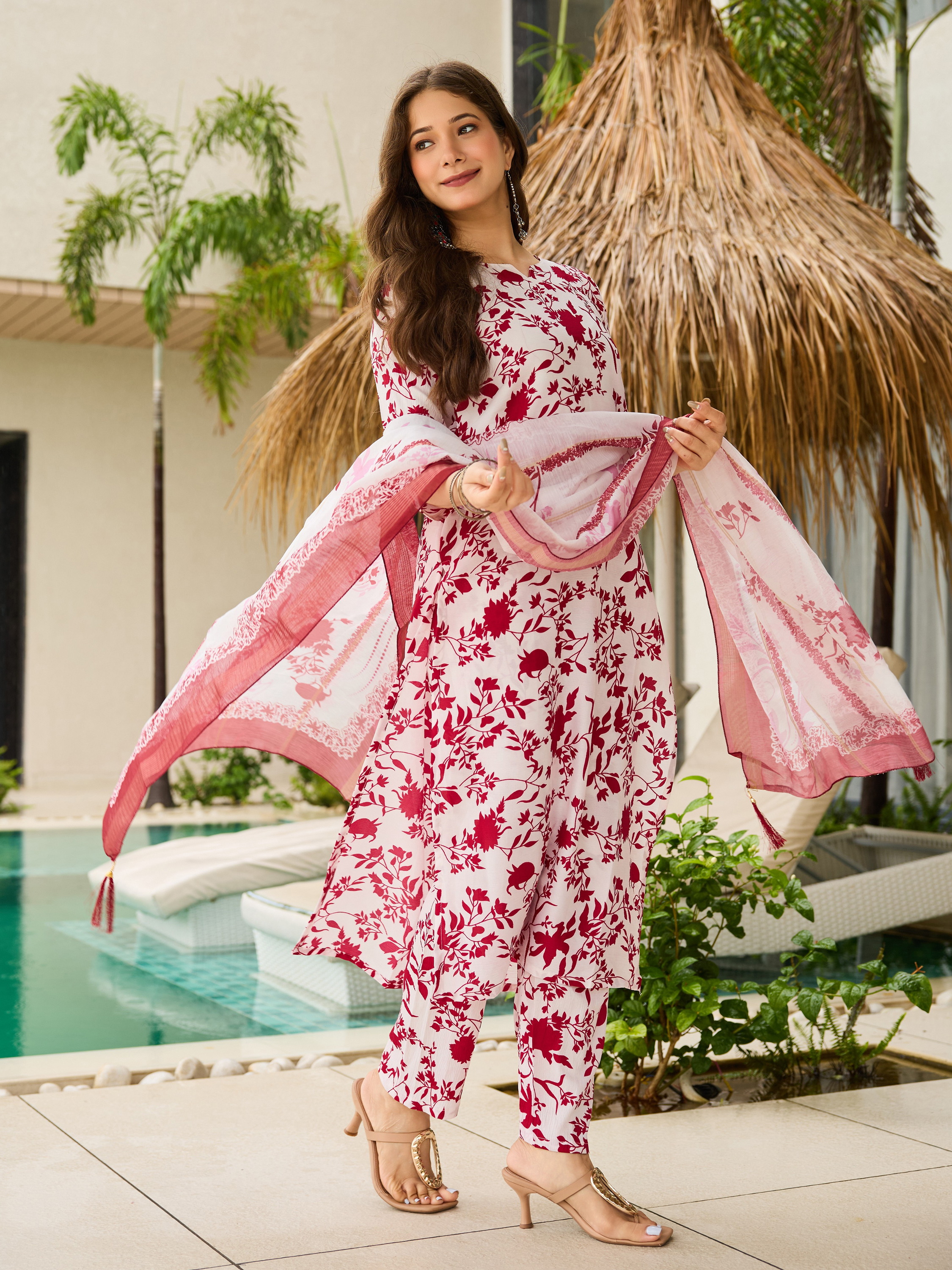
Single-shoulder fall
A single-shoulder fall creates a long diagonal line when the dupatta is placed over one shoulder and allowed to fall near the hip or knee. Keep the front section relatively narrow, especially when the dupatta has zari, mirror work or a contrasting border. Pinning shoulder pleats keeps the line stable during movement.
Neat front pleats
Neat front pleats work well for formal settings because they frame the kurta without spreading across the full width of the body. Place the pleated section slightly off-centre or close to one shoulder so the torso doesn't appear divided into two equal blocks.
One-arm wrap
An one-arm wrap adds coverage while keeping the opposite side open. The drape suits a straight suit or slim pant, but the back length should stop around the hip or upper thigh rather than bunching at the knees.
Light head or shoulder veil
A head or shoulder veil can suit a wedding or religious ceremony when the fabric is lightweight and the border is narrow. Avoid placing a heavily embellished border directly across the widest part of the chest because the horizontal band can compress the upper body visually.
Mirror work and broad borders need especially careful placement. Pink Sharara Suit Set with Mirror Work Dupatta can be worn over one shoulder with the embellished edge falling vertically rather than stretched across the chest. A plain or lightly detailed kurta allows the dupatta to remain the focal point without overwhelming a petite frame.
How can petite women balance traditional Patiala volume?
A shorter kurta, compact pleats and a controlled dupatta make Patiala volume easier for petite women to wear. Punjab Patiala Salwar Suits traditionally rely on gathered fabric, so the outfit benefits from a clearly defined waist and a clean shoulder line.
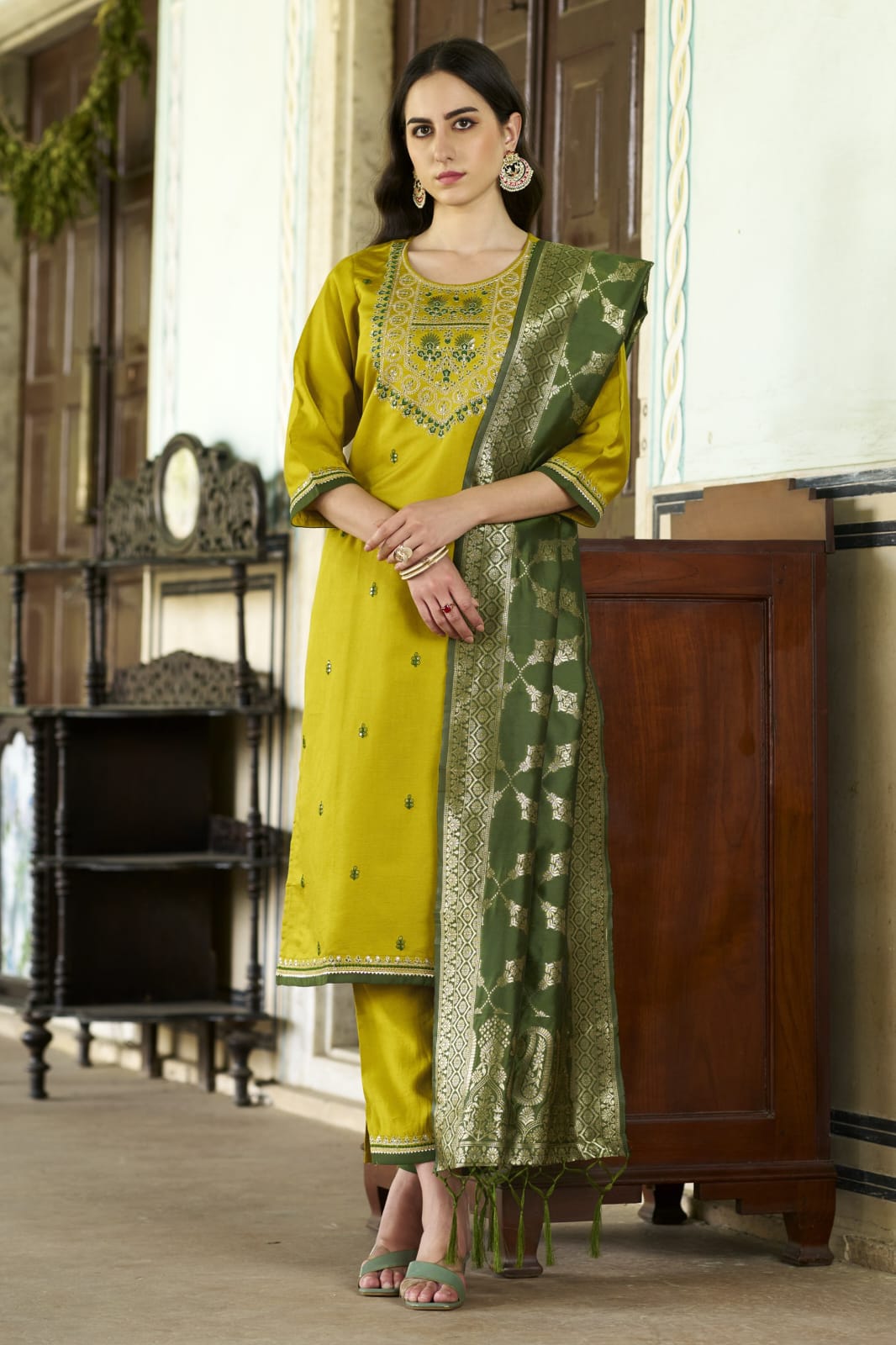
Choose a kurta that ends around the upper thigh or knee rather than one that extends to mid-calf. Keep the dupatta narrow across the front and let one end fall vertically. A fitted three-quarter sleeve can also prevent the upper half from appearing as broad as the lower half.
Colour blocking can improve definition. A slightly deeper bottom with a lighter kurta draws attention upward, while a monochromatic suit creates a continuous line. Avoid adding a broad waist belt, oversized handbag and wide dupatta border together because multiple horizontal details can interrupt the silhouette.
What should petite women check before buying a salwar suit?
Petite women should check garment measurements, hem placement, rise, shoulder width and dupatta dimensions before buying a salwar suit. A size label alone can't confirm that the outfit will have balanced proportions.
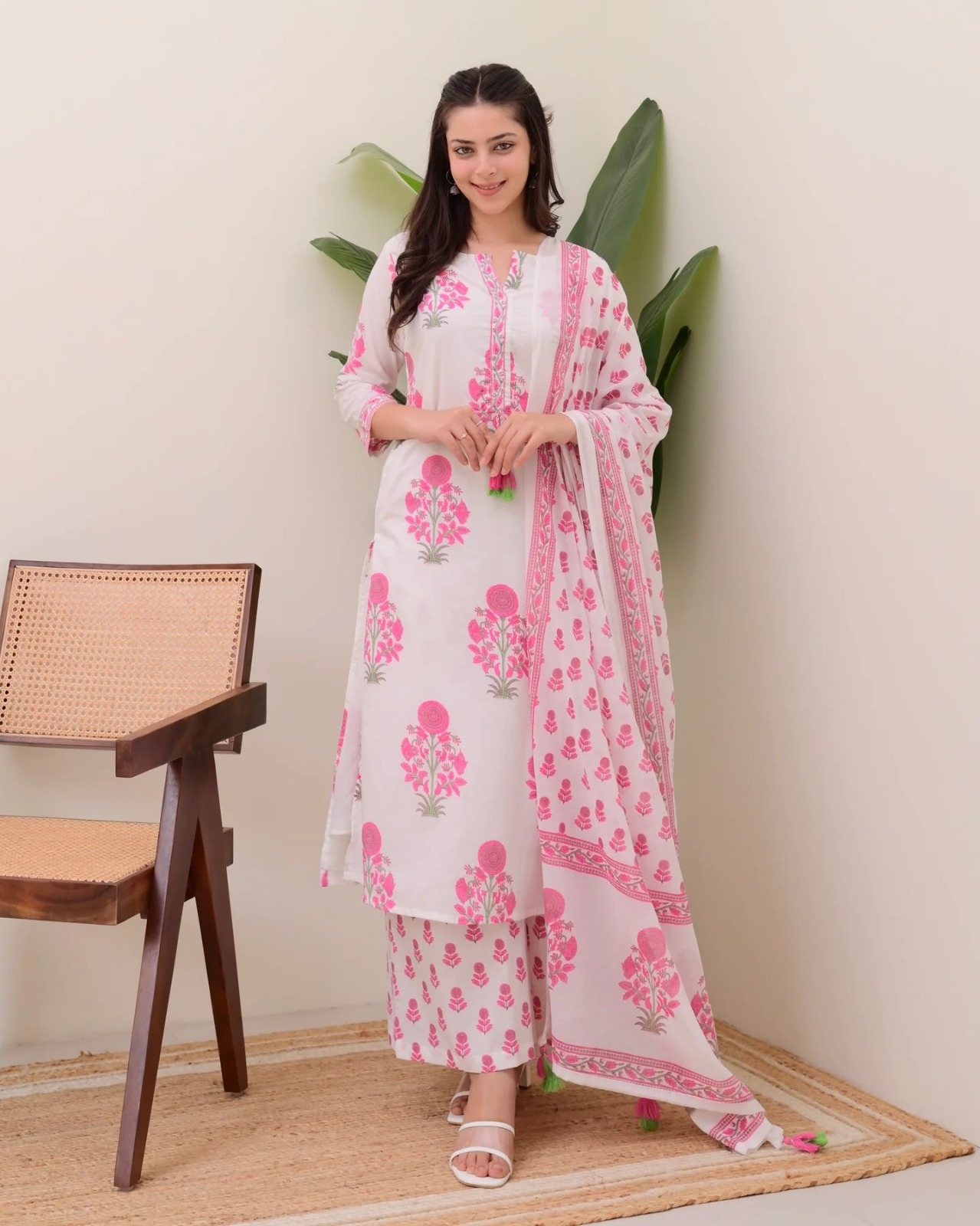
- Measure the kurta length: Compare the stated length with the knee, calf and ankle positions on your own body.
- Check shoulder width: A dropped shoulder can make the upper body look broader and shorten the neck visually.
- Inspect the bottom rise: A high or mid-rise trouser can lengthen the leg line, while a low rise may create a shorter torso-to-leg proportion.
- Assess fabric fall: Rayon, Chanderi and Chinon silk behave differently after movement and layering.
- Measure the dupatta: A very long, wide dupatta may need narrower pleats or an one-side drape to avoid excess bulk.
- Study border placement: Wide zari or embroidered borders should sit at the hem or fall vertically rather than cut across the widest body area.
Elegant Camel Shade Salwar Suit Set gives a neutral styling direction for petite women because a close colour relationship between components can create continuity. Accessories can then add contrast through a slim necklace, pointed footwear or a small structured bag rather than through several competing layers.
The strongest outfit usually follows one simple rule: choose one main volume point. A flared sharara can be paired with a compact kurta, an embroidered kurta can use a plain dupatta, and a printed suit can rely on restrained jewellery. Balanced Salwar Suit Silhouettes and Dupatta Styles for Petite Women become easier to create when every garment component has a defined visual job.
Common questions about petite salwar suit styling
Petite women can wear straight, Anarkali, palazzo, Patiala and sharara suits by adjusting length, volume and dupatta placement. The most flattering choice is the silhouette that creates a clear line without excessive fabric concentration in one area.
Common Questions About Salwar Suit Proportions for Petite Women
Which salwar suit silhouette looks best on a petite woman?
Straight suits, slim pant suits and lightly flared Anarkali suits are dependable choices for petite women. Sharara, palazzo and Patiala styles can also work when a shorter or more fitted kurta balances the lower-body volume.
What is the best kurta length for a short woman?
A knee-to-mid-calf kurta works well with straight pants, churidars and slim salwars. A full-length kurta is suitable for an Anarkali when the hem skims the ankle and does not pool on the floor.
Can petite women wear palazzo or sharara salwar suits?
Petite women can wear palazzo and sharara suits with a higher waist, a shorter kurta and fluid fabric. Avoid combining a very long loose kurta, extremely wide trousers and a broad dupatta border.
Which dupatta drape makes a petite woman look taller?
A narrow one-shoulder fall, neat front pleats or a one-arm wrap usually creates the strongest vertical effect. Keep heavily embellished borders vertical or close to one side instead of spreading them horizontally across the chest.
Are large prints suitable for petite women?
Large prints can work when motifs are concentrated on one panel or balanced with a plain lower half. Small to medium florals, butis and vertically spaced patterns are easier to style because they add detail without overwhelming the frame.
How can a petite woman wear a Patiala salwar suit without looking shorter?
Pair Patiala pleats with a shorter kurta, a defined shoulder line and a controlled one-side dupatta drape. A visible ankle and footwear with a pointed or slightly elongated shape can further clarify the leg line.


