

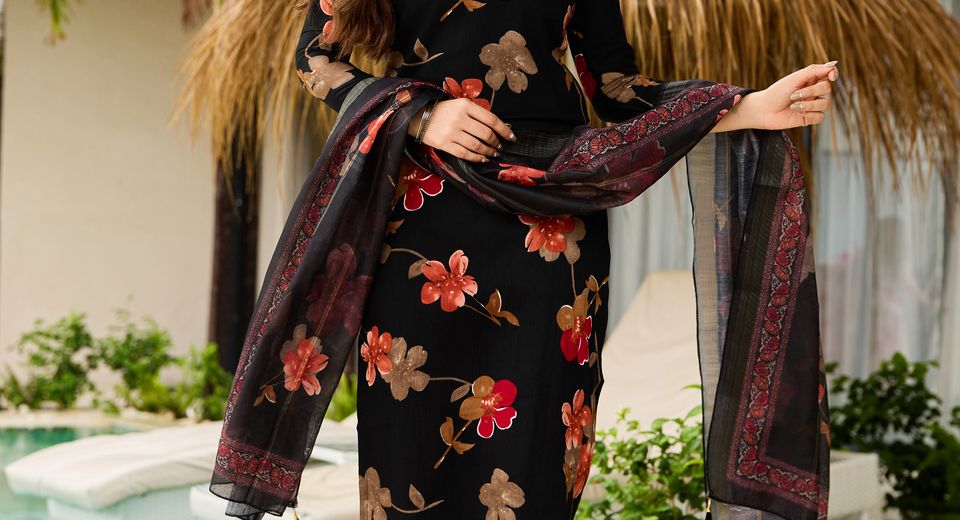
Good proportion can make a salwar suit feel comfortable, composed and distinctly personal. Balanced Salwar Suit Silhouettes and Dupatta Styles for Curvy Women begin with the relationship between kurta length, lower-body volume, neckline, sleeve shape and the way a dupatta is placed. The goal isn't to hide a body or follow a single flattering rule; the goal is to distribute visual weight so the outfit moves easily and looks intentional from every angle.
A well-balanced outfit can be straight, flared, short, long, printed or heavily embroidered. The most useful decisions involve measurements and fabric behaviour: where the kurta ends, how much room the salwar has at the waist and hip, whether the dupatta adds width or length, and whether the material clings, stands away from the body or falls softly.
How do Balanced Salwar Suit Silhouettes and Dupatta Styles for Curvy Women begin with fit?
Balanced Salwar Suit Silhouettes and Dupatta Styles for Curvy Women begin with enough ease at the bust, waist and hip, plus a kurta length and lower silhouette that distribute volume rather than concentrating it at one point. A comfortable fit is more important than choosing a smaller size for a sharper outline.
Check finished garment measurements instead of relying only on a size label. Measure around the fullest part of the bust and hip, then allow approximately 2 to 4 inches of wearing ease depending on the fabric and desired fit. A woven Banarasi silk or Chanderi kurta generally needs more practical ease than a stretch fabric because the fabric itself doesn't give.
The kurta hem is another important balance point. A hem that ends at the widest part of the calf can interrupt the leg line, while a hem that falls a few inches below the knee often creates a cleaner transition to trousers or palazzos. For many body shapes, a mid-thigh kurta paired with a relaxed straight pant or a knee-to-calf kurta paired with a narrow salwar creates a clear vertical rhythm.
Balance doesn't mean making every garment symmetrical. A fitted shoulder with a fluid lower half can work well, as can a relaxed kurta with a more defined trouser. The total outfit usually looks most composed when it has one dominant volume point instead of several competing ones.
Which measurements matter most in a salwar suit?
Bust, hip, shoulder, sleeve opening and kurta length matter most when assessing salwar suit fit. Waist measurement is also important for trousers, but the garment should not depend on a tightly drawn waistband to stay in place.
Check whether side seams hang vertically from the underarm to the hem. Pulling across the bust or hip indicates insufficient ease, while excessive fabric pooling beneath the arm can signal that the shoulder or armhole is too large. A simple alteration of 1 to 2 inches at the side seam can improve comfort without changing the whole silhouette.
Which Balanced Salwar Suit Silhouettes and Dupatta Styles for Curvy Women suit different proportions?
Straight suits, moderate A-line suits, long-panel Anarkalis, palazzo sets and Patiala-inspired suits can all suit curvy women when the volume and fabric are controlled. Each silhouette creates a different visual line, so the best choice depends on comfort, height, occasion and personal preference.
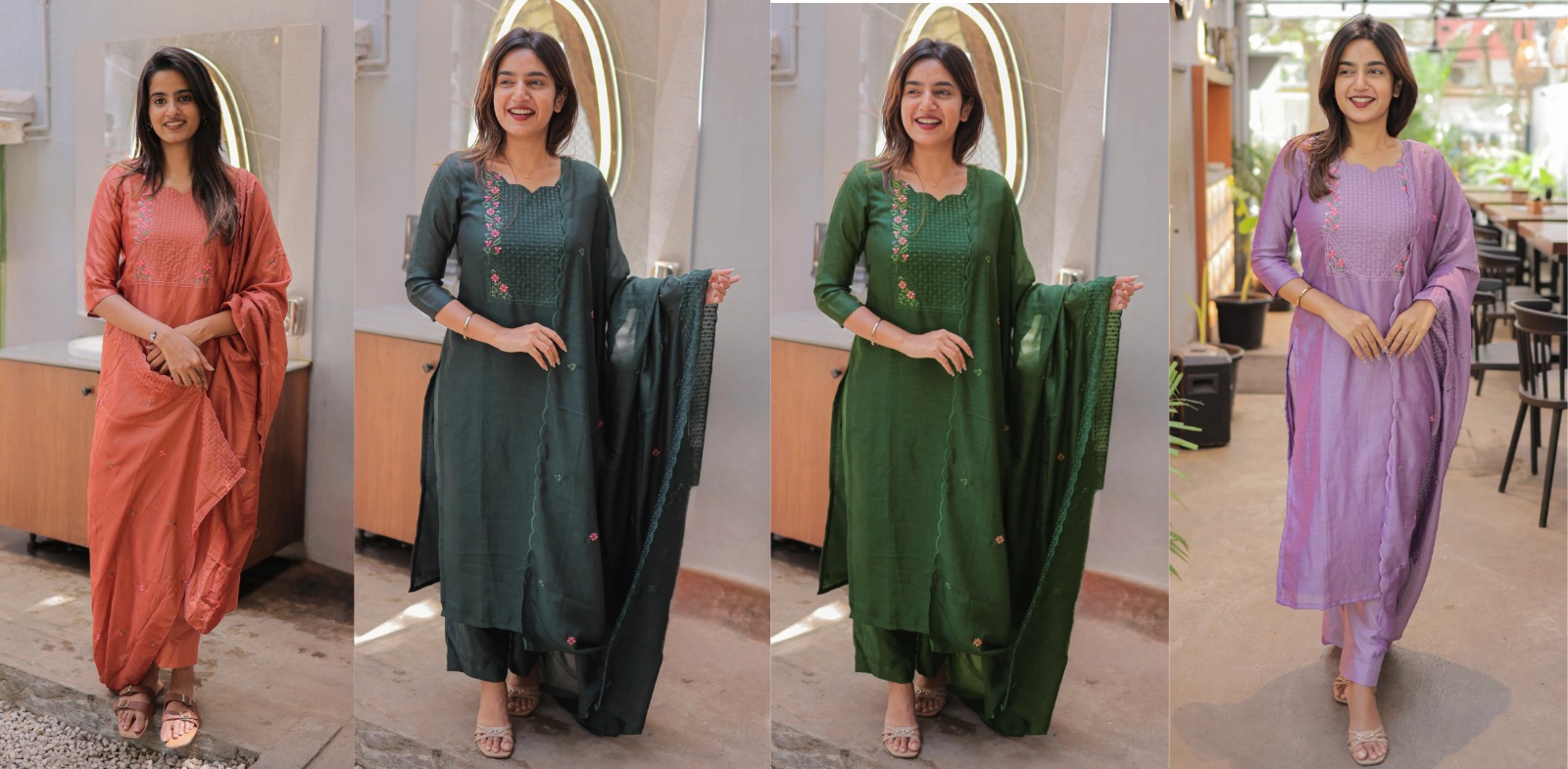
Straight kurtas with tapered or straight bottoms
A straight kurta with straight trousers creates a strong vertical frame and works well for office dressing, daytime events and travel. Choose side slits that begin high enough to support walking but don't pull across the hip. A kurta with a defined shoulder and a V, square or softly rounded neckline can add structure without making the outfit restrictive.
Beige Kurta Set with Blue Chanderi Dupatta for Women demonstrates how a calm base and a contrasting dupatta can create structure without relying on a high-contrast print across the entire body. Chanderi has a light, slightly crisp fall, so the dupatta can add colour while the kurta remains visually steady.
A-line and Anarkali silhouettes
An A-line kurta widens gradually from the upper body and works well when the flare begins above the fullest part of the hip. A long-panel Anarkali creates graceful movement, especially when panels fall from the waist or high hip instead of gathering in a bulky band at the midsection.
Moderation matters with flare. A six-panel Anarkali may move more smoothly than a heavily gathered circular shape for daytime wear, while a fuller flare can be reserved for weddings or festive evenings. Embroidered Salwar Suit Set for Women shows how embroidery can provide occasion detail while the underlying suit silhouette remains wearable.
Palazzos, straight pants and Patiala trousers
Palazzo trousers balance a fitted or lightly skimming kurta by adding controlled width below the hip. The most versatile palazzos usually fall from the natural waist and have enough fabric to move without forming stiff horizontal folds at the widest part of the body.
A palazzo with a shorter kurta can lengthen the leg line when the trouser and kurta are close in colour. A longer kurta can also work, but the outfit benefits from a visible ankle or a lighter fabric so the lower half doesn't look heavy. Lavender Chanderi Kurta with Olive Embroidered Palazzo Suit shows how a coloured kurta and coordinated palazzo can share attention without requiring a large dupatta.
Patiala trousers have intentional volume at the hip and multiple folds below the waist. Punjab Patiala Salwar Suits can be comfortable because the trousers permit movement, but the upper garment should usually be simpler and long enough to meet the extra volume with confidence. A compact dupatta drape keeps the outfit from becoming visually crowded.
How do fabric and colour support Balanced Salwar Suit Silhouettes and Dupatta Styles for Curvy Women?
Fabric weight and surface texture affect the apparent size and movement of a salwar suit more than colour alone. Fluid rayon, lightweight Chanderi, cotton, silk-blend fabrics and heavier embroidered textiles each create a different outline when worn.
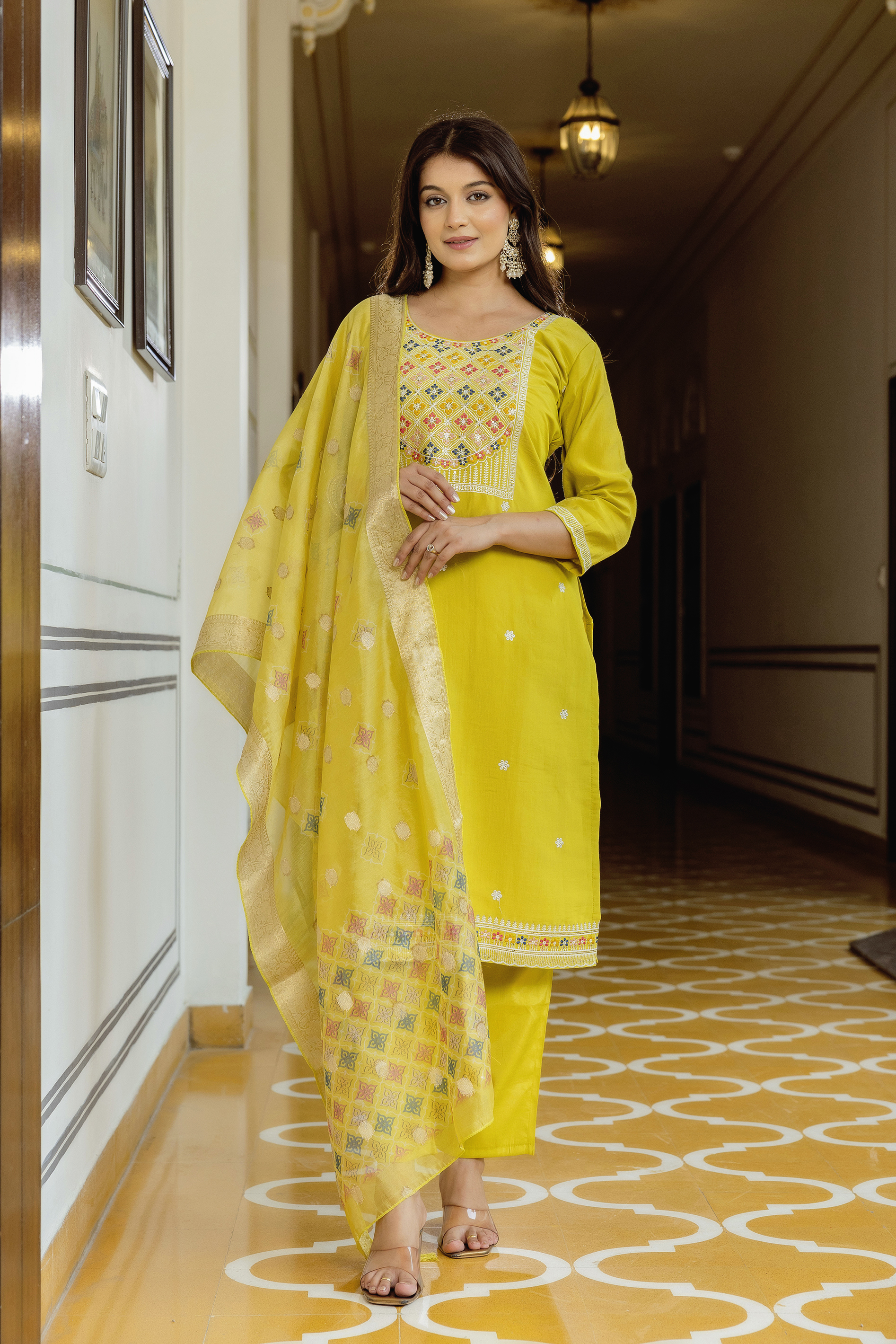
Rayon tends to fall close to the body and can feel comfortable in a straight or softly flared suit. Rayon also shows tension lines clearly when a garment is too small, so relaxed ease is essential around the bust and hip. A print with medium-scale motifs can create rhythm without making the outfit look busy.
Chanderi is light and slightly structured, making it effective for dupattas, overlays and kurtas that need some shape. Zari, dense embroidery and raised embellishment add surface weight. A richly decorated kurta is easier to balance with a plain or lightly bordered bottom than with another heavily embellished layer.
Vichitra silk has a dressier surface and a fluid drape, while a silk-blend dupatta can add shine and occasion character. Elegant Beige Vichitra Silk Embroidered Kurta Set for Women illustrates why a neutral base can be useful when embroidery or sheen is intended to carry the visual focus.
Colour placement can guide the eye without prescribing what anyone should wear. A darker trouser with a lighter kurta creates a grounded base; a tonal kurta and bottom create a longer continuous line; and a contrasting dupatta draws attention toward the shoulder and face. White Embroidered Salwar Suit with Orange Silk-Blend Dupatta uses a bright dupatta as the accent, so the rest of the outfit can remain relatively clean.
Print scale should relate to the garment area. Small, dense motifs may look more active on a large flared kurta, while medium or larger motifs can read more clearly on a straight silhouette. Kalamkari Print Salwar Suits often contain layered floral or narrative motifs, so a calmer dupatta border and uncomplicated trouser help preserve the print detail.
Which dupatta drapes complement Balanced Salwar Suit Silhouettes and Dupatta Styles for Curvy Women?
The most balanced dupatta style adds a clear vertical or diagonal line without creating unnecessary bulk across the bust and waist. A single-shoulder drape, a narrow front fall and a controlled two-shoulder drape are practical starting points.
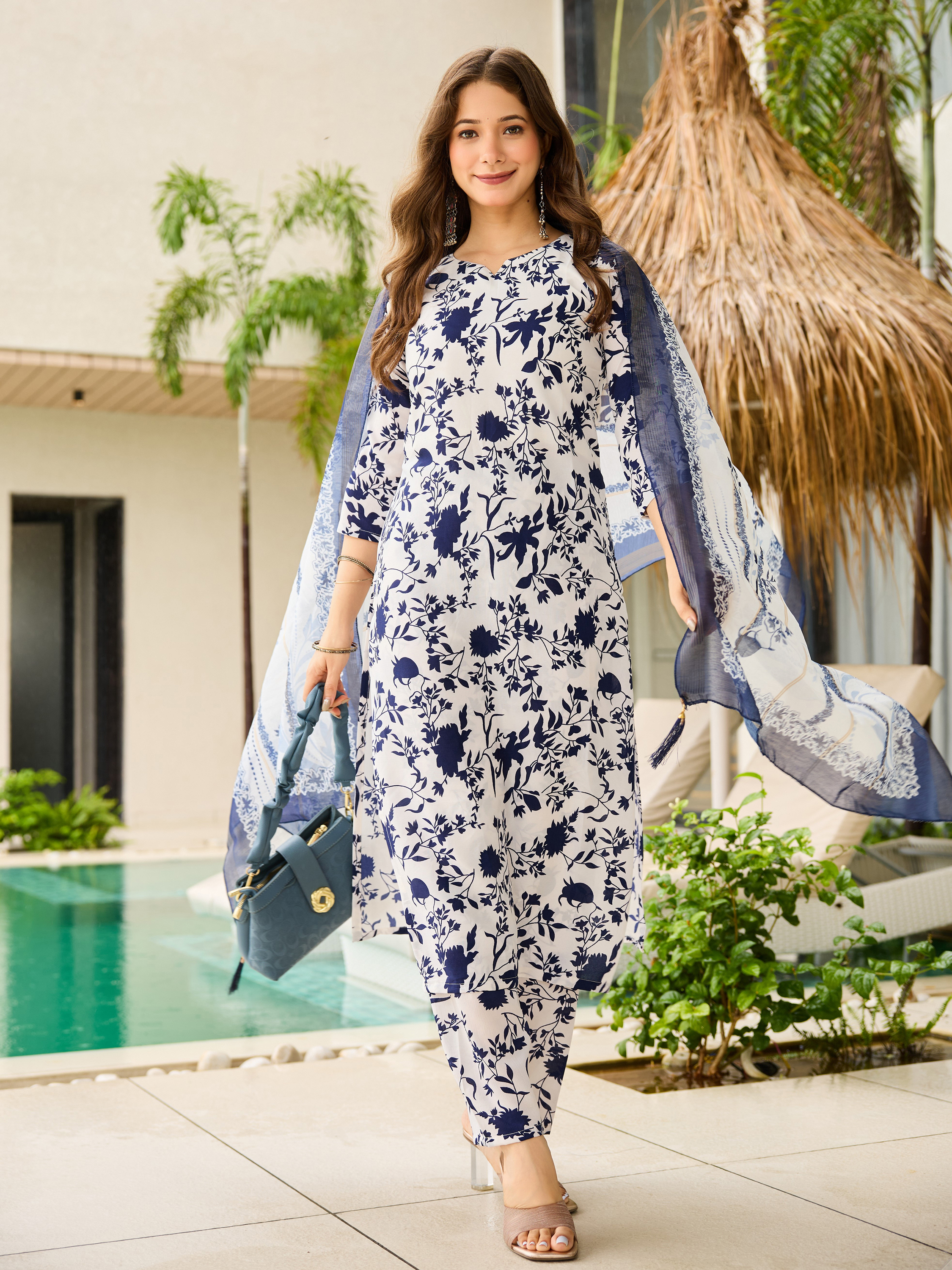
Why choose a single-shoulder dupatta drape?
A single-shoulder drape creates a diagonal line from one shoulder toward the opposite hip and works particularly well with straight kurtas. Secure the dupatta at the shoulder with a discreet pin, then let the front fall remain flat rather than bunching it at the bust.
A medium-width border can strengthen the diagonal, but an extremely broad border may add visual width where the fabric folds. A narrow pleat at the shoulder keeps the fabric neat while allowing enough room for arm movement.
When does a two-shoulder waterfall drape work?
A two-shoulder waterfall drape creates a long central fall and is useful when the dupatta is lightweight. Place the dupatta evenly over both shoulders, keep the front panels close to the body and allow the ends to fall near the knee or lower hem.
Chanderi and lightweight cotton dupattas often hold this arrangement without becoming excessively warm. A firm silk-blend dupatta may require two shoulder pins because its smooth surface can slide during movement.
How can a front-open drape improve comfort?
A front-open drape keeps the kurta visible and can make a monochrome suit look longer. Pinning the fabric at both shoulders is helpful for weddings, commuting and meals because the dupatta stays in position instead of sliding toward the elbows.
A dupatta should not be pulled tightly across the bust. Tight horizontal tension creates wrinkles and restricts arm movement. Leave enough room for the fabric to sit naturally, especially when the dupatta has zari, sequins or a firm silk-blend construction.
Beige Kurta Set with Blue Chanderi Dupatta for Women can be worn with a narrow single-shoulder fall when the aim is length, while White Embroidered Salwar Suit with Orange Silk-Blend Dupatta benefits from a pinned drape that keeps the brighter accent controlled. The drape should respond to fabric behaviour rather than follow a fixed rule.
How can prints and regional styles refine Balanced Salwar Suit Silhouettes and Dupatta Styles for Curvy Women?
Prints and regional details refine a salwar suit when the garment shape remains simple enough for the motif, border or weave to be read clearly. A strong textile identity doesn't require excessive volume or decoration.
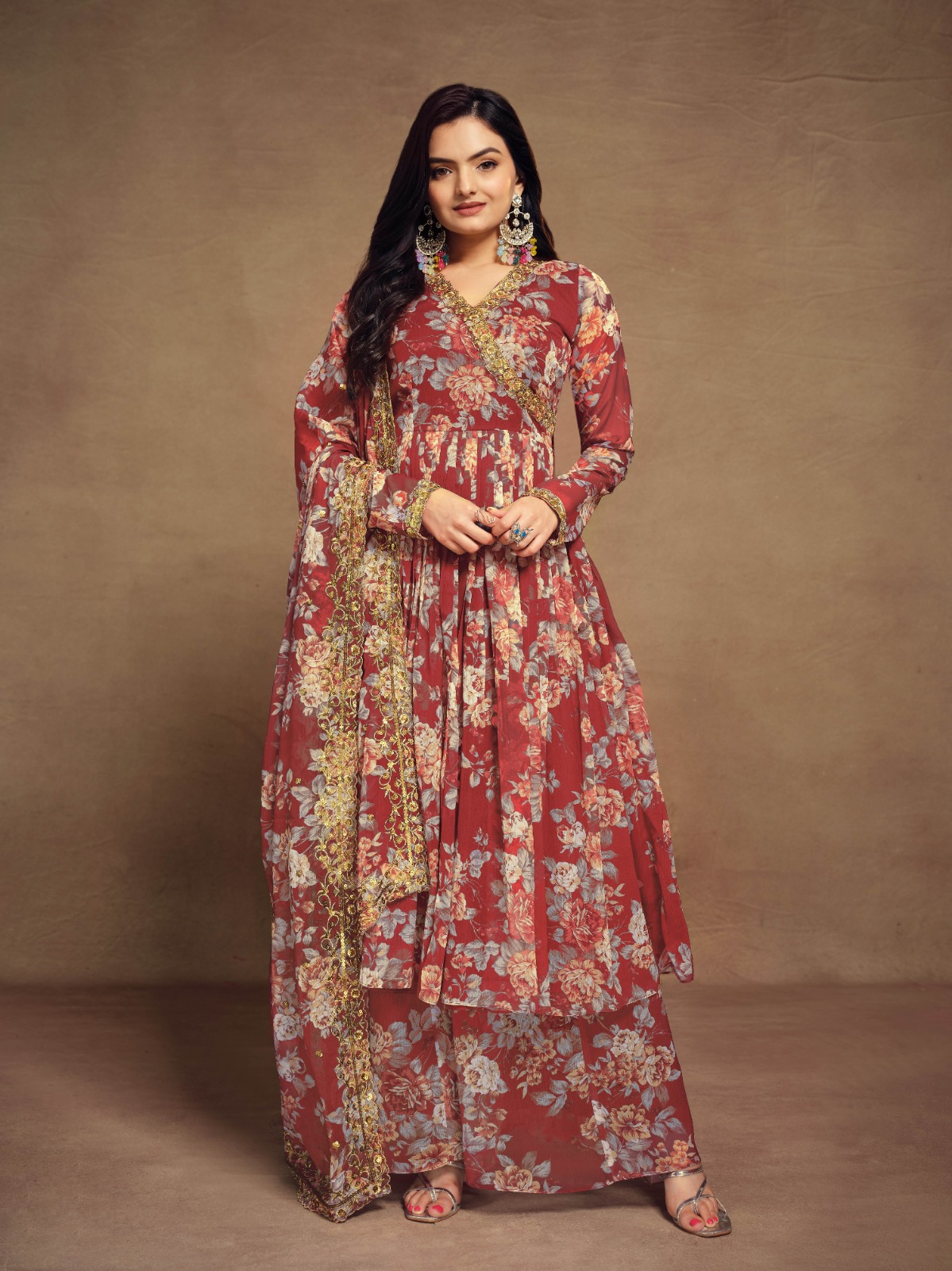
Maharashtra Paithani Inspired Salwar Suits can bring jewel-toned borders and traditional visual references into a structured kurta set. Keep the lower half relatively quiet when the border is broad, particularly if the dupatta has a matching decorative edge.
Gujarat Bandhej Salwar Suits often use dotted tie-dye patterns and lively colour contrasts. A straight kurta or gentle A-line shape can prevent the print from appearing fragmented, while a solid bottom in one of the Bandhej colours gives the eye a place to rest.
Odisha Sambalpuri Salwar Suits may feature distinctive woven motifs and strong borders. A medium-length kurta with a clean sleeve and a restrained dupatta arrangement allows the textile pattern to remain the focal point without adding unnecessary width.
Black White Floral Embroidered Readymade Salwar Suit uses contrast to create definition. When a black-and-white suit already has a clear graphic effect, a simple single-colour dupatta or a controlled shoulder drape usually keeps the outfit balanced.
Cream Pink Printed Rayon Readymade Salwar Suit offers a softer route for daytime wear. Rayon prints work particularly well with a straight or gently flared kurta when the garment has enough ease to skim rather than cling.
How should Balanced Salwar Suit Silhouettes and Dupatta Styles for Curvy Women be chosen for real occasions?
Choose the silhouette according to movement, sitting time, weather and the amount of embellishment required, not only according to the event name. A comfortable outfit will look more polished throughout a long day than a restrictive outfit selected solely for its initial effect.
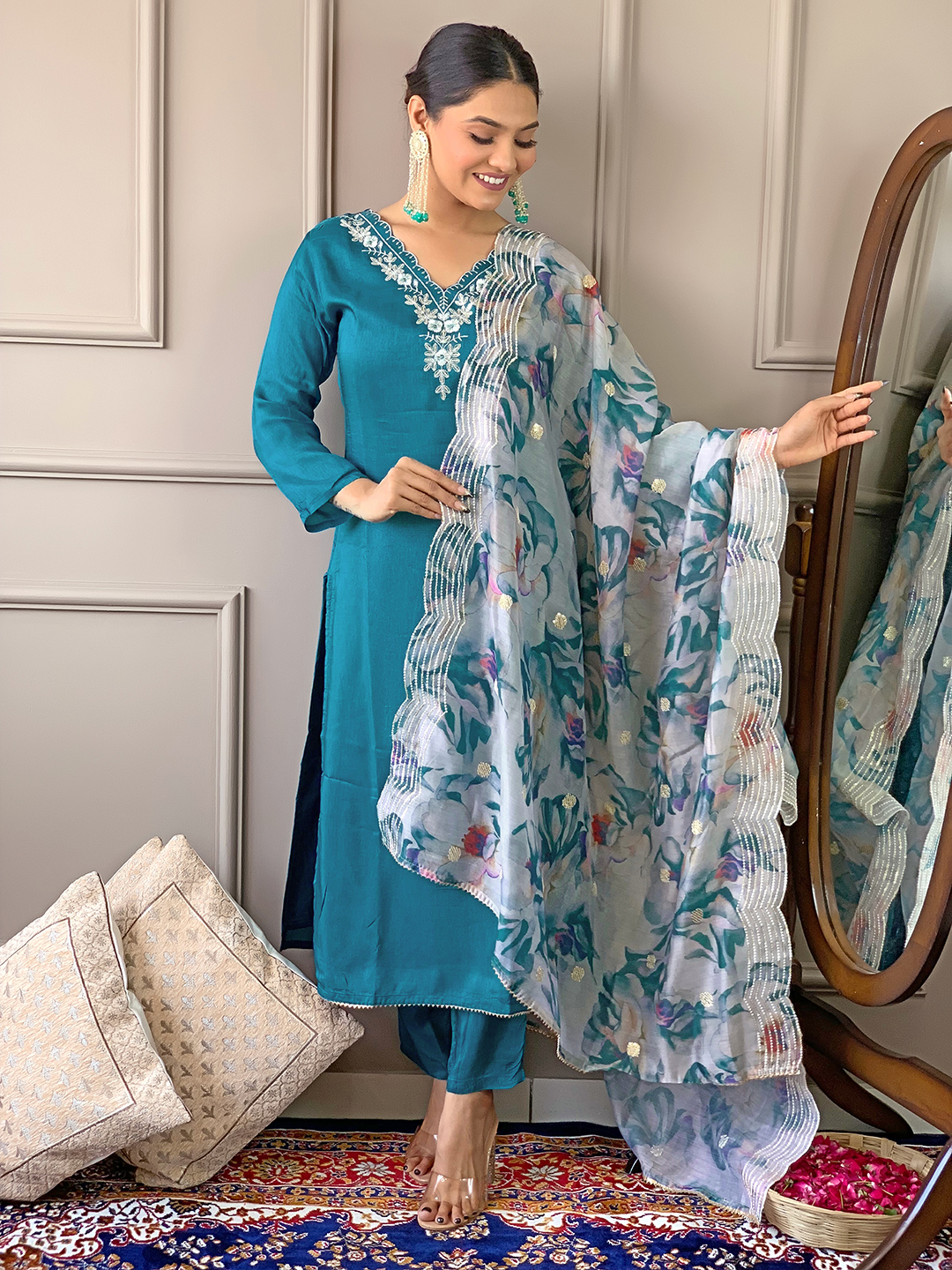
For office wear, choose a straight kurta, straight trousers and a pinned lightweight dupatta. A neutral or muted colour palette, modest embroidery and sleeves that allow easy arm movement are practical for several hours of sitting.
For a Haldi ceremony, rayon, cotton or lightweight Chanderi can be more comfortable than a heavily layered silk outfit, especially in warm weather. Yellow, coral, pink, green and printed suits can look festive without requiring dense embellishment; choose a shorter or mid-length dupatta drape if turmeric, food and outdoor movement are likely.
For weddings and receptions, a silk-blend dupatta, zari border or controlled embroidery supplies occasion presence. Elegant Camel Shade Salwar Suit Set can be styled with a contrasting earring and a defined shoulder drape, while the kurta and bottom remain visually calm.
For travel, select trousers with a secure elastic or flat-front waistband, a kurta with side slits and a dupatta that can be pinned at both shoulders. Avoid very long loose ends near wheels, escalators or crowded spaces. A breathable fabric and 2 to 3 inches of ease around the hip can make a greater practical difference than a more elaborate design.
Before buying a readymade suit, check the kurta length, bust measurement, hip measurement, sleeve opening, trouser rise and dupatta dimensions. A dupatta measuring approximately 2.25 to 2.5 metres gives several draping options, while a shorter 1.8 to 2 metre dupatta may be easier to manage but brings less coverage.
Balanced dressing is ultimately a matter of controlled proportion. Select one area for detail, one silhouette for volume and one dupatta line for direction. That combination allows straight suits, Anarkalis, palazzos, Patiala trousers, regional prints and embellished sets to work beautifully across different curvy body shapes.
Common Questions About Salwar Suit Proportions and Dupatta Draping
Which salwar suit style is most comfortable for curvy women?
A straight or gently A-line salwar suit with 2 to 4 inches of wearing ease is usually comfortable for curvy women. Straight trousers, moderate palazzos and soft rayon or Chanderi can provide movement without excessive bulk.
Should curvy women wear Anarkali salwar suits?
Yes, curvy women can wear Anarkali salwar suits comfortably when the flare begins around the waist or high hip and the garment has enough room at the bust. A six-panel or moderate flare is often easier to move in than very heavy gathering.
Which dupatta drape makes a curvy figure look balanced?
A single-shoulder diagonal drape or a pinned two-shoulder waterfall drape usually creates a clean line. The dupatta should lie flat rather than being tightly pulled across the bust or gathered into a bulky mass at the waist.
Are palazzo suits suitable for curvy women?
Palazzo suits are suitable for curvy women when the trousers fall fluidly from the natural waist and the kurta has a controlled shape. A shorter kurta can lengthen the leg line, while a longer kurta works best with lightweight fabric and visible ankle space.
How much ease should a salwar suit have?
A salwar suit generally needs about 2 to 4 inches of ease around the bust and hip, depending on the fabric and preferred fit. Woven fabrics such as Chanderi and silk-blends need practical room because they have little or no stretch.
What should be checked before buying a readymade salwar suit online?
Check the finished bust, hip, shoulder, sleeve opening, kurta length, trouser rise and dupatta dimensions before buying. Compare those measurements with a well-fitting garment you already own instead of selecting a size from the label alone.


