

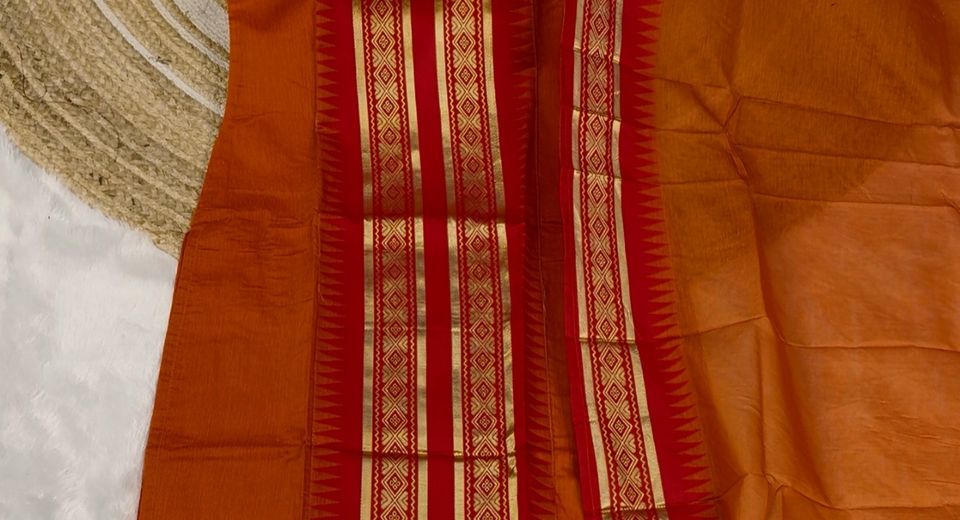
A well-paired skirt can give a familiar kurti a completely different personality. Balanced Outfit Ideas for Kurti With Ethnic Skirts begin with proportion: the kurti, skirt, dupatta and accessories should each have a clear role. The easiest way to create that balance is to contrast one dominant element with quieter supporting pieces, rather than combining volume, shine, embroidery and strong prints everywhere.
A short embroidered kurti with a flowing skirt can look festive, while a straight knee-length kurti with a printed cotton skirt can work for daytime dressing. The right combination depends on four practical decisions: hemline, skirt volume, colour distribution and fabric weight. Once those decisions are made, jewellery and footwear become finishing touches instead of attempts to rescue an uncertain outfit.
Balanced Outfit Ideas for Kurti With Ethnic Skirts Start with Proportion
The most reliable proportion rule is to pair a voluminous skirt with a relatively neat kurti, or a longer straight kurti with a simpler, less gathered skirt. A gathered lehenga-style skirt already occupies visual space, so a kurti ending around the high hip or upper thigh usually keeps the silhouette light. A column skirt or straight ethnic skirt can support a longer kurti without making the outfit look crowded.
Measure the relationship between the two hems before dressing. A kurti that ends 15 to 25 centimetres above an ankle-length skirt creates visible separation and lets the skirt shape read clearly. A kurti that ends only 5 to 8 centimetres above the skirt hem can look accidental unless both pieces are deliberately designed as a coordinated set.
Which kurti length works with an ethnic skirt?
A short or mid-thigh kurti works best with a flared ethnic skirt, while a knee-length straight kurti suits a narrower skirt. Petite wearers often benefit from a shorter kurti and a high-waisted skirt because the uninterrupted leg line adds height. Taller wearers can comfortably use a longer kurti, especially with a slim skirt and a narrow border.
Side slits also affect balance. A kurti with deep side slits reveals more of the skirt and creates movement, but a heavily flared skirt may already provide enough drama. A straight kurti with modest slits is easier to style with a printed or embellished skirt because the outfit retains a clean vertical line.
Balanced Outfit Ideas for Kurti With Ethnic Skirts Need One Visual Lead
One dominant feature should lead the outfit, while two supporting elements should remain comparatively restrained. The dominant feature might be a Kalamkari print, a wide zari border, mirror work, dense embroidery, a saturated jewel tone or a dramatic skirt flare. Supporting elements can repeat one colour and one texture without competing for attention.
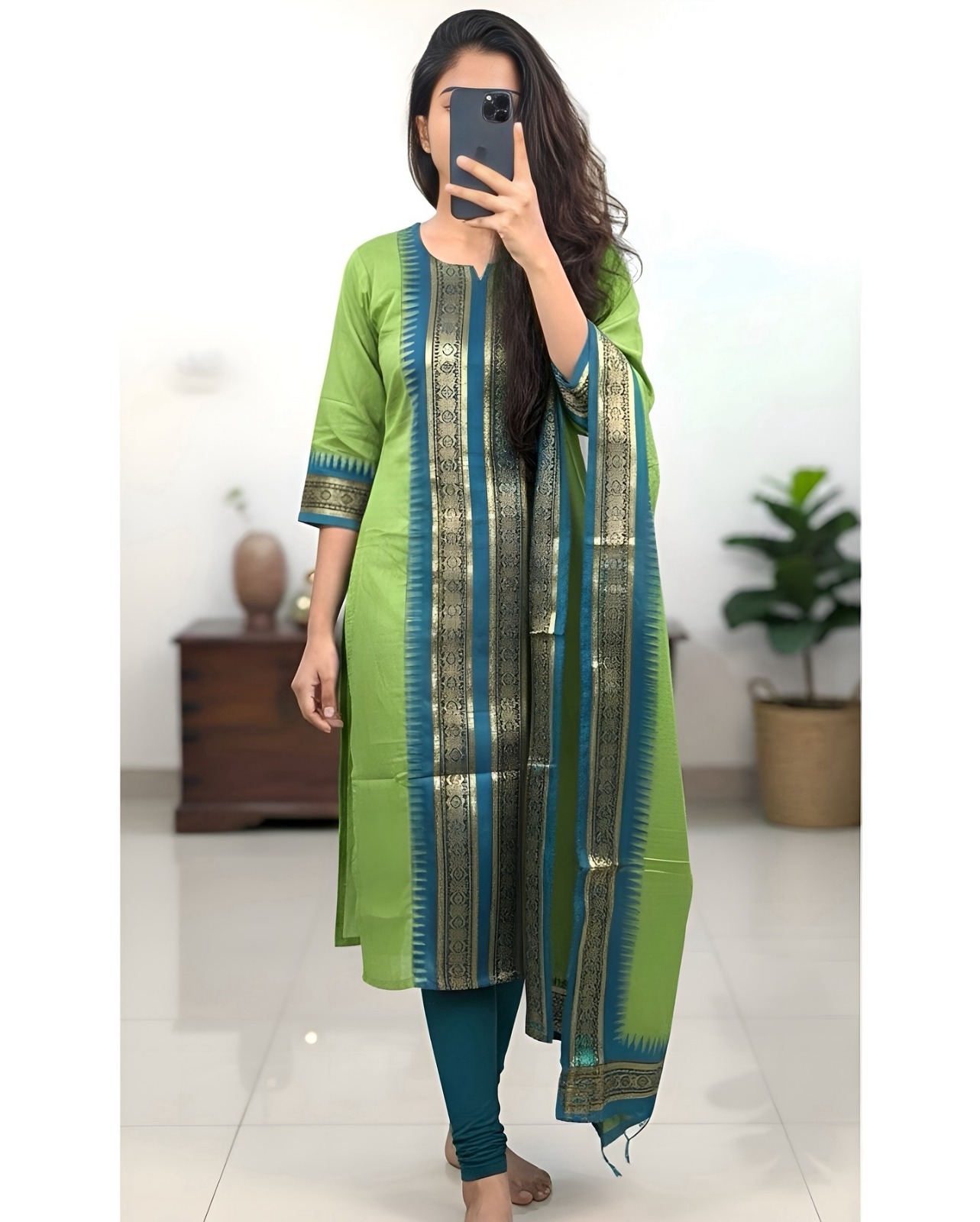
A printed skirt with rust, indigo and cream can be paired with a plain cream kurti, indigo earrings and neutral sandals. A plain wine skirt can carry a kurti with delicate embroidery, antique-gold jewellery and a small embroidered potli. Three unrelated focal points, such as a loud print, a high-shine dupatta and oversized chandelier earrings, usually make the outfit feel heavier than intended.
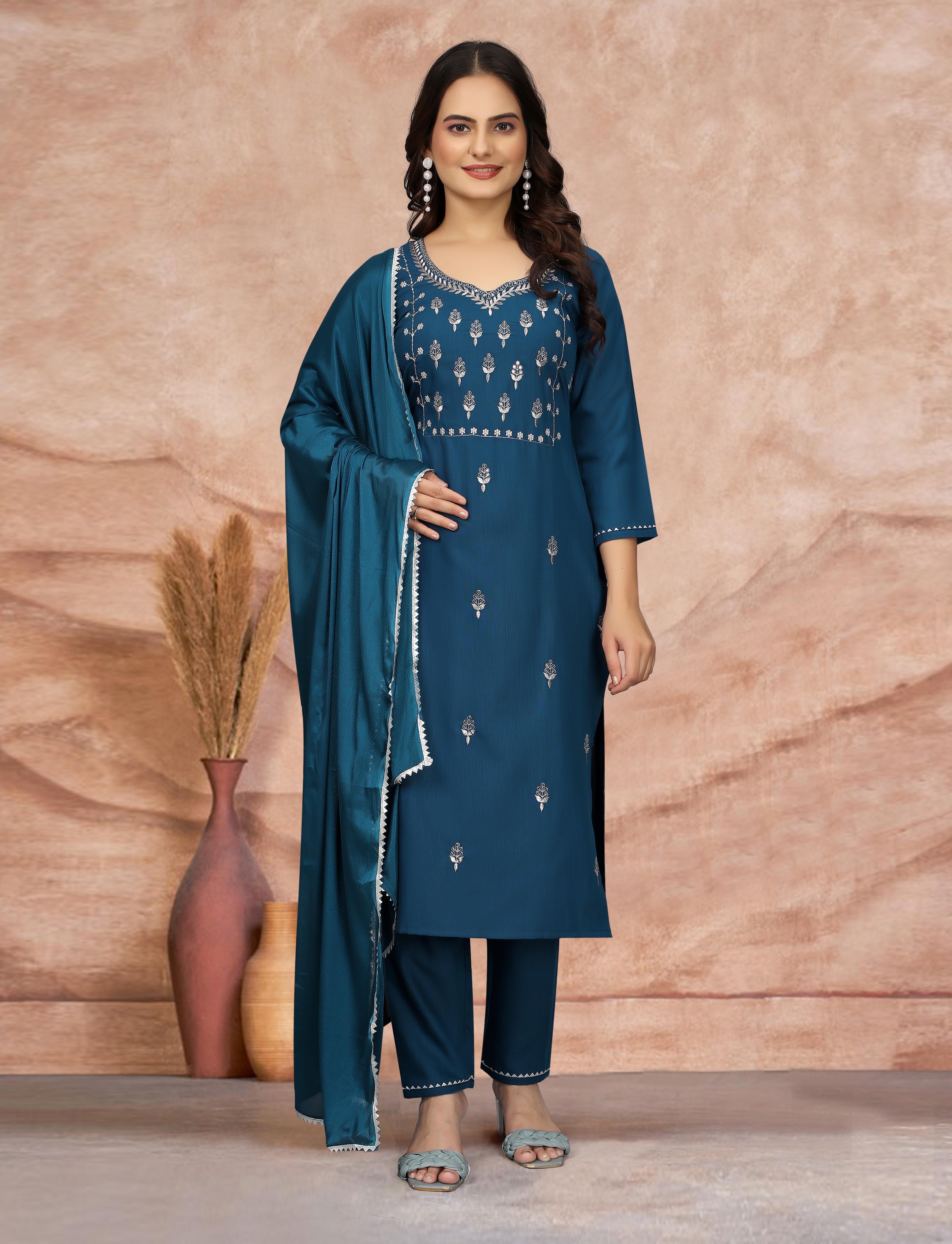
The same principle applies when adapting salwar-suit pieces into skirt outfits. The embroidery placement and neckline of the Elegant Teal Embroidered Kurta Pant Dupatta Set can inspire a teal kurti-and-skirt combination, but the skirt should remain relatively quiet if the kurti has concentrated embroidery around the yoke. The Cream Chanderi Silk Kurti Pant Dupatta Set for Women offers another useful colour lesson: cream creates breathing room beside a bright printed or jewel-toned skirt.
Balanced Outfit Ideas for Kurti With Ethnic Skirts Use Colour Deliberately
The 60-30-10 colour method gives an ethnic outfit a clear visual hierarchy: approximately 60 percent of the look carries the base colour, 30 percent carries a secondary colour, and 10 percent is reserved for an accent. The percentages don't need to be mathematically exact; they help prevent every garment and accessory from demanding equal attention.
A mustard skirt can form the 60 percent base, a cream kurti can provide the 30 percent contrast, and emerald earrings or a green bindi can supply the 10 percent accent. For a red or wine outfit, beige, muted gold and a small amount of teal can soften the intensity. For a pink outfit, ivory and antique silver often create a more controlled result than adding another bright shade.
How should a printed skirt be matched with a kurti?
A printed skirt should usually be matched with a solid kurti that repeats one of the print's quieter colours. Choosing the least dominant colour from the print produces a more sophisticated pairing than matching the brightest colour. A narrow border, embroidered neckline or sleeve detail can repeat the skirt's main motif without copying the entire print.
The Gujarat Bandhej Salwar Suits collection demonstrates why controlled repetition works in Indian dressing: Bandhej patterns already contain movement and colour variation, so a solid kurti in maroon, mustard, ivory or bottle green provides visual rest. Kalamkari Print Salwar Suits offer a similar styling lesson through narrative motifs and earthy palettes; a plain kurti lets the print remain the subject of the outfit.
For a regional pairing, Maharashtra Paithani Inspired Salwar Suits can guide a skirt palette of magenta, parrot green or purple, provided the skirt border isn't competing with another heavily woven border. Odisha Sambalpuri Salwar Suits can guide a black, red or off-white palette, while Punjab Patiala Salwar Suits suggest brighter combinations that work well when the silhouette remains simple.
Balanced Outfit Ideas for Kurti With Ethnic Skirts Depend on Fabric Weight
Fabric weight should be matched by visual density, not only by season. A lightweight cotton or voile skirt pairs naturally with cotton, mulmul or soft rayon kurtis, while a structured silk-blend skirt can support Chanderi silk, brocade or embroidered fabric. Combining two fabrics with very different stiffness can cause the kurti to collapse over the skirt or make the waistline look bulky.
Chanderi has a crisp, light hand and a subtle sheen, so Chanderi silk works well with a skirt that has a defined fall rather than a very limp fabric. Banarasi silk and brocade carry more surface richness; these materials are easier to balance with a matte kurti and restrained jewellery. Cotton block prints, handloom textures and woven borders generally look more natural for daytime events than sequins or high-shine satin.
The Trendy Green Ethnic Kurti Dupatta Set for Festive Wear can guide a green-and-gold palette for a skirt outfit, but a heavily metallic skirt would be unnecessary if the kurti and dupatta already contain festive detail. The Pink Embroidered Cotton Kurti Pant Dupatta Set gives a practical reference for daytime texture: a similar pink kurti can be paired with a hand-block printed skirt and fabric earrings for a lighter, more breathable result.
Movement also matters when selecting footwear. A full skirt that sways at the ankle needs sandals or low block heels that allow a natural stride. Very stiff footwear can interrupt the fluid line of the skirt, while a slippery lining can cause the hem to twist as you walk.
Balanced Outfit Ideas for Kurti With Ethnic Skirts Should Match the Occasion
The best outfit changes according to the event's formality, duration and setting. A daytime family gathering calls for breathable fabrics and moderate embellishment, while a wedding reception can accommodate silk, metallic thread and more structured jewellery. Matching the outfit to the event prevents an attractive combination from feeling either underdressed or unnecessarily elaborate.
What works for a Haldi ceremony?
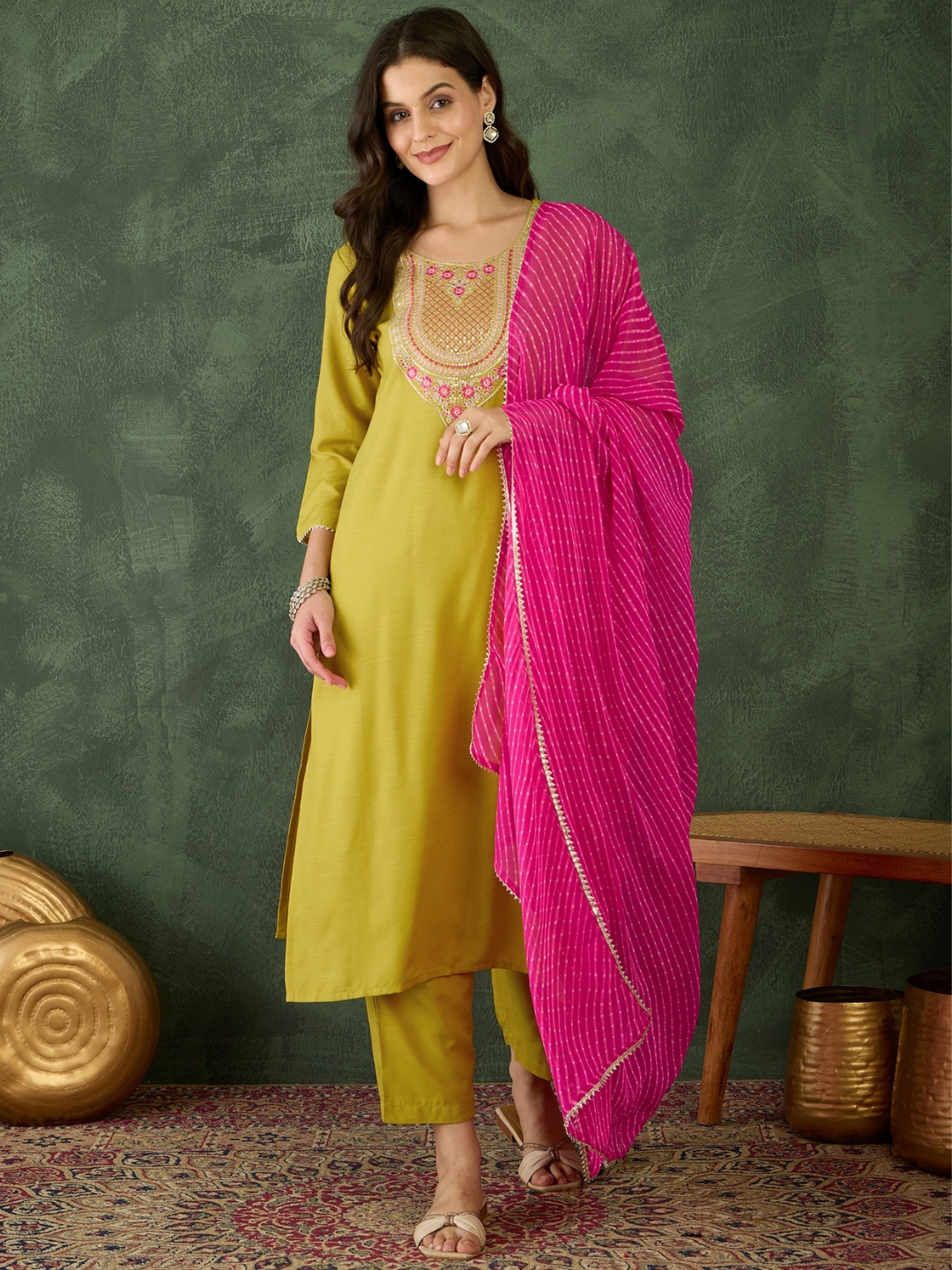
A yellow, mustard or marigold kurti with a lightweight printed skirt is practical for a Haldi ceremony. Choose cotton, Chanderi or a washable blend, and avoid long trailing dupattas that can brush against turmeric paste. A short kurti, flared skirt and flat juttis create movement without requiring constant adjustment.
What works for a festive puja or daytime celebration?
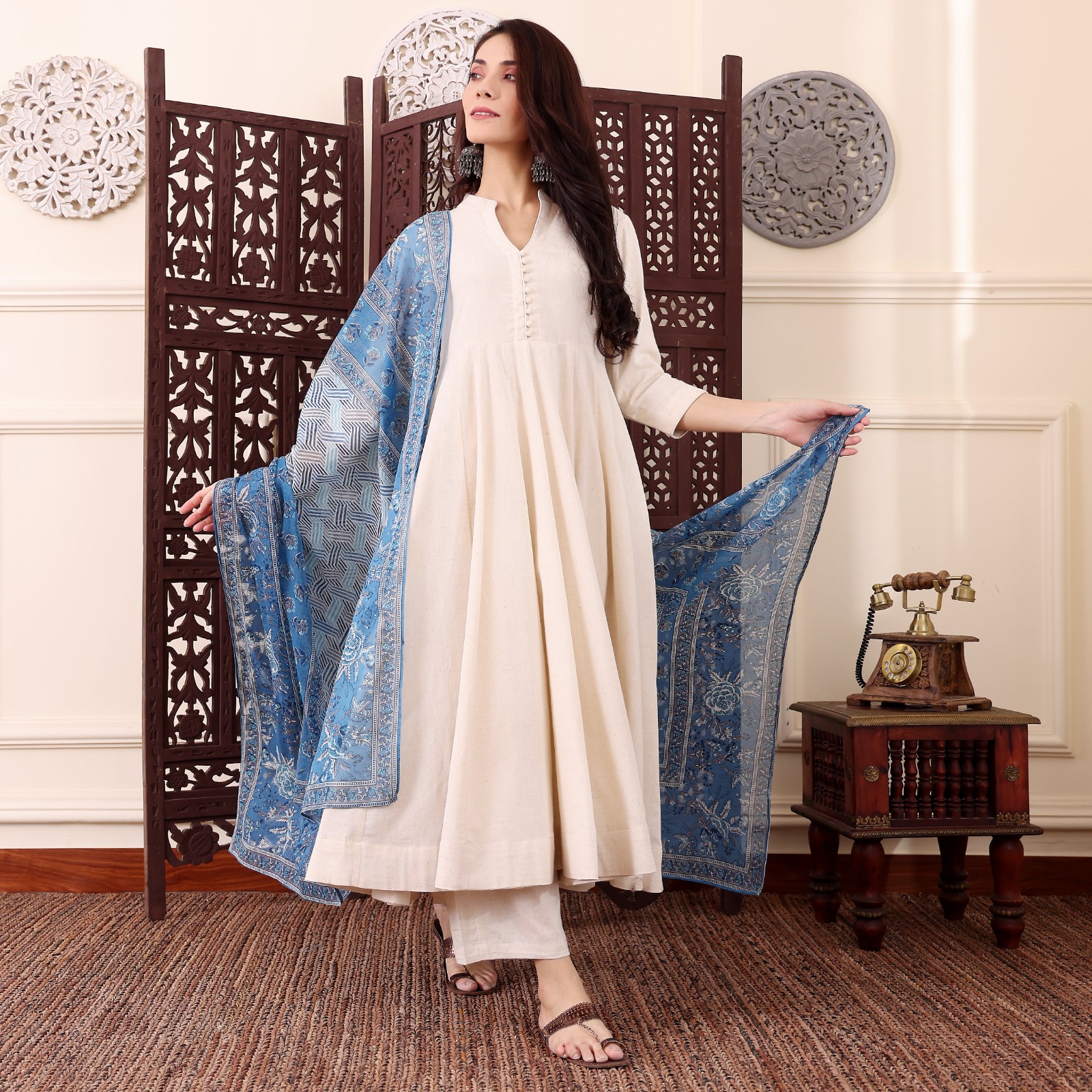
A cream, teal, green or pink kurti with a woven or block-printed skirt suits a festive daytime celebration. The Beige Kurta Set with Blue Chanderi Dupatta for Women shows how beige and blue create a calm base; a blue, indigo or muted printed skirt can extend that palette without requiring bright jewellery. Choose small jhumkas, a compact shoulder bag and a dupatta pinned at one shoulder.
What works for an evening wedding event?
An evening wedding event supports richer colour and more surface detail, but the skirt and kurti should not both use maximal embellishment. The Elegant Wine Ethnic Kurti Set with Dupatta can inspire a wine kurti paired with an antique-gold, blush or muted beige skirt. The Mustard Embroidered Kurti Pant Dupatta Set Women suggests another strong direction: mustard becomes more evening-appropriate beside deep green, navy or wine rather than a second neon shade.
What works for casual lunches and cultural outings?
A cotton kurti with a hand-block printed skirt is suitable for casual lunches and cultural outings. Keep the skirt border narrow, choose a small crossbody bag and wear flat sandals or Kolhapuri-style footwear. A clean, unlined kurti and a breathable skirt are more comfortable than a heavily layered outfit when walking or sitting for several hours.
Balanced Outfit Ideas for Kurti With Ethnic Skirts Need Controlled Accessories
A dupatta should either frame the outfit or add a controlled accent; it should not hide the skirt's shape. Drape a lightweight dupatta over one shoulder when the skirt has a visible border. Use a front pleated drape when the kurti is plain and the dupatta carries embroidery. For a very full skirt, a narrow stole or no dupatta can preserve a lighter silhouette.
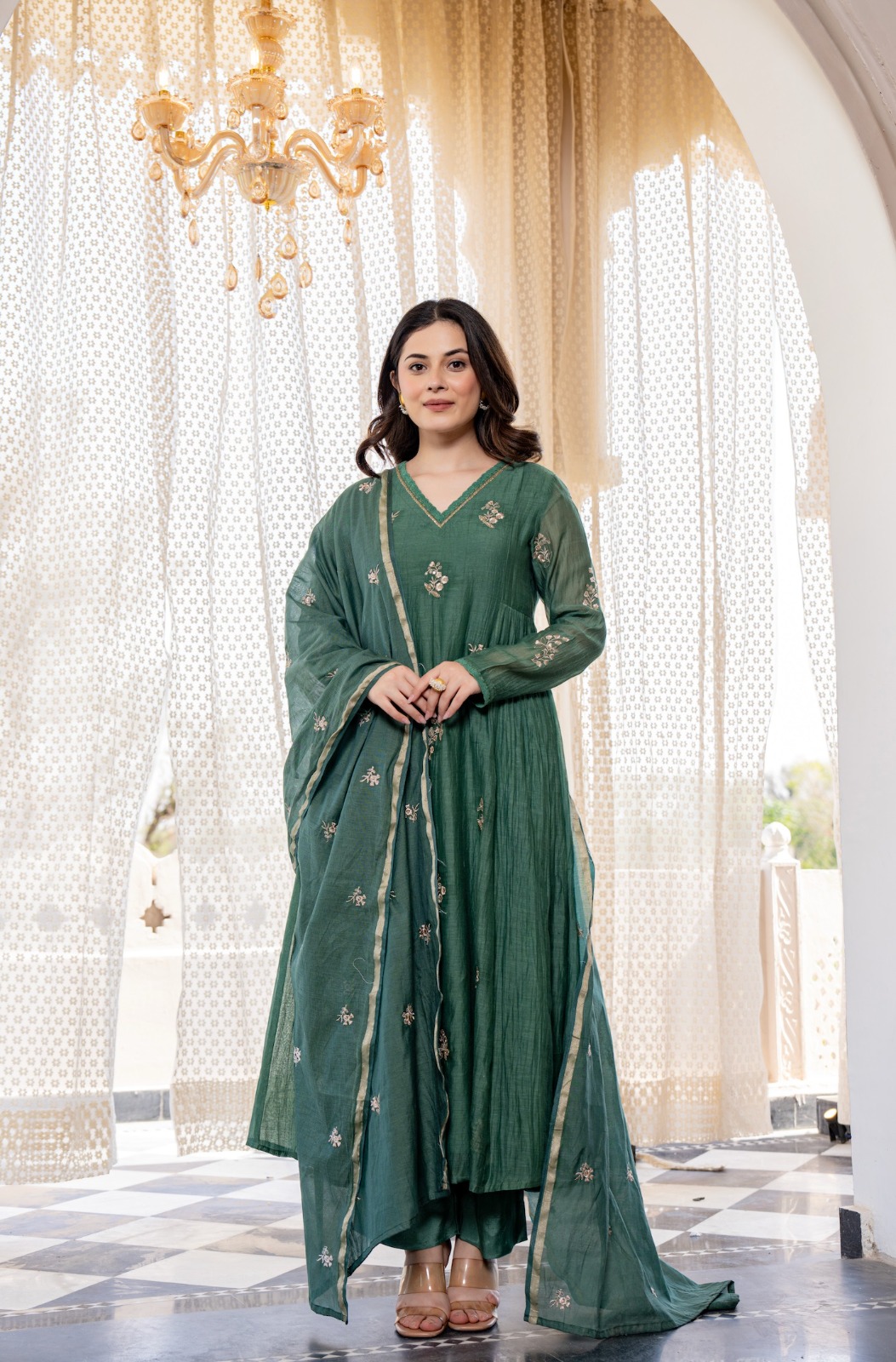
Jewellery should repeat the outfit's metal or craft language. Antique-gold jhumkas suit zari, Banarasi silk, Paithani-inspired borders and warm earthy prints. Silver earrings complement indigo, black, white and cool-toned Sambalpuri-inspired combinations. Terracotta jewellery works with Kalamkari motifs and cotton textiles because its matte surface doesn't compete with printed detail.
Handbags should sit at the waist or below the hip without cutting across the strongest line of the outfit. A small potli works for weddings, while a structured sling bag is more useful for daytime events. Avoid a large heavily embellished bag when the skirt already has a broad border or dense print.
The Modern Taupe Vichitra Silk Embroidered Co-Ord Set for Women brings an useful neutral styling reference. Taupe can support oxidised silver, antique gold or muted rose accessories, but only one metal should dominate the final outfit. Neutral outfits often need one defined accent, such as a deep berry lip, a teal bindi or an embroidered shoe, rather than several bright accessories.
Balanced Outfit Ideas for Kurti With Ethnic Skirts Work Better with a Fitting Check
A final fitting check should confirm that the waistband lies flat, the kurti doesn't pull across the bust and the skirt doesn't catch under the kurti hem. Sit down, walk ten steps and raise both arms before deciding that an outfit is ready. These simple movements reveal whether the lining, side slits or dupatta placement will become inconvenient during the event.
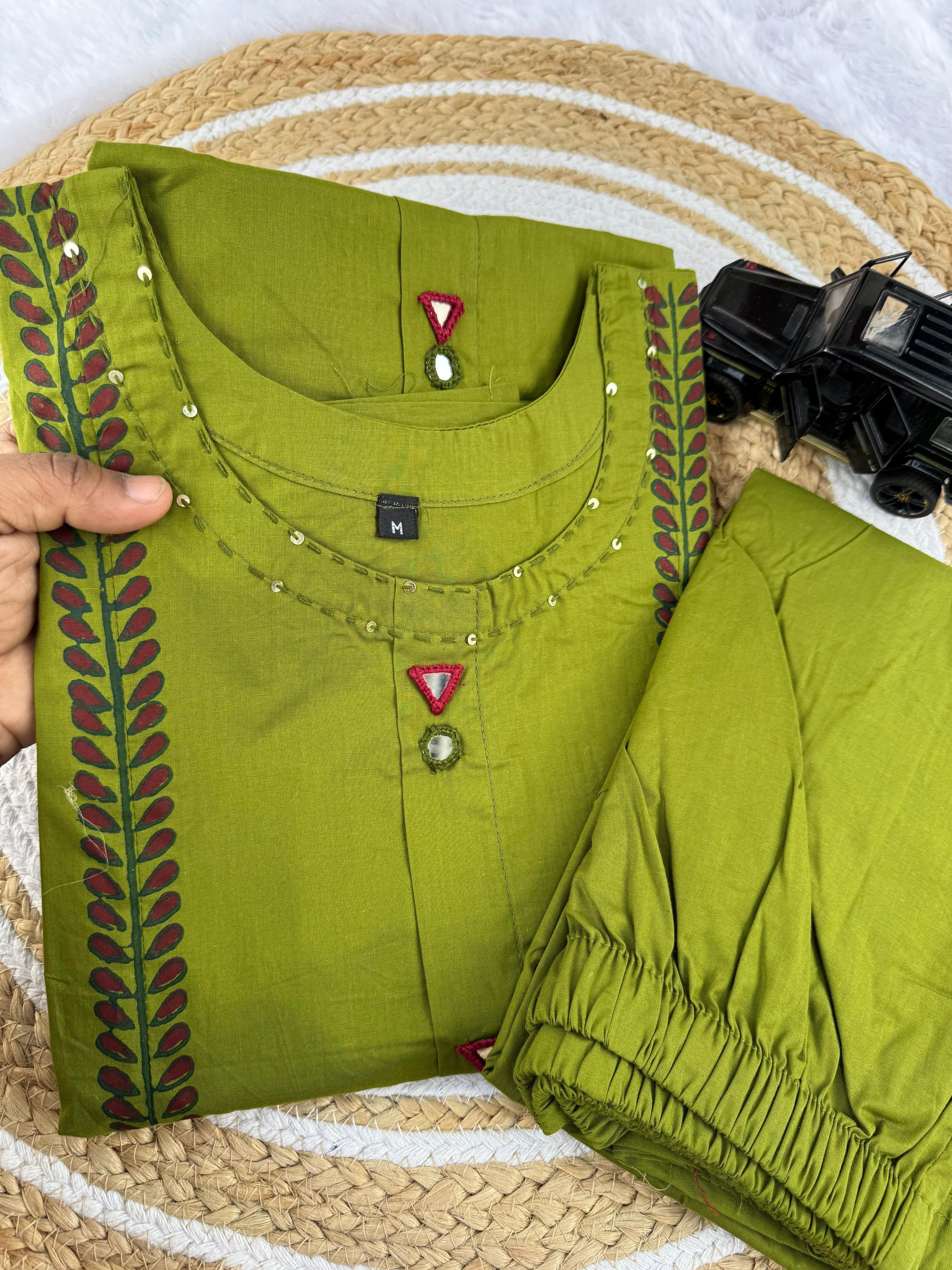
Check the waistband position with the footwear you intend to wear. A high-waisted skirt can lengthen the appearance of the legs, but a waistband that presses into the ribcage will become uncomfortable after several hours. A concealed side zip should lie flat, and an elasticated waist should not bunch under a fitted kurti.
Steam or iron each fabric according to its care label. Chanderi silk and embroidered fabrics should generally be pressed from the reverse side with a pressing cloth, while cotton can tolerate more direct heat but may still need a test on an inside seam. Store zari and embellished skirts folded with soft cotton or acid-free tissue between layers to reduce snagging and tarnish.
Balanced dressing ultimately comes from editing. Select the skirt silhouette first, choose a kurti that gives the body enough visual space, repeat one colour in the accessories and remove one element if the outfit begins to feel busy. That method produces combinations that remain comfortable, recognisably Indian and appropriate for more than one kind of celebration.
Common Questions About Styling Kurtis with Ethnic Skirts
Can I wear a long kurti with an ethnic skirt?
Yes, a long kurti works with an ethnic skirt when the skirt is relatively straight or lightly flared. Keep the kurti and skirt hems visibly separated, and avoid combining a long kurti with an extremely voluminous skirt unless both pieces are designed as a coordinated layered outfit.
Which skirt is best with a short kurti?
A flared, panelled or lehenga-style skirt usually works best with a short kurti because the shorter hem lets the skirt's volume remain visible. Choose a plain or lightly embroidered kurti when the skirt has a bold print, zari border or dense embellishment.
How do I match a printed ethnic skirt with a kurti?
Match a printed ethnic skirt with a solid kurti in one of the print's quieter colours. Repeat a smaller detail from the print through earrings, footwear or a dupatta instead of copying every colour and motif in the accessories.
Can I wear a dupatta with a kurti and skirt outfit?
Yes, a dupatta can complete a kurti and skirt outfit when its drape does not hide the skirt's silhouette. Use a lightweight dupatta for a full skirt, pin a structured drape for formal events, and avoid a long trailing edge for a Haldi ceremony or crowded daytime gathering.
What jewellery suits a kurti and ethnic skirt combination?
Antique-gold jewellery suits zari, Banarasi silk, warm embroidery and Paithani-inspired colours, while silver or oxidised jewellery suits indigo, black, white and cool-toned handloom prints. Choose one dominant metal and keep the remaining accessories quieter.
How can I make a kurti and skirt outfit look less bulky?
Reduce bulk by pairing a fitted or straight kurti with a gathered skirt, choosing a light dupatta and avoiding heavy borders on both garments. A high-waisted skirt, visible ankle space and low-profile footwear can also create a cleaner vertical line.


