

An Office Ethnic Wardrobe for Five Workdays With Fewer Pieces can make weekday dressing quicker without making your outfits look repetitive. The most efficient method is to choose a small colour family, combine interchangeable kurtas with two or three bottoms, and reserve ornate details for controlled accents. An useful capsule doesn't require five separate suits; it requires garments that can work in more than one combination.
Office clothing must also handle commuting, long hours of sitting, air-conditioning, occasional meetings and repeated washing. Breathable cotton, comfortable sleeve shapes, practical hemlines and colour compatibility matter as much as embroidery or print. Six to eight well-chosen core garments can create a full Monday-to-Friday rotation.
An Office Ethnic Wardrobe for Five Workdays With Fewer Pieces Starts With a Colour System
A two-neutral, two-accent colour system gives the most combinations from a small office wardrobe. Choose neutrals such as cream, grey, navy, beige or black, then add one or two muted accents such as olive, dusty rose, mustard or teal.
Colour planning prevents a common capsule-wardrobe mistake: owning attractive garments that can't be worn together. A navy kurta can work with cream, grey and beige bottoms, while an olive-yellow kurti can sit comfortably beside cream, tan and charcoal. A grey printed kurti can share trousers with a more detailed grey embroidered set if the silhouettes are different.
Keep one visual element quiet whenever another element is prominent. A heavily embroidered kurta needs a plain bottom and restrained jewellery. A printed cotton kurti can take a textured dupatta or a brighter earring. This balance keeps ethnic workwear intentional rather than overly festive.
How many colours should an office capsule include?
An office capsule should usually include three neutrals and two accent colours. Three neutrals provide flexibility for trousers, dupattas and footwear, while two accents prevent the wardrobe from appearing monotonous.
Navy, cream and grey can form a reliable neutral base, with olive and muted yellow as accents. The same palette can move from a formal client meeting to an ordinary workday by changing the dupatta, jewellery and footwear rather than replacing the entire outfit.
How An Office Ethnic Wardrobe for Five Workdays With Fewer Pieces Uses Core Garments
Six to eight core garments are enough for an useful five-day ethnic workwear rotation when the pieces have compatible colours and shapes. A sensible starting point is four kurtas or kurti sets, two bottoms, two dupattas and one optional embellished set for presentations or office celebrations.
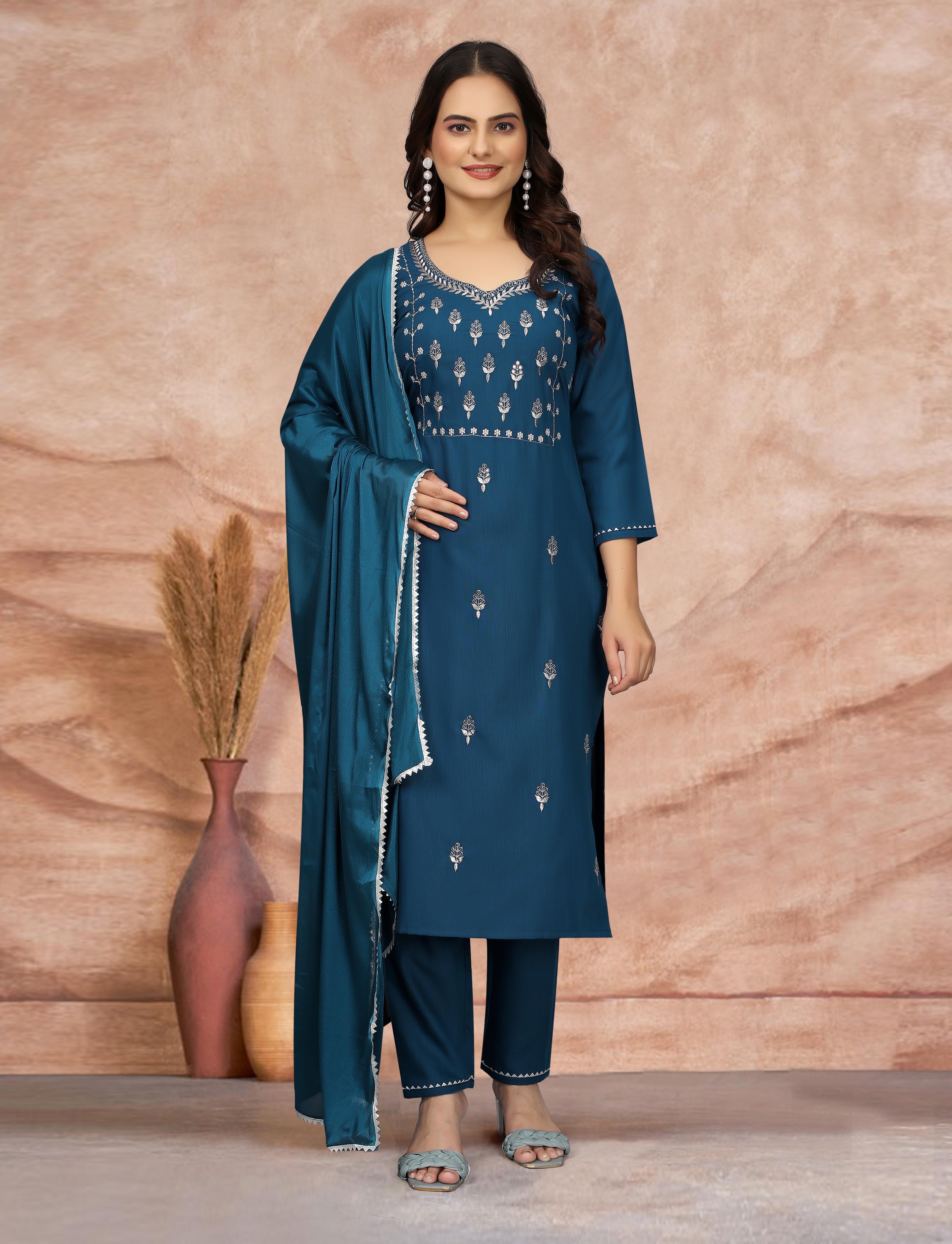
Coordinated sets reduce decision-making, but separates create more combinations. The Navy Blue Traditional Kurta Pant Dupatta Ensemble can function as a complete Monday outfit, while its navy elements can also inspire pairings with a plain cream or grey bottom already in the wardrobe. A set is most valuable when each component can be worn independently.
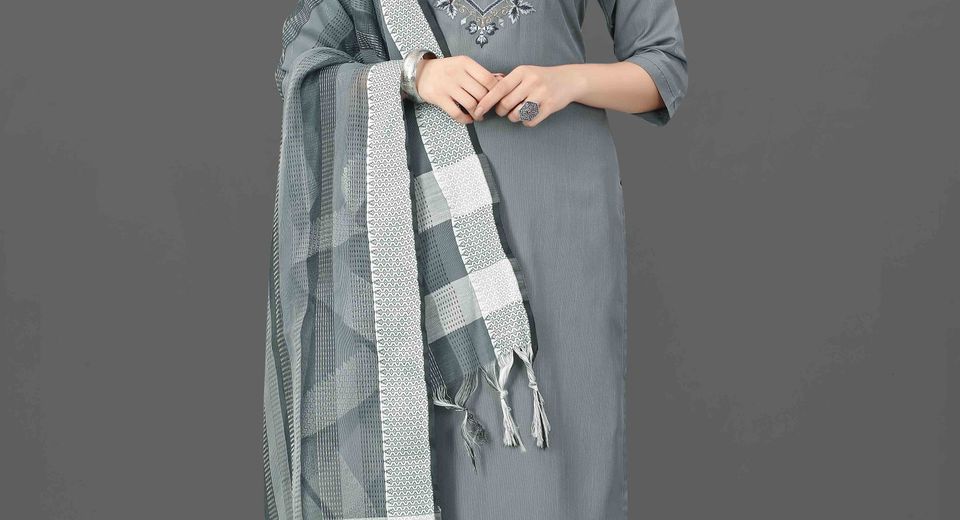
The Grey Printed Cotton Kurti Pant Set for Women Daily Wear suits a regular workday because cotton print is visually easy to wear and generally simpler to maintain than dense embellishment. The Grey Embroidered Kurta Pant Dupatta Set for Women offers a different texture within the same broad colour family, making it useful for a meeting without forcing a completely new palette.
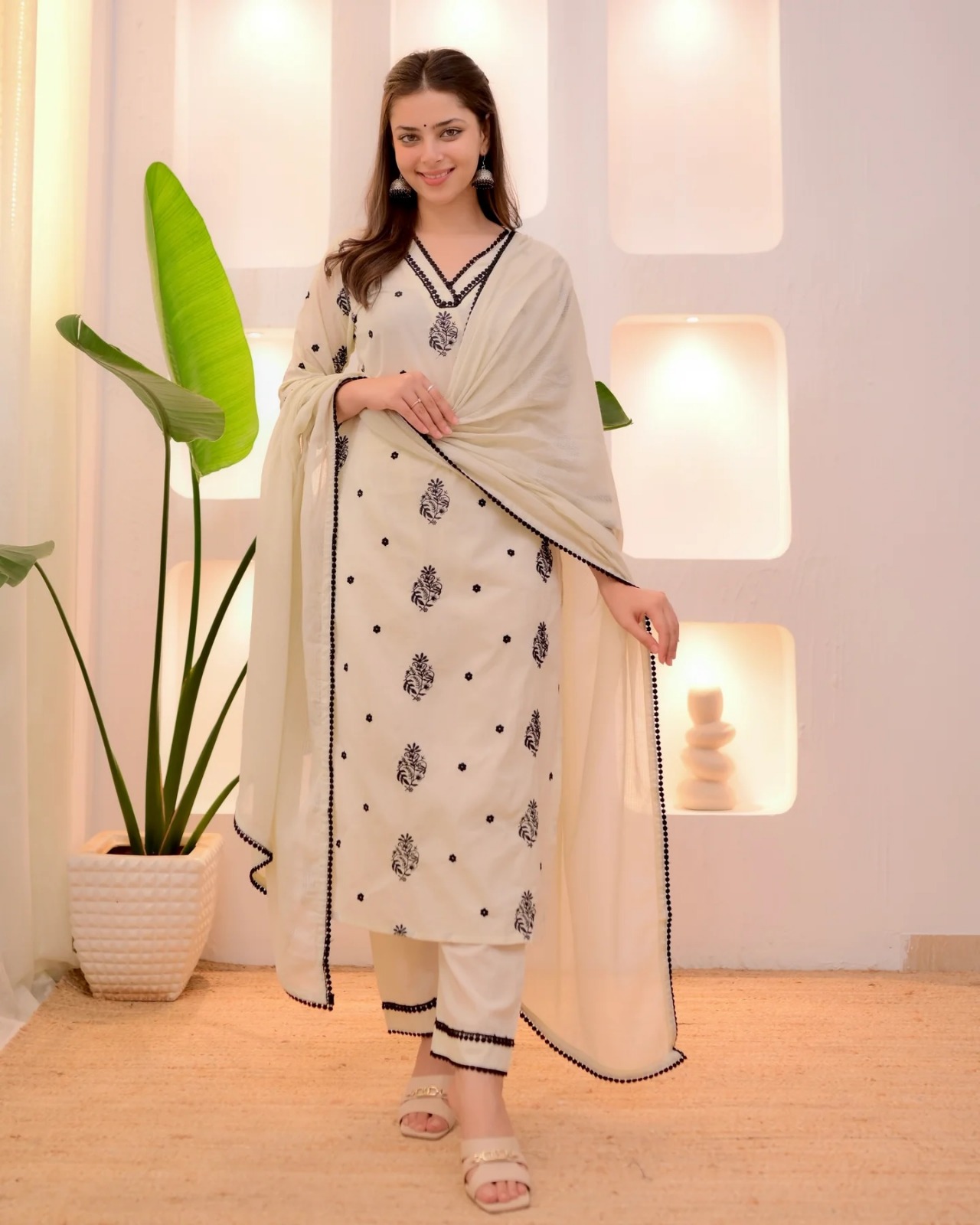
For a lighter neutral base, the Cream Printed Cotton Kurta Pant Dupatta Set for Women can be paired with tan footwear, a muted contrasting dupatta or small metallic jewellery. A cream outfit also helps colourful accessories stand out, so one garment can produce noticeably different looks across the month.
The Office Wear Collection - VARNAVI is an useful reference point when comparing coordinated office silhouettes, practical fabrics and restrained embellishment in one place. A collection approach helps reveal whether a new kurta will work with existing trousers and dupattas instead of becoming another isolated outfit.
What makes a kurta suitable for office wear?
An office kurta should allow comfortable movement, sit neatly under a cardigan or jacket, and use fabric that remains presentable after several hours. A straight, A-line or gently flared silhouette between knee and mid-calf is usually easier to style for work than an extremely short or heavily layered shape.
Check practical details before buying: side slits that don't open excessively, sleeves that allow typing, a neckline that lies flat, and a lining that prevents transparency. A cotton A-line shape can be especially useful for commuting because it provides ease without the volume of a full anarkali.
An Office Ethnic Wardrobe for Five Workdays With Fewer Pieces Needs a Five-Day Rotation
A five-day plan works best when each day changes at least two visible elements, such as the kurta and dupatta, the bottom and jewellery, or the colour and silhouette. Repeating a trouser is entirely acceptable when the upper layer and accessories create a different balance.
Monday: establish a polished baseline
Begin the week with the Navy Blue Traditional Kurta Pant Dupatta Ensemble and simple closed-toe flats or low block heels. Navy looks structured without requiring heavy decoration, and a complete ensemble removes several styling decisions on a busy morning.
Keep Monday accessories restrained with a watch, small studs and a structured tote. If the ensemble includes a patterned or detailed dupatta, fold the dupatta narrowly over one shoulder so the outfit remains neat during commuting and desk work.
Tuesday: choose breathable cotton and a softer print
Wear the Grey Printed Cotton Kurti Pant Set for Women Daily Wear with comfortable flats and a small coloured accent. Grey bridges formal and relaxed office dressing, while a cotton print adds interest without relying on bright contrast.
Change the impression with a different hairstyle, slim belt or lightweight scarf if the kurti permits it. Avoid adding several competing patterns; one print, one metal finish and one accent colour create a cleaner workday outfit.
Wednesday: repeat a bottom and change the upper proportion
Pair a familiar grey or cream trouser with the Festive Wear Cream Embroidered Kurta Set for a midweek presentation, team lunch or internal celebration. Embroidery works for office wear when the motif, shine and colour contrast remain moderate.
Keep the rest of the outfit quiet with matte footwear and minimal jewellery. An embroidered cream kurta doesn't need a large necklace, ornate earrings and a heavily embellished dupatta at the same time.
Thursday: introduce an earthy accent
The Olive Yellow Embroidered Kurti Set with Dupatta brings colour to Thursday while remaining grounded enough for a professional environment. Pair the set with neutral footwear and avoid introducing another strong colour through the handbag.
Olive-yellow can appear different under warm indoor lighting and daylight, so check the outfit near a window before leaving home. Antique gold can support the colour, while silver remains suitable when the embroidery or existing accessories have a cooler finish.
Friday: make structure comfortable
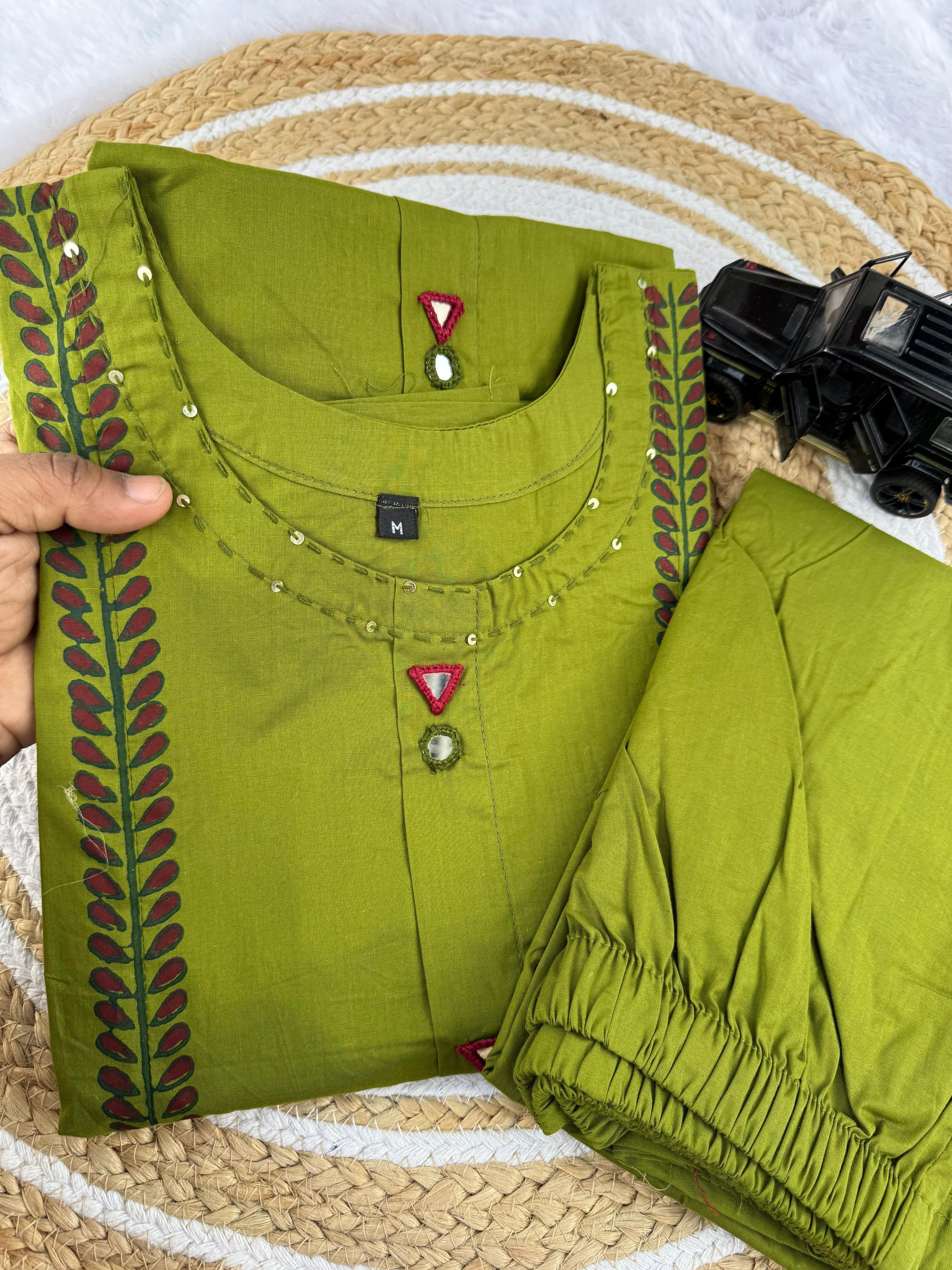
Finish the week with the Designer Cotton A-Line Kurti Pant Set with Mirror Work, treating the mirror work as the outfit's single focal point. Cotton keeps the silhouette practical, while small reflective details create a relaxed Friday or casual celebration look.
Choose plain sandals or low heels and carry a solid-coloured bag. If Friday includes a formal meeting, replace statement earrings with small hoops and add a tailored outer layer in navy, grey or cream.
An Office Ethnic Wardrobe for Five Workdays With Fewer Pieces Benefits From Dupatta Planning
Two versatile dupattas can change the appearance of several kurtas more efficiently than buying another complete suit. Select one quiet solid or fine-textured dupatta and one print or lightly embellished option that shares at least one colour with the wardrobe.
A cream dupatta softens navy, grey and olive, while a navy dupatta gives definition to cream and pale printed pieces. A dupatta should also be manageable at work: fabrics that slide constantly, catch on chair arms or require elaborate draping can become frustrating during a long day.
Try three office-friendly drapes. A narrow one-shoulder drape keeps the front clean for meetings. A two-shoulder drape brings better security while commuting. A short pleated drape tucked near the shoulder works when typing, travelling or moving between rooms.
Accessories should follow a three-part rule: one functional item, one metal detail and one colour accent. A watch, small earrings and a muted handbag are enough for a standard day. For a presentation, change the earrings or add a structured belt instead of stacking multiple decorative pieces.
Footwear deserves the same planning. Two pairs can cover most office needs: a comfortable neutral flat for commuting and a low block heel or polished loafer for formal days. Choose soles with grip and straps that don't rub, because an elegant outfit loses practicality when the shoes can't handle a full day.
Fabric Choices Make an Office Ethnic Wardrobe for Five Workdays With Fewer Pieces Practical
Fabric choice should reflect the office temperature, commute and laundering schedule. Cotton is dependable in warm weather and handles frequent washing, while cotton blends may crease less and recover faster after sitting. Rayon and viscose can drape well but require care labels to be followed closely because heat and aggressive wringing may distort the fabric.
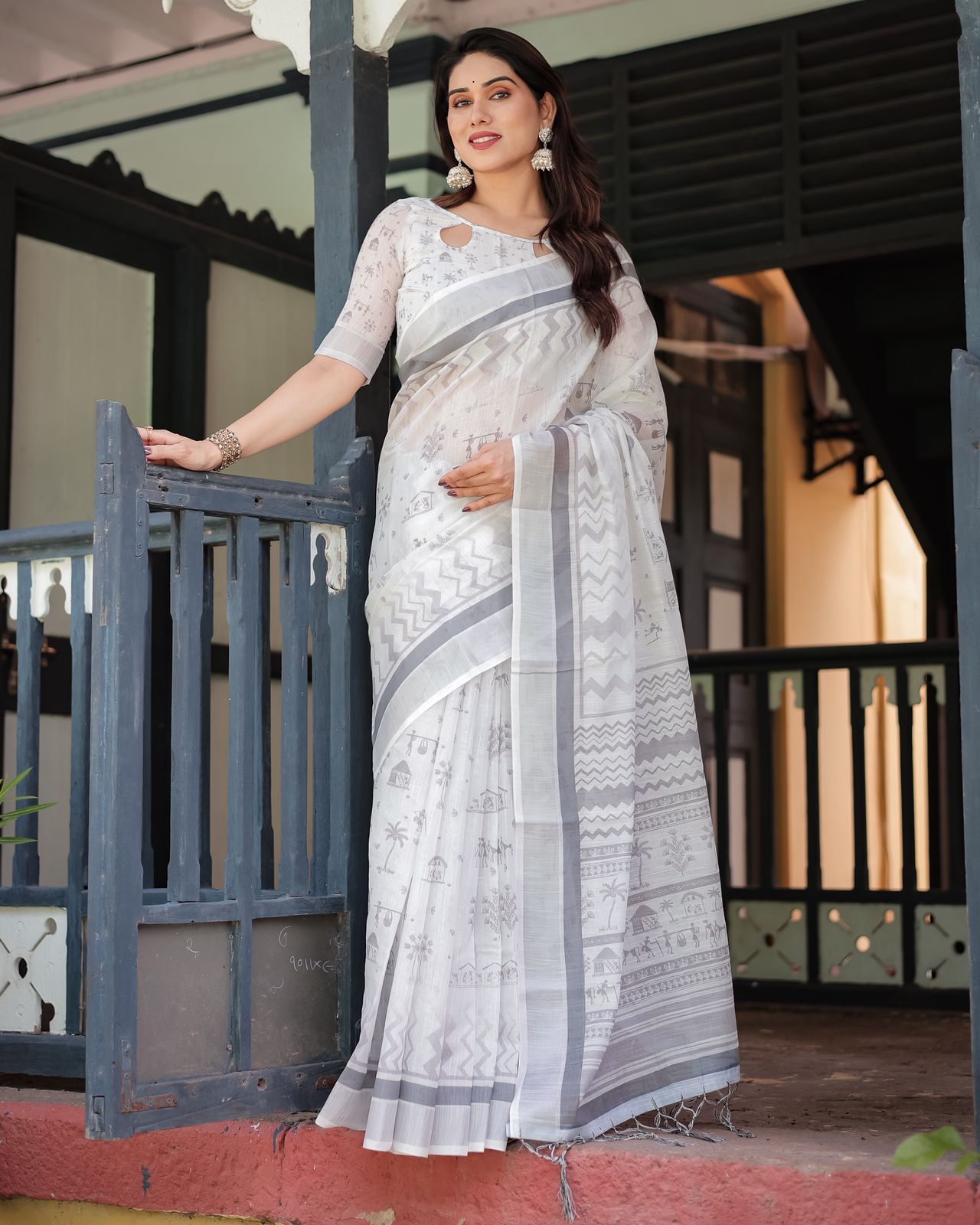
Banarasi silk, Kanjeevaram and heavily woven zari garments belong more naturally to weddings, festive ceremonies or offices with a very traditional dress code than to an ordinary five-day rotation. Banarasi silk and Kanjeevaram are valuable for specific occasions, but they're not the most efficient foundation for daily workwear.
Chanderi can work for a formal office event when it's lined properly and styled with a modest blouse or kurta layer, but delicate fabric needs more careful storage and washing. Printed cotton, stable cotton blends and lightly embroidered fabrics generally offer a better balance of comfort and maintenance for everyday use.
How much embellishment is appropriate for office ethnic wear?
Small motifs, restrained threadwork, subtle mirror work and narrow borders are usually suitable for office ethnic wear. Dense sequins, large reflective mirrors and very ornate zari work are better reserved for festive events unless the workplace has a formal traditional dress code.
Embellishment also affects care. Turn embroidered garments inside out before washing, place delicate pieces in a mesh laundry bag, and avoid rough surfaces that can pull threads or scratch mirror work. Air-dry garments away from harsh direct sunlight to reduce fading.
How An Office Ethnic Wardrobe for Five Workdays With Fewer Pieces Stays Fresh and Organised
Separate the wardrobe into ready-to-wear combinations instead of storing every garment by category. A Monday set, a cotton midweek option and a presentation-ready combination can be hung together with their matching dupattas, reducing morning decisions and preventing forgotten pieces.
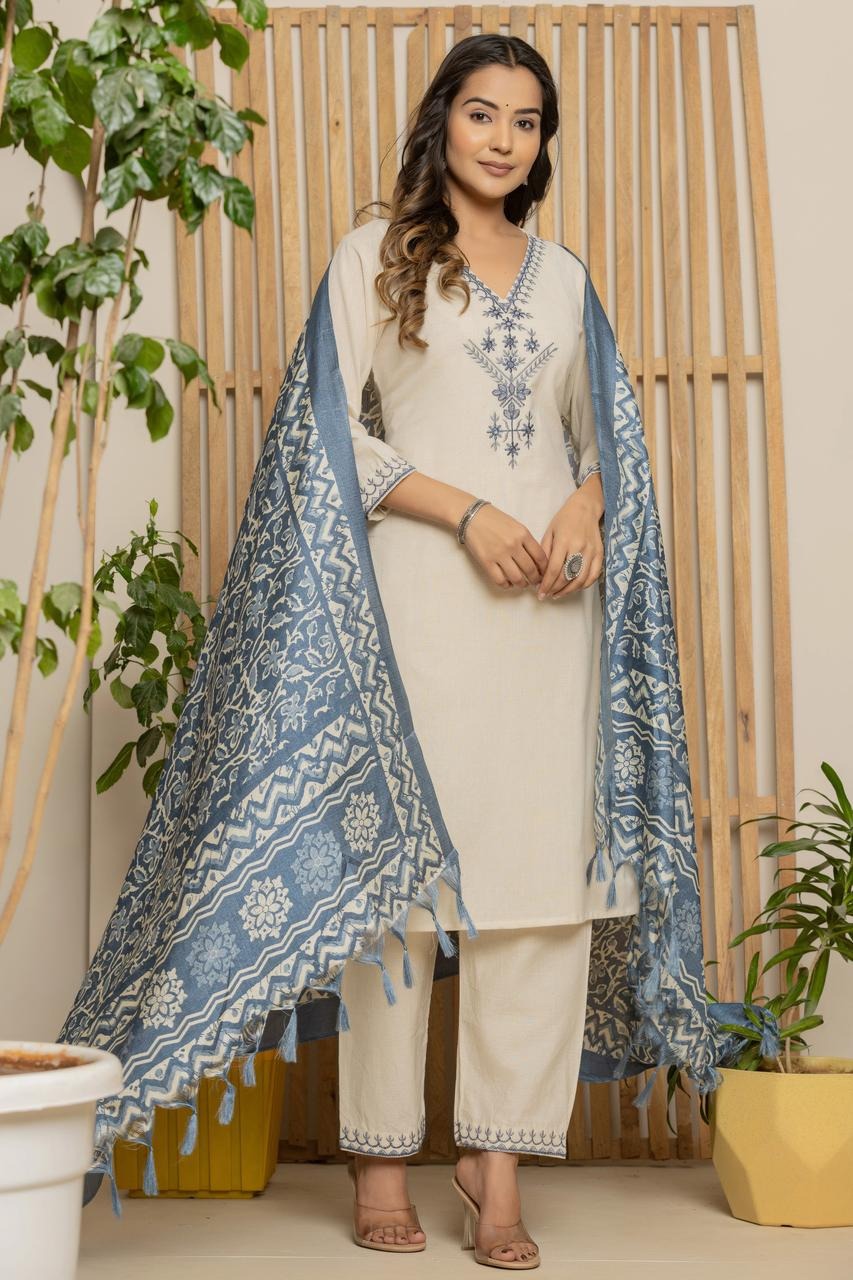
Wash office cotton garments according to their care labels, preferably with similar colours and mild detergent. Do not leave damp garments in a closed laundry basket, because trapped moisture can create odour and weaken fibres. Fold clean cotton kurtas only after they're completely dry.
Steam or press garments before storing them, but use a lower heat setting for rayon, viscose, embroidery and synthetic blends. Keep embellished pieces in breathable garment bags rather than plastic covers, which can trap humidity over time.
Review the capsule every four weeks. Remove garments that require constant adjustment, clash with the main palette or remain unworn because of uncomfortable fabric. Add a new piece only when it creates at least three complete office outfits with existing garments.
A smaller ethnic wardrobe succeeds when every purchase answers a practical question: Can the garment survive a workday, combine with at least two existing pieces, and suit more than one level of formality? If the answer is yes, fewer pieces can deliver more reliable variety from Monday through Friday.
Common Questions About Building a Five-Day Office Ethnic Wardrobe
How many ethnic outfits do I need for five office days?
You can manage five office days with four kurtas or kurti sets, two bottoms and two dupattas if the colours and silhouettes coordinate. Repeating a trouser or dupatta is acceptable when the kurta, accessories or drape changes visibly.
How can I repeat ethnic wear at work without looking repetitive?
Change at least two visible elements each time you repeat a garment. Pair the same trouser with a different kurta and dupatta, or keep the outfit constant and change the outer layer, footwear, jewellery and drape.
Which fabrics are most comfortable for daily office ethnic wear?
Cotton, cotton blends and lightweight stable fabrics are usually the most practical for daily office ethnic wear. These fabrics generally breathe better and tolerate more frequent washing than heavily embellished silk or delicate sheer textiles.
Can embroidered kurta sets be worn to the office?
Embroidered kurta sets can be worn to the office when the motif, shine and colour contrast are restrained. Balance embroidery with a plain bottom, simple jewellery and matte footwear so the outfit remains professional rather than festive.
How many dupattas should an office ethnic capsule have?
Two versatile dupattas are enough for a small office capsule: one quiet solid or fine-textured option and one print or lightly embellished option. Choose colours that work with at least three kurtas or kurti sets.
How should cotton and embroidered office kurtas be cared for?
Follow the care label, wash similar colours together, turn embroidered garments inside out and avoid rough surfaces that can pull threads. Air-dry garments away from harsh direct sunlight and store completely dry pieces in breathable spaces.


