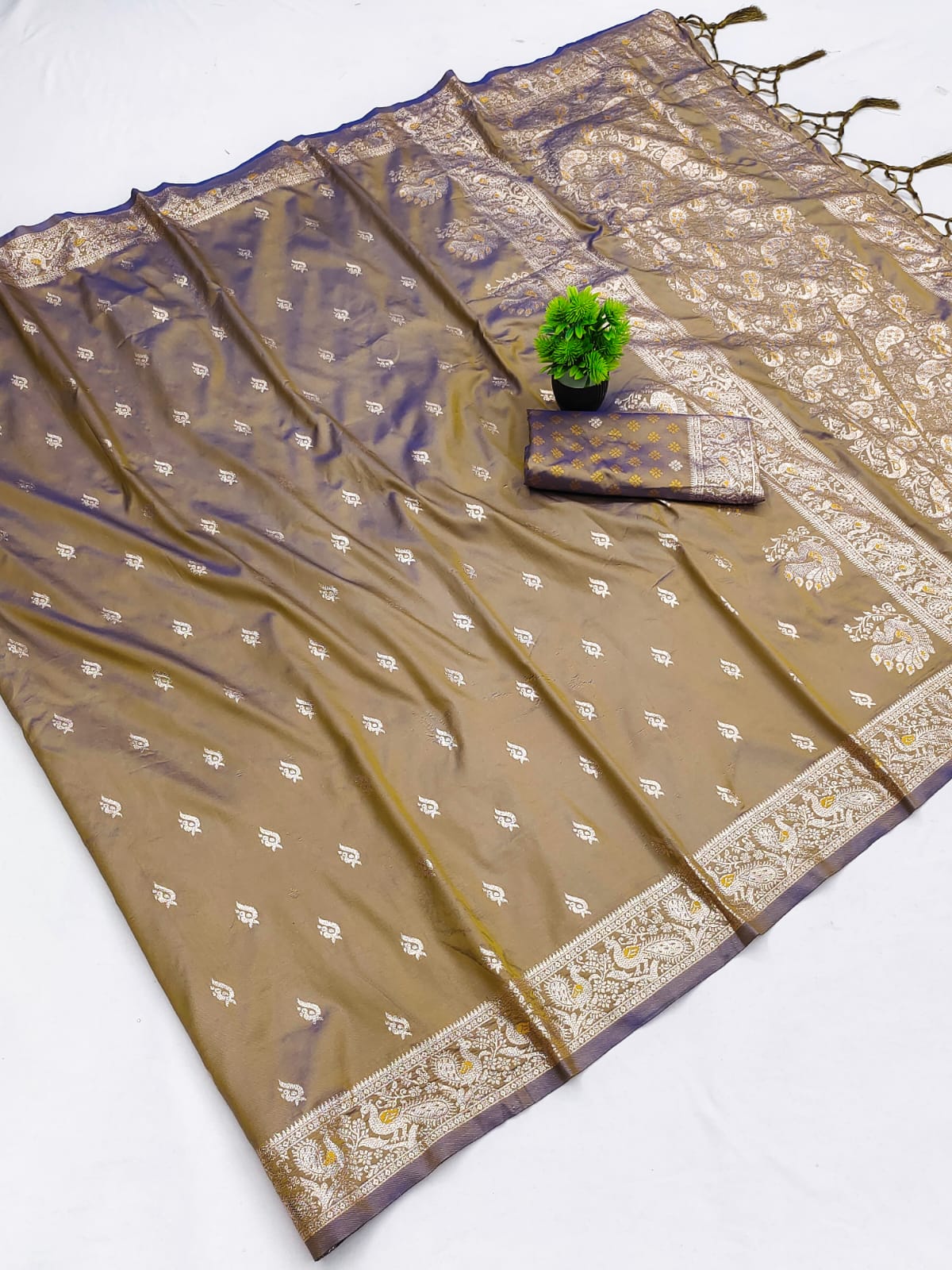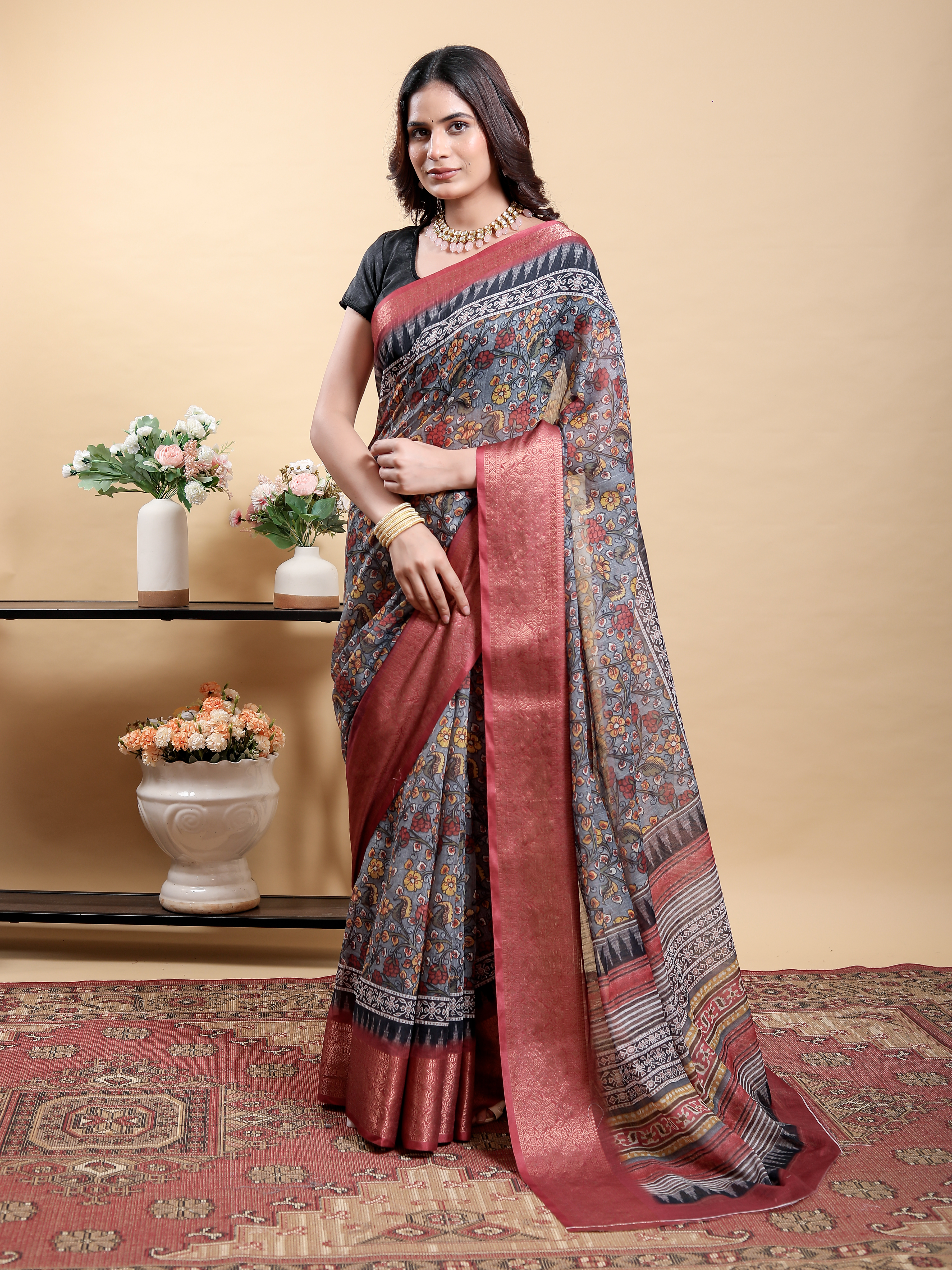
Agra Heritage Wedding Dressing Inspired by Architecture Not Costume begins with an useful distinction: a wedding outfit can borrow the logic of a building without copying its surface decoration. The pale marble of the Taj Mahal, the red sandstone of Agra Fort, the perforated screens of Mughal architecture and the symmetry of charbagh gardens offer practical ideas for colour, texture, proportion and movement. The result is clothing with a sense of place, not a theatrical costume.
What does Agra Heritage Wedding Dressing Inspired by Architecture Not Costume mean?
Agra Heritage Wedding Dressing Inspired by Architecture Not Costume means translating architectural details into wearable decisions rather than reproducing monuments literally. A marble-and-sandstone palette can become ivory silk with rust or terracotta accents; a jali screen can suggest fine lattice embroidery; and a domed silhouette can guide the curve of a blouse or the fall of a dupatta.
Architecture gives a wedding look a visual system. Repeated arches can become a border rhythm, pietra dura can inspire small jewel-toned motifs, and the long vertical lines of a minaret can inform a narrow, elongated drape. These references remain subtle when only two or three appear in one outfit.
That restraint matters because bridal and festive clothing already contains strong visual elements such as zari, sequins, brocade, embroidery and jewellery. Adding every Mughal reference at once can flatten the outfit into visual noise. Selecting one structural reference, one material reference and one colour reference usually creates a more convincing result.
Which Agra architectural details translate well into wedding clothing?
Agra's most wearable references are marble inlay, red sandstone, jali screens, cusped arches, charbagh symmetry and controlled repetition. Each reference can be converted into a specific styling choice without requiring a literal monument print.
Marble inlay and pietra dura
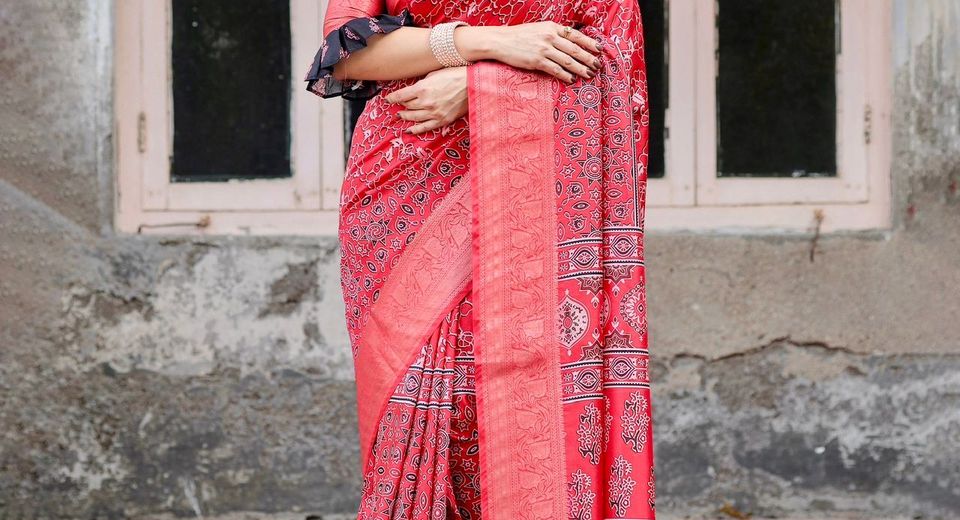
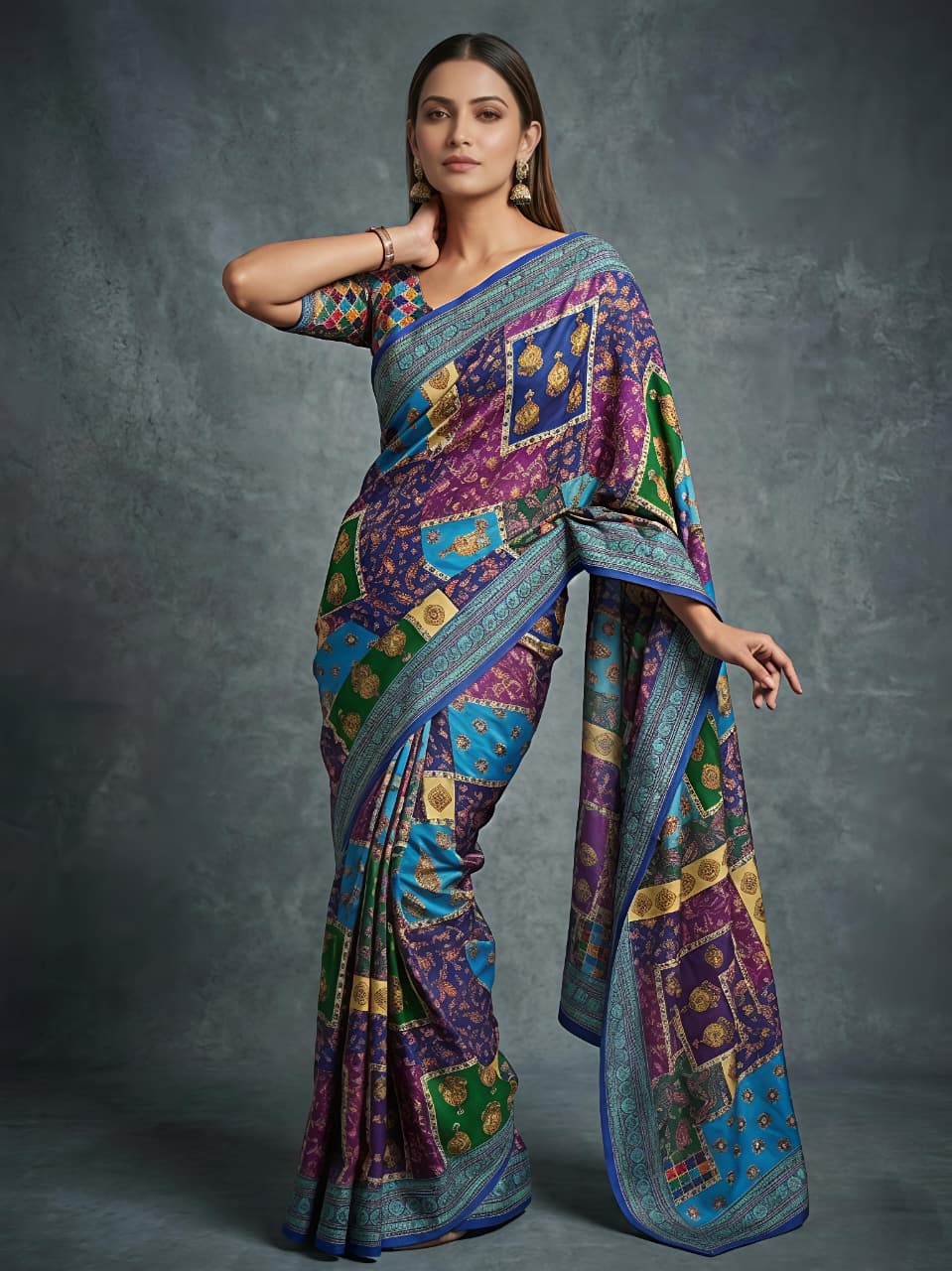
Marble inlay translates into a light base with small, carefully spaced accents of emerald, lapis blue, amber, rose or black. A cream Banarasi silk saree with a restrained multicoloured border can capture the contrast of white marble and inset stone more effectively than an all-over monument motif.
The Bold Ajrakh Banarasi Saree for Elegant Festive Styling demonstrates how a patterned textile can carry heritage depth without looking like themed dressing. Style a saree with a plain ivory or deep wine blouse if the print is visually active. Keep the jewellery narrow and let the border provide the repeated rhythm.
Red sandstone and fortress geometry
Red sandstone translates into rust, burnt orange, brick, oxblood and warm mustard, supported by matte or lightly textured fabrics. These colours are especially useful for a Mehendi, sangeet or winter wedding because they photograph richly in daylight and under warm venue lighting.
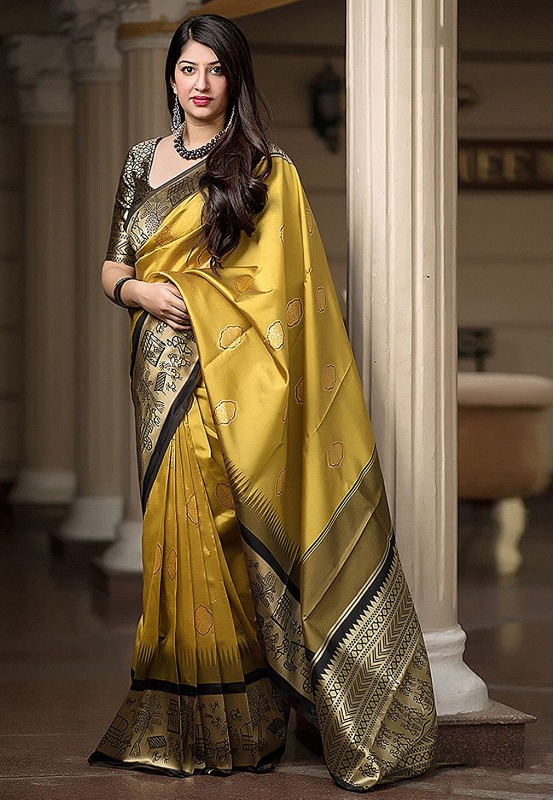
The Heritage Mustard Jacquard Silk Saree uses a warm architectural colour direction while retaining the softness expected from wedding dressing. Pair mustard with antique gold rather than bright yellow gold, and add a wine, forest green or muted ivory blouse to prevent the look from becoming monochromatic.
Jali screens and carved arches
Jali screens translate into negative space, fine linework and repeated geometric borders. Look for cutwork, delicate resham embroidery, small-scale zari jaal, mesh-like dupattas or evenly spaced motifs rather than oversized palace illustrations.
Cusped arches can guide the shape of a neckline, the edge of a dupatta or the outline of a scalloped hem. An arch reference works best when it appears once as a clear silhouette, not when every seam and accessory repeats it.
How should colour be planned for an Agra-inspired wedding outfit?
An Agra-inspired wedding palette should begin with one architectural base colour, one stone or garden accent, and one metallic finish. This three-part method keeps heritage references visible while preserving a modern wardrobe balance.
For a Taj Mahal-inspired palette, use ivory, pearl, soft grey or pale blush as the base. Add one inlay colour such as lapis blue, jade, coral or amber, then finish with silver, champagne gold or antique gold. White-on-white dressing needs texture to remain visible, so combine silk, jacquard, organza or embroidery rather than relying on colour contrast alone.
For an Agra Fort palette, choose sandstone rust, terracotta, deep red or muted ochre as the base. Balance the warmth with teal, ink blue or old rose, and use antique zari instead of a highly reflective yellow metal. This combination feels connected to historic masonry while remaining flattering under indoor lights.
For a charbagh garden palette, use leaf green, cypress green, water blue and rose with a neutral such as beige or warm ivory. Garden references should remain controlled: two botanical colours are usually enough. Too many greens and pinks can make the outfit look floral rather than architectural.
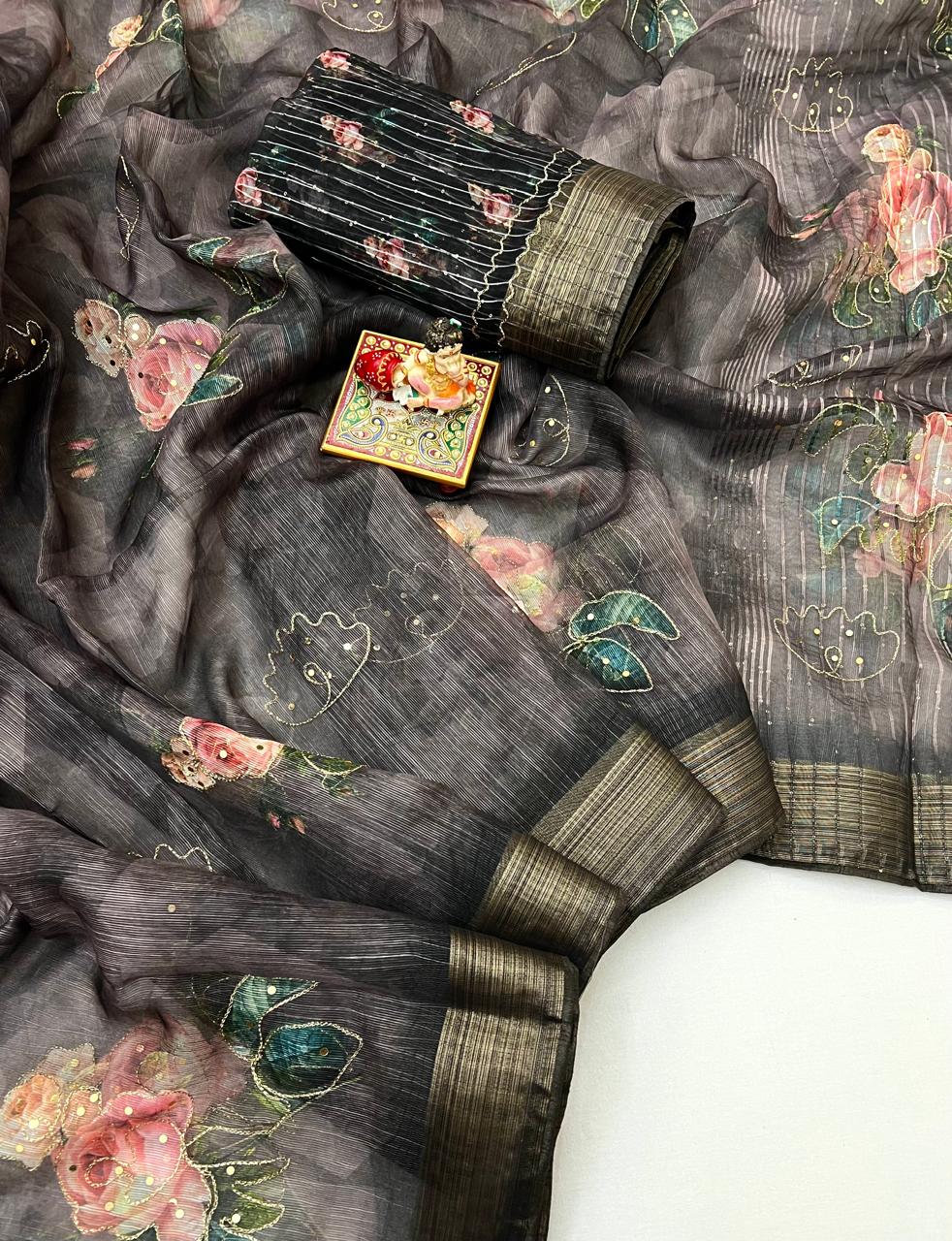
The Royal Raj Gharana Mirror Work Designer Saree can support a fort-inspired or palace-evening palette when mirror work is treated as a controlled reflective accent. Choose understated earrings if the saree already catches light across the body, and avoid adding a heavily embellished waist belt unless the blouse is exceptionally plain.
Which silhouettes feel architectural without becoming costume-like?
Architectural wedding silhouettes rely on clean proportion, deliberate volume and a visible line from shoulder to hem. A saree with a firm pleat, a long jacket over a narrow base, or a structured blouse with a softer drape can create that effect more successfully than exaggerated historical shapes.
A saree is a strong choice when the border, pallu or pleat arrangement provides the main geometry. Keep the pallu long and orderly for a vertical effect, or pin it over one shoulder with broad, even pleats to echo the repetition of arches. Avoid excessive puff sleeves, pointed headpieces and multiple layers of ornamental fabric, which can push a heritage reference toward costume.
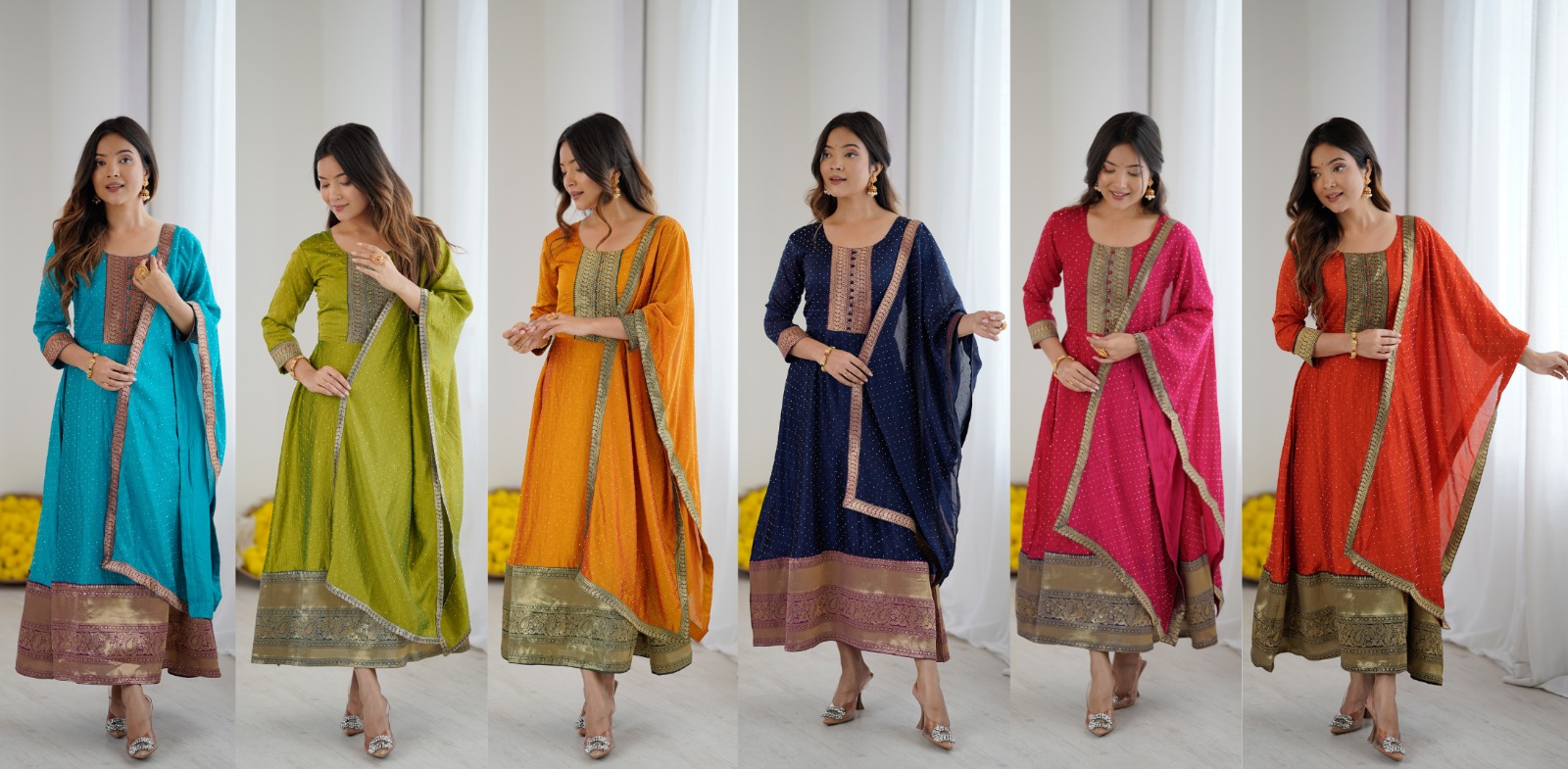
A gown set works when the skirt or gown has a clear column, A-line or softly flared shape. The Teal Blue Vichitra Silk Embroidered Gown Set Online Copy Title introduces a saturated stone-like colour that can be balanced with minimal jewellery and a neutral clutch. The Taupe Beige Vichitra Silk Embroidered Gown Set Online offers a quieter base for statement earrings or a coloured dupatta.
A dupatta should have a job beyond coverage. A narrow border can frame the shoulders, a longer fall can create a vertical architectural line, and a translucent fabric can suggest the filtered light of a jali screen. The vichitra Jacquard Woven Gown Dupatta Set is useful for this layered approach because the woven surface can supply interest without requiring a large amount of additional jewellery.
How can different wedding events use the Agra heritage idea?
The most effective event dressing changes the intensity of the reference, not the entire visual language. Day ceremonies need lighter surfaces and clearer colours, while evening receptions can carry denser weave, reflective work and deeper tones.
Haldi ceremony
A Haldi ceremony outfit should use breathable fabric, a secure drape and colour that can tolerate turmeric stains. Mustard, marigold, muted orange and ivory work naturally with the sandstone direction, while a pre-stitched or firmly pinned drape reduces handling during rituals.
Keep metallic embroidery moderate at Haldi because turmeric, water and outdoor movement can affect delicate finishes. Small earrings, a low bun or braid and flat footwear are more practical than heavy pieces that require constant adjustment.
Mehendi and sangeet
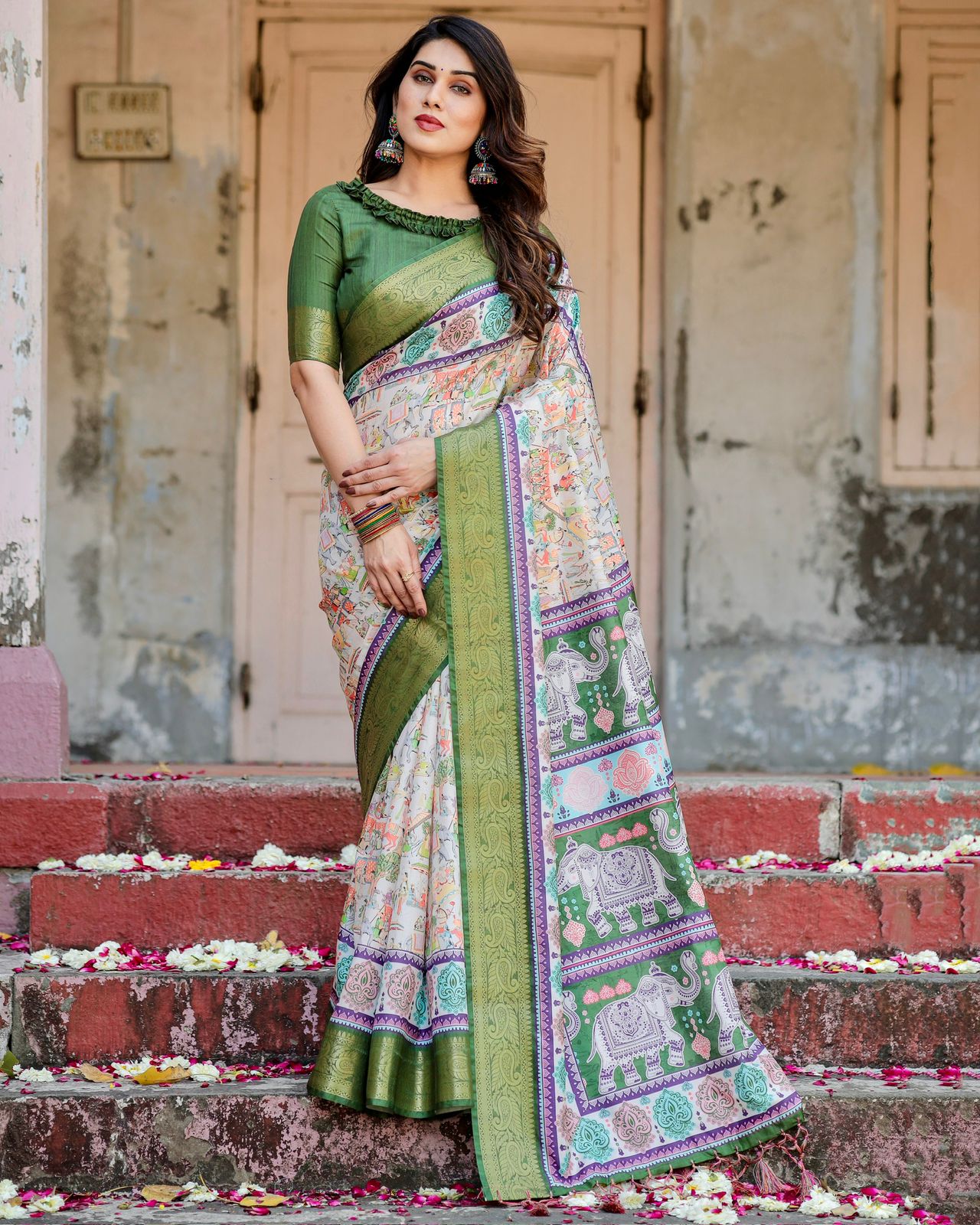
Mehendi and sangeet dressing can carry stronger colour contrast and movement. The Beige Tribal Elephant Soft Silk Saree with Zari Border gives an useful example of how a warm neutral and zari can create heritage character without relying on a literal Mughal print.
For a sangeet, test the outfit while walking, sitting and raising both arms before finalising the blouse fit. A dance-friendly saree needs secure shoulder pleats, a comfortable underlayer and a hem that clears the floor by roughly 1 to 2 centimetres when worn with the chosen footwear.
Wedding ceremony
A wedding ceremony outfit benefits from a stronger base fabric and a clearly controlled focal point. Banarasi silk, jacquard silk, soft silk and structured Vichitra silk can all work, provided the blouse, border and jewellery don't compete equally for attention.
The Beige Tribal Elephant Soft Silk Saree with Zari Border can suit a daytime ceremony when paired with a fitted blouse in rust, dark green or antique gold. For a more formal direction, the Royal Raj Gharana Mirror Work Designer Saree brings evening reflection, but the rest of the styling should remain edited.
Reception
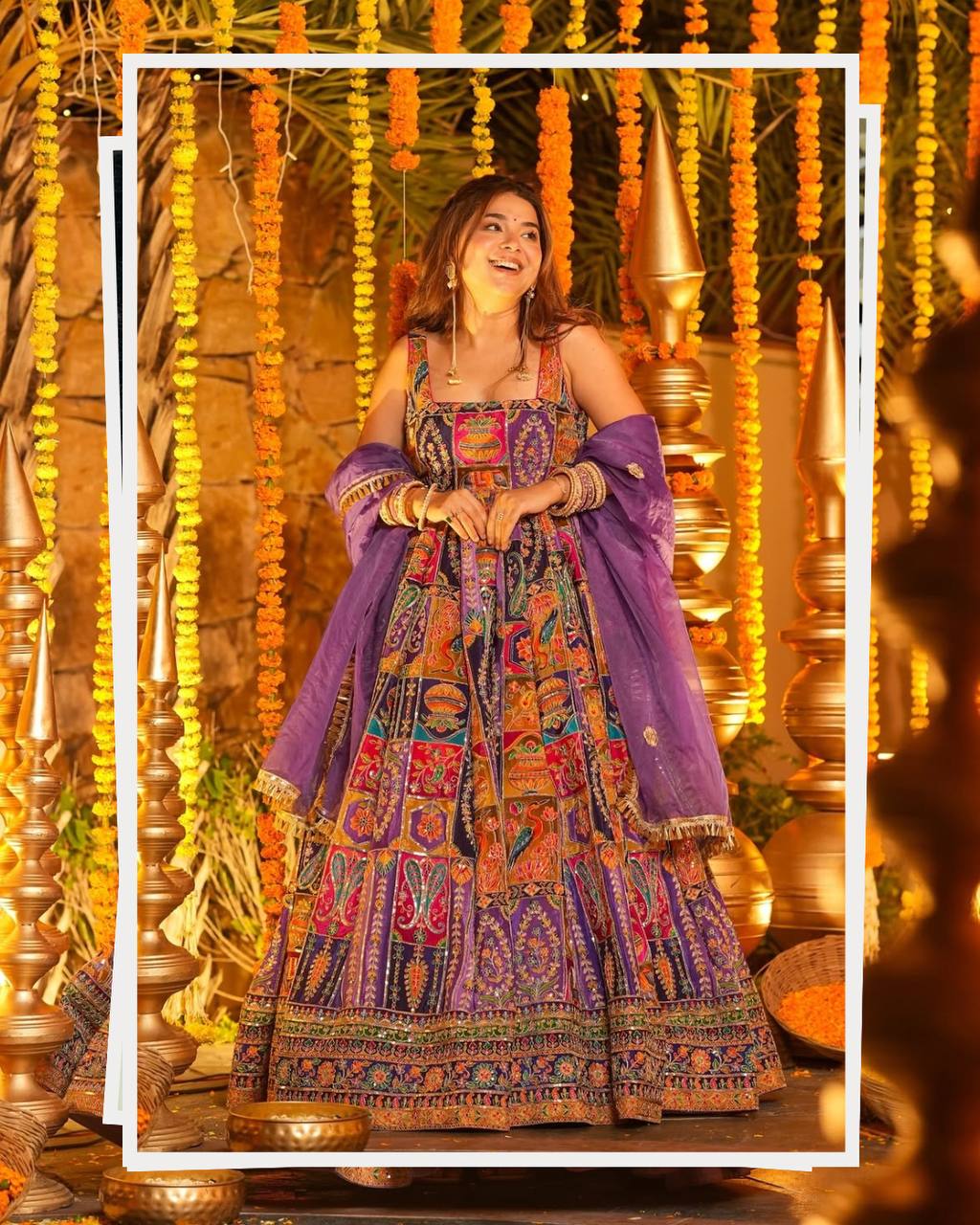
A reception allows the architectural idea to become more polished and dramatic through deeper colour, sharper tailoring or a controlled shine. The Multicolor Embroidered Crepe Maxi Suit Set for Festive Wear can work when the embroidery is treated as the main artwork and the accessories are selected from one colour already present in the garment.
What fabric and accessory choices keep heritage dressing refined?
Silk, jacquard, Banarasi weave, soft silk, crepe and Vichitra silk provide different versions of heritage texture. Choose the fabric according to movement, weather, event duration and the amount of surface embellishment already present.
Banarasi silk gives a formal woven sheen and works well for ceremony sarees, but a heavily zari-rich Banarasi saree may feel warm and weighty in an outdoor summer wedding. Chanderi is lighter and more transparent, making it suitable for a daytime dupatta or a delicate overlay, although Chanderi may need a lining or careful handling when paired with heavy embroidery.
Vichitra silk can create a smooth, substantial fall for gowns and dupattas. Crepe moves easily and photographs cleanly, making it useful for a reception suit or maxi silhouette. Jacquard adds pattern through the weave itself, which means jewellery can be reduced without making the outfit feel plain.
Zari should support the architectural reference instead of covering every surface. Antique gold zari suits sandstone, mustard and warm ivory; silver zari works with marble, grey and blue; and muted champagne zari bridges the two. Choose one dominant metal for jewellery, footwear and handbag whenever possible.
Jewellery should echo scale rather than copy shape. Long earrings can reflect vertical arches, a fine choker can frame a high neckline, and a geometric ring can reference jali pattern. A traditional kundan or polki set remains appropriate, but pair a detailed necklace with simpler earrings if the outfit already contains zari, mirror work or dense embroidery.
How do you prevent an Agra-inspired outfit from looking theatrical?
An Agra-inspired outfit avoids costume through restraint, contemporary fit and selective referencing. Use no more than three obvious heritage cues: for example, a sandstone palette, an arch-shaped neckline and a small geometric border.
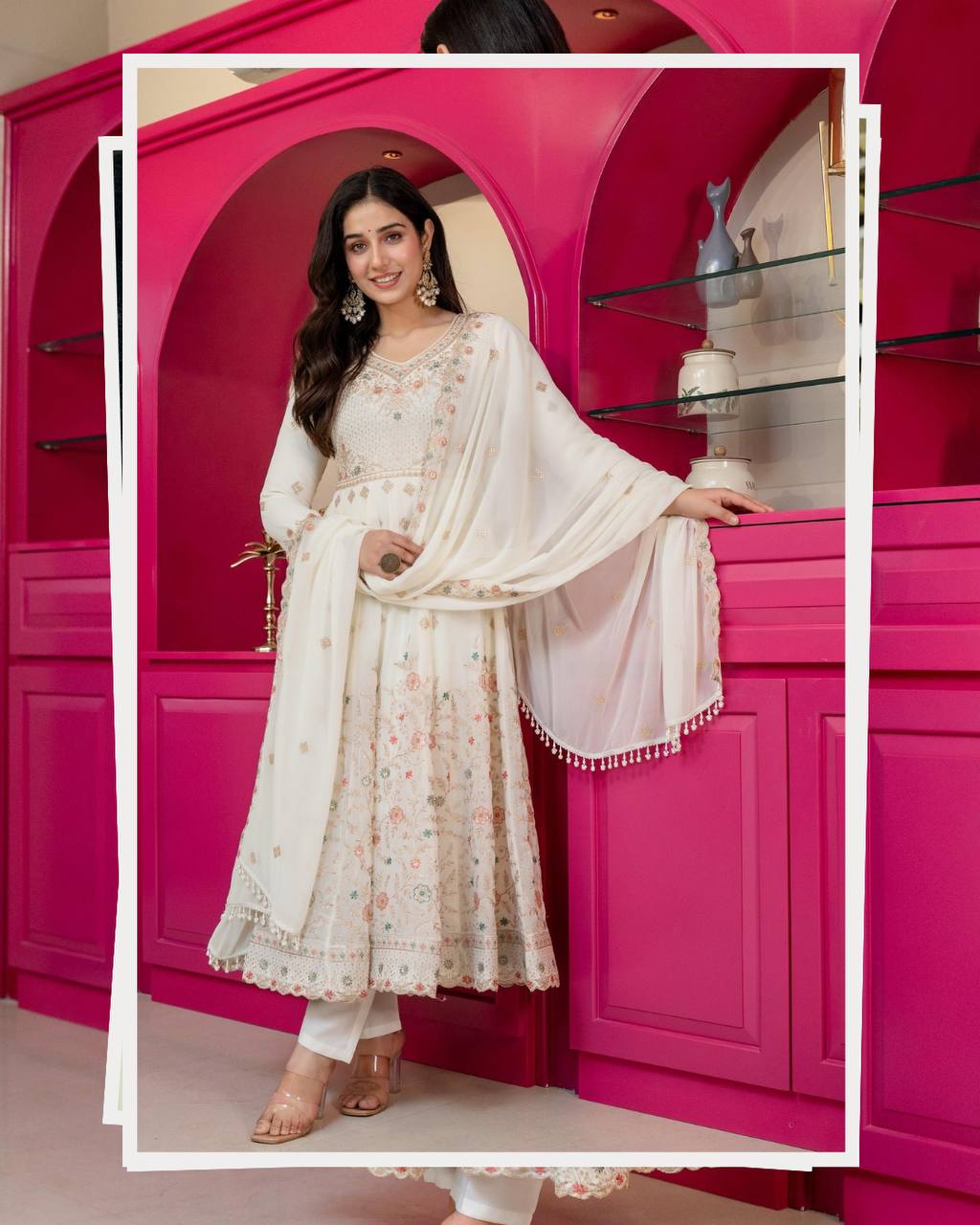
Fit is equally important. A blouse should allow the arms to move without pulling across the bust, a gown should skim rather than drag, and a dupatta should remain secure through greetings, photographs and dining. Historical references feel up-to-date when the garment fits the wearer's present-day movements.
Scale also controls the result. A small jali-inspired border can look refined, while a large printed Taj Mahal across the entire pallu can become literal. A single architectural motif may be memorable; repeating the motif on the blouse, jewellery, clutch and shoes usually weakens the outfit.
Makeup and hair can remain contemporary. A clean low bun, soft waves or a braided style with one ornament is enough to support a heritage look. Avoid combining heavy temple jewellery, a dramatic maang tikka, an ornate head veil and a heavily embellished blouse unless the wedding's dress code specifically calls for maximal ceremonial dressing.
A practical checklist for building the look
Begin by choosing the event, the time of day and the amount of movement required. A daytime ceremony in Agra's heat calls for lighter layers and breathable lining, while an evening banquet can support heavier jacquard, zari and mirror work.
- Select one architectural source: choose marble, sandstone, jali, arches, pietra dura or charbagh geometry.
- Build a three-colour palette: use one base, one accent and one metallic finish.
- Choose the garment line: decide whether the outfit needs a column, a controlled flare, a crisp saree pleat or a long vertical dupatta.
- Check the fabric weight: consider heat, venue duration, walking distance and whether the outfit will be worn for photographs before the ceremony.
- Edit the accessories: allow one item to be the focal point and keep the remaining pieces supportive.
- Test the complete outfit: sit, walk, raise the arms and take photographs in both daylight and warm indoor light.
Agra Heritage Wedding Dressing Inspired by Architecture Not Costume becomes most successful when the reference can be explained in one sentence but doesn't need to be announced. A guest should notice the disciplined colour, balanced texture and elegant proportion before identifying the Taj Mahal, Agra Fort or Mughal garden influence.
Practical Questions About Agra-Inspired Heritage Wedding Dressing
How can I dress in an Agra heritage style without looking like I am wearing a costume?
Use only two or three references, such as a sandstone palette, a jali-inspired border and antique zari. Keep the fit contemporary, avoid literal monument prints and let one garment detail carry the heritage message.
Which colours create an Agra-inspired wedding outfit?
Ivory, pearl, blush, rust, terracotta, mustard, deep red, lapis blue, jade and antique gold create strong Agra-inspired combinations. Use one base colour, one accent colour and one metallic finish instead of combining every architectural shade.
Can I wear a saree for an Agra heritage wedding theme?
Yes, a saree is one of the most adaptable choices because its border, pallu and pleats can express architectural rhythm. Banarasi silk, jacquard silk and soft silk work particularly well when the blouse and jewellery remain comparatively restrained.
What should I wear to a Haldi ceremony with a heritage theme?
Choose a breathable, secure outfit in mustard, marigold, ivory, rust or muted orange. A firmly pinned saree or a comfortable suit is more practical than a delicate, heavily embellished layer because Haldi ceremonies involve movement, turmeric and water.
Which jewellery suits Mughal or Agra-inspired wedding dressing?
Kundan, polki, geometric gold, antique zari and carefully chosen mirror or stone accents can complement the theme. Match the jewellery scale to the outfit and avoid wearing a heavy necklace, large earrings and elaborate head jewellery together when the garment is already ornate.
How do I style an Agra-inspired outfit for a summer wedding?
Choose lighter layers, breathable lining and fabrics such as Chanderi, lightweight silk blends or fluid crepe where appropriate. Keep the dupatta manageable, reduce dense metallic work and test the complete outfit outdoors before the event.