A wedding wardrobe for guests staying only one night has to solve three problems at once: looking appropriately dressed, staying comfortable for long ceremonies and fitting everything into a small bag. The most efficient approach isn't packing several complete outfits. The most efficient approach is choosing one primary outfit, one adaptable second layer or change, and accessories that alter the mood without taking much space.
An one-night wedding visit may include travel, a welcome meal, a Haldi ceremony, a daytime ceremony or an evening reception. The invitation and schedule should decide the clothing plan before colour, embroidery or trend becomes the deciding factor. A carefully selected Anarkali suit, saree or sharara can cover more than one event when styling, jewellery and footwear are planned together.
How to plan a wedding wardrobe for guests staying only one night
Plan the wardrobe around the wedding event you'll attend for the longest time, then add one compact outfit element for the shorter gathering.
Start with a simple schedule written in order: departure, arrival, informal gathering, ceremony, reception and return journey. Mark each segment as travel, daytime, evening or formal. A guest attending only an evening reception can usually carry one main outfit and one travel look. A guest attending a Haldi ceremony followed by a wedding reception needs an outfit that can tolerate movement, turmeric stains and a quick change of accessories.
Choose one of three practical formats. The first format is a single full outfit with different jewellery for each event. The second format is a formal outfit plus a lightweight travel or daytime suit. The third format is a coordinated separates plan, such as a plain kurta with a festive dupatta and a second pair of trousers. The first format saves the most space, while the third format offers the most flexibility.
An useful rule is to pack no more than two pairs of footwear, one handbag and one jewellery case. Heavy bridal-style clothing rarely earns its space in an one-night bag unless the invitation specifically calls for black tie, sangeet glamour or a very formal dress code. Wedding guest dressing should look celebratory without competing with the couple.
Which outfit should be the main wedding guest look?
The main outfit should match the ceremony's formality, the time of day and the amount of walking or sitting involved.
For an evening reception
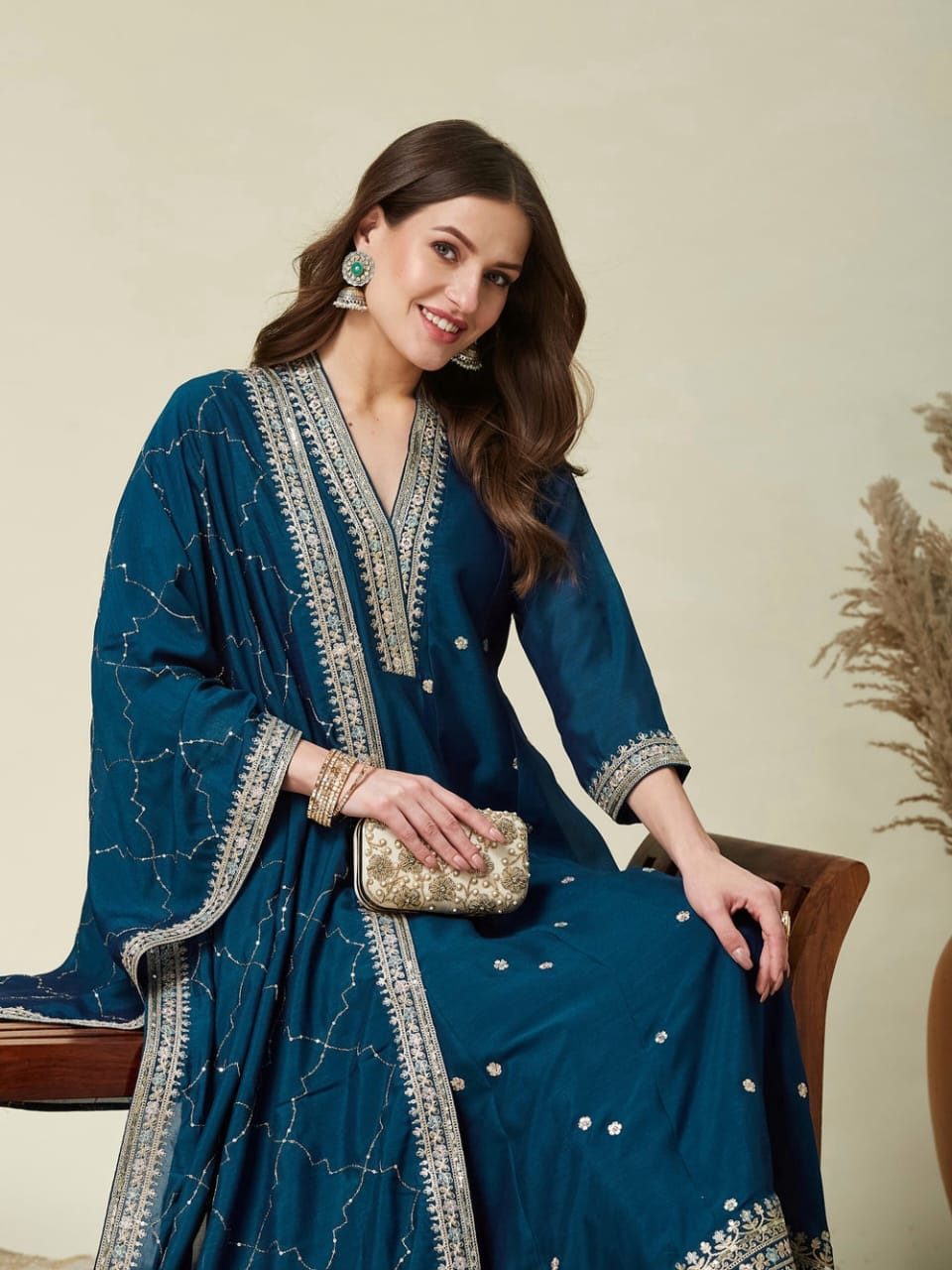
An embroidered Anarkali, sharara set or silk saree works well for an evening reception because each style creates occasion impact without requiring many extra layers. The Teal Blue Vichitra Silk Embroidered Gown Set Online Copy Title gives a gown-like silhouette for guests who want a single-piece appearance with a coordinated finish. Teal blue photographs well under warm indoor lighting and works with silver, diamond-look or polished kundan accessories.
The Royal Blue Vichitra Silk Embroidered Anarkali Suit Set provides another strong evening option. Vichitra silk has a structured fall and a subtle sheen, so the outfit can look formal without the bulk of a heavily layered lehenga. Pair the suit with low block heels, compact earrings and a small clutch rather than carrying a second bag for jewellery or cosmetics.
For a daytime ceremony
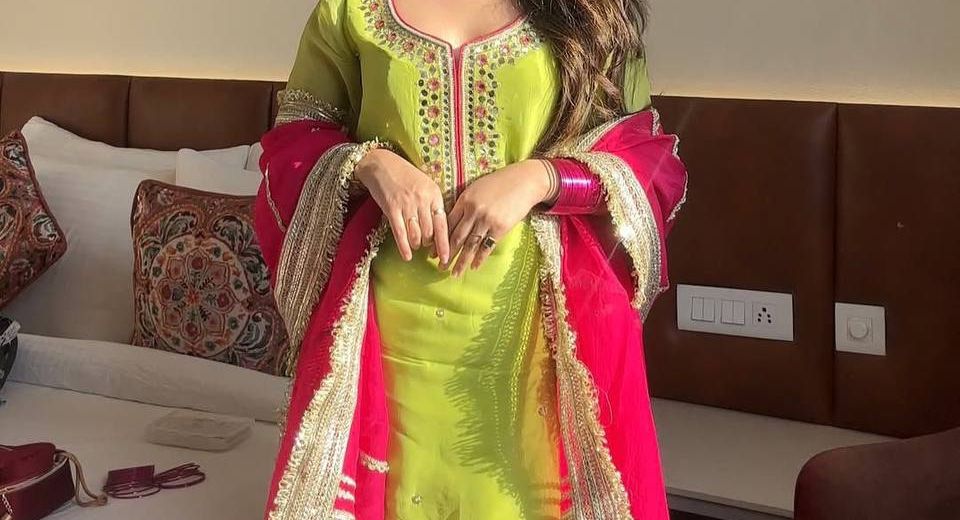
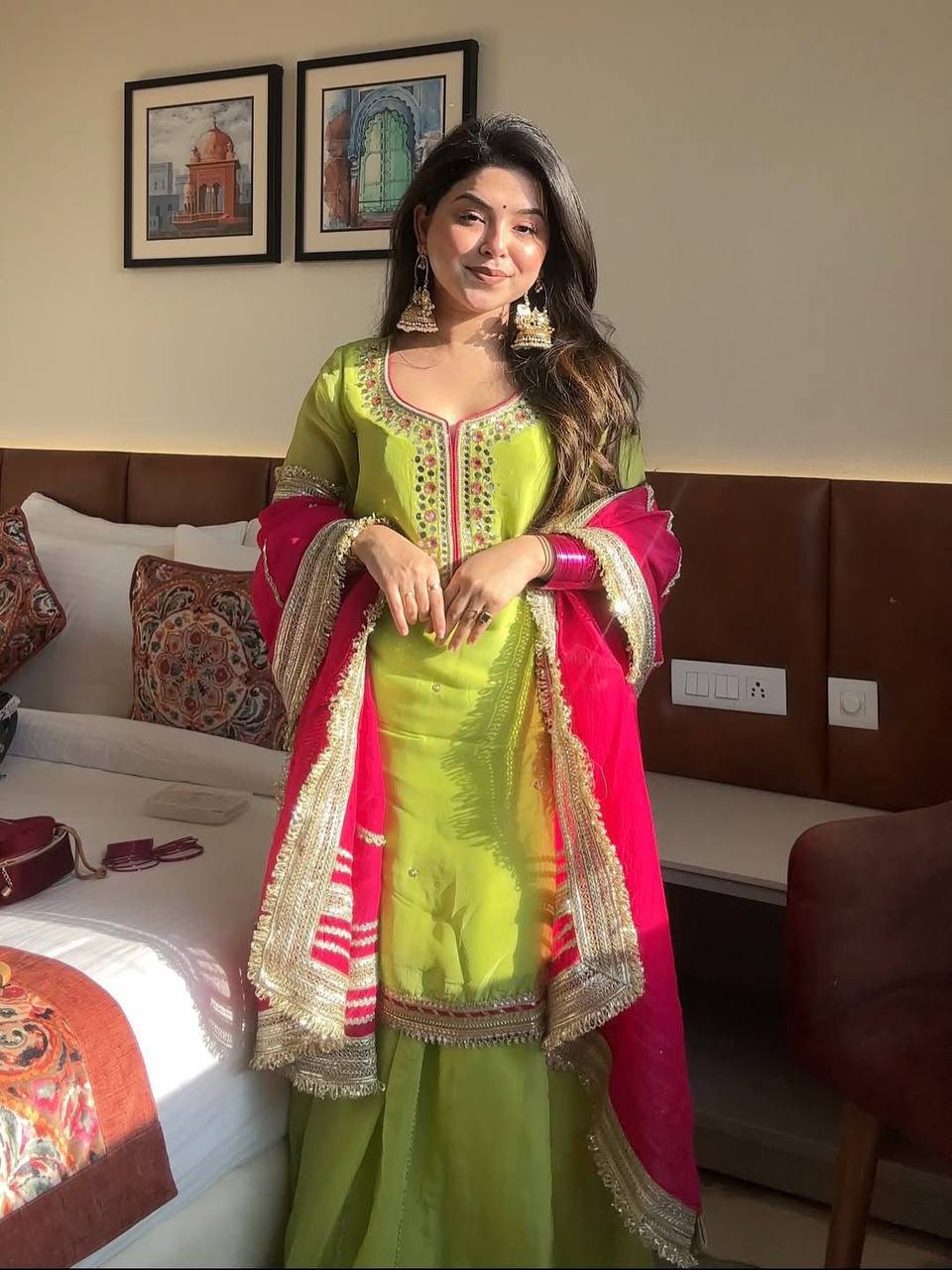
A daytime wedding outfit should use breathable construction, moderate embellishment and colours that remain comfortable in sunlight. The Parrot Green Embroidered Readymade Sharara Suit Set suits a festive daytime setting because parrot green has visual brightness without relying entirely on metallic shine. Flat embellished sandals can replace heels when the venue includes grass, courtyards or uneven pathways.
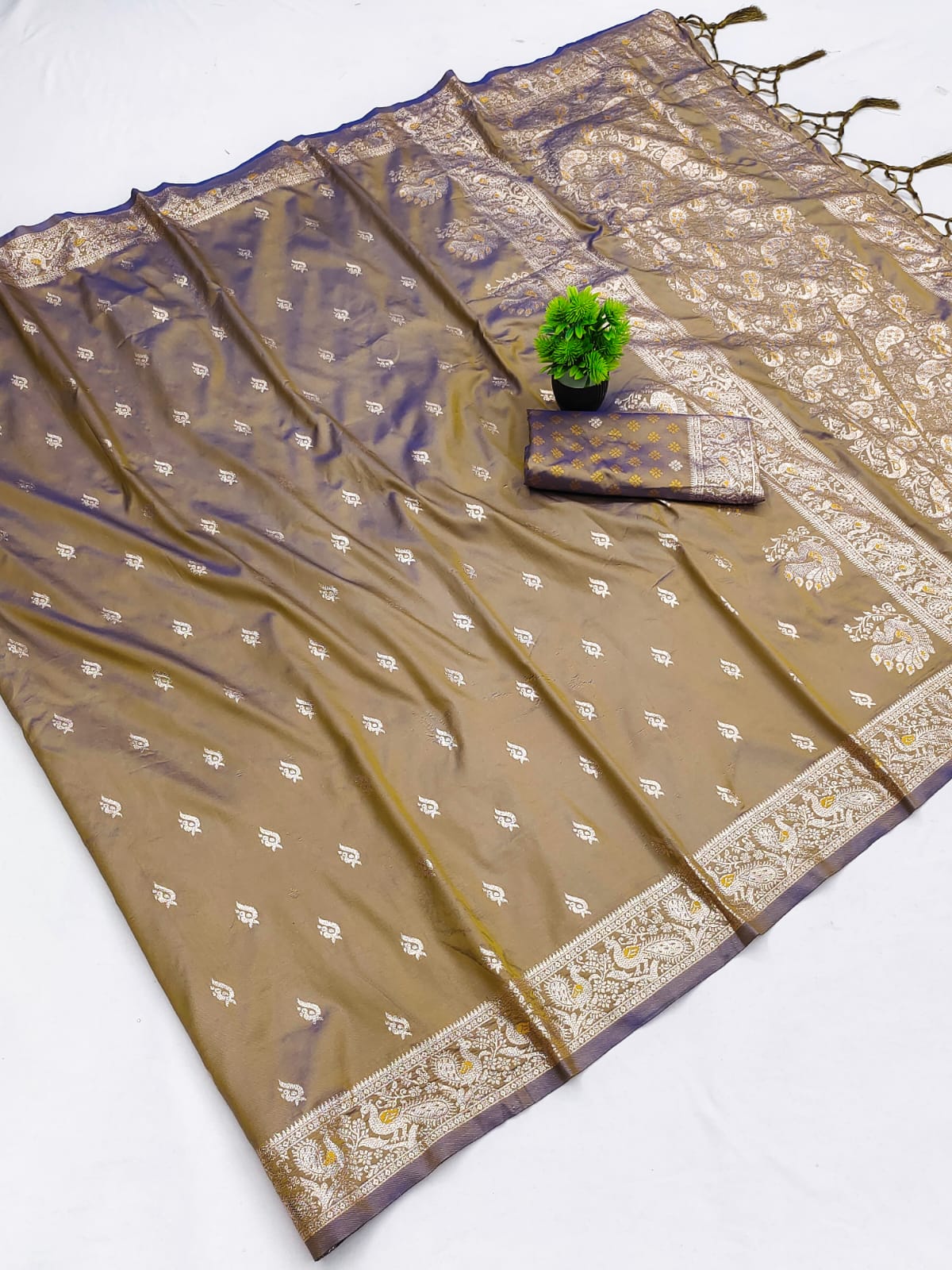
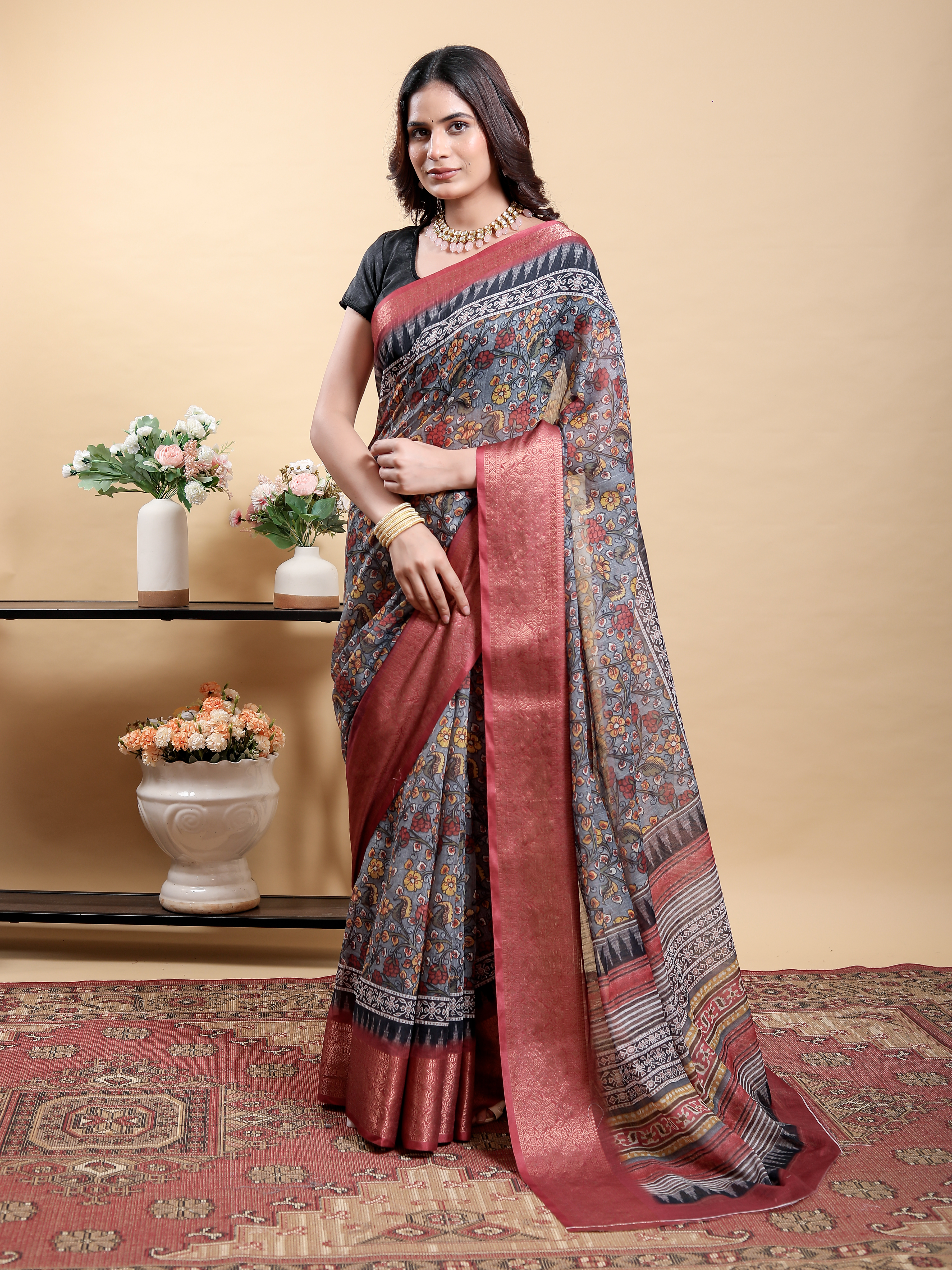
A saree remains practical when the drape is familiar and the fabric isn't excessively slippery. The Wine Tissue Handloom Cotton Saree with Zari & Floral Prints combines handloom cotton texture with zari and floral patterning, making it suitable for a guest who wants traditional character without a very heavy silk weave. A pre-pleated drape or pleats secured with discreet safety pins can reduce dressing time in a hotel room.
For a Haldi ceremony or informal gathering
A washable, comfortable suit is the safest choice for a Haldi ceremony because turmeric paste can leave permanent yellow marks on delicate fabrics. The Rust Orange Embroidered Readymade Suit Set for Women brings a warm festive palette for a casual gathering, while a simple cotton or cotton-blend outfit is usually easier to move in than a formal gown.
Guests should avoid wearing a treasured Banarasi silk saree, pale tissue fabric or elaborate zari blouse to an event where colour, water and close contact are expected. A short one-night visit doesn't justify risking the most difficult garment to clean. Save delicate pieces for the ceremony or reception, where they can remain protected.
How many outfits and accessories should one night require?
Most guests need one main ethnic outfit, one travel outfit, one optional lightweight change and accessories that can be reused across both looks.
A compact packing formula can look like this:
- One formal outfit for the wedding ceremony or reception.
- One comfortable travel outfit that can also serve as a breakfast or departure look.
- One lightweight kurta, blouse or dupatta only if a second gathering requires a change.
- One pair of formal footwear and one pair of comfortable flats or sandals.
- One neutral clutch or sling bag.
- One jewellery pouch containing earrings, a bracelet, a ring and a hair accessory.
- One small emergency kit with safety pins, fashion tape, a stain-removal pen and two spare blouse hooks.
Accessory repetition doesn't look repetitive when the visual emphasis changes. Large jhumkas can make a simple suit feel festive, while delicate earrings can keep an embroidered Anarkali from appearing overdone. A contrasting dupatta can change the character of a plain kurta more effectively than carrying a complete second set.
Choose accessories by metal family rather than by single outfit. Gold-toned jewellery works with maroon, rust orange, parrot green and wine. Silver-toned jewellery complements teal blue, royal blue and cool black. A mixed-metal watch can bridge both groups when the wardrobe contains warm and cool colours.
Which fabrics travel well for a short wedding stay?
Crepe, georgette, Vichitra silk, cotton blends and carefully folded tissue fabrics generally travel better than very bulky velvet or heavily layered brocade.

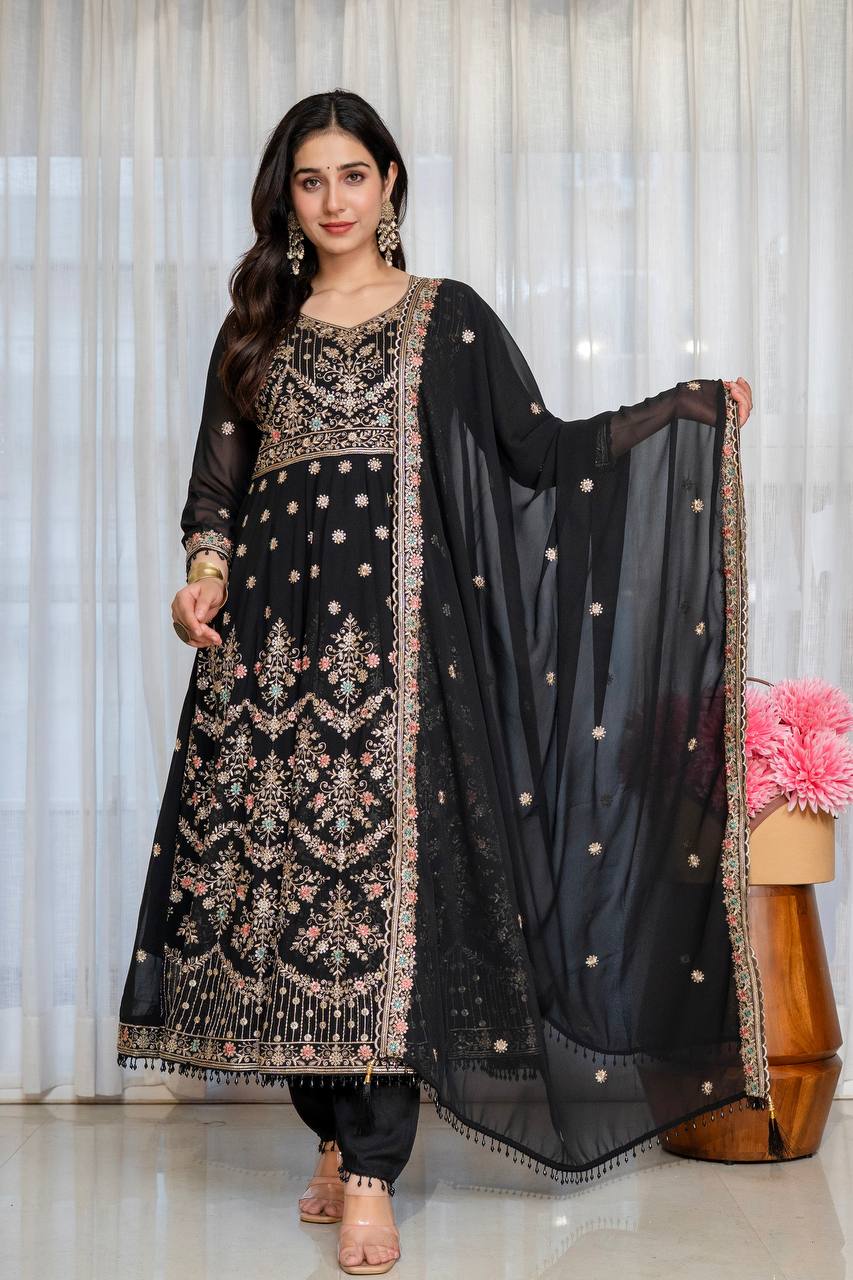
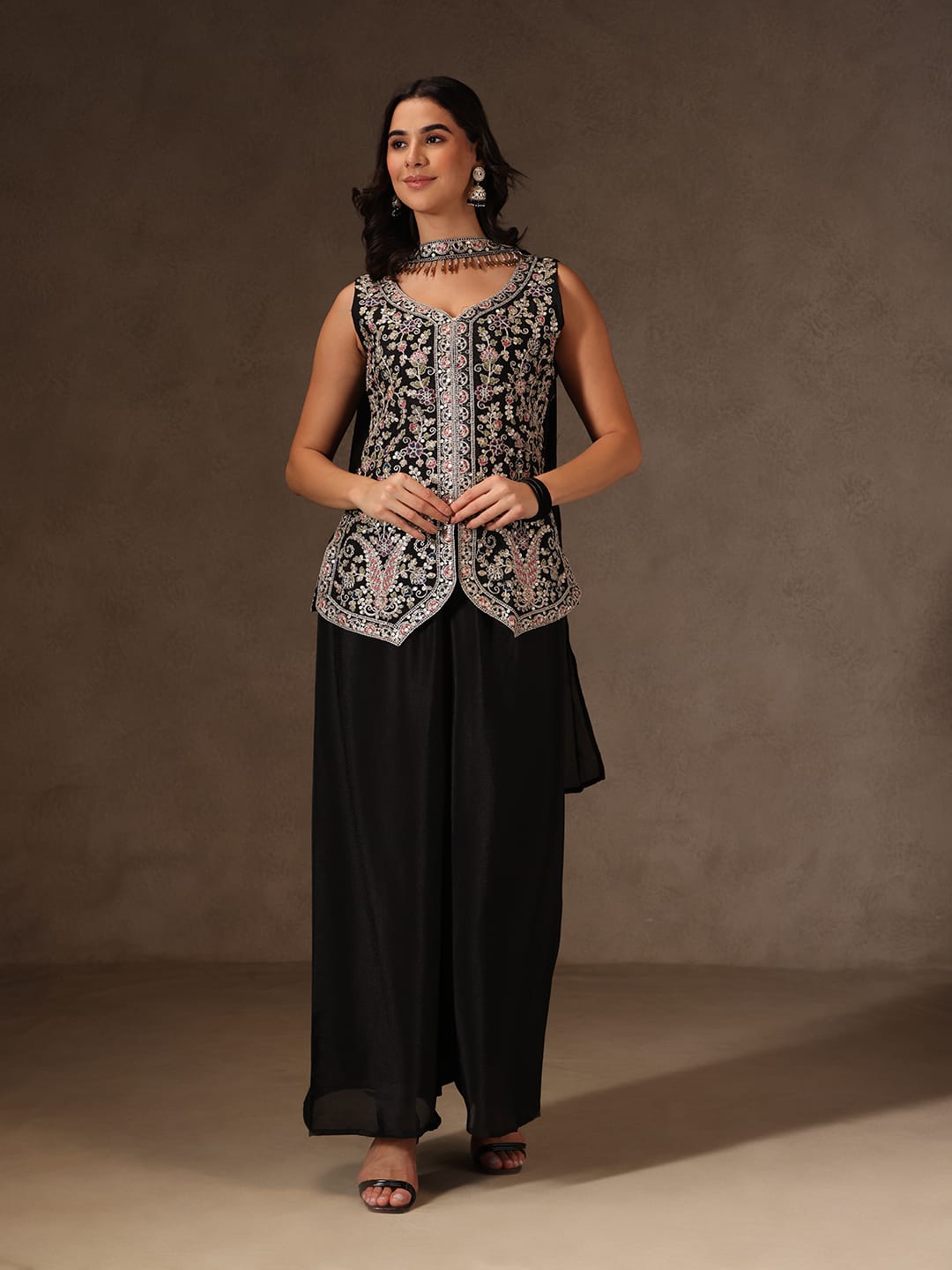
Georgette has a fluid fall and usually occupies less space than a stiff brocade skirt. The Black Chinon Sharara Set with Multicolour Embroidery for Women demonstrates why a flowing sharara can be a strong short-stay choice: the black base coordinates with multiple accessories, while multicolour embroidery supplies the festive detail. Fold the sharara along its pleats and place tissue paper between embellished sections to reduce snagging.
Chinon and georgette should not be compressed under heavy shoes because pressure can create deep creases in lightweight fabric. Roll soft garments around a central pouch, or fold them once along existing seams. Place embellished dupattas on top of plain garments so beads and zari don't catch on other textiles.
Vichitra silk usually holds shape better than very fluid georgette, but embroidery and metallic thread still need protection. The Black Anarkali Suit Set with Sequin Zari and Moti Lace Work should be packed inside a cotton garment bag or clean pillowcase. Sequins, zari and moti lace can snag when placed directly beside metal jewellery or textured footwear.
Handloom cotton is breathable and forgiving in warm weather, but zari borders can crease if tightly folded. The Wine Tissue Handloom Cotton Saree with Zari & Floral Prints should be folded with the pallu aligned and stored above heavier items. A saree can be refreshed with steam after arrival, but a hot iron should never be pressed directly onto zari.
How can one outfit work across different wedding events?
One outfit can serve multiple events when the silhouette stays constant and the accessories, layer and hairstyle change.
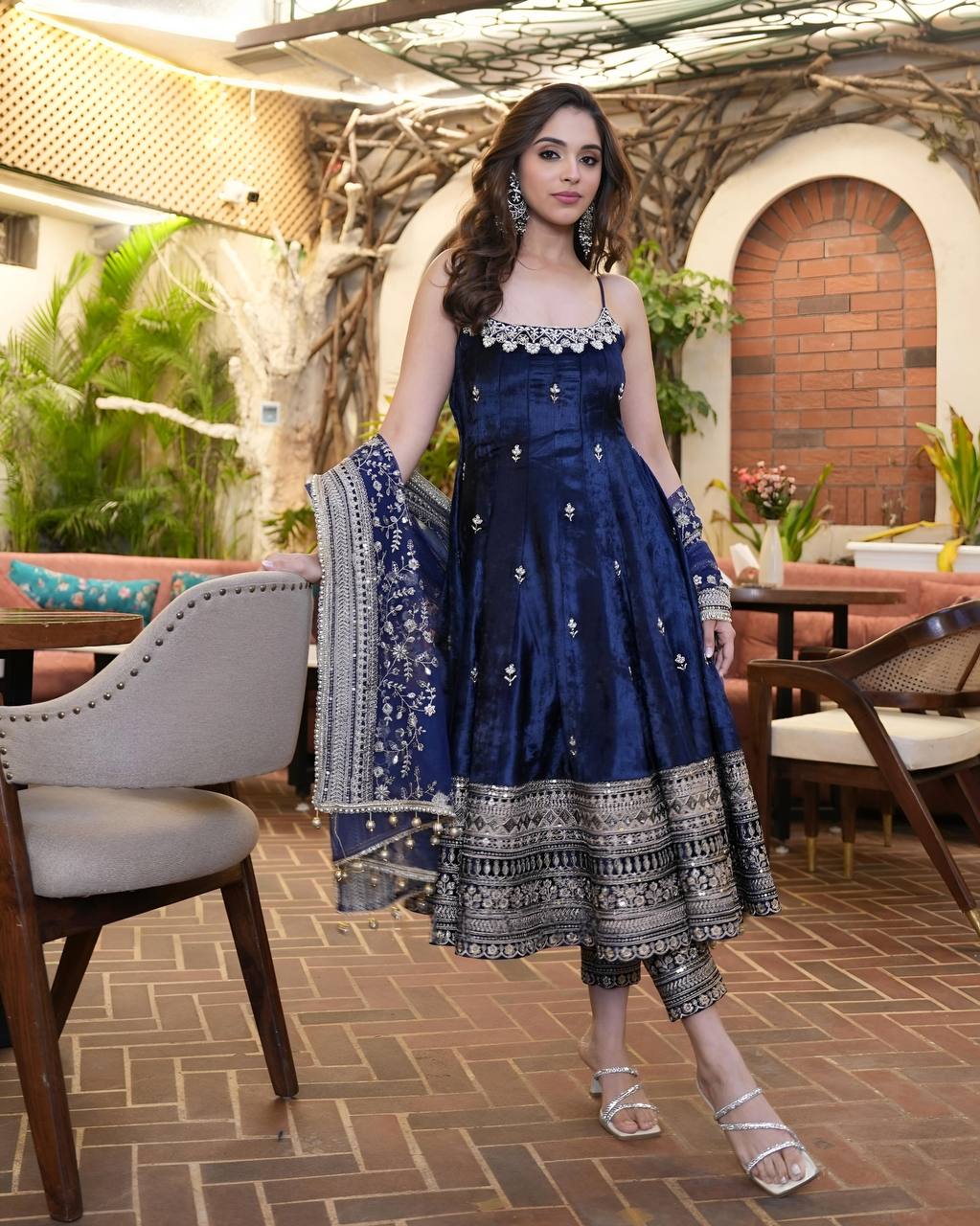
For example, an Anarkali worn with small earrings and flat sandals can work for hotel arrival or a daytime family gathering. The same Anarkali can become a reception look with chandbali earrings, a structured clutch and block heels. A lightweight embroidered dupatta can also create a visible change without adding the weight of another complete outfit.
A black base is particularly versatile for a short trip. The Black Georgette Kurta Set with Heavy Embroidery and Dupatta can be styled with metallic flats for a less formal gathering and with statement earrings and heels for an evening event. Black doesn't need to look severe when embroidery, colour accents, lipstick or a bright potli introduce contrast.
Layering should remain practical. A short jacket may add polish, but a large jacket can occupy more luggage space than a second dupatta. A matching stole, embroidered belt or reversible shawl often creates a similar styling shift with less weight. Guests should test the full outfit while seated, walking and climbing stairs before travelling.
Fit checks matter more during an one-night stay because there may be no time for alterations. Sit for ten minutes in the chosen outfit, raise both arms, walk quickly and check whether the neckline, waistband and hem remain secure. A garment that looks excellent on a hanger but restricts movement can make a long wedding day unnecessarily uncomfortable.
What should be packed to protect ethnic outfits?
Ethnic outfits stay in better condition when garments are separated by surface, weight and embellishment before entering the suitcase.
Use breathable cotton bags for silk, georgette, chiffon and embroidered garments. Plastic covers can trap moisture, particularly after a garment has been worn or steamed. Keep footwear in washable shoe bags and place shoes at the base or outer edge of the suitcase. Shoes should never rest directly on a saree, blouse or dupatta.
Pack cosmetics separately from clothing because foundation, hair oil and liquid perfume can permanently mark silk and zari. Carry perfume in a leakproof travel bottle and apply it before putting on the garment rather than spraying directly over embroidery. A stain-removal pen can help with fresh food marks, but vigorous rubbing can spread dye or damage metallic thread.
Pressing and steaming should follow fibre-specific care. Banarasi silk, Kanjeevaram silk and zari work should be handled with low heat, a pressing cloth or professional steaming when possible. Chanderi fabric can crease easily and may need gentle steaming from a distance. Polyester blends and many readymade suit fabrics are more forgiving, but the care label should still decide the temperature.
The Black Georgette Kurta Set with Heavy Embroidery and Dupatta, the Black Chinon Sharara Set with Multicolour Embroidery for Women and the Royal Blue Vichitra Silk Embroidered Anarkali Suit Set should be checked for loose threads before packing. A small thread snip is safer than pulling a loose strand. Keep spare hooks, matching thread and a needle in the emergency kit, but avoid attempting complex repairs in a rushed hotel room.
A final one-night wedding packing checklist
A successful short-stay wardrobe can be checked in five minutes before leaving home.
- Confirm the invitation dress code and the exact event timing.
- Select the main outfit based on ceremony formality, weather and movement.
- Choose a travel outfit that can be worn again on the return journey.
- Test the complete main look, including blouse, inner layer, footwear and jewellery.
- Pack one flexible bag and no more than two pairs of footwear.
- Separate embellished garments from shoes, belts and metal accessories.
- Carry safety pins, fashion tape, a stain-removal pen and basic medication.
- Steam or press the outfit before departure if the fabric permits it.
A compact wardrobe can still feel generous when every item has more than one role. A blue Anarkali can move from ceremony to reception through jewellery changes, a black kurta can pair with contrasting accessories, and a saree can become the central statement without requiring a second formal outfit. Thoughtful selection creates more ease than a crowded suitcase.
Practical Questions About Packing for a One-Night Wedding
How many outfits should I pack for a one-night wedding?
Most guests need one formal wedding outfit, one comfortable travel outfit and one optional lightweight change. Add a second full outfit only when the schedule includes separate daytime and evening ceremonies with different dress expectations.
What should I wear to a Haldi ceremony as a wedding guest?
Choose a comfortable outfit in a washable cotton or cotton-blend fabric because turmeric can stain delicate textiles. Avoid pale silk, expensive zari and garments that require dry cleaning unless the hosts have arranged a protected indoor ceremony.
Is a saree practical for a short wedding trip?
A saree is practical when the fabric is manageable and the drape is familiar. Secure pleats with discreet pins, carry a comfortable blouse fit and choose handloom cotton, georgette or a less bulky silk instead of a very heavy layered weave.
Which wedding guest fabrics crease the least while travelling?
Vichitra silk, many crepe blends and some polyester-blend suit fabrics generally resist creasing better than lightweight chiffon or pure cotton. Embellished areas still need tissue paper or a cotton garment bag to prevent snags and pressure marks.
Can I wear the same outfit to two wedding events?
Yes, one outfit can work for two events when the accessories, footwear, hairstyle or dupatta change visibly. An Anarkali or saree can appear daytime-appropriate with flats and small earrings, then become reception-ready with statement jewellery and heels.
How should I pack zari and embroidered wedding clothes?
Place zari and embroidered garments inside breathable cotton bags, separate them from shoes and metal accessories, and avoid compressing them under heavy luggage. Fold along existing seams, use tissue paper between embellished layers and steam gently rather than ironing directly over zari.