

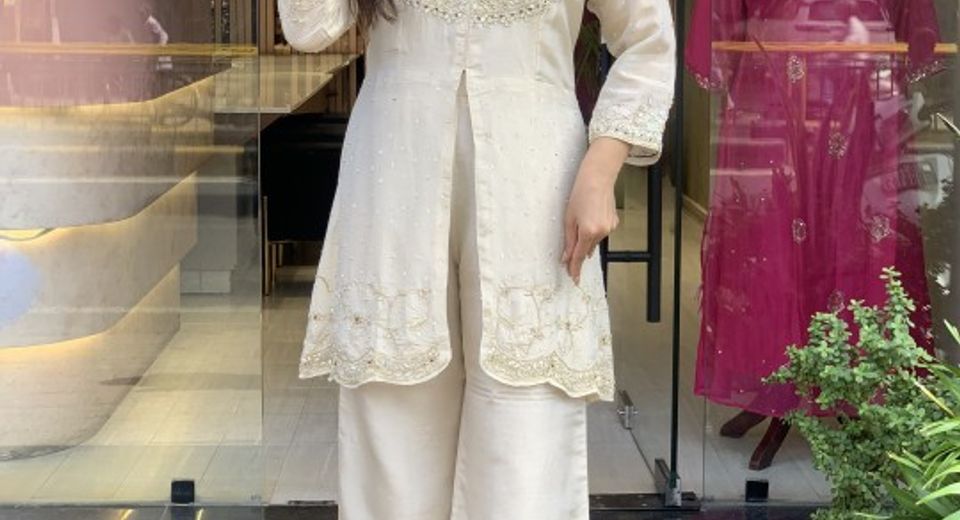
A well-cut A-line suit can look easy and elegant, but the result depends on more than the flare of the kurta. A-Line Salwar Suits Fabric Proportion and Styling Ideas become useful when you compare fabric weight, hemline width, trouser volume and dupatta scale together. Cotton creates a structured everyday silhouette, rayon gives a softer swing, and Chanderi adds a dressier lightness. The right combination can make a readymade suit look considered rather than merely convenient.
An A-line kurta is narrower near the shoulder and gradually widens towards the hem. The shape works because the eye follows a continuous diagonal line from the upper body to the low edge. Poorly matched fabric or excessive volume can interrupt that line, making the outfit look bulky or shapeless. A few measurable choices-such as kurta length, pant width and border placement-make styling far more predictable.
What defines a flattering A-line salwar suit?
A flattering A-line salwar suit has a controlled flare, a clean shoulder fit and enough space at the hem for movement without overwhelming the wearer. The shoulder seam should sit close to the natural shoulder, while the kurta should skim the bust and waist before opening gradually. A sudden flare from the bust creates a tent-like effect; a gradual flare creates the characteristic A-line profile.
Kurta length changes the visual proportion significantly. A knee-length kurta usually looks balanced with straight pants or narrow cigarette pants. A calf-length kurta works better with a slimmer lower half, such as tapered pants, because a wide palazzo below it can make the whole outfit look heavy. A shorter A-line kurti can accommodate more volume in the pants, particularly when the hem ends above the widest part of the calf.
The hem circumference also matters. A modest flare of approximately 2 to 2.5 metres gives a neat daytime appearance, while a wider flare of 3 metres or more creates a more festive, swaying effect. The exact measurement varies by size and pattern, but the principle remains consistent: a wider hem needs a calmer lower garment and simpler accessories.
A-Line Salwar Suits Fabric Proportion and Styling Ideas for everyday dressing
Cotton is the most reliable fabric for an everyday A-line suit because it's breathable, moderately structured and easy to style with practical bottoms. Cotton supports a crisp flare without clinging, making it suitable for commuting, classes, shopping and warm Indian weather. Cotton can shrink after washing, so checking the care label and allowing for a small post-wash change is important before choosing a close fit.
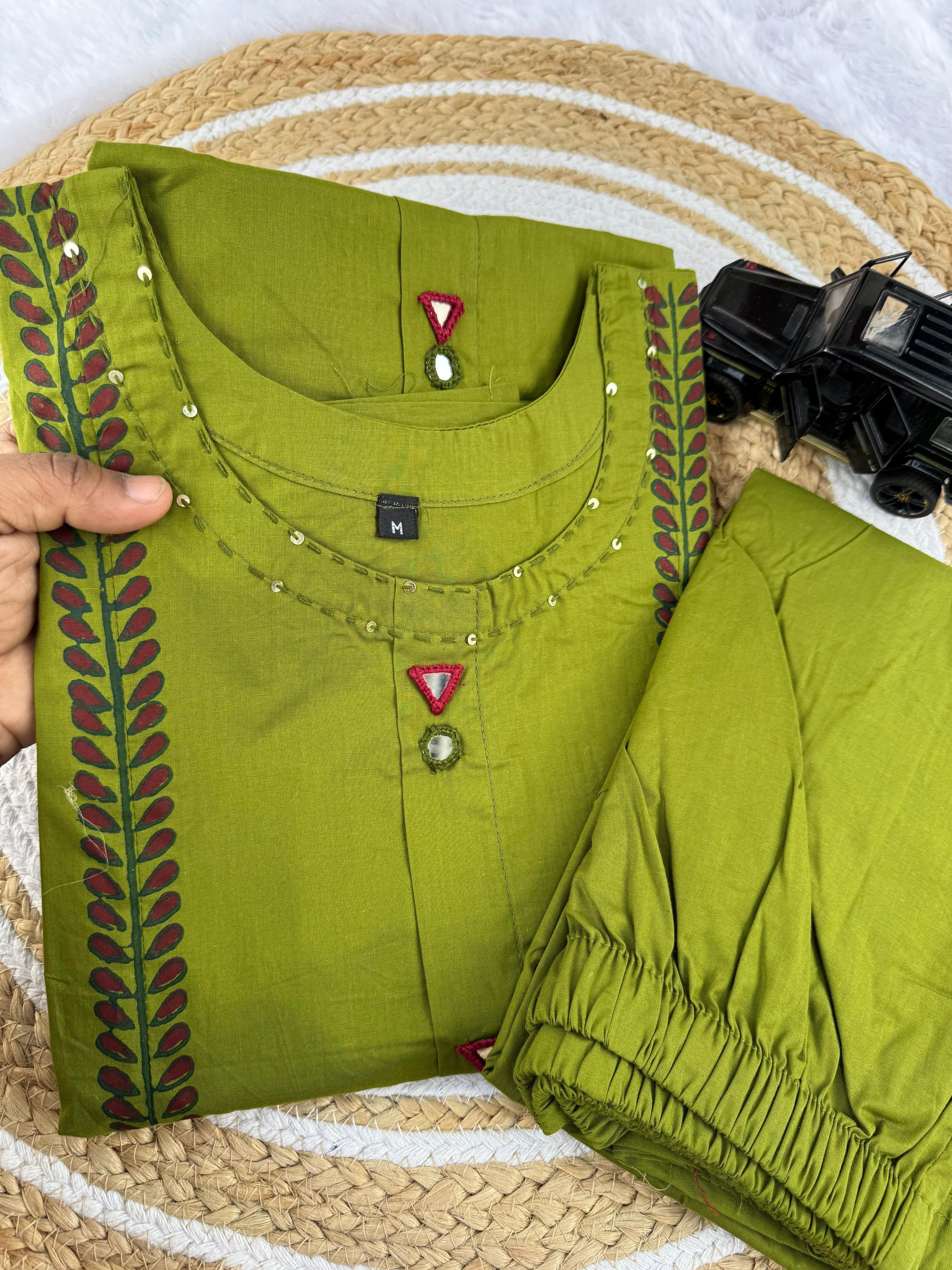
The Designer Cotton A-Line Kurti Pant Set with Mirror Work demonstrates how surface embellishment can remain wearable when the base fabric has structure. Mirror work draws attention to the upper body, so a simple pant and restrained jewellery preserve the outfit's balance. A low-profile sandal, a medium tote and small earrings keep the look functional for daytime use.
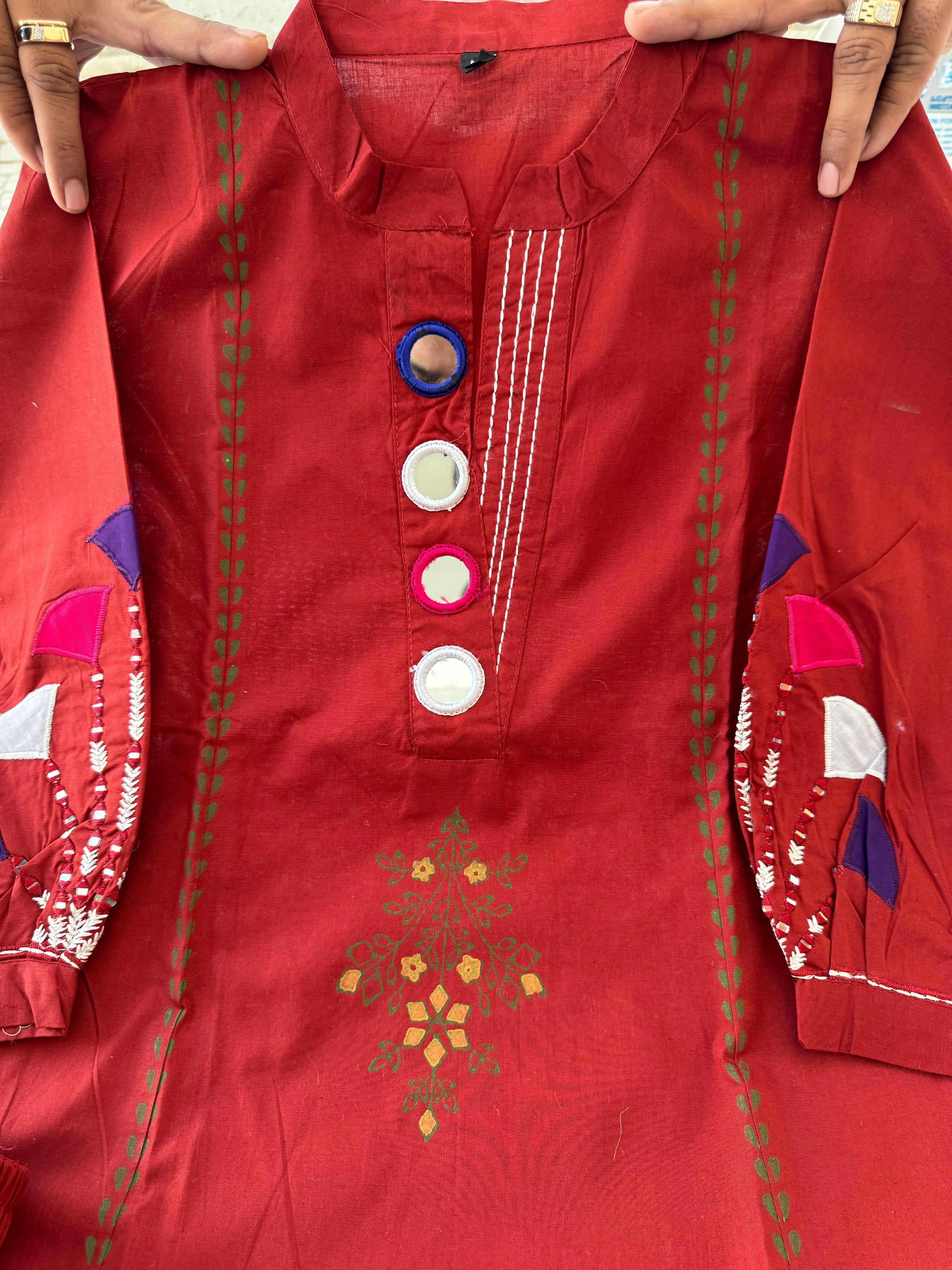
The Teal Cotton A-Line Kurti Pant Set with Handwork suits people who want colour to provide most of the visual impact. Teal already has depth, so gold-toned studs or oxidised silver earrings are enough; adding a heavily patterned dupatta may compete with the handwork. The Red Cotton A-Line Kurti Set with Mirror Work Design can be handled similarly, with neutral beige, tan or antique-gold accessories softening the intensity of red.
For a quieter palette, the Brown Cotton A-Line Kurti Pant Set with Mirror Work and the Olive Green A-Line Cotton Kurti Pant Set for Women show why earthy colours benefit from textural contrast. A woven jute bag, tan footwear or antique-finish metal jewellery adds definition without introducing a second dominant colour. These combinations are especially useful when the kurta has small motifs rather than a large all-over print.
Which fabric creates the best A-line fall?
Medium-weight cotton creates the most defined A-line fall, rayon creates the softest movement, and Chanderi creates the lightest formal appearance. No single fabric is universally best because the ideal choice depends on climate, occasion and the amount of flare in the pattern.
Cotton for structure and heat
Cotton works well when the hem needs to hold its shape. Handloom cotton, printed cotton and blended cotton can differ in thickness, so a lined cotton kurta may sit more smoothly than an unlined version with heavy embroidery. Cotton also absorbs moisture, but it may crease more readily than rayon or synthetic blends. Pressing the garment inside out on a medium setting protects mirror work and printed surfaces.
Rayon for fluid movement
Rayon gives an A-line kurta a fluid drape and a softer swing than cotton. The Cream Pink Printed Rayon Readymade Salwar Suit illustrates how a lighter, falling fabric pairs naturally with a straight or gently tapered bottom. Rayon can show cling around the hips if the lining is too thin, so checking opacity and wearing a smooth slip can improve the finish.
Rayon suits travel and semi-casual dressing because it resists the stiff appearance that some crisp fabrics can create. However, rayon should not be wrung aggressively after washing. Cold water, mild detergent and flat drying help reduce stretching, especially around the shoulder and side seams.
Chanderi for festive lightness
Chanderi is appropriate for an airy, occasion-ready A-line silhouette because its fine weave and subtle sheen make a simple cut appear more elevated. The Lavender Chanderi Kurta with Olive Embroidered Palazzo Suit uses contrast between a delicate lavender upper layer and an olive lower half, so the accessories should repeat one of those colours rather than introduce several new shades.
Chanderi may be more delicate than everyday cotton, particularly when embroidery or zari is present. Store Chanderi folded with a soft cotton cloth between embellished surfaces, and avoid hanging it for long periods if the fabric is lightweight. Direct perfume on the fabric can also mark delicate fibres and metallic details.
How should kurta, bottom and dupatta proportions work together?
The three pieces look balanced when only one element carries substantial volume or decoration. A wide A-line kurta generally needs a narrow or moderately straight bottom, while a palazzo can work when the kurta is shorter, lighter or less flared. A dupatta should frame the outfit without creating a second large triangle of volume across the torso.
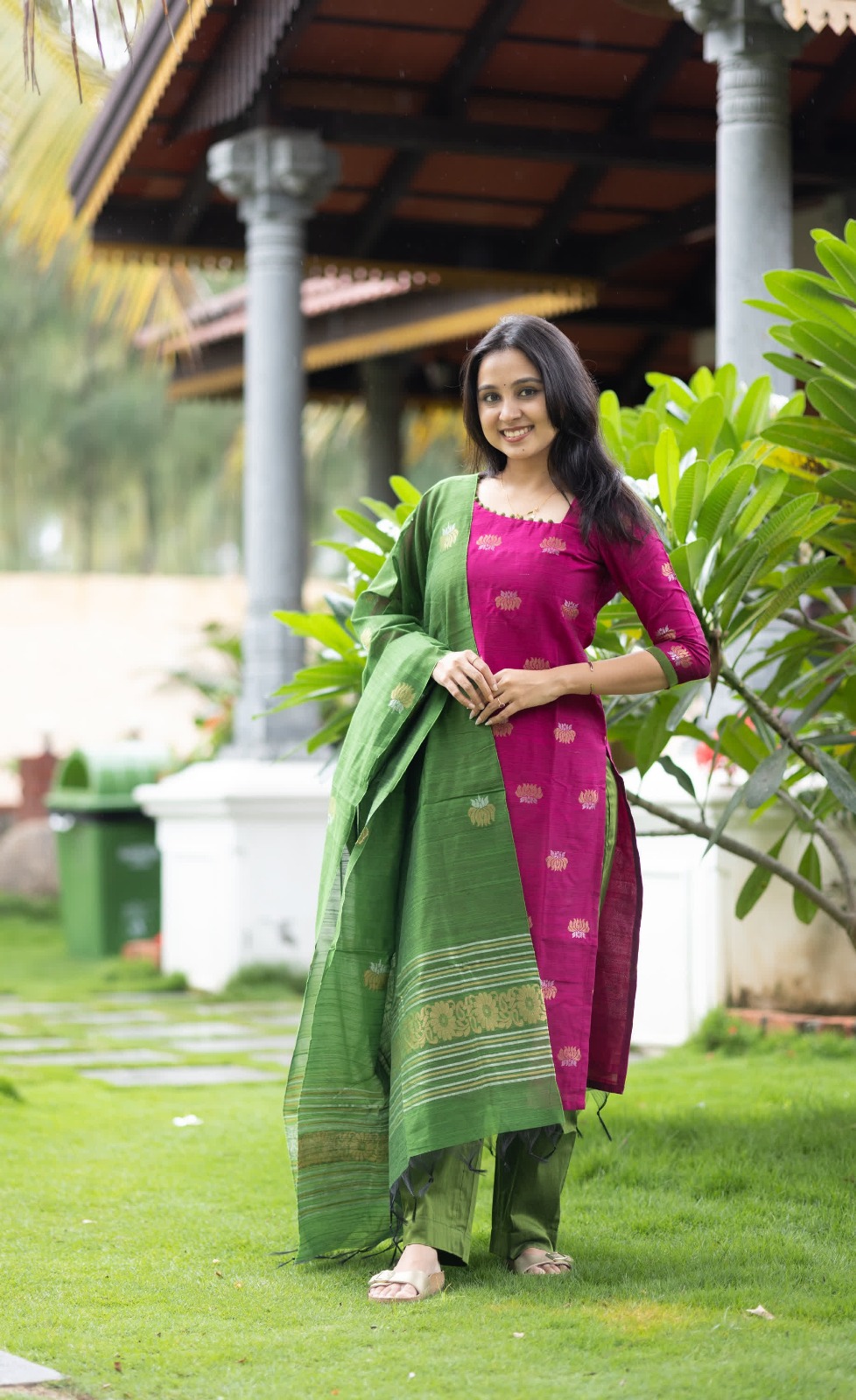
For a long A-line kurta, straight pants or cigarette pants create a long uninterrupted line. The hem of the pants should fall cleanly over the ankle without pooling. For a shorter kurta, palazzo pants can add contemporary movement, but the palazzo width should relate to the kurta flare. A very wide palazzo with a very wide hem may erase the waist and make the silhouette look wider than intended.
Dupatta width is another practical consideration. A narrow dupatta folded lengthwise works with a heavily embroidered neckline or mirror-work yoke. A wider dupatta is useful with a plain kurta because it supplies colour and pattern, but draping it over both shoulders can hide the A-line shape. One-shoulder draping or a relaxed side fall reveals more of the flare.
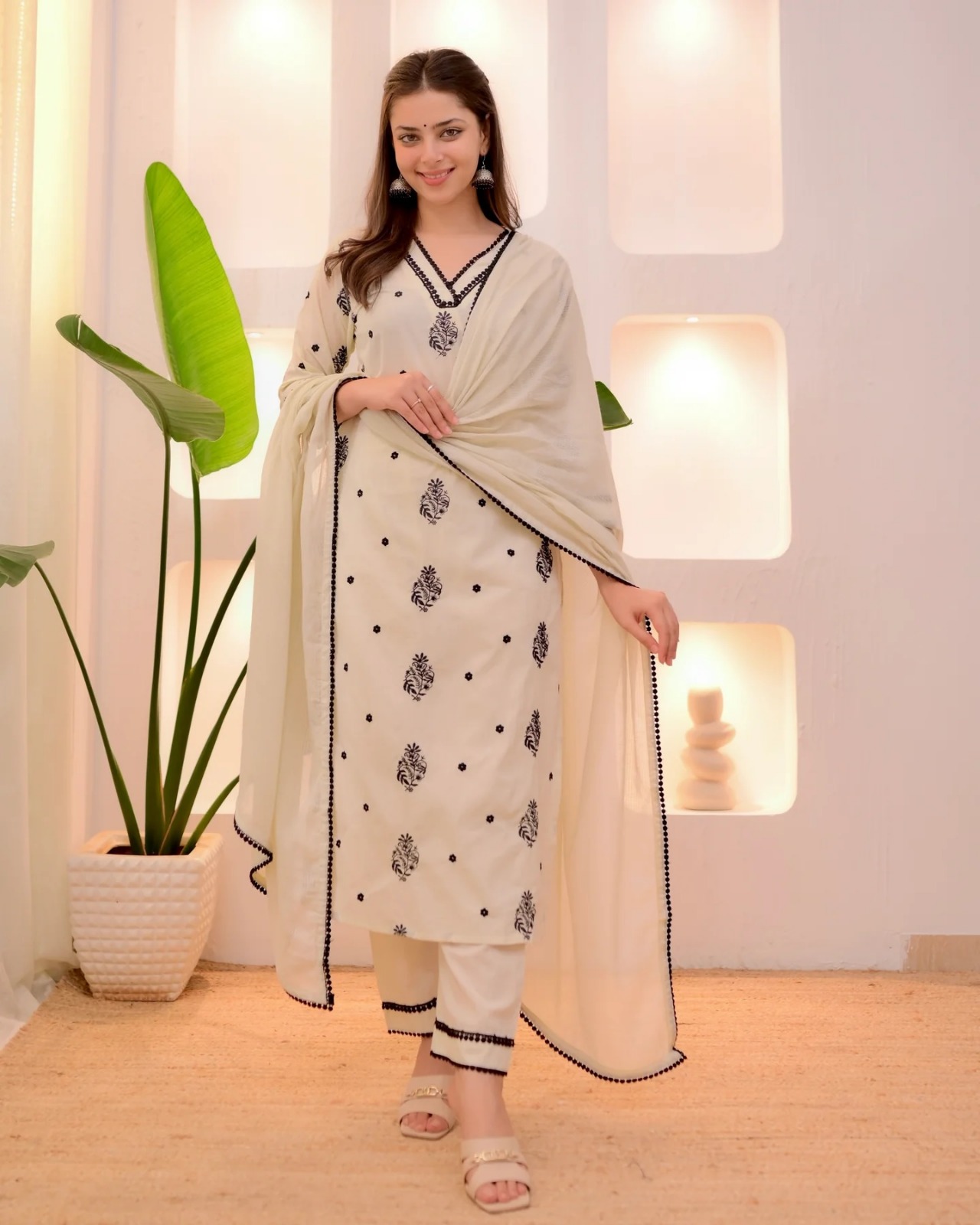
In the Black White Floral Embroidered Readymade Salwar Suit, the two-colour palette already establishes contrast. A solid black, white or grey dupatta keeps the floral embroidery visible. The Lavender Chanderi Kurta with Olive Embroidered Palazzo Suit benefits from a lighter, narrower drape because the palazzo already contributes volume below the hip.
Which prints and regional influences suit an A-line silhouette?
Small-to-medium motifs and vertical or diagonal pattern movement usually complement an A-line silhouette better than very large horizontal designs. Prints that follow the length of the kurta reinforce the widening shape, while a broad horizontal border at the hem emphasises width. A hem border can still work when the upper garment is relatively plain and the border is proportionate to the wearer's height.
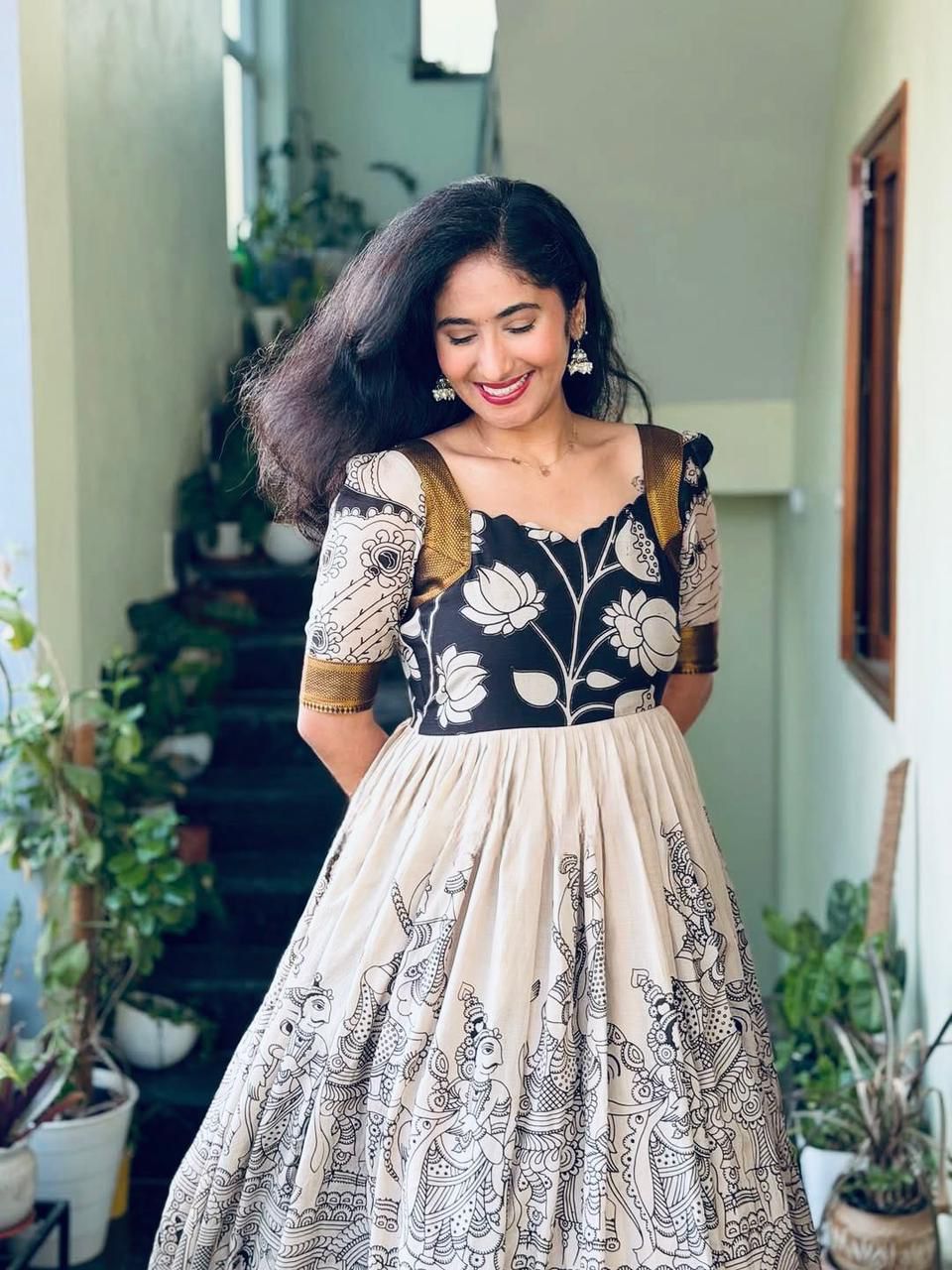
Kalamkari Print Salwar Suits often bring narrative floral or nature-inspired patterning to the garment, so a simple neckline and understated jewellery prevent visual competition. Maharashtra Paithani Inspired Salwar Suits can use jewel-like colour contrasts and traditional border references; pairing them with a clean bottom allows the border to remain the focal point rather than dividing the body into too many sections.
Gujarat Bandhej Salwar Suits are recognisable through dotted tie-dye effects and lively colour combinations. A solid bottom picked from one colour in the Bandhej pattern creates cohesion. Odisha Sambalpuri Salwar Suits often feature strong woven motifs and borders, which look especially effective when the A-line kurta isn't overloaded with additional surface decoration.
Punjab Patiala Salwar Suits require a different proportion because the Patiala bottom is intentionally voluminous and pleated. A shorter A-line kurta is usually more balanced with a Patiala salwar than a long, heavily flared kurta. Keep the dupatta drape relatively compact so the pleats remain visible and the outfit doesn't become visually crowded.
How can you style an A-line salwar suit for different occasions?
An A-line salwar suit can move from everyday wear to festive dressing by changing fabric, finishing details and accessories rather than replacing the silhouette. Cotton and simple prints suit daytime activities, rayon works for relaxed social events, and Chanderi or detailed embroidery suits celebrations.
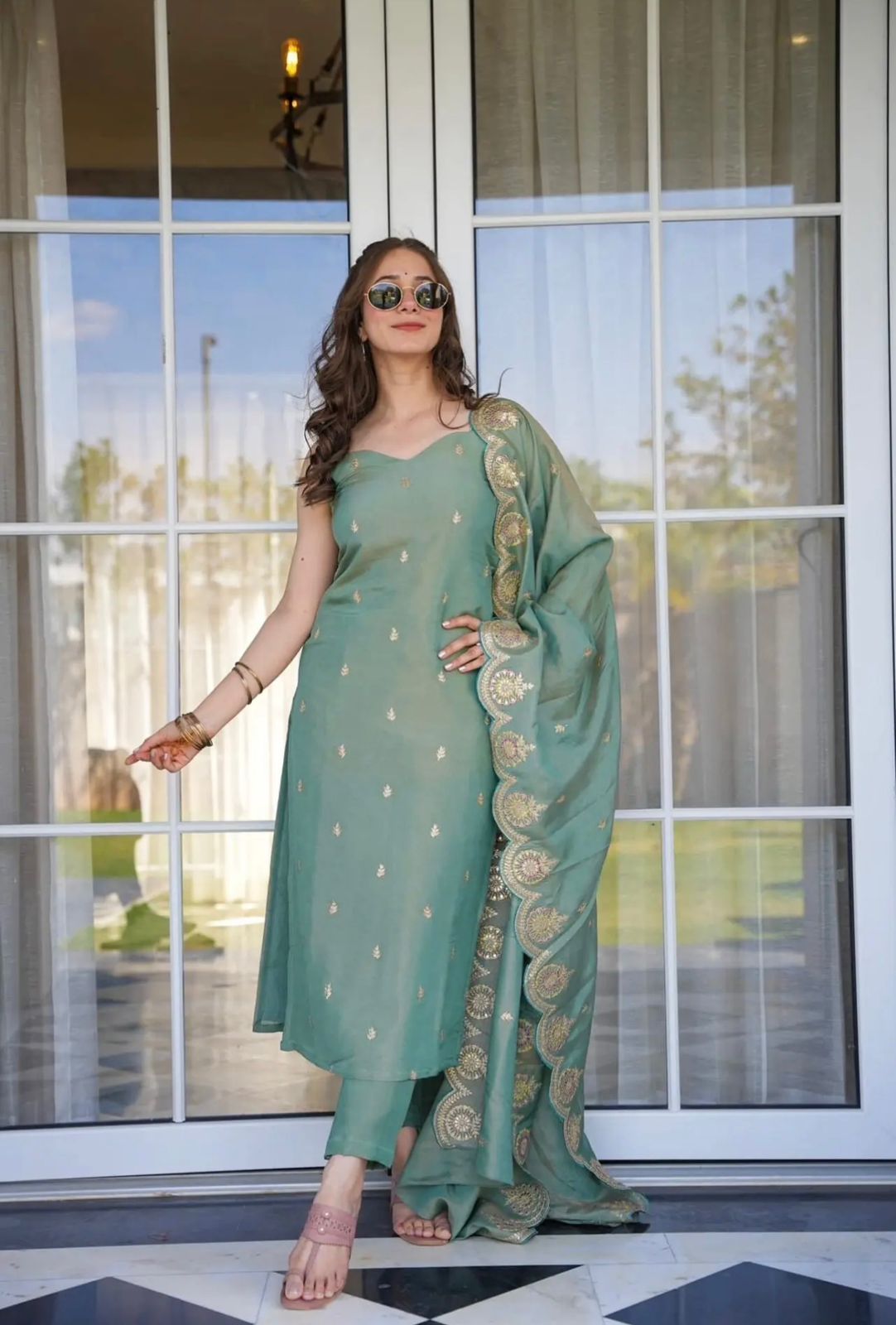
Work and daytime errands
Choose cotton, a moderate flare and a straight pant for a practical work outfit. Keep embellishment concentrated at the neckline or sleeve rather than across the entire kurta. Closed-back sandals, a structured handbag and small metal earrings add polish without making the outfit feel ceremonial.
Family lunches and small gatherings
Rayon prints, light handwork and a slightly brighter colour palette suit informal gatherings. A slim watch, juttis and a neatly folded dupatta create enough finish for a lunch or house visit. The Cream Pink Printed Rayon Readymade Salwar Suit can be styled with blush, tan or ivory accessories for a soft tonal result.
Festivals and evening functions
Chanderi, richer cotton handwork and mirror work are suitable for festive settings when paired with deliberate accessories. Choose one statement element: chandelier earrings, a decorated dupatta or embellished footwear. Adding all three can make the outfit appear busy, particularly when the kurta already has zari, mirrors or dense embroidery.
How do you choose the right A-line suit for your proportions?
The best choice depends on where the kurta begins to flare, where the hem ends and how much volume the lower garment adds. People who prefer a longer visual line can choose a V-neck, vertical embroidery and a hem that ends below the knee. People who want more definition at the waist can look for princess seams, side panels or a controlled flare beginning below the bust rather than directly at the neckline.
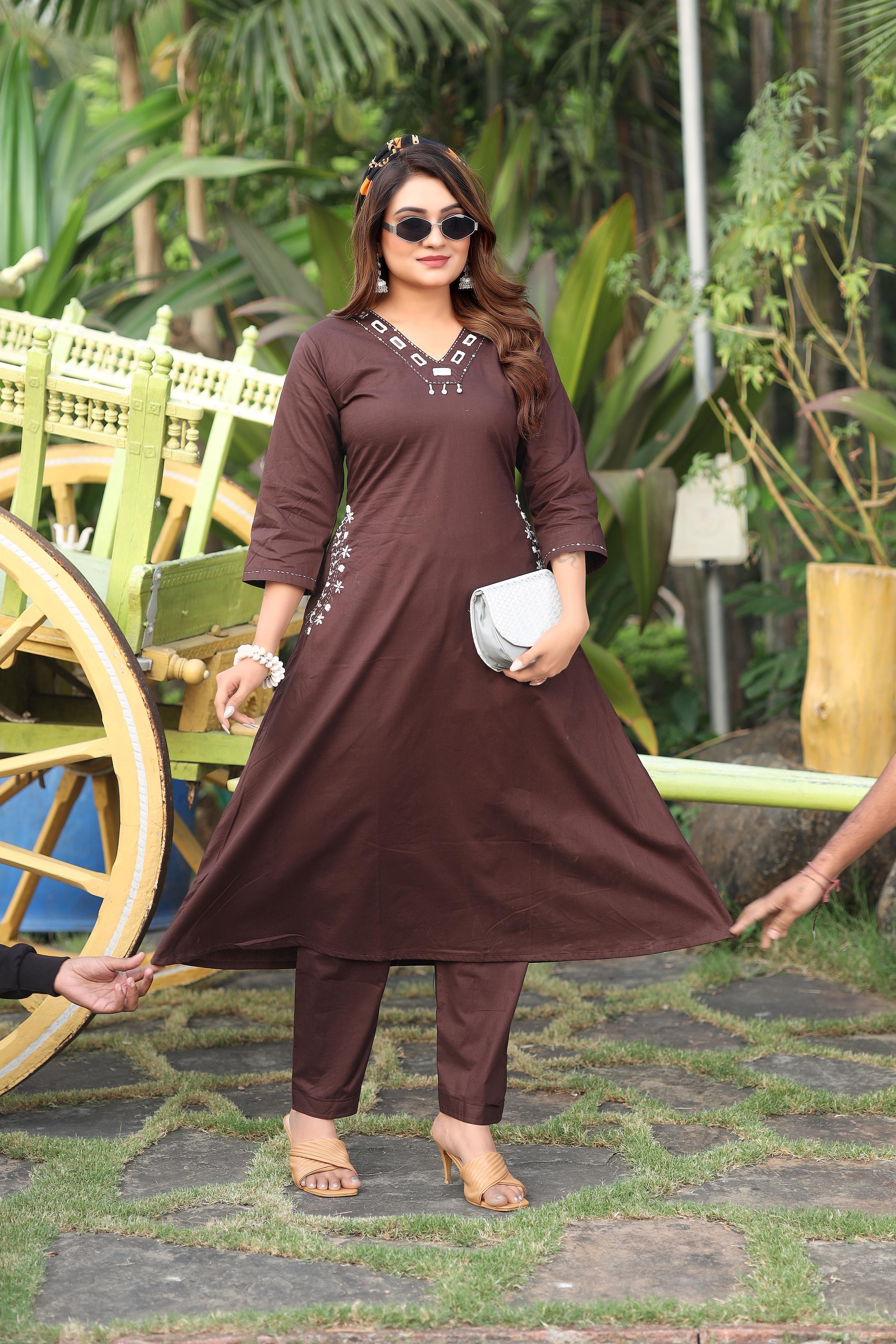
A petite wearer may find a mid-thigh or knee-length kurta easier to balance than a very long, wide-flared style. A taller wearer can carry a longer hem and a broader border, provided the bottom remains relatively clean. For fuller hips, a smooth fall from the upper hip and a darker or solid bottom can prevent unwanted cling; the garment should never be sized down to force the flare flat.
Neckline scale should match the body and the garment's decoration. A high neck with heavy embroidery may feel crowded, while a simple round neck can support a substantial dupatta. Sleeve length also changes balance: three-quarter sleeves create a time-honoured proportion, while elbow-length or short sleeves make a shorter kurta feel more contemporary.
Before buying, measure bust, waist, hip and shoulder width, then compare those measurements with the garment chart rather than relying on a usual size. Check whether the kurta is lined, whether the bottom has an elastic or drawstring waist, and whether the listed length includes a border. Those details affect comfort and the final silhouette more than a small difference in printed size.
Care details that preserve shape and proportion
Correct washing preserves the original drape, colour and flare of an A-line suit. Cotton should generally be washed according to its care label and dried away from harsh direct sunlight, rayon should be handled gently without twisting, and Chanderi should receive delicate care with minimal friction. Embellished garments should be turned inside out or placed in a laundry bag when the label permits machine washing.
don't hang a damp rayon or lightweight Chanderi kurta from a narrow hanger because the shoulder area can stretch and distort. Dry garments flat or on a broad padded hanger when recommended. Fold mirror-work and zari garments with soft tissue or cotton between decorated layers to reduce snagging.
Ironing should follow the fibre's care instructions. Use a press cloth over prints, embroidery and mirror work, and avoid placing a hot iron directly on metallic decoration. Neatly maintained hems and side seams preserve the A-line geometry, so small loose threads or pulled embellishments should be repaired before storage rather than after the next wear.
Practical Questions About A-Line Salwar Suit Fabric and Styling
Which fabric is best for an A-line salwar suit in summer?
Medium-weight cotton is usually the best summer choice because it breathes, absorbs moisture and holds a neat A-line shape. Rayon can also feel comfortable, but it needs gentler washing and may cling more around the hips.
Can I wear palazzo pants with an A-line kurta?
Yes, but a shorter or moderately flared A-line kurta balances better with palazzo pants than a long, very wide kurta. Keep the dupatta relatively narrow or drape it to one side so the lower-body volume remains controlled.
What length should an A-line kurta be with straight pants?
A knee-length to calf-length kurta generally works well with straight pants, depending on height and the amount of flare. A longer kurta looks more balanced when the pants are slim and the hem does not bunch at the ankle.
Is rayon better than cotton for a printed A-line suit?
Rayon gives printed A-line suits a softer, more fluid fall, while cotton provides a crisper and more structured shape. Choose rayon for movement and drape, or cotton for breathability, easier everyday wear and stronger hem definition.
How should I style mirror work on an A-line salwar suit?
Let mirror work remain the main statement and use simple jewellery, a solid bottom and uncomplicated footwear. Antique-gold or oxidised-silver accessories usually complement mirror work without competing with the reflective details.
Can a short person wear a long A-line salwar suit?
A shorter person can wear a long A-line suit when the flare is controlled and the outfit has a continuous colour line. A V-neck, vertical embroidery, a similar-coloured bottom and low-contrast footwear can help the silhouette appear longer.


