A Lehenga Hem Guard Can Protect the Skirt Without Changing the Look when the protective strip is fitted inside the lower edge rather than added as a visible border. The small alteration helps reduce contact with dusty floors, damp ground, footwear and repeated dragging, especially during weddings, sangeet entrances and crowded receptions. The right guard doesn't replace careful handling, but it can prevent avoidable abrasion and soiling on an expensive lehenga skirt.
Lehenga hems face more wear than most people notice. A wide ghera sweeps across flooring as the wearer walks, sits, turns and dances, while sequins, zari, threadwork and delicate net can catch against sandals or rough surfaces. A hem guard creates a washable or replaceable buffer along the inside edge. The result is practical protection that remains hidden when the skirt is worn correctly.
How a Lehenga Hem Guard Can Protect the Skirt Without Changing the Look
A lehenga hem guard is a narrow strip attached to the inner lower edge of a skirt to absorb dirt, friction and minor moisture before those hazards reach the outer fabric. Tailors commonly use cotton tape, polyester twill tape, satin binding or a lightweight synthetic strip, selected according to the skirt fabric and required drape.
The guard should sit on the inside, approximately 3 to 8 millimetres above the finished outer edge, unless a tailor recommends a different position for a heavily embellished design. The strip can be hand-stitched or machine-stitched with fine thread. A detachable version may use concealed hooks, press studs or temporary stitching, although permanent stitching is usually more secure for frequent wear.
A guard isn't the same as a stiff crinoline, can-can layer or horsehair braid. A crinoline changes volume, a can-can creates additional flare and horsehair braid can sharpen the edge. A hem guard primarily shields the underside of the skirt. Confusing these functions can lead to an unwanted change in silhouette.
Which damage can a hem guard reduce?
A hem guard can reduce surface dirt, mild floor dampness, repeated rubbing and early fraying along the lower seam. A guard can't prevent oil stains, wine spills, broken embellishments, deep snags or colour bleeding caused by washing. Professional cleaning and careful storage remain necessary for valuable bridal and designer lehengas.
Red Floral Organza Lehenga Set with One Shoulder Blouse shows why preserving an airy fall matters. A bulky tape may flatten organza, while a narrow, soft polyester or satin strip can provide a barrier without making the edge look heavy. The exact material should be tested on an inside seam before the full hem is altered.
How a Lehenga Hem Guard Can Protect the Skirt Without Changing the Look During Fitting
Invisible protection depends on matching the guard's weight, width, colour and stitch tension to the lehenga skirt. A guard becomes noticeable when it's too wide, too stiff, placed below the original edge or sewn with tight, puckering stitches.

Ask the tailor to match the tape colour to the lining or the least visible layer, rather than automatically matching the outer embroidery. Ivory, beige, black and tonal strips usually disappear better than a bright contrast colour. The finished tape should follow the existing curve of the hem without pulling the skirt inward.
Placement matters particularly on net and organza skirts. A strip stitched directly onto a fragile outer layer may leave needle marks or create a visible ridge. A tailor can often attach the guard to the lining, canvas facing or seam allowance instead. If a lehenga has several layers, the guard may be placed on the lowest practical layer while keeping the decorative top layer free.
What should be checked after stitching?
Check the hem while the wearer is standing, walking and sitting, because a guard that looks invisible on a hanger may show when the skirt moves. The lower edge should remain even, the ghera should open naturally and no thread should catch on bangles or footwear.
- Run a hand lightly along the inside edge to identify rough tape, exposed knots or sharp hooks.
- Walk for at least five minutes in the intended footwear and check whether the hem catches on the heel.
- Turn slowly to confirm that the guard doesn't create a stiff ring around the skirt.
- Inspect the outer surface for puckering, dragged motifs or a raised line above the hem.
A fully stitched choli and skirt set may need fewer alterations than a semi-stitched design, but the hem height still depends on footwear. Take the final shoes to the tailor. A hem shortened for flats can become too high with heels, while a hem adjusted for high heels can sweep the floor when the wearer changes shoes.
How a Lehenga Hem Guard Can Protect the Skirt Without Changing the Look Across Fabrics
Net, organza, satin and lightweight silk need the most careful hem treatment because stiff or heavy guards can distort their fall. Cotton-rich or lined skirts generally tolerate a slightly more substantial tape, provided the tape doesn't add visible bulk.
Net has open spaces that can stretch around needle holes, so a narrow seam allowance or lining attachment is safer than stitching repeatedly through the decorative mesh. Organza has a crisp hand and can reveal ridges. Satin can show pressure marks and may snag against rough synthetic tape. Silk blends and embroidered fabrics need a smooth guard with no abrasive edge.
Designer Threadwork Silk Lehenga Choli Set with Dupatta illustrates why inner construction deserves attention. Silk and dense threadwork may carry more weight than a light festive skirt, so the guard should support the hem without pulling on embroidered motifs. A tailor should avoid stitching through prominent zari, sequins or raised threadwork whenever an existing seam can be used.
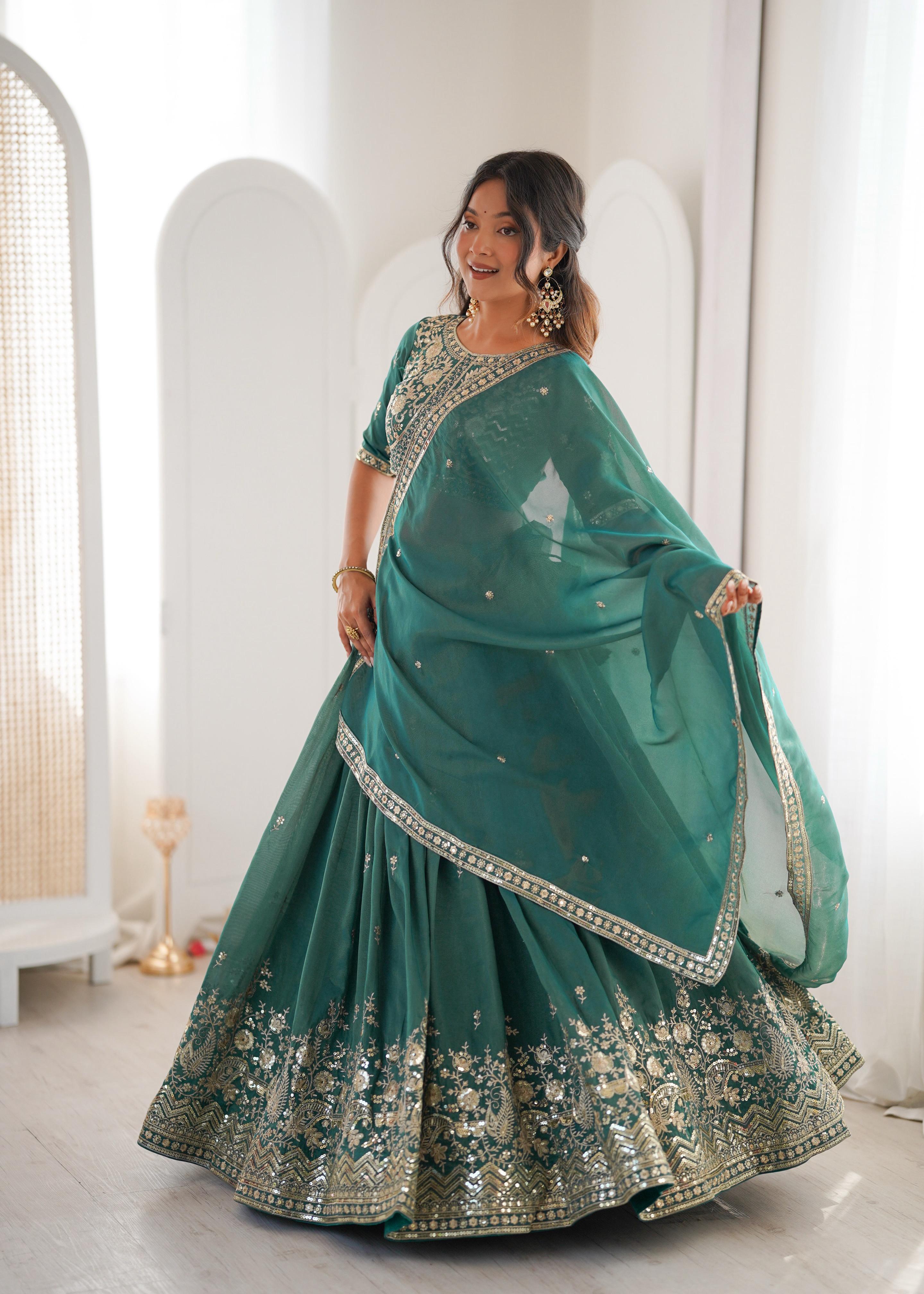
Green Chinon Silk Sequins Embroidered Lehenga Set and Mint Embroidered Lehenga Set with Net Dupatta for Women are useful examples of occasion outfits where movement and embellishment work together. Chinon silk can be fluid, while net can be delicate; one universal tape isn't suitable for both. The lower layers, lining and embroidery density should determine the alteration.
Can a bridal lehenga use a hem guard?
A bridal lehenga can use a hem guard, but the alteration should be completed and inspected well before the wedding rather than on the eve of the ceremony. Bridal skirts often combine multiple linings, dense embroidery, zari, sequins and structured panels, so a rushed stitch line can affect the fall.
Schedule the fitting at least two to three weeks before the event. Wear the intended footwear, walk on the type of flooring expected at the venue and sit on a chair to test comfort. If the bridal skirt will be stored after one use, a removable guard may be appropriate; if the skirt will be worn repeatedly, a secure permanent guard is generally more practical.
When a Lehenga Hem Guard Can Protect the Skirt Without Changing the Look at an Event
A hem guard is especially useful for long lehengas worn at outdoor venues, crowded celebrations or events where the wearer will walk and dance for several hours. The protection is also valuable when the skirt has a wide flare that repeatedly touches the ground.

Mehendi ceremonies often affect movement between indoor and outdoor spaces, low seating and informal floor arrangements. A guard can reduce contact with grass, dust and rough rugs. Sangeet performances create unnecessary risk because turns and footwork move the ghera rapidly across the floor. Receptions may involve bright floors that are cleaner but still expose the hem to shoe friction.
Colour and collection context can help with planning, but colour doesn't determine guard material. A bright look from Mehendi Lehengas or Yellow Lehengas may show dust more readily than a darker skirt, while Green Lehengas can include fabrics ranging from fluid silk to delicate net. A skirt selected from a Mehendi Lehengas collection may need an outdoor-friendly inner barrier if the ceremony includes garden seating.
Magenta Satin Embroidered Lehenga Set Online may already have a lining or facing that can accept a narrow guard. Pastel Grey Embroidered Butterfly Net Lehenga Set may need gentler handling because butterfly net and fine embellishment can be marked by aggressive stitching. Cream Peacock Embroidered Net Lehenga Set for Women also benefits from a fitting that keeps the protective strip away from visible net motifs.
How a Lehenga Hem Guard Can Protect the Skirt Without Changing the Look on Readymade Styles
A new lehenga should be tried with final footwear before deciding whether a hem guard or length alteration is needed. Readymade sizing often accommodates a range of heights, but the correct waist size doesn't guarantee the correct hem length.

Measure from the natural waistline, or the exact position where the waistband will sit, to the floor, then subtract the intended clearance. Many wearers prefer the hem to skim close to the floor without folding underneath; others need extra clearance for outdoor events or vigorous dancing. The ideal measurement depends on footwear, posture, ghera and the number of underskirt layers.
Ready Made Lehenga options are convenient because the blouse and skirt are already constructed, yet convenience doesn't remove the need for a final fitting. Semi Stitched Lehengas Collection pieces allow more control over waist and length, but the finishing process should include a hem inspection. A tailor can also confirm whether the guard belongs on the lining, facing or lowest skirt panel.
don't add a guard immediately after unboxing if the garment has been folded tightly. Hang the lehenga for 24 to 48 hours, allowing the fabric and lining to settle, then try the outfit with its blouse, dupatta and intended footwear. A temporary pinning test can reveal whether the skirt needs length adjustment before permanent stitching.
What should a fully stitched choli shopper ask?
A shopper looking for a fully stitched choli should ask whether the skirt has a lining, how much hem allowance remains and whether alterations could affect embroidery. These details are more useful than relying only on the stated size.
Ask for the finished skirt length, waistband position, lining composition and approximate flare. Ask whether the outer hem is scalloped, piped or embellished, because a straight inner tape may not suit a decorative edge. A tailor should also confirm that the blouse alteration won't alter the balance between the waistline and the skirt's top embellishment.
How a Lehenga Hem Guard Can Protect the Skirt Without Changing the Look in Storage
Cleaning and storage determine how long the hem guard remains effective. Brush away dry dust with a soft clothes brush, air the lehenga in shade for several hours after wear and never pack a damp skirt into a plastic bag.
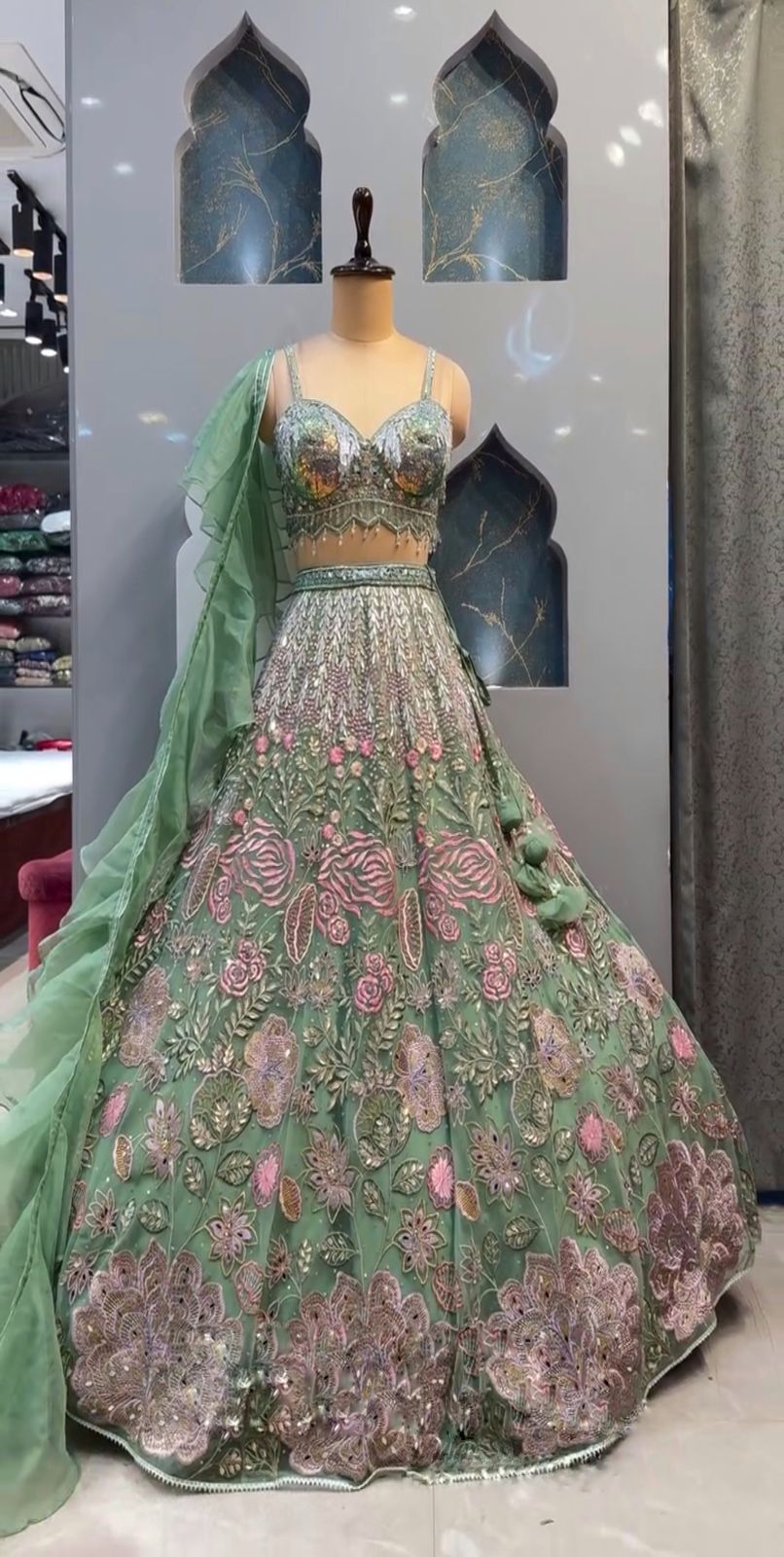
don't machine-wash an embroidered lehenga unless the care label specifically permits it. Zari, sequins, silk, satin and net may react differently to water, detergent and friction. A professional cleaner should inspect stains before treatment, and the cleaner should know about any detachable hooks or temporary stitching near the hem.
Store the lehenga in a breathable cotton garment bag with the skirt supported by a broad hanger or folded with acid-free tissue around heavy embroidery. Avoid wire hangers, direct sunlight and prolonged compression under other garments. Refold a stored lehenga every few months to reduce permanent crease lines, especially where sequins or zari press against the fabric.
A clean hem guard can be replaced when it becomes grey, frayed or stiff. Replacement is often less disruptive than replacing the entire skirt, but the original stitch holes should be assessed before a second tape is installed. A tailor may need to shift the new stitch line by a few millimetres to avoid weakening one seam.
How a Lehenga Hem Guard Can Protect the Skirt Without Changing the Look: A Practical Decision
Choose a hem guard when the lehenga is long, frequently worn outdoors, heavily flared or likely to encounter rough flooring. Skip or postpone the alteration when the skirt is already short, has a very fragile unlined net edge or will be worn only once in a controlled indoor setting.

The most reliable process has five steps: inspect the construction, select a soft compatible tape, test the placement, fit with final footwear and examine the finished fall in motion. A hem guard should serve the garment rather than dictate its shape.
- Identify the lowest stable layer that can accept stitching.
- Measure the required length while wearing the actual shoes.
- Test a 10 to 15 centimetre sample of tape inside the hem.
- Walk, sit and turn before approving the full stitch line.
- Record the care method and remove the guard only with professional help if the fabric is delicate.
For a wedding, begin this process at least two to three weeks before the event. For a readymade or designer purchase, a modest alteration can preserve the hem while leaving the visible embroidery, colour and silhouette unchanged. Protection works best when the tape is almost unnoticed and the wearer can move naturally.
Common Questions About Protecting a Lehenga Hem
What is the best material for a lehenga hem guard?
A soft satin binding, polyester twill tape or cotton tape can work, depending on the skirt's fabric, lining and weight. Lightweight net and organza usually need a narrow, smooth strip, while a lined silk skirt may accept a slightly stronger tape.
Will a hem guard make my lehenga look stiff?
A correctly sized inner guard should not make the lehenga visibly stiff or change its flare. Stiffness usually results from a tape that is too wide, too heavy or stitched under excessive tension.
Can a hem guard be added to a readymade lehenga?
A hem guard can be added to most readymade lehengas if the lining, seam allowance or lowest skirt layer can accept stitching. Try the outfit with final footwear first so the guard is placed at the correct height.
How far above the lehenga edge should the guard be stitched?
A common starting point is 3 to 8 millimetres above the finished outer edge, but the correct position depends on the hem construction and lining. A tailor should test the placement on a hidden section before completing the full circumference.
Can a bridal lehenga be dry-cleaned after adding a hem guard?
A bridal lehenga can often be professionally cleaned after a hem guard is added, but the cleaner should inspect the tape, hooks and embroidery first. Home washing is risky for zari, sequins, silk, satin and net unless the care label expressly allows it.
Does a hem guard protect a lehenga from every stain or snag?
A hem guard mainly reduces dirt, light moisture, friction and minor edge fraying. It cannot protect against oil, wine, deep snags, broken embellishments or colour transfer, so careful handling and professional spot treatment remain important.