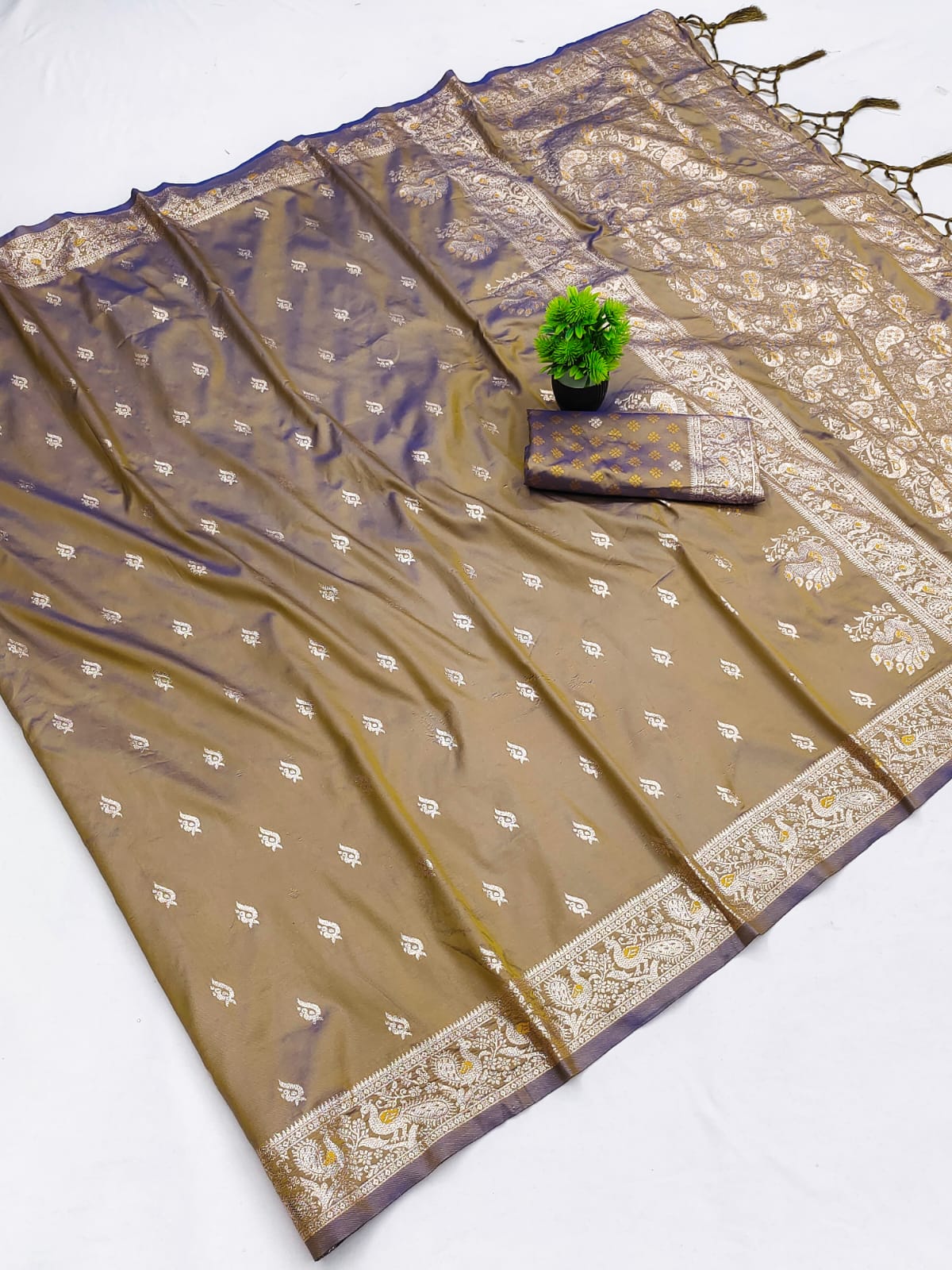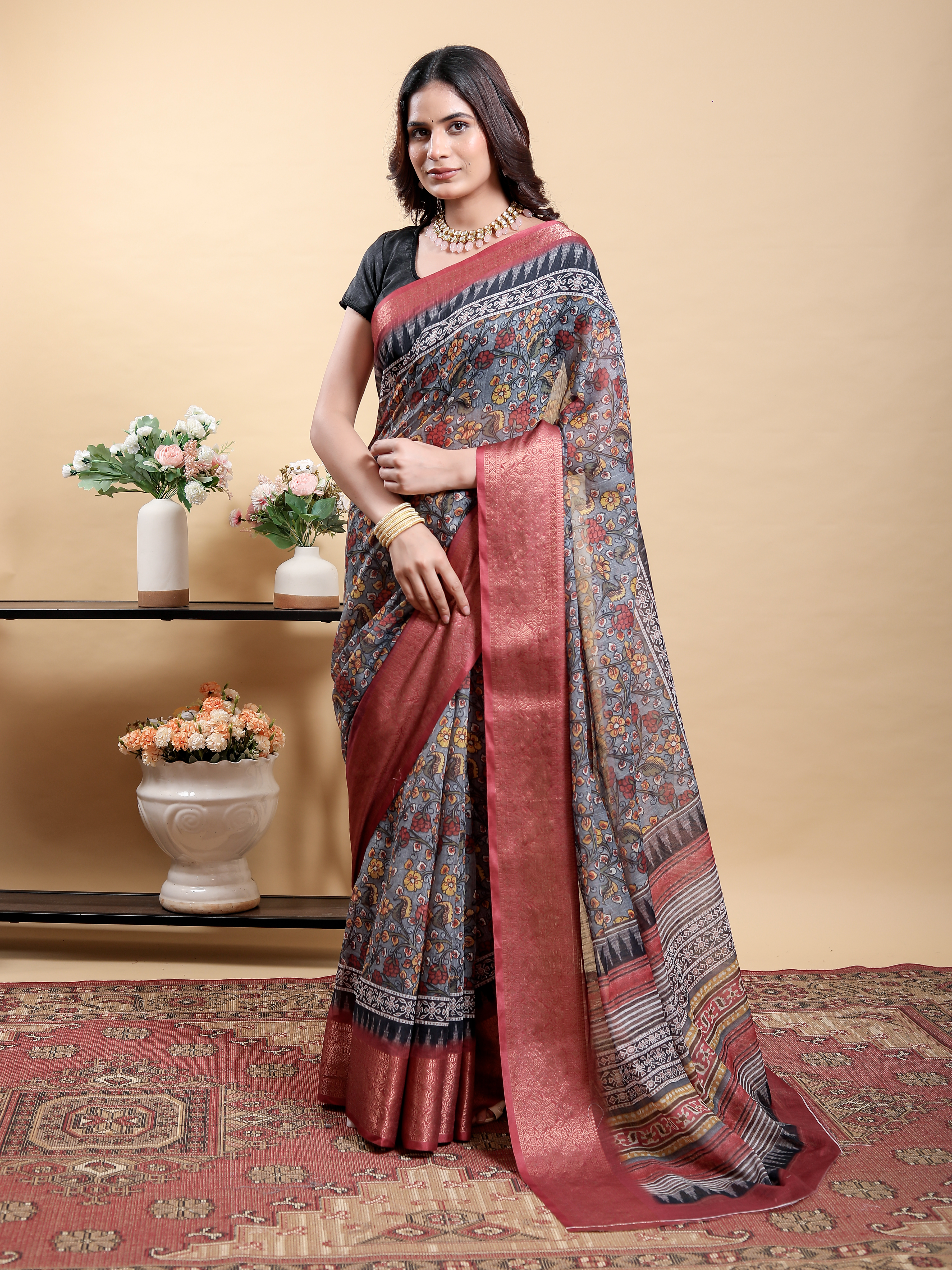
A Cotton Blouse Under a Silk Saree for Hot Ceremonies solves a practical dressing problem: silk looks ceremonial, while cotton handles heat, perspiration and long hours of sitting more comfortably. The pairing works when the blouse has enough structure to support the saree, the neckline suits the drape and the colours respect the richness of the silk.
A cotton blouse doesn't have to look casual beneath Banarasi silk, Kanjeevaram or a glossy silk-cotton saree. The weave, tailoring, sleeve length, surface detail and finishing determine whether the final outfit feels festive or everyday. This guide explains how to make that decision before a wedding, puja, Haldi ceremony or summer reception.
Why does A Cotton Blouse Under a Silk Saree for Hot Ceremonies work?
A cotton blouse works beneath a silk saree in hot weather because cotton absorbs perspiration and usually allows better airflow than synthetic satin or heavily layered brocade. The comfort difference becomes noticeable during four- to eight-hour events that include standing rituals, group photographs and travel between venues.
Silk sarees often have a dense weave and can retain warmth around the torso, especially when the pallu is pleated tightly or the saree includes a wide zari border. A cotton blouse creates a more breathable layer at the upper body without reducing the visual importance of Banarasi silk or Kanjeevaram silk.
Natural cotton isn't automatically cool in every construction. Thick foam padding, multiple layers of interfacing, a tight armhole and a plastic-feeling lining can trap heat. A lightweight cotton outer layer with selective lining usually performs better than a thin-looking blouse made from polyester satin.
The pairing also creates an useful visual contrast. The matte surface of Ikat cotton or Kalamkari cotton allows the lustre of silk and zari to remain the focal point. A cotton blouse can therefore look deliberately balanced rather than like a casual substitute for a silk blouse.
How should A Cotton Blouse Under a Silk Saree for Hot Ceremonies fit?
A cotton blouse worn under a silk saree should fit closely at the bust and waist while leaving enough ease for breathing, arm movement and a secure saree tuck. Approximately 1 to 1.5 inches of total ease around the bust is an useful starting point, although the correct measurement depends on the cotton weight, padding and preferred silhouette.
Check the shoulder and armhole
The shoulder seam should end close to the natural shoulder edge because a dropped seam can make the saree drape look untidy. The armhole should allow the wearer to lift both arms without pulling the blouse upward or cutting into the underarm. Raise the arms, sit down and rotate the shoulders before approving the final fit.
A sleeveless cut can feel cooler, but the armhole must not be so deep that the saree pleats expose the bra band or side bust. A narrow shoulder strap can also dig into the skin under a heavy pallu. Wider shoulder coverage generally provides better support for a silk saree with a substantial border.
Choose padding and lining carefully
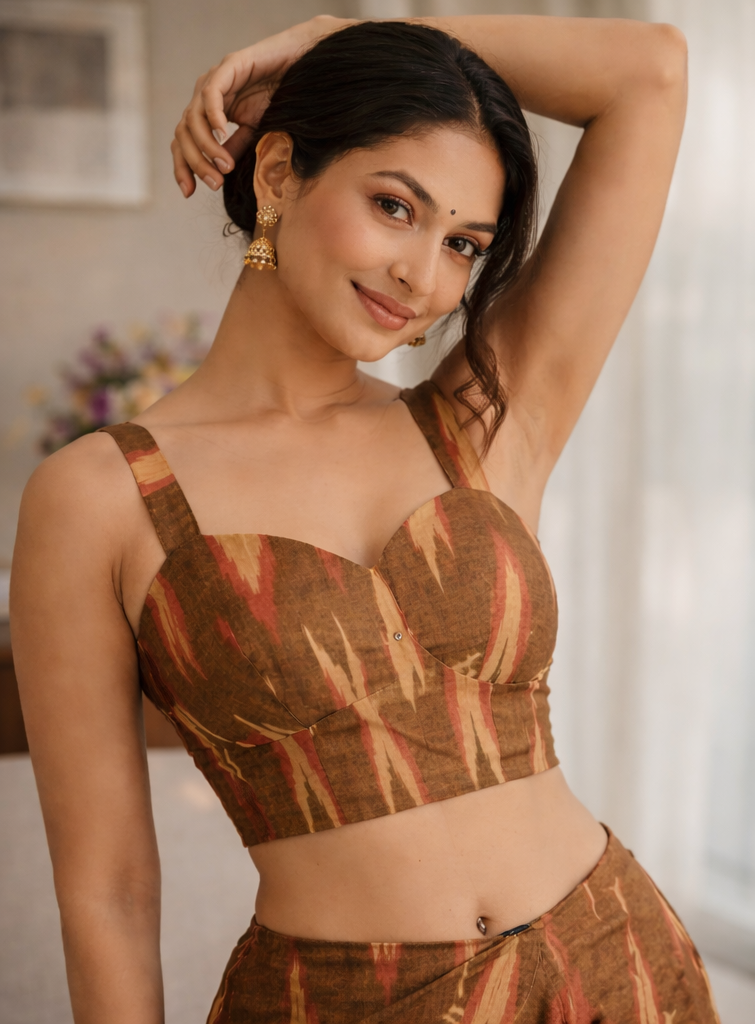
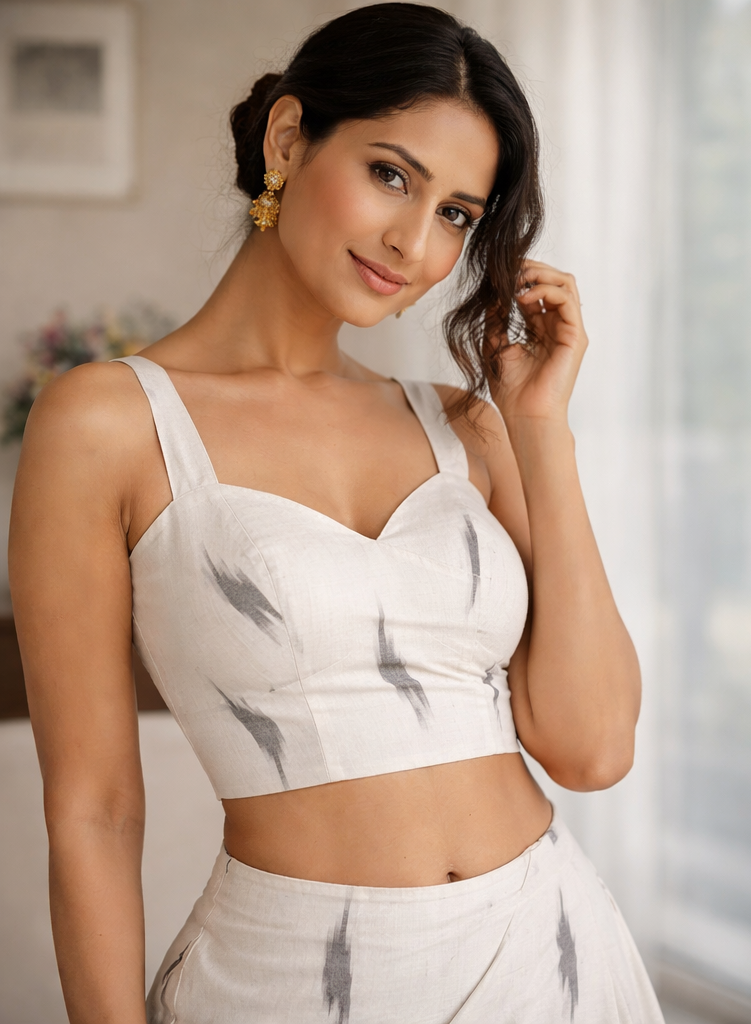
Light padding can create a smooth outline, but thick foam increases warmth and may feel restrictive during a long ceremony. Brown Ikat Cotton Padded Blouse Sleeveless Stylish and Cream Ikat Cotton Padded Blouse Sleeveless Trendy show how padded cotton can offer structure while retaining a softer, more breathable surface than synthetic satin.
A breathable cotton lining is preferable to a plastic-feeling synthetic lining for hot weather. The lining should lie flat, remain slightly shorter than the outer hem and avoid bulky seams at the bust. If the outer cotton is already substantial, an unlined or partially lined construction may be more comfortable.
Which details make A Cotton Blouse Under a Silk Saree for Hot Ceremonies look formal?
Formal styling comes from proportion and finish rather than from using a shiny blouse fabric. A clean neckline, stable seams, measured sleeve length and a controlled colour relationship can make cotton suitable for a wedding or religious ceremony.
Necklines between approximately 7 and 9 inches across the front often provide a balanced frame for a silk saree, although the ideal width depends on the wearer and the jewellery. A modest round, square, boat or shallow V neckline can support a necklace without competing with a wide zari border. Very high necklines may feel warmer, while a deep neckline can make a traditional saree look less balanced.
Short sleeves ending above the mid-bicep offer more coverage than sleeveless styles while remaining practical in heat. Sleeves with a crisp folded edge, narrow piping or a small border look intentional. Three-quarter sleeves can suit air-conditioned venues but may feel warm at outdoor rituals, particularly when the cotton is lined.
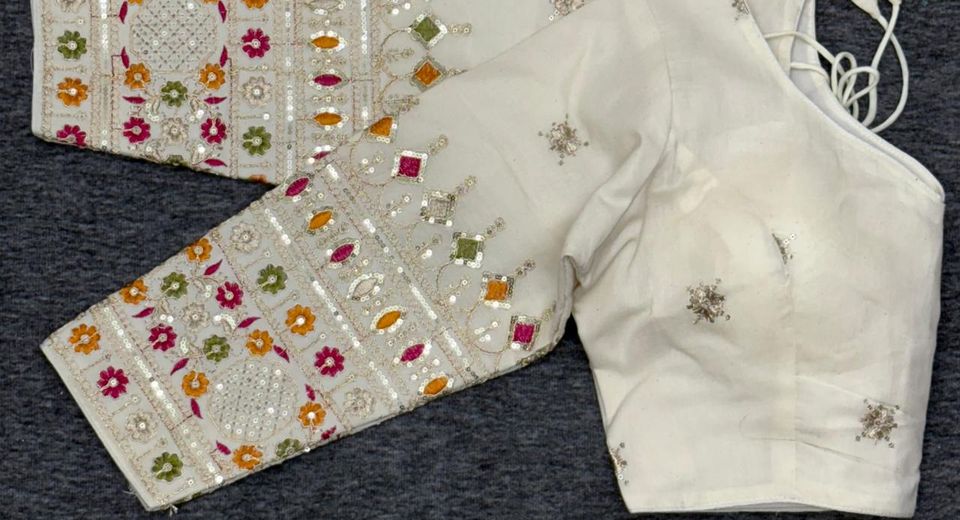
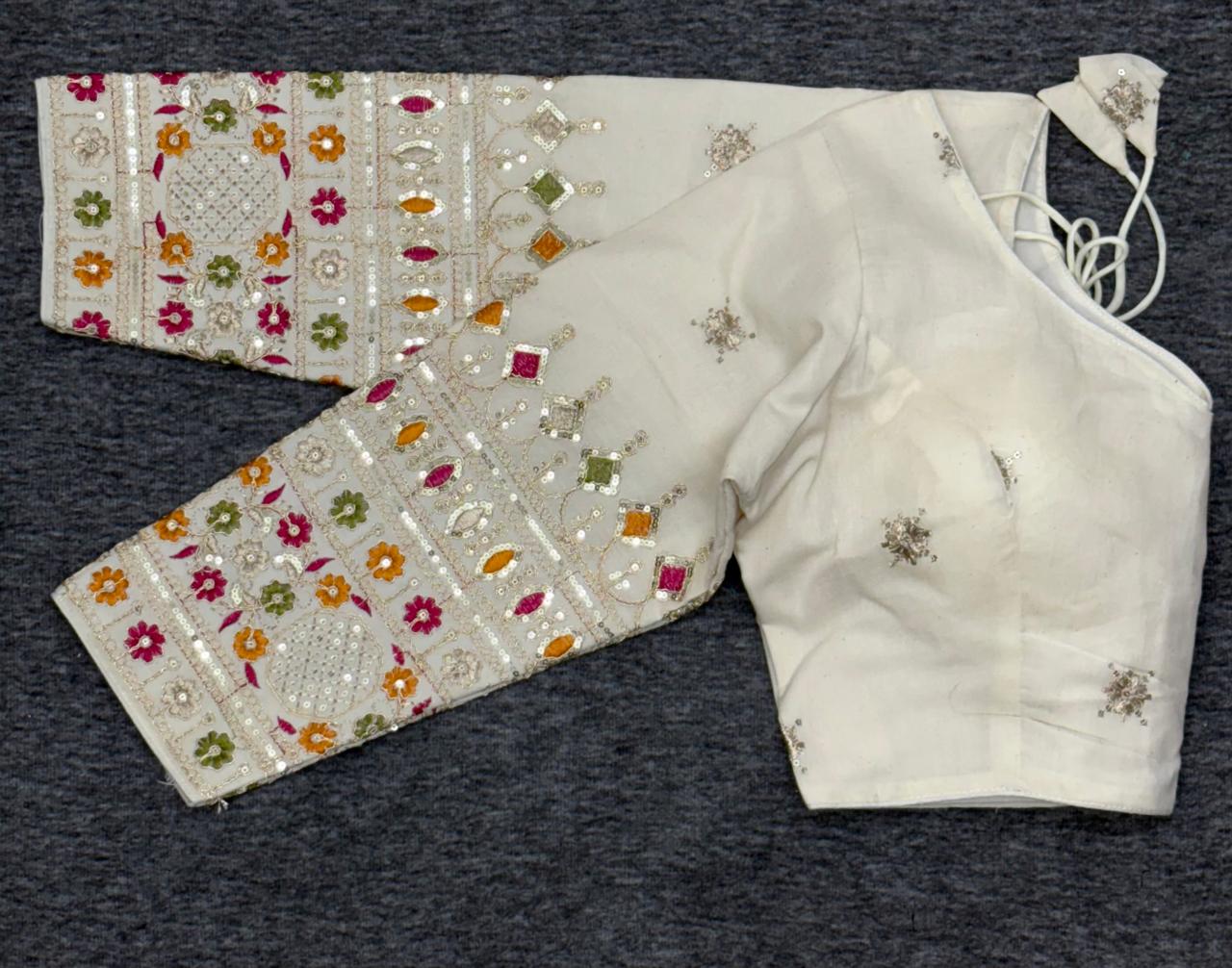
Small details carry more weight than excessive embellishment. Contrast piping, covered buttons, a restrained embroidered motif or a neat fabric border can connect a cotton blouse to the silk saree. Heavy sequins across the back and sleeves add weight, warmth and friction without necessarily improving the outfit.
Classic Festive Wear Blouse for Stylish Saree Look illustrates the value of a structured festive shape when the saree already supplies visual richness. A blouse doesn't need to copy every colour in the saree; matching one secondary tone often looks more refined than attempting an exact match.
Which colours suit A Cotton Blouse Under a Silk Saree for Hot Ceremonies?
Ikat cotton, Kalamkari cotton and smooth woven cotton are versatile with silk sarees because they offer texture without overwhelming zari or silk sheen. The best colour match depends on the saree's scale, colour temperature and border width.
Coordinate texture before colour
A heavily patterned cotton blouse works best with a relatively simple silk saree, while a plain cotton blouse gives an ornate silk saree room to stand out. Brown Ikat Cotton Padded Blouse Sleeveless Stylish can support warm silk shades such as rust, maroon, mustard, antique gold and deep green.
Cream Ikat Cotton Padded Blouse Sleeveless Trendy can soften red, coral, teal, purple and jewel-toned sarees. Cream also creates an useful bridge between a bright silk body and a gold zari border, although the undertone should be checked under the venue lighting.
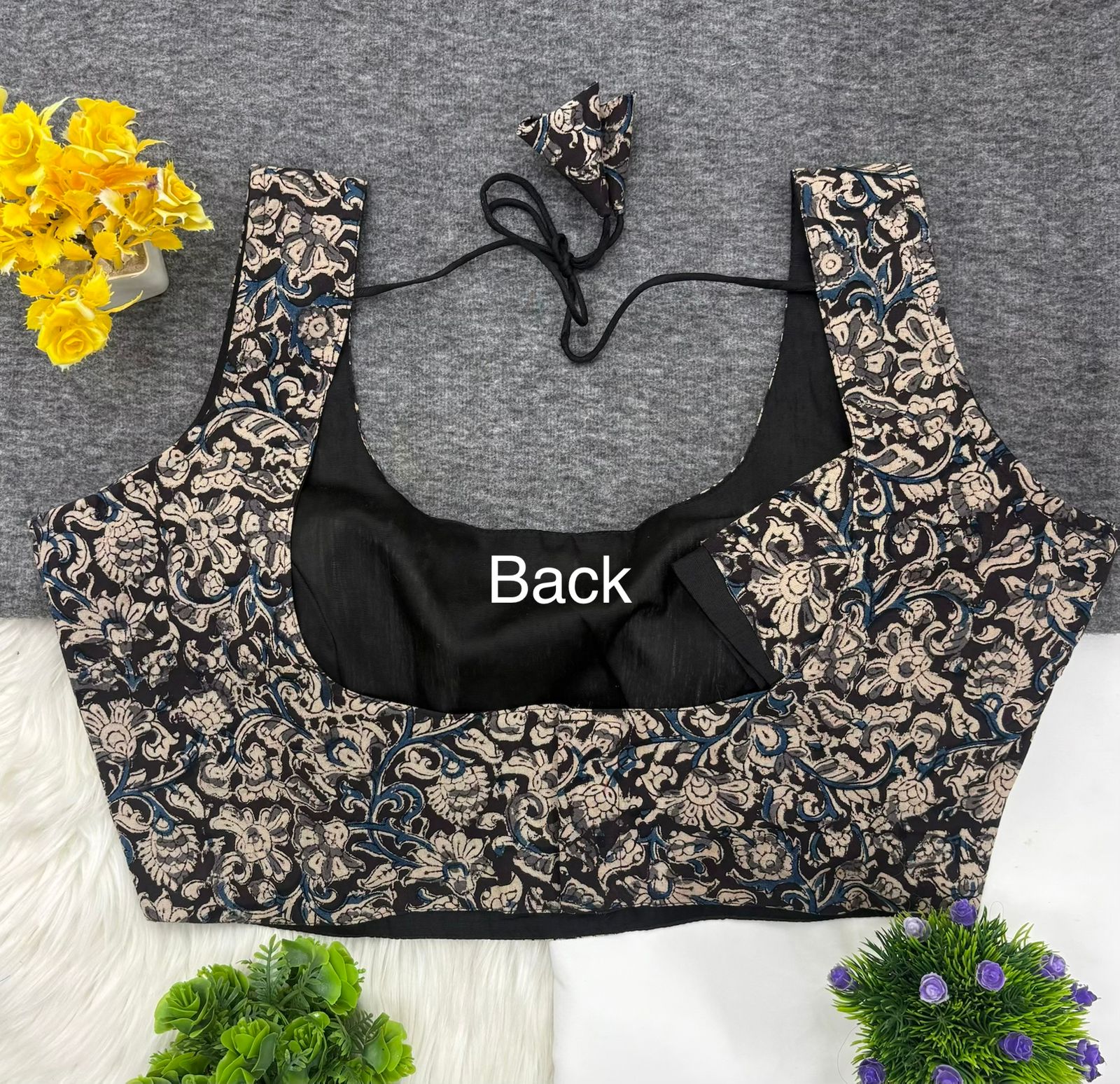
Pure Kalamkari Cotton Padded Blouse for Women brings a narrative print into the outfit, so the saree should ideally have a restrained body or a border that repeats one colour from the Kalamkari design. A busy Kalamkari print paired with a wide contrasting zari border and an elaborate necklace can create too many competing focal points.
Neutral cotton blouses are useful because they can be worn with more than one silk saree. Cream, ivory, deep brown, charcoal, muted gold and black create different effects, but the undertone matters. A yellow-cream blouse may look harmonious with warm Kanjeevaram silk and slightly discordant beside blue-based Banarasi silk.
Use contrast with intention
Contrast is most successful when one element is clearly dominant. A green cotton blouse with a magenta silk saree can look festive if the green appears again in earrings or bangles. A blouse that matches neither the saree nor the jewellery can look accidental, even when both pieces are individually attractive.
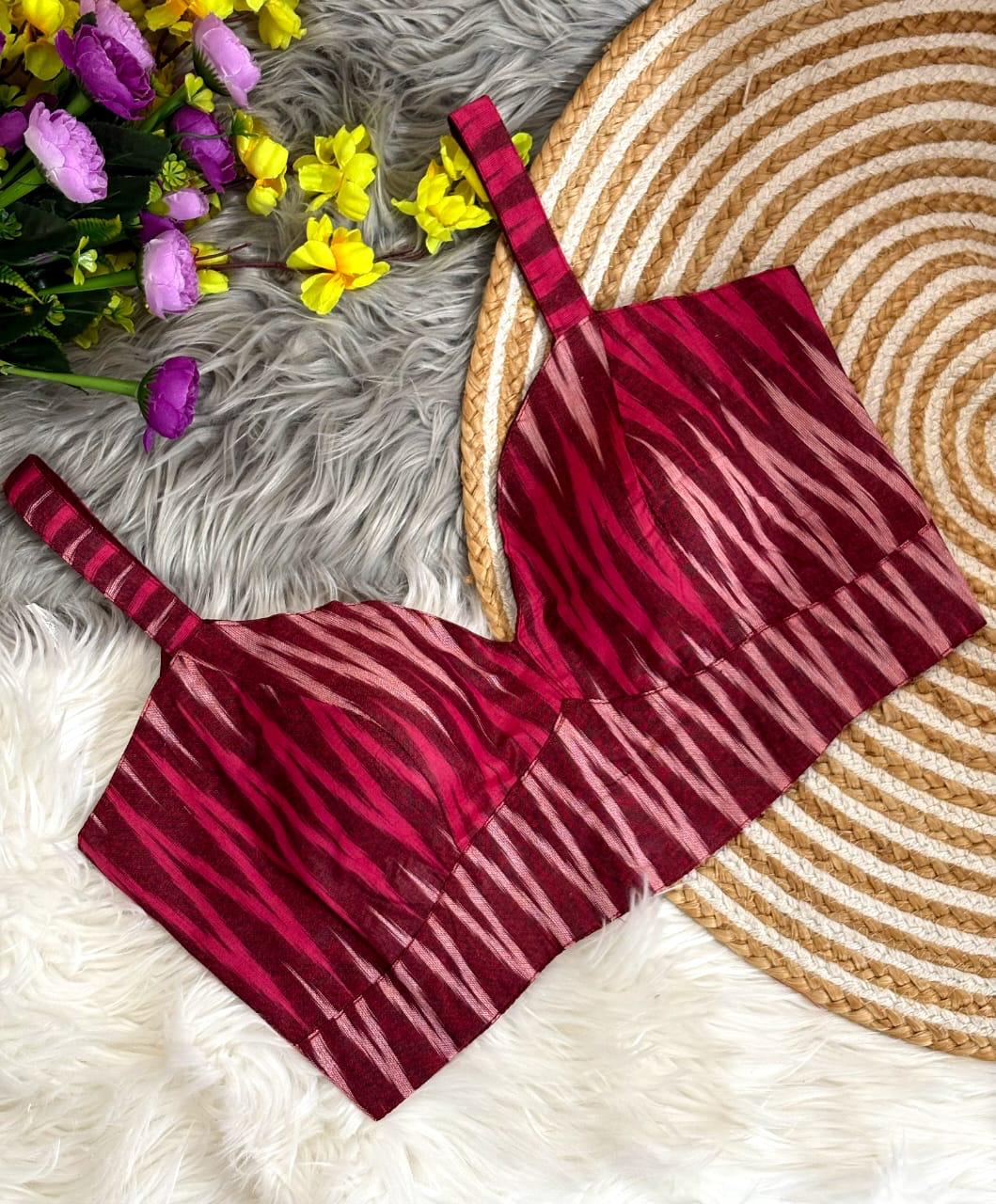
Ikkat Cotton Padded Blouse for Women Sleeveless demonstrates how a graphic weave can bring contemporary character to a classic saree. Keep the jewellery simpler when the cotton pattern is strong, and let the saree border provide the formal finish.
How can A Cotton Blouse Under a Silk Saree for Hot Ceremonies suit each event?
A cotton blouse can suit different ceremonies when the styling level matches the dress code, venue and time of day. The saree, jewellery, hair and blouse should be planned as one outfit rather than chosen independently.
For a Haldi ceremony, a breathable sleeveless or short-sleeved cotton blouse is practical because turmeric, movement and outdoor heat can make elaborate clothing uncomfortable. Yellow, cream, green, coral and brown cotton work naturally with lighter silk sarees. Choose washable accessories and avoid delicate embellishment that may catch on seating or ceremony items.
For a wedding ceremony, pair a structured cotton blouse with a silk saree that has a defined border and add one formal element such as gold-toned jhumkas, a waist belt or a carefully pleated pallu. A cotton blouse with a printed surface can work beautifully, but the print should remain sharp and the neckline should be finished cleanly.
For a puja, a higher neckline, moderate sleeve and non-transparent cotton construction are often practical choices. Cream, maroon, bottle green, mustard and indigo can create a respectful palette without making the outfit plain. Avoid extremely loose armholes because ritual movements can shift the blouse and saree together.
For an evening reception, cotton can appear dressier through a darker colour, sculpted tailoring and jewellery rather than extra layers. A deep brown, black, navy or jewel-toned blouse can balance a glossy silk saree. The blouse should still be tested under the venue lighting because some cotton prints look much more casual under bright white lights than under warm indoor lighting.
How can A Cotton Blouse Under a Silk Saree for Hot Ceremonies stay comfortable?
Comfort improves when moisture, friction and pressure points are addressed before the ceremony rather than during it. Wear the blouse at home for at least 30 to 60 minutes while sitting, raising the arms and walking before the event.
Wash or steam cotton according to its care label before the first full wear because some cotton garments relax or shrink slightly after washing. Never assume that a padded blouse can be washed like an unlined cotton top; padding, adhesive layers and colourfastness require separate attention.
Use a well-fitted cotton or moisture-managing inner layer only when it doesn't add unnecessary heat. A bra band that sits too high can show above the blouse back, while a band that sits too low can create pressure beneath the saree. Test the complete outfit, including the petticoat and jewellery, before the event.
Keep a small cotton handkerchief or absorbent cloth in the handbag for discreetly managing perspiration. Avoid applying heavy body lotion immediately before dressing because lotion can transfer to cotton and silk, attract dust and make the saree tuck less secure.
Choose anti-chafing measures carefully. A narrow, smooth blouse hem reduces rubbing at the waist, while rough lace or exposed elastic can become uncomfortable beneath a tightly tucked silk saree. Remove safety pins after the event and inspect the blouse for pulled threads before storing it.
How should A Cotton Blouse Under a Silk Saree for Hot Ceremonies be cared for?
A cotton blouse should be cleaned according to its weave, lining, padding and colour rather than treated as a disposable occasion garment. Careful washing protects the shape and keeps the blouse ready for future saree combinations.
Check the care label before washing, especially when the blouse includes padding, printed Ikat, Kalamkari motifs, embroidery or contrast piping. Hand-wash colourfast cotton in cool water when permitted, use a mild detergent and avoid prolonged soaking. Dark colours should be washed separately from cream or ivory garments.
don't wring a padded blouse because twisting can distort the cups, seams and shoulder line. Press excess water between clean towels, reshape the garment while damp and dry it in indirect light. Strong direct sunlight can fade printed cotton and weaken some dyes over repeated exposure.
Iron cotton on the temperature recommended by the care label, preferably from the reverse side when the garment has a print or embroidery. Use a pressing cloth over zari-like trims or embellishment. Store the blouse completely dry, folded with light tissue around padded areas, and avoid compressing it beneath heavy sarees.
Before the next ceremony, check hooks, eyelets, seams and padding. A small repair completed early is less disruptive than a loose hook or split armhole during a wedding ritual. Rotating cotton blouses between events also allows perspiration and moisture to evaporate fully before storage.
Questions About Wearing Cotton Blouses With Silk Sarees in Hot Weather
Can I wear a cotton blouse with a Banarasi silk saree to a wedding?
Yes, a cotton blouse can look wedding-appropriate with a Banarasi silk saree when the tailoring is clean and the colour relates to the saree border or zari. Choose a structured neckline, stable shoulder fit and polished jewellery rather than adding excessive blouse embellishment.
Is cotton cooler than satin under a silk saree?
Cotton is usually more breathable and absorbent than polyester satin, so it often feels cooler during a long ceremony. Thick padding, heavy lining or a very tight cotton blouse can reduce that advantage.
Can a sleeveless cotton blouse support a heavy silk saree?
A sleeveless cotton blouse can support a heavy silk saree when the shoulder straps, armholes and bust fit are secure. Wider shoulder coverage and light internal structure are generally more comfortable than narrow straps under a weighty pallu.
What colour cotton blouse goes with a red silk saree?
Cream, ivory, antique gold, deep green, brown and black can work with a red silk saree, depending on the red's undertone and the zari colour. A cream blouse softens the outfit, while deep green or brown creates stronger contrast.
How should I wash a padded cotton blouse?
Follow the care label and avoid wringing or prolonged soaking. Hand-wash in cool water with mild detergent when permitted, reshape the blouse while damp and dry it away from strong direct sunlight.
Can Kalamkari cotton be worn with a traditional silk saree?
Kalamkari cotton can be worn with a traditional silk saree when the saree body or border repeats one colour from the print. Keep the jewellery and pallu arrangement controlled so the print and zari do not compete for attention.