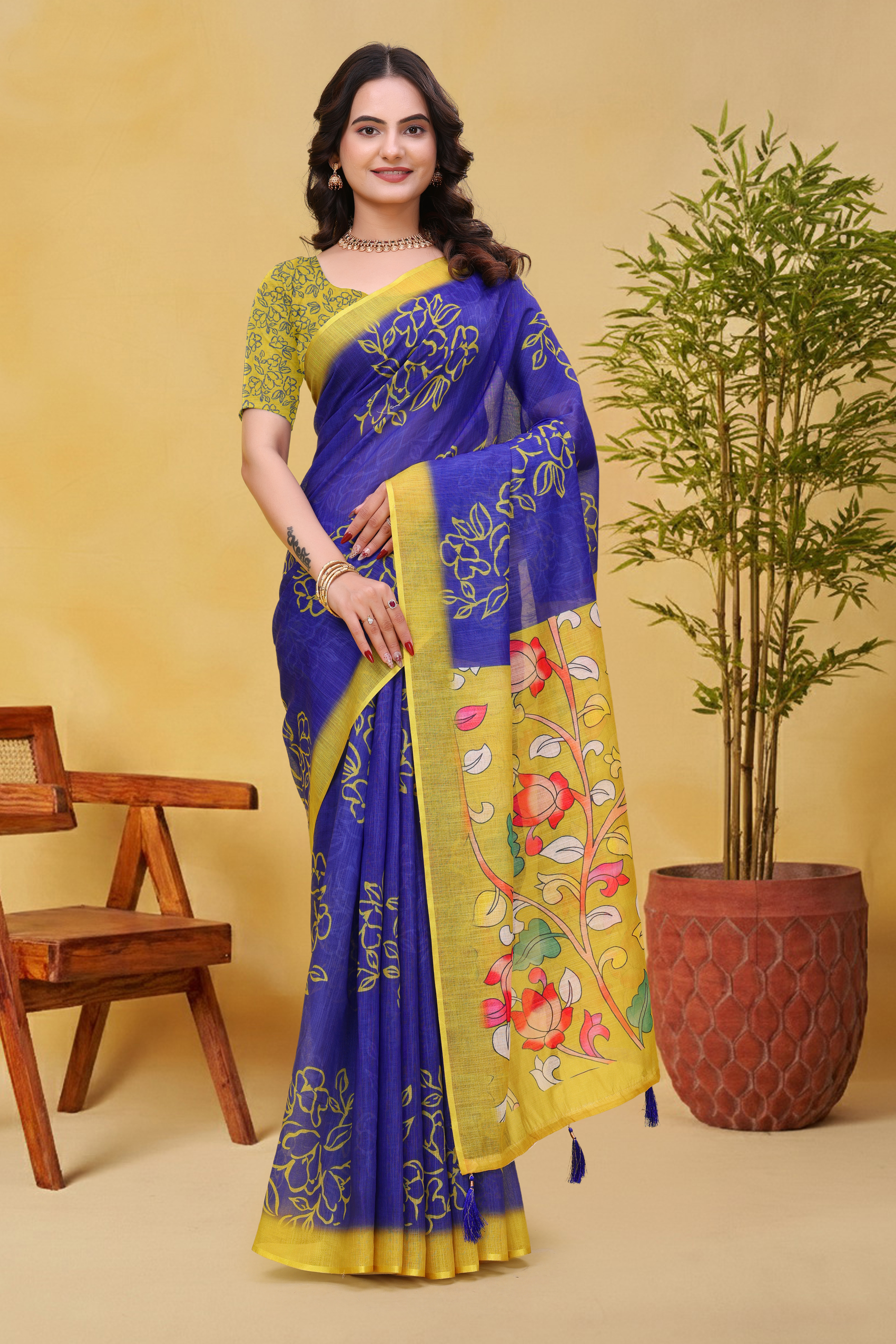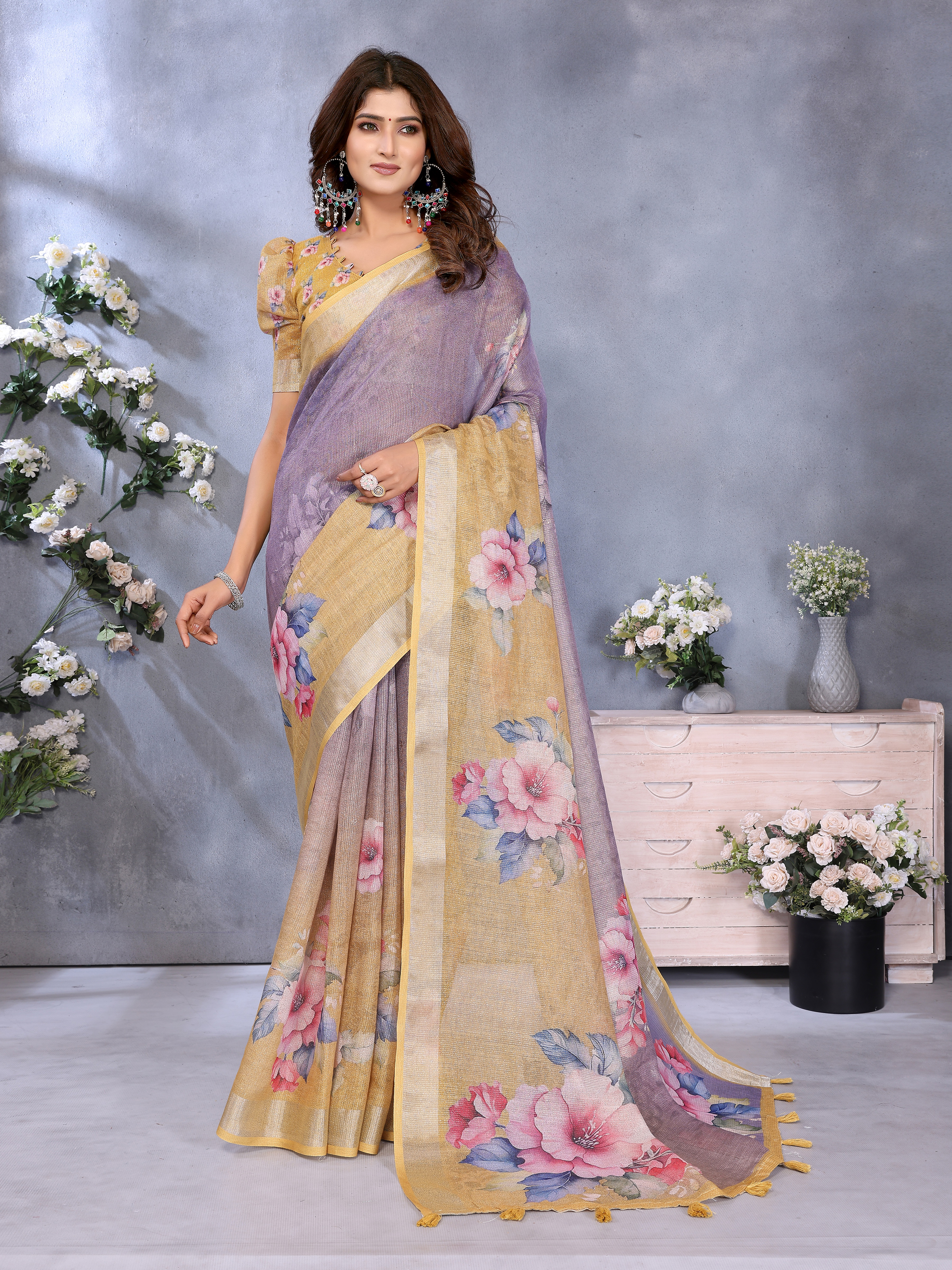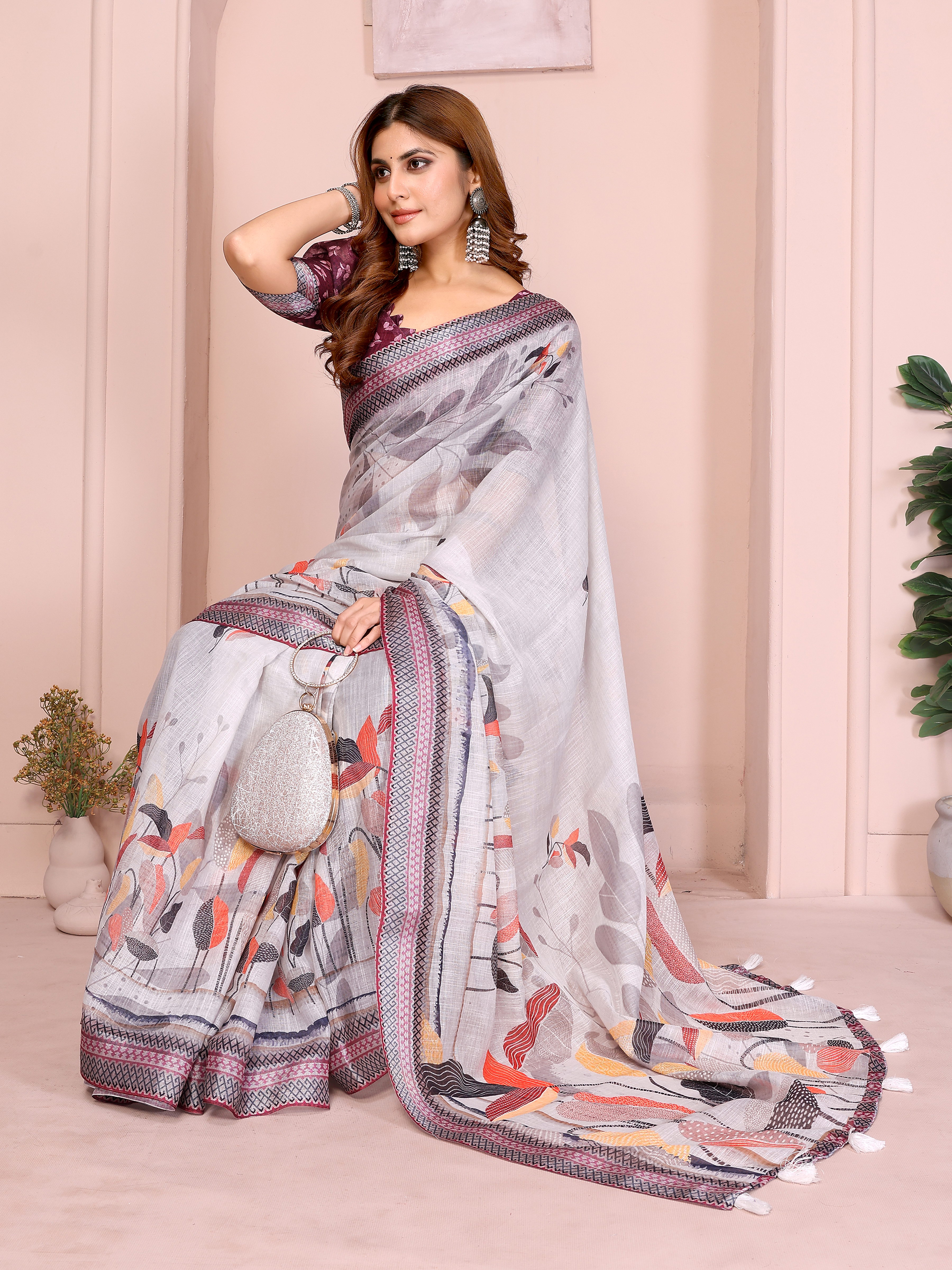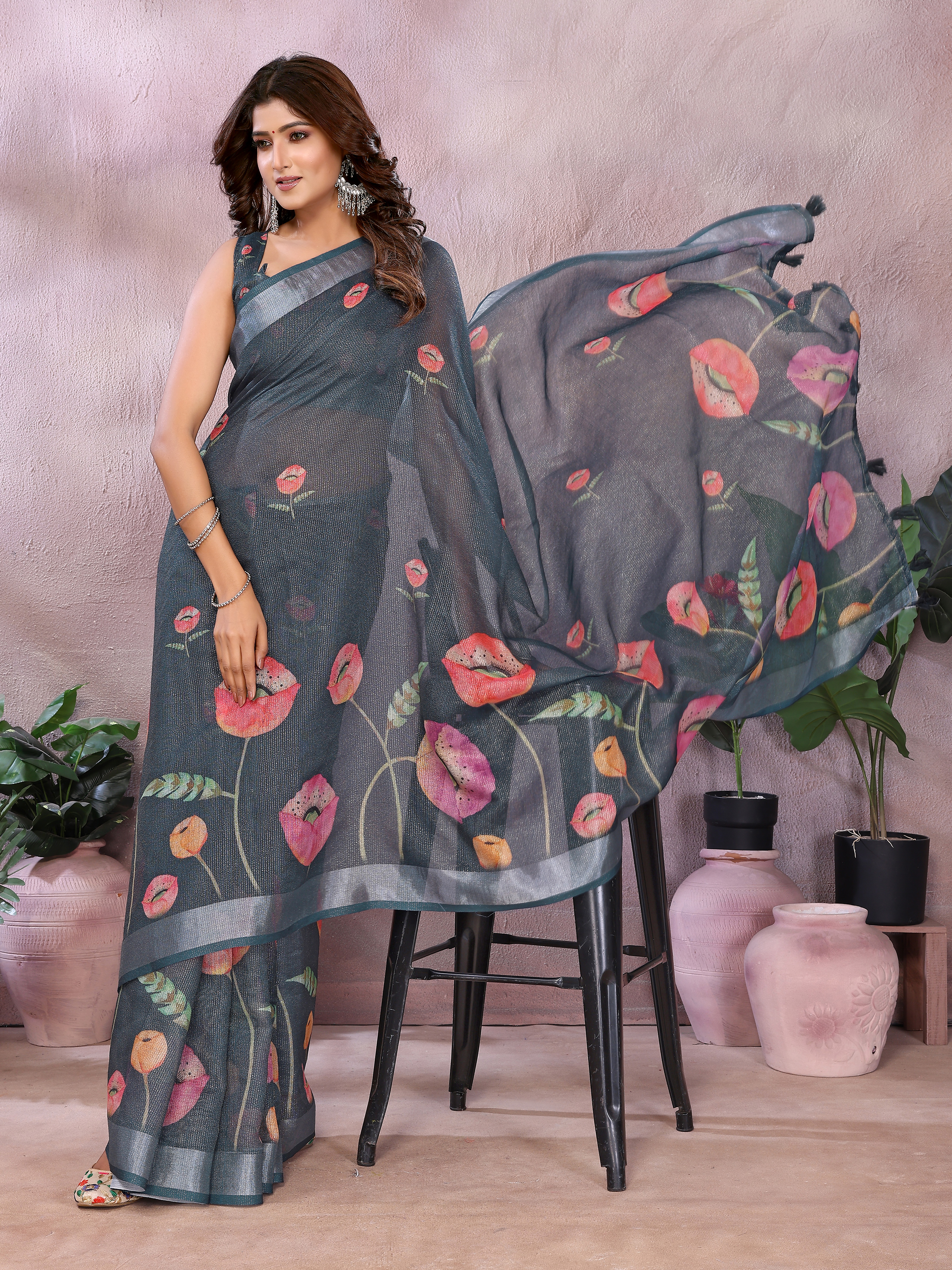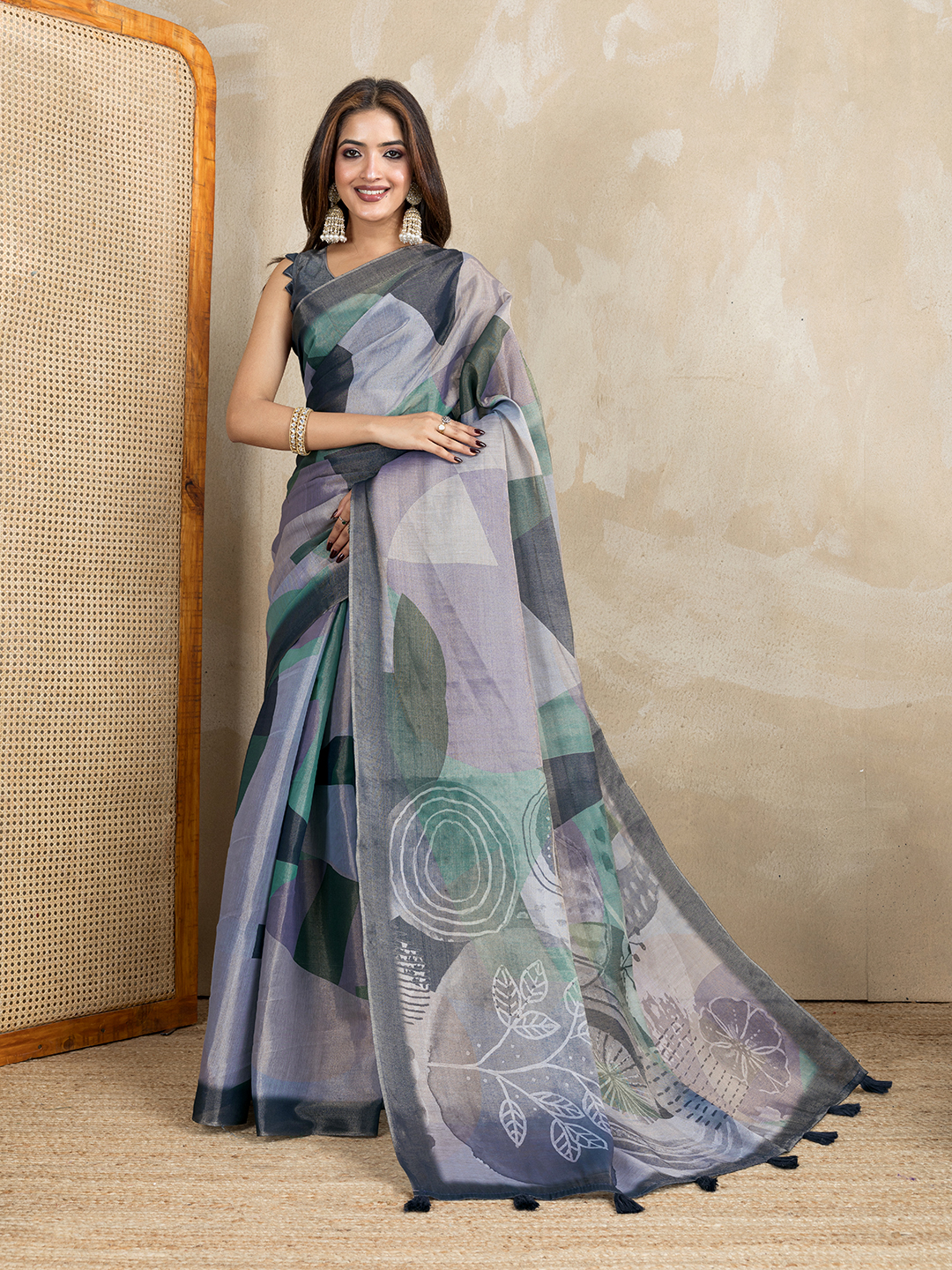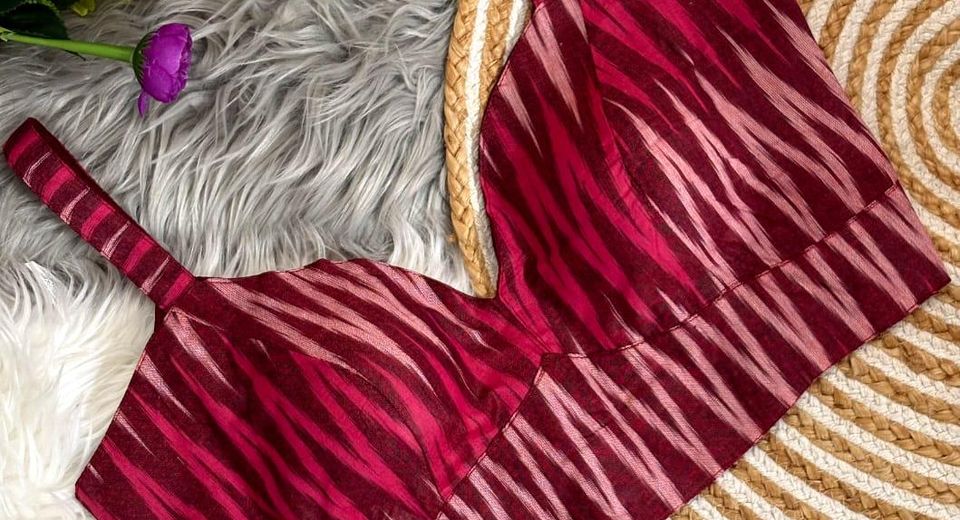
A blouse facing should stay hidden even after hours of wear, including during sitting, raising the arms, dancing and repeated saree adjustments. A facing is the narrow strip of fabric used to finish a neckline, armhole or front opening. When the strip rolls outward, the garment looks unfinished and may feel irritating against the skin. The problem usually comes from a combination of facing width, pressing, stitch tension, neckline shape and garment fit, not from the presence of a facing itself.
Knowing how to inspect these details makes buying a readymade blouse more reliable. The same checks help when selecting cotton, silk or a designer saree blouse for a long wedding function. A polished neckline should remain smooth, a sleeve opening should lie flat, and the inside finish should support the outer silhouette without becoming visible.
A Blouse Facing Should Stay Hidden Even After Hours of Wear: Why Facings Peek Out
A blouse facing becomes visible when the finished edge rolls, the outer fabric stretches, or the garment is too tight for the facing to lie in its intended position. Movement exposes weaknesses that may not appear while a blouse is hanging on a display or being tried for only two minutes.
The facing and the blouse shell don't always respond to tension in the same way. A firm cotton facing attached to a fluid silk outer layer can pull the neckline inward. A loosely stitched facing can turn outward when the wearer bends forward. A narrow facing may lack enough surface area to hold a curved edge flat, while an overly wide facing can add bulk under a saree pallu.
Heat and moisture also affect the result. Body warmth, perspiration and repeated contact with the saree can soften pressed folds. Friction from a necklace, safety pin or pallu may then catch the edge. A blouse that looks neat at the start of a reception can reveal a few millimetres of facing after several hours if the construction has not been stabilised.
A Blouse Facing Should Stay Hidden Even After Hours of Wear: Neckline Shape Matters
Rounded and V-shaped necklines need different control because curved and pointed edges distribute tension differently. A V-neck requires accurate stitching at the point; even a small excess of fabric can create a fold that turns the facing outward.
A wide boat neckline often depends on clean edge pressing and suitable support near the shoulder. A deep neckline can expose a facing more readily when the bust area pulls the fabric downward. A high neckline has less exposed edge, but a stiff or badly pressed facing can still stand away from the body.
A Blouse Facing Should Stay Hidden Even After Hours of Wear: What to Inspect Inside
Inspect the inside neckline, armholes, seams and closure before judging a readymade blouse by its print or embroidery. Four minutes of inspection can reveal whether the blouse will remain comfortable and presentable after a long event.
- Check the facing width. A neckline facing should be wide enough to stabilise the edge but narrow enough to stay unobtrusive. Look for an even width around curves and a clean transition at the shoulder seams.
- Examine the edge stitching. Stitches should follow the curve without large gaps, skipped sections or puckering. A line that wanders towards the outer edge can make the facing roll to the front.
- Look at the corners. V-neck points, square-neck corners and front openings need controlled seam allowance. Excess fabric at a corner should be trimmed and graded rather than left as a thick lump.
- Test the seam allowance. The seam allowance should be secured towards the inside, not left free to flip outward. A narrow under-stitch or a carefully pressed seam helps the facing stay in place.
- Inspect armholes. Raise both arms and rotate the shoulders. The armhole facing should not twist, bite into the skin or appear above the outer edge.
- Assess the lining. A lining should sit smoothly without pulling the neckline forward. In a padded blouse, check that the lining and padding don't create pressure that forces the facing outward.
- Check the closure. Hooks, zips and buttons should close without making horizontal strain lines across the bust. Strain at the closure can distort the neckline several hours later.
These checks apply to an everyday cotton blouse as much as to an embellished festive design. Kalamkari Cotton V Neck Collar Blouse for Women should be assessed for the relationship between its printed outer fabric, collar edge and neckline finish rather than for print alone. The name of a fabric or motif can't guarantee a stable facing.
A Blouse Facing Should Stay Hidden Even After Hours of Wear: How Fit Controls It
Correct fit keeps a facing hidden because the neckline and armhole are not being forced away from their drafted positions. A blouse can have excellent stitching and still show its facing if the bust, shoulder or upper-arm measurement is wrong.
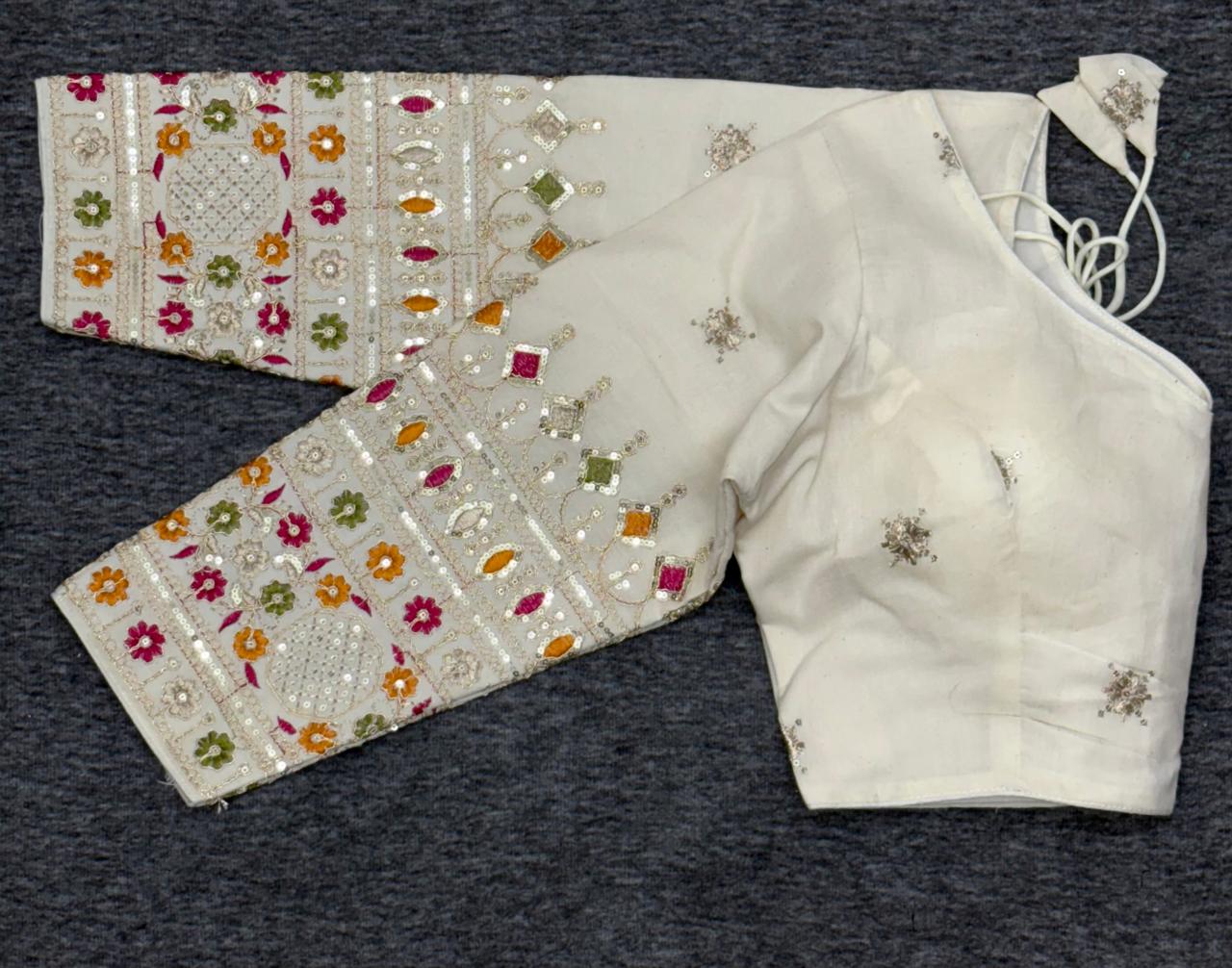
A blouse that's too tight across the bust pulls the front neckline downward and outward. A blouse that's too loose at the shoulder can allow the armhole to gape, exposing the inside finish. An overly high armhole may create vertical tension, while an overly low armhole can shift the garment whenever the wearer moves.
A Blouse Facing Should Stay Hidden Even After Hours of Wear: Five Movement Tests
Five simple movements reveal more about facing stability than standing still in front of a mirror. Perform the movements while wearing the bra or support garment intended for the saree blouse.
- Raise both arms. The hem may lift slightly, but the neckline and armhole should remain flat.
- Reach forward. Stretch towards a table or mirror and check whether the front edge rolls outward.
- Turn the torso. Rotate left and right to identify shoulder tightness or side-seam strain.
- Sit for five minutes. Sitting tests whether the bust area compresses and pushes the neckline facing forward.
- Walk and lift one arm. This reproduces the repeated movement common during greetings, photographs and dance floors.
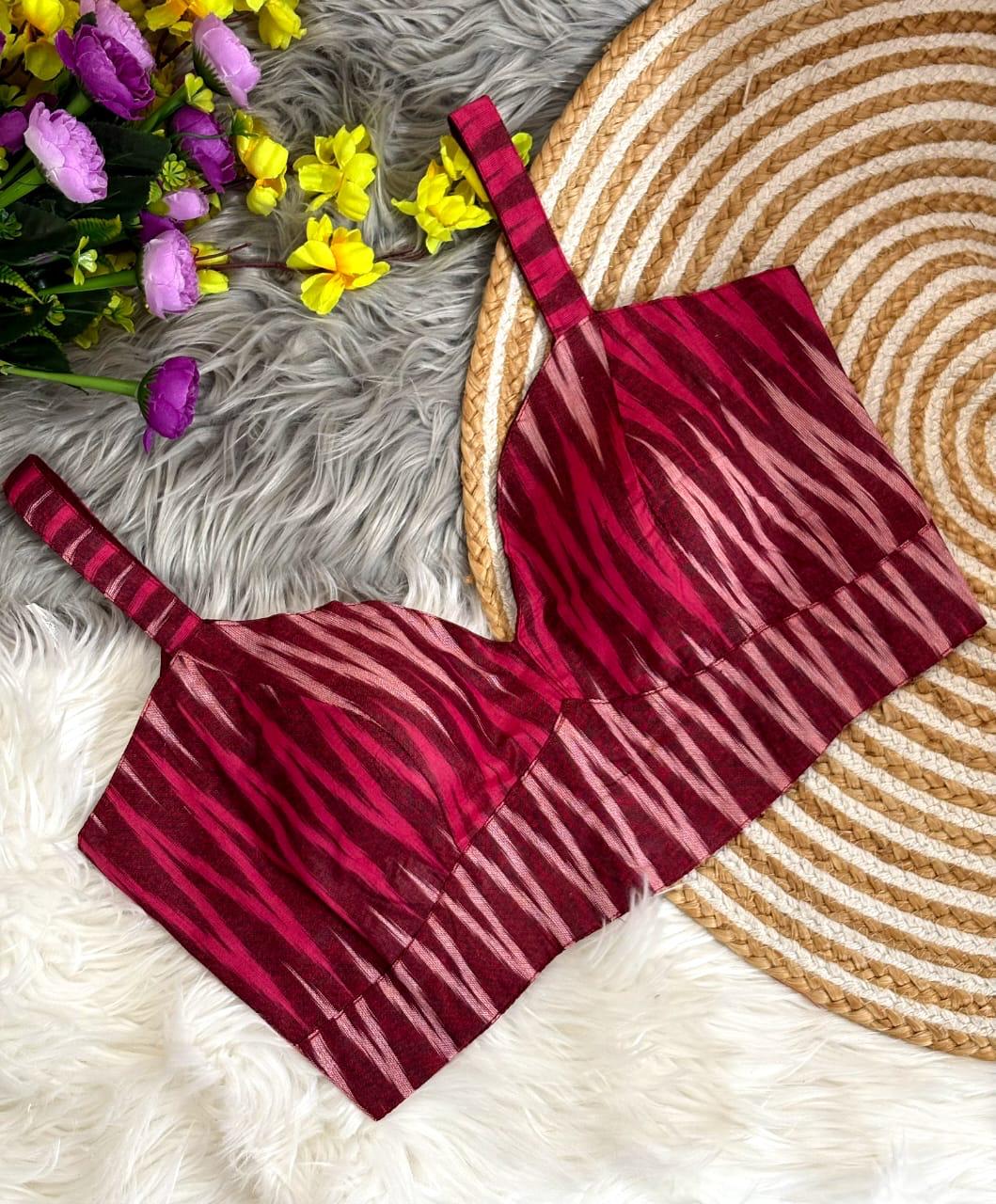
Padding deserves separate attention. A padded blouse can provide shape and reduce the need for a separate bra, but padding must sit securely inside the lining. A displaced pad can create local pressure near the neckline and make a facing curl. Ikkat Cotton Padded Blouse for Women Sleeveless and Brown Ikat Cotton Padded Blouse Sleeveless Stylish illustrate why buyers should inspect padding placement, armhole clearance and upper-bust fit together.
A Blouse Facing Should Stay Hidden Even After Hours of Wear: Choosing Cotton or Silk
Cotton usually offers a stable, breathable base for a blouse facing, while silk requires more careful handling because its surface can be fluid, slippery or easily marked by pressing. The best choice depends on the weave, lining, seam finish and intended duration of wear.

Cotton facings can hold a pressed edge well, particularly when the fabric has enough body. Printed cotton designs may still need a separate lining if the outer fabric is lightweight or if the blouse includes padding. Pure Kalamkari Cotton Padded Blouse for Women raises a useful buying question: does the lining support the neckline without making the cotton shell feel stiff?
Banarasi silk has a decorative weave and may contain zari or metallic yarn, so a facing should be secured without flattening the visible texture. Banarasi Silk Golden Jari Padded Blouse for Women needs careful checking around the neckline, armhole and padded bust area because metallic surface work can make alterations more complicated.
Smooth silk and silk-blend surfaces can show every ripple in the facing. A loose or poorly pressed edge may be more noticeable against a plain silk saree than against a busy print. Silk should also be stored without heavy folding across the neckline, since a sharp crease can encourage the facing to turn outward.
Ikat cotton has a firm visual character, but weave density varies from one garment to another. Cream Ikat Cotton Padded Blouse Sleeveless Trendy and Fendy Silk Zigzag Moti Work Readymade Blouse suggest two different inspection priorities: cotton needs attention to seam comfort and body, while silk with moti work needs attention to weight, lining stability and embellishment near the edge.
A Blouse Facing Should Stay Hidden Even After Hours of Wear: The Role of Pressing
Pressing and under-stitching help a facing stay on the inside by directing the seam allowance away from the outer edge. These finishing steps are small, but they determine whether a neckline keeps its intended shape after movement.
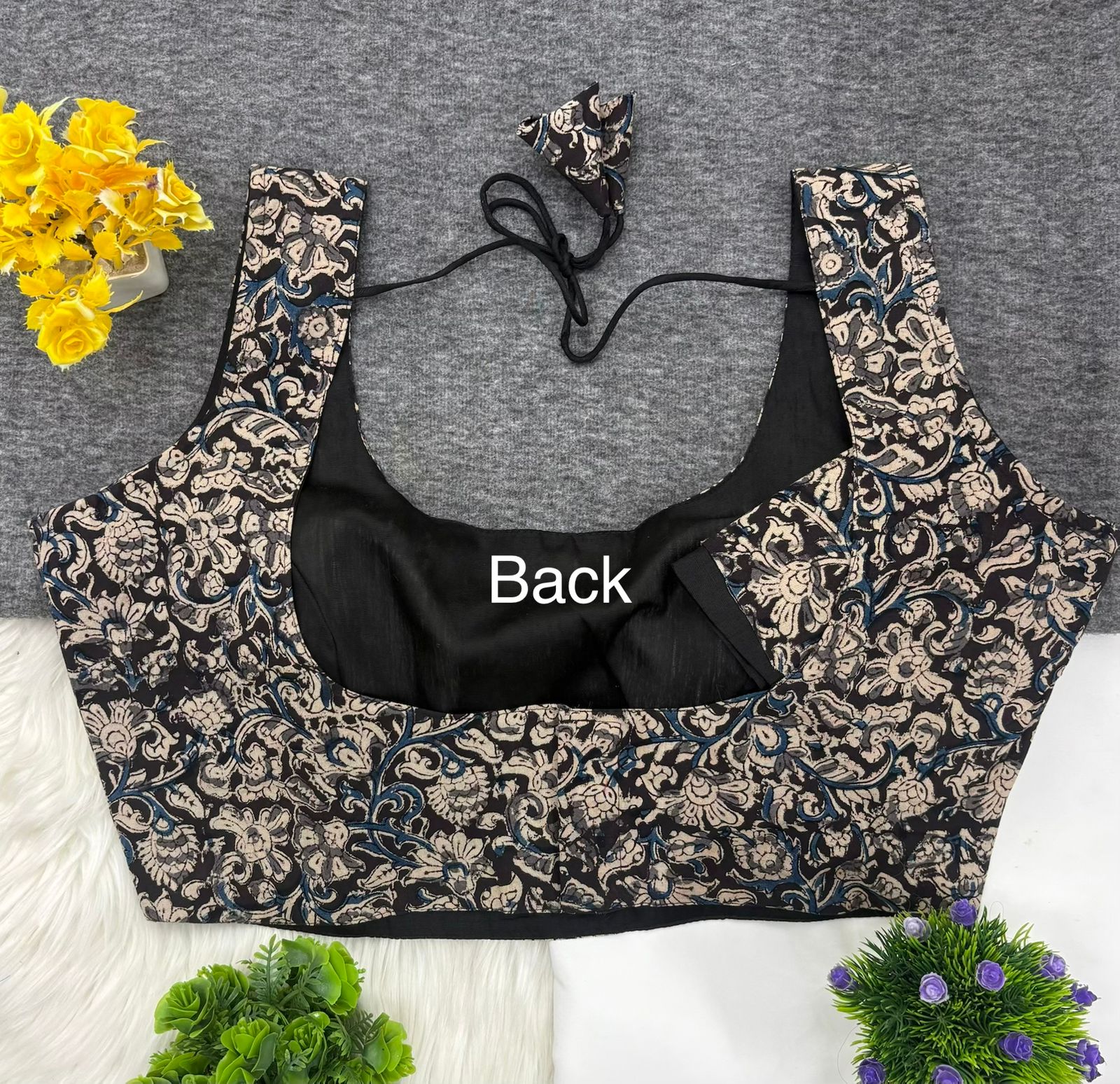
Under-stitching attaches the facing to the seam allowance close to the neckline seam. The stitching is normally not meant to be visible from the outside. Under-stitching is especially useful on curved necklines because it discourages the facing from rolling forward.
Pressing sets the seam before the garment is worn. A curved edge should be pressed over a suitable form or with controlled steam rather than flattened carelessly. Excessive heat can glaze silk, flatten zari texture or leave a shine on dark cotton. A pressing cloth provides safer protection for delicate surfaces.
Topstitching can also hold a facing down, but visible topstitching changes the design. The stitch length should be even and intentional. Decorative topstitching is suitable only when it matches the blouse style; an uneven line around a festive neckline can look like a repair.
When a facing repeatedly appears despite good fit, a tailor may secure selected points with small hidden stitches or add a narrow stay tape. Any alteration should preserve enough ease for breathing and arm movement. Stitching the facing down everywhere can make a neckline rigid and uncomfortable.
A Blouse Facing Should Stay Hidden Even After Hours of Wear: Buying and Care Checklist
A good readymade blouse should pass a construction check, a movement check and a care check before it becomes part of a saree wardrobe. These checks matter whether the blouse is worn with an everyday cotton saree, a festive Banarasi silk saree or a designer saree for a wedding.

For a formal function, choose the blouse according to the expected movement and duration rather than the photograph alone. Classic Festive Wear Blouse for Stylish Saree Look may be suitable for a structured festive appearance, but the neckline still needs to be tested with the intended saree, jewellery and support garment. A heavy necklace can catch a loose facing, while a tightly pinned pallu can pull the shoulder seam.
Care after wearing also protects the finish. Air a blouse in shade for several hours before storing it. Do not leave perspiration trapped in the neckline or armholes. Avoid hanging a heavily embellished blouse from a thin wire hanger, because the weight can stretch the shoulder and distort the facing.
- For cotton: wash according to the care label, reshape the neckline while damp and iron from the reverse side using moderate heat.
- For silk: prefer the stated professional-cleaning method, keep the garment away from direct sunlight and use a pressing cloth if ironing is permitted.
- For zari and moti work: turn the blouse inside out where possible, prevent rough contact with hooks and store it in a breathable garment bag.
- For padded blouses: avoid crushing the bust area under folded sarees and check the pad position before each long wear.
- For all fabrics: remove pins carefully and never pull a facing back into place with force while the blouse is being worn.
Small repairs are easier when noticed early. A loose stitch, a curling corner or a lining that has started to separate can usually be corrected before the neckline becomes permanently stretched. A blouse facing should stay hidden even after hours of wear when construction, fit and maintenance work together.
A Blouse Facing Should Stay Hidden Even After Hours of Wear: Common Questions
Why does my blouse facing keep coming out?
A blouse facing usually comes out because of poor pressing, insufficient under-stitching, seam tension or an incorrect fit. Tightness across the bust and shoulders can pull the neckline forward even when the stitching appears neat.
How can I stop a saree blouse neckline from rolling?
Press the neckline from the inside, check whether the facing has under-stitching and ask a tailor to secure selected points with hidden stitches if necessary. Avoid permanently stitching the entire edge down if the neckline needs movement ease.
Should a readymade blouse have a lining?
A readymade blouse doesn't always require a full lining, but lining is useful for comfort, opacity, padding support and neckline stability. Lightweight cotton, slippery silk and embellished blouses often benefit from an appropriate lining.
Is cotton or silk better for a blouse facing?
Cotton is generally easier to press and stabilise, while silk can provide a refined finish but needs careful handling. The quality of construction, lining and seam finishing matters more than the fibre name alone.
How do I test a blouse before wearing it to a wedding?
Wear the intended undergarment and saree, then raise both arms, reach forward, sit for five minutes and walk around. Inspect the neckline and armholes after these movements for rolling, gaping, pressure or visible facing.
Can a tailor fix a facing that's already visible?
A tailor can often correct a visible facing by pressing the seam, trimming excess allowance, adding under-stitching or placing discreet securing stitches. Severe distortion may require resetting the neckline or replacing part of the facing.
Common Questions About Keeping a Saree Blouse Facing Hidden
Why does my blouse facing keep coming out?
A blouse facing usually comes out because of poor pressing, insufficient under-stitching, seam tension or an incorrect fit. Tightness across the bust and shoulders can pull the neckline forward even when the stitching appears neat.
How can I stop a saree blouse neckline from rolling?
Press the neckline from the inside, check whether the facing has under-stitching and ask a tailor to secure selected points with hidden stitches if necessary. Avoid permanently stitching the entire edge down if the neckline needs movement ease.
Should a readymade blouse have a lining?
A readymade blouse does not always require a full lining, but lining is useful for comfort, opacity, padding support and neckline stability. Lightweight cotton, slippery silk and embellished blouses often benefit from an appropriate lining.
Is cotton or silk better for a blouse facing?
Cotton is generally easier to press and stabilise, while silk can provide a refined finish but needs careful handling. The quality of construction, lining and seam finishing matters more than the fibre name alone.
How do I test a blouse before wearing it to a wedding?
Wear the intended undergarment and saree, then raise both arms, reach forward, sit for five minutes and walk around. Inspect the neckline and armholes after these movements for rolling, gaping, pressure or visible facing.
Can a tailor fix a facing that is already visible?
A tailor can often correct a visible facing by pressing the seam, trimming excess allowance, adding under-stitching or placing discreet securing stitches. Severe distortion may require resetting the neckline or replacing part of the facing.